
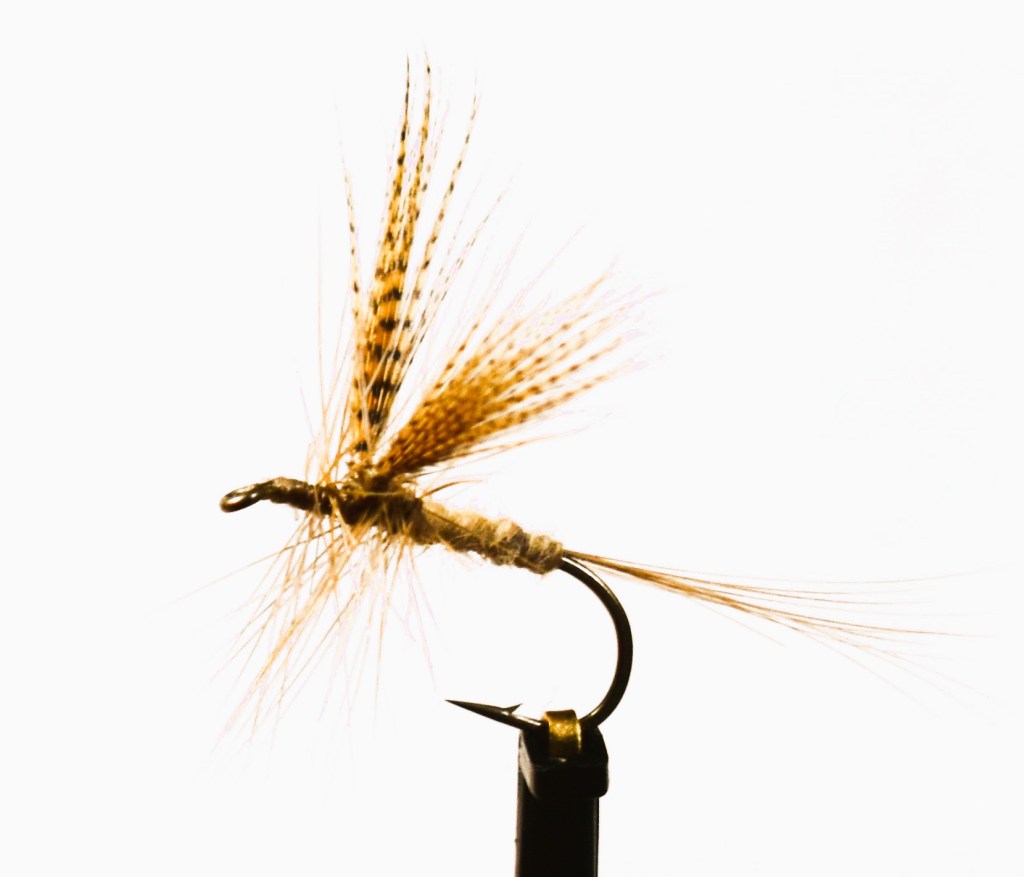
I re-read Richard Lodge’s recent book about legendary Catskill fly tyer Reuben R. Cross on Sunday, refreshing my memory with the fine collection of facts and anecdotes the author had assembled for those of us who so appreciate the history of Catskill fly fishing. The journey resulted from my plans to tie a selection of Cross Specials, lest the opportunity arise come September to try these classics over the same hatch I encountered last year.
I had tied a few last winter at Flyfest, and later my own variation in the guise of my 100-Year Dun. These had all been larger flies, typically size 12, and much too large to mimic the small Cahills or similar flies which provided most of the mayfly activity on the Big East during the Delaware Aqueduct drawdown. That elevated flow of cold water is a condition which we can expect to occur again in 2025. Many of those size 16 mayflies appeared lighter, indeed almost white, as compared to the cream color I have blended for the Light Cahill species seen in June. The gray dun tails and hackling of Cross’ fly look to me to be the better match!
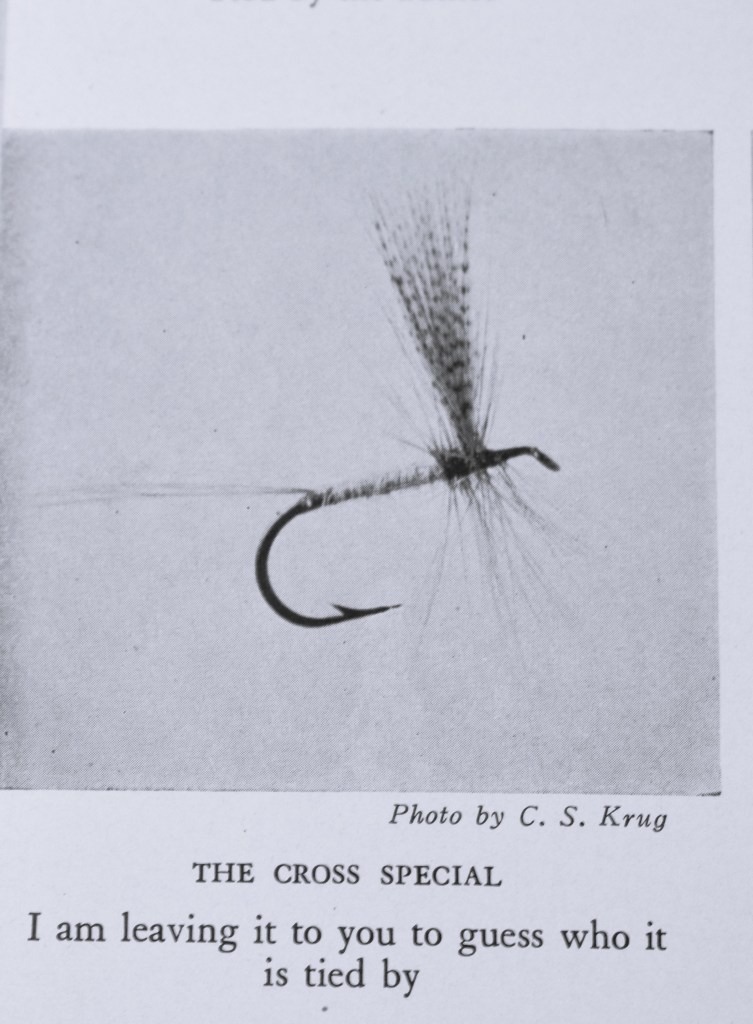
I find the beautifully sparse Cross style to be far more lifelike than a heavily dressed fly, particularly when angling the large pools of the Delawares. Studying the photo from Reuben’s 1936 book, I seem to count no more than five turns of hackle, three behind the wings and two in front. That is certainly enough to float a good size fly on flat water, while preserving the delicacy of the natural mayflies. Cross was an observer of Nature along the waters, and a breeder of roosters so that he might produce the stiff, glossy hackles such flies require! There is no doubt his style drew inspiration from his own observations.
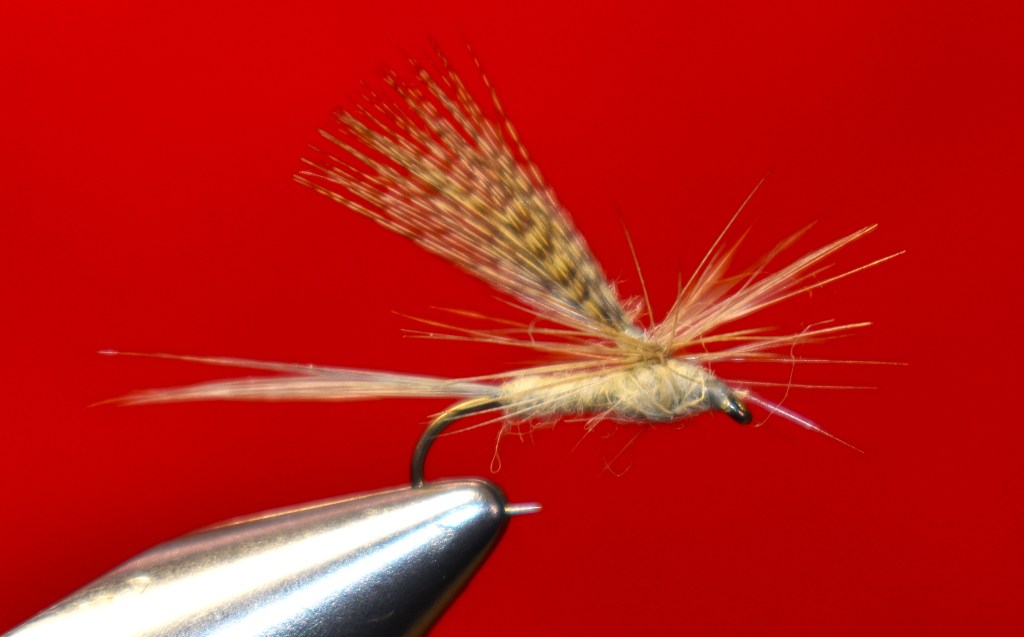
Lodge makes it clear that it was Reuben Cross who refined the fly tying style of Theodore Gordon, tying dry flies with that spare ephemeral appearance, setting the standard for all those famous Catskill fly tyers who would follow. The Dettes and Darbees learned their craft in perhaps the same way Cross learned Gordon’s techniques; by disassembling Cross dry flies and taking notes on the construction.
Much of the suspicion and doubt directed at Rube Cross should have been attributed to an author, for it was John McDonald, editor and compiler of Gordon’s letters and articles who stated that Cross learned to tie flies from Theodore Gordon. Author Richard Lodge found no evidence of such a statement being made by Mr. Cross. Sadly, Rube died at the age of only 62, never having the chance to be celebrated as fly fishing experienced it’s remarkable growth.
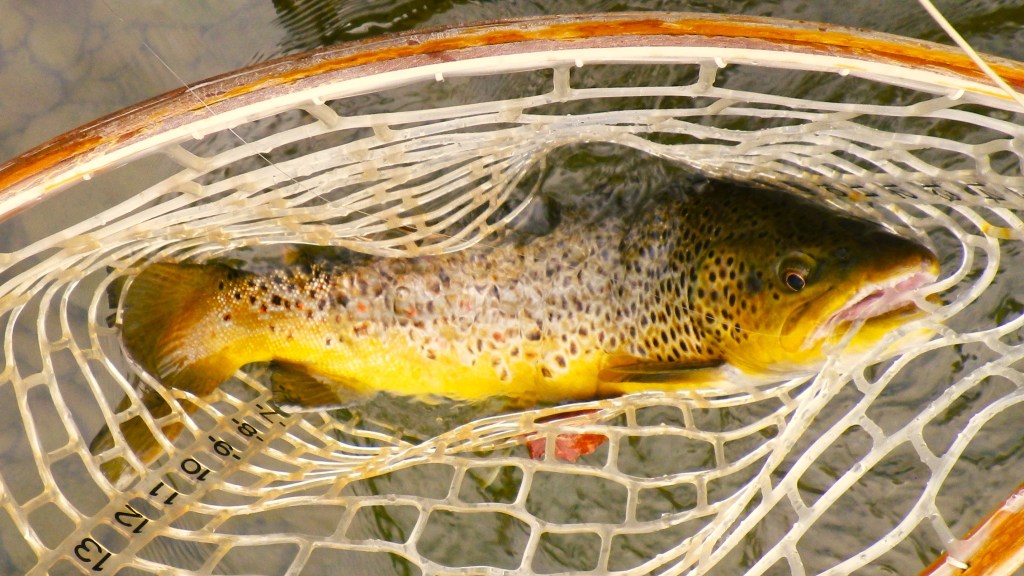
I enjoyed some beautifully technical fishing as the leaves began to turn along the Catskill rivers last year. These Cross Specials will be tucked into the small gunmetal fly box I carried in my shirt pocket. They wait to tempt another big wild brownie, come the first hints of autumn!
 Bright Waters Catskill