
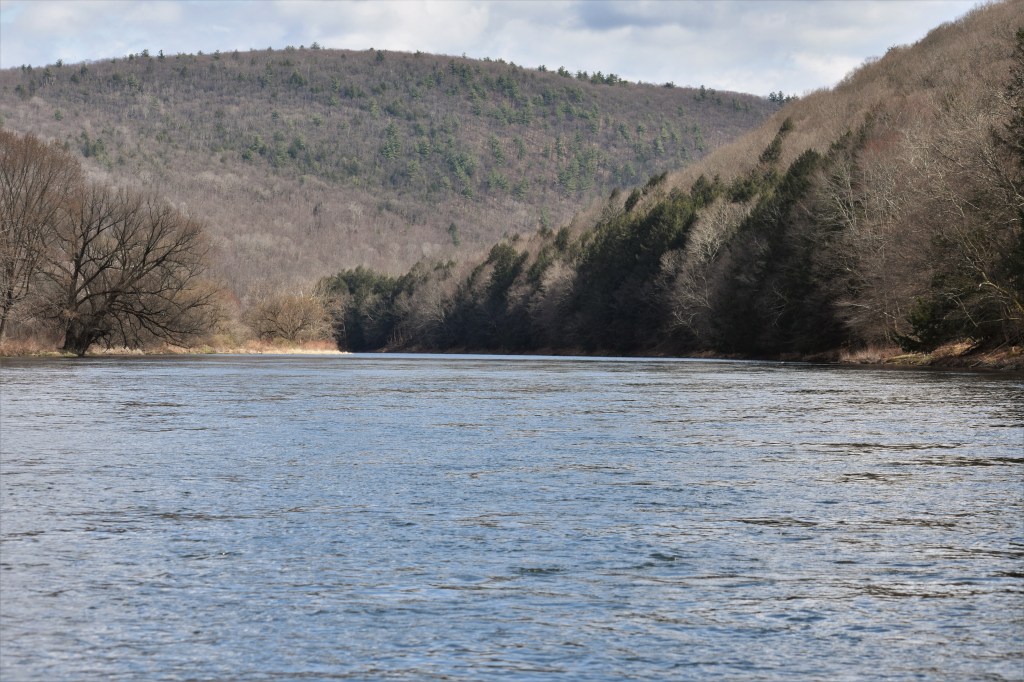
Warmer air and rainfall are all it takes to break the rivers free of the ice harbored between their banks for months. Yesterday’s rain began the big flush, and it is still working it’s way downstream. When I checked the gages before dawn, the upper portions of the East and West Branch tailwaters were registering, and their flows rising. The Beaver Kill was still ice bound, but has broken free now, as has the gage at Fishs Eddy. The Beaver Kill peaked at 4,300 CFS and is already dropping, so I am hoping some of the higher snowpack remains, yet to melt and replenish the groundwater.
The East Branch at Fishs Eddy collects flow from the entire Beaver Kill drainage, as well as much of both the upper and lower runs of the river below the dam and halfway down to Hancock. Once thawed, the river gage revealed a peak of 7,850 cfs near 7:45 this morning, a strong flow to be sure, but not in the range of a flood. Coupled with the West Branch’s 3,260 cfs peak, the system could free the Lordville gage on the Mainstem sometime today. The combination of last week’s warmup and yesterday’s warmer rainfall seems to have thawed the watersheds gradually, preventing damage to the riverbanks and bottoms. Avoiding floods and ice jams is very good news for the aquatic ecosystem.
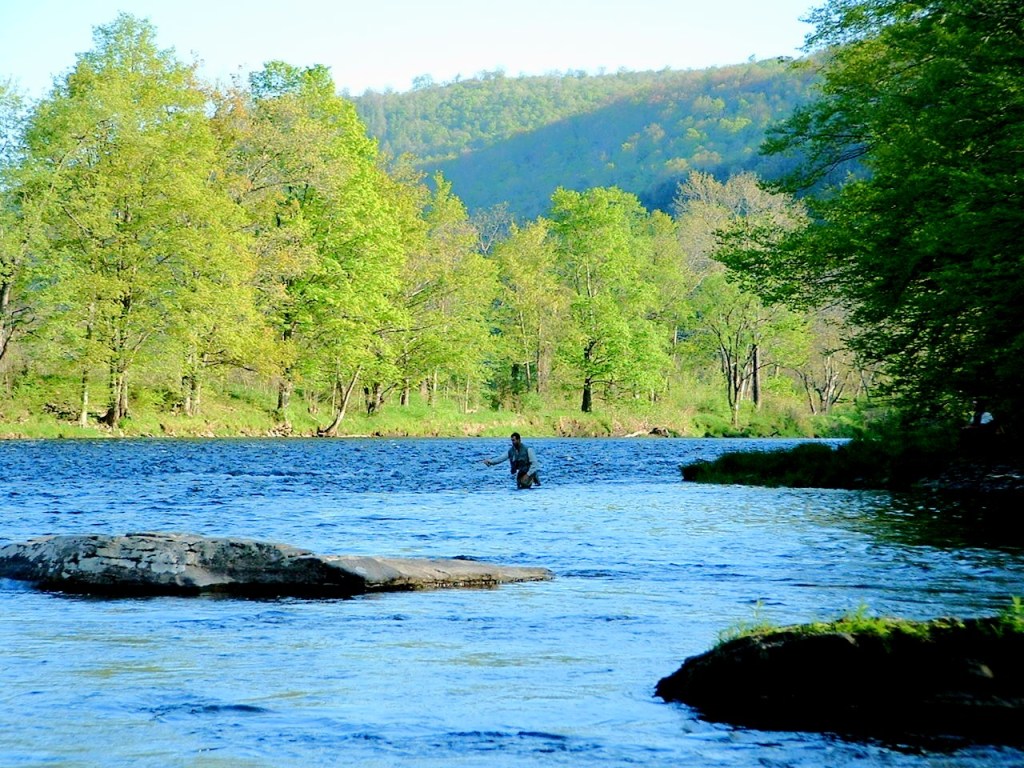
Thirty-one days remain on my winter calendar and, as I busy myself with promoting spring activities for the Fly Tyers Guild, I have one eye on those river gages and weather forecasts. It is time to set aside the flies tied for donations and friends, time to get my own spring boxes out of storage, fill their compartments with my winter’s work and slip them into the pockets of my vest.
The rod work has proceeded slowly, as my aging hands and wrist struggles with the largest part of the job, the endless planing of the bamboo strips. My three-piece, two tip fly rod has 24 of them, 12 for the pair of rod tips which must be planed down from one-quarter inch width to seemingly threadlike fibers between 83 and 3.5 thousandths of an inch!
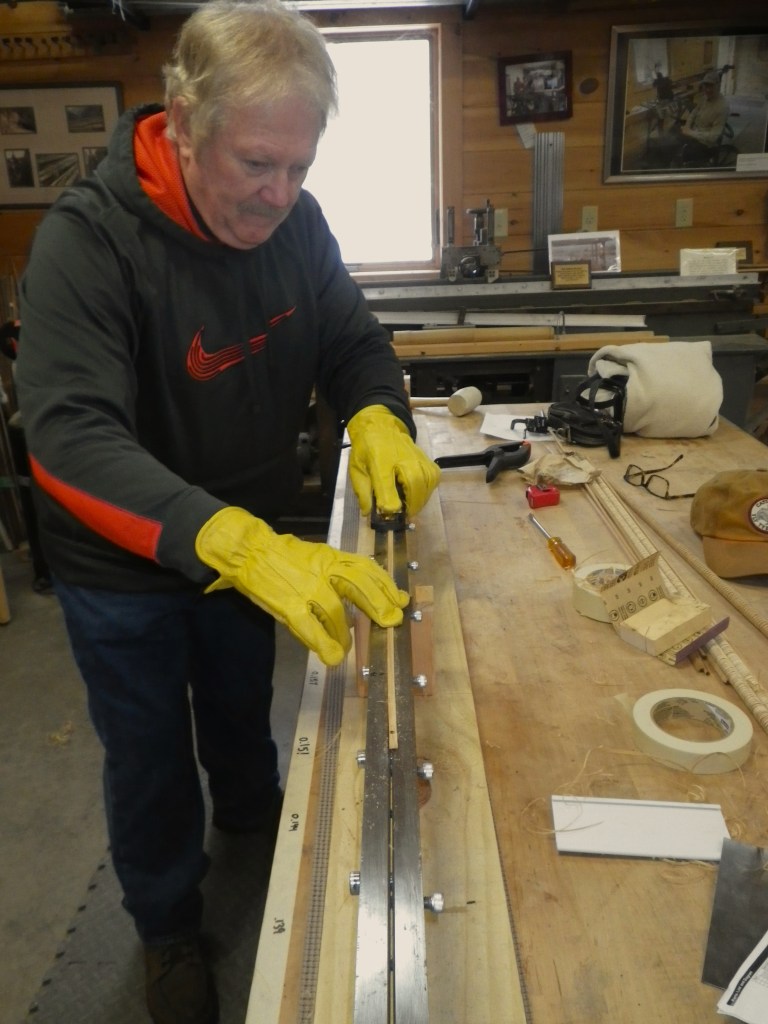
There will be no Angler’s Rest Special for spring fishing at the pace my aching hands and joints have allowed, so I look to summer with at least a little hope!

(Photo courtesy John Apgar)
 Bright Waters Catskill