

Pleased to say that the riverscape has changed. At last, a forecast weather system actually released it’s promised rainfall over the Catskills yesterday! Roscoe received two and a half inches of that precious gift, and here in Hancock very nearly two inches fell. The rivers are rushing brown torrents, though their flows are already receding as far down the watershed as Lordville, NY on the Delaware. Now the dry fly anglers hold our collective breath and hope that the refreshed rivers may still produce the spring mayfly hatches that we dream about.
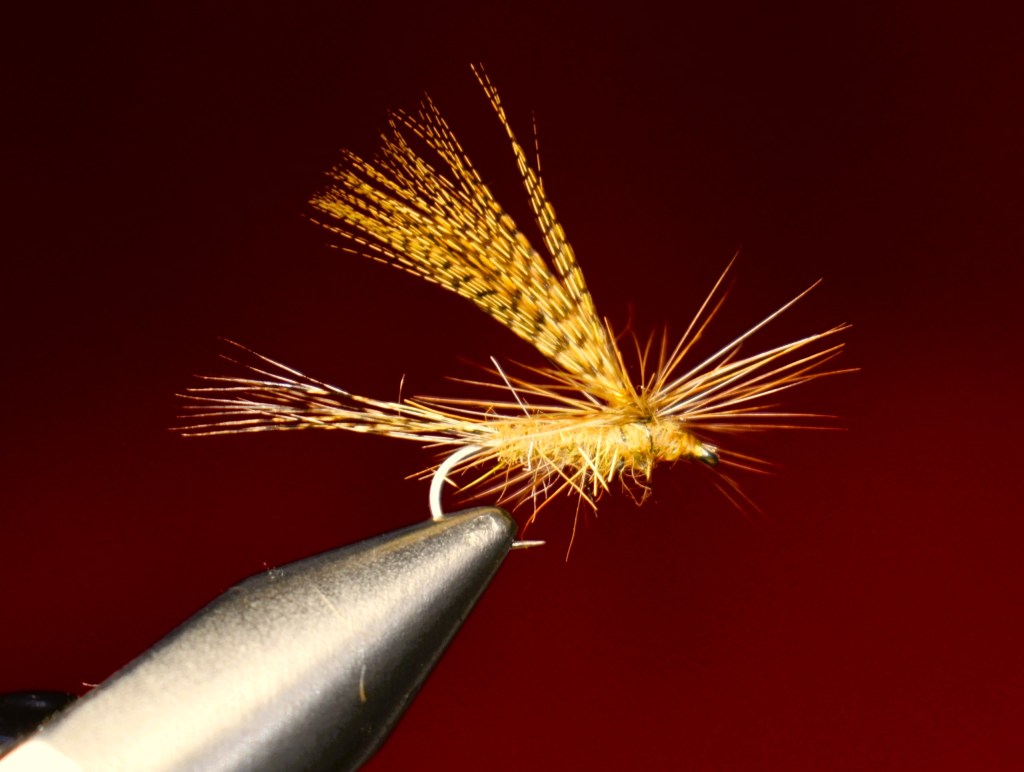
Various members of the Catskill Fly Tyers Guild and our little band of fledgling bamboo rod makers enjoyed the rain from the comfort of the Catskill Fly Fishing Center and Museum’s Wulff Gallery. We had a nice turnout for our first live meeting during the morning and lunch hours, with a few new members joining the old guard. Catskill dry flies were tied, and many squirreled away to be boxed up and presented to the Museum for a raffle prize. I wistfully tossed half a dozen freshly tied Hendricksons into the fray as a leap of faith that we will still see our season’s best hatch once the rivers return to wadable flows.
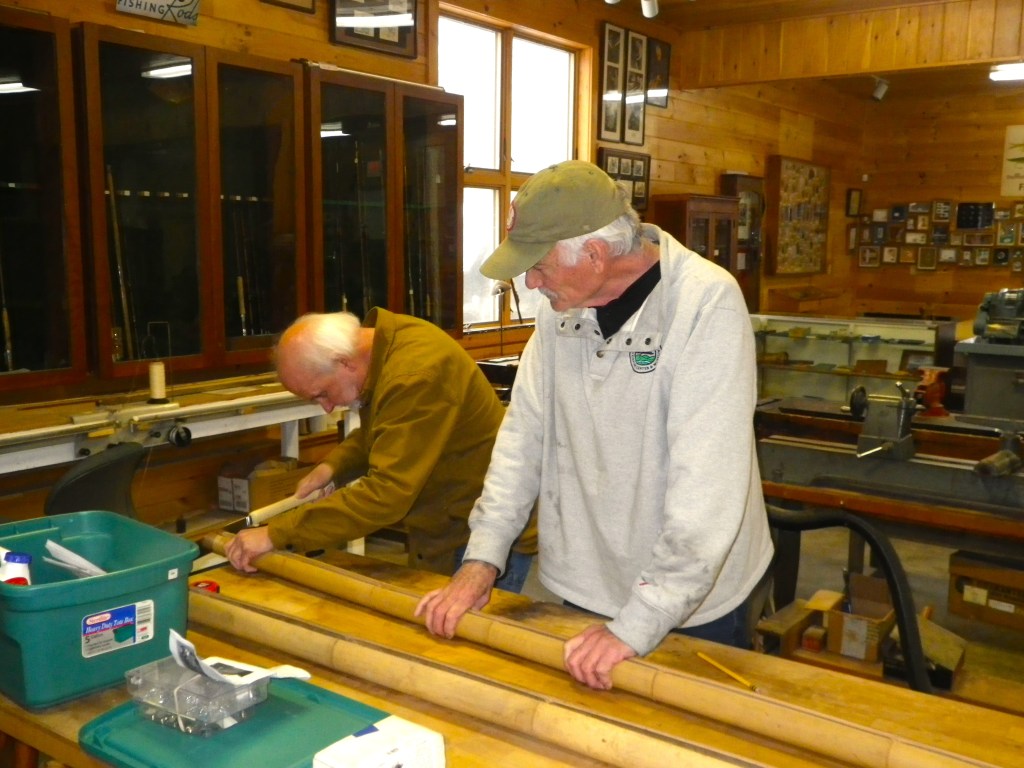
Post meeting, I joined Dave Catizone, John Apgar, Gary Moleon, Joe Ceballos, and CFFCM’s new Director of Operations Laura Colangelo for a continuation of our quests to build our own split bamboo fly rods. Between minging with groups of Museum visitors and explaining our efforts, we enjoyed quieter moments orchestrated by the unique sounds of multiple hand planes sliding over strips of bamboo nestled in steel planing forms. I managed to complete the final stage of roughing five of the six strips required for one of my rod tips. The next work day should allow me to get the seven remaining strips roughed before resetting the planing form for the final tip dimensions.
New York City will not update their rainfall data on their Catskill reservoir page until sometime Monday, but that update may finally show the Delaware River reservoirs at full capacity for the first time this year. The four had reached an average level of 93.875% before this rain event, with April rainfall down an inch from the historical mark. If normal rainfall returns to our region, we can look forward to better river conditions on all our freestone and tailwater treasures!
The early insect hatches have left dry fly anglers in a quandary, with sparse showings of expected flies in many corners and absences in others. Whether this situation reflects the damage of the 2024 drought and a very difficult winter remains to be revealed, but good river flows will certainly improve our outlook.
I spent Thursday on the river with my buddy Mike, visiting from Maryland. It was the last day of a three-day trip for Mike and the conditions had tested us. Perhaps that’s why he lingered at his car that last morning, urging me to go ahead and walk ahead to the river while he puttered with his tackle. I made the long walk and found the chosen reach lower than I can ever recall, the riverbed displayed in stark relief. I decided to scratch my early morning itch with several casts to prospect visible lies.
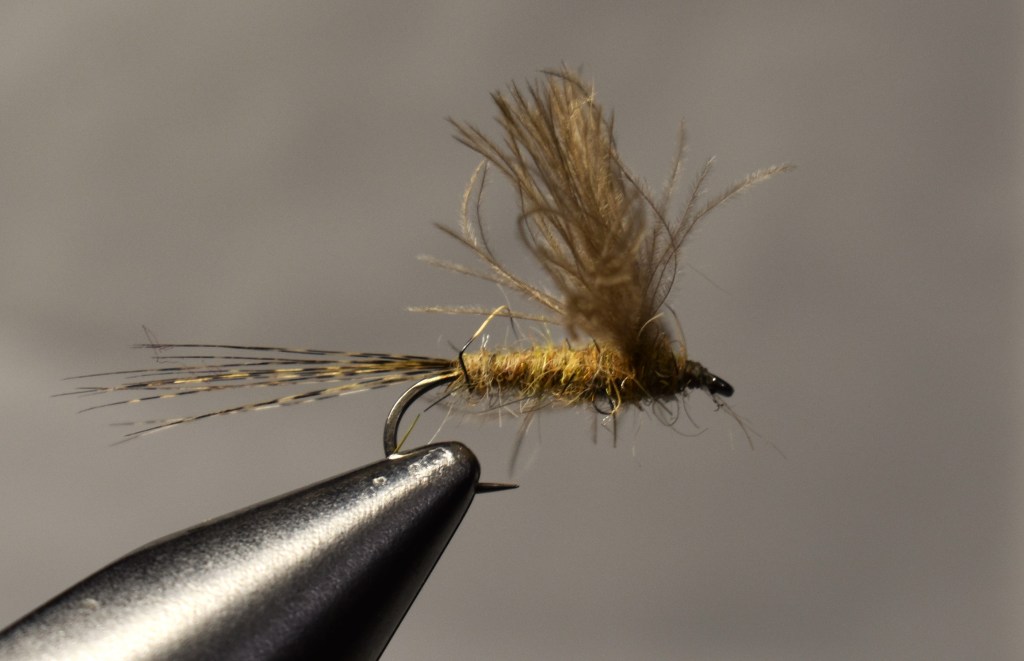
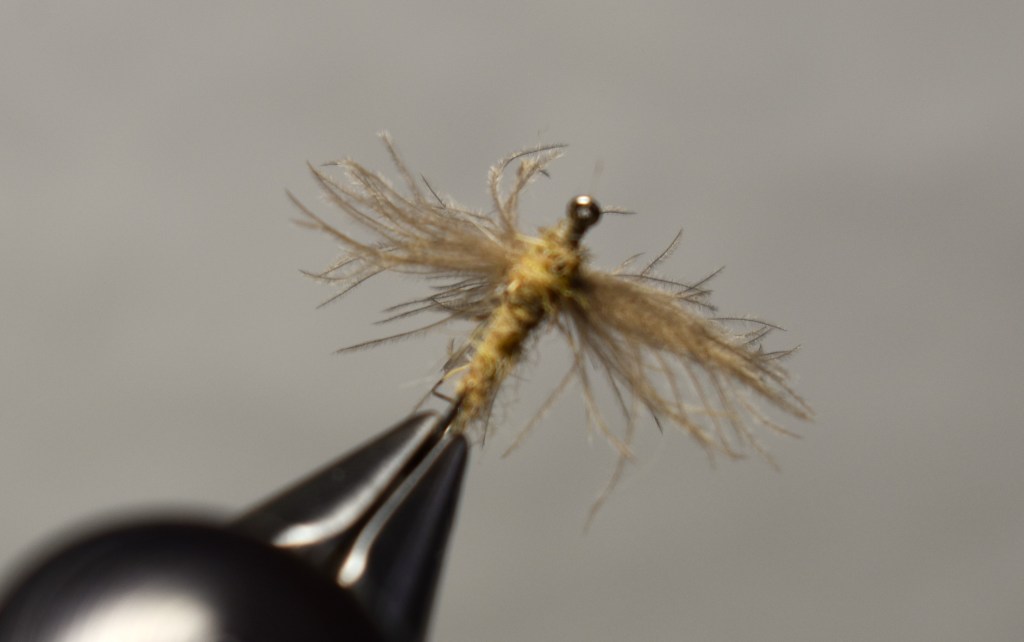
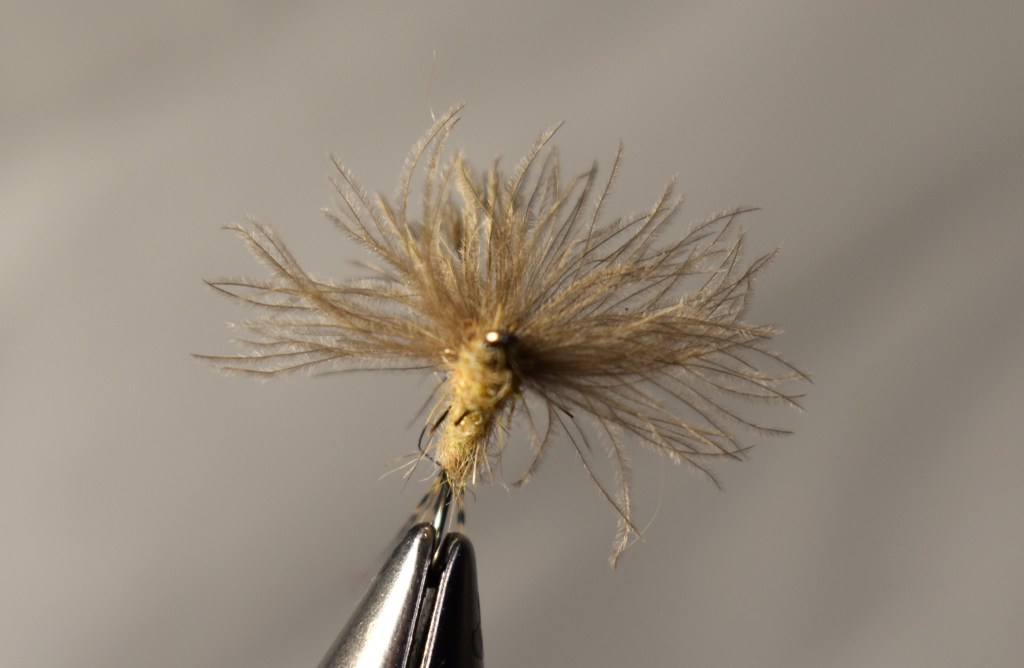
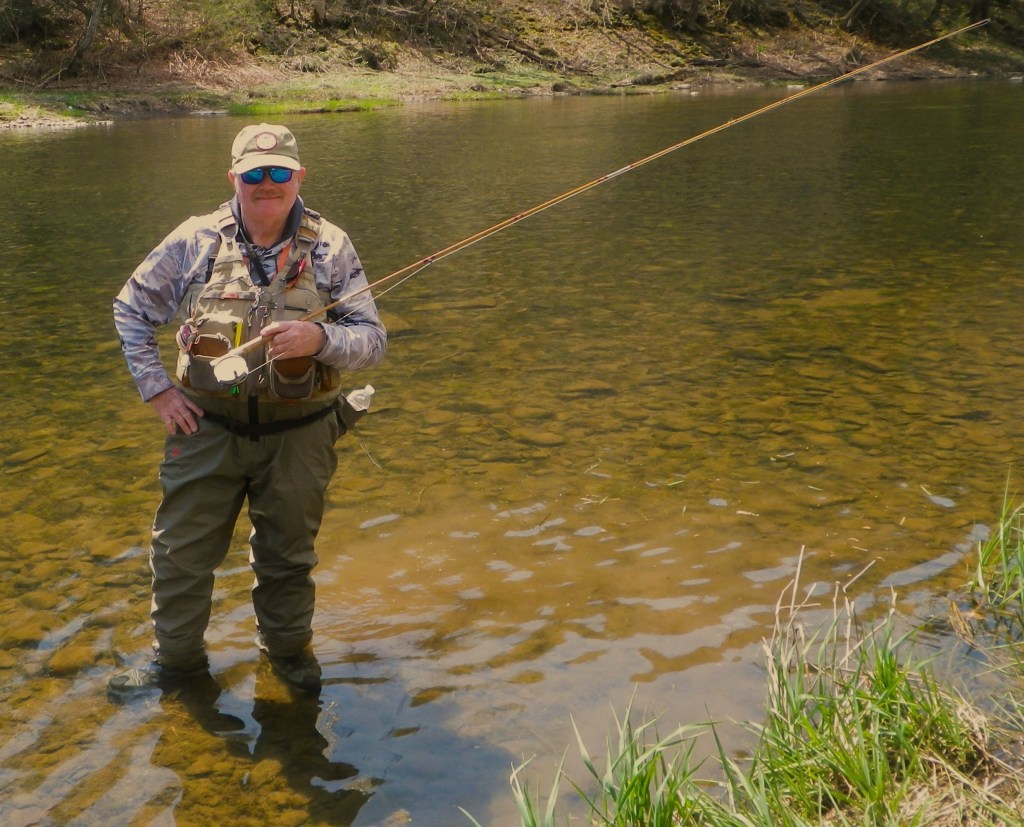
While the shallower rocks failed to reveal any lurking trout, I did see one soft rise in the deepest thread of the run. I worked more line through the guides of my vintage Leonard and let my little CDX caddis bob down the bubble line, drawing a repeat of that soft rise. The golden bamboo arched heavily as I raised the rod, and the CFO began to sing the praises of dry flies in spring!
The fish was substantial and used his size and strength to keep to the deepest portion of the drought shrunken run. The pressure of the bamboo finally led him closer, and he darted and dashed through the shallower water until I finally brought him to the net, twenty inches of dark flanked bronze perfection!
Mike finally ambled onto the scene as I released the brownie, and shared in my expectations for the day. We enjoyed the company, and though a few mayflies did find their way to the surface that afternoon, the trout in the slow, shallow pool refused to come to the surface. Under these most challenging conditions, the trout feed on the active emergers beneath the surface, taking them just before they reach daylight. Past experience has proven that our best efforts at tying lively flies fall far short of mimicking the strident movements of the naturals. Without the camouflage of current, the trout have a high-definition show of insect life to attract them, a test no drifting fly will pass.
In truth, wild trout’s survival instincts are heightened under challenging conditions, and that is all part of Nature’s plan. Anglers may marvel at it while we fail to overcome the abilities of our quarry, smile and wait until conditions change.
 Bright Waters Catskill