
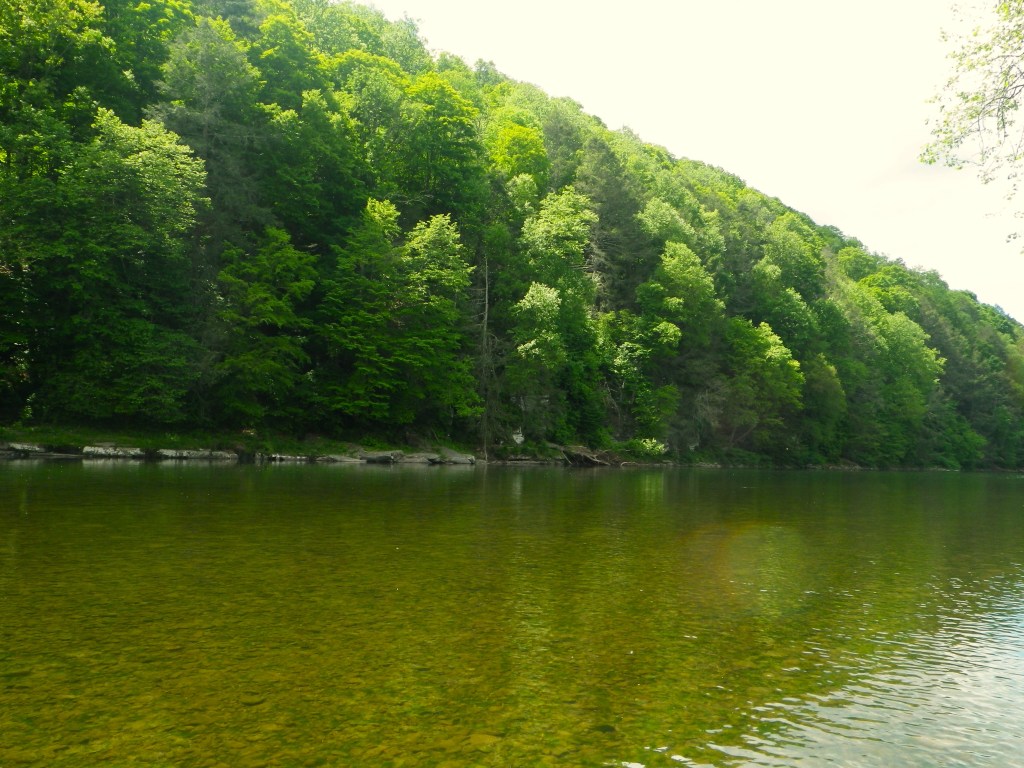
I awakened to rainfall this morning, a full, steady drumming punctuated by the brighter tapping notes against the window glass. It seemed as if our Catskill rivers just reached ideal wading levels, though a few were getting low with warmer weather on the way.
Water temperatures have stayed mostly in the fifties, for our nights have required the furnace to ignite sometime before dawn. The Beaver Kill peaked above 62 degrees yesterday though, for the first time in this last week of May. Fishing has stayed somewhat hard to predict.
The long, wet month brought very high flows, and the drift boat armada flailed the rushing tailwaters in their madness for money over resource. As waters receded, the trout felt the marching feet of two months’ worth of wading anglers tremble the gravel, and their response to flies has been predictable. Nature’s gift of rain included a reasonable dose of mayflies, but the wild trout in well-travelled reaches demurred from surface feeding. It has been a hard spring for the dry fly man.
The appearance of the Green Drakes was welcome, though it proved more than challenging. During five days fishing I could count the number of duns I saw taken on the fingers of my tired casting hand, though the boils proved that the trout took advantage of the rising emergers.
I felt the excitement grow as I waded gently into the pool on Thursday, my brand new Crippled Green Drake knotted to a length of 5X fluorocarbon. I watched for a while, until a subtle sip in a knee-deep flat provided a target. I am pleased to say that the first wild trout I showed this sleep imagined creation to took it solidly. He fought well, a solid heavy brownie taped at eighteen inches, and I was giddy as I slipped him back into the flow. Creator’s rush? I wish I could say that fly was medicine for all of the feeders beneath the film, though I cannot. Inscrutable to the last!
The two best fish taken during those five days succumbed to the quill version of my 100-Year Drake. Imagine, two fish willing to eat a dun, a fly wholly on the surface! The first was the 22-inch brown reported from Monday’s campaign; the second expressed his dining preference late Thursday afternoon.
I had changed locations by several miles, choosing open water with just a pair of anglers in view. I walked a bit, searching the wide expanse of water before me with my gaze. A sparse mixture of Drakes and Gray Fox duns danced upon the surface. I have witnessed trout feeding on the move more than once there, and lofted a cast to every rise or swirl withing range. Nearly fooled, once my fly had drifted well below the swirl that drew my cast, I glanced away toward another above me. The take was hard, in that split-second when I turned, and I struck by instinct at the sound, as the quiet pool exploded!
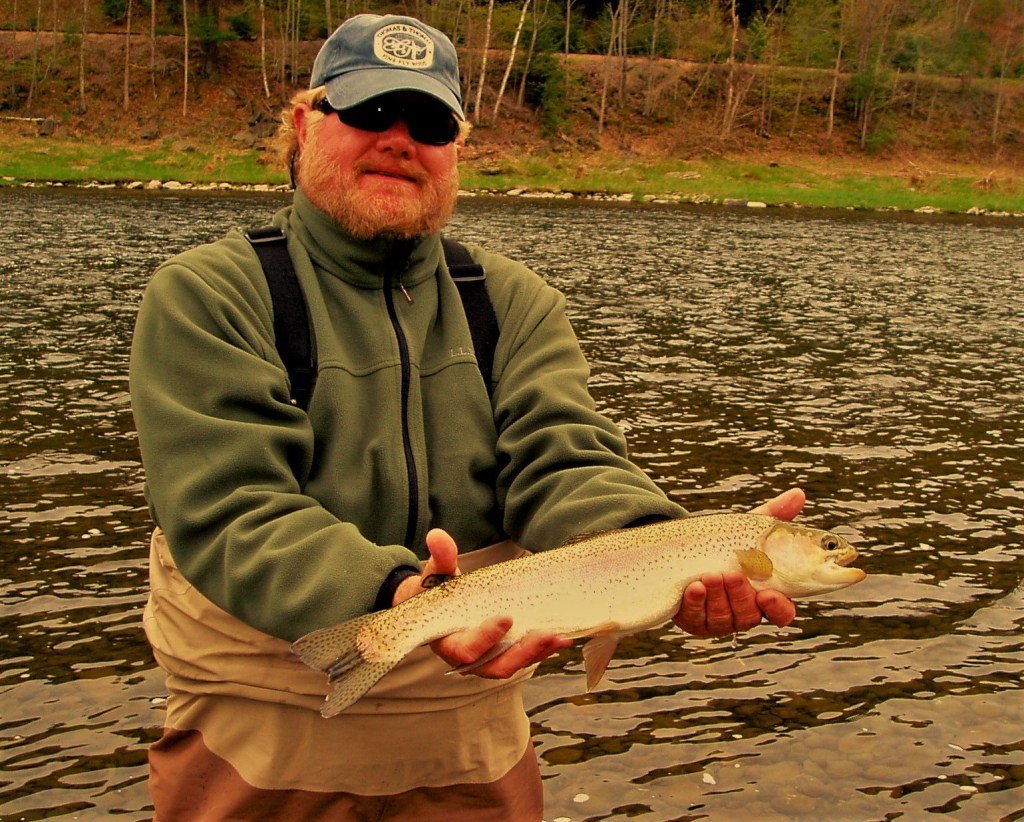
Such a trout! Thrashing, running hard against the drag and boiling multiple times to betray a glimpse of silver! The hookup proved solid, though he gave me everything he had. Wild Delaware rainbows give no quarter, they fight with a mad abandon which straightens hooks and fractures leaders. A bow exceeding twenty inches is a special fish, for the challenges of life in the Upper Delaware rarely allow for a long life span. In thirty years on the Delaware system, I have been privileged to bring to hand five such specimens, this last stretching the tape to twenty-two inches. I wanted a photo badly, but this valiant warrior deserved an instant return to the cold, bright waters from which he came. I submerged the net as I twisted the hook free, turned him loose and watched him streak away.
 Bright Waters Catskill