
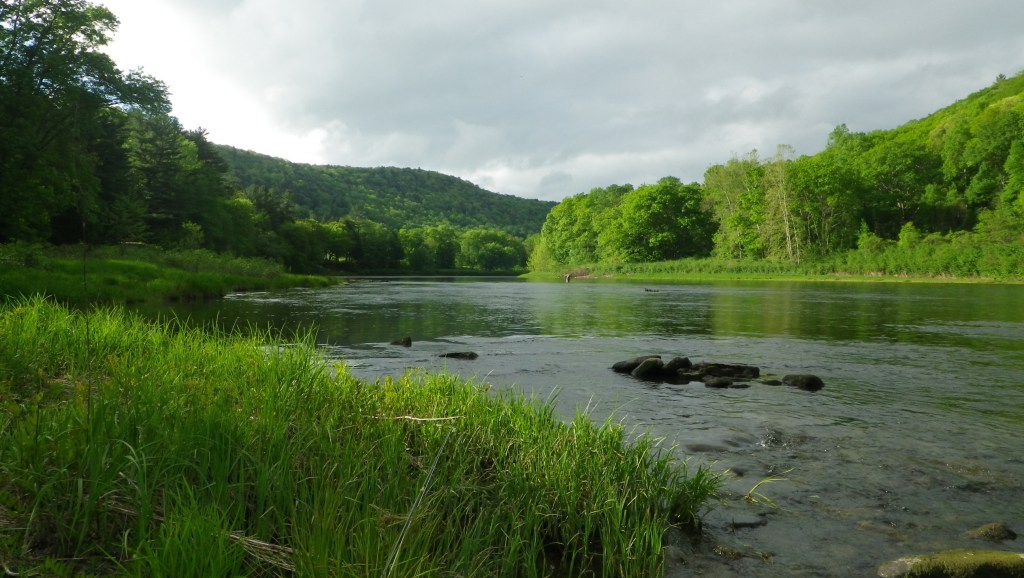
I seem always to be drawn back to the Delaware River come September. This year the water temperatures are cool with the weather moderating over the last half of August, and the flows low enough for very comfortable wading, yet sufficient to allow the trout to enjoy the great rivers’ variety of habitats.
After an easy, extended morning of tying flies, sneaking that fourteenth belated coat of Tru-Oil onto my second rod tip and catching up on some errands, I headed out early on a beautiful afternoon.
I found the Big D quiet with two anglers alone barely in sight downriver. I was looking forward to the afternoon, with that “winds, light and variable” forecast urging me on to wade out and take a closer look at a few bright specks drifting on the surface. Ah, baited! Those specks were not insects it seems, and no sooner did I arrive within reach of mid-river than the wind rose. It blew more than hard enough, and straight upstream, bringing a laugh. Indeed, the Red Gods got me again!
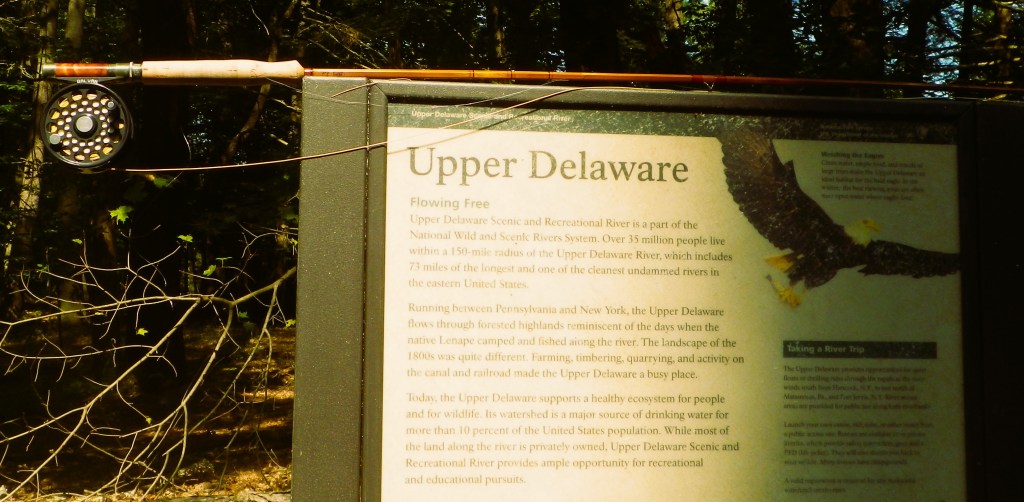
I waded in after a short recon of the rise-less and windswept river, with other realms in mind. A bend or two in the big river’s course can make all the difference when it comes to fishability. On the Delaware’s mainstem, a bend or two takes up a few miles, so wading is not the best way to find a quiet reach.
I noted just two cars when I donned my vest for the second time, meeting one of those fishermen on my walk in. “Shift change” I remarked as we passed and paused to talk. He was young, perhaps college age, and had been hard at it since morning he said. His efforts had been rewarded by a pair of rainbows, “on trico’s, this morning”, and I expressed surprise that he found enough of the tiny little spinners to bring a trout to the surface. He said the wind was still early and, though there weren’t many trikes, he found a couple of fish working once the spinners came down. I wished him well on his intended stop at the West Branch, and continued toward the river.
I plucked Mondays afternoon’s Translucence Isonychia from my fly patch and knotted it to four feet of fresh tippet, figuring that there just might be one or two around during the afternoon, and smiling at the memory of the Delaware rainbows’ fondness for them.
I took a good long walk along the riverbank, stopping along the way to search the surface for signs of life. The first one I saw was a rise too close as I waded in to very shallow water. I offered a few casts half-heartedly, expecting my entry had sent him on his way.
Killing time there, I watched for something to draw my fire. Downstream, in a little flat area between two threads of bouncier current, I finally spotted a single little white wink, the call sign of the Delaware bow.
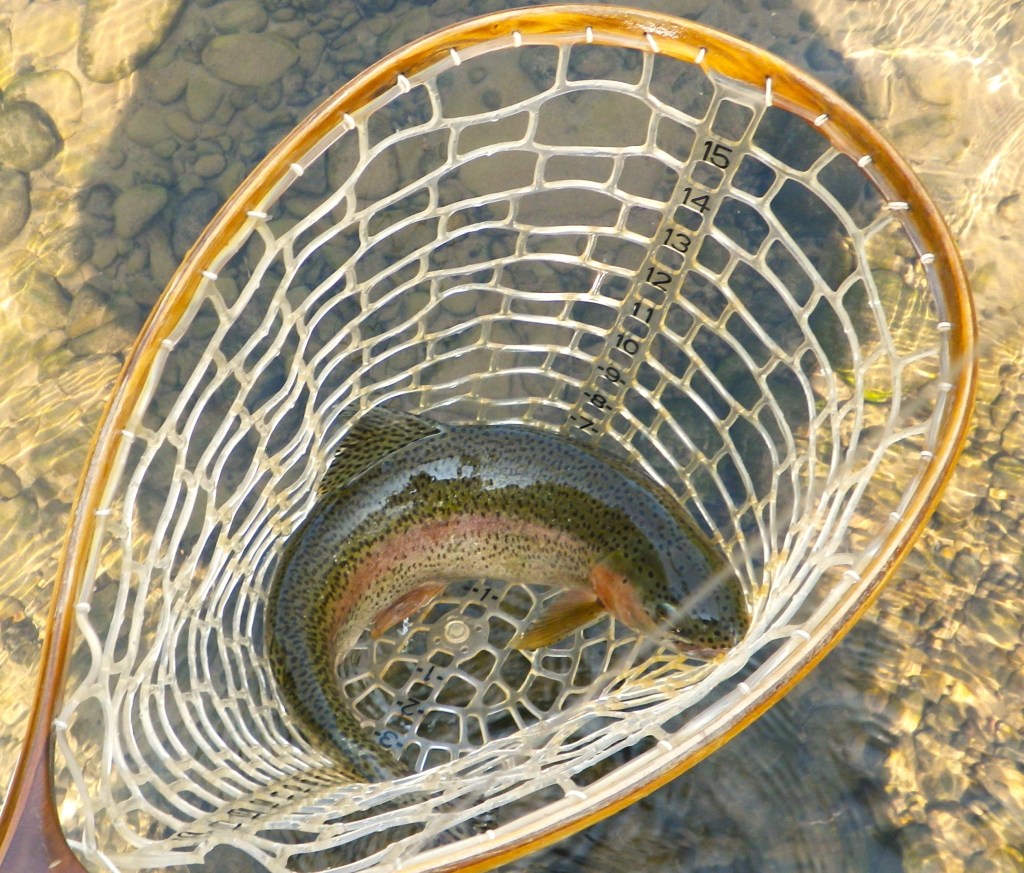
I took care in my approach with a target in sight, working out enough to clear the shoreline trees and bushes with a long back cast. Leaving myself a long, down and across stream shot, I pulled out line and let the big pent go to work. The canted wood duck wing of the 100-Year Dun was visible in the sunlight, and I mended and followed it down with the rod tip each time. I had a pretty good spot on the rise that had drawn me down there, but rainbows like to move around in this river, so I worked the area with successive drifts, working further with each pass. I didn’t get that little white wink, but the fly simply vanished in the middle of a perfect float, and the long shaft of flamed bamboo bowed heavily as I raised the rod to strike.
I had chosen a different line for the pent this time, one of my Airflo Tacticals mounted on a classic 1946 Hardy St. George. It proved to be the perfect choice. This was clearly a big rainbow, and he charged about wringing bright music out of that old English reel. Run after run after run, there was no quit in him.
When I released him, I planned to hold him into the current a bit after such a long hard fight, but he shot away like he was ready for more!
 Bright Waters Catskill