
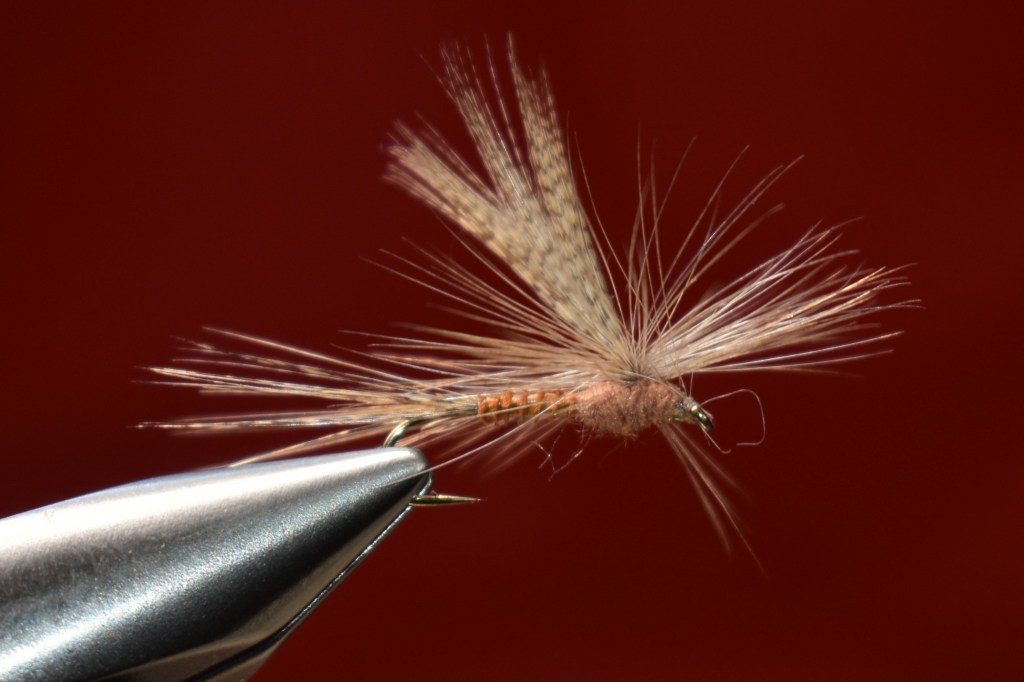
I do quite a lot of reading this time of year and, though I have a deep affection for titles from the Golden Age of American fly fishing, I do very selectively peruse a few newer works. Some, like Jerry Kustich’s new book discussed in my last post, are written by authors whose writing I know and enjoy. One category I generally do not bother with though are new books about fly tying. I have tended to design my own trout flies for the past three decades, building my knowledge of materials and experience on the water to shape my own creations. Yes, once in a while I will investigate a fly tying book for entertainment value, but many of the “great discoveries” touted by the marketing machine have no interest for me. Man does continue to reinvent the wheel.
This summer, two gentlemen from England were kind enough to give a special online presentation to members of our Catskill Fly Tyers Guild, informing of their rather exhaustive work involving high-definition video and still cameras, primarily on the English chalk streams. Peter Hayes and Don Stazicker impressed with their commitment to their cause, showcasing the great deal of work they put into their 2025 release entitled “The Flies Trout Prefer”. I was interested enough that I bought the book, which has languished here in my hideaway ottoman for the past few months. I started in on it this week, and I admit it is holding my interest.
Their basic premise involves the trout stream insects we describe as emergers or cripples, that is the flies that fail to reach the fully hatched stage and fly off the water, maintaining that such are the insects the trout most often eat. Their assertion is certainly not new, as thousands of us who undertake our fishing as observant anglers speak this same truth. The depth of their investigation and the quality of their photographic evidence impresses, though. I have not progressed to the portion of the book where they present their ideas for fly tying to imitate the imperfect insects they champion, I might agree or disagree with their approach when I see it, but they are very likely to maintain my interest to the end of the book.
I have spent a great deal of my thirty-five years of fly tying and design focused upon capturing an image of life in my trout flies. Those qualities include movement, color, shape, size, silhouette, the effects of light reflection and a fly’s attitude when cast and drifted upon the water. A great deal of my best dry fly patterns sit in the film, with their bodies, legs and wings penetrating the water, in recognition of the trout’s observed preference for flies that are more vulnerable, as Messrs. Hayes and Stazicker describe. I welcome the factual reinforcement of my long-held beliefs, as I expect will many anglers.
A good deal of years ago, I gave a presentation at the luncheon of the Fly Fisher’s Club of Harrisburg, offering my conclusions that our trout were learning from the huge increase in fishing pressure and getting harder to catch. Fisheries scientists at that time would have called that rubbish, though they now admit that trout not only exhibit avoidance behavior and increased selectivity as a result of angling pressure, but that they pass these traits on genetically. My conclusion all those years ago, was that our best chance of keeping up with the development of our quarry was the advancement of fly tying, as well as our individual skills of presentation.
I never stop experimenting, for I know that, as the trout’s familiarity with even the best designed and tied fly patterns grows, the effectiveness of those patterns will inevitably lessen. That fact is a part of the essence of the challenge and the magic of this game!
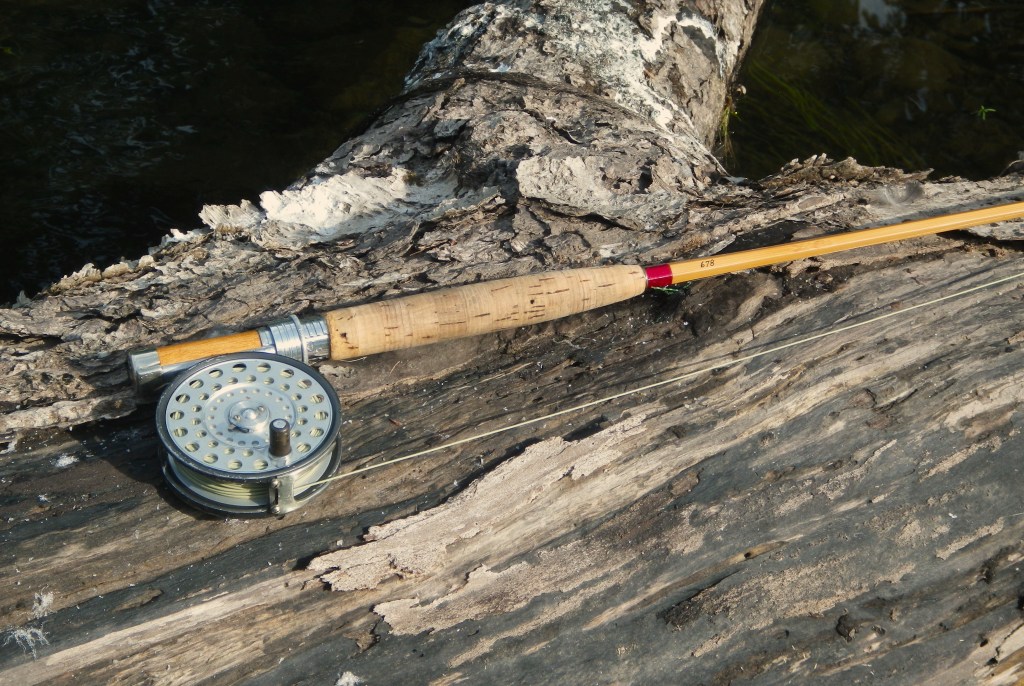
Do not mistake this post to be a denouncement of classic flies, for it is not. I am not the first to note that classic patterns are often “new” to many of the trout that swim in our favorite fishing waters. Many of today’s new crop of fly fishers pay little attention to classic trout flies. They want the newest, brightest, craziest concoctions they can find at their local fly shop. Fish whatever you wish, but if you want to learn and grow as an angler, observe!
 Bright Waters Catskill