
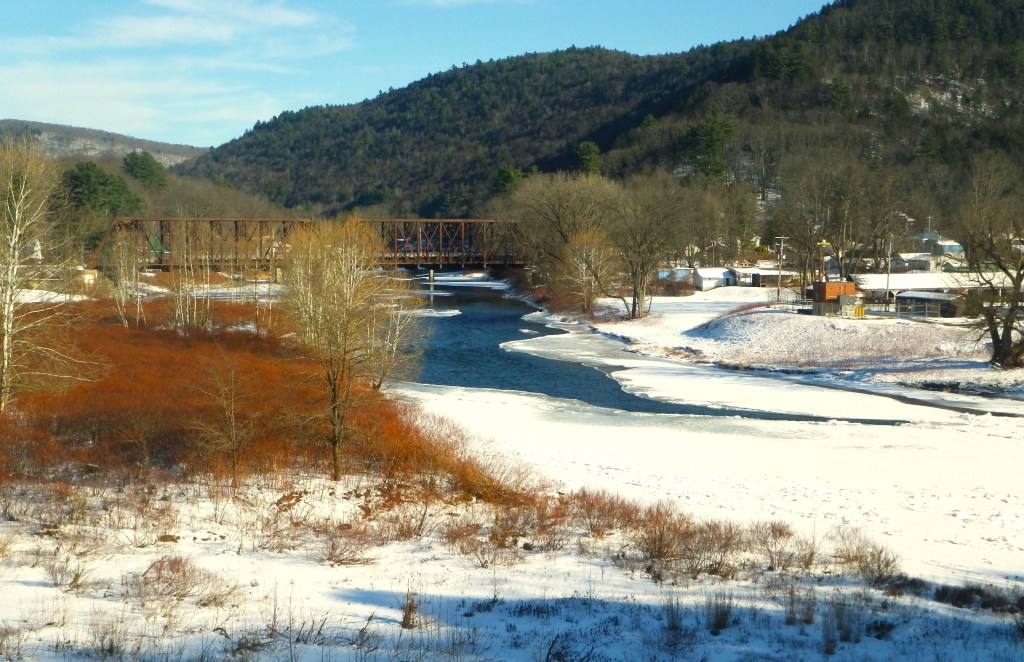
This morning’s strong winds have cleared much of the decorative snow from the trees, but a White Christmas is a certainty for these Catskills. It seems the reflective landscape will stay with us once more, as Friday’s prediction offers nearly seven inches of new snow!
Reality has been outperforming prognostication since our first winter snowfall, where “three inches” fell as six. I cleared three inches from last week’s “inch”, and four inches of yesterday’s “two”. I hope the trend declines abruptly in light of the 6.8″ I viewed for Friday, too much for an older angler to shovel.
Reading produced another idea which resulted in a trial modification of a pair of mayfly emergers. Among the unusual patterns in the Hayes & Stazicker tome released this year, there were some ideas for sinking the rear of such flies involving a material I have not used for more than a decade.
In the nineties, the twisted wire dubbing brush became a “thing” for a time, and I came across a couple of strands in a baggie marked “Rybarsky Sport, Fishing Sport, Angelsport” from the Czech Republic no less, acquired more than thirty years ago at the first Fly Tying Symposium. I set it aside for I had been interested by the aforementioned videographing Englishmen’s use of the material for a weighted trailing shuck, and finally pulled it out and tried the idea on my March Brown and Green Drake emergers this week.
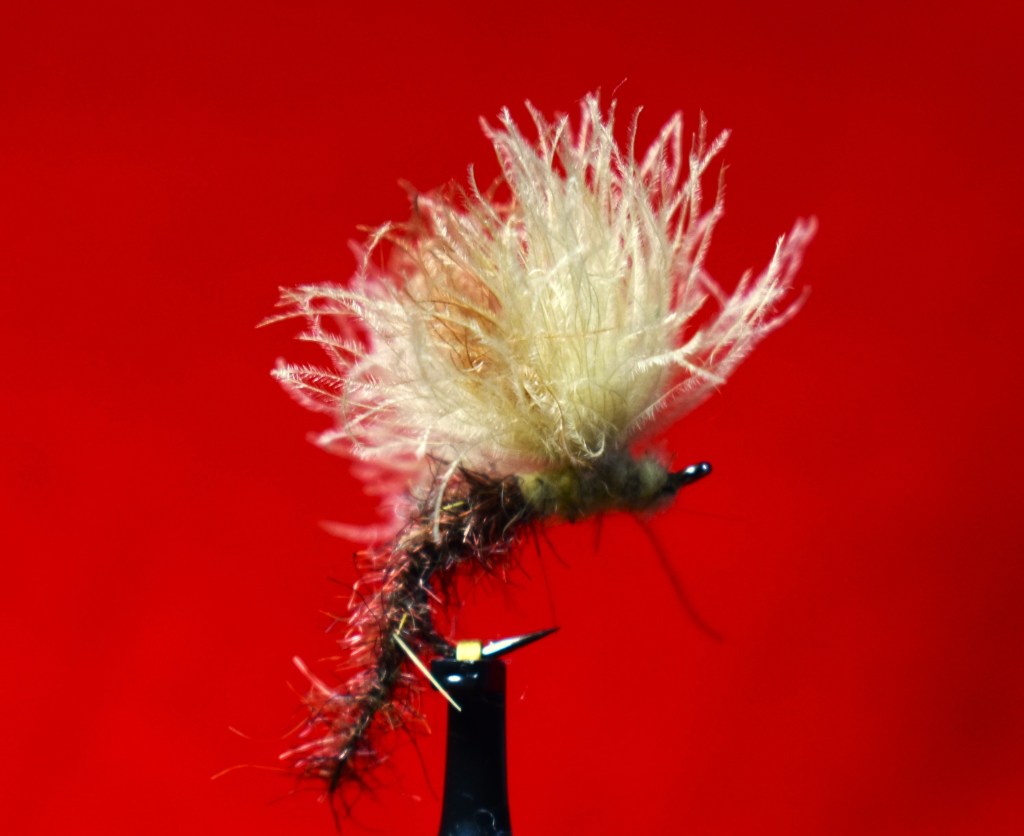
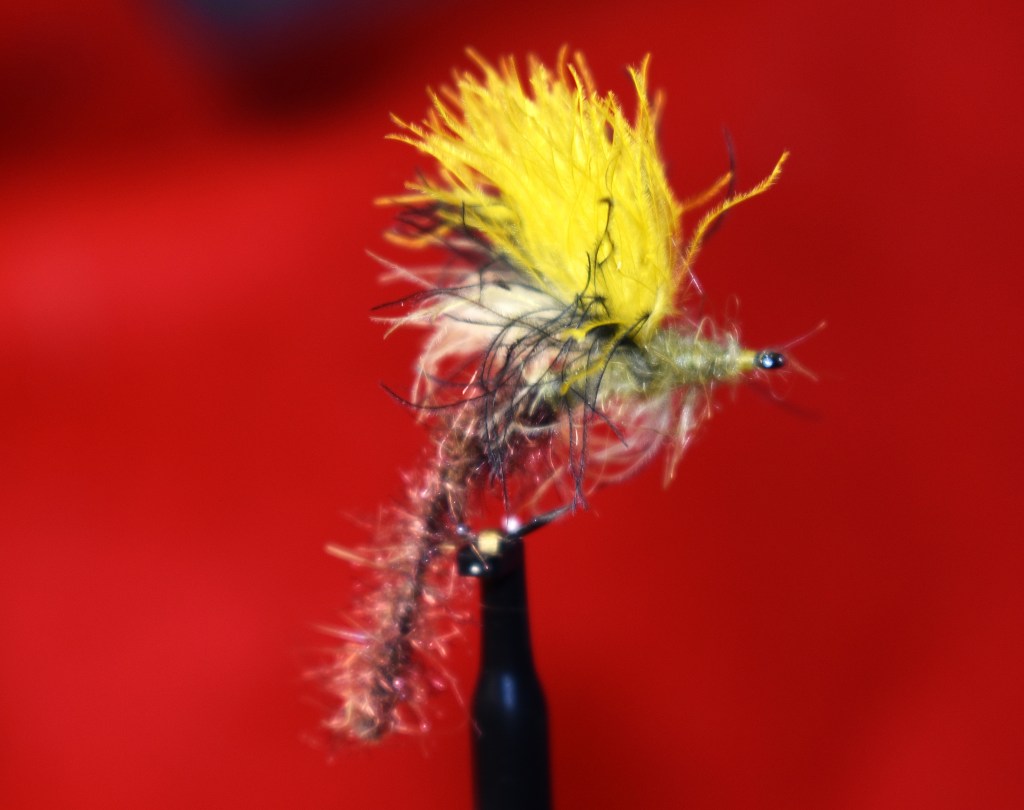
I tried two different styles of hooks that I had in my larder, the local fly shop being closed for the season. A Core emerger hook in size 12 seemed a good base for the March Brown, while a longer partridge Klinkhammer hook (also a 12) offered an even better shape and the greater length required for the drake. I think the Klinkhammer style will be the best choice to keep everything but the wing and head of the fly beneath the film, but trials must of course wait until spring.
I have more of these dubbing brushes somewhere. Once I find them, a Hendrickson pattern will take shape at the very least. The material is suitably sized for larger mayflies, though I seem to recall some of these brushes were thinner than others. I believe the style would be good for the sulfur hatches on our tailwaters, at least for the larger, size 16 flies encountered in May, though finding the style of hook I want in the smaller size may be a challenge.
Perhaps I will find the brushes as I work my way through restructuring my tackle room, for a little fly tying would help pass the snowbound conditions to come!
One of the things I miss this time of year is the chance to go fishing. For many of my years in Pennsylvania’s Cumberland Valley, the limestone springs offered the chance to angle for a Christmas fish. A bright Falling Spring rainbow seemed the perfect emblem for this cheery time of year! During most seasons, the weather would be suitable in December, though having one of those milder days coincide with my time off required some luck.
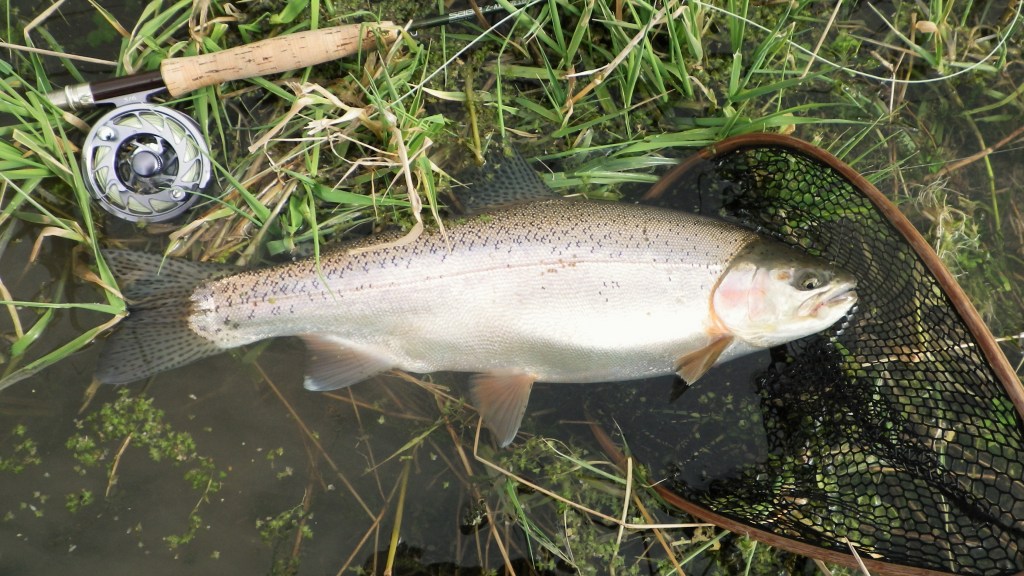
During the fly shop years, I fished mornings during most of the year. I even landed my personal best rainbow on a frosty January morning while trying out a new Orvis demo rod on Falling Spring. The key was always sunlight! Though the aquatic weeds died back in winter, they did not vanish. Morning sunlight started photosynthesis, adding oxygen to the water, and that generally activated the stream life, including the trout. That five-pound rainbow was more than active, leaping and thrashing the weed beds as it fought to escape!
This looks to be the third extremely cold winter in a row, so any chance to wander bright water and swing a fly will truly be a divine gift. If the rivers remain icebound for short periods between thaws, a two or three day warming trend could find me haunting a tailwater…

 Bright Waters Catskill