
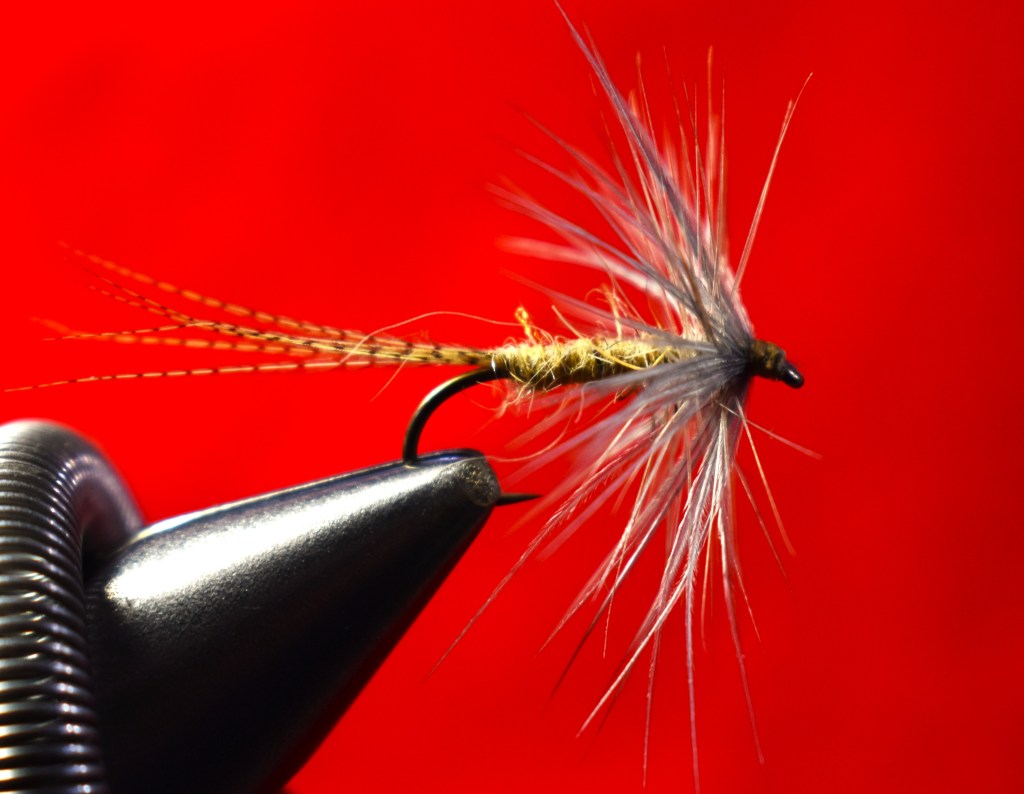
I stepped away from the classic dry fly the other day by tying a few hatch-matching soft hackles. Versatile flies to say the least, I most often fish these in the surface film to imitate drowned duns or spinners. In “Pheasant Tail Simplicity”, the recent collaboration between Yvon Chouinard, Craig Mathews and Mauro Mazzo, I noted the Pheasant Tail Dry Fly the authors presented with interest. Tied in a style that dated to the mid-1800’s according to the trio, a few turns of cock’s hackle behind a few turns of Hungarian Partridge, the fly recalled some of my own thinking, using wrapped CDC behind wrapped partridge for my “Drowned Hendrickson” pattern more than two decades ago.
In corresponding with Fellow Catskill Fly Tyers Guild Member Lou Duncan of late, he mentioned his fondness for and success in fishing various styles of soft hackles. Lou feels that movement in the fly itself is especially important to successful imitation, a belief that remains one of my own guiding principles in fly design. He shared an excellent article with me: “The Soft Hackled Dry Fly – The Phantom Among Us” from the Winter 2024 issue of “The American Fly Fisher”. Ably penned, and brilliantly researched by Stephen E. Wright.
Among Mr. Wright’s many discoveries related to the bi-hackled, dry behind wet tying style he dubs SHDF, perhaps the most surprising is the inclusion of 17 such patterns of fly in Frederick Halford’s 100 Best Dry Flies published in his “Dry Fly Entomology” in 1897. This gives so-called dry fly purists nothing short of holy guidance to tie and use this functional tying style in our dry fly fishing!
Reading the author’s bio and considering the familiarity of his photo, led me to believe he may well have been the gentleman I met at West Branch Angler a number of years ago. I recall a pleasant conversation or two in the Lodge, and at riverside, one of us going the other coming I believe, though I cannot recall the angler’s name. That has long been one of my little quirks of memory I am afraid, forgetting names though remembering most other details of a conversation. In any case, my compliments to Mr. Stephen Wright for a wonderful and valuable article!
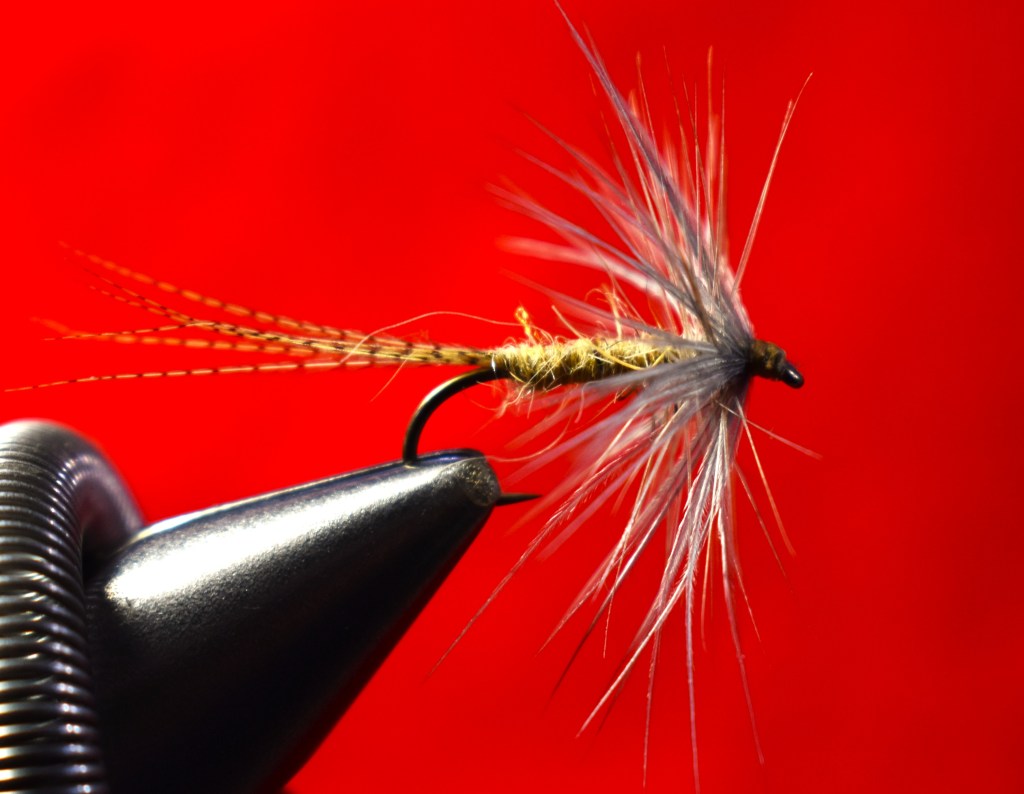
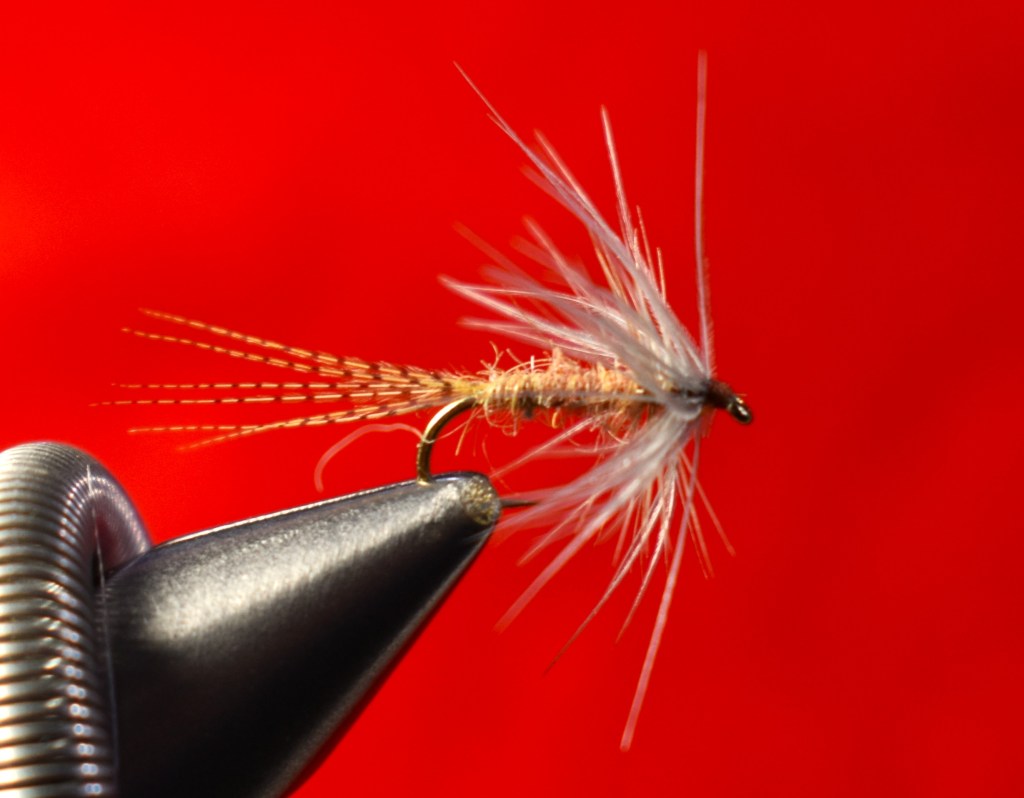
It is good to know that I am on sound historical footing with both patterns, tied with my Atherton Inspired Hendrickson dubbing blend and reddish Beaver Kill Hendrickson blend to enhance their image of life.
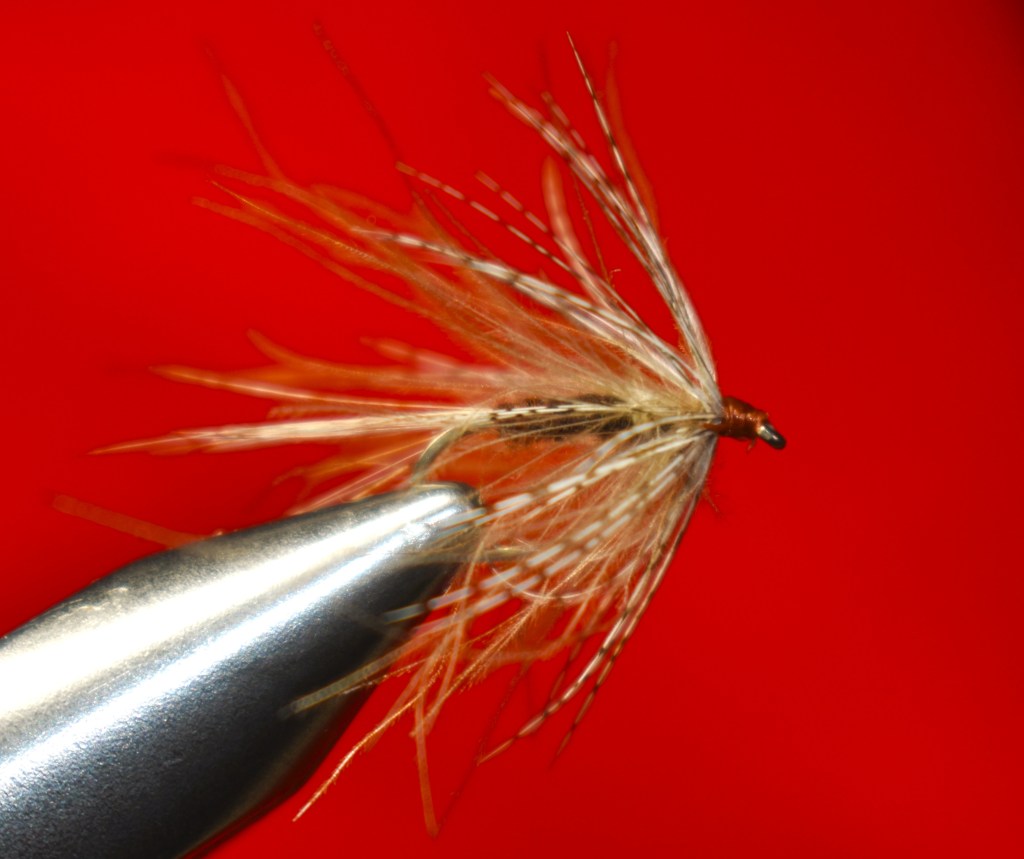
The thought behind the Drowned Hendrickson all those years ago was to perfect the image of a dying Hendrickson dun awash in the film. Sparse winds of natural dun CDC added movement and clusters of air bubbles to simulate the mayflies crumpled wings while the sparse Hungarian Partridge hackle imitated the legs, with both materials moving gently in the currents.
 Bright Waters Catskill