
The sunshine is beautiful today, though its power fades when it tries to transfer the brightness into warmth. Some of the snow has begun to slip off my house roof, crashing down upon the lower slant roof over my angling sanctuary. The periodic booms keep me alert.
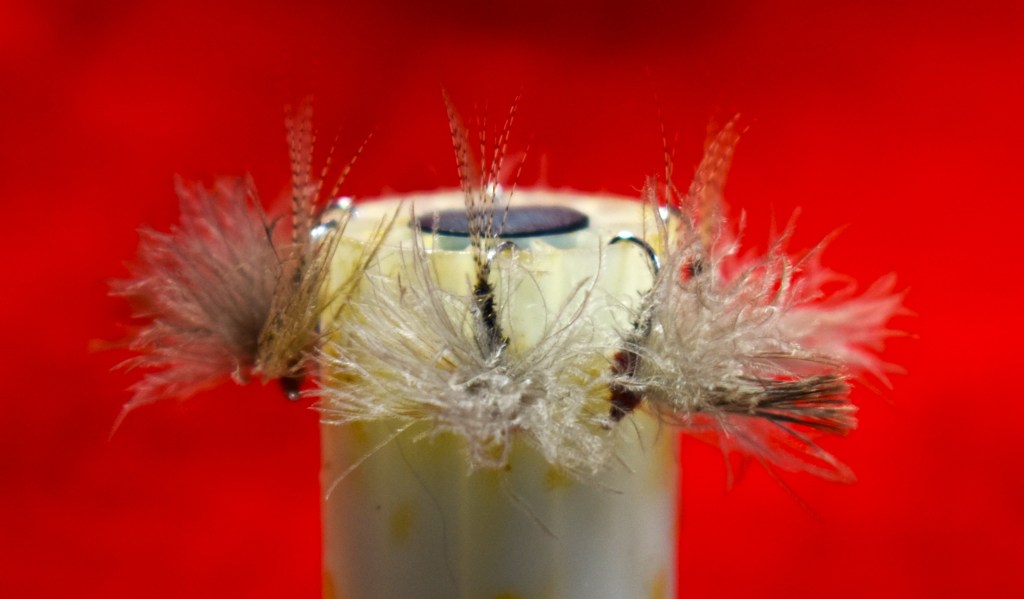
I tied a few more soft hackles this morning and then turned my attention to my new transitional pattern. I have some Hendricksons and March Browns tied and ready for spring, though I decided it was time to work up a version for the Red Quills.
Nature is a funny gal, proven again last April when I was hard pressed to find any of the usually reliable and prolific Hendricksons on the water, the mayfly known as Ephemerella subvaria. Instead, what fishing I had was confined to a few brief emergences of Red Quills, legendarily the same insect, but a size smaller and carrying male equipment for the species.
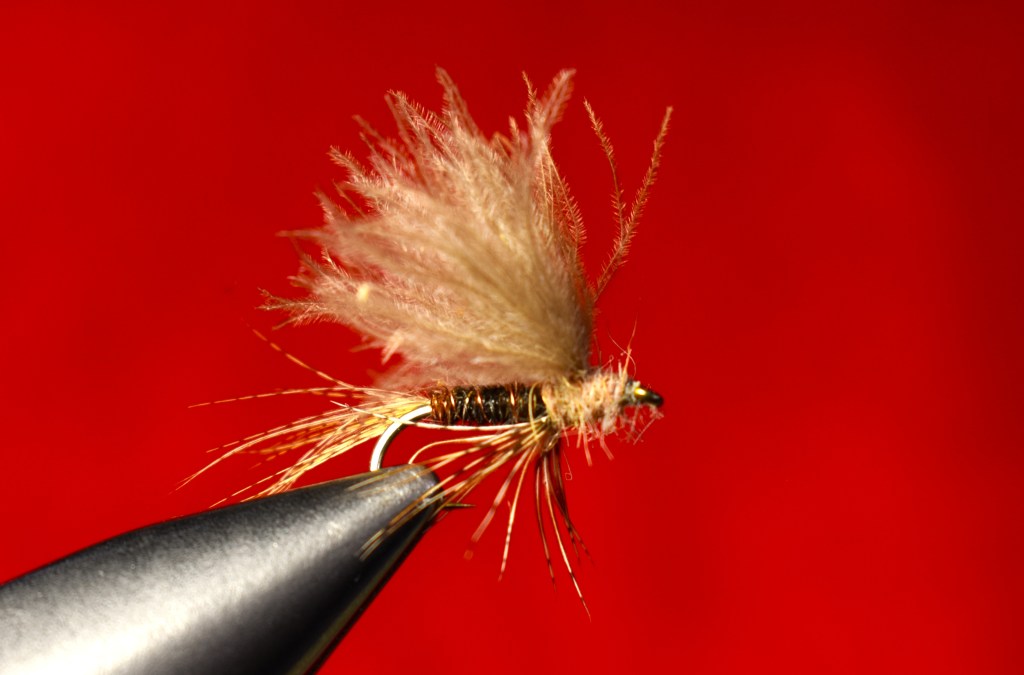
The smaller size 16 Red Quill variation is somewhat simpler, as I chose not to add soft hackle legs, leaving the movement solely to the CDC puff emergent wing. Darrel Martin’s dry fly hook, adorned with a pheasant tail abdomen and wire rib, can be expected to sit down into the water’s surface layer, bringing more of the CDC fibers into contact with currents. There is in fact no “quill” involved, the red of the partially emerged thorax being dubbed with Hemingway’s “Beaver Dubbing Plus” colored Red Wine. Red Quills have not been an every spring occurrence for me, so I hope enough of them show up to allow a fair trial for the pattern.
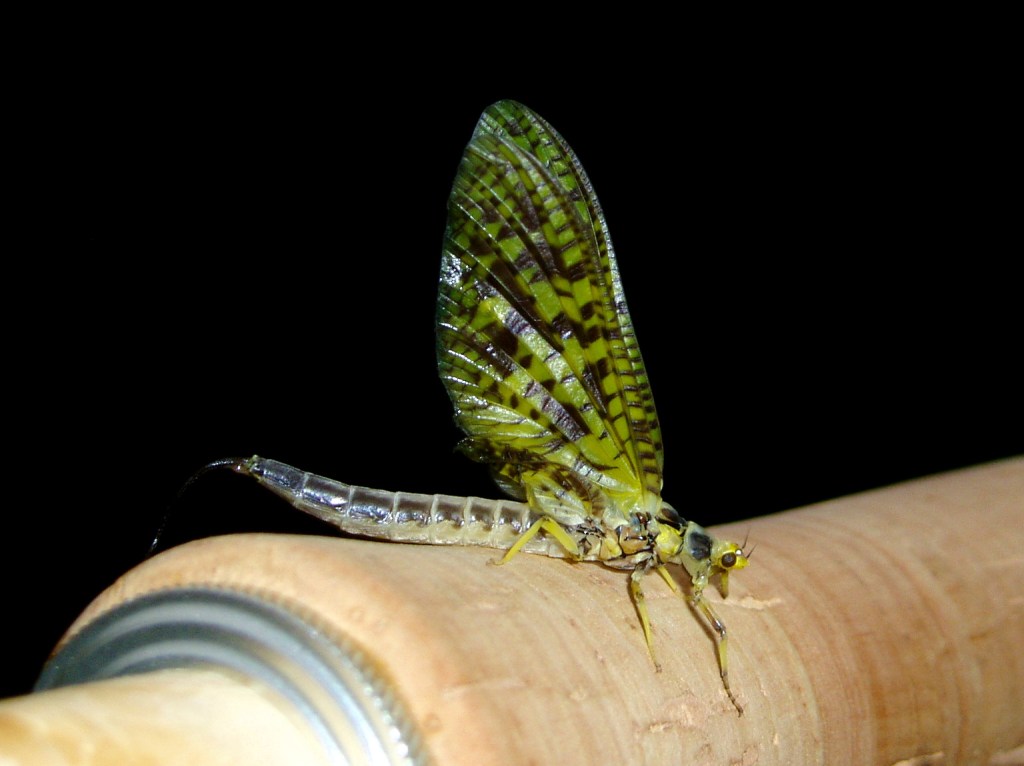
Eventually, I am going to have to take this idea forward toward our Green Drake. Though their numbers pale compared to those the trout and I enjoyed a decade ago, they have still poked their heads up from time to time in May or June. I will have to make my own Darrel Martins for that bug!
Though I have a great deal of confidence in the general design of these new transitionals, the Drake can be nearly impossible to solve in those years when the hatch comes during very low water. In 2024 there were enough to urge some of our larger brown trout to partake, though extremely low flows in late May kept them resigned to eating only the big swimming nymphs. Last season brought lighter numbers and even lower flows. I took a single heavy brownie with a 100-Year Drake, the only fish I observed that took a live dun on the surface.
 Bright Waters Catskill