
-
A Hunter’s Redemption
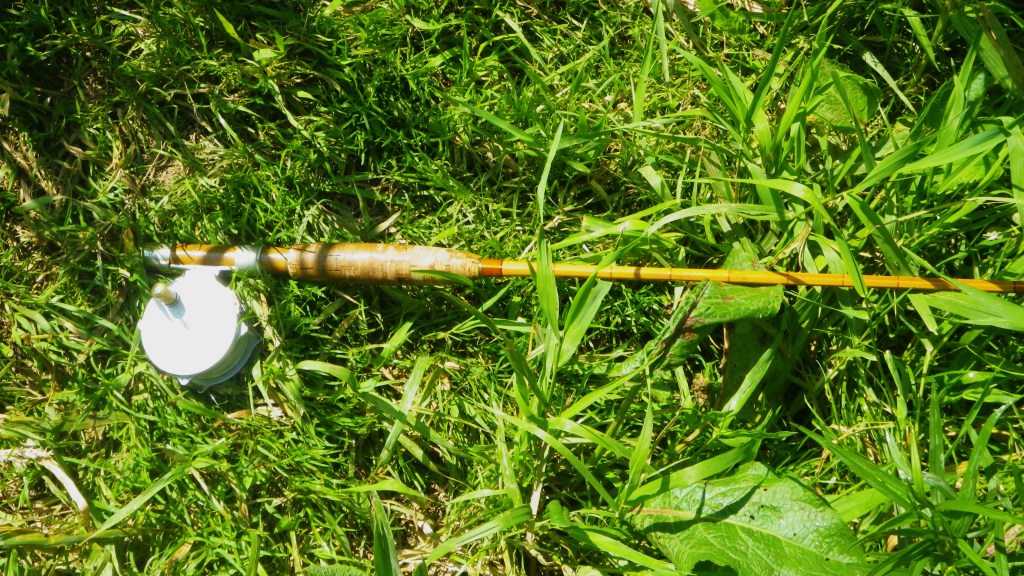
My much-adored Mills Standard, now broken and bloodied. It’s summer over, it rests in the skilled hands of Dennis Menscer for repair, that it might once again cast a long and lovely loop of line to a rising Catskill brown. There are days when Nature’s signals are muted, but all her wild creatures heed the call.
I did not carry a cherished bamboo rod on this day, still reeling from the damage some wild Catskill brown had wreaked on my fifty. I carried another veteran, the rod that was my limestone springs companion, a slender eight-foot Winston boron rod.
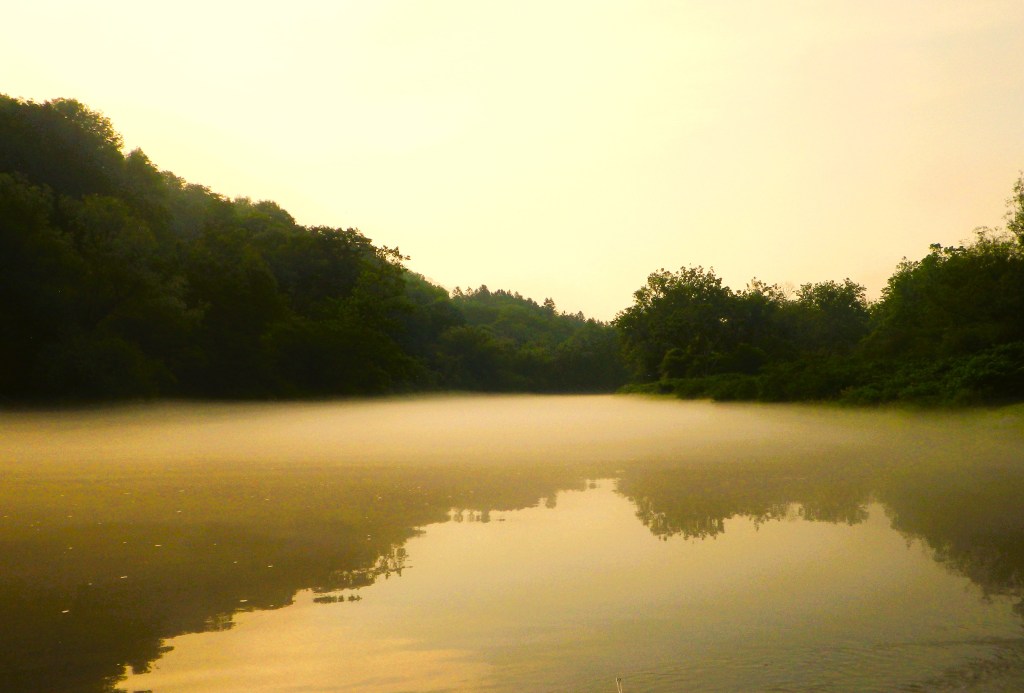
I missed the bamboo, but I adjusted my casting to the very light, quick feel of the Winston, coaching myself to ease up on the power, less my casts strike the placid water with trout spooking force. I lost myself in the hunt, slipping softly through the early morning mist.
The day began in beauty and solitude, though the fishing seemed to tell me that the Red Gods intended to punish me once more. I hooked two, briefly, the hook pulling out quickly on both of them. The short moments of contact telegraphed size and strength, two more missed opportunities, and then solitude was sacrificed to the whims of the Red Gods.
I changed the fly, thinking that might perhaps change my luck, and it did. This season’s now months long low water had me thinking about another variation on the theme of the beetle imitation. I went back to a Cumberland Valley staple in construction, then modified it in concert with the use I had in mind. The Soft Touch Beetle was born, with a pair of them tied on a size 12 hook, for hungry hunters.
Dissecting bits of cover throughout some known trout lairs, the long beetle performed as designed, even when fired under and around cover and foliage with the quick flexing boron rod. The first take was soft and confident, and tightening quickly convinced me I was working with one of the trout lost on that disastrous day the Mills fell.
I urged him from the protection of his lair with the rod heavily bowed, so he ran against the drag down river and away. Ah, what’s this? The Winston wears a modern reel, one with a staunch drag that impeded his retreat, though I missed the sweet music of an old Hardy. Still, he tested every fiber of the rod before I swept the net beneath him.
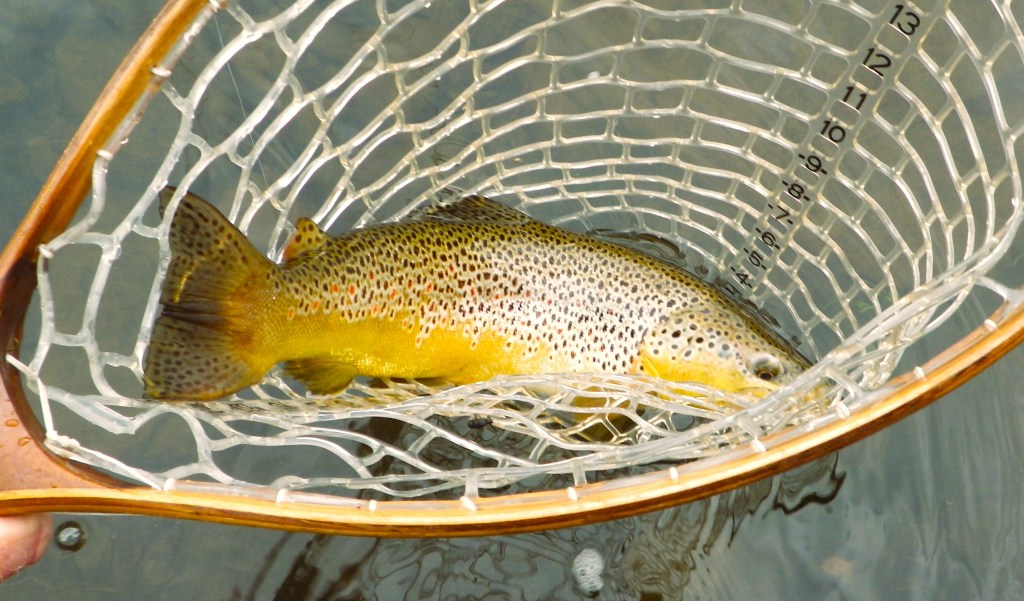
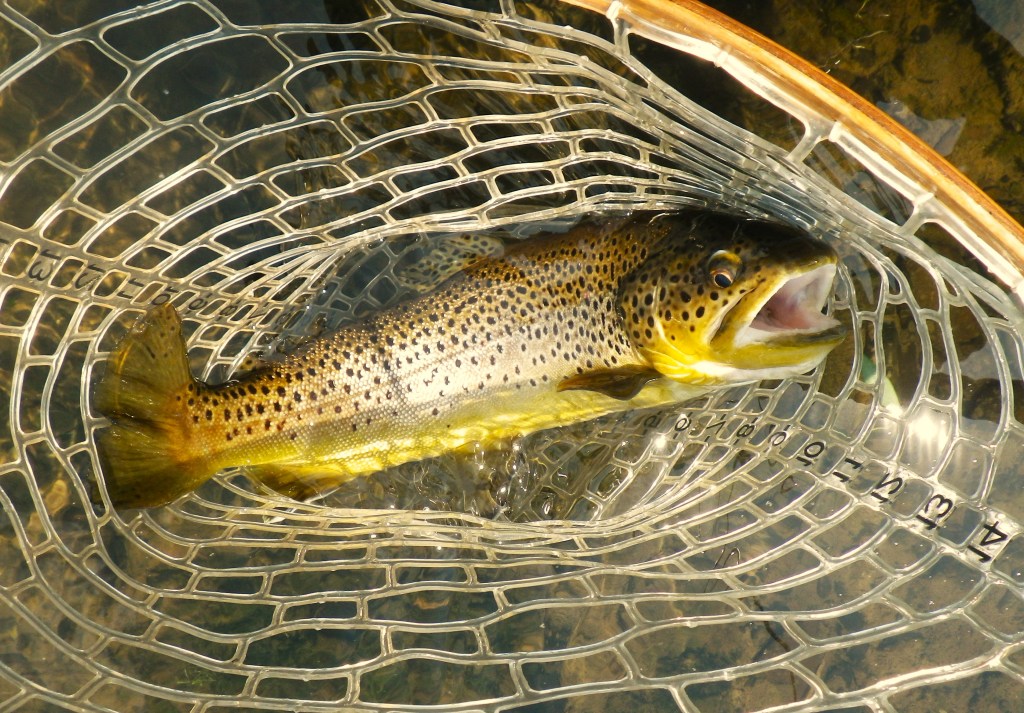
Straightened along the graduated midline of the mesh, his full two-foot length was confirmed; a little redemption for this hunter of the mists!
The beetle impressed on it’s first trial, so I fluffed and dried it’s hackles and continued. A fifteen-inch brownie found he was big enough to get that big beetle into his mouth, pulling so hard he fooled me until I got him close enough for a look. After taking a short break, a rise showed in that same location, and he took it again! I swear it was the same fish.
Returning to the hunt, I sent the Soft Touch to inspect one of those quizzical haunts where great boils have been noted from a distance, with nothing save a sprat or two ever being caught there. The soft, confident ring bulged the surface, and I was in it from the hookset. A hard charger, intent upon breaking my tackle, and it took every trick I had to keep him from the edge of destruction. Netted, he was a dark bronzed warrior, barely an inch shorter than that two-foot mark!
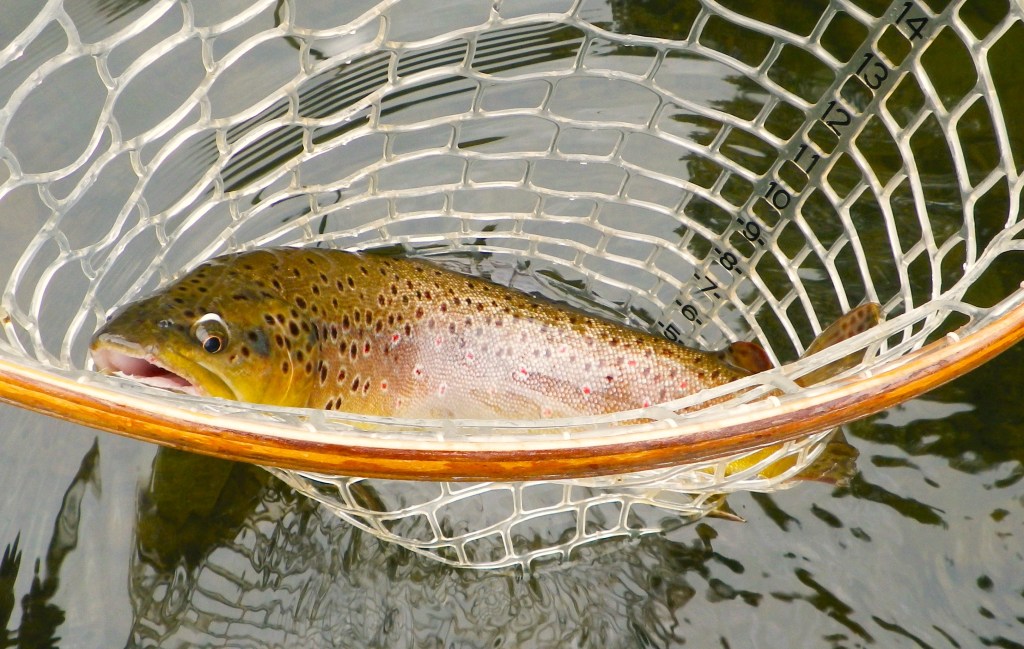
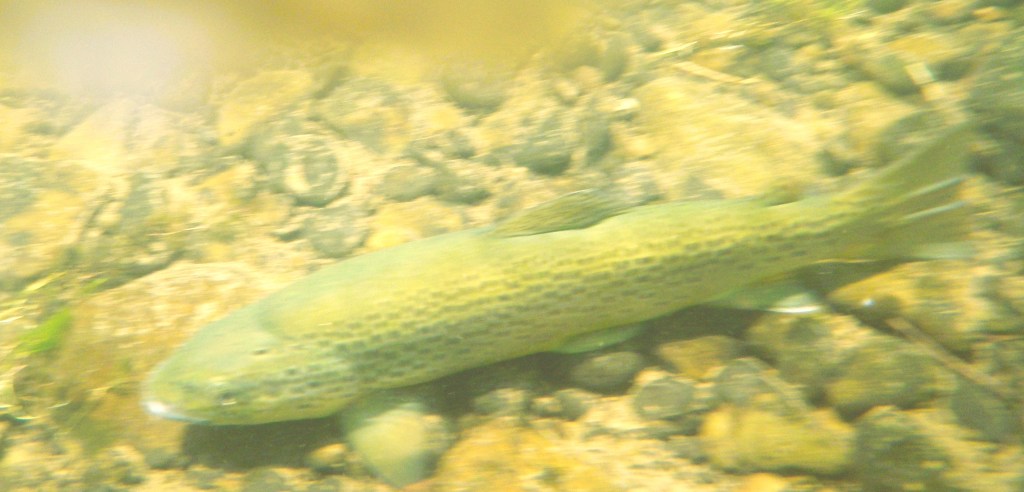
My new beetle was looking somewhat chewed, even after a rinse and dry. I massaged a bit of floatant into it’s herl and hackles and continued the hunt. Grabbed again, I felt one very hard pull before the fly came away, checked the hook and cast again.
The fishing was patient and surgical, and my concentration was rewarded once more. The next beetle eater leaped high when he felt the steel, then again and again he vaulted skyward, a brown that must have rubbed fins with a Delaware rainbow. A prodigious fighter, he too was eventually led to the net, and exceeded twenty inches.
There was another, a two-foot trout I have never seen before. In the net I found that my reaction had been slow, for the fly had caught him in the skin beside a pectoral fin, as he spit the fraud before I struck. A spectacularly colored brown, I offered my apologies and released him. He cannot be counted, for he was not fairly caught, but it is a bit miraculous to have four trophy browns sip that same fly in less than four hours of fishing.
The energy of that amazing morning propelled me through an uncharacteristically long day. I fished nearly nine hours, something I have not done often in my golden years. Some more trout were caught, a few missed, though none like those that left a glow in my heart that morning. On my last cast with that poor chewed and bedraggled beetle, I saw a tiny wink at the end of a long, long cast to the shady bank. I reacted a bit hard, my nerves still firing with the energy of redemption and left the fly where it was. I felt nothing and assumed it had been one of the juvenile trout I had encountered later in the day along that last reach of water. Perhaps, perhaps not… it was a magic fly after all.
 2 comments on A Hunter’s Redemption
-
A Hell of a Day

As usual, our forecast called for winds and severe thunderstorms, their probability beginning around Noon and escalating from that point. It is 4:45PM as I write this, and I haven’t seen a drop of rain. It’s so hot that the winds actually feel wonderful.
Summer thus far has featured a lot of this same scenario, and we simply adapt as best we can. I was on the river by 6:30 this morning, hunting the fog once more.
The first location I chose to fish featured a definitive lack of action, and as the morning marched on without the sun I expected burning off any of that heavy fog, I decided to walk out and try another place. I found action, but it turned out to be the kind of day the Red Gods savor: hell for the fisherman.
My Catskill Classic, a 1940’s vintage Mills Standard, the working man’s version of the iconic Leonard 50 DF. I was fishing this morning with my working man’s 50 DF and it was casting beautifully with a number four weight-forward line. Since it was later in the morning now, I was placing my Adams Grizzly Beetle into every nook and cranny I recognized as capable of harboring a sizeable trout. When I laid the beetle gently down on the very edge of some bank side cover, that lovely spreading ring appeared and the brought the Mills to bear. This trout refused to let me turn him away from the cover. Though the eighty-year-old bamboo strained into a full parabolic curve, he just powered down into that cover, ignoring my pressure. In a second, he cut the tippet on that cover and I was flyless, and of course fishless. I just shook my head, as that was one serious brownie!
I fished on upriver after re-rigging, got myself back into that sweet casting rhythm again and started to fish at a high level once more. There were no takers.
I have been kicking around ideas for a new fly, and things took shape over the weekend. I had done some research last winter to see if there were any forest and woodland species of grasshoppers here in the Catskill region, and I designed a fly to imitate one of those species. The first trial on Monday brought no interest, so I went back to the vise and revised the pattern, tying a smaller, baby woodland hopper more appropriate for early July. The baby was the fly I tied on to fish back down the river.
When big brown trout are hunting a meal, they can be unpredictable. They will move, then linger for something between thirty seconds and thirty minutes in one location. Concentration and stealth are the keys to this kind of trout hunting. The little Woodland Hopper found one of those rest areas it seems, and when I shot the fly long and low into his comfort zone, he sidled up to take a look: there was that sweet ring again. I set up on him firmly and he exploded in a big boil and streaked away from his lair toward the main river channel, while I stripped line to keep up. He turned against my pressure, and the hook just popped free. That’s zero for two if you’re counting, though it was nice to get a take on the new pattern.
I kept working every lie and mass of cover as I waded down, my morning getting shorter with each step. I started to fish the next to last spot with long, soft downstream casts, easing down step by step behind my drift. When I got to the serious heart of the lie, I laid one perfectly above and let her drift. Ring number three, an even bigger explosion, and then the world came apart.
It took me a moment to recover from the shock before I could try to reconstruct the event in my mind. It seems that the trout really blew up when he felt the hook, but once more, it failed to hold. There was a lot of pressure on the rod, as this was one honking big fish. When the hook pulled out the rod recoiled, all forty-five feet of fly line and 15 feet of leader came flying back at me at high speed. The rod tip snapped at the ferrule and slid down the loose fly line. The line, leader and fly were a1l in one ball of tangles, and my fishing was brutally ended in an instant. It took me several minutes to untangle all of that after clipping off the fly.
Red Gods four, Mark nothing.
They do seem to like the Baby Woodland Hopper though…
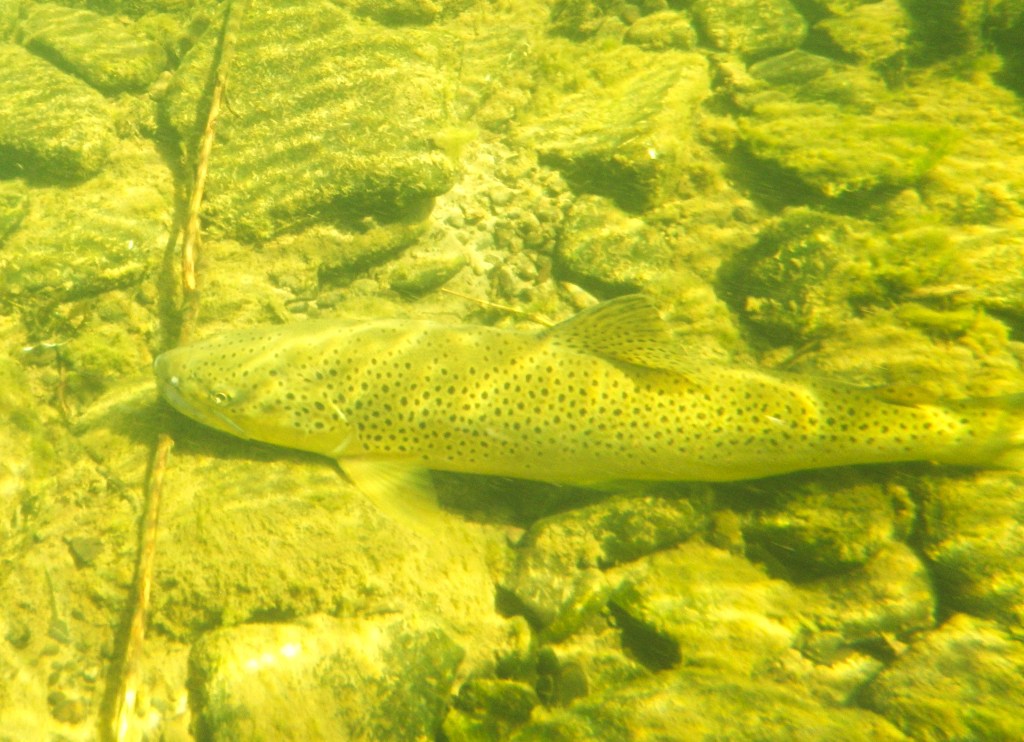
Mmmm, hopper! Yum!
-
The Legacy
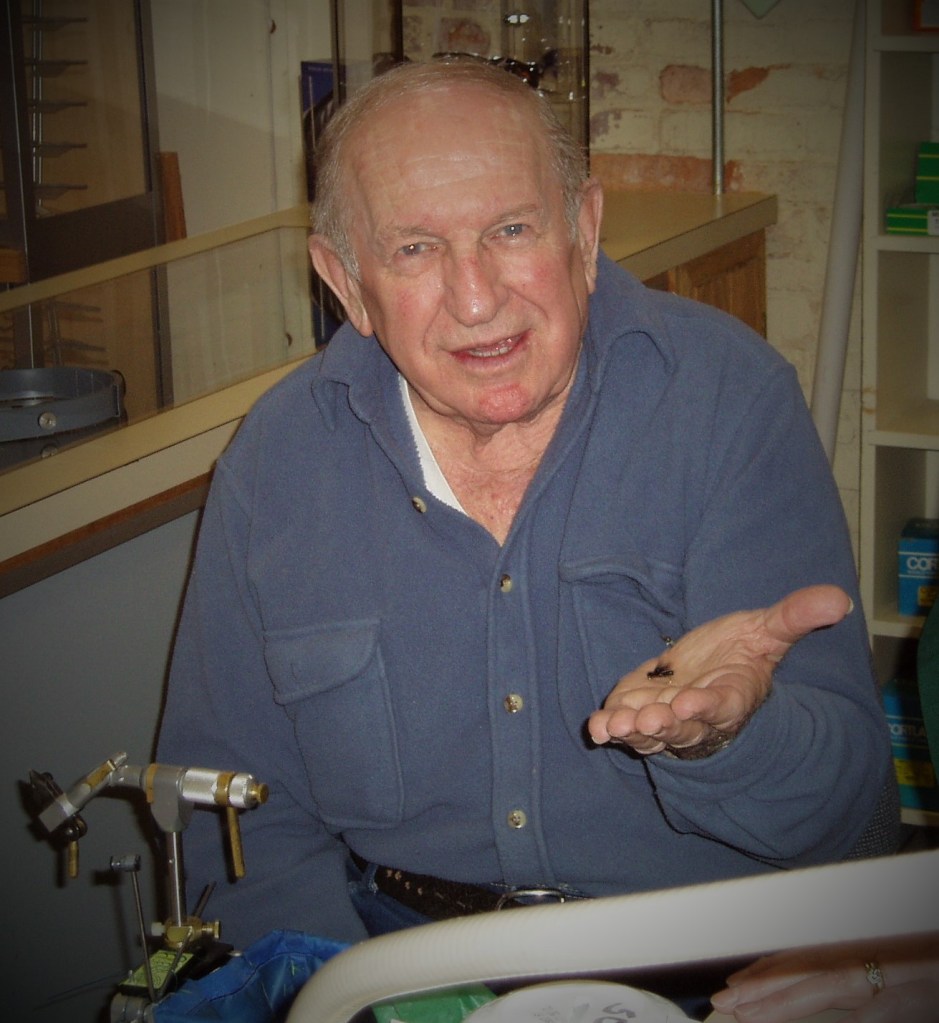
Ed Shenk – Master of the Letort He reigns as the greatest icon in my journey into and through the magical world of difficult trout, for Ed Shenk was The Master, and the Letort Spring Run was the heralded queen of impossible trout waters that captivated me and taught me through many lessons, trials and errors. It is not coincidental that I think of him as summer graces the landscape, for summer was the prime season on the fabled Letort, and all of the limestone spring creeks of Pennsylvania’s Cumberland Valley.
Terrestrial fishing was born upon these waters, for they did not issue heavy hatches of mayflies during the past forty years or more. Their trout were secretive, taking full advantage of the lush beds of aquatic weeds, undercut banks and log jams. The essence of my own fascination with trout hunting lies veiled in the mists of humid summer mornings where the limestone waters meandered gently through my heart and mind.
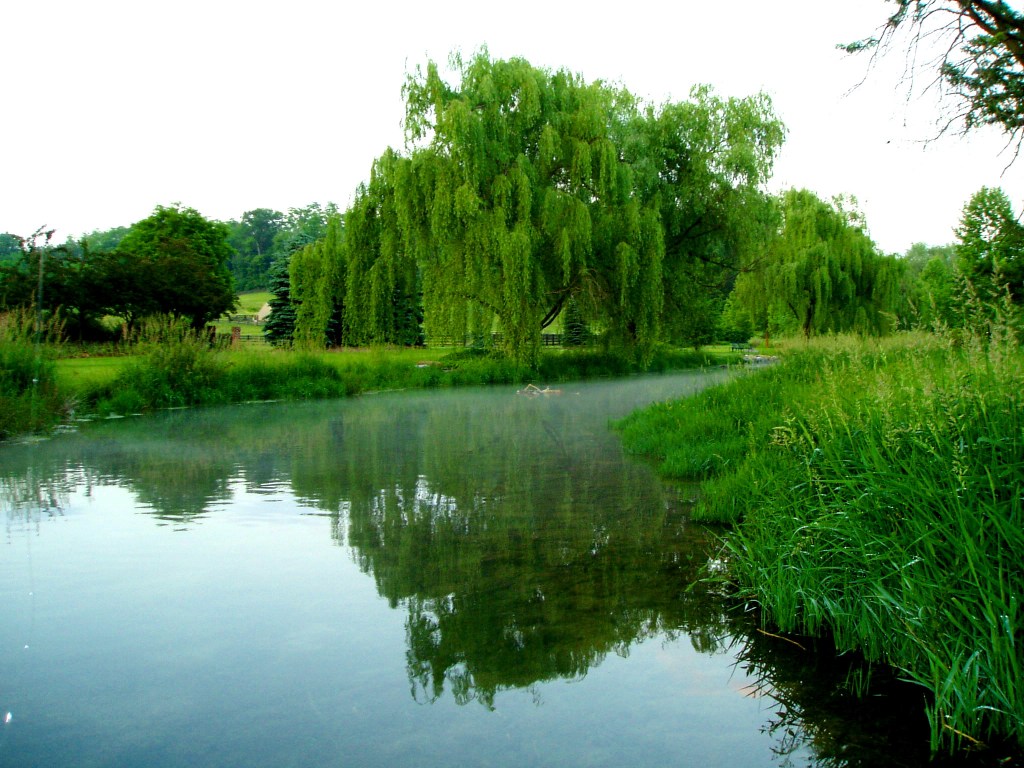
And still I am called to hunt the mists…
Sixty-nine degrees at dawn and 100 percent humidity bound the morning fog heavily along the river. I stalked in the silence and listened. Every once in a while, I heard the rush of a hunter, and began the slow approach in it’s direction. Closing on an area, I concentrated upon the feel as the flex of vintage cane propelled my fly out, to land lost in the mist. Eyes strained to gather clues from a wider patch of gray water as I imagined the drifts I could not see.
Nearing the place where my ears had told me to expect a hunter on the prowl, I searched in vain for any indication of movement. With low light and fog robbing me of the best of my senses of perception, I called upon the ethereal. One moment the fly was out there, unseen, and the next, I knew it had been taken. The arching bamboo transmitted powerful head shakes as I stripped line, the great fish barreling away from his hunting ground toward open water. I could hear his boils at the surface and see the flashes of white water, but the world beneath the surface remained opaque, reflecting the soft gray of the low-lying mist.
The spinning drag of the old CFO seemed amplified by the silence, and my heart beat faster with each ratcheting arpeggio.
I saw him clearly only once my stroke with the net pulled him from the mist shrouded water, the black fly prominently displayed on the point of his maw. He was beautiful!

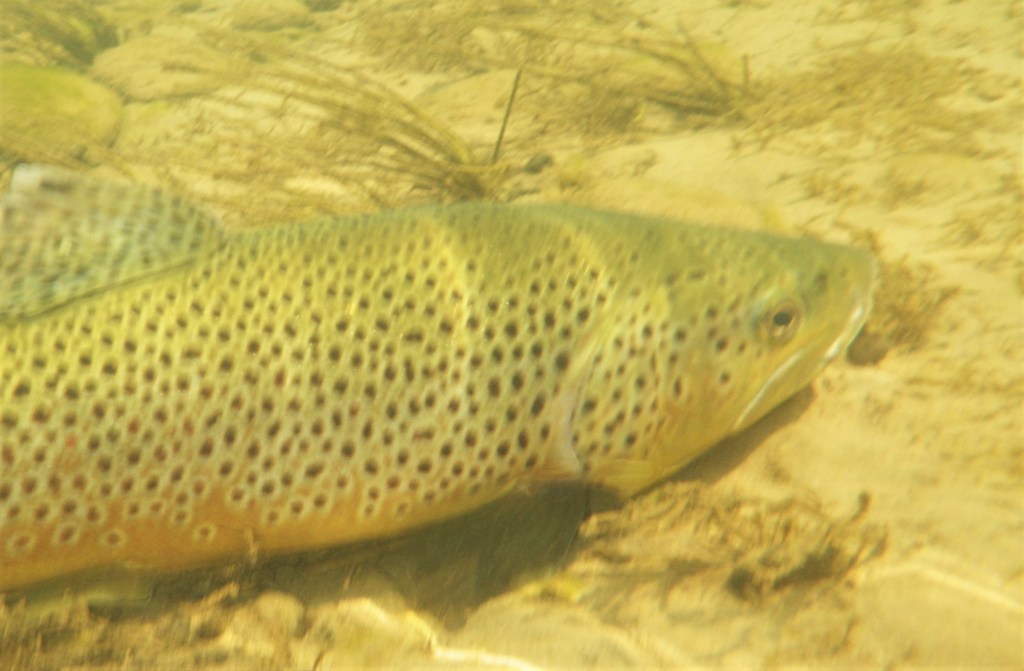
Hours passed before the sun slowly burned through the cloud cover for the few minutes required to cause the surface hugging mist to vanish. I had taken another quality brown trout and continued hunting slowly, searching. A soft sound drew my attention to one small undercut. The cane flexed smoothly, and the little fly touched down less than an inch from the edge of riverbank and water. A spitting rise and I bowed the rod heavily as an unseen monster pulled the tip down hard. We froze there in that pose, the trout powering around some unseen rock or root, wrapping the leader in an instant before breaking the tippet cleanly.
The sun burned through once more and winked at me before retreating back through the clouds.
-
Summer Daze

How easily I have settled into summer. Morning hunts and hot, windy afternoons, three and four weight flyrods, yellow sulfurs and my armada of terrestrials – these are the things summer is made of. I love the taste of an ice-cold beer on the porch as supper crackles on the grill, the ballgame afterwards, and the feel of that special coolness when evening turns to twilight.
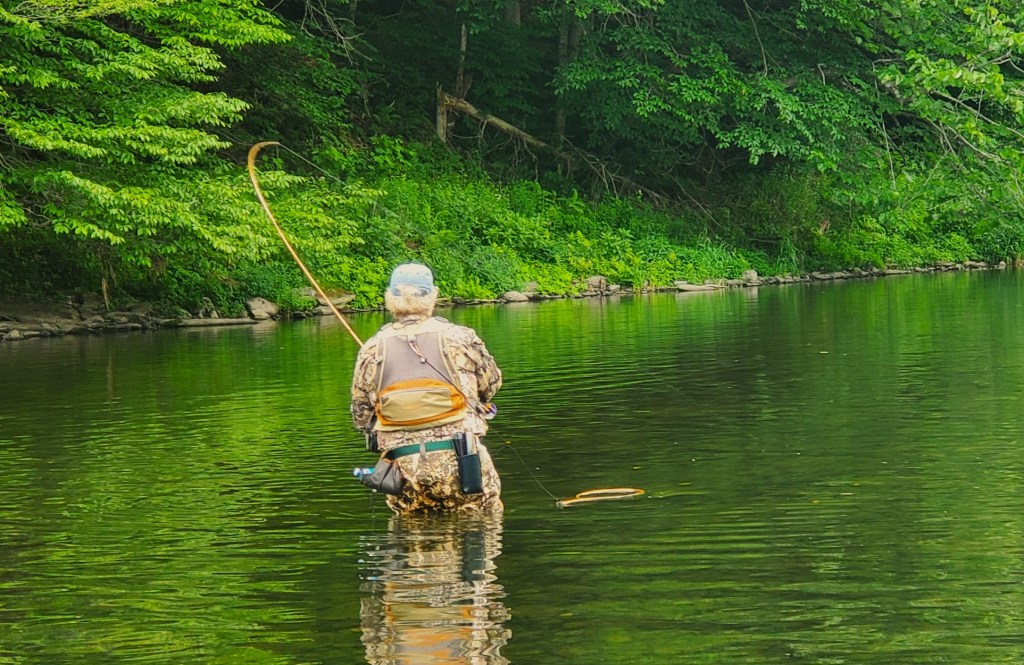
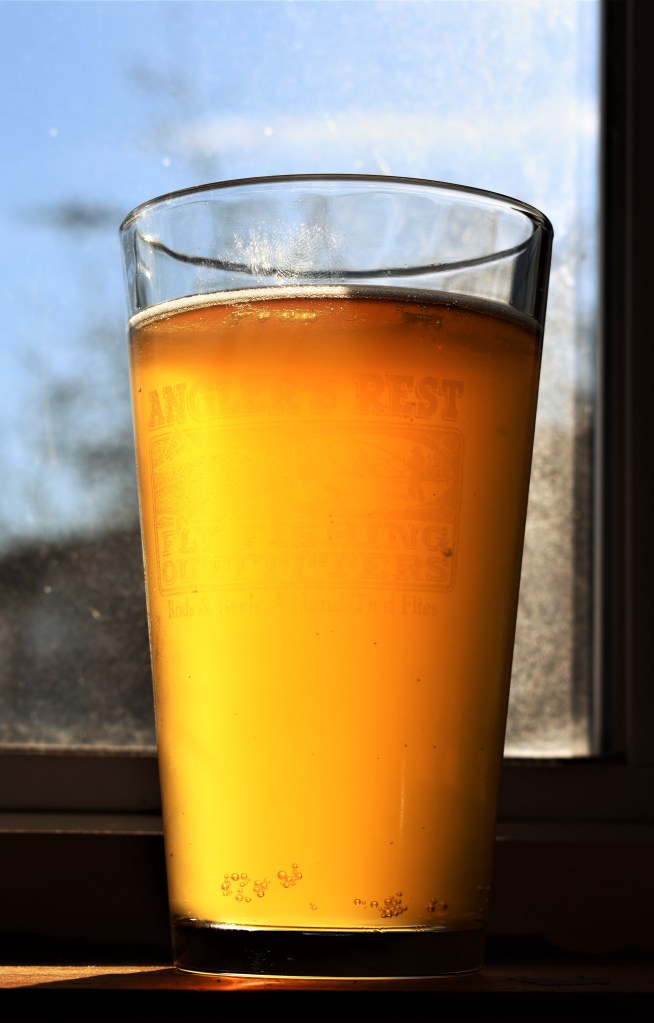
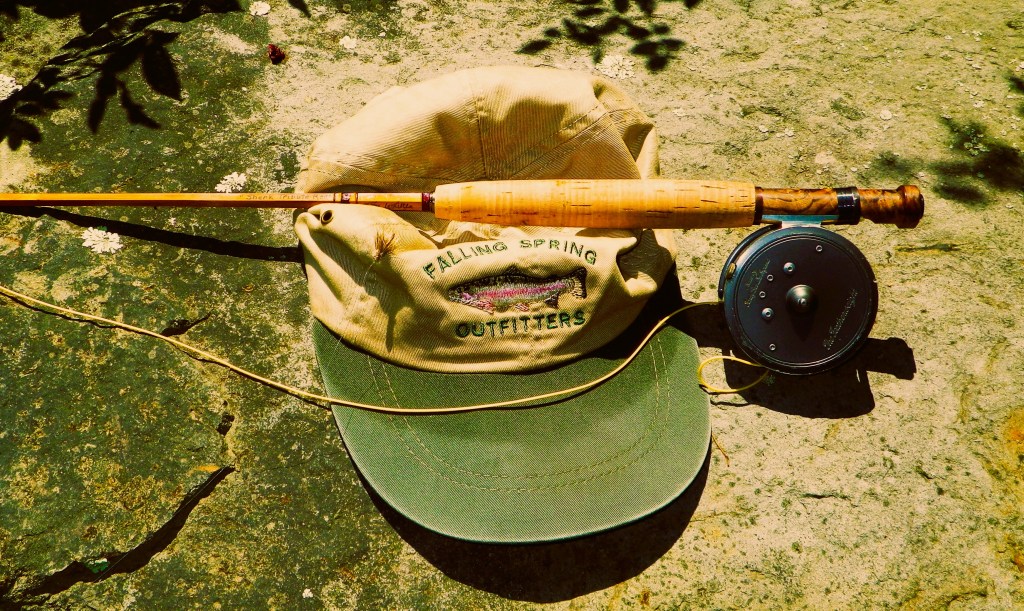
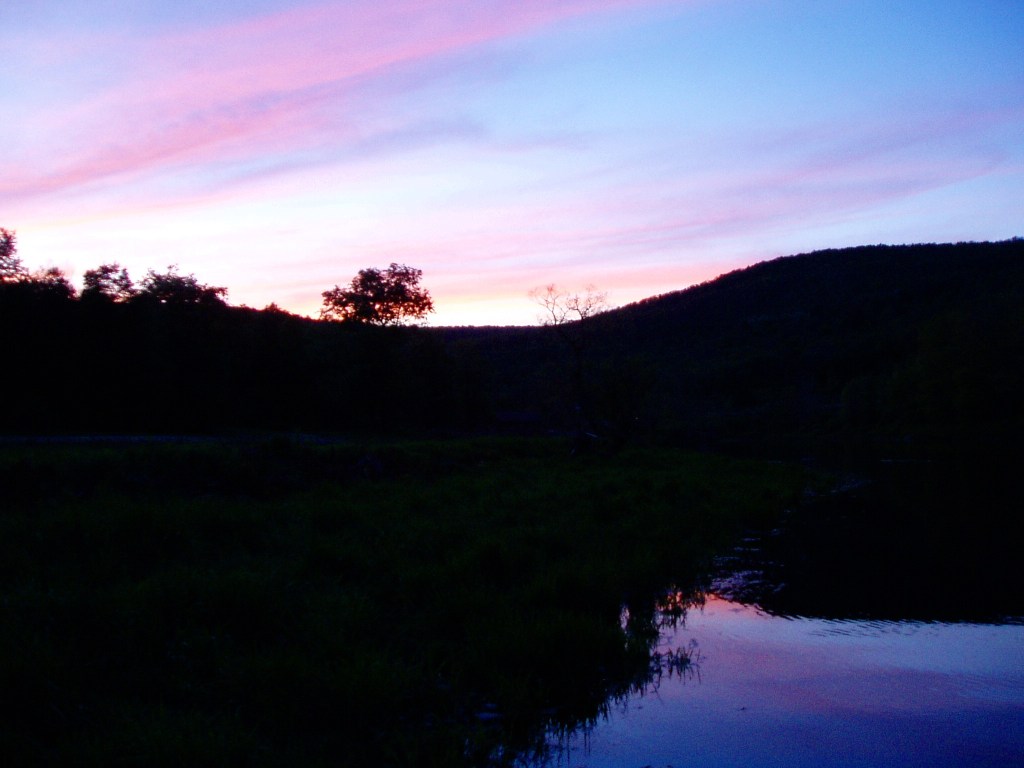
Nocturne I’m taking a holiday today, a rest from the relentless pursuit of angling grace. Flies have been tied, and gear will be seen to before the cold one and the afternoon ballgame tear me away from fishing thoughts.
There is still another pattern lurking in my subconscious, one I have tried to find for quite a long time now. Perhaps it will finally take shape, but for now it’s essence remains ephemeral.
-
July
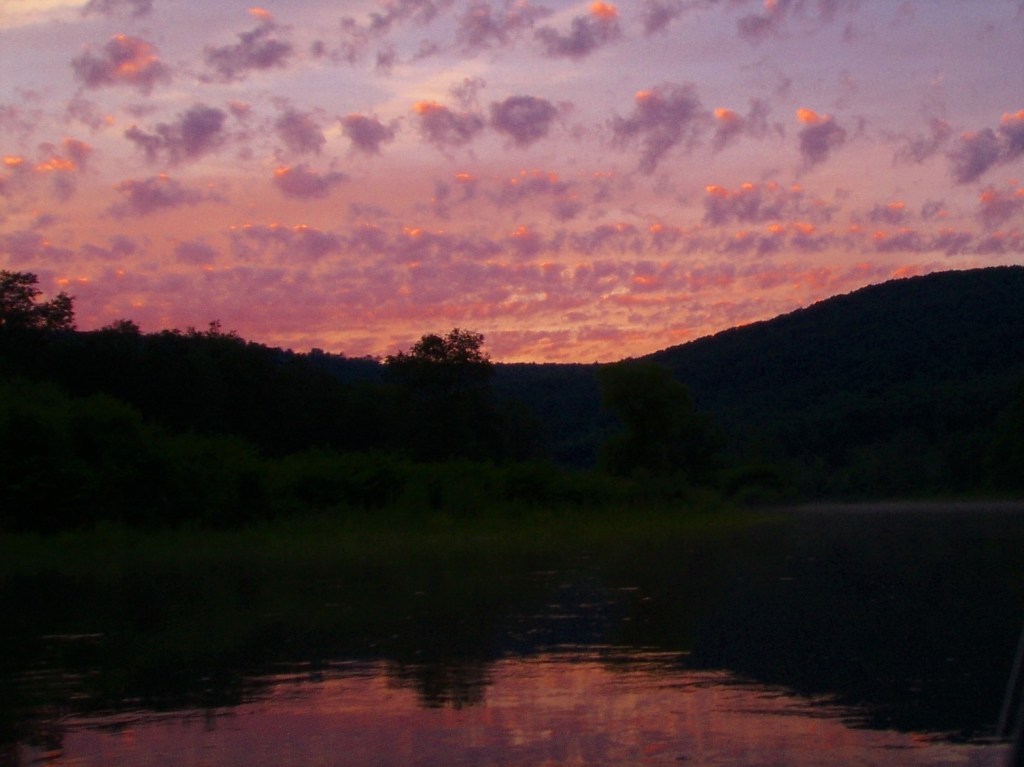
One of countless July evenings on the West Branch Delaware, where a gorgeous sky brings the angler’s day to an end. July is finally here, and it comes with it’s sack of memories. For many of my traveling years, the July Fourth holiday marked the finale of my Catskill season. The summer sulfur hatch on the West Branch was the draw, along with the open pools devoid of spring’s crowds.
I remember fishing down at the Barking Dog Pool when there was a three-car parking lot offering a two-hundred-yard walk to reach the river. Come July, there were no other cars save mine. If I managed to encounter another angler somehow, the place seemed crowded.
The wild browns were difficult even then, for the tiny sulfur duns would burst from the 47-degree water into the 90-degree air and dance all over the surface; miniature mayflies screaming eat me to the trout. I fished a lot of very simple flies to take the big brownies back then, thread bodies and CDC wings, with either 3 pale hackle fibers for a tail or a few strands of crinkled Antron yarn for a trailing shuck. The flies were light, the CDC wings buoyant, and their fibers offered just a bit of movement as the near weightless little flies bounced on the cold, bubbling current.
It was rare to see a drift boat on that upper reach of river back then, and I waded, immersed in the technical fishing for hours on end. Blissful summer before the long separation of August, September and on through autumn and winter.
Today one gets in line and takes his chances to fish that same water. There is a wader for every fish, and the boats come in flurries, their hurried oar strokes putting down the rising trout along the riverbank. There was a time when large trout frequented the shallows all along the eastern banks, sipping sulfurs. The huge parking lot and boat ramp took care of that activity, and today it can be nearly futile trying to find a rise along the heavily fished western bank. The sulfurs no longer come as they once did either.

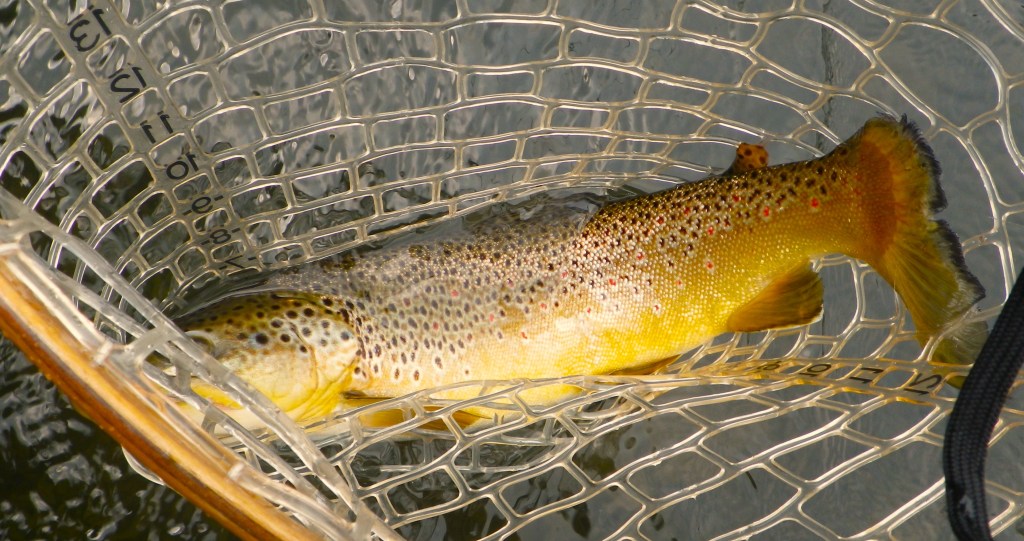
Sunset on ‘The Dog” The challenge is different these days. There are still large wild trout swimming in the West Branch, and a hunter can find them, though much is wagered on luck to reward his efforts. The torrent of fishing guides know all of the old spots, and they often line up, anchor and wait their turn two or three boats deep. The trout adapt, and I have found them some days in the forsaken waters, too shallow, too lacking in cover to hold good trout and not worth the time of all those professionals.
The difficulty comes from the fact that trout will not stay long in nothing water. A bounty found today may be reaped once or twice, but they will not remain once fishermen discover them. There is always more empty water to be searched; with the feet, the eyes, and the heart.
-
Catskill Summer
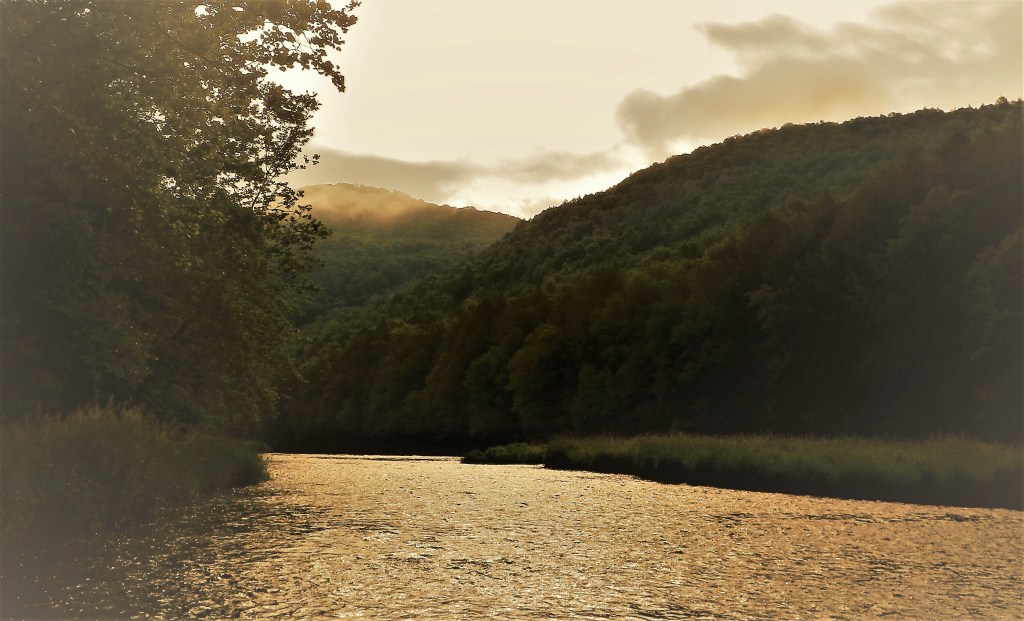
After an extended run of excessive heat, we have finally found our way to a few beautiful days of Catskill Summer. It is five AM and forty-six degrees here in Crooked Eddy.
I wish I could say that our streams and rivers are running swiftly with a healthy flow, bolstered by the wealth of rainfall predicted of late, but the truth is we received little to none of this forecast bounty. Just the other night, we anticipated nearly in inch of life-giving rain, but by the time the ballgame ended around nine the forecast had changed to 0.03 of an inch. When I checked it before bed, it was down to 0.02 inch, and I doubt we got that.
Fishing has been, well, interesting of late, as the weather has gone from hot to pleasantly cool. A few days ago, I enjoyed the cool down and stalked the water early. I found some fun with the old slow take.
My light hoodie felt very comfortable in the chill of the early morning mist, and I thrilled to see mist wraiths again wandering the mountain ridgelines.

Summertime morning memories Summertime trout can be dainty feeders. When the largesse of the spring hatches has passed to memory, wild fish hunt for the odds and ends of Nature’s bounty – leftover spinners, stray caddisflies or yesterday’s drowned duns and terrestrials. They approach such fare with care and suspicion at times, for gone are the days of attacking fluttering mayflies during a heavy hatch. Such fish must be hunted, and anglers should beware the old, slow take.
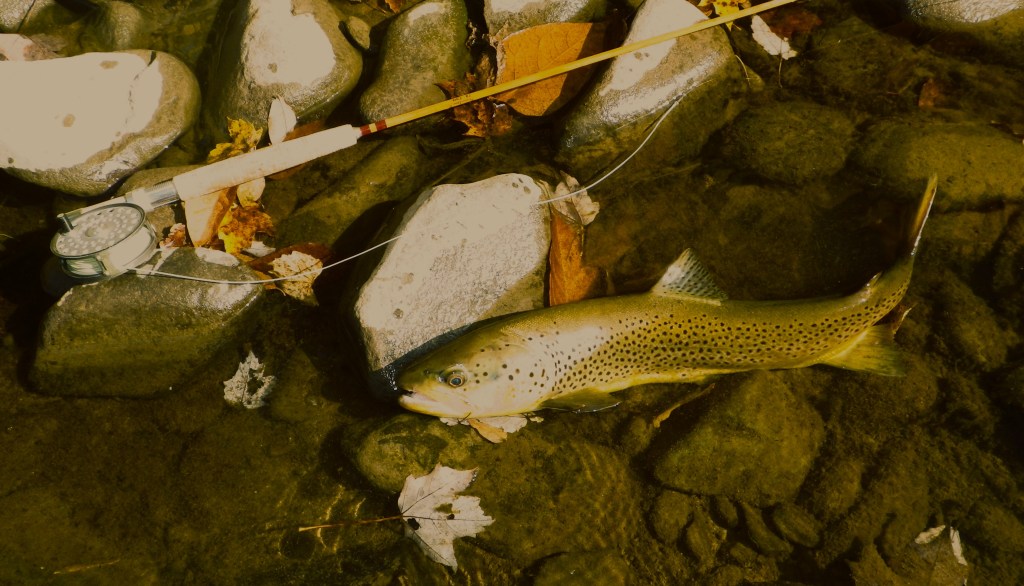
My first that morning betrayed his presence just barely, and my beetle slipped gently into his consciousness. He kissed it softly, and my pause was correct before the arch of the rod brough immediate action. A twenty-inch brown lets you know what he is about just as soon as he feels the steel, and this fellow wasn’t pleased to be pricked by his carefully chosen breakfast. The side pressure from the rod led him from harm’s way, where our struggle went my way.
Another opportunity found the old slow take getting the best of me. It was just the softest little rise, no sound at all, even in close quarters. My long rod was a smooth gentle four weight, and my sidearm cast slipped the beetle in beneath the branch like a feather. I waited, waited a long time as summer’s reduced current slowly carried my offering to the goal. Too long for my old nerves it seems, as I snatched the fly away as the tip of his neb poked through the glassy surface and took my fly!
Ah, summer!
-
Mission Aborted
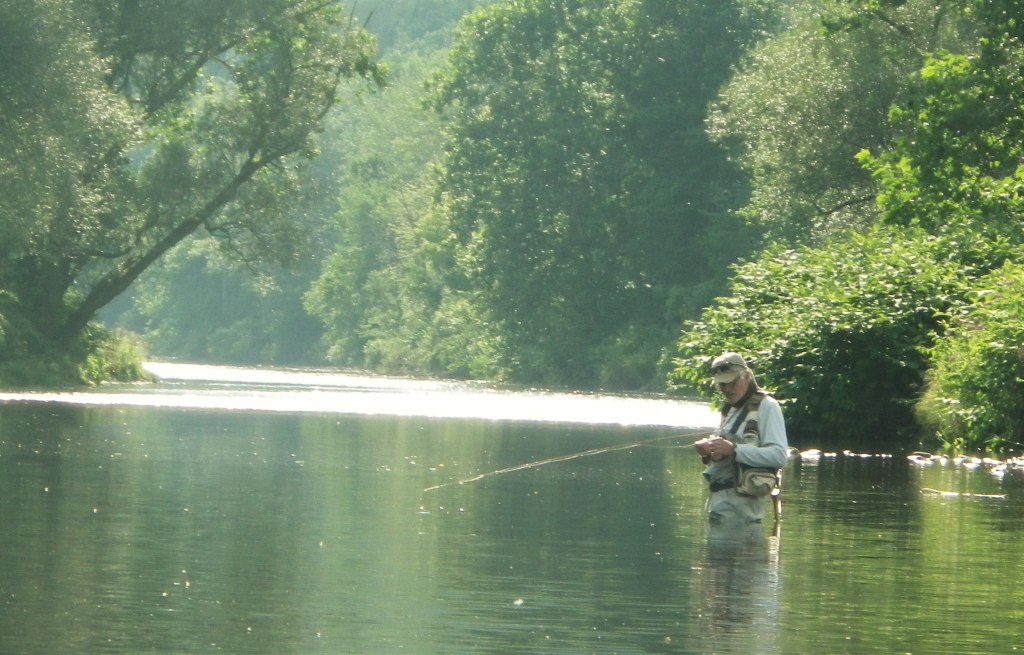
I had a plan this morning, and I was fully prepared to execute that plan. The flies were tied, and my main players were set up in the fly threader box I finally found after a weekend long search – take that depth perception!
I was relishing the drastic cool down after a couple of weeks here in the oven, so much that I awakened just before two from the chill air. By the time I regained full consciousness, it was about the right time to be on the river. I got up, got my coffee and a snack, and checked the weather: wind gusts to 30 mph. That slowed my progress as doubt, or more accurately common sense, began to weaken my resolve.
I have a long career of fishing regardless of weather. I can recall 45 mph winds on the big East Branch in Cadosia one spring day, and who could forget the 50 mph winds that nearly pushed me over backwards into the raging whitewater torrent on an Elk Creek steelhead mission. I am retired now, I can fish every day of the season if I want to, so I have become a little more settled in my reasoning in regard to poor conditions.
Of course, just as soon as I aborted this morning’s late mission, the Red Gods chided me by dropping the already gusty winds immediately.
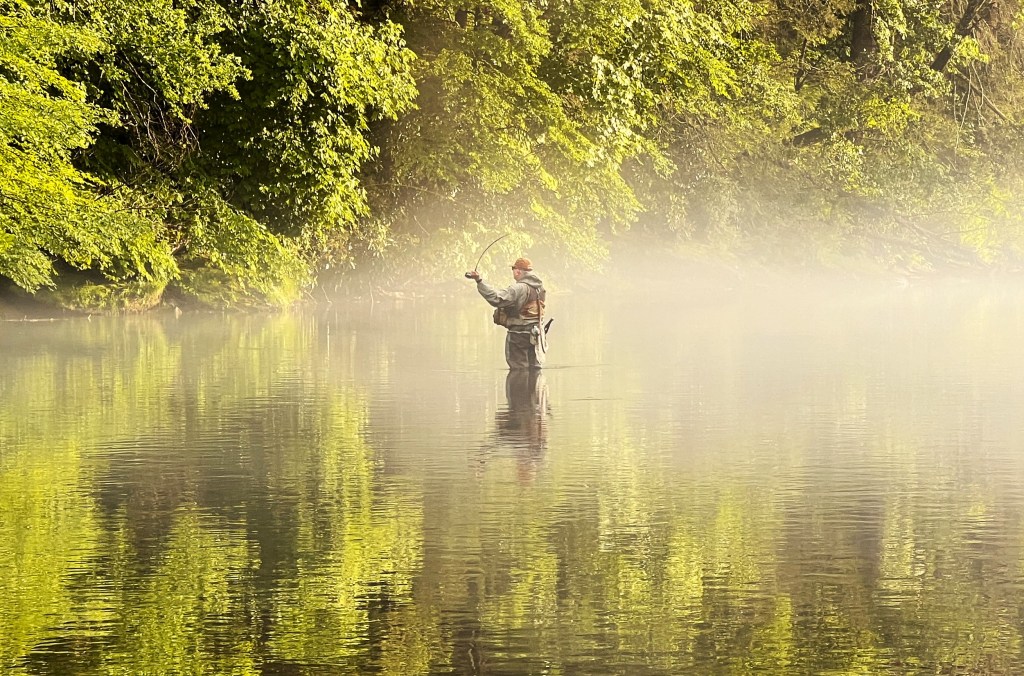
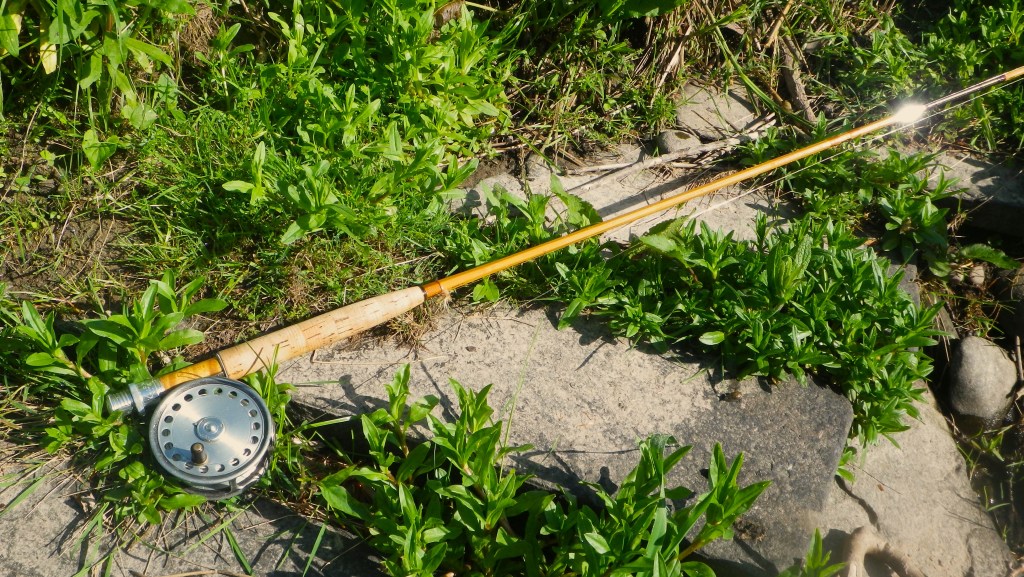
Mission aborted. Fishing will wait another day.
There is a brand new fly box sitting here on the desk after all. I picked it up the other day for a selection of flies I am planning to tie for a gentleman from Germany. I agreed to show him our Catskill fishing when he comes to New York this September for the 30th Catskill Rodmakers Gathering, and I figured it is the least I can do to have a box of flies for him. Early September can be tough on the fishing front, but I do have a number of patterns that usually tempt a few good Catskill trout.
I am on a roll at the moment as far as fly tying. I tied 32 dries yesterday. That’s a large daily output for me, since I tie nearly every day through the season. As alluded to earlier, my depth perception has been suffering this season, most notably as I try to tie on a fly while standing in the river with a nice trout rising. I have been tying sulfurs and olives on big eyed hooks, which of course have been hard to find just when I needed some. I have loaded up my old threader box to solve the on-stream problem.
A lot of anglers struggle with knotting small flies as they age, and magnification is an easy answer. Depth perception compromises are more sinister. I can see the hook eye and the tippet, but every time I try to join them, I misalign the parts. I used to believe that sportsmen should be able to live the retired lifestyle from age 25 to say 55, and then go back to work until its time to have their dusty bones shoveled out of their workplaces. Imagine fishing every day with good eyesight, no aches and pains, and the energy of relative youth!
Of course it doesn’t work that way, so we simply have to adapt. I don’t fish fourteen-hour days anymore, and I am beginning to collect fly threaders. I also recently added one of those white fly plates to my tying vise, and purchased a pair of prescription reading glasses. I have a nice supply of Biofreeze too, to keep the shoulder moving.
The one thing I treasure as related to being retired at this age is the experience and judgement gathered over more than three decades of fly fishing and fly design. The casting parts may hurt a little, but man I wish I could have made the casts and presentations I do today back when I started out! I wish I knew then what I know now about trout flies too.
With that experience comes a lifetime of memories. Some we revel in, and others simply let us shake our heads and laugh at ourselves.

A cherished limestone memory that still makes me shake a bit when I savor it.
-
Spring Closure
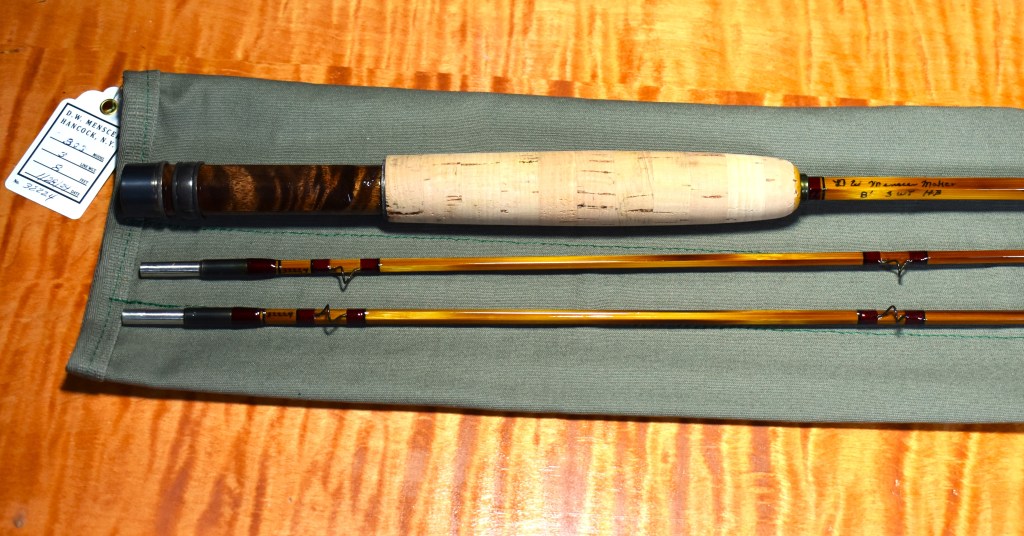
Trout hunting the early morning fog on the last ninety-degree day of spring 2024. Summer swelter on the last morning of spring, and I am in full hunting mode. The time has come for the new eight-foot three weight hollowbuilt flyrod that Dennis Menscer meticulously crafted for me over the winter to test it’s mettle. I had fished it a couple of times, though I had not tied into a trout of any considerable size. Yes, the tough spring of ’24 has continued right up to the end.
An eight-foot rod for a delicate three weight line is a tall order for a bamboo rod maker to fill. For such a rod to cast a wide array of flies to sixty feet or more routinely and handle wild trout of four pounds or more will test the taper and construction to it’s limits. There was no question in my mind that master rodmaker Dennis Menscer was the man to create my dream rod for summer’s most difficult fishing! I stalked slowly as daylight grew, the rising sun setting the fog in motion. I heard the first rise, though I could not find it in the swirling mist, but waiting, then fishing the cover failed to reveal it’s maker. I worked slowly up the riverbank with my casts, the three weight doing a lovely job with a Baby Cricket at fifty feet. My eyes locked on the next sound to imprint itself on my consciousness, and the cast was in the air before the subtle ring dissipated. There was no response, and even as I dissected that entire band of current with multiple casts the river remained silent.
I spent an hour working slowly up the pool with nothing but bits of unoccupied cover for targets.
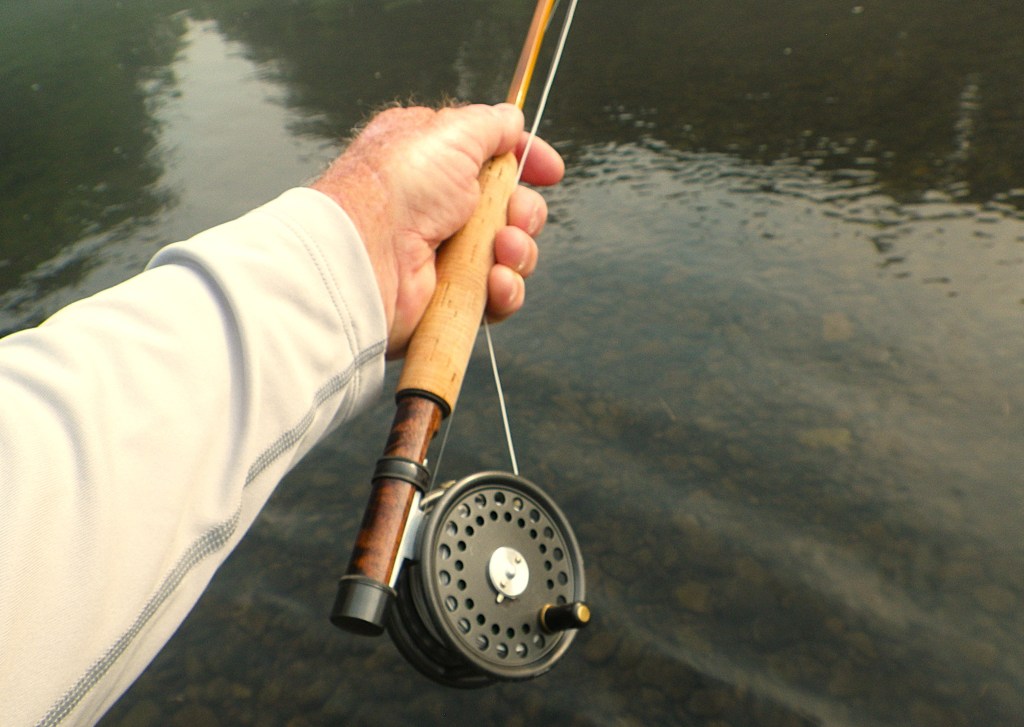
Saint Three – a vintage 3″ Hardy St. George proved to be the perfect companion for the new Menscer rod. As the sun burned away the last wisps of fog, I observed a tiny dimple in the bright sheen of the surface. The sight failed to raise my heart rate, for I had no doubt that a small fish was working the morning drift. I scanned the surface and found a pair of tiny spinners and one creamy, pale mayfly. Eventually, a better riseform showed along a shady edge, though it’s maker wanted neither my tiny red spinner nor a pale sulfur.
The drift remained spare for a couple of hours, with just a taste of something to elicit a rise here and there from the little fellows. At one point, I readied myself for a little hatch of sulfurs but, though they came briefly, there were no rises seen. I worked on upriver, casting long and delicately to shade and cover. The rod performed flawlessly, though nothing interrupted the soft drifts of my flies.
There are times one fishes well and finds nothing to show for the effort. This awkward spring has brought many such moments.
Late morning, and at last I began to make my way back to the beginning. The full heat of the sun had stirred the mountain air into motion, and I hoped the hot breeze might send a few treats to interest just one good trout. I knotted my old friend, the Grizzly Beetle, conceived for these moments, and having shone brightly during many of them.
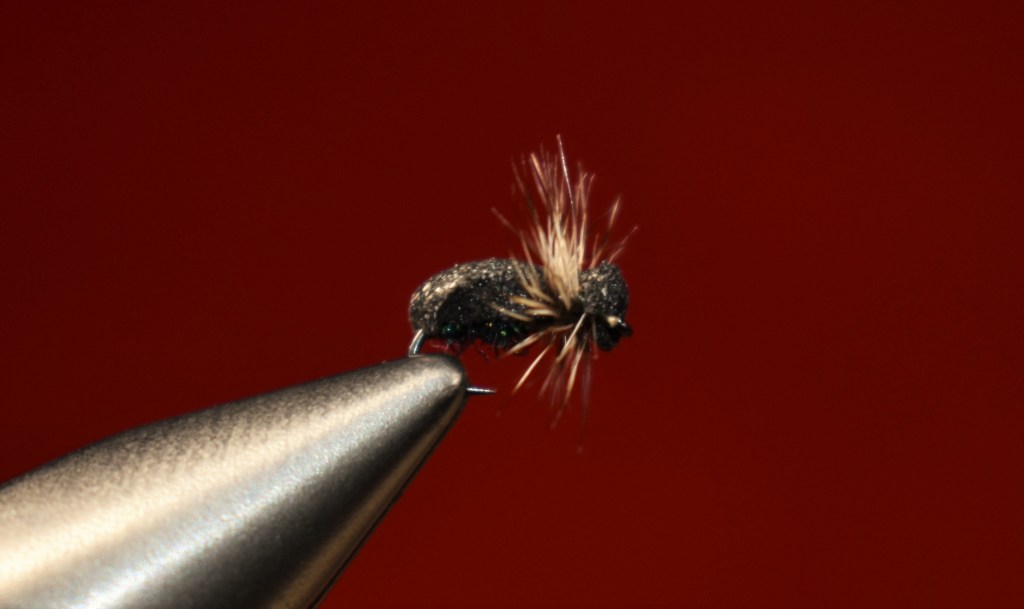
The beetle changed things straight away, enticing a strike from the glide I had covered more than thoroughly. The brownie was feisty and brightly colored. Though he was small, the change of fate felt real, and I continued with new energy.
A long cast, and an even longer drift finally brought what I had been seeking: the test for the new flyrod. The brown caused the light tackle to shudder when he charged for heavy cover, but Dennis’ knows how to design a taper. Of the old masters, Fred Thomas was his favorite, and just as the fine tips of a Thomas rod belied it’s fish fighting mettle, so too the fine tips of my beautiful Menscer 803!
It was a tough battle, but the flyrod won, and I slid the mesh beneath a brawling twenty-inch wild Catskill brown!
I was elated as I worked down river, feeling my fishing had ended for the day. The water betrayed no more evidence of life, that is until I neared an old favorite piece of cover. The ring in the surface was subtle, and not the bulge and dimple kind of big trout subtle, though something told me to stalk carefully into range.
There were a few signs of motion on the water as I worked gently into casting range, though still nothing that got my hackles up with that sixth sense kind of trout hunter’s magic. I felt more of a kind of serene confidence.
The cast was long, angled downriver and across to offer the little beetle with the best and longest drift possible. The fly drifted only a few feet when the surface blossomed with a wide soft, slow-motion ring, and I raised the gentle wand of cane to meet it.
The trout charged away from the bank and his sheltering cover, giving only brief moments for me to feel his weight as I stripped fly line as fast as I could manage. Once he turned against the rod there was no question of his size. I let him pull slack back between the fingers of my rod hand while I wound quickly to get as much line as possible onto the reel. Once successful, I was finally treated to a bit of that lovely Hardy music!
Drawing him close for the first time, he looked dark knifing over the gravel in that crystal clear water, and I realized that I wanted him very badly.
Light tackle is criticized by some, saying that good trout are played out, exhausted. The playing of the trout is up to the angler, not his tackle, and I have seen medium sized trout played nearly to death on long, stiff, heavy graphite rods by anglers too fearful of losing their fish. I know that light tackle, when used to it’s full potential, can land large trout as quickly as necessary for a safe release. A well designed and well-handled rod that gives cushions light tippets and tires the fish quickly.
My slim three weight cane rod brought that second beautiful brownie to the waiting net, all twenty-one inches of him. I would expect nothing less from a Dennis Menscer flyrod!
Farewell to the spring of 2024, and welcome to summer!
-
Really Summertime
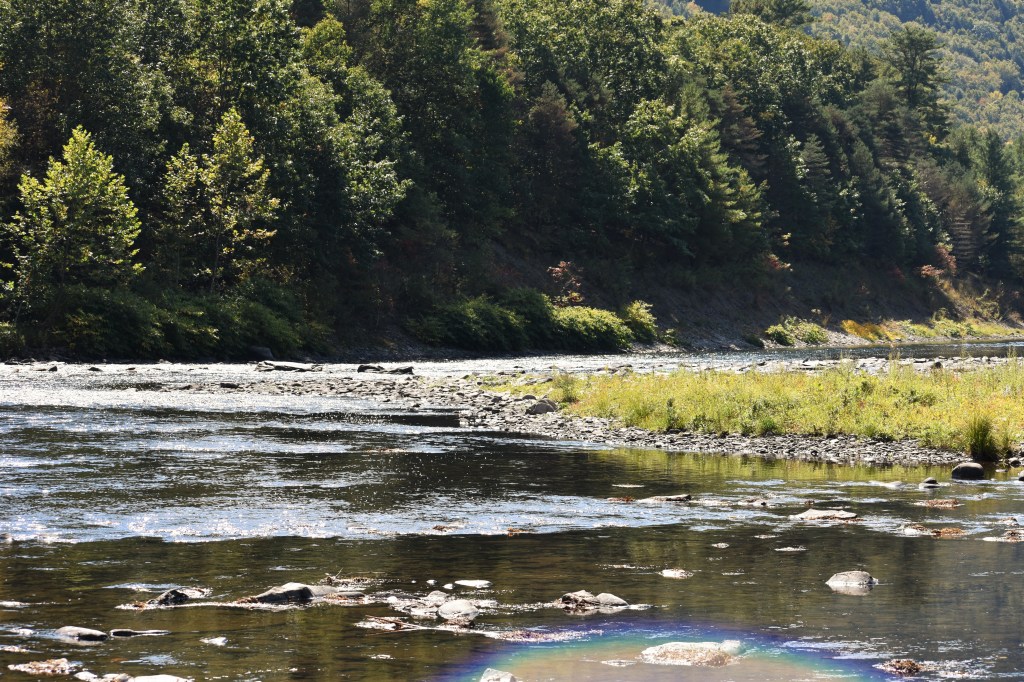
Low and clear! The trout still seem to be making up their minds as to the season, but for the anglers this heat wave is locked into a rainless stretch and there is no doubt this is summertime!
The early mornings have been hit or miss, more misses than hits to tell the truth, and it is damned hot already today at ten in the morning. Freestones are lower than low and far too warm for trout fishing, and reservoir flows are still lower than normal. I guess I will be dodging drift boats today to see what the West Branch might offer.
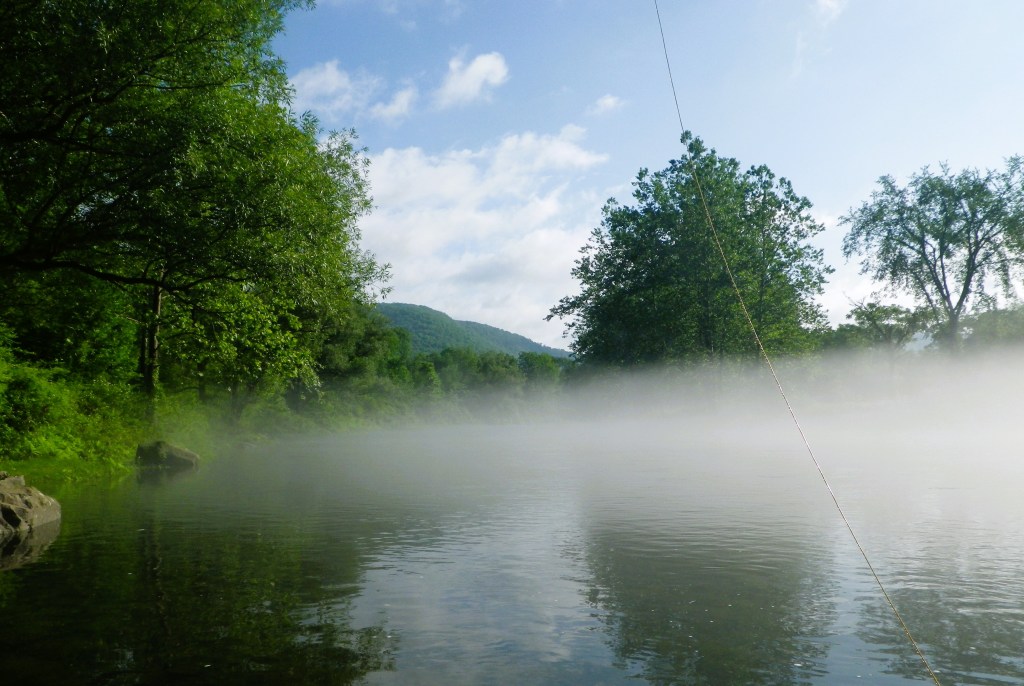
Warm, humid air and cold water make for misty mornings and evenings. I just slicked up my Triangle Taper four weight line after a few casts on the Cumberland Queen, my lovely Dream Catcher eight-footer. She will join me today to search for a fine brown trout or two amid the hustle and bustle of a busy tailwater. The Queen found love for the first time on the West Branch, with a twenty-inch wild brown late on a summer evening.
I tied half a dozen dries of the Cahill persuasion this morning, 100-Year A.I. Duns and CDC Cripples, as Light Cahills have been known to make brief daytime appearances in the cold waters of the West. There are plenty of sulfurs already packed into the old Superfine fly box in my chest pack.
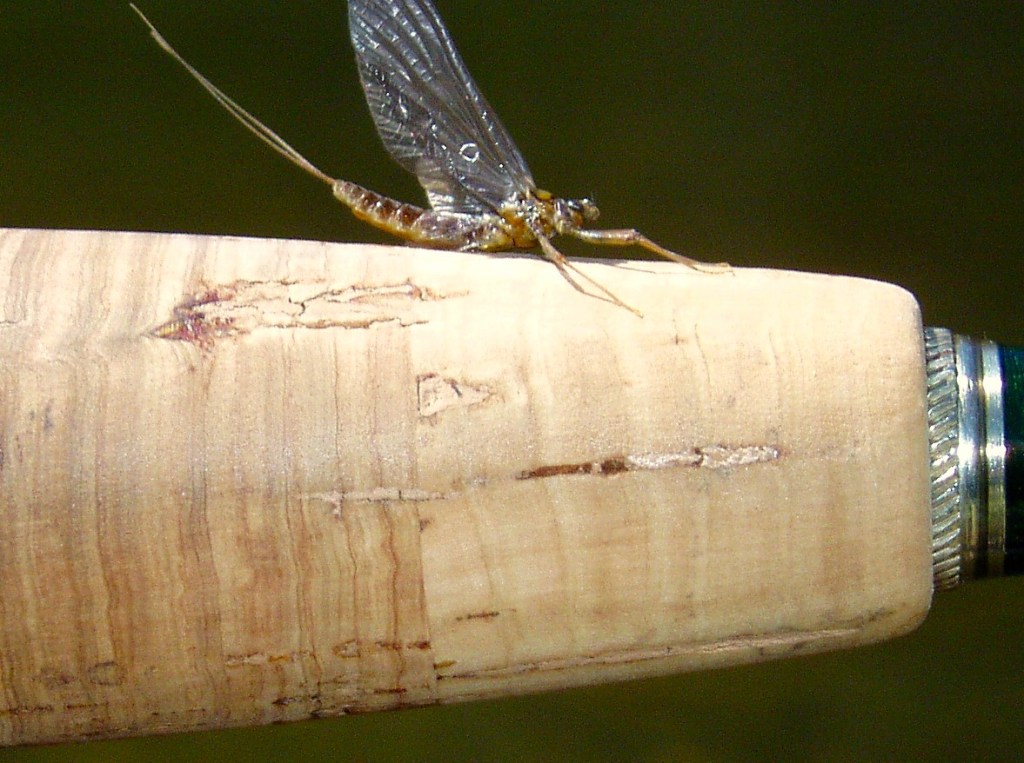
Yea, there are some of these in that box too… Time to get the rest of my gear together and put these fresh flies in the box. It’s always best to be earlier than Mother Nature.
-
Rest Stop
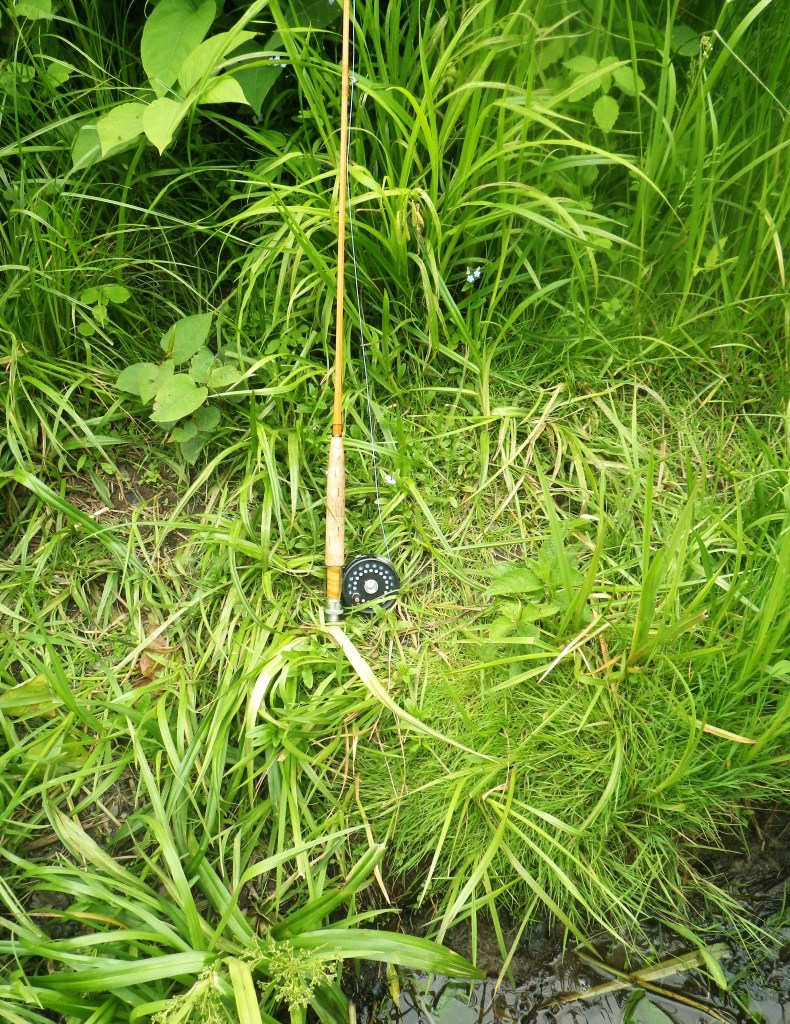
My Reissue 3″ St. George looks to have found a permanent home on the 50DF In hindsight, my decision was somewhat ass-backwards, but as the years advance one of life inevitabilities is simply clear: tired is tired! I fished hard under Thursday’s hot sunshine, hoping against hope for a similar day long affair with sparse sulfurs and picky risers. I knew better, but enthusiasm sometimes trumps cold, hard judgment.
Come Friday morning it was easy to accept the thunderstorms throughout the day forecast and elect to make a rest stop. I tied a few flies that my morning fishing hadn’t allowed time for, repaired my cut fly line, loaded up a new number four line on a St. George reel after casting that same line on the Sweetgrass Pent, ran several errands, and cut my grass and a neighbor’s. Doesn’t sound like a day off, does it? It was though a fishing rest, time for my aching casting arm and shoulder to recover a bit.
The price paid will never be known of course, for the storms never appeared and the cloudy day ended up cooler and more inviting to mayflies and rising trout, in short, a day I should have spent on the river.
I had planned to take care of that shoulder over the winter, but spending more than three months battling a persistent case of bronchitis truly sapped my energy. The net result was far less winter exercise rather than more. I have resigned myself to the fact that the shoulder is going to require a day off here and there. I don’t like it, but I accept it.
I did get my travel kit set for today’s visit to the Catskill Fly Fishing Center and Museum as this week’s Saturday Guest Fly Tyer. I will get some more sulfurs tied – I need size 18 100-Year Duns if the light is good.
There is a Guild meeting next door that I won’t be able to attend, though hopefully some of my friends will stop in afterwards. We will all be tying sulfurs and terrestrials, so we’ll be connected in spirit.

The shoulder, and the Sweetgrass Pent getting some exercise last summer. (Photo courtesy John Apgar)
-
Immunity
Summer sunset on the West Branch I walked the familiar path, the morning cool under cover of the clouds, a return to Sanctuary.
It wasn’t long before I saw the yellow sails upon the drift, at least three sizes of them. There was a single rise at distance, clearly a good fish, and I wondered if he would continue while I languished in my approach. Flat, clear water demands patience and stealth.
That trout continued, not on any sort of regular rhythm, but still he fed as the mayflies passed his station. I started with a size 16, tried a 14 and then a short bodied CDC winged fellow with the barest hint of a trailing shuck. I may as well have cast to him with a bare tippet.
I rested him when one of his brethren showed himself fifteen feet downstream, this one taking the fly when I lost it in the glare and opening my hook wide when I tightened.
As the morning passed, my main opponent must have had his fill, either that or he moved thirty feet upstream. There I could see alternately a soft sipping rise and a tip up with a wink of silver. Nothing to be seen save those sulfurs, so I eased into a better position and offered my little menu once more. Completely oblivious to anything I offered, he went about his little dance.
I nearly ruined it with a cast overpowered by frustration. I caught it in midair, whipped it back hard cursing at myself, and paid the price for my folly. The 6X tippet had cut the fly line right down to it’s braided core. I was finished, with no choice but to withdraw.
There was another outfit in the car, a five though, so I couldn’t simply swap the reel onto my four-weight bamboo. Wipe it down, slide it into its bag and that into the pentagonal walnut case good friend JA had made just for me.
It took some time, rigging the five-weight rod and making the walk for the third time. I slipped into the river and crawled down the edge until I could see the lie I had left in defeat. He was still at it.
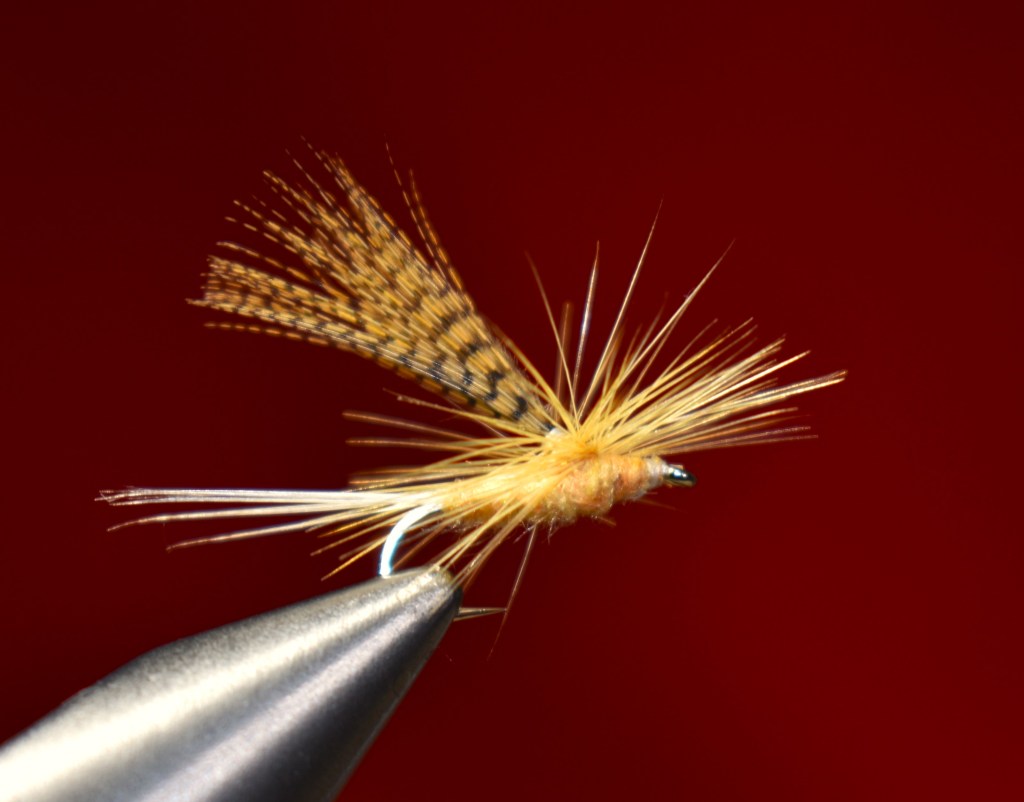
With the events of the morning being what they were, I fully expected that trout to retire before I could negotiate that last seventy-five yards. Amazingly though, he waited for me to finally ease into position for a long, down-and-across cast. In fact, there appeared to be two trout working along that bank, either that or my sipper and wink fish had grown more adventurous.
I knotted that trusty size fourteen 100-Year Dun, the same fly I had started the day with, and the very same one my friend had ignored. Perhaps it was that adventurous streak that was his downfall.
He had glided away from the bank and I laid a cast down as softly as I was able some four feet above his last kiss of the surface. He glided up, kissed the 100-Year Dun, and I bowed my head and raised my rod.
He started with a hell of a boil, then darted downstream toward some lovely tippet cutting apparatus nature had paved the river bottom with. I countered with a downstream sweep of the rod, bringing him to the top to splash and slash his displeasure. When he ran back up toward his taking place, I got a good look at his long golden flank and flashing white belly, thinking two feet.
I had done away with the morning’s 6X when I rigged the backup rod, and I was happy with my choice. The cloudy weather after a cool night kept the water nice and cold, and this brownie had plenty of stamina. When I rolled him onto the graduated centerline of my net, I found I had missed my guess by an inch.
Slipped into the current, he cozied down beside my boots and cursed me thoroughly.
With a victory in my pocket, I decided to walk and do my best to hunt up one for another try. I found him too. Hooked him, felt the big throbbing head shakes, then felt the hook pull free as he ran behind a submerged boulder.
The next one sat back in an edge of shade, and I gave him a long reach cast and watched the fly dim as it passed beyond that edge. He was a good fish, spirited and hard running, and I thanked him for his service as I retrieved my sulfur from his jaw.
I started the long walk back around four o’clock, feeling the ache in my casting shoulder and back. It had been a long day.
-
The Source
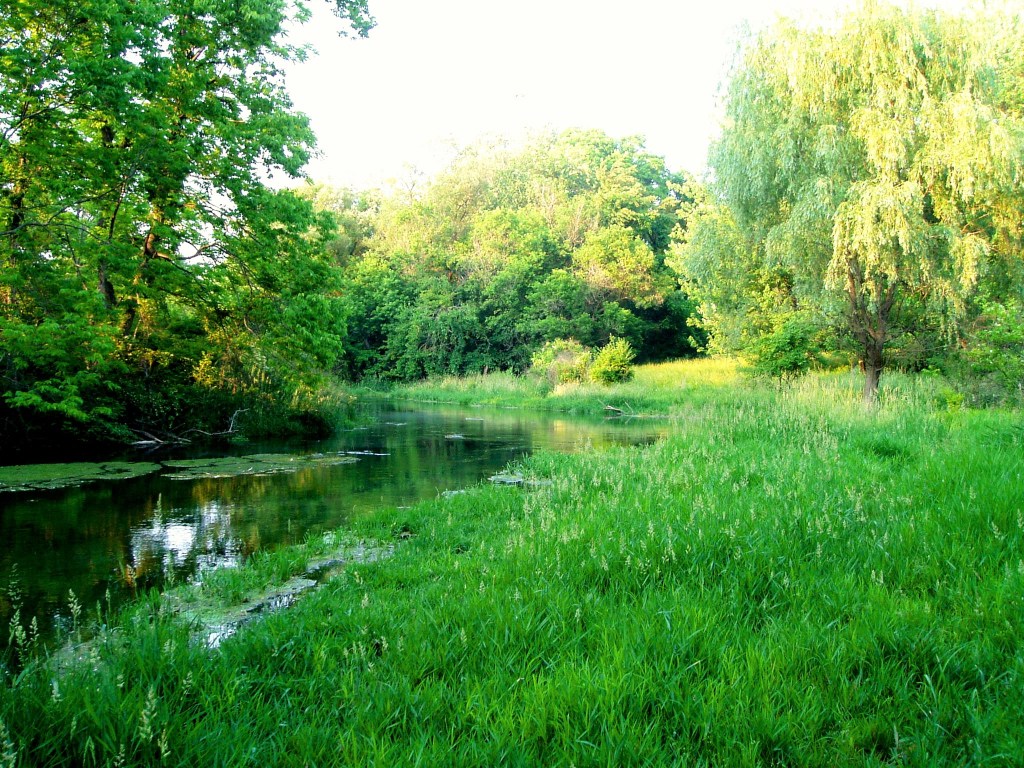
The heralded Barnyard Meadow of the Letort Spring Run: The Source of all the magic of wild trout and the fly! Summer is flirting with the Catskills. It hasn’t quite arrived just yet, though it has passed through certain discrete locales for a brief visit. Summer always takes me back to The Source, the genesis of my own infatuation and eventual obsession with the magic of wild trout and the fly. All hail the difficult trout!
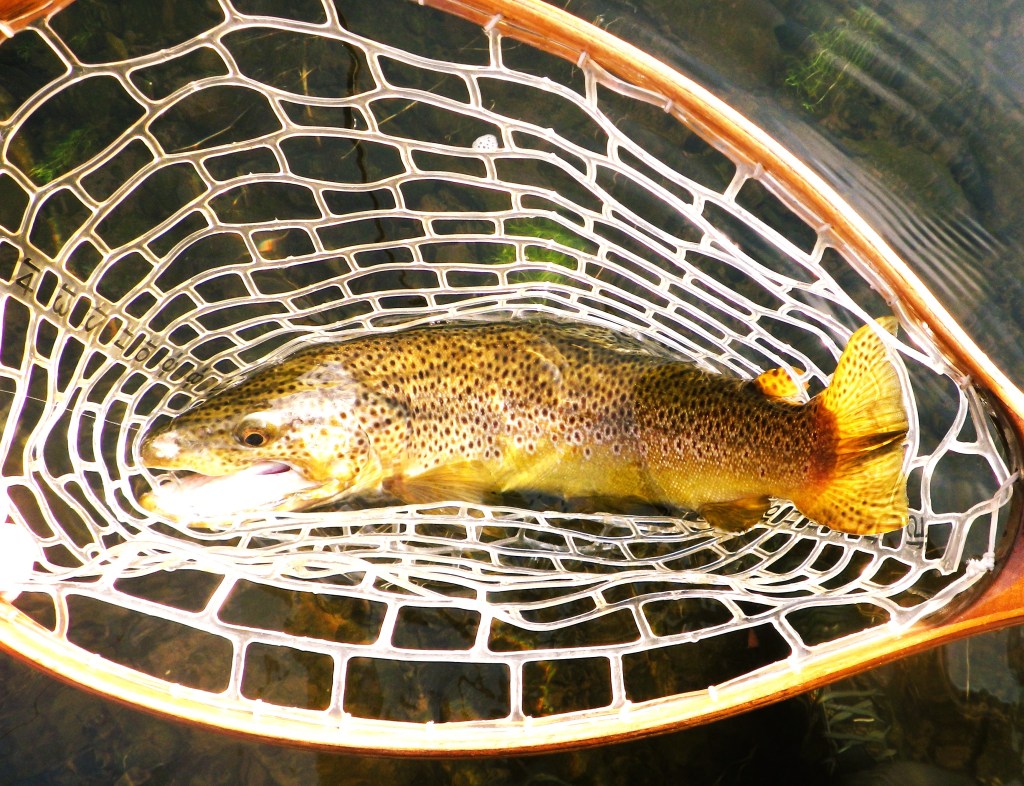
The hallowed waters of Carlisle, Pennsylvania’s Letort Spring Run were mecca for anglers who sought to walk the path. Ed Shenk was the Master of this fair limestone stream when I journeyed there, and the magician who crafted some of the most famous flies in the world, the manna that could tempt leviathan from the dark places hidden beneath the soft banks and whirling beds of elodea. I sat at the Master’s side and learned his methods and his reasoning, and I remain forever grateful for his gifts.
Summer was the prime season for the dry fly on all of the spring-fed creeks of the quaint Cumberland Valley. Mayfly populations were not high even then, more than three decades ago, and the bounty born of the meadows came in the form of terrestrial insects. Ants, both crawling and winged, various beetles, leafhoppers, crickets and the glorious grasshoppers soothed the hunger of the wild brown and rainbow trout. It was here that the second great revolution of the dry fly evolved.
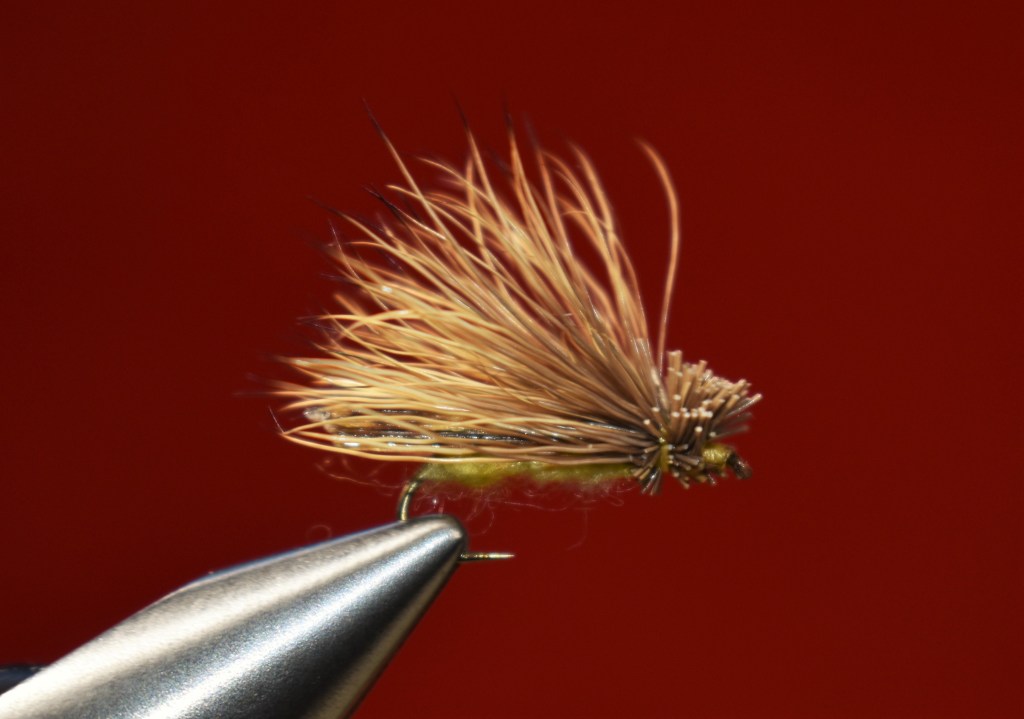
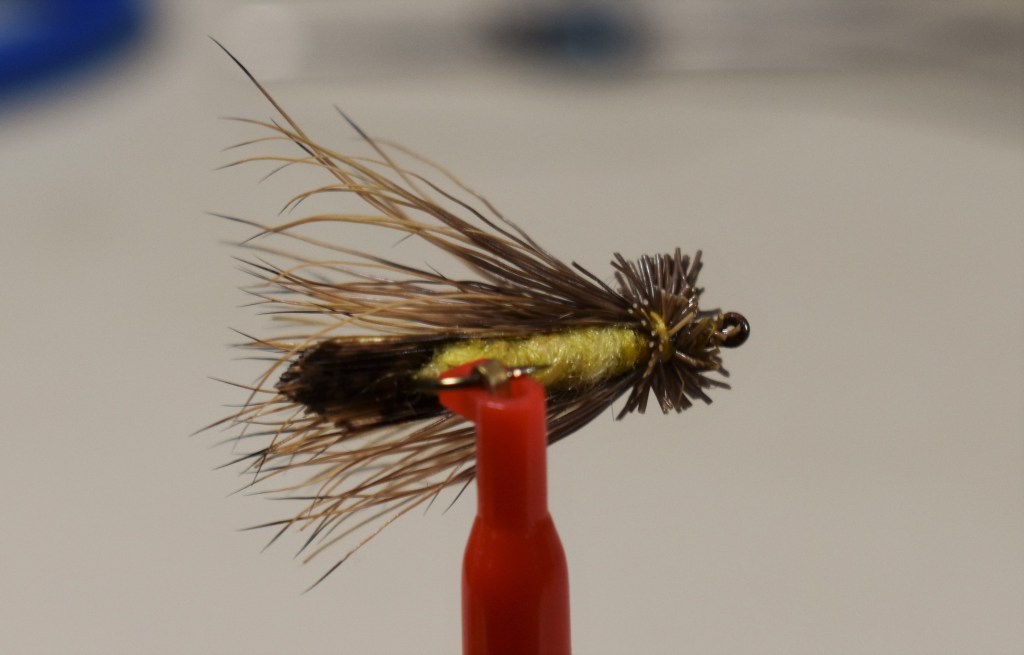
Above: The late, great Ed Shenk displays a freshly tied Letort Cricket, my own personal favorite among his legendary fly patterns. Below: Shenk’s classic :Letort Hopper from the side and below, focusing on the fly’s construction and the “image of life” it projects to the investigating gaze of the trout. My heart longs for the best of those days!
Thirty years have passed, and I have migrated to the Catskills. I still feel my heartbeat quicken when summer arrives, and the trout change their mood. It is time to hunt!
-
The Gift
I have a mission. It has been a number of seasons since I whiled away a few hours amid the quiet and serenity of a high mountain stream. Bright water takes many forms and personalities, but the source waters are truly special. Without the high mountain brooks there would be no Beaver Kills, Willowemocs or Delawares.
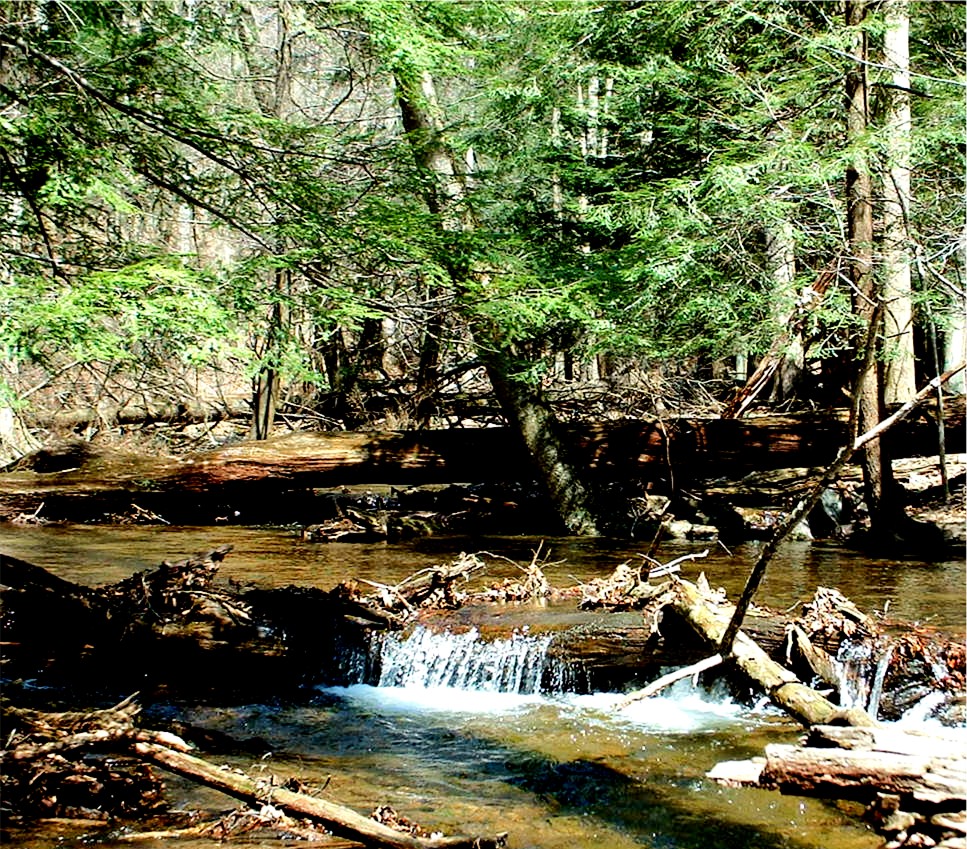
Broad Run flowed southwesterly between the mountain ridges west of Chambersburg, Pennsylvania. I remember April days with the music of the sparkling waters and the drumming of Ruffed Grouse delighting my senses. Broad Run was my escape route. Though enthralled by the complexities of the limestone spring creeks, I would steal a warm, calm day in April to wander this tiny mountain stream. I remember those days fondly, the music of the sparkling waters and the drumming of Ruffed grouse delighting my senses as I crouched and climbed over deadfalls, sending quick, darting little casts ahead with a Fox Squirrel Special. A short bamboo rod and a size 16 dry fly from the ancient DeWitt fly box salvaged from the remains of my grandfather’s tackle – I traveled light in those sacred environs. There were days I brought fifty brookies to hand!
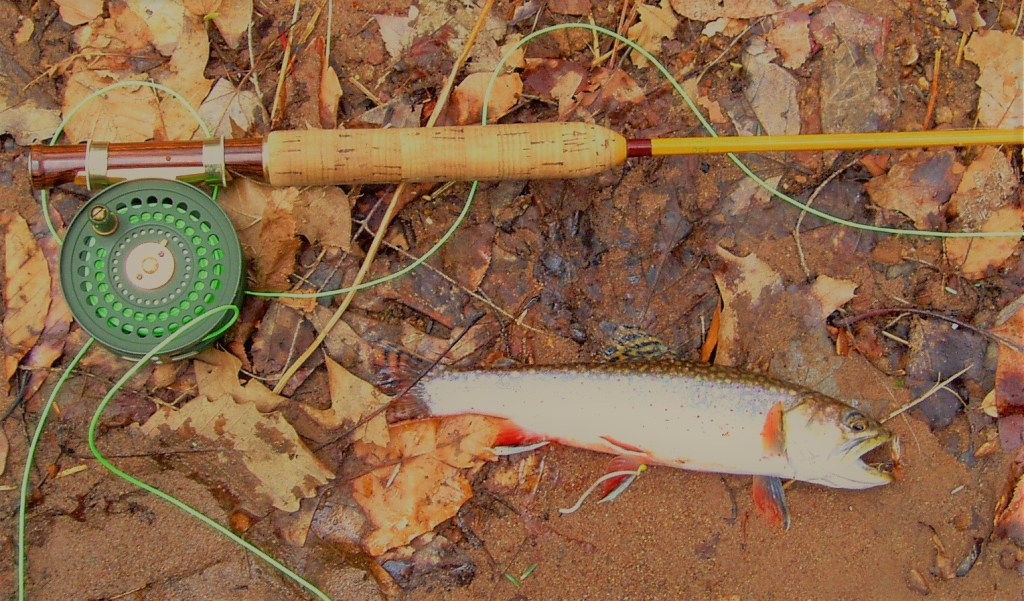
A Tom Smithwick one piece bamboo rod adorned with an Orvis CFO I and half a DT4 flyline, posed with one of the nice brookies from those days of mountain escapes. My old friend Tom Smithwick surprised me last weekend with a very special gift. We had attended the celebration of the life of rodmaker Mike Canazon at the Wulff Gallery, and stole away at the end to talk. He handed me a tiny aluminum tube, saying it contained “an experimental little rod I think you might have some fun with”.
Three pieces of beautifully crafted split cane met my gaze as I slipped the green bag from that tube. Nearly weightless I thought, as I joined the fiberglass ferrules and affixed the tiny CFO reel he handed me! One cast was all I needed to know this was a Smithwick rod. I rolled the line low behind me and then rolled it forward in the cast Lee Wulff called “the oval”, and the cast travelled quick and low beneath some imagined tangle of branches to drop a perfect dry fly where brookies lurk.
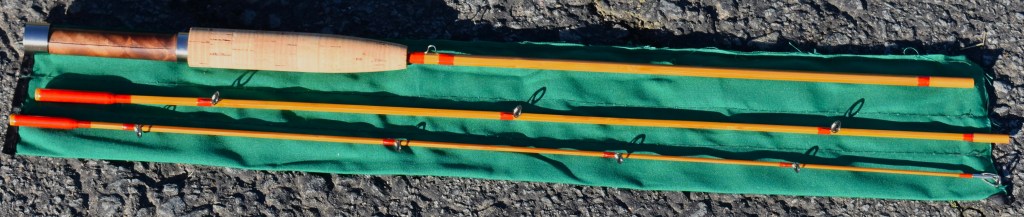
I have called my friend Tom “The Taper Wizard” for many years. Cast a Smithwick rod and you will know why! Suddenly I envisioned another of those long ago escape days. This wonder rod can be slipped in a day pack with a sandwich and water bottle to keep Grandpa Al’s DeWitt box and my CFO I company.
Where in all the Catskills shall I wander? I know the right man to ask!
Search
Archives
- October 2026 (9)
- September 2026 (16)
- August 2026 (14)
- July 2026 (15)
- June 2026 (13)
- May 2026 (6)
- April 2026 (12)
- March 2026 (10)
- February 2026 (9)
- January 2026 (14)
- December 2025 (14)
- November 2025 (10)
- October 2025 (10)
- September 2025 (9)
- August 2025 (10)
- July 2025 (10)
- June 2025 (8)
- May 2025 (12)
- April 2025 (12)
- March 2025 (9)
- February 2025 (10)
- January 2025 (15)
- December 2024 (12)
- November 2024 (13)
- October 2024 (12)
- September 2024 (10)
- August 2024 (12)
- July 2024 (10)
- June 2024 (12)
- May 2024 (11)
- April 2024 (14)
- March 2024 (11)
- February 2024 (13)
- January 2024 (14)
- December 2023 (16)
- November 2023 (11)
- October 2023 (11)
- September 2023 (8)
- August 2023 (10)
- July 2023 (9)
- June 2023 (12)
- May 2023 (13)
- April 2023 (13)
- March 2023 (14)
- February 2023 (15)
- January 2023 (15)
- December 2022 (13)
- November 2022 (5)
- October 2022 (10)
- September 2022 (10)
- August 2022 (8)
- July 2022 (9)
- June 2022 (10)
- May 2022 (10)
- April 2022 (13)
- March 2022 (14)
- February 2022 (13)
- January 2022 (13)
- December 2021 (10)
- November 2021 (9)
- October 2021 (7)
- September 2021 (9)
- August 2021 (12)
- July 2021 (11)
- June 2021 (12)
- May 2021 (15)
- April 2021 (16)
- March 2021 (14)
- February 2021 (14)
- January 2021 (12)
- December 2020 (11)
- November 2020 (13)
- October 2020 (14)
- September 2020 (13)
- August 2020 (14)
- July 2020 (13)
- June 2020 (16)
- May 2020 (16)
- April 2020 (18)
- March 2020 (13)
- February 2020 (11)
- January 2020 (8)
- December 2019 (6)

