
-
Counting Days
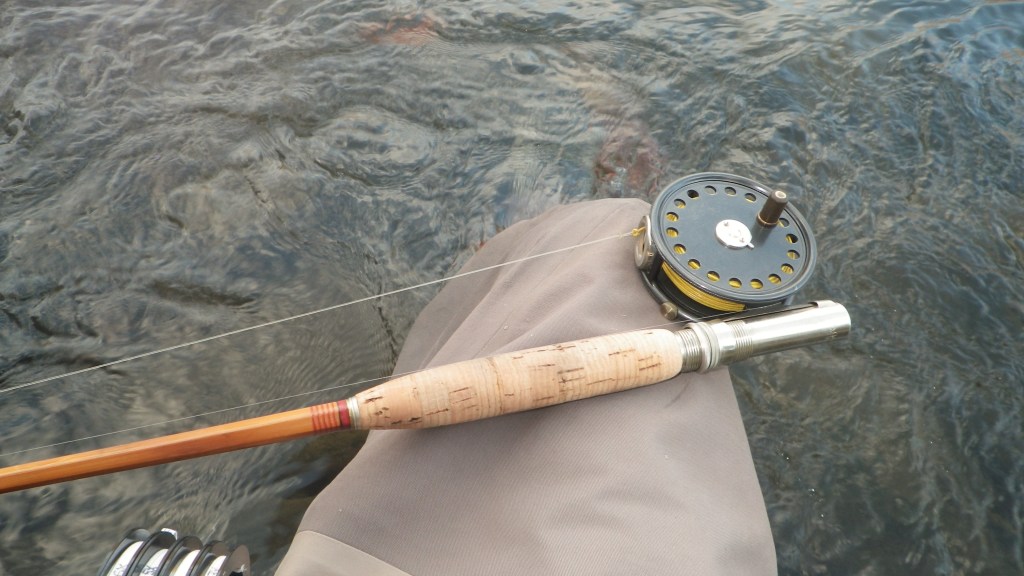
April has come, and a week remains until my hoped for introduction to the 2023 dry fly season. Our rivers are too high to wade, with spilling reservoirs from one side of the Catskills to the other, and water temperatures in the thirties this morning, far short of that magic fifty-degree mark which heralds spring hatches.
The mild winter had given multiple hints that an early spring would follow, one with wadable rivers and comfortable weather, but these mountains rarely welcome balmy weather early in the season. High, cold water is the traditional expectation after all.
I begin this (hopefully) final week of waiting in poor form, with a couple of days of feeling absolutely miserable, and dealing with necessities, things I would much rather avoid. Days of high, cold water are for chores and anticipation anyway, so I won’t be missing out on any fishing.
There are warmer temperatures ahead, as well as several days with showers. I pray the balance will tilt much further toward warm than it does toward wet. As always, Nature will have her way, but I hope for the chance to wander some riverbanks before the clock strikes zero.
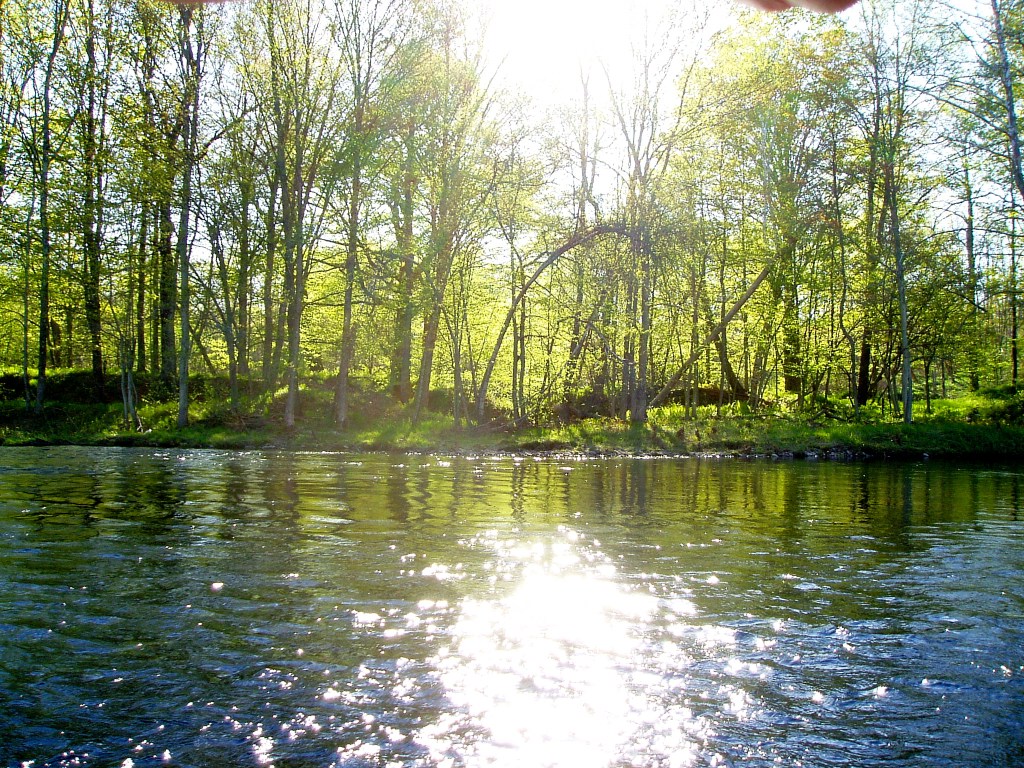
Spring Flies have been tied, rods and reels are waiting. Spring holds too much promise to rush things.
No comments on Counting Days
-
Snowflakes In The Sun
I sat down at my bench and tied a trio of 100-Year Duns this morning, or at least I finished tying them. They were Quill Gordons, and I had affixed their tailing and wrapped their peacock quill bodies yesterday morning. I gave the bodies two coats of the Hard As Hull head cement I prefer to protect the quills, and set them aside to dry.
Catskill fly tyers have used lacquered counter wraps of white tying silk or fine wire for generations to strengthen the fragile peacock quills that form beautiful segmented bodies to copy many of our mayflies. I always felt those methods detracted from the perfection of the quill bodies, finding my chosen concoction a number of years ago. So, this morning I placed the partially tied flies back into my vise and attached the wood duck flank wings and barred dun hackles to complete my new and old variation on the classic Quill Gordon.
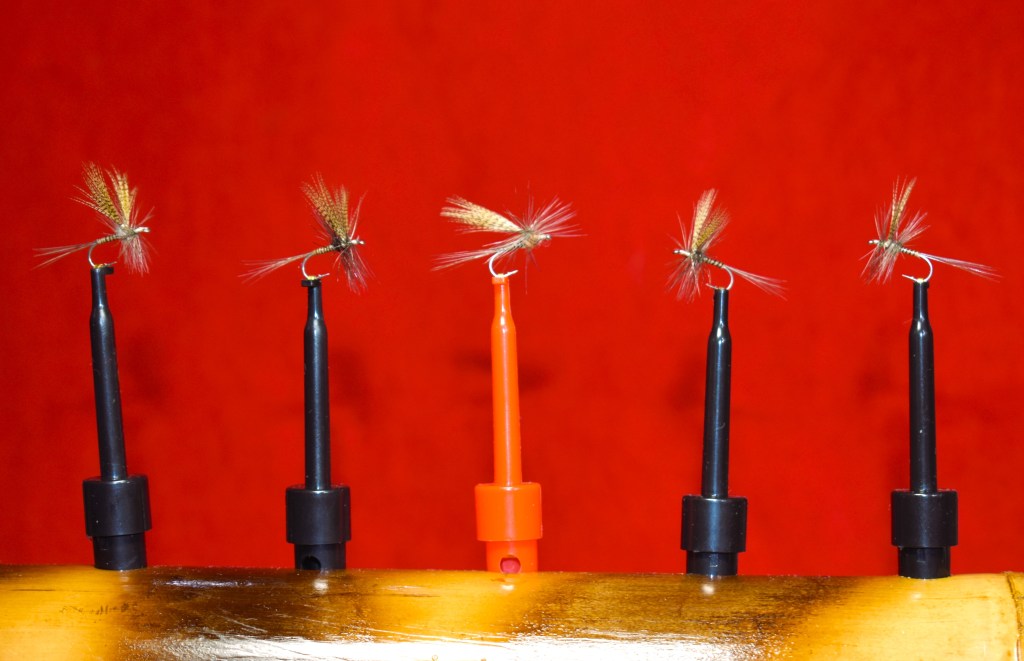
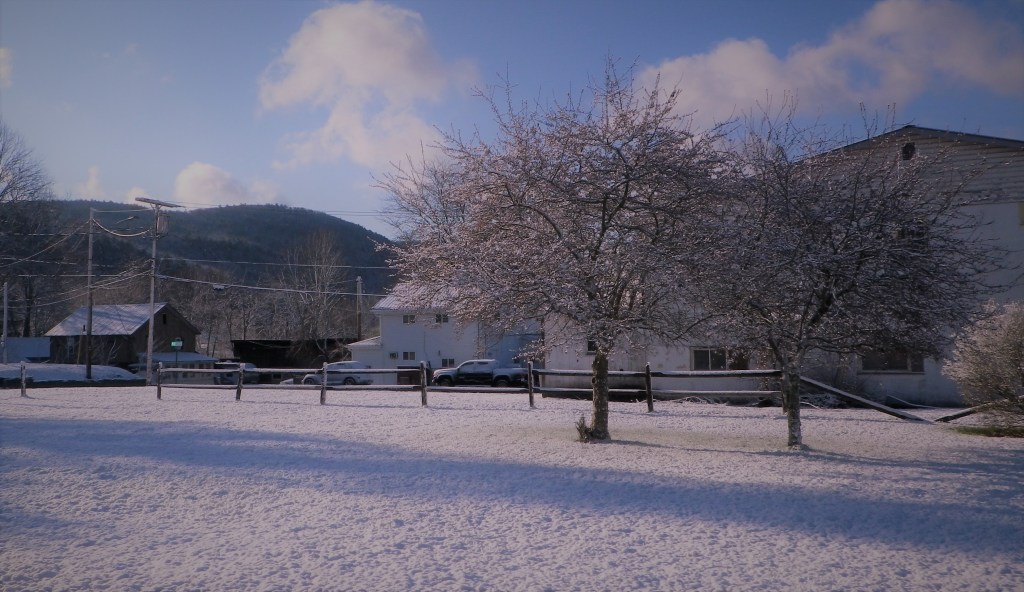
My Theodore Gordon inspired 100-Year Dun flanked by the traditional Catskill ties. Ready for breakfast at this point, I set aside my tools and materials and stepped out into the kitchen. When I glanced at the front door, the vision of bright sunlight amid clear blue skies was magically blurred by the glimmer of falling snowflakes! I stepped into the living room and enjoyed that same vision, snowflakes spiraling down out of a cloudless blue sky and glimmering in the sun. That simple, yet remarkable event was brief, but it set my imagination alight!
I appreciate these little gifts from Nature that help me navigate these last desperate days before the trickling bounty of springtime welcomes us back to the rivers.
I had planned to go fishing yesterday. Too late on a very springlike Sunday afternoon, I had idly checked the river gages to find wadable flows on the Neversink. I had assumed the rivers on the east side of the Catskills were far too high as are those here on the west side. I expected to correct my misstep on a sunny, clear Wednesday morning, only to be derailed by the City’s raising the Neversink Reservoir dam release just enough to take wading the tailwater river off the table.
Baseball begins today, so I will have an Opening Day game to occupy my mind, and Friday will be a busy day, with a stop at the doctor’s office, then another to see my mechanic for boat trailer inspection and a brake check. Come evening, I will travel to Roscoe for the Angler’s Reunion Dinner, where we kick off the new season with a fine meal and friendships born of a passion for bamboo, dry flies and wild trout.
Tomorrow will also begin my final countdown to the magic of bright waters and the dry fly, though with more rain on the way that brightness could still be tempered by excessive runoff. Some doctors will be getting in my way as April begins, but I hope to be able to begin exploring rivers later in the week. That has become my own little ritual: walking rivers when I know there is little chance of a hatch and a rise just for the chance to be there, to embrace the opportunity to see it when it does all finally begin anew. I’ll take those Quill Gordons along though, just in case.
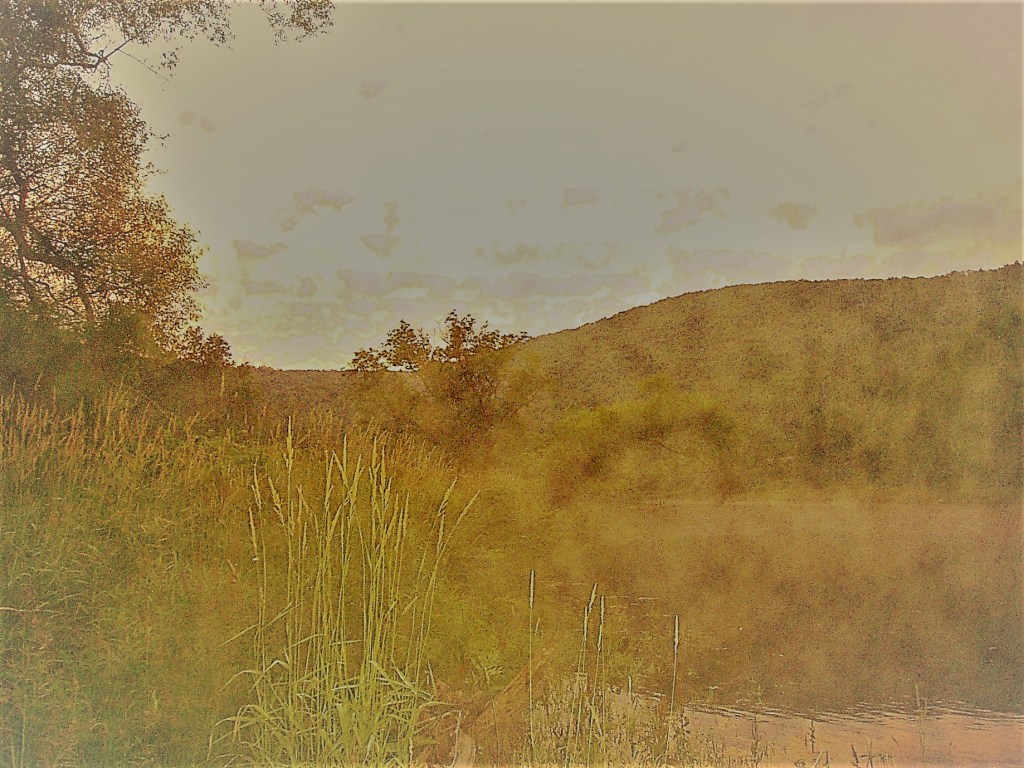
OLYMPUS DIGITAL CAMERA
-
Touching The Past
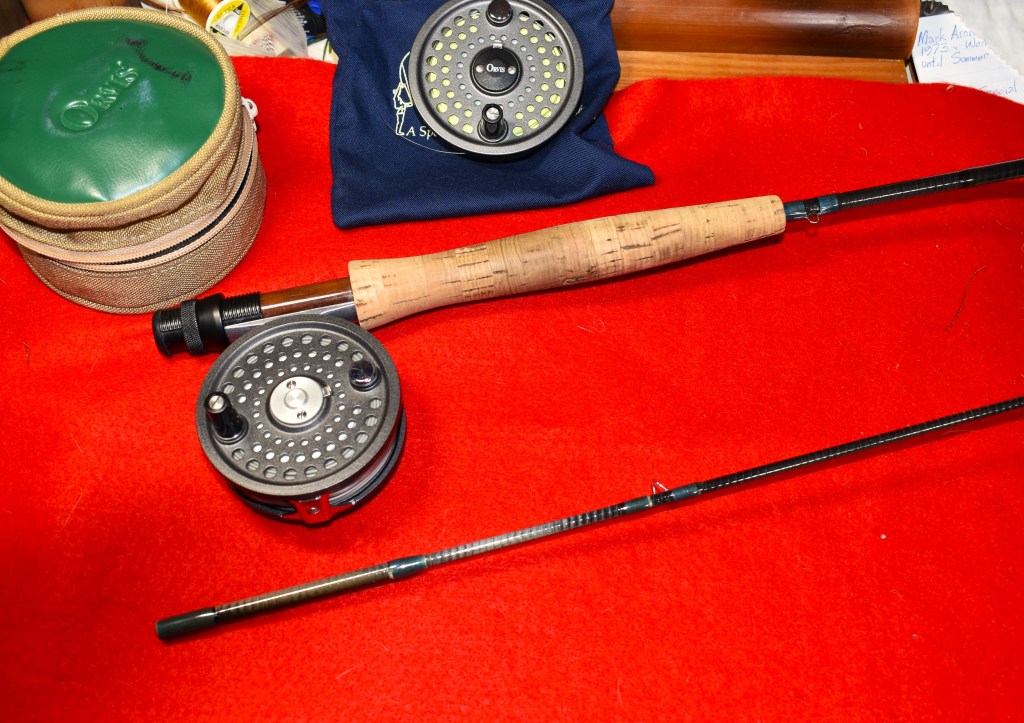
The outfit that introduced me to the Catskill Rivers: My old tried and true Orvis Rocky Mountain 8 1/2 foot 5 weight rod with it’s English made Battenkill reel, now reunited after 25 years. It was April 1993, and at last I had my first sight of the storied Beaver Kill and the lovely Willowemoc, and the chance to fish the Catskills. I was on my way to Manchester Vermont to meet with the Orvis Company in preparation to opening my own fly shop. I took care of the working part of that work trip as quickly as possible that I might retire to the beautiful rivers that had meandered through so much of my reading. I carried my first really good fly rod outfit, my Orvis Rocky Mountain rod, adorned with the Battenkill Disc reel that my girl had given to me. That outfit and I made some great memories!
A number of years later I had traveled back to my father’s home country, the Berkshire Hills of Western Massachusetts, to angle the great Deerfield River. My grandfather Alfred was the last fly fisherman in our family until I took up the calling of trout and fly, and the Deerfield was his river. I was going home.
One evening, tired from a long day on the water, I climbed the trail back to the road and my Buick station wagon, a gift from my dad. My routine was broken by the arrival of a car with two lost tourists speaking broken English. Trying to communicate and help, I placed my best rod, an Orvis HLS nine-footer and my Battenkill reel on the roof rack while I tried to direct them. It was a long, difficult conversation, during which I removed my vest and waders and stowed them in the wagon. As they drove off through the rain, I closed the liftgate and headed back to town, discovering my mistake a mile down the road: my rod and reel were gone. I searched that mile of roadway until darkness fell, then searched again in the morning. I found one three-inch piece of my rod tip. The rest of my cherished tackle lay somewhere down that steep, forested 100-foot-high bank that separated river and road.
For many years I thought about replacing that reel, though I acquired others during the years I owned Falling Spring Outfitters. I figured I couldn’t replace the sentimental value and never bought one. Eventually Orvis discontinued the model and came out with a new Battenkill.
Over the past few seasons, my thoughts have returned to my first great fly reel, and I looked for one when I perused the used tackle lists. Just over a week ago, I found the reel and extra spool pictured above. When I opened the package this afternoon, I found a Battenkill Disc 5/6 reel and spool in new, unfished condition, each bearing a fly line that also appears fresh out of it’s box.
The previous owner had been a right hander, so I carefully stripped the line and backing from the reel after changing it’s retrieve direction, then wound them back on. The fly line is an Orvis WF5F in the gray color that I fished regularly back when I had my fly shop. Orvis long ago replaced these with bright, fish spooking colors that I abhor. Having my new replacement Battenkill come with my favorite gray fly line is an added bonus!
The Battenkill will take it’s place in the reel seat of my Rocky Mountain when nostalgia strikes me, and it is already planned to accompany a sweet little 7-1/2 foot Madison bamboo rod I found last summer.
The spare reel spool has a new weight forward line on it as well, though it did not have a stick-on label to reveal the line weight. I will determine that the old fashioned way, by casting it. Chances are it is also a five. The reel would also match nicely with my other Orvis bamboo, an older 8-foot Battenkill that I fish with a WF6F line. Wouldn’t it be handy if that unmarked line turned out to be a number six?
The rain arrived later than promised but has been falling for about an hour now. I know the rivers will continue to rise. Cannonsville is spilling substantially, and Pepacton soon will follow, despite three increases in it’s release rate. Seems the City doesn’t want the eastern one to spill, but Nature will have her way.
With the typical spring high flows occurring after all, I uncovered the drift boat today, checked the trailer lights and parked it in the driveway more or less ready to go. The calendar shows two weeks until my target date, though with more rain coming later in the week, the boat may be the path to hunting the early season hatches.

Spring at Hendrickson’s Pool on the Beaver Kill River, Roscoe, New York.
-
Springish

Spring 2023, Day Three: A warm and sunny day, beautiful, but the snow tells the tale. Spring at last, by the calendar anyway, though there is still plenty of snow clinging to northerly and easterly facing slopes and hiding in the higher mountain forests. Monday was less than astonishing, but Tuesday and the best part of Wednesday were beautiful, with bright sunshine and warm afternoon temperatures. I recorded 64 degrees Wednesday afternoon!
Rivers flowed clear with water temperatures peaking in the forty degree range, at least until all of that warmth and sunshine had it’s way with the snow. This morning is damp and chilly and the rivers are all running high. Some are still rising. The forecasters are talking about wintry mix for tomorrow, and the Weather Channel has the snow icons turned on for Tuesday and Wednesday, with rain following later in the week. In short, while it looked like an early spring might be blossoming to the angler’s perspective, that seems to have vanished amid the reality of Catskill Mountain weather. There was a good tease on Wednesday afternoon though.
I had stowed the winter chest pack, and donned the fishing vest, complete with the dry fly boxes containing the early stoneflies and a legion of blue-winged olives. The bamboo rod I strung up was still the eight-foot Kiley, and it was the intermediate line I threaded through the guides to start the day, for what I hoped might be the last of the winter swinging with a sunken fly. There was no response to the swung fly, not the Dazed Dace, nor even the tiny Grouse & Peacock I offered once a few little black caddis appeared.
Tiring of these winter methods, I decided to take a break and run a useless errand that ate up nearly two hours of the early afternoon. I figured that the sun would continue warming the water and, if there was to be any fishy activity, it would come later on.
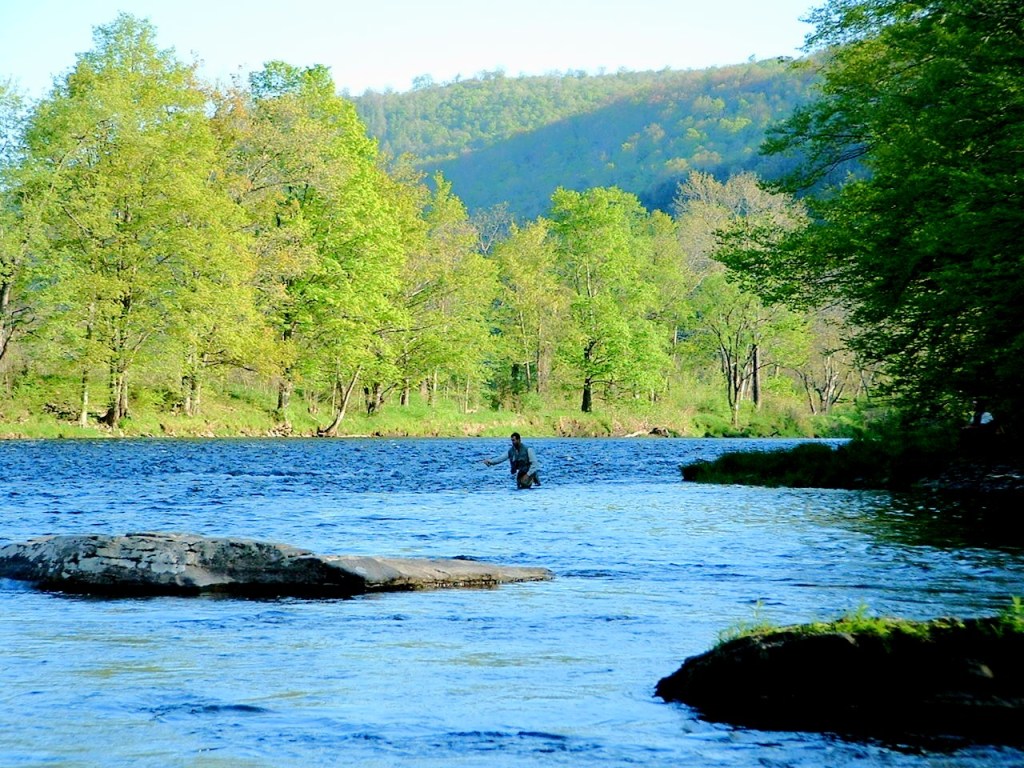
When I returned, I was invigorated by the climbing air temperature and sat down on the bank to watch the river. There was a different reel in the reel seat, one with a floating line, dry fly leader, and a little stonefly pattern. It was closing in on three o’clock, when I saw a miraculous vision: there on the far bank a trout rose to take some morsel from the surface. I blinked a time or two, decided I hadn’t dozed off in the sunshine, and thus had really seen a trout’s rise on March 22nd.
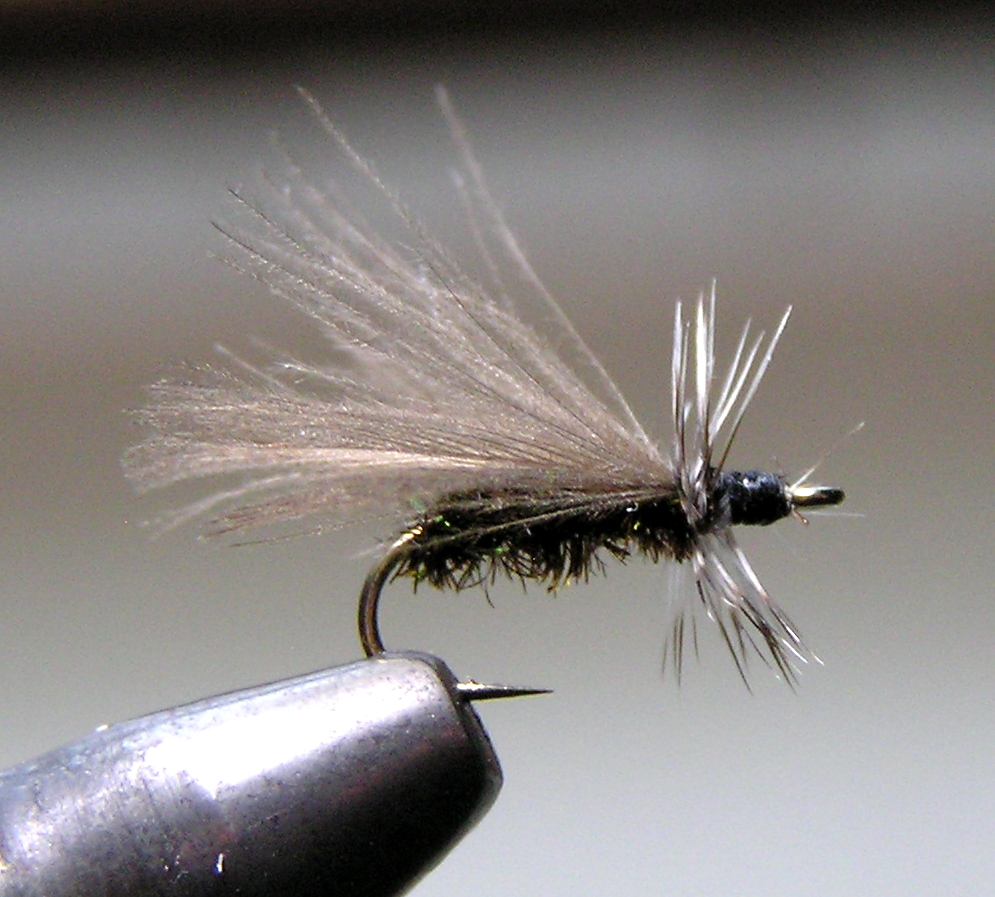
One of my favorite patterns for the little early black stoneflies that began hatching in February along Pennsylvania’s Big Spring. A few seasons ago I had seen a rise on the 27th of March, when a handful of blue-winged olives bobbed along the surface of the Delaware River. I caught the foot-long brown that had risen there, my earliest dry fly trout in Catskill waters to date. I did not see a second rise for two more weeks.
Resolute to make the most of this rare opportunity, I rose myself, and carefully crossed the river. In the fifteen minutes it took me to arrive at a casting position, the sky had clouded up and a cool wind had started to blow downstream. Adjusting my position to deal with the wind on my casting shoulder took another couple of minutes in the deep, strong current, and as I started to cast there was a second rise, and moments later, a third. I offered the stonefly a number of times, then changed to a twenty olive, seeing an occasional pair of tiny wings drifting along the windblown surface. By this point, gray clouds had fully replaced the earlier sunshine and that breeze had gained a bit more chill and strength, hindering my presentation.
I eased further across the deep water, hoping that a shorter cast might salvage enough slack in the tippet to drift the fly more perfectly, hoping that trout would accept my challenge. It was not to be. Three rises are more than I have ever seen at this time in March, and I could not help but wonder that if the sun had continued warming the river just a little longer, might the result have been gloriously different.
Those three rises had come at different locations, so they may have been the single trials of three different trout. I have known some very fine browns to cruise that particular reach of riverbank though, particularly when Nature’s larder was exceptionally thin…
This brief foray is recorded as a personal record, the earliest actual dry fly fishing I have experienced here in my new Catskill home, more than a fortnight before experience tells me it is time to prowl the rivers with the dry fly.
Doubtless, some time will pass before conditions improve, and I hold little hope that the traditional April First festivities in Roscoe will be held under warm sunshine along clear, sparkling water. Next week’s rain will likely raise the rivers and melt any remaining snow up high. Chances are their flows will be cold and colored, a typical beginning to what for so many years was the Catskill angler’s brand new trout season.
For now, I am grateful for the gift bestowed, the early chance to touch the magic that enthralls me. Nature will have her way, smiling upon us when she deems us worthy.
-
Olives
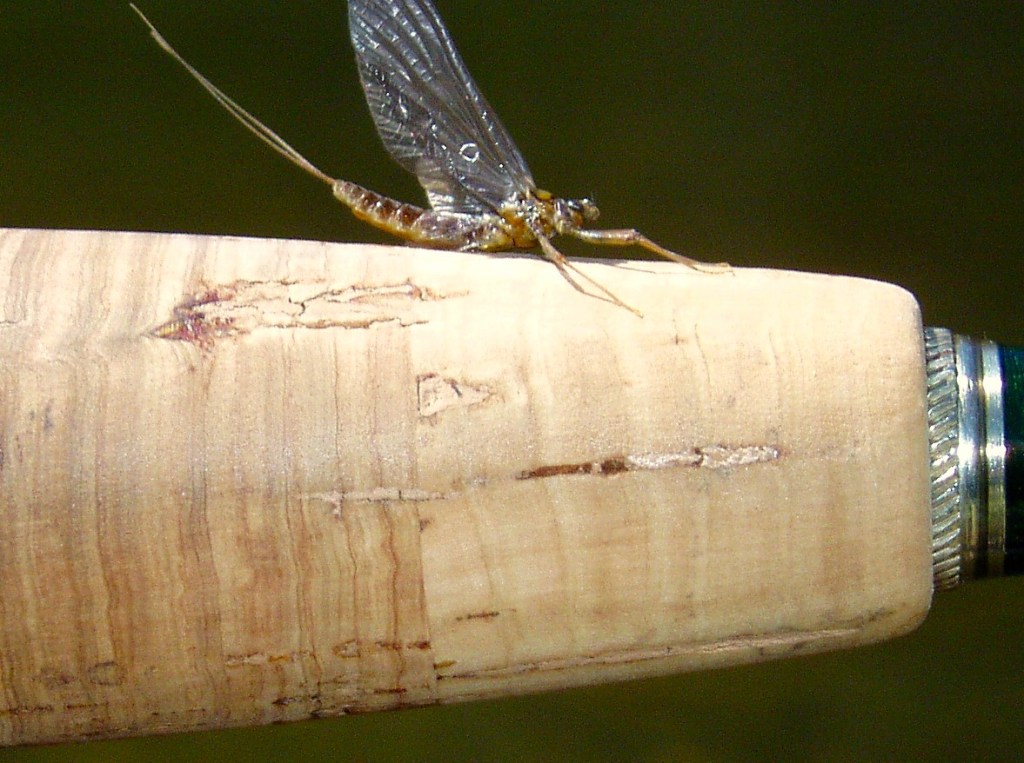
One of the last fly boxes I need to fill has come up for it’s turn beside my bench. Blue-winged Olives are some of the earliest mayflies, as well as the latest, and they will appear throughout the season to interest both fish and fishermen. Certainly, the olives provide a good deal for fly fishers, as there are many species that can be imitated with just a few dry flies. Like many anglers, I find success with a medium dark olive body in the early and late seasons, and a pale bodied form during the summer months. Tying a few favorite patterns in a range of sizes and those two general colorations can cover a great deal of fishing.
Yes, I have seen situations where a trout was particularly selective during an olive hatch though, more than during any other similar event, perfecting the presentation of an old reliable general olive pattern has solved the puzzle.

T.P. Duns: I probably take more trout on the generally dark olives in sizes 18 and 20 than any others. Fishing these smaller flies fine and far off challenges my aging eyesight, particularly during those cloudy, drizzly days when the mayflies hatch best. These Trigger Point Fiber winged comparaduns and sparkle duns have become a favorite for effectiveness, visibility and durability. For many years, I reached for small olive parachute flies tied with Antron Yarn wing posts, and CDC winged olives are always in my vest. As far as classic Catskill flies go, I rely upon Art Flick’s time tested, beautifully simple wingless hackled fly, particularly during summer fishing to trout sipping the tiny olive duns from size 22 down to 26.
When I find trout that refuse my standard little BWOs, the culprit is most often size. While I have coerced any number of big, difficult wild browns to take my size 20 T.P. Dun when selectively feeding upon sparse hatches of smaller mayflies, no fly is infallible. When the tiniest flies emerge in good numbers, the fish can lock in as they did one summer evening on the West Branch Delaware.
It had been an enjoyably challenging afternoon: stalking risers in big water, patiently waiting on the obligatory wind gusts, and reaping the rewards of stealth and determination with a few nice brownies. Around five o’clock, my earlier success ended abruptly, and I began searching for the cause. There were more rises than there had been throughout the afternoon, and I had to get my old eyes close to the surface to deduce the problem. Finally managing to clutch a tiny mayfly in my stubby fingers, I found that this heavier emergence consisted of miniscule size 26 olives. The size 22 olive I had been fishing was twice as long as the naturals! My search through my chest pack yielded a single size 24 cdc pattern, which may as well have been size 10. One angler in our party of three had size 26 imitations in his box, and he was the only one to take a trout after the hatch changed.
While the old reliables achieve that reputation for a reason, it pays to be prepared for the extremes, even on bright, breezy summer days!
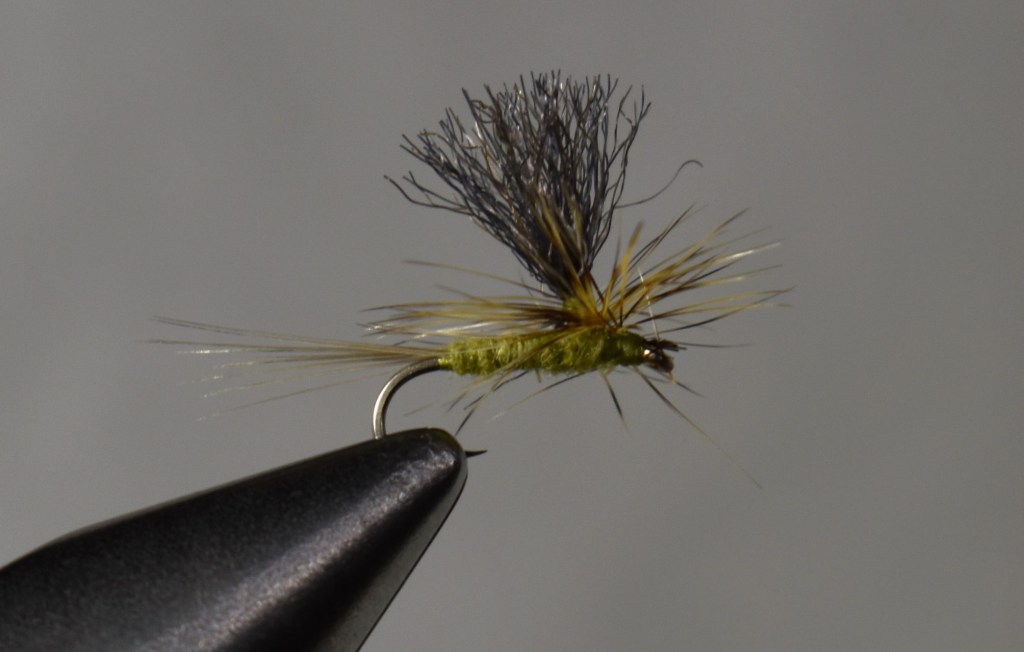
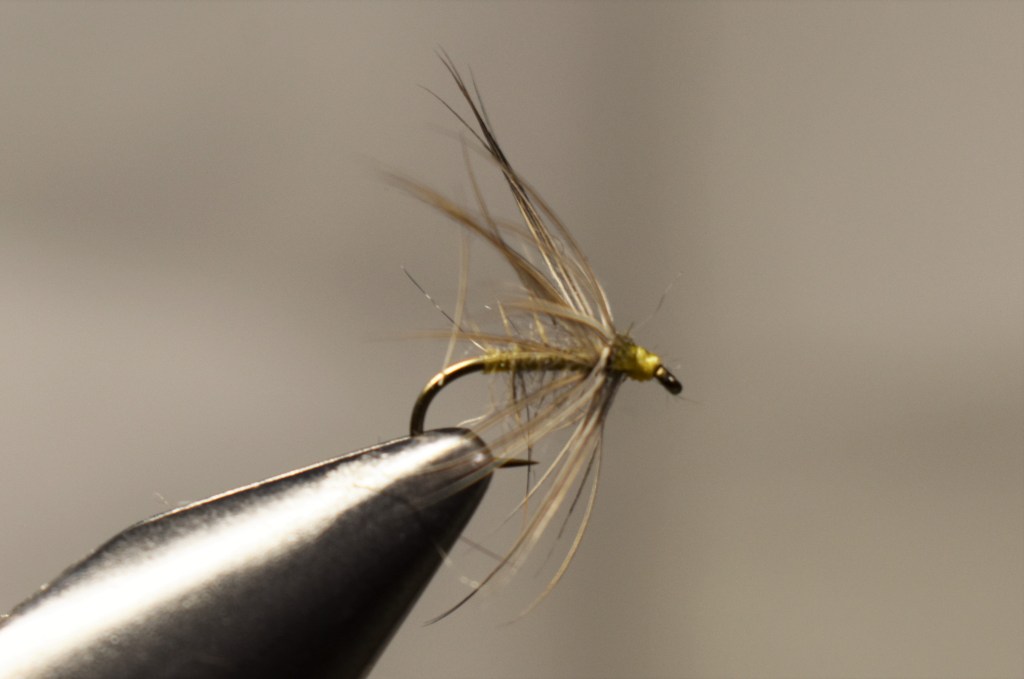
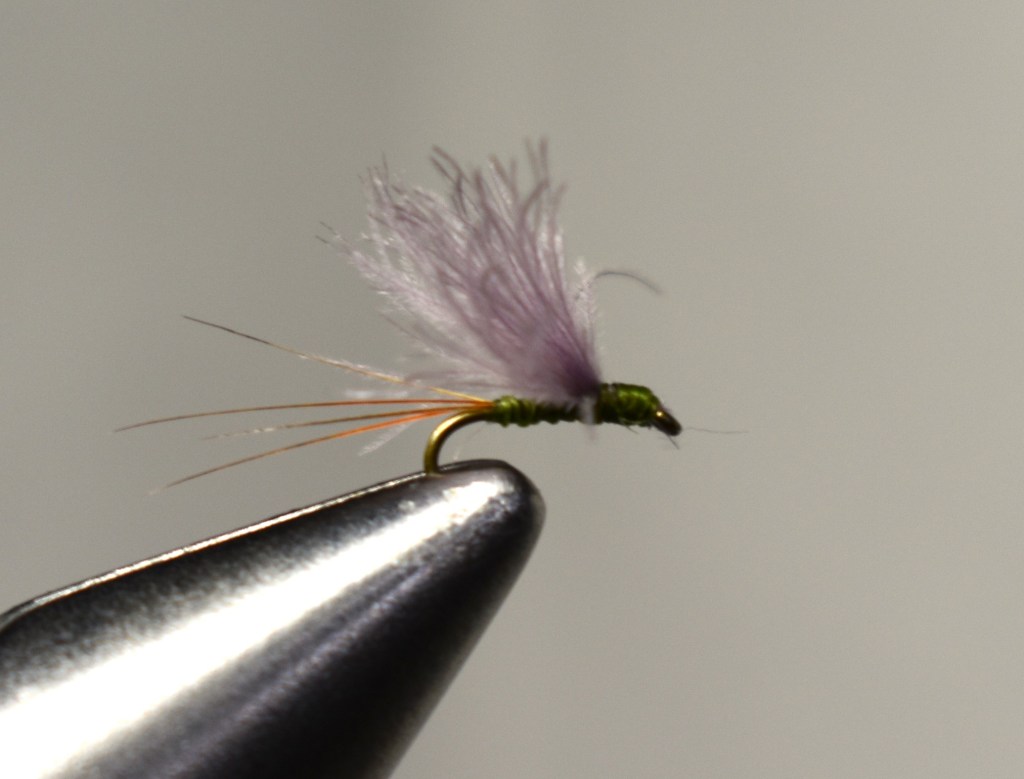
Variations: A standard parachute BWO tied to match the pale olives encountered during high summer (left); an English North Country soft hackled fly – The Waterhen Bloa (center); a size 24 CDC winged BWO a.k.a. almost nothing (right). These are all effective approaches for dealing with those trout too maddeningly selective to respond to the old favorites. This Thursday night, our Catskill Fly Tyers Guild gathering will feature a group share and discussion of favorite olive patterns, so while I work on outfitting my olive box, I will be deciding which pattern I will share with the group. Though I rely upon the general purpose patterns a lot each season, I am always looking for a new ace in the hole, and that makes my choice more difficult.
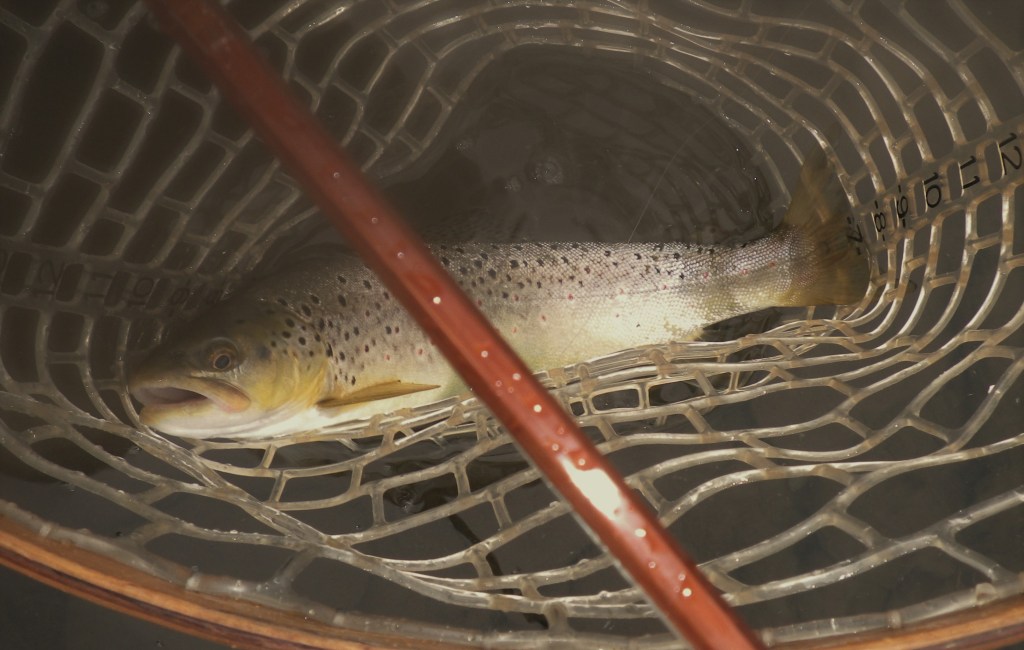
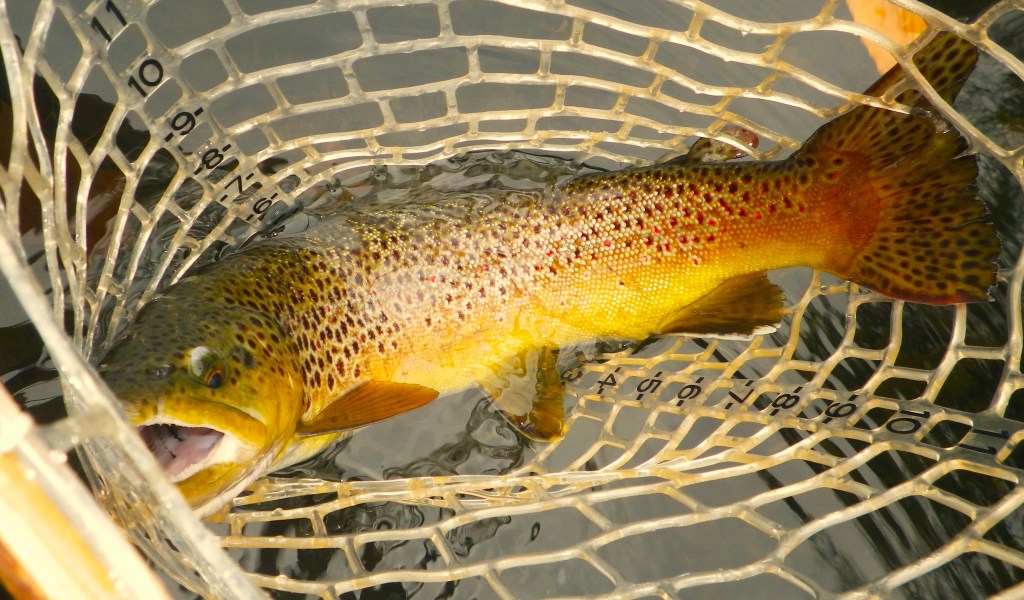
The 2021 season’s first dry fly trout from early April, and the 2022 season’s last from late October. Both took a Blue-winged Olive dry fly – one pattern to carry from beginning to end!
-
Coming Through
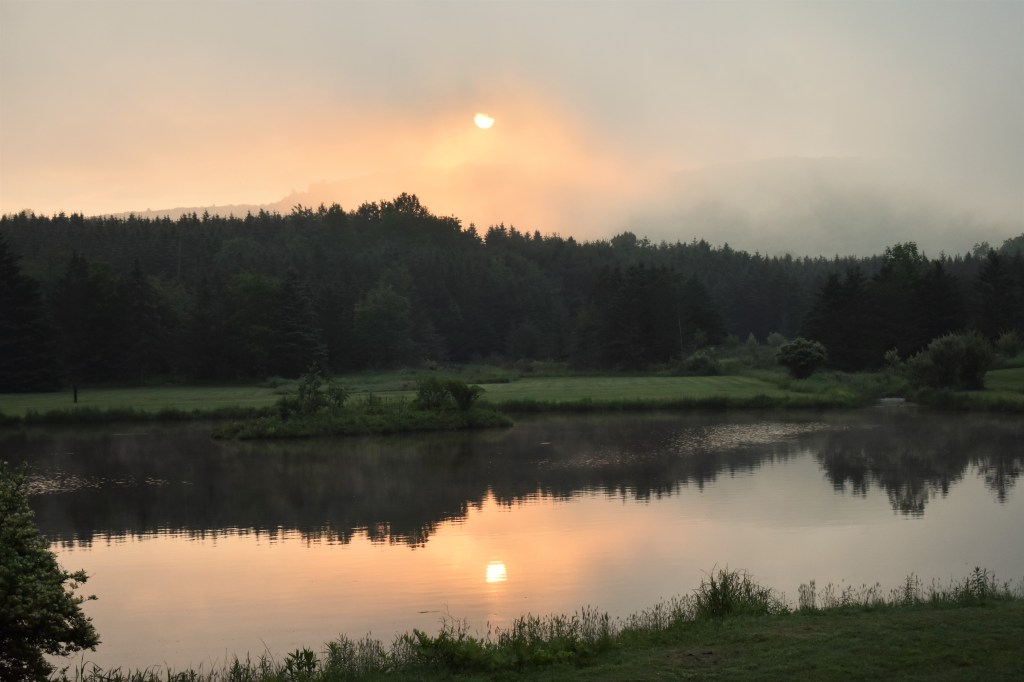
At sunrise this morning, winter’s final morning, I enjoyed the pink clouds gliding past the ridge to the northeast of our little village, knowing that I have passed through another Catskill winter.
When I began this odyssey, this fulfillment of a dream long savored, I did not know how long or short it might be. I still don’t. I recall the doctor saying the words, “it is your best chance for long term survival”. Though I was sedated, my mind was clear, calm, considering that I didn’t know if I would be leaving that room. I asked him what “long term” meant and he answered, a little flustered; “well, ten years”. I will pass the eighth anniversary of that conversation this week.
It took three of those precious ten years just to get to my minimum retirement age, to find this little house in Crooked Eddy, and take the necessary steps to make the dream a reality. My fifth full fishing season in the Catskills, the magic land that stole my heart decades ago, lies ahead.
Like any angler, I have my own visions and anticipations of what this season will bring, but none of us really know. Thirty years fishing these rivers has given me some insights and a wealth of memories, but an intrinsic part of the magic of Nature is the surprise of each new day along the rivers.
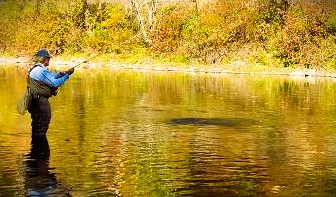
Photo courtesy Chuck Coronato
-
Waiting…
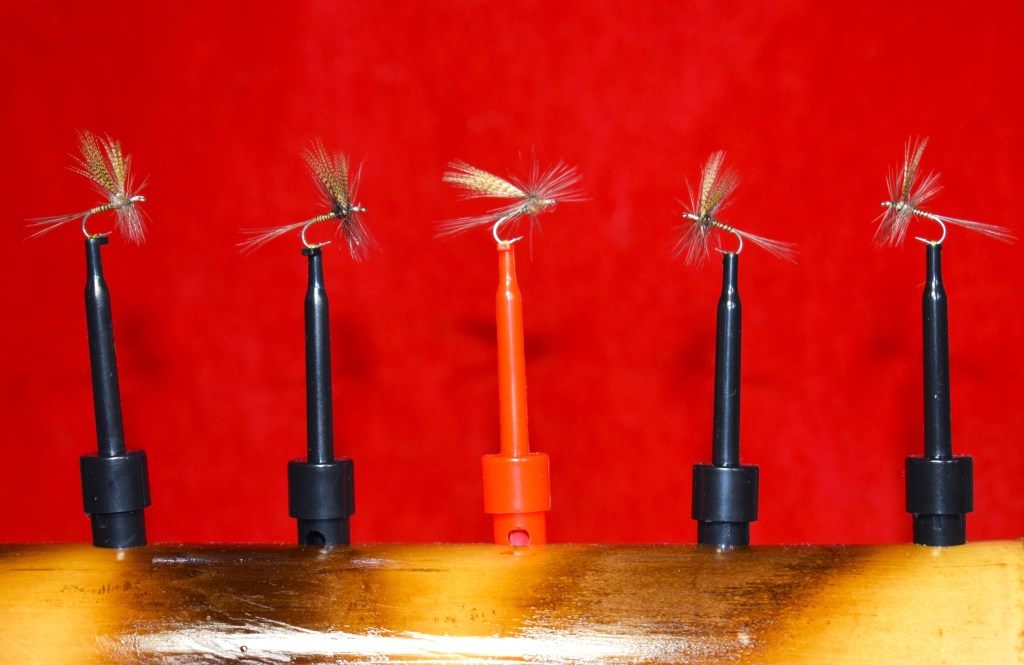
Freshly tied Quill Gordons, old and new, await the coming of spring. Twenty-four days now until I can walk the riverbanks with purpose again, and still we seem to be dodging Nature’s attempts to elongate the wait. Storm Sage brought a great deal of wind and, I had thought, the winter’s heaviest fall of snow. Out to clear the porch and driveway of her gift, I measured seven inches in a flat area that appeared sans drifts, and ten in another where though windblown, there seemed to be a larger area of constant depth. Cold wind continued amid bright sunshine the day after, and yesterday grew positively balmy with lots of melting.
I feared the worst for our rivers, expecting more snow up high and the resultant high, cold, muddy flows that do nothing good for our wild trout or their environs. With showers this morning, I looked at the river gages with clenched teeth, happily finding a stable situation here on the east side of the Catskills, a bonus with spring just three days away.
Ordering a couple of old books yesterday afternoon I asked my favorite New Hampshire bookseller of his fate. “Thirty-six to forty inches” he replied, “we’re still digging out”. So once again, the Catskills has dodged a calamity ridden storm system, and I give thanks for both the replenishment of our aquifers and the absence of a springtime disaster.
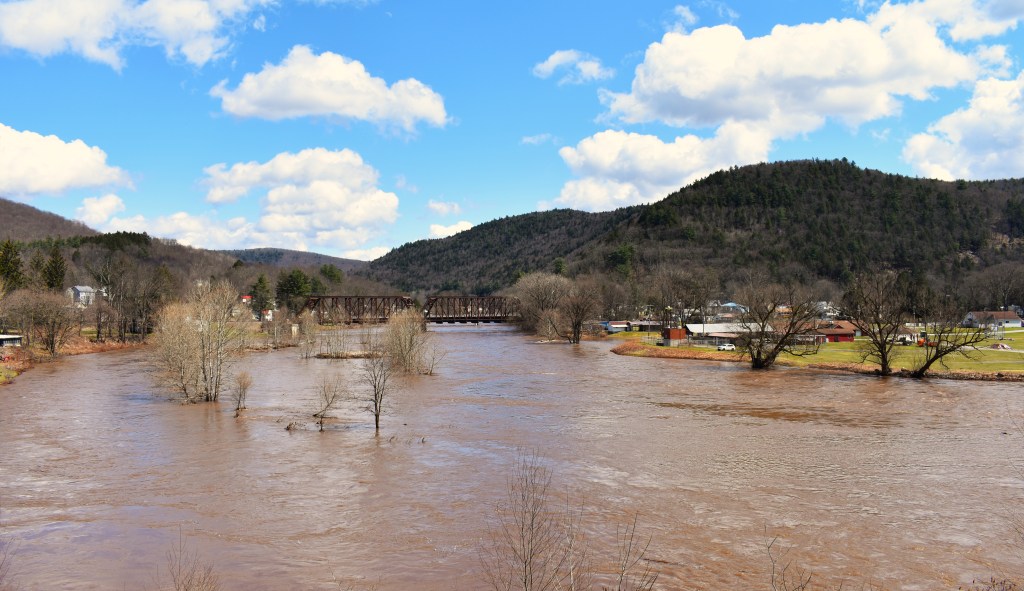
Crooked Eddy on April 8th, 2022: no search for Gordon’s Quills on this day… I don’t know if there is another storm brewing on the west coast, frigid air from Canada whipping it’s moisture into the next blizzard. I am honestly afraid to look this close to the season’s opener.
We have been fortunate this winter, the snow and rain received having generally maintained the historical average. The trout redds and the insects will benefit from the lack of floods and anchor ice that have marked the past couple of winters, and I have hope for a good season.
It is easy to sit back and dream of warm sunshine on my back and shoulders, a subtle bulge out in front, shimmering like all magic things do, as I lengthen my line and drop the dry fly smoothly above the center of the whirl. Will he take?
-
Sulfurs
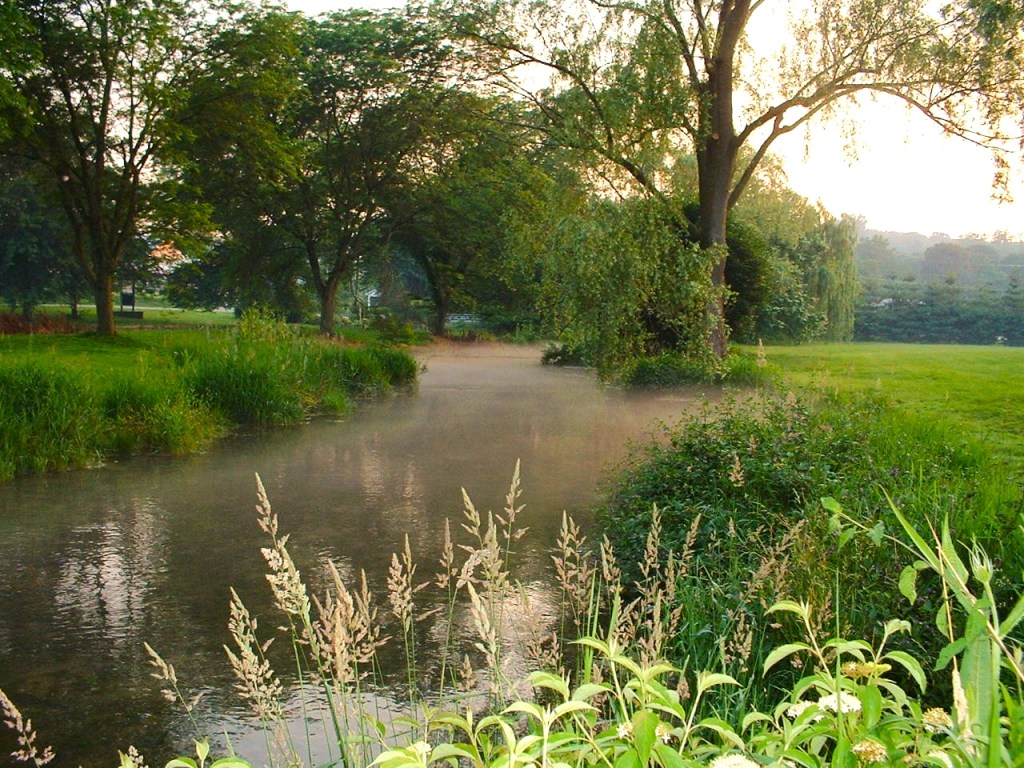
Falling Spring as evening approaches: the humidity causes the mist to rise from the cold spring water as anticipation builds for the sulfur hatch! I have decided that this snowy day is perfect for tying sulfurs and daydreaming of warm air and bright water.
It was the late Charlie Fox who began referring to the little yellow orange mayflies that frequented the water meadows of the fair Letort and her neighboring streams as sulphurs, so far back in our concept of angling time. These lovely little mayflies were the featured performers on the Cumberland Valley limestone springs and Maryland’s Big Gunpowder Falls, my own first and favorite hatch as I entered the secret world of wild trout with the fly rod.
I still remember the magic of those calm, warm evenings along the Falling Spring, friends gathering early to speak in hushed, excited tones of the best patterns and the trout landed recently. The sulfurs have remained special to me throughout three decades of chasing wild trout in bright waters.
Here in the Catskills we get an extra dose of this magic, enjoying the classic evening hatches in May and June, with another two months of summertime technical fishing as the sulfur hatch continues on the tailwaters! Throughout the spring and summer, we are blessed with emergences of several species, fishing to trout rising to flies from size fourteen to twenty. Coloration varies, with some flies being best imitated with a true pale yellow dun, and others demanding that subtle mix of orange. I have seen these variations often in the same water during the same afternoon.
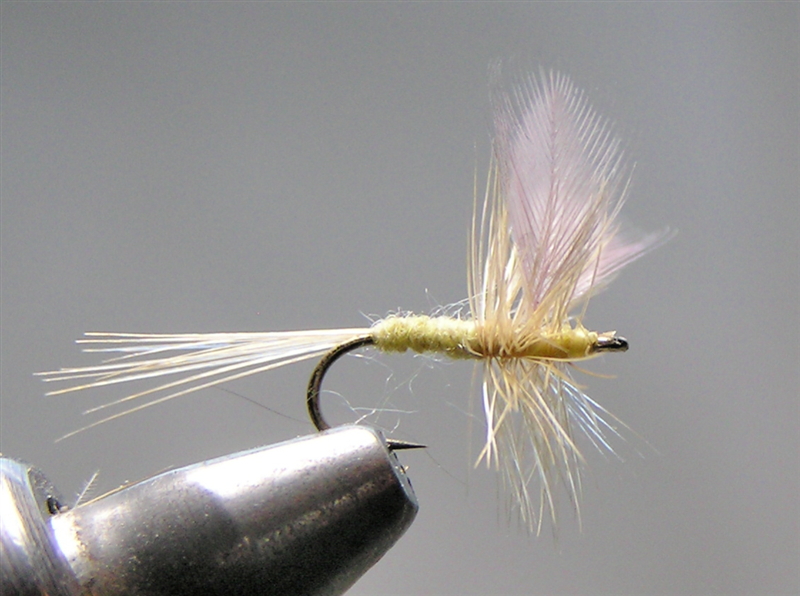
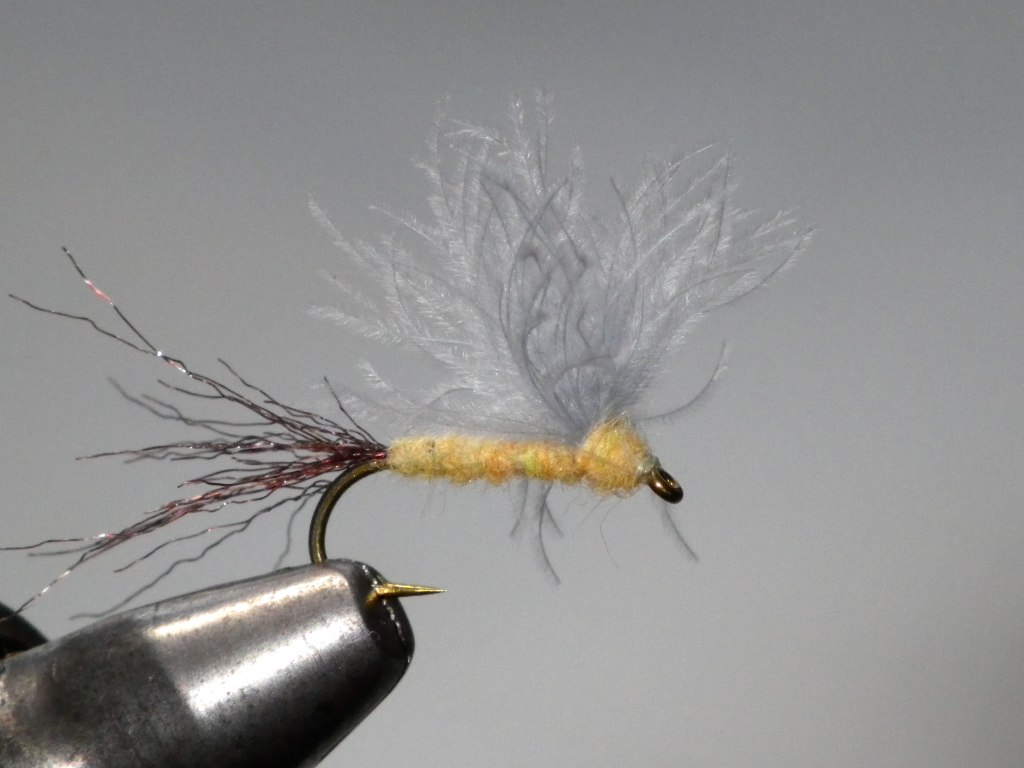
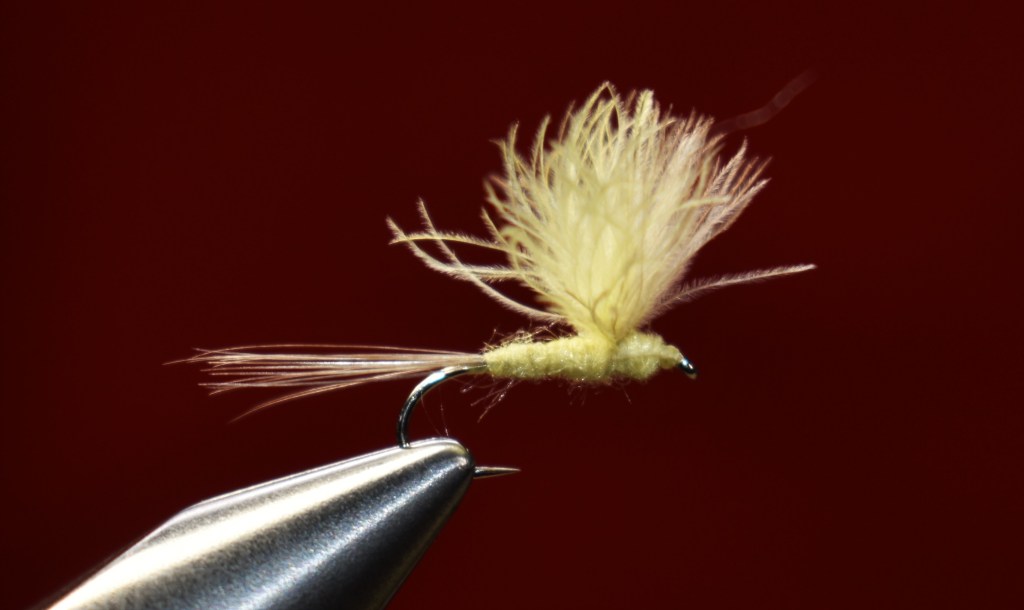
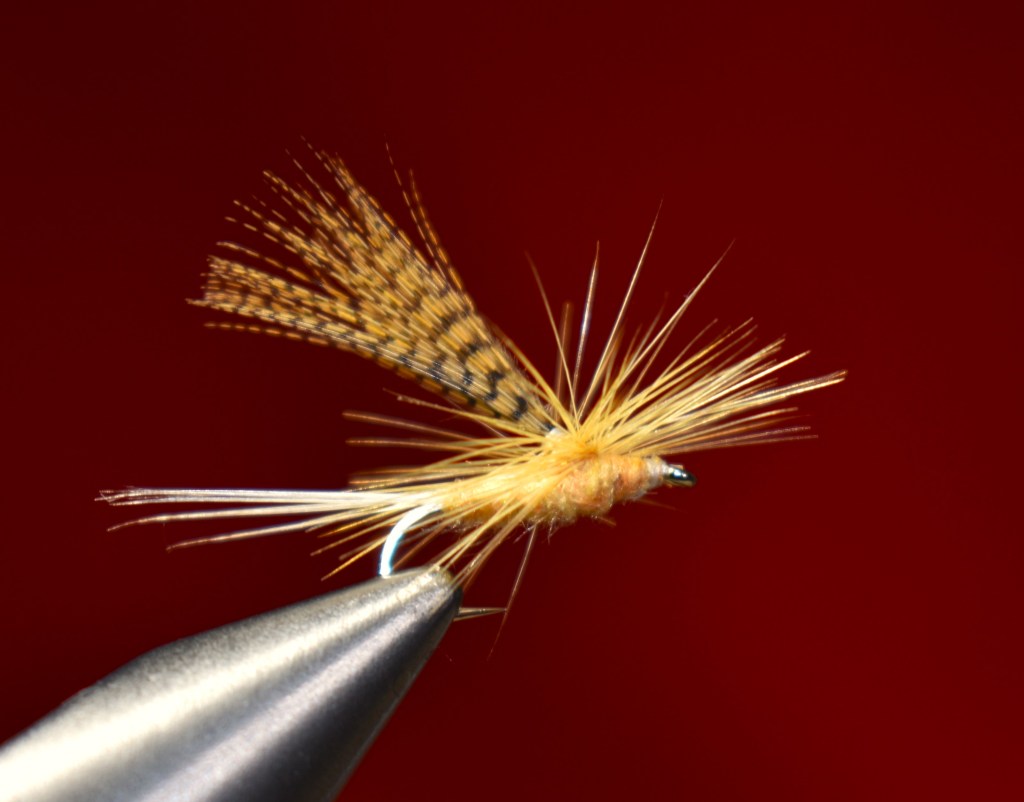
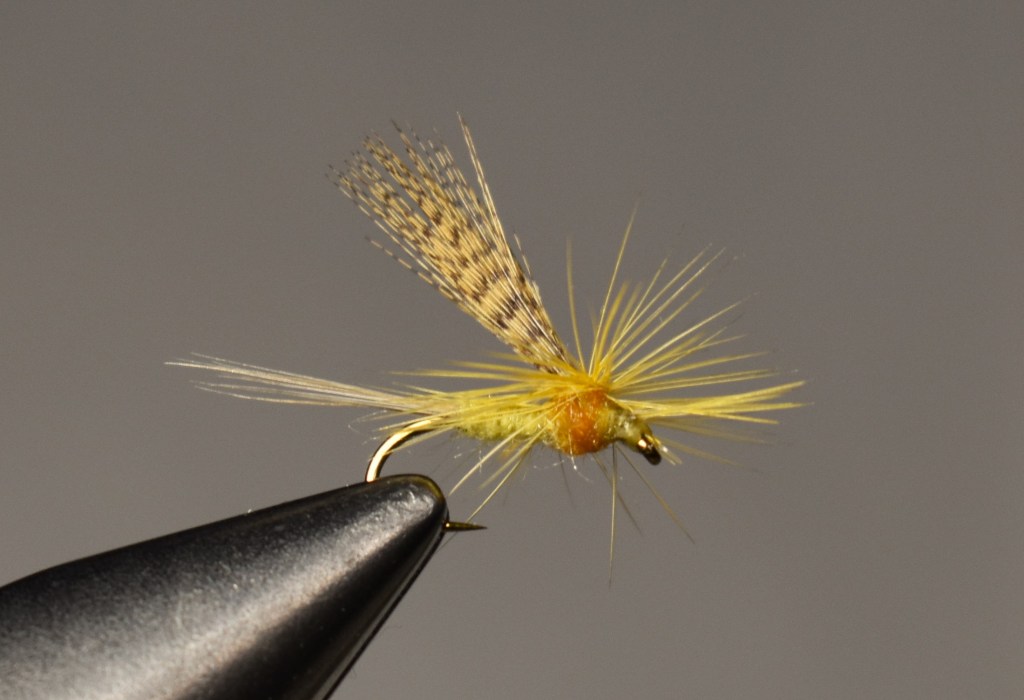
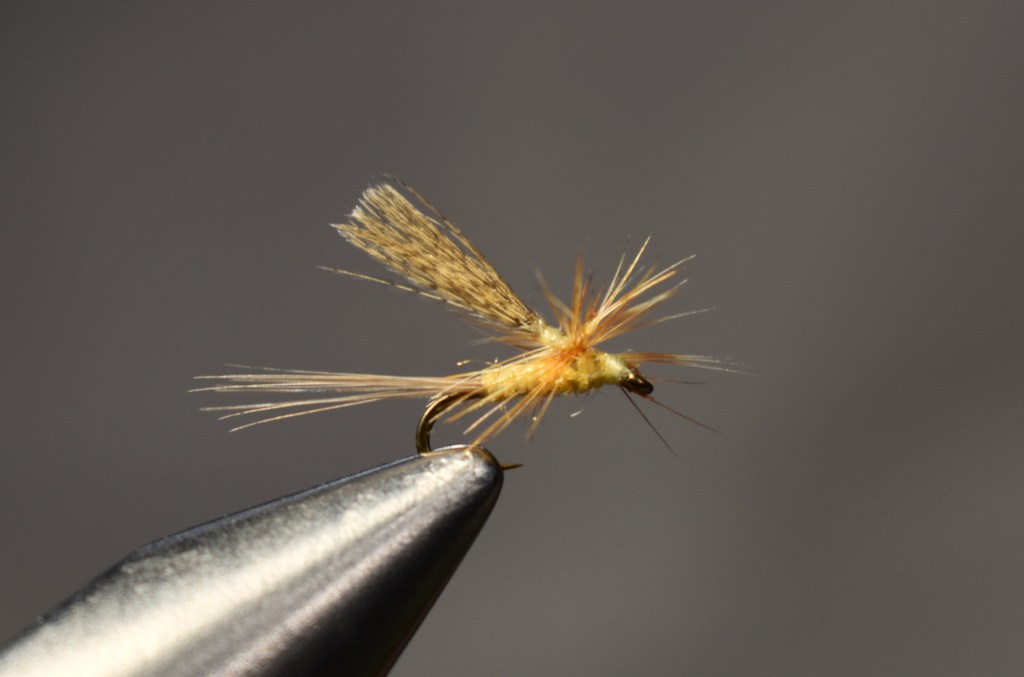
Sulfur patterns then and now, from an early hen wing through CDC dries to the Translucence flies and my tiniest 100-Year Dun. I have always marveled at the variety and the subtleties of this hatch, and how much has changed in three decades of fishing it. That very first afternoon the Gunpowder browns were keyed upon yellow, ignoring the best imitation in my meager selection, a size 16 Light Cahill, and taking the Elk Hair Caddis that was the sole yellow bodied fly I owned.
Last summer I noted little flurries of orangish, size 16 duns coming down one edge of the riffle, while the full width of the river was covered with pale yellow eighteens! I took some fine brown trout by fishing my light orange sixteen 100-Year Dun along the tail of that particular thread of current, downstream in some difficult water.
The trout have become warier and more selective as the throng of anglers has increased season after season, so perfecting new patterns has become an ongoing challenge. Today’s sulfur hatch often requires a wide variety of flies, imitating variations of the phases and colors of the naturals. Presentation remains paramount, and that includes the ability to recognize and match those subtle variations an individual feeding trout keys upon.
I have heard and uttered the same lament: “this fly was killing them yesterday, but today they won’t touch it!” We must beware of settling into a comfortable routine. Experienced anglers know this, yet we still do it, for it is part of our human nature.
Trout learn to avoid the disturbances of heavy fishing pressure in different ways. Some will ignore even natural duns, selecting drowned emergers and cripples out of the main currents, while others may vacate the prime spots in the best runs and pools altogether. I have found good fish that may not have moved far, but have been blissfully left alone on a busy river because they settled for small pieces of very marginal looking water.
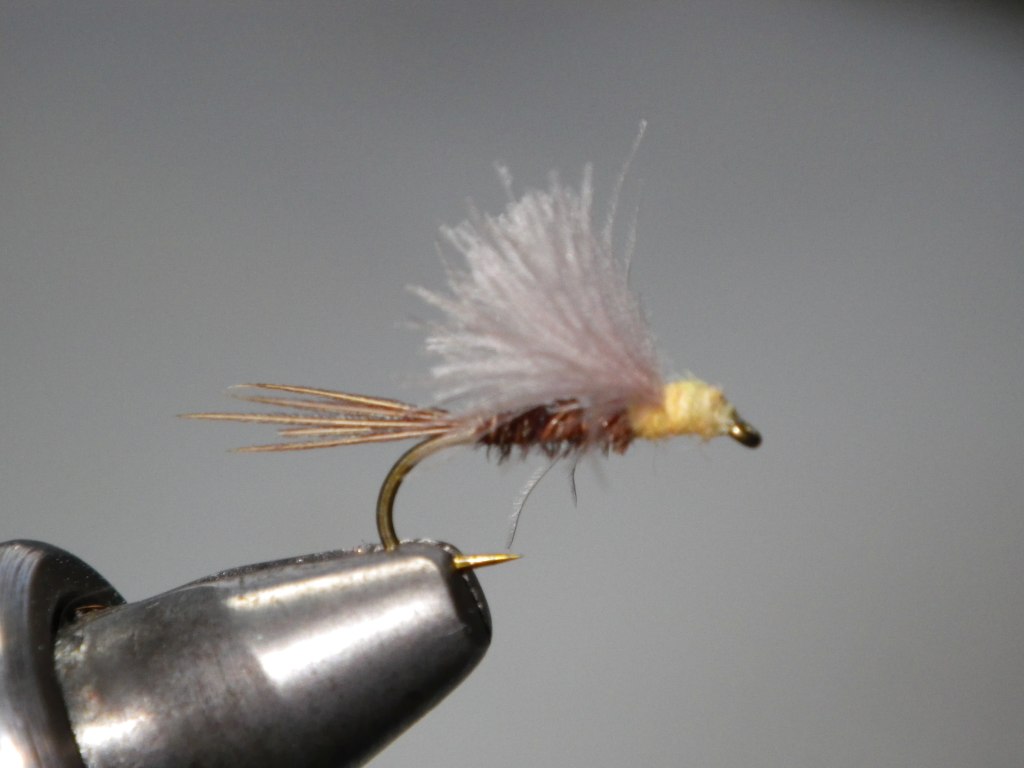
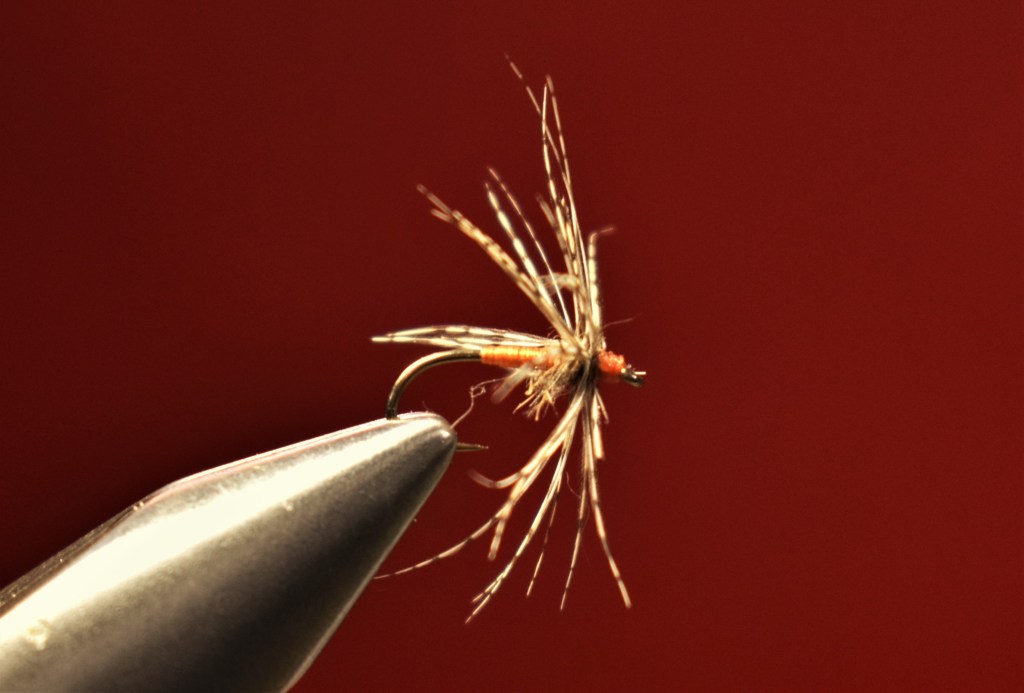
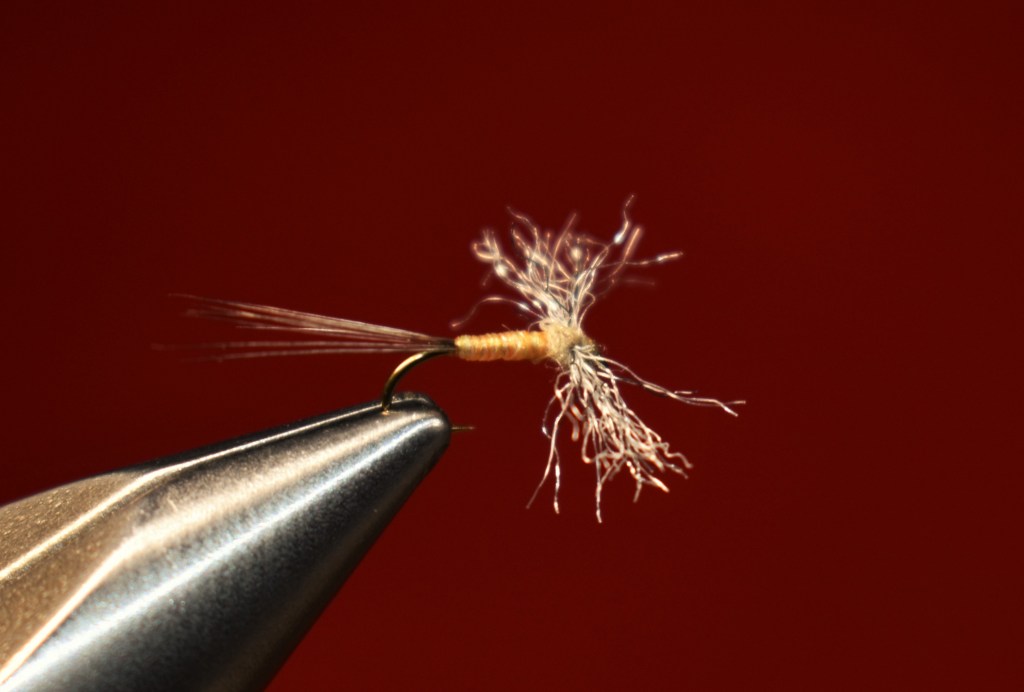
Emergers, cripples and spinners: Sometimes an old standard like the Partridge & Orange can fill in for either stage of a sulfur mayfly, and it may appeal to that difficult fish because it isn’t the same style of fly he has been ignoring for two hours. Summer finds me carrying at least two sulfur boxes and a crisp eight-foot bamboo rod that fishes a four weight line. Such a rod can be the perfect foil for the variety of angling situations I can expect to encounter.
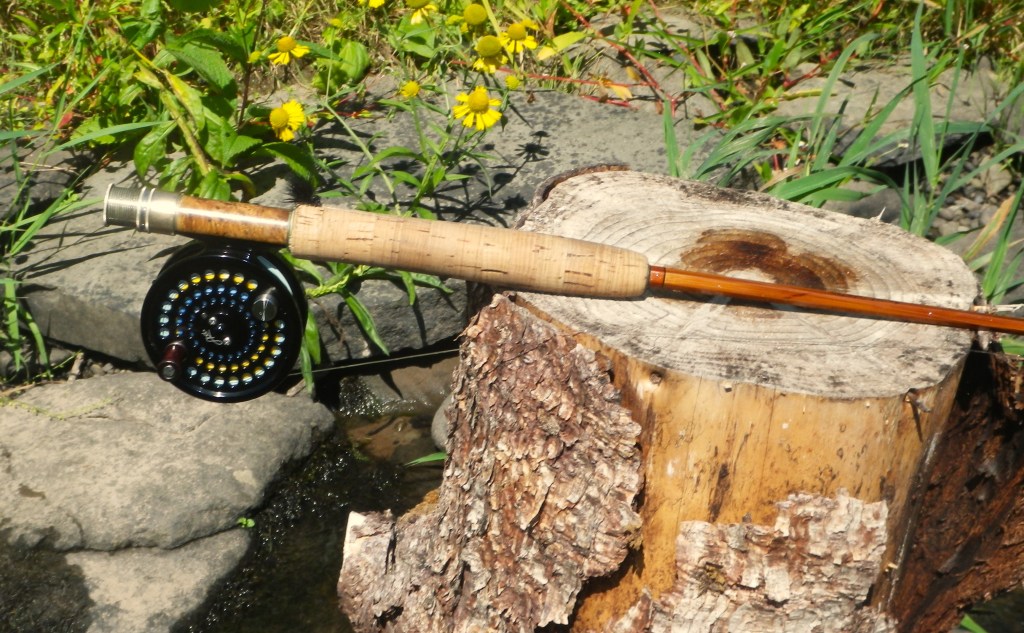
“A crisp eight-foot four weight”, the late George Maurer’s Queen of the Waters. Trout can be found sipping sulfurs from bright riffles and runs to clear, slow pools, depending upon time and conditions and their individual preferences. From mid-May through August, I often encounter brief little appearances, perhaps no more than a dozen flies drifting downstream over a span of five or ten minutes. I might see one or two rises during these occasions. If I do, I pin down the trout’s location and get my fly to him as quickly and perfectly as possible!
Some of these moments garner more favor among my memories than some of the heaviest, sustained hatches.
One evening years ago, I sat on a riverbank sipping a chilled lager while hoping for a Green Drake hatch. As the evening progressed, I noted a few sulfurs drifting down through the run and, eventually, a soft dimpling rise near the far bank. I finished my beer, rinsed the bottle and placed it in the back of my vest, then slipped gently into the river.
A size 16 sulfur comparadun had replaced the drake on my leader when the first flies appeared, allowing me to take advantage of one of those ephemeral moments encountered along the rivers. I waded quickly but carefully into position and offered my sulfur to that bulging and dimpling trout with a long reach cast. He took it as softly as he had taken the naturals, then exploded when I lifted the rod. He turned out to be the first of a pair of beautiful wild browns the sulfur delivered that evening, each passing the twenty-inch mark on my net handle. There were no other risers, and no drakes encountered that night, though I stayed until darkness blanketed that little grove among the trees. Honestly though, I didn’t miss them.
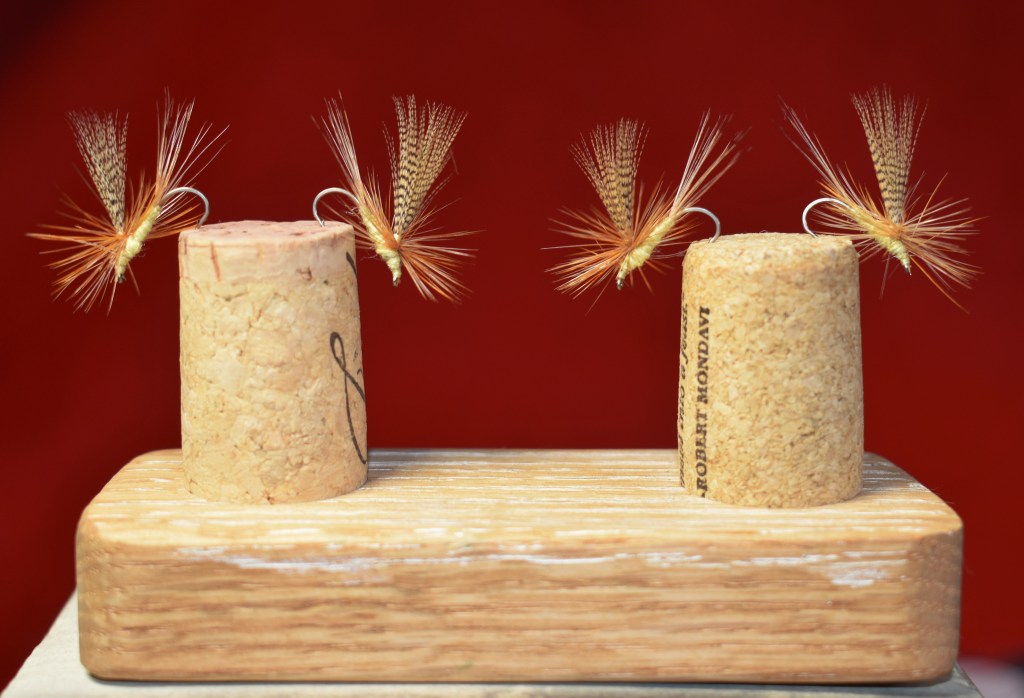
“Big Sulfurs” waiting for May.
-
A Bright Though Frigid Morn

We have passed the thirty-day milestone in the countdown to dry fly bliss as we sit upon the brink of the March blizzard my unsettled thoughts warned me about. Eight days from the vernal equinox and the thermometer reads 19 degrees here in Crooked Eddy.
The local forecast I trust the most calls for just more than ten inches of new snow between Monday afternoon and Wednesday morning, though by Friday they expect a high of 48 degrees. That spells high, cold, muddy water in my river oriented mind, something I was looking forward not to having as spring made it’s official debut. I don’t begrudge the mountains a little late snowpack, its just that I would rather it hang around and feed the springs slowly rather than vanish in a heavy rush of runoff.
Nature will bring us what she will.
I have slowed my fly tying during the past week. With my donation flies completed and my boxes fully stocked (some too fully), my attention has shifted. Welcome to that uncomfortable stage of winter when anticipation overcomes patience. I have done a little work around the house, worried about upcoming medical appointments, read a lot and fidgeted, with nothing able to hold my attention for any length of time. I need to go fishing!
My hand needs to wrap the cork of a favorite bamboo rod and my fingers are ready to tie the knot to join fly and tippet…

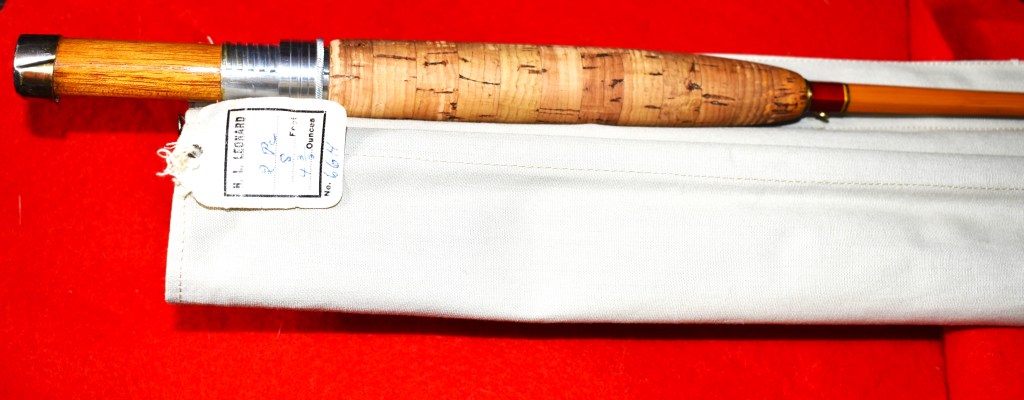
I wonder about the river conditions twenty-nine days from now. Will the winds do their worst, or will the season begin with fair, calm days? I’d like to begin with the Leonard and give a nod to Catskill tradition. The Leonard and a Quill Gordon dry fly on the Beaver Kill, yes, I like the image of that, the day overcast but with an hour of sunshine as evening draws near…

-
Faerie Winds
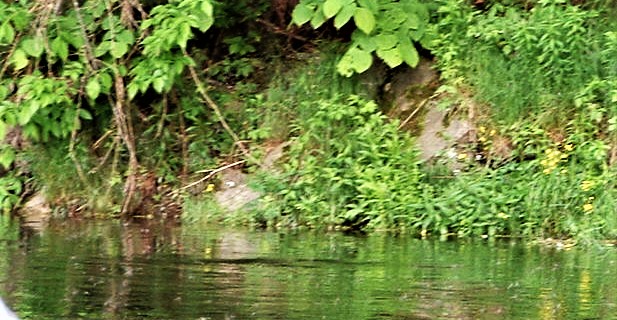
There he is, right in there tight, where the current slows, even back-eddies a bit. All I have to do is put it in there gently a scant foot above him, with nary a ripple and loads of slack in the tippet…Oh, and make sure the speck that my eye starts tracking is my fly and not one of those real bugs! Funny sometimes how our thoughts run during this tortuous time we call the off season. Just yesterday I was thinking about easing down the river, stalking bank feeders, that and the effects of those little faerie winds that drive anglers crazy.
Wind is of course always a major consideration when it comes down to presenting a fly. Here in the Catskills, it controls everything about fishing when it blows fairly hard: where we can fish, how we can fish, and at it’s worst, whether we are likely to catch any fish on a dry fly. Winds are major players in this game, whether blowing like a gale or whispering like soft breaths of a babe.
The prevailing winds for the day must be considered when we chose our location, along with river flow and the general wadability of the water where we hope to find rising fish. If the depth and current speed allows freedom of positioning, we can usually plan our approach so that the wind doesn’t defeat our casting. On our relatively large Catskill rivers though, we don’t often have that freedom during the prime insect weeks of spring. Even when the conditions do allow a reasonable casting angle to deal with the prevailing winds, it is often necessary to make casts from a distance. The Red Gods impose a rule in these situations, to the effect that the limit of wading shall remain at or just beyond our maximum casting range under the conditions.
As fly fishermen, we are firmly bound by this rule, whether we recognize it as a rule or not. Wet vests, waterlogged fly boxes and seepage over the top of waders are the warning signs allotted by the Red Gods, warnings often followed by a dunking, or worse if ignored. There is another insidious ingredient involved though. When we find that extra foot or two of casting range, steady ourselves in more current than we prefer, relax and make that perfect cast, the faerie winds are brought to bear. Gentle, capricious yet irresistible, they can be the most trying test of our angling temperament.
We know we must control the leader and the fly so that it drops gently with controlled slack. Anything less and our fly will drag and erase the possibility of taking what might be the trout of the season. An experienced caster and dry fly fishermen knows when everything feels right. Yet time after time, our fly falls short, seems to drift off track, or even curl back toward us with insufficient slack to make the drift. Faerie winds have wafted our fly away from it’s target!
Now the scientists among our ranks will blubber about back drafts, the prevailing breeze being unsettled and pushed away from the shoreline by the intrusion of riverbanks and vegetation disrupting the flow of air over open water, vectors and thermal inconsistencies… bullshit. The truth is that the faerie winds are the extra ace in the vest pockets of the Red Gods that plague us!
Faerie winds are invoked when the gods are not satisfied that we have labored half an hour against buffeting winds, slippery rocks, and current deeper and faster than our best wading technique can normally surmount, to somehow arrive in a position where the distance to the subtle ring against the bank is less than or equal to our best cast. We have not yet earned that trout in their estimation; thus, they invoke the final test.
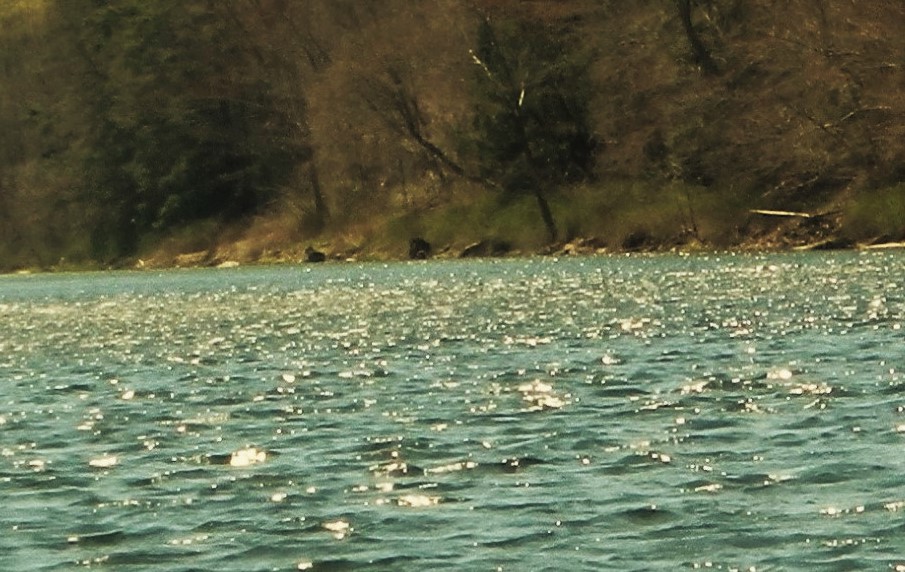
Current, right to left, wind left to right; and yes, those are the beginnings of whitecaps blowing upstream! Passing their final test is beyond difficult. Each cast softly wafted back toward us, half a foot from the line of drift that trout is lying in results in the tensing of the muscles in our necks, backs and casting arms. Five casts, ten with the identical result, and by then our technique has begun to noticeably deteriorate. We curse, apply more power to our casts, and our fly drops farther from the target. Fuming, more cursing, and then an attempt to slide one precariously anchored foot closer to that bank. We feel the gravel slipping out from under that foot, recoil, and nearly lose it. Okay… calm…
Stretch the neck, wriggle the shoulders, adjust the tippet by one size, or it’s length by six inches. Make another cast.
I am persistent in this ritual, some of you perhaps less so, some more. If we keep at it long enough, if we somehow manage to quell the frustration building between our ears, on some days we may actually pass the test. Either that, or the trout will stop rising.
Many of us live for those rarest of days, those when we finally conquer all of our foibles, physical and mental limitations, and make that perfect cast. The faerie winds are stilled, the leader uncoils perfectly and drops the fly in the exact position and line of drift, resulting in a perfect float. In a mix of amazement, celebration and gratitude we watch that float all the way into it’s envelopment by a brand new ring upon the surface, raise the rod with perfect timing, and feel the energy of a seven-inch chub!
-
Cold Snap

So here we are, more or less walking down that last hallway toward spring and, well, we’re having one of those little cold snaps that feels like spring isn’t closer, but farther away. A couple of smaller winter storms have passed through the Catskills and another is on it’s way. The story sounds the same: we might get some accumulated snowfall, but maybe not.
We had most of our allotment of frigid cold and snow in December, an effective way for Mother Nature to beat us down and scold us that it is winter, and we need to forget about that fishing nonsense. Once we got through December though, there were a lot of warmer days, some nice enough to get out upon a river and wet a line. February found us wandering through a number of days in the forties, the kind that almost tempted me out to the water but fell short more often than not. That had the desired effect, for with March beginning I got that old anticipatory feeling again, the craving for an early spring.
I remember the last truly, early spring, back in 2011. There was a long run of sixty and seventy degree March weather down in the Cumberland Valley, and we heard stories about the trend spreading north.

March Madness 2011: Seventy degree shirtsleeve weather, an honest early spring, and prowling the Falling Spring to find a good brownie. That was a dozen years ago and was the last really early spring encountered. The landscape may have been bleak, but the fishing was good! There were Grannoms and Hendricksons on Penns Creek that March and some Blue Quills and Quill Gordons reported in the Catskills. I came up fairly early in April that year and found some Hendricksons here and there. The result of the seasonal change coming several weeks ahead of schedule was a boom or bust season, with the accent on the bust. Hatches dribbled off over a month or more without anything more than a few isolated heavier emergences. Rising trout were not a common sight. If you happened upon more than one or two of those, you were in the minority, and the same theme continued right on through the entire season.
As much as I long for the commencement of the dry fly season, I cannot say that I would be willing to trade that truly early start for a generally substandard year again.
The ideal early spring to me is for things to get going during my target week and build from there. There are seasons when the water temperatures have remained cold and the spring bugs have not hatched until May, the dreaded late spring scenario. When that happens, the rest of the hatches seem to come on top of one another until we reach the finale one short month after the beginning. I have fished through a number of those seasons here, and I always end up feeling like I have missed something, no matter how fast and furious and good the fishing has been.
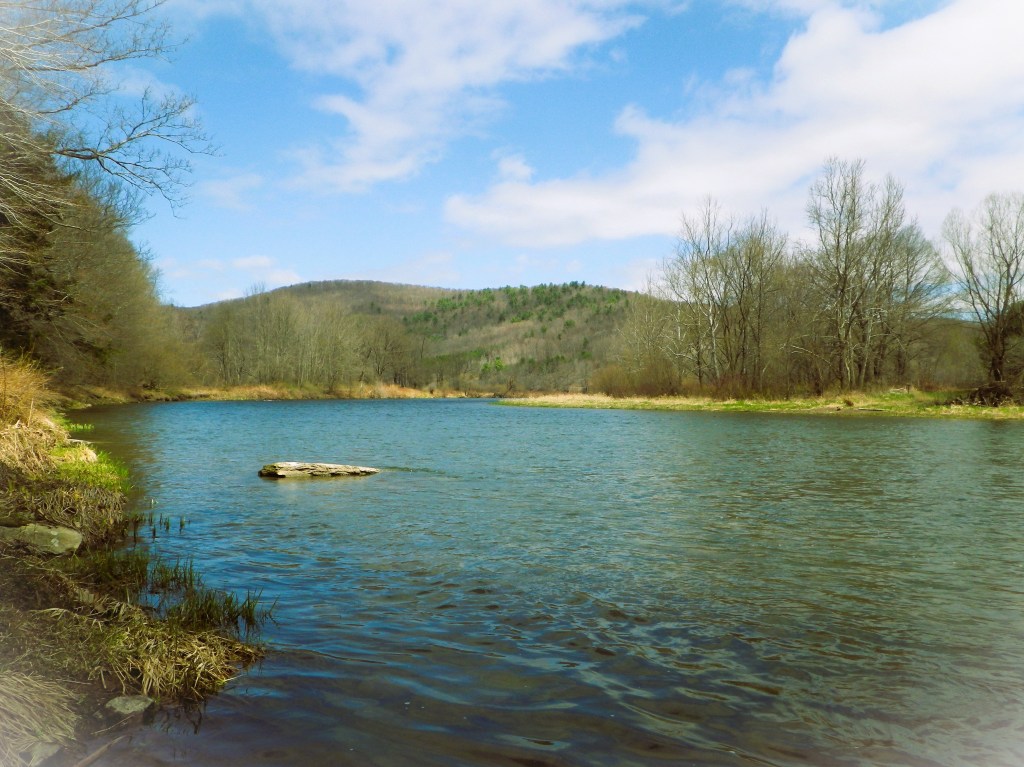
By the beginning of the fourth week in April, you expect it to happen. That is phase one of a late spring, since we should have been catching trout on dry flies for a week by then. Trouble is, that pretty sunshine may not be strong enough to overcome wind and lower air temperatures and warm that water up! If I get my wish this year, I have at least a month to weather the cold snaps and dream about fly fishing. I don’t want to think about the possibility of waiting longer than that.
Its fly tying night again tonight, as our little band of Guild members tackles the Bradley Special. I have tied a few this week already, so I may do more watching and talking than tying tonight. These cold snaps tend to distract my concentration a bit, making for a few days of reading and fidgeting and sort of milling around going nowhere.
I did have an idea for a light version of my Catskill Adams yesterday, so I blended some dubbing and tied half a dozen of those flies. I have to make room in the main early season box for them so they get a chance when spring does come.
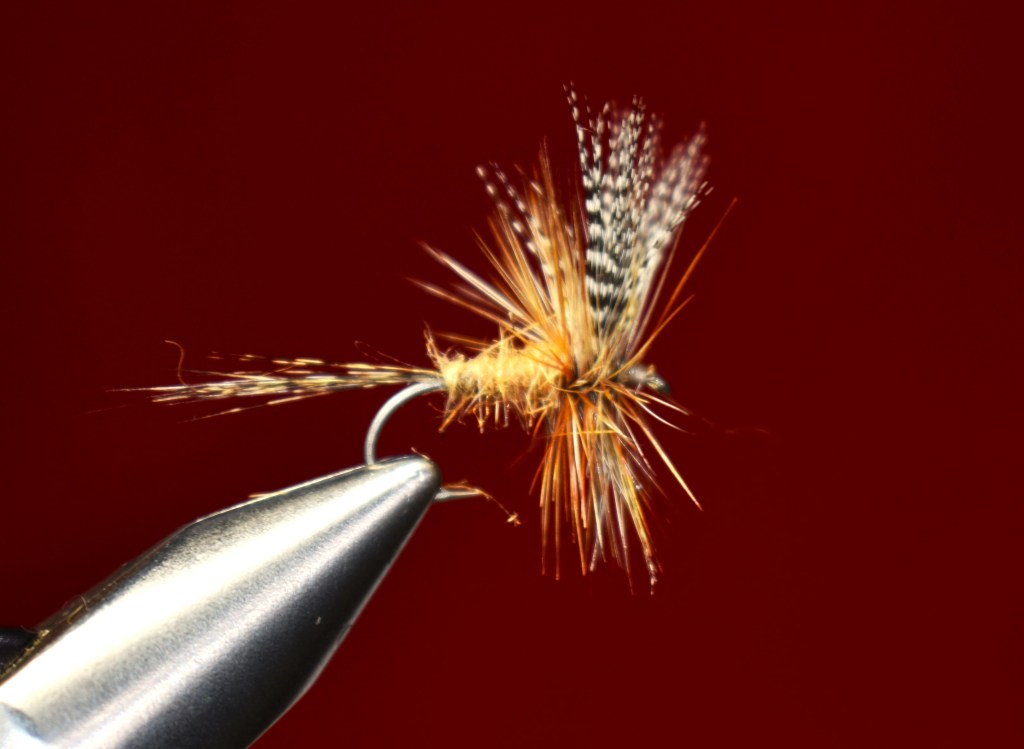
Scruffy, bushy and buggy, the Light Catskill Adams looks like it has promise for fishing faster water once Hendricksons and March Browns start showing. The lighter version uses Fox Squirrel like the original, but has more of the tan belly fur in the blend. For now I guess, its just another chance to hunker down for the duration of this cold snap!
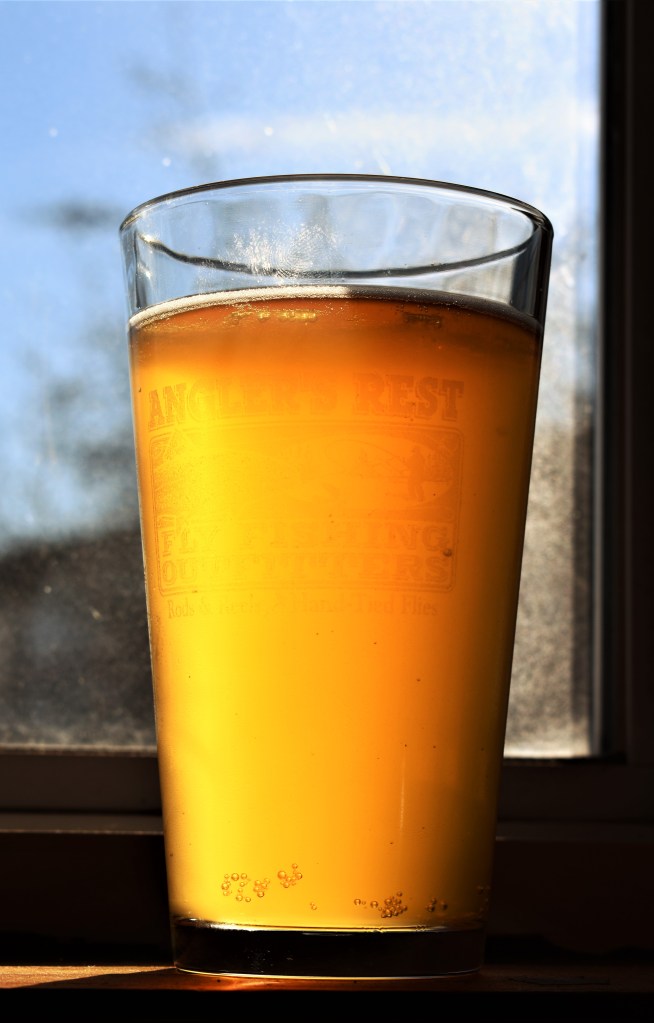
Cold Snap: My favorite beer, and I can only get it when the weather inspires the name.
-
Easing Through The Day
I was sitting in the living room just now, reading a bit, when I realized it was getting on to five o’clock. Looking out, there was still plenty of light in the sky, part of the tangible change as the days lengthen gradually toward spring. It wasn’t that long ago that it was nearly dark at this time of day.
Though the days are actually growing longer, it seems somehow easier to pass them than it has all winter. Having the goal so much nearer is a factor in that perception, as is the continual march of the years. My paternal grandmother lived to be 96, and we used to talk about the passage of time, and its habit of quickening as we get older. I remember her saying that “the years passed like lightning”.
As an angler, I get the opportunity to move back and forth in time so to speak. When I tie a Catskill dry fly in the vintage style, or thread my fly line through the guides of a classic bamboo rod, I step back, perhaps fifty to one hundred years in thought and deed.
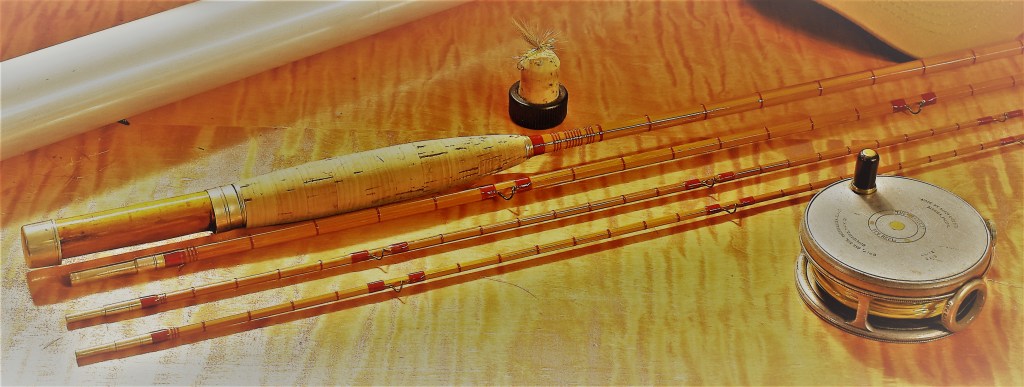
The F.E. Thomas rod was first wrapped and varnished in 1918, while the Hardy Perfect is a comparatively brand new product of the 1930’s. The fly is my own tie, quite recent, though inspired by Theodore Gordon more than a century ago. When I cast one of these fine old rods, I bridge the gap in time as it bounces with the lively energy of a trout as it did when it was young; the rod is the conduit, a fragment of yesterday, the trout very much alive and running wild with the energy of today. This is but a part of the special magic that graces those of us who angle with vintage tackle, that chance to live in both the past and the present for those golden moments when a trout takes the fly.
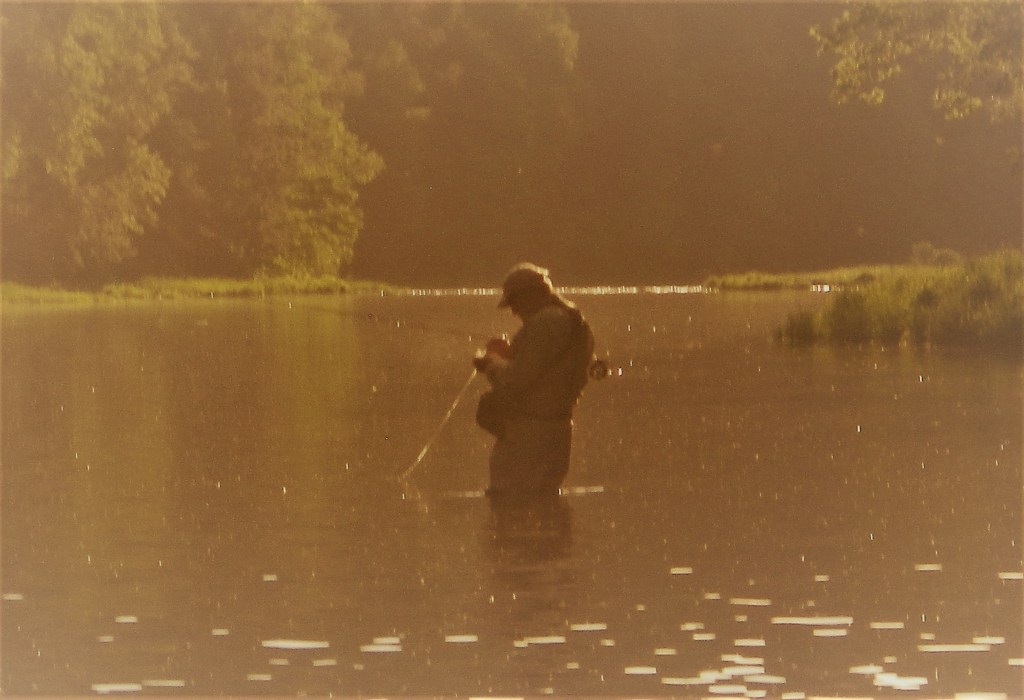
Memory is one of the most cherished gifts of a life spent in angling, and there are times when I pause to notice the special beauty of the afternoon light upon the water and wonder if what I feel might be some connection to the past. Is there some of the life energy of a past owner of the vintage rod and reel I carry still there in the golden bamboo?
-
Adjustment
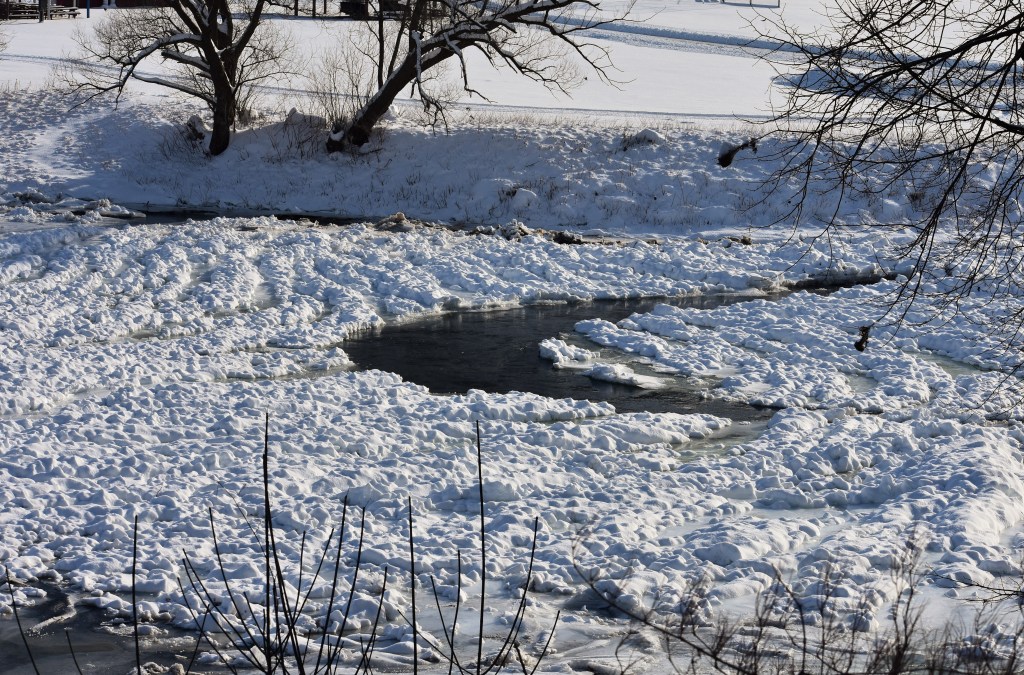
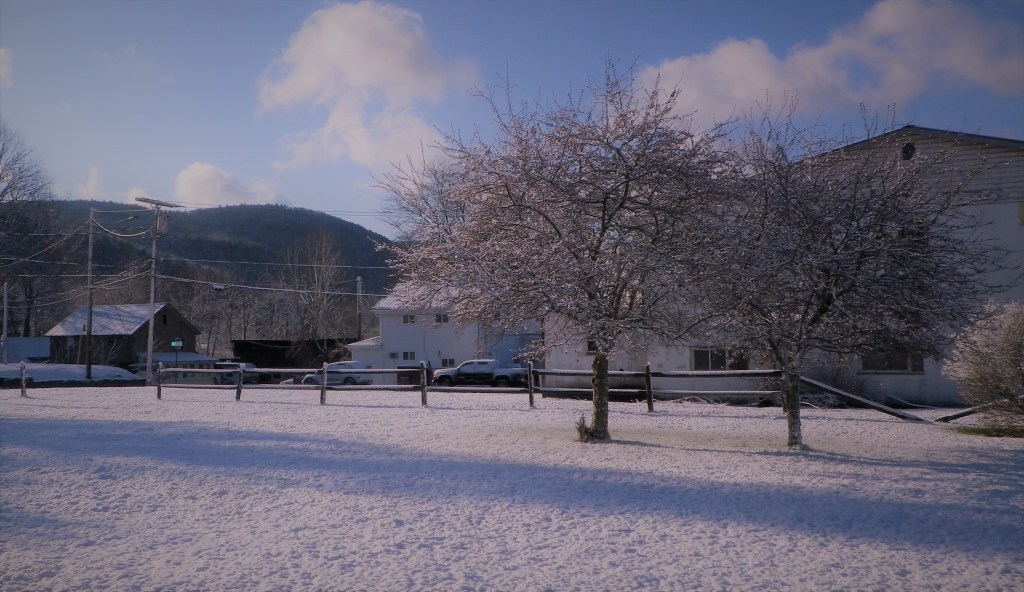
Ha! Fooled Ya! This thankfully is not the state of our rivers this year. There are still a couple of inches of wet snow lying around the yard, but there is a little unexpected sunlight filtering through the clouds as it rises over the mountains to the southwest. A nice winter morning, all things considered.
It is finally March, the final push to get through another winter and take those first tentative steps into springtime. We are three dozen days short of that hopefully magical week when a few mayflies ought to be noticed fluttering on the chilled surface, a ring appearing beneath one that didn’t come from a falling raindrop.
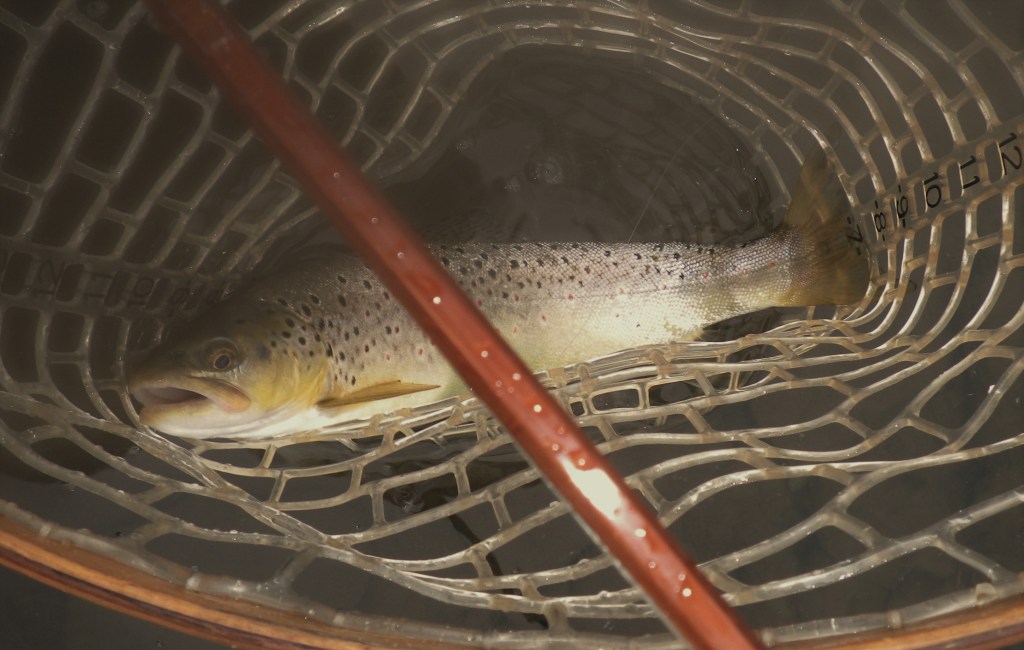
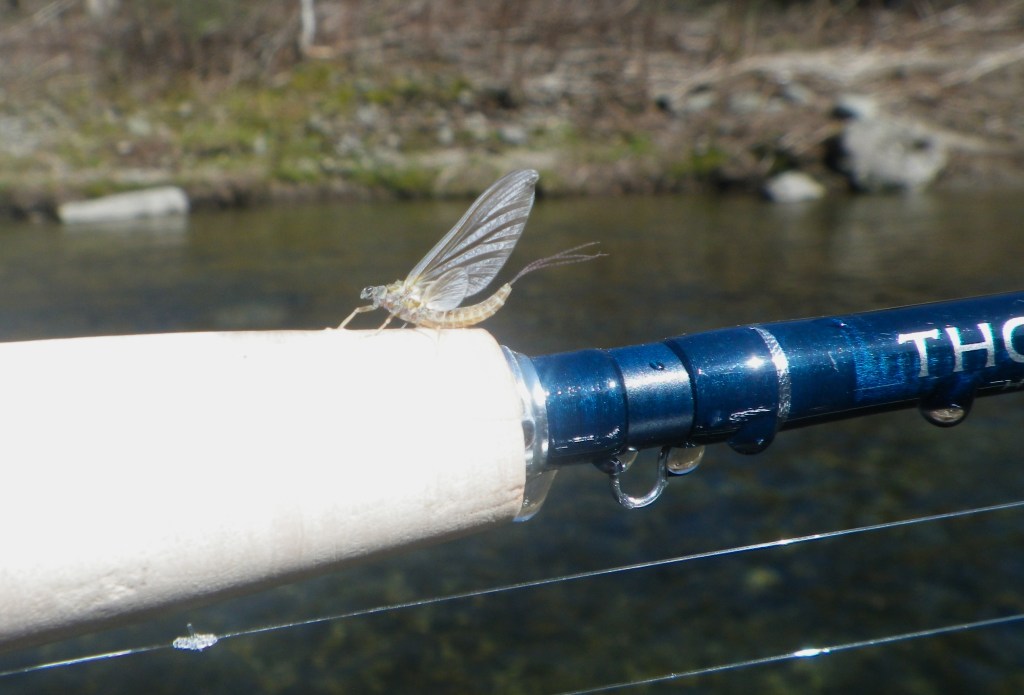
April 12, 2021, 4:32 PM: the result of the first rise of the year, and having a Blue Winged Olive tied on a ready to be cast! True, the middle of this week is expected to stay right near the freezing mark; I mean the run of warmer winter weather we have been having can ‘t be expected to just flow on into spring, now can it? Looking at my anchor box as I brushed the wet snow off the drift boat yesterday, I noted that the lid is going to need a new coat of varnish. Either that, or I may simply have to resign myself to abandoning the natural wood look I like and paint it black like the rest of the trailer.
I will have to get past this coming week before I get into that. Neither painting nor varnishing goes particularly well in freezing temperatures. When I do uncover the boat, I’ll do a careful inspection of the trailer. Two years ago, I had everything cleaned and ready to go, then found that the front bunk had pulled up from the frame, requiring a major re-build before I could take it fishing.
Just now, things look to be shaping up for wadable conditions when that countdown ticks to zero, though the weather here in the Catskills has a history of surprising me.
There are a bunch of things to do, things I have put off as winter wound slowly along. Small stuff mostly, digging out the boat bag and making sure the right fly boxes are in there, along with a few new leaders, floatant and tippet spools. I still use graphite rods when I float the rivers, and I like to get them out and put a little wax on the ferrules, check the fly lines on the appropriate reels. The old Granger 9050 still keeps pleading with me from it’s place in the rod rack. If I take an hour to install the bamboo rod holder I built some time ago on the front storage box, it can finally assume it’s role of boat rod. That fine old, bamboo will look good out in the spring sunshine!
The worry in the back of my mind as this month ticks past is the chance of a dreaded March blizzard. That happens some years, and I really don’t want to see another flood coming down through Crooked Eddy as April comes calling. It may have been a warm winter, but its still been a long one.
I’m still basking in the fun had at Fly Fest, while looking forward to the Angler’s Reunion at the end of this month, and then April first! It may not be opening day for legal fishing anymore, but its still an Opening Day tradition for a lot of old time Catskill anglers.
Search
Archives
- October 2026 (10)
- September 2026 (16)
- August 2026 (14)
- July 2026 (15)
- June 2026 (13)
- May 2026 (6)
- April 2026 (12)
- March 2026 (10)
- February 2026 (9)
- January 2026 (14)
- December 2025 (14)
- November 2025 (10)
- October 2025 (10)
- September 2025 (9)
- August 2025 (10)
- July 2025 (10)
- June 2025 (8)
- May 2025 (12)
- April 2025 (12)
- March 2025 (9)
- February 2025 (10)
- January 2025 (15)
- December 2024 (12)
- November 2024 (13)
- October 2024 (12)
- September 2024 (10)
- August 2024 (12)
- July 2024 (10)
- June 2024 (12)
- May 2024 (11)
- April 2024 (14)
- March 2024 (11)
- February 2024 (13)
- January 2024 (14)
- December 2023 (16)
- November 2023 (11)
- October 2023 (11)
- September 2023 (8)
- August 2023 (10)
- July 2023 (9)
- June 2023 (12)
- May 2023 (13)
- April 2023 (13)
- March 2023 (14)
- February 2023 (15)
- January 2023 (15)
- December 2022 (13)
- November 2022 (5)
- October 2022 (10)
- September 2022 (10)
- August 2022 (8)
- July 2022 (9)
- June 2022 (10)
- May 2022 (10)
- April 2022 (13)
- March 2022 (14)
- February 2022 (13)
- January 2022 (13)
- December 2021 (10)
- November 2021 (9)
- October 2021 (7)
- September 2021 (9)
- August 2021 (12)
- July 2021 (11)
- June 2021 (12)
- May 2021 (15)
- April 2021 (16)
- March 2021 (14)
- February 2021 (14)
- January 2021 (12)
- December 2020 (11)
- November 2020 (13)
- October 2020 (14)
- September 2020 (13)
- August 2020 (14)
- July 2020 (13)
- June 2020 (16)
- May 2020 (16)
- April 2020 (18)
- March 2020 (13)
- February 2020 (11)
- January 2020 (8)
- December 2019 (6)

