I fished the limestone springs of Pennsylvania's Cumberland Valley for a couple of decades, founded Falling Spring Outfitters, guided, tied and oh yes, fell in love with the Catskill Rivers I can now call home.
Finishing the yearly paperwork at last, I looked up from my desk to find the window full of snowflakes falling. The sun had been bright when I sat down, and the change was surprising. After lunch I headed out for a riverwalk with the sky sullenly gray and snow still blowing about. Three layers made the walk comfortable and, by the time I neared my driveway, the sun was making a comeback.
My vest lies nearby, it’s pockets filled with the three Wheatley boxes that hold my spring dry flies. The new patterns have been added, the tippet tender replenished, and now the last of the waiting remains. A dozen days remain on my calendar, though I fully expect to wander a river before zero hour arrives. The weather has turned too fickle not to have some hope!
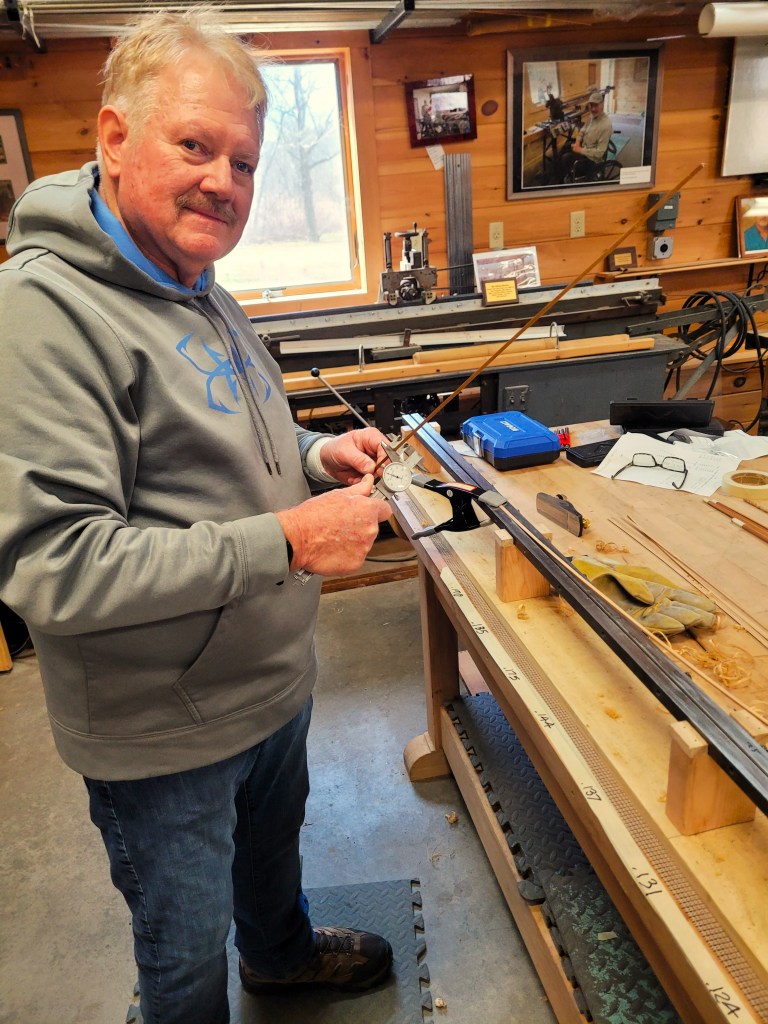
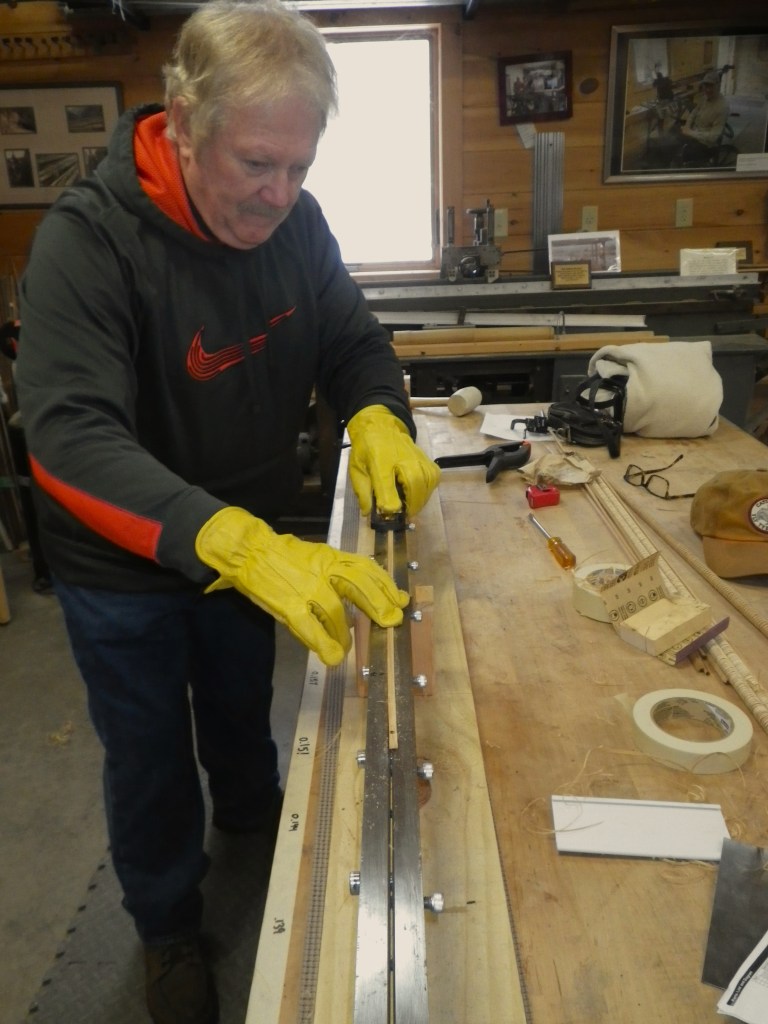
A last check of the numbers: the first finished strip of my Angler’s Rest Special has been completed! (Photo courtesy John Apgar)
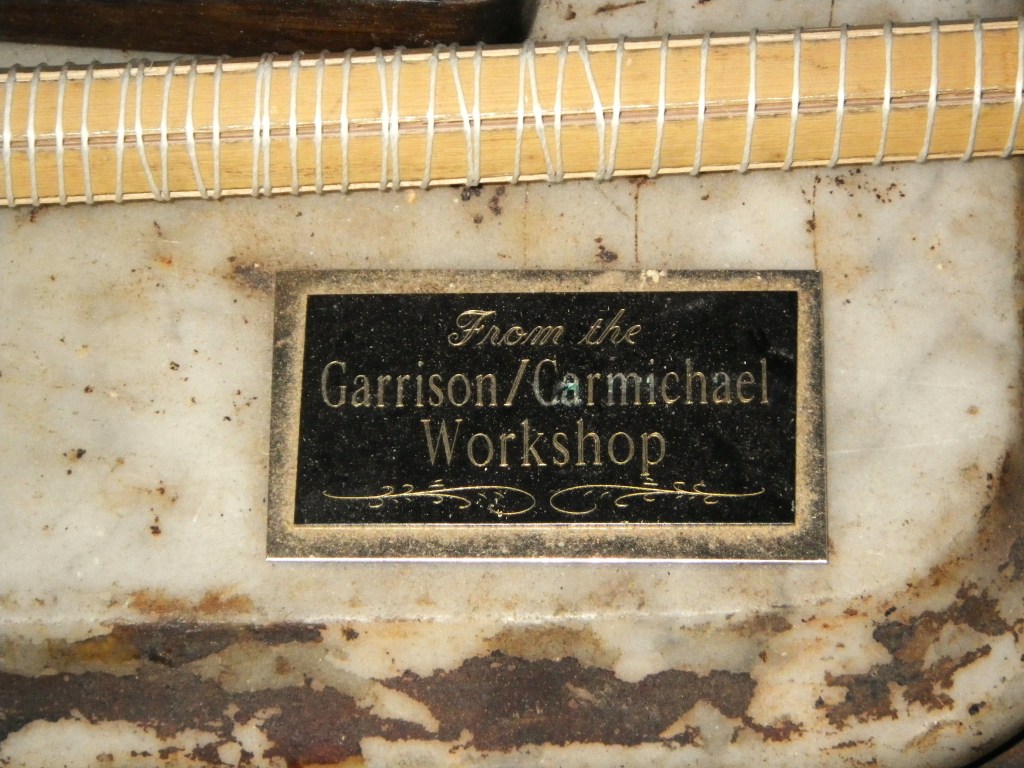
I felt the first real sense of accomplishment Saturday, as the caliper revealed the final dimensions of my first rod strip to be finished planed. I would plane three strips for the butt section during that day’s work, half a rod section, and I finally felt some confidence that my rod project would come to fruition. If all goes well, perhaps I will be able to fish it sometime this summer.
The Goal: The classic three-piece split bamboo flyrod; butt section, mid-section and two tips. Twenty-four rod strips must be planed from 1/4″ wide strips of bamboo down to tapered triangular strips, hand planed to accurate dimensions to a tolerance of one thousandth of an inch!
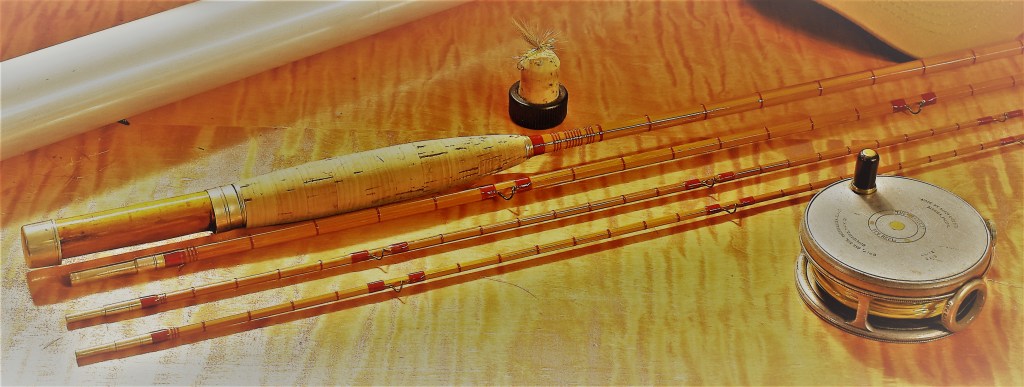
I have yet to decide which bamboo rod will accompany me as I search for that first rising trout of the new season. Chances are a classic Leonard will get the call. Why not open the Catskill season with a rod with a Catskill heritage?
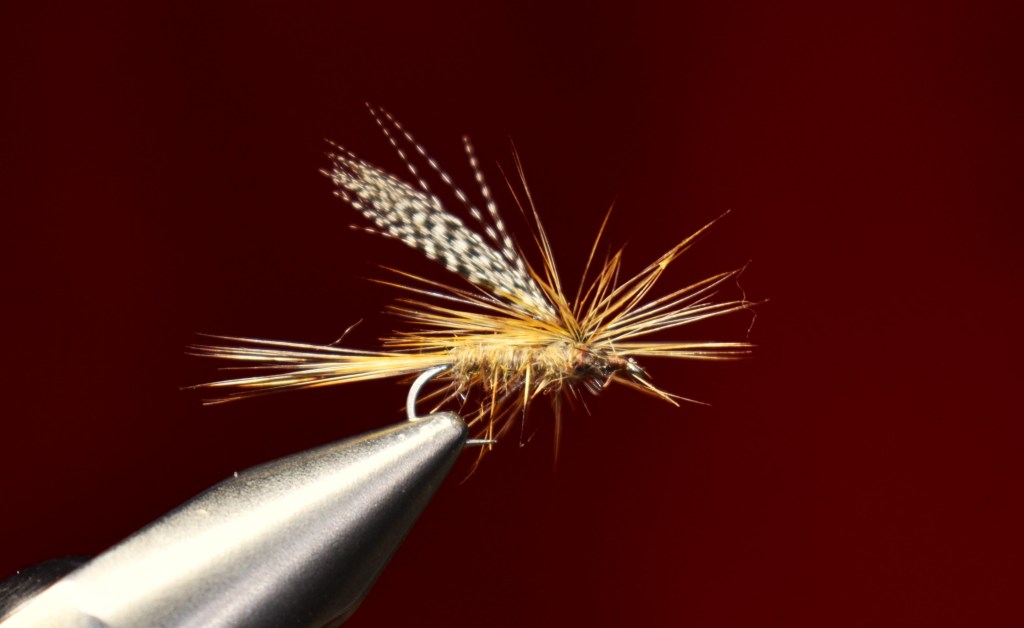
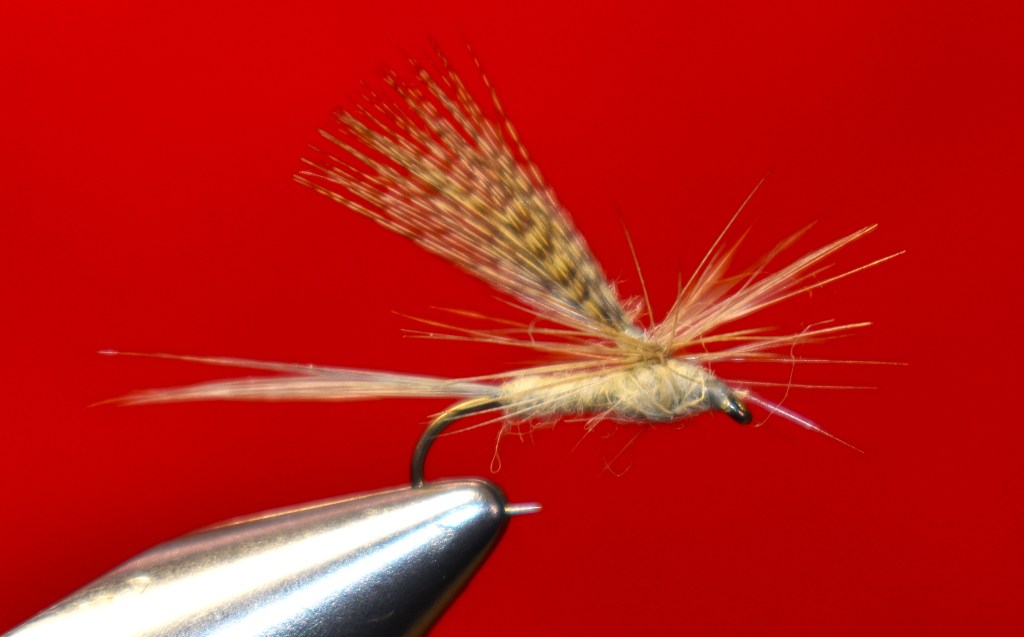
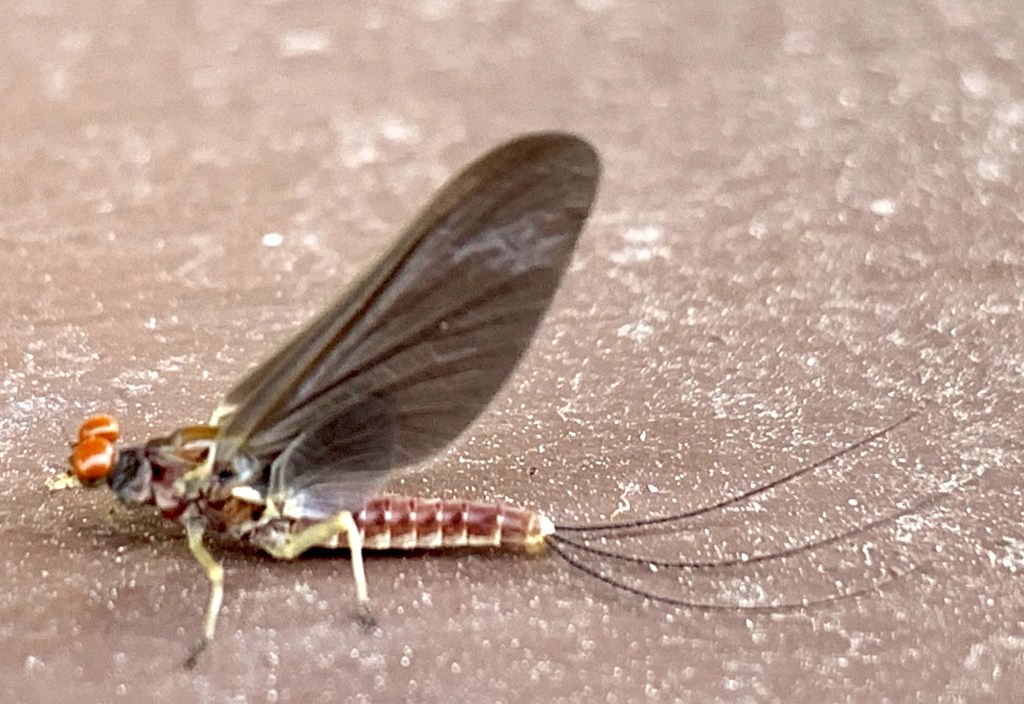
Gordon’s Quill will be tied to the leader, regardless of the rod chosen, though it might not be the first fly cast when I find that rise. Epeorus pleuralis is the mayfly most likely to appear first, but Mother Nature has been known to bring one of the olives or a small spring Blue Quill. Of course I could look to a more general pattern. My Catskill Adams is a prudent choice, particularly if tied in a standard size 16. It can imitate any of these mayflies well enough to seize a hungry trout just shaking off the river’s early spring chill!
March has been quite kind these first three weeks, the last days of winter, offering a warm handshake and a few precious early days upon bright water. Her winds awakened me early this morning, ripping and howling about my little house, convincing me to arise and check my hanging waders on the porch.
Next week will sober things up just a bit. Temperatures in the forties and low fifties will curtail the slow warming of the rivers and quell those inevitably awakened expectations for an early arrival of the dry fly season. There’s even a little snow in the forecast, as soon as Monday!
Checking my own calendar of experience, there’s about two and a half weeks to wait, hope, wander and really get the tackle fully readied for the true coming of the angler’s spring. It will be a busy fortnight of activity.
The drift boat emerged from it’s winter tent this week, the lights have been checked and the oarlocks attached. Cleaning remains, and inspection, and of course I have to get the boat bags properly outfitted with fly boxes, leaders, tippet, and the full range of clothing required to suit a Catskill Spring. My spring fly boxes have made it from storage to my tying bench, though the newly tied quills and Hendricksons are yet to be sorted into their proper compartments.
Tomorrow will be another workday in the Catskill rod shop, and a turning point in my quest to hand plane my own split bamboo dry fly rod. One strip remains to be rough planed before all two dozen of them are taped together into sections and the last vestiges of the nodes trimmed from their ends. Once sorted, the strips will find their way back to the planing form, reset for the final dimensions of the butt section. The tension grows throughout each curve of this road… no mistakes allowed!
On the following Saturday, our Catskill Fly Tyers Guild hosts the Fly Tyers Rendezvous, then on Monday the Angler’s Reunion Dinner closes out the anticipation of March. In between there are flies to be tied for a couple of donation projects before the Mike Canazon Memorial Meet Your Maker event on Saturday April 5th. I’ll shuttle from Roscoe to Livingston Manor then to tie flies as the guest of the Catskill Brewery in celebration of the season opener. Once that busy weekend has passed, it will be time to settle down to fishing.
I would dearly love to find fifty-degree water flowing past the banks of the Beaver Kill by then, and the first Gordon Quills swimming up from the bottom to dry their wings and take flight. Of course, any number of them are welcome to pause for a ride on the surface to entice the trout to fully welcome springtime by rising to a feathery imitation of their crowd!
Seventy-two degrees is a mighty fine temperature for March. That kind of warmth makes for a good day along the river, and sometimes the trout get into the spirit as much as the angler.
When I go out to swing a fly beneath the surface of this early season’s forty odd degree water, I never actually expect to catch a trout. Such days are about a renewal of the soul, training my legs to deal with rocky river bottoms and currents after months away from bright water. Sure, an angler always has a little hope tucked into his fishing vest, but there is a very low level of expectation.
I waded upriver around Noon today, enjoying the sunshine. There was a little color in the water, the remnants from last week’s rainfall, and I thought about the fact that suspended particulate matter tends to cause the water to warm a little more on such a sunny day. Would it warm enough?
A typical sunny Catskill day in March: snowmelt works against the sunshine, cooling the rivers.
The snow seems to have finished it’s melting at last, leaving that bountiful sunshine to actually warm our rivers, and that is a welcome development for the third week of March. This was the coldest winter we have spent here in Crooked Eddy, deep cold, sustained cold, and I am beginning to believe it’s over.
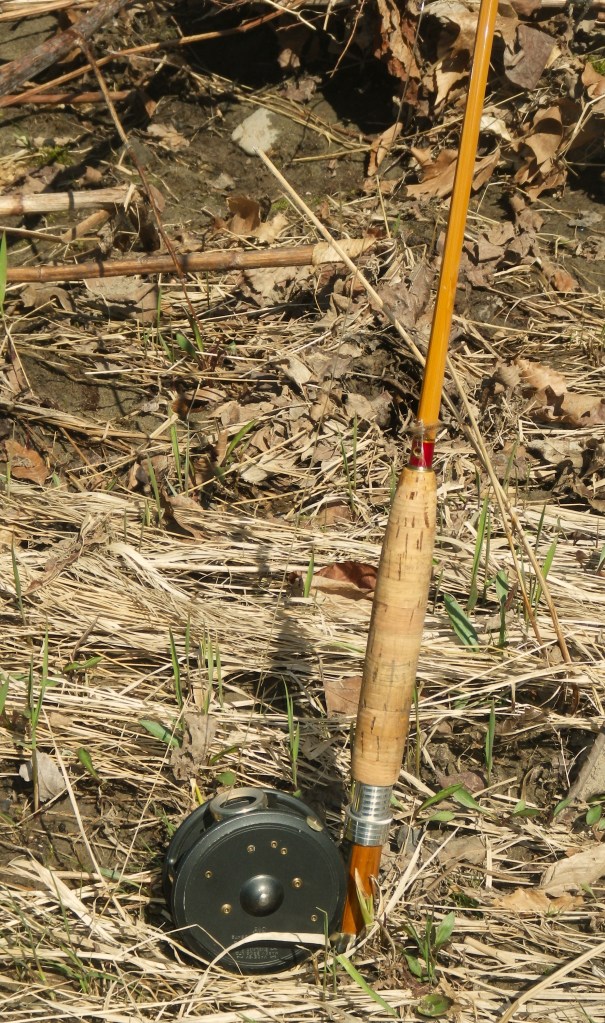
The old Orvis bamboo cast the small streamer with some authority, yet still gently enough that is slipped into the water with barely a blip in the surface. The fly sunk slowly and made it’s swing. When the line began to straighten out in the middle of the river, my hand gave it the slightest little twitch, and I felt the grab clearly. I raised the rod and stripped hard to set the hook, amazed at the feeling of life on that other end of the line!
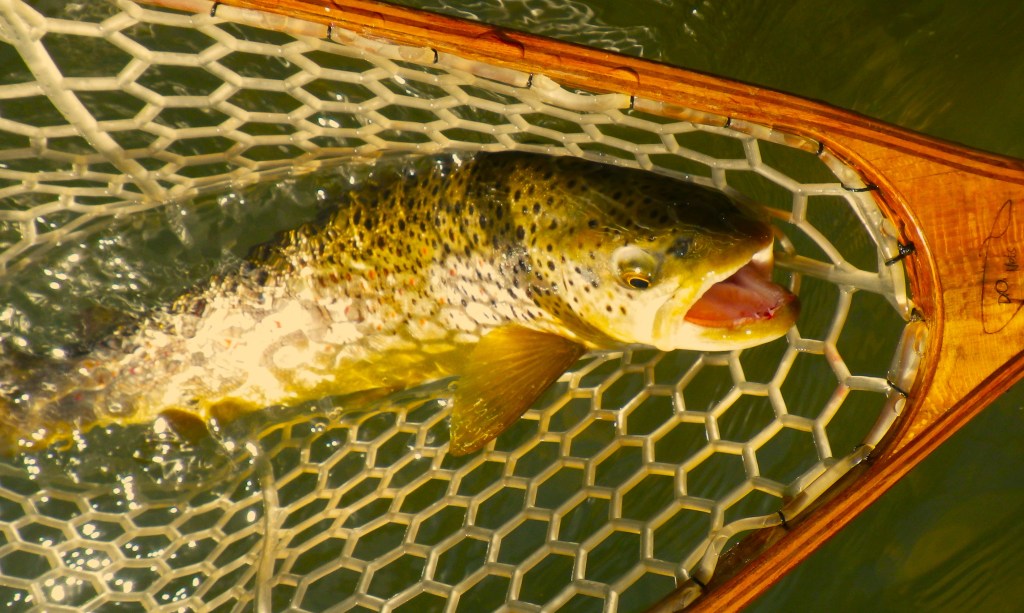
The last thing I expected to be watching today was a good brown trout jumping. Sure enough though, my first trout of 2025 displayed plenty of energy. He left the water three times before I brought him close to the net. A nice brownie, sixteen or seventeen inches long, and colored up like I would expect to see in late May.
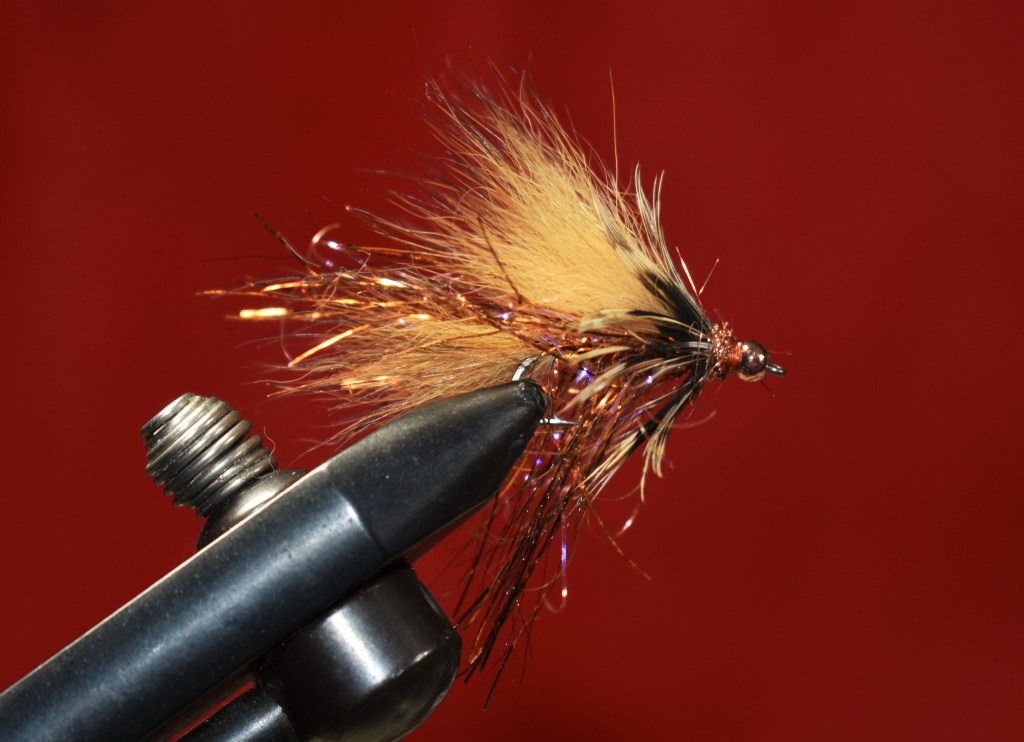
The fly was one of my friend JA’s creations, a small, flashy, rabbit strip streamer he calls the Lil’ Brown Trout. The fly shops he ties them for sell out of them faster than he can tie them. I had noticed it when I checked one of the streamer boxes in my tackle bag, and plucked it out to store in my chest pack. Sadly, a submerged rock finally laid claim to that lucky fly and I had to replace it with a smaller Full Dress Copper Fox.
I wasn’t the only angler lured by the warmth of this day, as a fellow and his wife floated past on their raft. We exchanged greetings, and I appreciated the wide berth he gave me, leaving a good hundred yards of river unmolested for me to fish. That was once something expected of boaters on these Catskill rivers, a courtesy that has unfortunately become all too rare.
Working slowly down river I maintained the traditional pace: a cast, a swing, then three steps down before repeating the cadence. The afternoon winds had risen, keeping to the manageable schedule of blowing hard for ten minutes or so, then calming for perhaps twice that span. Another surprise awaited it seems.
That old cane dropped the fly tight to the bank and I gave one full mend to toss the slack line upstream before settling into the swing with the rod tip low over the water. I felt the fly tick a rock jutting up from the bottom, let it swing a few inches more, and then gave it that slight little twitch that had worked magic earlier.The hoped for grab followed the twitch and I socked the hook home!
The second trout of 2025 stayed beneath the surface, leaving no doubt he was larger than the first. The reel drag was set fairly tight, but he pulled more line on a quick run down river. I snapped a photo in the net when he finally surrendered, a fine brownie in the nineteen-inch class.
Driving home, I smiled about my plans to uncover the grill and enjoy a juicy burger and a chilled Catskill brew, and I was happy to put those plans into action. There’s nothing like porch sitting with a cold one while the fire’s doing it’s duty!
It is beginning to seem real now, the idea transitioning between the dreamworld and the waking world. We are more than halfway through this March of meteorological spring, and a mere two days from the Vernal Equinox. Twenty days remain in my personal countdown, and I have felt the warmth of the sun and the caress of the current!
Patience…
Suddenly I feel I have slipped behind schedule. My vest still hangs empty on it’s wall hook, my spring fly boxes remain in storage. There are reels to check, a drift boat to make ready! My spirit wants to leap forward with the fervor sparked by hints of an early spring, but experience lingers there in the shadows. Snowstorms are battering the West and Midwest as I write, and Nature’s caprice might easily send them here to quell this March sunshine.
Oh, to find thee!
The morning light is in my windows, and soon the sunshine will melt the frost… Much to be done!
We have come through the cold snap for the week, a day in the forties with even a bit of snow flying as we drove home from a little dinner and acoustic blues in Norwich last night. The weather is looking up, remaining spring-like with a couple of days of sunshine then a good rain expected over the weekend. Now this doesn’t mean that there won’t be overnight frosts and howling winds in April, this is the Catskills after all, but it is good news.
I should be tying flies this morning, really I should. There’s a collection I began putting together as a donation to the Catskill Museum, and those flies will not tie themselves. Honestly though, there’s no rush, and after the longest, coldest, most consistently difficult winter of my retirement years, I figure I’m entitled to simply relax and enjoy a few nice days.
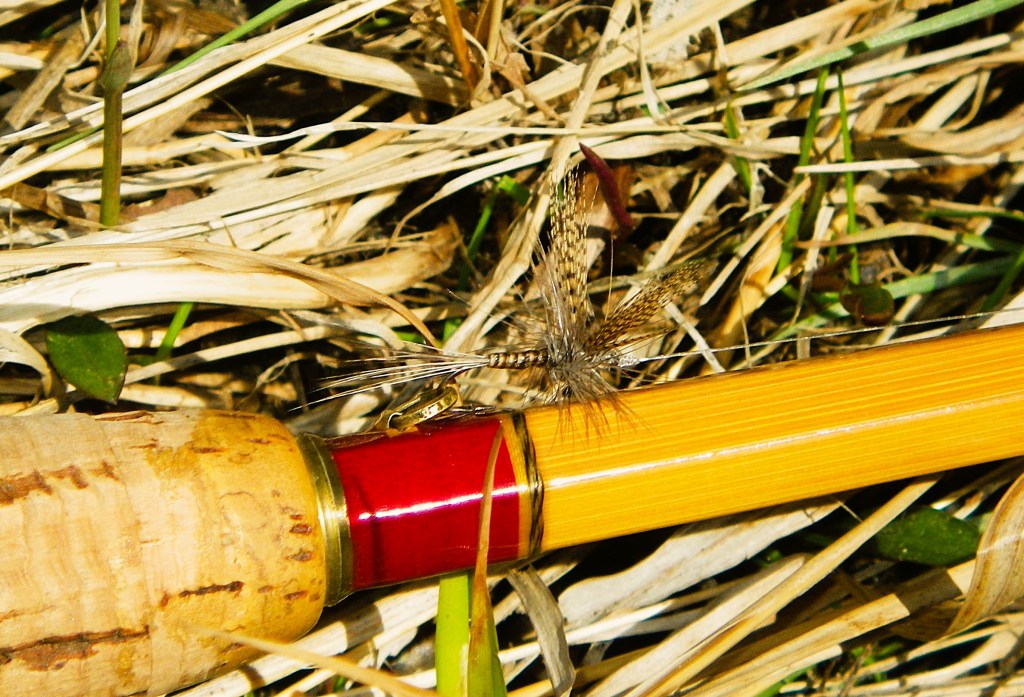
The Cross Special in my own 100-Year Dun configuration.
I am still enjoying a bit of reading in the early hours of the mornings, today caught me laughing at Sparse Grey Hackle, and I’m glad that those precious hours are so much more relaxed now that the grasp of winter has relaxed it’s hold. I received a good book recommendation out of the past last week, a plug from none other than the late Dana Lamb, and I’m awaiting that book’s arrival. It’s a classic salmon fishing tome, “Six Salmon Rivers and Another” by George Frederick Clarke, and the search enthused by Lamb’s words took me all the way north to Nova Scotia to locate a copy. I love reading about the classic age of salmon fishing, something I will never have the chance to explore first hand.
I am amazed at the prices some ask for angling books, any out-of-print books for that matter. Not long ago a friend mentioned a Hoagy Carmichael book that I enjoyed. He was looking for a copy but complained of the thousand-dollar price tag he had encountered. I told him I thought I could find him a brand new, slip cased copy for about $75, and I did. He was overjoyed, and I am still shaking my head at the gaul of some dealer somewhere that I expect is still holding out for a wealthy and uninformed buyer.
There’s a chance my book might arrive by the weekend, and I hope it does. The closer we get to the beginning of the dry fly season the busier my mornings will become!
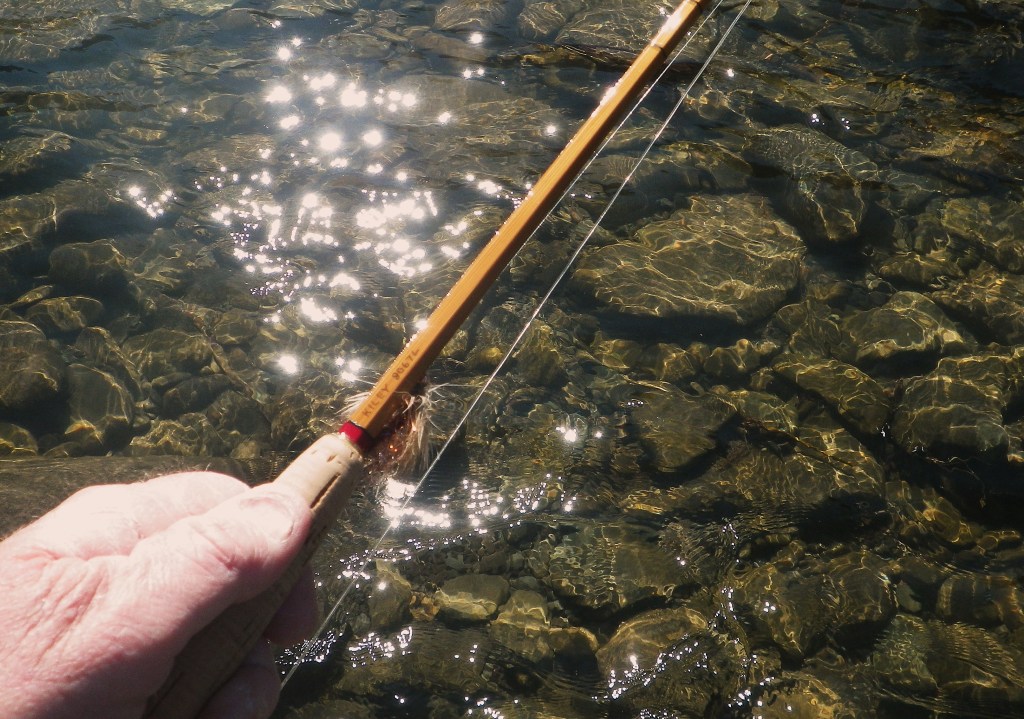
Sunlight, actual warmth, and a bamboo rod in hand…
And so it begins…
I had a feeling this morning that the day would outperform the forecast, and it did so beautifully! Rather than wait for tomorrow’s higher predicted temperature and twenty mph winds, I donned waders and boots to welcome the new season today.
Actually catching a trout was perhaps the furthest thing from my mind as I waded slowly into the margins of the Beaver Kill. This day was about going fishing after four months of a bitterly cold winter. I felt good just wading out to make the season’s first cast, swinging my Copper Fox down across the riffle above the Ben Gray Pool, and better when a Bald Eagle flew overhead, followed by her offspring. It was the perfect salute to a moment I have yearned for since October’s farewell.
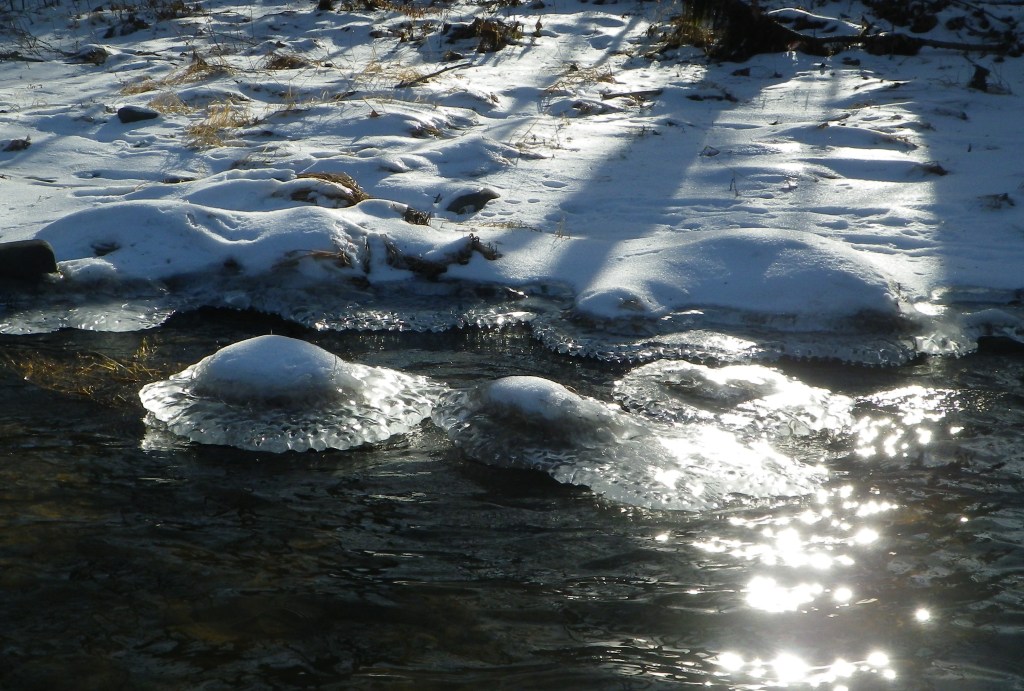
Indeed, the ice was thick upon the river! Perhaps the coldest sustained winter since my move to the Catskills.
I swung three different pools, pleasantly alone in each, and fully enjoying a 62-degree afternoon! At home the sun was too inviting to ignore, soliciting a 72-degree porch sit with a Darbee’s Irresistible from my friends at the Catskill Brewery! At last, winter has packed her bags!
The calendar turns, and the last leg of the journey through another angler’s winter begins. Might I really test my legs on cobbled bank and riverbed so soon?
Cloudbanks have obscured the dawn, and fine snowflakes are swirling in the breezes which prelude the squall. It is thirty-one degrees here in Crooked Eddy.
Though the long wait approaches it’s end, there is still waiting to be done. There is hope of course; hope for Nature’s tease of warmer days and a chance to wade the river for the first time in so many months, but the winds will drive the squalls wherever she will. March will certainly not stop them, nor will April nor even May. The Catskills will share their gifts in their own time.
I read, ponder, tie flies and tinker with tackle. The days will pass and, as anticipation builds, I will taste the sunlight whenever I may, strengthen my legs with the fierce pull of frigid currents, and find my way on toward spring.
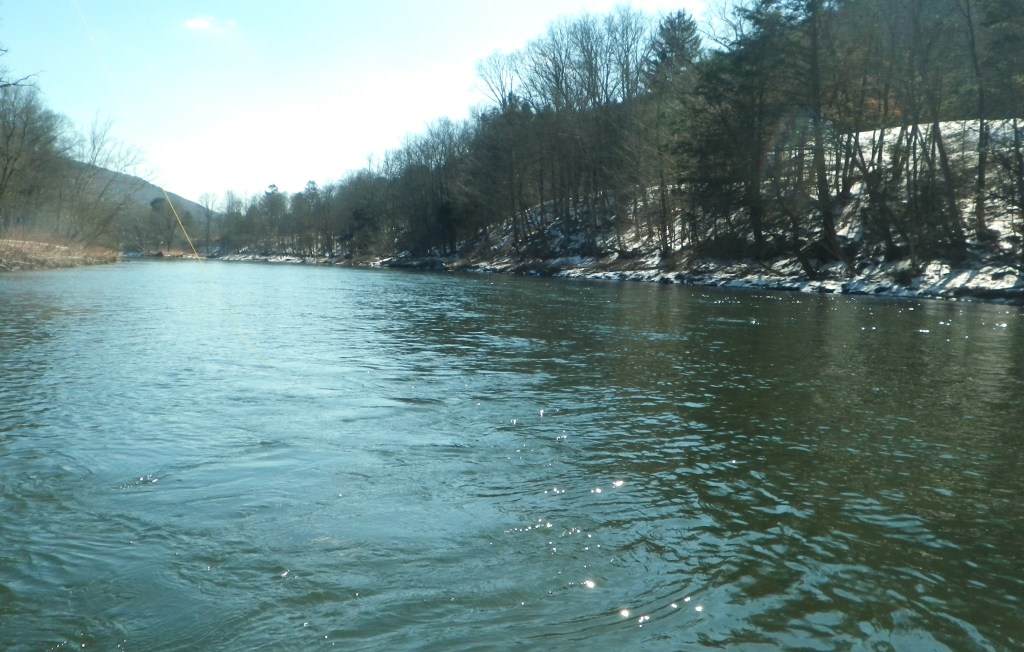
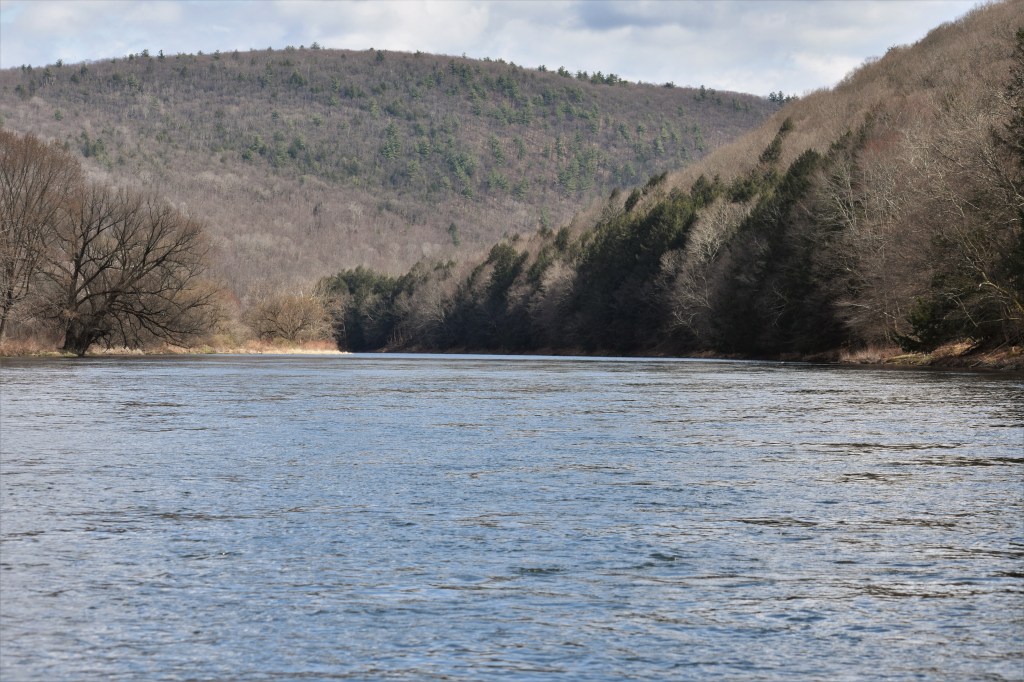
The high flows of early spring glide down the West Branch Delaware during an early April solo float.
Warmer air and rainfall are all it takes to break the rivers free of the ice harbored between their banks for months. Yesterday’s rain began the big flush, and it is still working it’s way downstream. When I checked the gages before dawn, the upper portions of the East and West Branch tailwaters were registering, and their flows rising. The Beaver Kill was still ice bound, but has broken free now, as has the gage at Fishs Eddy. The Beaver Kill peaked at 4,300 CFS and is already dropping, so I am hoping some of the higher snowpack remains, yet to melt and replenish the groundwater.
The East Branch at Fishs Eddy collects flow from the entire Beaver Kill drainage, as well as much of both the upper and lower runs of the river below the dam and halfway down to Hancock. Once thawed, the river gage revealed a peak of 7,850 cfs near 7:45 this morning, a strong flow to be sure, but not in the range of a flood. Coupled with the West Branch’s 3,260 cfs peak, the system could free the Lordville gage on the Mainstem sometime today. The combination of last week’s warmup and yesterday’s warmer rainfall seems to have thawed the watersheds gradually, preventing damage to the riverbanks and bottoms. Avoiding floods and ice jams is very good news for the aquatic ecosystem.
The first blush of spring on the Beaver Kill from decades ago
Thirty-one days remain on my winter calendar and, as I busy myself with promoting spring activities for the Fly Tyers Guild, I have one eye on those river gages and weather forecasts. It is time to set aside the flies tied for donations and friends, time to get my own spring boxes out of storage, fill their compartments with my winter’s work and slip them into the pockets of my vest.
The rod work has proceeded slowly, as my aging hands and wrist struggles with the largest part of the job, the endless planing of the bamboo strips. My three-piece, two tip fly rod has 24 of them, 12 for the pair of rod tips which must be planed down from one-quarter inch width to seemingly threadlike fibers between 83 and 3.5 thousandths of an inch!
There will be no Angler’s Rest Special for spring fishing at the pace my aching hands and joints have allowed, so I look to summer with at least a little hope!
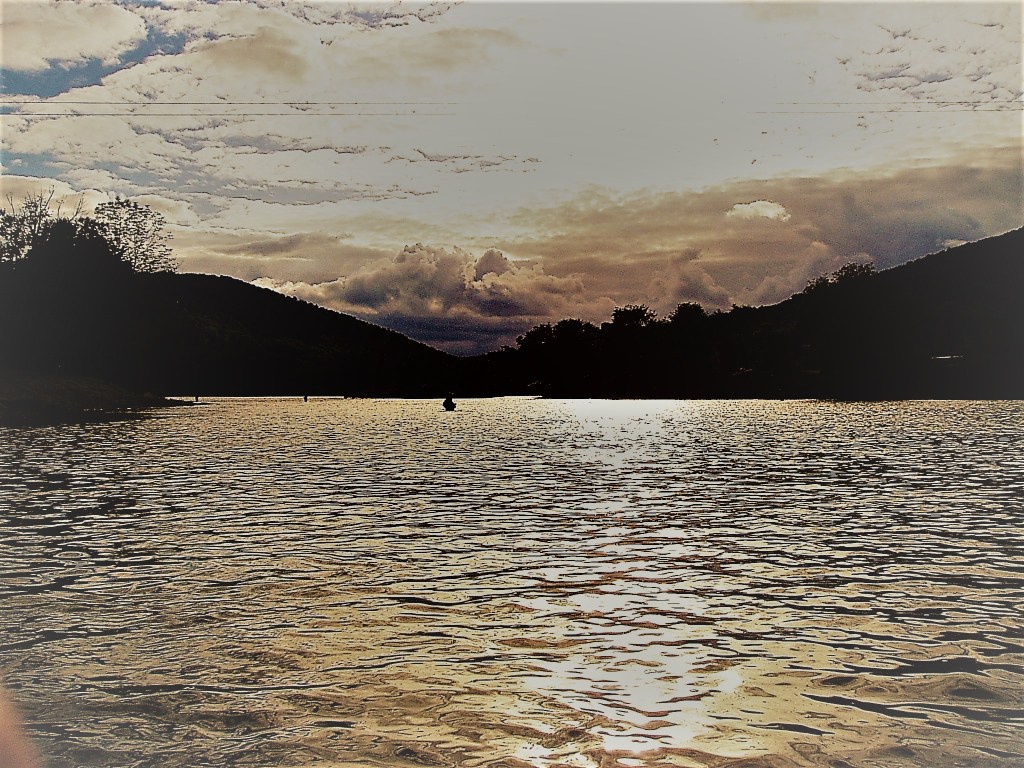
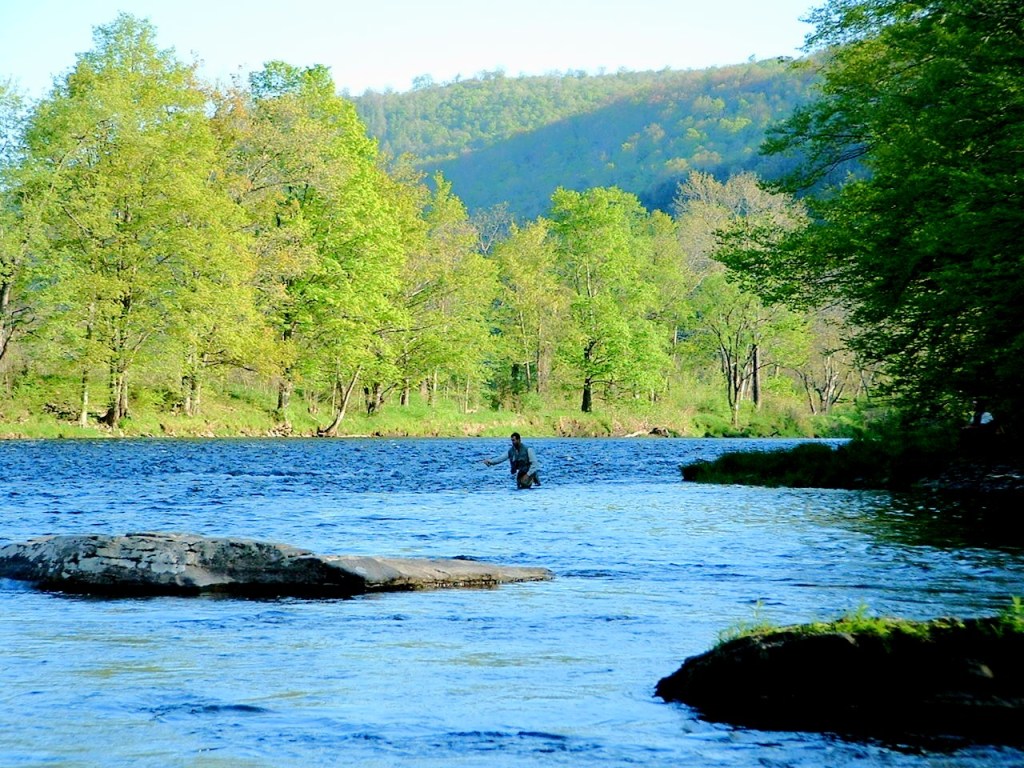
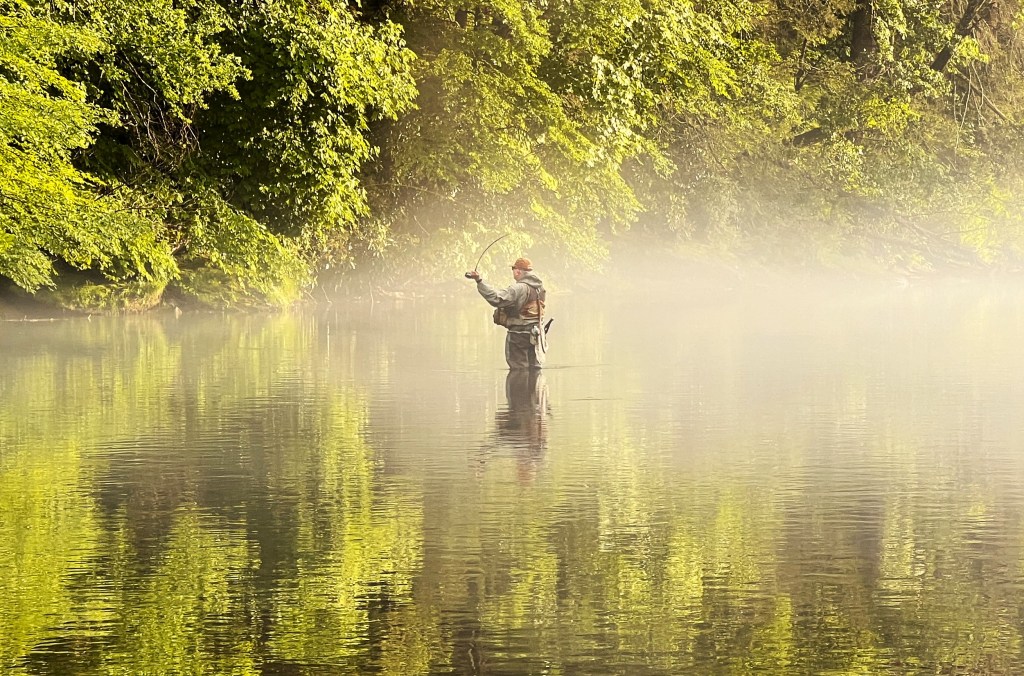
A Summer’s Day and the last cast! (Photo courtesy John Apgar)
Should the stars align, there could be mayflies on the water in five weeks or less. The signs of change have begun: short stretches with warmer air, snow melting, longer days, and long-frozen rivers beginning to showcase some open water flow! Our ten-day forecast features more days with forty-degree or higher temperatures than it does days stuck in the thirties, and there are two coming with the promise of the mid-fifties. Of course, it is still early March in the Catskills, a beautiful region where I have shivered on frosty mornings in May!
In my mind lie pictures of many a Catskill spring. There are the wading boots, frozen solid on the cabin porch beside the West Branch, the sleet tapping on the hood of my rain jacket as I huddled on a high bank watching for Hendricksons, shooting a video as a May 9th snow squall whisked through Crooked Eddy. Such moments are thankfully more rare than those remembered for the trophy trout brought to hand or the ones sipping spinners and late pinkish duns far across the river, as the late afternoon sun warmed my tired shoulders.
One such day on the West Branch teases, and makes me wish to journey back in time. There were fine trout sipping, scattered in that shadow world, some just near enough, others beyond my reach. As the lowering sun warmed away the aches from a long day of casting my body relaxed and my casts lengthened. My spinner drifted beyond my sight and I played the guessing game by necessity. With timing thwarted, I pricked a few, none staying pinned well enough to be brought to hand!
Even some of the frigid days produced fond memories, like the 34-degree May morning I launched the drift boat upriver. All was quiet until I passed Hale Eddy and witnessed something I thought was pollen gathered on the surface. Shad flies by the hundreds, much smaller than normal and drifting paralyzed until the sun warmed them into life. The fishing was technical and rewarding!
I fished successfully once to fine wild trout rising to Green Drakes, on a blustery day that never quite reached forty-five degrees. But I still wait for that mythical Hendrickson hatch in a snowstorm I have so often read about, even to the point of wishing for the flakes to appear.
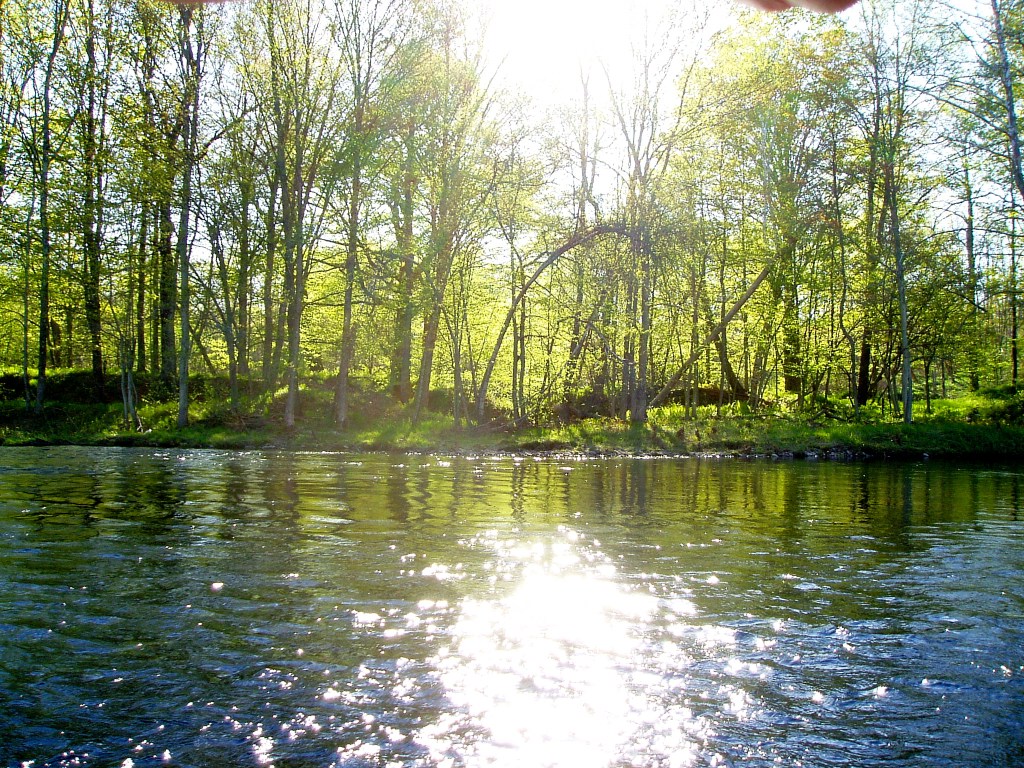
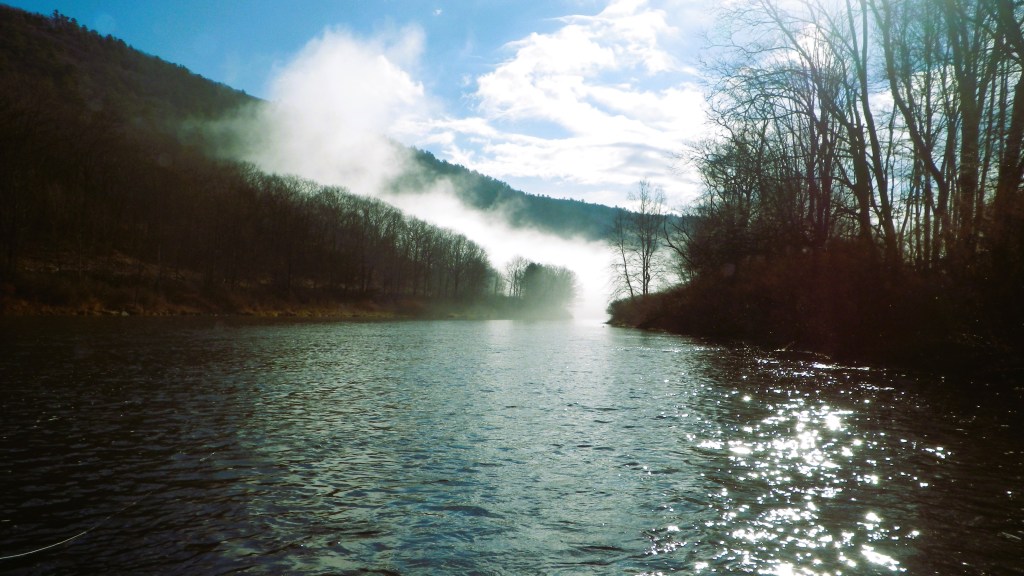
Late March sunlightadds excitement to the waiting – could it be today?
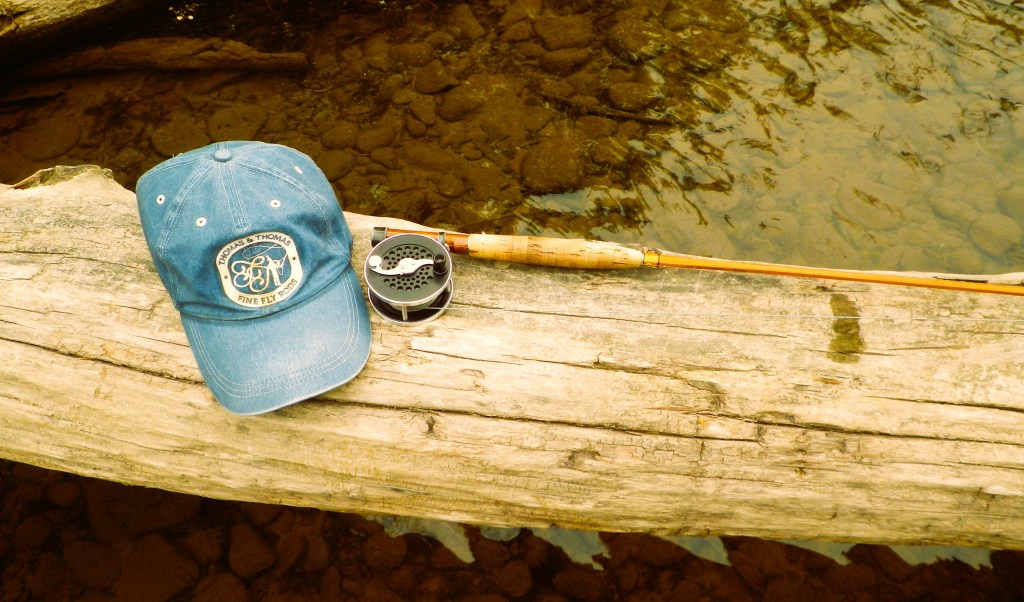
It may be five weeks until I make that first cast to a bona fide rising trout, but I will be out there much sooner. It takes no more than a couple of mild March days for me to pull on my waders, cinch the hood of my insulated jacket tight over the top my cap, and string a fly line through the guides of an old bamboo rod. Its true I have never seen a Catskill trout rise in forty-degree water; but somehow, I still believe that tomorrow could be the day…
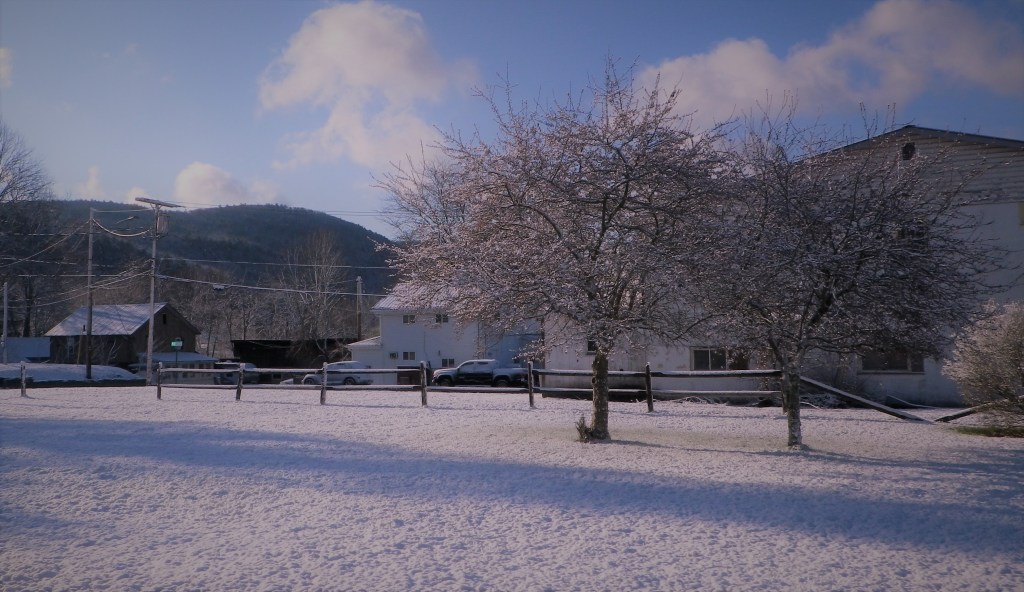
The weather report tells me it is snowing outside, but in truth the hiatus continues. I can see the gravel on my little road out front for the first time in two months, thanks to some passing sunlight and a handful of days in the forties this past week. Just now, I think I can hear rain falling gently on my roof, helping to melt away the accumulations of snow and ice that have formed the structure of my world. Could spring at last lie on the horizon?
My rod work has progressed slowly, hampered by weather and the arthritis and carpal tunnel in my planing hand. I realize that I am far short of my goal of crafting a fishable rod for spring. Just half of the bamboo strips have been rough planed, and that is the easiest of the tasks ahead. Perhaps I should work toward completing the rod with a single tip, waiting to make the second during some lull in the fishing season, though that would postpone the satisfaction of completing my journey.
I am working on a donation for the museum as well, with the first dozen flies tied and set aside, and a suitable fly box ordered to house the finished collection. Chores to pass the remainder of winter, for the rivers still carry curtains of ice and little flow.
The warmth this week pulled at my consciousness, doing their best to draw me out with rod in hand. A ride along the West Branch Monday brought me to my senses. The City seeks to hoard water now, to refill their reservoirs after their foolish decision to move forward with the Delaware Aqueduct drawdown in the midst of last summer’s drought. They succeeded only in damaging our fishing, for the work was halted soon after they wasted precious river flows in their last-minute drawdown scheme. Winter flows have been terribly low.
I am glad we have some snowpack, and I hope it melts slowly, doing it’s best to replenish the mountain springs, but I fear for the rivers once more. There is rain coming midweek, rain that would mean heavy runoff to dissipate our small reserve.
Waiting
Five and a half weeks remain, if my hopeful timetable proves accurate this year. Soon it will be time to check the reels, attach new leaders to the lines and dream openly about the first mayflies of the season. This will be the seventh spring since moving to these Catskill Mountains, a lucky number perchance, though every season that I am blessed to linger here is a lucky one!








 Bright Waters Catskill