Whispers of Autumn

An Autumn memory…

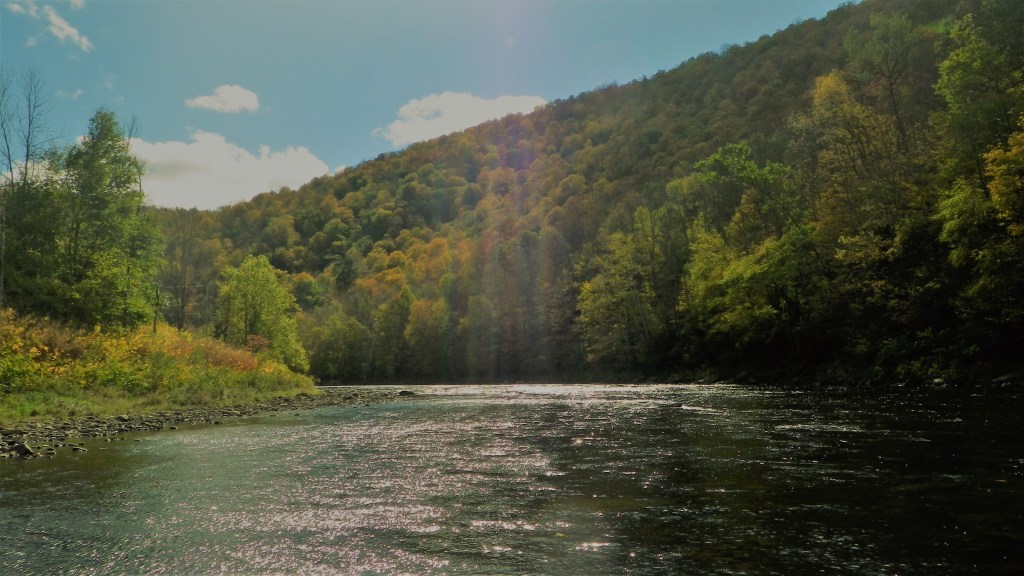
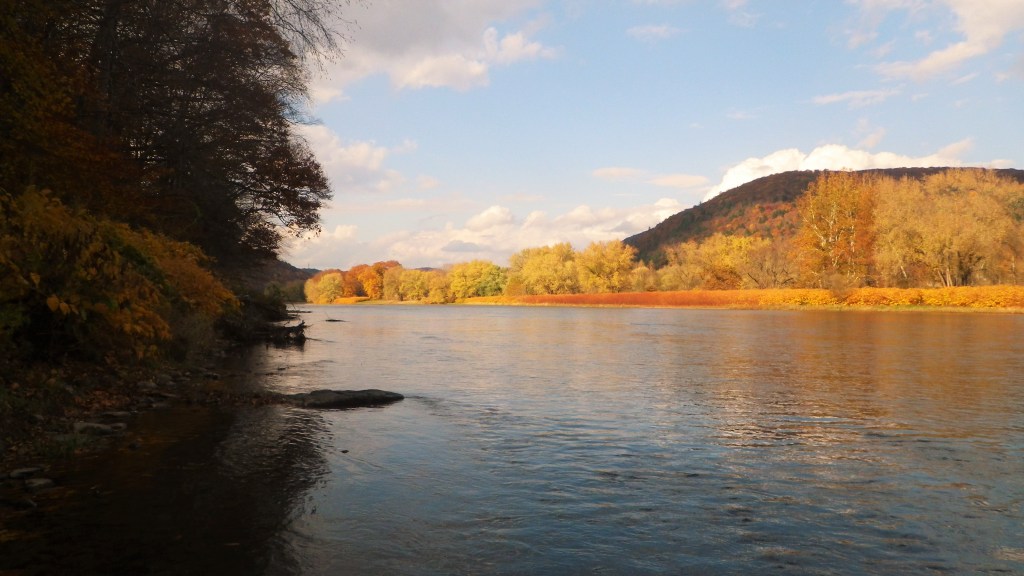
It is still cool nearing midday. Though the sun is bright, its light has a subtle tinge, that golden quality of autumn light.

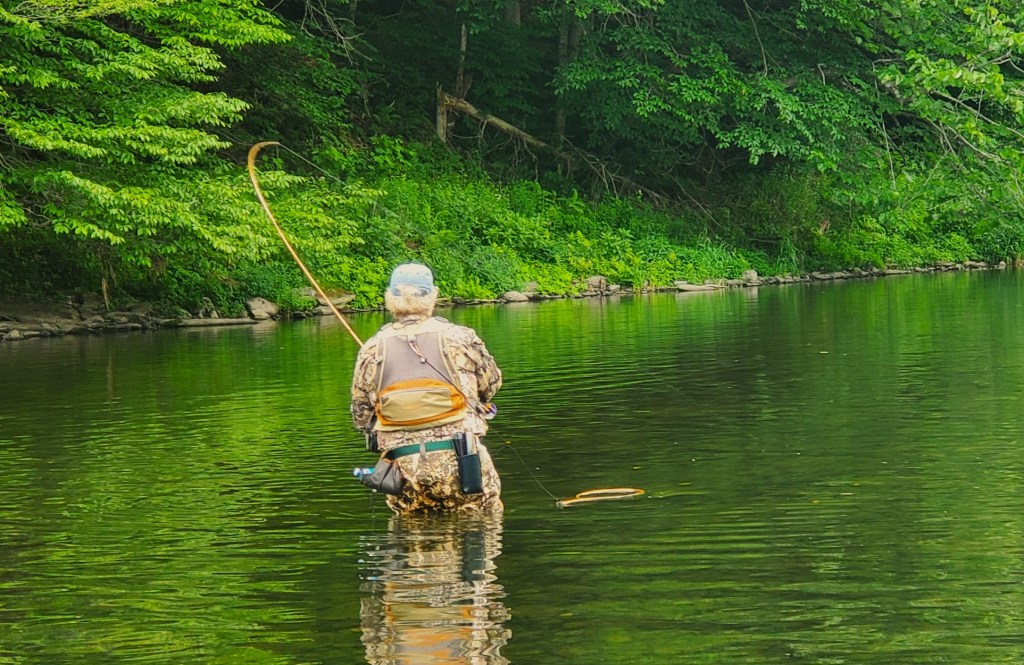
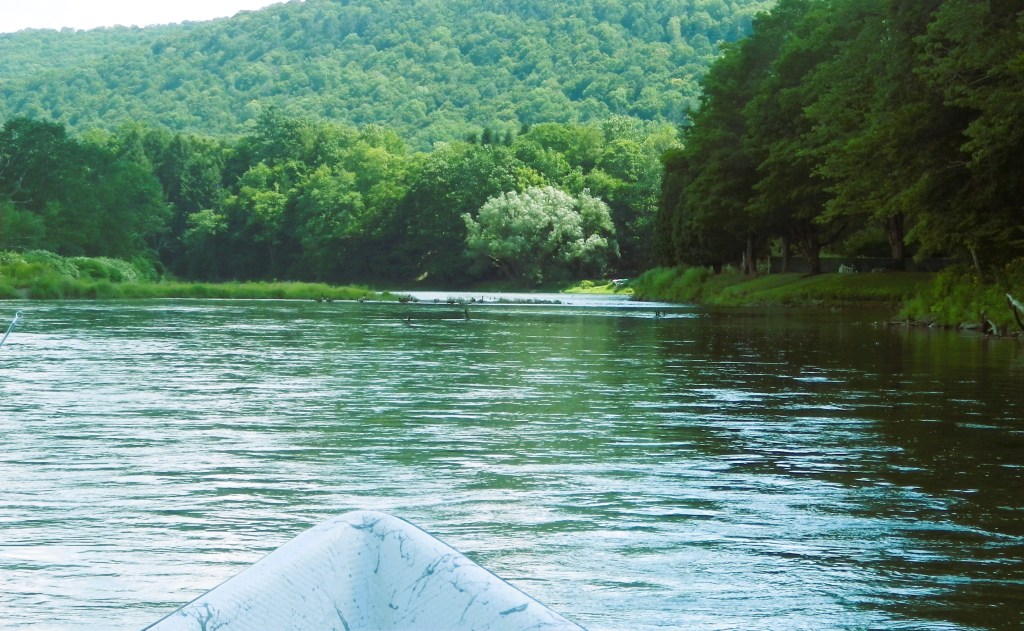
I am headed for the wide-open reaches of the Delaware this afternoon, feeling somewhat improved from my weekend battle with some sort of pinched nerve that forced a rod from my hands. I feel better walking around at least, and that is enough to break my hiatus and get me out on the river. If I find a rise to draw my cast, I will discover if my aging muscles are sufficiently healed to perform. The Delaware is not typically a place for short, gentle casts.

Our forecast shows a coming four day return to summerlike weather. Beginning Thursday the highs should hit 80 degrees with plenty of sunshine. Today though, I hear whispers of autumn.
My mind is a rush of thoughts, from the simple joy I feel on a beautiful day, to that touch of melancholy that ghosts in with each thought of season’s end. Fidgeting with tackle, I keep travelling back to past Septembers on my Catskill rivers. Fishing seems never to be easy. Rivers are usually low, their wild trout straining to recover from the long drought and difficult migrations of the heat of summer. Yes, migrations, as the City of New York’s whimsical attitude toward the health of these great rivers and their fisheries does not make for comfortable conditions in many miles of these rivers. Both freestone rivers and tailwaters become too warm for trout to survive, and they must move to seek spring holes, cool tributaries, and sufficiently cold water closer to the dams.

Conditions vary each year. Hurricane Debby complicated the picture this summer, and a few short spells of colder nights brought many miles of marginal waters down to cooler temperature regimes for a time. That did not last, as heat and sunshine returned when the rivers dropped and the freestoners saw afternoon temperatures in the seventies again.

So where are the trout? The big water of the lower East Branch and the upper miles of the Mainstem Delaware have nice, wadable flows and ideal water temperatures right now due to increased dam releases in anticipation of the Delaware Aqueduct Project. That should increase insect activity, but have the trout come back? Nature’s wrath already posted a false alarm after Debby, and I found a few in the Beaver Kill after that, but not many. Guiding my new friend from Germany on Thursday and Friday I did not find them within the hours we had available to fish.

Today’s walk along the Delaware is another leap of faith, an exposition of my belief in the stamina of her wild trout. I hope for a sign, enough mayflies to bring a couple trout to the surface would be a shining example, the arch in my rod as a sleek rainbow charges away downstream would be even better!
Low Water and Lo o

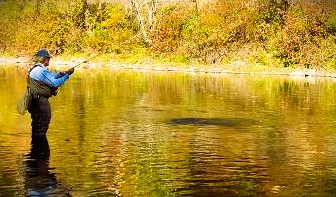
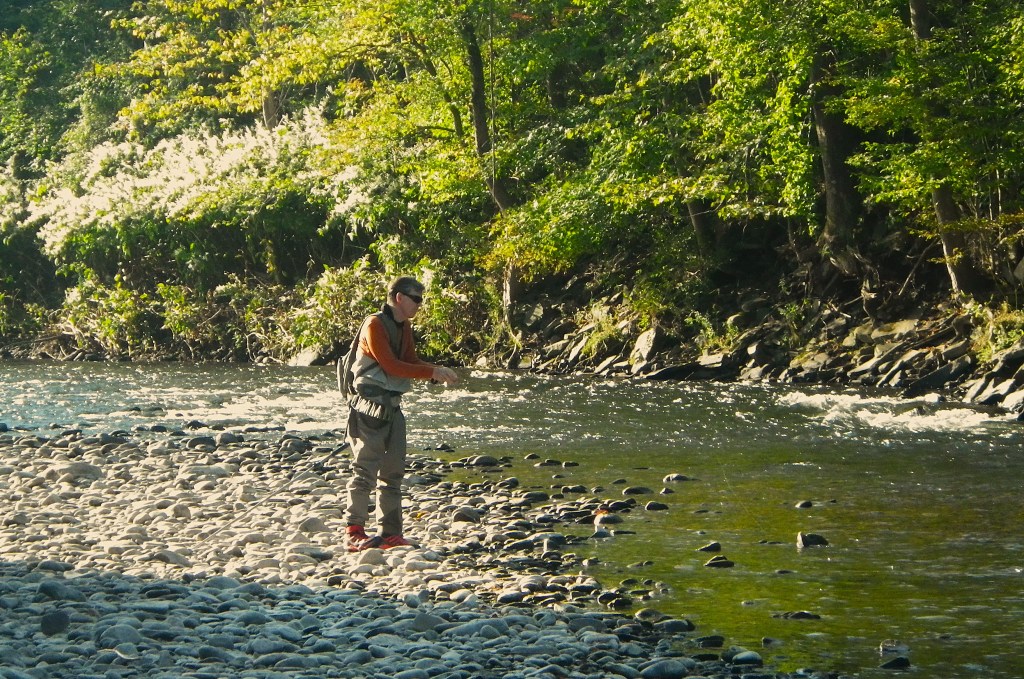
Dr. Peer Doering-Arges of Berlin, Germany fishes the run entering Ferdon’s Eddy in September’s crystalline, skinny water.

There is nothing so frustrating for a fishing guide as failing to find a taking fish for his “sport”, particularly when that sport is such a fine angler and personable gentleman as Dr. Peer Doering-Arges. NYC disrupted the tailwaters with high releases on Wednesday morning, with Peer arriving that evening. The freestone rivers had warmed after the post-Debby cool down and are frighteningly skinny. As so often occurs in early September, fishing conditions are relatively poor.

Peer’s first visit to the Catskills is tied to a presentation he will be giving at the 30th Catskill Rodmakers Gathering tomorrow morning, and it was necessary to fit in our fishing within his available hours. The rivers, insects and trout failed to cooperate, but we did enjoy each other’s company.

The good doctor has found, tested, used, distributed and is marketing a new species of bamboo for rodmakers. Commonly called Lo o (low-oh) in it’s native Vietnam, Bambusa procera has some interesting properties to recommend it to rodmakers. The culms are larger, typically yielding 16 strips rather than the 10 split from a culm of Arundinaria amabilis, China’s tea stick or Tonkin cane. The nodes are spaced much farther apart too, making it possible to build a nodeless multi piece fly rod without removing nodes and splicing sections. The lack of nodes means reduced work for the maker, as there is no sanding, filing, pressing or staggering of nodes required, and the nodeless strips are much simpler to straighten. Having briefly tried my hand at planing bamboo strips, I believe that will be a somewhat easier and smoother process working a nodeless strip of Lo o.

Peer fished a 7-foot three weight Lo o rod yesterday on the Beaver Kill, giving me a chance to cast it on the water. It is light, responsive and casts smoothly and accurately. My friend Tom Smithwick made two identical rods for comparison, also 7-foot rods for number three lines. Tapers, fiberglass ferrules, reel seats and guides are identical, though one rod is made with Tonkin cane and the other Lo o.

The Lo o is noticeably lighter, and the reduced mass is felt in casting the rods side by side. Tom suggests a maker could increase his taper dimension by roughly 4% to create a blank with similar mass and feel. “Or you can simply speed up your power stroke a bit”, he adds.

After casting their rods, I know I would be quite pleased with a 7′ 9″, 3 piece Lo o bamboo rod for a number five line to put through it’s paces during a long Catskill dry fly season!

I hope to catch Peer’s full presentation tomorrow, and there’s a chance we may get a few more hours together on the river before he heads on to his next destination. I would love to find him a couple of our quality-sized wild brownies willing to rise and put a full arch in that new bamboo!

Scrambling!

I awakened this morning to find that, as expected, NYC has waited until the last minute to begin dumping water from the Delaware reservoirs. Flows and temperatures are changing, and the fish will need a moment to adapt. This evening, I will meet Dr. Peer Doering-Arges upon his arrival from Berlin, Germany to discuss our fishing, which is to begin tomorrow. I am scrambling to figure out just where and how we will fish under these drastically altered conditions.

The topsy turvy summer of 2024 marches on, and I am wondering if the drift boat is the answer. I have not floated since April, so I am left flat-footed. There may be some flies in the afternoons, but I am left with no chance to go find them. Peer had said he was looking forward to this adventure. It may be more of one than expected!

Leaves On The Water

There is no denying it now, even after a pair of hot, sunny days; we are about to begin the final third of the dry fly season.

Mostly overcast yesterday, and I had hopes for the sight of mayflies. The morning had that odd mixture of humid warmth, with a tinge of coolness as the cloud banks mixed in the heavens. It felt like rain, and I spent most of the day in my old SST jacket, though no drops fell, and no hatch appeared.

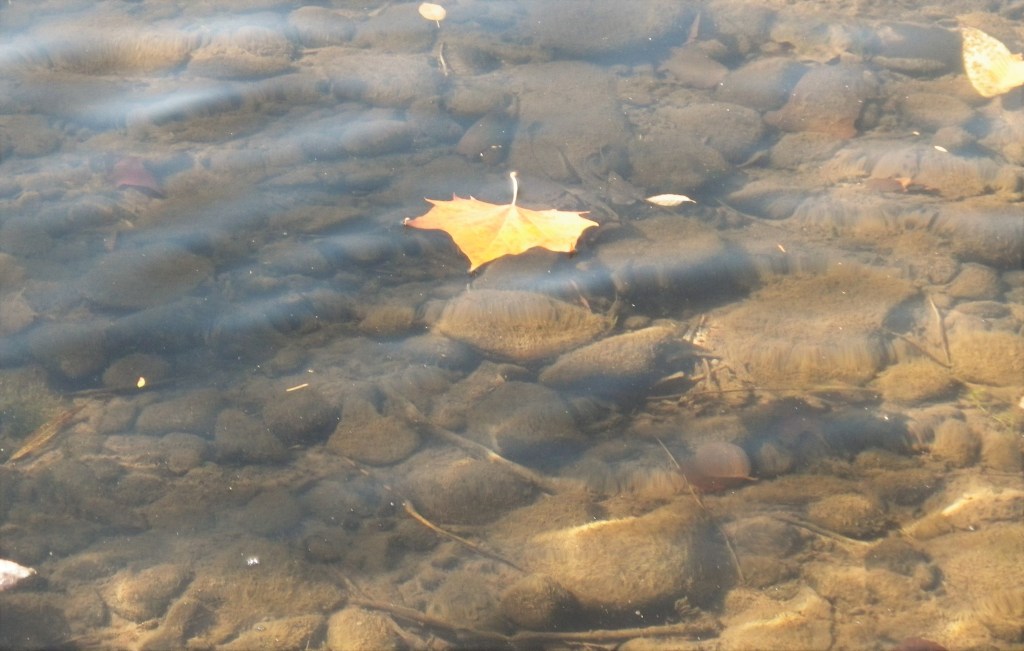
Though the day proved to be mostly a calm one, there were a few sprites of breeze seeming to come from nowhere, enough to brighten the water with the first yellow leaves. I fished hard, so much so that both my shoulder and elbow were barking this morning. A few small trout sampled my dry flies, but I enjoyed just a single chance at something more.

The Red Gods stirred one of those phantom zephyrs at just the moment I delivered my cast. The drifting leaf fragments competed with my fly for attention, and my eyes fooled me into believing the cast had fallen short. I was straining to discern the fly’s location when a pop tight to the bank surprised me. That microsecond of indecision wrecked my timing, and I snatched the rod away, touching nothing. The streak on the surface proved my fly had been where I had intended, and that resounding pop had been my day’s chance for glory.

Such fish do not come back for another bite. There are no replays in this game. I tried a few more casts, changed the fly and tried even more, all the while knowing there would be no take. Honor requires the effort be made regardless.

A cooling trend begins today, with significant rainfall overnight. I hope the rivers get a good draught, for they have returned to those low, clear and warm conditions which limit fishing opportunities. It is not a bad thing if late summer looks and acts more like autumn.

I am ready to see the dark Isonychia mayflies drifting upon the surface of the Delaware, her rainbows picking them off in the riffles, the bright little Hebes hidden in the afternoon glare until vanishing in the tiniest sips imaginable. I am ready to bask in the golden sunlight cast upon the rivers at this time of year.

August Fades, Hoppers Don’t

Summer brownies enjoy a big meal

Sometimes it pays to turn the tables a little. Keeping to regular habits will give the trout an opportunity to pattern an angler and his approach, particularly the older, wiser and larger members of the fraternity we prefer to encounter. I have been convinced of that fact on various occasions.

The hiatus proclaimed by Hurricane Debby’s floodwaters ended a fairly long run of dawn patrol fishing for me. As the fishing has begun to improve, I have more or less been keeping more of a spring schedule, starting in mid-morning and fishing on into late afternoon. Initially, that was dictated by colored water, figuring the best chance for dry fly fishing would come once the sunlight was strong enough to provide better fly visibility for the trout.

I tried a relatively neglected reach of river yesterday morning, one I usually reserve for afternoons. This area receives a lot of angler pressure, and I enjoyed the chance to catch it unoccupied. In full sunlight, any reach of river can appear intimidating, and this one was fully bathed in sunlight when I arrived. I know a few good lies in this pool, and there was still a narrow band of shade clinging to life along a couple of interesting places. There was no question in my mind where I was going to concentrate my efforts.

The late George Maurer’s “Queen of The Waters” offers delicacy with a long reach, making it perfect for the precision work required to mine the vanishing shade.

Funny how things happen sometimes, but the first little patch of shade I cast my Baby Hopper into produced a strike and a hard fighting fourteen-inch brownie. That reinforced my fly choice and my strategy. My little bands of shade were vanishing quickly, so I kept moving. A couple of lies with great memories were next in line.

One of those spots has a puzzling history. The first spring and summer of my retirement, this lie was an afternoon gold mine. I tangled with a lot of big brown trout that called this place home. The second year it wasn’t nearly as productive, though I did log a couple of bruisers there, but I haven’t caught a trout there since.

I fished that lie thoroughly, always hopeful that another outsize trout will take up residence, but my hope was once more in vain. The shade was really dwindling now, and I had one more shot before the last of this shelter vanished into midday.

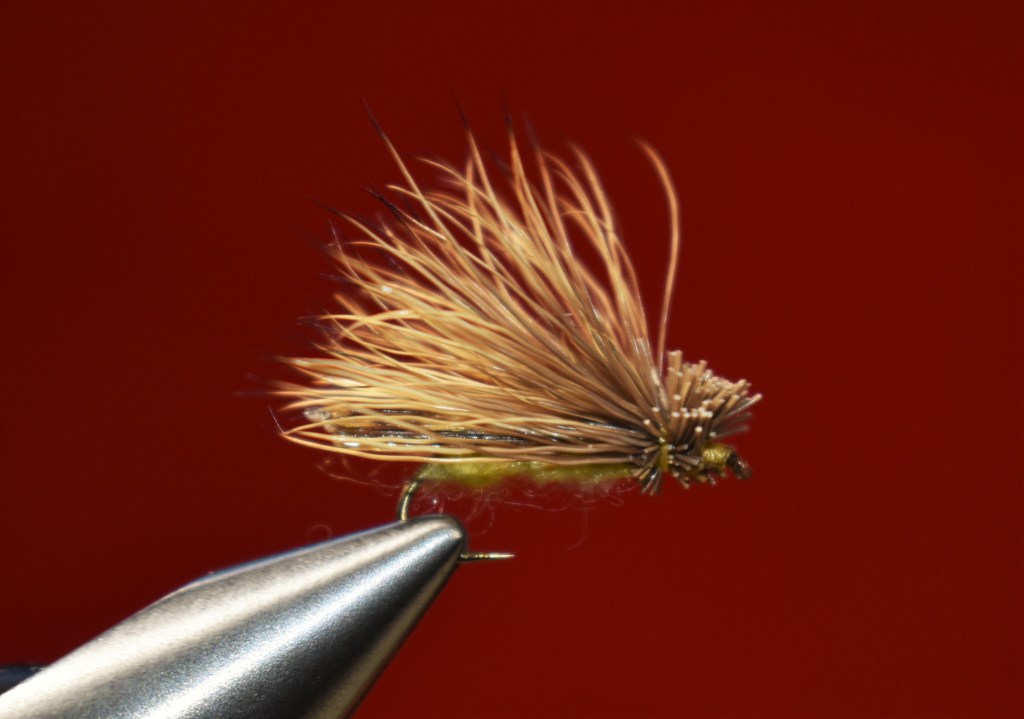
All good things trace the Master’s genius: Ed Shenk’s classic Letort Hopper.

By the time I acquired a casting position, my final band of shade was less than one foot wide. The hopper glided out and landed right on the edge of light and shadow. It drifted slowly past untaken. Successive casts dissected that shade line from the edge all the way back to the bank itself. It seemed that no one was home.

I noticed that flood waters had formed a little subtle pocket downstream another forty feet, so I waded gently past my “last” target area and probed the dappled sunlit pocket carefully. I had made two or three unrewarded casts there when I saw a tiny little spit of water to my left, just on the edge of light and shade at the downstream end of the previous lie. Quickly shortening the line, I let the Queen do her thing and placed the Baby Hopper two inches back into that retreating shade line. The fly drifted a few inches before it was consumed in a chomp!

I still had more line out than I wanted, so I was stripping madly as a very pissed off brownie charged out into the sunlight headed for mid-river. There were loops of line flying as I stripped, gave line to his runs, then stripped again, somehow managing to keep free of tangles. Eventually, I got him on the reel. Distinct from the Hardy’s I so often fish, the Abel TR2 emits its own sweet music when spun by a running trophy brown!

Big, angry, electric golden and bronze, my sneaky shade trout wasn’t too happy in the net, though he shook off his mood when I slipped him back into the cool flow of the pool. I swear he glanced back over his shoulder and glared at me as he drifted back toward home.

I wrote several days ago about ignoring tiny little rises and disturbances in the river. When do I pay attention to them? When they are close to a proven lie!

Emerging From Purgatory

A new sunrise…

At last, the legacy of this summer’s flood has passed. Signs remain, but the rivers have cleared, and life seems ready to get back to normal.

It has been a difficult month. Deprived of the solace of my trout hunting ways, the days seemed endless and without purpose at times. Like any angler, I have endured dry spells before. Nature weaves her magic, and the results are not always to the angler’s liking. It is part of the game, the extreme challenge of the sporting life. This time, there was a growing sense of loss…

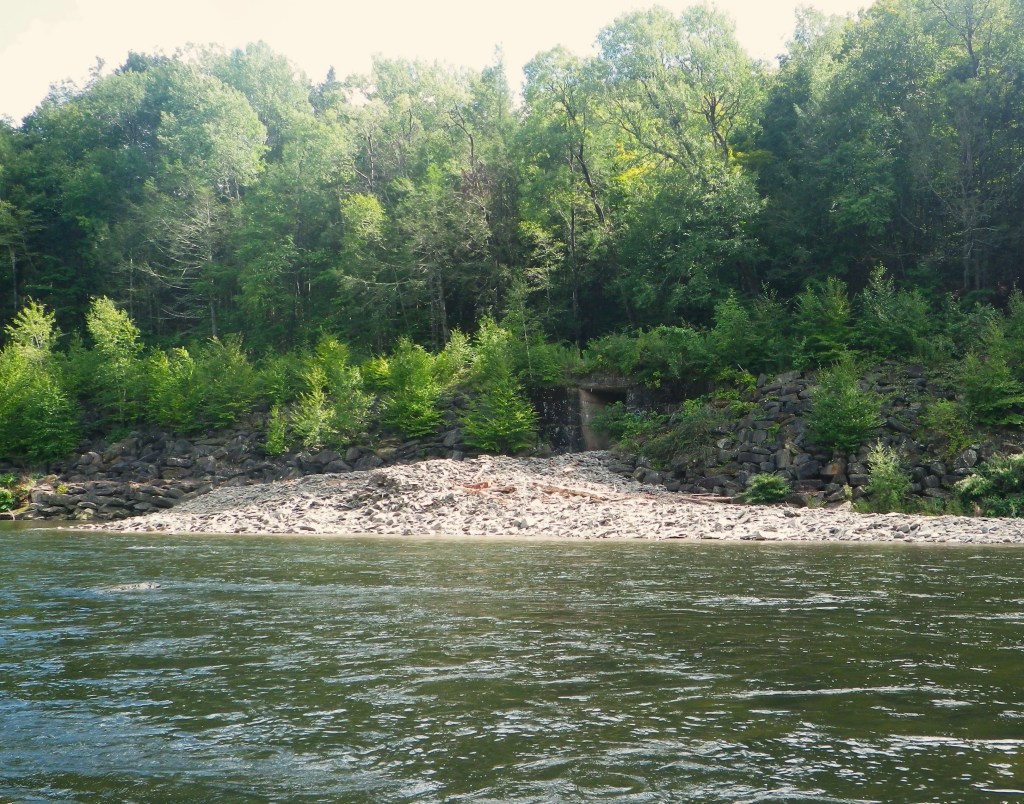
Debby’s Wrath: Once upon a time, there was a lone culvert along this straight rock wall. Even during spring flows, I have never seen more than a trickle of water coming from that pipe. Mother Nature decided to have Debby dump her rain here, and this is the result. That new peninsula of rock stands perhaps ten feet high above the level of the river.

I had a plan yesterday morning. My old friend Matt Supinski was to join me for a day’s fishing. An unexpected visit from family changed his plans for him, so I headed out earlier after receiving his call. The plan had been to continue the search for the hunters I spar with during my Catskill summers, to find where the changes wrought by Debby had sent them. I stuck with that plan and embarked upon a long day in the bright Catskill sunshine.

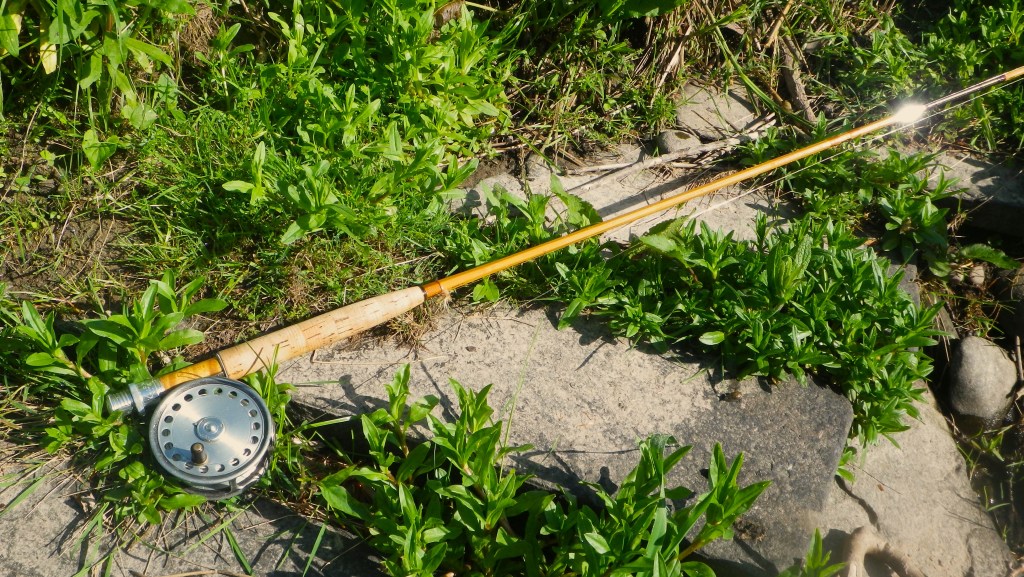
I was carrying my Sweetgrass Pent, eight lithe feet of golden bamboo designed for me by friend Jerry Kustich, and I had decided to try a different fly line with the rod. I mounted a 3″ Hardy St. George bearing one of Wulff’s Bamboo Special number four fly lines. Jerry had designed this taper for a traditional double taper fly line, and the long belly Wulff fishes much like a classic DT, though it has the advantage of a fine running line which adds easy distance capability to the cast.

My Sweetgrass takes on a lovely parabolic arch when a big Catskill brown decides to leave the vicinity. (Photo courtesy John Apgar)

It was a beautiful summer mid-morning, the mist already burned away when I entered the river. I was hopeful that the clear, low flow wasn’t the only thing that had returned to normal. I was late for prime hunting I knew, but I welcomed the challenge with a bright outlook.

I had been diligently searching for an hour and a half, when I saw what I was looking for. A subtle quiver in the surface, the kind of thing the average fly fisher dismisses as nothing, if he notices it at all. Subtleties tell the tale for the hunter.

The Sweetgrass and Wulff combination let me reach each subtle drift line with grace from more than fifty feet away, as I worked through my target area. When he came for the fly at last, there was no discernable riseform, just the barest ripple as he turned toward the fly. I paused, struck, then struck again as he tore away from me!

My adversary put everything he had into his escape, and I countered very run, every move, as he sought to break me as he dashed through the cover. I brough him close twice, but he turned and burned to put distance between us and target another snag to rid himself of my fly.

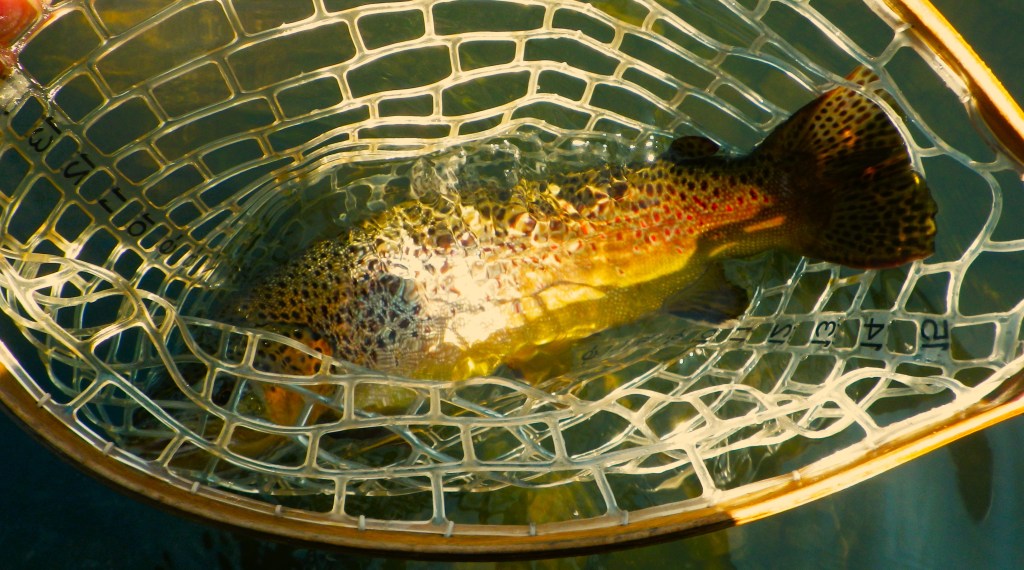
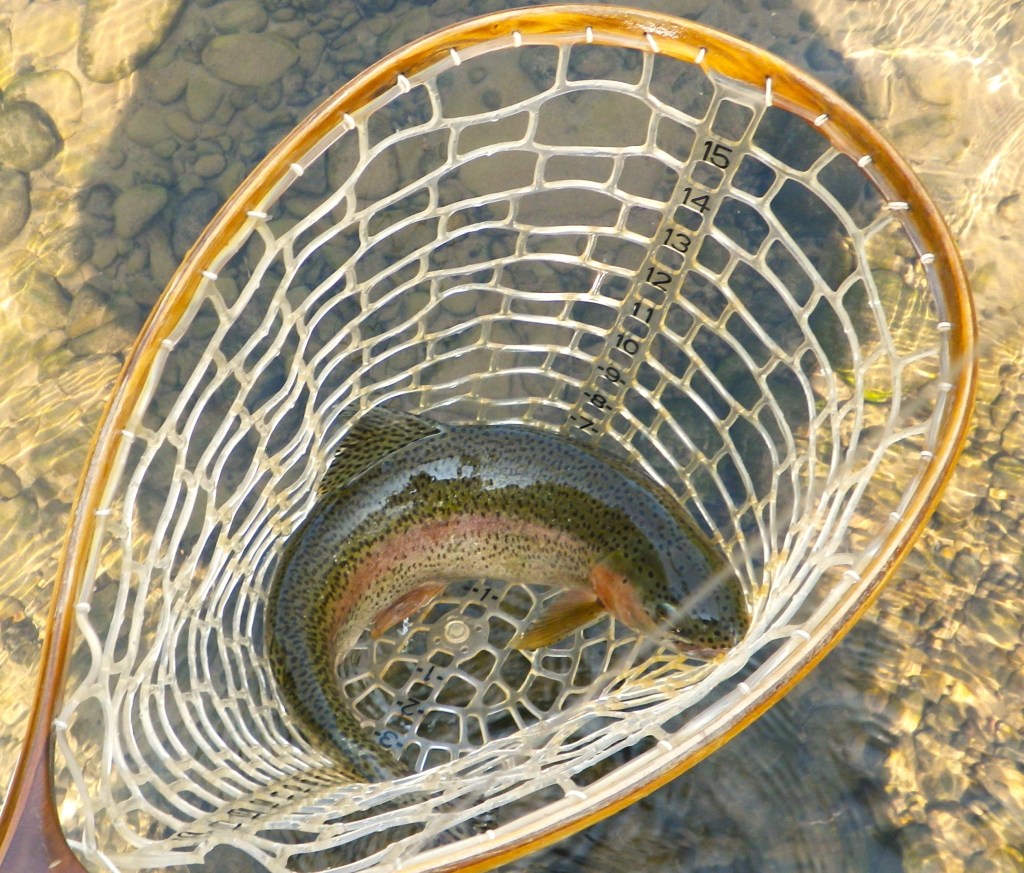
At the end he was tired, as the smooth arch of cane eased him within range of my net. The exhilaration I felt made it clear I had emerged from the long darkness of flood waters and barren riverscapes. Twenty-five inches of vibrant color and life thrashed in the net as I carefully removed the fly and snapped a quick photo before returning him to the cold, clear embrace of the current, at least six pounds, I thought.

As evening flirted with the mountain sunlight, I walked slowly toward the last riverbank. The day had been long, rewarding, and shall remain in memory amid the perfection of a Catskill Summer.

Just Fishing

Last day of a week that felt like autumn has already arrived and, I think I’ll go fishing.

I carried the Maxwell Leonard 50 DF yesterday, amazing myself with how beautifully it casts. I had to keep backing off on my power stroke, and watching the line simply sail out there. With a faster action than many bamboo rods, it is easy to punch this Leonard a little too hard, and that is counterproductive. My wrist fished graphite for too many years, and muscle memory lasts, confound it!

I tried a couple of rivers, taking five trout on an Isonychia pattern 100-Year Dun. Still, there was no sign of even one of the larger trout I seek, but I truly enjoyed the day. The latter portion of the afternoon was particularly blissful. The sun, revealing itself from the passing cloud banks and warming my back, caused me to turn and take in the sight of the river below: sanctuary for the soul.

Power, and grace!

Summer returns this weekend, the milder Catskill Summer I cherish, with highs from the mid-seventies to the low eighties, cool nights, and a bit of rainfall here and there, giving the freestone rivers a chance to hold onto the fishable temperatures this autumn interlude has provided. May it be so!

I may try a two-river approach again today, continuing my search for the missing leviathans, and taking advantage of this taste of gorgeous weather.

Cool and Breezy

There is no doubt, I can feel it in the air…

Funny how weather works. The Southwest is assaulted by record heat, while here in the Catskills today will struggle to peak near 65 degrees, as if they took our warmth to add to their heat wave. The change is pleasant here. I grabbed a fleece jacket this morning before sitting down at my desk, the windows remaining open overnight. Summer still, and the low tomorrow morning could reach the forties.

It brings me back more than forty years, to family vacations in Massachusetts’ Berkshires. We felt the crispness of August there with sunrise temperatures in the thirties. My aunt and uncle had found a little cabin on a mountainside, and a climb down the steep bank brought me face to face with a beautiful stream. Nature had provided a bountiful supply of wild brook trout in those crystalline waters, and I enjoyed two for breakfast as a special treat that next morning. Two fish was my vacation limit, and the following summers proved the worth of my stewardship. Taking a pair of seven-to-nine-inch brookies, once a year, guaranteed there would be more of like size next year.

I bought my first fly rod on that trip, though it was suited to Maryland’s warmwater ponds, not to that lovely trout brook. It started me haltingly on a path I had sought since boyhood. Ah, the memories a chill summer morning can stir! I have hope it will stir our Catskill trout as it rouses my instincts, spur them back to feeding with the flood flows now vanished from these mountains.

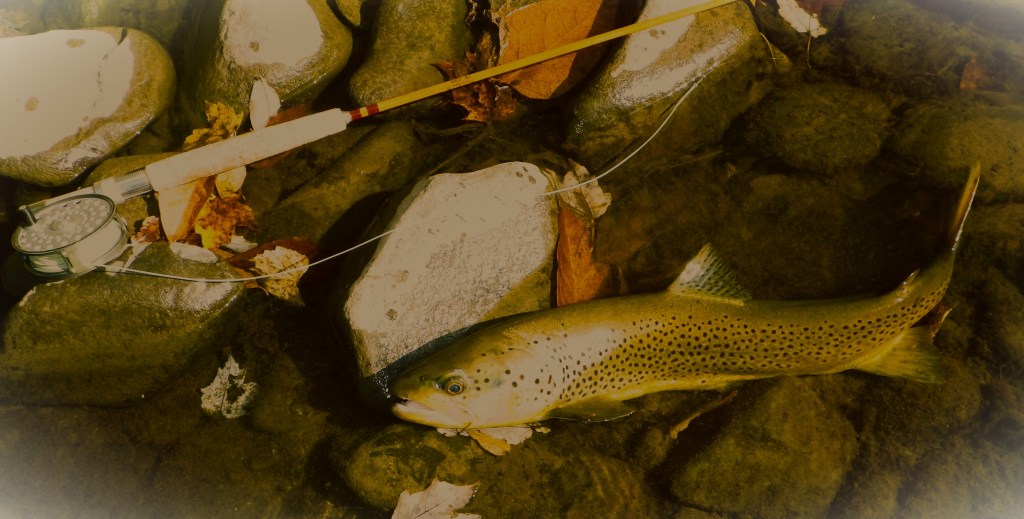
An autumn brown.

I am checking the wind forecast and pondering my tackle choices. My friend Dennis Menscer’s 8-foot hollowbuilt rod seems destined to accompany me today. I need my bamboo fix after wandering fruitlessly yesterday with a soulless graphite rod. The Menscer is known to bring good luck!

One of my Menscer Moments: A Beaver Kill brown exceeding 24 inches, taken on a blustery spring day!

Wandering Thoughts

Season’s End (Photo courtesy of Chuck Coronato)

I was reading a while ago, sifting through a fellow angler’s thoughts of autumn. As we pass high summer, such thoughts are never far away…

There’s the cooler air ushered in by that hurricane system and, though interrupted, seems to be lingering here in our Catskills. There is even that first tinge of yellow among the trees, quite early, brought on by the long, hot drought of summer’s first half followed by a decided surplus of rainfall. I am caught still wondering about the fate of my summer fishing and feeling the initial pangs of the inevitable season’s end.

Three seasons here can be quite ephemeral, offering up everything from classic spring sunshine to May snow squalls to begin the angler’s year, while autumn and winter can easily throw most anything at us on a daily basis. Summer is a given, or at least I like to think of it in that way, though one that can be stolen away for a time at Nature’s whim.

This weekend is one of those somber ones, rainy weather with little actual rain, but still the dark foreboding feeling of lost time, missed opportunities. I got back to fly tying yesterday, after a brief hiatus, replenishing my terrestrial box and working to finish a gift box for an esteemed visitor. I will likely tie some more today.

Still, I am trapped by my thoughts of a season waning. More than a month of summer remains, yet the uncertainty of weather and river flows seem to overpower my optimism for the season. There was a glimpse of sunlight in my window just now, Nature’s rallying cry, and I shall do my best to seize it, to tie those hoppers and ants and plot a new adventure!

Seven By Seven

The post-flood fishing has been a journey of discovery kind of situation, although I cannot say I have discovered anything more than the fact that the quality wild trout I prefer to hunt seem to have vanished from their likely haunts. Obviously, a blank day of fishing doesn’t mean the trout are not where you are looking for them, however a run of days with compromised water conditions and a complete lack of clues, as well as trout leads to a firm conclusion.

Larger trout have a lot more mass and surface area then the average foot-long fish and flood flows lead them to seek the cleanest water they can find and larger current breaks. The kind of cover that holds such fish under normal flows may not be sufficient during floods, even if we think it is. Little fish can tuck themselves behind smaller obstructions than big fish.

This is all just another facet of the puzzle the angler faces each day on the river. Water temperature, fishing pressure, predation, cover, depth and the availability of food can all change with water flows, and floods are one of Nature’s tools to create change.

I was talking with another angler a few days ago, and he was expounding on all the rises he was seeing. I dismissed these as little fish, eating little bugs. He asked me if I had caught any of them, stating that big trout can make very small rises. I didn’t feel like getting into a long discussion on reading rise forms, so I simply told him I did not bother with them.

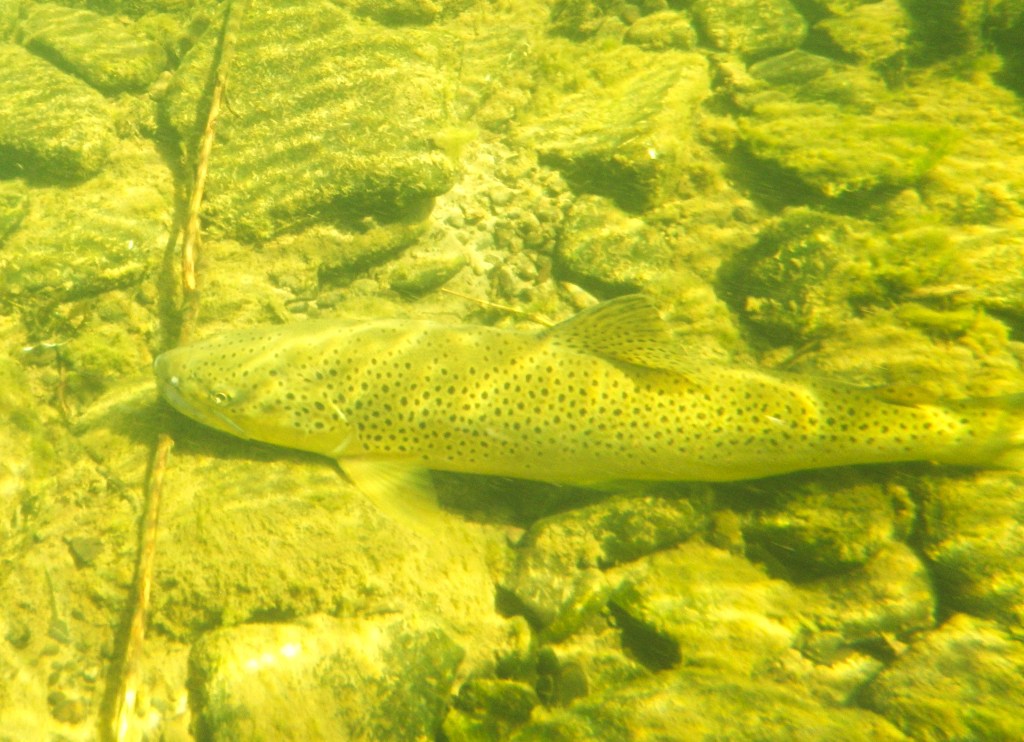
It is true that large trout can feed with negligible riseforms. I have caught a number of them over the years that betrayed no riseform at all. Have you ever had your floating dry fly simply vanish? No ring, no bubble, no little spurt or splash or bulge, just there one second and gone the next while you are staring directly at it – this is what I am talking about. I once watched a gorgeous twenty-two-inch brown trout roll halfway onto his side and drift up toward the surface and suck down a caddisfly into the side of his mouth without a trace. He was six feet away from me in crystal clear moving water. I know his size because I cast to him and caught him once he slid back upstream a dozen feet to find another caddis.

Big trout or small? Yes, it was indeed another good one, twenty-inches give or take, sipping those tiny olive duns which appear as out-of-focus specks of gray.

Reading riseforms is a vital skill to cultivate if you wish to spend your precious stream time fishing for larger trout. After more than three decades, I have become pretty good at it, but I misjudge a trout every once in awhile. Just to check my judgement, I did a little experiment at the close of my fishing yesterday.

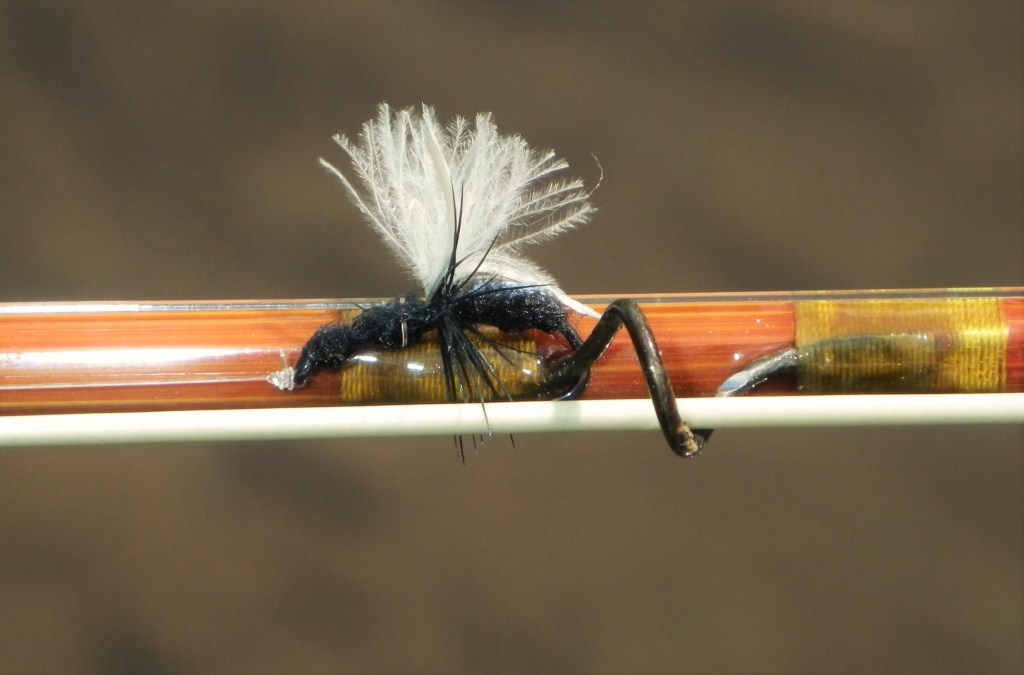
The river had been lit up with soft, little riseforms for perhaps an hour. I had watched them and determined that there were no quality fish feeding, but the little guys were having a field day. I had removed my sunglasses and checked the surface, smiling when I found tiny black flying ants adrift in the film. They looked to be about a size 22, and some where smaller still. I had none with me, the trouble with my depth perception making it not worthwhile to bother with flies I couldn’t see to tie on. I am out more days through the season than most, and I only encounter a nice ant fall once or twice every couple of seasons. I did have a size 19 foam ant with a grizzly hackle between it’s gaster and thorax, and I figured it might be just close enough.

I stood in the middle of the river and cast to riseforms, choosing the ones that looked a little better than most, and I caught and released seven wild brown trout on that ant. All of them were right around seven inches long. Yep, little fish eating little bugs, just as I thought. I hope I am still around in four of five years when those youngsters grow up. Maybe they will still eat that little grizzly hackled ant that isn’t quite small enough to match the naturals, but is just big enough for me to see to tie it on.

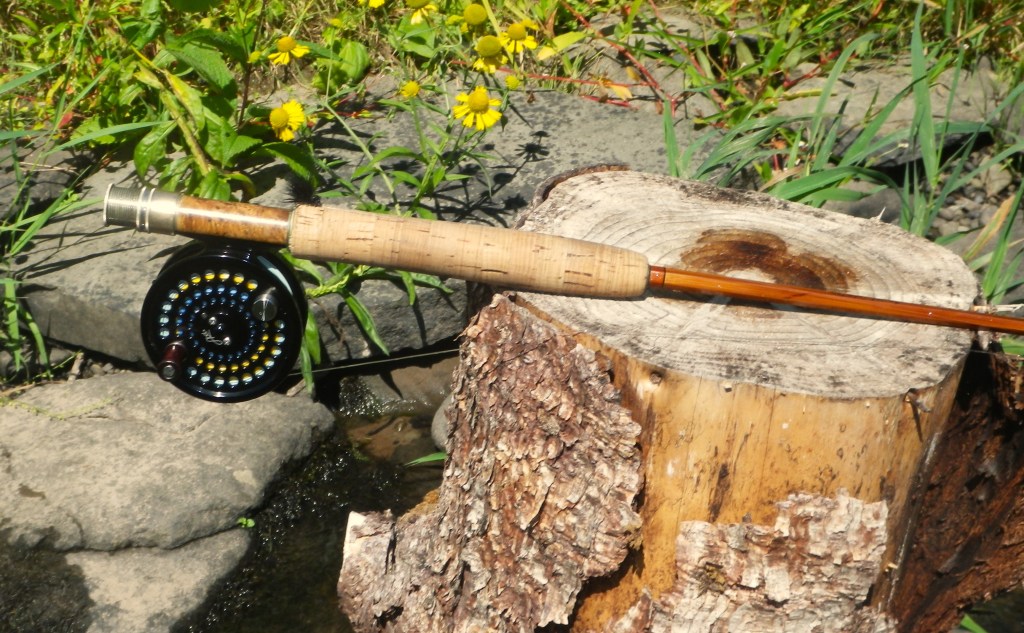
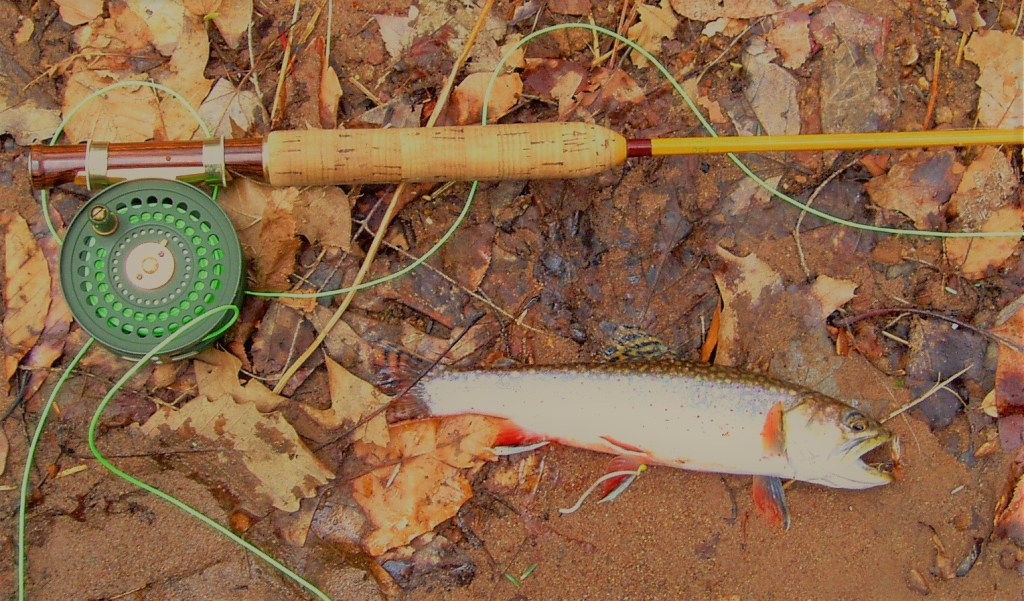
Rod by the Taper Wizard, Tom Smithwick; Royal Wulff tied by yours truly; Brook Trout by Ma Nature.