I fished the limestone springs of Pennsylvania's Cumberland Valley for a couple of decades, founded Falling Spring Outfitters, guided, tied and oh yes, fell in love with the Catskill Rivers I can now call home.
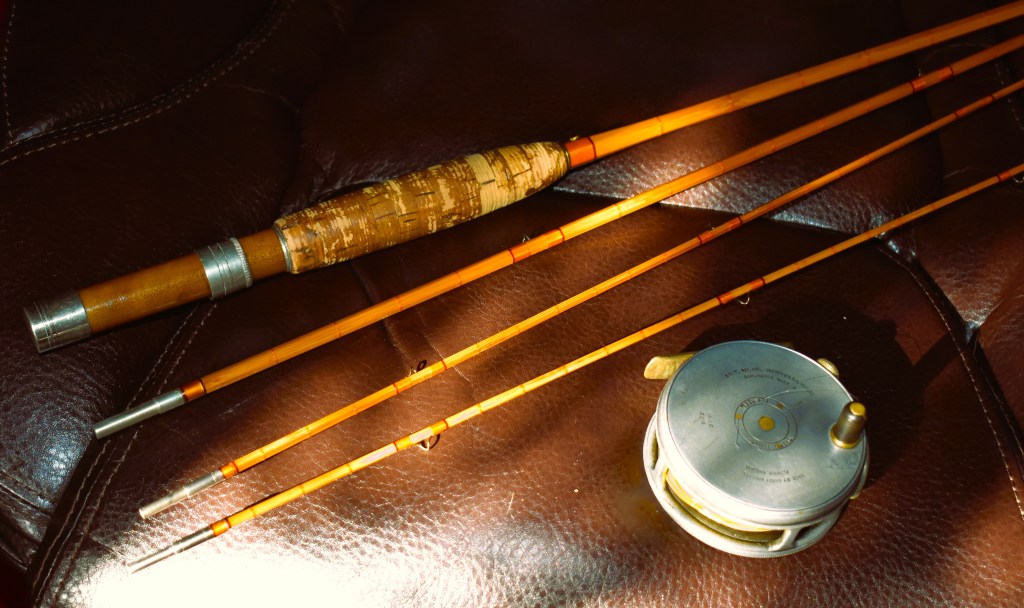
Angling with vintage cane rods and classic fly reels may have it’s beginnings as curiosity, though it often grows into blind passion!
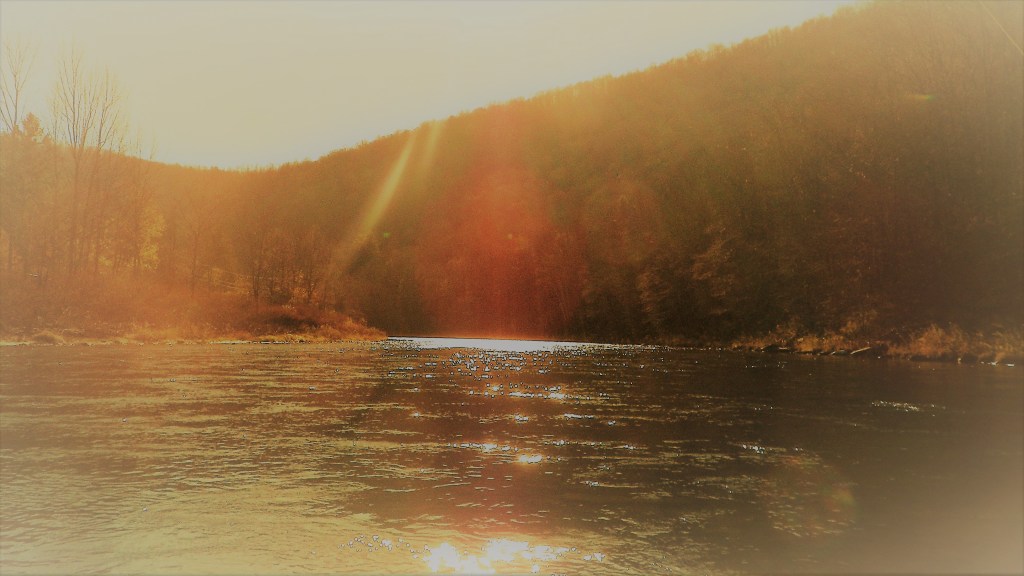
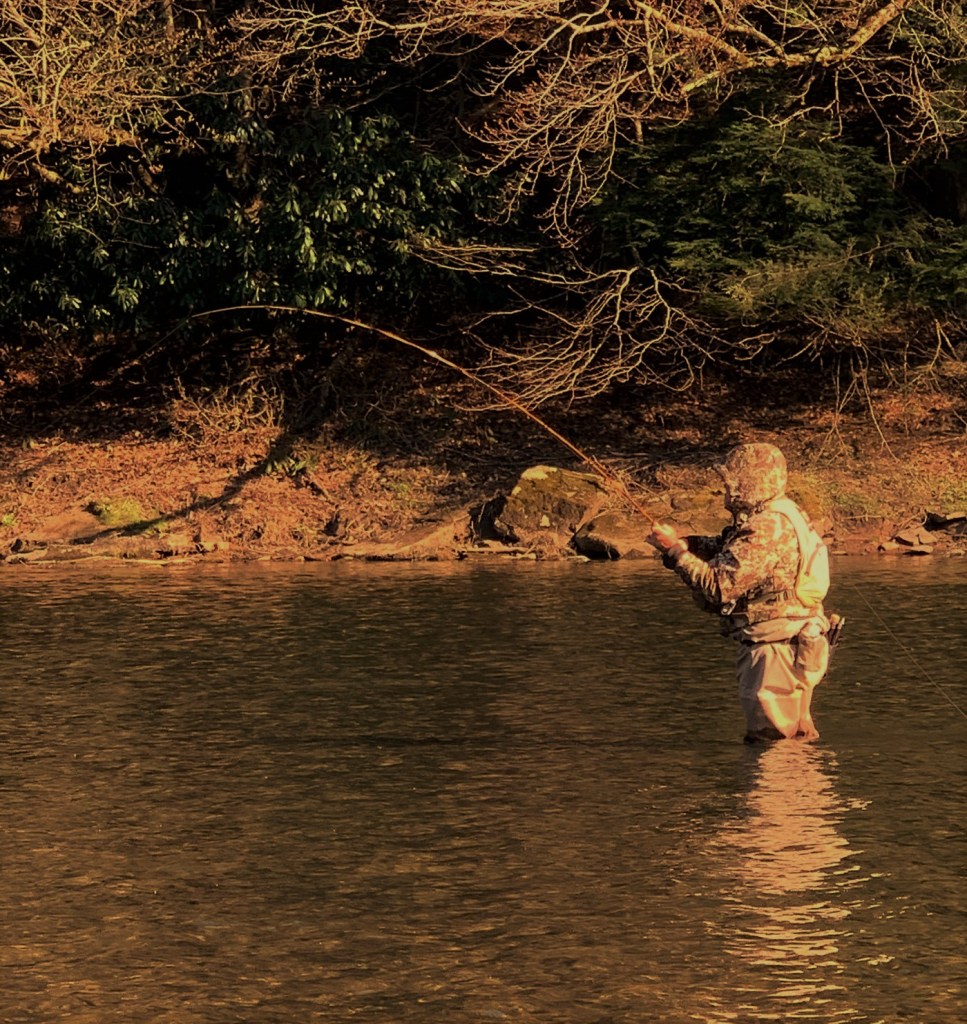
A sixty-degree day in mid-November; how could I resist the call to the river? Yes, a few hard frosts had caused the water temperatures to plummet, and in such cases the mind calculates the odds of actually taking trout, finding them low indeed. It is not the mind that draws me to the river when the Red Gods dangle such a clear, bright day in winter, it is the soul!
Of course, the tease was evident by way of a pair of tiny insects, drifting here and there, and even occasional soft rises from equally tiny fish. I remained content to swing my flies, never truly expecting the tug that dreams are made of.
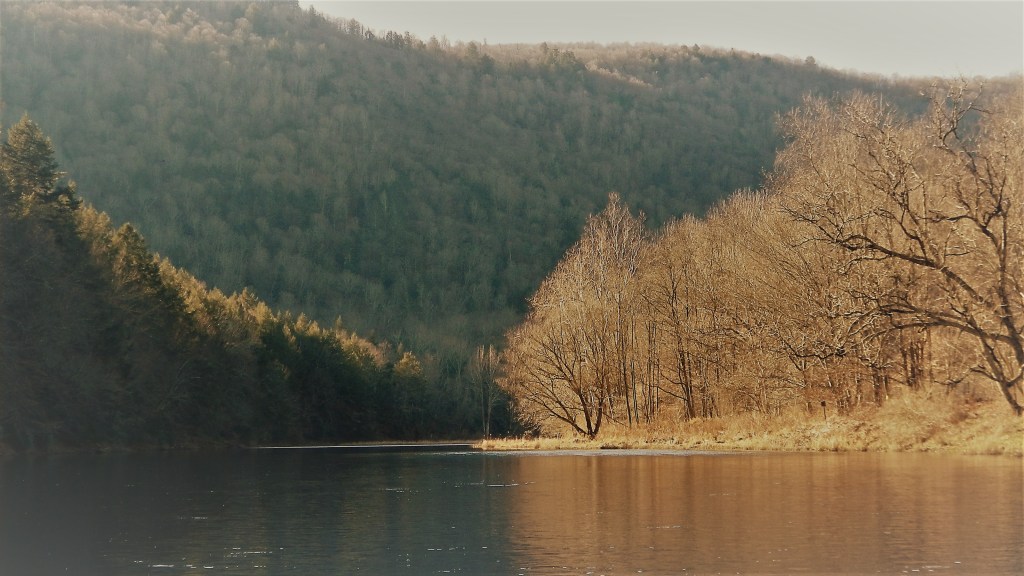
Within an hour, the deep chill of winter had made it through the sheath of waders and wool and fleece, and on into my bones, but the warm air still delighted something deeper inside, even wading down as the river was enveloped in shade.
I lingered on the riverbank, where the rays of that gorgeous sun brought life and sensation back to my legs, lingered as the last moments of that glowing warmth saturated my being.
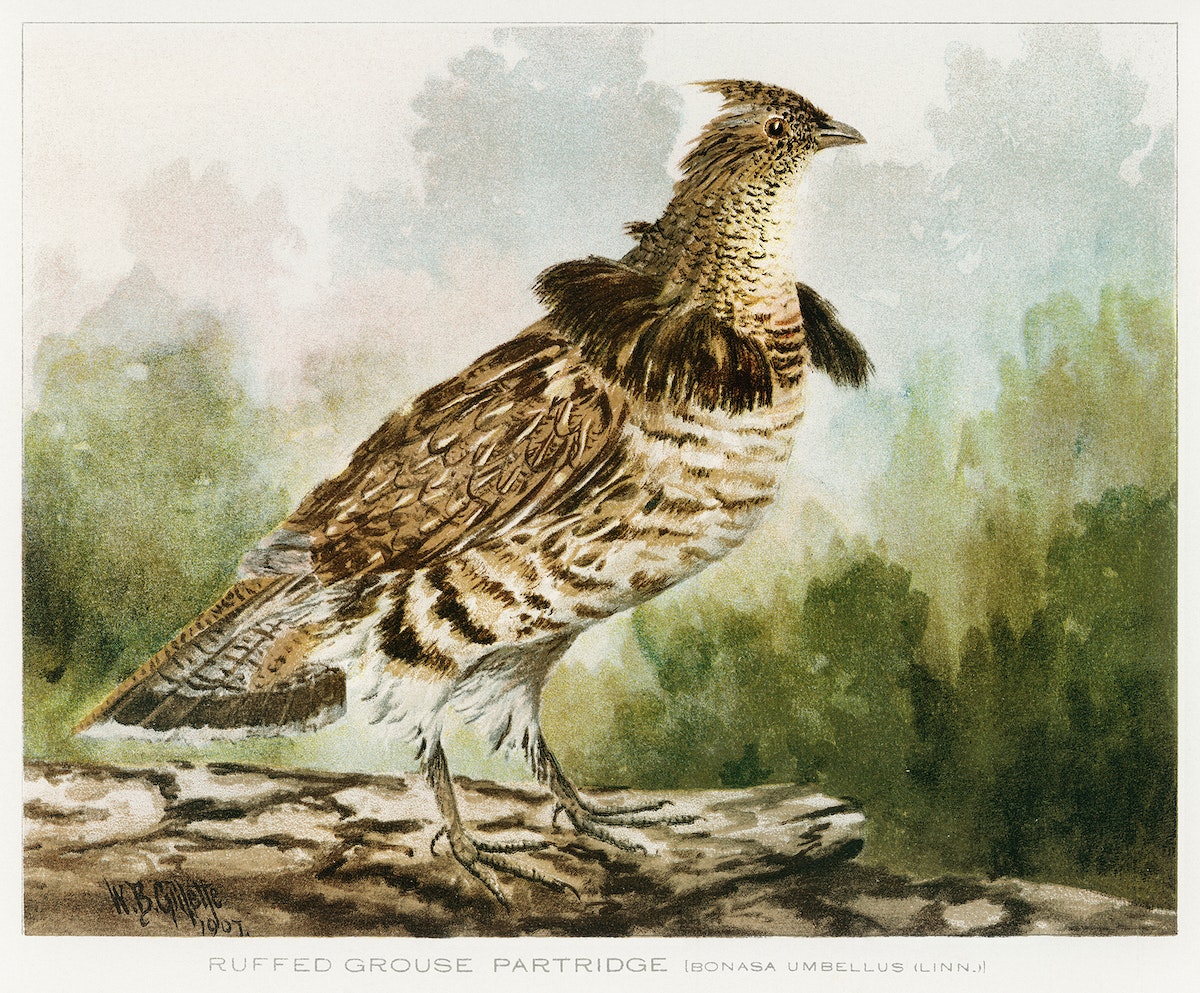
The hard frost yesterday morning retreated slowly from the gathering sunshine. The leaves underfoot still crunched an alarm, broadcasting my presence in the forest as per my desire. Hunting Ruffed Grouse the hard way (there isn’t an easy way if you were wondering) involves walking them up, and damp, silent conditions are not the best for this dogless gunner’s tactic. Better the hunter make some noise, moving slowly no more than a dozen steps at a time, with long pauses to let a bird sit and worry, wondering where you are.
I have the habit of stirring one foot through the leaves before taking the first step after each pause, for more than once a grouse has been waiting and listening during the pause and erupts in a thunder of wingbeats when he hears that leaf rattle. That tactic worked on the last bird of the morning, but let’s not get away from ourselves.
I began with a short walk along a newer path beside the brook, that is until it petered out into a steep sloping extension of the bank. I climbed then, up a short, workable grade to the rocks on top, guardians along the well-worn trail that runs high above the sparkling rill. My decision was whether to head north or south then, and the suspicion that some birds might be hanging near where I found them on my season opening hunt made the choice easy. I had no more than turned south when I heard the rush of wings, softer than expected, further off and shielded by the music of bright waters rollicking over their pebble bed. I never saw that bird depart.
I managed my dozen steps then, only to see a single flash of light and shadow through the trees, as two more birds flushed low and headed south, one after the other. Fifteen minutes into the morning walk and three birds on the wing, just one of them barely visible for a split second, the other pair ghosts! I didn’t make it through my second move when number four was heard, once more out of range at the flush, and unseen.
Shaking my head with a wry smile I moved through to the main trail, hopeful as I felt all four had headed south, that I knew where they were going.
Of course, old Ruff isn’t known to be predictable, so I kept that smile on my face as I crossed the main trail and eased into my favorite little covert. This place has a bit of everything: mature trees, young saplings, heavy ground vegetation, deadfalls and brush piles, an old stone wall and one steep little ravine. Wildlife in general likes it there, and so does Mr. Ruff. One of those four flushed birds even used a patch of that thick ground vegetation to flush again, unseen, and depart on whispering wings.
I had planned to set up in this area for Saturday’s opening day of deer season, there being ample sign of a buck or two using the area recently. I chose a stand by the old stone wall, where two gnarled old trees stood as sentinels, kicking away the dried leaves to expose the soft, dark, quiet soil to keep my vigil silent. At my age, sitting like a statue is a thing of the past, so I like to be able to stand and take a step to watch either side while easing cold, stiff muscles and joints.
I gathered some deadfall limbs and built a simple screen in front of my little hide, then hunted back through that covert in case another of those invisible grouse was lurking in the far corner.
I walked out into the intervening field and crossed to begin a hunt through the Thornapple Covert. The mountain rains were gracious here this summer, and the trees held a good crop of fruit. The springy ground held enough water to puddle here and there and run along a slight rock-lined trace through the terrain. Food and water in heavy cover can be a magnet for grouse, and I did find one at the far end of the cover. He was the only bird to flush close, thundering aloft right in front of me, and completely screened by the trees and cover. You guessed it, my old eyes never caught so much as the flash of a single feather as he flew safely away.
Half a dozen flushes and I never so much as got the gun to my shoulder. That indeed is grouse hunting!
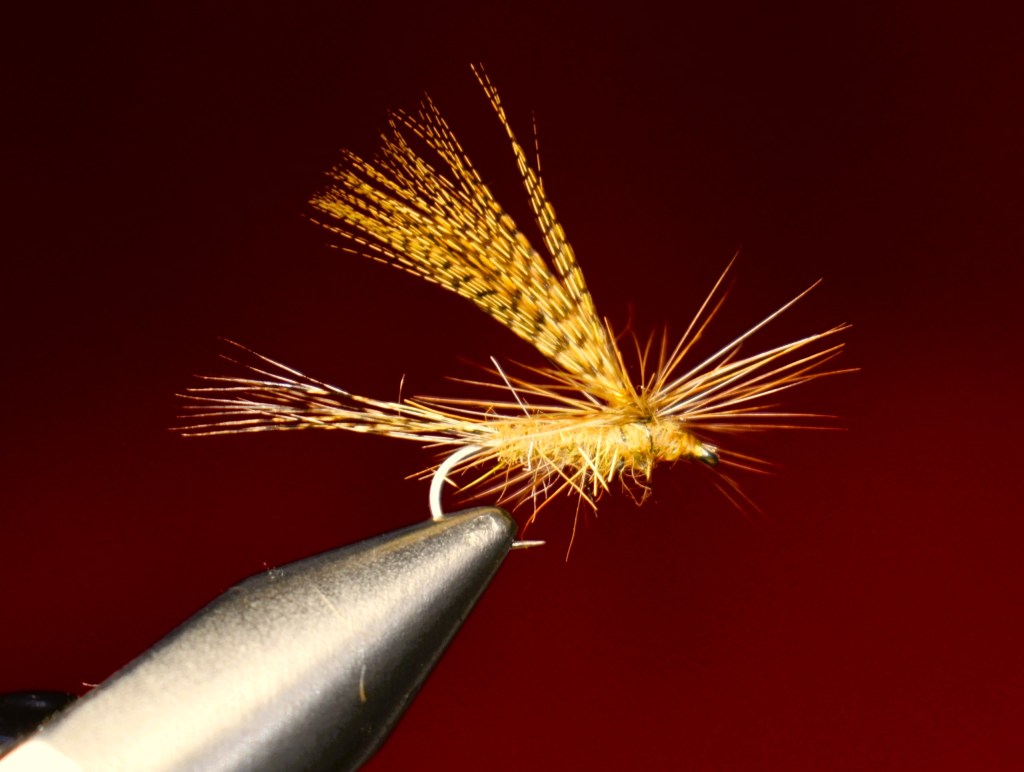
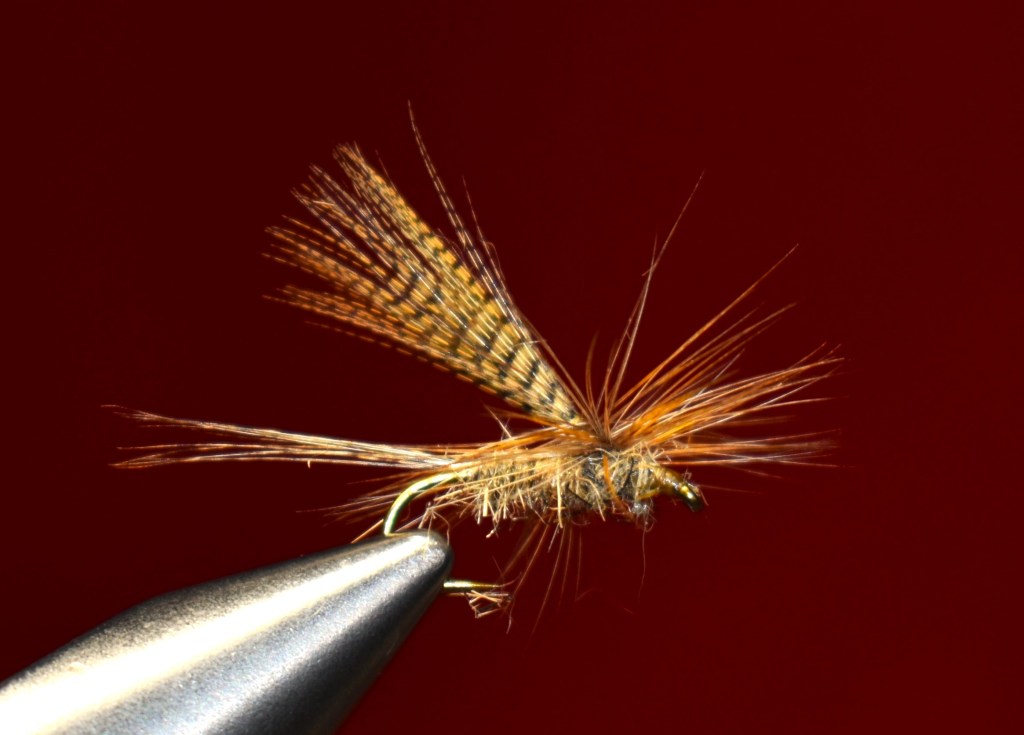
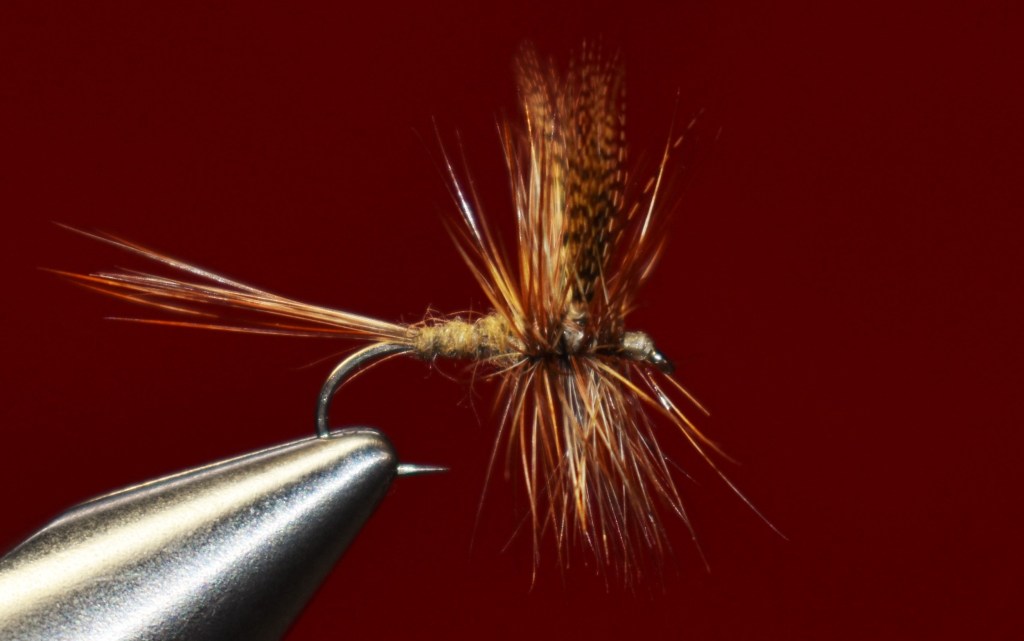
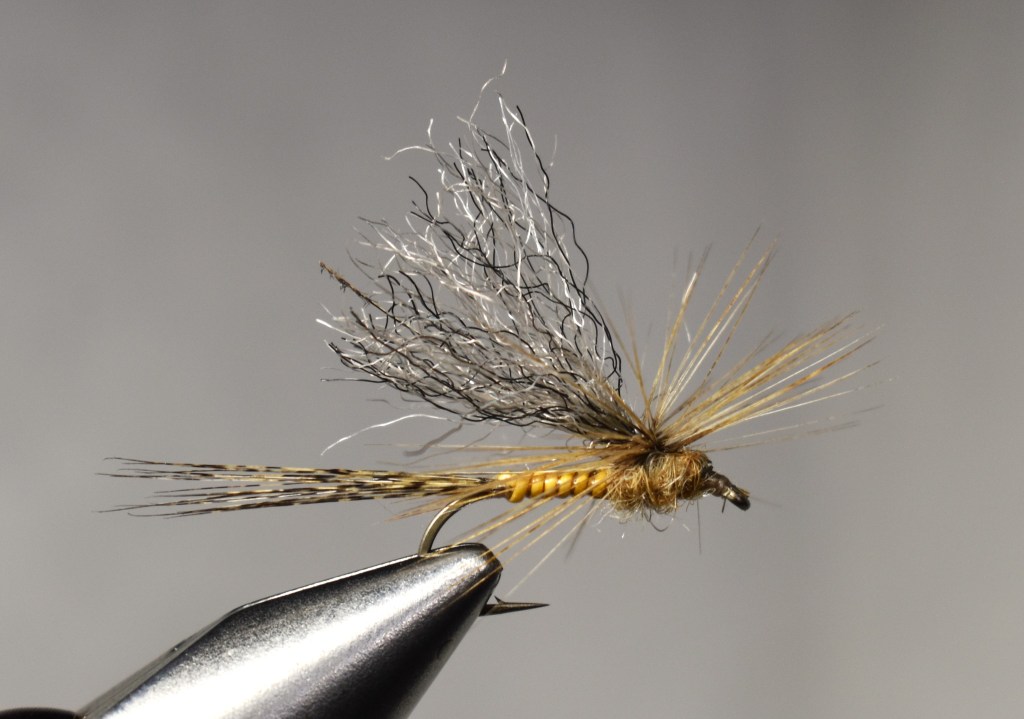
The original A.I. Hendrickson, designed, testedand proven in 2022. The fly is now one of a series of patterns to match the predominate mayfly hatches throughout the season.
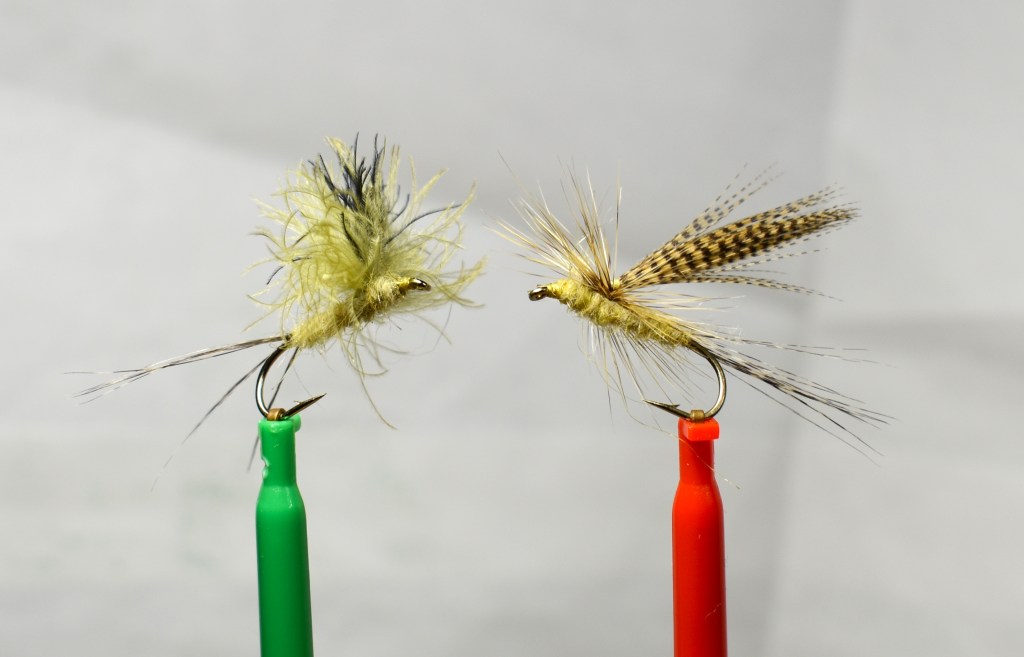
A glimpse of a speckled cream CDL tailing feather in the corner of my tying desk brought to mind the final pattern required for my A.I. (Atherton Inspired) series of hatch matching flies early this morning, and I wasted no time in blending the appropriate dubbing and tying half a dozen A.I. Light Cahills.
The series will now span the season, covering the major mayfly hatches: Quill Gordon, Blue Quill, Hendrickson, March Brown, Light Cahill and Isonychia. But wait, haven’t I left out the ubiquitous sulfurs and the majestic Green Drakes? Actually no, and yes. Drakes and sulfurs were the first two mayflies to be dealt with when my interest in John Atherton’s flies and theories put me on the road to combining his theories with my own.
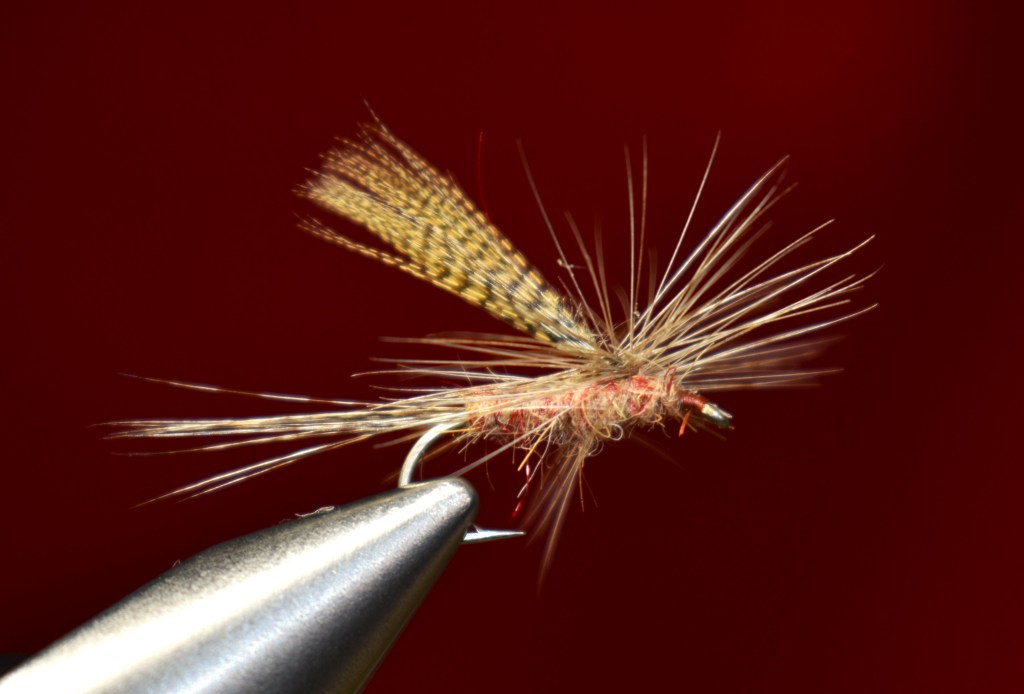
When I acquired a supply of seals fur last winter, I prepared a dubbing blend for Green Drakes and sulfurs, using seal, beaver and fox furs of varied colors in accordance with Mr. Atherton’s theories. Later I also blended a similarly concocted Heritage Red dubbing that was applicable to the flies I call the Beaver Kill Hendrickson, as well as Red Quills and even Isonychia mayflies. When added to the selection of A. I. blends, these allow a very complete coverage of mayfly hatches.
A variety of buggy flies for both hatch matching and general appeal
My biggest challenge is thoroughly testing all of the experimental patterns I tie each season. Some hatches appear only sparingly and, even though I fish one hundred or more days per year, I don’t always get a chance to fish them. My tactics for proving new designs complicate things further, as I only go to an experimental pattern when a proven, commonly used fly fails to take a good trout. The purpose of my experimentation is to develop flies that take the most difficult trout, thus they should be reserved for instances where my usual patterns fail. I hope I will be granted the grace to live long enough to prove or disprove all of my fly tying designs.
Another season has come to a close and my mind recalls the memories made upon bright water. A look through the logbook I keep details the fishing, the flies tied and those new patterns and variations designed throughout the season. Moments shine as I read through those entries.
Each season has two beginnings, for I do wander the rivers on a handful of days each winter, with the beginning of dry fly season being the day most celebrated. Thus, this season began on the seventh of February, swinging a new winter pattern – the Dazed Dace, on the West Branch Delaware. The winter release had been lowered rather drastically, and I had to maintain concentration as the fly bounced off the rocks that stirred the skinny water of the run.
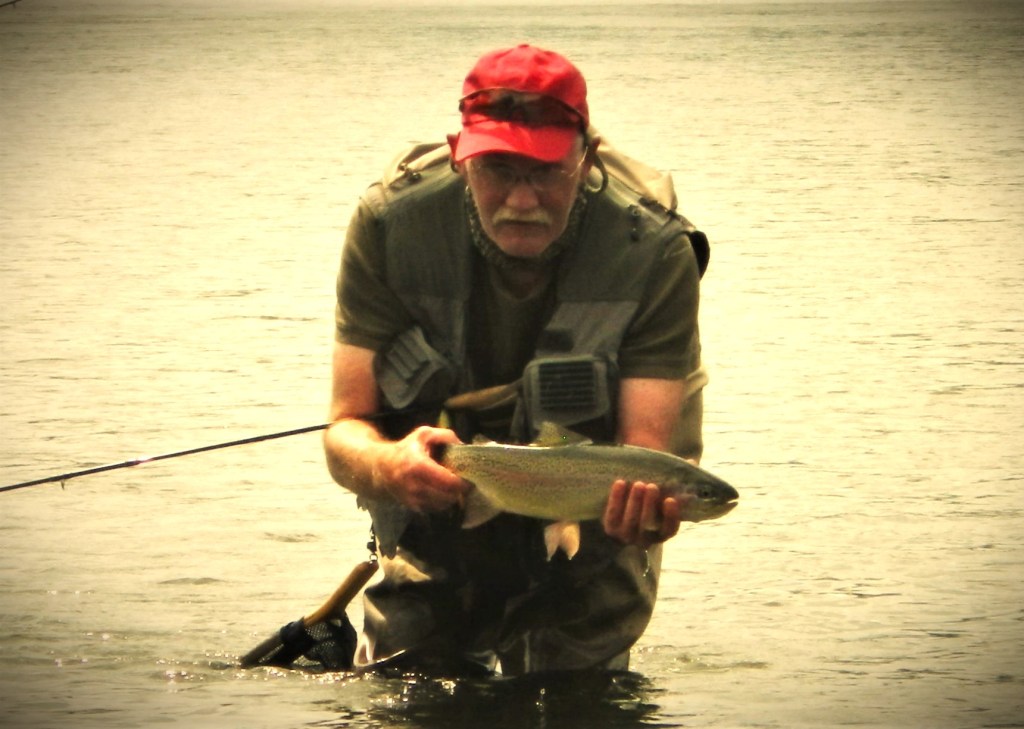
Cold water takes on a slowly swung fly are generally just another of those little bumps. Bouncing over a submerged limb, I felt that wonderful rubbery feeling as the loop of slack line between stripping guide and reel slipped from my fingers and raised the cane rod smoothly, pulling tight into a substantial fish. The old warrior fought well, heavy and darkly bronzed in winter’s cold, gray light, he measured twenty inches even in the net, inaugurating my season perfectly!
I began my riverbank vigil for that second season opener in the 62-degree sunshine of late March, finally finding it precisely at the end of my annual 100-day countdown on the tenth of April. The Beaver Kill surrendered a nineteen-inch brown and a pair just a bit smaller to my Leonard and Quill Gordon fly for a classic opening day of Catskill dry fly fishing.
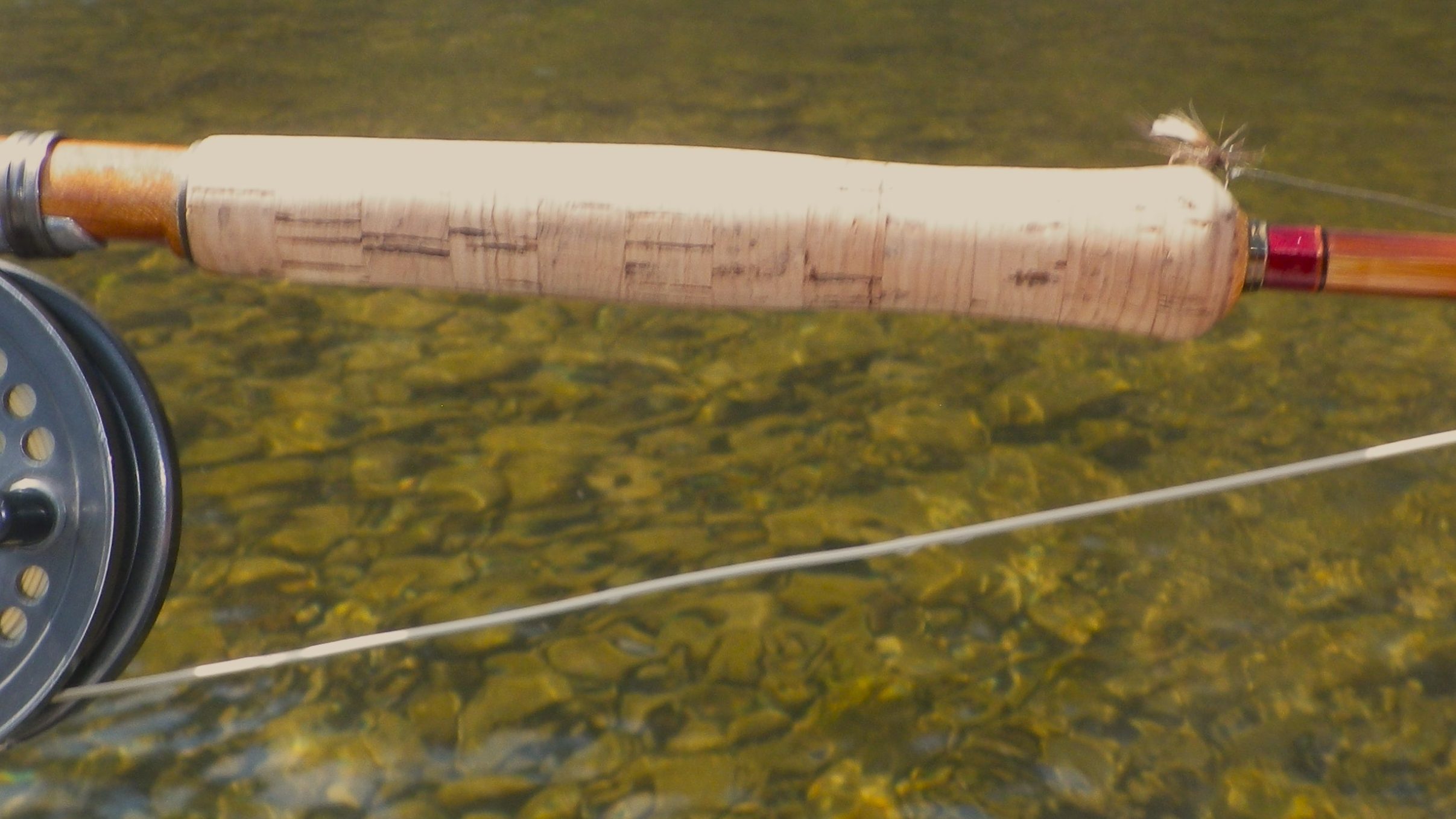
A classic red wrap 1950’s Leonard wears the original classic American dry fly – the Quill Gordon!
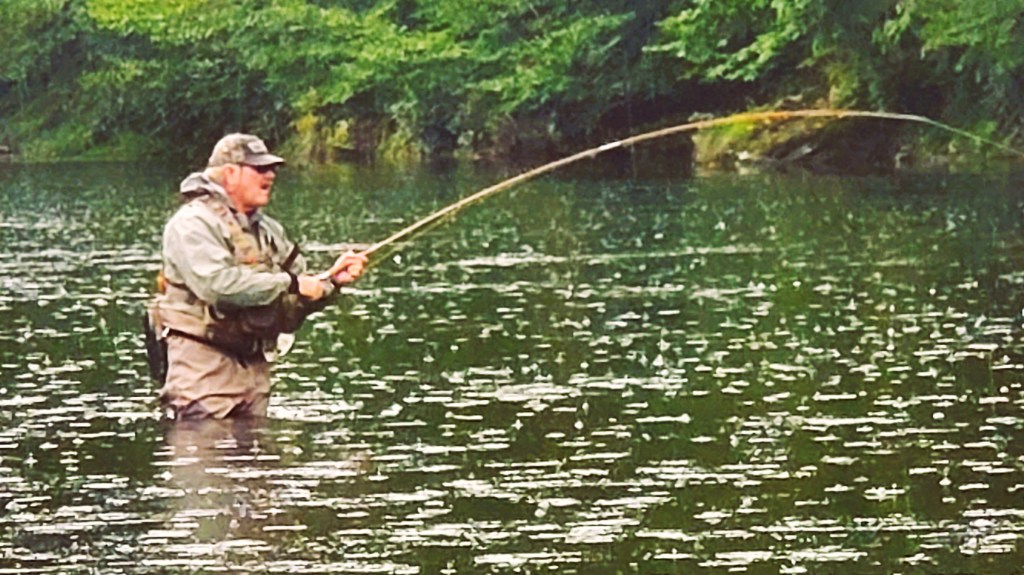
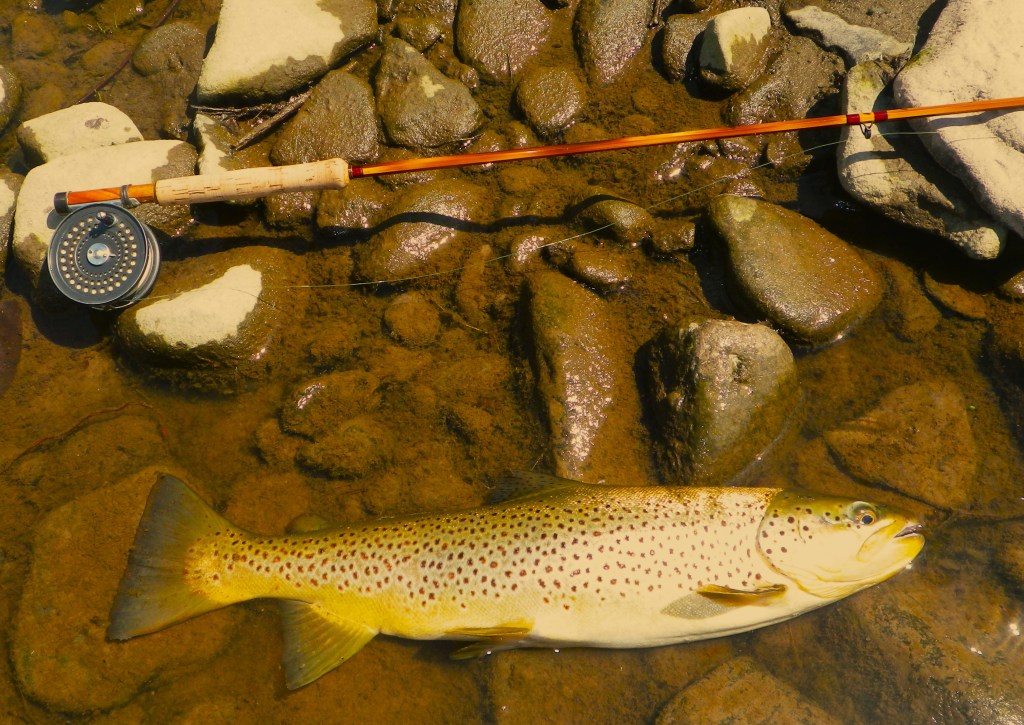
In terms of the final tally of trophy sized trout taken, the 2023 season was very close to my average success over five full-time Catskill seasons, though it proved to be above average in one sense. Five remarkable trout were landed on the dry fly that measured a minimum of twenty-four inches long, the best a twenty-six inch brute that stands as my largest Catskill trout to be taken on a surface fly. Wild brown trout of such proportions are truly magnificent creatures, and I am blessed to have enjoyed their strength and spirit through the arch of my rod! Most of these fish were taken on classic tackle, and that makes their memories even more priceless to me.
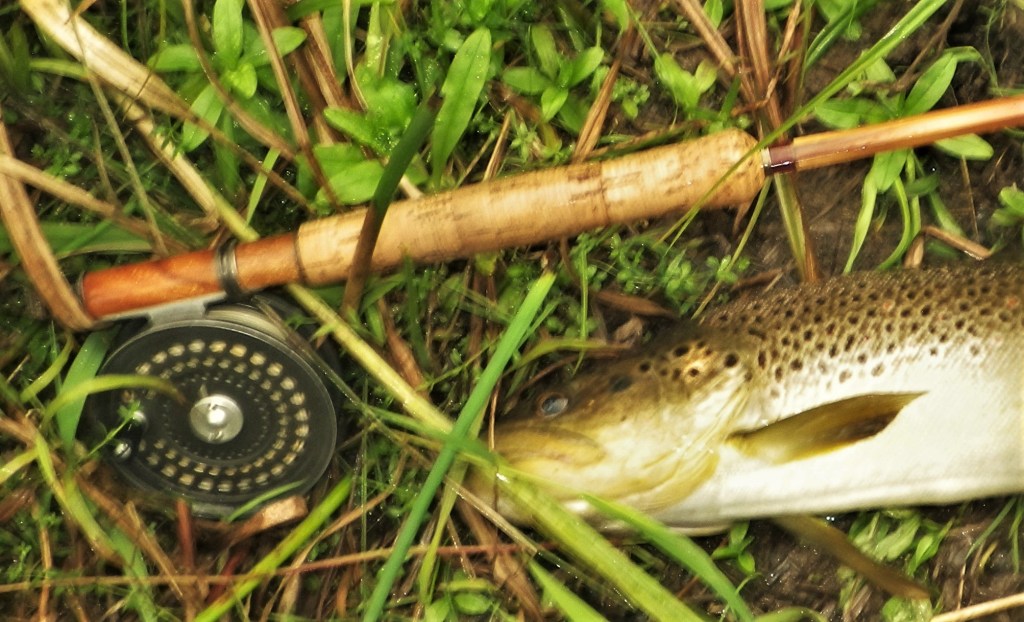
There is truly no music so sweet as the wailing solo of a vintage Hardy reel when a wild, trophy trout dashes away from the arc of split bamboo!
Now my attention turns to late autumn in the mountains: a search for Ruffed Grouse and some precious hours chasing whitetails with a great friend. My winter pattern of fly design and tying has already begun, working to incorporate the impressionistic concepts of the late John Atherton into my own dry fly designs.
There are long months between seasons, days upon days I will while away at the vise or spend polishing flamed bamboo with loving hands. Throughout this time, memories will flood my consciousness and bring a smile to my winter-worn face, for such is part of the celebration of a life outdoors.
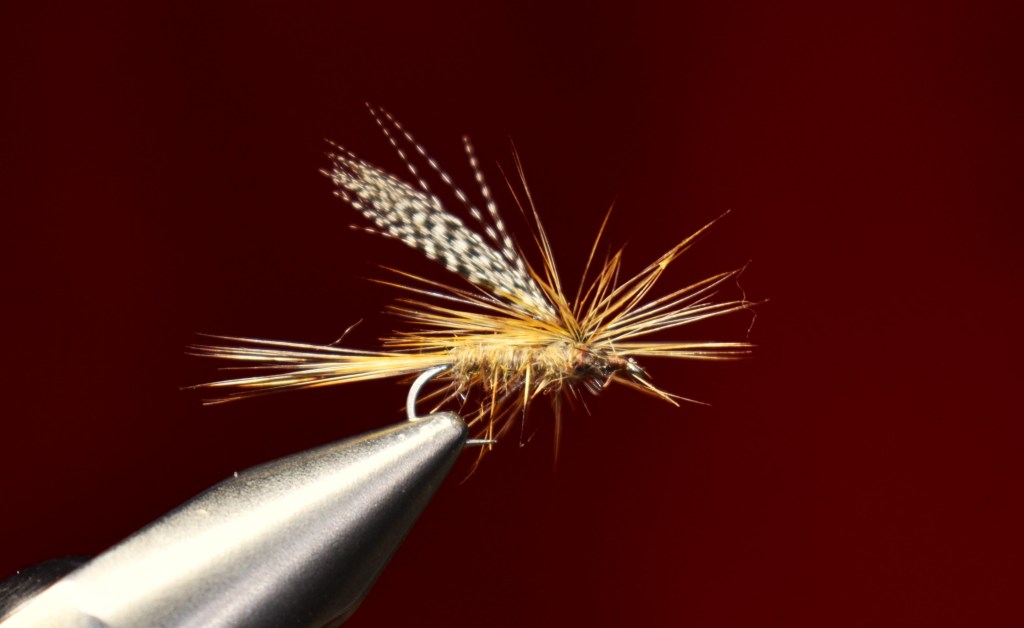
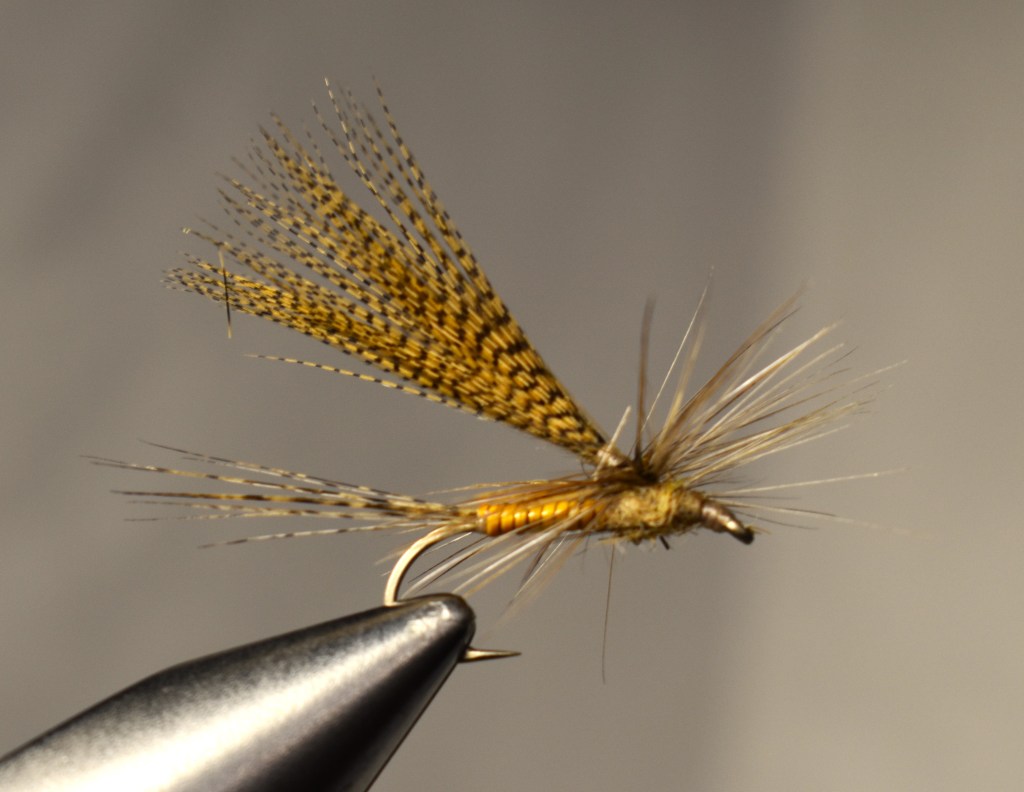
My Fox Squirrel pattern is a fly that gets the call when there may be a variety of early season mayflies about, but none hatching at the time. Tans, grays and a snippet of blackin the fur suggest all of these species, and the cree hackle suggests movement.
I have been moving on with my thoughts of expanding my “A.I.” or Atherton Inspired dubbing blends and flies, looking to take advantage of the multi-toned, sparkling and buggy combinations created to represent individual species of mayflies. Yesterday, I mixed a dubbing blend for an A.I. March Brown, and today another for the Blue Quills or Paraleptophlebia adoptiva.
I have recounted the success this past spring fishing the first such pattern, the one dubbed the A.I. Hendrickson. There are simply times when a buggy, more impressionistic fly gets better responses from the trout. Whether it is something to do with light intensity or penetration, or insect behavior on a given day, I will never know. The results were impressive enough that I will give the recently created Isonychia, March Brown and Blue Quill versions significant time on the water come spring 2024.
My best guess is that a buggy, bubble encrusted fly body may visually suggest a struggling, emerging mayfly, an easy target for a trout feeding efficiently on a hatch. Going back to English writings from a century ago, I have seen that theory applied to the classic Hare’s ear flies, both dries and wets. I think those gents were onto something!
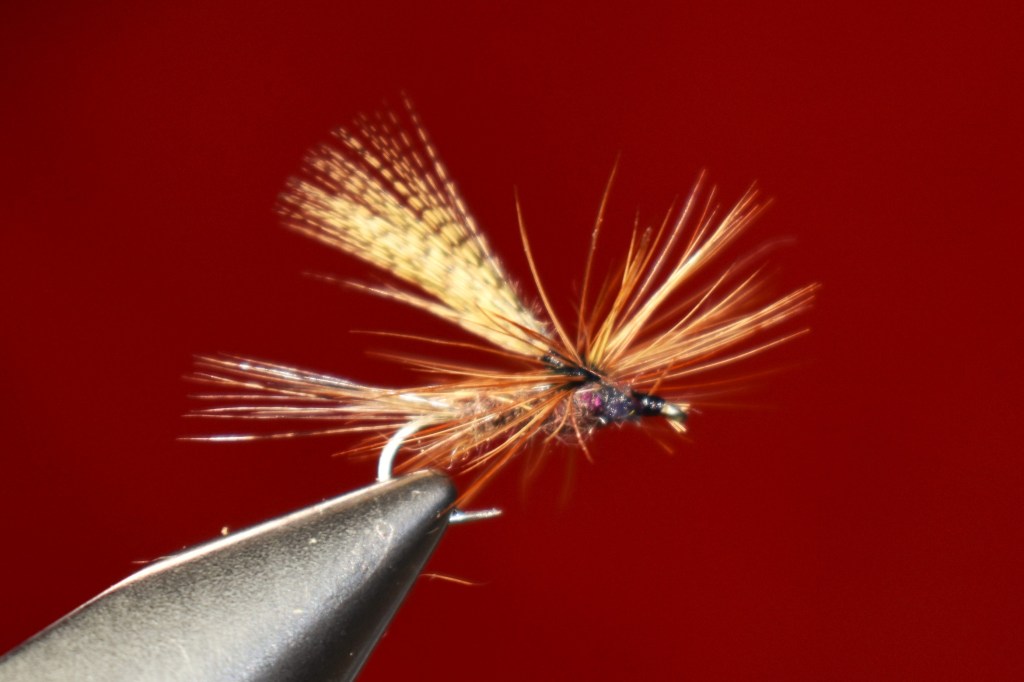
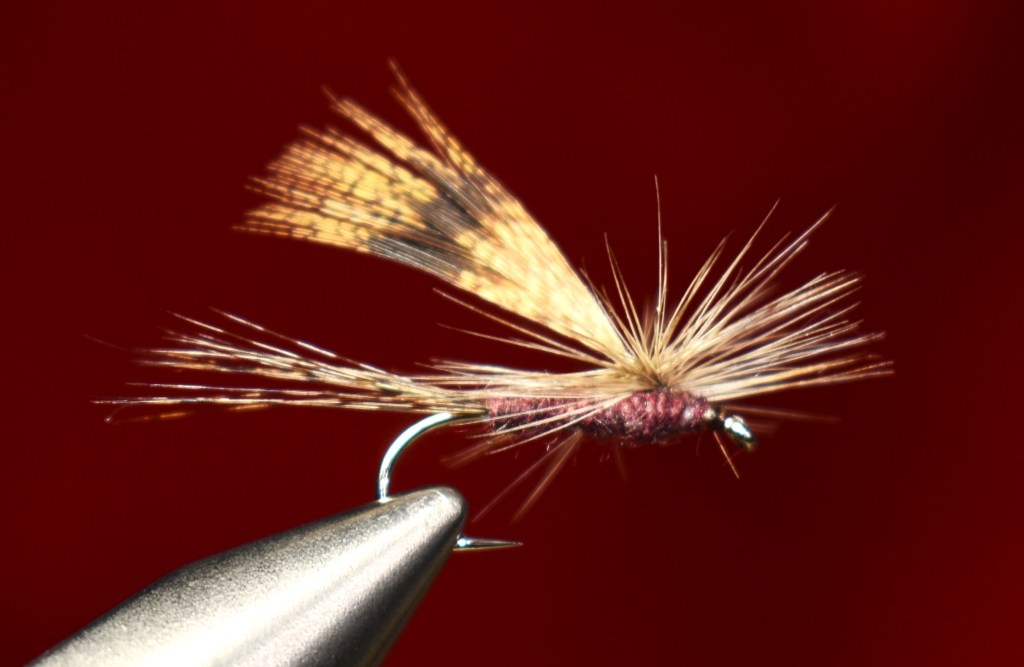
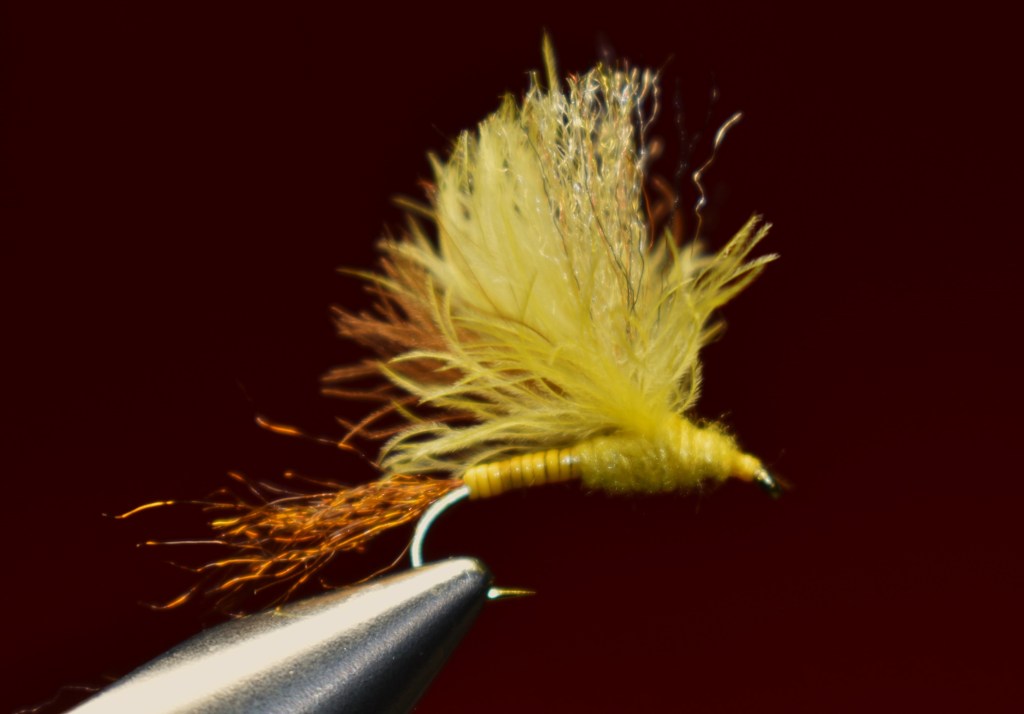
One of my old reliables, a Hendrickson CDC Sparkle Dun. I have used the same dubbing blend for more than two decades, matching the color to Catskill Hendrickson dry flies tied by Mary Dette Clark. I use various shades from a Red Fox pelt, some tan beaver, and tan Antron dubbing to get there with a little extra sparkle and translucency.
To date, I have used the A.I. blends to tie some of my 100-Year Duns. Trout have taken them hard on many occasions, furthering my belief in the struggling mayfly idea. The next step in the process will be to tie a few CDC duns in A.I. garb to see what our Catskill browns will think of them. If they take the buggy, muti-toned blends as struggling emergers, the addition of a CDC wing’s movement ought to excite them even further.
I am working my way through the withdrawal that challenges each autumn, taking small steps toward some kind of normalcy. I began the long overdue process of reorganizing my tying room for winter yesterday, by getting rid of some of the accumulated non-fishing materials. There is a lot more work to do.
I sorted through some of my hooks, hoping to order a substantial re-stock of the Sprite dry fly hooks I have used over the past few years. It seems my only choice is to place an international order and the shipping aspect makes it less than feasible.
I have been thinking ahead, intrigued by the success of the A.I. flies I tied and fished this season, I am planning to expand the idea into a series of patterns for several hatches. My Translucence Series will get some adjustments as well, including some refinements to a few of the silk dubbing blends. Experimenting with trout flies is always a big part of my winter sustenance for the soul.
Some of last winter’s creations, that brought smiles in 2023: A.I. Isonychia, Translucence Isonychia, A.I. Hendrickson, Jave Quill Woodstock Emerger, Jave Quill Century Dun Hendricksonand Jave Quill Hendrickson.
This was my second season tying and fishing the smallest 100-Year Duns, sizes 16, 18 and 20. The design has proven itself to be highly effective in taking selective trout, in fact one of the most impressive tests came during the peak of the Hendrickson hatch. There was one fish sipping in a nearly impossible lie that wouldn’t look at a Hendrickson. I calmed my enthusiasm enough to take note of the fact that I had not seen that trout take a live Hendrickson, despite their predominating numbers. There had been a couple of brief appearances of blue winged olives during the day, so I offered that trout a size 18 100-Year Dun and landed the best brown of the spring!
Ah experiments! What to do this winter: a size 22 100-Year Dun? No, I think 20 is the practical limit for a wood duck feather wing. Perhaps a minuscule Century Dun? There is no telling what the Winter madness might spawn!
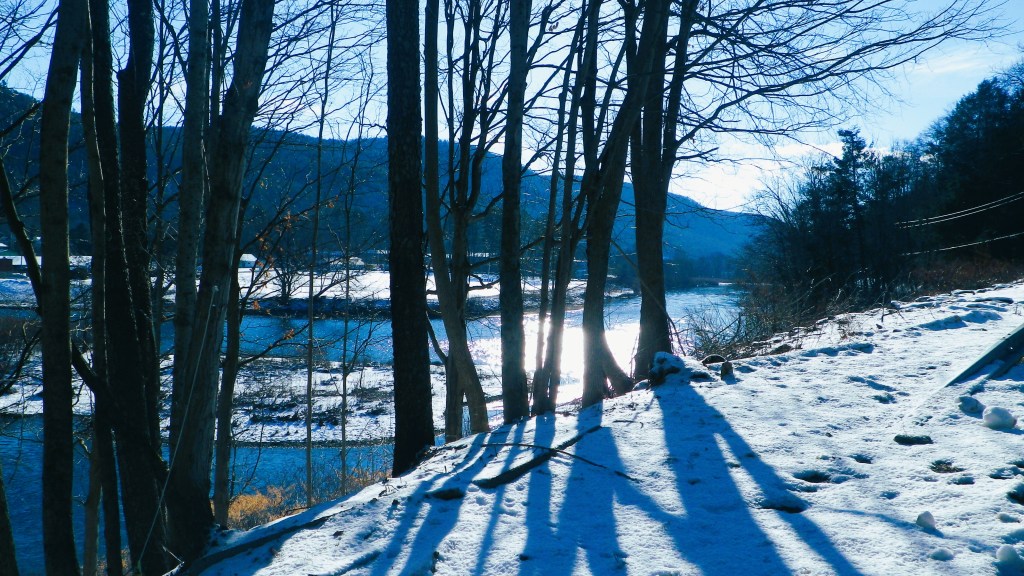
I took my first riverwalk of the season just now, the same path I tread throughout the winter. It is a bright afternoon, clear blue skies above and a chill to the air. I had toyed with the idea of driving out to the river to swing a few flies for an hour or two, to make the most of the 55-degree sunshine, but the passion simply isn’t there. The end of the dry fly season feels hopeless and uninspired when I finally must accept that the end has truly come.
Transitions can be difficult for those impassioned by bright water. Life has been bright and vivid for seven months, always with a new challenge, some new source of excitement, and then, suddenly, the light of bright water goes out for a time. I know it will not last, that acceptance of the change will come after some time upon the mountainsides, but now the loss burns deeply.
I walked slowly through the high forest yesterday morning, as the first snowflakes of the year wafted between the trees. I found no birds, though I worked all the best covers.
Come early afternoon I took a drive along the river, from Roscoe down to East Branch. The miles of the Beaver Kill were empty, flowing strong as more of those little snow squalls punctuated the cold. November first, and the Catskills have become a different world than a short week ago.
Last Thursday I searched those river miles for rising trout on a seventy-five-degree afternoon, and now snow squalls. It is twenty-eight degrees this morning, here in Crooked Eddy.
There is truth in the statement that there are but two seasons in these mountains: dry fly season, and winter. Deep in my heart I know that dry fly season is always summer. Though I may find myself buried in layers of fleece and down on a windy April afternoon, the cane flyrod in my hand and the Quill Gordon it casts fly on a breath of summer breeze!
Talking in the rod shop with friend Dennis Menscer last weekend, he told me we are in for a long, very cold Catskill winter. He sees it in the sky, the birds and trees. I am not one to doubt his senses as a veteran of more than two decades residing there along the banks of the West Branch, though I secretly hope that Old Man Winter grants us respite. Sadly, I do recall the Weather Channel talking of El Nino and artic blasts for the entire Northeast.
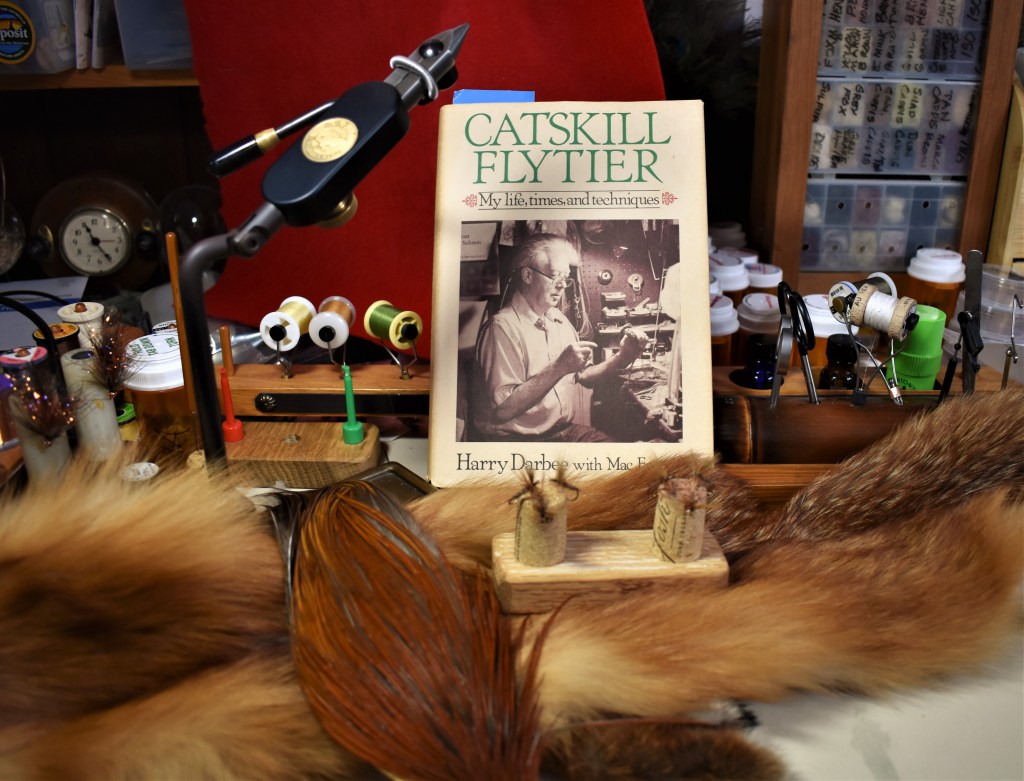
Fox fur, Rusty Dun and inspiration for the long months of winter.
I am looking forward to Saturday’s Catskill Roundtable. Today I will gather materials for my travel bag once deciding which flies I wish to tie. It will be good to join my friends in the Guild once more before the long months of solitude. We will not meet again until February’s end and Fly Fest ’24.
Ah, yes, Fly Fest seems so very far away right now. I will be well into my 100 day countdown until the dawning of a new dry fly season! All of the tyers gathered will be flush with the excitement of a new season on the doorstep. Last year we tied blissfully as the snow fell outside the Rockland House. That storm didn’t quell our enthusiasm for spring!
I learned a short time ago of the passing of Joe McLaughlin, fly fisher, of Balls Eddy, Pennsylvania.
I met Joe by chance one evening at the Troutskellar bar at West Branch Angler when he was talking bird hunting with Ben Sheard, the fly shop manager. Joe’s voice had a habit of carrying even in a crowded bar, and I took notice when he mentioned the name Dennis Labare. We talked once his conversation with Ben concluded, sharing our connection with a common friend. Joe knew Dennis from fishing the Catskills in the seventies, and I from working for the conservation of Chambersburg Pennsylvania’s Falling Spring Branch in the nineties.
We became fast friends moving on from that evening, and shared many a fine hour along these rivers that had such a strong hold on both of us. Joe was a fine dry fly angler and tyer.
Perhaps one thing common as we age is the fact that we become more convinced of our beliefs and opinions, and Joe and I both held strong to our own. Strong feelings led to an end to our close friendship and our times along the Catskill rivers. Our contacts during the past few years were few and brief, though personable. I saw him last during the summer, fishing the somewhat lackluster sulfur hatch on the upper West Branch. We exchanged a few words across the water as we passed, idle talk of the ins and outs of the season, and parted wishing each other good luck as I waded on downstream.
I learned just a few days ago that he was ill.
Like all men of common bond, we had our agreements and our differences. I chose to remember Joe for the good days, when friendship and the appreciation for wild trout and bright water created good memories. I wish him well as his spirit fishes on, around the bend.
Joe McLaughlin – a dry fly season’s end October 30, 2023
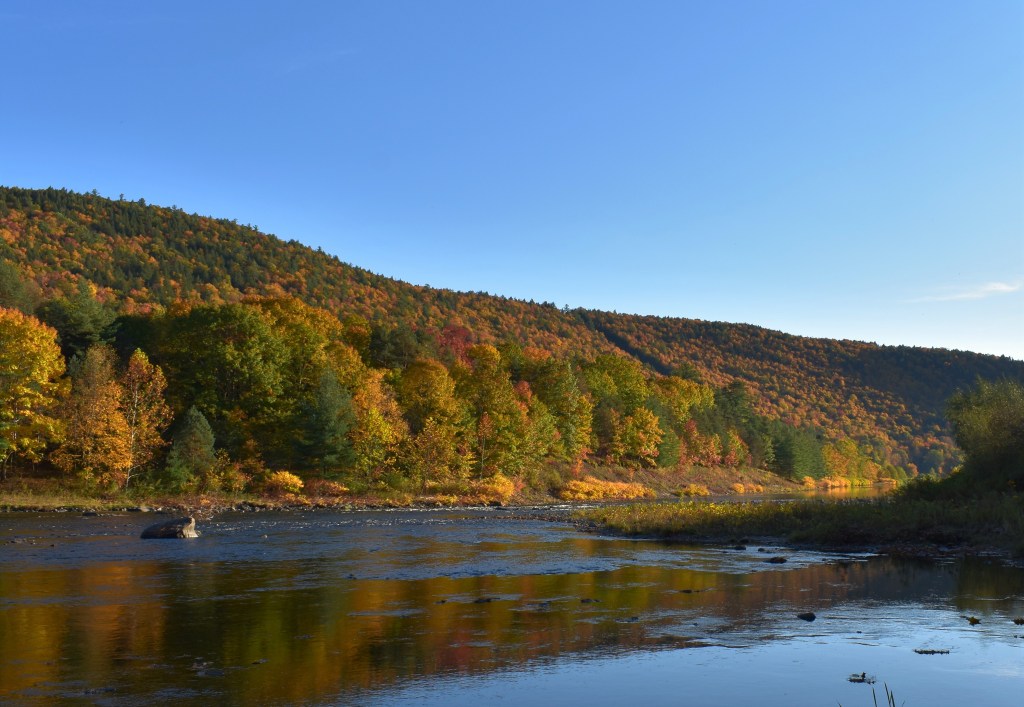
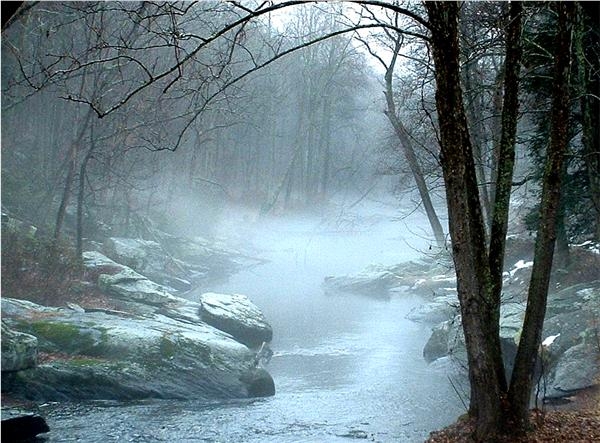
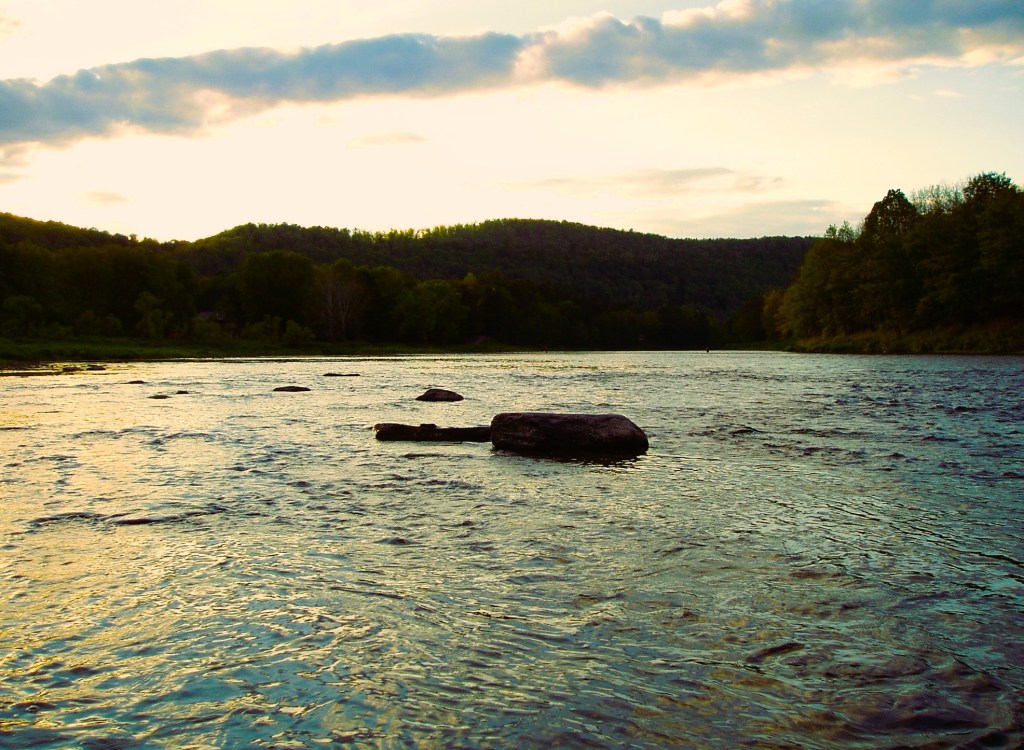
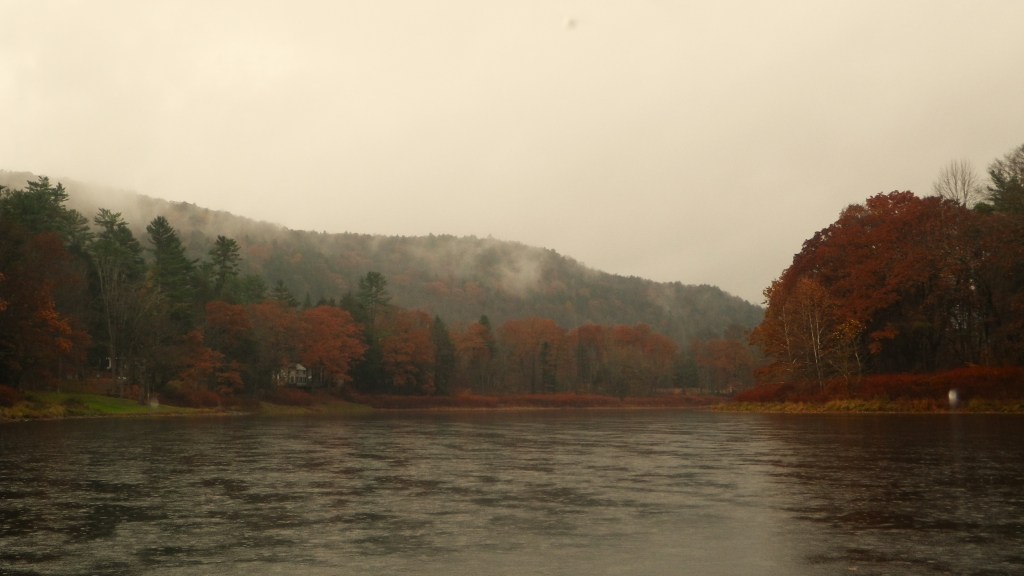
Cold rain is falling here at Crooked Eddy, and another season has come to a close. These last days of October are already hitting November’s stride. The gray side of autumn envelopes us bit by bit. Sitting on my porch just three days ago, warmed by the bright sunshine, I gazed upon the colors of Point Mountain to the east. Sitting there yesterday, I noted with sadness that those colors were gone.
I began my winter season yesterday morning, keeping a promise to myself to blend some dubbing for a buggy, impressionistic dun pattern for the Quill Gordon, the latest of my Atherton Inspired concepts. I found a small piece of gray squirrel dyed with bright yellow, a decades old gift from my friend JA, and blended it with beaver’s mask, yellow Antron and angora goat. It looks interesting, though it will be many months before I will cast that first 100-Year Dun to a rising trout. Winter revolves around fly tying and reading here, once deer season has come and gone. The accumulations of snow and ice control that, for icy mountains are no place for an older gentleman hunting alone.
Next weekend the Fly Tyers Guild will gather at the Catskill Museum’s Wulff Gallery for our autumn Roundtable. I will be tying there with many gifted artisans of the trout fly. Our tyers and historians will share the history of the Catskill school of fly tying, answer questions and demonstrate techniques and materials for visitors. Stop by if you are in the area, eleven in the morning until four in the afternoon on Saturday, November fourth.
Our Catskill weather has turned markedly this weekend. I sat in Dennis Menscer’s rod shop yesterday morning watching the sun sparkling on the river under a gorgeous blue sky through the open door. By Noon, when I stepped outside to go, we were engulfed in a swarm of storm clouds with the bite of a crisp wind shedding the trees of their leaves. The week ahead features forty-degree days, reinforcing seasons end with falling river temperatures. When the sun returns mid-week, I’ll carry walnut and blued steel as opposed to bamboo and nickel silver.
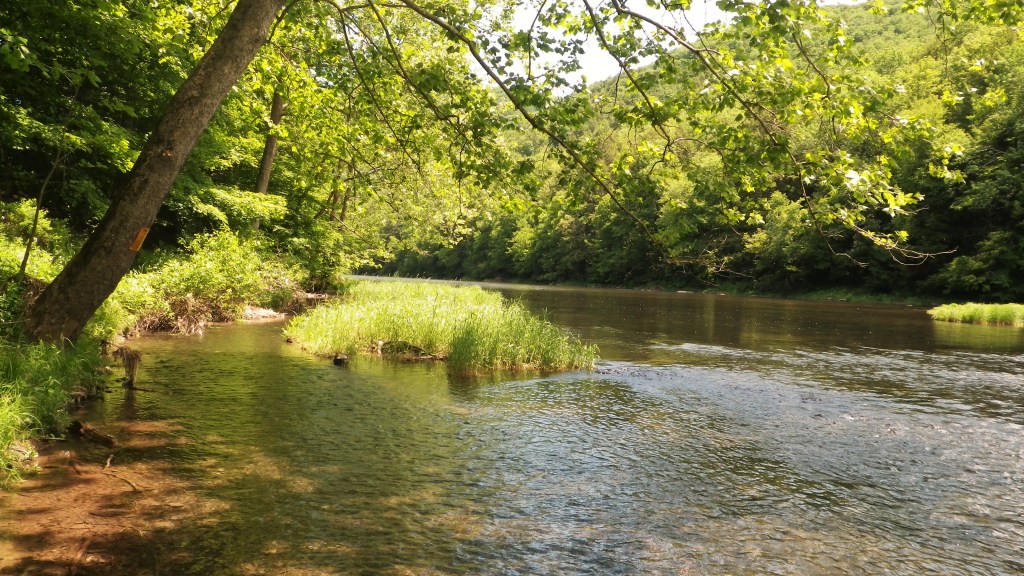
It has been another challenging and interesting season upon the rivers of my heart, and many new memories have been forged. I haunted these bright waters for one hundred and eleven days with the dry fly, loving every moment whether in victory or defeat. Simply beautiful!
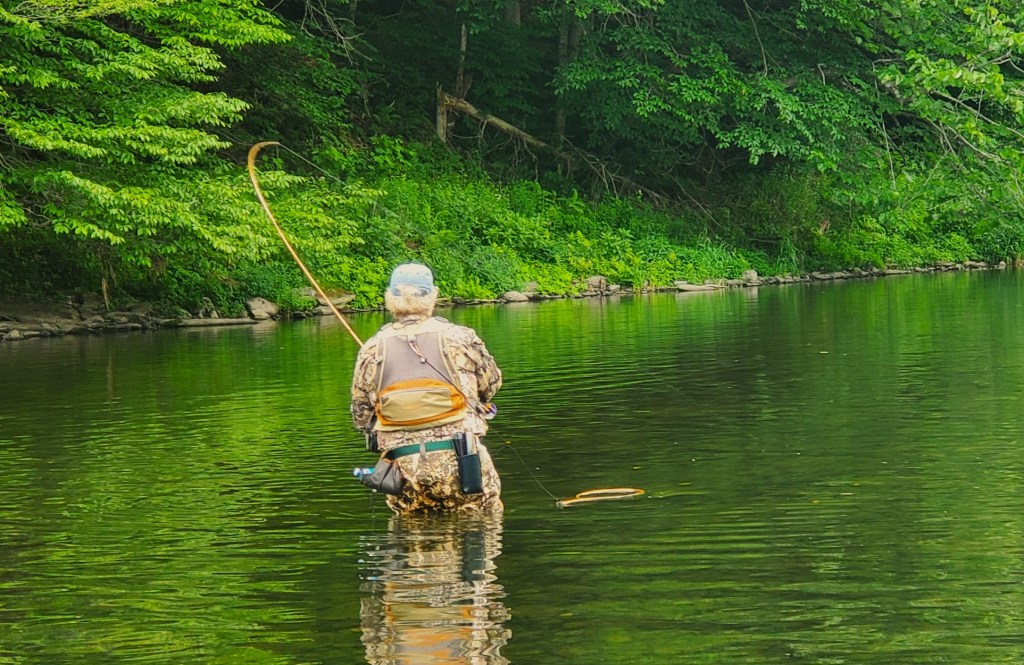
Photo courtesy John ApgarPhoto courtesy of Andrew Boryan













 Bright Waters Catskill