Bless The Rain

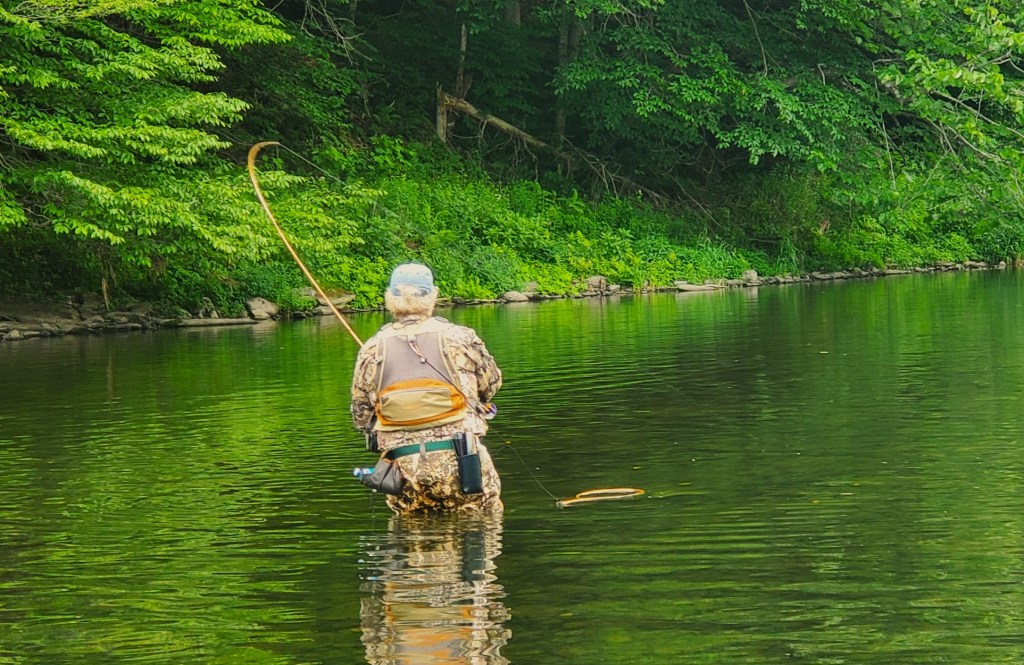
After a genuine stormy day yesterday, our Catskill rivers finally have some relief! I stole a couple of hours on the river until the thunder rolls chased me around Noon. The previous night’s rain had raised the flow only slightly, but the change did awaken a relatively dormant trout or two.

I guess that my actual fishing time clocked in at just about an hour, with the last fifteen minutes heightened by paying close attention to the distant thunder on the back side of the mountains. I quickened my pace when I saw an impromptu explosion downstream, as I was already taking furtive glances at the dark skies and working my way back in the direction of the car.

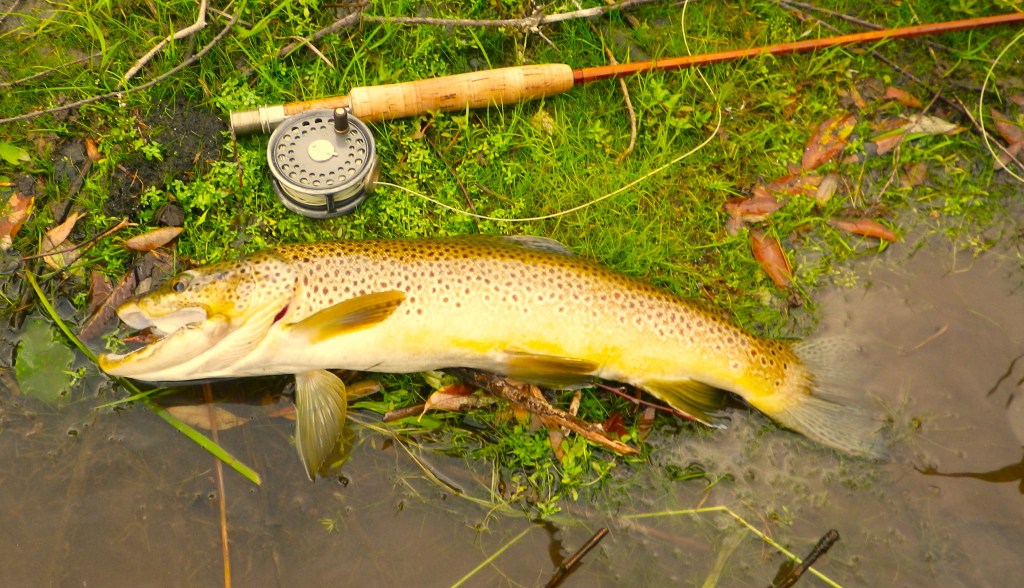
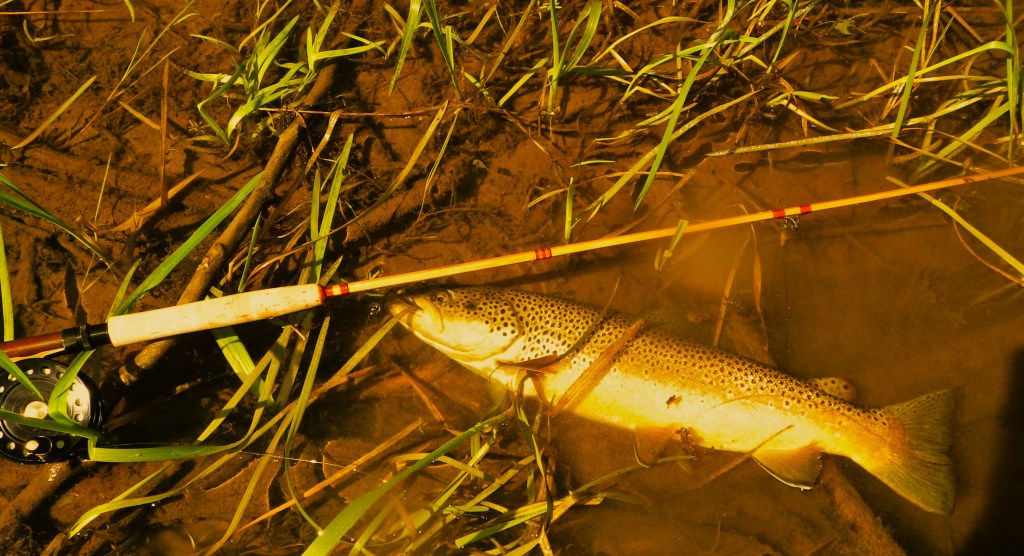
I was armed with one of my rainy-day rods. The vintage five weight Thomas & Thomas Paradigm earned that moniker for it’s impregnated finish, something offered as an option back in ’79 as one of the great rod companies marked their tenth anniversary. The Paradigm was known as the favorite taper of founder Thomas Dorsey. Some think it qualifies as parabolic, though T&T never described it that way. They called it a caster’s taper. I heartily agree!
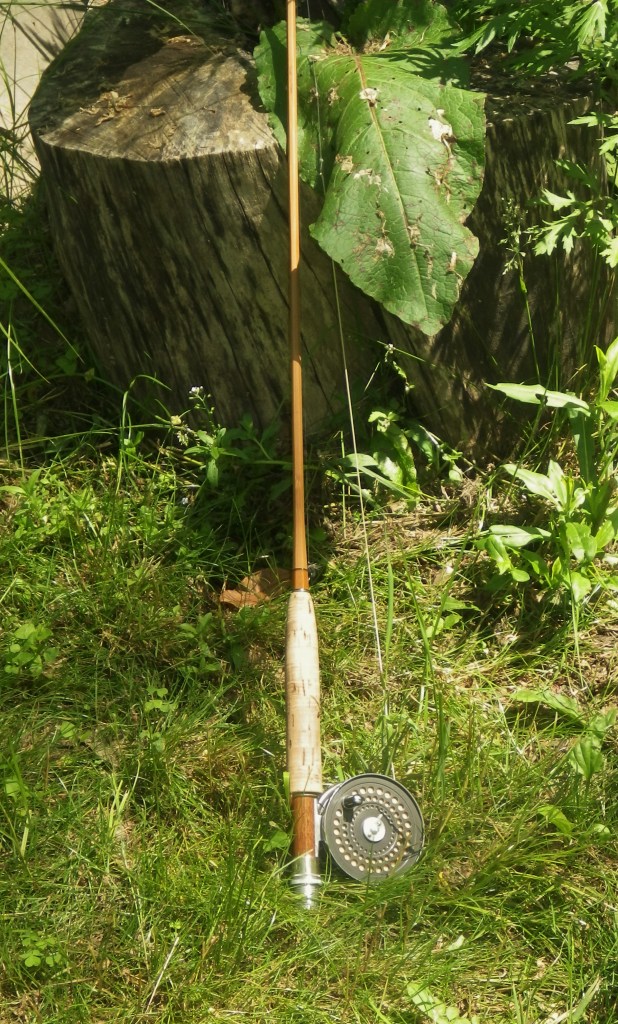
A Caster’s Rod

Chasing that trout, I appreciated the Paradigm’s ability to reach out effortlessly, as I was trying to avoid wading too far out into the river channel. Half of my attention was focused on a quick getaway should those thunderheads make their way over the mountain.

I was fighting for visibility, wearing polarized glasses under those dark skies, and my low floating fly was difficult to track. I was straining hard to see it tight along the bank when my sixth sense told me it was no longer floating. I quickly tightened into a firm pull.

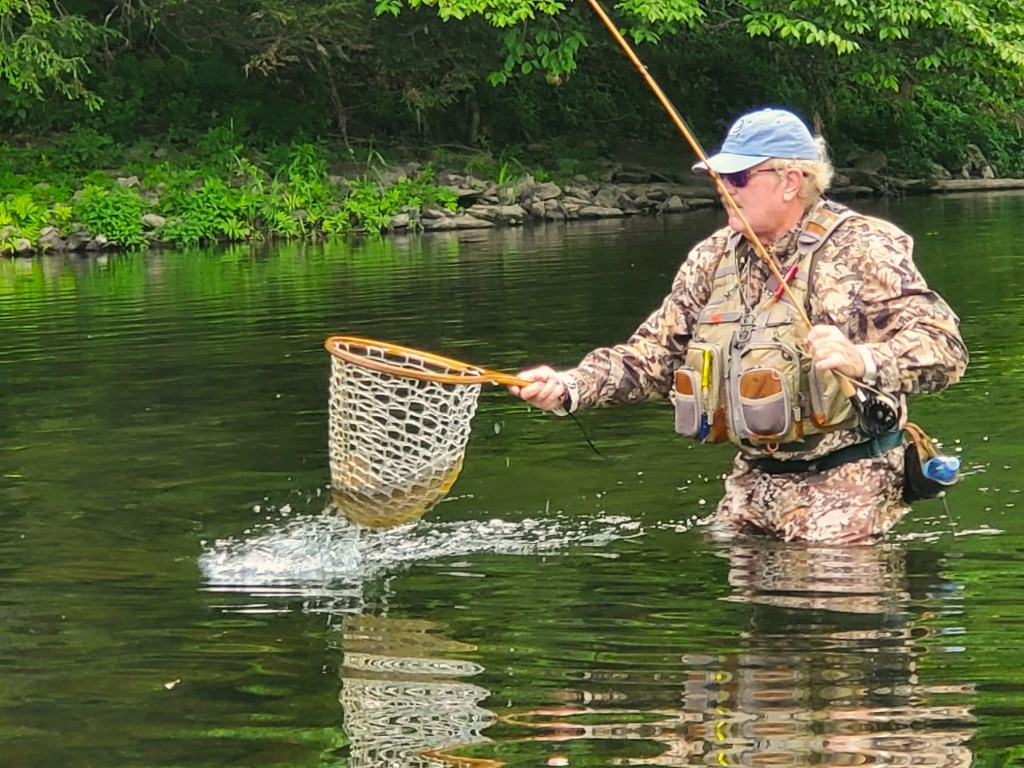
The trout objected immediately to his lunch biting him back, darting to and froe and turning those little underwater somersaults so effective in leveraging a hook out of the mouth. I had no chance to get him on the reel, instead playing him by hand with lots of fast stripping followed by some measured fingertip line control. Of course, that was the time the Red Gods picked to increase the volume of those now less distant thunder rolls. They were obviously getting closer to my mountain.

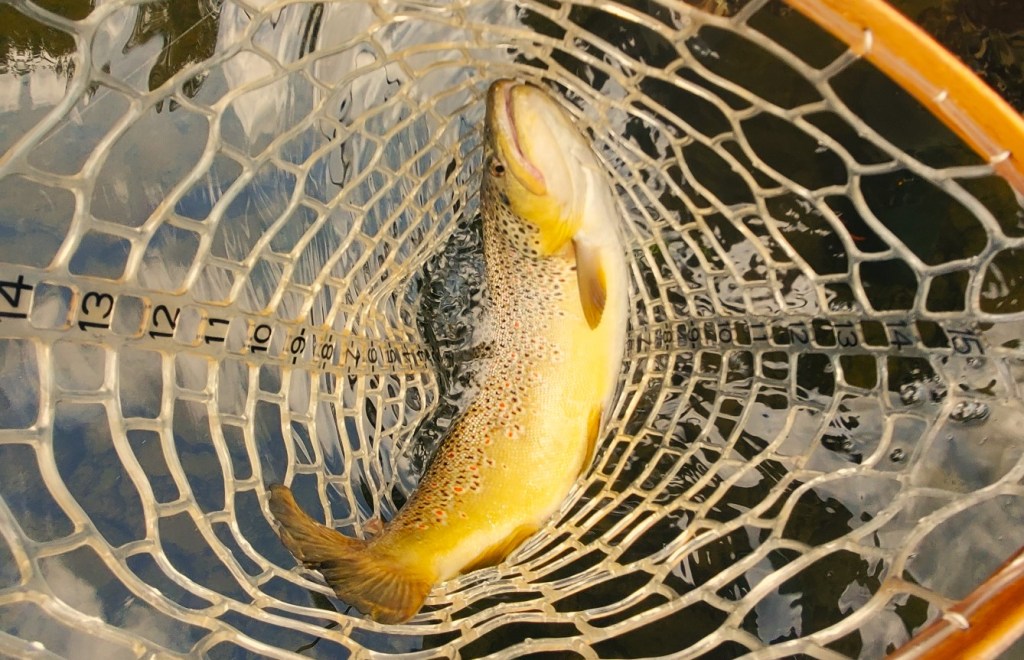
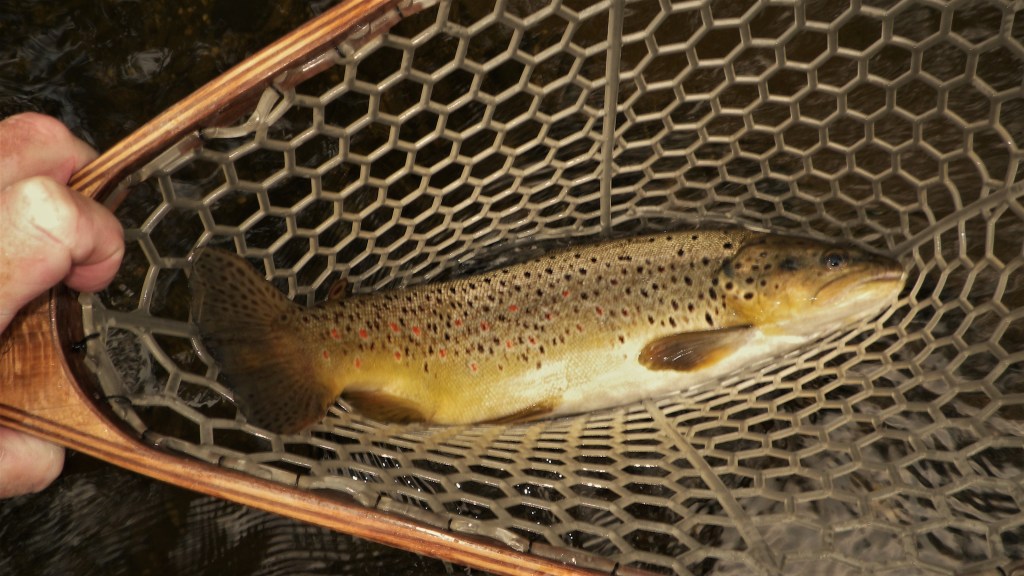
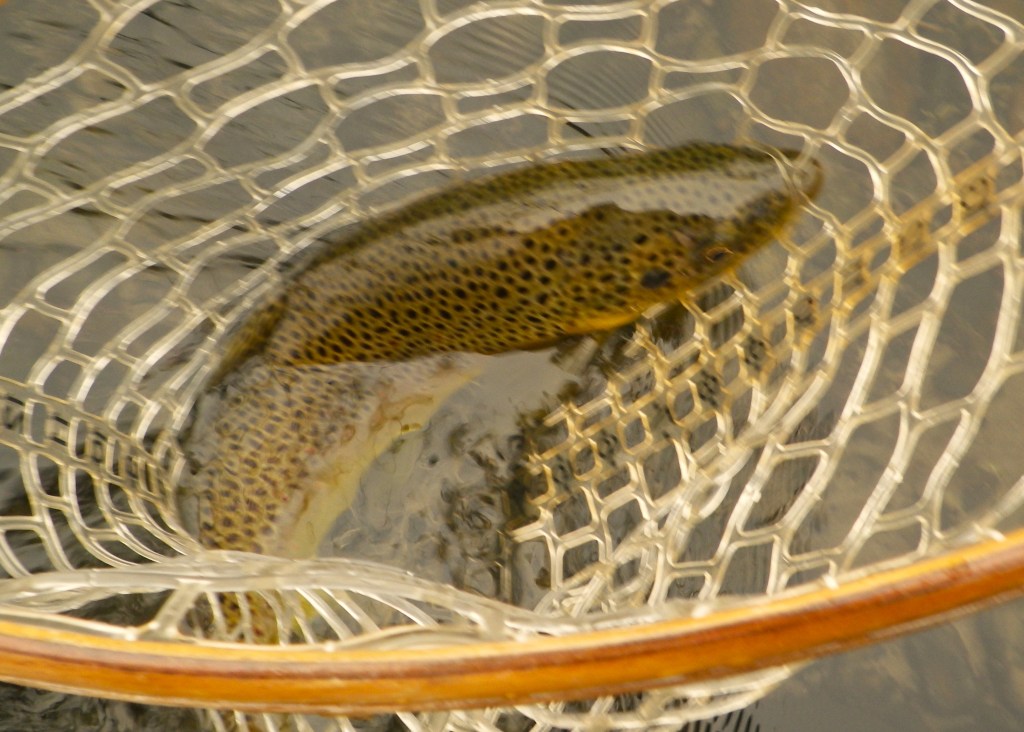
I pressured that brown into the net, wiggled him in line with the measurement scale, then let him return to search for a less belligerent meal. I reeled up my line and made tracks downstream, no longer concerned with stealth. The rain came about halfway back, though there was no lightning along for the ride. By the time I stowed my assembled rod in the back and started down the road, the rain beat down with some real ferocity.

Watching the storms come one after another from my nice, dry angler’s den, I felt satisfied. I had stolen an hour and a fine brown trout, and my rivers were finally getting the rainfall they so desperately needed. Can’t help but call that a good day!
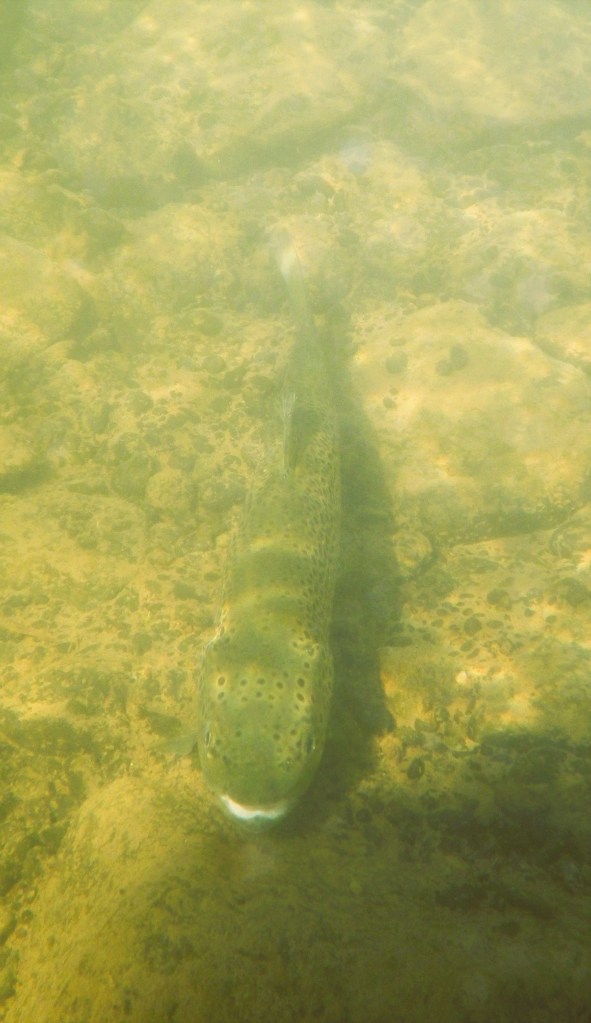
Birth of an Idea

Pondering the mysteries of selective trout, or asleep behind those shades?

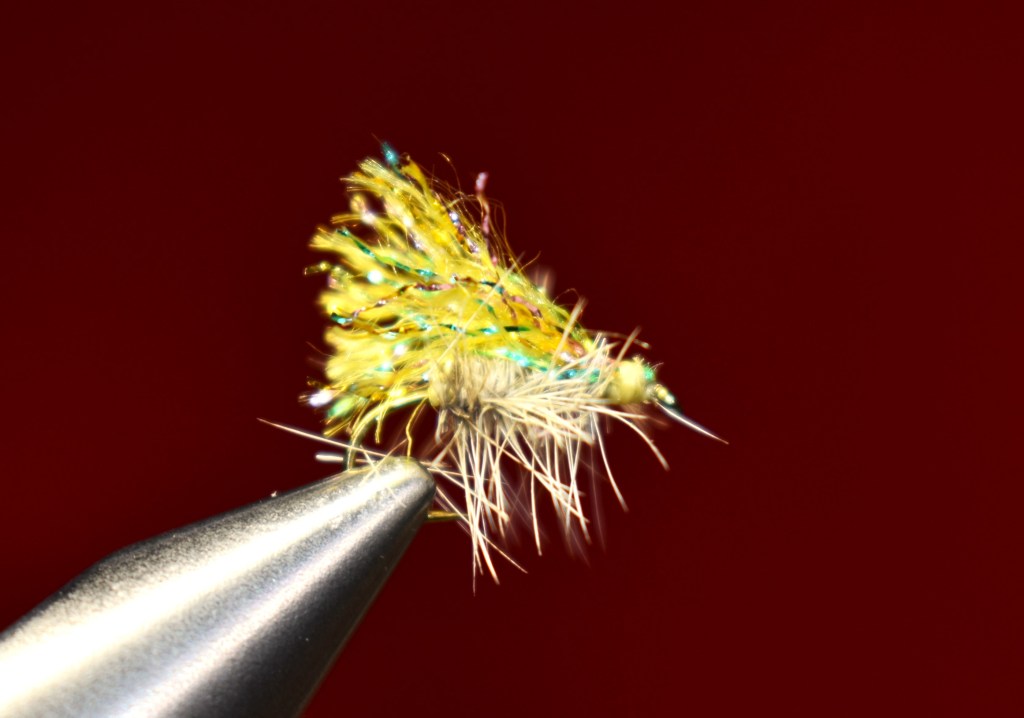
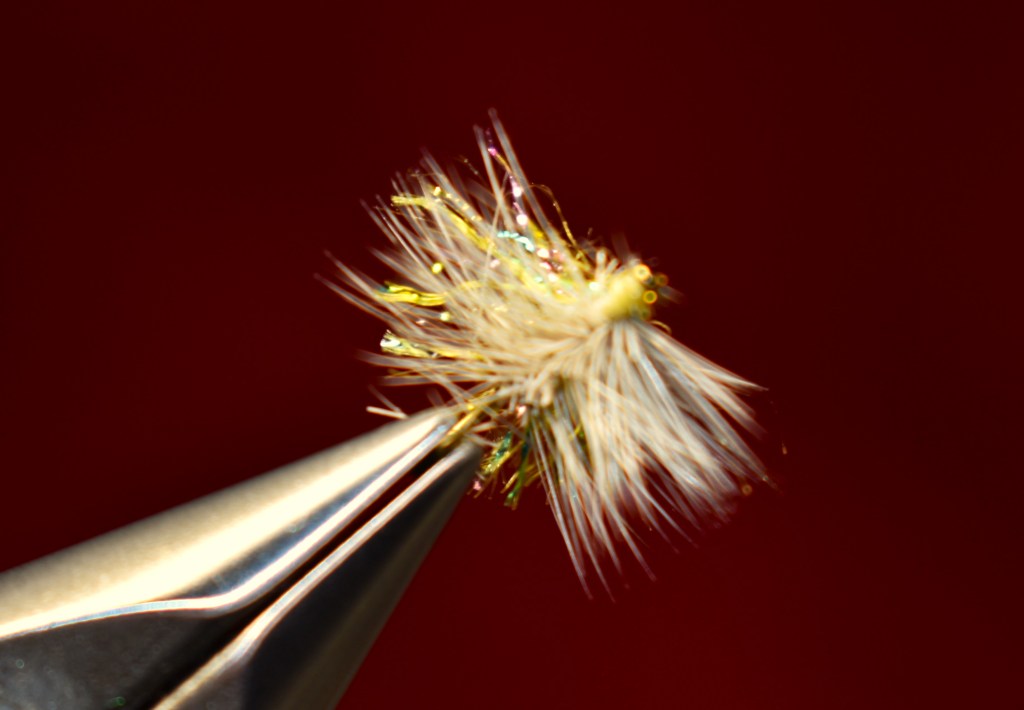
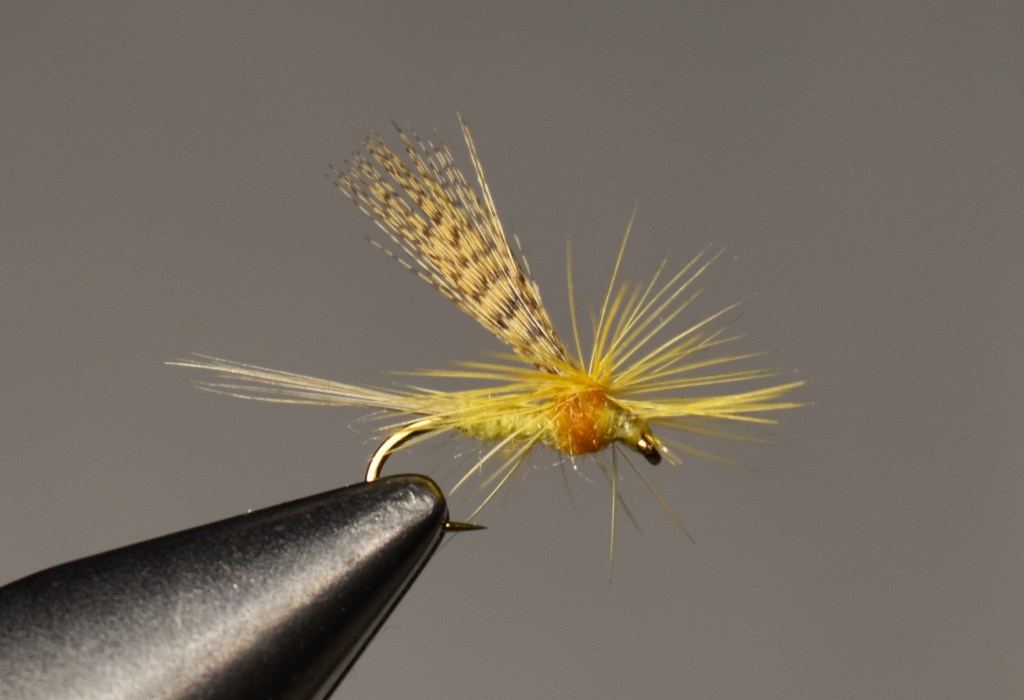
I was sitting at my bench just now, tying a couple of variations on my standard beetles, when I let a thought find it’s way to the vise. At first, I palmered a hackle tightly up the hook shank and tried to put a flat piece of foam over the top. Uninspiring to say the least, and then the right concept crystallized, and a new fly design was born.

Though a little rainfall has given our rivers a breath once again, they dropped quickly, soon to return to the slow flows and low water clarity that has dictated the rules of the game in recent weeks. Our trout have been slow in recovering from the mad onslaught of our peak fishing season, these low, still conditions keeping them moody and loathe to feed in daylight. I wanted a dry fly that might just perk one up now and then, at least when the approach and presentation challenges of these conditions could be surmounted.

A good dry fly needs a strong image of life and, at times I think imitating life can be more crucial than closely imitating any specific species of insect. This morning’s idea may indeed fulfill that promise!

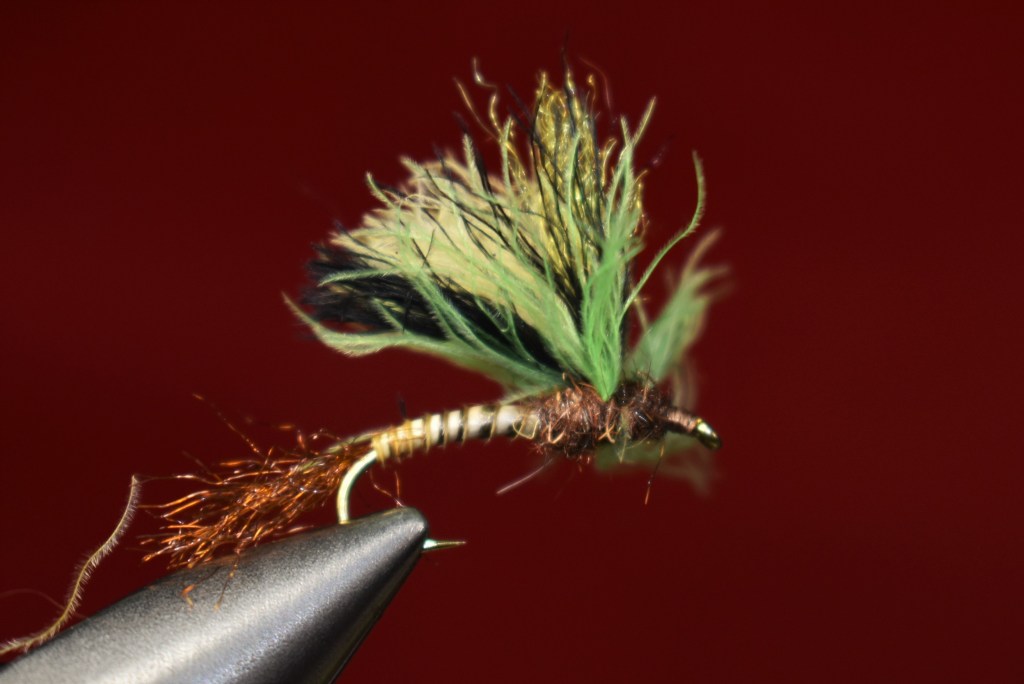
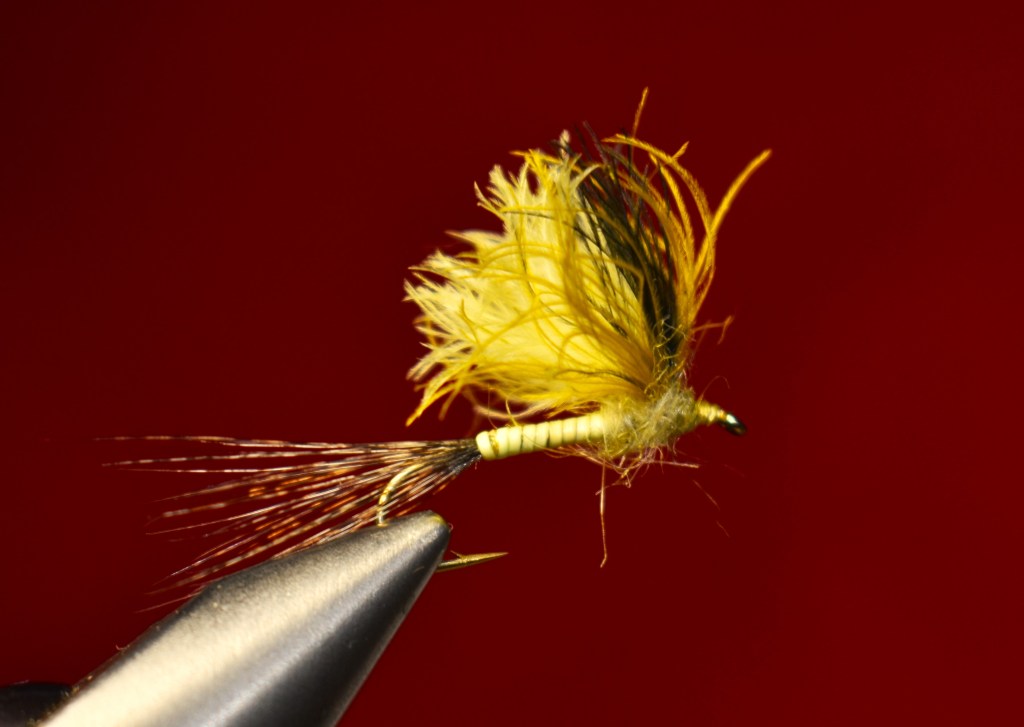
I liked the palmered and clipped hackle, for it allows the fly to fall lightly and to be twitched gently if needed to attract the attention of a resting trout. Rather than try to add some opaque body silhouette, I thought of allowing light reflections to pass through the hackle fibers intermittently. I had a short piece of Kreinik braid on the desktop near my vise, and I unwound the fibers to fray roughly 1/4 inch of it’s end. This would be my wing.

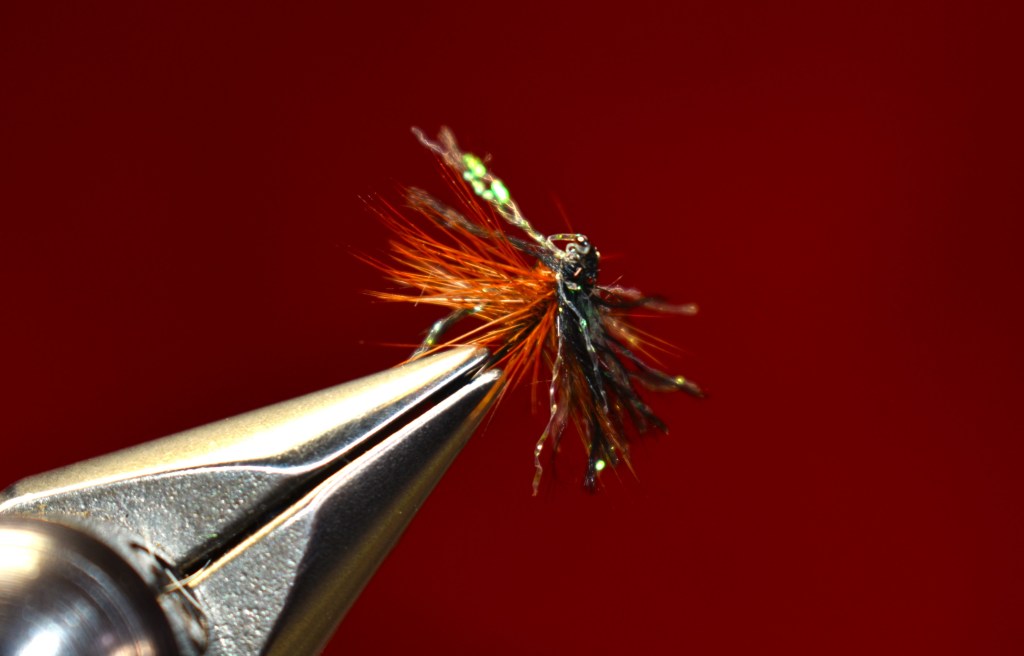
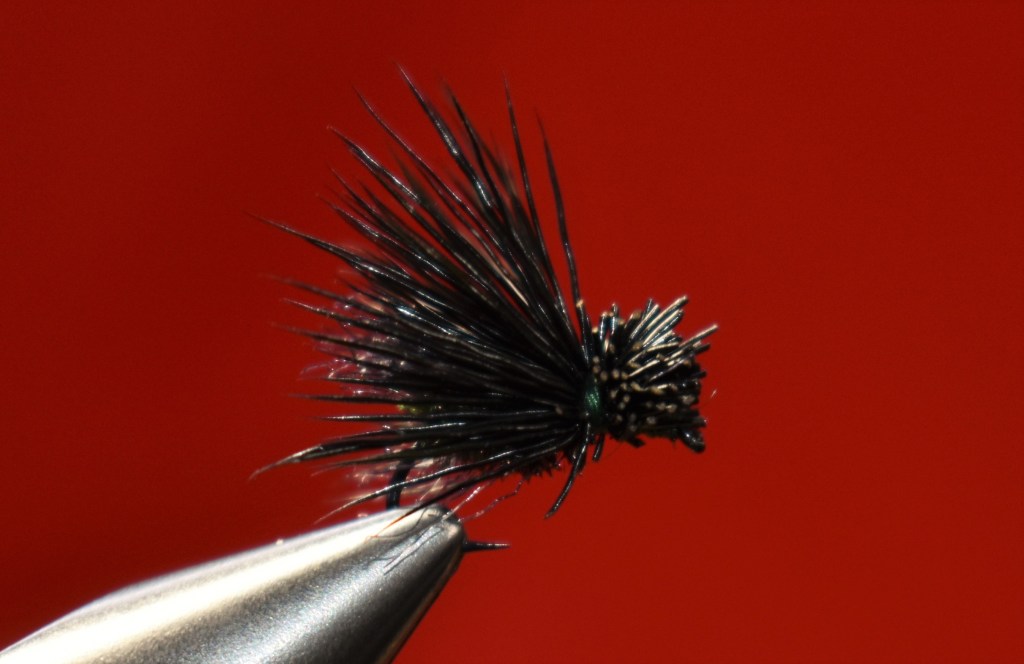
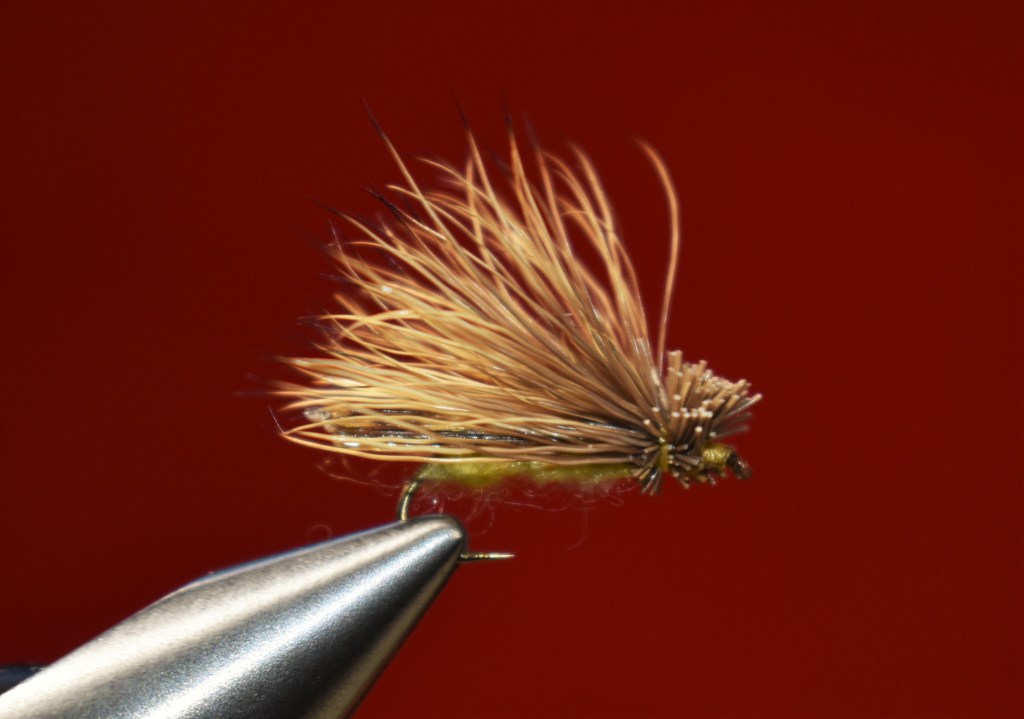
The Nite Moth – Actually the first one tied with Charlie Collins vibrant Rusty Smoky Dun saddle hackle, allows a choice of dark or light. The concept, though simple, intrigues me. The judges will be the wary browns during this Catskill Summer!

With light and dark versions, this fly may be presented as an imitation of some of the pale aquatic and terrestrial moths that appear during the summer, as well as any number of dark beetles and assorted terrestrial flying food.

Of course, like any fly, these moths could be an utter flop, but I have a good feeling about the design. The trout will tell me whether any modifications are necessary. In his masterwork Selectivity (Stackpole Books 2014) my friend Matt Supinski described the three phases of trout behavior intertwined in the mystery of selective feeding. He named these trout moods “Aggressive/Active”, “Selective/Reflective” and “Passive/Dormant”. As trout move from one mood to another in this order, fishing becomes far more difficult, as trout feed less and with greater care and discretion. “Passive/Dormant” fish may not feed at all until extreme fishing pressure or unfavorable environmental conditions change. The flies conceived this morning are squarely targeted toward trout stuck in Matt’s S/R and P/D moods.

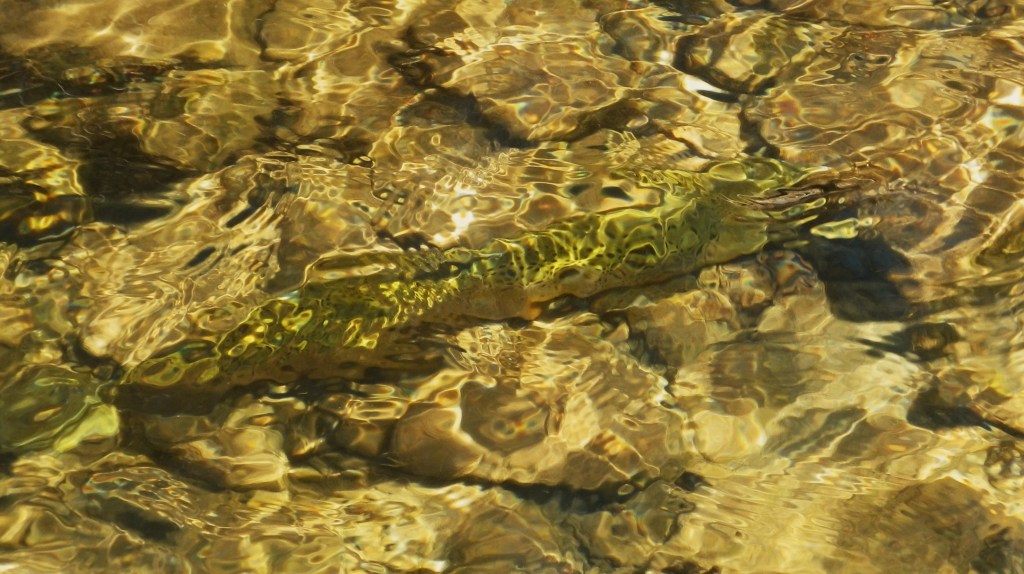
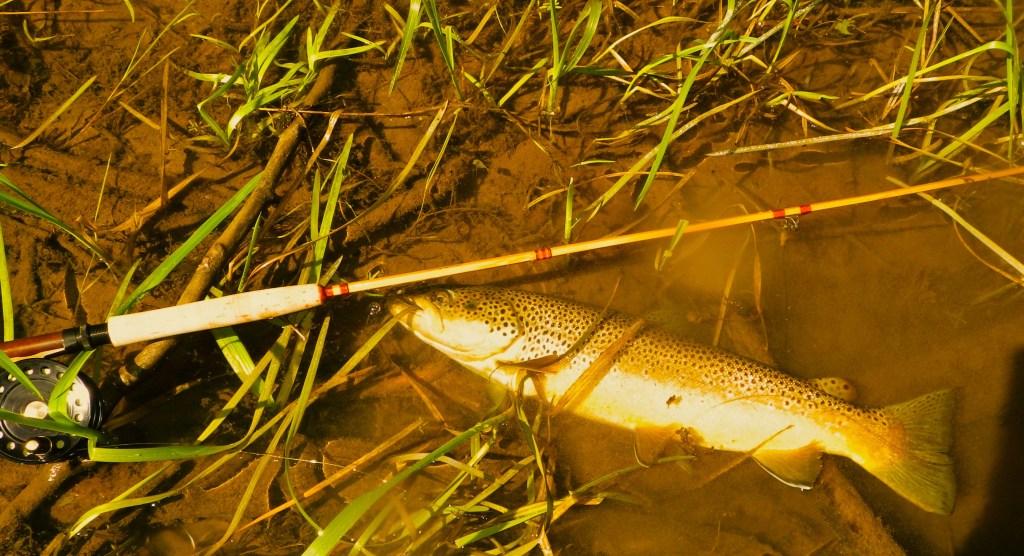
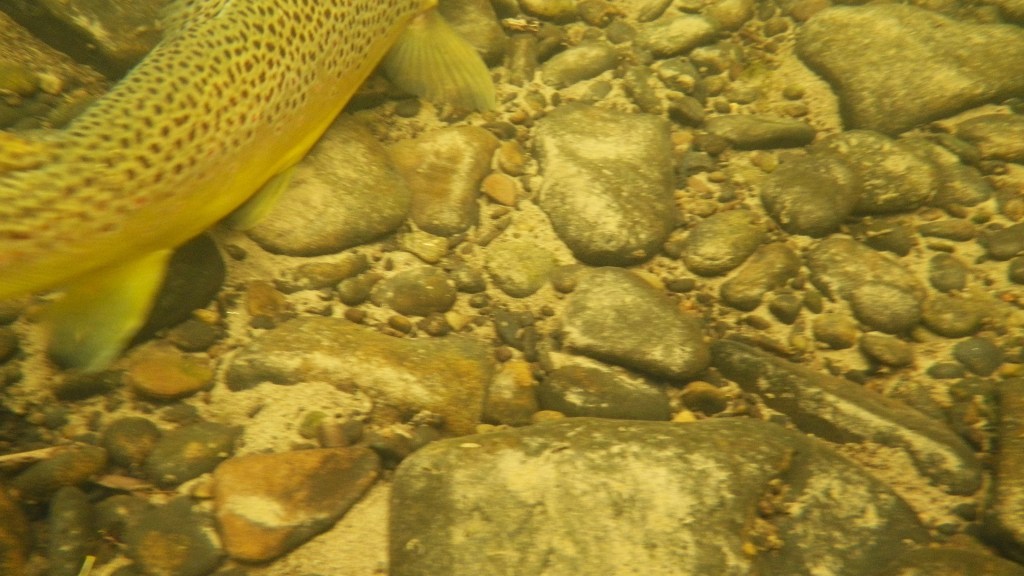
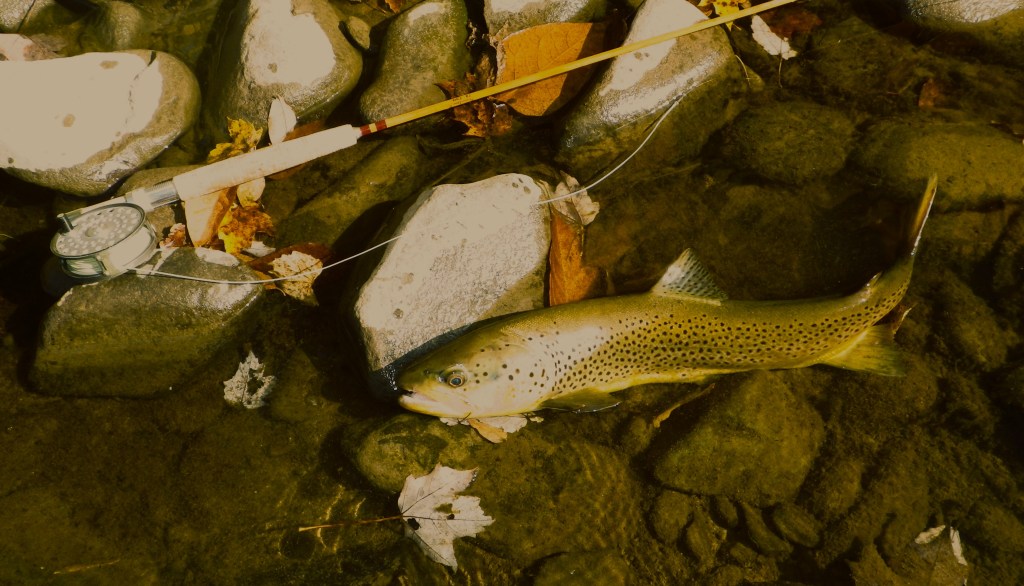
Just because you don’t see them doesn’t mean they aren’t there! This nineteen-inch brown nearly vanishes in a foot of crystal clear water in full sunlight.

I think a certain amount of attraction can be helpful in a trout fly, but it shouldn’t be too blatant. Thus, my idea of allowing a bit of flash to peek through the palmered hackle fibers for a glimpse of movement. I’ll let you know just how it fares…

The Last Cast

Sometimes you simply resign yourself to a fishless day, no matter how strongly you expected success, and then you make one, last, cast… (Photo courtesy John Apgar)


The first day of summer and a chance to fish a couple of days with one of my best friends in the world: time for celebration! Yes, we are in a run of low water with little in the way of insect activity, but there have been a few, spare opportunities of late. Earned with stealth and perseverance, there were a few good trout that could be located and seduced, and I felt certain that we would find them.

One of the hard lessons about trout rivers having a case of the blues is the fact that fishing is going to get worse before it gets better. Of course, words like “worse” have a much lighter meaning when you’re talking about stalking wild trout in the gorgeous realm of the Catskills.

The weather was completely pleasant that first day, some sunlight, some clouds, the odd gentle breeze, and a temperature around 75 degrees. If you painted the perfect summer day for fishing, this summer’s premier would be your subject matter. We stalked a glassy pool slowly that morning, working our way toward one of a handful of widespread sipping rises. As we pass the peak spring season on these beautiful and very, very popular rivers, the trout finally get to take a breath after the onslaught of anglers. They are skittish, reserved; and low water like we have in abundance right now accentuates that mood. Often there is a lull in insect activity that coincides with these conditions, just like the lull we are mired in right now. Despite our greatest care, our longest and gentlest casts, none of those trout would even consider taking our flies.

We gave it time, hoping for a change, as just a small hatch of flies can bring an opening, but there was none forthcoming. We took a break in early afternoon, enjoyed the fine tailgate lunch my friend had supplied and talked of fishing remembered. With mid-afternoon looming, I suggested we try a pool I had passed by all season. Expectations weren’t high, but hey, we were enjoying the day nonetheless.

We found a lone angler, wading right through the water we had wanted to fish. He called to us upon our arrival, letting us know that he had only fished about 100 yards of river, leaving all of the further reaches of that grand old pool for our undisturbed pleasure. A nice gesture certainly, as John observed. I feel certain that he couldn’t have known that he had covered the same reach we had planned to fish, any more than he realized he was ruining his own chances with his wading.

We walked on upriver after thanking him for his courtesy and made a grand effort to will a trout to materialize out of the slow, clear belly of the pool. There were a few youngsters that consented to play with JA’s fly, enough to make him smile and joke about it, but each new cast felt as if our slim chances were diminishing.

That cheery fellow downstream made short work of the lower reaches, wading rapidly right out of sight and vanishing. We took our time, the conditions demanded it, for even slight body movements accompanying our casting strokes sent deadly ripples across the pool.

I had pointed out a place just behind that fellow when John and I arrived, mentioning that it had been a good holding lie in past seasons. Though we had fished down through all of the other places with stories to tell with no signs of life apparent, and as I resigned to suggest we head to the bank and home for supper, I decided to make one last cast to that lifeless old lie for, I don’t know, the sake of good memories I guess.

The Sweetgrass pent delivered a long, downstream cast perfectly as it had all day to no avail, and the fly drifted slowly into the shade. There was the slightest little murmur of a bulge, and I raised the rod to touch off an explosion! With nothing but shallow water all around him, Mr. Brown seemed to have come unglued, racing out and around, up and down while I stripped frantically trying to keep a tight line. I still don’t know how I managed to keep all of that rapidly stripped fly line from tangling on my vest, staff or other body parts, but I did. When I got him on the reel at last, he struck up the band! JA was fast on his phone, so I will let his photos tell the rest of the tale:

Pentagonal parabola: a geometry problem. (Photo courtesy John Apgar)
Netted at last! (Photo courtesy John Apgar)
Twenty-two very angry, energetic inches! (Photo courtesy John Apgar)

‘Tis The Season

It may have been the last day of spring, but the fishing tackle, techniques and conditions were all summer. A big old warrior tested George Maurer’s Queen of The Waters and one of my vintage St. George reels. This rod has more than a little Cumberland Valley history, as do I.

Welcome to Summer Solstice and the beginning of that grand old season of long, lazy days and soft, warm evenings. I am more than pleased to be here to enjoy it! This is actually my sixth summer here in Crooked Eddy, though 2018 was the year without fishing. I think of the milestone more appropriately as my fifth summer of stalking wild trout as a Catskill resident. I had no clear idea how long I would be around when I retired and am grateful for each of these little mileposts I pass. Living amid these mountains and their rivers and fishing and hunting has proven to be far better for my health than working ever was.

I was at my tying bench come half past four this morning. The flies have been tied and the tackle has been prepared for the day ahead. Just about now, one of my best friends is making sure his truck is loaded before turning the key and heading north to our meeting on the river. It looks to be another beautiful 75-degree day, the winds blessedly down: a fine day for stalking trout and sharing memories!

The rod I have chosen for this first day of summer is all Catskill, by way of Maryland and Montana. During the lockdown of 2020, I corresponded with Jerry Kustich about a couple of ideas I had for the perfect summer fly rod. We both have a fondness for pents, five strip bamboo rods that have a somewhat unique casting action. Jerry is just the man to put those thoughts into action. One of the founders of Sweetgrass Rods with Glenn Brackett, Jerry has been designing five strip fly rods for a couple of decades. He told me that a great eight-foot four weight taper was an admirable goal and accepted the challenge of designing a pent to fit my casting and fishing preferences. He did an admirable job! Glenn finished the rod at the shop in Butte, Montana and I have enjoyed the fruits of their labors thoroughly for the past two summers.

I trust that JA will be carrying his own eight-foot four weight, another amazing rod split, planed, glued, and wrapped by his own talented hands. The brownies don’t have a chance!

We are hoping that a few mayflies will make their appearance during the course of our foray to bright water. Bugs seem to have been pretty scarce on some of our rivers here of late. If they don’t oblige, we both have a bit of Cumberland Valley experience to fall back on.

Maybe I will tie a few more flies just to be sure…

On Summer’s Threshold

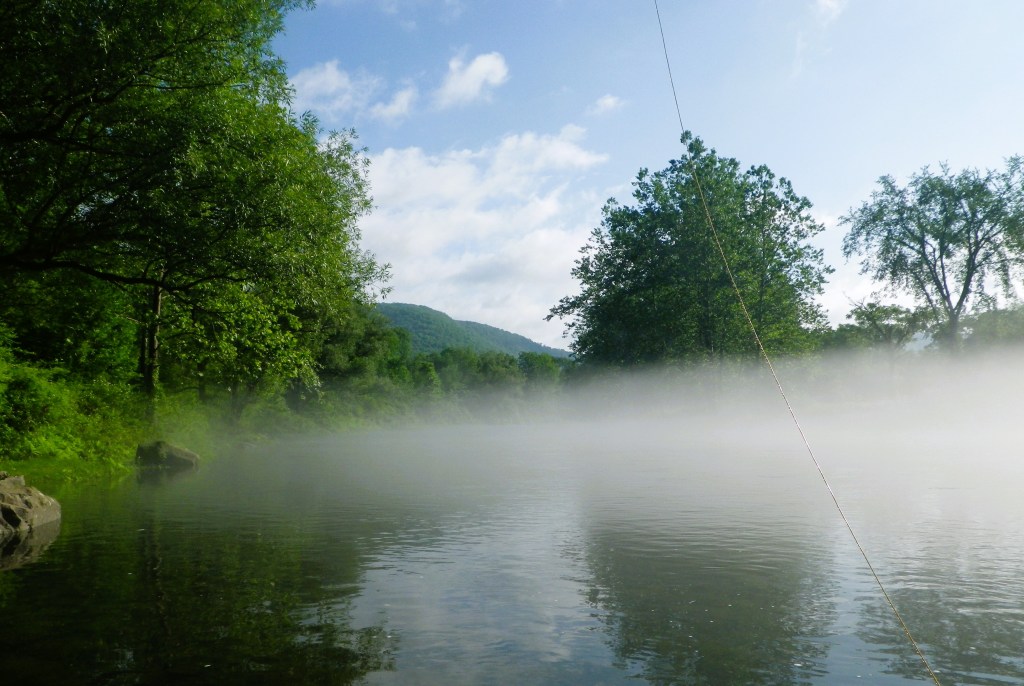
Could a decade have passed since this misty and bright July morning?

Spring is drawing to a close. It’s fishing already has passed into memory as I prepare to embark upon another Catskill Summer. It is my favorite season, though I miss the big hatches of spring mayflies, solitude becomes much easier to enjoy, and that special thrill of hunting big brown trout with light tackle makes every moment special.

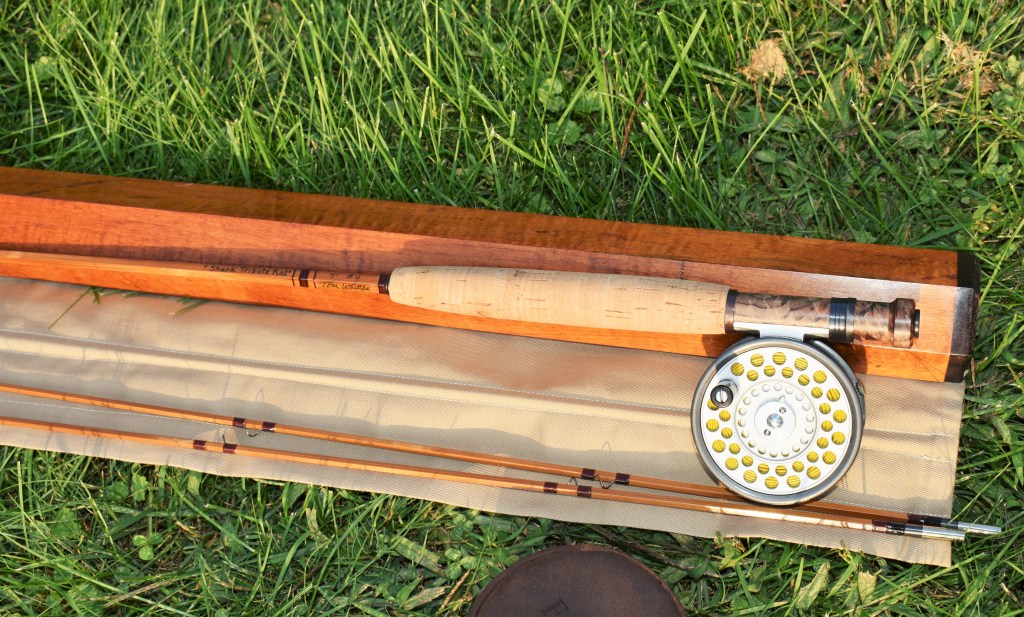
An eight-foot bamboo rod casting a four weight line has become my summer standard, but there are options. I look forward to this season and reliving my days of trout hunting amid the water meadows of the Cumberland Valley. A seven-foot rod was a constant companion there, and the Shenk Tribute Rod was conceived to celebrate the gifts of my departed friend, to welcome him here to my Catskill rivers in spirit, that we might once more share the beauty of bright water.

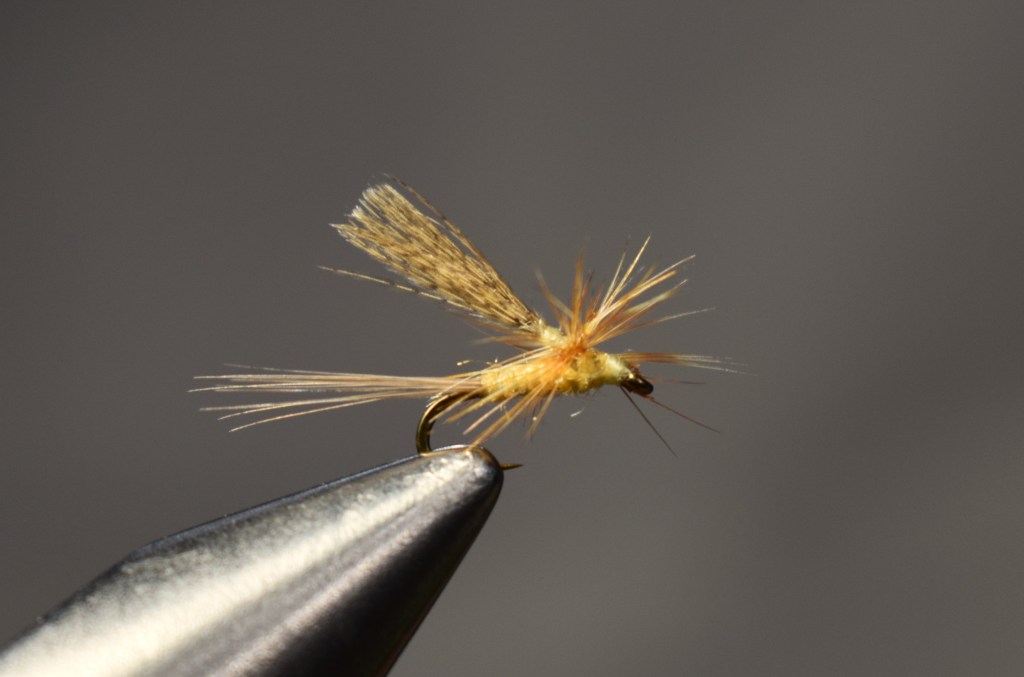
The mayflies the late Charlie Fox dubbed sulfurs all those decades ago are a veritable constant on the Catskill tailwaters. Varying in size from sixteen to twenty, and displaying several shades of color, the summer sulfurs provide the warmest season’s counterpoint to spring’s Hendricksons.

I tied some of those lovely little duns just yesterday, gathered with fellow members of the Catskill Fly Tyers Guild amid the historic backdrop of the Catskill Museum’s Wulff Gallery, we laughed and spoke of patterns and places as we wrapped silks and hackles to fashion our own summer dreams.

Terrestrials have already entered my thinking as well. When the sulfurs are not in play, a hot summer wind can urge the trout to action, adding morsels to the drift that pass some anglers unseen. The trout know them you can be sure, and find just the perfect hidden lines of drift to partake of the land born feast in secret.

In truth I have already taken to fishing summer patterns, the solstice lurking just three days hence. Soon I will carry all of summer’s choices: sulfurs, Isonychia, tiny olives and spinners, and beetles, ants, and crickets galore. The vest will be set aside, replaced by the comfort of a small chest pack that I might enjoy the soft summer breezes!

Hunting Season

The Cumberland Valley’s Big Spring in kinder times. I learned to hunt outsized wild trout in these small, easily disturbed spring creek environs. The lessons endure…

Conditions have forced my hand, it is that simple. I am used to a gradual transition from the peak of the spring hatch season to the spare times of summer. There are hatches still as June winds toward July, though the bulk of them are encountered toward evening. Daylight fishing requires more patience and concentration, the mindset of the hunter.

With low water settling in during those glorious last days of May, I quickly found myself fishing to trout that had become immune to dry flies. The fishing pressure during the peak season becomes ridiculously heavy, and the wild denizens of our Catskill rivers respond with a heightening of their learned avoidance behavior. The days fished during June’s premiere showed clearly what the larger trout were up to: they took only natural flies that were moving, demanding proof positive that their meal was an actual mayfly, and not another of those biting frauds!

During the heavily pressured fishing of Bug Week, success demanded frauds that offered movement, that screamed life! Though the largest of our wild trout soon adapted their avoidance behavior.

And so, as the first full week of June welcomed me to the rivers, I transitioned to my hunting mode. The big game hunter knows he will not find game every day he chooses to be afield. He waits, watches, learns how his quarry has changed it’s habits. The hunter considers all that he sees and makes a plan to intercept opportunity.

Back in the Cumberland Valley, in the early days of my fly fishing obsession, I learned to hunt the conditions. In the weed choked environs of the Letort, that meant a long drive from central Maryland to find myself creeping through the water meadows at first light. The largest of the Letort browns would sometimes tarry at the end of their nocturnal hunts, offering a rare opportunity to make a cast to them. With all of the impediments to success that accompany a lone fly fisher in these quests, there were some exciting moments that ended, not with a net triumphantly raised; but I learned!

It was a June morning in 2021 when I took my Sweetgrass Pent hunting for the first time. Stalking flat water for big cruisers netted three big browns, this one the largest at 22 inches!

With a little rain finally gracing the Catskills, I tried the tactics that produced a week ago. I found one riser, a ten inch brown in a couple of hours of work. My plan for the day said it was time to change the water, the tactics and the approach. Though the rainfall was light, it did bring a freshening of the flow and a little color to the river, and I felt the chances were good to find a good brown hunting for what the new conditions might offer.

I found what I was looking for in a small area, and George Maurer’s Queen of The Waters was soon bucking hard with a fine hunting brownie by the jaw. He tolerated my company in the net, though his partner managed to separate my fly from the tippet before we could meet face to face.

Now is the time for stealth beyond all reason, a lithe four weight cane rod, and a long finely tapered leader. The fare offered will vary, for it is a product of observation. When to offer the casual sipper a big fly as opposed to some tiny bit of feather and fur? Part of that decision is instinct, the rest is a quick accounting of the flies of the season, the lie of the trout, and the constantly varying conditions encountered. I have taken six-pound browns on tiny flies and 6X tippet, but I try to avoid it.

If I find myself in a situation that demands the lightest terminal tackle, I still fight the trout as hard as I can. I believe more trophies are lost by anglers afraid to use their equipment to it’s limits. Bamboo excels at the magical combination of finesse and strength that wins these battles. I would rather lose the battle than lose the trout to exhaustion.

A few years ago I enjoyed a resurgence in trico fishing, with more opportunities than I have enjoyed since the best days in the Cumberland Valley. I landed a couple of big brownies on the finest tackle, personal bests. That was a fine summer for flying ants too! I can laugh now at the bruiser brown that broke the bend from my size 28 dry fly hook, while I gave him all the pressure my 7X tippet could handle. An eight-foot three weight bamboo scepter lurks in the mind of it’s maker; the ultimate weapon!

A Foible Day

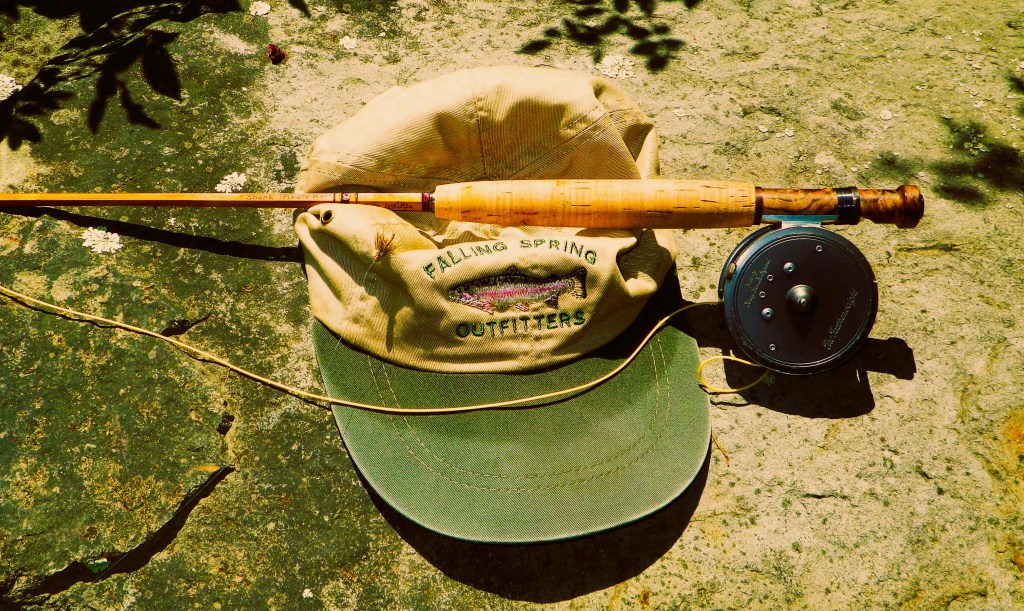
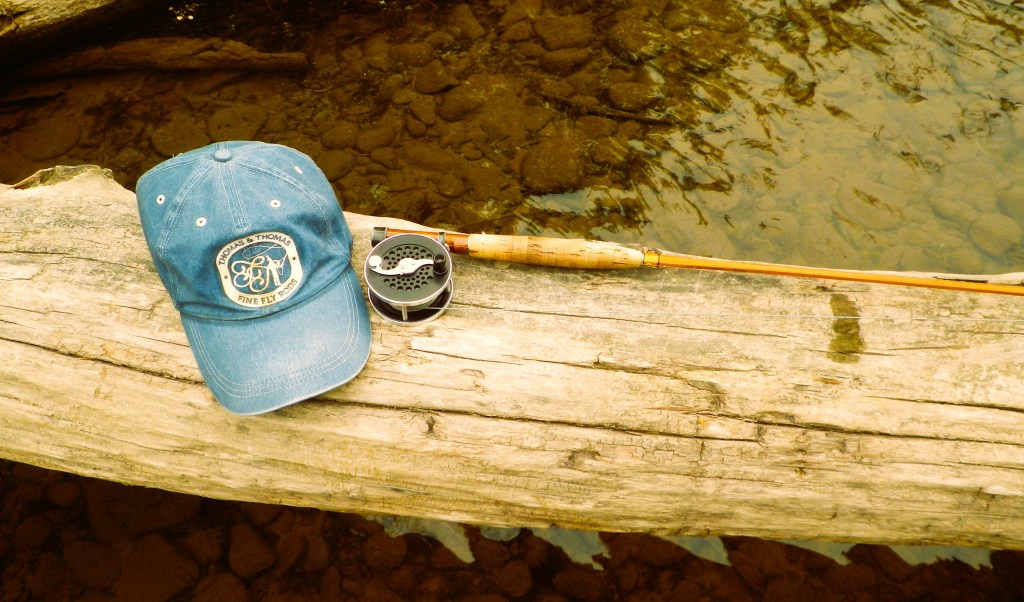
My favorite cap and one of several favorite rods: a 1977 Thomas & Thomas Hendrickson 8-foot dry fly rod wears an Adams reel.

Another day in the smoke; certainly such conditions would bear the blame for anything unsettling that might happen, now wouldn’t they? I admit there was a different feeling than I usually get out on a beautiful Catskill river. I slept just fine overnight, but awakened feeling tired from a long day under that strange orange glow on Tuesday.

It was chilly for June, though that is not a complaint, particularly with the rain starved condition of our freestone rivers and streams. I wore a long sleeved sun shirt and a fleeced hoodie, yet turned back to the car when I began my walk toward the river for the jacket I had left inside. If the smoky haze contributed to my slight feeling of malaise, the lack of sunshine added to it.

From a fishing perspective, the day began wonderfully. I was standing in the edge of the river when a good trout smashed something buggy in a windblown bubble line several feet off the far bank. I eased out to provide some clearance for a full backcast, while tying on a juicy Green Drake comparadun. I knew the tall CDC wing would move enticingly from the influence of the rippled water and wind. I made my first cast short, an old habit sustained since it allows me to check the drift of my fly before placing it on target. The smooth Hendrickson taper turned over all fifteen feet of leader pleasantly, and the long undersized 5X tippet let the big fly drift and bounce naturally. The money cast alighted right in the middle of that bubble line and the fly danced atop the wavelets. I relaxed a bit as it passed the location of the rise, though thankfully I didn’t give up on that extended drift.

He came for it like it was the only fly in the river, with a tremendous geyser of white water, then bore down with his prize. I didn’t so much as raise the rod as simply hold onto it, and the trout was hooked firmly. The little Adams reel sang playfully as it’s serpentine handle spun with his energy and my rod bowed deeply. This guy was energetic, leaping high above the windswept surface three times! He switched directions manically, bored for the bottom of the deeper portion of the pool, and put his focus into ravaging my light tackle. The rocky bottom offering no release, he vaulted into the air again, streaked straight away and then leaped once more.

The living arch of the cane won out. I had him close for several frantic switchback turns before he tired enough to be led into the net. With gorgeously bright golden and burnished yellow flanks, heavily spotted with black and red, nineteen inches of wild Catskill brown trout finally surrendered my sodden fly. I could not have asked for a better start to the day.

That memorable encounter should have let me shed the negative energy and made the most of my day, but the worn feeling returned and I let it affect my fishing.

There are days when we all reap the liabilities of our own humanity, our imperfections. When it comes to fly fishing, the Red Gods smile and gladly help us endure the trials of such days. I think of them as foible days.

I traded offerings with one intermittent riser over the course of a couple of hours, sitting on a log between sessions, then rising, wading over and making a few casts. This trout appeared to be moving, though it wasn’t clear whether he was making a little circuit along a small reach of riverbank, or swimming about the pool on a wide ranging hunt. There would be two rises, generally soft, and then he would demure for fifteen minutes or more. As the afternoon passed, there came a time when he seemed to have settled down to a single lie, sipping choice tidbits. I rose, approached again and worked him thoroughly this time, only to finally have him take my fly with an unexpectedly solid plunk. The pent-up tension of this long engagement gave way to a classic overreaction by way of a rapid, overzealous hookset that whisked the fly from his vicinity before he could eat it.

And so the day continued in similar vein: wind rippled waters, impinged drifts from casting in those gusty winds, and missed opportunities whenever my concentration lagged. There was a light hatch of sulfurs, and several roving trout took advantage of it. The currents were tricky by the nature of the river muses, and the breeze made them more so. I missed takes, snatched flies away, watched the refusals pile up when the wind behind me lengthened my casts more than intended and compromised my drifts. Whenever I sought to take a break and tie on a new tippet, the gusts would intensify and bow the tag ends of the fine material from my fingers and tangle my fly line around the gear on my vest. Each event became a little insult to my usual careful angling technique.

Suffice to say that I was more than tired of the game by the time it ended. That first wonderful sky arching trout was the highlight of the day, and I spent the rest of it paying my dues a hundredfold for those moments of enjoyment. If the smoke clears though, I’ll be back to it again today with a smile!

Fire On The Mountain

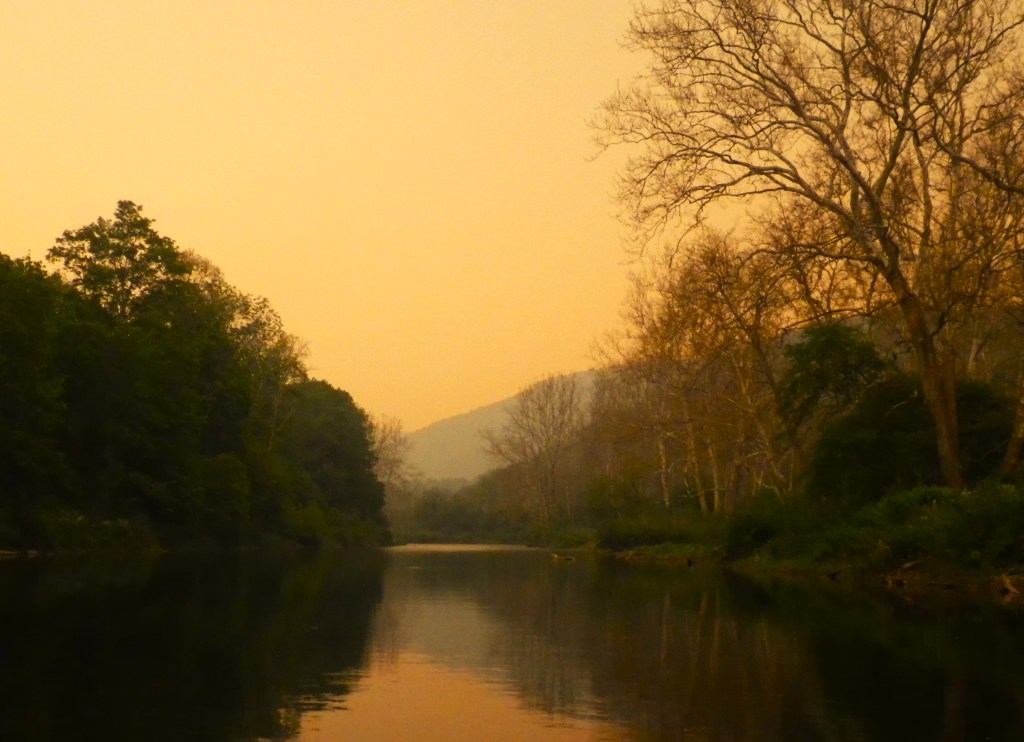
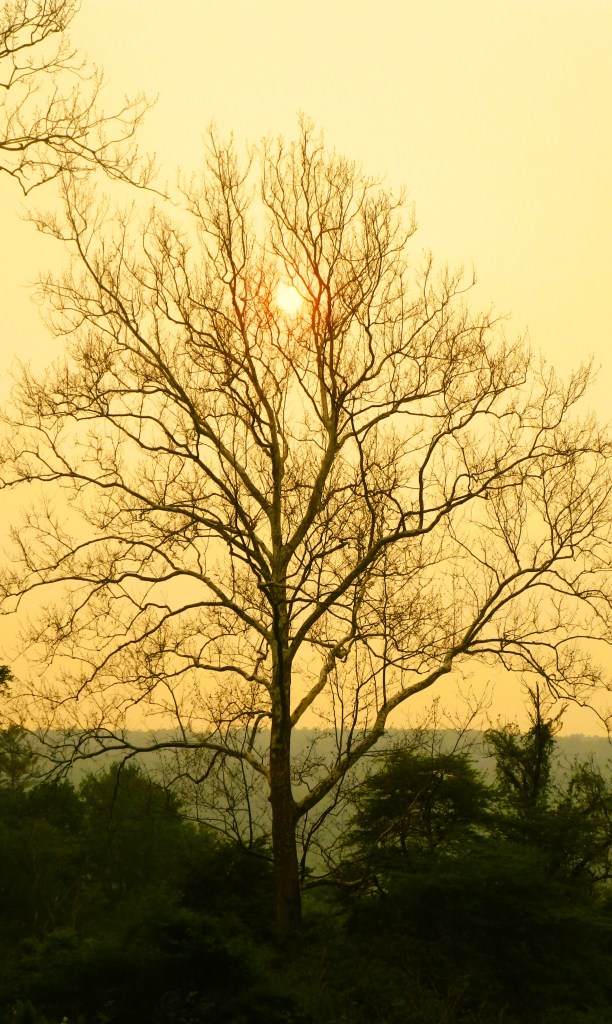
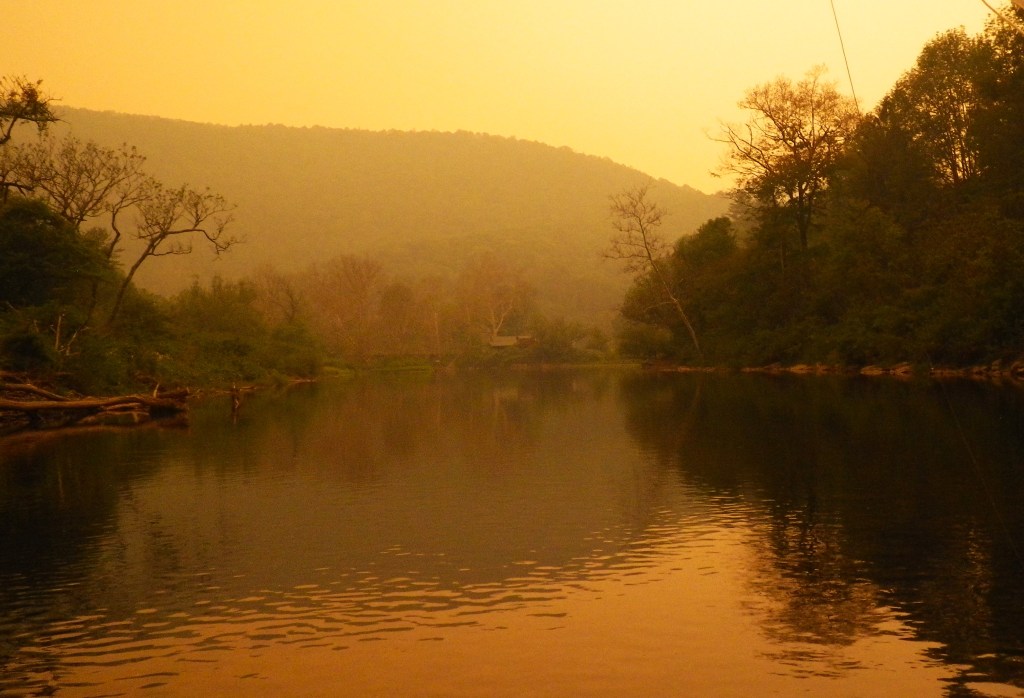
Smoke from the Canadian wildfires invaded the Catskills yesterday, creating an eerie atmosphere.

The day didn’t start the way I preferred. Awake before three AM, my aching back made sure that my sleep was finished for the night. We both had to rise early anyway, since my cardiologist had scheduled me for an echocardiogram in Binghamton at eight. I would have rather luxuriated in bed until my customary five o’clock, risen to my two cups of Starbucks coffee, and then tied a few flies while planning the day’s fishing.

The trip and the tests went smoothly, and I was back home and got a few errands taken care of by lunchtime. I changed into fishing clothes and decided to get a sandwich in town to take on the road. Lunch is always better by a river.

It was on the way home from Binghamton that I remarked that it looked like it was going to be a very hazy day. Within an hour, the skies looked like they were filled with thin fog hugging the mountainsides. The haze increased as I readied my tackle, and Cathy mentioned that she had smelled some smoke. The recollection that I had seen something on The Weather Channel a few days back about smoke from wildfires in Canada blowing southeast into the US had yet to surface, and I began to wonder if there was a forest fire somewhere in our Catskill Mountains.

I saw no signs of fire on my drive to the river, and I was finished with my lunch and wading the shallows when I finally remembered that newscast. By that point the skies were truly smoky, and the scent unmistakable. The sky conditions would create an eerie atmosphere throughout the afternoon and evening. At one point, around four or five o’clock, it became so dark I was having trouble tracking my flies. As the sun worked its way to the southwest, the smoky air took on an orange glow, strange but beautiful.

Fiery Haze

The fishing was as quiet as the scene for a while, until a few odd sulfurs appeared in the drift. I knotted up an eighteen 100-Year Dun and went to work, though my concentration was anything but sharp. My three o’clock wakeup was taking it’s toll. There were a couple of trout holding station in the low, clear water, each taking a fly in a nonchalant manner. I wasn’t seeing them eat duns most of the time, and they certainly didn’t show any interest in mine. Of course, I went through a few patterns and sizes: a small sparkle dun, a larger sulfur (I saw a couple), then back down to a sixteen 100-Year Dun. Nothing seemed to happen until my focus lapsed on one cast and I simply stopped watching the fly. Every angler reading this knows what happened then.

I rebuked myself and started casting earnestly with that fly. Of course, no trout touched it. Most of the few flies I was seeing looked to be size eighteen, so I tried a fresh 100-Year Dun in that size, the one I call the Classic Sulfur with the light orange thorax. That one got eaten before I zoned out again, and the nice eighteen-inch brownie cavorted all over that shallow flat.

I knew I would have to stand still and wait to see if the trout disturbed by that fish’s struggles would return to their stations. Unfortunately, that little break allowed my senses to dull once more. The fish came back one by one, and I zoned out and missed takes from three of them, wasn’t even looking at my fly when each took it in turn, and I was cussing myself for allowing my weariness to take control. I just kept looking at those smoky orange skies and hearing Charlie Daniels singing and fiddling in my head: fire on the mountain run boys run, the Devils got a date with the rising sun! It was a strange afternoon.

Recovering from my unwanted reverie, I worked at my concentration as evening approached. The trout were sly and extremely choosy, the handful of bugs on the water changing every few minutes. I took the best fish of the day on that same 18 sulfur, a golden flanked 21-inch brown, the second best on one of those green flies. You know the drill – observe and adapt. I finished my unusually vivid day with four good trout landed, and I felt better for my sleep deprived foibles early on. The report from the cardiologist was all good, so it looks like I get to go fishing again!

Musings

It is the fourth of June and forty-four degrees here in Crooked Eddy. The crest of our Memorial Day heat wave has curled and blown to froth in the wind, yet the rivers are wont catch a breath. We had a little rainfall on Thursday evening, a nice gentle rain despite the rumbles of thunder that preceded it’s arrival. Sadly, it was not enough to make a difference to our rivers. The Beaver Kill has recorded water temperatures of 70 degrees and higher for a full week and her flow is spare to say the least. This morning’s low certainly helps, but there is no rain in the forecast until Tuesday, and then only a chance of scattered thunderstorms.

Early June should be the glorious peak of the spring mayfly season, though not in rivers that remain too warm to fish. I despair when I see troops of anglers wading seventy-degree rivers, determined it seems to fish where they choose, regardless of the impact upon our wild trout.

There are flies around, and cold water on the West Branch, though solitude will not be a component of the angler’s day. Two gentlemen I have yet to meet are headed to the Catskills from Massachusetts, hoping for a historic tour of the legendary pools and runs they have read about all of their lives. I will suggest they rise before dawn should they wish to visit the ghosts along the Beaver Kill, when temperatures might welcome them with a few rising trout. I’ll offer an afternoon along the West Branch, with the hope that the cold tailwaters might give them the chance to tangle with one of the trophy browns Catskill legends speak of, and feel the life of the river in the arch of their bamboo rods.

Then Came the Last Days of May

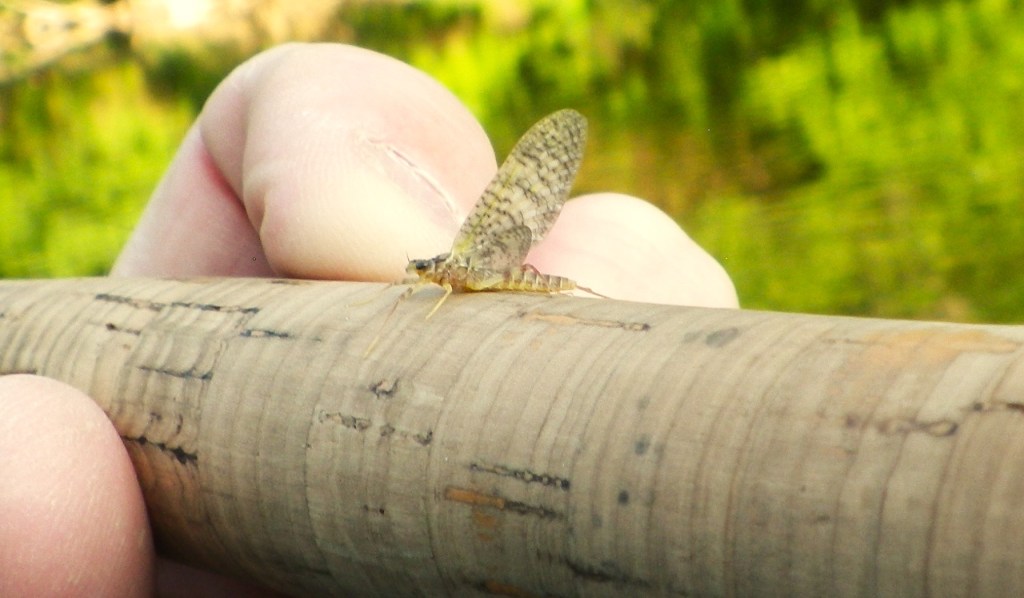
A Mini March Brown Dun that landed upon my shirtsleeve yesterday. He was barely a size 14. Its a full-time job keeping up with Mother Nature!

Fishing amid the quiet of evening is something I don’t do much anymore. Oh yes, during my traveling days I was out there until after dark night after night, squeezing every minute out of the handful of days I might be allotted upon bright water. Since retirement, I have each day at my disposal, or at least the vast majority of them. I get to stalk wild trout when I can take full advantage of the feast for the eyes this game provides on our beautiful Catskill rivers.

My photo files are full of scenery shots. I have always been captivated by natural light, and it’s interplay with water and sky and all the interesting features of the landscape.

Daylight provides the ultimate scenario for surveying all of the subtle clues that Nature offers the angler. I recall one afternoon last September, the season was drawing to a close, and it was bright and as still as a whisper. I was walking wide water, when I noticed the smallest little glint of light a hundred yards downstream, a single little pluck in the surface tight to the far riverbank. I stalked that tiny glint of light and, half an hour later, offered my little olive dun to that particular stone upon the shore.

A single glint of light from far away…

Thirty years ago, when I haunted the limestone meadows of the hallowed Letort and the sparkling little Falling Spring Branch amid Pennsylvania’s Cumberland Valley, the evening sulfur hatch was my favorite event. Part of what made those times so special was the ephemeral nature of those few critical moments where fine wild trout could be tempted by soft yellow dry flies! The hatch generally came late, within the last hour of light on a generous evening, or more commonly within the last half hour or less. The hatch and the rises began and intensified quickly, leaving only moments to make that perfect cast and reap the reward of battle with a worthy foe. I touched that magic again last night.

I shared the river with three like-minded gentlemen, Kevan Best and his buddies Forrest and Kenny, all of us bearing fine bamboo fly rods that glowed amber in the lowering sunlight. The trout were playing a familiar game, too familiar during such hot, low water spells. Brownies were cruising, some of the smaller ones rising to an invisible wiggling tidbit where they found it, others boiling the water as they charged one of the sparse Green Drake nymphs swimming toward the light. Up and down the river, we all fought impatience, casting to the boils within range, knowing that our dry flies were not the choice du jour. We waited for the edge of darkness, hoping for enough of the big duns to bring the one to the surface.

Low, clear water and placid current fails to make a champion of most any cunning dry fly; our finest art shows starkly lifeless when compared to the twitching wings and wiggling abdomens of the aquatic prime rib we call Ephemera guttulata. Sixteen-foot leaders, undersized 5X fluorocarbon tippet and a realistic CDC fly seem at times to be the only solution, though they need help from the lengthening shadows on nights such as this one.

And so, to that last half hour. A rise covered, a heavy boil, and the lithe shaft of split bamboo comes suddenly to life! He’s big, angry and splashing and thrashing everything in his domain; and then, the line goes slack and silence returns. The moments seem like fleeting seconds then as I check the fly, feel the sharp prick of the hook and quickly powder that feathered wing back to life.

Darkness falls as the last light retreats beneath the mountains, and there, a white spritz catches the dying light where a dun has fallen. The cast is away, the fly just visible in it’s drift… How far has it floated, a mile? Just a few feet it seems, until that boil in the surface of the still water meets it.

The shrill cry of the vintage Hardy echoes in the darkness, as the cane bucks and arches with his energy! Power I can feel, time suspended as he rushes toward every unseen bit of cover: “Fight him as hard as the tackle allows, this is the evening’s last chance!”

I hear Kevan’s approach as the game becomes a duel of slow pressure and quick reflexes. This fish tires slowly, and I can see his length in the dark water, close, but not close enough! At last, he lets me lead him grudgingly within arm’s reach, the mesh slips below his bulk and the game is won!

I feel for the fly, twist it free and Kevan wades near to take a look. The brown is twenty-three inches, wide flanked and heavy, a five-pound trout I guess. Slipping him free of the net he darts away, still with that vigor and defiance of the wild, and the two of us wade slowly toward shore.

Alive as darkness falls…