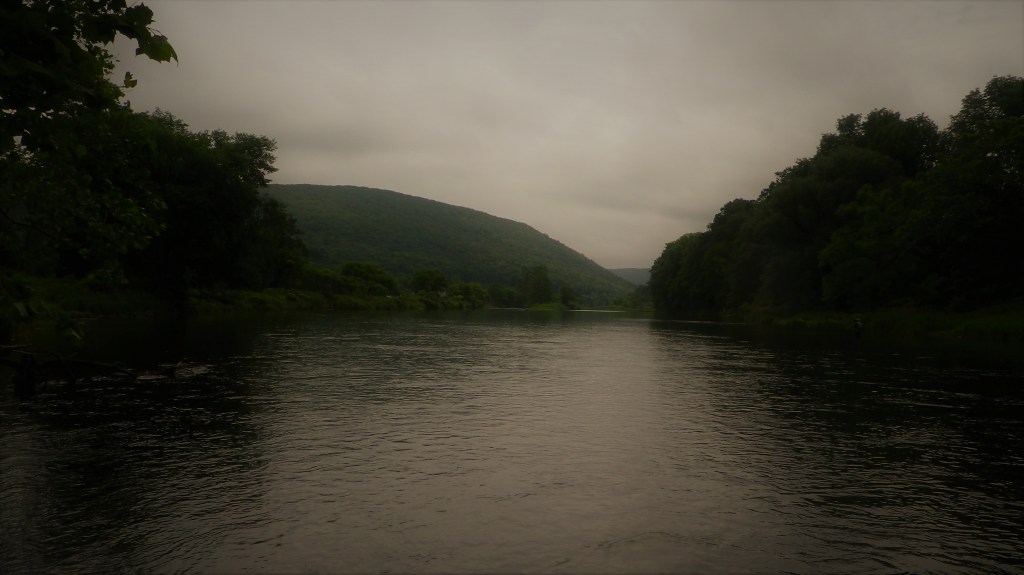
Red Gods Hello

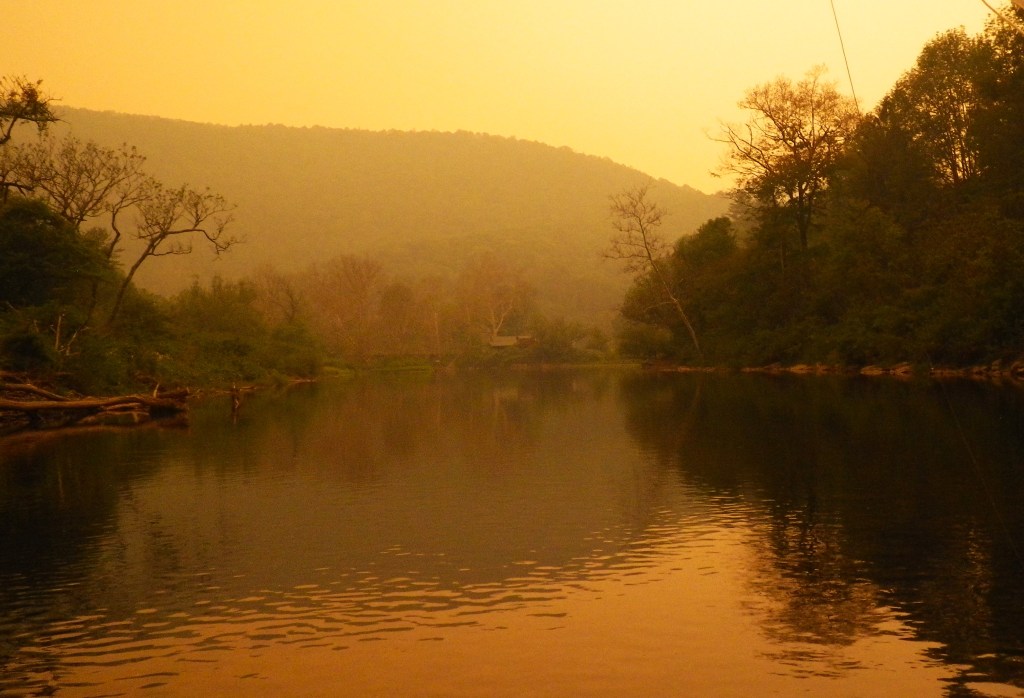
Early wading, primetime high water and poor reports put off my first float of the season until May 9th, but this was going to be a great day!
I did my best to pick a perfect day for my first solo float of the season, favorable temperatures, some cloud cover, and the bonus of very attractive changes in the flow regime, but, you know what they say about best laid plans…

I was excited at the prospects! The City had lowered the release into the West Branch, allowing the water temperature to climb into the fifties, even sixty degrees by afternoon, and there was a very nice dry fly flow provided by reservoir spill. It looked like chances were very good for fly hatches, and my boat bag was loaded with Hendricksons, Shadfly caddis and Blue Quills. Throw in that cloud cover with a day in the upper sixties and northerly winds of just 5 to 10 miles per hour and it all seemed too good to be true! It was.

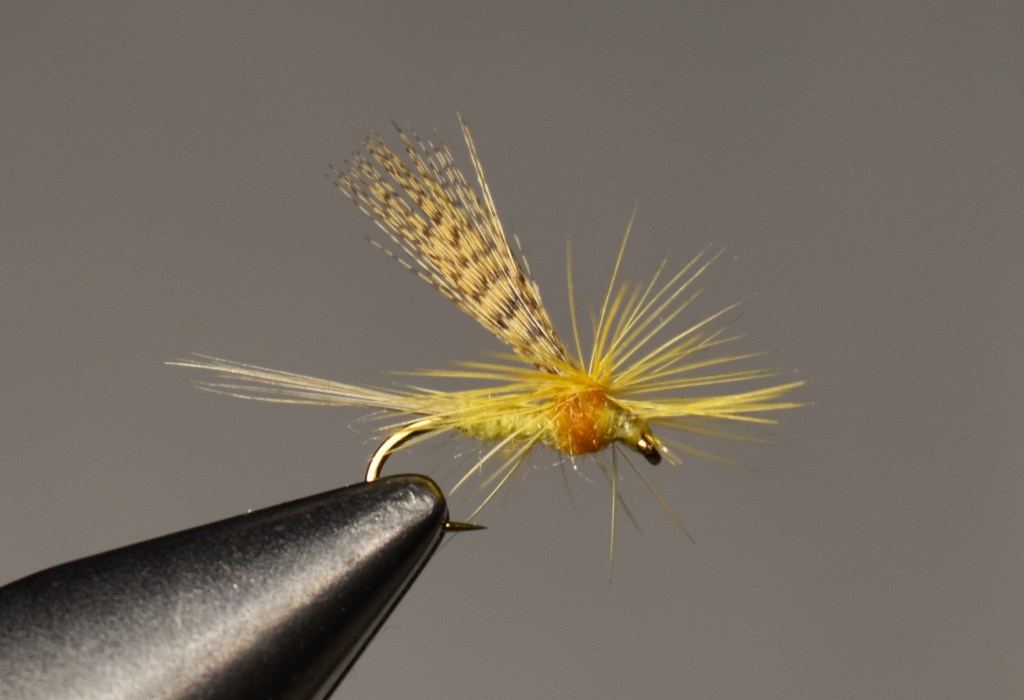
I saw a few shad caddis early on, but just a few, and they were tiny. This caddisfly is typically imitated with a size 18 dry fly. Yes, I know the fly shops tell you 14 to 16, but it is important to look at the insects closely. Caddis have long wings that extend back past their bodies, and they look larger in flight. You select your hook sizes based upon body length and you find that an 18 dry fly hook is just right for the Shads, or Apple Caddis depending upon the locality of your fishing. Mother Nature though, likes to throw some curves.

I tie some smaller caddisflies just to cover my bases, and for the Shadfly and tan caddis, that means some size 20 patterns to complement the standard size eighteens. I was well prepared with twenties, but the naturals weren’t even close to being that big. Too small to catch, these flies appeared to be in the range of size 22 to 24, and for most of the day they were the only fly consistently on the water. When I found a trout sipping these guys, my twenties were regularly ignored or refused.

Having your best efforts at matching the hatch soundly defeated by Mother Nature’s twists is part of the game, but it is frustrating. No matter I told myself, and kept rowing, this day still looked perfect for a big hatch of all of the Hendricksons that hadn’t been seen on the West Branch this season!

After a couple of hours of the morning had passed, I noticed the wind beginning to build. This was supposed to be a calm day remember? Ah yes, the Red Gods were joining the game early. Let’s see if we can make the fly fisherman crazy!

I encountered more boats as I made my way down the river, a little surprised because there had been a single trailer parked where I launched. I took my time, stopped at a lot of places where I should have found some good trout working, and fought the urge to rush to my sure-fire spot for a Hendrickson hatch. The wind kept building, though there were calm spells. The way the Red Gods play this game the calm spells come when you are moving from place to place, saving up the wind gusts to blow when you actually find a rise. They are used to winning.

After a stop for lunch I made my move, as there were now boats up river and more below me. As I drifted toward my target spot, I saw one anchored and thought I was out of luck, but it turned out he was 100 yards or so above my spot. I glided past him, left him some water to fish, and eased into the target zone. By the time I had anchored, I saw two or three rises, so I slipped the anchor to drift a little closer. It was easy to do, since the wind was blowing directly into my stern.

Initially, these fish looked to be eating the tiny caddis. The wind accelerated and made casting very interesting, as I had to throw downstream at a very sharp angle, requiring my backcasts to go directly into that wind. One fish finally appeared to take my fly, just after a big gust blew the line out of my fingers in the middle of a mend. Refusal, or a miss? I will never know, since I didn’t get an honest hookset while chasing those loops of slack line.

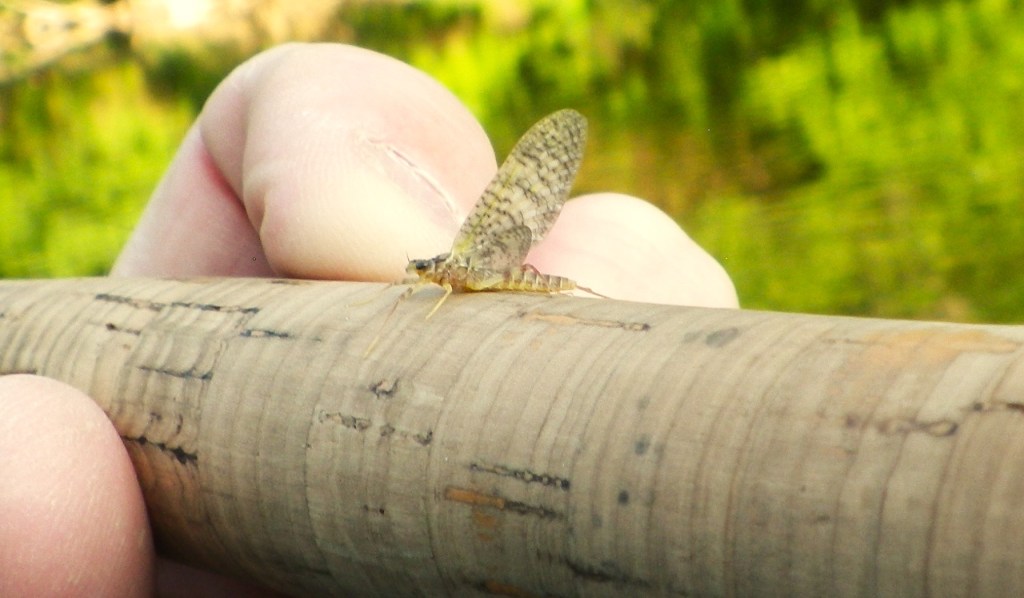
The wind roared right down the pipe, as I eased along that bank wishing for a bend that might offer me some sort of windbreak, and then the Hendricksons finally appeared. There was one little pink dun sitting right on the boat’s fly holder. I quickly changed from the caddis to a pink Hendrickson, and continued my battle with the wind. That wind tried to be helpful though, it put several flies into my sweatshirt, so I’d have spares.

As predicted, there were several trout rising along that one severely windblown stretch of riverbank, the only feeing activity I would find this day.

One good trout took the fly, I lifted the rod and felt nothing. Couldn’t spot my fly on the next cast. Oh, there is no fly on my leader !#x&!!

And so it went, a beautifully frustrating day. Red Gods 4,356,203, angler nothing. Like I said, when they play they generally win.

Better Days

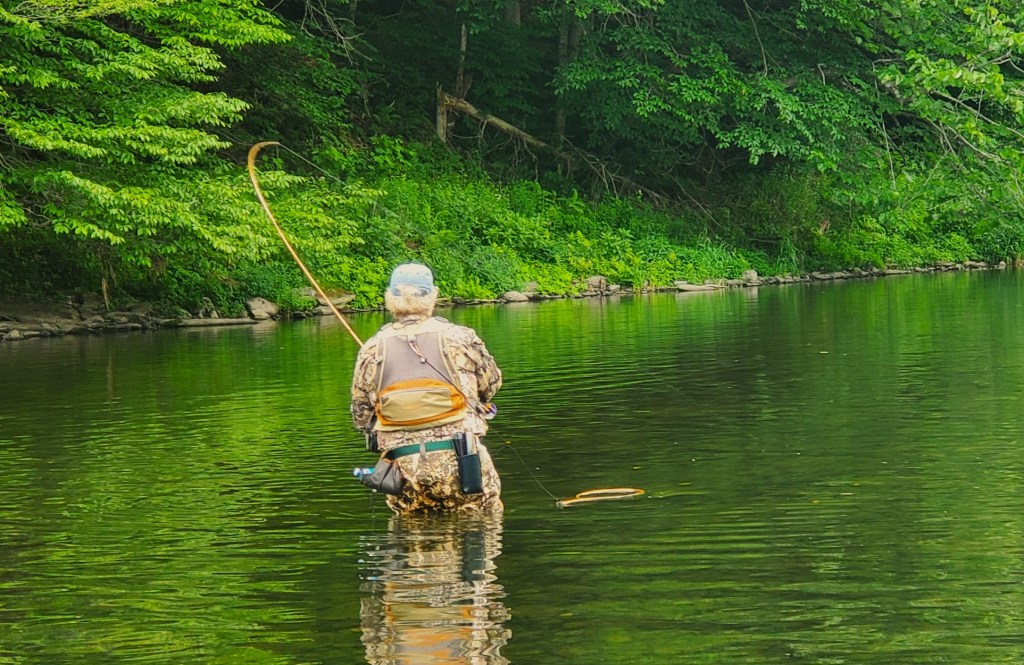
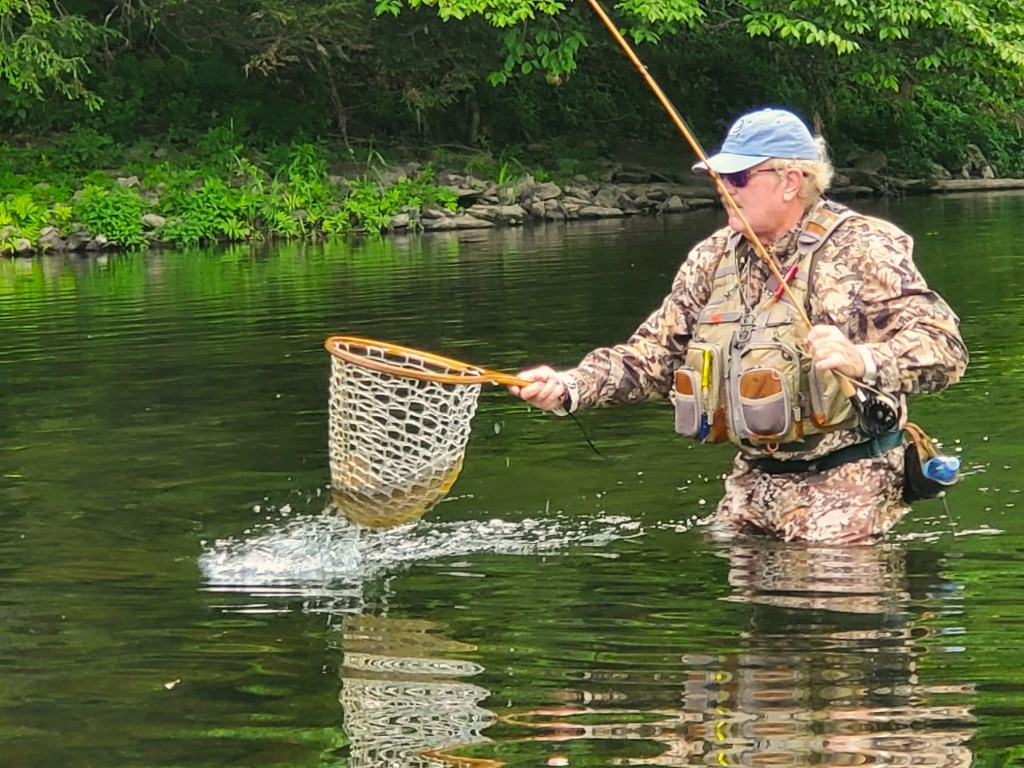
Sunshine, bright water and bamboo!
(Photo courtesy Chuck Coronato)

A full week has been lost to the power of weather and water, though at last I find myself on the cusp of better days!

I awakened this morning with a new fly design in my head, the full pattern crystalized in my sleep. I think the lack of fishing, of missing a week out of the prime of the season, must have spurred my resting mind to work it up. Some outlet is necessary for all of the stifled passion!

It is a Saturday, and the rivers remain unwadable, but relief is in sight. Morning sunshine is streaming in my window, and this seems the day we may finally expect it to last. I rushed to mow the lawn yesterday afternoon, finishing under the chill of light rainfall when a big, dark cloud settled right over Crooked Eddy, so today will be a day of ease and preparation.

I took straight to the vise this morning, eager to tie a few examples of that new March Brown. You may be puzzled at the name, though I have mentioned the changes observed in this large mayfly during three decades of Catskill angling. Though I have observed color variations in mayflies as long as I have carried a fly rod, the history of our March Browns intrigue me.

For twenty years, every March Brown mayfly I plucked from the waters of Catskill rivers was the classic caramel brown colored fly, with dark venations and blotches in wings shaded with a translucent brown. During the past decade, these flies have appeared pale yellow, with lighter wing markings within a pale translucent yellow background, with one remarkable exception.

The now common pale, dirty yellow fellow we call March Brown.
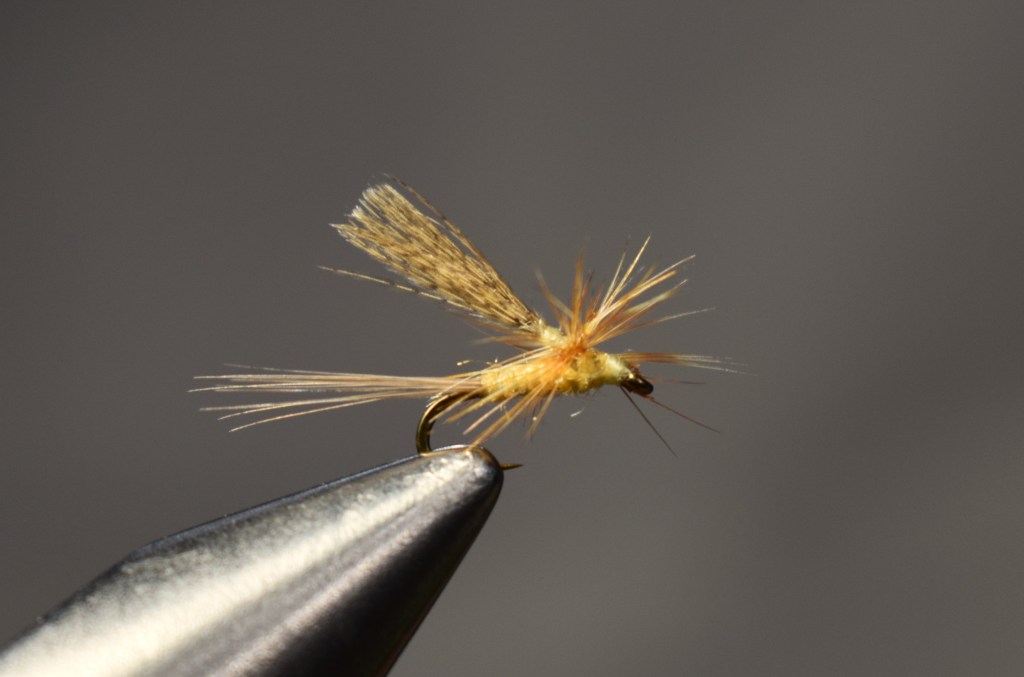
The original parachute fly tied to match Nature’s latest twist: the Woodstock March Brown.

It was late May, two thousand nineteen, and Mike Saylor plucked a remnant dun from the water as we waded out after fishing fruitlessly during a nice March Brown hatch on the Beaver Kill. The fly in hand was a bright canary yellow, an unnatural safety yellow, though clearly a March Brown dun upon examining the wing markings and verifying it’s twin tails. All of the rising trout had refused every pattern we could offer while feeding freely, even exuberantly on these wildly colored naturals. Being the 50th anniversary of the Woodstock Festival that year, the name was a natural!

The garish yellow bodied parachute was tried a few days later when I found one substantial trout taking in that same pool, after he ignored all of the usual patterns. That 21-inch brown accepted the Woodstock Parachute as freely as he took the naturals. I have tied and carried them every year since.

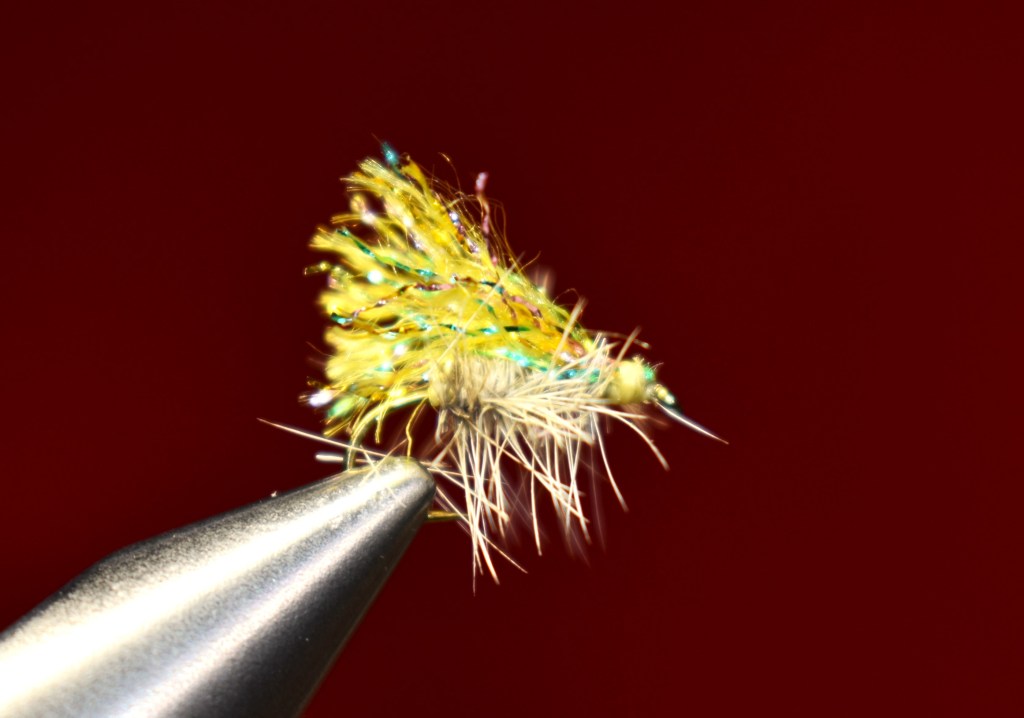
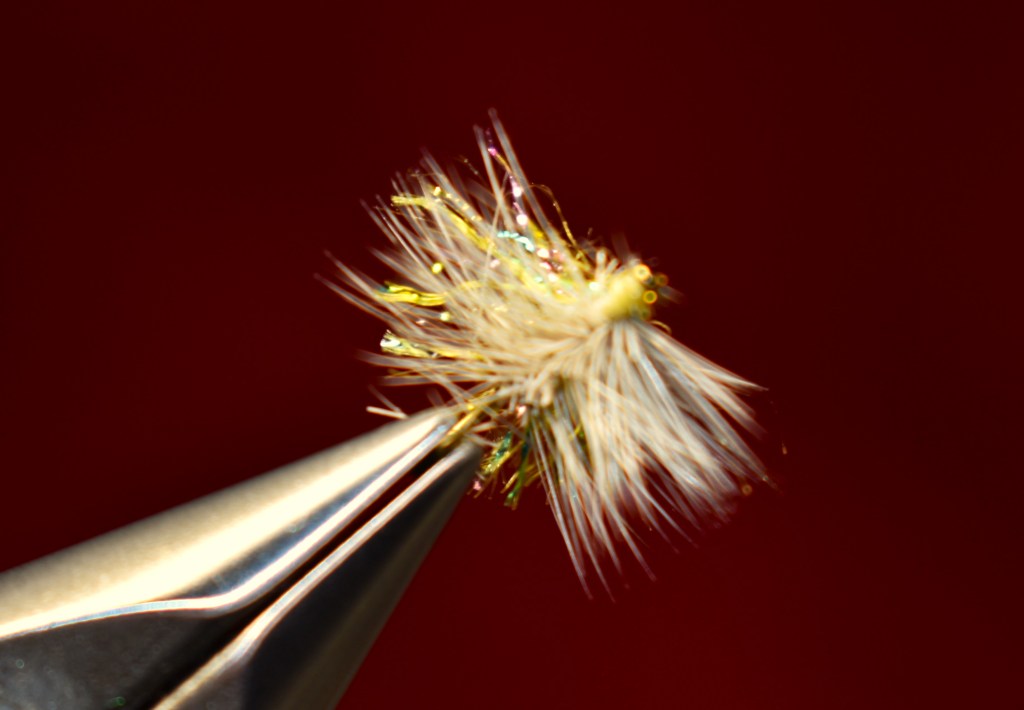
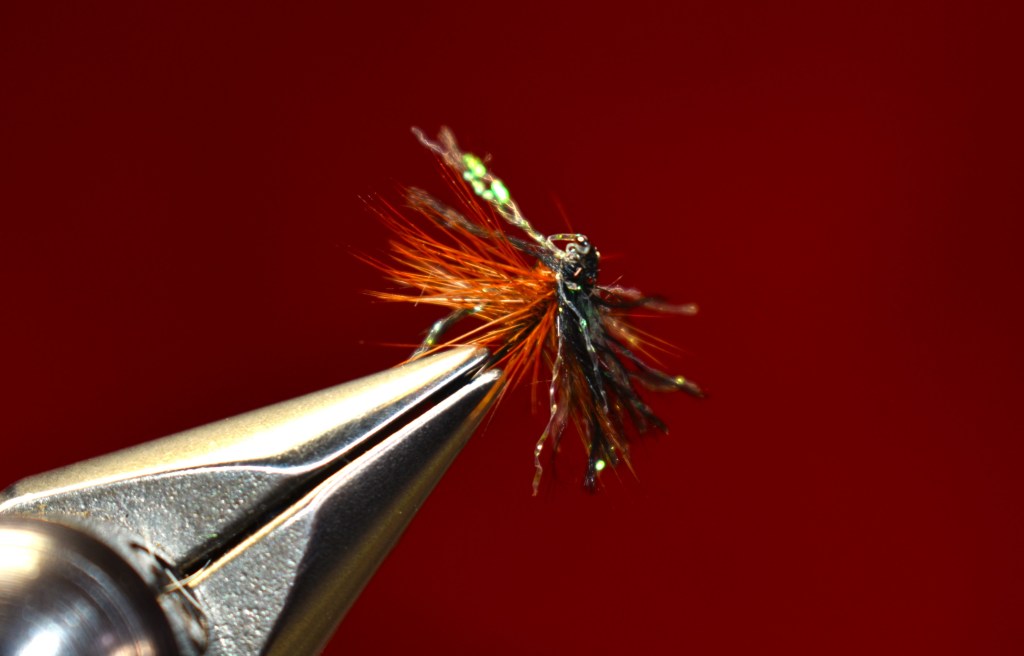
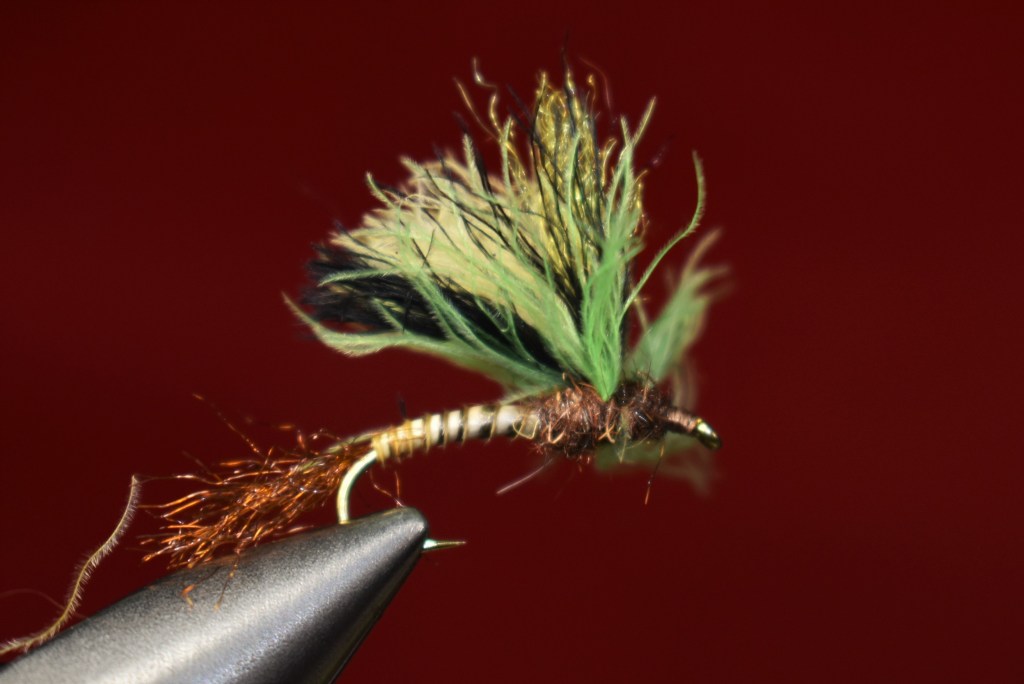
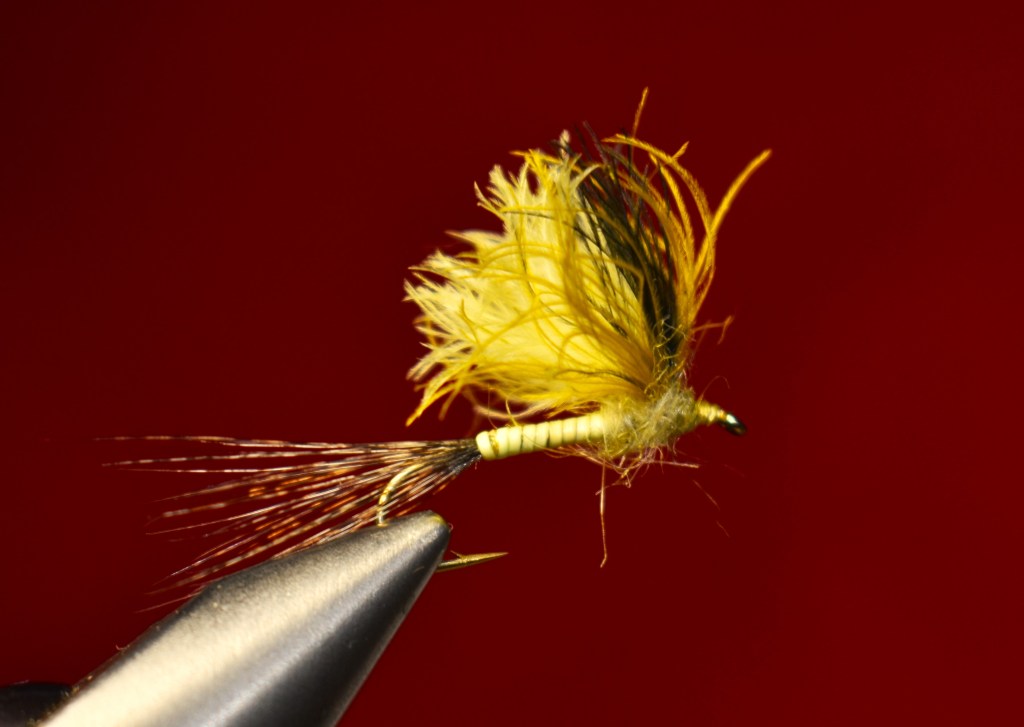
Invented in my dreams, the Jave Quill Woodstock Emerger awaits a date with Maccaffertium vicarium Hendrix!

I have a feeling this new Woodstock fly will bring me some luck when the river finally returns to a normal flow. I am hoping that a good hatch will appear this year. I have not enjoyed a good one since 2019, though I have seen a few flies. Warm water kept trout from feeding on them during the single season I did see fair numbers of flies, but this season looks to be cooler and wetter. I can almost hear the riffles playing counterpoint to a Jimi Hendrix guitar solo, the bass line provided by the plucking sound of big trout eating big mayflies!

Withdrawal

April 9th, 2022 – May 1st, 2023 isn’t at the same “official” flood level, but the result is pretty much the same: No Fishing!

Twenty-two days have elapsed since my seasonal countdown hit zero, and I had fished sixteen of them, enjoying some great times during the Hendrickson hatch. West Coast steelheaders have a saying: “the tug is the drug”, and I can sympathize with the sentiment. Right now, as my favorite month begins, I have been forced into fishing withdrawal.

These precious May days shouldn’t find us with flood conditions on the Delaware tailwaters, but NYC finally plans to fix the millions of gallons per day leak in their Delaware Aqueduct. They have been hoarding water in the reservoirs that discharge to the aqueduct this spring, leaving no room for the inch and a half of rain the weekend delivered. I cannot fault them for fixing their wasteful leak, though I can for waiting so many years to address it. The engineers who designed the system should have included some valving or a release gate apparatus to be able to shut off discharges to the aqueduct for maintenance, but they either didn’t have the common sense and foresight, or the City determined it wasn’t worth the cost.

Cannonsville and Pepacton reservoirs were both over maximum capacity and spilling before this latest rainfall event occurred, and no one knows if wadable flows will return this month, before NYC begins drawing them down via high releases so construction may begin in October.

At any rate, here we are at peak season and the Delaware system is unfishable with dangerous flows and muddy runoff. The rivers should clear, barring another significant rainfall event, but it will take time for that, and for the flows to recede to safe, fishable levels even for drift boat fishing.

I confess, I am a wade fisherman at heart, even though I own a drift boat. I am a bamboo rod toting, dry fly junkie – and I need a fix! My only hope lies with the freestone rivers, however long it takes for them to recede and clear to wadable levels.

The famous freestone rivers of the Catskills still hold trophy size wild trout, but they can be hard to find and harder to deceive given the heavy fishing pressure.

Weather remains the great question hovering over the viability of our freestoners. More rain, at least when it comes an inch or more at a time, means fewer days with fishable conditions. Hot weather can arrive here in May and very quickly warm up our freestoner rivers to the seventy-degree mark, reducing the river miles that are suitable for trout fishing. The angler’s ideal would be a balance between warmer days with cooler nights and weekly rainfall in quarter inch increments, but Mother Nature rarely offers such an ideal balance. I am hoping she might consider it this spring!

The Damp, Rainy Aftermath

Nature’s Bounty

The peak of spring fishing was more than evident, depending upon your point of view. A mega hatch of Hendricksons, seemingly driven by a dark, moody storm front came on relentlessly, and then it was done. The aftermath offered some weak sunshine, a handful of flies on the water, and little to no response from the sated trout.

Coming just days after an EF-2 tornado ripped through Sullivan County on it’s way to Roscoe, this front thankfully lacked such destructive force, though it ushered in nearly a fortnight of wet, cold weather throughout the remaining days of April and on into May. An unsettled spring, typical for these mountains, keeps us all guessing.

I hold out hope for some Hendrickson fishing for the West Branch, for the river’s store of cold water limited that emergence while the flies took wing on surrounding rivers, but it will not be the warm, welcome, pleasant fishing that lingers in my memories of springtime in the Catskills.

As I write, the rain beats harder on the roof above my head, and my visions of fishing involve cold aching shoulders bent over the oars. There are snow showers in the forecast for mid-week, perhaps a perfect day to float in winter coat and gloves. The glow of soft evenings wading the flats below wide riffles, as soft rises sip spinners from the film, shall remain trapped in memory.

The Front

Hendrickson duns litter the water as a big shouldered cold front descends on the Catskills.

The forecast indicated afternoon showers, but the sunny morning skies seemed to speak louder of a lovely spring day. That sun was bright when I walked the riverbanks, the water glistening and quiet beneath it. I hoped the light might warm the cold river a bit and encourage more fish to surface feed, at the same time wondering whether the bright sky might continue to suppress that activity.

That had been the formula this week: bugs and rises under cloud cover, and still waters when the sun shined. I became more convinced during the first hour or two, until a handful of flies appeared on the surface and a single trout sampled one. A small olive Century Dun had been waiting on my leader, and that trout took my third cast. He was on, and then he wasn’t; one of those scenarios that makes you guess and wonder.

Ten, twenty minutes later there was another ring on the surface, and the few flies in the drift were definitely Hendricksons. The old faithful A.I. brought him up, a good fish, who refused to give in to the pull of my rod. He found his way beneath the downstream edge of a sizeable rock, keeping me in that stalemate until he leveraged the hook bend open enough to escape.

The sun remained, though a few clouds had gathered, they were thin enough to pass the general brightness, but the number of flies on the water gradually increased to a medium trickle. I had waited patiently for another rise, and it finally came beside an upshot rock two thirds of the way across the river. He showed his nose and I pulled line quickly from the reel, aerializing it as he teased with a brief roll at the surface.

I put that first cast three feet above the tip of the rock and just to my side of it where he had made his display. Nothing. The follow up cast dropped a touch further upstream and was also ignored. Perhaps he’s shy after that showy rise under this bright sun, I thought, lofting the next cast further to my left so that it danced down right over the center of that sheltering rock. I met the take with a solid hookset, and the big brownie turned his side into the current!

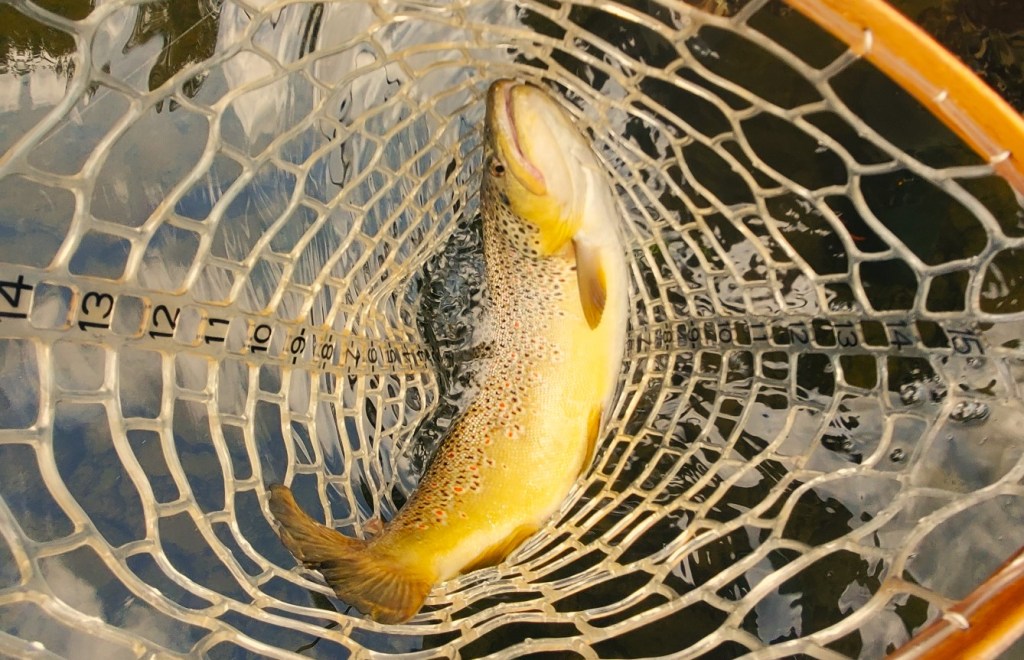
We had a good game there in the middle of the run, he and I, coaxing a tune from the Hardy each time he ran down with the flow. In the net he was bright and golden, twenty-one inches from nose to tail!

The hatch gradually increased, but as had been the case all week, only a few trout took advantage of the steady surface feeding opportunities. As I moved and reached for the few that did fall to temptation, the sky darkened with a new bank of clouds.

The winds had been crazy since I parked the car, changing from hard upstream to calm, then hard downstream, trying to make up their minds in these pre-frontal conditions. Their intensity grew with the arrival of those darker skies and the hatch became heavier. I moved upstream to chase one good fish that splashed heavily in the deepest party of the run, finally hooking him as a powerful downstream gust accelerated the current and bowed my fly line in a deep downstream arc. I lost control for only a moment, long enough for that fish to take advantage of the situation and open up the hook gap.

As the edge of the front overtook the surrounding mountains, another trout licked one of the hundreds of skittering duns from a foot wide band of slick water across the maelstrom. My casts in that swirling wind came up short, so I took two steps upstream and over and waited on a moment when the wind paused to reverse itself. On cue I delivered the cast, old A.I. alighting amidship in that narrow slick.

Seconds can seem like days sometimes, the drift of the fly almost detached from time; and then, finally, the gentle bulge and the battle joined. Experienced anglers relish the vigor displayed by a good trout feeding on a hatch in fast water. The excitement of the protein buffet and the high oxygen levels can make an average trout feel like a trophy, and a true trophy feel insurmountable.

Wind and water rushing, the pawls in the little Hardy screaming for mercy as the big fish took charge, formed the soundscape for ecstasy. The blackness of the sky continued to expand as I fought him, adding it’s own drama to the power and crescendo of sound. The battle seemed it would never end, with my heart rate elevated each time he roared away. Once his runs were completed, I brought him round again and again, yet his strength was still with him, refusing to come to the net. I had him at the last, pinned near the bank, twisted the hook and he was away. Wide flanked, and better than two feet long, he still had the energy to shoot back across the river like a bullet upon release! I believe I was more spent than he was.

As the full measure of the front descended upon the little river valley, the temperature dropped ten degrees and the cold rain blew sideways in the swirling winds. The river was blanketed now with Hendrickson duns, thousands upon thousands of them in phalanxes that blew en masse across the wind tossed currents. All feeding ceased it seemed, but the flies continued as I rested, then began the long hike out.

Round Two

Springtime In The Catskills

Nothing in fishing can be wholly considered to be preordained. As anglers we may head out with a goal in mind, but there are always far too many variables to predict the outcome of the day.

Tuesday, another cold day along the river, this time lacking the early hatch that had me casting from arrival on Monday. The flies would come, in fact there may have been more of them, but it would tend to be one of those occasions where the trout decide to ignore the feast. The saving grace? Not all of the trout in this reach of water would ignore Nature’s larder.

I had an eye upon the Unobtainable’s abode early, and in fact, it was in that protected zone that I saw a few early rises. Ordinarily, I would place that information in storage for a while and concentrate my efforts on finding more cooperative trout, but not today.

The river had dropped one tenth of a foot since our previous encounter, not the kind of change that would radically alter the wading challenge required to attain a proper casting position. There was a new disadvantage too, inadvertently leaving my polarized sunglasses in the car, I was fighting glare as I tried to negotiate the deep, uneven, rocky bottom. I hiked up my vest and started in.

I made a couple of different approaches, finally settled in a position that seemed tractable if not comfortable, and began to play the age-old game once more. There was no question as to the fly pattern to be employed. The same 100-Year Dun that he had sampled yesterday was secured to four feet of 5X fluorocarbon tippet; the imitation so good that my eye conceived it as an actual mayfly.

The body of this fly was an experiment from last winter, a Hendrickson blend inspired by the writings and patterns of the late John Atherton. I had labeled the compartment in the dubbing dispenser “A.I. Hendrickson” for Atherton inspired. Red fox was the base fur of course, in line with the Catskill tradition, mixed with golden tan Antron and a bit of fox squirrel for the bugginess of it’s barred guard hairs. The hackle was from my prized Charlie Collins No. 1 grade cape, colored Barred Rusty Dun.

I am not clear on how long, nor how many casts were made once the soft broad rings began to appear out there. Like the day before, he was not regular, preferring to dine at his own variable pace; a very confident, comfortable trout in his chosen impenetrable lie.

The breeze would pick up and casting would cease. I shifted position a time or two as the rings moved about in that protected abode of his, and casting stopped when the rises stopped, less one errant attempt spoil the game forever.

The cast that brought the magic felt good, and I tracked the fly most carefully with yesterday’s error vividly in mind. The bulging ring replaced the canted wing upon the mirror of the surface, I took a breath, and struck…

Feeling the steel, a mammoth trout catapulted into the air, there in his abode of many hazards. Once down, I turned him and stripped line with a frenzy, my only chance would be to get him as far away from the snags as possible for, given his girth and power, there would be no stopping him on my light tippet. In the river proper I had only dozens of sharp-edged boulders to defeat me.

This fish was angry, plucked from his lair by one confounded bug, and now he was going to punish it. The Hardy protested each time he charged toward freedom, but each time I managed to turn him from the rocks. Once I found a moment of control, I grabbed my staff and backed toward shallower water and solid footing. Two steps, three, and then the hand rushed back to the reel. We kept that up for a long while, until I finally found level stones beneath my boots. I swung the rod, took a turn, gave several back, and eventually eased him toward the net’s rim. When I scooped and lifted, the weight shocked me, for now, in hand I could see this bruiser was not a leviathan more than two feet long.

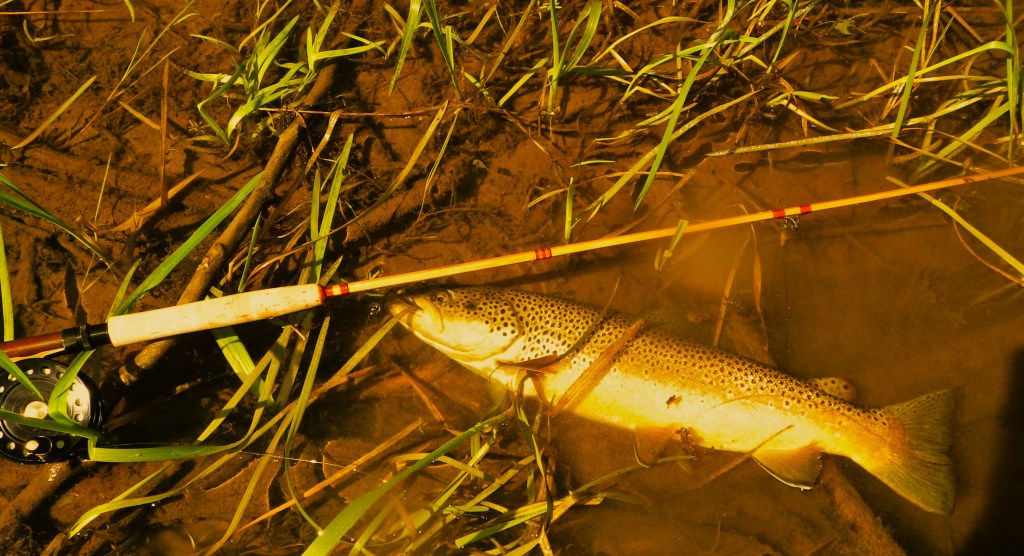
The heavy body aligned with the scale: twenty-two inches, but the girth and depth of his flanks convinced me this brown trout would easily exceed five pounds. The Unobtainable posed quickly and shot away with vigor as soon as his fins touched the water!

My little A. I. Hendrickson 100-Year Dun hooked firmly in his lip, this boy was one massive trout for his length, his body seemingly as thick in crossection as it is deep.

I was content with my one fish day, marveling at the expanse and duration of the hatch and the lack of feeding trout as I lingered, eyes searching for the next challenge. Touching the magic is always a blessing!

Cold! With A Warm Feeling Inside

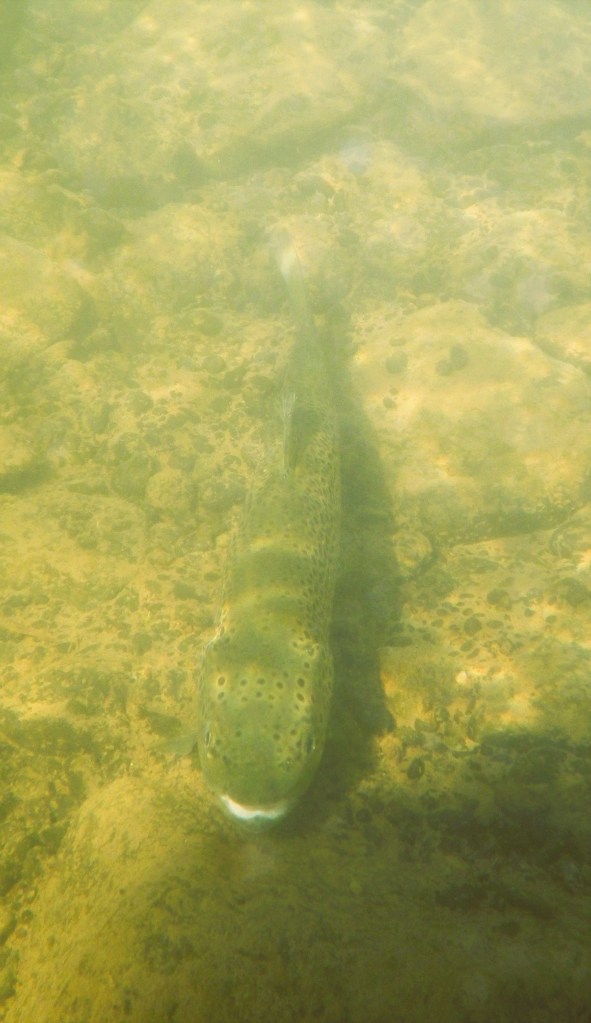
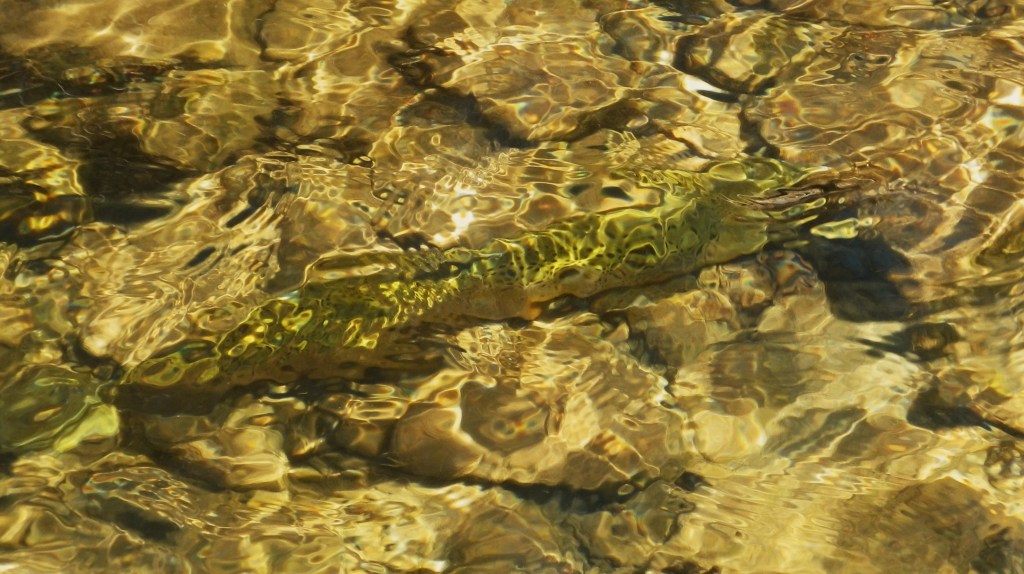
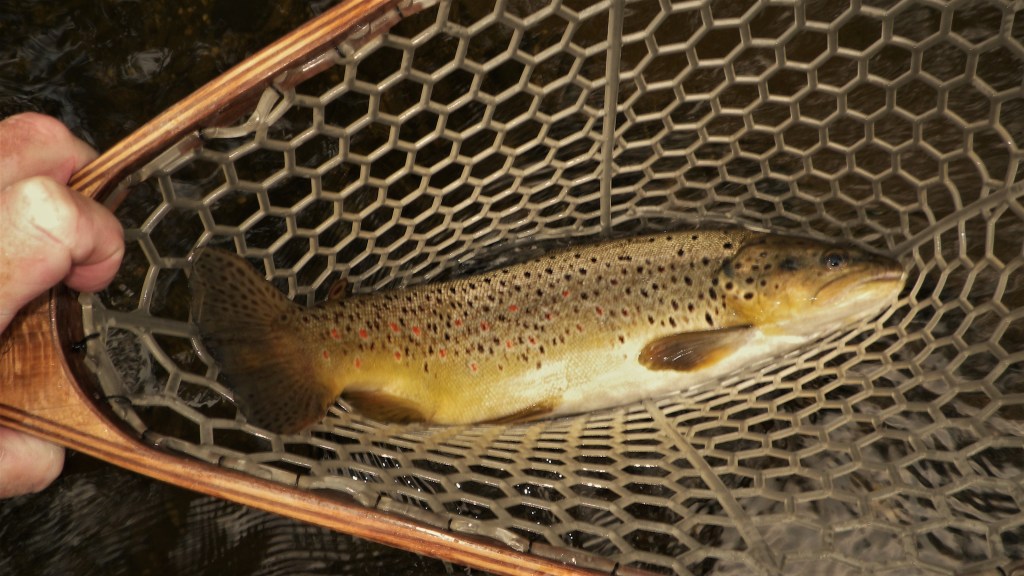
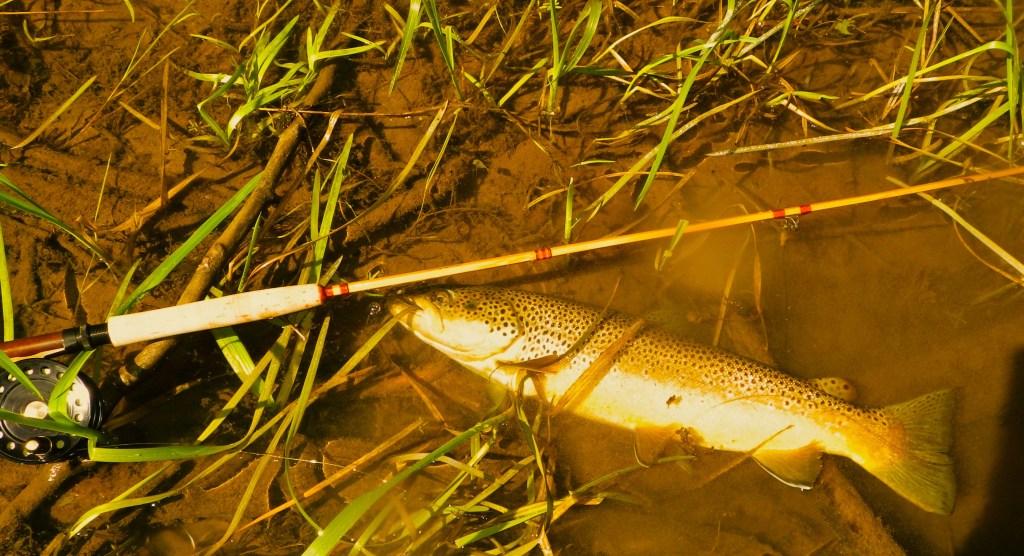
A very respectable brown trout hides in plain sight.

We always think we have enough layers, and I was certain of it this time. UA Cold gear top and bottom, poly fleece hoodies and fleece lined chinos, insulated jacket and waders – certainly enough to stay comfortable on a 52 degree day. On the drive home my vehicle thermometer recorded 54 degrees, so the day was warmer than expected to boot, but I was as cold as the grave.

I will admit there was an inner glow.

Trout hunting is my favorite activity, so a cold spring day that featured olives, Blue Quills and Hendricksons in regular doses fits right in with my plans.

I arrived at my destination early to find flies on the water. A trout or two rose in front of me as I selected a dry fly and checked my leader. The chill of the river took care of the warmth gained from my hike almost immediately, but my concentration was focused on finding just the right rise forms as the afternoon played out.

The flies came in fits and starts, first some Quills, followed closely by early Hendricksons. So closely in fact that I had to cut off my Blue Quill after half a dozen casts and affix a Hendrickson. Let the hunt begin.

I started working to those riseforms I liked the looks of that appeared closest to my position, and it wasn’t long before I had an energetic taker. That trout ran, pulled and twisted with everything he had! There is a subtle difference between strength on the end of your line, and power. When he finally gave up enough for me to get him in the net, that fifteen-inch brownie still had some vigor remaining. Clean, cold, well aerated water and plenty of bugs to eat brings out the best in our Catskill wild trout and makes them fight like they are much larger than they are. Later on, I would meet his twin.

After working the nearby rises, reduced by all of the cavorting that first fish had done in their midst, I began to reach out to the most promising, solitary bulges in the current. I got fooled by one of those subtle riseforms though, and brought a feisty ten incher to hand as a result. Time to get more serious…

I eased out into the run as I watched a soft rise downstream, convinced this was no ten-incher playing masquerade. Studying riseforms may not be an exact science, but it works far more often than it doesn’t when hunting good fish.

That one turned out to be exactly what I believed it to be, with that electric feeling of power as the little Hardy began to wail!

As the afternoon flowed by, the mayflies continued in variable little spurts of activity. During what passed for a brief shower, the surface was suddenly filled with tiny olives, allowing just enough time to change flies and make a few casts before the sun peeked out and calmed all activity for a while. When the clouds covered the brightness, the Hendricksons returned to the drift.

The largest brown of the day took one of them: speed, power, electricity – everything you could want. It took a serious effort to get him into the net, flanks heaving and quivering with the life of the river. Beautiful!

And then there was, the unobtainable. I had seen the rise from a distance, judged the river’s flow and the depth for an approach, and worked as close as possible. It was a long cast, out near the limits of my capabilities with the tackle in hand, and it had to deliver a soft, seamless presentation in that protected flatwater. I got my fly boxes wet again, trying to get those last few inches. Though mostly rising with a big, soft ring, he rolled a bit once or twice, just to make it absolutely clear that he was the king, and he wasn’t leaving the palace.

There was one pitch: my fly alighted way out there, right next to a drifting dun. My eyes picked them both up simultaneously, and they drifted side by side. I felt confident that I was tracking my fly, so much so that I stayed my hand when he rolled and the other vanished, watched it drift on past the disturbance. When I began to retrieve my line for another cast, the fly I had been watching didn’t move.

With the post-hatch calm settling around me, I began my hike out. In the tailout of a pool I saw the rings, Hendrickson duns were still on the water there. Perhaps my 100-Year Dun will have a chance at some redemption I thought.

It is mentally difficult to stalk a wide, shallow flat tailout in the waning moments of a hatch. Haste pushes water and ends the game, too much time, and the duns may be exhausted and the rises stop. There looked to be multiple trout at work, moving though, so impossible to tell how many. Two at least I figured, though irrelevant, as the chance would be for only one.

I made it into casting position, checked the tippet and the knot, then waited for a trout to settle down, to rise in the same position for a second time. One cast, then two. A pause to see where that cruiser wants to rise next. Cast three, and quiet again. Swing the fly well out from their taking area and wait. I fished them carefully for a few minutes, checking my own urgency. It will happen if you let it, if it is meant to…

The fly landed gently and drifted four feet before it disappeared in that wide, soft ring. As the rod bowed deeply he exploded into the air, the reel shrieking. Boring hard for the nearest tipping sheering cover, I laid the rod down and turned him just short of disaster. It was a long, hard fight, though eventually the magic turned it my way. He was bronze and golden, iridescent even in the muted light, as I slipped the fly from his jaw and cradled him back into the peace and beauty of the river.

Walking out got the blood flowing in parts of my legs at least, and the smile warmed me along with that inner glow. A good day, yes, a very good day. Cold? Well, yes, I guess it was.

Wind Stalking

Whitecaps blowin’ upstream!

Another beautiful spring day: cobalt blue skies, brilliant sunshine, and a gentle breeze! Well, maybe not so gentle. Wind is always a factor in these mountains, and how much, their direction and maximum velocity combine to add challenge to our fishing. As if the avoidance behavior of heavily fished wild trout failed to provide sufficient challenges.

I more or less lucked out yesterday. I was delayed in the morning while a technician replaced the modem on our internet service, hoping to finally put to rest the glitches and outages that make me hate electronics. When the work was done, I jumped into the shower, gathered my gear and beat feet for the river. I never stopped to check my watch, and actually ended up reaching the river’s edge earlier than planned.

Perhaps the Red Gods weren’t looking my way, I can’t be certain, but I waded out into the river to find a few early Hendricksons drifting by. The wind was intermittent at that point, gusting upstream from time to time, while leaving reasonably long periods when a guy could actually make an accurate fly presentation. I went instantly into trout hunting mode.

Wading along carefully, I was distracted by a rise just below and flipped my fly in it’s direction. There was no response to the drift, but as soon as I tightened for the pickup a little brownie grabbed my fly. He fought with all the ten inches of vigor he could muster before I hand lined him in to twist the hook free.

There was enough wind at times that I kept hearing the little wavelets plop, plopping against the rocky sections of the riverbank. Every once in a while I heard the distinct plop of a rise behind me, but every time I turned to look, the wind had dissipated all evidence of the riseform. This persisted until I turned back downstream and studied that water. There had been this big Canada Goose in the water diving and feeding on vegetation, and I was thinking that he was making all of that racket, but I wasn’t sure. Some of those plops sounded closer to me than the goose, so I kept watching. It’s not like there was anything eating those Hendricksons upstream anyway.

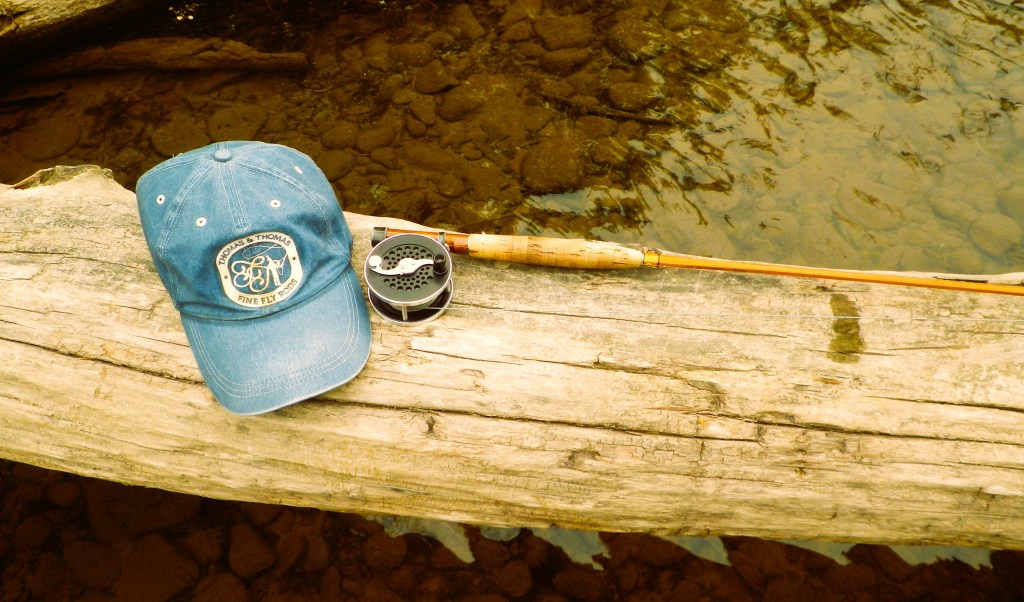
Staring hard into the glare, I finally heard a rise while looking right at the riseform before the wind ate it up, and I knew I had him. I had a faithful old CDC sparkle dun tied on, one of my best producers on that river, and I pulled some more line from my old Hardy Perfect and let the 8-foot Thomas & Thomas Paradigm bamboo rod do the rest. The wind blew my first cast a bit of course, but the second one was right down the pipe. Plop…zoom! That trout charged straight towards me, and I stripped line as fast as possible, barely keeping tight. The head shakes telegraphed size and strength, then he turned and brought that old Hardy into full song! She’s as old as I am that reel, but a much better singer.

The cane was bucking as I was reeling, then giving line again, and the big trout gave me everything he had. I had a heck of a time seeing him when I tried to bring him close to the net. I was standing about thigh deep and the glare on the wind rippled water kept me guessing and watching the leader. He tried to wrap me in the leader once, but somehow I blindly kept him from breaking off. I even lost sight for a critical moment when I scooped with my net, but he was there when I completed the lift, still with the greenish coloration and steely flanks of winter.

Twenty-one inches of angry brown trout gleaming in the sunshine.

Not long after releasing that brownie, the early duns began to fade. I wandered further upriver, stood around scanning the water for activity, and managed to pass the time until the main event started trickling off. The winds increased as the afternoon warmed of course and, though there was a decent hatch for close to an hour, I didn’t find another feeder until the flies had nearly disappeared.

There was a fish noodling around in a shallow scum line, fully exposed to that upstream wind. I worked close, but the gusts were just too strong and too constant by that point to allow a suitable presentation. Whatever finny predator was milking the cripples from that scum line was too savvy to take a compromised, dragging fly.

Better Than Expected

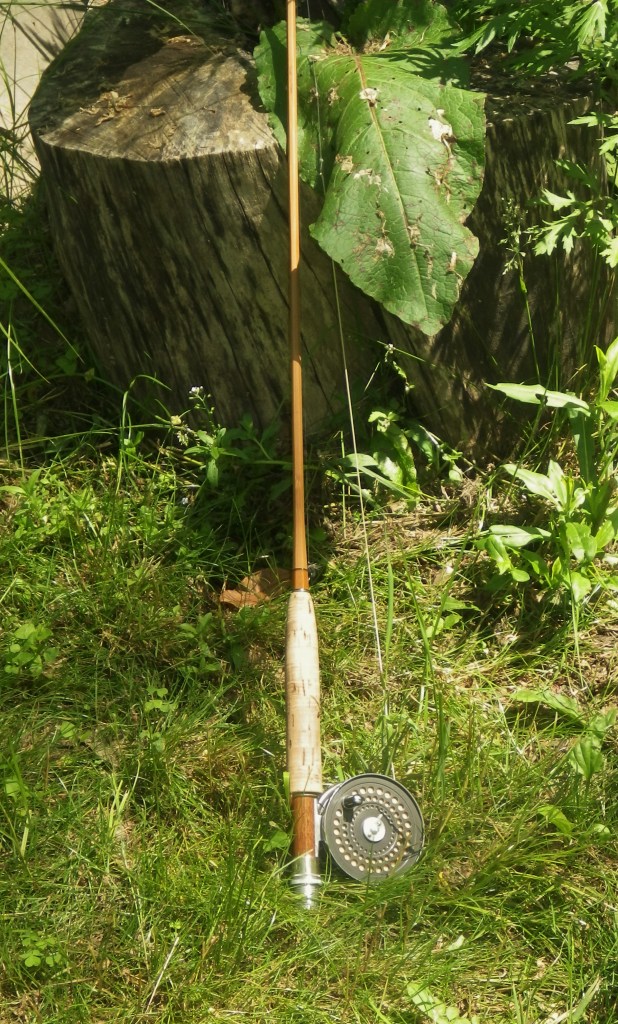
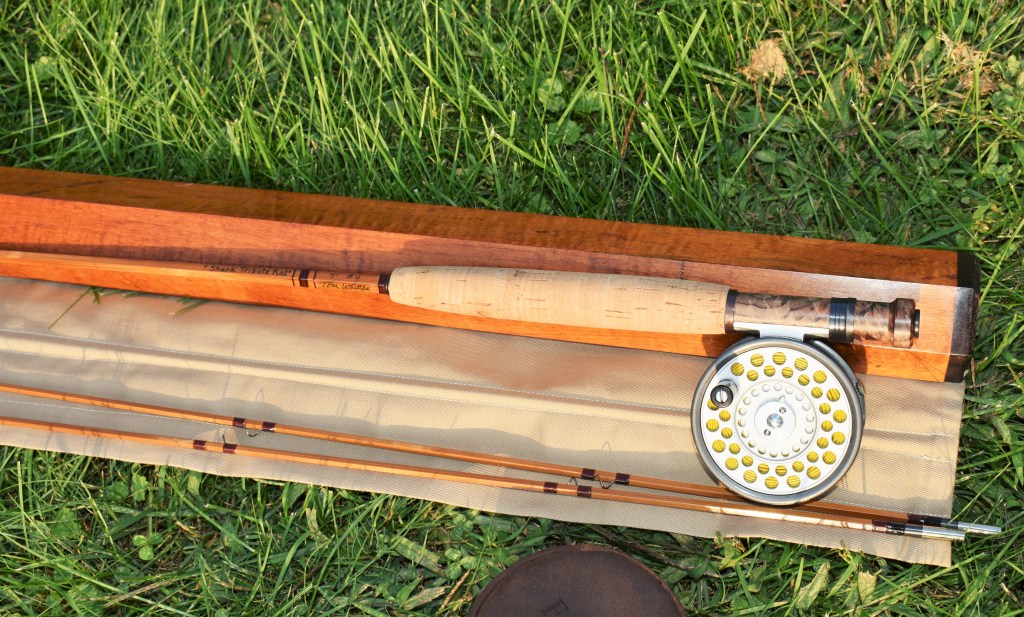
My Dennis Menscer Hollowbuilt 5 weight and the little fly that could: an Olive 100-Year Dun, Size 18

Though the forecast promised a calm, lovely 67-degree day, sunshine wasn’t expected. That gave me concerns about water temperatures, one of the frustrating things we fly fishers cannot control, and which have so great a bearing on the outcome of our precious spring fishing days.

As soon as I arrived at riverside, the blue sky and brilliant sunshine already had the upper hand, the remaining clouds retreating rapidly into a gorgeous spring day. I was smiling as I found a seat on the riverbank and pulled the line through the guides of my eight foot Dennis Menscer Hollowbuilt bamboo rod. I checked the leader thoroughly and decided the tippet needed replacement, so I knotted a long, fresh piece of 5X fluorocarbon in place. I started with a Blue Quill pattern, then sat back to watch for signs of life.

I wasn’t there very long when a nice trout glided up from the river bottom, showing his head and half his body as he found an early winged morsel to his liking. By the time I stood up from my seat, he was up again.

That brownie was what I think of as a teaser, a fish that rises once or twice like that, then vanishes. After easing over into a casting position, I waited for him to rise again. Failing that, I began to cast over the general area where that teaser had showed himself. There really weren’t any flies visible yet, so I figured he could still be down there and just might take a liking to my little fly. That approach works about once in a thousand tries I guess, and it did allow me to limber up my casting muscles. Nine hundred ninety-nine tries to go…

I had resigned myself to simply standing in the river and searching for some quiver of movement within the classic taking areas this reach of river presents, and I spent a considerable amount of time doing that. There are days when you don’t see a lot of rises, even when the mayflies or caddis are abundant, and such days are very suitable to my style of hunting trout.

Eventually I saw him, one soft ring between a rock and the bank, just the one, and I began to work my way in that direction. You move with purpose in these situations, glancing at the bottom in front of your feet, then back to the target area, all the while assessing the current between you and that trout. Roll a rock with an idle step and you may end the game before it really begins or slip and stumble into a very cold and unexpected bath.

By the time I reached my initial casting position, the trout had moved to my side of the rock where the current could bring him enough nourishment. There were small and smaller mayflies that I took to be Blue Quills and Olives, and a very occasional early Hendrickson. Just about the time I started to cast, the breeze picked up out of nowhere. “Winds light and variable” something else the forecasters got wrong it seems. They would tell you that the “unexpected sunshine warmed the air more rapidly than expected thus increasing surface winds” or something like that, and they would be technically correct. Anglers simply smile at the impeccably bad timing and know that it is the work of the Red Gods, doing what they do.

Dealing with the upstream wind, the multitude of mayflies present in the drift, and that old trout’s sliding up and down and in and out to different taking spots provided me with something like three quarters of an hour of gamesmanship; changing flies and casting positions, ever aware of just how easily it is to spook a feeding fish in these situations.

I finally had a little bit of a revelation and dug around in my vest for one of the first little Olive 100-Year Duns I had tied last fall. One of those size 18 dry flies had landed the last beautiful big brownie of my 2022 dry fly season in late October. I made three or four presentations with that fly before it was replaced by a soft, wide ring in the surface.

Oh, that flamed bamboo felt good with the heavy arch as I battled that trout in the broiling currents! As soon as I felt him, I got concerned about the small, light wire hook and 5X tippet. He was boring down into very rocky bottom, and there were severe limits to my tackle’s ability to change his mind and keep my fragile tippet away from the rocks. The Hollowbuilt did a wonderful job as always and kept enough pressure on the trout to keep him a little off balance. I just did my best to respond to his tactics and listen to the Hardy music!

Netting that fish in the deeper, faster water took a few passes. Every time I tried to bring him around, he found new energy to dive away and back toward that snaggy river bottom. I backed out just a little shallower for my last try, swung the rod in a big upstream arc, got his nose over the bag and lifted! The weight felt wonderful as he writhed in the mesh and showered me with icy cold water.

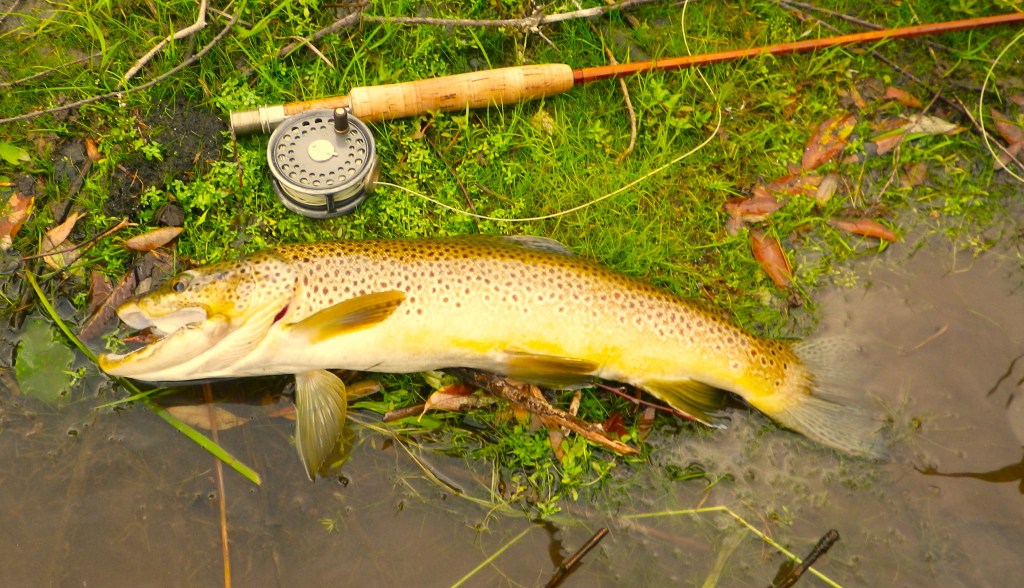
I kept the net bag in the water as I eased back toward the riverbank, where I slipped the little fly from the point of his upper lip. I got the camera out of it’s case with one hand while I laid the Menscer very gently on the rocks, then positioned the brown in the shallow water and snapped two quick photos.

I carried the trout into the current and slid him back and forth a couple of times, enough to satisfy him he had water under his belly and shoot back toward midriver.

A twenty-four inch plus wild brown trout in a freestone river is the kind of thing that more than makes your day, and the thrill of classic tackle just makes it sweeter!

No sooner had I released that trout than I heard two guys clattering down the trail to the river. One of them spoke to me while I rinsed my hands in the river, and I recognized the voice. It was Galen and a friend of his that looked somewhat familiar, both ready for the day with classic bamboo fly rods of their own. They headed upriver after our greeting and I picked up my rod and turned back toward the water, going back to the searching part of fishing as the flies began to change.

There would be more Hendricksons, and more anglers as the afternoon progressed toward evening. I found one more good fish feeding, there weren’t many despite a pretty nice hatch of flies. That guy sucked the fly down without a ring and dove down around one of those rocks before I could even set the hook. I got back my fly with the hook bend opened up wide.

Before long, another angler wandered into the pool below me. The sun’s reflections showed me he was fishing bamboo as well. I was looking for a third riser when I heard a loud voice shouting my name. I turned and waved to Kevan as he waded in with his favorite Granger. His friend Forrest joined him shortly. I had fished to and landed a magnificent brownie in total solitude, and then found myself in the middle of a bamboo party, realizing I knew all of these guys.

There would be a sporadic rise here and there, and I waded into position a few times, but there would be no more feeding fish to play the game with. I waded out when Galen and Vinny came walking down the bank, Galen with his 8-1/2′ Dennis Menscer rod, and Vinny with a golden hued Don Schroeder 3-piece he had just used to land a big brownie upstream. We walked down to say hello to Kevan and congratulate him on the big fish we had seen him land.

The four of us talked for that last half an hour, catching up on the offseason and the early events of this very young one, while Kevan’s buddies Forrest and Brooks stayed far out in the river, hoping to clash swords with a rising trout. The chill got to me quickly as the sun retired behind the mountainside and left us in shadow. I bade them well as the first spinners circled overhead and headed up the path.

Off Days

Well, our prototypical yo-yo spring weather patterns are still at work keeping Catskill anglers on edge. That week long warming trend last week was enough to spoil us for a typical April. I mean the last two days of April’s second week were unreal: 88 degrees and 90 degrees. The water temperature was 60 degrees and my anticipation level was sky high for a great hatch. The funny thing is, there were no mayflies, none, until the heat wave broke a few days later. The first good hatches came on a damp, misty, cool afternoon with the river at a seasonable 55 degrees. That is typical April weather.

The past two days have been downright cold, with river temperatures locked into the low to mid-forties. I sat huddled on a windy riverbank and stood shivering in the water for three hours on Tuesday and saw two mayflies. Yesterday it was even colder. I wandered around the house checking water temperatures every hour and hoping the afternoon sunshine promised by the forecaster would appear. I think what I was feeling was kind of withdrawal from fishing stimuli: I was nervous, twitchy, worrying about missing out on something I felt pretty surely wasn’t going to happen. Nine days straight on the rivers and then bam, cold turkey!

I’m still a little twitchy this morning. The water is still cold and, though the air temperature should hit the upper sixties, it isn’t too likely we will have any sun; and sunshine carries most of the load when it comes to raising water temperatures.

I’ve got my Menscer Hollowbuilt standing by the door, along with the old CFO that sort of got married to that rod seven years ago. There is an old Airflo weight forward still spooled on that reel, cause that rod seems to sing her sweetest tunes with that line’s accompaniment. That Airflo has been repaired and cleaned and shepherded through all seven seasons since, like too many of the best things I have found in this world, they don’t make that line anymore. I have a new Airflo, they call it the Tactical Taper. It is a great line, but it just doesn’t have the same vibe with my Menscer.

Every bamboo rod I have ever cast has a favorite fly line, a special combination of taper and suppleness that brings out the best casting performance that rod is capable of in my hands. The my hands part of that equation may be the largest part. Every caster is different, and what feels best to one may just not work well for another. The bond between an angler and that living thing, that scepter we call the bamboo fly rod, is sacred.

Just thinking about that calms me down a little bit, centers me, as I prepare to visit another reach of bright water to search for the magic of trout and fly!