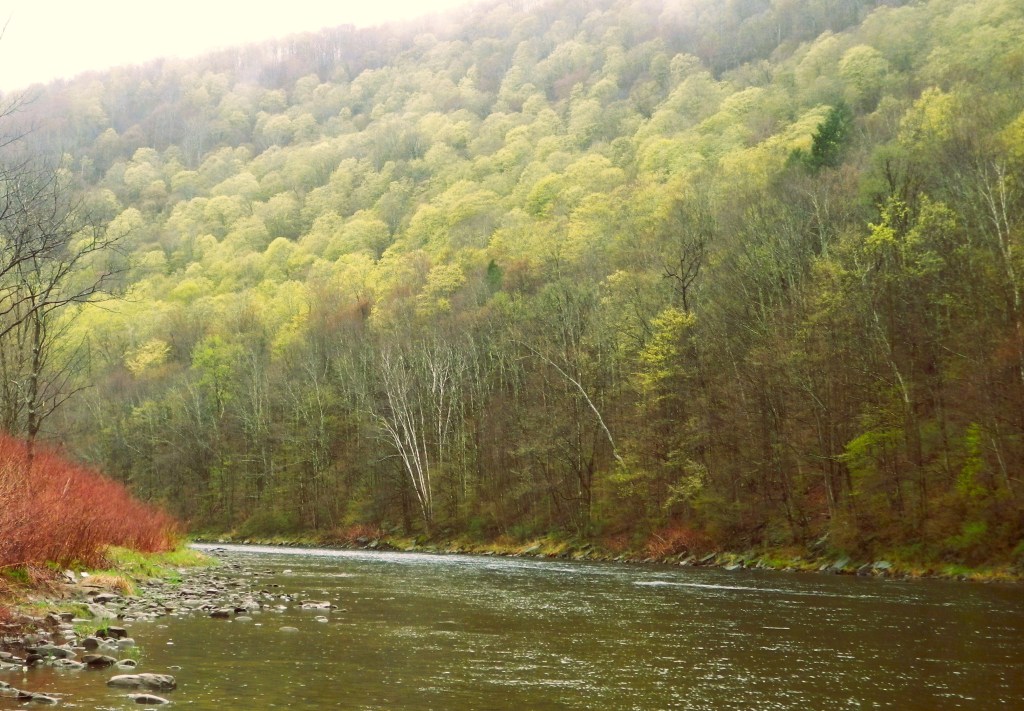
Mist Wraiths and the First Blush

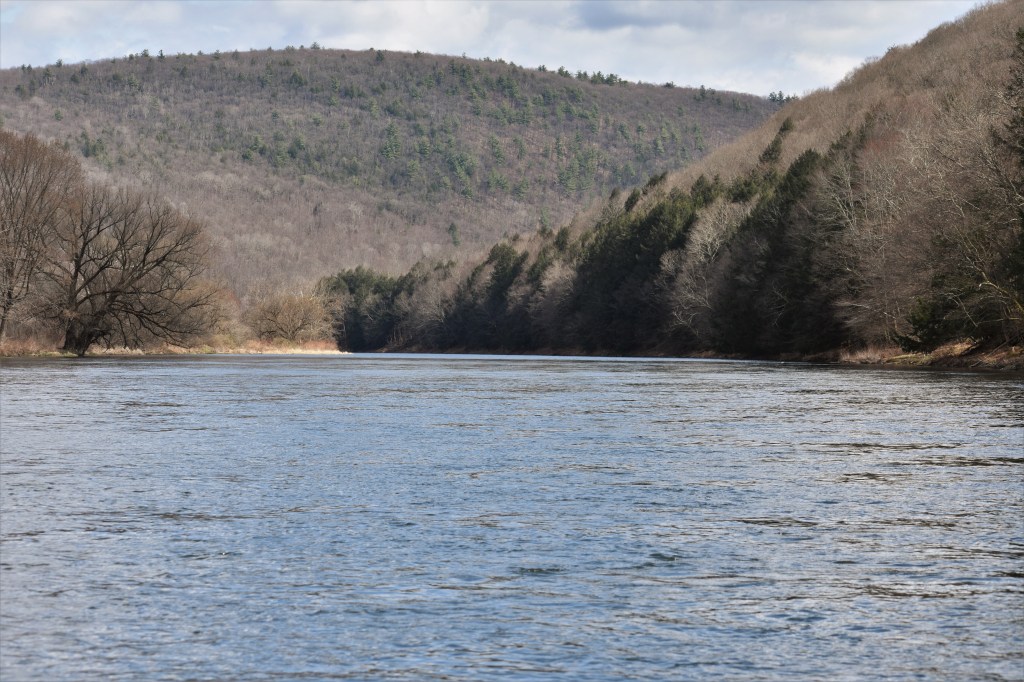
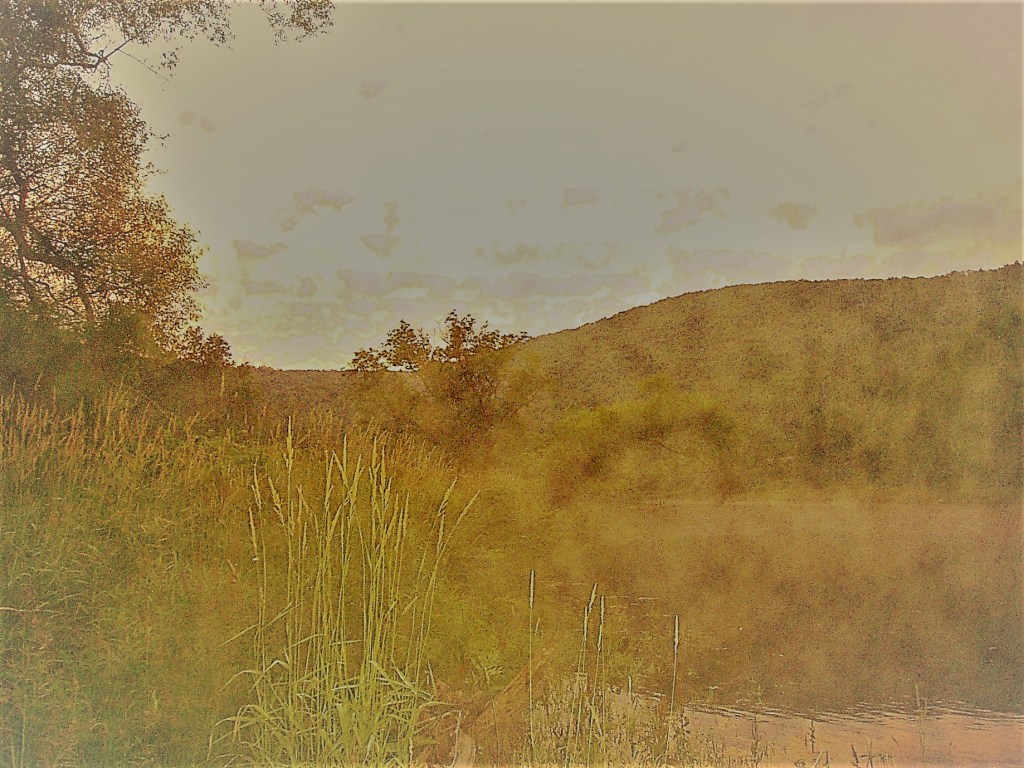
Half a week ago the afternoon temperature soared to near ninety degrees, this day would be a damp, chilly fifty-five at it’s best. With last week’s heat wave, bare trees showed red buds for a day and then the first mouse ears of spring green. As the cold seeps into my bones, I gaze at those misty slopes and spring’s first blush of color.

Chilly, rainy spring days are classic mayfly days in the annals of Catskill fly fishing, though I have found the fishing doesn’t always live up to the legend. That is, I have spent many such days with rain, sleet and wind cutting me to the bone with no hatch and no rising trout observed. This day would be one of those in the classic vein. The breeze was intermittent and generally moderate and the hatch, rather hatches, were good.

The first rising trout proved difficult, taking something unseen upon the surface, at least to my aging eyes. Eventually, a change in the light helped me spot tiny olives, and I changed as quickly as possible. The breeze boogered a cast, and of course a trout picked that opportunity to notice and refuse my fly. There were a couple of fish in the vicinity, and they both shut down soon after when the hatch changed to Blue Quills. What I got was an occasional cast to a sporadic sip at that point, and the Blue Quill that had worked the day before failed miserably before all rises ceased.

I waded back to shallower water and started searching. The first Hendricksons showed with the last of the Blue Quills, but it would be some time before I found a fish taking them.
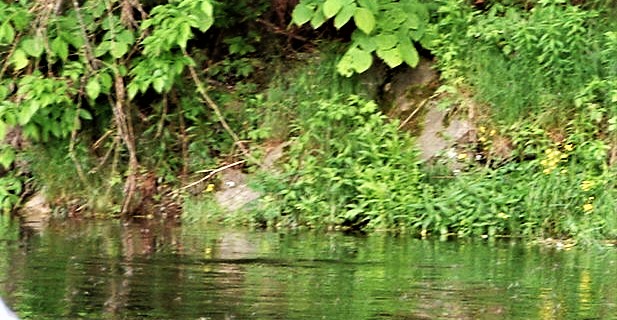
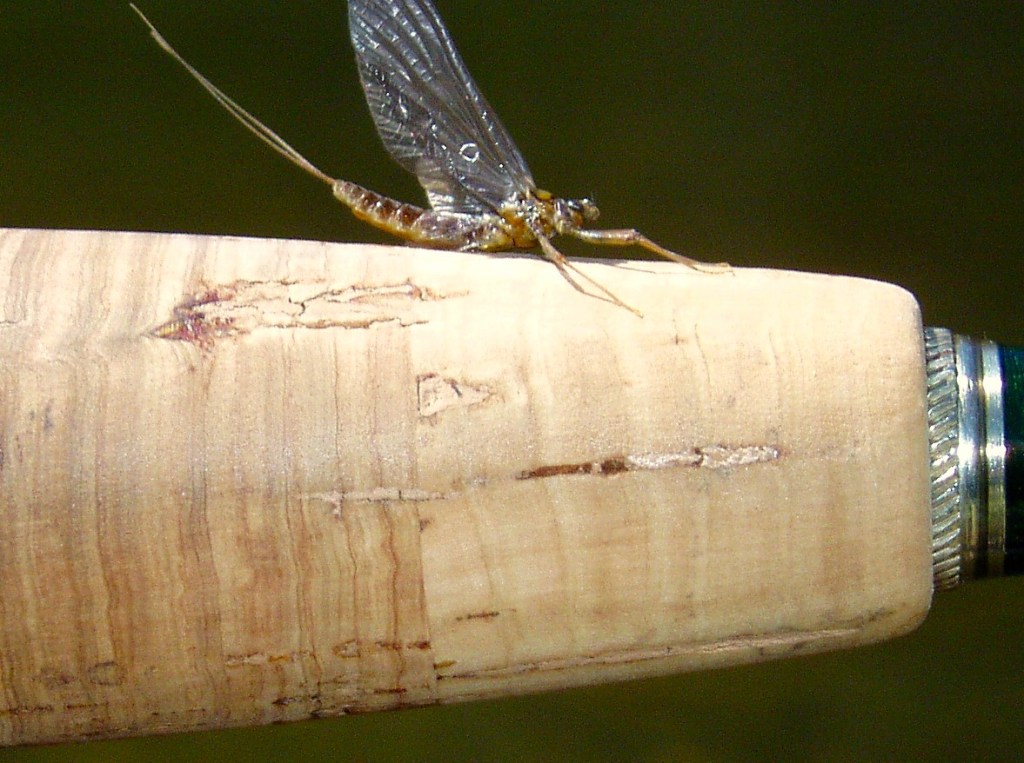
Those tiny specks are tiny mayflies, some with wings erect, others half drenched and contorted in various postures. The game is discovering which version the trout is eating; if he gives you time to do that!

With the river rising from last night’s rain, I waded into deeper current again upon spotting a tiny sip tight to the riverbank. Depth and an unstable bottom left me with a fine long cast, 85 feet or thereabouts based upon most of the fly line and 15 feet of leader I was casting, a tough nut with a downstream wind rising into my casting shoulder. It was one of those situations where the breeze disturbed the delivery just enough to leave the fly inches short, and that trout wasn’t leaving the shadow of the bank.

Suddenly, after a slight repositioning, a fish rose several feet out from the bank and upstream from the shy one. I dropped an easy cast on him twice and had him on the second. He fought hard in the heavy current, bringing a big smile to my face, sure that I had tied into a twenty inch fish. He was all of that, that chub, and I removed my slimed fly with disgust. Never trust an easy opportunity!

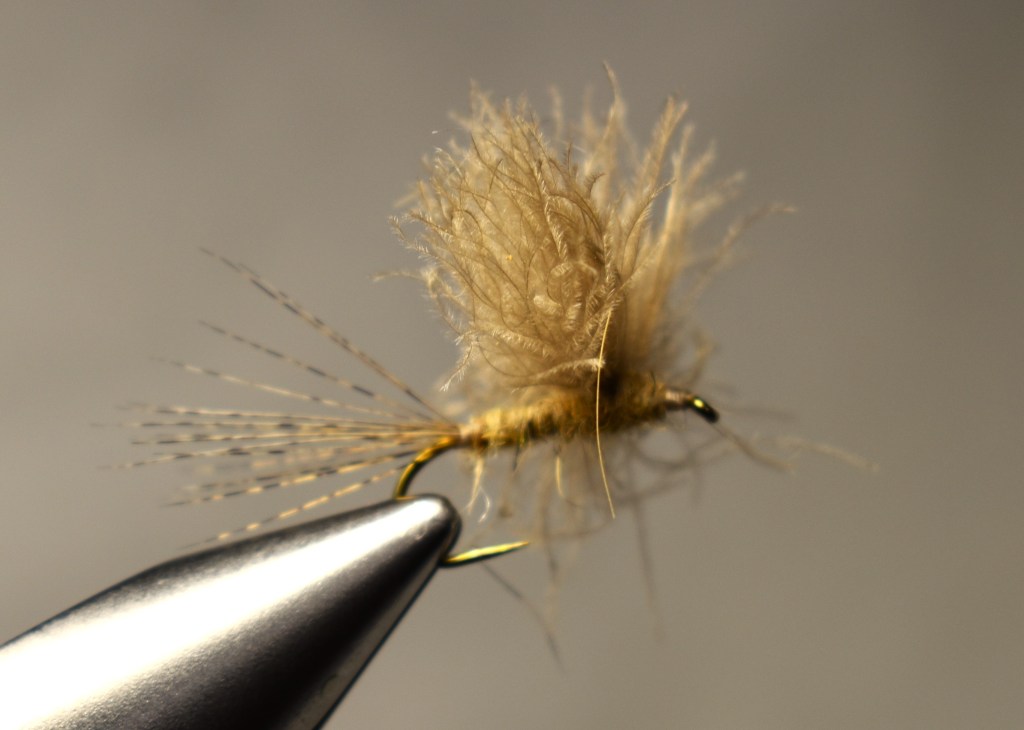
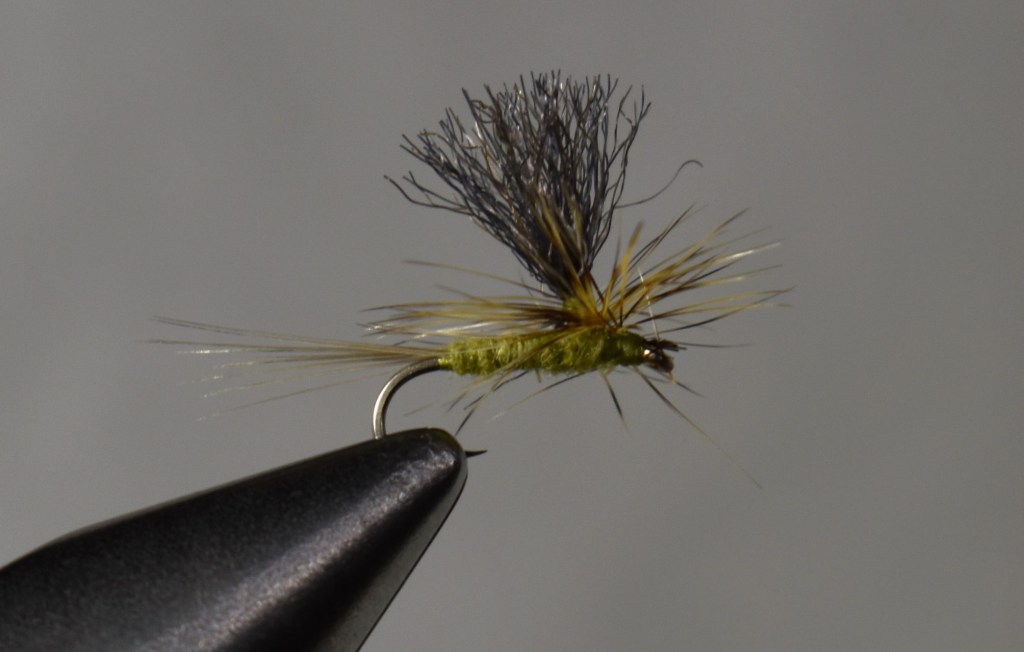
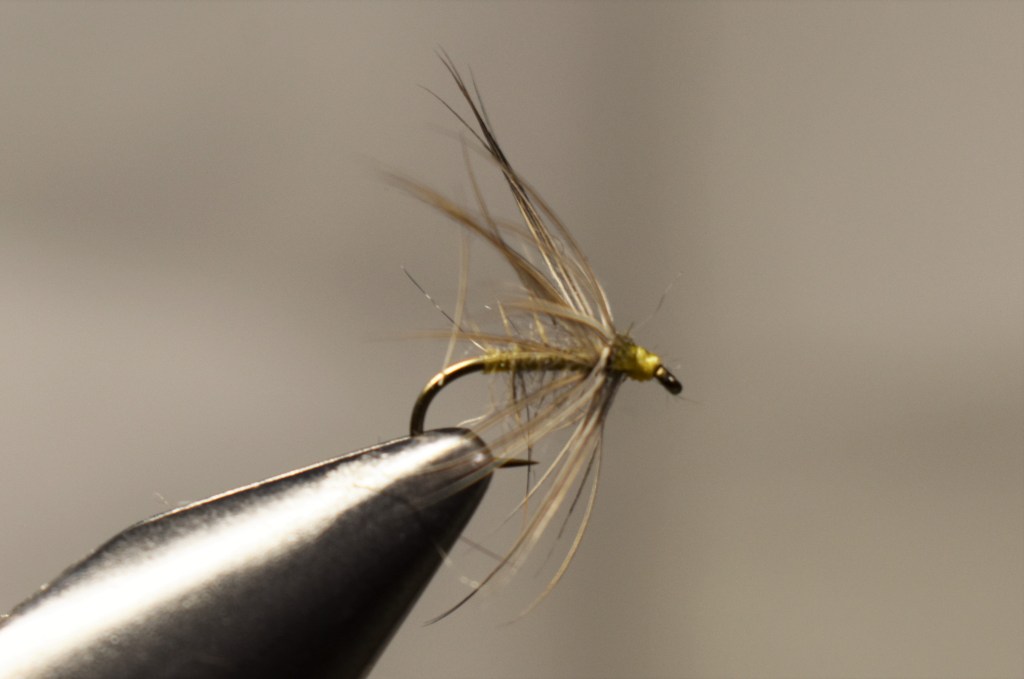
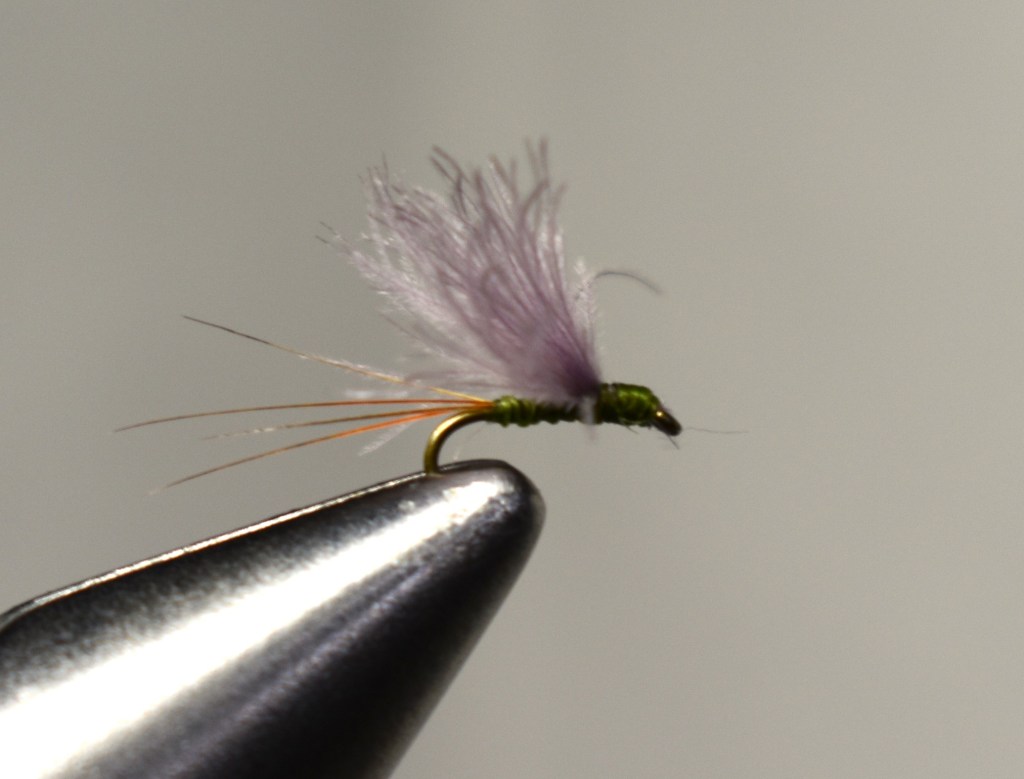
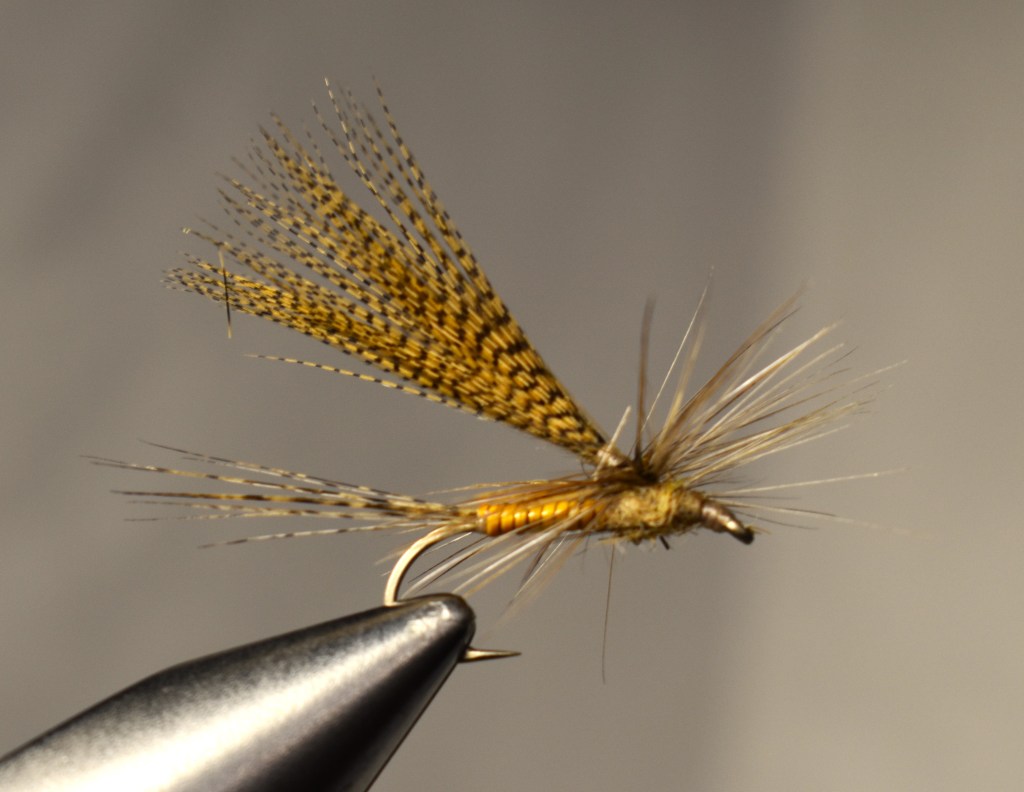
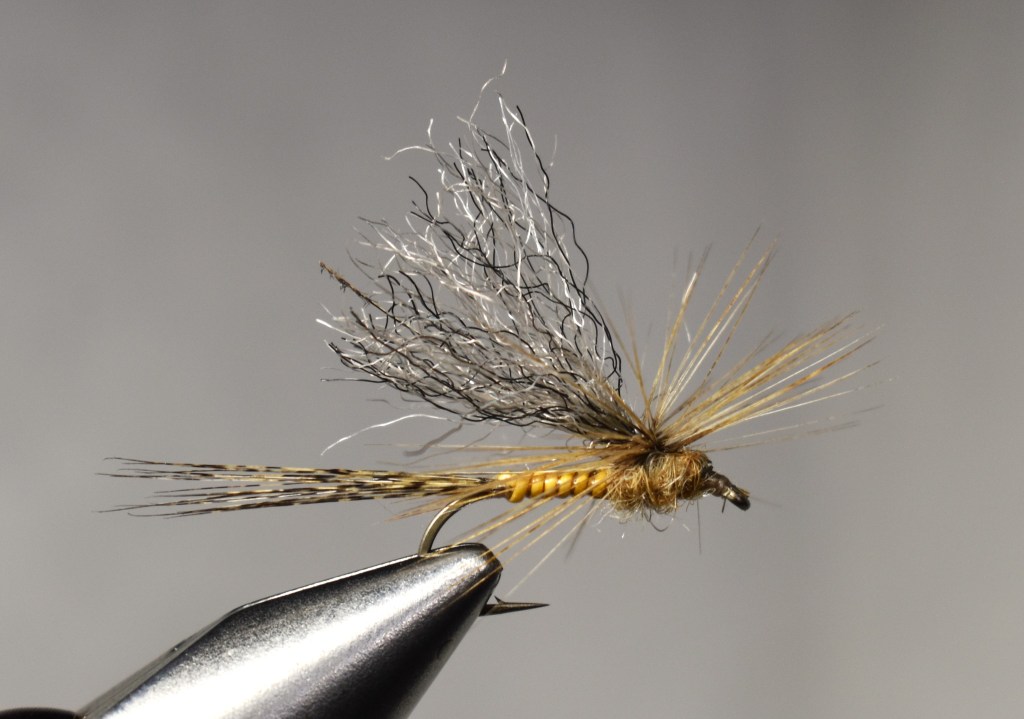
I eased a few steps upstream and managed a step and a half closer to the bank, with more of an angle to help deal with the wind, but a bit longer cast. I was missing by two or three inches as I struggled with the wind, until finally I eased up on the power and let my timing rule the cast. The fly dropped perfectly, I flipped a slight mend upstream, and tensed to watch the drift. I had switched to a fly I call the Century Dun, it’s canted wing tied with Trigger Point fibers to enhance visibility, and I could clearly see it disappearing in a teacup sized ring…

A firm hook set brought a terrible bend in the rod, and the fish shot out from the bank and vaulted into the air! No chub this time. We danced through the sharp-edged rocks with my rod leading him around and away from death for my 5X tippet as he brought my little Hardy to song.

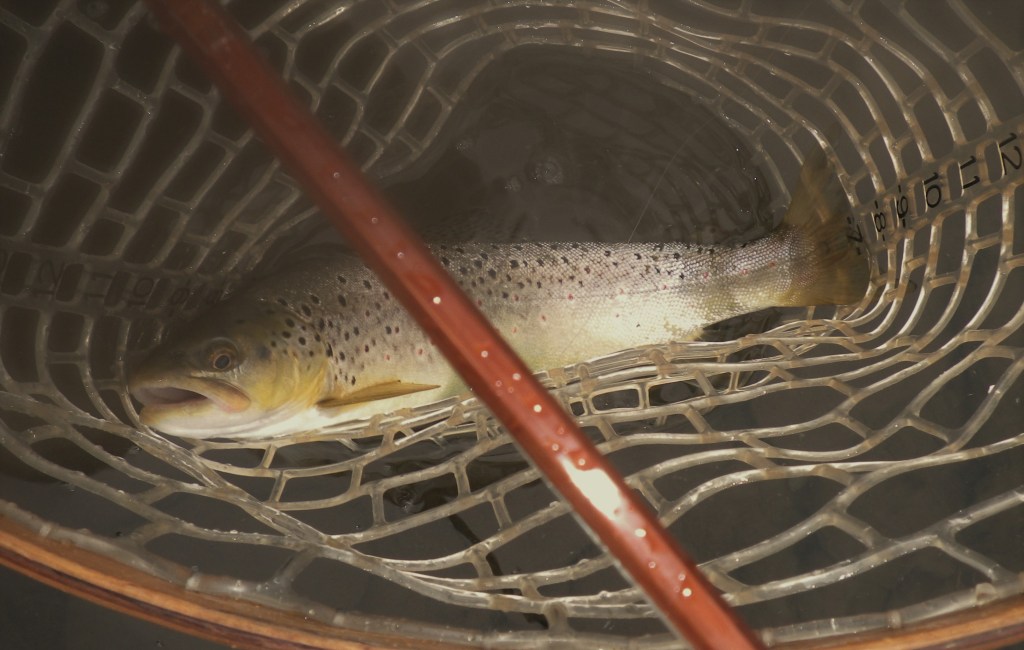
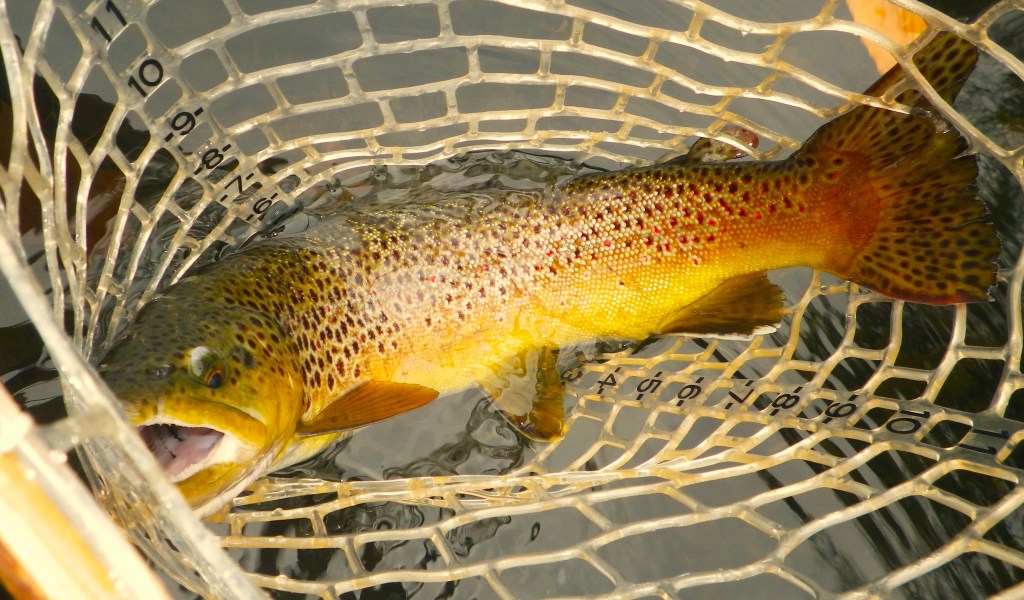
When he appeared ready, I steadied myself in my precarious stand, slid him toward me, and backed him into the net; my lift quicker than his thrust to escape. Nestled on the measuring scale laid twenty-one inches of beautiful, wide flanked brown trout, a proper prize to begin my dry fly season amid my favorite hatch.
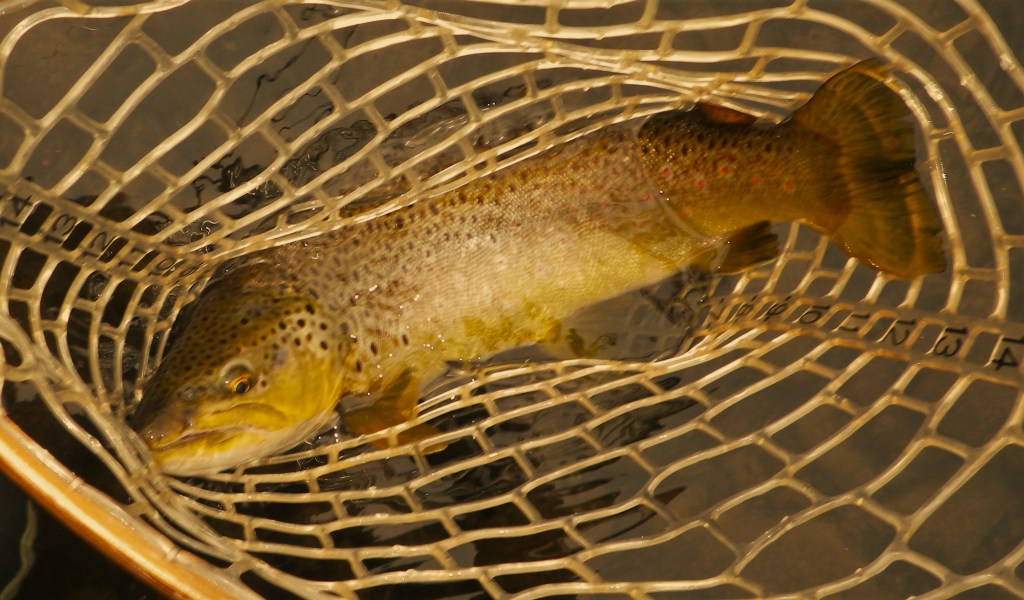
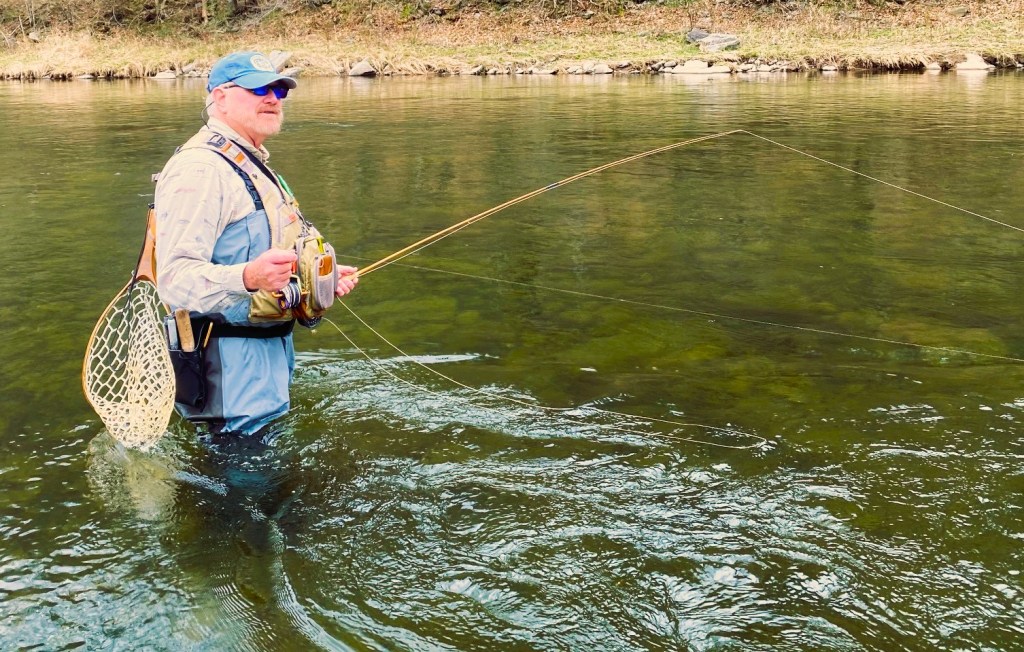
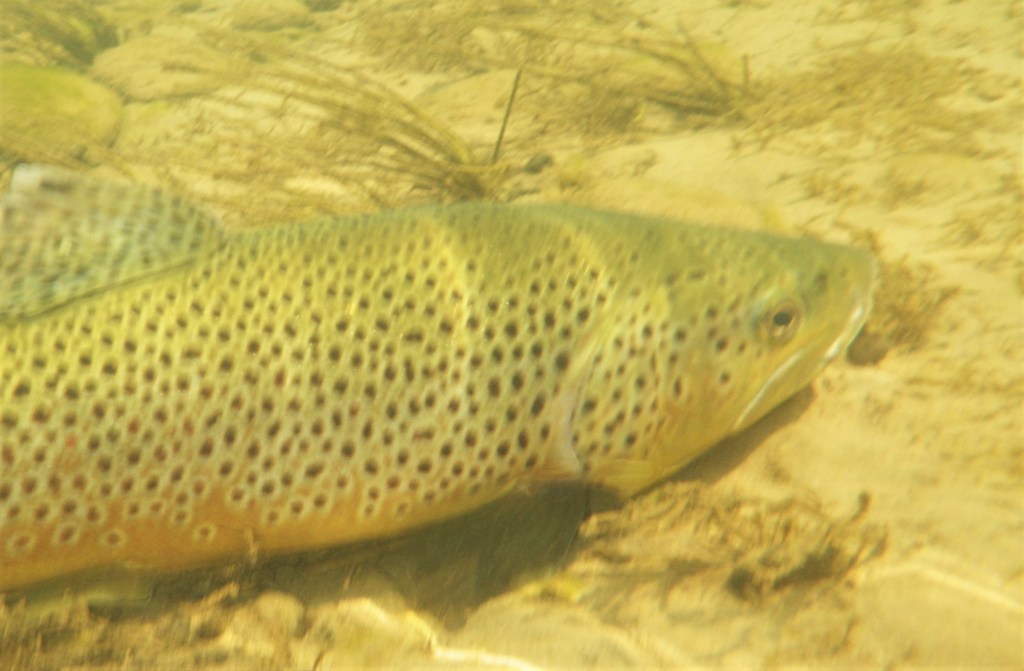
I didn’t snap a photo while perched amid the heavy current, so I’ll let another April brownie serve as stand in.

Larger Hendricksons had begun to appear as the afternoon drew on, and I found another riser tucked underneath a grassy bank, playing the two inches is too far game again. One cast might have caught a lull in the breeze and tucked in close enough, for there was a heavy rise before I had even spotted my fly. A missed take? A splashy refusal? I will never know.

At five this morning I was back at my bench, crafting some jumbo Hendricksons. It will be colder today, forty-eight they say, though I expect that is wishful thinking. The water has cooled, and that can limit feeding, even if a good hatch comes off. Perhaps a big mouthful will tempt a good brownie if he shows himself today. Day nine of my little marathon awaits…
Seven Days On The River

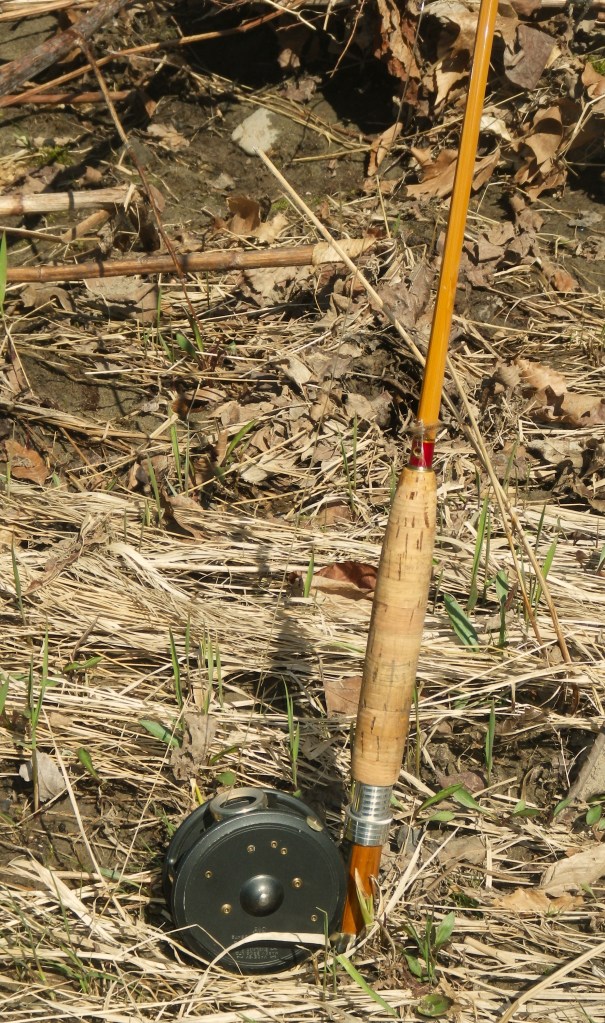
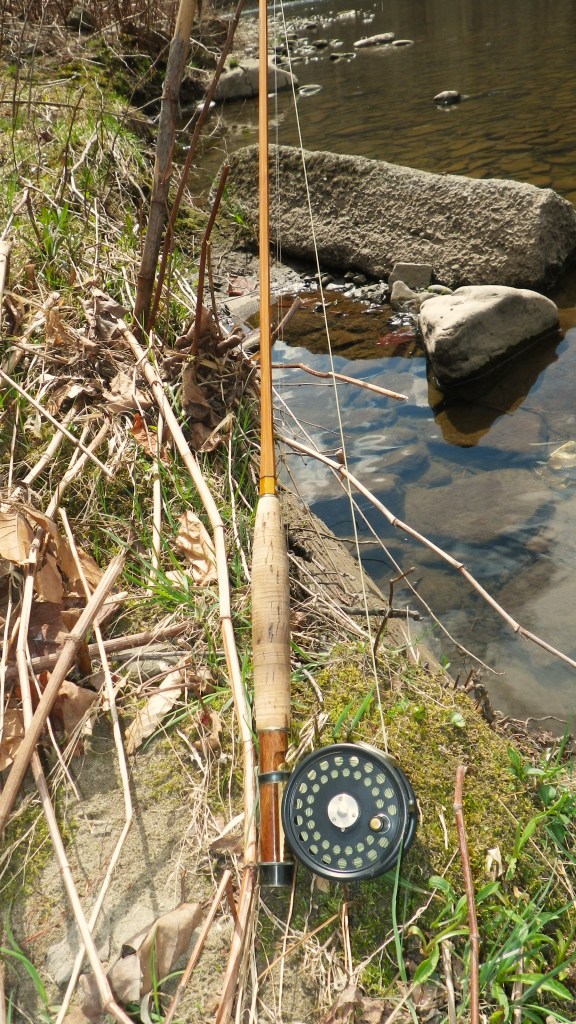
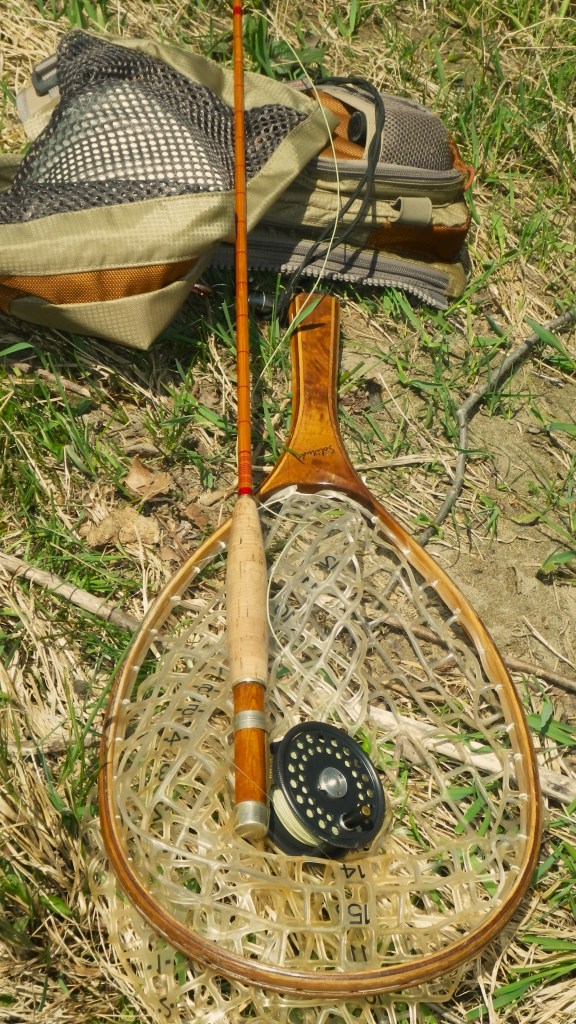
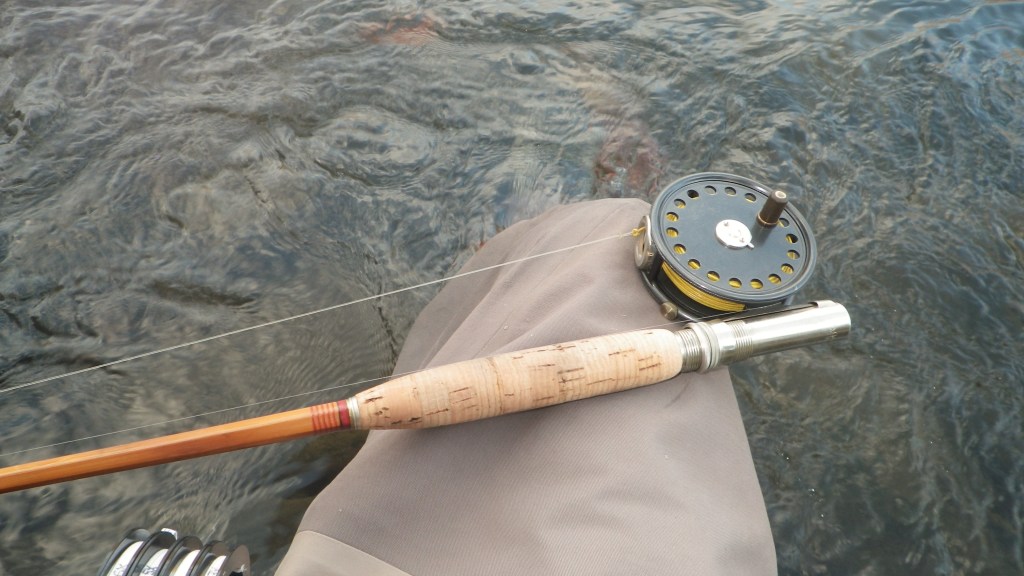
Historic Catskill River Tour: Mid-fifties Leonard & St. George, ’77 T&T Hendrickson & St. George, 1918 Thomas & St. George and early 70’s T&T Paradigm and vintage Perfect. I carried a lot of old favorites on the river this week! The first two outfits pictured were the “lucky” ones!

I confess, I am tired! Straight out of winter, I embarked upon a fishing marathon with the expectation that last week’s soaring temperatures would usher me into mayfly Valhalla. I enjoyed the sunshine, even got a bit too much of it when I shortcut the sunscreen one afternoon, but those mayflies, well, seems they just ain’t ready.

During the course of my week, water temperature exploded from forty-seven degrees to just over sixty, and I expected hatching Quill Gordons every waking minute! That was the first fly I tied on last Sunday, and again on Monday, and it was the first fly I used to land my first dry fly trout of the season and the largest of the three taken that day. Did I actually see any Quill Gordon mayflies, well no. I guess it was late Thursday afternoon when I turned over a couple of rocks and found an Epeorus nymph that showed no visual signs of being close to emergence.

Late Friday, after two days of battling miserable winds, I saw a brief handful of mayflies, some small, some medium size, and none of them numerous enough to interest a trout. Of course, I decided I would have to break one of my rules and fish again on Saturday. I tried a different stretch of river and invited a friend from the Catskill Fly Tyers Guild to meet me on the river after our morning meeting concluded. Just before my friend Chuck arrived, I saw a couple of slight, sipping rises out in the river. I rose from my riverbank seat and waded out.

I guess I saw one little mayfly, and it looked like a Hendrickson. Luckily I had seen two or three the day before and tied half a dozen sixteens to add to my tremendous supply of Hendrickson patterns. I knotted one to my 5X tippet and cast to the location of the first sipper. No dice. I had the distinct impression that there was a cruising fish at work here, and I didn’t see more than one or two flies on the water. Finally there was a complete rise further out in the center of a flat glide – a ring with the tip of a nose in it!

Two or three casts later, that nose came up and took my little Hendrickson, and a hell of a fight ensued. That trout made a short, quick burst and jumped clear of the water! There was no doubt I had tied into a nice brownie. I had heard a car door, but Chuck had not materialized as I traded line with my fish, nor had he emerged from the roadside when I finally scooped a thick flanked brownie into the net.

I was fishing my vintage eight-foot Thomas & Thomas Hendrickson, a very light 3-3/8 ounce rod, that arches deeply and bucks wildly with a nice trout on the fly. Despite the light weight for a five line rod, it truly plays heavy fish very effectively. The rod is simply so alive in the hand! It’s action and response really adds to the excitement. Spring dry fly fishing with bamboo makes it worth struggling through the five months of winter!

I backed out into shallower water and waited for Chuck to join me. When he arrived at my side, I offered one of the little dries that had taken the brown. It took half an hour for the flat to calm down from the commotion, and I anticipated that the hatch was going to start every minute of that span. It wasn’t to be.

I saw fewer flies than the day before actually, though the few we did see came over a longer period of time. Eventually, another good fish began sipping something we couldn’t see from the tail of that glide, and Chuck went to work on him. Like his spotted brethren, a good cast brought him up for that little Hendrickson and Chuck got a good hookset and a strong pull before the trout sheared his tippet on a rock. We didn’t know it then, still expecting nirvana was a moment away, but we were done. Yes, another trout would sip something unseen a handful of times over our last hour, giving each of us a few casts and the chance to change flies, and talk of all we hoped the season would bring, but there would be no hatch on day seven.

We ended our day with good spirits, both of us with leaky waders, mine for the second day after less than two months of use. Does anyone make a decent, reliable wader anymore?

I told Chuck I would let him know if the hatch finally comes on, and I will; at least if I can survive enough continuous days of fishing to see it happen. Ah to be thirty years old again, but then again, I wouldn’t have the option of fishing straight through a week or two!

Old Wet Leg Willy waiting for the hatch that wasn’t. (Photo courtesy Chuck Coronato)

Messrs. Leonard, Gordon & Brown

Day one of the 2023 Catskill Dry Fly Season has arrived at last! Yes, I pushed the envelope a bit on Sunday, though since I failed to remove my fly from the hook keeper, failed to make a cast, perhaps it wasn’t really a fishing day.

Monday April 10th has been my target date since I began my countdown back there in the bowels of winter. I think of Mondays as the beginning of my fishing week, as I rarely venture out on weekends, enjoying what little solitude I can find on our popular rivers. This second Monday in April turned out to be quite perfect.

By half past noon I was settled in on the same stretch of riverbank I had occupied on Sunday; waiting with that same Gordon’s Quill resting in the Leonard’s hook keeper. The river flowed past a little slower, and the sunshine warmed my shoulders even better. As I watched the afternoon drift past, I noted the black caddis and early stoneflies on the water and in the air. There were fewer of them than there were the day before, and I hoped Nature was making room for the first mayflies.

It was nearing two o’clock when I saw that first soft rise in the distance, rose, and began a slow, careful stalk. Of course, it wouldn’t be quite the same if the breeze hadn’t come up at just the moment I readied to make the first cast. I knew then this was truly a day of fishing.

That breeze complicated my casting, and required a move or two before I reached the right position to allow the presentation I needed. The Quill Gordon sailed out on a smooth loop of line, the leader unfurled, and that fly dropped right in the bankside line of drift with lovely curls of slack in the tippet. That first surface feeding brown trout of the season simply couldn’t help himself.

There is a different feel to fighting a good trout on a dry fly rod than with the heavier tackle I had carried during those long months of winter, a light, joyous feeling. I thanked him in the net as I retrieved my Quill and sent him back to ponder whether taking Quill Gordons before the hatch appears is a sound decision.

Before long I spied a second rise and repositioned myself for the engagement. This fish was sipping something small from the slow glide formed by the obstructions along the riverbank. He wasn’t even slightly inclined to take that big Quill Gordon. I clipped it and the 4X tippet, added three and a half feet of 5X, and offered him a little black caddis. He answered with a definitive No.

I studied that line of drift, then watched the nearby current flowing past me for an answer. Whatever that fish was sipping, there was no sign of it in the flow near at hand. From my distant vantage, I thought I saw tiny upright wings, but only tight along that edge. Digging out an ubiquitous size 20 olive T.P. Dun, I went back to work on making the ideal presentation.

That second nice brownie really put a flourish on my day. I had heard some good news just as I was assembling my tackle, the kind that lifts worries from my thoughts and brightens my spirit such that I can take in all of the beauty of the rivers and the mountains that feed them. That pair of trout seemed to be the only ones moved to some surface feeding, so I decided to finish this gloriously bright afternoon at another favorite pool.

I tend to choose less traveled reaches of rivers, sidestepping the crowds that each new season brings to the Catskills. I was surprised to find a lone angler there before me, so I waded slowly along the edge and perched on a comfortable piece of bank to wait and watch. The fisherman before me seemed to be wandering the river, and it took only a few minutes until he had passed my bankside seat and moved well down the river. We spoke our greetings briefly as he passed.

Patience can be a learned skill, something I know from experience. I certainly wasn’t born with it. I have told many that fly fishing taught me patience. I recall that first lesson clearly, wading briskly into the Patapsco River with my rubber bottomed hip boots, too eager to begin casting to a likely looking run. The rush of frigid water made a significant impression as those boots betrayed me to the slick, rocky stream bed!

I waited quietly, looking downstream curiously to watch the other continue his wanderings. It took half an hour before I saw what I was looking for, that quiet evidence of life out there in the current. I waded slowly against the pull of that current, even as a second rise came stronger to a flutter of movement on the surface.

When I reached a casting position, I took that friendly old Quill Gordon from the hook keeper and pulled the line first from the reel and then out through the rod tip. Glancing away, I saw that wandering angler climbing the bank 150 yards down river.

There was another flutter on the surface, one that looked like a mayfly, and that trout slapped hungrily once more. The old eight-foot Leonard, casts with a smoothness that belies its power, a classic Catskill rod to begin a beautiful Catskill season. For this trout, I needed only a single cast.

A solid take, a firm hookset after the perfect pause, and a heavy trout battling in fast water; sheer perfection! That trout took some time to bring to hand, enough that I heard the car door up along the road, then the sound of the wanderer starting his engine and pulling away. That brown was still pulling line.

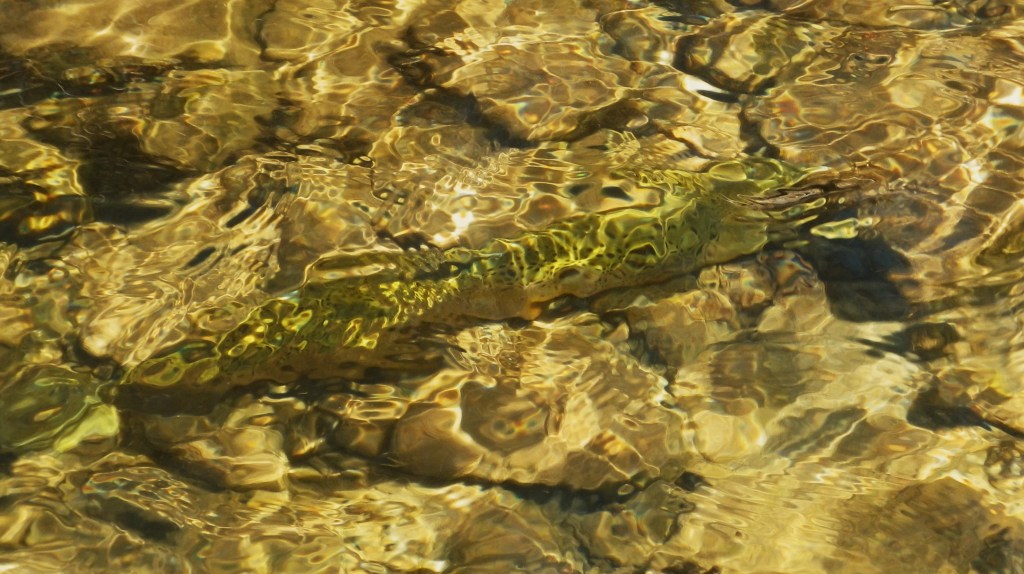
Ever wonder why it is so hard to see trout out there holding in the river? That’s a nineteen-inch brown trout released next to the bank in less than a foot of crystal clear water. The wind is creating just enough of a gentle current to obscure his presence. He’s centered in the frame, and I was standing four feet away when I took this shot. Nature’s camouflage! You can barely see the clusters of small dark spots on his upper sides, and just the hint of the shadow he casts on the rocks below. I sent him back to deeper water after a well-deserved rest. I think he enjoyed the sunshine!

Zero

The Leonard waits in the riverside grass, with Gordon’s Quill ready for a meeting with Mr. Brown.

The time for wandering riverbanks has arrived, though not it seems the time for casting dry flies to rising trout. I spent half a day watching bright water yesterday, my Leonard rod and St. George reel at my side as planned, enjoying the sunshine and the anticipation of a new season.

It has been a hard couple of weeks since the little false start of March 22nd. Weather swept away the conditions that brought three rises to my attention on that day. So close, and yet still so far away from that sweet release from the clutches of winter!

My Quill spent the afternoon fixed in the hook keeper; there was nothing to cast to, not even one of those odd undulations of current that trick the mind, preying upon the fierce anticipation of a house bound angler finally released.

Waters are warming but have not yet reached that point where those first mayflies are stimulated, and ready to ascend to the penultimate task of their lives. One last great challenge remains for the patient angler.

Peering Over The Edge

Solo Float April 8th, 2020

It is cold this morning in Crooked Eddy, and our rivers remain high and chilly, two days before my own little zero hour. Will this be an early season or a late one?

I took a drive yesterday, the car loaded with waders, boots and fishing vest, and a little bamboo rod. I had thought for a number of years about exploring Callicoon Creek, the mythical origin of the Delaware rainbows (it wasn’t despite that lovely tale about Dan Cahill and crew carrying buckets from the train), since the stream gage showed wadable flows and improving water temperatures. I had hope to encounter a nice bow or two, wild fish lingering in the seemingly comfortable conditions before returning to the Mainstem, intent upon a chance to cast to them with a dry fly.

Unfamiliarity with a reach of water causes one to rely upon those available stream gages and our own judgement, and the best plans are not necessarily made on such limited information. I had driven along the creek a few years ago, recalling a wide bed, deeply cut into the landscape. My fishing trip would make that point with emphasis.

Spring floods must be sensational in the tight little valley traversed by Callicoon Creek, or more properly the North Branch thereof, where most of the public fishing access is found, for it flows through a cut pathway that is indeed both terribly deep and wide. I was reminded of northwestern Pennsylvania’s Lake Erie tributaries, with low flows trickling along one side of a hundred-yard-wide gash in the landscape.

The gage had showed a flow of 178 cfs, somewhat below the recorded median, but I found that to be noticeably less than required to provide much in the way of holding water. I fished one reach with a rapid flow crowded to one side of the chasm, but found nothing to convince me that fish were present. I got some exercise, reacquainting my old bones with wading fast water, but my dry fly drifted along undisturbed.

Further upstream, there were a couple of reaches that looked more like a typical small stream, though the area was well populated with houses, and I chose not to wander there. One parking area listed on the state PFR map had been obliterated in this area, a sure sign that fishing isn’t welcomed, whether “legally permitted” or not. I wouldn’t relish strangers fishing through my backyard if I lived there and feel the residents wishes deserve some respect.

You hear the phrase “it was good to be out” used often by fly anglers, and that is the truth, whether trout and Mother Nature choose to cooperate or not. It did me good to wander along that stream with a bamboo fly rod, warm in my shirtsleeves, and live once again in the moment. Winter is long, and though broken by a handful of days when the madness simply wills us to the water, it can be a difficult season for the passionate angler. We tie flies, tinker with gear, socialize with those similarly afflicted when we have the chance, but the fact is the only real fishing we can enjoy is housed in memory.

Counting Days

April has come, and a week remains until my hoped for introduction to the 2023 dry fly season. Our rivers are too high to wade, with spilling reservoirs from one side of the Catskills to the other, and water temperatures in the thirties this morning, far short of that magic fifty-degree mark which heralds spring hatches.

The mild winter had given multiple hints that an early spring would follow, one with wadable rivers and comfortable weather, but these mountains rarely welcome balmy weather early in the season. High, cold water is the traditional expectation after all.

I begin this (hopefully) final week of waiting in poor form, with a couple of days of feeling absolutely miserable, and dealing with necessities, things I would much rather avoid. Days of high, cold water are for chores and anticipation anyway, so I won’t be missing out on any fishing.

There are warmer temperatures ahead, as well as several days with showers. I pray the balance will tilt much further toward warm than it does toward wet. As always, Nature will have her way, but I hope for the chance to wander some riverbanks before the clock strikes zero.

Spring

Flies have been tied, rods and reels are waiting. Spring holds too much promise to rush things.

Snowflakes In The Sun

I sat down at my bench and tied a trio of 100-Year Duns this morning, or at least I finished tying them. They were Quill Gordons, and I had affixed their tailing and wrapped their peacock quill bodies yesterday morning. I gave the bodies two coats of the Hard As Hull head cement I prefer to protect the quills, and set them aside to dry.

Catskill fly tyers have used lacquered counter wraps of white tying silk or fine wire for generations to strengthen the fragile peacock quills that form beautiful segmented bodies to copy many of our mayflies. I always felt those methods detracted from the perfection of the quill bodies, finding my chosen concoction a number of years ago. So, this morning I placed the partially tied flies back into my vise and attached the wood duck flank wings and barred dun hackles to complete my new and old variation on the classic Quill Gordon.

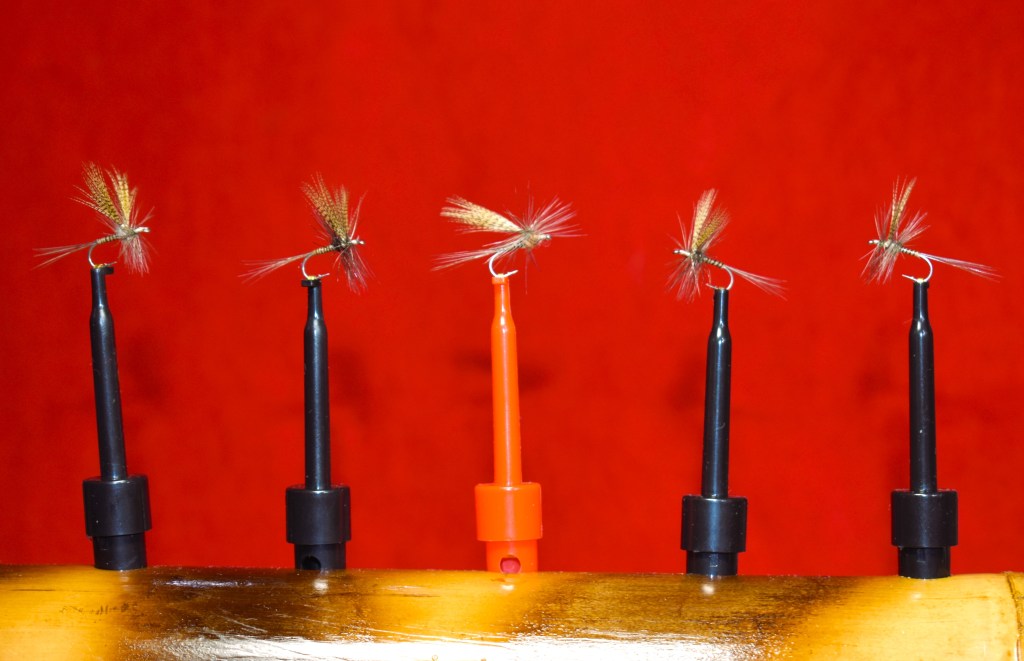
My Theodore Gordon inspired 100-Year Dun flanked by the traditional Catskill ties.

Ready for breakfast at this point, I set aside my tools and materials and stepped out into the kitchen. When I glanced at the front door, the vision of bright sunlight amid clear blue skies was magically blurred by the glimmer of falling snowflakes! I stepped into the living room and enjoyed that same vision, snowflakes spiraling down out of a cloudless blue sky and glimmering in the sun. That simple, yet remarkable event was brief, but it set my imagination alight!

I appreciate these little gifts from Nature that help me navigate these last desperate days before the trickling bounty of springtime welcomes us back to the rivers.

I had planned to go fishing yesterday. Too late on a very springlike Sunday afternoon, I had idly checked the river gages to find wadable flows on the Neversink. I had assumed the rivers on the east side of the Catskills were far too high as are those here on the west side. I expected to correct my misstep on a sunny, clear Wednesday morning, only to be derailed by the City’s raising the Neversink Reservoir dam release just enough to take wading the tailwater river off the table.

Baseball begins today, so I will have an Opening Day game to occupy my mind, and Friday will be a busy day, with a stop at the doctor’s office, then another to see my mechanic for boat trailer inspection and a brake check. Come evening, I will travel to Roscoe for the Angler’s Reunion Dinner, where we kick off the new season with a fine meal and friendships born of a passion for bamboo, dry flies and wild trout.

Tomorrow will also begin my final countdown to the magic of bright waters and the dry fly, though with more rain on the way that brightness could still be tempered by excessive runoff. Some doctors will be getting in my way as April begins, but I hope to be able to begin exploring rivers later in the week. That has become my own little ritual: walking rivers when I know there is little chance of a hatch and a rise just for the chance to be there, to embrace the opportunity to see it when it does all finally begin anew. I’ll take those Quill Gordons along though, just in case.

OLYMPUS DIGITAL CAMERA

Touching The Past

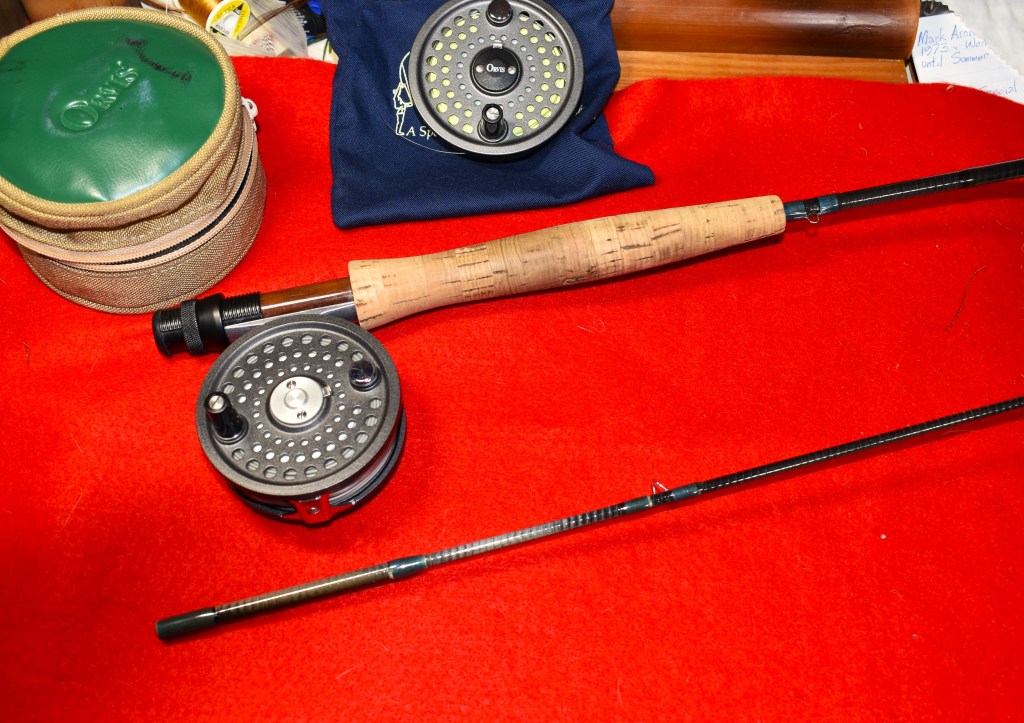
The outfit that introduced me to the Catskill Rivers: My old tried and true Orvis Rocky Mountain 8 1/2 foot 5 weight rod with it’s English made Battenkill reel, now reunited after 25 years.

It was April 1993, and at last I had my first sight of the storied Beaver Kill and the lovely Willowemoc, and the chance to fish the Catskills. I was on my way to Manchester Vermont to meet with the Orvis Company in preparation to opening my own fly shop. I took care of the working part of that work trip as quickly as possible that I might retire to the beautiful rivers that had meandered through so much of my reading. I carried my first really good fly rod outfit, my Orvis Rocky Mountain rod, adorned with the Battenkill Disc reel that my girl had given to me. That outfit and I made some great memories!

A number of years later I had traveled back to my father’s home country, the Berkshire Hills of Western Massachusetts, to angle the great Deerfield River. My grandfather Alfred was the last fly fisherman in our family until I took up the calling of trout and fly, and the Deerfield was his river. I was going home.

One evening, tired from a long day on the water, I climbed the trail back to the road and my Buick station wagon, a gift from my dad. My routine was broken by the arrival of a car with two lost tourists speaking broken English. Trying to communicate and help, I placed my best rod, an Orvis HLS nine-footer and my Battenkill reel on the roof rack while I tried to direct them. It was a long, difficult conversation, during which I removed my vest and waders and stowed them in the wagon. As they drove off through the rain, I closed the liftgate and headed back to town, discovering my mistake a mile down the road: my rod and reel were gone. I searched that mile of roadway until darkness fell, then searched again in the morning. I found one three-inch piece of my rod tip. The rest of my cherished tackle lay somewhere down that steep, forested 100-foot-high bank that separated river and road.

For many years I thought about replacing that reel, though I acquired others during the years I owned Falling Spring Outfitters. I figured I couldn’t replace the sentimental value and never bought one. Eventually Orvis discontinued the model and came out with a new Battenkill.

Over the past few seasons, my thoughts have returned to my first great fly reel, and I looked for one when I perused the used tackle lists. Just over a week ago, I found the reel and extra spool pictured above. When I opened the package this afternoon, I found a Battenkill Disc 5/6 reel and spool in new, unfished condition, each bearing a fly line that also appears fresh out of it’s box.

The previous owner had been a right hander, so I carefully stripped the line and backing from the reel after changing it’s retrieve direction, then wound them back on. The fly line is an Orvis WF5F in the gray color that I fished regularly back when I had my fly shop. Orvis long ago replaced these with bright, fish spooking colors that I abhor. Having my new replacement Battenkill come with my favorite gray fly line is an added bonus!

The Battenkill will take it’s place in the reel seat of my Rocky Mountain when nostalgia strikes me, and it is already planned to accompany a sweet little 7-1/2 foot Madison bamboo rod I found last summer.

The spare reel spool has a new weight forward line on it as well, though it did not have a stick-on label to reveal the line weight. I will determine that the old fashioned way, by casting it. Chances are it is also a five. The reel would also match nicely with my other Orvis bamboo, an older 8-foot Battenkill that I fish with a WF6F line. Wouldn’t it be handy if that unmarked line turned out to be a number six?

The rain arrived later than promised but has been falling for about an hour now. I know the rivers will continue to rise. Cannonsville is spilling substantially, and Pepacton soon will follow, despite three increases in it’s release rate. Seems the City doesn’t want the eastern one to spill, but Nature will have her way.

With the typical spring high flows occurring after all, I uncovered the drift boat today, checked the trailer lights and parked it in the driveway more or less ready to go. The calendar shows two weeks until my target date, though with more rain coming later in the week, the boat may be the path to hunting the early season hatches.

Spring at Hendrickson’s Pool on the Beaver Kill River, Roscoe, New York.

Springish

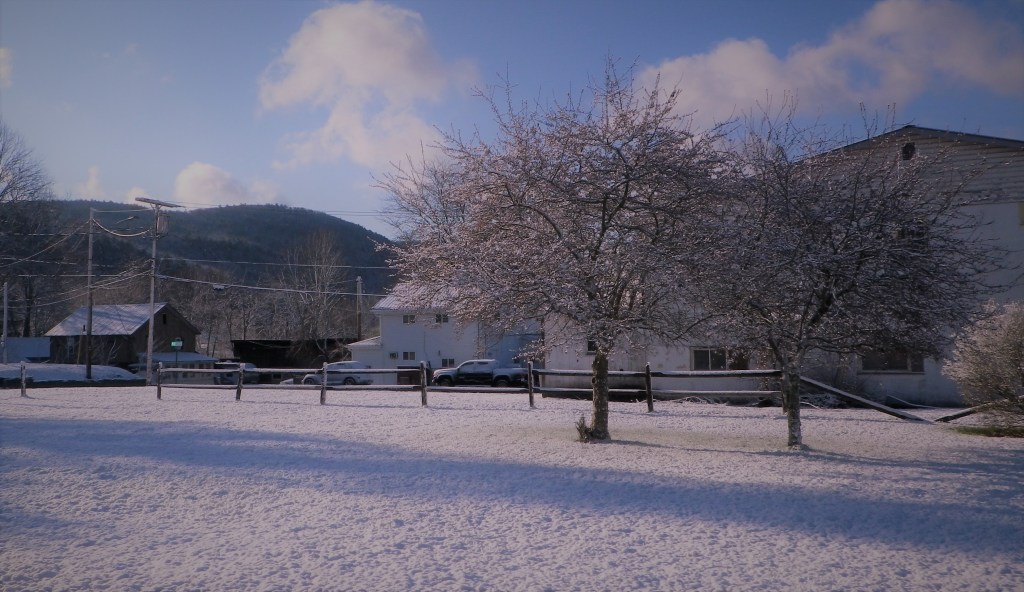
Spring 2023, Day Three: A warm and sunny day, beautiful, but the snow tells the tale.

Spring at last, by the calendar anyway, though there is still plenty of snow clinging to northerly and easterly facing slopes and hiding in the higher mountain forests. Monday was less than astonishing, but Tuesday and the best part of Wednesday were beautiful, with bright sunshine and warm afternoon temperatures. I recorded 64 degrees Wednesday afternoon!

Rivers flowed clear with water temperatures peaking in the forty degree range, at least until all of that warmth and sunshine had it’s way with the snow. This morning is damp and chilly and the rivers are all running high. Some are still rising. The forecasters are talking about wintry mix for tomorrow, and the Weather Channel has the snow icons turned on for Tuesday and Wednesday, with rain following later in the week. In short, while it looked like an early spring might be blossoming to the angler’s perspective, that seems to have vanished amid the reality of Catskill Mountain weather. There was a good tease on Wednesday afternoon though.

I had stowed the winter chest pack, and donned the fishing vest, complete with the dry fly boxes containing the early stoneflies and a legion of blue-winged olives. The bamboo rod I strung up was still the eight-foot Kiley, and it was the intermediate line I threaded through the guides to start the day, for what I hoped might be the last of the winter swinging with a sunken fly. There was no response to the swung fly, not the Dazed Dace, nor even the tiny Grouse & Peacock I offered once a few little black caddis appeared.

Tiring of these winter methods, I decided to take a break and run a useless errand that ate up nearly two hours of the early afternoon. I figured that the sun would continue warming the water and, if there was to be any fishy activity, it would come later on.

When I returned, I was invigorated by the climbing air temperature and sat down on the bank to watch the river. There was a different reel in the reel seat, one with a floating line, dry fly leader, and a little stonefly pattern. It was closing in on three o’clock, when I saw a miraculous vision: there on the far bank a trout rose to take some morsel from the surface. I blinked a time or two, decided I hadn’t dozed off in the sunshine, and thus had really seen a trout’s rise on March 22nd.

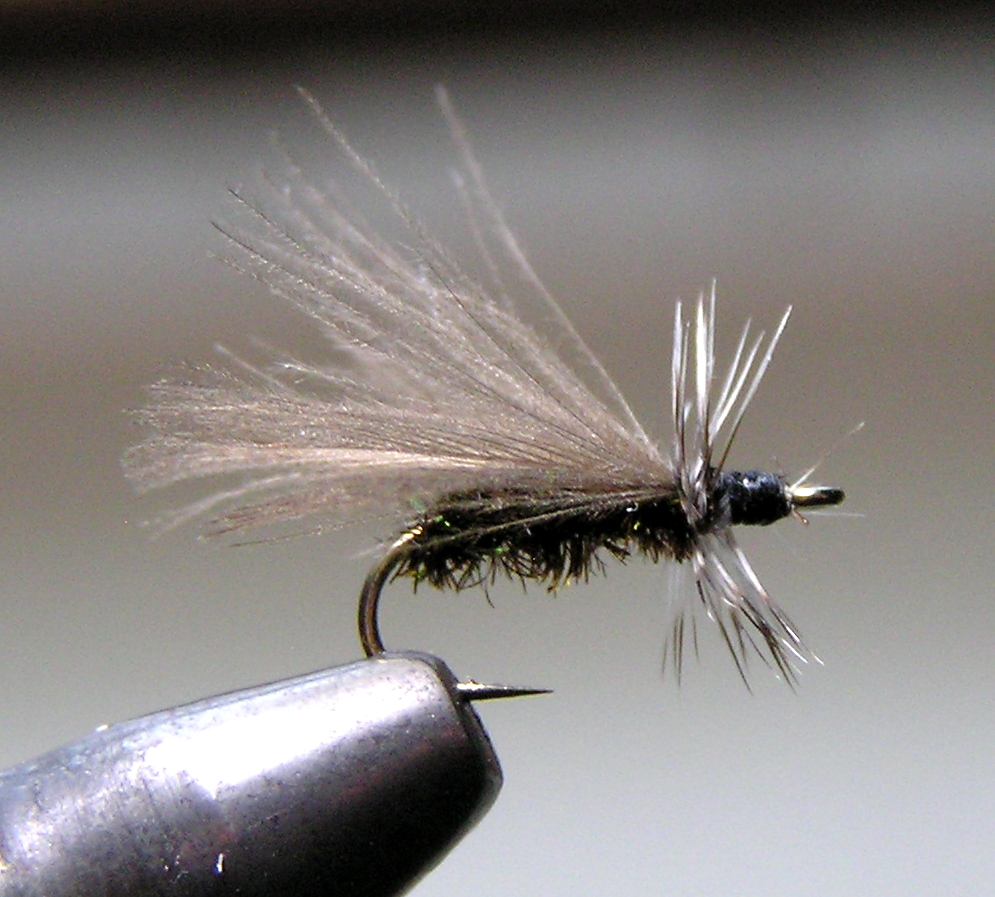
One of my favorite patterns for the little early black stoneflies that began hatching in February along Pennsylvania’s Big Spring.

A few seasons ago I had seen a rise on the 27th of March, when a handful of blue-winged olives bobbed along the surface of the Delaware River. I caught the foot-long brown that had risen there, my earliest dry fly trout in Catskill waters to date. I did not see a second rise for two more weeks.

Resolute to make the most of this rare opportunity, I rose myself, and carefully crossed the river. In the fifteen minutes it took me to arrive at a casting position, the sky had clouded up and a cool wind had started to blow downstream. Adjusting my position to deal with the wind on my casting shoulder took another couple of minutes in the deep, strong current, and as I started to cast there was a second rise, and moments later, a third. I offered the stonefly a number of times, then changed to a twenty olive, seeing an occasional pair of tiny wings drifting along the windblown surface. By this point, gray clouds had fully replaced the earlier sunshine and that breeze had gained a bit more chill and strength, hindering my presentation.

I eased further across the deep water, hoping that a shorter cast might salvage enough slack in the tippet to drift the fly more perfectly, hoping that trout would accept my challenge. It was not to be. Three rises are more than I have ever seen at this time in March, and I could not help but wonder that if the sun had continued warming the river just a little longer, might the result have been gloriously different.

Those three rises had come at different locations, so they may have been the single trials of three different trout. I have known some very fine browns to cruise that particular reach of riverbank though, particularly when Nature’s larder was exceptionally thin…

This brief foray is recorded as a personal record, the earliest actual dry fly fishing I have experienced here in my new Catskill home, more than a fortnight before experience tells me it is time to prowl the rivers with the dry fly.

Doubtless, some time will pass before conditions improve, and I hold little hope that the traditional April First festivities in Roscoe will be held under warm sunshine along clear, sparkling water. Next week’s rain will likely raise the rivers and melt any remaining snow up high. Chances are their flows will be cold and colored, a typical beginning to what for so many years was the Catskill angler’s brand new trout season.

For now, I am grateful for the gift bestowed, the early chance to touch the magic that enthralls me. Nature will have her way, smiling upon us when she deems us worthy.

Olives

One of the last fly boxes I need to fill has come up for it’s turn beside my bench. Blue-winged Olives are some of the earliest mayflies, as well as the latest, and they will appear throughout the season to interest both fish and fishermen. Certainly, the olives provide a good deal for fly fishers, as there are many species that can be imitated with just a few dry flies. Like many anglers, I find success with a medium dark olive body in the early and late seasons, and a pale bodied form during the summer months. Tying a few favorite patterns in a range of sizes and those two general colorations can cover a great deal of fishing.

Yes, I have seen situations where a trout was particularly selective during an olive hatch though, more than during any other similar event, perfecting the presentation of an old reliable general olive pattern has solved the puzzle.

T.P. Duns: I probably take more trout on the generally dark olives in sizes 18 and 20 than any others. Fishing these smaller flies fine and far off challenges my aging eyesight, particularly during those cloudy, drizzly days when the mayflies hatch best. These Trigger Point Fiber winged comparaduns and sparkle duns have become a favorite for effectiveness, visibility and durability.

For many years, I reached for small olive parachute flies tied with Antron Yarn wing posts, and CDC winged olives are always in my vest. As far as classic Catskill flies go, I rely upon Art Flick’s time tested, beautifully simple wingless hackled fly, particularly during summer fishing to trout sipping the tiny olive duns from size 22 down to 26.

When I find trout that refuse my standard little BWOs, the culprit is most often size. While I have coerced any number of big, difficult wild browns to take my size 20 T.P. Dun when selectively feeding upon sparse hatches of smaller mayflies, no fly is infallible. When the tiniest flies emerge in good numbers, the fish can lock in as they did one summer evening on the West Branch Delaware.

It had been an enjoyably challenging afternoon: stalking risers in big water, patiently waiting on the obligatory wind gusts, and reaping the rewards of stealth and determination with a few nice brownies. Around five o’clock, my earlier success ended abruptly, and I began searching for the cause. There were more rises than there had been throughout the afternoon, and I had to get my old eyes close to the surface to deduce the problem. Finally managing to clutch a tiny mayfly in my stubby fingers, I found that this heavier emergence consisted of miniscule size 26 olives. The size 22 olive I had been fishing was twice as long as the naturals! My search through my chest pack yielded a single size 24 cdc pattern, which may as well have been size 10. One angler in our party of three had size 26 imitations in his box, and he was the only one to take a trout after the hatch changed.

While the old reliables achieve that reputation for a reason, it pays to be prepared for the extremes, even on bright, breezy summer days!

This Thursday night, our Catskill Fly Tyers Guild gathering will feature a group share and discussion of favorite olive patterns, so while I work on outfitting my olive box, I will be deciding which pattern I will share with the group. Though I rely upon the general purpose patterns a lot each season, I am always looking for a new ace in the hole, and that makes my choice more difficult.