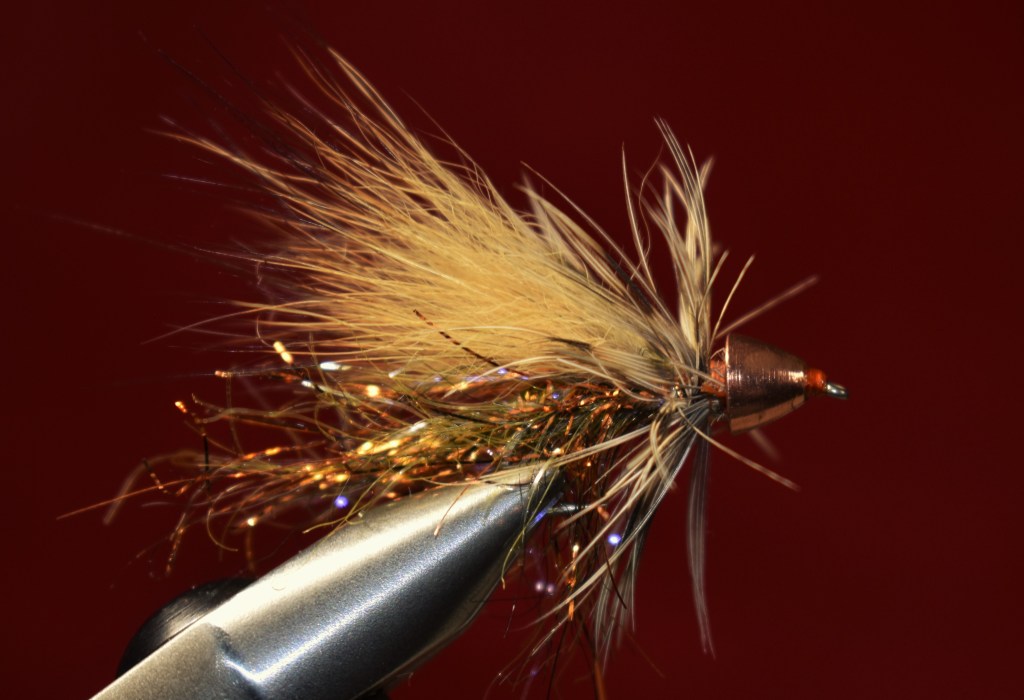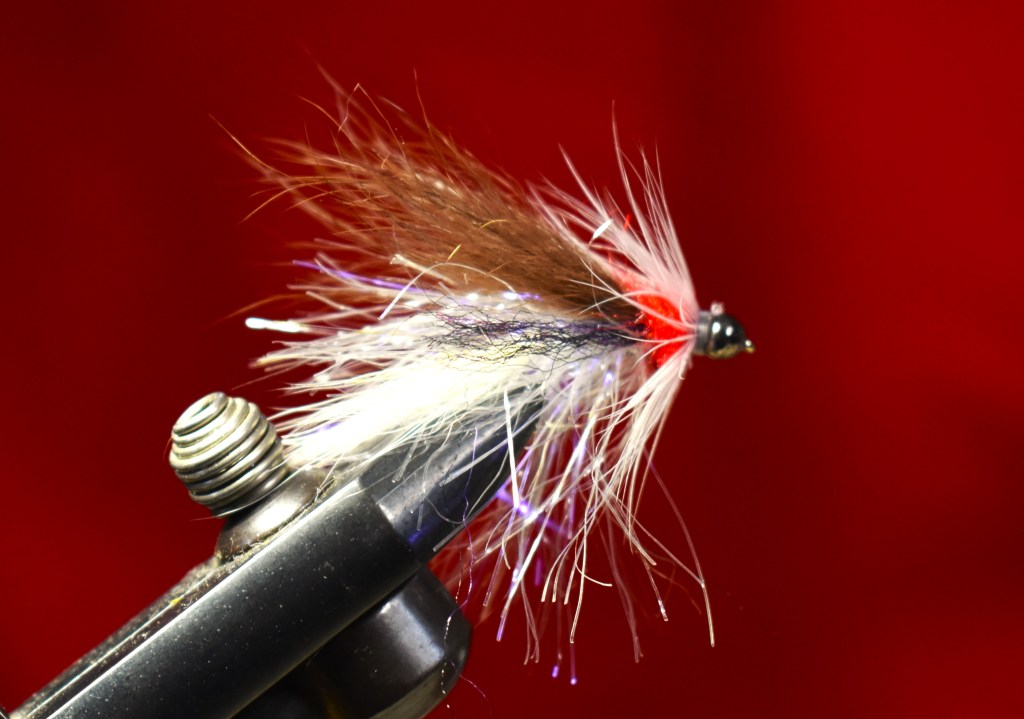
Wet and Raw

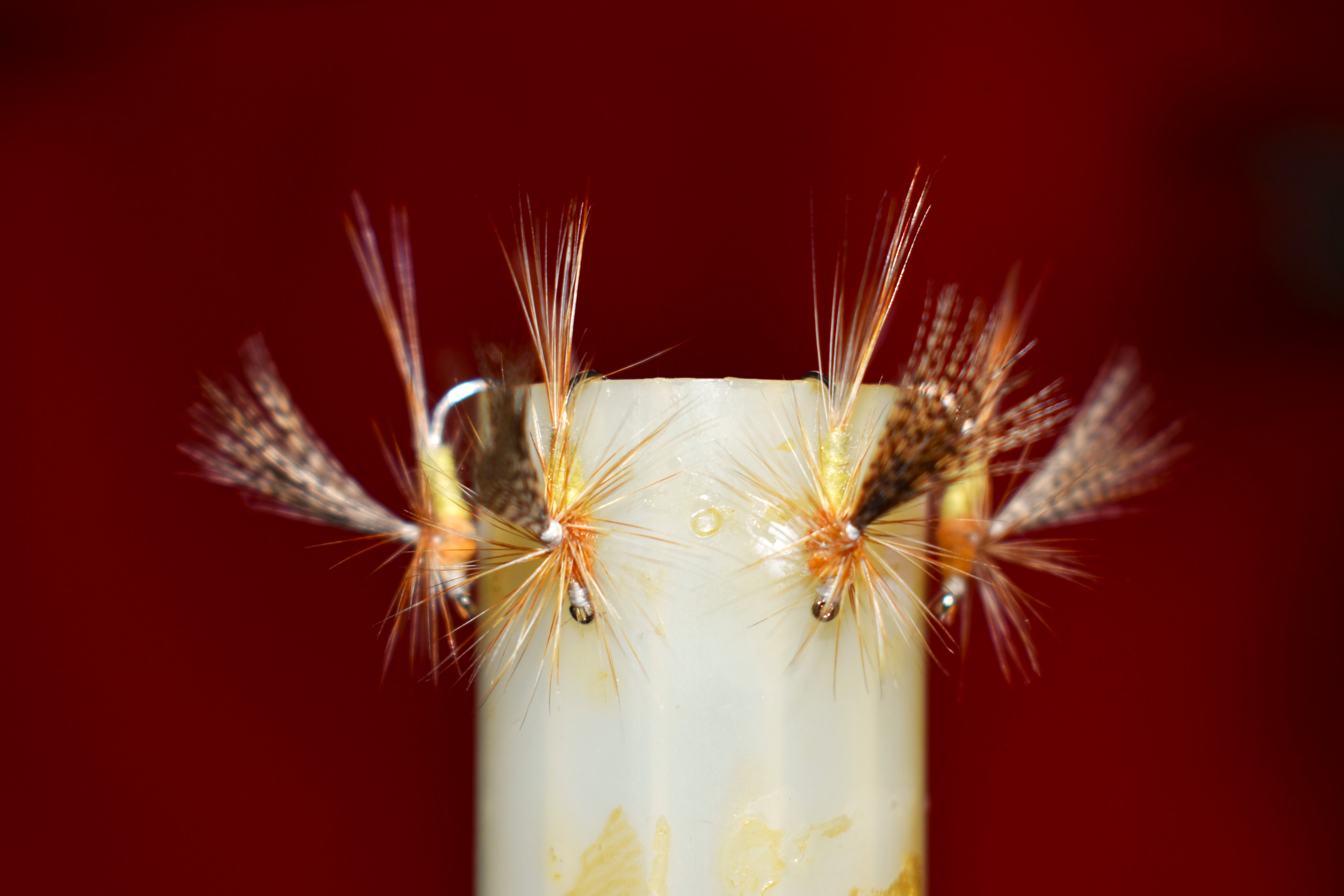
A Morning’s Work: Translucence Olives & Paraleps.

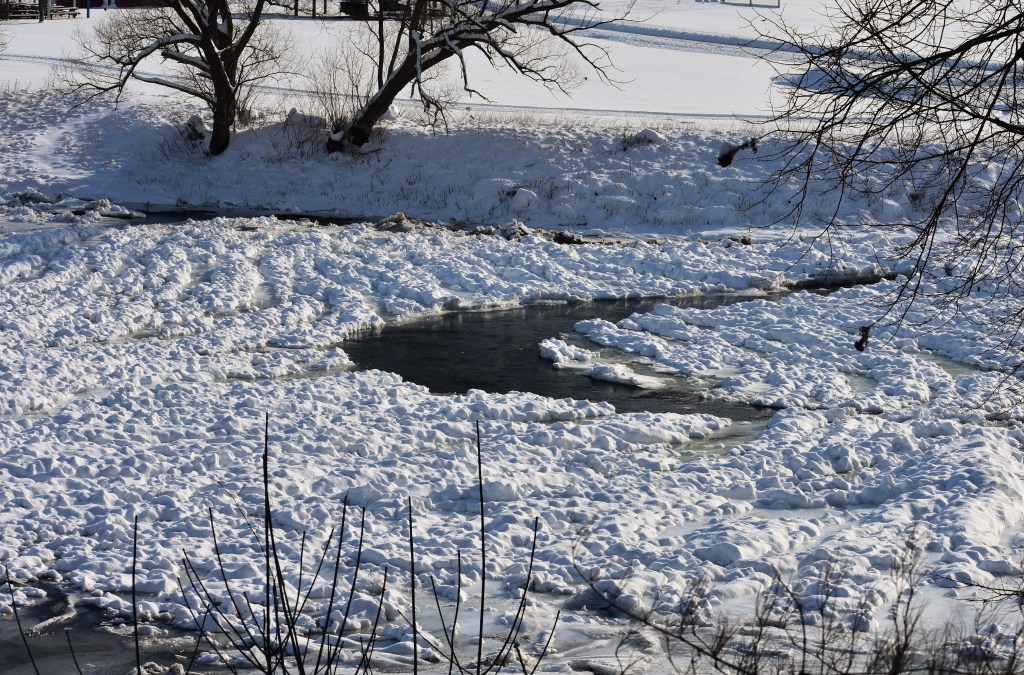
I can hear the steady rain on the metal roof as I type, and the cold air bit harshly when I answered the door a while ago. Though most days have lingered above freezing, it is still January here in the Catskills. I would welcome another fifty degree day before the overnight lows complete the icing of our rivers.

Recent riverwalks revealed skim ice along the lines of slack current and wherever the flows have retreated, but the main run of the river continues, leaving a touch of hope that another spell of warmer days might lead me to those banks with fly rod in hand. It has been two weeks since my last sunlit day upon the West Branch, and the first trout of the year. Eighty days lie ahead before a dry fly might be attached to rod, line and leader, and cast with intent. It is the season when I feel each one of those days.

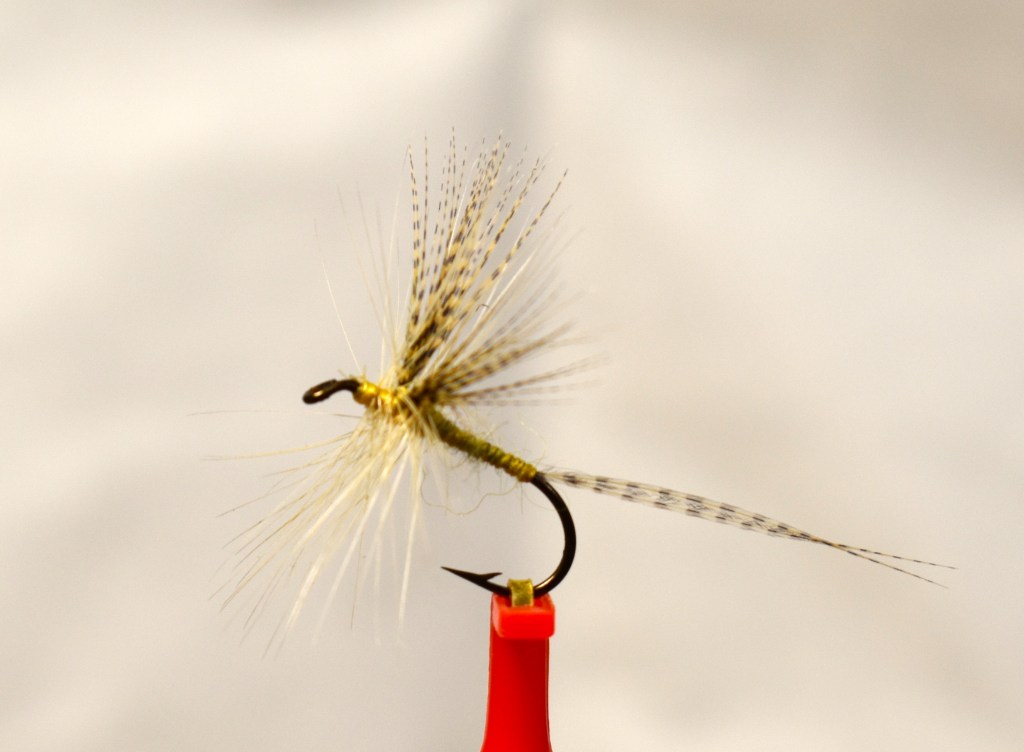
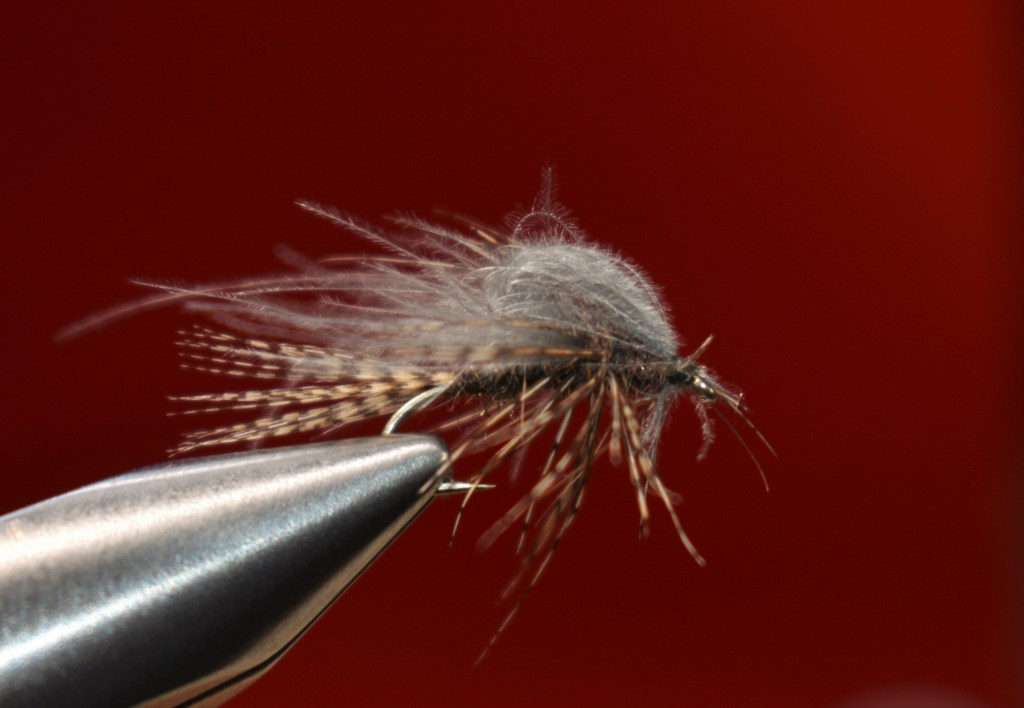
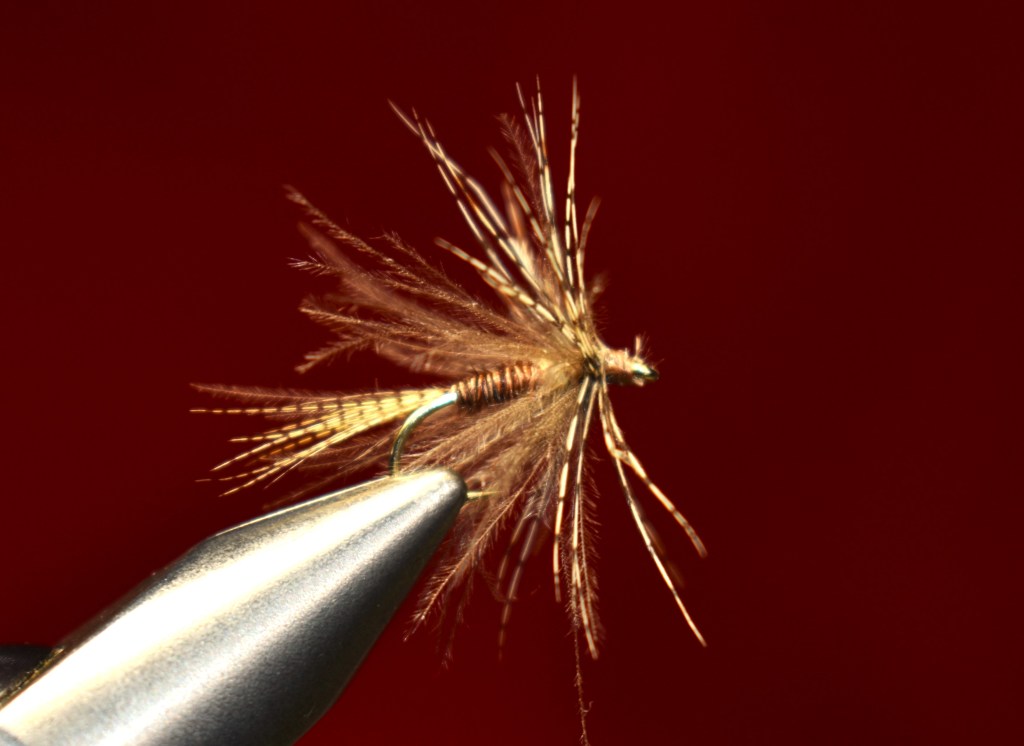
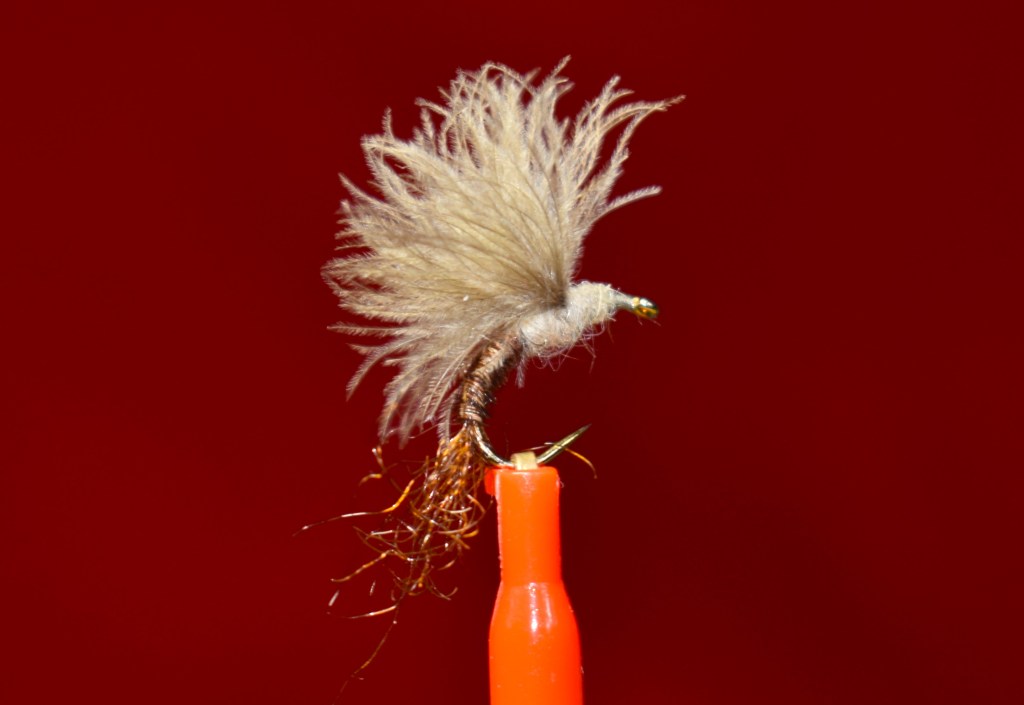
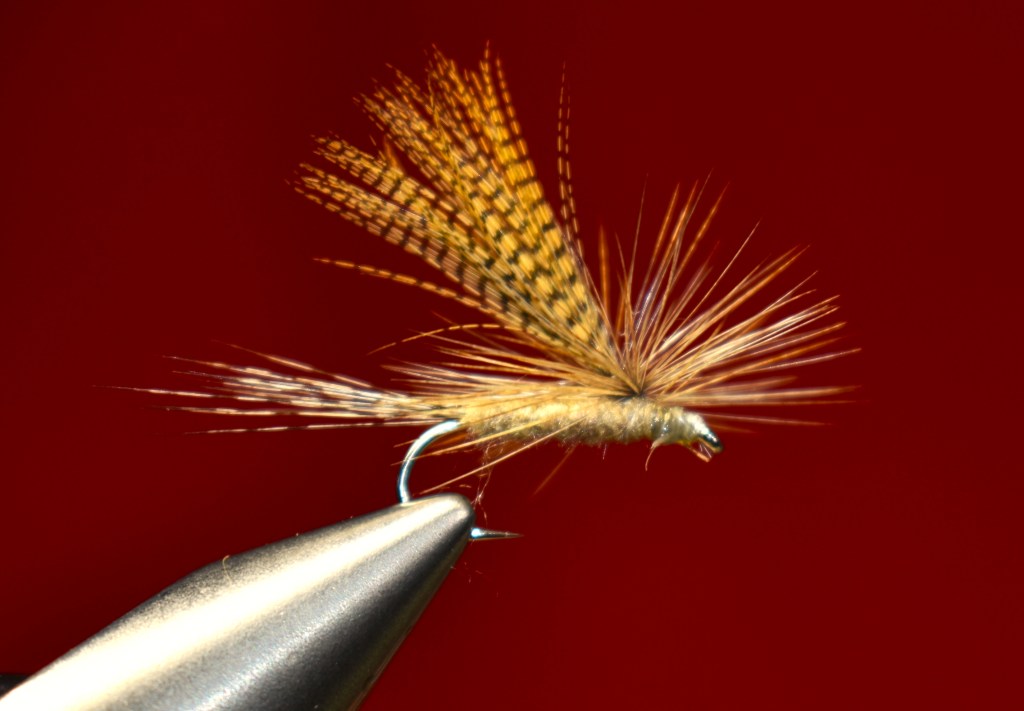
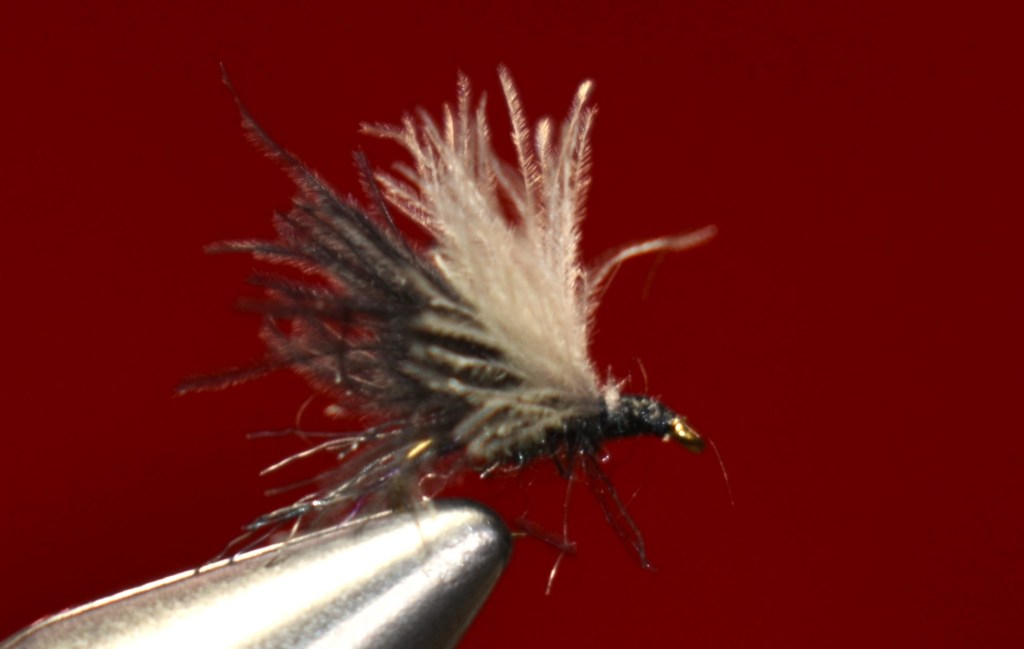
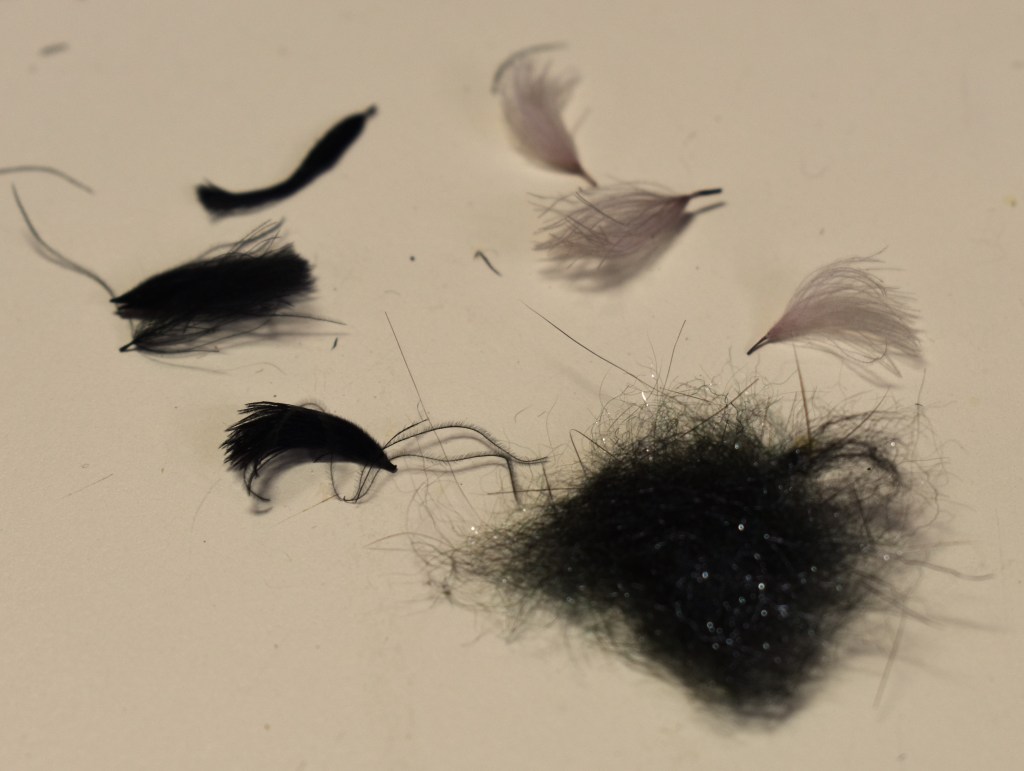
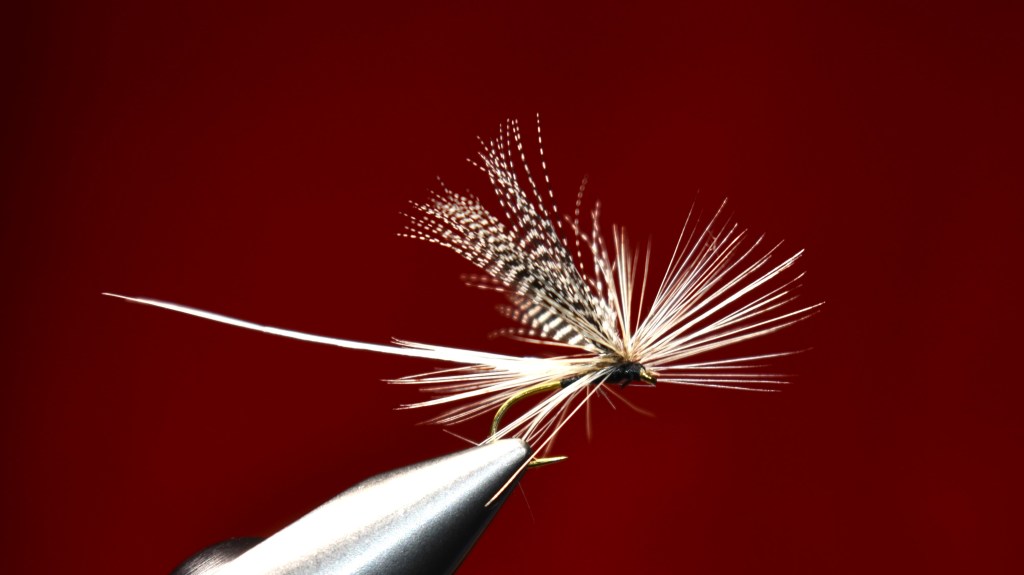
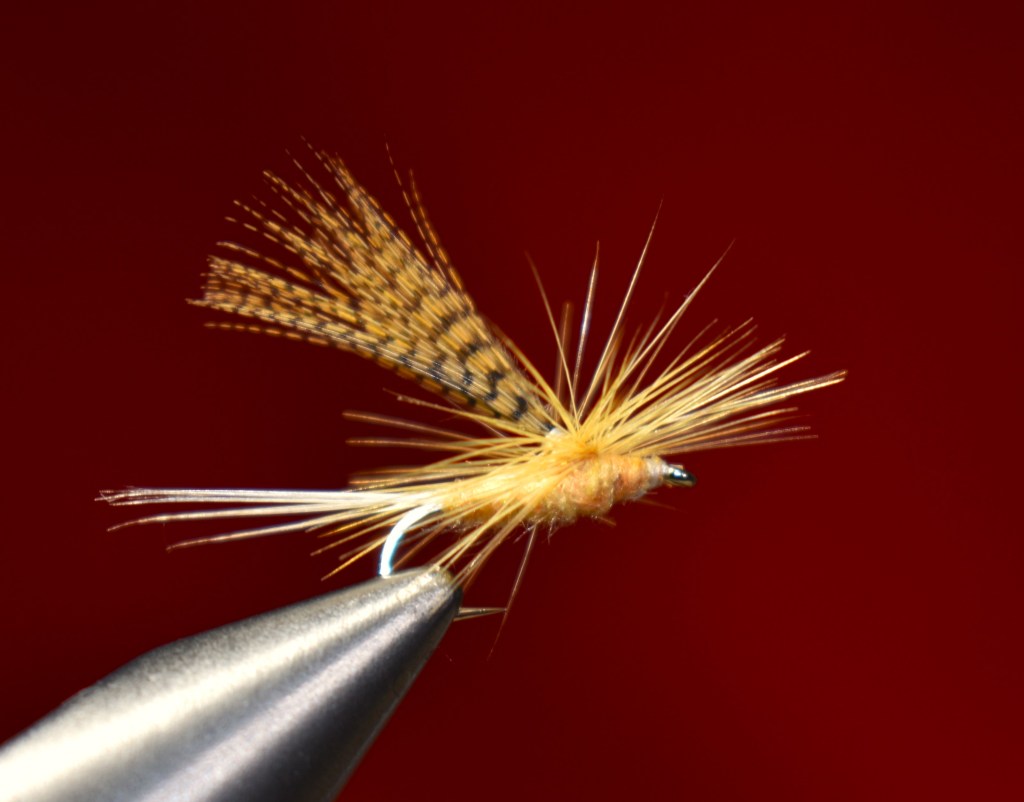
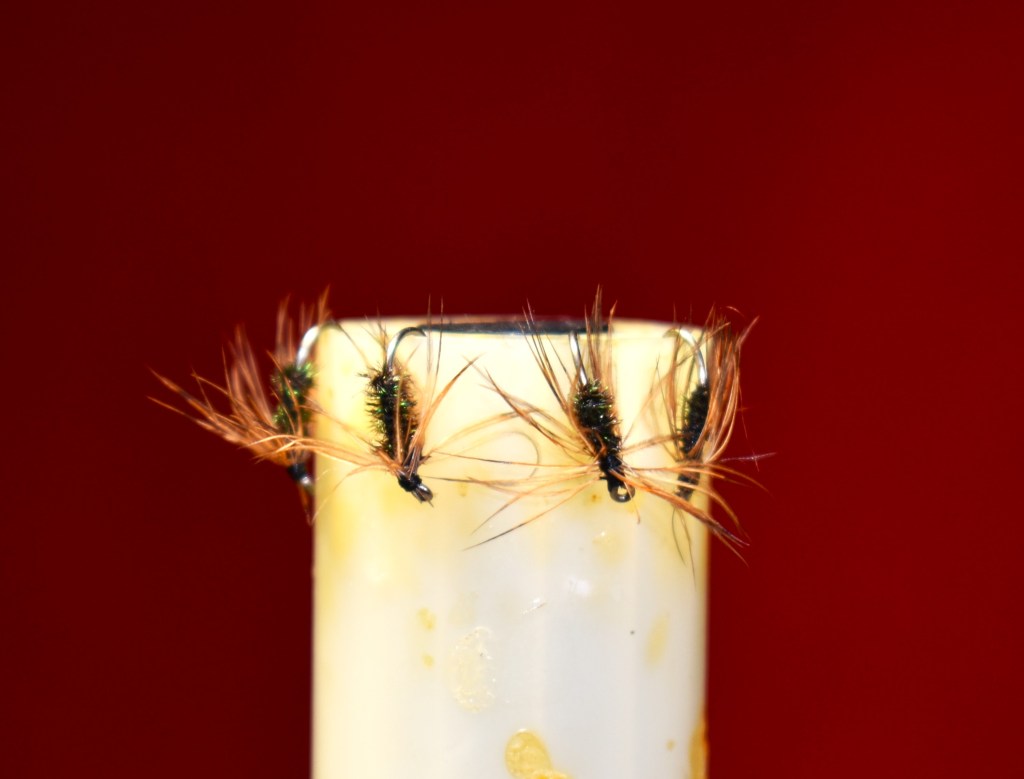
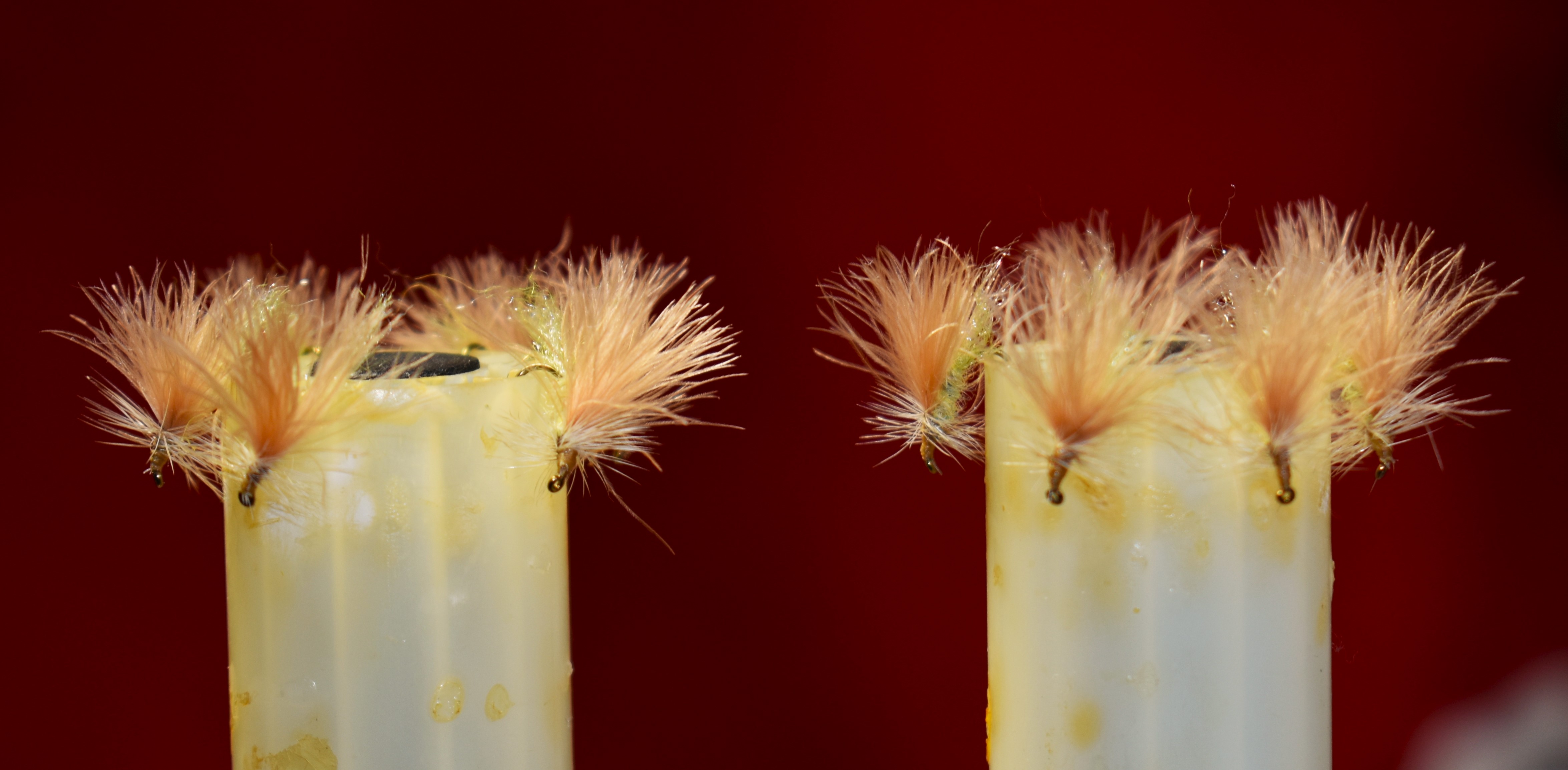
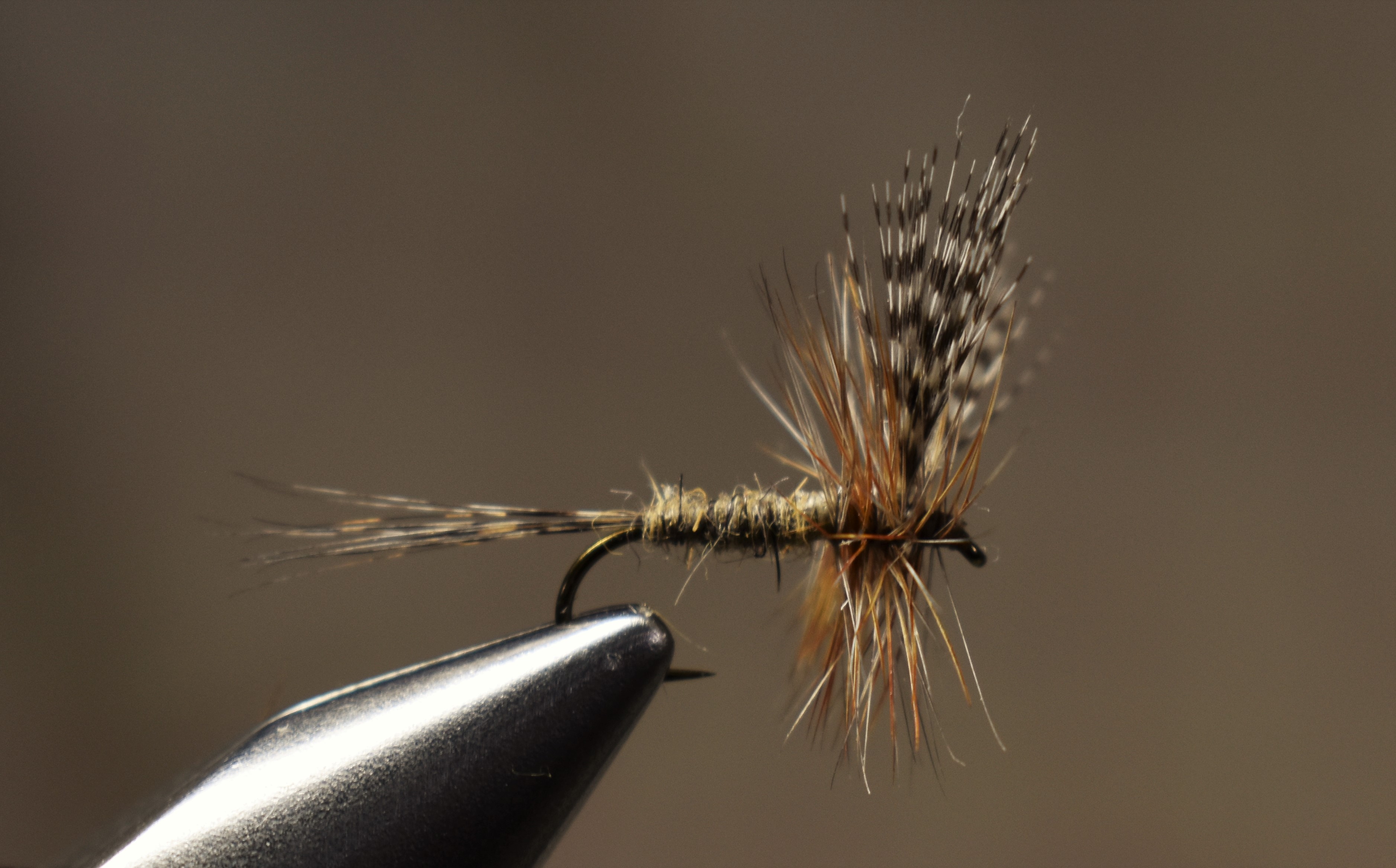
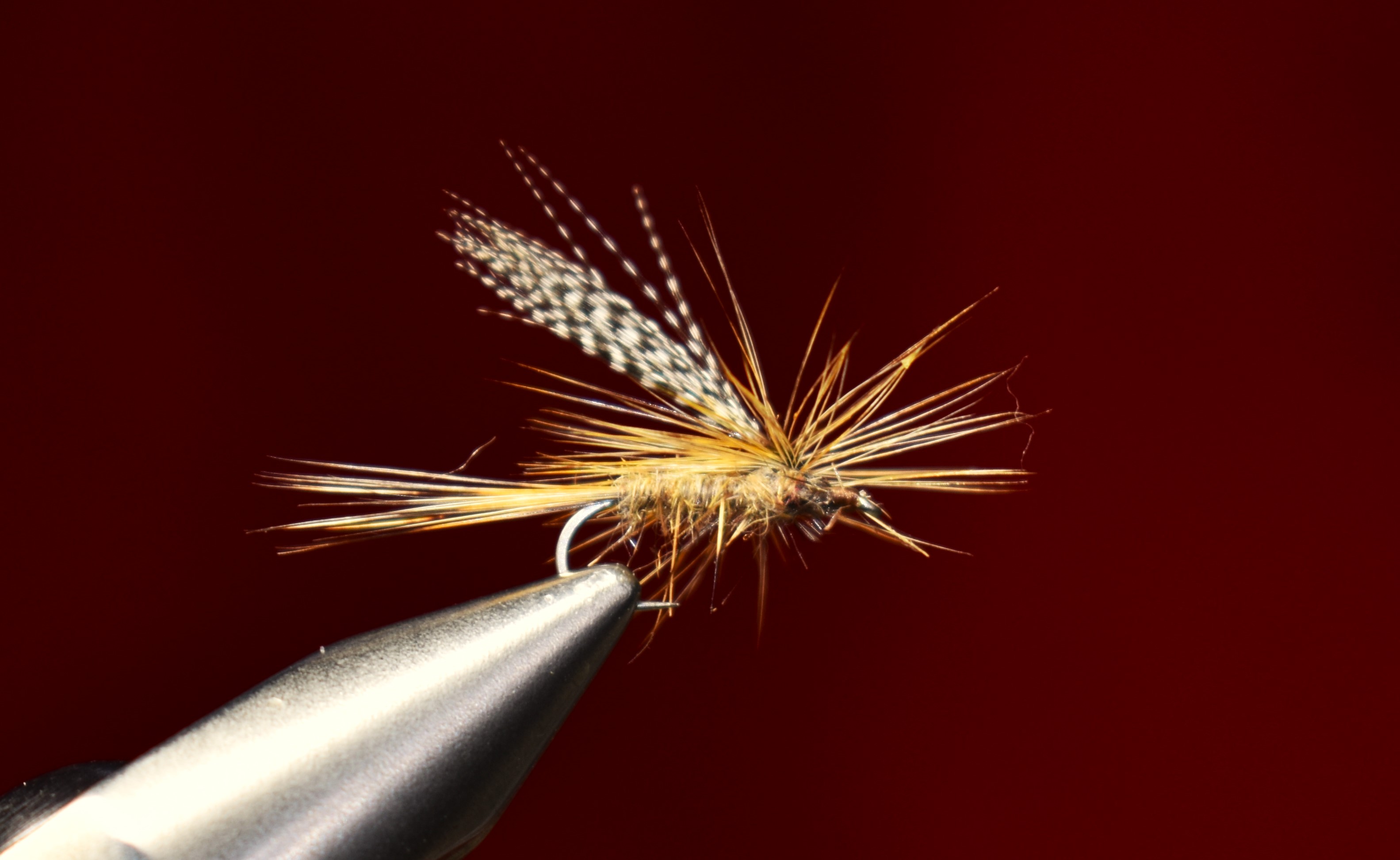
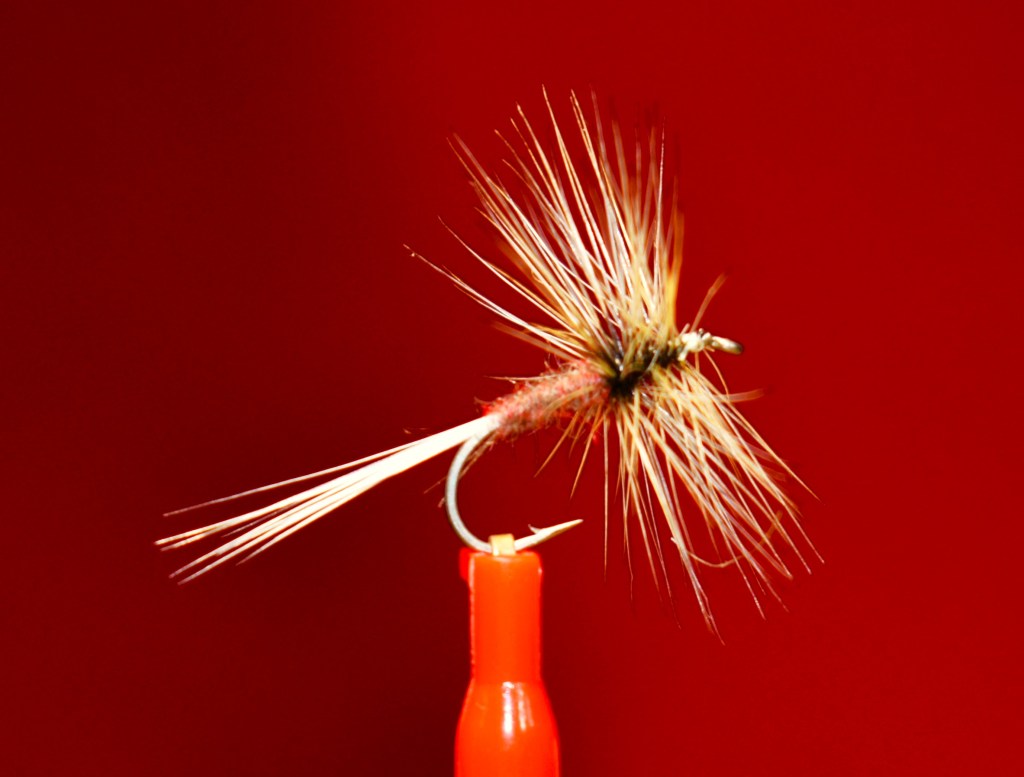
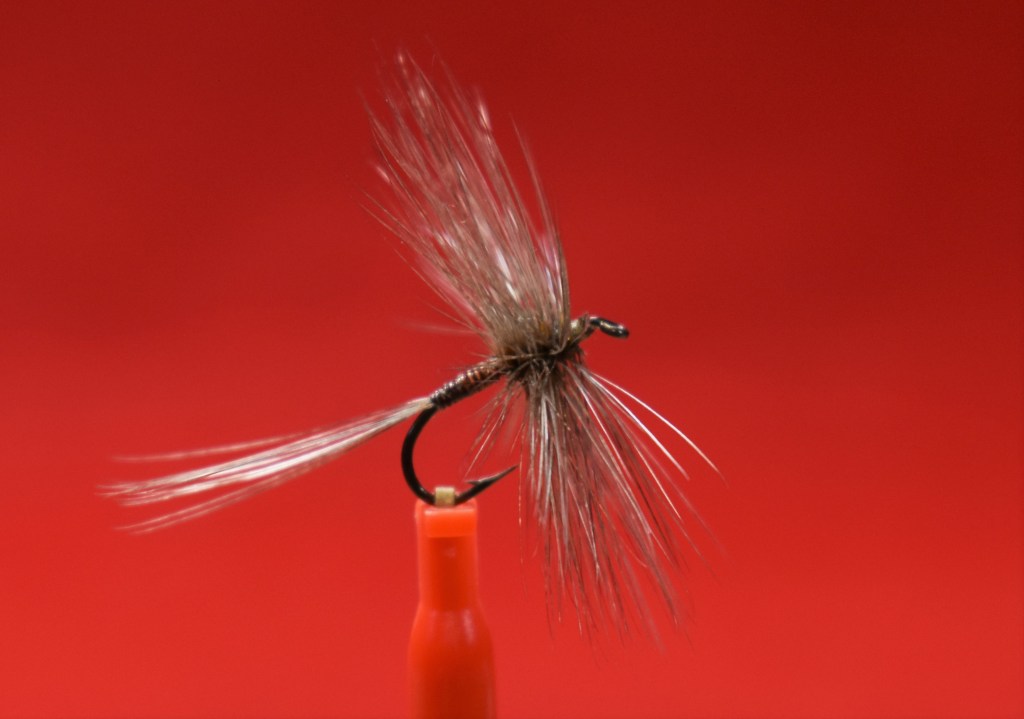
I busied myself with tying this morning, putting up a dozen Translucence 100-Year Duns, half olives, half paraleps. Tonight, various friends will gather for another of the Catskill Guild’s open tying sessions, where we shall discuss the merits of various patterns for the venerable March Brown. Oh, would that such a grand and beautiful mayfly might actually hatch during the month it is named for! We borrowed the name you see, incorporated it from the British Isles, where the March Brown imitates an early season fly.

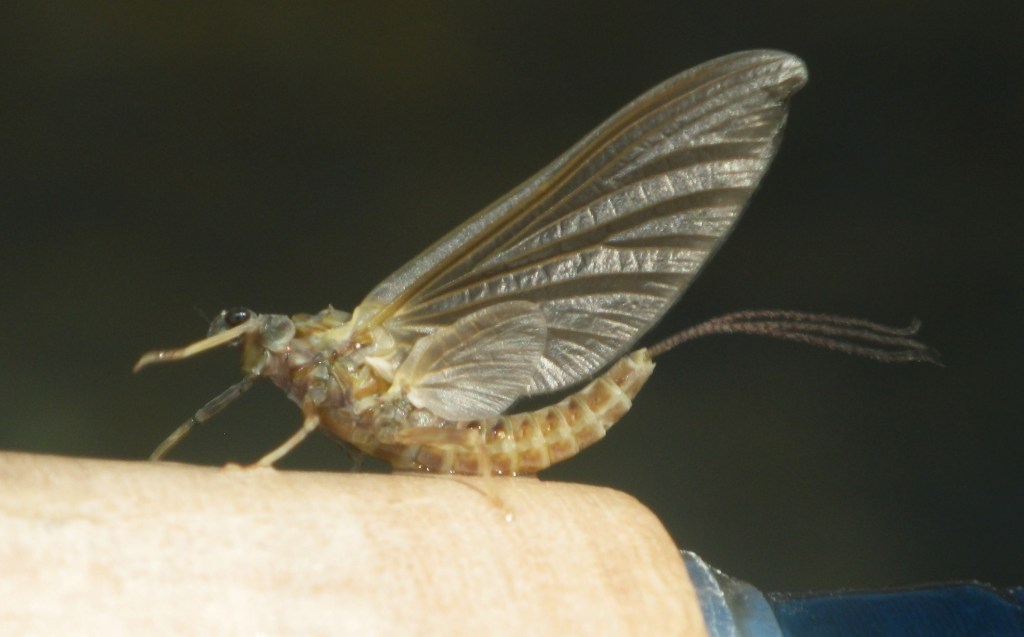
In the Catskills, it is the first large mayfly with heavily mottled wings, but it will not grace our rivers until well on into May. It is an intriguing hatch, puzzling in that it seems to be changing over time. For twenty years, every March Brown dun I lifted from the surface of a Catskill river was indeed brown, a warm caramel brown on it’s underside, bearing those magnificent tan hued wings with their dark blotches of mottling. During the past decade, the duns I’ve captured are yellow, mostly a pale dirty yellow with a yellowish cast to the wings and somewhat lighter mottling. Nary a single brown fly has revealed itself to me during that time.

The March Brown of the past decade: dirty pale yellow with that yellow cast to the wings. Have they simply gone blonde?

The flies are still primarily a size 10, and their hatching remains sporadic through the day, so I do not doubt they are the same species of mayfly. Has some change in water chemistry bleached them out a bit? I would love to ask a trained entomologist about that. My quandary grew when a brilliant safety yellow version of the fly began to emerge on a favorite reach of the Beaver Kill during Woodstock’s golden anniversary year. Ah the mystery of Nature!

The trout made me do it! A Woodstock March Brown Parachute that seduced a heavy brown in excess of twenty inches long, when the psychedelic colored naturals were on the water.

Preston Jennings, in his “A Book of Trout Flies” lists his dressing for the American March Brown to be tied with “red fox belly mixed with sandy fur from a hare’s poll” dubbed and tied with orange silk. His protege Art Flick tied his version with “light fawn-colored fur from a red fox” also dubbed onto orange silk. His “Streamside Guide” includes photos showing a very light color indeed. Interesting that neither of the classic Catskill patterns sport either caramel brown or yellowish bodies. Both have certainly taken untold hundreds of thousands of trout.

I still have a fly box stuffed with caramel brown imitations, Catskill ties, Comparaduns, parachutes and CDC duns and emergers, and I still fish them at times.

Most of the March Brown patterns I tie are crafted to match the pale, dirty yellow mayflies I have observed on the water, and I will continue on that course until Nature throws me another curve. Yes, I still tie the “Woodstock” safety yellow flies for the Beaver Kill too, for the trout have proven to be very selective to that bright color during the hatch.

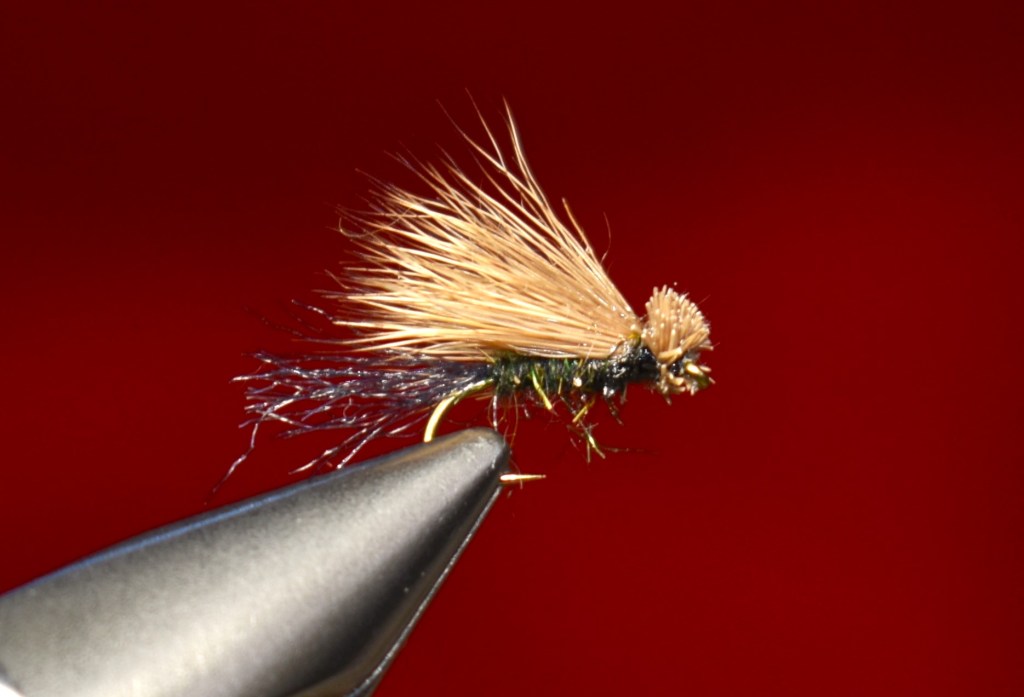
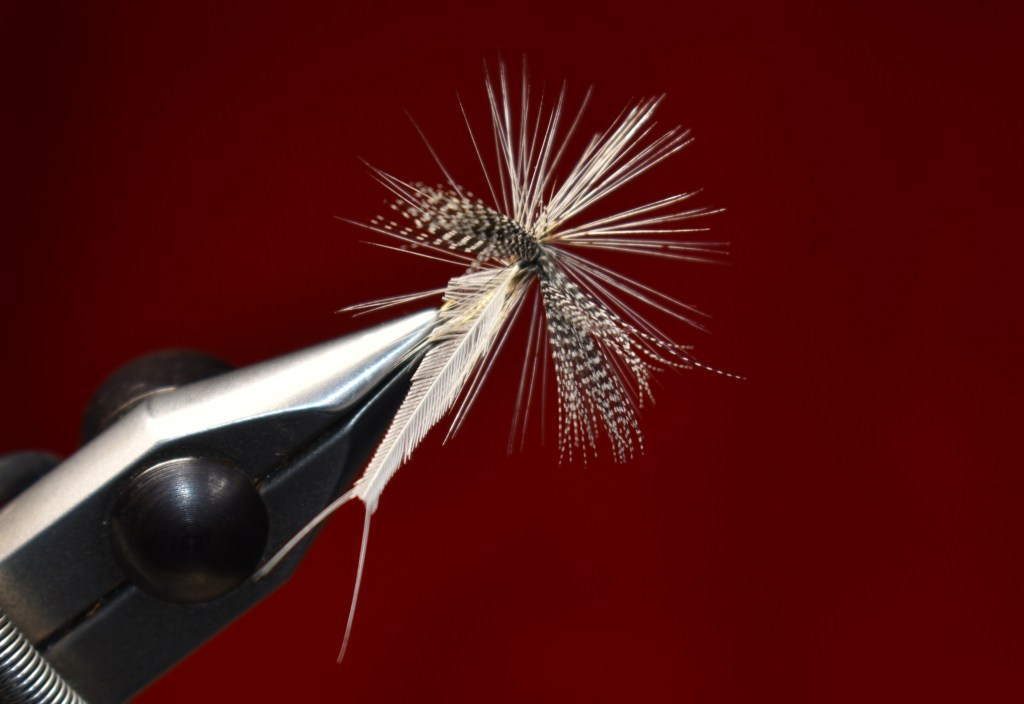
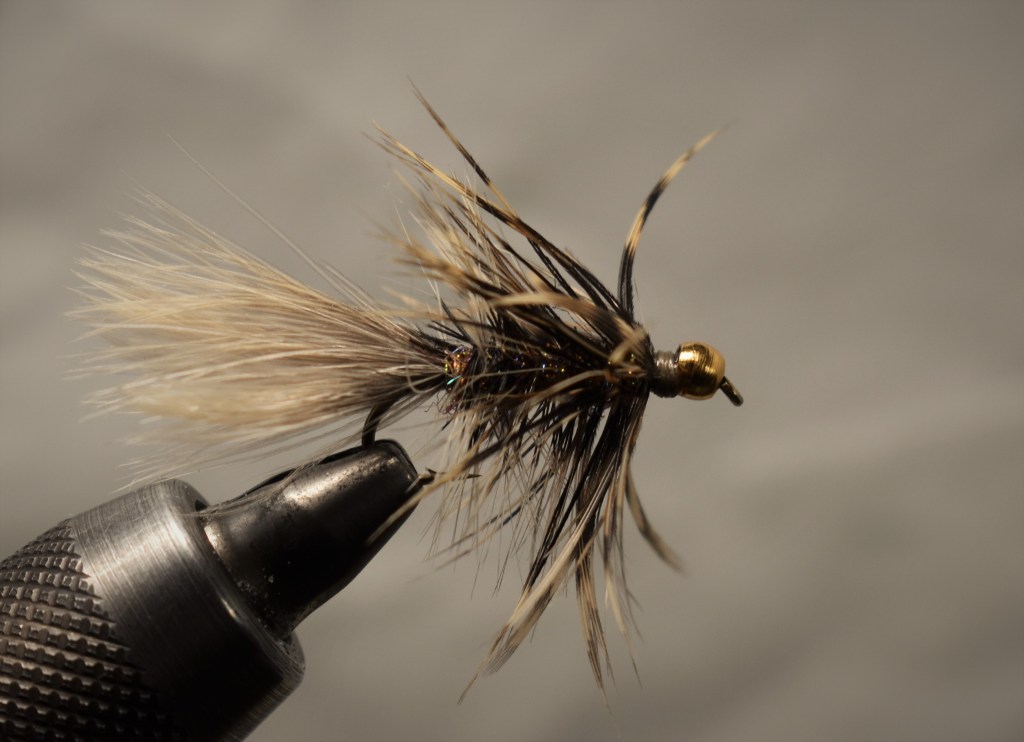
The Translucence version tied with heavily barred woodduck and cree hackle.

Post script: It is 8:42 PM and we just wrapped up our Guild Zoom gathering. Our winter online tying sessions are informal and a particularly enjoyable way to pass a winter’s evening. We shared some ideas and a little history regarding the original American March Brown dry flies, and everyone tied a few flies for their spring fishing. I tied one traditional fly, modified from Art Flick’s version by using medium pardo Coq-De-Leon tailing and cree hackle as opposed to grizzly and dark ginger. In one of my dubbing dispensers you will find a fawn fox blend in accordance with Mr. Flick’s pattern. After that, I tied three Translucence 100-Year Duns in the pale, slightly dirty yellow coloration discussed above, and a pair of 100-Year Duns using my standard yellow fur blend of fox, beaver and a touch of Antron.

One of our tyers asked where the March Brown originated and Tom Mason joked that it had been around for “thousands of years” referring to the long history of the British fly. Tom, who has a passion for the history aspect of our sport related that the first publishing of an American pattern was indeed Preston Jennings 1935 volume, confirming my own belief. We discussed the differences and similarities of Jennings and Art Flick’s individual patterns, with Flick’s being the most popular among our group. There was little doubt that preference reflected a bunch of Catskill tyers’ love of the woodduck feather.

All those interested in Catskill flies and their tying are invited to join the Guild and participate in both our virtual and live gatherings. Membership dues are $20 per year, collected in February, and can be easily handled online at http://www.catskillflytyersguild.org .

Catskill Lingering

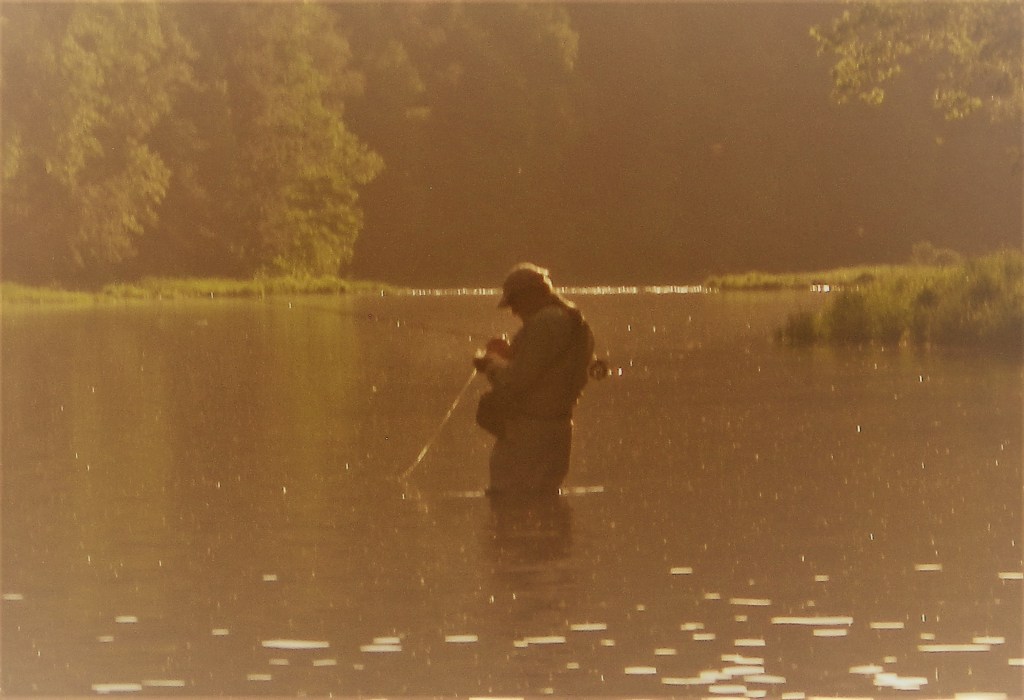
A Beaver Kill morning from two decades past, watching an unknown angler probing the head of Hendrickson’s Pool.

Tucked inside my tyer’s den it is easy to drift back in memory… There were days I waded rivers on younger legs, and many when the anticipation spilled over as I turned at last from NY 17 toward the Hale Eddy bridge!

Springtime in the Catskills, it always brings memories of endless days and nights at West Branch Angler. Stepping from the warmth of the cabin to find my wading brogues frozen upon it’s porch; tasting the sweetness of fresh Belgian waffles and strawberries at breakfast and the sherry oak smoothness of a Macallan hoisted high at the Troutskellar, once darkness has overtaken the river at last.

Many times, I arose early to tie flies at the table in the White House Lodge’s kitchen, and more than likely one of those flies would be the magic spark that made the day sublime.

A handsome West Branch brown that took a fly-of-the-day tied just that morning.

I remember Mike Saylor and I standing in front of the Lodge and watching a young black bear scuttle from the pines and down the riverbank for a drink, just after we drove past. When we headed back that way for our evening fishing, he had left us a gift piled right in the middle of the road. We still laugh about that sighting, wondering where that bear gets his drink now that there are cabins where the pines once stood.

There was a wet and stormy morning when I took Jim Downes’ little 7 1/2 foot Garrison clone down to the steadily rising river. As the current in the run increased, I waded closer to the bank to keep my footing, casting a big isonychia cripple far ahead and tight against the grass. That was where the trout hunkered that morning, and the tactic brought three fine brownies to hand!

The little Garrison clone and the biggest of those bank-hugging high water browns.

I look back fondly at more than two decades of visits to my second home, and sometimes miss the chance to awaken at the Lodge and tie some flies for breakfast. I still feel a touch of the old thrill when I pass the Hale Eddy turnoff.

The West Branch draws anglers by the hundreds once spring has awakened the mayflies and the trout, and my friends at West Branch Angler still greet them all with a smile. I keep my visits to the quieter times these days, content to browse the fly shop for essentials while catching up with Ben and Jake and Matt. Each time I gaze toward the water I recall special moments in time, and trout that thrilled and exasperated over so many wonderful seasons.

April’s Charms

“I’m looking for the April thunderstorms that wash away the drab colors of the winter time; I’m looking for the spring to break wide open; to hear the phoebe and the robin and the meadowlark; to see and smell the violets and the blossoms on the apple trees; to watch the swallows sweeping low across the satin surface of the stream: to wait for ripples of the rising trout, as evening falls and nymphs emerge and all the world is sweet with scent and song and gentle colors.” Dana Storrs Lamb, “Woodsmoke And Watercress”

How easy to sit and dream of April in the Catskills! I have hunkered upon the riverbank, catching sleet in the folds of my jacket as I pulled hood and collar higher to protect my neck, ever watching the bubbling riffle below for the telltale bob of sooty wings. I have braced myself against the pull of strong currents, reaching that my fly might fall just inches closer to the bubble below that rock, hoping that it speaks more of life than of current; waited until the cold made my legs feel like the stones themselves before forcing them to bend, to move and retreat from the rush of water that threatened my footing. I have warmed myself in the glow of evening sunlight and cast a fly to subtle rings where spinners met their ends. April is everything, the birth of a season with all of the trimmings!

Hunting riverbanks with polished cane, the fly boxes brimming with winter’s creativity, the latest answer for trout too cautious to come to the angler’s call. I relish even those early days, when experience knows the answer the heart resists; not yet…

Nothing quite so lights up the senses as that first glimpse of movement, of life at the surface of the cold, sparkling waters. My eyes search for proof, a mayfly drifting by point blank, the bulge and wink amid all the frenzy of the current that says rise. When at last my senses are rewarded, when the mission becomes one of casting rather than walking, the surge in my heart is bliss. The cast feels different somehow, though I have made them by the millions the muscles and joints don’t respond with the same smoothness, but the line unfurls, the fly alights… and the season begins at last. Those muscles remember as the line grows taught, the cane arches boldly and the ancient reel speaks.

Endless days spent searching, and at last the flies come. Chances are the first engagement is brief, enough to see them clearly, to know they are real and alive, but no more. The hours dwindle in vain searching – there must be a rise! It may be another day, perhaps a few before the search is fully rewarded. The spirits toy with April weather!

Eighty-six days until my steps quicken upon the riverbank, and my hand squeezes the cork with purpose. It is 19 degrees at dawn here in Crooked Eddy.

A Freshening

The northern rise of Point Mountain freshened by snowfall.

Morning, and the Catskills have been freshened by a dusting of new snow! Just a touch, a little to remind us it is January, to make everything white and beautiful again! Rain is coming, and that will surely melt away this morning’s blessing, so I will savor it for these brief moments.

I’ve been thinking of birds this morning, wondering where I might find a January grouse. I shan’t chase them in the rain, though I would enjoy a woods walk with a lovely fresh dusting as we have today.

With the rain coming I read this as a good day for tying flies, and perhaps I should finally sort those fly boxes, get my tying organized rather than driven by inspiration as it has been. A personal shortcoming that, flighting about on the wings of inspiration rather than heading steadfast on a prudent course; or is it? Its true I could find myself light one necessary pattern on a fine spring afternoon, but that just opens up an entire world of other possibilities!

The Guild will gather this evening, a cyber meeting with each comfortable at his own bench, wrapping hackles upon his chosen hooks. Such evenings are a great way to pass the winter with our members scattered far and wide. They’ll not be travelling to Roscoe in January, when the Beaver Kill beckons only in memory.

Bright Days, Bright Waters

The last limestone arch bridge over the Falling Spring Branch. Some surprising trout would hold above, beneath and below the lovely old structure, which presented angling challenges along with opportunities!

There was a period in my life when I haunted the classic little spring creeks of Pennsylvania’s Cumberland Valley almost daily. I was drawn to them by the promise of difficult wild trout, and they captured my heart and mind with their loveliness and the breadth of the challenges they presented!

I had been initially called to the Letort, where legends had laid down great works of angling literature, and I became a frequent visitor to the town of Carlisle. More than thirty years ago I spent a weekend at Allenberry on the Yellow Breeches, where Joe Humphreys and Ed Shenk taught a wonderful fly fishing school for decades. It was the ideal place to sharpen my skills and feed my growing passion. I recognized Shenk as one of those legendary masters of the Letort, and I devoured my signed copy of his “Fly Rod Trouting” between Friday and Saturday nights. He would become a great influence upon me, a friend and revered mentor in my quest for wild trout.

I shall never forget my first sight of the Letort at Bonny Brook late that Sunday afternoon. The tiny stream threaded deep and quiet through an old meadow, overgrown with willows and tall grasses. The clear waters twisted around and beneath deadfalls and heavy beds of water weeds, their currents winding and turning back upon themselves. I stared in awe asking “how in God’s name can you fish this?” Over the years I would learn the answer to that question.

The classic Barnyard reach of Letort Spring Run.

My love affair with the Falling Spring began after my introduction to the Letort. Shallower than the Letort, Falling Spring also revealed a few riffled areas, and it was wadable with care. Both featured a great deal of angling in tight quarters. Eventually I would move to Chambersburg and open a fly shop to cater to anglers eager to meet the challenge of wild, spring creek browns and rainbows. Those days began my daily rendezvous with bright water. I would fish mornings before opening the shop, then whisk away to some quiet reach as evening came on to search for risers. These were wonderful years!

I cherish memories of sitting back at my fly tying desk sharing stories with Ed Shenk, summer mornings fishing tricos and meeting Ed Koch and John Newcomer working their way downstream as I fished up. I remember the joy of teaching new anglers how to wrap a hackle for a dry fly or helping them cast a fly accurately for the first time.

Falling Spring as evening debuts and the mist gathers in summer’s warm air.

I recall one of many frigid mornings when I bundled up and took a new fly rod to the Quarry Meadow. It was January, twenty-five degrees at eight o’clock, with the rising sun chasing mist wraiths from the sparkling little pools. I knew the sunlight would begin the magic of photosynthesis with oxygen bubbling from the watercress, and that trout would be active despite the icy air. I fished a new streamer pattern tied the day before and battled my largest Falling Spring rainbow, a miraculous, crimson blazed monster of five pounds! I was shaking as I eased that fish back into the current, and not from the cold.

In later years I found signs of life in Newville, haunting Big Spring once a union of anglers, conservationists and scientists finally freed it from the debacle of the Commonwealth and their hatchery. I remember an innocent visit after a few seasons of cleansing, standing on the bank knotting a Baby Cricket to my 6X tippet. Leviathan idled past and came for my fly once it turned away and allowed a gentle cast. Trout and stream exploded, and I stood shaking, my reel hopelessly backlashed with fly line and my tippet broken by the stunning speed and power of such a trout!

Crimson flanked torpedoes haunted Big Spring during a few short years of wonderment.

During all my years in the Valley, the greatest gifts were the most sparing, the brief opportunities for angling the dry fly. Even during the early years, the hatches were not the carnival events depicted in fishing tales. The sulfurs brought trout to the surface on the Letort and Falling Spring, and as daylight ticked away on May and June evenings, sometimes one of the larger fish would show with a bulge and dimple near twilight. Summer was the season for the dry fly man, bright days when a man could wander the meadows and fish a cricket or hopper to every hide! I can still recall the chill of anticipation as my fly alighted above the corner of a patch of watercress along the bank, and the electric jolt of magic as a wide, bronze head wafted out from beneath the weeds to meet it.

The Willow Pool at Big Spring during the glory days.

Though the summers brought the magic of the dry fly to the Cumberland Valley, it is often winter when I think back and savor those years along the limestone springs. There was always hope, even on the coldest days, for a brief window to open and bring a trout to the surface. Little olives and midges might appear in any month of the year, and some of my most exciting moments came when least expected, gifts of the limestone waters.

Easing Back Into Winter

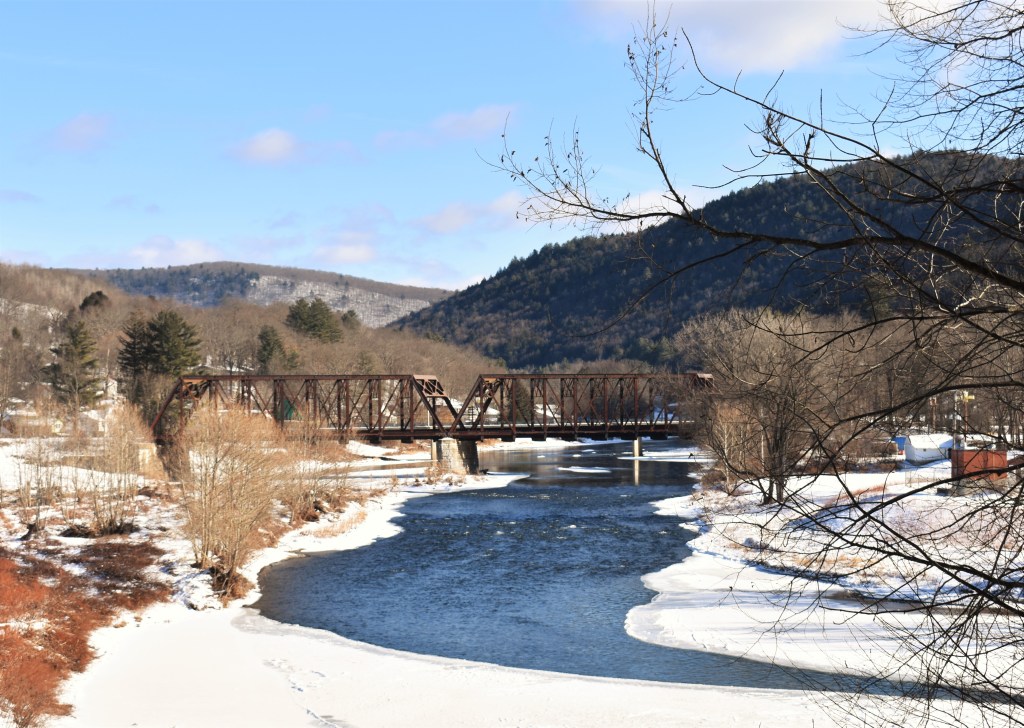
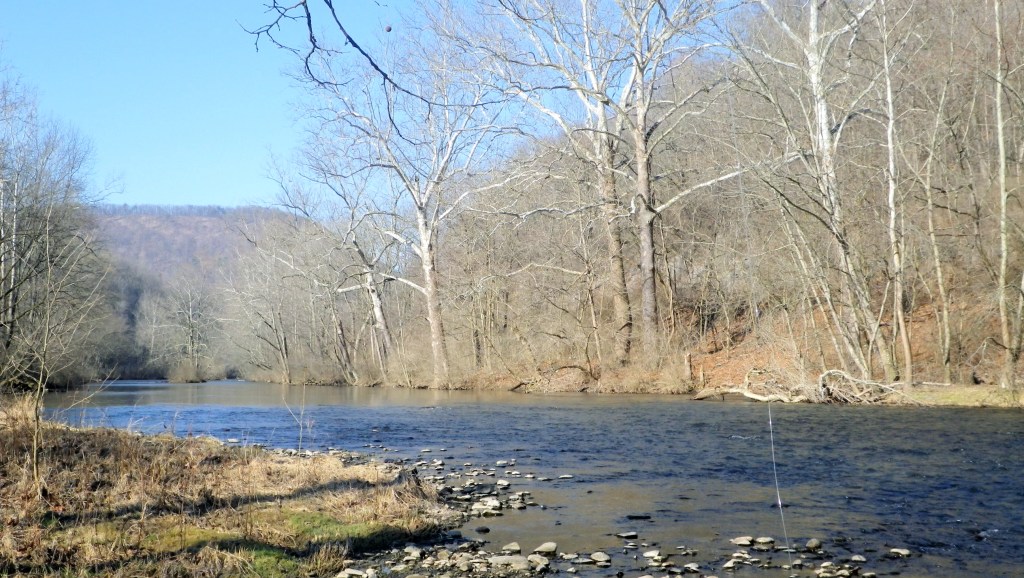
The river is ice-free on a 28 degree January morning…ah sunlight!

It seems we are easing back into winter this week, our spell of upper forty, even fifty degree days now a memory. I am back to tying a few dry flies, though still watching weather trends and river temperatures. Today we reach and pass the ninety-day mark in my personal countdown to the nirvana of the dry fly season; the time that my soul finds its freedom once more.

I talked with a good friend from Chambersburg on Sunday night, catching up after a long stint. He has been busy with family and the increasing responsibilities of his profession, typical of many young men of his age, and I with my fishing, tying and general enjoyment of life in the Catskills. He asked if I had tied a Translucence Coffin Fly, and I told him that, while one was on my radar, I had not yet placed the hook in the vise. Sadly, I explained, Daiichi does not make their Crystal Finish dry fly hooks in a size larger than #10, a size short of our typical Catskill Green Drake. In searching through my hooks yesterday though, I found a single package of size 8 Sprite dry fly hooks, a hook that has a dull silvery finish. While it won’t give the same effect as the Crystal Finish hook, it will not darken the silk as a standard bronze or black finished hook will. I believe the Sprite will allow me to include the big Drakes in my Translucence Series without too much loss of performance.

So, my lineup of patterns to be tested grows by one, Translucence flies all: Olive, Paralep, Isonychia, Light Cahill, Drake and Coffin Fly. It looks to be a busy season! I sit now pondering the hatches, some of which have been rather sparse these past two years, and hope that 2023 will be a very fruitful year upon the rivers of my heart!

I still need to get back to my silk blending, for I hope to prepare some dubbing for the Lady H next!

Drifting the Mainstem amid the glory of June…
…though give me a cloudy day for the best catching!
(Photo courtesy of Pat Schuler)

Searching for the Dry Fly

A gorgeous January morning during our recent winter respite.

Dr. H. B McCaskie, in his The Guileless Trout (London 1950), pondered the breadth of time required for anglers to finally rise to the dry fly given the records of authors who confirmed the relatively widespread understanding and recognition of the habits of trout with respect to the ephemerids: “Knowing all this our forefathers were content to watch the trout picking the natural insects from the surface of the water, to study these insects and copy them with anxious care, and to let two hundred summers go by before they were inspired to put their imitations where they were most likely to be taken.” Given we anglers’ penchant for taking credit for our own little discoveries, it does seem rather amazing that such a large one got away for two centuries!
Then again, fishermen are well known to be secretive.

Perhaps the resistance of human beings to change is to be blamed as well. Even though well established in England in the nineteenth century, the dry fly was little used or respected here for a long count of years. Interest grew in the Catskills due very much to the inquiries and correspondences of Theodore Gordon and his contemporaries. Gordon was a fly tier, and very much interested in the tools and tactics for the dry fly to apply to his home waters of the Neversink and other Catskill rivers. His observations of American ephemerids inspired his own creativity to tie flies well suited to our rivers.

Gordon wrote in British and American sporting publications of the day and shared his flies and thoughts with those he fished and corresponded with. From his simple life in the Catskill mountains, Gordon greatly influenced American dry fly fishing, becoming the seed for what we know today as the Catskill school of fly tying. The stories are interesting, and I shall not recount the details here, there being too much charm in our angling history to brush it aside with broad strokes. The anglers of today are fortunate to have wonderful avenues to learn and appreciate our own angling history. We are fortunate to have the active efforts of the Catskill Fly Tyers Guild, the Catskill Fly Fishing Center and Museum and the Jerry Bartlett Angling Collection as repositories to keep our region’s history alive!

The dry fly and the Catskills are synonymous due to this history and the beautiful brooks, streams and rivers that still wind through these mountain valleys, and the hearts of fly anglers. Wild trout rise throughout the season to the wondrous mayflies, stoneflies and caddisflies that inspired Gordon, Christian, Cross, Steenrod, Dette and Darbee, and continue to inspire us today.

My own passion for the dry fly has drawn me here for thirty years, first as a visitor and finally as a resident. I revel in the new mysteries revealed as each season passes!

Commencement

Danneker’s Pool, West Branch Delaware, Now Posted Limiting Access

There is always something good, something right about beginning a new fishing season. Though we avoided yesterday’s forecast sixty degree high by the smallest of margins, it was certainly wonderful weather for January.

I had driven to the Route 191 bridge to check the water clarity, as all rivers have risen since the New Year commenced, and was pleasantly surprised to be able to see some river bottom beneath the rushing currents of the West Branch. My fate thus sealed, I returned home to dress for the high, cold water and prepare my tackle.

Seeking more wadable flows, I aimed for Deposit with an eye toward swinging my wares through Danneker’s Pool. Surprised to find no anglers in sight, I assembled the Kiley rod and began a pleasant walk down river. Nearing the head of the pool, I came face to face with a shiny new posted sign staked right in the middle of the well worn fisherman’s path. Alas, another casualty of entitled fishermen I suppose. It is hard to blame a landowner when one recounts all of the various bad behavior witnessed along the rivers. I turned wistfully and walked back the way I had come.

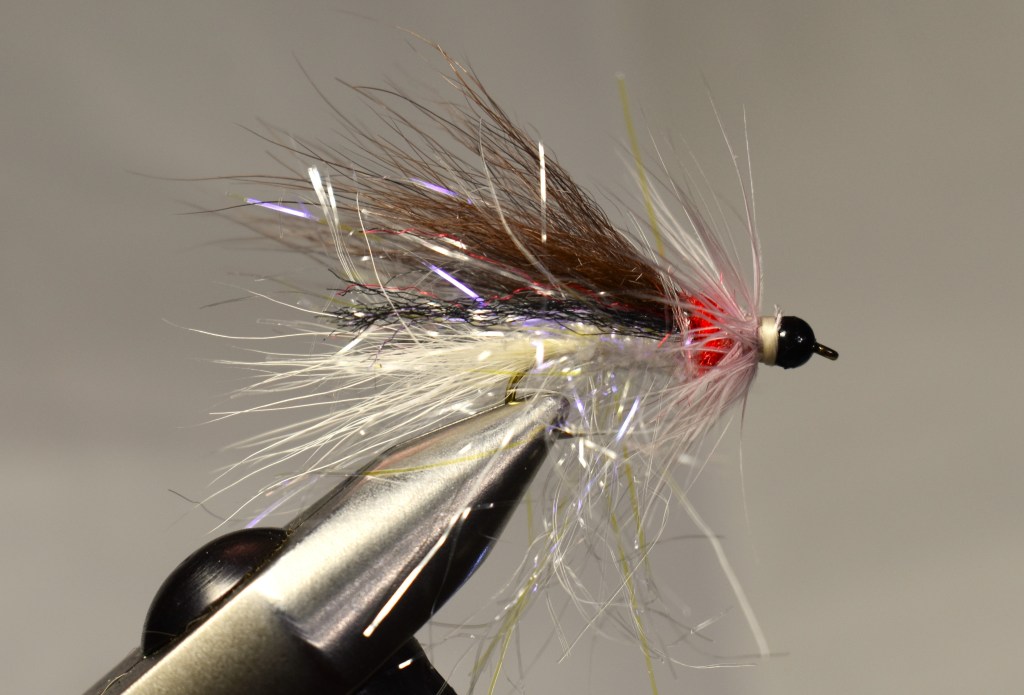
I ended up fishing shallower water than I had planned, keeping my attention focused on the deeper pockets of the run I was resigned to fish, and quickly got used to my little Dazed Dace bumping rocks as it swung along close to the bottom. My growing familiarity with those frequent sharp bumps proved to be my downfall.

My concentration lapsed a bit and caused me to react a second late when one of those sharp little bumps proved to be something other than a rock. By the time I tightened the line against the wiggle following the bump I was late, and I knew it instantly. The rod tip got very heavy as it bowed menacingly, and a great boil of water rose upon the surface. I had not fully appreciated the apparent size of the trout that had taken my fly when it and the wet fly line came flying suddenly right back at me, splashing my face with cold water as the entire rig fell in a tangled heap at my feet. The Dazed Dace had done it’s job, caused leviathan to rise, and I was caught sleeping at the wheel.

I worked more thoroughly after that, but of course such chances are never repeated.

As the afternoon drew along, I decided it was prudent to change my fly and make another pass through that run. Where there is one trout, their ought to be another; and there was.

A small Copper Fox was rudely interrupted in it’s swing and this time I allowed the hook to take hold before bringing the arch of bamboo smoothly into play. The tip bowed once more as I played the first trout of the year to the net. The silvery, winter hued brown was an energetic, foot long specimen, and I thanked him for his service. Perhaps with the ritual completed I will find myself more prepared should another big lurker be encountered.

There a is a pair of size 8 dace hanging here in the drying rack, and my thoughts have already wandered from river to river in an effort to choose my destination for today. A final fifty-degree day remains in this unseasonable early break from our Catskill winter, and I shall not waste it. If this was spring or summer, doubtless I would return to that same shallow run, confident that big fish would remain. If this was spring or summer, there is a good chance I would cross swords with leviathan once more, but such trout do not feed regularly in the chill rivers of winter.

Morning is upon us, time for breakfast and a decision. As always, I hope for sunshine, plentiful sunshine and a bump and a wiggle!

Warm & Wet

An Unseasonably Warm November Afternoon In The Rain

Sixty? Are they kidding me? That’s the high temperature forecast for tomorrow here at Crooked Eddy. It isn’t time to panic though, for winter will return for the weekend. What I wouldn’t give for some sunshine to go along with that sixty-degree day!

In truth I doubt we will see 60 and, if we do, I will be looking hard at a couple of river gages and toying with the idea of spending a couple of hours swinging flies. The warm air helps, it will keep the water temperatures hovering around forty degrees, but it would take several hours of sunlight to give them the kind of kick that would lead me to expect to find a feeding fish or two. With more seasonable weather returning Saturday, this could be the last chance to wander a riverbank for an extended period of time.

In the more southerly climes of Southcentral Pennsylvania, the weather tended to be more variable through the course of the winter. Yes, there were some very cold stretches, but there were little warmups too. If the warmups lasted into the weekend, I could generally expect to find a few active trout on the limestoners, for their water temperatures rarely dipped below 50 degrees. My favorites were the February warmups, for they came when cabin fever was reaching a peak!

Last February, we got an honest warmup here in the Catskills. Daytime highs ran in the mid-forties and into the low fifties for a handful of days. That was a first for me since moving to Hancock in 2018. We are having that kind of spell now, and it did get me out on the river for a day, but I missed the sunshine. Even in January, a bright, sunny day can punch up the river temperature three degrees or so in a few hours, and that quick little rise just might allow me to introduce my new Dazed Dace to a big old brownie! The rapid rise has always seemed more likely to get a few trout moving than a long gradual rise over a couple of days.

Don’t mind me; just dreamin’…

Shimmer: A limestone rainbow better than two feet long.

Its hard not to daydream this time of year. I live for dry fly fishing and I know I won’t see any of that until mid-April. A run of really warm weather we had in March of 2021 had me hunting rivers early. I found early black stoneflies and midges buzzing around, but nothing, absolutely nothing disturbed the surface. Those early stones had me fishing dry flies on the limestoners in February, and the little olives joined the party in March, but that was thanks to those fifty-something degree water temperatures I mentioned.

I did get started on the new small flies for my Translucence Series today, blending dubbing for BWO’s and Paraleps, commonly known as Blue Quills. I will tie a few more when the chill returns. Snowfalls tend to be better for my concentration than rain.

A New Year On The Horizon

The Delaware in Spring’s Full Bloom

Well, well, it seems we have made it to another year. It is a gloomy New Year’s Day here at Crooked Eddy, but the pictures in my mind are more like the one above than the one outside my window. As of this morning there are 100 days until my target: the second week in April. When that week arrives, I maintain the highest hopes to witness the beginnings of our spring mayfly hatches.

I hope that the New Year brings us a beautiful and bountiful fishing season, with good, cold flows in all of our rivers, plentiful hatches, and many wild trout eager to rise to take advantage of them. Let our rivers be free of floods and drought, and may the trout prove none too easy to deceive that we anglers may earn our rewards with patience, humility and skill.

While I have no resolutions, I do have plans, foremost among them to adapt to all that Nature weaves into the magic of angling. The greatest single lesson of my thirty seasons fishing Catskill waters is the realization that every season will be spectacularly different from the last. Nothing is predictable in Nature, despite all the literature of our grand sport that has sought to make it so. There are always changes and new challenges; that is the very essence of the magic of trout and fly!

Each season we learn from Nature’s incredible variety and add to our store of knowledge that we might be better prepared for the new discoveries of the next season and the next. I am already working on expanding my assortment of translucence dry flies to cover more of the season’s mayfly hatches. These are flies intended for the trout too wary to be caught!

A new supply of silk has just arrived allowing the creation of dubbing blends for the Green Drake and Isonychia, the two pinnacle mayflies of spring’s grand finale. No sooner had these dubbings been mixed than the first hook was fixed in the vise, for even in the chill of winter I am energized by the prospect of difficult trout!

The new dubbing blends have found their way to the vise quickly. These Translucence 100-Year Drakes and Isonychia Duns will rest until guttulata and bicolor emerge at the height of springtime!

The new Translucence Isonychia will compete with my Halo Isonychia, a fly that that has proven itself on Delaware browns and rainbows. As with all of my experimental designs, their debut will be triggered by a trout who refuses to be duped by proven flies. The Halo pattern took advantage of the translucency of natural silk dubbing to mimic the color change of the natural mayflies soon after emergence. The new dun follows the design theme of the Translucence Series flies imitating the deep claret tones of the duns once that early color change has been completed.

Translucence 100-Year Dun Isonychia, my first flies of 2023.

The olives will get more attention during my winter fly tying, as I fondly recall the beautiful result of tying my first Little Blue Winged Olive 100-Year Duns. The gorgeous trout that took that fly was the last of my dry fly season, stalked amid the low, clear water of late October. Last summer’s success with the tiny 100-Year sulfurs will drive my focus to include the major small mayflies in that design series. The little olives will be joined by Blue Quills, flies that are often a mainstay of our early spring fishing; and yes, both will figure in my expansion of the Translucence Series.

Tie your flies and make your plans, for 100 days will pass more quickly than you think!