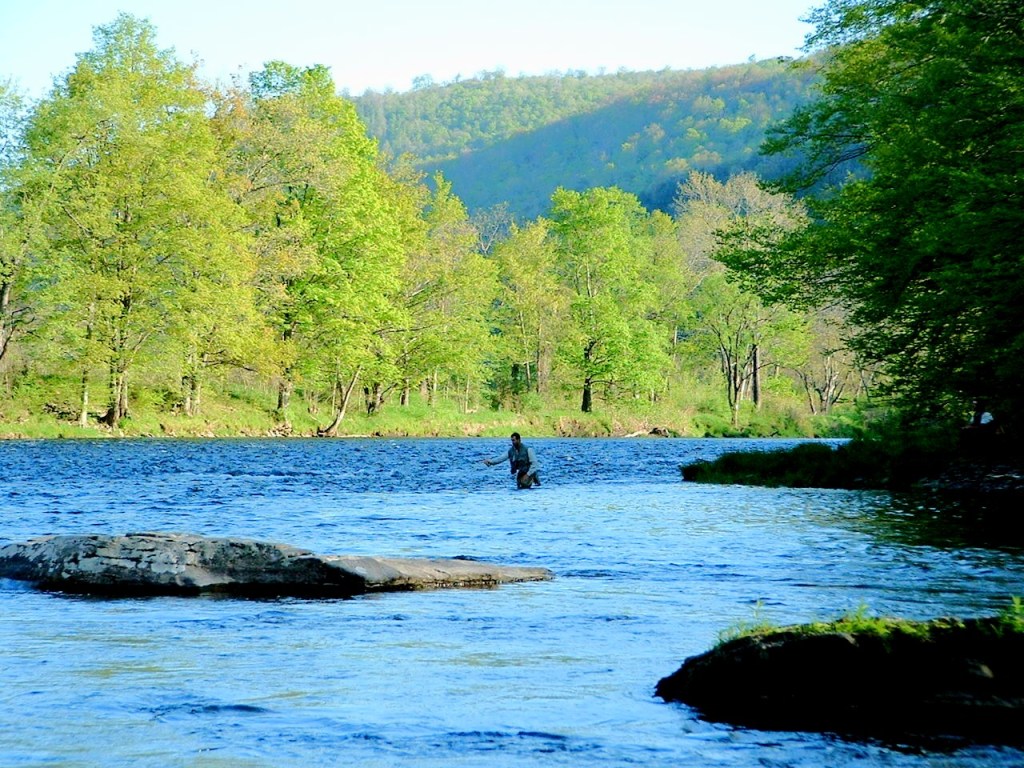
I fished the limestone springs of Pennsylvania's Cumberland Valley for a couple of decades, founded Falling Spring Outfitters, guided, tied and oh yes, fell in love with the Catskill Rivers I can now call home.
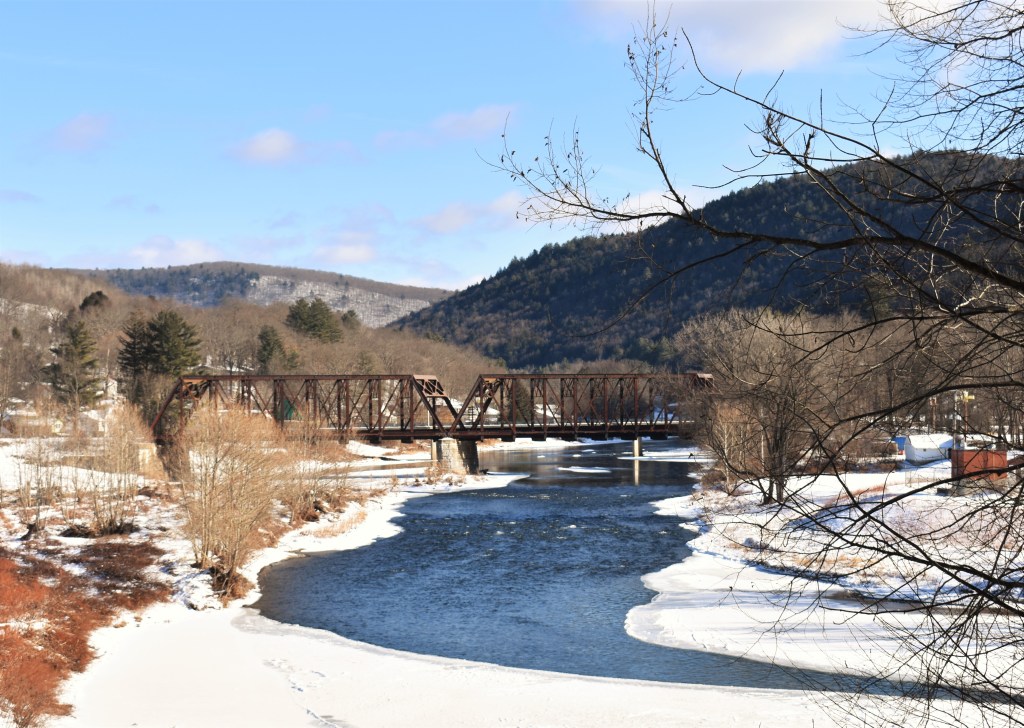
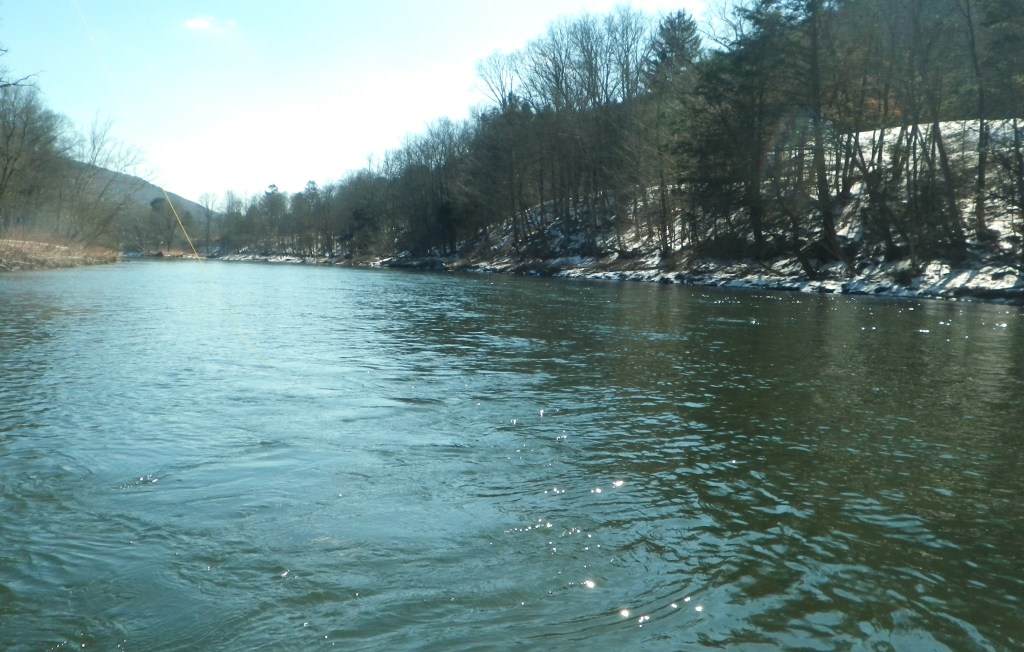
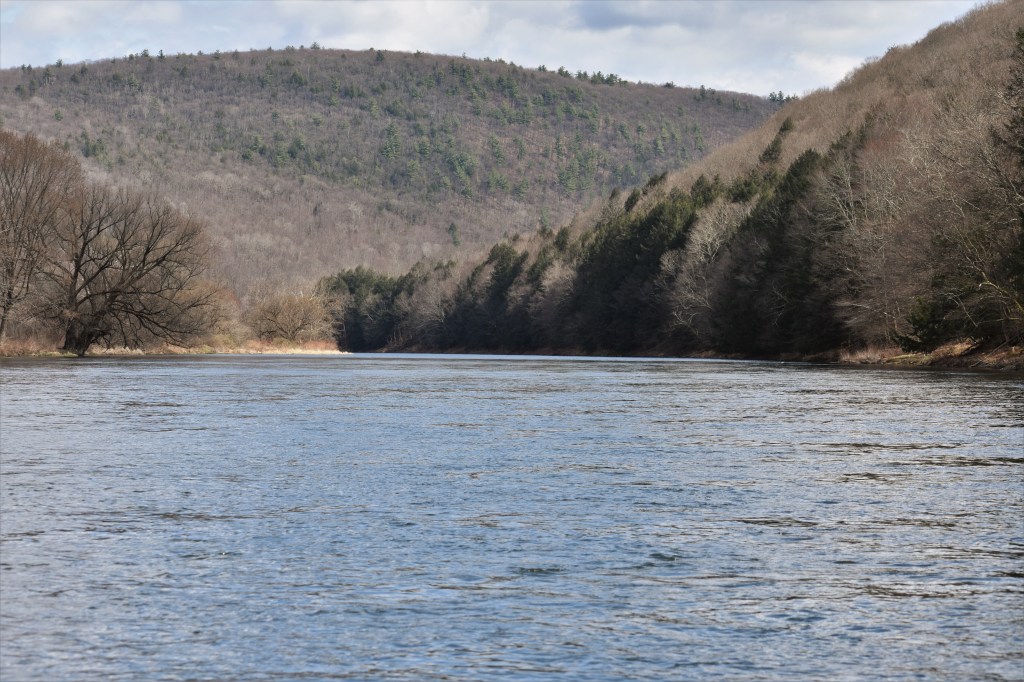
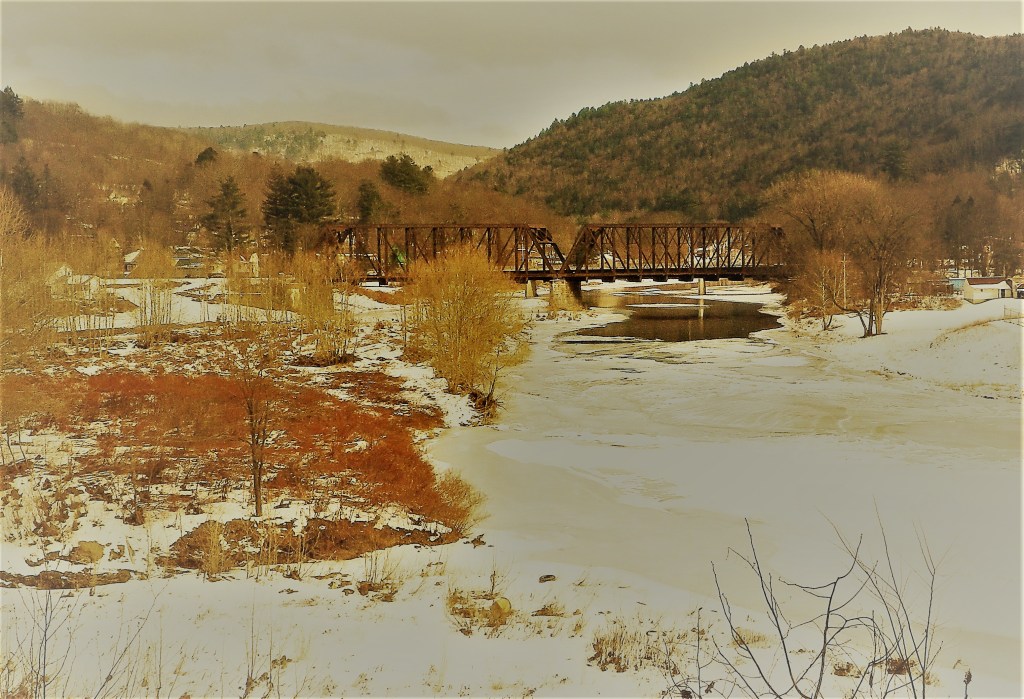
The East Branch Delaware entering Crooked Eddy on a bright, twenty-one degree Sunday morning. The debris field in the foregroundis the ice deposited by Friday’s high water, piled several feet above this morning’s flow.
Along my river walk this morning I was impressed by Nature’s handiwork once more. There is a bit of a thaw that began with Thursday’s rain, was subdued by the past two days of frigid temperatures and will be expected to continue during a warming trend through the coming week.
The Beaverkill watershed contributed a healthy dose of runoff, with the river peaking at 5,000 cfs on Friday. The discharge recording gage on the receiving East Branch at Fishs Eddy is still iced, but the gage height readings show a rise of nearly five feet from Thursday’s rainfall. I knew the Beaverkill had spiked but was surprised at the amount of ice piled along both banks here at Crooked Eddy. Though the mountains were not wearing a coat of deep snow, there was enough added to the melting rainfall to push a lot of water and ice through the system.
An ice sculpture I happened upon this morning: sculpted by flow!
Certainly, there was a bump in my heart rate when I first saw the advance forecast, though I dare not let too many thoughts of fishing get a foothold in my daydreams. If the thaw continues, and the winds remain civil… well, we will see.
I wonder what damage this thaw might have caused to the riverbed, and the cost paid in nymphs, larvae and trout eggs? I remember an April steelhead trip to Ohio’s Grand River. The guide that had offered the trip during a chance meeting at West Branch Angler told me that he floated the river at least twice before he fished it each spring, simply to study the dramatic changes the moving ice had wrought, where it had made, and where it had eliminated holding water and spawning gravel.
I will not learn the answers until spring, when my feet will gradually measure the changes to the structure of the rivers. The abundance of the mayflies and caddis will say much, though it will be the end of the season before all the costs of Nature’s sculpture are revealed.
First the river, and then the village itself. We are shrouded in ice for the second day. I’d love to get out, but the odds aren’t very good. Humans fall hard on icy surfaces, it is sudden, and old bones are not as resilient as they once were. I remain inside looking out and praying for the afternoon sun to bring a bit of thawing to my little corner of the world.
I’m still caught up in the idea of soft hackle Green Drakes, doing research and passing the time scrolling through YouTube videos. I found there are a couple of others out there who have experimented with this same line of thinking. I sent a couple of messages to a couple of acknowledged experts on old English patterns, though I’ve had no replies just yet. It seems to me there ought to have been a fly or two of such design crafted in the past one hundred and fifty years or so, and England seems the logical place for it to have occurred.
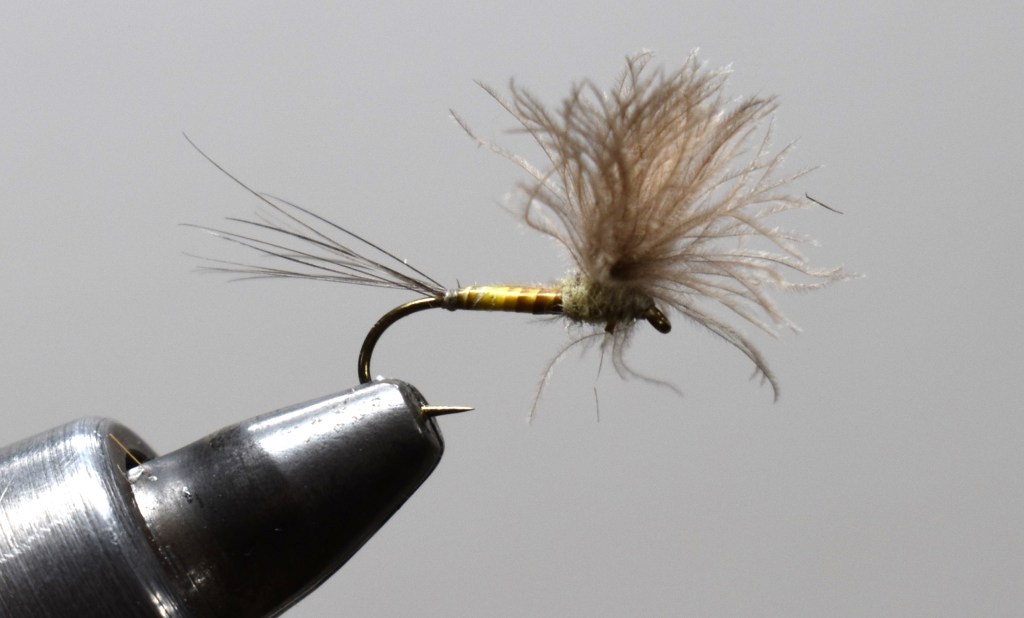
Yesterday I turned my attention to CDC soft hackles and tied a fly that looks very promising to me. This fly should settle itself right in the surface film and move just enough to elicit interest. A downstream cast and a little pull, followed by a quick drop of the rod tip, ought to get it as much in the trout’s world as mine; right in the doorway as it were, and leaning across the threshold.
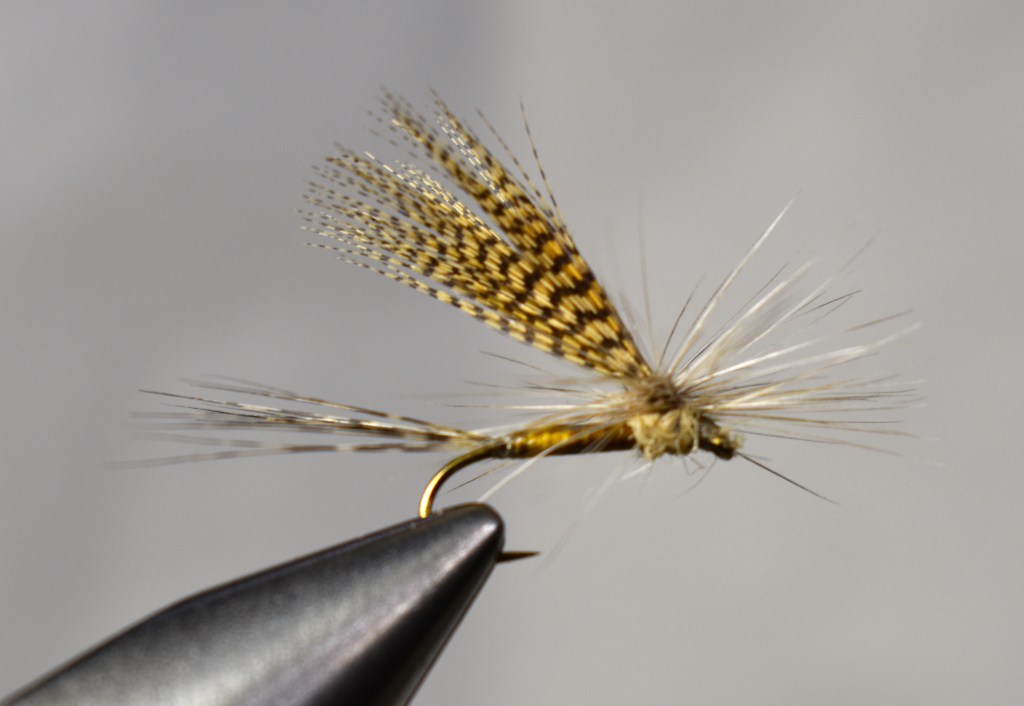
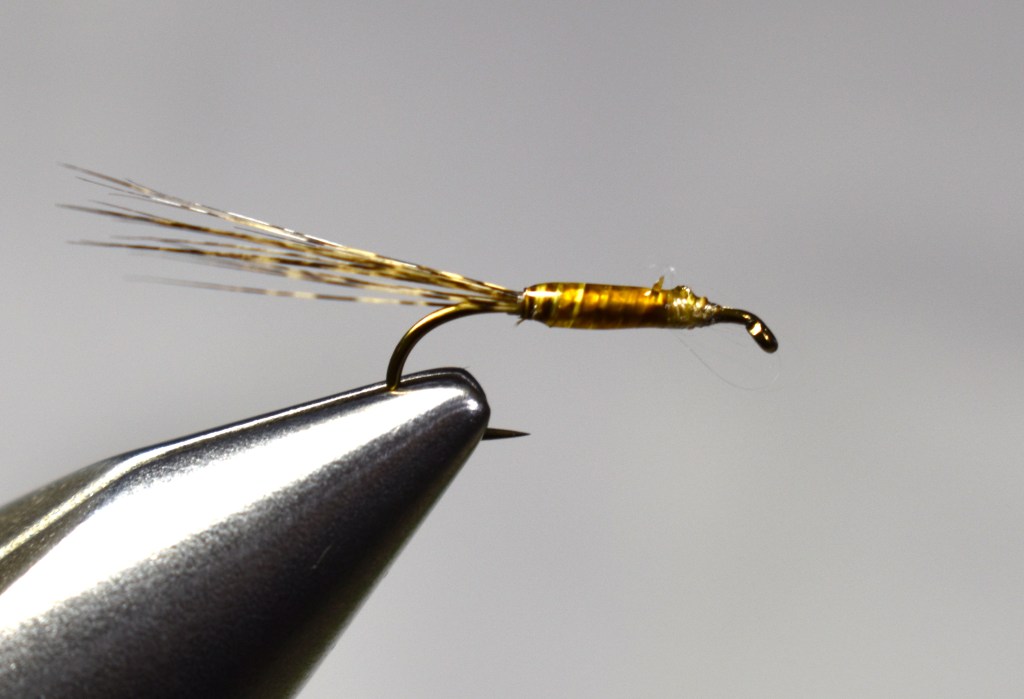
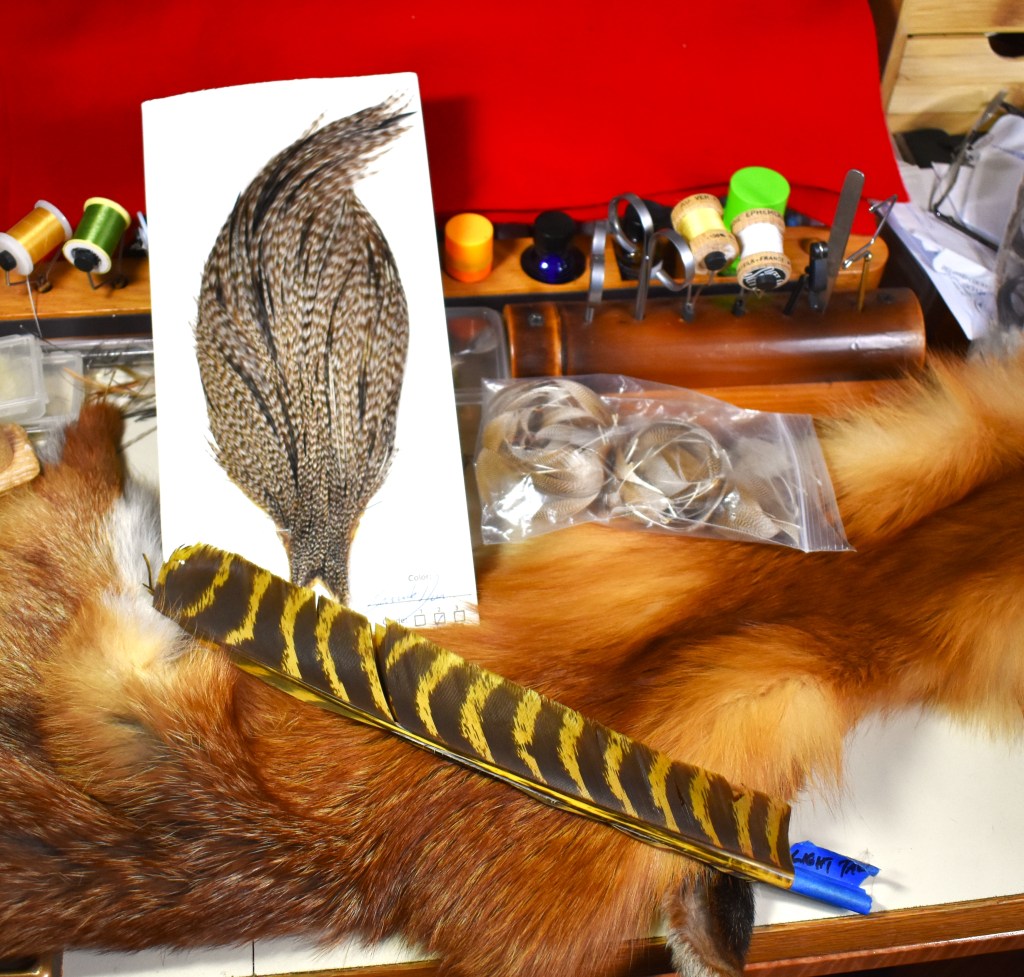
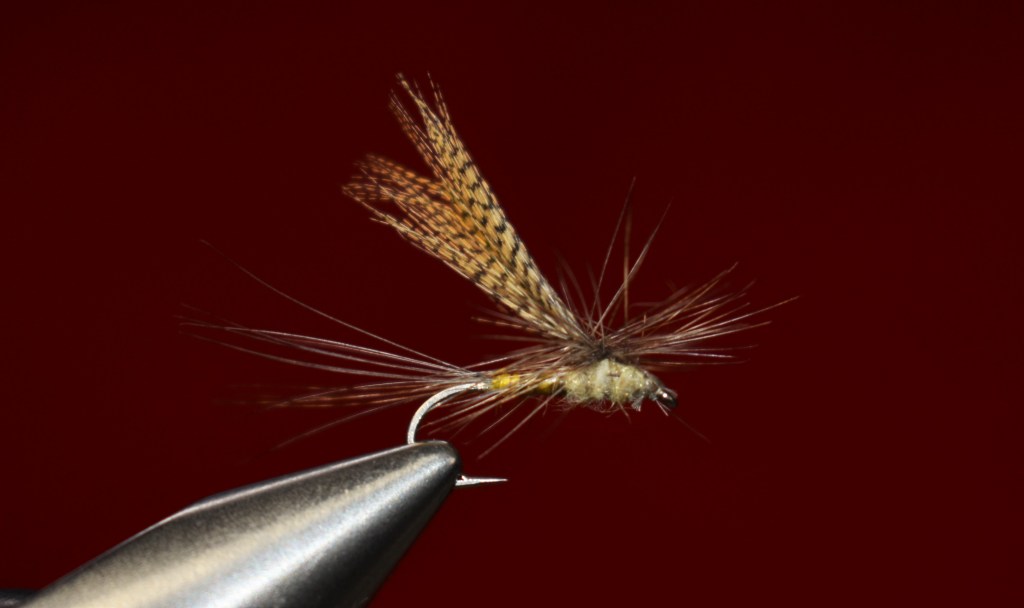
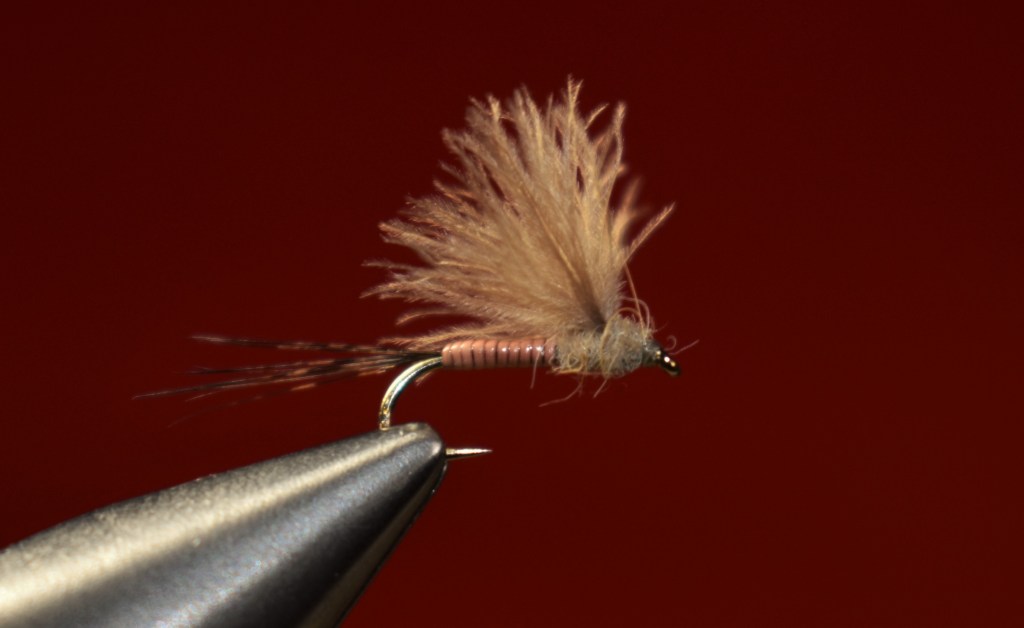
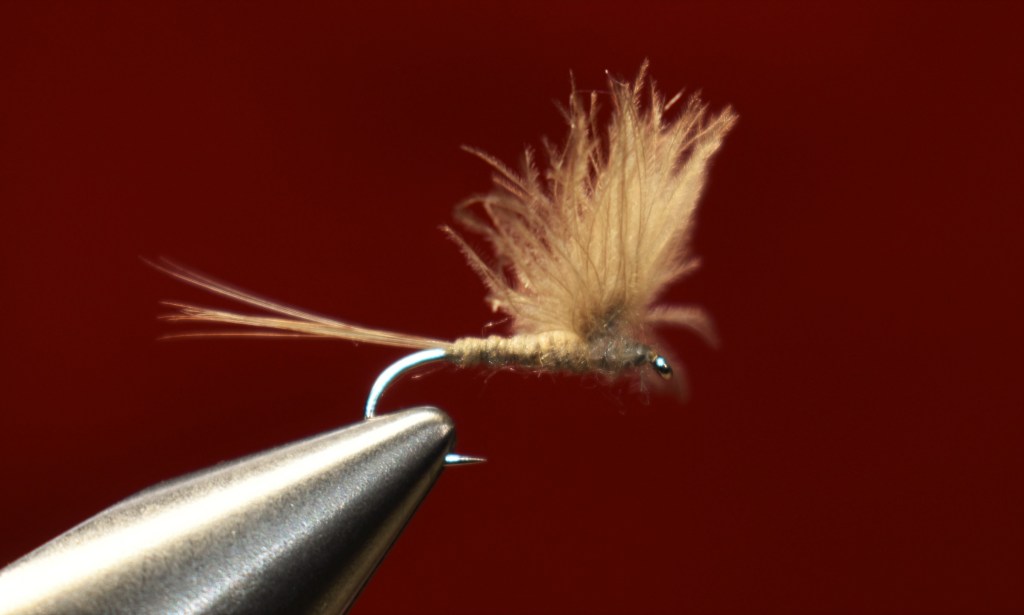
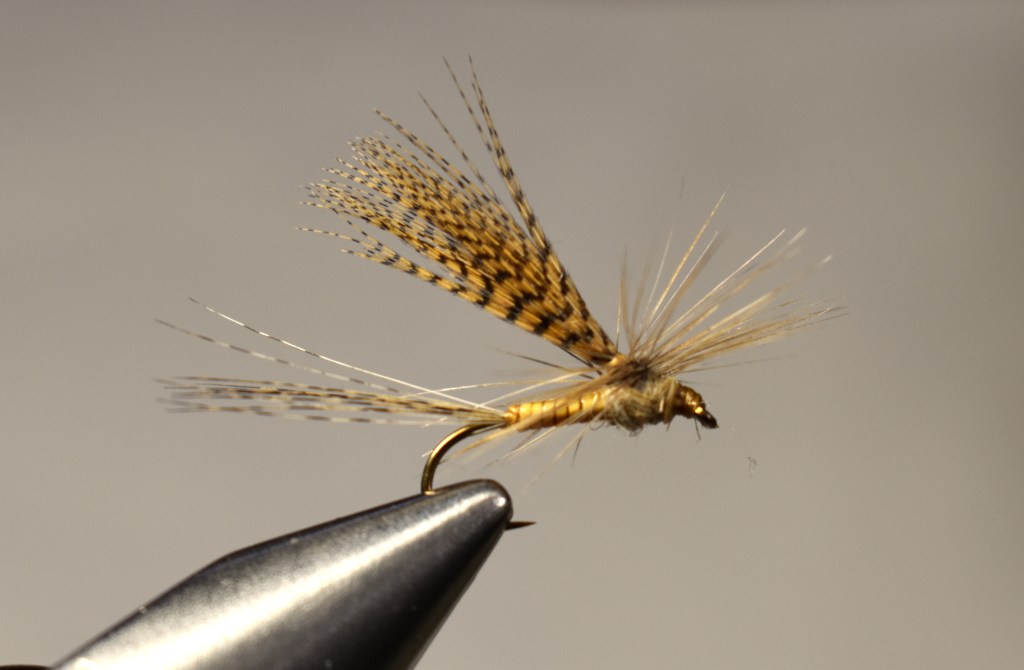
CDC Soft Hackle Drake: Hen pheasant covert, yellow CDC, silk dubbing & thread, and Coq-De-Leon.
After my tying session I went back to browsing video topics and came upon a related pattern from somewhere in Scandanavia. I was not aware that their region of Europe featured hatches of Ephemera Danica, but it seems our Green Drake’s cousin generates a lot of excitement among trout and fly fishers there, as it does in the British Isles.
I have taken a couple of excited browns by purposely sinking one of my CDC duns, even when stripping them in to make a pickup. There are times when the movement simply overcomes their caution, but the movement I design into my flies is typically subtle. These are insects we are imitating and not baitfish.
Years ago, I designed a very realistic looking Green Drake emerger with a big wing of showshoe rabbit. The entire concept of that fly was geared toward fishing it sunk, on the swing, and then giving sudden slack to allow it to pop up in front of a rising trout. If you have ever fished the late Fran Betters’ famous Usual dry fly, you know how easily a snowshoe winged fly can be handled that way.
That fly was conceived on the drive back to Chambersburg after a last day session on the Beaverkill. I had fished the tail of one of the big river’s pools on that overcast afternoon and found Green Drakes hatching in the riffle below the lip of the tailout. Trout were chasing the emergers and taking them with explosive rises and all dead drifting flies, natural and artificial, remained unmolested. I finally sunk and swung my dry fly and managed to get one good grab before the hatch subsided. I remember that fish, because he streaked downstream through that riffle like I had set him on fire, breaking my reel’s drag spring.
A spinning fly reel produces a terrific backlash when there is suddenly no resistance to a fish’s run, a stupendous tangle. Luckily that trout was near the end of his run, and I was able to play him back upstream and into the net by stripping line. If I hadn’t, I would have sworn that he was one of the biggest trout I ever hooked. Damned impressive performance for a sixteen-inch brown.
If memory serves, I carried that new pop-up emerger for several seasons, never finding the right situation for it. It did not fare well in flat water, lacking the speed in the swing and the sudden rise to the surface. I didn’t have any with me last year, when the only hatch of Drakes I encountered was in a nice run of moving water. Who knows? I might have reached nirvana…
Ephemera Guttulata: The Eastern Green Drake has been known to inspire fanaticism among flyfishers.
It is an old society, one I joined thirty years ago on Penn’s Creek, the grand Central Pennsylvania limestoner. They came in complete darkness there, on a quiet night when the fluttering of their wings was audible amid the gushing explosions of wild brown trout feeding heavily. Fly fishing by sound is a guessing game, lacking in the precision and technique that enthralls us in our practice of the art. Still, that experience was chilling.
On the edge of dawn, I prowled the great pool at Poe Paddy while my fellow campers slept. I discovered a pair of trout, hidden along the banks and gently sipping the wounded duns which remained from the debacle in the darkness; and I connected!
I followed the hatch north to the hallowed Beaverkill and fished the Coffin Flies on Cairns Pool amid a host of celebrants. Seeking solitude an evening later, I watched the water boil as the great white spinners touched down to the surface to deposit their fertilized eggs. My Dette style Coffin Fly engaged one of the big Beaverkill browns, and I gasped as he shot from the riffled run like a missile. Somehow, I recovered from my shock and awe and played him successfully. He will forever live in my memory.
Inducted thusly into the Cult of the Green Drake, I have followed the hatch throughout the Catskills. I have studied the flies, pondered long hours designing patterns, tested them each season that the hatch appeared. This greatest hatch of mayflies can be enigmatic to say the least, and its strength can vary widely. After the great flood of 2006 I searched in vain for two seasons, but the Green Drakes eventually returned.
I have fished the hatch a week before the vaunted Memorial Day festival of the waters, shivering in forty-five degree weather while huge trout crashed the quivering duns, as well as those of feathers and fur. One recent season I believed the hatch was lost until the Drakes appeared three weeks after their Memorial Day appointment. Each season brings the unexpected.
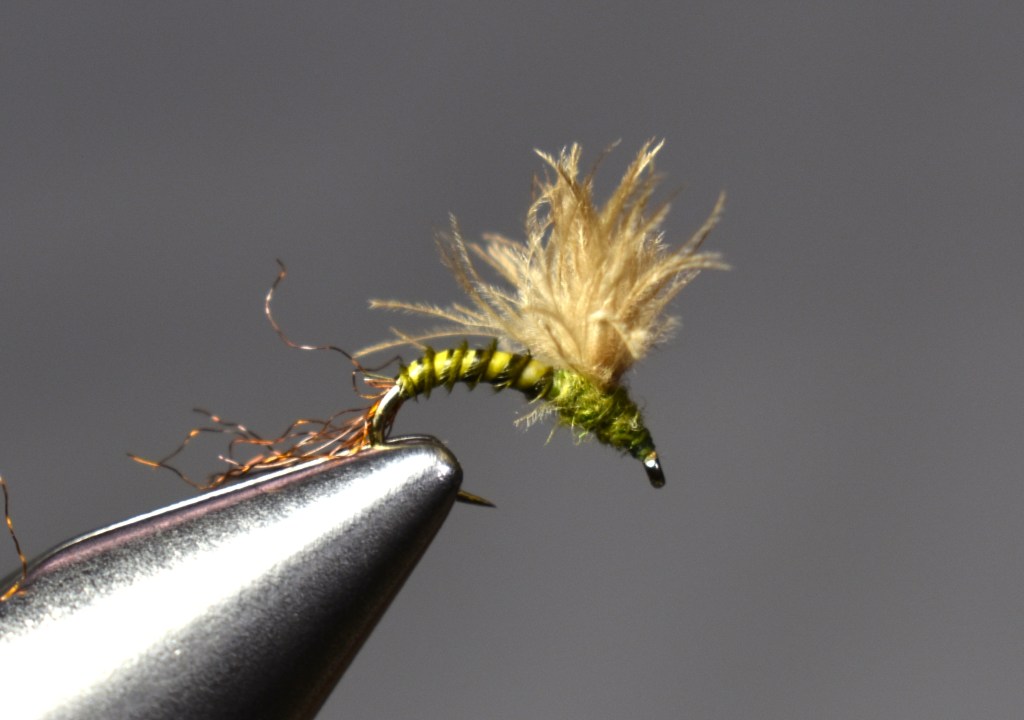
The scruffy CDClooks little like the mayfly to the angler, but the wild trout of the rivers say Yes!
I have designed various dry flies and emergers that have brought me wonderful fishing, but there is always another puzzle to solve. There are times, often early in the hatch, when trout will cruise and explode upon stray nymphs struggling toward the surface. I have seen many times when duns flutter madly on top, right above these subsurface explosions, and I have never seen those surface flies taken. An answer for these interludes is my current obsession.
Thinking about this scenario led me to an exchange with Tom Mason, who so kindly provided the Ray Bergman pattern that he has tied and fished for many years. I had tied a swimming nymph to be fished on the swing when I encounter this subsurface activity, and then turned my thoughts to traditional soft hackled flies.
I had hoped to study an old English pattern derived for their counterpart hatch, Ephemera Danica which they call The Mayfly. I will continue upon this path and see what I can turn up. I cannot help myself.
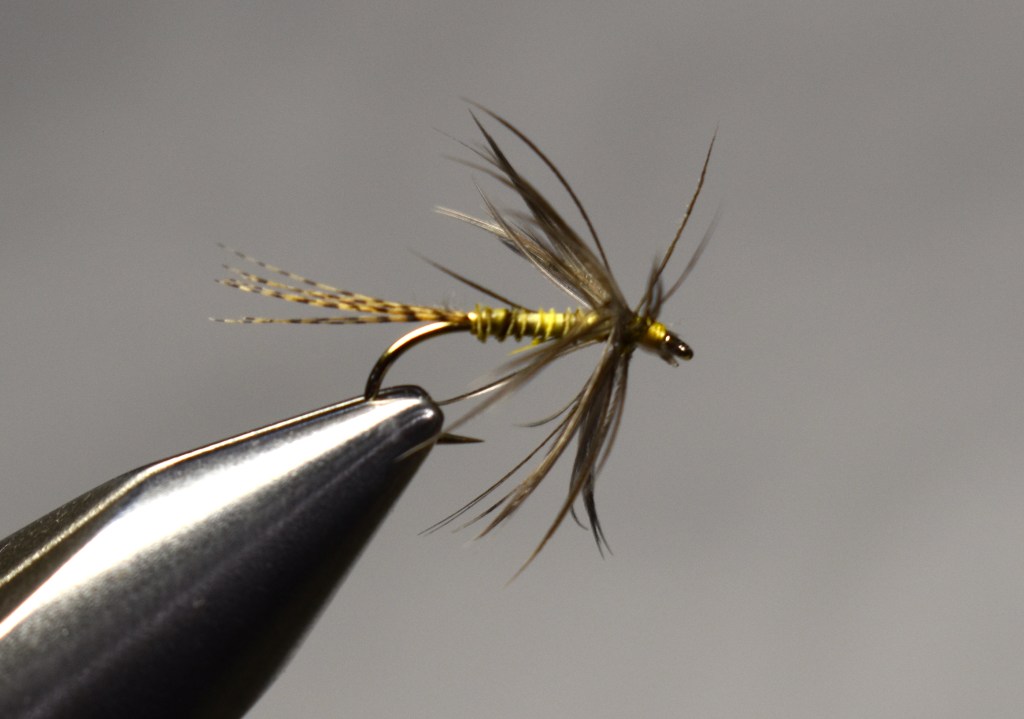
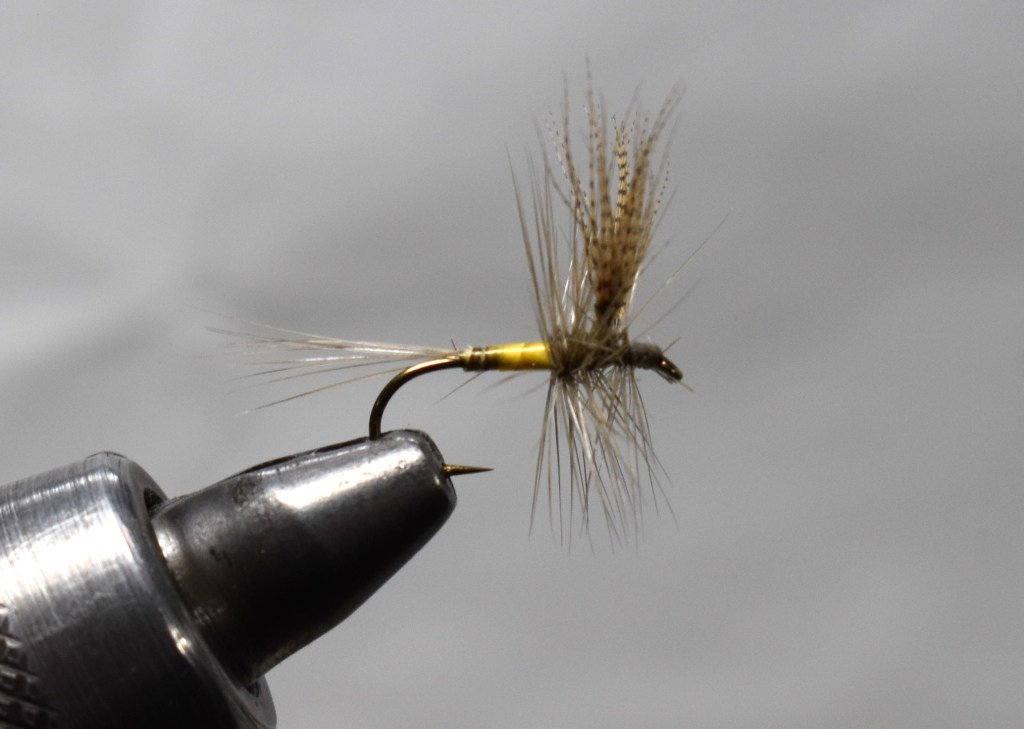
I have tied three variations of my own soft hackle Green Drake. Dare I hope for the chance to try them on the water? My best instincts revolt at the premise, for I remain a staunch adherent to the gospel of the dry fly. To hope for trout that refuse to surface feed seems blasphemy. These flies will find their place in my fly box, for I need not wish for difficult fishing, it will find me.
Soft Hackled Green Drakes
The mystery to be solved is one of movement, light reflections and color, as true with most of our trout flies. I think back to the late, great Gary LaFontaine, who donned scuba gear and submerged beneath the hatching caddisflies to see those triggers with his own eyes. Would that I could follow his lead. I cannot, but I have the benefit of his writings and his counsel, along with several centuries’ worth of angling science and theory in literature.
This always happens at this time of year. The weather forecast finally shows a bump in temperature a few days down the road, and I begin checking river levels and water temperatures, making plans to steal a couple of hours along bright water. The closer to the hoped-for warming trend we get, the more I start to believe I will earn a respite from the bleak, frigid hand of winter. Alas, the day finally arrives, and that hand strikes down my hope. So it is today.
This venture of the heart began with a promise of forty-five degrees. There was beautiful, bright sunshine the past few days, a presage to lift my spirits despite the cold. I knew better than to get any sort of tackle ready. The reality today is a cloudy winter’s day, with perhaps a brief high near forty degrees, that the ten to fifteen mile per hour winds will make feel like just another day at the freezing mark. There will be no time upon the river today.
Though I acknowledge I am blessed to live here in these Catskill Mountains, I had to give something away to receive the many blessings of the rivers of my heart. In the milder climate of Maryland or Southcentral Pennsylvania, the little warmups actually occurred, complete with midwinter outings to various ribbons of trout water. Here in the Catskills, they are the stuff of dreams.
Winter’s Bright Water
Though there were sometimes days available in January, I always looked forward to the February Warmup, a fairly reliable annual event featuring three to five days in the fifties, sixties, and in exceptional years, nearly seventy. Several seasons back, I stole away to the Little Juniata River for a February day in the sixties.
There was just a hint of the sun when I arrived in the village of Spruce Creek, and I harbored high hopes for the dry fly. I made straight for my favorite pool, geared up and hiked into the river. With no sign of an insect, I passed an hour or two swinging a small streamer along the deepest channel, even rousing a respectable brown trout from his winter slumber when I bounced it through unseen fallen tree trunks. I fished with improved concentration then, feeling the waft of warmer air as the afternoon advanced, but there was no further activity beyond the rhythm of my casting.
My favorite pool on the Little J in March low water.
As the warmth of the afternoon peaked and waned, I accepted the inevitability that my dry fly dreams must wait until spring. I walked upstream, planning my exit at a well-worn path at the tail of the upstream riffle. Nearing my destination, my gaze wandered across the tailout of the next pool, and my heart jumped at the sight of the soft rings that appeared there.
Half a dozen trout were sipping midges in the clear, gentle water above the break, and I set about my preparations. Leader lengthened, and a size 22 biot midge knotted securely to three feet of 6X tippet, I advanced carefully into casting range, creeping to the very lip of the riff. The bow in my light rod was an electric ecstasy as I reacted to the soft take of that first brownie. I played all six in turn, though the last shook the tiny hook still short of the net. Such were those dreamscape winter days.
A crescent of open water formed amid the ice and snow clogging Crooked Eddy.
Come March there was often an opportunity on Big Spring, largest of the limestone spring creeks in the Cumberland Valley. Afternoons might bring a light flurry of olives for a time, and the patient angler could find rewards. Early black and brown stoneflies would hatch on sunny days, not in great numbers, but enough that a handful of trout might rise and be tempted by a sparse tie of hackle and CDC. On one bright afternoon the early brown stones came to play and I managed five gorgeous wild rainbows on the dry fly, the best pair easily eighteen inches! Alas the heyday of the invigorated Big Spring was brief.
My last memory came on a cold day late in February, fishing with my friend Andy. I spotted one good fish sipping olives, and my old Granger tamed that twenty-inch beast. My heart was pounding as I brought that fish to the net, while Andy filmed the battle on his cell phone. The burning sensation I felt in my throat was a sign, angina, I would learn the hard way. Those days on Big Spring are no more, but I am still here as witness to what it once was.
In earlier years I stalked the Falling Spring throughout the winter. When those lovely warm spells came early, magic happened. Once, guiding in December, I made a cast after my client had fished hard through a little run of broken water. I wanted to demonstrate the perfect line control those wild fish required, and a leaping eighteen-inch rainbow made my point brilliantly! The gentleman fished with renewed concentration throughout the rest of that unseasonable seventy-degree day.
That fishery waned too, though I have fond memories of a run of seventy-degree days in early March, more than a decade ago. Stalking the water meadows with a Shenk Sculpin, I landed one of the last great browns in the twilight of that deeply loved fishery.
A 23-inch bronze flanked warriorfrom a very springlike late winter day.
The glory of a Catskill spring is worth waiting for, and truly, the trials of winter make it even more wonderful when at last those first dimples replace the drifting mayflies!
Tiny olive mayflies gather where the current softens along the river bank…and disappear!
My first dry fly brownie of 2021 accepted a size 16 Blue Winged Oliveon the Mainstem Delaware River on April 12th.
At last January is behind us, and I sincerely hope it takes these subzero days with it as it retreats in my memory. This is easily the coldest winter I have spent in the Catskills. The more years behind me, the more I seem to feel the cold. Take heart, for that looked for second week of April lies just sixty-eight days away!
I tied thirty flies yesterday, a little burst in my otherwise modest production to finish out the month. That last day flurry brought me to 136 flies, eleven dozen and four for the new year. I found a little inspiration and tied a few of the flies I have had in my head for a while, ideas that had not yet issued from my vise.
A 100-Year Dun style Coffin Flycame to mind some months ago, and an inquiry on the Classic Flyrod Forum got me interested in finally tying them. My special quill bodyproved an ideal choice, accented by the classic combination of Teal flank and golden badger hackle. I pray I get a chance to fish the spinner fallcome June.
Writing about my early awakening to the Partridge & Orange the other day reminded me that I had promised myself to tie some soft hackles for the Hendrickson hatch, and I fulfilled that promise at last. As these flies are to be presented as mayflies, each has a bit of woodduck tailing as an addition to tying silks, partridge feathers and that pinch of dubbing.
Soft Hackles for the Hendricksons
The choices should cover the various eventualities of either stillborn duns or unsuccessful nymphs drifting helplessly in the film, though with still a hint of life. I recall a day on the Delaware during the spring of 2020 when two or three trout fed greedily, immune to my usual array of duns and emergers. They worked merrily along the edge of a riffle, perhaps choosing unseen morsels these flies would imitate.
I was sure to replenish my supply of Shad Caddis, heavy on the size 20’s. I made a solo float on the West Branch last May, finding a few reaches carpeted with tiny, just hatched caddis flies apparently stunned by the thirty-four degree air temperature. I never saw a one of them in their normal size of 18, believing that the City’s October dewatering and winter anchor ice must have impacted the population. I found success only by a bit of on the water surgery on my most sparsely tied 18’s, to approximate the proportions of the unusually stunted caddisflies.
Loose ends at the bench, and mid-season ideas not acted upon; winter is a good time to catch up and bring them to fruition.
Tackle gets attention periodically, and soon it will be time to spool some lines and backing with an outlook to spring. There’s an extra spool for a Hardy Perfect that requires such treatment. I’ve been thinking of a four weight double tapered line for that one, for the 3 1/8″ diameter reel will balance nicely with one of my eight footers. There’s a little Abel too, one of the sweet, classic TR models they used to offer. That and its extra spool seem destined for a four and a five, but there’s time left to consider further. I don’t often take rods out in the snow to cast.
The sun is just topping the ridge line to the southeast and my weather forecast says it is two below. Despite yesterday’s sun, and a balmy afternoon in the thirties, I don’t believe our snow is going anywhere. More is expected via another weekend storm. Yes, January may be gone but February will last all month long!
A Hendrickson dun and a 100-Year Dun: the mayfly is better imitated with a size 16 fly, though this size 14 was handy when the captured mayfly allowed me to take the photo.
An angler’s fly should offer a strong impression of life. It is a lesson I learned early in my pursuit of wild trout. In the early 1990’s I lived close to Maryland’s Gunpowder Falls, a lovely little river that boasted a good population of wild brown trout and, for a time, wild rainbows as well. The Gunpowder was my primary classroom, and I studied as frequently as possible.
During the colder months, I fished regularly, most often in the first mile below Prettyboy Dam, for the little river is a tailwater fishery that runs between two Baltimore City reservoirs. The bottom discharge from Prettyboy was cold, typically in the range of 42 to 45 degrees throughout the year and, in winter, that first mile of water had the warmest water in the system. I was fortunate to angle through the heyday of the short-lived rainbow fishery, finding pods of football shaped bows midging aggressively on mild winter days.
The Gunpowder had a good population of various midges and microcaddis in the upper reaches of its tailwater and those trout grew quickly on copious amounts of miniature protein. They could be maddeningly selective. Moreover, these trout averaged between fourteen and sixteen inches in length, quality fish that I very much wished to catch! Their difficulty spawned my first original fly pattern, a minute creation of CDC, ostrich herl and Krystal Flash that matched both midges and microcaddis. I already understood that the movement of the herl and CDC, coupled with the light reflecting body, made my little fly look alive, but I was to get further lessons in the importance of that fact.
There were afternoons when the trout refused my little size 22 dry fly, as well as the Griffith’s Gnats I carried for an alternative. On one frustrating day, multiple fish refused my flies right in front of me. At such close range I could clearly see them come up toward the fly and then turn away just prior to reaching it. Baffled as they continued to feed, I noticed a small, old soft hackle pattern I had purchased upon the fly shop owner’s recommendation, a Partridge & Orange. It looked nothing like the midges the trout were gobbling, and the size 16 fly was three times the size of the bugs on the water, but I tied it onto my 6X tippet, greased a couple of feet of the leader, and began to cast to those haughty rainbows.
Tha faithful old Partridge & Orange soft hackle, as simple a fly as any an angler might choose: orange Pearsall’s Gossamer silk, a pinch of rough dubbing, and two or three turns of a Hungarian Partridge feather. It looks alive in the water!
I could see the fly drifting in the surface film and was wonderfully surprised when a rainbow came up and took it cleanly. My rod throbbed and my reel spun as the smile on my face brightened! That bow was fifteen inches long, a great fish in a river where the browns averaged 10 to 12 inches. As I remember it, I caught two or three more like that on the wrong fly before the hatch subsided. It seemed that movement could overcome selectivity even when the fly didn’t match the hatch! Lesson learned.
Simple, classic trout flies can solve some interesting problems on the water if the angler understands the importance of the image of life.
Since that first winter on the Gunpowder, thirty years of experiences have proven the importance of fishing flies that look alive. Movement within the structure of the fly, and air bubbles and light reflections that can make a fly appear to be moving, are paramount in my own fly designs. My passion is hunting the most difficult wild trout in the rivers I fish. When there are insects hatching, I believe that a fly needs to be a good imitation of the stage of that hatching insect the trout are feeding upon, and it must appear to be alive and moving to fool the toughest trout.
An abundance of one natural food, a hatch of blue-winged olive mayflies for instance, is often responsible for trout selectivity, but it is not the only answer to the selective feeding puzzle. Wild trout that are frequently exposed to heavy fishing pressure can become very selective even when there isn’t a hatch. Pressured trout can be very selective to the image of life.
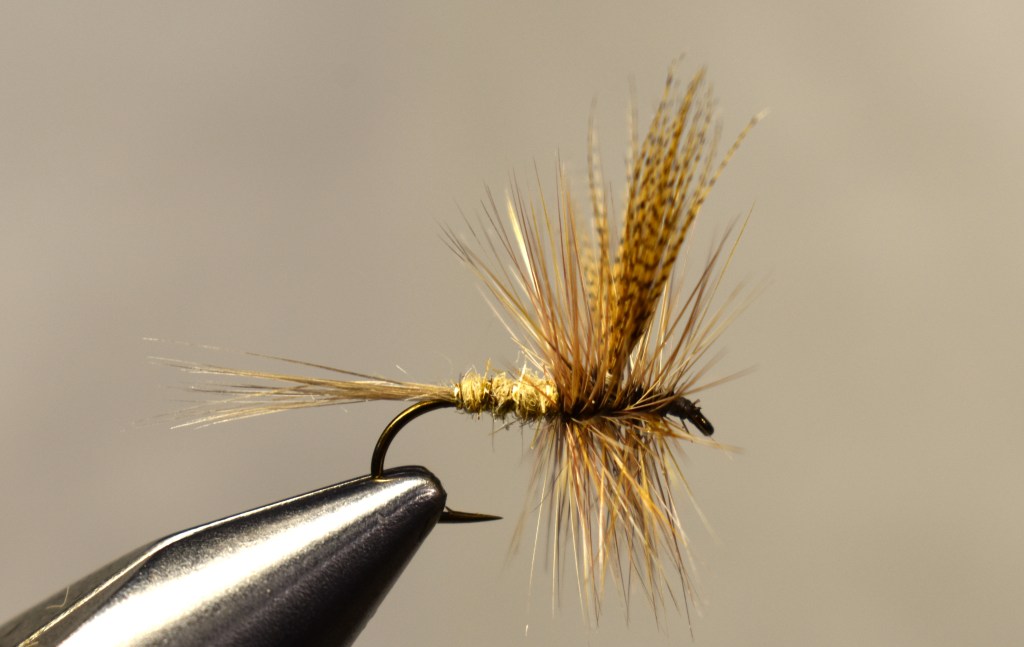
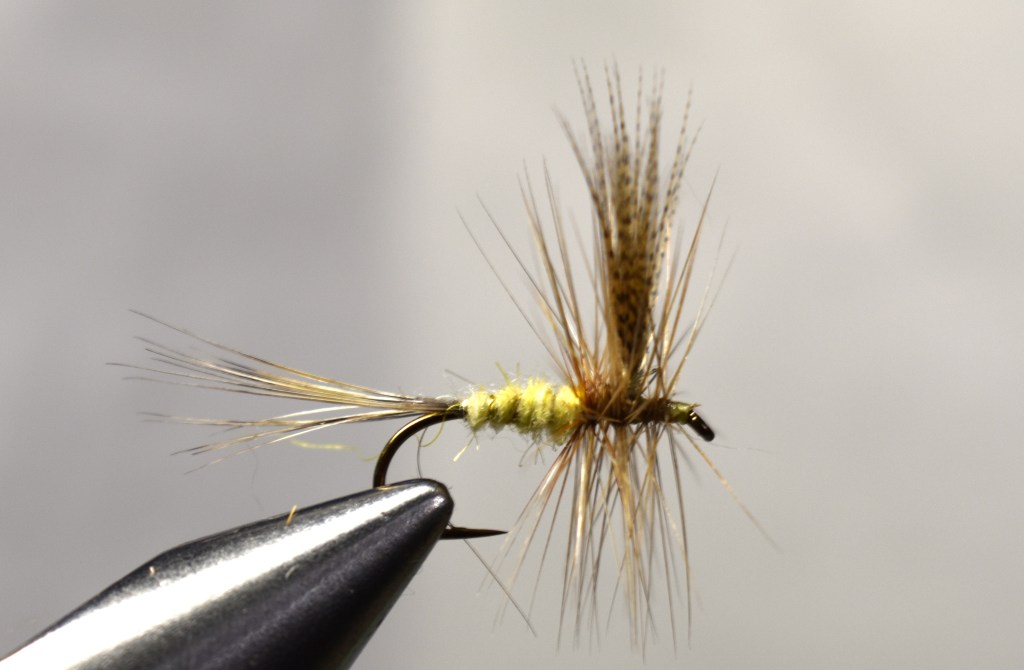
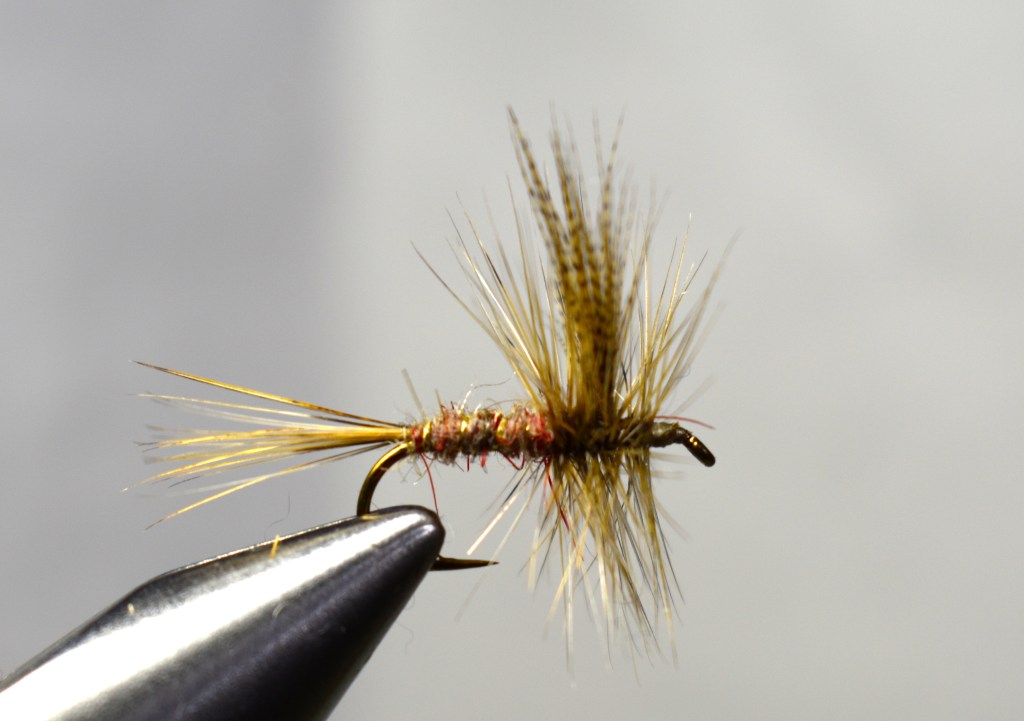
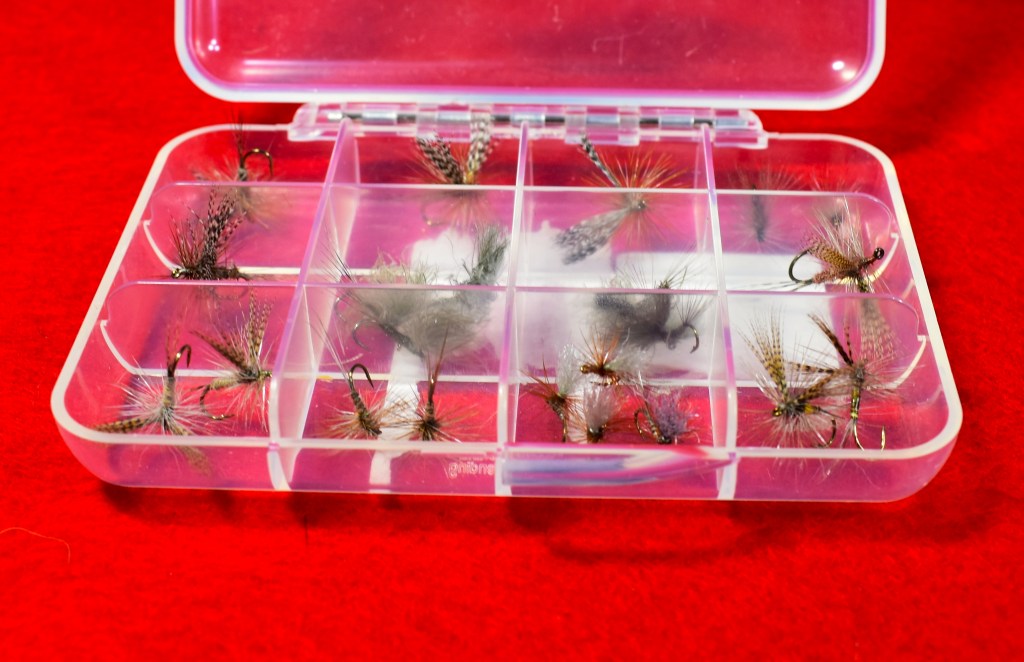
The three dry flies pictured above were all conceived as imitations of Hendrickson mayflies using my guiding principle of offering the trout a fly with a strong image of life.
My Translucense Beaverkill Hendrickson on the left is tied in the Catskill style, but it features barred and speckled Coq-De-Leon tailing, barred dun hackle, and specially blended silk dubbing tied using pure white silk thread on a Daiichi Crystal Finish hook.
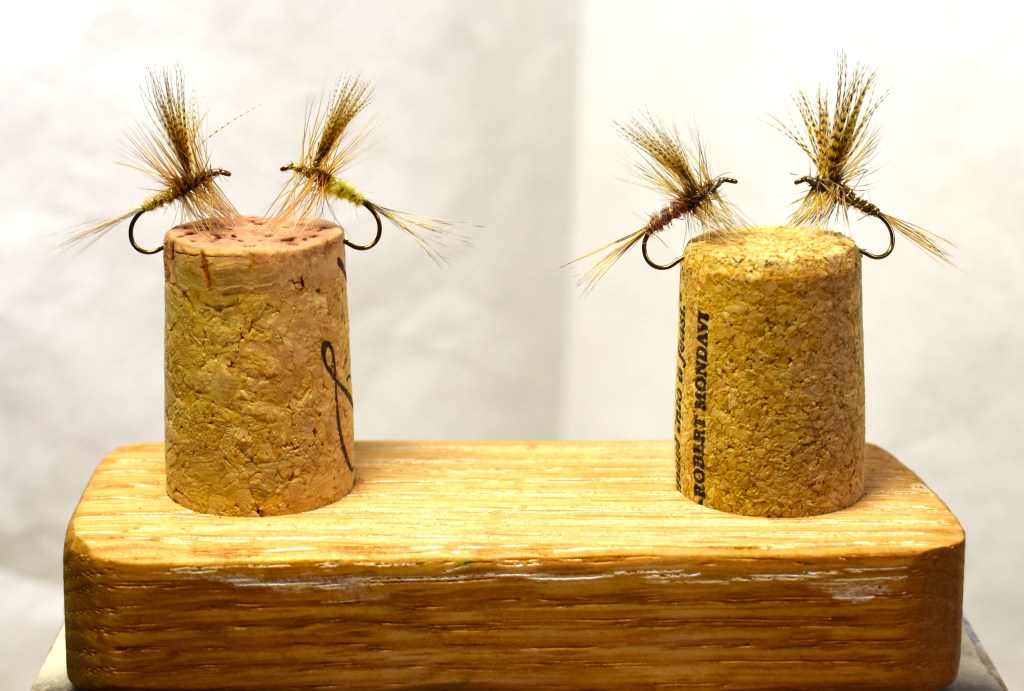
The center fly features the speckled tailing, a color matched quill body, and dark natural dun CDC tied comparadun style. Lastly, on the right, my Drowned Hendrickson features softer barred woodduck tailing, a color matched blend of red fox fur and Antron, and is hackled with CDC and partridge in the soft hackle style.
While the Catskill dry fly won’t move on its own, the barred tailing and hackle will reflect light better and give an indistinct profile suggesting movement, while the high translucency of the silk body adds to the lifelike appearance. The CDC dun will certainly move, and its quill body is a strong imitation of the natural fly. The “drowned” style tie was designed to imitate stunned or drowned duns lying in the surface film with just the slightest quiver of life – alive, but as vulnerable as a mayfly gets.
Cultivating subtle differences in your fly tying can help you solve the puzzles of selectivity. Think about it…
Beautiful, but frigid dayshave come often this winter. So much for the predictors and the mild, La Nina winter they promised.
Storms seem ever more commonplace, and often more severe than those recalled from seasons past. We are fortunate this time, our Catskill mountains being too far inland to suffer the heavy snows and wicked winds that this current nor’easter has brought to the Atlantic coast. Here we wait and hope for spring to come; bright, warm and early!
Spring can be a fitful season, particularly in these mountains. Even half a day’s drive south, in my old haunts, Mother Nature can send some strange and conflicting messages.
I remember one April out along the Falling Spring, when I had the day free to prospect for the little limestoner’s wild browns and rainbows. The morning had been mild enough in it’s beginning, but as the Noon hour approached the wind rose and the clouds gathered into a heavy, dark mass. Suddenly I saw a yellow mayfly rise from the surface. Within moments there were more of them, pale yellow bodies and blueish dun wings like our late May sulfurs, but these unseasonable mayflies were a full size fourteen!
The winds began to whip the water about the same time the trout began to rise, and I fought to make a delicate cast with my dry fly. My excitement was palpable as I worked over a good rainbow while the wind cut into my neck with an icy blast. The temperature had dropped ten degrees or more when a snow squall came hurrying out of those black clouds as I played my fish. The wild weather seemed timed to the wild, unexpected fishing, and I caught four very nice trout before the last violent snow squall petered out. The sky lightened and the surface of the little stream was still. I saw no more size fourteen sulfurs that spring, nor in any future years, though I’ll always remember the day it snowed sulfurs.
Sunlight washes the last stone arch bridge over the Falling Spring Branch on a gorgeous June evening.
The West Branch Delaware welcomed me to an early, mid-April hatch of Hendricksons more than a decade ago. By the time I traveled north to West Branch Angler, the warm weather that started the fishing had turned. It was windy and wet, wild weather, with the kind of chill that made me huddle into the high collar of my fleece jacket and cinch the hood of my raingear down tight. Once the hatch had begun though, it was bent upon continuing, despite the falling water temperature.
The fishing was challenging, the wild winds playing havoc with casting accuracy and fly presentation, but the trout I caught were big, hard fighting browns that warmed me from the inside. What a way to start a season! Ever try to put a Hendrickson comparadun one foot above a bodacious brownie sipping in the thin, flat tailout of a pool in a gale? I had one explode in inches of water when I tightened and leave a hell of a wake as he took my line far out into that pool one afternoon, then streak away as soon as my fly neared the surface the next. The same lie – perhaps the same fish? I’ll never know.
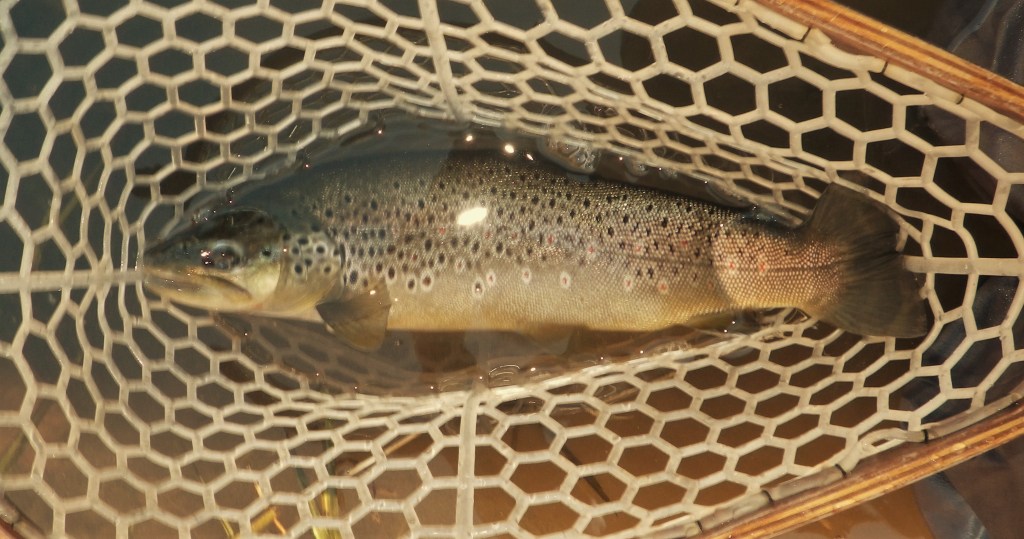
A Dream Caught West Branch brownie.
Just two short seasons ago I was out searching for some semblance of a quiet pool, protected from the thirty mile per hour sustained winds. It was hopeless! I stopped on the road above the Beaverkill and saw the Hendricksons bobbing in the waves, and two or three big trout pounding them with explosive rises. I parked and waded in, but the winds were relentless. The pool was open to the full force of the gale, and the frequent gusts touched forty miles per hour. The storms give, and they taketh away.
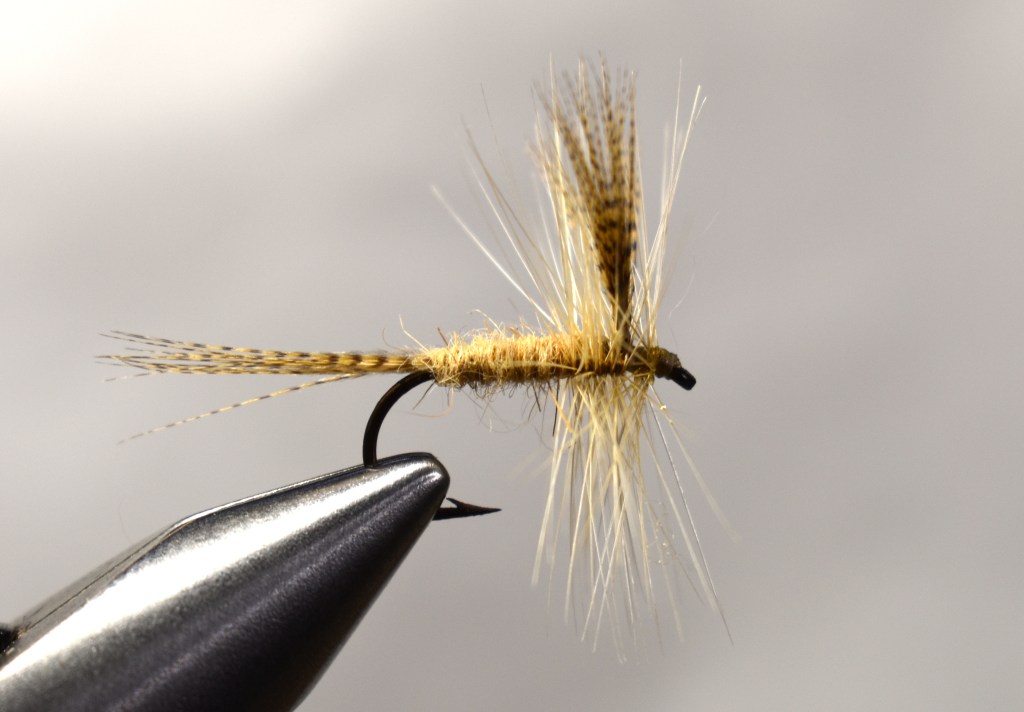
A Green Drake pattern attributed to the late Ray Bergman, equisitely tiedand photographed by Tom Mason.
I was fooling around with, well, a swimming nymph variation for the Green Drake last week. I wanted to try a different approach to a fly to use on those days, you know the ones, the bane of the dry fly angler; the days when the trout rise nearly to the top to take the rising nymphs, and simply refuse anything visible on the surface. I had one of those days last season, the only day in fact I encountered any sort of hatch of the big drakes, and it wasn’t pretty.
After I blended some dubbing and fashioned half a dozen big, ugly flies, I got to thinking about much older solutions. The gentlemen across the pond have a long tradition in soft hackled flies, spiders and North Country flies, and I wondered if they had such a fly for their “Mayfly”, the Ephemera danica, a relative of our Eastern Green Drake. I contacted a friend and fellow member of the Catskill Fly Tyers Guild, Tom Mason. Tom has an interest in ancient and classic flies, particularly soft hackles, and is a masterful tyer of multiple styles of trout flies, and I wondered if he may have knowledge of an English Danica pattern. While Tom didn’t have a Danica spider at his fingertips, he did surprise me with a drake imitation with an interesting history.
Tom learned of the pattern pictured above from an old angler he met on the streets of Roscoe, New York some thirty years ago. The fellow showed Tom this big fly, tied with pale green seal’s fur and teal flank feathers, offering that he had fished with iconic writer and angler Ray Bergman down on the Beaverkill near Butternut Grove back in the 1940’s. The fly was Bergman’s pattern.
Tom is what I would call a scholar when it comes to trout flies and thus researched the fly, finding no trace of it in Bergman’s prolific writings. It seems this must have been a favorite fish catcher he kept under his hat. Tom allows that the fly, a pattern we would recognize as an emerger today, has been very successful for him. He doubts Ray Bergman called it that, for emerger wasn’t a term used for trout flies back in the 1940’s. This is one of the pleasant little questions that will continue to intrigue.
As soon as Tom handed me the fly I smiled with recognition, as the technique is much the same as the CDC emergers I designed and tied thirty years ago. Bergman had used folded teal flank to imitate the emerging wing bud with a low loop, just as I had used a pair of CDC feathers fifty years later. This loop style wing bud will trap air bubbles and hang the fly in the surface film with the body submerged, just like a struggling nymph. There are no new flies.
Though I have an extensive selection of tying materials, I haven’t a wisp of seal’s fur, so I set about making a blend to achieve a similar effect. I started with Angora Goat dubbing in medium olive, light gray and yellow, this fur being widely used as a substitute for seal. I added bits of olive hare’s ear, bleached squirrel, light olive dun Antron and Hemingway’s Beaver Plus dubbing to get as close as possible to the color and translucency of seal fur. I still have some experimenting to do, both in blending and in selecting a dubbing technique to achieve the sparse, spiky abdomen on Tom’s imitation. One look tells me that Tom’s fly will be clustered with air bubbles when fished and will look very much alive. He has a particular touch with traditional materials to get that very deadly effect, whereas I turn to Antron to get sparkly bubbles and light reflections.
My multiblended dubbing ball flanked by Tom’s original Bergman Emerger on the right, and my trial version on the left. I added a pair of wild duck CDC feathers underneath a Gadwall flankfeather as an alternative to Teal flank.
My thanks to Tom for graciously sharing this pattern and the story behind it. I look forward to tying a few more and then fishing them this season. It will be neat to fool some of our educated, oversized Catskill browns with an eighty-year-old secret fly!
Spires in the current where the river lingers betweensolid and liquid.
At eight degrees below zero the boards of my old porch loudly protest each footstep. It is quiet here just after sunrise, the sky as blue and clear as the heavens themselves.
I am bundled here in my little angling retreat, for the heat in this old house cannot battle such cold. To pass the early morning hours I think of fishing, of bright skies which shelter me in warmth, and mayflies on the wing. I crave a different chill, the chill of the mist on a summer morning, the feel of goosebumps beneath my shirtsleeves as I stalk a still pool after daybreak. There is an electricity to that sensation not felt in the true, deep cold of winter.
There’s a four-weight bamboo rod in my left hand, and my grip tenses ever so slightly when I note the first gentle ring upon the mirror of the surface, before the mist obscures my view. The line is free now, laying in soft coils on the water, until my arm and wrist lift and shoot them outward and away. My eyes squint to track the tiny fly at distance, its sparse hackles offering minute specs of light, evidence of its being until the mirror bulges softly and the game begins.
I am connected then to the life of the river, the energy of that mystical, natural world by the living fibers of cane. The trout pulls hard toward the middle of the river, the reel shrill and bright as the morning, and for a while I am awash in his world.
The droplets are cold on my hands as I slip him back into his world; and then the warmth of the rising sun tingles on my flesh, and I realize I am back in my own world…
Reading through Harry Darbee’s “Catskill Flytier” I came upon his pattern for the Dark Hendrickson; and so…
One of the classic Catskill dry flies that I have rarely tied or fished is the Dark Hendrickson. Perhaps the name affected my viewpoint: all of the hundreds of Hendrickson mayflies I have plucked from the surface of Catskill rivers have been tan or reddish in their bodies. The general recipes for the Dark Hendrickson have called for muskrat fur, and I never had that much confidence in a plain gray fly. My thinking has changed today, during another trip through the past.
The late Harry Darbee published his book Catskill Flytier in 1977, forty-five years ago. In it he recounts his story growing up in this region and, with his wife Elsie, becoming one of the most lauded pairs of Catskill fly tyers in our region’s history. The Darbees formed an intrinsic part of the Golden Age of Catskill fly fishing. I have owned the book for many years, though I still recognized a bit of information that had escaped my earlier readings.
The last fly listed under “Darbees’ Deadly Dozen” is their version of the Dark Hendrickson, tied with dark rusty dun hackles and “Brownish gray dubbing from red fox fur”, something very different from the gray over gray patterns others tied with muskrat and dark dun hackle. I liked the idea of old Harry’s version immediately.
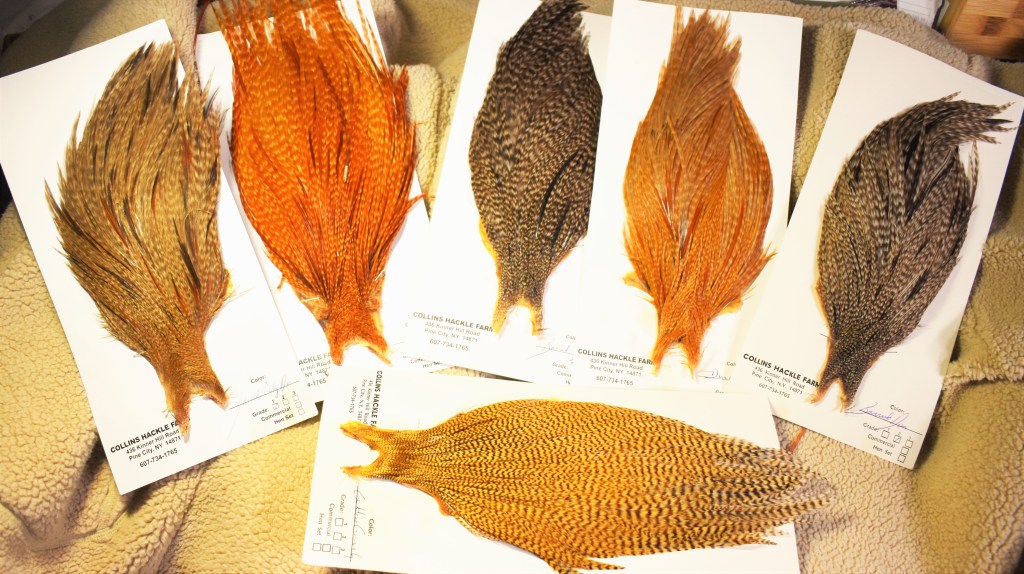
As it turns out, I was ordering some Coq-De-Leon tailing hackle last week when I noticed a page on the dealer’s website offering Darbee Duns hackle credited to a single hackle breeder that has maintained a small flock of Darbee strain birds. I took a chance and added a half cape in rusty dun to my order. I was pleased with the feathers when they arrived, and when I saw Harry’s Dark Hendrickson recipe, well, what could have been more natural?
I took down a red fox skin this morning and cut some of the short brown fur from the outer leg and some longer pinches from the back of the hide, tossing it in my blender until I had a nice “brownish gray”. Then I set out to tie half a dozen of Harry’s classic dry flies.
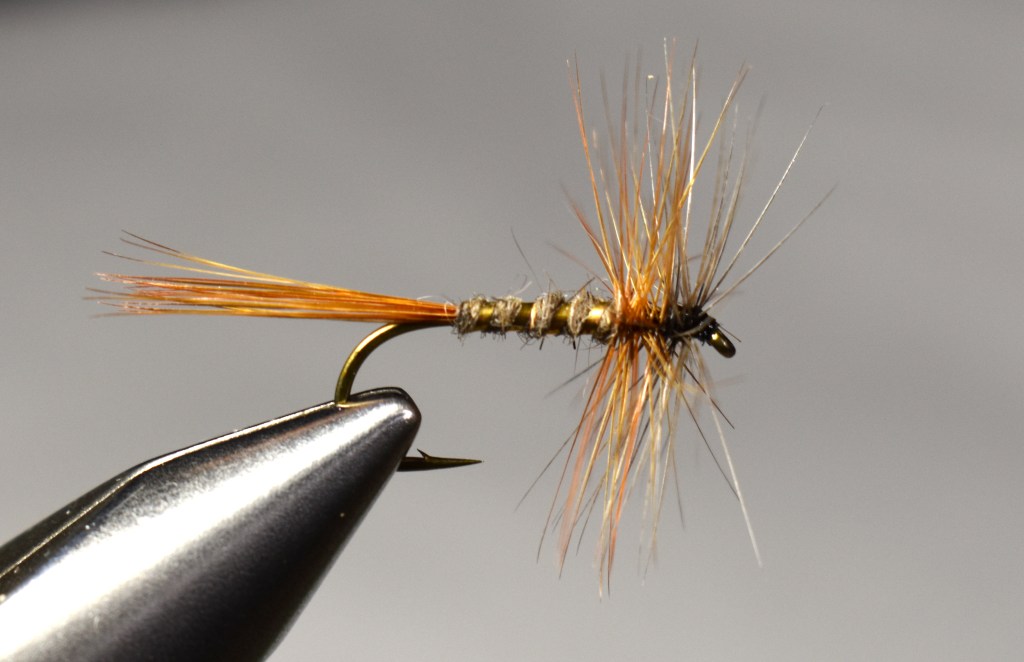
Harry Darbee’s Dark Hendrickson: I like the guard hairs in the red fox fur, as they encourage air bubbles that help a dry fly look alive. You can trim the long ones if you wish, but don’t remove them all from the fur!
In Catskill Flytier, Harry recommends the pattern in sizes 10 through 14. I decided to tie mine in 10’s and 12’s with any eye toward fishing them when I find the big reddish Hendricksons hatching on the Beaverkill next spring. I could find myself tying one on when the isonychia are hatching too. I think Harry’s Dark Hendrickson will be a good searching pattern when fish have been tuned into isos during the summer.
Of course, I would love to be able to get out there right now and give the fly a try. I’m quite sure that no trout is going to rise through the ice along the river today, no matter what the fly’s pedigree.