I fished the limestone springs of Pennsylvania's Cumberland Valley for a couple of decades, founded Falling Spring Outfitters, guided, tied and oh yes, fell in love with the Catskill Rivers I can now call home.
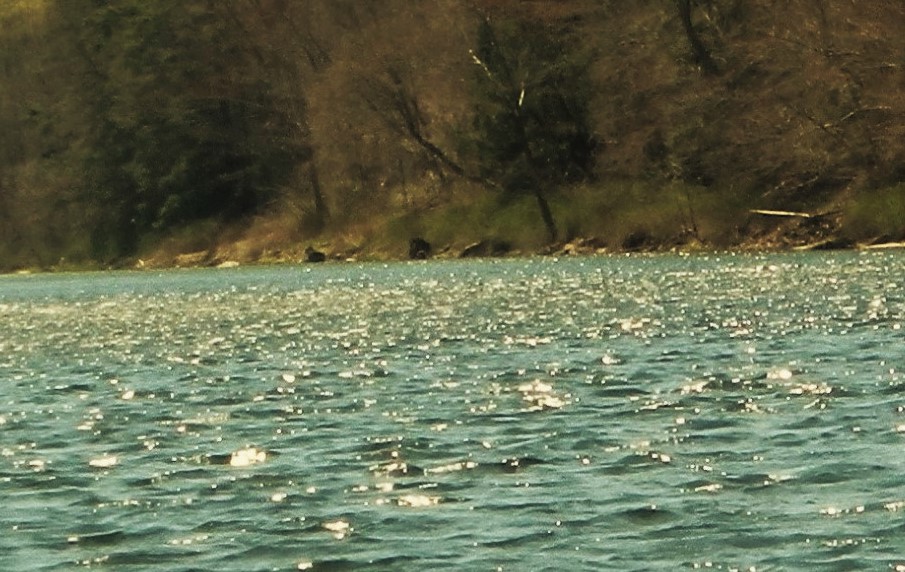
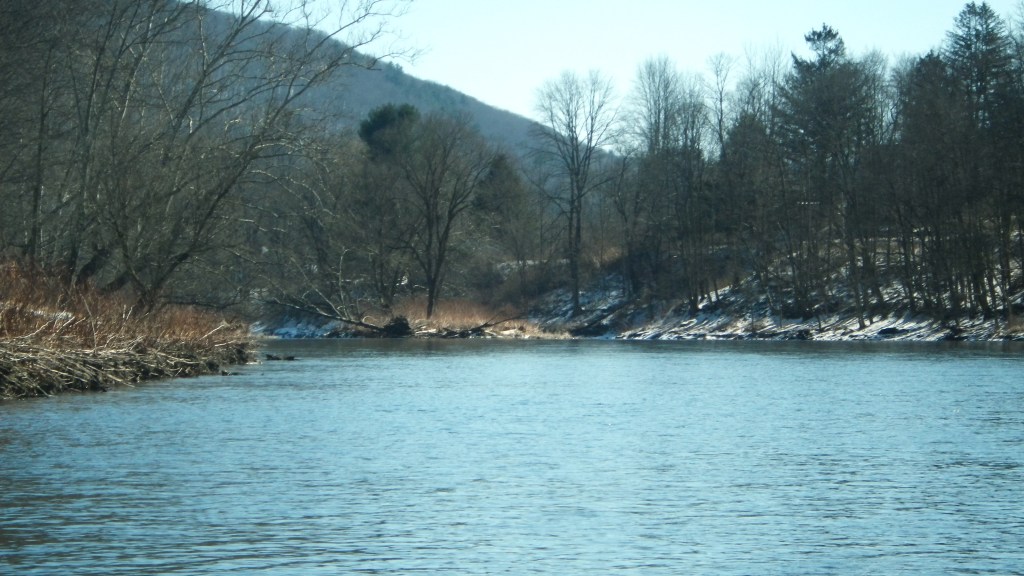
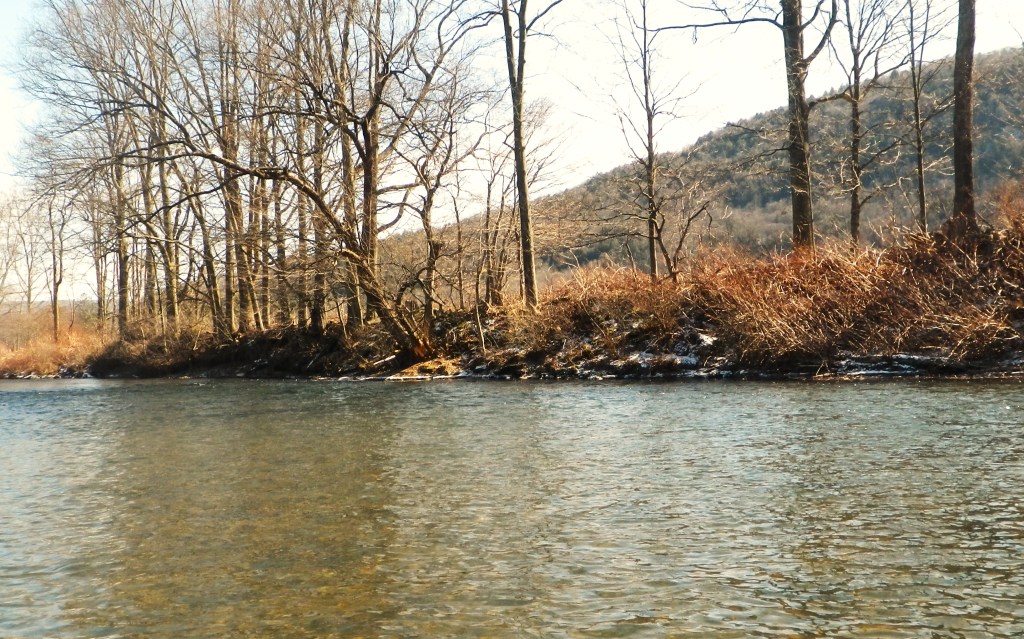
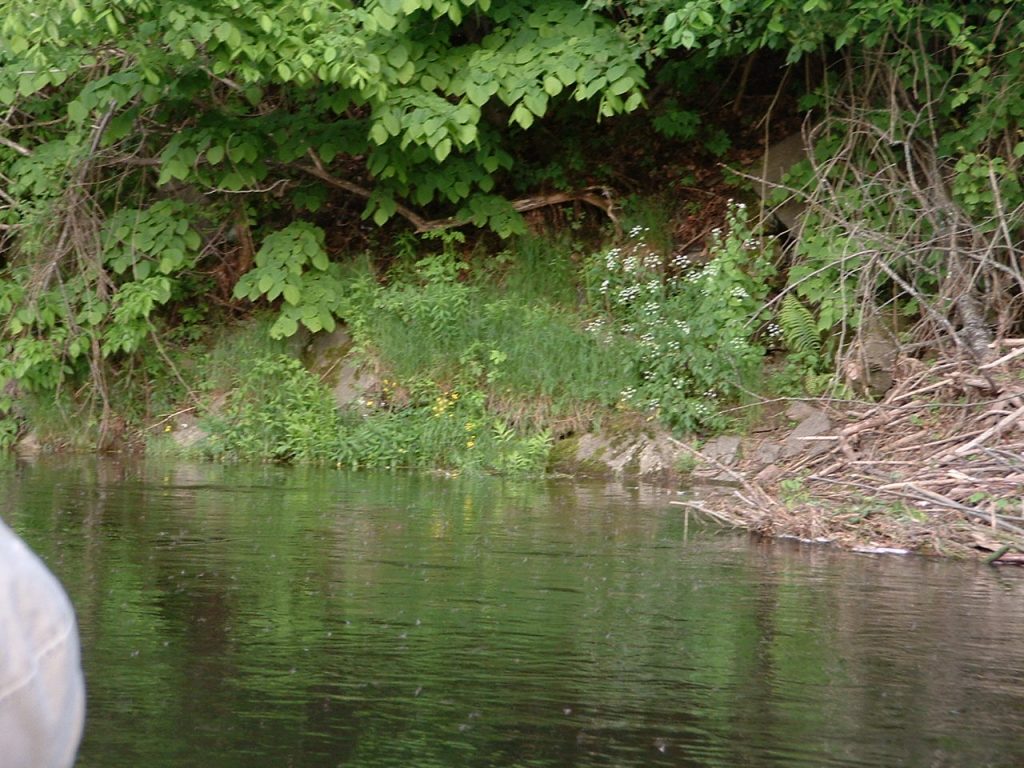
Catskill trout water on a breezy afternoon – this is not a riffle…
Sixty-five degrees yesterday afternoon and, though the wind kept me from feeling the warmth, it was good to be fishing again. I gave it three hours, until the runoff from the morning’s showers colored up the river. Alas the trout chose neither to take advantage of the day nor the flies I offered on a tantalizing swing. All good, for I was out fishing, and there is no better way to spend a March afternoon.
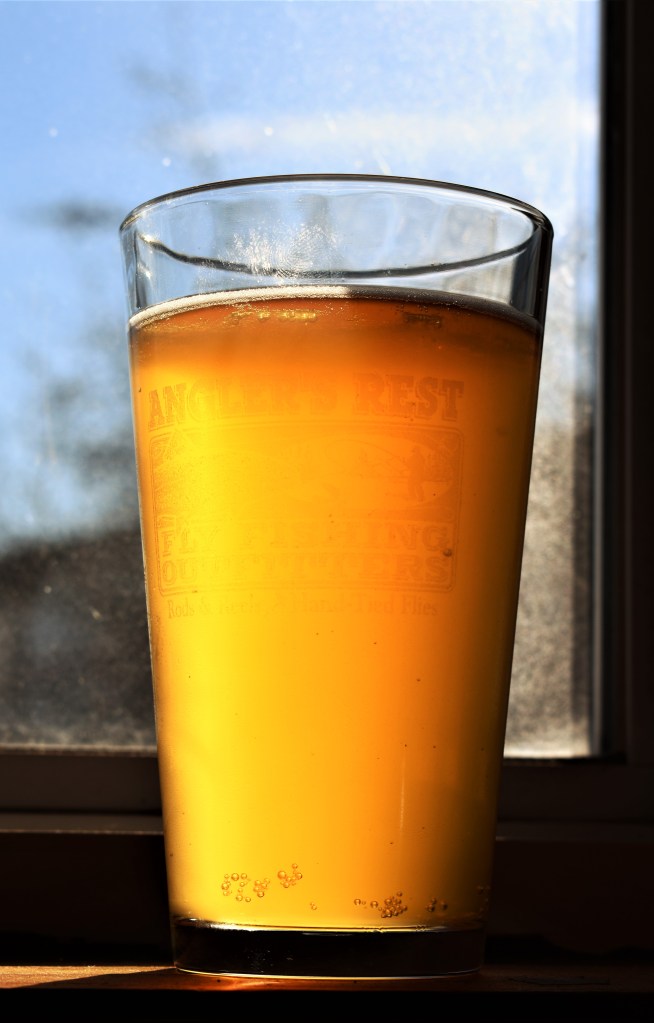
Of course, by the time I pulled into my driveway and put away my tackle, the wind had dropped so that I was a little overwhelmed with how comfortable it felt on my porch. The afternoon sun visits regularly you see, and without the winds I enjoyed out on the river, the porch was positively balmy. Sitting back with a frosty Cold Snap and a snack, I nearly dozed off. The thermometer told the tale: seventy-five glorious degrees!
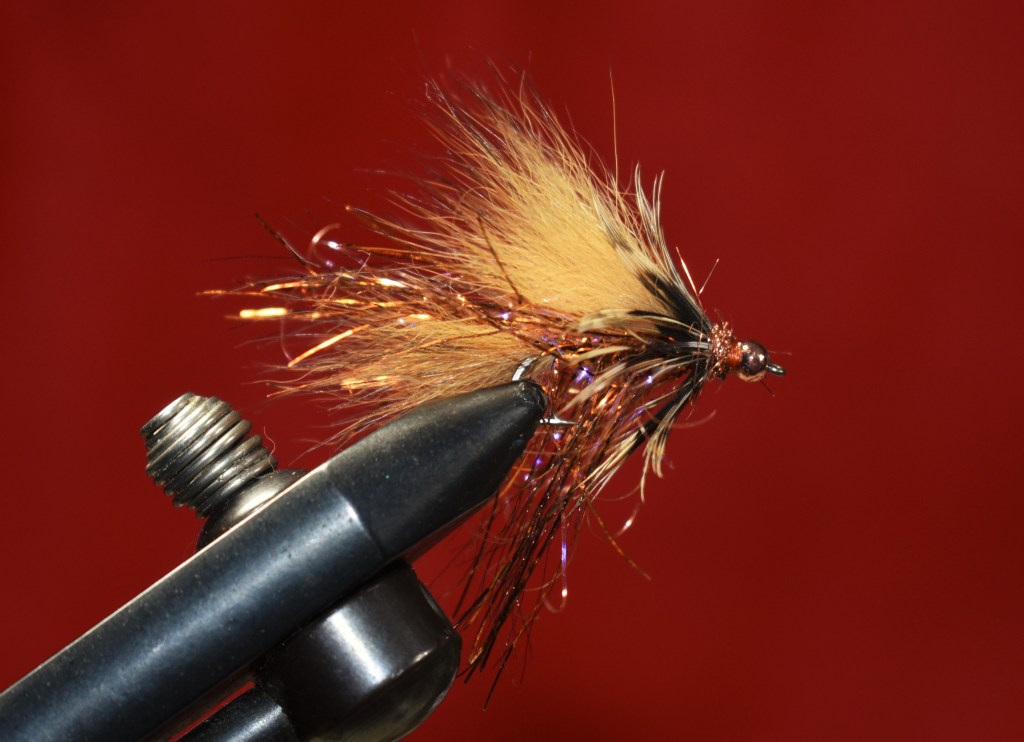
I noted a comment from a follower today, asking if I might post the specifics for my Full Dress Copper Fox. I am most happy to oblige.
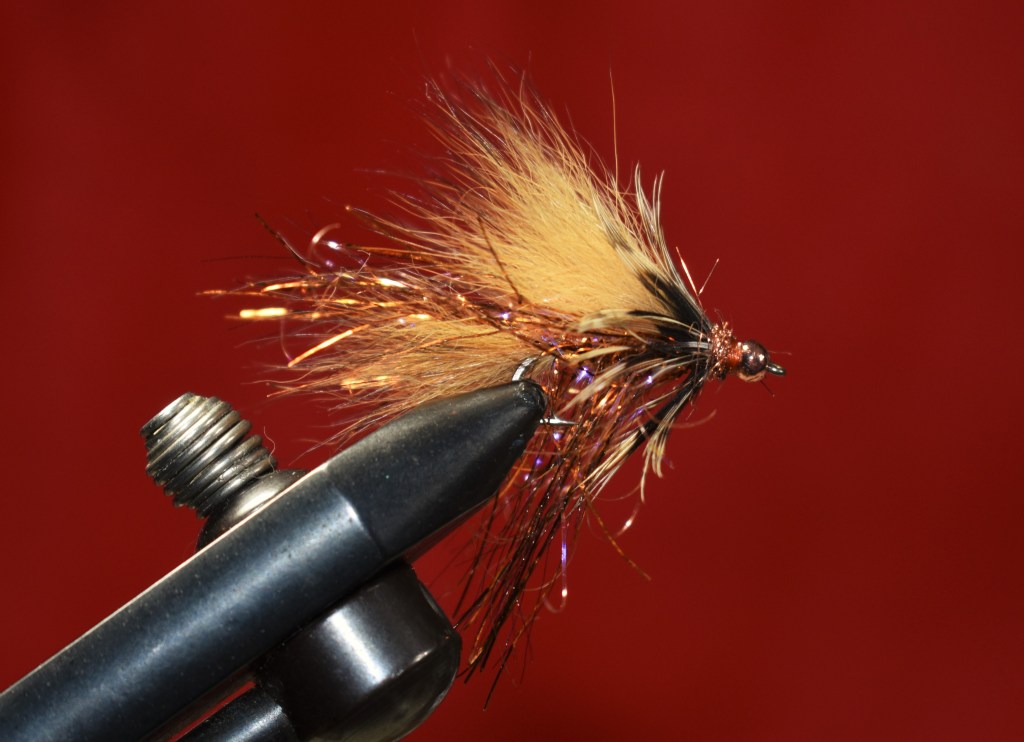
Thread: Uni 6/0 in Rust Brown
Hook: Size 10 3XL nymph hook, Daichi 1720 or equivalent
Bead: Brass or tungsten in copper color 5/32″ dia.
Tail and Wing: Red Fox tail
Body: UV Polar Chenille in copper
Hackle: Hen Pheasant covert feather
Collar: SLF Prism dubbing in rust brown
For the tying: Place bead on hook and slide to eye, wrap thread on behind it and wrap down the shank to the beginning of the hook bend, then back three turns toward the eye. Cut a small clump of fox tail fur and tie it in at that thread location, wrapping the thread over the butts, stopping at a point about 1/8th inch behind the bead. Trim the remaining butts and spiral your thread back to the initial tie-in point for the tail. Cut about a 3″ piece of the Polar Flash Chenille, pull a few fibers back over the fur tail and tie in the chenille binder, then move your thread up to the tie down point for the tail butts. Wrap the chenille forward, brushing the long flash fibers back toward the tail with each wrap, and tie it down when you reach the tie down point for the fur tail butts. Cut another small clump of fox tail for the wing and tie it in thoroughly on top of the hook, then clip the butts. I like to put a couple of drops of tying cement on those tie-down wraps at this point. Select a hen pheasant covert feather or smaller barred body feather, remove the fluff and gently stroke the barbs away from the tip. Tie it in by the tip and clip the excess feather tip, and then wrap the hackle collar. Tie off the hackle, clip the feather stem and dub a small collar in front of the hackle up to the back of the bead. Whip finish tight behind the bead. I prefer double whip finishes, that is two five or six turn whip finish knots, before clipping the thread.
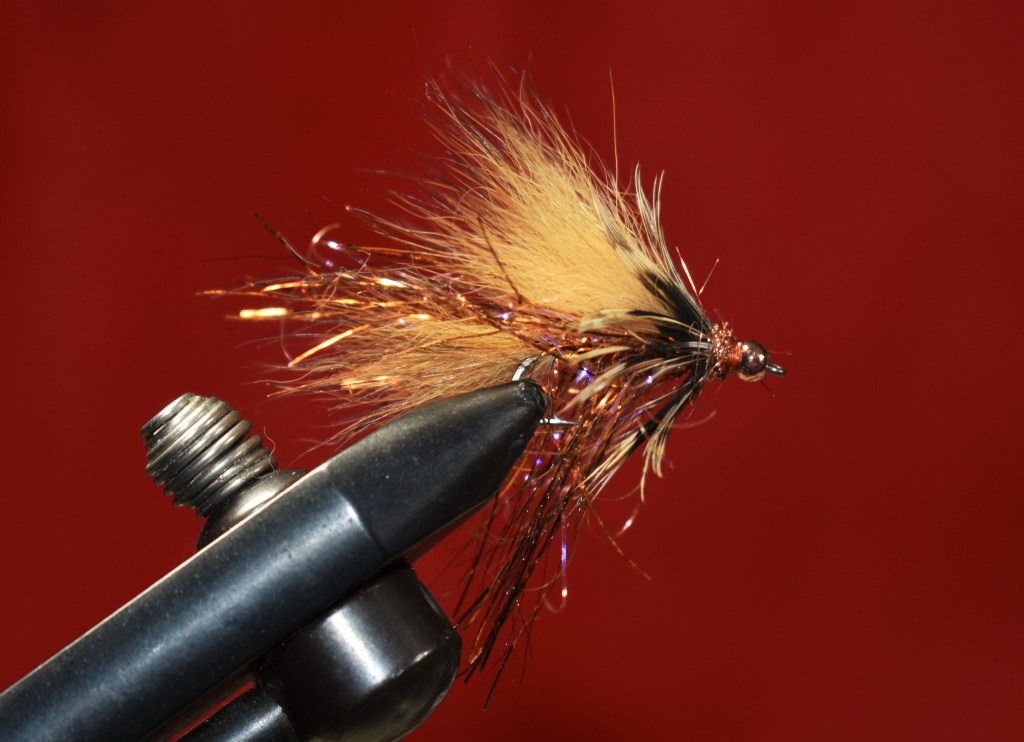
The Full Dress Copper Fox
Enjoy tying a few of these flies if you are so inclined, and have some fun fishing them, slow and steady on the swing in these wintry water temperatures!
I have a thing for movement flies, patterns that win some points in the imitation category, but do most of their scoring due to a strong image of life. The little streamer fly I dubbed the Full Dress Copper Fox is a perfect example. It has a general sort of blurred baitfish shape that is suggestive of a sculpin perhaps, though it was not designed to mimic the sculpin profile. The flashy, copper UV enhanced body could give the impression of any brownish, coppery fish, but movement is its primary attraction.
The Full Dress Copper Foxdoesn’t look like a sculpin, but it certainly looks alive as it drifts along near the bottom of the river, swinging in search of a hungry winter brownie!
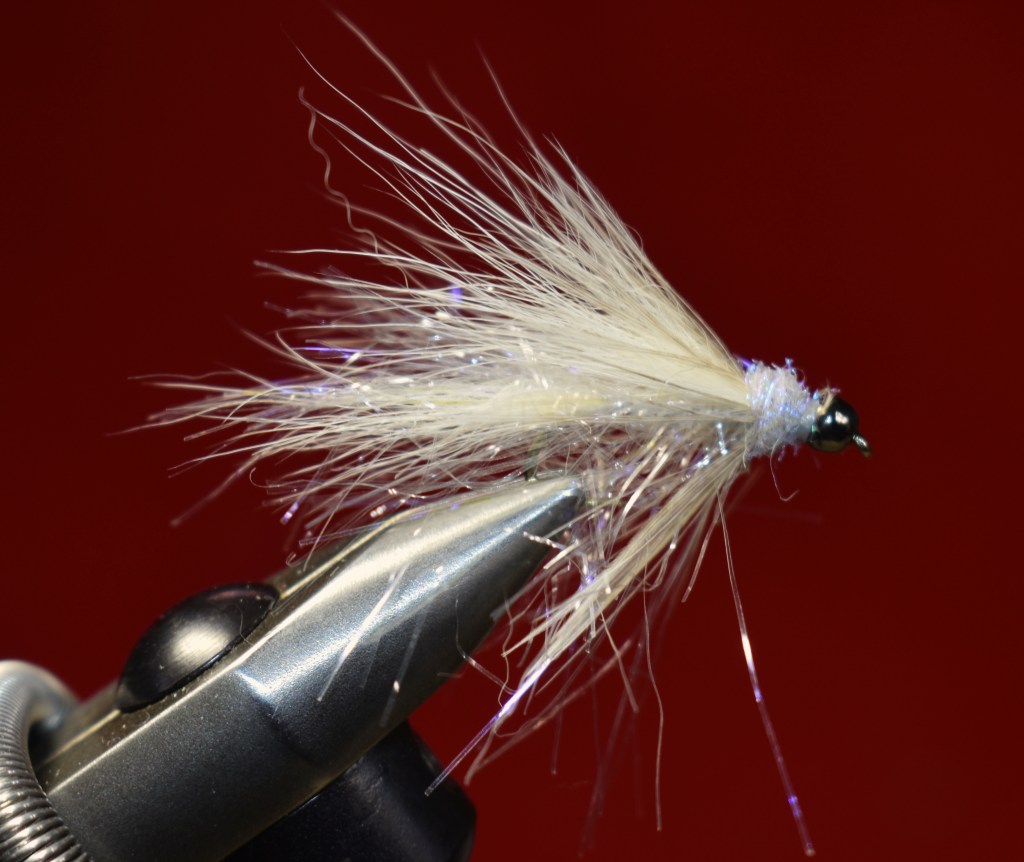
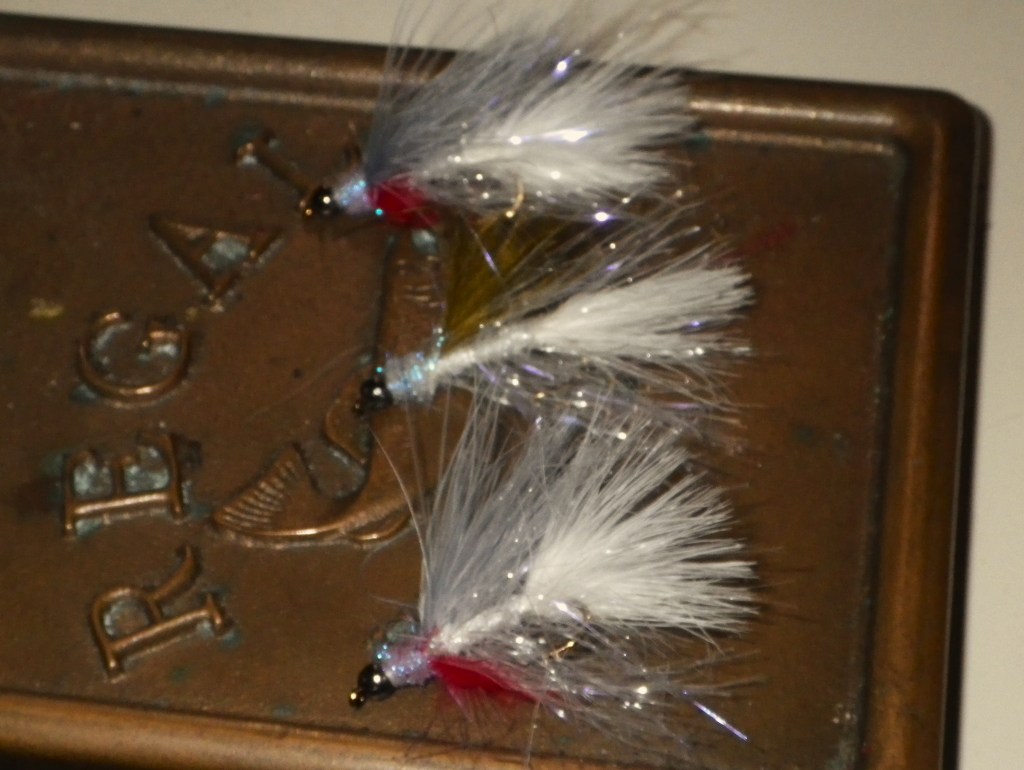
I tied a couple of little minnows the other day and have since decided that a minnowy version of the Copper Fox was in order. Enter the Ghost Fox: UV pearl and white combined with the same formula as its predecessor. I love Arctic Fox tail. The late Ed Shenk told me decades ago that it was his preferred material for his famous Shenk’s White Minnow, a fly that has a legendary reputation. There has always been something about the natural fox fur that makes flies more productive, and I have used it for my Shenk Minnows and a lot of other streamers during the past thirty years.
Fox tail moves well in the water, yet keeps its shape better than marabou, which can roll back and get caught on the hook when swimming and twitching through the water. The bulk of the soft fur gives the fly a touch of buoyancy too I think, even when well wetted.
I tend to fit a small tungsten bead to the head of these small streamer flies, giving it enough current penetration to sink quickly early in the swing, and being generally safe to fish on one of my off-season bamboo rods. I still watch the winds when I make my choice between cane and graphite for a couple of hours of winter fishing. Strong, unexpected gusts can still damage a rod when they drive your fly into the blank in mid-cast, weighted or not.
Perhaps the roller coaster of our February/March weather will give me the chance to wander out there somewhere and give the Ghost a swing. It has a lot to live up to considering the recent accomplishments of the Copper Fox!
March 2nd: Not a fishing day, but then suddenly, it was.
I went fishing today. No, it wasn’t planned, not really, but then the sun did make an appearance and I decided to scratch the itch. The river brought a chill to my legs rather quickly, but the sun was high and bright above that ridgeline to the west making it almost comfortable.
I had harbored hopes of getting out this week. Monday was to be the warmest day according to the forecast, but the sun remained hidden, the winds blew hard from the Northwest, and the day simply underperformed. Today was a gift then, wanted though not expected, particularly with snow coming tonight and tomorrow’s return to the deep freeze.
Minnows: A brief turn at the vise this morning produced these three little movement flies, even though I didn’t have much hope of using them for a while.
The drive, in waders and winter layers, got me warmed up nicely, so too the hike down river to the pool I had decided to prospect. A nice warm torso, bathed in sunshine, put me in a good frame of mind, and that first cast rocketed out three quarters of the way across that wide run of water. I was hopeful that my little morning minnow would swing down and shimmy up one old brownie equally enthused by the warner than expected afternoon, but it was not to be. No matter, I was out hip deep in the river and stealing a few hours of salvation from the icy grip of winter.
Once I was back at home, I noticed the sun beaming down on my porch and got to thinking I might steal another moment or two. There was a package of fresh ground beef waiting in the refrigerator, so I put my boots back on, uncovered the grill, and took the empty propane tank up to the drugstore for a swap. I still try to pay heed to the heart surgeon that saved my life nearly seven years ago, so I don’t get to enjoy very much red meat. An early March hamburger deserved to be grilled, and that sun was just warm enough for me to pull it off.
Porch sitting is one of my favorite evening pastimes: the grill flaming, a cold beer in my hand, and that lovely view of the mountain with the sun easing down behind it. That beer tasted phenomenal, and the burger, ahh… well it made me forget it was winter for a little while.
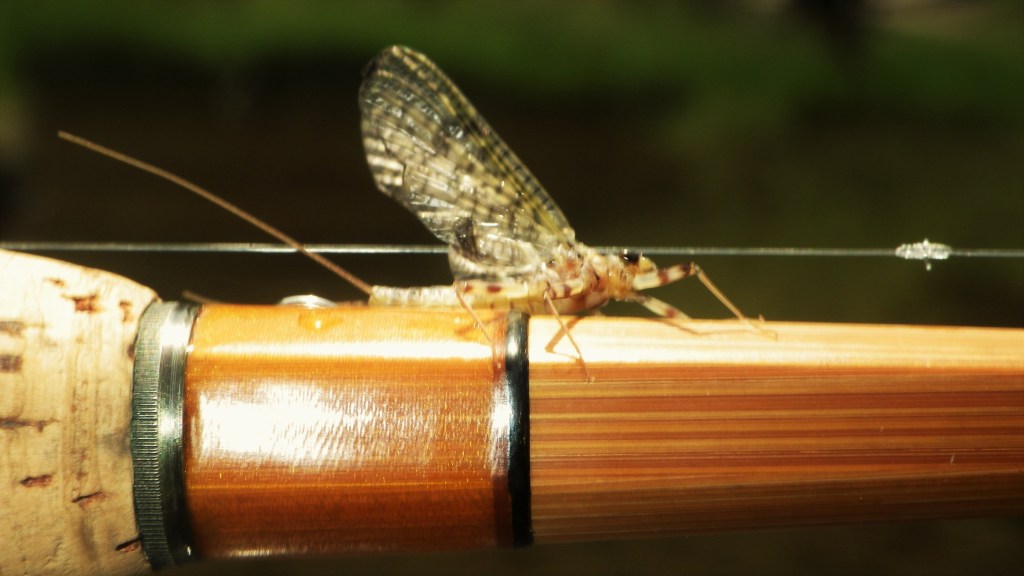
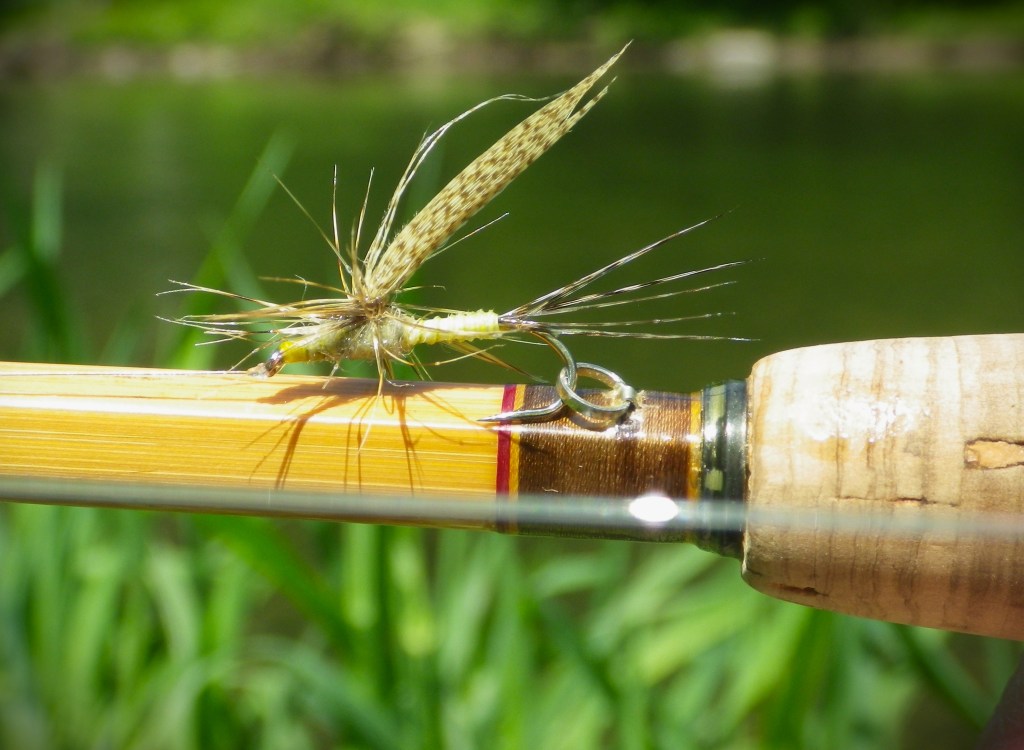
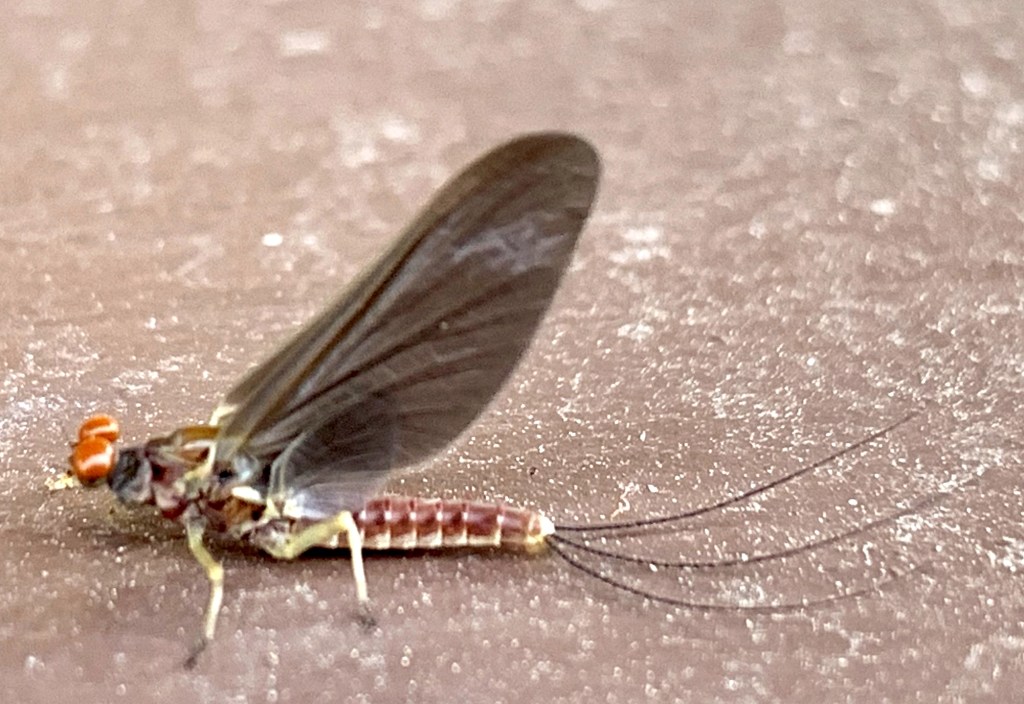
March 1st: I flipped my calendar this morning to reveal this photo for the month of March, a March Brown mayfly perched upon the butt of my Thomas & Thomas Paradigm.
The Weather Channel heralded the first of March as the beginning of meteorological spring, though our temperature in the twenties still says winter here in Crooked Eddy. I welcome the upgrade, something every angler’s spirit can use after nearly four months of frigid, mostly fishless weather. Forty days to go until I might actually be able to wander a riverbank with the expectation of a Quill Gordon, Blue Quill, olive, even a Hendrickson drifting past on its way to meet the rise of a trout.
Fly Fest lies behind us now, and it was an enjoyable day of tying and talking flies and fishing with a like-minded group of anglers. This was the first such event since the last Leap Year, when the world changed suddenly around us, and gatherings became taboo.
I tied about a dozen flies, sharing patterns and styles with interested seekers of Salmo trutta and its brethren, even walking one brand new fly tyer through the steps and techniques for tying a comparadun. The young angler advised he had started learning to tie flies this winter, and comparaduns became his first project. They are not the easiest fly to tie well, so I hope the tips I shared make it go a bit easier for him. He should find a lifetime of enjoyment in the craft.
I looked up at one point to see a couple of acquaintances uncasing and admiring a bamboo fly rod. I wanted to join them and view the treasure they had brought, but there was a gentleman at my side inquiring about the 100-Year Dun in my vise that deserved my attention. I wonder still which maker’s rod that might have been.
The Catskills of course have a long and cherished history in regard to the art of the split bamboo fly rod. The lineage traces back to Hiram Leonard when he moved his Maine rod shop to Central Valley, New York, establishing the rod shop that would be the wellspring of greatness. Thomas, Payne, Edwards and the Hawes brothers all issued from that gathering of talent in later years, and the talent has continued to grow to include some of the best rod makers of present days. Catskill Legend Bobby Taylor worked at Leonard since high school, and Dennis Menscer, inspired by Fred Thomas’ legacy decades ago, continues the Catskill tradition today, crafting his remarkable rods beside the West Branch Delaware. Is it any wonder enthusiasts gather here?
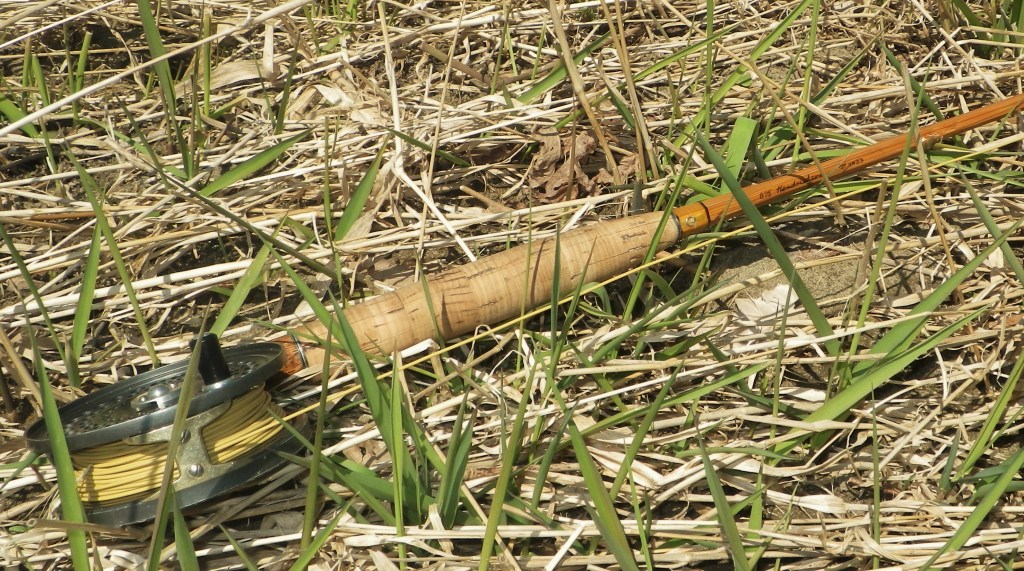
There’s a cane rod in the corner here that longs to cast a line on the river. A more temperate day is promised, though with twenty mile per hour winds fit to drive the chill through one’s bones. I weigh the advantages to my spirit against the physical discomfort…
I have yet to organize my fly boxes for the coming season, a task that, while necessary, fails to bring the same joy as tying the new patterns that must find a place there; and there are always new ones.
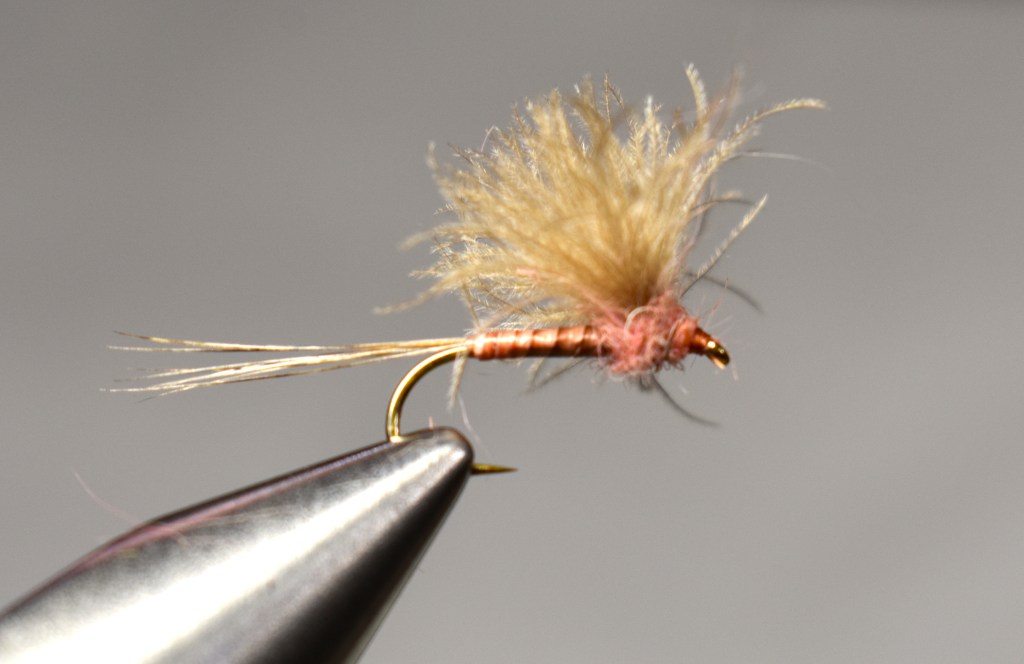
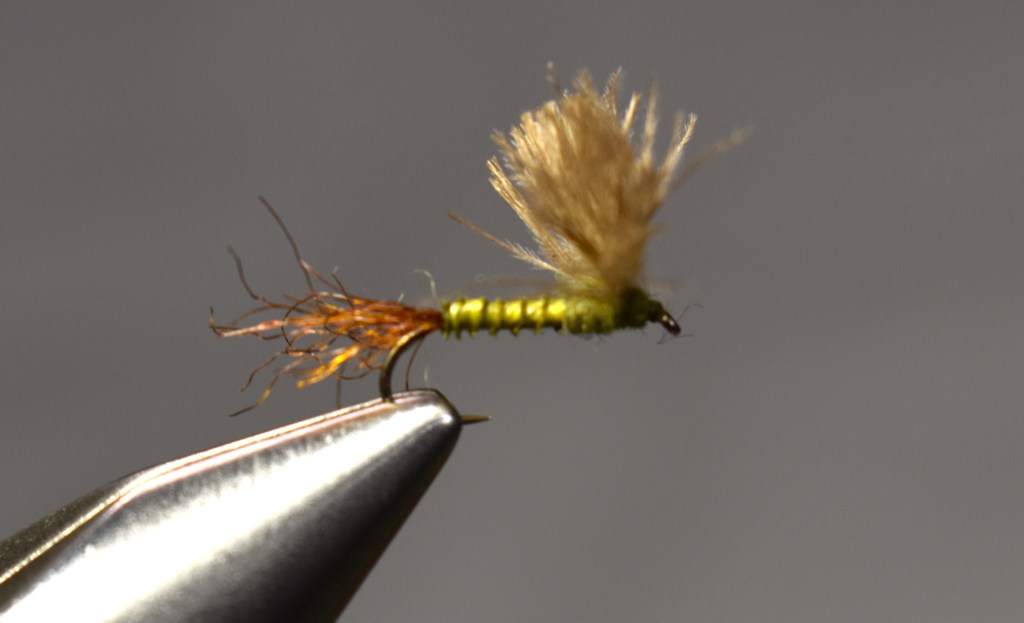
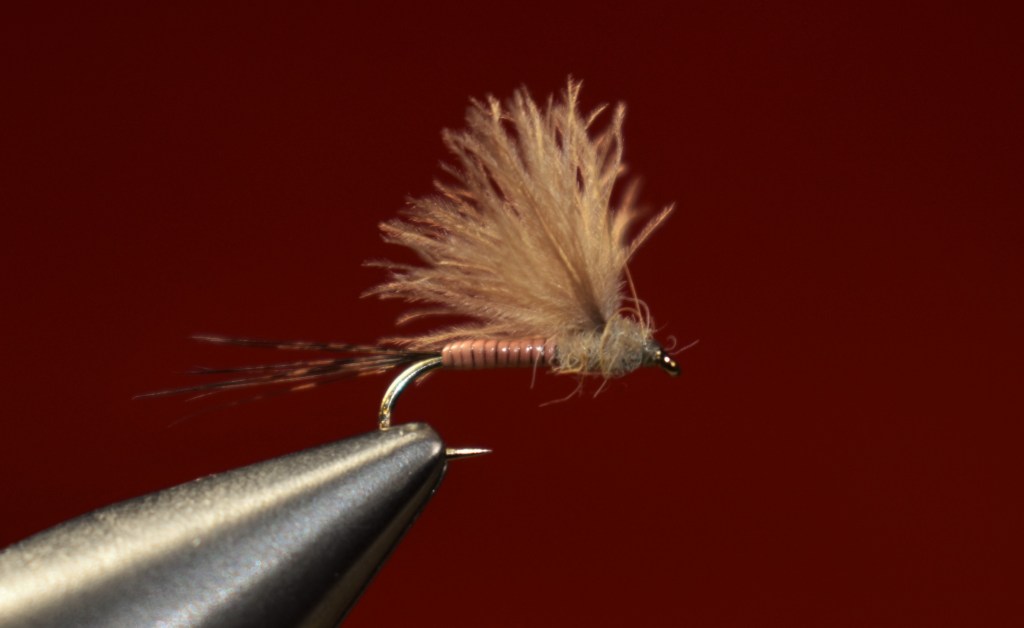
A Pink Hendrickson is a new entry to my Dyed Wild series of turkey biot mayflies. The color and segmentation achieved with dyed wild turkey primaries have produced an array of very effective patterns, with all due credit to my friend the dye master, a wonderful professional fly tyer with a superb flair for custom crafting the best in materials.A Dyed Wild Cornuta CDC Sparkle Dunawaits another remarkable June morning!
March first, and I should tie a few March Browns in observance! I have always smiled at the name, for they are flies of May. It seems the British cousin appears in February and March on their chalk streams, and the name was carried forward in the early history of dry flies here. Would that this burly fellow would grace our Catskill rivers this month, though it would then steal some thunder from Gordon’s Quill and my favorite Hendrickson.
There are still a couple of empty reel spools which require fly lines, and it is past time for me to decide which to wind on. These will need leaders of course, and notations in my book, lest I later struggle to recall which line they carry. There are a few things ready to be moved along that another might enjoy fishing them, and I should give some attention to that. Busy work, duties to pass the last days of waiting.
Forty days, a brief span considering the cold quiet months that lie behind, yet forever for a heart that longs to be with rivers!
Another pre-spring momentin the sun… all too brief!
I stole a couple of hours from winter’s whirlwind yesterday, trapped in a three-day stretch with highs in the fifties, before the new snowstorm comes calling.
The gift of time on the water calms my soul and refreshes my spirit, a necessary balm before I must face winter anew. My countdown sits suspended at forty-six days, closer to the goal, yet still far away. In truth I accept that my timetable has no control upon Nature’s, and the Catskill winter shall have its due.
With the luxury of residence, and with time at my disposal, I have found at least a chance to worship at the altar of the dry fly during that second week of April. That chance may be anything from the appearance of a few quivering mayflies to a full-blown hatch with rising trout, though the later quite likely may not come to pass until May lies in the doorway.
Last year the first blessing from the river was received on April 12th, a gift, for I had seen no mayflies nor any rises until that single ring appeared before me on the wide Delaware. One ring, one cast and one take, and the glory of another dry fly season began with a lovely brown trout! It would be a week before I encountered the season’s second rise. A Catskill spring comes in its own time.
Saber at the ready, in hope the battle will soon be joined: A Hendrickson for the Hendricksons!
It is another beautiful morning, though I wait for Nature to deal her blow. Half an inch of rain is expected to arrive just as the water temperature flirts with its daily peak. I debate whether to take the chance, to seek bright water before the chill of wind-driven winter rainfall steals the glory from the day. A single cast can male all the difference…
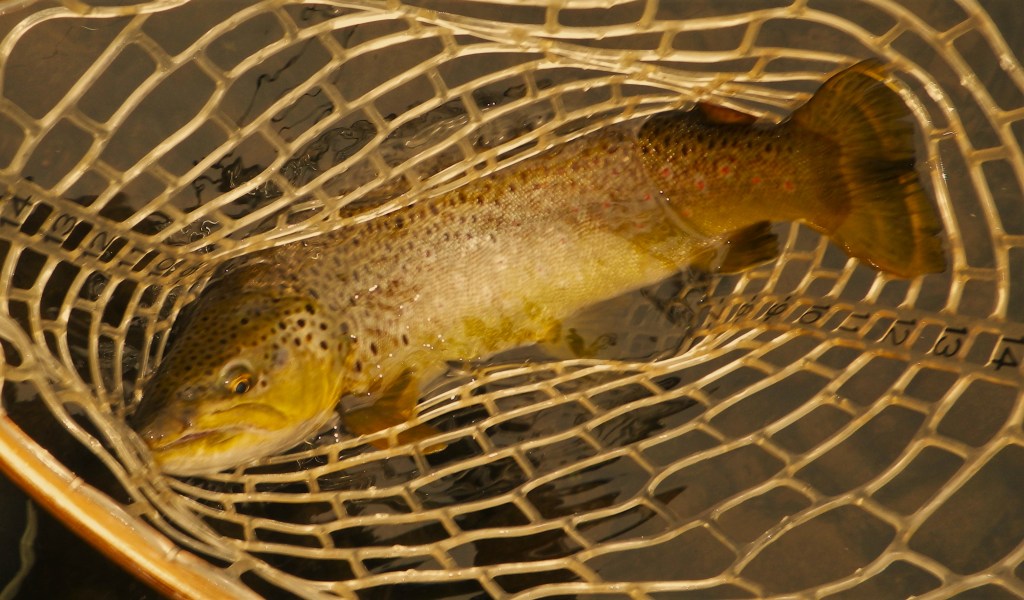
The Goal of Imitation:A big, wild, beautiful Catskill brown trout sulks in the net prior to release. Might I fool him again?
It is my understanding that the British were rather halting in their embracing of the catch and release doctrine, particularly in their chalkstreams. It seems they felt that brown trout, having attained a few seasons of experience and having been caught and released, might well be uncatchable henceforth. I believe their concern was valid, though perhaps they failed to recognize the supreme challenge of adapting their angling to keep up with the adaptation of the trout.
I whole heartedly believe that a trout develops, that is he gets better at being a trout and thus much less easy to dupe with an imitation of his food. A couple decades ago some may have called me a heretic for that statement, though science has come to embrace the belief that trout not only learn by experience, but pass these traits along genetically to future generations.
I do not maintain that every individual trout possesses these sublime abilities to avoid angling, though certainly many of them do. Just as human beings vary considerably in mental and physical abilities, I find it easy to accept that the lesser creatures share this variety.
I have long maintained that we must seek to refine and develop our angling abilities and our flies. Imitation has always been a puzzle, for no matter how much science and research can teach us, no one will ever know how a fish’s brain interprets the signals it receives from his senses. I find that limitation interesting and learned long ago to accept it as fact and move on. As a result, I have enjoyed more than three decades of fly tying and experimentation.
When winter locks me indoors, my thoughts turn to experimentation and my continuing quest for better imitations. As a confessed disciple of the Cult of the Green Drake, that regal mayfly is often in my thoughts.
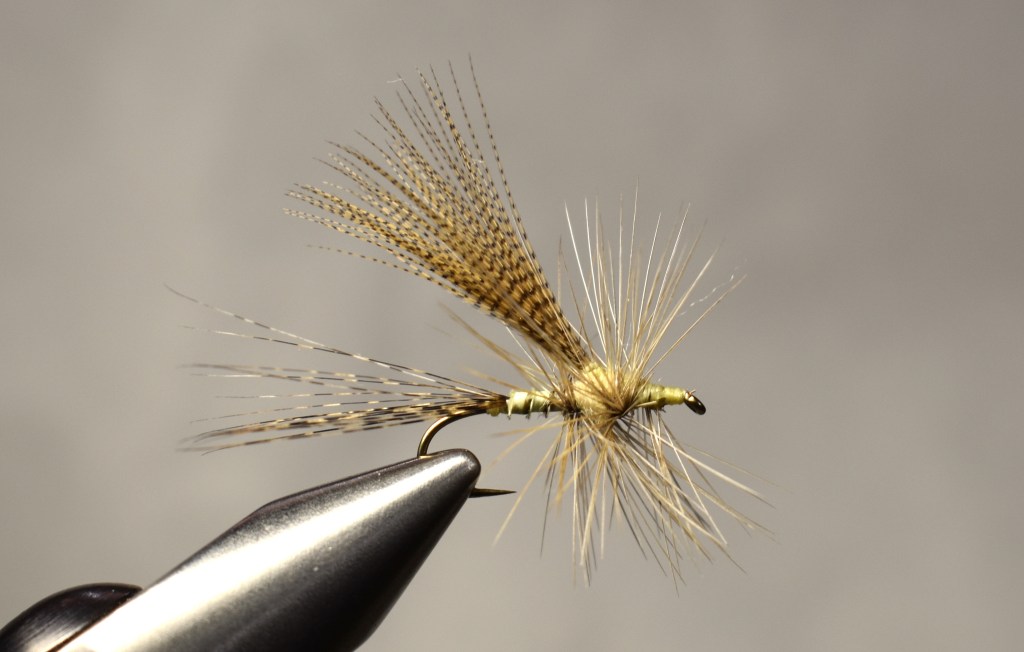
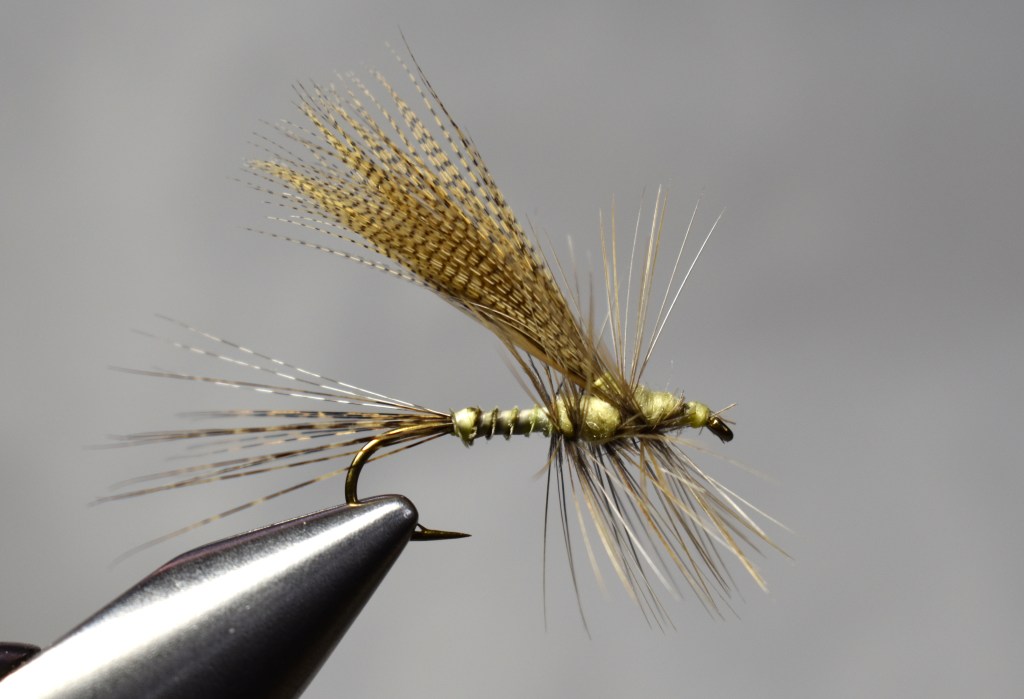
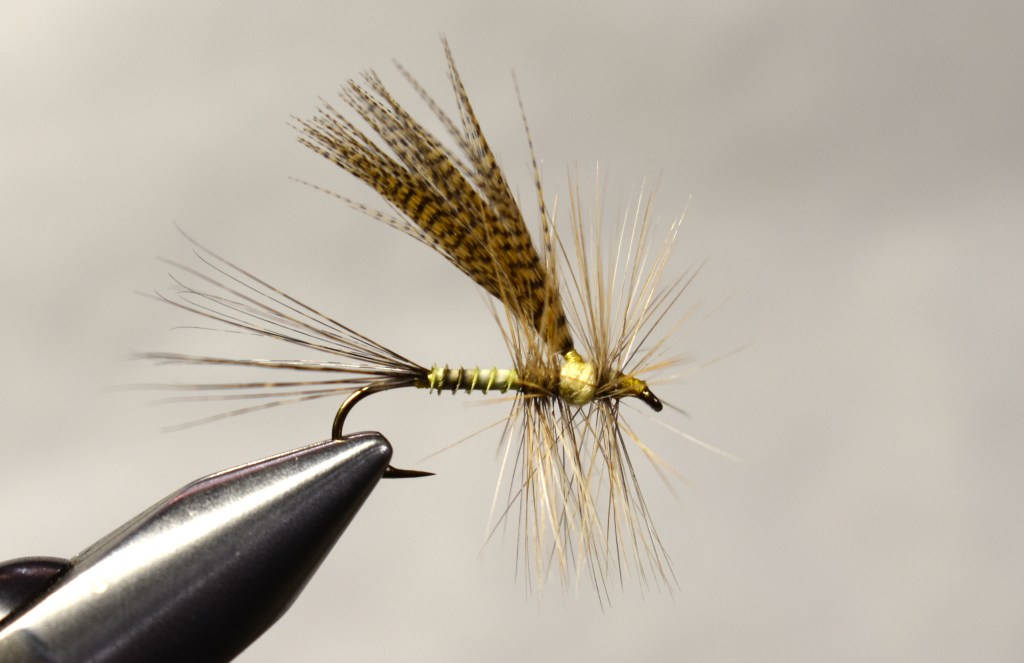
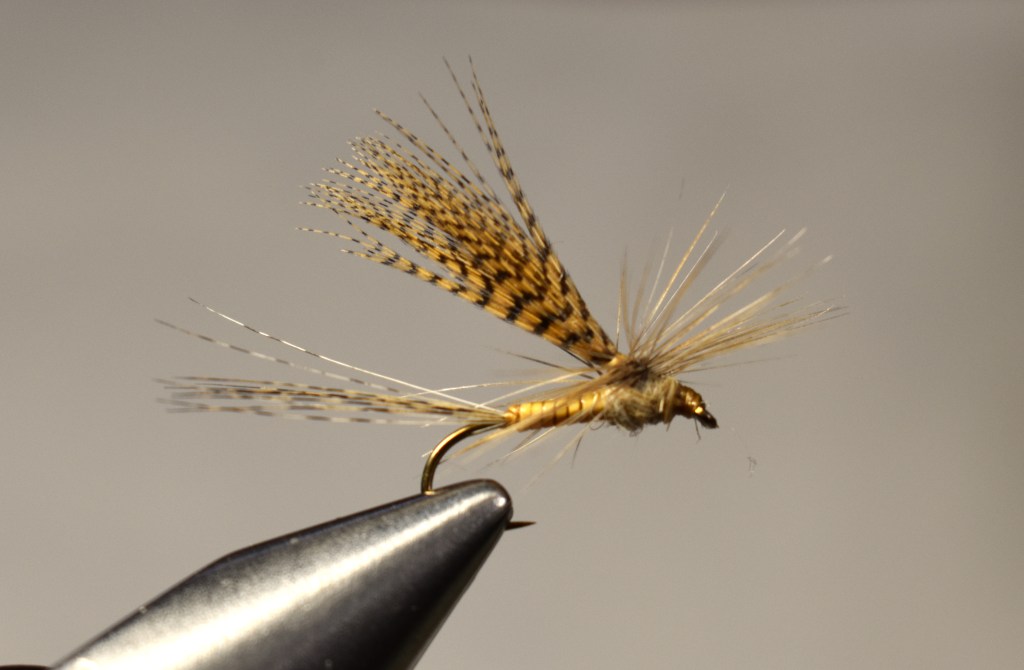
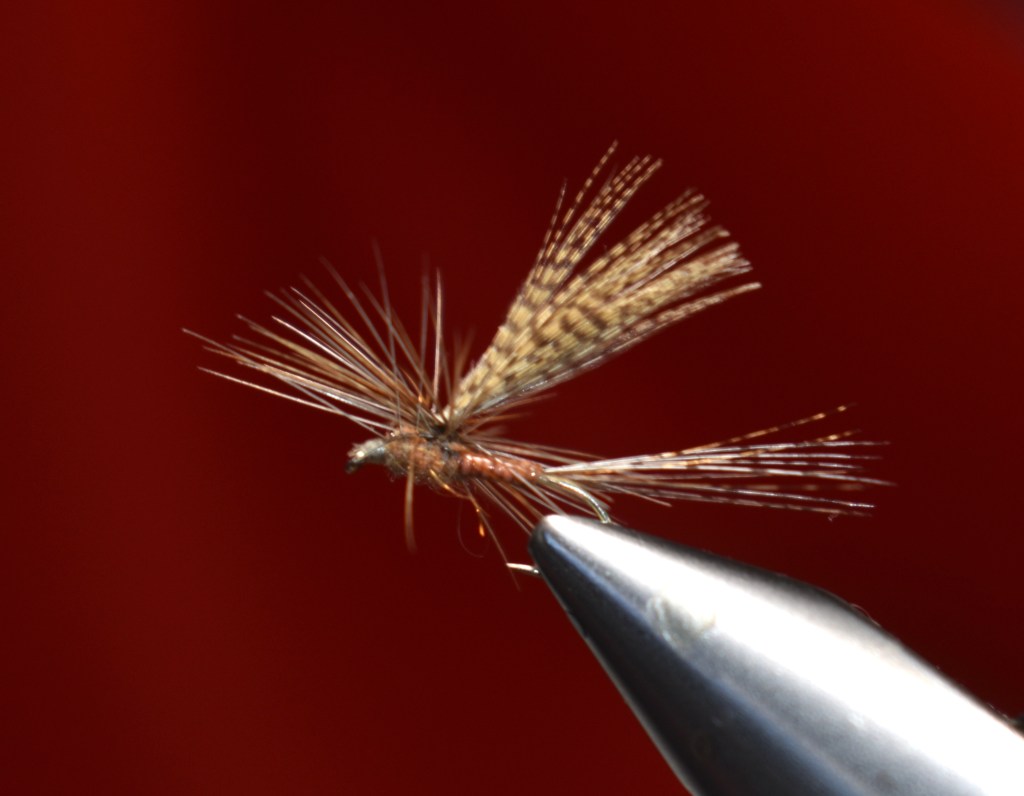
Gordon Duns: A gallery of variations on a theme.
I have called this morning’s variations on my 100-Year Dun Gordon Duns to reflect my original inspiration for the entire spectrum of canted wing Catskill influenced mayfly patterns that populate my fly boxes. Early in my experimentation with this style of Green Drake imitation, I hackled the flies in the thorax style originated by the late Vincent C. Marinaro. Marinaro’s design placed the wings at the center of the hook shank, and his crisscross hackling and perpendicular, outrigger tails balanced his ties on the surface very effectively. Wings set amidships worked with that style of hackling perfectly, but the forward set canted wing I took from my studies of Theodore Gordon’s Catskill originals did not produce the same critical balance when combined with the Marinaro hackling.
I selected an oversize hackle and wound it around the canted base of my wing in a lopsided parachute style and suddenly that balance was achieved!
A soggy 100-Year Drake nestles in the hook keeper of my Payne 102 replica to celebrate its effectiveness.
Canting the parachute hackle put the barbs to the rear of the wing below the hook’s centerline, supporting the heavier end of the fly – the end including the hook bend. The fly “cocks” as Mr. Gordon and the English would say, riding the water very naturally.
This morning’s trio of patterns began with the Marinaro crisscross and then the idea became combining that style with the conventional Catskill style hackling. The first Theodore Gordon fly I ever saw was in a glass case at the Catskill Flyfishing Center and Museum. The canted wing, tied with a single bunch of woodduck flank fibers caught my attention immediately, as well as the extremely sparse hackling that looked to have been tied mainly in front of the wing. The fly on the left in the photo gallery above modifies this style with two wraps behind the thorax dubbing ball, then one wrap crossed in front of the wing below the shank and behind the wing above it, finishing with two more wraps in front. I wasn’t happy with this hackling either, so I changed things up for the center fly.
This style has a tapered thorax as opposed to Marinaro’s “ball”. I made two conventional wraps behind the wing, the first at the edge of the dubbing and the second on the tapered thorax so the fibers can’t. I moved the third wrap to the front of the wing, crossed over to finish that wrap tight to the back of the wing on top of the shank. Coming around I moved back in front of the wing onto the tapered thorax and tied the hackle off. There are four wraps of hackle total on this fly, and I like the way it sits on the table.
The fly on the right was wrapped in similar fashion, though I made three tight wraps behind the wing Catskill style, crossed over as before, and then finished with two wraps in front, spaced away from the wing instead of tight against it on the taper of the thorax. This one looks a bit more like a Catskill tie, as it doesn’t have the radical cant. These were all trials to so what little variations in hackling style might do the the way the fly will sit on the water. Number two is my favorite, though I would not take any bets on it to out fish the canted parachute 100-Year Drake.
I do think the Gordon Dun will ride very nicely on faster water. It should float a bit higher on the chop, weather natural current or windblown, and still have that seductive slouch like a big mayfly. Hopefully the Red Gods will lead me to a good hatch of Drakes this season and I will have a chance to see just how the trout react to it.
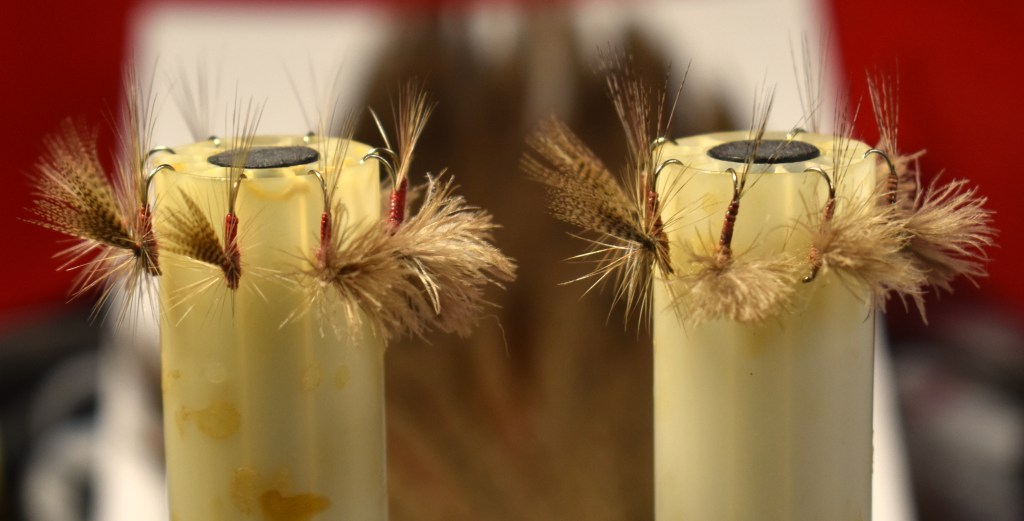
Freshly tied quill bodied duns: Little Dark Hendricksons and Red Quills made a good start to a reasonable bit of work on this cold, blustery February Friday.
The wind and rain actually rousted me from sleep this morning. It was a bit before five, and the house seemed to be moving from the force of the gusts, with the rain driven so hard we feared it might penetrate the siding. There was no doubt that a thoroughly inhospitable day lay ahead, but I rolled up and fumbled for my moccasins anyway.
The first mug of coffee fortified me enough to head for my tying bench, and I began assembling the materials for some quill bodied dry flies. With any luck, the first Hendricksons are just fifty days away, and I felt it was time to replenish my supply of standby patterns.
Since I brush my quill fly bodies with a protective coating, I tie these flies in stages, a production technique learned at the vise of Ed Shenk. I tie tails and bodies, a quick whip finish and a coat of Hard As Hull, then the hooks are hung in my little fly rack to allow the glossy overcoat to harden. I started with the Red Quills then moved on to the Little Dark Hendricksons, all of these in size sixteen. With those set aside I decided I had earned some breakfast.
Production style fly tying does get the boxes filled, and there is another bonus besides efficiency. The flies look better! Tying several flies of a size and pattern, I tend to get in a rhythm, and that leads to better concentration and repeatability.
After my eggs and Canadian bacon, I continued with my quill obsession, tying two each of the red and dark tan bodies in size 14. Mayflies vary from season to season and riffle to riffle, so even though I know to expect sixteens, I want to be prepared for eventualities. While those were drying, I took a reading break with the late Roger Menard’s My Side of the River. It helps pass the day when you can relax at stream side with a like-minded angler.
The afternoon session included some tan Hendrickson quills and a pair of soft hackles. So with two dozen flies ready for April I called it a day, taking a moment to put away all those materials. Two dozen flies is a respectable bit of work for a house bound fisherman, so I feel like it has been a productive day. Yes, I do wish the sunshine that’s lighting the curtain above my bench was evidence of the real warmth of an afternoon and not the false image of winter. The temperature has fallen throughout the day and now sits in the low twenties and, though the wind isn’t trying to take down the walls anymore, it’s still strong and gusty.
My quill bodied 100-Year Dun in Light Hendrickson trim is a newpattern variation this year.
Quill bodied dry flies have proven themselves for more than a century, and I particularly enjoy tying and fishing my 100-Year Dun style flies to celebrate that history. When I find a trout that looks for movement before taking, I offer the CDC dun variation. If that fish demurs, I know the wing silhouette of the 100-Year Dun can be a reliable trigger. I have a high degree of confidence in both of these flies as they are proven performers.
Little Dark Hendricksons
Tomorrow looks to be another very wintery day, but there is a Catskill Fly Tyers Guild Zoom meeting to provide some entertainment. Sunday might just shape up well enough to be a decent outdoor day, and next week could actually tempt me back to the river, at least before the snow comes.
Our rivers are elevated from rain and snowmelt, though I hope we escaped any significant ice damage. Hancock has been under a flood watch today due to that possibility. The riverbanks are still piled with big slabs of ice from our last rainfall event, the one that melted most of the snow. My friend JA remarked last weekend that the area around the Beaver Kill Covered Bridge looks like a moonscape. A run of nice stable weather would be a welcome change. Forty something degree late winter days are downright pleasant.
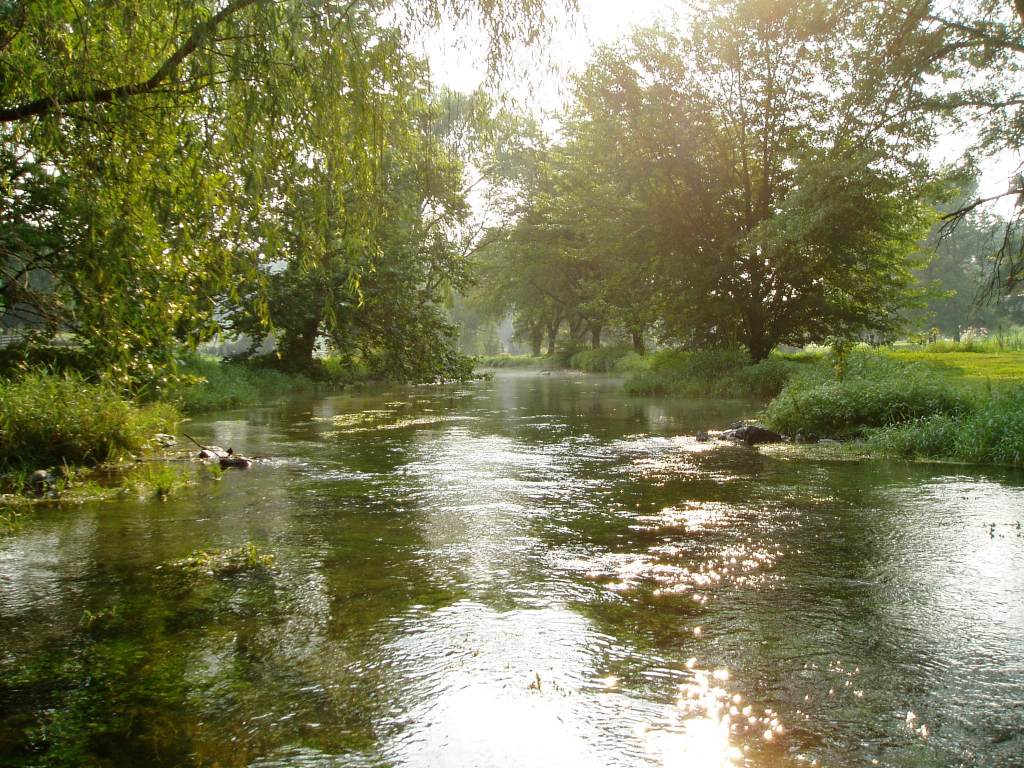
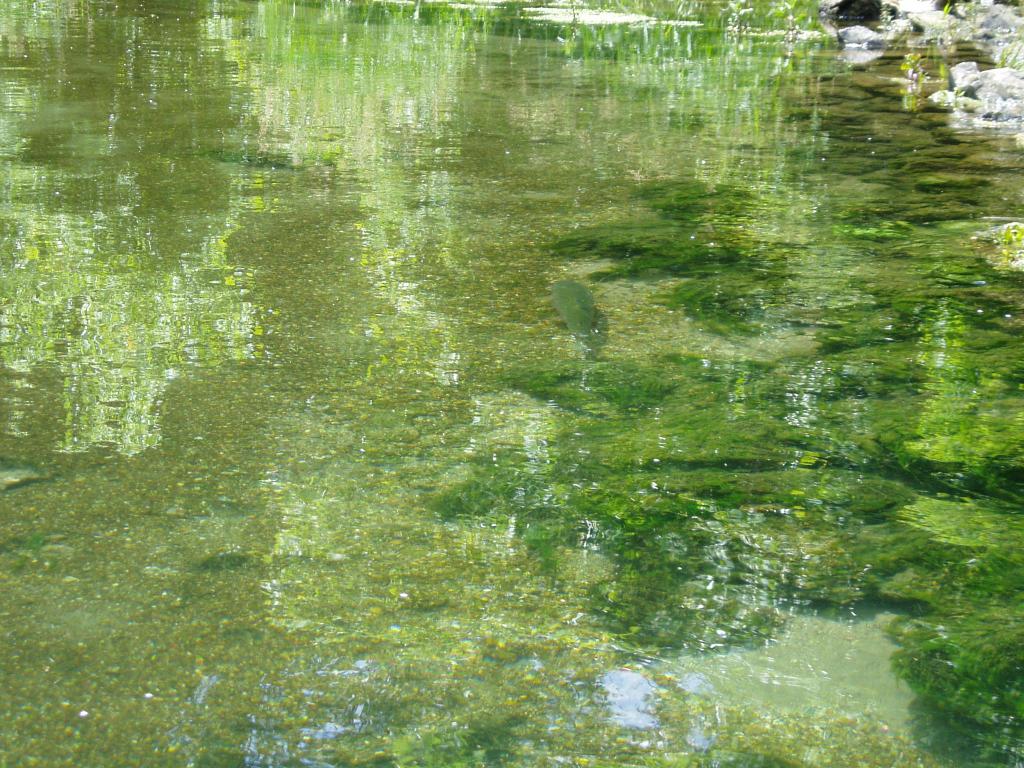
The Falling Spring Branch on a bright summer morning more than fifteen years ago. Even when the trout population was booming, there were days when you could wander a mile or more without seeing any sign of a trout. Some days they were all in hiding.
It can be a puzzling situation when you fish a productive piece of trout water and find nothing; no strikes, no rises, no glimpses of movement across the bottom. It can be hard to imagine that not a single trout is on the prowl to some degree, though days like that are a part of fishing.
I learned how capable wild trout are at avoiding humans during all the years I wandered the small limestone streams of Southcentral Pennsylvania. Having developed an eye for trout and the types of lies they frequented, I still found days when I could walk long reaches of streams like The Falling Spring without evidence of a trout. The Spring was clear and relatively shallow, and trout were very visible when they were out on their feeding lies. During winter, when the aquatic vegetation died back, you could see most of the stream bed clearly. I certainly scratched my head a few times wondering where they could all be hiding when the winter sun lit the bottom to reveal nothingness!
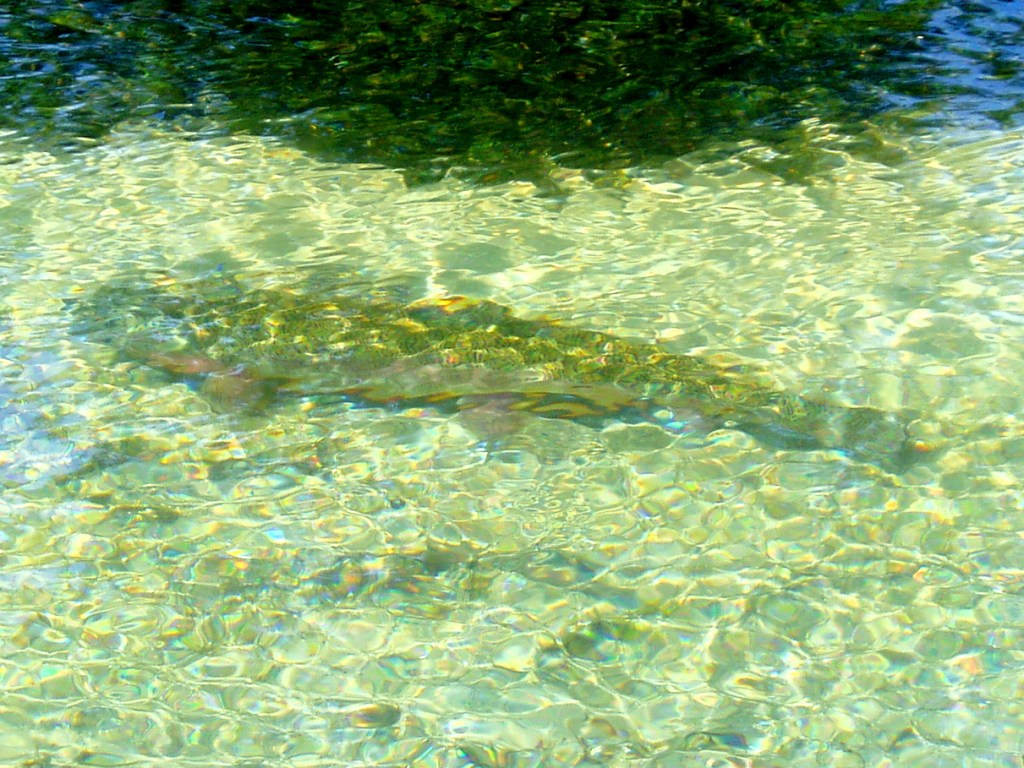
This is a shot of a huge rainbowtaken in Big Spring. He’s pretty obvious if you are walking the banks and looking for trout, even with the shimmer of sunlight on broken water. He would dart up under the weed bed next door in an instantif you came blundering along, though, and you would never see him.
Back in those former haunts, I learned the importance of stealth, the necessity of approaching the stream in the manner to make the least possible disturbance. I walked the banks as far away from the water as the terrain allowed, and I concentrated on careful, gentle footfalls. If wading was necessary, I eased in and moved agonizingly slowly, keeping current obstructions between me and my target area whenever possible. When I cast, it was often with a sidearm style to keep my short flyrod as low as possible, ever conscious of a trout’s window.
Learning on the difficult stage of the limestone springs did me a lot of good. I still fish the same way. On a wide Catskill river, I stop and plan my approach, whether I am preparing to cast to a rise I’ve spotted, or simply moving into position to watch and hopefully fish a piece of water. There are times I get excited by a heavy rise, but I still take a long time to wade into casting position. I avoid pushing waves toward the trout’s location at all costs.
My passion is hunting difficult trout with classic tackle and dry flies, and I know that my chosen quarry isn’t going to cut me any slack. Wild trout don’t get big by being careless. That is one of the reasons the majority of anglers pass right by those fish, even when they are feeding. Big old wild trout are masters of stealth.
We got pretty close, didn’t we? Too close. There’s no way that trout is going to tolerate lowering the anchor on the drift boat. He wasn’t rising when we approached and didn’t give himself away until it was too late. Lay one cast in there on the way by and pray!I crept up pretty close before this big bow slid out over the gravel from the weeds. Suddenly, there he is!It’s summertime, so use a sidearm cast to drop a small beetle right behind his eye…Stealth, patience, and working fine and far off puts a bend in the boo!
It is a balmy seven degrees here in Crooked Eddy and, though inside I am still basking in last week’s sunshine and the grace of a single cast, my outside shivers in the cold between these old walls. The sun hasn’t risen, though it will do little good against the air mass occupying the Western Catskills.
Another warming trend is coming, though with an inch of rain that will take the remaining snow from the mountainsides along for its journey to the rivers. They will run high and brown before the moisture in the tail of that front turns to snow and coats the mountains once more. It is of course still February.
I tied some flies yesterday, nearly two dozen. That is a pretty significant daily production for me, particularly in winter, when the fires that drive my creativity at the vise burn low. Traditionally, winter is the time for many anglers to stock up, to fill the fly boxes they will carry through the season ahead. I do a little of that, rebuilding my stores, but much of my tying involves experimentation. There are many ideas that pass through my thinking, and some wait seasons before they find their way to a hook.
I promised JA a handful of Copper Foxes. I set a few aside for him yesterday, but I think he should have some of the larger ones for his trek to Argentina. He has plans to return if the changing drama of international health and travel works itself out. Two years ago, he enjoyed an amazing journey, great fishing with small dry flies. Sounds about perfect to me! Conditions vary regardless of the river, so perhaps he might find it prudent to swing a flashy little streamer fly born here in the Catskills.
I took stock of my calendar again this morning, counting fifty-four days before the week I can truly expect to cast a dry fly arrives. Winter is passing, and brief interludes like last week’s span of warmer days help me navigate through all of the freezing ones. In December the icy walls ahead stand like stark timber, and then the slope steepens in January. Here, in mid-February, there are openings in the forest of ice, little clearings where the terrain flattens and the sun pays visits to cheer my soul.
Technically, there is a fortnight remaining in our grouse season, but I deprive myself of the comfort of the mountains once they become treacherous with ice and snow. JA and Finn went looking on Saturday! I’d not try to keep up with a dog in snowy woods, though a nice walk with the 101 would be a pleasant farewell to the month. Maybe if that coming snowstorm turns further north…
There’s some gold in the sky now that the sun has nearly scaled the far side of the ridge to the east. I love the light, both early and late. Even as a boy I appreciated the quality of light from a low angle in the sky. There’s a richness to it, and promise!
Morning light graces Ohio’s Conneaut Creek on a November morning hunting steelhead…I found them!
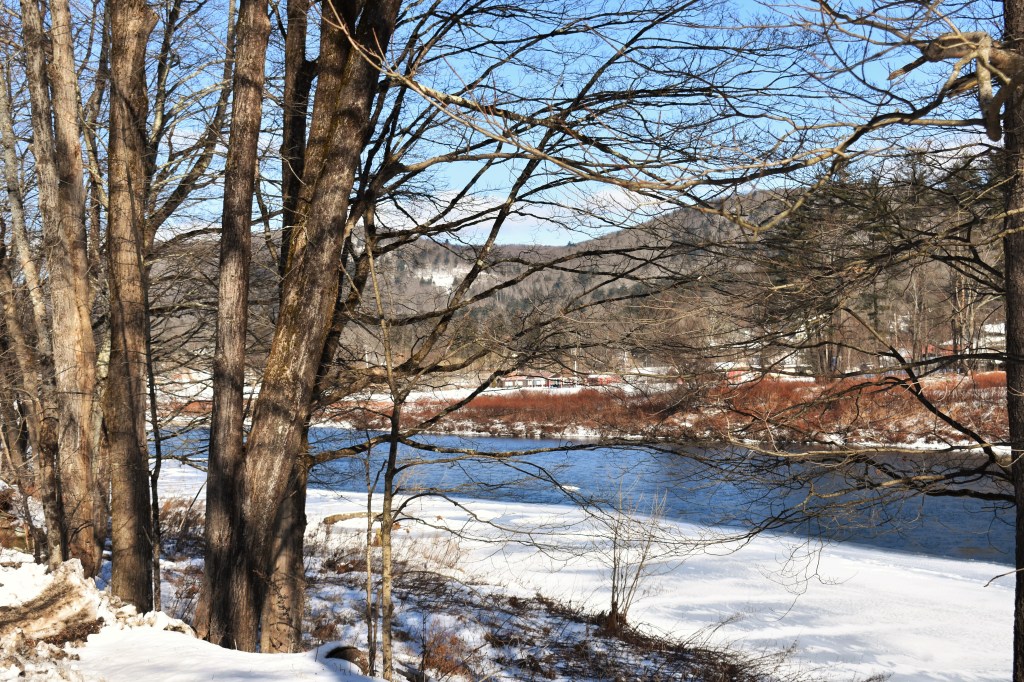
Winter fishing offers an opportunity to enjoy the subtle beauty of the seasonand partake of true solitude. There are not that many of us crazy enoughto wander rivers when ice lines the banks and the cold winds blow.
I am still giving thanks for an honest February warmup, enough of a respite from a particularly frigid winter that I enjoyed two days of fishing. That turns today, as our daytime temperatures are expected to fall from a comfortable morning high right down the scale to freezing. Tonight, our lovely Catskill countryside will revisit the teens. And yet, I am smiling.
Sunshine was abundant on Wednesday, and I was fortunate to bask in its glow throughout the afternoon until the breeze rose late, driving a chill over the water. Yesterday was expected to remain cloudy after a brief taste of morning sunshine, and with strong winds from the south, usually a warmer breeze at this time of year. I was looking for a high in the mid-forties, but dressed for that wind as, regardless of its favorable origin, it was expected to blow at 10 to 20 miles per hour. The day outperformed on several counts.
While clouds gathered, that sun was strong enough to provide a bit of cheer, to the angler and the river. The winds were rough, buffeting me for all but a very brief period, and requiring the old sidearm casting style developed upon Southcentral Pennsylvania’s tiny creeks, albeit with a nine-foot rod and a long line.
If you have followed this blog, you are distinctly aware that I am a dry fly fisherman. Yes, back in the bad old days I cast (lobbed) weighted nymphs when there was no chance of surface action, but I had my fill of it during my many years in the Cumberland Valley. For most of the twenty-three years I resided there, our dry fly fishing came only between mid-June and August, terrestrial time.
Blessed to retire here among the rivers of my heart, I now enjoy six to seven months of dry fly fishing, content to sit along the riverbank when patience is appropriate to preserve good dry fly water. That still leaves six months of off season, winter if you will, to deal with. As confessed previously here, I no longer have the heart nor desire to lob weighted flies and bounce them along the bottom of the river. I still long to spend time along rivers during every one of those six months of winter, so I have taken to swinging flies when the elements grant me the gift of time on the water.
Our weather turned sharply in November this year, and it has been absolutely relentless, with many overnight lows down in the dungeons of ice, below zero. Thus, I have not haunted bright water since December, having to pick and choose my handful of days even then. As reported earlier, I luxuriated in Wednesday’s sunshine, even enjoyed a glimpse of a rising trout. Once, twice, before he succumbed to the chill of the river and the rising wind. I fished to him, or pretended to, but we both knew there was no chance for a union.
A sane man would have studied yesterday’s wind forecast and sat down with a good book. Apparently, sanity must have left me long ago, for the pull of bright water was far too great to resist.
I tried swinging a little North Country fly, a sparse little beauty of woodcock and orange silk, but I knew it was useless to hope to control the drift on the wind ripped river. As the blow intensified, I changed my fly first for an unweighted Hen & Hare’s Ear and at last to my small, brass beaded Copper Fox. The Fox would sink, while still being light and buoyant enough to allow the choppy surface to tug at it, giving it extra life.
The Full Dress Copper Fox came about in stages during the past year, as I played around with materials from my steelhead tying kit. The fly shimmers and moves at the behest of the microcurrents of the river even in still pools. The more current, the more life in the fly!
I tie the fly on a size 10 2XL shank hook, a relatively small fry for a streamer fly. The wing and tail of Red Fox tail provide movement and that touch of buoyancy. Fishing it on the swing lets the fly do its job, drifting slowly down beneath the surface, searching for an old hunter on the prowl for a winter meal.
Thought about and planned for, the remarkable occurrence of yesterday afternoon still relied a great deal upon serendipity. One can put themselves in a particular place at the warmest part of the day in hopes of such an encounter, then make the casts and relax while the slow swing and drift makes the offering; but something of the magic of rivers is required for the offer to be answered.
At just about the hour that the river reached its maximum temperature, my Copper Fox shimmied across the sight line of one of those old hunters, a trout moving in search of a meal to last him several days. The swing is different from my usual method of fishing, and it still requires some conscious discipline. One doesn’t strike back when he feels a pull. The rod felt heavier and rubbery for a moment, as the unseen fish pulled the loose coil of line from my fingers, and then I raised it slowly to bow in a very wide arc.
The trout was strong, with surprising vigor for the still very cold water. He ran, he shook his old head, and came up and boiled at the surface. I was into it, and really starting to put the pressure on when I remembered tying that length of twenty some year old 5X fluorocarbon tippet to the end of my leader back home in the comfort of my fishing den. It was a poignant moment for that memory, and I eased up on the rod immediately and gave the fish his head until he was ready to join me in the shallows.
The first time I slid the net underneath him I was astonished to see his length filling my big net and his broad tail sticking half a foot above the back rim. I lowered the net back down into the water and tried to secure my rod under my arm, and that old warrior jumped out of the bag and headed back for midstream! I pivoted quickly and pointed the rod at him, feathering the departing leader and line with my fingers until the brown began to pull against the reel’s light drag.
So once again we danced, running, boiling and finally scooped again with his tail waving in the breeze. I walked him back to the shallows and twisted the fly free. I was trying to lay him along, or beyond the length of my net to measure him, when he jerked away from my hands and darted back toward the middle of the pool. I had judged his length but had not yet been able to actually measure it as is my custom.
The wind calmed for a brief spell after that, and I stood there in the river tingling with excitement. I fished on down the pool and strode back to the top and fished it again, though the wind howled with renewed vigor.
Arriving home, I got a tape and measured along the inside of the net bag from rim to rim: thirty inches. With that tail out of the net, that brown’s nose was perhaps a few inches shy of the rim, certainly well better than two feet long, but I don’t believe he would have taped thirty inches. At least, I don’t want to think he was thirty, that he matched that milestone without the honor of being taken on a dry fly.
I have entered the fish in my log at twenty-seven inches, a conservative judgement, appropriate since I never completed my measurement in the water. He had that cold, steel gray hue of winter on his flanks, and plenty of heft to match his length; an old warrior wintering well.
My last brown trout from December. He was measured against the net handle quickly at, or just shy of twenty inches long. Note that cold, steel gray hue, much the same as yesterday’s leviathan. The net bag, measured along it’s centerline, spans thirty inches from rim to rim, without deflection of the rubber mesh.
Whatever tale the tape may have told shall remain a mystery. Alas my fishing camera was back in my fishing den, placed where I wouldn’t forget it, when I grabbed my gear for the day. Though my memory has limits, the vision of my largest Catskill brown trout with his tail waving above the net rim will remain as long as there is life in me.



 Bright Waters Catskill