I fished the limestone springs of Pennsylvania's Cumberland Valley for a couple of decades, founded Falling Spring Outfitters, guided, tied and oh yes, fell in love with the Catskill Rivers I can now call home.
Soft hackles, eight feet of split bamboo, and my trusty Copper Fox: these are the things which get me to wandering as autumn passes. Oh yes! I still carry dry flies, far too many when I know they are only along as balm to my tangled thoughts.
Swinging seems to fit my mood as it does the nature of these autumn rivers. It requires little thought: a cast repeated, the long, slow swing, then two steps downstream. There is no figuring the fall of the fly tight to cover where leviathan lurks, no manipulation of the aerial line to finesse long drag free drifts. The sun is out, the rivers rising just a bit from another missed promise, and I need a walk beside bright water. The rod masquerades to give me purpose.
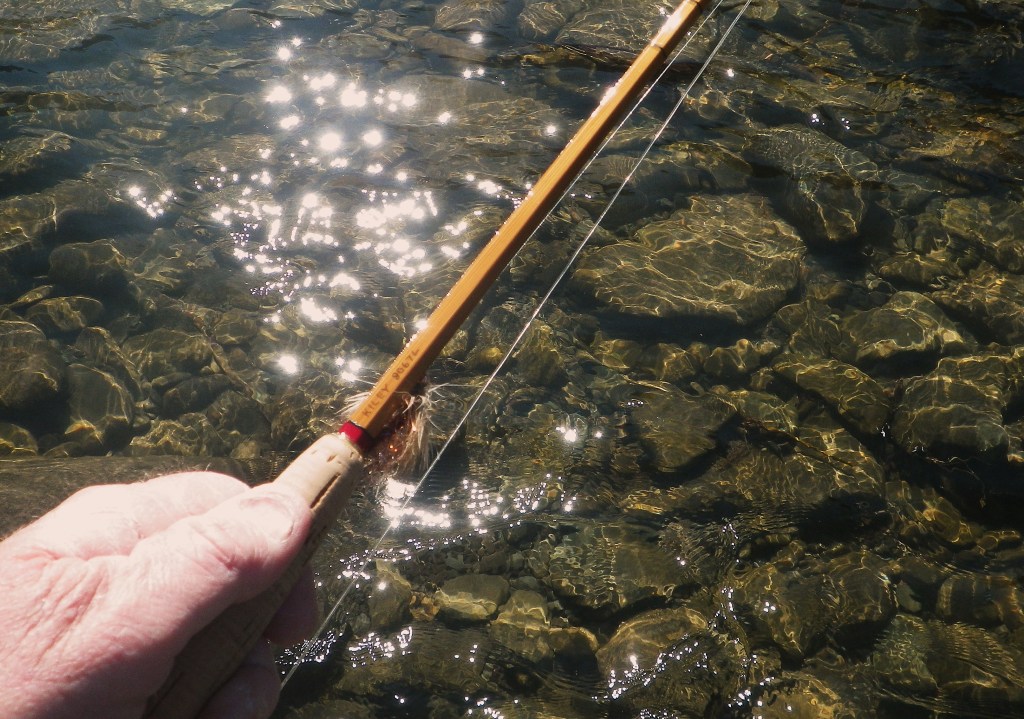
Not a dry fly rod, the Kiley will serve whatever need it’s master calls for. It has and will put tiny dries upon the edge of a far-off ripple should some alchemy bring a trout to rise.
As the current slides downstream the line follows, the unseen fly drifting below with some tiny quiver of life. Life searches out life, and on occasion that connection is revealed, though not expected. The swing is part ritual and part farewell.
Little hope remains for a last moment of dry fly magic. I have guarded such wistful thoughts for weeks now, as a dry September turned into a dry October. I have made my best efforts to convince myself that the mature trout have been occupied with the spawning urge amid difficult circumstances, and that those who succeeded would return to their hunting lies and offer a sublime finale to the season. My mind admits now that this will not come to pass.
Trout which have navigated another drought season’s difficulties are not looking for surface food, for there has been little available since the full blush of summer. Mayflies, caddisfles, midges; all have been notable by their absence.
Alas, bright waters still pull at me, drawing me near despite my realizations, despite the evidence a spare season has piled before me. It is hard for the soul to let go, to release something as magic, as glorious and entrancing as a Catskill dry fly season!
It seems time to concede the dry fly season, for it has been too many days since I last encountered an opportunity to take a trophy fish on the surface. It is something I am loathe to do, but, wading rivers in the forties amid thirty mile per hour gusts yesterday seems to have battered that realization into my brain.
I swung a fly yesterday, the only presentation anywhere close to practical with the wind blowing upriver against the weak currents low water creates. I spent a good bit of my time laughing at the worst of the gusts the Red Gods hurled at me. Any observer would have thought they watched a crazy man, bracing against the wind and cackling as he leaned into the wind simply to stand there and laugh. This was not the first time I have laughed in the faces of those Red Gods.
I have seen fishers cursing and stomping, some kicking the water when things failed to go the way they wanted. Though I feel the loss of an opportunity when a hard-won take is missed, I do not curse the river or its gods. Fishing does not put me in the mind of curses or destruction. Fishing is my light and my salvation.
This was the kind of day that comes along through every season; a day where I simply needed to find myself amid the glory of bright water. Such days are not about any expectation for catching trout, they are about a balm for the soul. As it turned out, an unexpected reward appeared amid my fits of laughter in the wind storm.
The gusts were blowing the old Orvis bamboo rod upstream in my hand as I attempted to swing it gently down and across. I had just regained control of rod and line when a quick tug slipped the loop of loose line from my fingers, and I raised the rod to feel it throbbing with life! For a time, I could not tell what fish I had hooked, for it darted and splashed, disguising its form and color as I worked it closer, only to give line and let it dart away.
Finally, I drew it to hand, a lovely wild rainbow trout perhaps fifteen inches long, brilliantly colored and showing no signs of the stress of our long summer drought. I removed the fly and smiled to watch him dart away in the clear, wind tossed flow. I think I even smiled at those Red Gods briefly…
The Weather Channel’s TV maps were impressive, with large blocks of greens and clusters of yellow moving across the entire Catskill region. It looked hopeful, but I could not help but notice that my little section of Hancock didn’t look very wet at all early Sunday morning. It did rain, but there really wasn’t much of that beautiful airborne moisture falling. Checking river gages across the Catskills, I found them static, with even small streams registering little or nothing.
With some evidence of overnight rain and a passing shower here and there this morning I looked at a couple gages again with fitful hope. One river showed a rise of five one-hundredths of an inch. If you were wading that reach and that entire rise happened over a period of thirty seconds, you would never know the water level had changed. Fooled again!
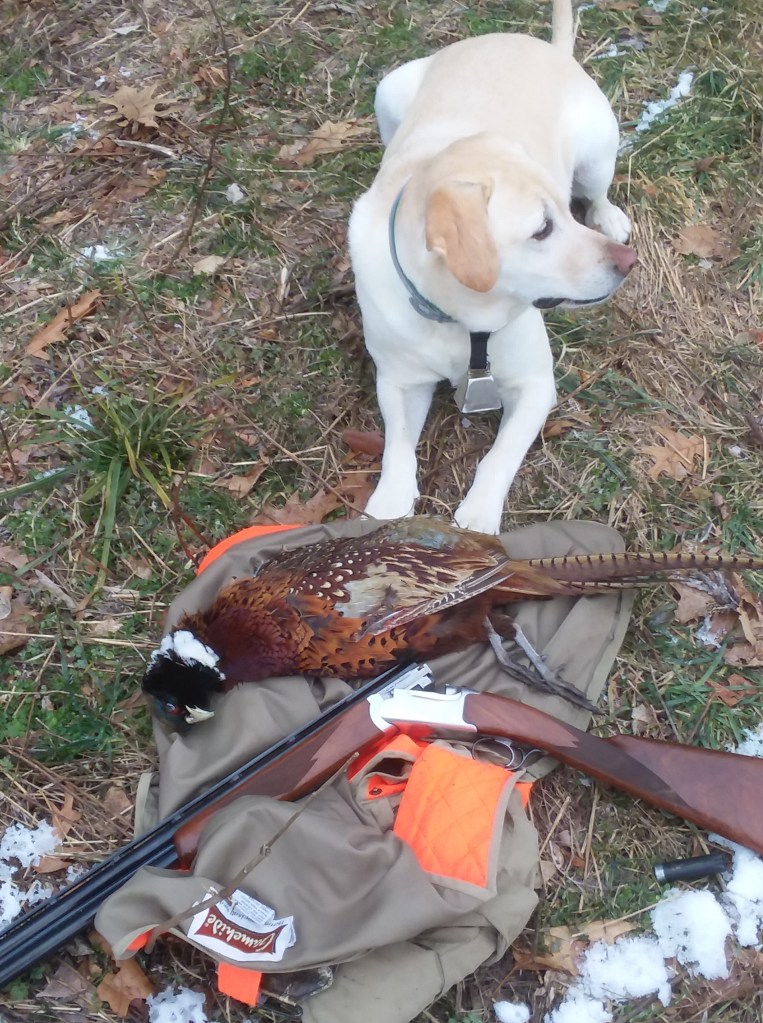
A nice Ringneck Pheasant taken by JA and his dog Finley!
I was planning to begin my grouse hunting season this morning, but those light showers proved to be just enough to dash those plans. If you hunt birds with your feet instead of a bird dog, your chances of flushing a bird or two in range are much better with dry crunchy leaves. You walk slowly through the cover, stopping every ten steps or so and standing still for half a minute. When you move, you take one step with your gun ready, making as much noise as you can. The Ruffed Grouse is a smart, cagey bird and will often sit tight and let a steadily moving gunner walk right on by, flushing behind him or not at all. The stop and hold tactic tends to make them nervous; supposedly they don’t know where you are if they can’t hear you and begin to question whether to fly or not.
I can’t say what the birds are thinking, but I know that the stop and hold style of hunting is the only way I get any flushes which occasionally offer the chance for a shot. Most of the grouse hunters who actually bag a few birds during the season hunt with a good grouse dog. The birds still have the advantage over these hunters, but a good dog at least gives the gunner half a chance. Dogless hunters like myself , more or less just like taking our favorite shotguns for a walk in the autumn woods.
With my grouse opener put off until tomorrow, I have taken that old T&T Hendrickson out of the rod rack. The CFO wearing the number five Bamboo Special fly line is sitting right here beside me, ready to take full advantage of that five one hundredths of an inch of new water flowing downstream.
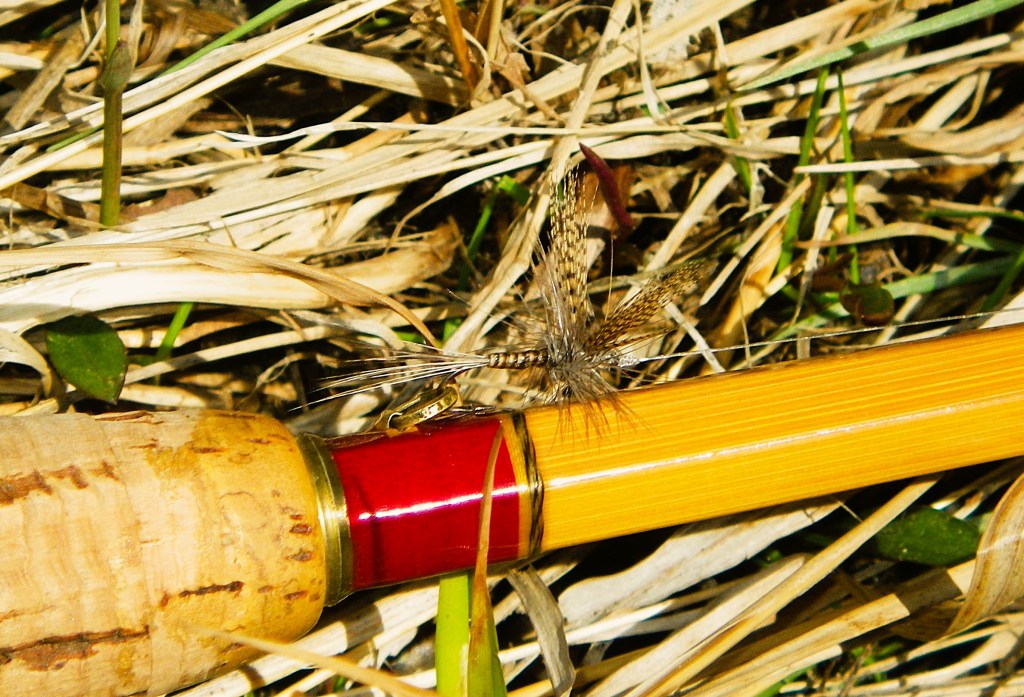
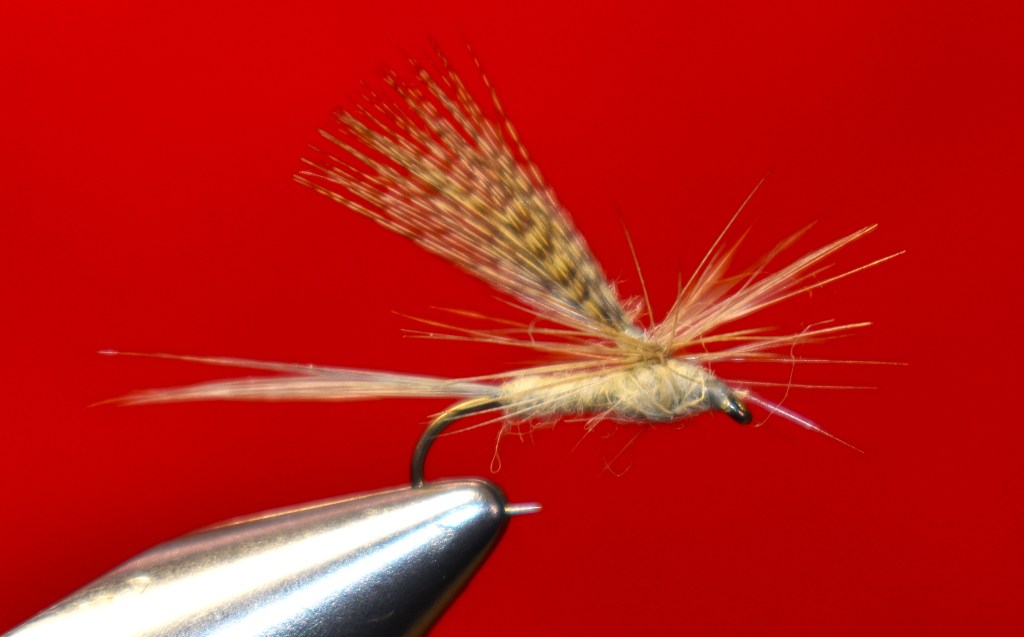
I found a dead October Caddisfly on my porch the other day, guessing it had been attached to my waders which had hung to dry overhead. I tied a couple more of my CDX patterns yesterday just in case. Sadly, that is a fly I cannot tie the accurate matching pattern for due to the lack of the right feathers. To tie them right, I need large, darkish orange CDC puffs, something I simply can no longer find. One of yesterday’s flies has a flourescent orange puff tied over a pair of dark khaki puffs, my best hope to get a decent color effect with daylight shining through the composite wings. Perhaps I will tie one more of those. I have had success with multi-colored CDC wings on various mayfly patterns, Maybe tying another will boost my confidence when I cast that fly at a likely looking hide. The best fly is usually one you can fish with confidence!
My CDX Shadfly has been a great pattern, as has the variations I tie for tan, black & cinnamon caddis and Grannoms.
We are two days into the second week of October, and it is thirty-seven degrees here in Crooked Eddy. “Abundant sunshine” is expected after daybreak, though without the punch it has been packing. Our high temperature is expected to be a cool, breezy fifty-three.
The rivers have a little bit of flow this morning, and no doubt some color; the change is felt even here at my desk.
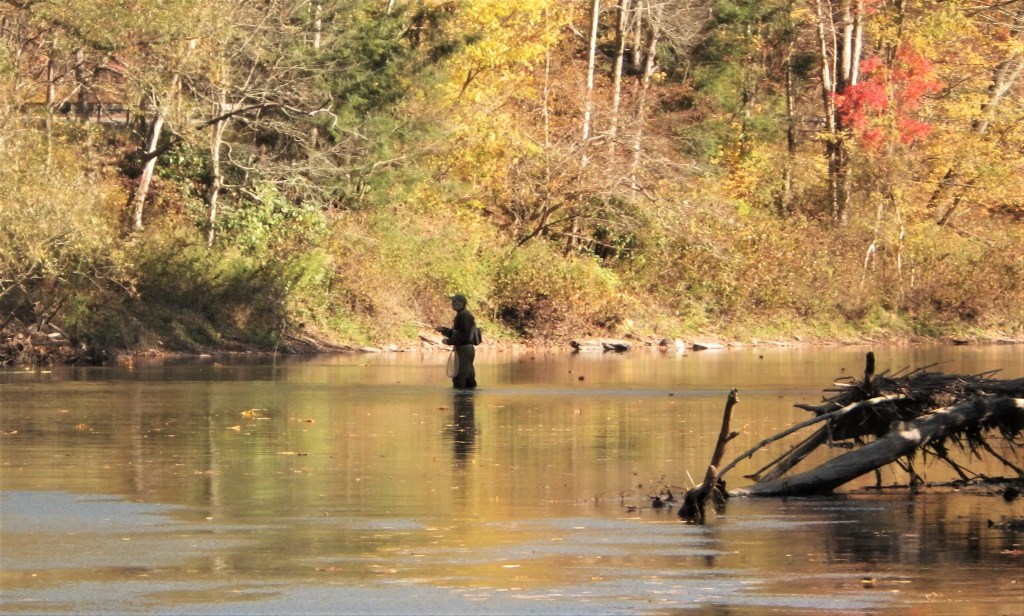
Stalking a subtle rise on the season’s last day.
Tomorrow may bring the first freeze of autumn. The warnings have already been raised. There are no seventy or eighty-degree days in our ten-day forecast this time, no return to summer lethargy. The woods are calling, adding their entreaties to the rivers’ voices.
Ah, the gift of precious rainfall! It makes me want to stalk the rivers, to close my hand around the cork of a classic Leonard rod and cast a dry fly to a subtle rise. I wish to fill my lungs with the first chill air of autumn, to take the full measure of these last days of the season!
I have laid awake for hours overnight, listening to the rain.
I fished in my rain jacket yesterday, ready to welcome that life giving elixir, but though the clouds gathered and the winds rose in gusts announcing the arrival of the front, the day remained dry. Like it the evening brought no relief, and a last look outside before bedtime still revealed a dry landscape.
It was after one in the morning before I awakened to the gentle patter on the rooftop.
We need several days of this, long, gentle soaking rains to replenish the rivers and the aquifers that feed the high springs from which the rivers are born. Once more, we will not get what we need.
Fishing has been, well, about as difficult as it can be. On a few days I have seen no signs of life at all. Bright sun and low water is neither friendly to the trout nor the angler. Others, like yesterday, have proven that trout still swim in these ribbons of dampened gravel that pass for our Catskill rivers.
There was an opportunity, and that gave me some heart as I count the last days of my season.
I carried an old friend, my Thomas & Thomas Hendrickson. It is a favored rod, and one that has not seen too many days upon the rivers this year. It’s casting refreshed my mood, as the line glided gently far across the water at my beck and call.
I saw no more than a handful of insects, perhaps a caddis or two, but I did find a random rise now and then to my delight. The breezes seemed the most likely bearer of the gifts those trout rose to meet, and my first choice of a caddisfly found replacement with a beetle. That fly would be the choice… but only once!
My casts were searching, prospecting for a moving trout after repeated drifts to his rise brought no response, when one brought a hard, nearly immediate take. My surprise was telegraphed through the cork by my hand too quickly, and I touched nothing. No fish would make such a mistake again.
I kept at it for several hours, changing flies and tippets, scanning the wind tossed surface whenever the gusts swirled across the river, but there would be no encore, no second chance. With each burst of wind through the trees I ached for the touch of the first rain droplets, dreaming of a misty rain and tiny olives mayflies drifting on the surface. Dreams can delight, and they can torment.
The rain seems to have stopped now, leaving only the dripping sound from the eaves.
It is half an hour past sunrise on the second day of October, and it is 37 degrees here in Crooked Eddy. It is most certainly autumn, though yesterday’s high temperature well exceeded it’s forecast.
I fished yesterday, carefully and thoroughly along a long reach of river, though my flies found no interested occupants despite the prevalent cover. It has been such a year upon the rivers of my heart.
The Friendship Rod
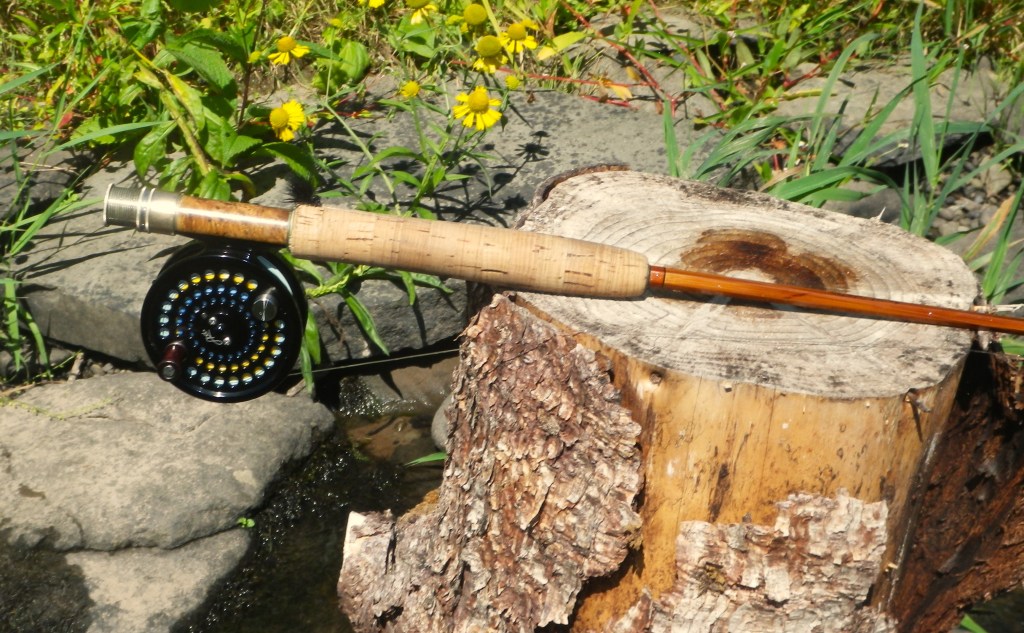
I carried my Friendship Rod, and it cast a long, beautiful line as I prospected the cover from mid-river, despite the breeze which switched compass directions halfway through the afternoon. Far off delicate presentations completely ignored told me a story: the trout were simply not there to be tempted.
I continue to read the same reports: olives; olives and Isonychia! Funny that my eyes see only leaves upon the surface of the river. On my last visit to the big river, the mighty Delaware, I had the reach selected mostly to myself, though my gaze was uninterrupted by the rise of any trout. Another day, another hour? Well, Nature is capricious we all know.
Usually come October I am haunting different waters, visiting after midday to catch a brief rise to sparse little olives or to toss a late terrestrial to a bankside swirl, but there is no crystalline flow through some of my favorite reaches, just sun-bleached cobble. The mind tells the legs to walk farther, but the body feels only the ache of age in those limbs without the spirit’s refreshment.
It is the kind of season where patience may not be rewarded, at least not in the way we seek. The reward may be as subtle as the glint of afternoon light on the river. I know better than to take October for granted. Regardless of the gifts bestowed, or withheld, it is the last heartbeat of the dry fly season.
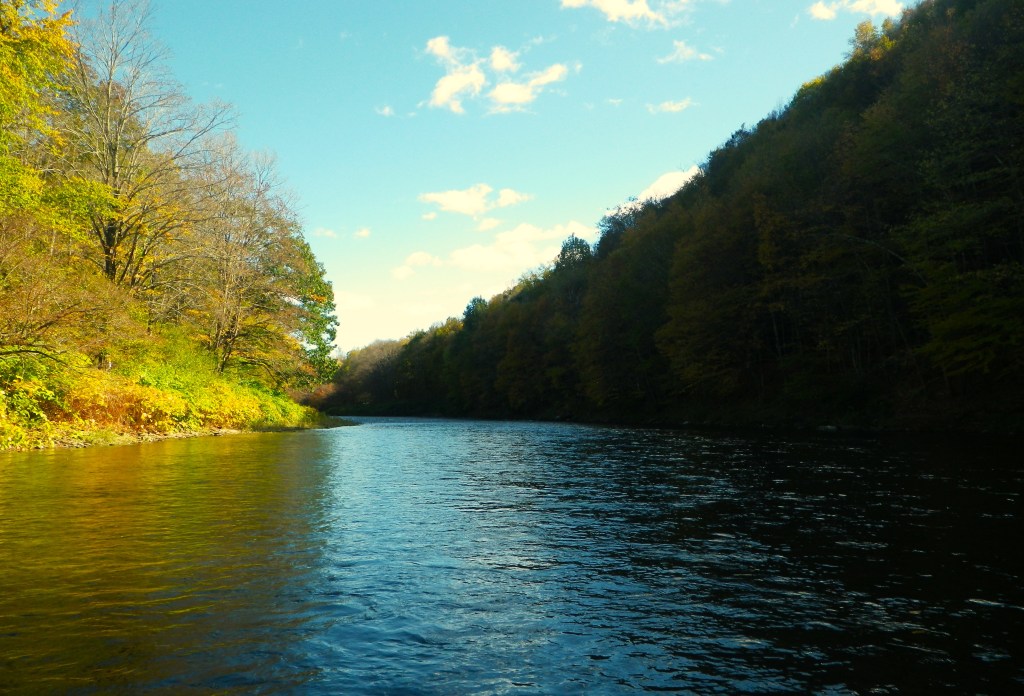
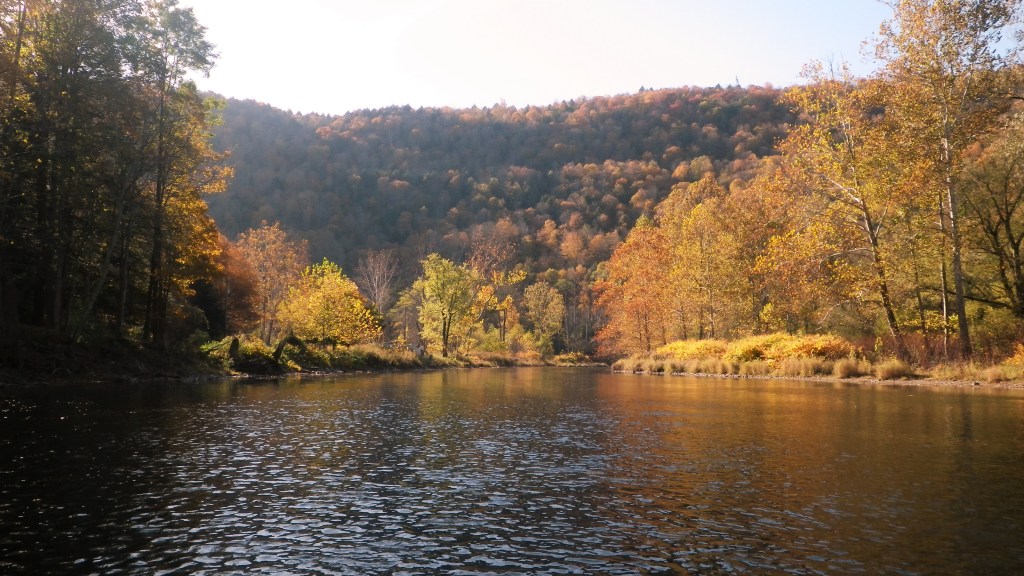
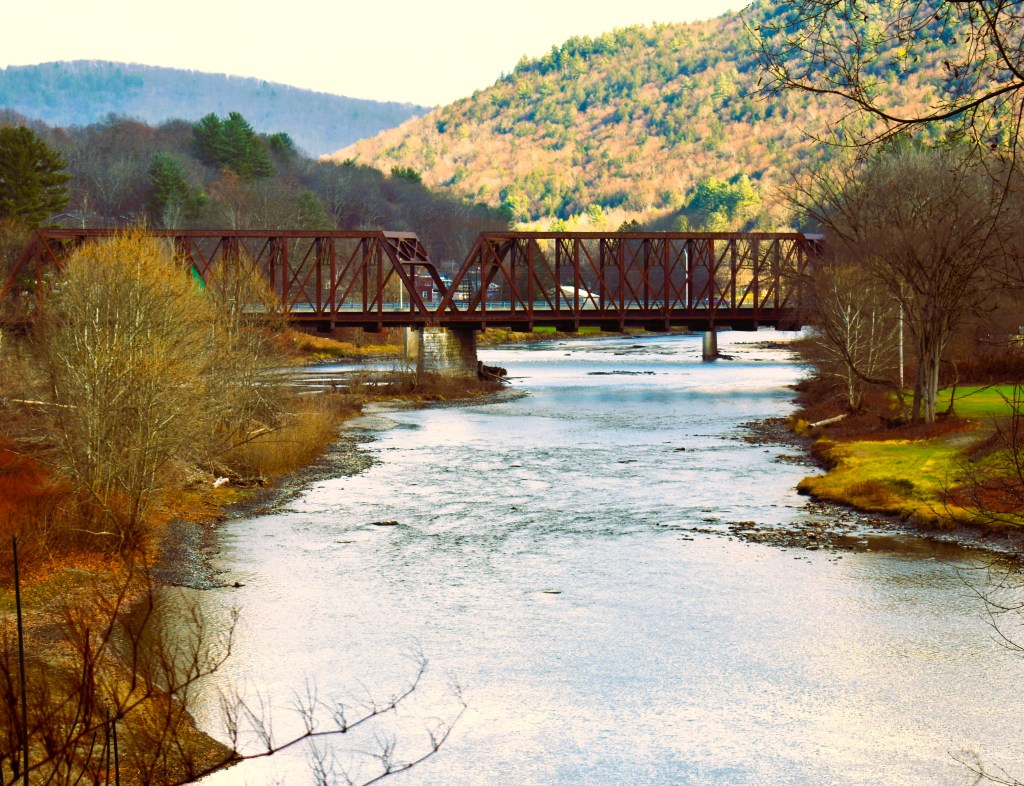
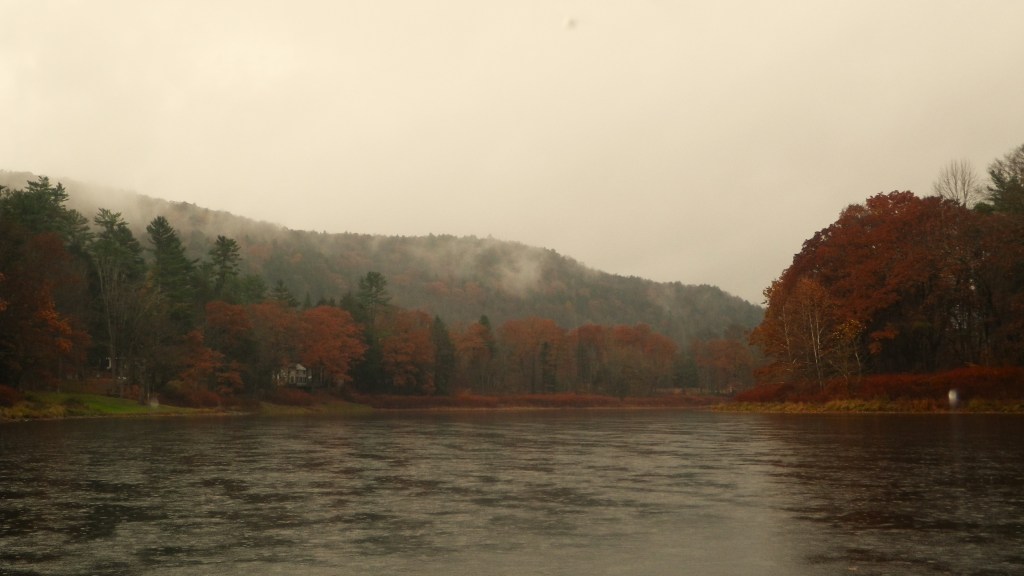
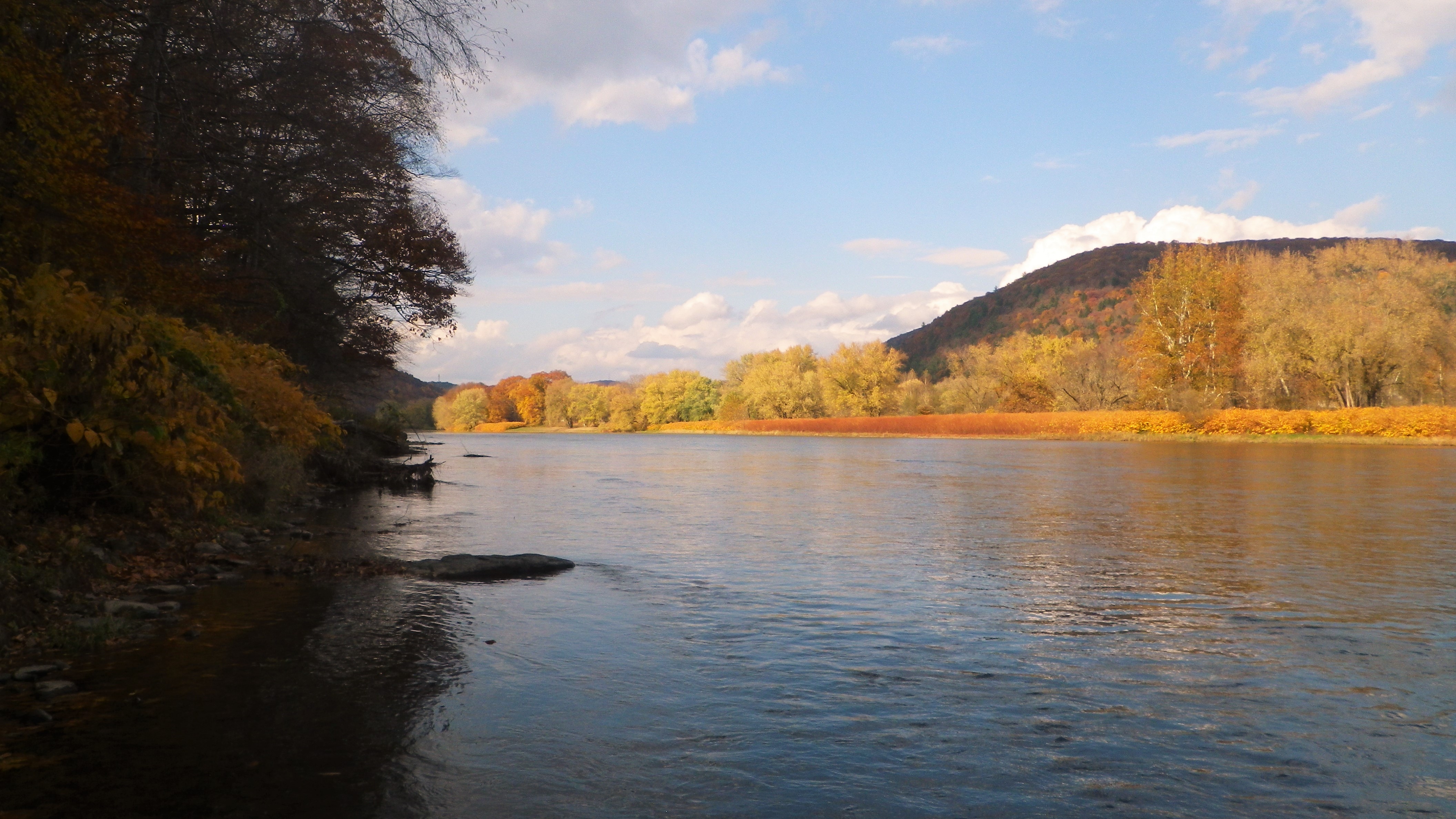
The East Branch Delaware trickles toward Crooked Eddy on November 18th, 2024
Last week’s rain was a blessing, though the relief it provided was short lived. Driving through Chenango County yesterday, an area that received more rain than Hancock’s environs, the landscape looked dry. We expected more autumn color there than we have begun to enjoy here at home and were surprised when we didn’t find it. We did find great music, food and great craft beer at Hidden Springs Brewhouse on a very beautiful early autumn day. This morning, the reality of another Catskill drought has taken center stage.
I am here writing down my thoughts just after sunrise, with foggy skies and a touch of chill in the air. Summer is wholly behind us, though this morning reminds of many spent through August and September. Yes, of course I am thinking of fishing…
October sidles in on Wednesday, and there are thoughts of tracking grouse through these Catskill forests. It looks to be a cool day, flanked by more summerlike temperatures, a welcome to one of the sportsman’s favorite months. How many times have I dreamed of an entire year of Mays and Octobers!
Even though I am far more than well-stocked for any form of trout fishing, I tied more than two dozen dry flies yesterday morning. The Catskill Fly Tyers Guild was contacted several weeks ago by a group hosting the fly fishing equivalent of the Army/Navy Game, the Army/Navy Fly Fishing Championship. The commandants of the two military academies hand select their best fly fishers among their cadres of exceptional cadets to compete on the water it seems, and the organizers look to equip each competitor with a box of hand tied flies. I tied two-dozen, 8 each of three of my own patterns. I like to think those flies will help make a memory for those fine young men committed to serving America.
My vise is idle this morning, as I will soon set about the daily task of selecting the bamboo rod to accompany me today. Perhaps a fly line will require cleaning, or a leader may need a new tippet – the preparation is a major part of the ritual. With a look at once more dwindling river flows, a light touch will be welcomed, and my Menscer 3 weight is calling to me from the rod rack…
That rod battled a two-foot wild brown trout to hand just over a month ago, and I hear it’s eager whispers from the rack behind me. Finding another trout like that in skinny water with the autumn spawning season approaching would be a tall order. Favorite pools have appeared rather barren, and I avoid the river’s riffles as September wanes. Our trout have no chance to ascend spawning tributaries that are nearly dry, so Nature’s call must bring them to mid-river riffles, where anglers must leave them alone.
I watched a recent YouTube video while eating breakfast the other day, with some thoughtless guy catching tiny rainbows in skinny water on the Beaver Kill and whooping it up rattling on about the “nice trout”. He thought himself to be quite the fisherman. It looked to be summer, and in or very close to a protected reach that is closed to angling from July to September. I hope some DEC officer sees that clip and comes knocking on that guy’s door.
Extended droughts are survival time for our trout. We must put their welfare above our own joy for fishing. It is simple really: stay out of the riffles, pay attention to the river bottom where you do wade, and don’t fish for any trout you see crowded together in one location. Trout crowd near spring seeps when they are stressed, not to provide a fishing bonanza for some thoughtless plunderer.
Three years ago, I took my last dry fly trout of the season on a beautiful afternoon in late October. That hen fish rose daintily to a perfectly presented size 18 olive in a glassy pool. When I removed the fly I noted her worn and healed tail, clearly advertising her post-spawn condition. She was in fine shape, strong and gorgeously colored. It was another dry autumn, and she had clearly spawned in a mid-river riffle. Droughts seem to come more often this decade, and I felt that valiant fish was a sign of the times: adapt, survive and flourish!
Nature has finally offered a small gift under cover of a pleasantly rainy day. Are our rivers out of trouble? Sadly no, but at least the trout can take a breath for the time being. Color has begun to gather along the rivers and the Quickway, and at last, I shall return to the river.
My week began with doctors, chores and writing, and most anything besides fishing, the balance of it spent praying for rain that did not come, crying for the state of the rivers, and finally thanking Mother Nature for that small gift I spoke of. Today I will carry an old Leonard and a box of dry flies to see what she has wrought.
Thus begins the last race of the dry fly season, the race that might end at any moment. Early autumn is quite beautiful in these Catskill Mountains, but it bows to winter at the slightest provocation.
I still have hope for a grand finale, and a wet and wholly replenishing winter; that the mayflies absent this season may reappear for the next, and the hungry, worried trout find abundance and grace.
I tied a few flies this morning, not that I needed any, but more to pass the morning hours in my own way, to keep my own traditions. The summer vest remains well stocked with most anything I might find upon bright water at this time. The sun can be expected come afternoon, but the day seems perfect for a flannel shirt.
The old Hardy wears a freshly cleaned double taper, it’s leader bearing a good tippet, and needs only to be carried to the car. It is a comfortable fit for the old Leonard, both of them more than half a century old, but fit and ready for the rush of a well-hooked brown!
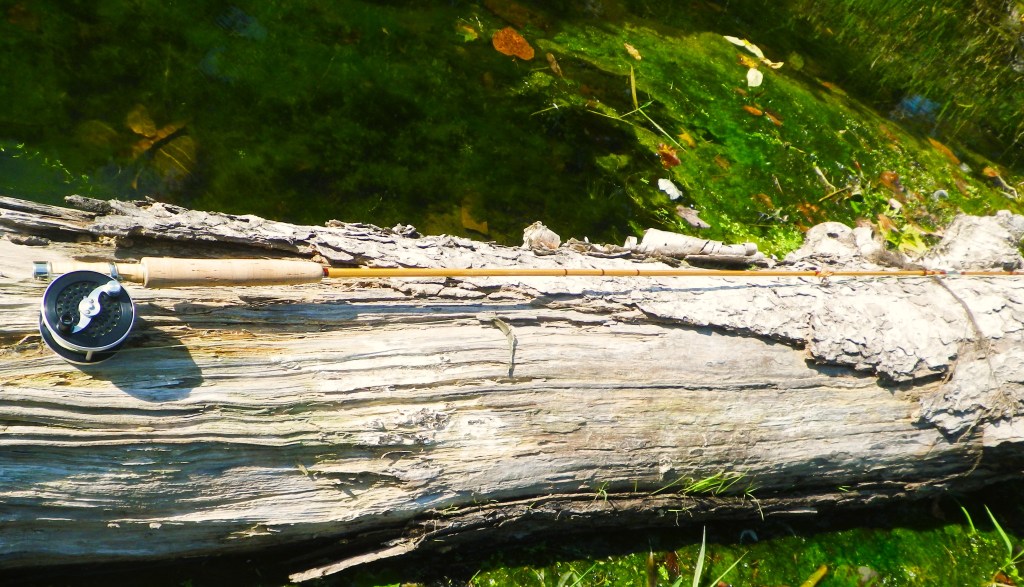
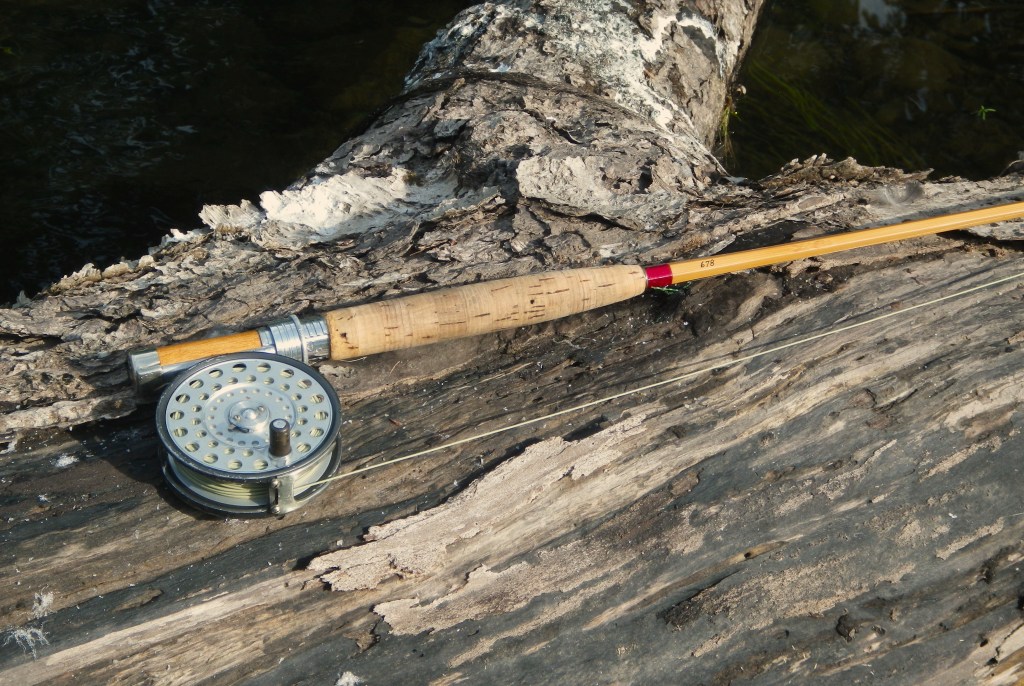
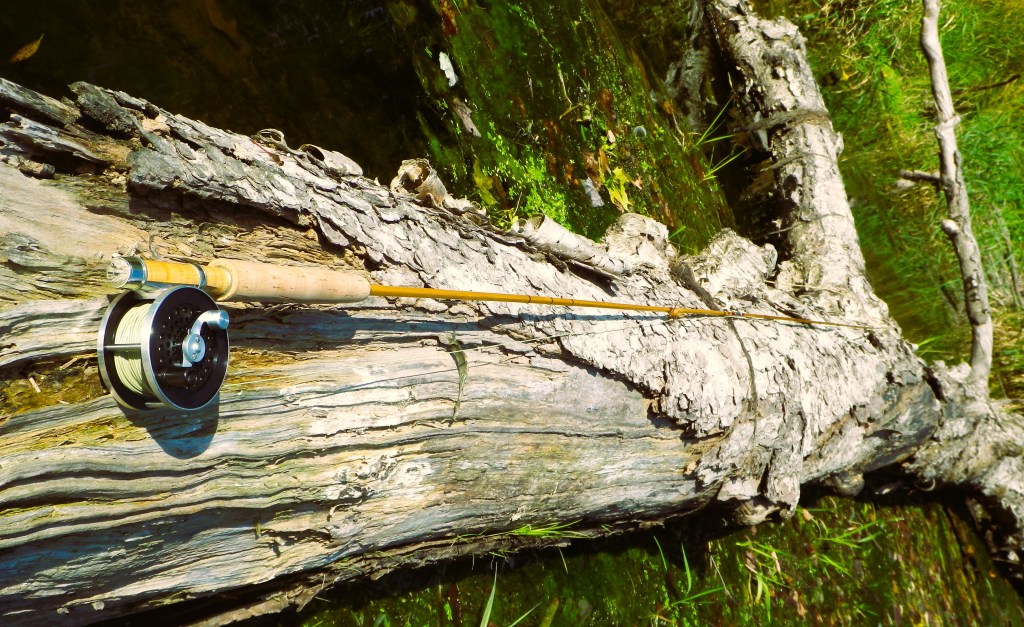
My ‘Friendship Rod’ catches the glow of morning light on it’s first day on bright water
I made a few very good friends decades ago in my little Cumberland Valley, Pennsylvania fly shop, and two of them have become intertwined in the legacy of a very special bamboo fly rod.
Meeting Tom Smithwick came as a result of a guide trip, hosting an angler who fished one of Tom’s quadrate bamboo fly rods during our day on Falling Spring Branch. Tom would eventually find his way into my shop himself, leaving an amazing one-piece bamboo rod behind. Years later, Tom moved to nearby Shippensburg, PA when he retired, and I got to spend some time with him and cast many of the rods he made over a number of years. I got in the habit of calling Tom The Taper Wizard, being highly impressed with the casting qualities of the rods he made.
John Apgar visited Scotland, Pennsylvania while working on some hi-tech hardware for the military. When he was told about the new fly shop in the village, he made it a point to stop in. The natural comradery between anglers and fly tyers took hold, and we became fast friends, fishing together during the evenings as often as we could. When John’s job location changed, we lost touch, but rekindled our friendship when I retired and moved to the Catskills. We both had developed an interest in split bamboo flyrods to the point that I was fishing bamboo most of the time and John had signed up for the class at the Catskill Fly Fishing Center to learn how to make his own.
When John told me he was looking for a taper for an eight-foot four weight rod to build during his second CFFCM class, I thought of Tom. We messaged and talked about it, and Tom sent John a taper he had designed using convex tapering techniques. I had the chance to cast John’s second rod during a fishing apart session on the Beaver Kill during the Covid lockdown. My impression was quite distinct.
We had finished our fishing and traded rods for a bit of casting. I idly pulled some line off the reel and made a cast, finding the rod to be extremely smooth and sweet tempered. Per my habit, I continued pulling some more line out and extending my casts, with the width of my smile increasing steadily. The rod didn’t feel powerful, but it just kept rolling out smooth beautiful tight loops of fly line further and further out into the river. Eventually I looked down at the reel spool and, seeing just three turns of fly line remaining on the arbor, assumed that John had a cutoff fly line on the fairly small reel. When I asked him about it, he told me it was a full-length line. That’s when I realized this smooth four weight was casting some ninety feet of fly line and leader, with basically no effort. Taper Wizard indeed!
During the next few years, John attended two more classes and made two more bamboo fly rods. After the last class, Mike Canazon, his instructor and steward of the Catskill Rodmakers Workshop at CFFCM, was impressed enough to ask John if he would be willing to serve as an assistant instructor during the following season. When Mike tragically passed away in late 2023, he left his recommendation with the Museum Board that John be named his successor.
After Mike’s passing, his best friend and a friend of ours, Tom Mason gave John some of Mike’s rod making tools and a few culms of his select bamboo. John decided to use one of those culms to make two more of the Smithwick taper eight-foot four weight fly rods, one for Tom Mason, and one for me. Mason was touched and thought this special rod should be called The Friendship Rod. John agreed and numbered the rods TSS-001, TSS-002 and TSS-003 to reflect Tom Smithwick’s taper design.
Tom Mason did not get as far as making a complete cast with his Friendship Rod, pronouncing it “perfect” on his initial back cast. My rod was finished and presented to me at the 31st Catskill Rodmakers Gathering, where the four of us spent some time talking about this amazing taper and John’s beautiful execution in making the three rods. Tom Smithwick was very pleased with the name and the way this rod taper had intertwined among our small group of friends. It was fitting that the rods brought all four of us together at the Gathering, as Tom Smithwick has been a part of these events since the beginning, one of only two men with that long association.
Seeing as the Gathering was our occasion for coming together, our Friendship Rods were offered to other friends, rodmakers and Catskill Fly Tyers Guild members to cast. The taper immediately began to build a group of serious fans, and anglers began to ask about making a rod with the Wizard’s miraculous taper. John’s list of expected serial numbers now runs to TSS-014, the numbers to be finalized only upon completion of each rod by it’s maker.
The Legacy of The Friendship Rod begins: John Apgar, the maker and yours truly, the writer (standing left to right), Tom Mason and Tom Smithwick (seated left to right). Photographed by Matt Benham at the 31st Catskill Rodmakers Gathering
The hallmarks of character shared by these two men, Tom Smithwick and John Apgar include both an abundance of kindness and a giving nature, and outstanding creativity. The lines cast by the Friendship Rods seem poised to continue to intertwine Smithwick’s special bamboo alchemy through the lives of many more anglers and lovers of the split bamboo fly rod!
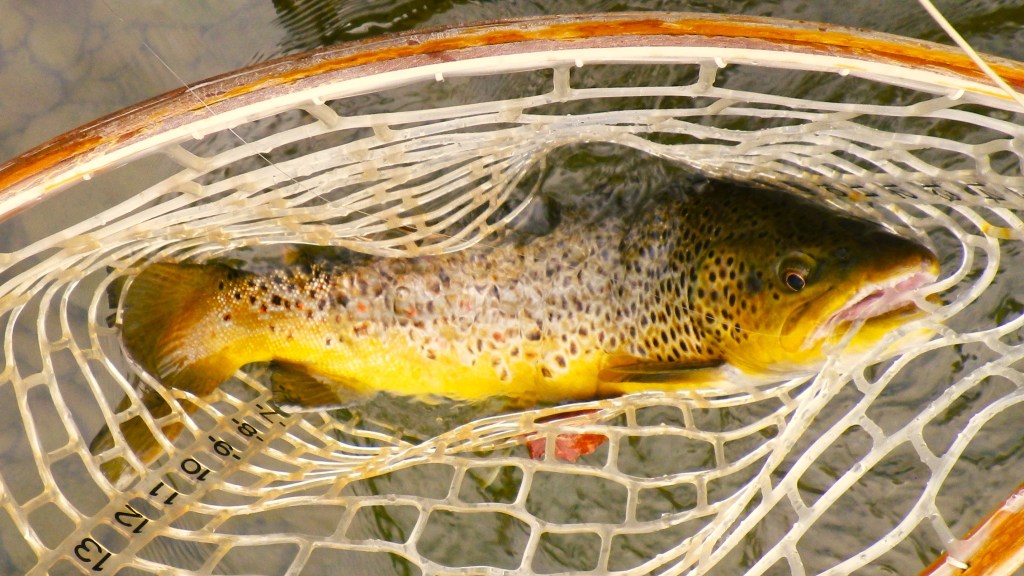
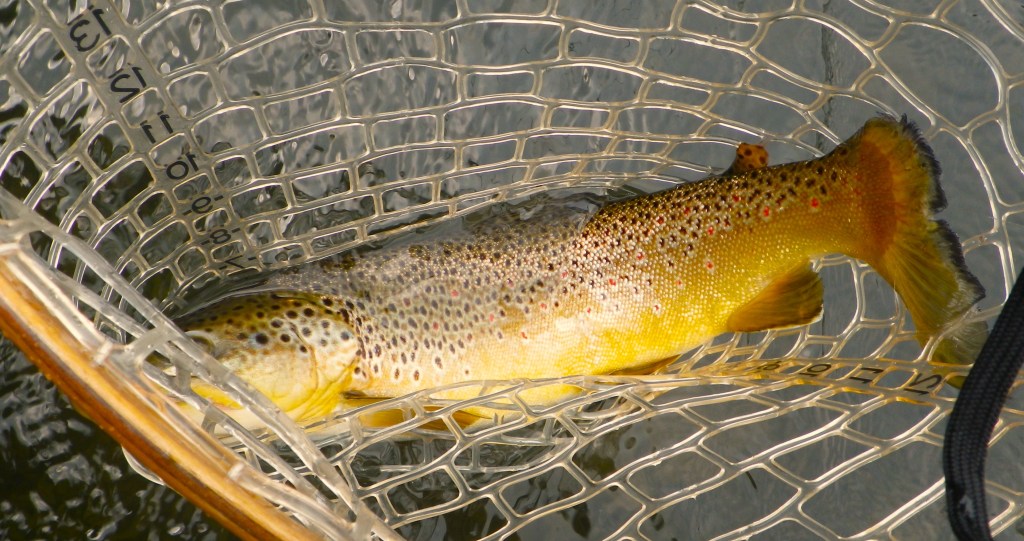
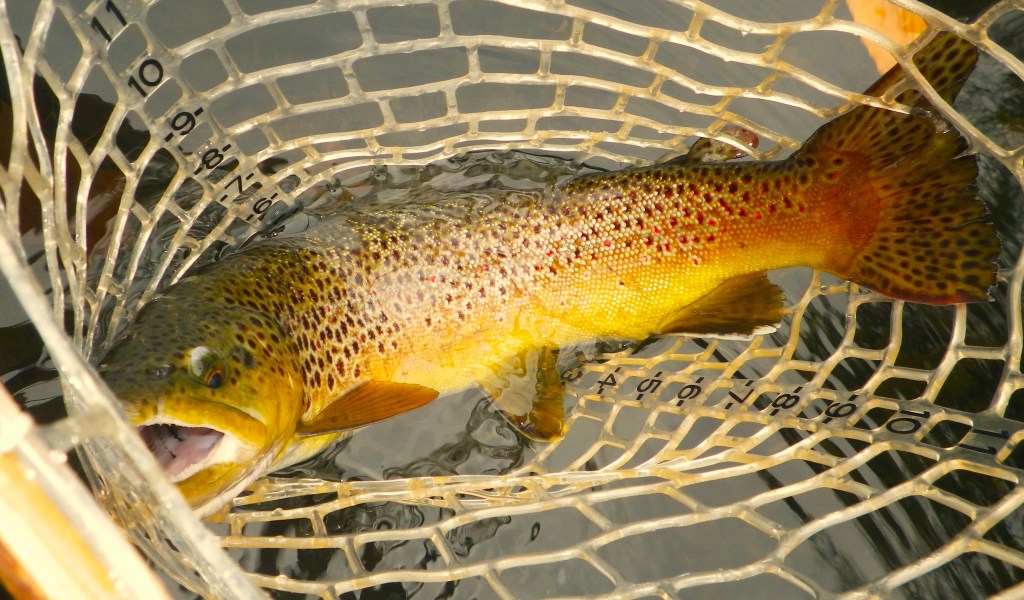
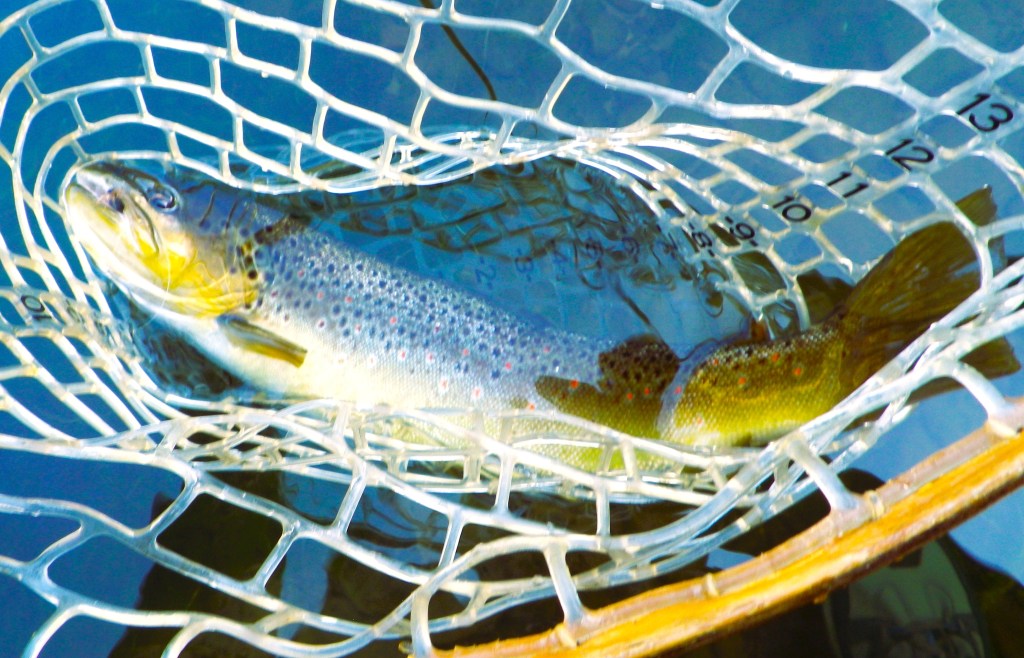
A dark, wild twenty-inch Catskill brown trout – the first fish taken on the author’s Friendship Rod. The magic continues…










 Bright Waters Catskill