I fished the limestone springs of Pennsylvania's Cumberland Valley for a couple of decades, founded Falling Spring Outfitters, guided, tied and oh yes, fell in love with the Catskill Rivers I can now call home.
Hendrickson’s Pool, more than a decade after I first glimpsed its historic environs. I kept coming back…
To the best of my knowledge, it has been sixty years since I first held a bamboo fly rod. My grandfather was the fly fisherman in our family, born in Massachusetts’ Berkshire Hills, he returned when he could to fish the brooks and rivers he grew up on. Pieces of his old, broken bamboo rods I found in his garage early on became my playthings. When I was five, he strung up the rod he fished with and placed it in my hand, showing me how to wave it back and forth to cast the line. That brief moment left an impression.
In 1990 we moved from Southern Maryland to Ellicott City, an historic old town west of Baltimore, and I found myself at last close to trout streams. The Patapsco River, Morgan Run and the Gunpowder Falls drew me to their bright waters, where I fished for trout with an ultralight spinning rod. It was a beautiful experience, something I had longed for since boyhood, but there was something missing.
On the Gunpowder I chanced upon a fly fisherman, and there before me was that old rhythm. As I watched the line roll back and forth in the air, then thrilled as the rod arched with a splashing trout, I understood my path. When next I visited the stream, I carried an eight-foot fly rod. I learned some from reading, and watching Scientific Anglers’ video series that was broadcast on our cable TV, but most of all I learned from time on the water. My fly rod took me further afield as I discovered the limestone country of the Cumberland Valley and the glorious Catskill Mountains.
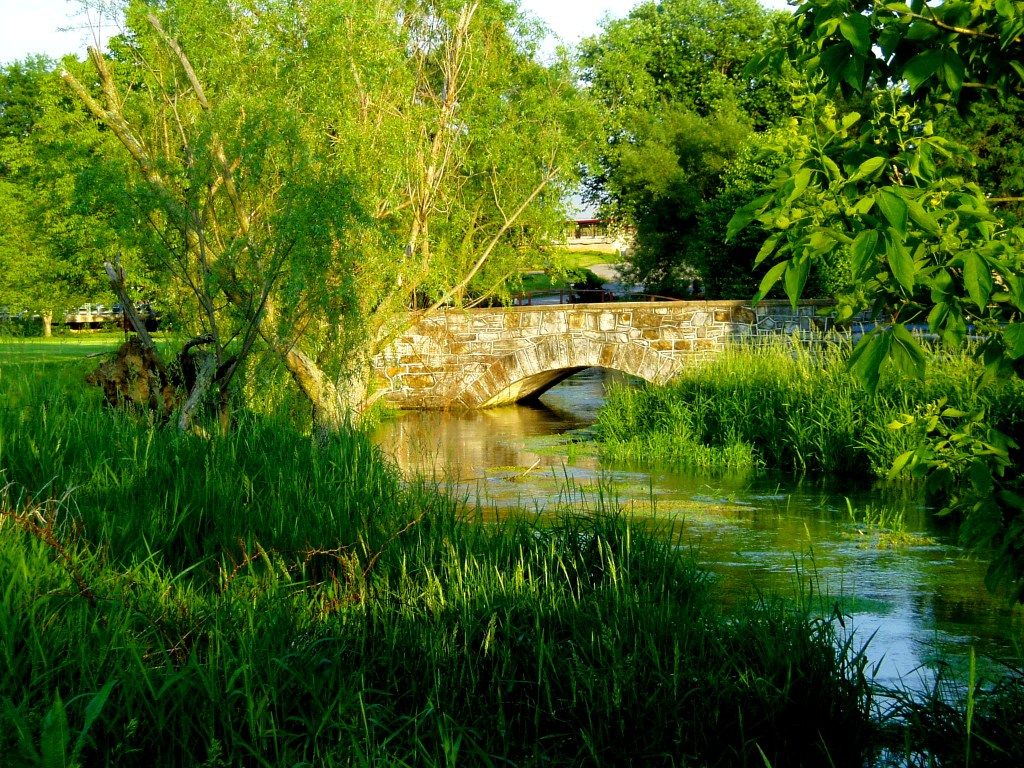
The last stone arch bridge crossing the Falling Spring Branch in Chambersburg, PA, captured on a June evening with sunlight dancing upon the water.
Seemingly before I knew it, I found myself thirty years downstream, living in those same Catskill Mountains and taking my soul’s sustenance from the bright waters which rush and glide from their summits. A bamboo fly rod simply belongs in my hand now, a part of me as inseparable as the hand itself.
Life is measured in time, but for me the value of life may be measured in river miles. The years twist and turn, following the meanders of the flow. It is a continuous journey, for even though I may tread the banks by trails my feet have grown accustomed to, no river remains the same; it is new each moment of each and every day, vibrant and magical.
Looking back there has always been wonder in my time along rivers. Much that I struggled to learn has been folded into my mind and my heart now, thirty years of experiences, trials and errors, victories and defeats. Though I am counted an old hand at this fly fishing game, all of that wonder remains. In the quiet moments of solitude, working a trout rising to something I cannot see, the magic and mystery of it all tantalizes my imagination. Those of us touched by waters live for that moment!
Taking my river walk just now my thoughts were all of fishing. With flurries in the air and the daily temperatures hovering near freezing it seems like the bowels of winter, and that taxes my spirit of the endurance required to navigate five fishless months.
The river seemed dark and brooding, though the water has cleared from past rainfall. With no sun to illuminate it’s bottom, there is no hint of the life within. The Delaware tailwaters continue to carry high flows, and I wonder if the City will be generous throughout the long months of winter. Hurricane season ends today, and it would seem reasonable now to reduce the dam releases and draw down the reservoirs gradually, to maintain a steady flow sufficient to allow the river life to flourish. Some fellow veterans of the Catskill rivers are looking to this watershed year to fulfill the promise of a wonderful season in 2022. May it be so!
With the feel of winter in the air, my thoughts are drawn to spring. I should take advantage of this time and begin the chores of winter: polishing rods, oiling reels, and sorting fly boxes so I might chart the course of the heavy burst of fly tying that will soothe me through the long absence from bright water.
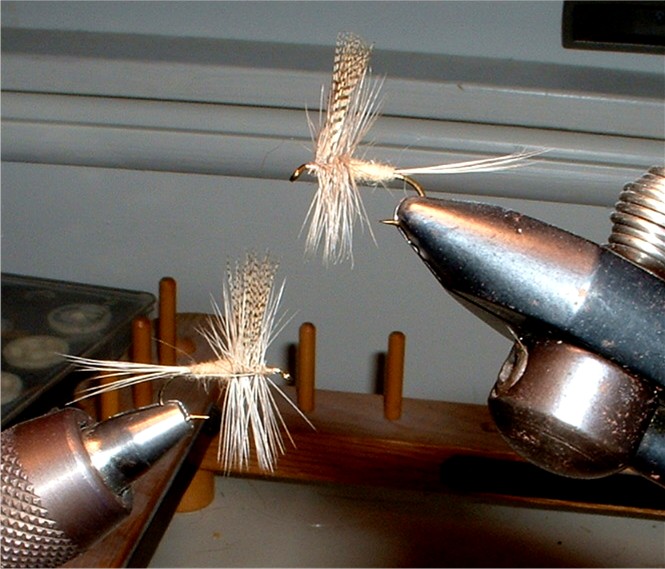
My 100-Year Dun, tied for the Quill Gordon, awaits that first hatchof springtime. I’ll tie more of them, in fourteens and sixteens before those chilly, blustery afternoons in April cause my pulse to quicken.
Looking back at the season just completed stirs the excitement I always feel when thinking of the Hendrickson hatch. It was truly the hatch of 2021 along the rivers of my heart and I dare to hope for another thrilling display when the April sunshine warms the rivers once again. There are many patterns I experimented with that proved essential this year, and I must ensure there are plenty snugged into my boxes for the season ahead.
Soon I must visit my friend Dennis and bring a rod or two in need of his talents, that they may be ready for the spring campaign. Wear and tear happens, even with the most cherished bamboo, and small things must be attended to lest they become more significant.
I’ve given up returning a certain pair of leaking waders, since the original pair and two replacements proved insufficient to keep me dry for a single season. Luckily there is a pair purchased last winter I can rely upon, and another passing a decade of use that still manages to keep the river on the outside.
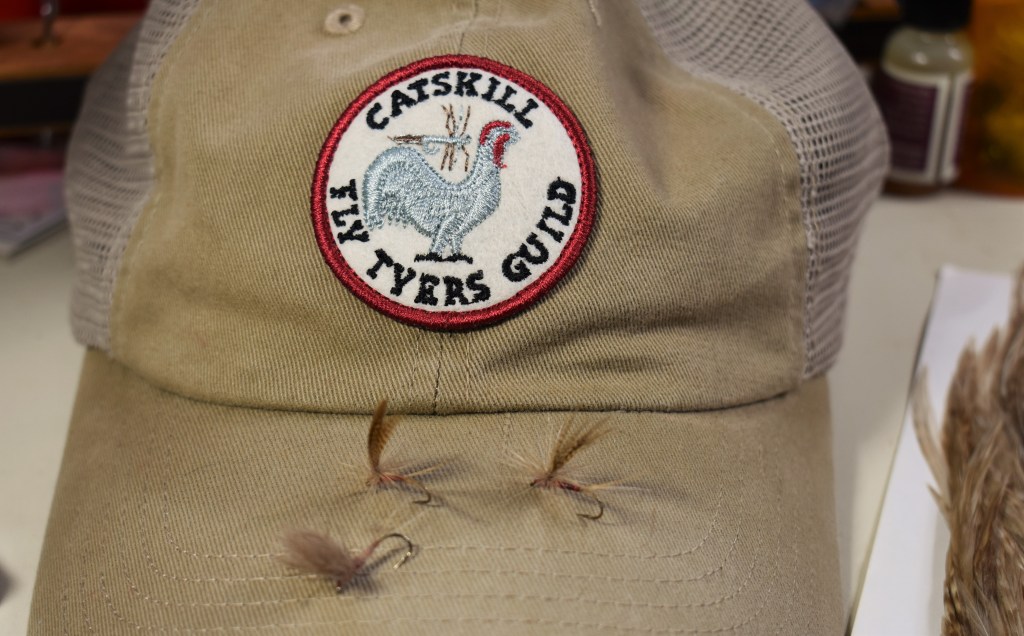
I’m hoping that the monthly meetings will continue for the Fly Tyers Guild, as they provide a touch of socializing as we share ideas for fish catching flies. I appreciate these little gatherings, as I no longer attend the winter fishing shows.
I have already begun my winter reading, thankful that I have added a handful of volumes to my collection. They will provide some new thoughts and remembrances on the days I am not reading one of the classics again.
Beyond cleaning my reels, I know there is an empty spool for one of my old Perfects that must be fitted with backing and a proper line. Acquired as summer waned, it has languished until now. I am thinking it should carry a four weight line, but which one?
There is much to do, and all of it contrived to keep some part of me connected to bright water. The rivers are my sustenance, and I cannot get enough of them without wading amid the gravel and the rocks. Perhaps December will usher in a more seasonable run of days, forties as opposed to thirties would encourage some late autumn outings, and the chance to wade and swing a fly. Ah what I would give just to see the sun!
Dana Lamb’s “Pigpen Pool”on the hallowed Beaverkill River above Roscoe, New York.
It is no secret to those who know me well that I am somewhat of a lost child of the Golden Age, born too late to angle the Catskill rivers with the likes of Dana Lamb, Edward R. Hewitt and Sparse Gray Hackle. My shelves of angling books sag a bit from its load, and my favorites of all are the tales of those glorious years between the great wars.
How I would have loved to compare my Thomas rod to the Paynes and Leonards in lively discussions at Keener’s Pool, and offer my own tied flies to those “German Browns” many anglers so heartily disapproved of. Talking patterns over a drink in Harry Darbee’s front room seems a perfect way to spend an evening, once the mayflies have ceased their sky dance o’er the riffles.
Chilly fall and winter days draw me to that bookcase, where I can relax and take a walk back in time.
I began this year’s withdrawal from the dry fly season with my favorite author, the late Dana Lamb. His nine books required a bit of time and searching to acquire, but I relish our time together each autumn. The volumes are not readily available, for they were printed in small editions, though a complete collection is certainly attainable. For those who romanticize the angling of the Golden Age they are manna from heaven. Lamb spoke evocatively of the beauty of the rivers and the countryside, the importance of friendships, and the honor of the simple country people who boarded the visiting anglers and gunners when the Catskills were still wild.
I chanced a morning deer hunt early today with the expectation of a snowfall that failed to appear. When the rain had grown steady and soaked my gloves, I surrendered to the warmth of the car. Driving back along the hallowed private waters of the upper Beaverkill, I could not get Lamb’s words out of my mind, so I spent this afternoon with him as my companion, savoring the last of those nine little volumes.
Though much has changed in this last century, the Catskills are still a haven for natural beauty and wild trout. Skilled fingers still wind silk and wood duck flank, fox fur and cock’s hackles to form classic dry flies like the Hendrickson, the Light Cahill and the March Brown; and a few of us still cast them upon these bright waters with the old cane rods and English reels of the Golden Age.
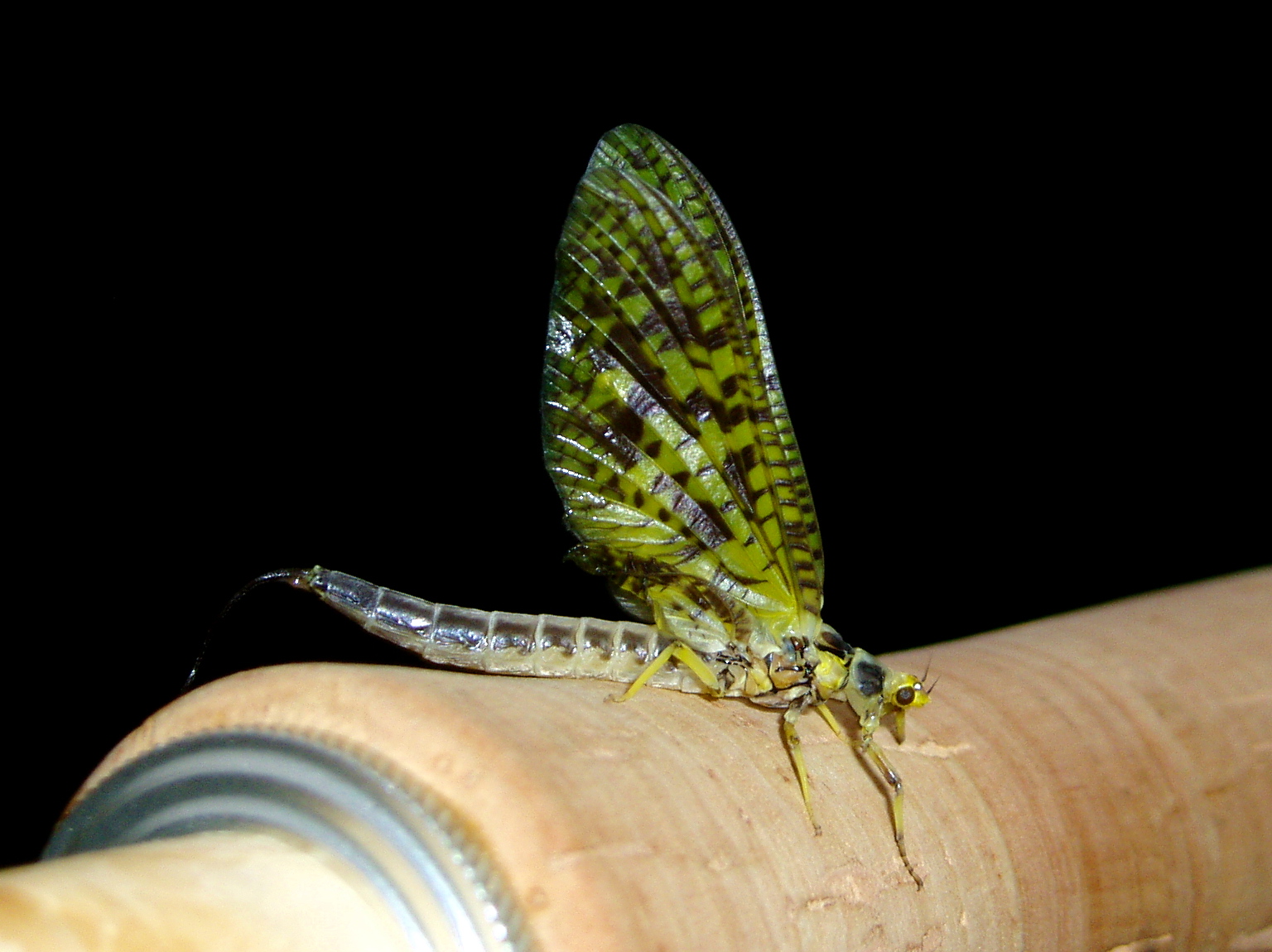
Hendricksons
I sit and ponder the wonderous experiences missed being born a century too late. Those who have gone before tell similar tales though: both tales of great battles won and lost with magnificent trout, and tales of thoughtless greed and the destruction of their angling paradise. No age of man is without struggle.
Though there are vistas no longer visible in these mountains and river valleys, the beauty of the rivers remains, even if sometimes crisscrossed by the bedlam of massive highways. Conservation, in its infancy during the Golden Age, has advanced along with the popularity and accessibility of our hallowed fly-fishing waters. Beauty endures, though solitude must be hunted.
The final words from Dana Lamb’s last book form a vivid prayer for anglers:
“Come sit beside me at your favorite stretch of stream
The sun is off the water and the light wind dies
A hush comes on the valley and the birches are still
The shadows creep across the fields and up the hill
The dancing mayflies suddenly are gone; the daylight fades
The moon comes up; the tiny lanterns of the fire flies appear
Backwater bullfrogs croak as planets take their places in the sky
And toads commence their mournful music in the marsh.
May God forever guard our streams and keep them as they are tonight
For us and for our people still to come until the endless end of time,
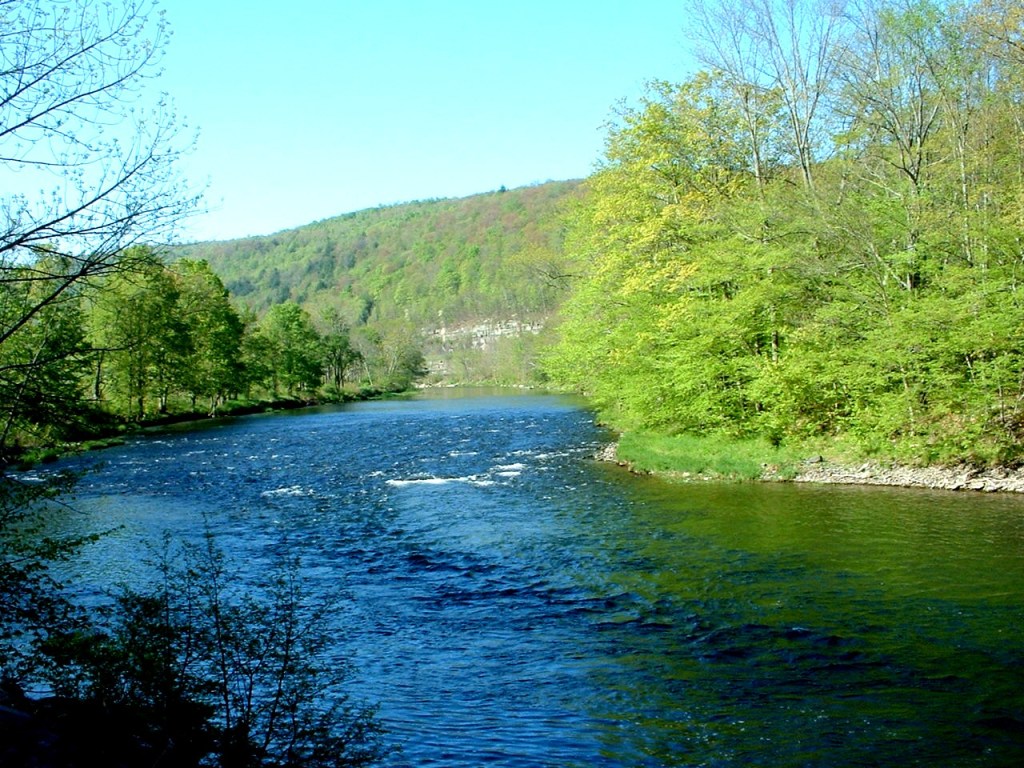
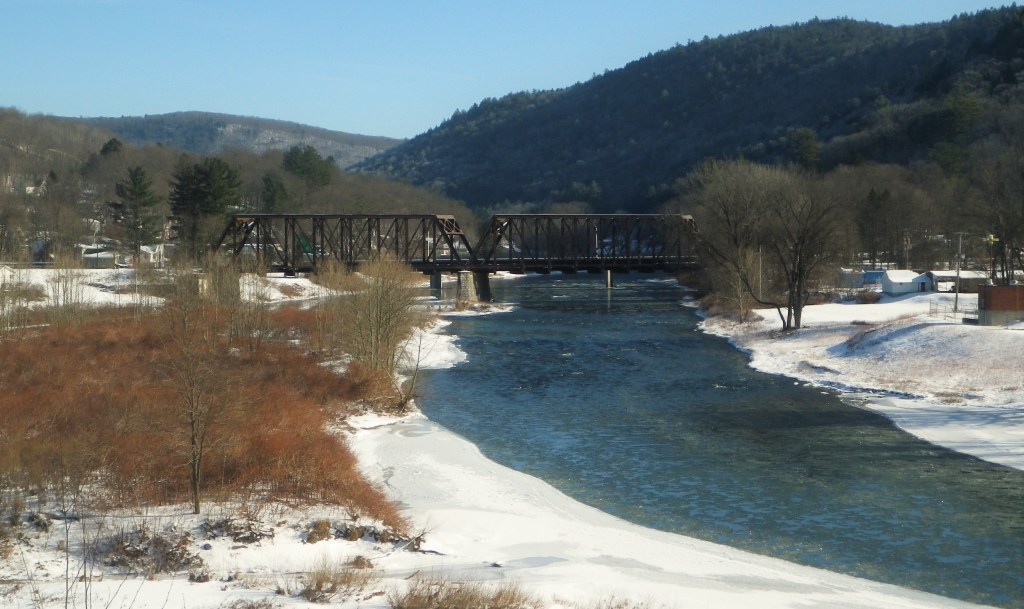
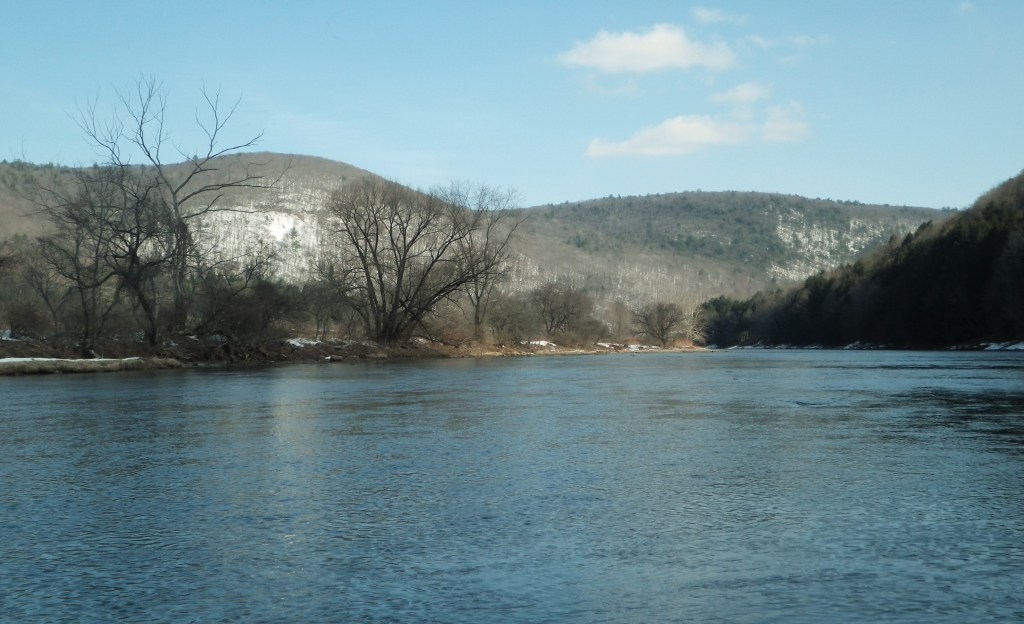
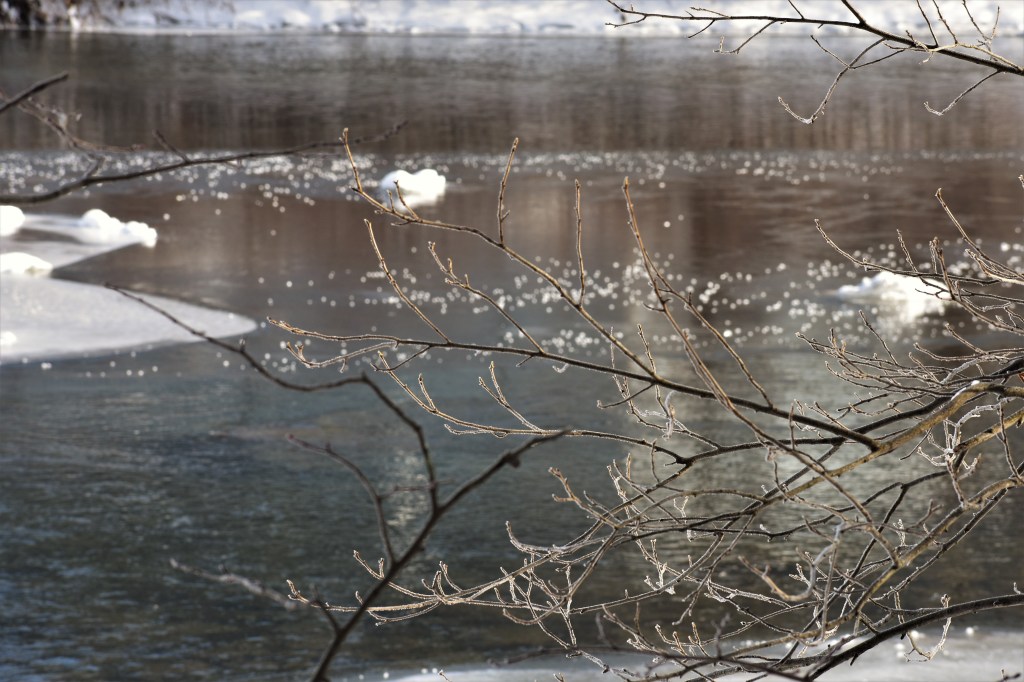
The East Branch bends into Crooked Eddyon a frigid winter’s morn.
The white coverlet on the grass this morning tells the truth; that winter has come to the Catskills once again. No hope remains for a late autumn rush of southern air and sunshine, for rings upon the surface and trout on the rise! Autumn is often brief here, rarely reaching its end in accordance with the calendar. November tends to turn the tide in these mountains.
The wind had a deep bite as I walked to the Post Office this morning, making me nod in agreement with my earlier decision to forego a predawn trip to the deer woods. I am finding my tying desk more comfortable this day with a hot cup of coffee and my thoughts for companions. The thick leather cushions of my chair are more soothing to old bones than the cold metal seat of a tree stand.
Here I can dream the soft dreams of springtime, of Hendricksons and Blue Quills teasing fine trout to the top, all lit with the burnished tones of afternoon sunlight upon flamed bamboo and the soft, pewter patina of century old English reels. There’s a murmur along the bank there where a tiny dun flutters amid the chilled currents. It vanishes with a wink, subtly, though it brings a smile to my face much more than some splashy greeting would. My cast offers a replacement, a tiny dun made of feathers and fur, its hackles hiding the steel within. Will he take?
Those feathery duns are born of this place, more than 125 dozen of them this year alone. They proliferate in winter, though each must wait for spring or summer in its turn. Throughout the season more spin from the vise and find themselves stored in boxes to await their chance to meet the wary browns, the quicksilver flashing of the rainbows.
The hours pass slowly once winter calls, unlike the vanishing golden days upon bright water. Those are far too fleeting, the minutes washed away by the ceaseless current, never to be once more. Memory retains them as best it can; though memory is prone only to glimpses of these days, stills and shorts from the movie of life. For the angler, winter is the arena for memory.
Snow backdropped my first day of fishing for 2021.
They are in the forecast this morning, those snowflakes, a sixty percent chance they say. Here in Crooked Eddy the temperature hovers near freezing before the dawn. New York’s deer season opens tomorrow morning, and Thanksgiving comes around in another week. November is my prime non-fishing season.
Our rivers remained high this week and got another boost from last evening’s rain, and the forecast I just checked predicts Tuesday’s high to reach all of thirty-four degrees. November in these mountains, trying once again to tease us with winter.
Winter is a long proposition here in the Catskills, certainly from the dry fly man’s perspective.
I actually fished quite a lot last November. I had a fever it seemed, a need to fish on through such a crazy year as 2020. I found the solitude I crave, though little in the way of fish. I am no longer comfortable with pounding the bottom out of the rivers, that old weight chucking, high sticking, leader watching drill. The beauty and grace of the dry fly simply captivates my soul, and I no longer have the temperament to make such ugly work out of my fishing. I swing lightly weighted flies a bit in winter, searching for that one active trout, trading productivity for the peace of remaining along bright waters for these five long months.
Until snow and ice rule the mountains, I will wander there and hunt the whitetails and the grouse. The trout can rest until the seasons wane.
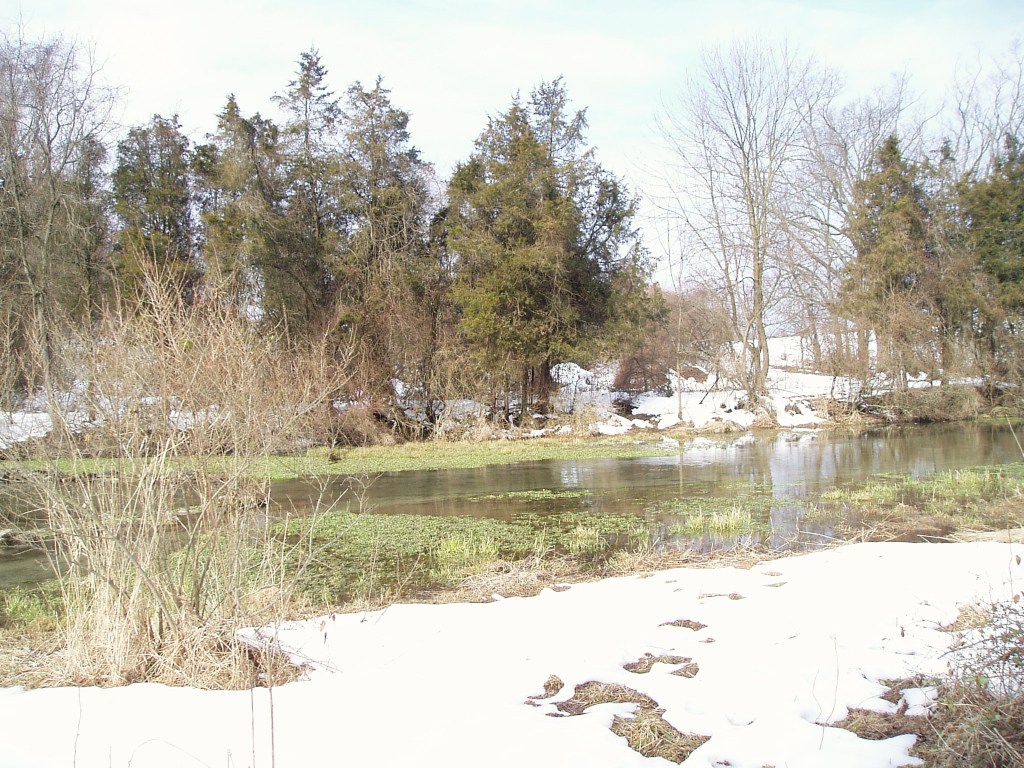
The limestone springs once lured me to bright water throughout the winter.
I whiled away many a cold and snowy winter’s day upon the limestone springs of the Cumberland Valley. The chance for a tiny hatch and a rise of trout seemed always close, and there was the Master’s art of “sculpinating” to fill the long hours with intrigue. There is an intense excitement in teasing leviathan from beneath an undercut bank at one’s feet, or watching same dart from invisibility beneath the waving water weeds as that black fly settles in a sandy pocket in between. Streamer fishing as practiced on the wide Catskill Rivers leaves me cold after so many heart stopping moments with monsters at arm’s length.
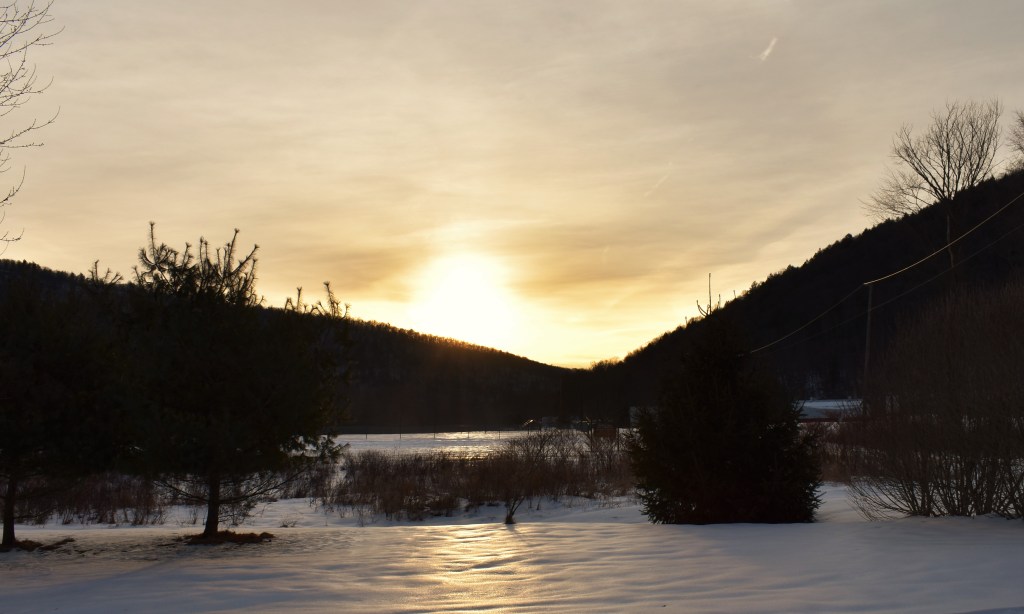
There’s a pale golden tinge above the mountains to the southeast as the day begins. None of those crystalline flakes are wandering with the wind. There are days here when icy squalls come from nowhere amid a clear blue sky, winter bluffing, promising it’s power for another day. I have seen them even in May!
I have spent little time at the vise these past few weeks. The urgency is quelled. I did tie six Hendricksons for April, my 100-Year Duns; a small act of hope. I took my river walk yesterday, just before midday. The sun shone and warmed the air to sixty degrees, and I walked in shirtsleeves. On my way back upstream I saw a single gentle ring out there upon the surface. I stood and watched then, waiting for a glimpse of the beauty I enjoyed for seven months. The moment fleeting, and not repeated, though it did not fail to touch my heart. Evidence of the river’s farewell until springtime?
…there is more than one hundred years of experience in that rod, just a handful, of them mine.
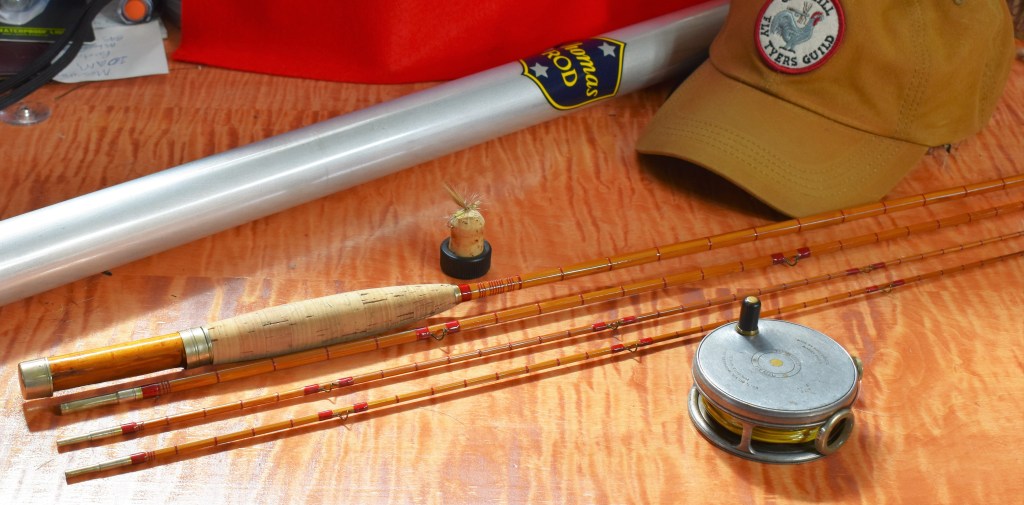
A cold November morning, and I am sitting and thinking about the season just concluded. I slipped the little Thomas from it’s tube and caught the scent of varnish from the ancient bag. I turned it in my hand, admiring the delicate grip, the lovely amber of the vintage cane accented with bright red silks. There’s a touch of sorrow as I return the rod to it’s case; I didn’t fish it this season. I started to a dozen times, but then chose another foil for the day’s looked for skirmishes. That’s the way it goes sometimes with cherished things.
The rod is dear to me, foremost because I own it thanks to the kindness of a friend. Its history makes it important as well, for there is more than one hundred years of experience in that rod, just a handful of them mine. Daydreaming sometimes I can picture old Fred Thomas turning the finished rod in his hands, inspecting it to ensure it’s worth to bear his name, before sending it off to an impatient angler anxious to cast a Thomas rod. I wonder about that angler, and his days with the rod.
Was he local, fishing the wilds of Maine back in 1918 when the rod was new and the brook trout epically large? Was he perhaps a New York angler, headed off for spring here in the Catskills, eager to cast the new Hendrickson dry fly with this lithe yet powerful lance? I’ll never know the details of that history, and thus I dream…
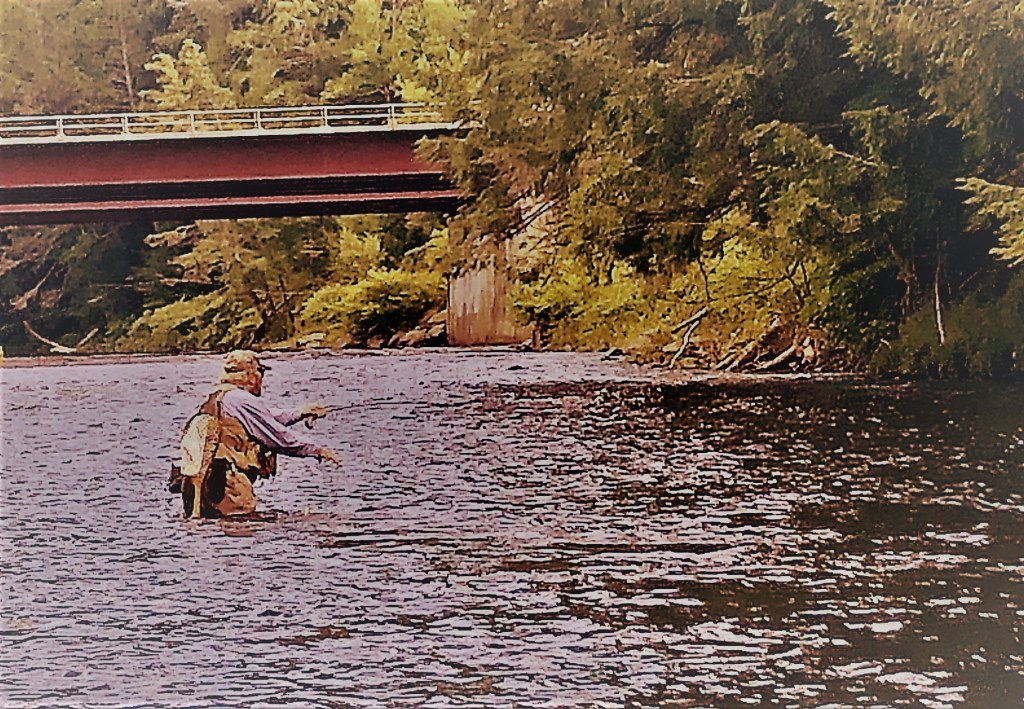
My brief history with the rod began in it’s ninety-ninth year, wading the West Branch Delaware at a favorite haunt. The morning was glowing as I gazed from bright water to the sparkling red silks on amber cane. The old rod was beautiful, restored by my friend at his rod shop beside that same river: immaculate work! I cast to the rise I found and felt the energy of a large brown through each fiber of that century old bamboo; thus my time with the Thomas was charmed from those first moments.
It seemed the Thomas brought good fortune whenever I carried it astream, and each outing led me to cherish it more. Summer on the West Branch can be a heady time, and it was on such a summer afternoon that the good fortune of the old Dirigo reached a climax. In the motto of the great State of Maine, Dirigo, ” I direct”, refers to the North Star emblazoned upon the State Seal. Indeed the ancient Thomas directed me to that afternoon that lives brightly in this angler’s memory.
The sulfur hatch was slow to begin that day, as anglers gathered close to Noon. We waited, then eased along a favorite bank as the first dimpling rises showed. The wild browns have become their wariest by high summer, schooled by hordes of springtime anglers, many not so delicate with their delivery of fly. This day they proved particularly difficult, sipping irregularly during the early hours of a sparse hatch. I managed a pair as I recall, though the details are lost, my memories rewritten by the events of late afternoon.
The hatch had all but concluded, and most anglers had left the river, including a stalwart that I knew who was fishing nearby. I waited, still searching for some disturbance to the rhythm of the current in the dark places along the bank. As time and hope faltered, I eased ever downstream, hoping perseverance might bring a late flurry of the tiny yellow mayflies, and once again, a rise.
At last I saw the glassy surface sprinkled with a few tiny wings and hope returned. A movement caught my eye, a quick sweep in the current beside the submerged bulk of a fallen tree. Watching intently as that sweep ended out in a clear lane of current, I smiled broadly to see it punctuated by a bulging rise. I sensed my opportunity was brief and quickly stripped more line from my reel. I dared not invest precious time to stalk closer, trusting the charmed rod to deliver the fly seventy-five feet away. The cast unrolled with a timeless smoothness until my wrist kicked gently to shock slack into the leader. The glint of the tiny fly winked at me as it drifted down, until that bulge and dimple intercepted its progress.
I often wonder about the culm of Tonkin bamboo old Fred Thomas chose for that rod, for it celebrated the latter hours of its ninety-ninth season in grand style, bent nearly double while the reel screamed and the perspiration dripped from my furrowed brow. I cannot say how many times that trout bored toward the certain freedom of the downed tree, only that the little Dirigo turned him every time. It seemed hours passed as I struggled to lead him to the net, fearing for the delicate tip of the cherished rod, the gossamer tippet, and the tiny size twenty hook that joined us in battle. Each time I thought him ready he charged off into another run. When I finally managed to lift the meshes with that writhing slab of bronze and gold I was breathless!
I thought of the old stories I had read, joyful accounts of a two pound trout, subdued at last. I expect the Thomas had brought more than a few of those to hand in its century. Perhaps that is why it proved so capable and determined to best the twenty-five inch brownie I lifted in my own sagging net that day.
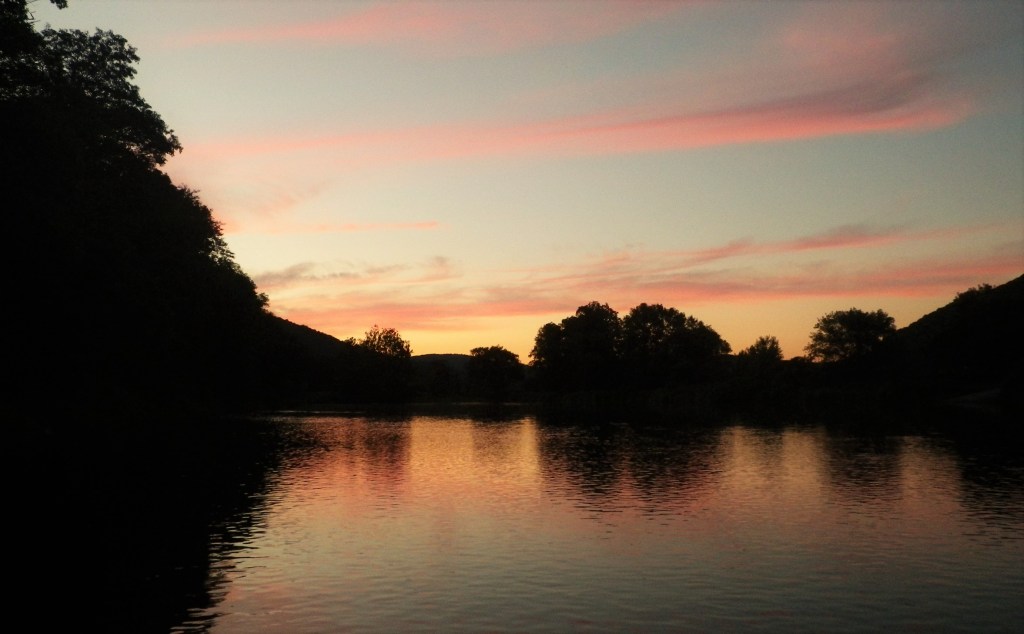
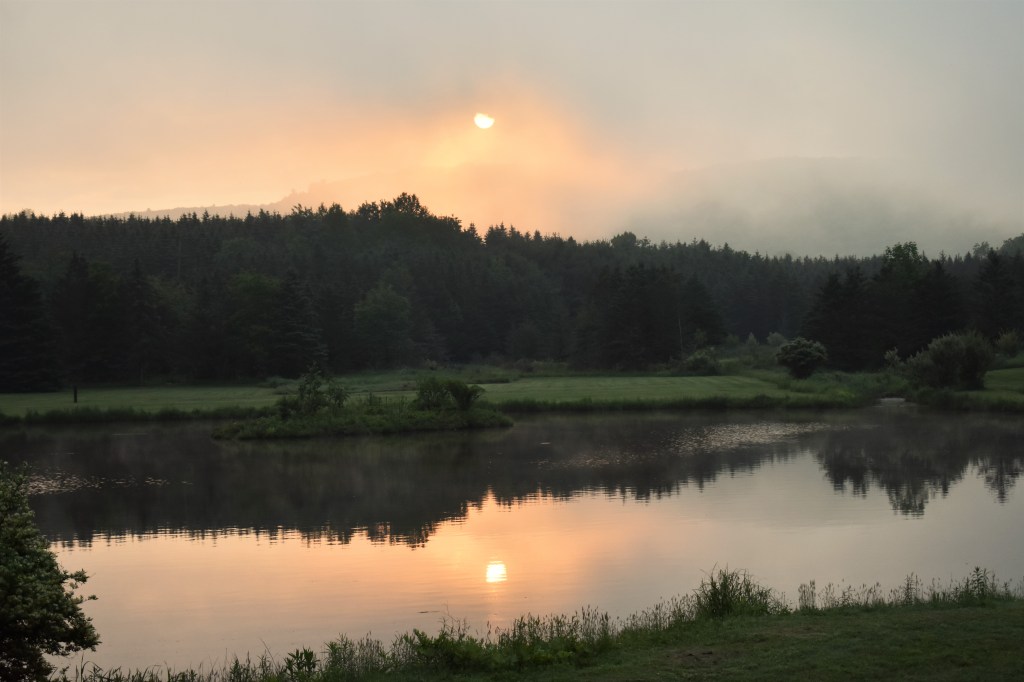
Summer Mist As Evening Nears
Indeed the old rod is cherished, though I do feel a sadness not to have taken it along this season. Old Fred Thomas’s ghost might disapprove, and my friend would tell me to enjoy the rod and fish it. I will. Such talismans as this are meant to be counted on for the magic within.
Enjoying my first cup of coffee this morning I found a rare fly fishing show on the television, watching a few minutes while I sipped myself fully awake. ‘Tis November and the off season for the dry fly angler, and a time that many are talking of and wishing for some dream fishing adventure.
The show I watched idly of course offered it’s own suggestion: Alaska on a budget! A measly $3,000 gets you a week with a bed to sleep in, a kitchen to cook in, and a small boat to fish out of. It doesn’t get you to Alaska, nor feed you, nor provide a guide; strictly a do it yourself adventure. There is an appeal to that idea I admit, though I expect that by the time you figure airfare, food, taxes, etc. you will double that figure. Though I am generally not an angler who fishes with guides, Alaska is the kind of place where a guide would make a great deal of sense, both for improved odds of success and personal safety. Though this particular destination mentioned that guides were available, the cost of the service wasn’t mentioned. My guess would be to triple that starting figure, then add another grand for gratuities and contingencies. Welcome to the ten thousand dollar dream trip category.
I have a few friends who take fishing trips like that, and once or twice one of them has truly had his angling dreams come true; at least for a week. I am not one of those guys who is inclined to gamble a small fortune upon the vagaries of an unknown climate, whimsically variable river conditions, and the devious delights the Red Gods seem to plan for fishermen. Yes, I would love to fish Montana, or Patagonia, and certainly Alaska, but such excursions are not within the realm of possibility for me and, even if they were, I am not inclined to take the big gamble. I plotted a surer course for living my dream.
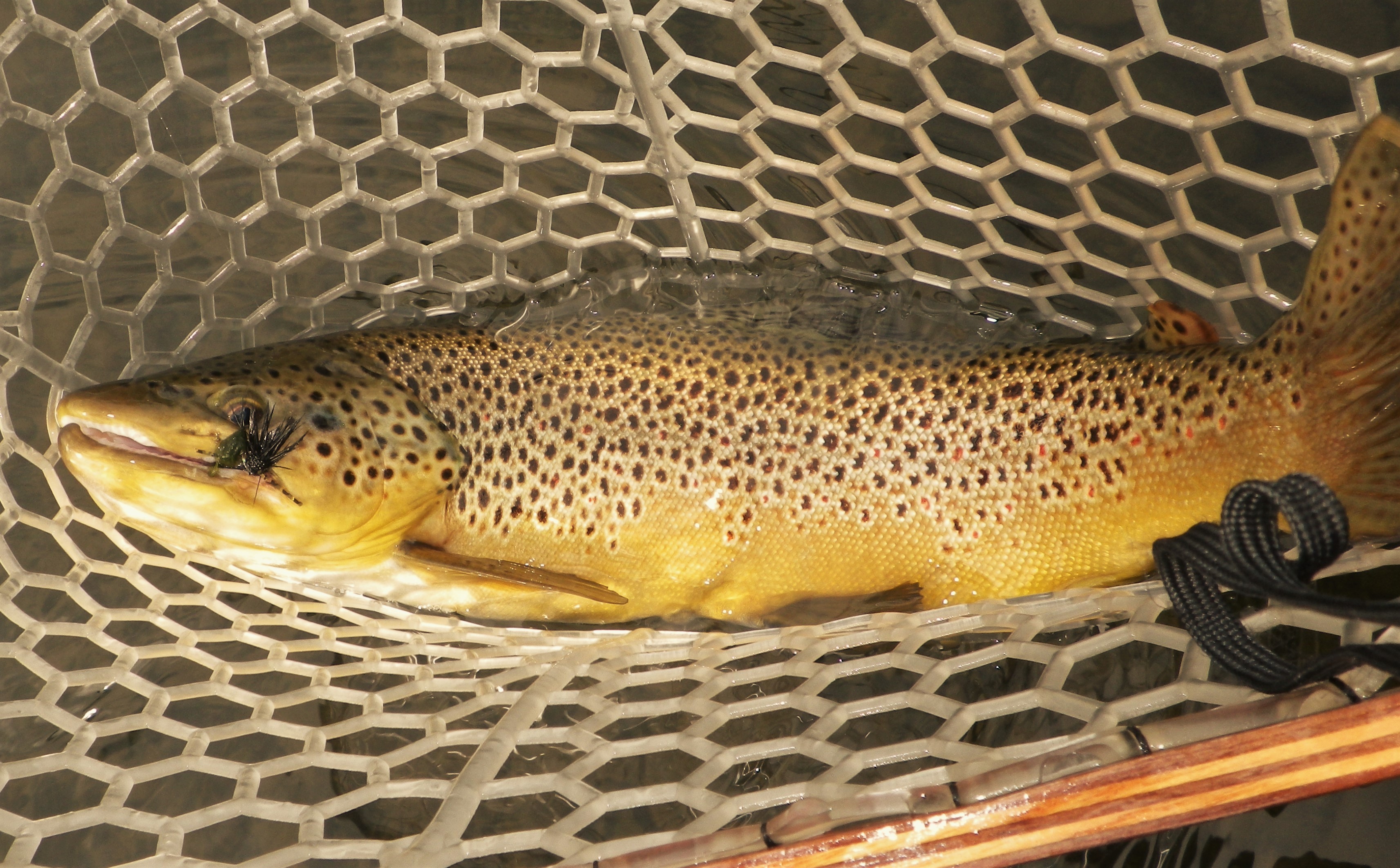
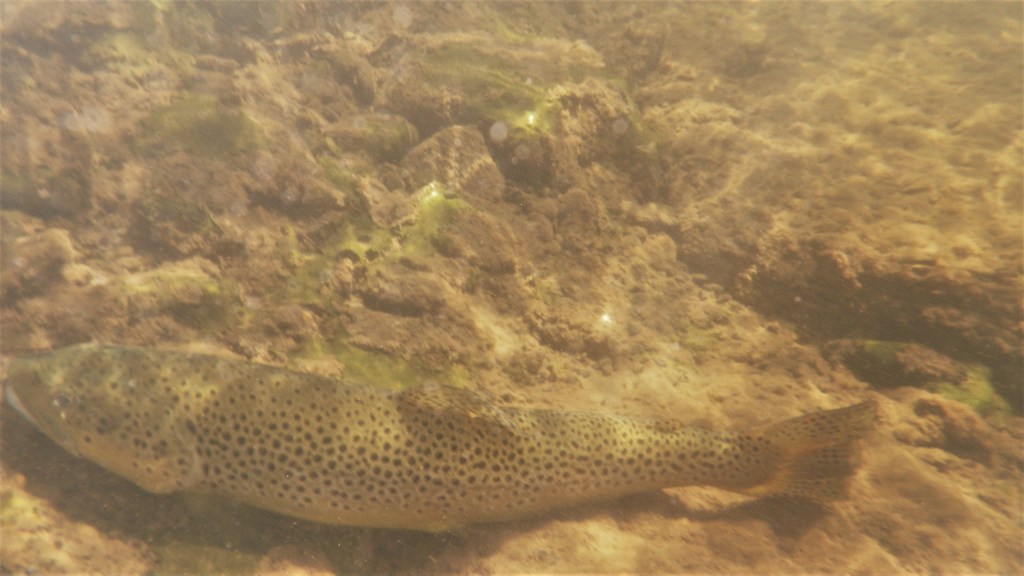
A wild 21″ Catskill brown trout, rests after a perfectly delicious looking snack turned into a battle with arching cane.
When I was toiling in the trenches for more than forty years, I had one angling dream that stayed foremost in my mind. It was my hope to spend one full season angling the Catskill rivers I grew to love through twenty-five years of all too brief visits and gorgeous memories. I really didn’t dare to hope that I might retire in the shadows of these mountains. That too seemed out of reach.
When my health began a downward spiral a decade ago, I fought with everything I had to recover from each blow, just in time it often seemed to stand and take the next one. When life offered a chance to catch my breath, I often thought of my angling dream: a season in the Catskills.
I was lucky enough to weather the storms, and to find a way to survive and actually contemplate retirement near to the rivers of my heart. When it seemed to be nearly in my grasp, I found another battle and scratched out a small victory, emerging here, with a small house close to the rivers that feed my soul. We live simply in these quiet surroundings, and I am blessed to spend my days upon the rivers of my heart. I had dreamed of one season; I have enjoyed three, and hope there are many more upon the horizon.
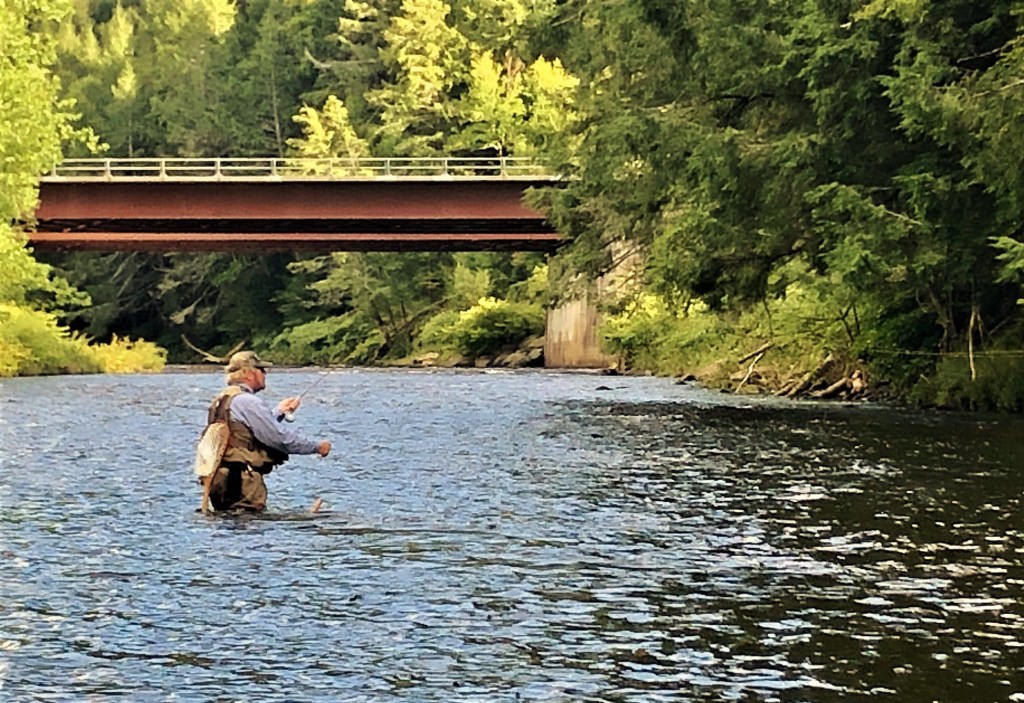
A light bamboo rod, a vintage English reel, and bright water… (Photo courtesy Tom Whittle)
At times I still feel that I live on borrowed time. I do my best to keep the enemies of my health and longevity at bay, but life is a gift that may be taken away at any moment. The past three seasons have been the best of my life. I have been blessed to share time on my rivers with my three best friends, to while away the quiet hours tying hundreds of dozens of dry flies and, best of all, to cast them upon the bright waters with the lithe bamboo rods and vintage reels that I love.
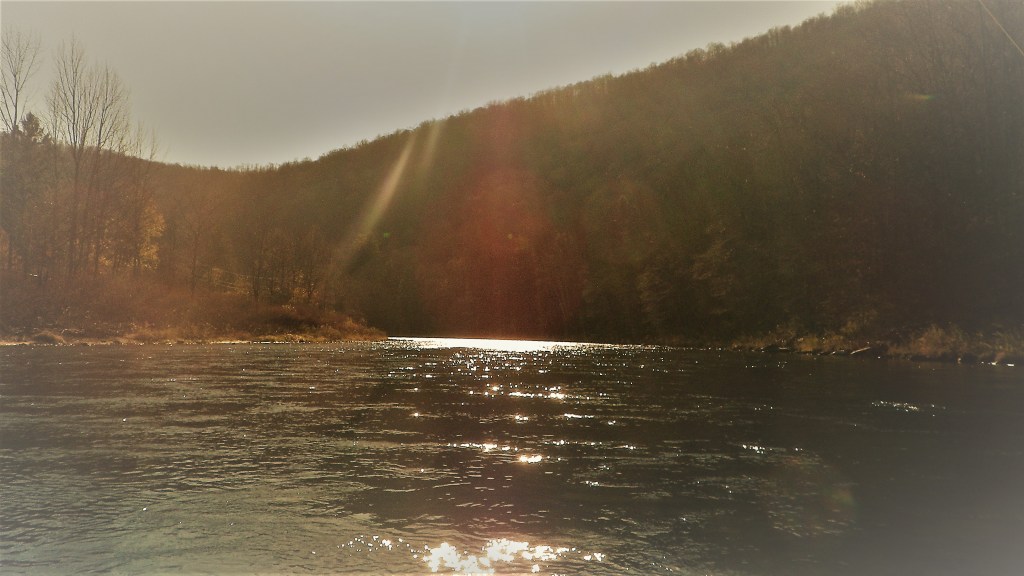
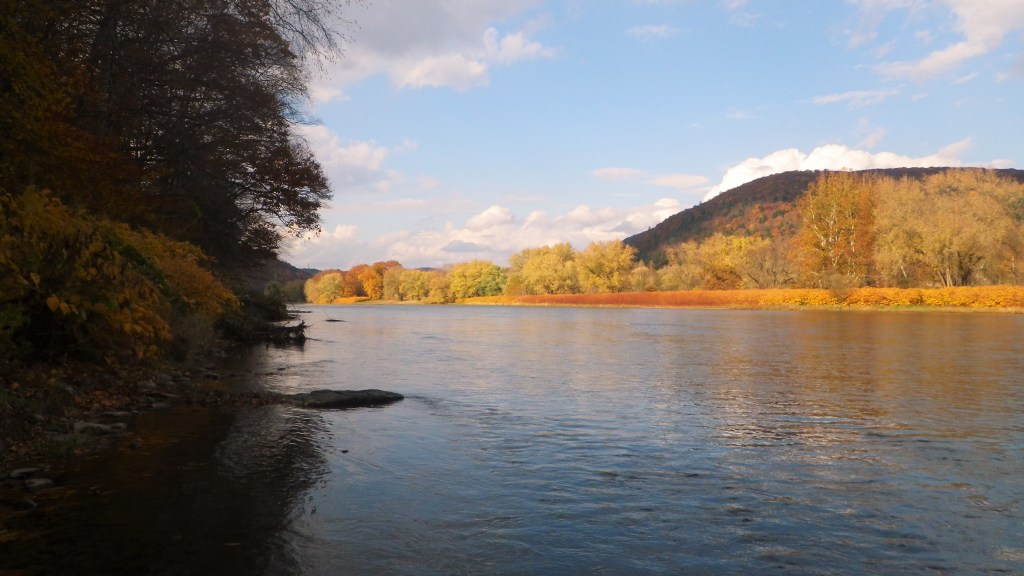
The blush of spring!The bright, warm glow of summer.The soft beauty of evening.The golden russet light of autumn.The rivers’ rebirth in winter.
Moments in time define the seasons of the rivers of my heart. Each day offers promise: some, simple moments of quiet contemplation; others the thrill of arching rods and singing reels, or the heart stopping explosion of a grouse suddenly aloft, weaving effortlessly through the branches!
If I could crystallize one moment and suspend it in time, it might well be the five sequential leaps and startling run of a wild Delaware rainbow on a bright June morning last spring. My seventy year old Granger bamboo rod arched deeply, and the reel literally screamed with the energy of that great fish as it rocketed skyward over and over, and then away. Could that moment be etched more indelibly in my mind had it occurred in Patagonia or Alaska? No. It lives for me as I return to that place often each season. I stand and relive that incomparable thrill, just before I make the cast that might well provide the next one; right here at home!
Those words do not represent the odds of any particular success. In fact they refer to Nature’s prescription for this coming November day. Sixty degree temperatures, combined with a moderate breeze, invite the angler to an enjoyable day on the water, whatever the season. Forty degree water temperatures however, do not make me giddy with prospects for success.
But what is success in the outdoors? Is it only measured by fish caught or game bagged? I am not so callous, so jaded as to believe that is true. Life in the outdoors means much more, and after waking to a run of days with early sub-freezing temperatures, sixty degree sunshine sounds like a wonderful gift to me.
I would love to find a bit of magic this afternoon, to witness the glint of tiny wings above the surface of a bright pool and then to scan for the dimple of a trout’s rise… and smile. Experience convinces me that will not be the kind of magic I encounter, though magic lies beneath that sparkling surface to be revealed in Nature’s own time.
In practical terms, I am debating whether to carry my mini tip fly line, a little used tool to swing a bucktail or a hairwing streamer down among the boulders and crevices of the river – the places trout lie in forty degree water. I have owned that line for something like thirty years, and it is virtually brand new. You see I am a dry fly fisherman, and though long ago I fished all types of flies as conditions dictated, I choose over the course of these many years to fish the way I most enjoy.
There is a difference in my life now. Retirement has freed me from the encumbrances of daily life and offered the great gift of time to spend as I choose. No more do I click to another’s schedule, toiling indoors while the sun shines mockingly through a window. My time, however much of it remains to me, is now my own. For countless years I have chosen to spend my time along rivers.
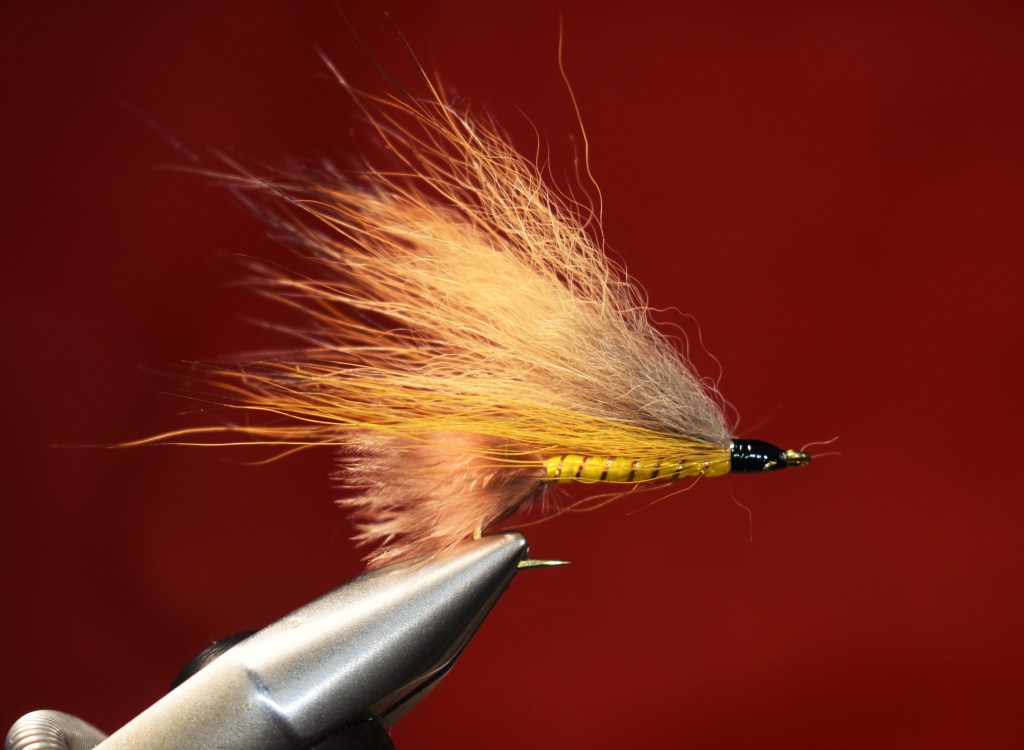
The Foxy Brown Hairwing, a November fly, born of hope.
I have walked many miles along these rivers of my heart in autumn and in winter, and I have yet to find the magic of the dry fly once fair October has passed into memory. My heart still urges me to carry a bamboo fly rod during these journeys, for there is always a chance, and so I find it easy to ignore the practical side of fishing deep by lobbing all manner of weight about those bright rivers. In low water a classic bucktail or streamer may be sunk enough to pass close to a trout hunkered among the boulders, but this is not a year for low water. Thus the mini tip continues to knock at the door of my consciousness.
As a fly designer, I am always experimenting and testing ideas and patterns and I do like to give them a fair opportunity to interest a trout. Swinging rapidly past several feet above a fish’s lie is not a fair test of a trout fly, not in forty degree water. Certainly I know that anything can happen on a trout river, but it would require much more disparate numbers than those titled above to express that likelihood.
Should I chose to carry that mini tip line, there will be an extra reel spool in my vest, one adorned with the floating line required to take advantage of those incomprehensibly rare moments when Nature’s special magic defies all logic and experience. Though my mind leads me to a state of confidence that I will not need that floating line, nor the box of dry flies tucked away in my vest, my heart still believes. May it always be so!
I enjoyed a surprise visit yesterday. My cousin Jeff was passing through the Catskills and had called the night before to ask if we might be around and interested in catching up. I was gladdened by his voice and anxious for his arrival on Saturday afternoon.
Back in my more formative years, my family would travel back to the New England my father grew up in. A highlight of those trips were the numerous visits with Jeff and his family. When I attended school in Massachusetts for a year, I spent most weekends at their household and we became closer. Jeff always had an adventurous side that I admired, and we enjoyed a few together. Whenever I would visit, there seemed to be something new in the planning or execution stages.
Perhaps the biggest event we shared was the time I arrived to hear about Jeff’s and his friend Tom’s new interest in sky diving. Their tales got me excited and soon we were driving to the jump center where I would undergo a day of training and make my first jump. It was a singular experience, and one I will never forget. Another time I found them into rock climbing, an adventure I did not partake in. We must all know our limitations, and climbing is high on my own list. Jeff however found it particularly exhilarating, so much so that he and Tommy took it to the stratosphere with an assault upon the fabled Matterhorn!
I remember the time I received a call telling me that Jeff was crewing a sailboat up from the south, and would be docking in Baltimore’s Inner Harbor for the night. I jumped into my Trans Am and headed to Charm City to meet him. We had a great night hanging around the Inner Harbor area and relaxing on the boat! My cousin seemed to always be enjoying a new adventure.
I missed that close relationship as time passed and we both became enmeshed in the twist and turns of life. Work, family, and distance made our meeting all too infrequent as life matured. When I moved to the Catskills, I got to thinking that I was closer to my old haunts in New England, close enough to get together. Sadly, by the time I got around to doing something about it, I learned that Jeff had moved south, and distance once again came into play.
Having the chance to sit down and catch up on some of what we had missed in each others’ lives was a treat, turning a quiet weekend into something special. We are young no longer, though we were both pleased to hear that our individual adventures continue. I shared the excitement when Jeff spoke of backpacking in the Sierra Nevada’s, and even doing a little fishing for wild mountain trout. He was truly pleased to find me right here where I wanted to be, retired in the Catskills and pursuing my own passion for bright water and the dry fly. He told me that he always appreciated that I had found my passion in the outdoors and had stayed true to it. That sentiment means a lot to me, for I have always admired and respected Jeff’s spirit of adventure and the commitments he made to enjoy life to the fullest.
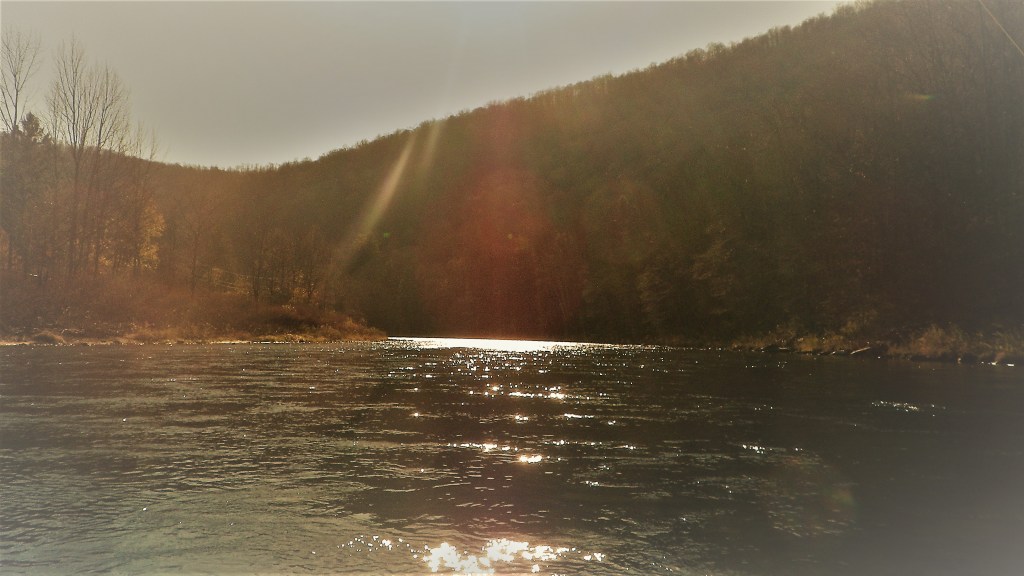
Walking the mountainside the day before I received that call, I had marveled at the simple beauty of the sunlight playing upon the autumn landscape, and the glimmer of bright water cascading down the tiny rills that merge to form the brook, one of the headwaters of the legendary Beaverkill. I always feel particularly fortunate at such moments, thankful to be there and alive, and to be a part of the wild landscape.
Time catches all of us, but we may persevere and run the race to our best by keeping a sense of adventure, whether climbing a new mountain; or casting a fly to a gentle ring upon the surface of a river.
Take Me Back: Barely two weeks ago I enjoyed a sundrenched eighty degreeafternoon on the Beaverkill. As I looked at the golden light of autumnupon the mountain side I knew the season was dying, though I was unwilling to let it go.
Much has changed in that fortnight, I realized that all too clearly as I shivered in the high cold flow of that same river yesterday. The sun was shining when I left Crooked Eddy, but by the time I waded into the elevated flow a squadron of dark storm clouds had gathered above the river and blotted out the sun I had hoped might warm the water and entice a trout to feed. Dawn this morning was below freezing, the first of several such days currently forecast. I am not ready for winter.
My mind still wanders bright water in search of the next rise, as I hunt the dappled sunlight and shade along the river banks. My body longs for the warmth upon my shoulders as I stalk the sunny flats, casting dry flies to pockets of shade and cover. Summer, why have you forsaken me? I feel cheated, robbed of innumerable summer days by high water and un-wadable rivers, and I want those days back to help ease the transition to the coming months of ice, wind and snow! But my pleas will not be answered; my desires shall remain unsatisfied.
Ah but who would not wish to remain wrapped in the glory and wonder of a Catskill summer? No finer season, nor more ideal locale exists for the sporting gentlemen of the dry fly!
I am used to thirty-one glorious days of October, gently transitioning my soul from the drug of summer into the subdued chill of autumn, yet three weeks of that time was stolen away by the sirens of storms. I angled but a week’s worth of days, and those with the scarcest few sightings of rising trout. Throughout I waited, telling myself that the golden days would come; lower flows and sunlit afternoons with heavy browns sipping tiny mayflies, breezy afternoons when terrestrials were cast into the fray and the trout took advantage of Nature’s last gifts of the season with relish. It was not to be, not this year.
Oh but it was a glorious summer! Interrupted by the vagaries of weather, there were adjustments required of this angler, adjustments I made and then reaped the rewards. Perhaps those summer days were too good. They led me to covet the beauty and glory of a Catskill summer more than ever, and now I am lost until spring!
The wondersof a Catskill Summer: The first hour of fishing with my Sweetgrass Pent, with browns of 19, 21 and 22 inches brought to net, became my first indelible summer memory for 2021. That incredible hour proved to be just the beginning.







 Bright Waters Catskill