Blow Baby Blow

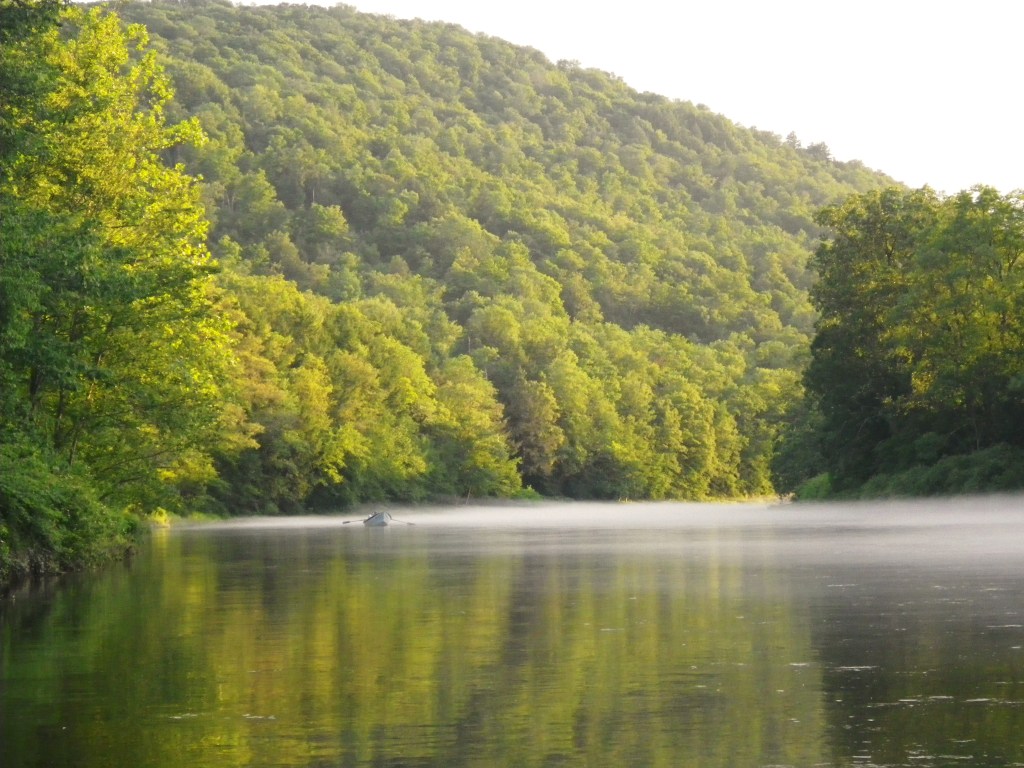
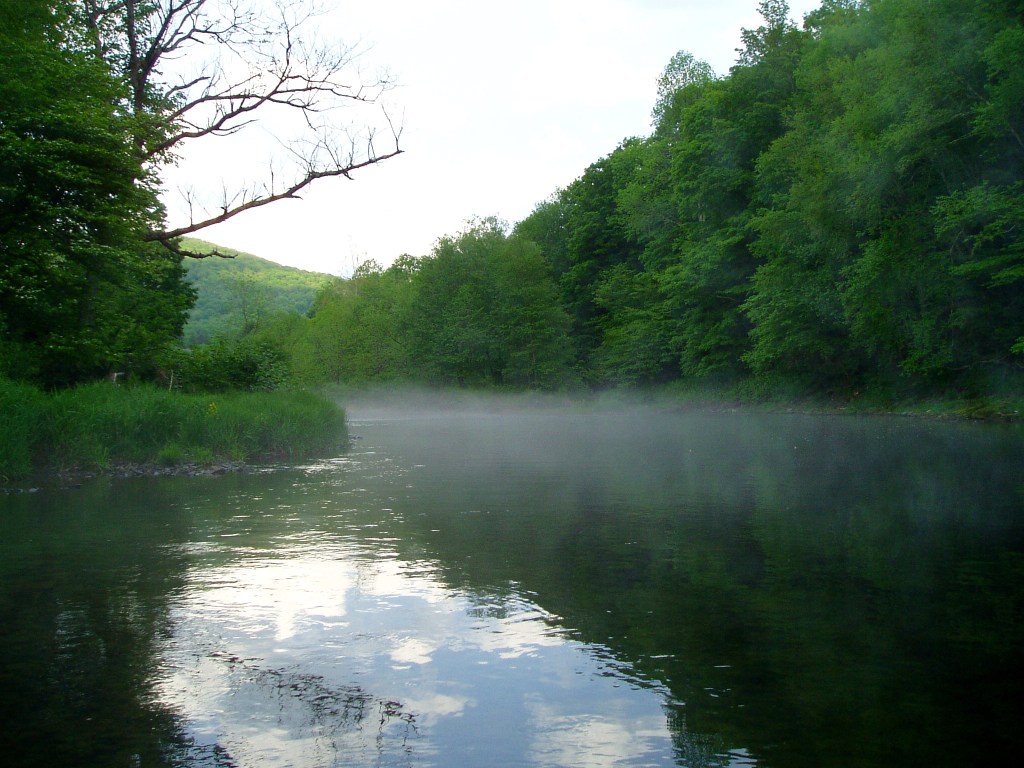
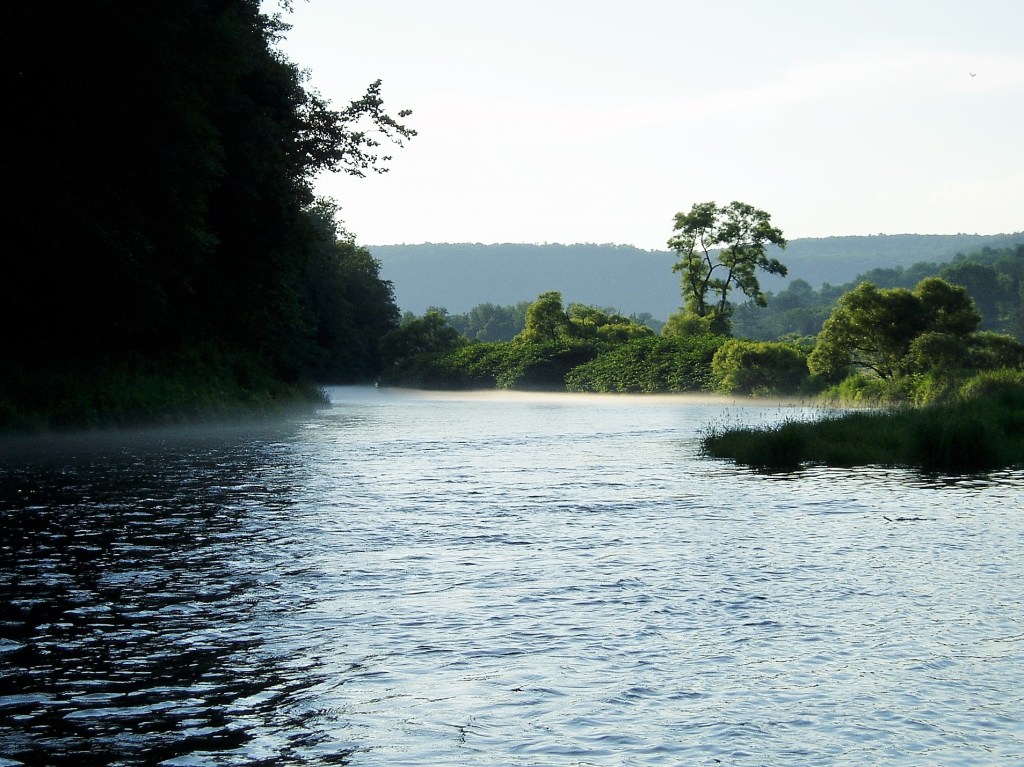
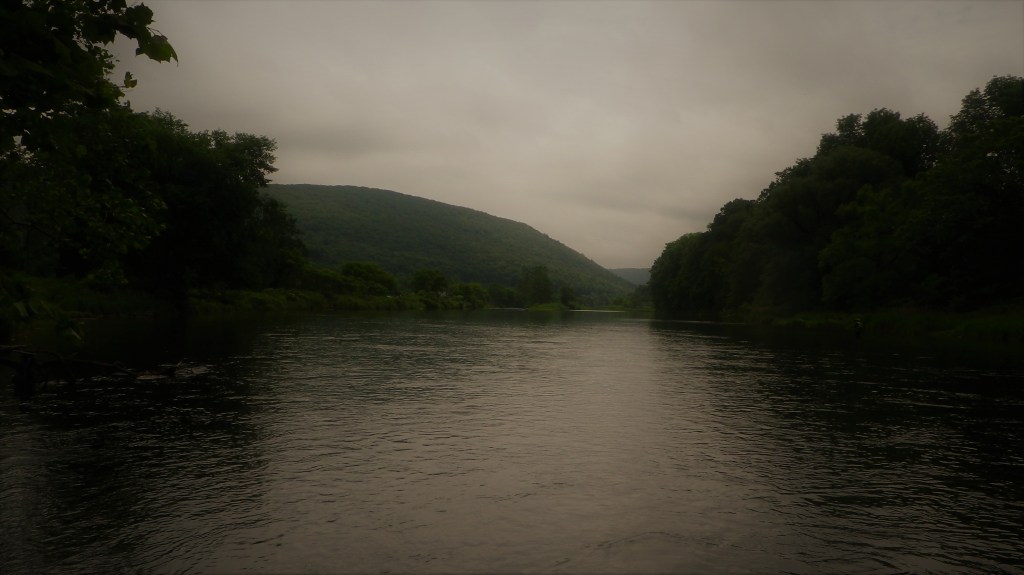
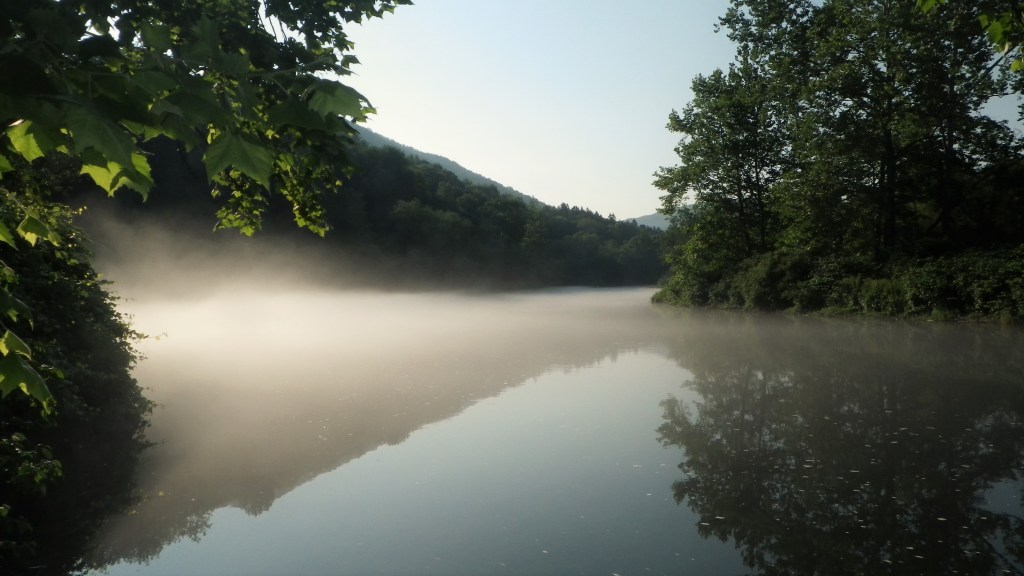
A flat pool in the Catskills, Spring 2021: a protected reach where the winds don’t get a long run as the mountains shelter the valley somewhat. The current runs right to left in the photo and yes, those wavelets are blowing upstream. You can picture what it has been doing in open water!

I think this could be the windiest spring I have ever angled in the Catskills. I mean, it seems to have been blowing hard every day right on into the evenings. Winds forecast for five to ten miles per hour? They have blown ten to fifteen, even twenty. I think the average calm period has been around twelve miles per hour. Wind whipped water doesn’t encourage trout to feed upon the surface. If you are a dry fly fisher, well, you are not supremely happy with that state of affairs.

To be honest, I have had a great season so far. I’m not really complaining, just registering the facts man. I love the challenge of hunting big, wary wild trout with dry flies, and recurring winds make that challenge rise to another level. Rising trout are harder to come by and, when you find one, the window of opportunity is narrower. You have to position yourself to make the best cast you can under the conditions, and then wait for the gusts to subside to make a presentation. While you are waiting for that window to crack open, your fish may well stop rising, or change locations as he hunts for wind blown duns bobbing in the wavelets.

The past week has been a real pissah as my relatives in New England would say. It has blown hard every time I have hit the river, making it impossible to even find a trout to fish to on a couple of those days. Yesterday promised to be really bad. It was. I finally left my cane rod at home and dug out the high tech gun. My four weight Thomas & Thomas Avantt represents the latest generation of performance. That means it is stiff, fast and packs a lot of power into a cast. I paired it with a four and a half line since I was going to be fishing big dry flies.

That rod managed to beat the wind, though punching the power stroke with a stiff fly rod is hard on my wrist. Carpal tunnel and arthritis don’t like punching casts into high winds very well, and stiff rods make me punch them even harder. I have to keep reminding myself of that tendency, telling myself to ease up, and try to stop forcing it to bend. The rod will still drive the line and fly into the wind without that extra punishment. That is one of the things I truly appreciate about fishing bamboo. The classic action of a cane rod invites you to relax and paint the line on the water. Yesterday turned into a power sprayer kind of day.

There was one fisherman in sight when I waded into the river, so I decided upon my plan of attack, staying a couple hundred yards away from him. He didn’t pick up on that subtlety. I fished with my back to him and, after an hour or so of fishing hides, I heard sloshing behind me. Sure enough, this guy had decided to return my courtesy by wading right up on top of me. He wanted to talk, that is he wanted to bitch about how there were plenty of March Browns on the water and no trout eating them, etc., etc. I questioned his claim of plenty, as I had seen three flies to that point. He kept sloshing along yapping, though he could have easily walked the path on the bank without disturbing me. I guess he just needed to be sure I could hear his complaining. I kept fishing.

Another angler had arrived by then, standing on the bank where a footpath comes down to the river, and the complainer started up on this new audience. Eventually he joined him on the bank and they shared tales of misery inflicted by fish. I had seen a rise or two by this time and slowly moved into a casting position that would allow me to best defeat the wind.

I guess those two jabbered for half an hour, maybe more, as I did my best to tune them out. I kept fishing; I mean, I was there to fish after all. That trout I saw rising appeared to be a mover, so I worked him as carefully as I could. One of the difficulties with movers is there is always a chance that they come closer to you causing you to line them while casting to where they were. I changed the fly when I saw what appeared to be a smaller mayfly blowing by, and then he finally found a spot he liked. Meanwhile on the bank, the complainer finally ran out of words and headed home. The audience walked up the bank and left me in peace. My gratitude sir.

There were a few more March Browns bobbing down the choppy surface, so I tied my crippled emerger back to my tippet and blotted the water out of the wing. I had made some good drifts, and every once in a while that fish would suck a natural from the surface, or would he? He was in the shade and I in the bright sun, so it was tough to see much more detail than his subtle rise ring itself. I eased into the edge of the shade line, just enough to get the sun out of my face, and observed. He rose two or three times with no sign of a dun on the surface. Point taken. I trimmed the wing shorter on my cripple and fluffed it up with some brush-on floatant. I made two casts, gently, easing up on the rod, and the surgically altered fly disappeared in one of those soft rises.

As soon as I set the hook I was glad I had tied that fly on a heavy wire hook and used 4X tippet. He bored right down to get into a fallen tree and I put everything my tackle could give him into play and forced a turn. This was one hell of a trout! Brute force versus brute force: he pulled as hard as he could while I backed slowly away from that obstruction, one step at a time.

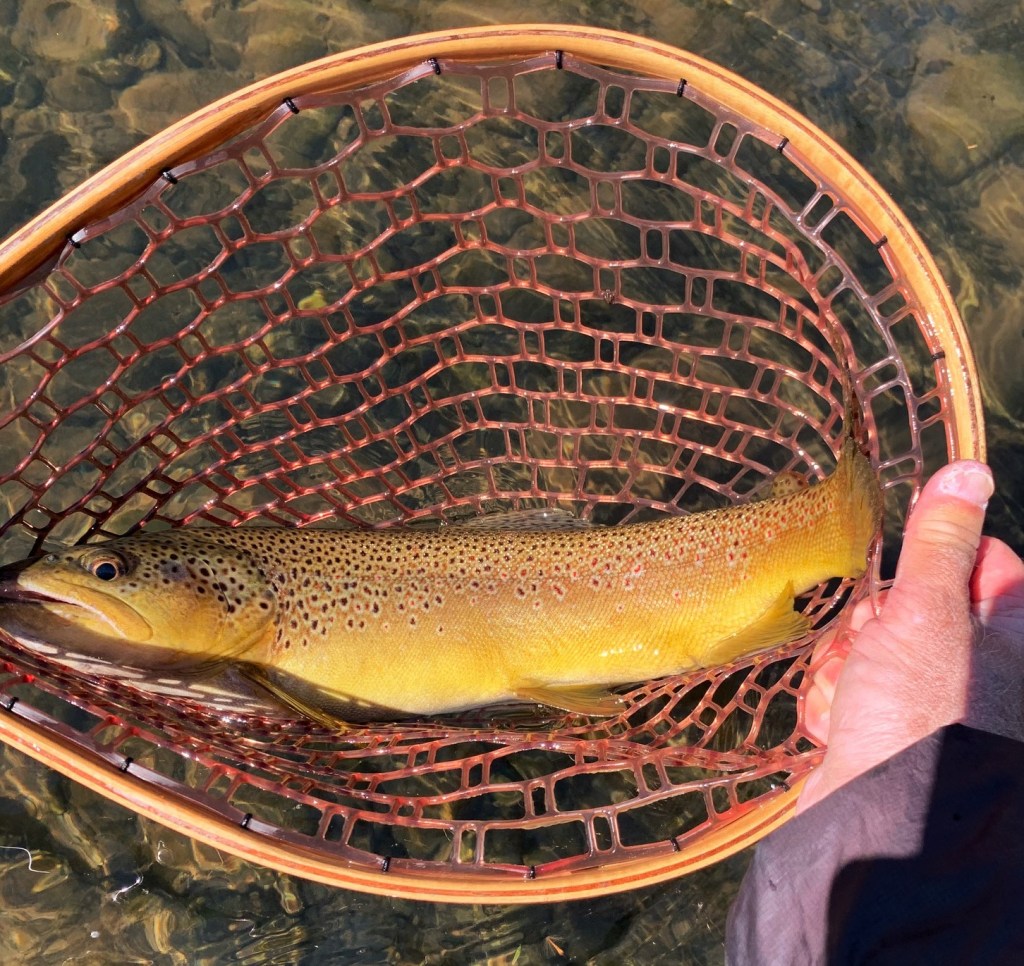
The trout took line, so I tightened the drag until I had him far enough away from the wood. He pulled line anyway. This wasn’t a finesse fight, no long runs with a singing drag and arching cane: one mean fish. The fly kept its hold, right in his lip, and I eventually backed him into shallower water and the waiting net. Gorgeous color in the sunlight. This guy deserved a snapshot, though he kept trying to jump out of the net as I fumbled to keep him in the water. Twenty-two inches; I honestly thought he was longer than that due to his breadth and weight.

I had nearly left when I first arrived, as a terriffic wind gust hit me as soon as I started to reach for my waders. I stayed though, and I weathered the irritation of the complainer and his sloshing approach to tell me his opinions. I was actually thankful for the wind at that point. Under calm conditions this pool is flat water, and his sloshing up to me would have put off that brown before I even had a chance to fish to him.

I always have subscribed to the idea that the fellow anglers I encounter along the stream deserve the respect of being left alone. A quiet nod is a sufficient greeting should they turn and look my way. If they speak, I will answer, and even stop and talk for a moment should they make an overture. Otherwise I pass as quietly as possible and leave them to their reflections. The older school of fly fishers to which I belong values solitude. If they wanted raucous discourse they would have gone to a bar instead of a trout river.

The Puzzle

The March Brown mayfly has been pretty much the only sizeable player on the trout’s stage over the past week.

The one consistent thing I have noted in thirty years of angling Catskill Rivers is that the same seasons will offer different conditions every time. Sometimes the changes are subtle, sometimes quite grand, but anglers need to be ready and able to adapt, cause it won’t be boring.

The March Brown is a case in point. The quality and density of the hatch varies widely. In good years, you will find them hatching sporadically throughout the long hours of the day. In poor years, you may be lucky to see any of them at all. They can prodiuce some great fishing when there are enough of them about, or cause one to waste time casting big dry flies with unrequited hope.

This year the hatch has been relatively weak in the areas I have fished. I have seen a few duns each day, even some in the evening, but the trout have generally not been paying much attention. That means fishing imitations won’t get you bit.

The other noted characteristic of this continuing spring season is change, radical, drastic change. The rivers warmed early, with April weather in March, but the flies and the trout weren’t buying the promise of early spring. Then the cold returned with high flows, unsafe for boating and out of the question for wading. Two weeks ago I walked out on my porch after sunrise to a thermometer struggling to register a temperature of 31 degrees. When we drove out to launch the drift boat around 9:30 AM, it was all the way up to 34! Rivers had just come down to levels I consider safe for boating, and the water was in the forties. The rivers dropped quickly over that week. We didn’t get rain and the NYC DEC dropped the releases from both Delaware River dams, and yes, the daily temperatures took their cue and shot up into the eighties. Fishing went into a bit of a funk.

Most recently I was confronted with some unique behavior for spring trout. With a lot of wind, and the forests at peak leaf and pollen production, the low flows carried some huge scum lines on the rivers, reminiscent of the colored leaf parade of late autumn. Trout would cruise these scum lines and pick off tidbits, something small I couldn’t pick out amid the pollen, seeds and leaf matter. Some nice fish were spotted and observed, cruising for just a few minutes at a time and rising once, twice, perhaps three times in different locations for…something. The puzzle to be solved was to identify the something, and have the patience to stand and wait for long periods between these little snack tours.

The only bugs visible during these sessions have been small shad fly caddis and the very occasional March Browns. My favorite caddis pattern seduced a fine twenty inch brown on the first day I encountered these conditions, a hard won fish that required several hours of observation and the patience to wait for the gusty winds to subside just long enough to affect a cast. Puzzle solved? Well, no, at least not for any of the other cruising trout I attempted to catch over three days of this technical game. On day two I was blanked, not even a look at any fly including a terrestrial or two, sometimes the kings of those late autumn scum lines.

Yesterday I arrived to find the conditions looking a little better, at least until the winds cranked up and the scum lines began to thicken. There were fewer cruisers, and a few more caddis, while the occasional March Brown continued to float past unscathed. I watched more than one of those big duns drift peacefully for fifty yards. I stayed with the caddis, trying a couple of patterns and sizes from 16 down to 20. The size twenty olives came out next, when I spotted something smaller and darker at a distance that might have been little mayflies. No sale.

When the caddis failed to interest any cruising trout I reverted to big fly logic. I had tried various March Brown patterns over the course of this oddysey, duns and emergers in various color phases. They seemed to be perfect imitations, as they had been ignored just like the naturals. Last year I had designed a new crippled emerger that had taken a couple of difficult fish, so I knotted one on and told myself I was going to stick with the big fly until it produced. I didn’t have to wait too long.

The next cruiser I saw didn’t take it, likely because he wasn’t in the same location anymore, after I waited for a wind gust to subside. I was still watching that area when a flash and a gentle sip twenty feet upstream drew my attention, and an immediate cast. The Paradigm loaded fully and unrolled line and leader into the breeze, dropping the big fly gently, and right on target. There was that flash, the split second hover, and a gentle sip took down my big gangly size 10 fly. Oh he was a heavyweight! Made the vintage LRH sing like a rock and roll screamer! Twenty inches, with a big bull head and shoulders that belied the delicacy of his take.

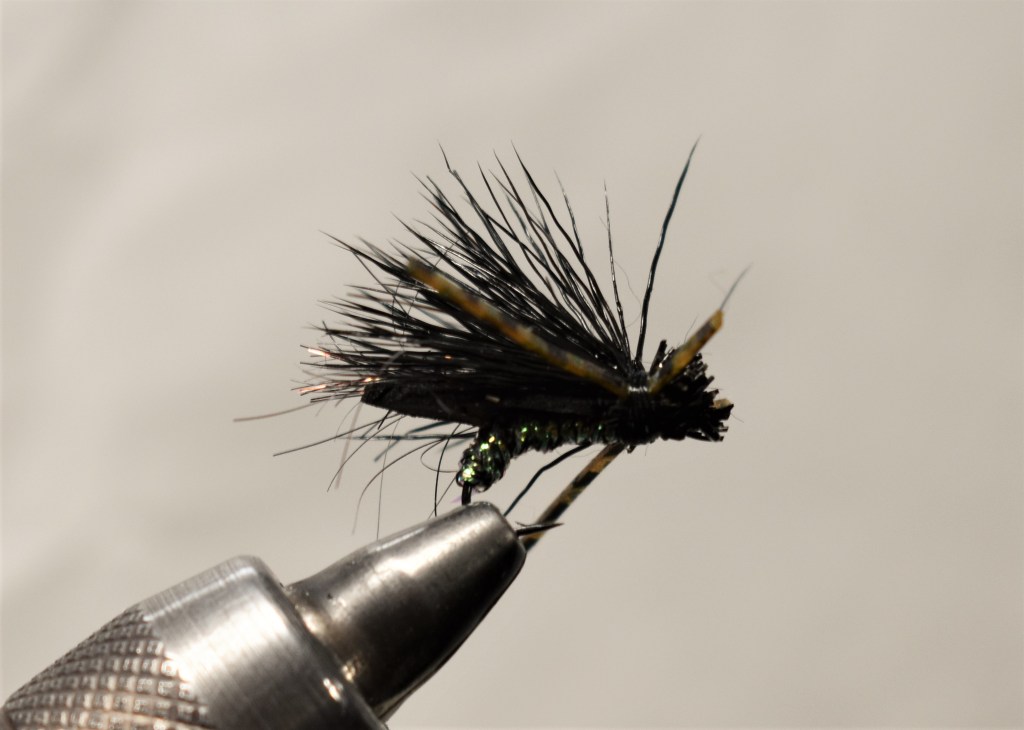
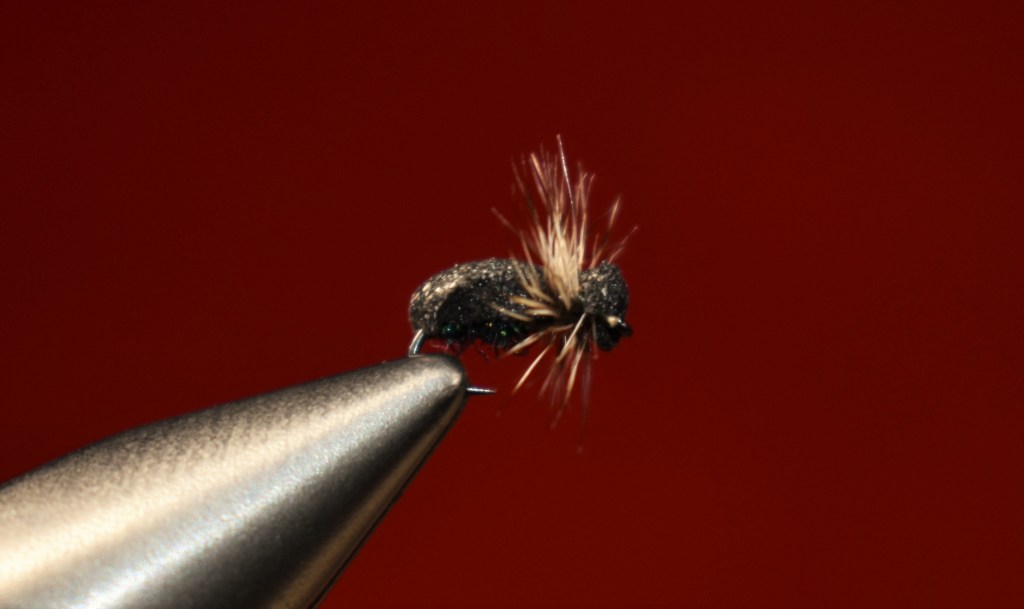
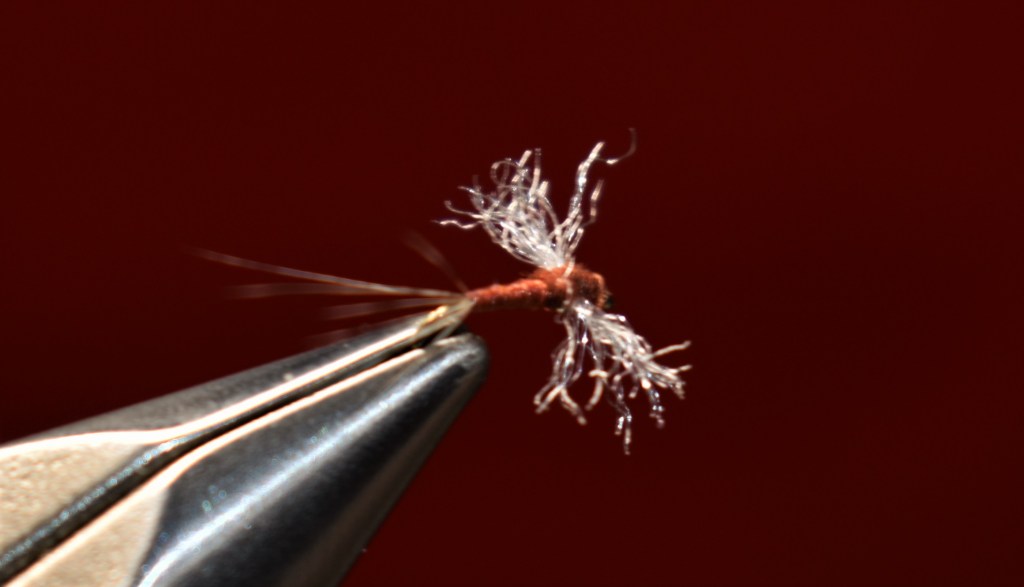
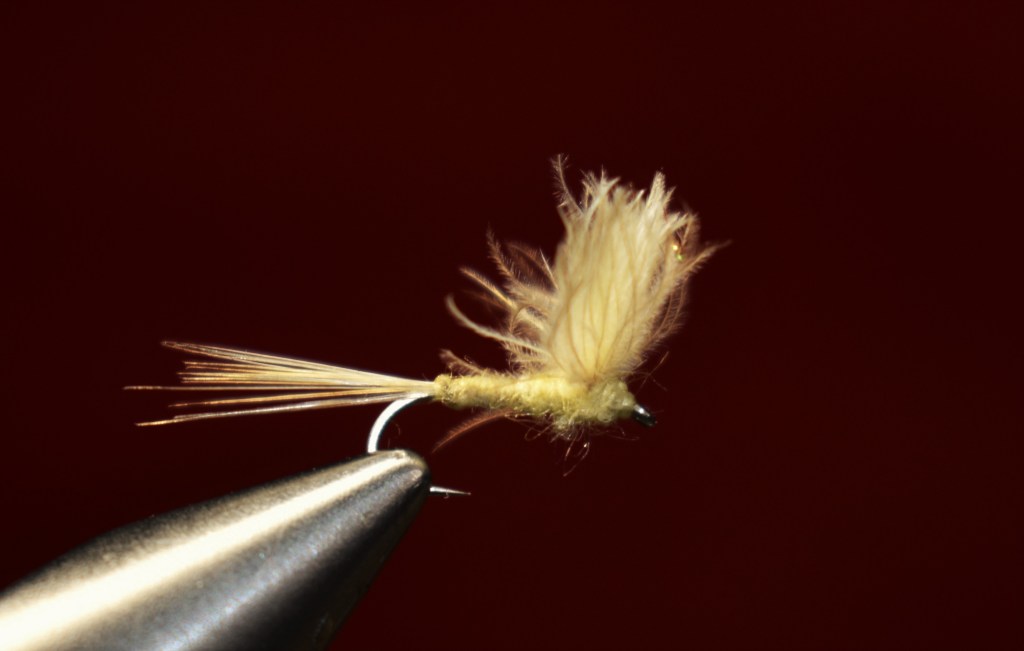
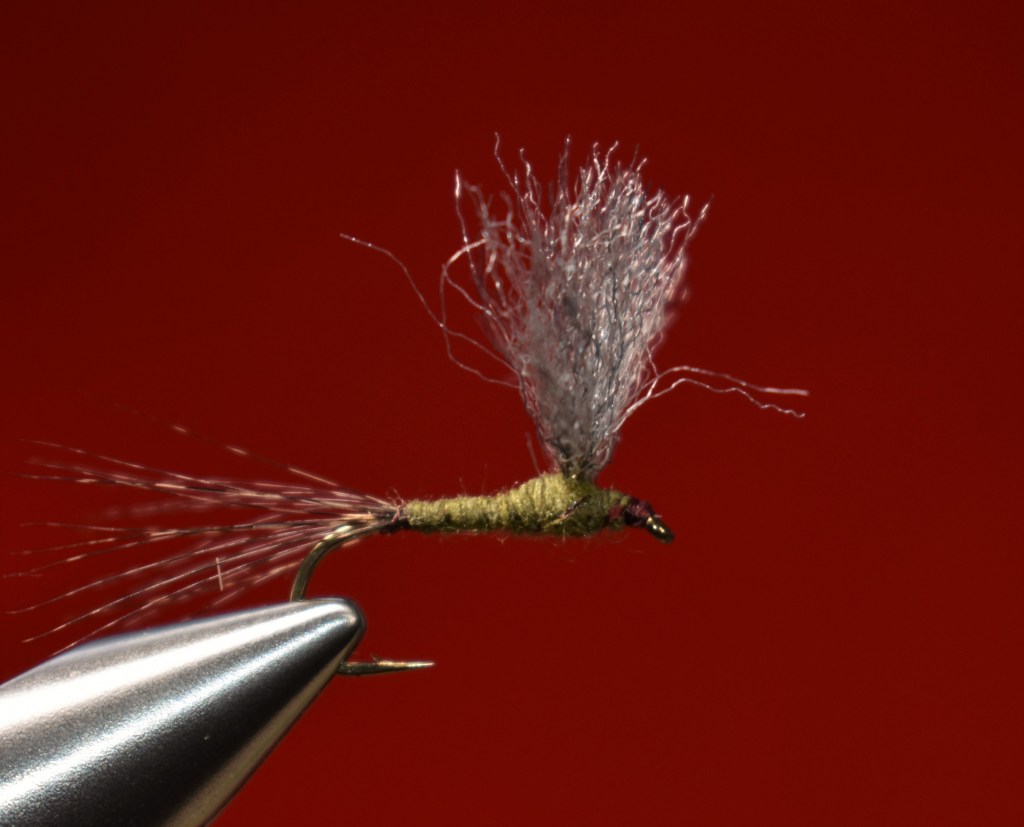
My March Brown Crippled Emerger debuted in 2020. The tri color wing features tan and pale yellow CDC and EP Trigger Point Fibers to create the image of life.

The next riser slipped downstream from my casting target, and the fly ran out of drift at just the wrong moment, leaving me with a splashy refusal and the trout without a nice artificial snack. Did I mention this season has been about radical change? I cast to another flash and let my fly drift all the way down until drag began, then pulled it under with a tug. The line stopped with a jolt, and I was fast to another trout. This time we were both surpised, as I slipped the net under a seventeen inch wild brook trout, my largest brookie ever.

So last night I was back at the vise, crafting a few more of those big cripples. Maybe this solution to the puzzle will continue to be the answer. If not, I shouldn’t have to wait too long for something to change.

Indicator Species

Long riffles and runs offer a great deal of trout habitat, and insect production for the pools inevitably lying downstream.

So my friend JA and I arranged to meet on the river to see if we could encounter an evening hatch or spinner fall. I had suggested the place (gotta stop doing that), and we showed around four in the afternoon while the rush of weekend anglers sped by on the highway, destined for home in Jersey, NYC or other urban environs. We took our time getting geared up, then eased down to the river for a look see.

Nothing was showing, so we used the time to catch up on things: JA’s morning turkey hunting (he’s out there again right now) and my wandering through a very busy week of fishing. There was cloud cover, the good dark ones that hinted at a storm, but failed to deliver, and the ever present spring wind. Forecast at ten to twenty miles per hour, it was working hard to make good on that promise. After a while of watching wind whipped water that betrayed a handful of big mayflies with no rises, I ambled out several steps and dunked my stream thermometer for a minute. Rivers had warmed during a run of days in the eighties and no appreciable rainfall. Even the tailwaters were getting warmer than they should for the last week of May, as the City has the habit of shutting down significant releases as soon as the first run of hot weather hits. They made good on their promise as well.

When I pulled the thermometer up it read 69 degrees, right on the cusp of barely OK and too warm for trout fishing. The smart move would have been to reconoiter and head to another location, but then my brain started trying to convince me to stay: it’s only been this warm for a couple of daysit’s just the daily peak temperature…it’s really cloudy and the holdoing water is almost in shade alreadythere’s three hundred yards of riffle and run above us to oxygenate the water, as well as the wind…

You see I’d fished this same spot roughly a year ago under similar conditions, and things perked up in the last half hour. I had caught two nice brownies and then had my dry fly forcibly removed from my possession; with predjudice. I had been thinking about that fish for the past year, telling myself that I needed to give that spot more attention. I wanted JA to get a shot at the big boy, and I figured there could well be more than one.

We stayed; talked for a couple of hours and then spread out upstream to fish the fast water until the right time. JA raised several trout, landing one, while I raised just one fish. George M. L. LaBranche would probably critique our technique, but you just don’t get a lot of drag-free drifts casting in twenty mile an hour winds.

We both fished cane, JA the magnificent 8 footer for a four that he built in the CFFCM rodmaking class, and me my recently acquired T&T Paradigm, so we both managed to amuse ourselves with casting. And when my watch read 8:39 I suddenly realized the wind had settled. We looked up at the same time and saw some large mayfly spinners. JA spotted some risers upstream and stayed to work them with a March Brown dun, while I waded downstream slowly tying on one of the March brown spinners I had tied a few hours earlier.

It was about ten minutes till nine when the rings began to appear below me, close to the drop into deeper water. One good ring drew my attention and the first casts. The third one connected and I raised the rod into a fish with a bit of weight to it, and started reeling as he swam upstream toward me. When he was thirty feet out he turned and began to fight in earnest. JA hollered down “is it a good fish?” and I answered that it was, adding “come down, it’s going to be quick”. The sky had cleared around 8:30, but the dark clouds quickly returned, and it was getting dark fast. The little Hardy played a few choruses each time that fish turned and ran, and I had that satisfied smile that the evening was turning out just as planned.

When I scooped him in the net my enthusiasm evaporated with a weak chuckle. My “trophy” was a rather fat, ugly chub. I announced the news as JA approached. The darned chub even swallowed my spinner. I couldn’t see it in the quickening darkness, and nicked the tippet when I tried to reach down inside with my forceps. Goodbye fly!

I dug out my flashlight and tied another in place just as I realized it was too dark to see the rises I kept hearing. Were they all chubs? Neither of us will ever know, but I could place an intelligent wager. Biologists speak of indicator species, fish, mammals, etc, whose presence or population levels in a specific environment indicate changes in the health of that environment. The lowly chub is kind of an indicator species too, at least in my mind. When you catch chubs rising to dry flies rather than trout, they are letting you know that the water is too warm, too slow, or just too uninviting for trout activity at the time. Shame I didn’t catch that big old chub on my first cast around six o’clock. We could have beat feet out of there and found better water for that last fifteen minutes.

Nocturne

A Birthday Present

A vintage Thomas & Thomas Paradigm 8-foot five weight rod reclines on the grass after meeting my Hardy Bougle. Requiring the sacrifice of another favored rod to acquire, this piece of bamboo perfection arrived in time for my annual celebration. Another year of drawing breath each day and angling Catskill rivers begins. I couldn’t be happier!

There has always been something special to me about a Thomas & Thomas fly rod. They were the first to catch my eye in print, and their catch phrase “The fly rod you will eventually own” stuck in my mind. Yes, one day I thought, as I eyed the unobtainable in my local fly shop, The Fisherman’s Edge in Catonsville, Maryland. The marque stood for taste, craftsmanship and quality, both in graphite, and in their very, very special bamboo.

Twenty odd years ago I was able to aquire a few of their graphite rods, including two of their Paradigm models, the pinnacle of rodmaking. Coming from a background crafting equisite bamboo rods, the firm had a clear vision for how a fly rod, a trout rod, should feel and handle. Fly rods are supposed to bend! Thomas Dorsey understands that. It is said that the Paradigm rods bore his favorite taper. Though many rods have passed through my hands in the past twenty years, those Thomas & Thomas Paradigms are still the rods I reach for when conditions favor fishing with graphite.

The equisite pleasure of fishing an original Paradigm in split bamboo is, well, something earned through a lifetime of hard work, and an appreciation of bright water, pure mountain air and wild trout.

Ah yes, wild trout… the first ones I glimpsed were bright flickering shadows darting through tiny Rock Creek! I had begged my father to take me trout fishing, something magical and far removed from the environs of suburban Maryland. He picked up the guide book that accompanied fishing licenses and read of another handbook, one about trout fishing in the state. I treasured that little volume. Trout were fish of the mountains, but a small, fishable population of wild brook trout existed in Rock Creek Park. Try as I might that wonderful day, I could not catch one of those bright little shadows. My rudimentary angling skills were no match for their wildness, but they left an indelible mark upon my soul.

It has been a busy week, keeping up with my much younger companion on fire from his first vision of our Catskills, and the Paradigm arrived on the last evening of his visit. Fatigue outweighed my anticipation if you can believe it, and the looked for package wasn’t even opened until the following morning. Refreshed, at least partially by a good night’s sleep, I was out in the yard after sunrise, fixing the Bougle to the uplocking reel seat and making those first gentle casts. The rod’s feel was smooth perfection, just as I expected. There was but one place to fish it.

Bright sunshine greeted me, the forested mountainsides full of the uncanny flaming chartreuse blush of spring that lasts but a moment. All I needed was a mayfly and a rising trout, a tall order for the day as it turned out. The wind that was forecast to be down rose with vigor, and blew far more pollen and leaf fragments onto the crystal currents than insects. I let my frustration with the gale make me struggle to find my rhythym with the new rod, the old tale of power where finesse is called for.

I am no stranger to waiting along rivers, and I practiced that skill once again on this blustery afternoon. Hours later a calm spell offered respite, and I scanned the surface of the river for signs of life. The day betrayed only a few, here and there during fitful intervals of calm, trout cruising and sipping. At intervals a meaty March Brown dun would join the prolific vegetable matter in the drift, but none of these drew the attention of the cruisers. The only other signs of insect life were the occasional shad flies, and I imagined one here and there lying spent, hidden from my eyes in the mass of buds, leaves and pollen. They were not hidden from the roving sippers.

A March Brown dun finds a quiet resting place on the swelled butt of my Paradigm. The trout did not find him and his scattered brethren appetizing at all. A puzzle.

A moving target offers a special challenge. That is why bird hunters choose a shotgun with hundreds of pellets to pursue their game. A fly rod and dry fly offers no such coverage of the field. You cast to the rise knowing the fish may no longer be there. They offer no clue as to their course, it appears random. Hope for success lies in a quick, accurate delivery and the quarry hesitating nearby after his rise. It came together once.

A sip, then a dorsal fin wavering in the film for a second, and the cast is made. The long line rolls out, turns over sixteen feet of leader and the size 18 dry fly, yes I feel it now, let the Paradigm work… The take comes in slow motion, and the nerves are steeled to respond in kind, with a slow gentle lift that sinks the tiny hook as the water boils and he makes the reel sing!

A perfect cane rod responds to gentle casting tricks, and works fully when battling a fine finned adversary. The deep bow in the Paradigm is unequaled, the exquisite taper tuned to the task. This fellow gave it a proper workout, giving his all to break free from the tiny spent caddisfly that bit him back! He was bright and golden there in the net at last, flanks heaving, struggling still to jump clear of this springy mesh. A single twenty inch wild brown trout is a worthy opponent to christen a new favorite fly rod, worthy indeed.

Reunion

This week joyfully brought a reunion of a friendship that has lasted twenty years. Andy and I met when he joined me on Pennsylvania’s Yellow Creek two decades ago. At the time, that little limestoner was my favorite dry fly stream, and one not too long a drive from home. We had some luck and enjoyed each other’s company. We both looked forward to a lasting friendship, and many memorable fishing trips, though life doesn’t allow for every wish.

While I had reached an age where life was stable and I had a manageable work schedule that allowed ample time for my hunting and fishing, Andy was in the thick of the blossoming of an active life. College, medical school, residency in a few different cities, marriage and children followed and, most recently, ownership of a lovely country house on my old favorite reach of the Falling Spring Branch. I am happy that my friend has built a full and rewarding life. He is the kind of guy that deserves it.

We still got together on the water, though not with the regularity we had hoped. Each opportunity was a celebration, with some fine trout battled and remembered. I had invited him to travel to the Catskill Rivers many times, something he wished to do, but this week marked the first time the stars aligned so I could share the rivers of my heart.

The weather was gorgeous each day, and the rivers had receded to wadeable levels. We fished in the evening that first day, catching the last minutes of a Delaware spinner fall. The old man hung too long in another location, hoping the chance for a trophy would materialize for my friend as it had earlier that day for me, and as such we missed what might have been the most active rise of trout of the week. Andy was excited nevertheless, and his excitement for the rivers was contagious to me.

The Old Man and the Sea: Piloting the drift boat as we begin our Delaware River float trip. (Courtesy Andy Boryan)

I was looking forward to our float trip as much as my guest, hoping the Delaware would open its arms and show my friend one of it’s best days. The promise of March Browns, and casting big dry flies to interesting runs with explosive consequences proved empty. The day provided a full spectacle of natural beauty and companionship, though little in the way of insect activity and rising trout. The big river is the moody champion of the Catskills, testing anglers like no other.

Our last day was a wading day, with an early start, and the hope I could find a hatch to treat us to some fast fishing. Alas the paucity of bugs and rises continued, and I made a last ditch effort to find some action. Another reach of familiar water was quiet, until later in the afternoon when a few soft rises appeared. Trout cruising, ghosting through wide, flat water and sipping here and there. I watched Andy working the wide expanse of the river, noting the perfection of his presentations with his vintage Granger cane rod. I was walking a hundred yards upriver, searching for the hatch I still expected, when I heard my name shouted. Turning, I saw Andy’s rod high in the air, with a full arch in the caramel colored cane.

Knowing he had left his landing net in Chambersburg, I walked as fast as the river would allow, finally netting a fine, big spotted brown of eighteen inches. He handed me his phone and I managed a single snapshot with the unfamiliar device: a moment of pure joy to share.

A hard won wild brownie, a gift from the river acknowledging a true heart, a love for angling and reverence for bright water.

We savored the moment together, as the aches in my bones prompted my slow retreat. On that slow mosey down river, a few risers burst to the surface, and we both cast at distance for a chance at feeling the life of the river once again. I was tired, feeling my age on this final day of keeping pace with an excited young angler half my age. On one cast I sighed and looked away, weary, though sad that our time together was coming to a close. In that moment, the reverie was broken by Andy’s shout “he’s got it”, and I turned to see a ring where my fly used to be. I was too late to hook the trout of course, caught in a moment of rest and reflection instead of the concentration that catching trout requires.

I hope it will not be too many years that pass until we may haunt bright water together once again. The Catskills have captured my young friend as they captured me some three decades ago. I can feel it.

(Photo Courtesy Andy Boryan)

One Year Later

Finding the right fly on the Upper Delaware River

I have fished this little caddis fly under different names. Our first meeting came on the historic Beaverkill nearly thirty years ago. There the fly was known as Shad Fly, named for their timing coincident with the shad run on the Delaware system. There were light and dark variations, the former a bright apple green, the other having that green mixed with a caramel tan coloration. I tied a pair of Gary LaFontaine’s Emergent Sparkle Pupas with an impromptu blend of dubbing and sparkle yarn and made my first memorable catches of Beaverkill trout.

Over the decades I altered that original dubbing, always staying close to the original green with just a hint of the tan. On the Delaware and her branches, the fly is called Apple Caddis, and my green fly has brought many trophy trout to hand in those ensuing decades. Last year I belatedly tackled preparing a blend of dubbing for the Dark Shad Fly, and tied a few flies I called the Caramel Apple Caddis. I was testing the new Dark Shad Fly along the big river one year ago. Casting to a rise I had a solid take and an immediate, monstrous pull. I reeled in my wounded dry fly with it’s hook straightened out.

While waiting for my visiting friend to make the long drive from the Cumberland Valley yesterday, I decided to scratch my itch to fish for a couple of hours. I strung up my big 8 1/2 foot Thomas dry fly rod with a vintage Hardy St. George and a number six line. Second chances are a wonderful thing.

It was a temptingly gorgeous afternoon, the wide river clear and calm, nearly windless, and the mountainsides full of the vibrant green of spring’s first blush. A fine day to be a landscape artist. There were just a handful of the little caddisflies about, very few actually, as I scanned the water carefully for signs of life beneath. Looking left, I heard a distinct plop to my right. I turned, but saw no remnant ring upon the surface. I took the leader in hand and pulled the fly line through the tight little English snake guides, ready for a cast…

I saw the next rise clearly, a playful little plop good trout often display when taking these little caddsflies leisurely. I lofted the line, false cast twice to work out some more, and made a cast, shocking the rod then dropping the tip to acheive the required drift. Plop! The ancient cane came up into a deep, deep arch and the fish started straight for me. I knew I had a good trout, as I stripped line madly to keep tight to him, but I didn’t know quite what I had just yet.

When he turned that hideous bow returned to the frail bamboo, and I though about the casting wonders of old Fred Thomas’ fly rods with their fine, delicate tips. My suspicion had been rainbow, but instead of the classic run and wild abandon of the Delaware rainbow, my foe parlayed short bursts of power to win his freedom. We fought at close quarters, so I kept that fearsome bend in my rod tip. The first time I brought him near the surface I saw him clearly. You know a two foot brown trout as soon as you see him, there is never a doubt.

We battled for a long time, each slugging hard and neither giving up. Each time I tried to bring him to the net, I reeled the end of my line and half my leader through those tight vintage guides, and each time my heart skipped a beat as he took it back, the line/leader connection hanging on each guide and the tiptop. Each time he rushed away I expected the frail tippet to part when that connection fouled at the tip, yet each time the rod showed enough power to turn him just enough to avoid disaster. Clearly, this one was meant to be.

I got a good measurement, checked it twice, and fumbled one handed for my camera while I held the laden net down in the water. The comedy of trying to lay the fish below the rod for that quick snapshot offered some flopping and tense moments, but I managed to click off two shots, then set the camera on a clump of grass so I could quickly revive and release the fish. Twenty-four and one half inches of wild Delaware River brown trout: last year’s opened hook? I’ll never know for sure, though big fish tend to haunt favorite areas, just as old trout fishermen learn to haunt them.

Just a little better than two feet of Delaware River brownie and the 1939 F.E. Thomas Bangor cane rod that subdued him. The Bangor grade rods were the Thomas Rod Company’s working man’s fly rods, with no special wraps or frills, just the same legendary Thomas quality and casting power that made Fred Thomas one of the legends of his craft.

Spring Gets Its Due

The Delaware River at Buckingham, Pennsylvania in the full greening of spring.

Finally now in the middle of May we have a run of perfect spring weather! The mountainsides are green and friendly looking and the rivers are rounding into perfect wading conditions once again. I was pleased to hear from my friend Andrew from Chambersburg and to firm up plans for his visit this week. I have been trying to get him to join me for some Catskill fly fishing for several years, and at last the time has come.

Andrew is a physician and has a large and growing young family, so there are countless demands upon his attentions. He measures his opportunities to relax for a little fishing in hours, sometimes minutes, rather than days. The weather and our rivers seem poised to show him a good time, and I hope they bestow a few of the special gifts they have shared with me for nearly three decades.

I sorted through the flies I had tied for him this morning, filling a fly box with the dries for the current hatches, and leaving others in the pill bottle they have occupied these past months. I filled that box out with some caddis, spinners and sulfurs, as well as a few March Browns; the hatches we hope to meet during his stay. Oh, and there are still a few more to tie…

I blame myself somewhat for my friend’s infection with the vintage bamboo bug. My love for fishing old Granger’s rubbed off on Andrew, and he can be found casting a couple of his own when he steals away some time on the stream. I truly began to appreciate mine when I brought them here to the rivers of my heart. I hope he makes some lasting memories of his own here this week.

My first Granger 8642 Victory, and its first Catskill trout: a gorgeously spotted twenty inch wild Neversink brown that believed my Hendrickson CDC Cripple looked more appetizing than the original. May 2014

Dues Paid

Sunset on the Dog

It was a beautiful morning, sunny and clear, and not a breath of wind. Mine was the first boat out of the launch so I knew I had untouched water before me. I was anxious for a repeat of the action I had enjoyed on Monday, and I slipped quietly down the first few miles with my spirit as bright as the morning sky.

I didn’t expect to see any activity in the upper river that early, and I didn’t. At the end of the last long riffle I drifted easily along the bank searching ahead for rises. Seeing none, I dropped anchor and waited. It was a perfect scene, I was early, alone and I had time to relax and wait for the flies to increase in number and the trout to rise. Perfection doesn’t always last.

The wind rose quickly into a full downstream blow. The forecast had been for 5 to 10 miles per hour, but this was a lot more than that prediction foretold. I slipped the anchor, moved downstream and stopped again, hoping that the water a touch further down from the riffle would be conducive to feeding trout. The flow gage had read 2,830 cfs at dawn, up 500 cfs from Monday, and now there was the additional wind current to deal with. Fewer protected pockets along the banks means fewer feeding trout.

I found a pair of risers, a little further down on my third drop. The initial gusts, the ones I hoped were a phantom wind, one of those quick little blows that comes suddenly out of the mountains and then vanishes, had made it clear they were here to stay.

Fishing to bank feeders sliding up and down in tiny pockets of softer water is a presentation game. Long leaders, long tippets and reach casts are required to give a fly as much time as possible in each pocket with a natural drift. Fishing these lies from a drift boat means casting downstream and across, then reaching upstream; on this day right into the wind. This would be a day of difficulties, of splashy refusals when the casts were accurate, for the wind would straighten every precious curl in the tippet by the time the fly alighted. A dues paying day.

That first pair offered three refusals between them. Throughout the day, when I was able to find rising trout, this scenario ran on repeat, just like a video loop. A calmer moment between gusts would allow a cast with a little bit of slack, and the drift would be almost perfect, until that last inch. The trout would come to the fly until some tiny unnatural movement would trigger his marvelous instincts to refuse, splash it but decline to take it, and the angler would raise his rod into nothingness.

My solitude evaporated a bit later than my expectations. In early afternoon I turned around to count seven boats bearing down upon me. I had no deck gun, no crew to repel boarders, though it was hard to shake the feeling that I needed both. It wasn’t a battle. A few anchored above me and waited: that guy’s found a fish rising, we’ll wait and try it if he doesn’t get it! I didn’t, though I did get three or four refusals. The others simply rowed past, fishermen with puzzled looks wondering if this was all they would get for their $500 day on the river. Weather is the great equalizer. Even luck finds it hard to triumph over it.

I had one chance at luck, down river at my last stop for the day. It had calmed for a few minutes, and I was sitting at anchor waiting. A few roving trout began taking the odd Hendrickson mayflies that were drifting by on the surface, their light patterns finally clear to see on the flat, smooth surface. I stood slowly and made a few lazy casts to rings downstream. I knew those trout were moving, that it was a game of luck, but I played my hand. On one of those casts I watched my fly drift out of sight into the glare. A moment later the water bulged nearby and I lifted my rod: a strong pull, a good boil, and the hook came away. Luck nearly gave me one big fish for the day.

The wind rose again a moment later, so I sat down and waited for the next calm spell. When it finally came, it didn’t last long enough for me to stand and begin looking for bugs or rises. Neither did the next calm spell.

A gorgeous, sunny day on a spring trout river, and I had a few laughs, finding the humor in the circumstances and the vagaries of fishing. I think I’ll live longer being able to laugh at splashy refusals and missed fish than groan and curse at those occurances. I have seen fishermen beat the water with their expensive fly rods and stream all manner of profanities at a fish that splashed their fly. That has to take the joy right out of fishing for them.

Fishing is much more than success, it is more than big catches and bragging about your numbers, the kind of talk you hear around the fly shops and bars. Fishing is a lesson in life, in joy and humility, in beauty and wonder, a lesson in patience and appreciation for the little things.

Solo on the West

It may not feel like May on the West Branch, but May it is indeed, and there are flies on the water.

It was all of forty-five degrees yesterday morning when we loaded up and headed for Deposit and my first solo float of the season. With the drift boat in the water I was layered up and ready for a long chilly day: Capilene, Armour Fleece, Nano Puff and a fleece lined shell to break the wind. It is may isn’t it?

Yes, it is indeed May, though it still isn’t acting like it. Funny how these mountain weather patterns run sometimes. It was a year and a day since I shot a quick video of the snow squall that covered my boat in a white blanket last year. At least there was no snow in the forecast this time.

Birds were working low to the river as I slipped quietly down the Barking Dog Pool. There were a few caddis lying on the surface, not the insect I expected on a chilly cloudy day, but I tied one to my tippet just in case. The flies seemed stunned by the cold, either that or they were early morning egg layers shiverring through the last of their life cycle. The birds would be the only predators interested in them as I drifted quietly down the miles of the upper river, enjoying the solitude and the lapping of water against the hull.

It was after noon when I floated down a long riffle to find a horde of tiny caddis at the head of the receiving pool. I spotted rises along the bank, just as tight to land as they could get in the higher flow. I saw, or at least thought I saw wings amid the flotilla of caddis, mayfly wings, and I plied those bank feeders with a couple of blue quills and a tiny olive to no avail. Those trout had to be eating the caddis, and that realization let me know I was in a world of trouble. The tiny pale winged flies were as thick as pollen on the water.

The Shad Caddis or Apple Caddis as they are known on the West Branch is a prolific species, and nearly always imitated with a size 18 fly. I do tie a few twenties, and I knew just where they were: in the other Shad Caddis box tucked securely into my fishing vest, at home in my driveway. To tell you the truth I think size 20 may have been too big anyway.

My solution, after convincing myself that none of those trout was going to hit my 18, was to perform a little surgery, trimming the shuck and wings back a bit; not a size 22, but the best I could do. A trout with mud on his cheek from rubbing against the bank finally selected my surgical patient from the thousands of real bugs just long enough for me to feel a little tug. The breeze had blown some downstream slack in my line and I didn’t get the hook home. Small fish, not one of the good ones I expected. Easy solution, pull the anchor and drift down twenty-five feet to the next little bit of soft water.

I brushed up my carved dry fly and went to work on the first of the new group, steadily feeding on all of those tiny shadflies. Dropping down into the pool was all it took to find the larger trout. They don’t grow big by fighting any more of that 2,300 cfs current then they have too. By the way, my surgery was successful.

My fly bobbed along half awash three inches off the bank and became lunch for a very surprised and energized brown! He was off the bank like a shot and pulling downstream with all of that current on his tail. Fighting wild trout from the boat is always an adventure, particularly in high water. It’s hard to get them to the net, and fighting and handling the long handled boat net solo is a chore. The current wants to rip it out of your hand when you dip it. Nineteen inches, a very respectable full bodied West Branch brownie.

It took a lot of casts, and another short drop to put the fly in front of his twin, whereupon I got to repeat the wrestling match with trout, doubled over fly rod and net. Grinning from the tenacity of the fish and my good fortune, I just kept slipping down that bank, adding a couple more nice brownies to my tally, and surrendering a third one early when he managed to shake, rattle and roll enough in that heavy surface current to twist the hook free.

Time to relax and drift again, as I encountered a pair of boats working the soft water at the bottom of the pool. That drift covered several river miles and a couple of hours, as I stopped at a few favorite locations to sit and watch for rises.

It was getting close to three o’clock and the caddis still littered the water. Sliding down another long riffle, I found a telltale ring tight to the bank where the undulations of the shore line created a little haven. I swung the bow out, took hold of the anchor rope, and put my foot on the release pedal, dropping it gently as the currenty rapidly moved me toward my target. Perfect.

Hmmn, this fellow won’t eat my caddis… it is three o’clock…Hendricksons! I groped in my boat bag for my box of drift boat flies and selected a well hackled Pink Enhanced Hendrickson parachute. That brown was a tough one, sliding back and forth along the edge and absolutly refusing to pay any attention to my fly. The great thing about a good bug day is there is usually another nearby. The combination of the micro topography of the river banks, the flow, and the wind sets up little pockets of soft water, even along the banks of a fairly straight pool. The trout will congregate in these prime feeding lies when there is food on the table.

A dip in the bank downstream from my recalcitrant edge feeder featured another riser, this one out in the current trailing from a subtle jog in the shoreline. It took a few long casts reached back into the wind to put my P.E. Hendrickson on line with that moving target, but the take was solid. The heavy head shakes and the long, bulldogging run into my backing left no doubt this was the fish of the day. I was concerned when he took all that backing, as there was a lot of strong current between us, whipped even stronger by the rising downstream wind. A steady firm hand brought him back. You have to know your tackle’s capabilities. How much pressure will that 5X tippet take? The hook? Its easy to get impatient and pull just a little too hard.

He was an absolute bear to get into the net. I was still close to the riffle and the surface current was heavy. I had the rod doubled time and time again, trying to get him to the top beside the boat. Finally, after half a dozen aborted tries, I had him. A smile of relief, a quick measurement along the net handle’s scale, and a snapshot before release. Big head, wide shoulders and a bit more than twenty inches of muscle. Thanks Mr. Brown, glad you dined on my P.E. Hendrickson today.

Solid Muscle, with fins!

Boat traffic was heavier in the lower miles of my float, so I didn’t get to work a few spots I would have liked. I did get to the last one first though. I managed a foot long trout while I was waiting for the sippers this area attracts, then cast my 100-Year Dun Red Quill to the first sipper over in the funny water, where the current backs up. He sucked it down on my third cast and put up more of a battle than his size warranted: a Delaware Rainbow. You have to love them. What’s not to like about a fifteen inch trout that fights like he’s a lot bigger than he is.

As evening blossomed, the other sippers proved immune. Were they taking the caddis, Hendricksons? Not mine. There was still enough breeze that I doubted any spinners were around, though I tried one anyway. No sale. I took a break from casting and dug out my phone to check the time: six thirty. Time to go. Cathy would be at the ramp in half an hour.

I rowed through the flat water as glimpses of lowering sunlight illuminated the clouds: a beautiful evening, even if it was chilly for May.

Art Flick’s Schoharie

At long last, in my twenty-ninth season angling Catskill rivers, my boots finally trod the gravel of the great Art Flick’s beloved Schoharie Creek, completing a long delayed homage to a Catskill Legend.

I have often visited the Schoharie in print. The late Art Flick was a giant among Catskill anglers, a bright light from the Golden Age, and a champion of conservation. Many times I have dreamed of a walk back in time and drinks at the Westkill Tavern, and of course an afternoon on the stream with it’s proprietor. I have an audio recording of Flick reading from his Streamside Guide, and I have played it while my hands fashioned his pink bodied Hendricksons and Red Quills at my vise, imagining I am there in the bar just as Schwiebert described it, listening to the tales and pronouncements of how best to approach the hatch.

Fleeing the dangerously high waters of my own western Catskills, I made the long drive northeast as clouds gathered to soften the morning sunshine. Winding along the Pepacton I smiled at the greening of the landscape and glimpses of bright water right up to the boughs of the overhanging evergreens. Our rivers will run high for some time.

My route took me through Big Indian and I stopped to spy on the Esopus, finding it indeed “tan” as the river’s sage had promised. It was he who remarked that the Schoharie had looked “beautiful” up in Hunter the day before. I had hoped to fish the smaller West Kill, it’s reputation for wild trout drawing me as much as Flick’s reverence for his home water. Alas near the village the river ran chalky with silt, from the evident bridge work I thought at first, until my glance found clouded water coming down from upstream. My introduction to the West Kill would have to wait for another day.

In Lexington the Schoharie finally came into view, clouded itself, so I turned upstream to make for Hunter. Around Jewett a sign directed me to a short loop road and a parking area overlooking the stream. It’s river bed seemed a mixture of the angular rock I find in the West Branch Delaware and Pennsylvania, though with edges rounded by the fast flows as the little river seeks the Hudson. There was a slight stain here, and no visible pools of holding water, so I drove on to the bridge in Hunter. I like the name.

The access map showed perhaps half a mile there with PFR’s, and I found a pulloff just over the iron bridge. With an eye toward the smaller West Kill, I had chosen Tom Smithwick’s very capable seven footer for a five, and the short, crisp taper would prove a proper choice as a steady downstream wind greeted me as soon as I waded in near the bottom of the reach.

The Schoharie appeared tan here too, though its water was quite clear, the color coming from the rock and stones of it’s bottom. There being neither flies nor rises in evidence, I knotted an Atherton Number 5 to my tippet and began probing the deeper areas behind a few scattered rocks. I had been concerned about high flows, but the river ran at a very comfortable level through the flats below the iron bridge. I found no trout in that flat, but smiled as the first Hendrickson dun lifted off and posed midair for my inspection.

The Red Fox pelt hanging beside my tying bench has none of Art Flick’s urine burned fur from a Red Fox vixen as specified for his iconic version of the Hendrickson dry fly. To fashion the pinkinsh imitations he championed, I have to resort to blending my fox fur with a bit of fluorescent pink Antron. I called the blend Pink Enhanced Hendrickson when I conceived it, and it has proven itself on my home rivers. I hoped it would suffice for these waters, tied in an otherwise standard Catskill style.

The Pink Enhanced Hendrickson, in homage to Art Flick’s iconic Catskill dry fly.

Wading close to the bridge, I noticed a few more duns bouncing down the thread of current closest to the left bank, though no rises appeared. I waited as the flies continued, then resigned myself to continue upstream into faster water. There had been one bulge in the current, half seen out of the corner of my eye while I’d waited, and I sent a few casts downstream over that spot, one of them interrupted by a strong pull.

The trout gave a good account of himself, using the bright current to resist the pull of the bamboo, and coaxing a flourish or two from the ancient Hardy to accompany the music of the water. Eventually I brought him round with light but steady pressure and slipped him into the net. I noted his color immediately, a tannish gold overwash reminiscent of the unique hue of the Schoharie’s bottom. I hope Art was satisfied that I’d landed “one of the good ones a foot long” that he spoke about in that audio recording.

My first, and only foot long Schoharie brown. He accepted my improvised pink Hendrickson imitation, fashioned in homage to the great Art Flick’s iconic pattern.

I would fish all of that lovely, rock strewn, broken water in the photo with no further glimpses of trout. The sparsely hatching Hendricksons seemed confined to the moderate riffle just above the iron bridge, and I fished that water well a second time when I walked back downstream.

I bowed my head in thanks to the memory of the legend. At last I had waded his Schoharie, found a hatch of Hendricksons, and taken a trout on a pink Catskill style fly, enough to pay my respects. Home lay two hours distant, and heavy clouds were gathering. I bid the Hudson River Catskills adieu, and enjoyed the pleasant scenery as I retraced my morning drive.