I fished the limestone springs of Pennsylvania's Cumberland Valley for a couple of decades, founded Falling Spring Outfitters, guided, tied and oh yes, fell in love with the Catskill Rivers I can now call home.
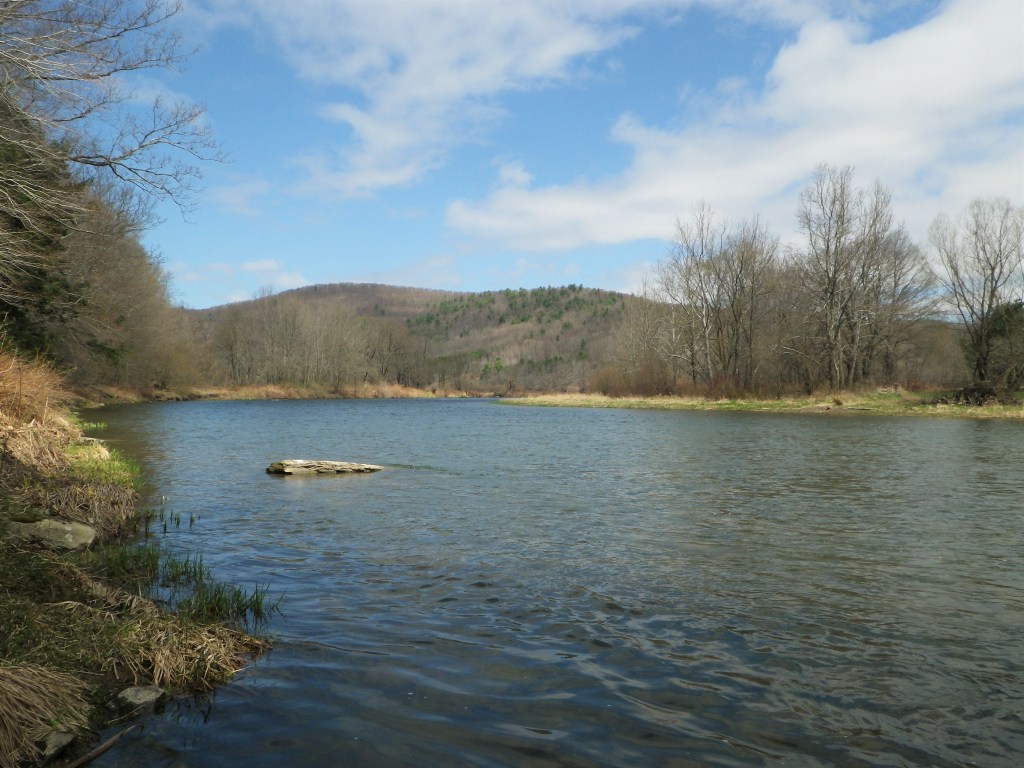
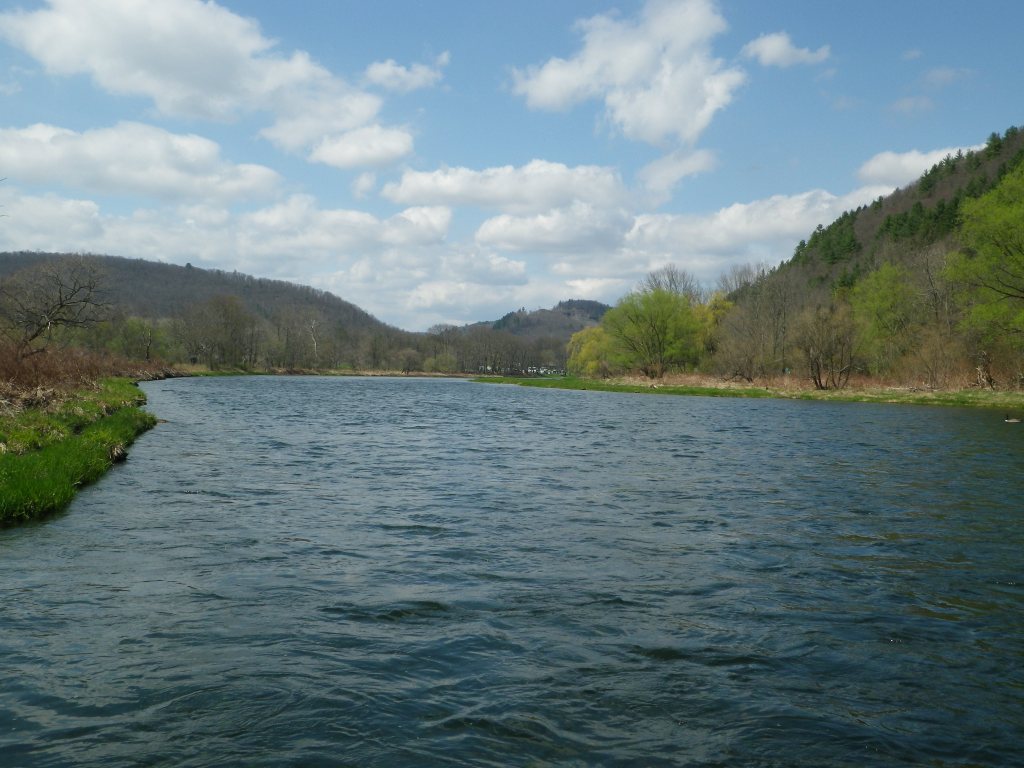
An early May day in the Catskills– we’re not far from that now!
An eventful spring so far: haunting rivers earlier than expected, cane in hand and dry fly at the ready, I am enjoying the gorgeous May weather this first week of April. Trees are budding, and the first tinge of green is appearing on the mountainsides. I saw flowering trees along the Quickway yesterday afternoon.
Standing in the river Sunday I glanced upstream to see a pair of young deer searching for early sprouts along the bank. I am glad to see they made it through a challenging winter. The eagle greeted me upon arrival, and bade me good night as I trod the banks toward home. Quite vocal, though unseen, I returned his greeting with a smile.
Monday afternoon I sat along a favorite stretch of bank, surprised when a full grown wild turkey launched itself from a grove of trees straight across the river. Minutes later his companion deemed it safe to cross and followed. The grouse have been drumming for a couple of weeks. Catskill wildlife has awakened and responded to the early spring, ready to fatten up after lean months in the snowy mountains, and set about their rituals of courting and procreation. All save the trout and their mayflies seem ready.
Strangely I am quite content, with my lust for rising trout subsided, at least until an early stonefly buzzes up from the river and makes me tighten my grip on the cork just a little. Oh, certainly I want to embrace the full measure of spring fishing, but I am simply at peace to be out along bright water again.
If I was privy to the mystical count of those degree days I expect determine the timing of the hatches, it would be easy to sustain that sense of calm. There would not be the delicious excitement of Nature’s uncertainty creating daily rushes of anticipation. Part of me covets such knowledge, though the other part relishes the mystery and expectation.
A springtime dreamscape: sitting and waiting, imagining so many times past with joy and elation at both Nature’sbounty and her mysteries…
Some laugh to see the solitary angler, sitting quietly with eyes ever watchful, wasting the day they think. For they are among the many too hurried to see what lies before them, rushing to “the spot”, eager to get lines in the water, believing all they have to do is cast their fly to catch all of the trout in the river.
There were times that I fished with more energy than knowledge, though I am thankful I always took a moment at least to appreciate what was before me, to acknowledge the color of light in the sky, the soft tones reflecting off rippled water. Yes, as an eager fly fisher I sometimes felt I had started too late, missed too much. A prisoner of geography, I fished since I was seven or eight years old, wherever I could. My Uncle Jim, and later my father brought me to the ponds and tidal rivers of southern Maryland. I longed for trout, the impossible quest I read fervently about in every sporting magazine I could get my hands on, and fly fishing!
The appreciation of the outdoors, the rivers, lakes and streams came from that beginning. Uncle Jim and I would find a spot along the bank of the slow Patuxent, bait our hooks and set our rods on forked sticks. We would watch the river go by, take in the sun and sky, marvel at the ducks and birds, wonder at the splash in the water: a fish!
My first real trout fishing came many years later, in a tiny Berkshire mountain brook, down the hill from Uncle Jim and Aunt Carole’s cabin. The wild brook trout came to spinners flicked from my ultralight spin rod when I visited in summer. I’d keep two for the celebratory annual breakfast, release all the rest; and I wished hard for a fly rod. I bought my first one back then, the only one I found at the little store in town: heavy fiberglass with a Martin reel and a level seven line. It wasn’t a trout outfit, but there were no trout at home. It saw duty when the bass fishing slowed, and I cast tiny flies and mini jigs for crappie or sunfish. It was another decade before a move put me in reach of trout water and I finally secured a proper rod, reel and some trout flies, and began to spend time in the most beautiful places around; places I had dreamed about all through boyhood.
I had so much to catch up on, so many years of dreaming and wanting this experience made me rabid for it, and I delved into it with abandon. Covered water, fished with that energy, fished too fast yes, too fast. That appreciation for what was special about the outdoors brought me back though, taught me to take my time, to watch and learn before wading in and casting. Thanks Uncle Jim.
Now I am that solitary angler, sitting on the bank or standing in midstream with an old cane rod in the crook of my arm; watching. The others pass by on the trails – how’s the fishing with a raucous laugh, and I hear them snicker: that guy don’t know you can’t catch ’em just standing there, on their way to rip some lips.
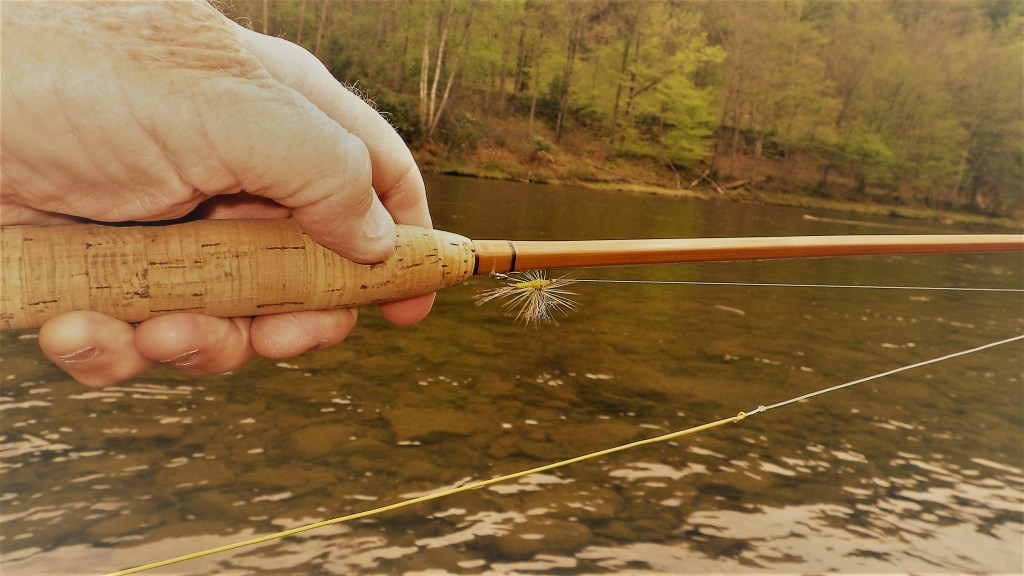
The brash voices have faded when I see the tiny dimple behind that rock on the far bank. Observation has long since given me the fly. The old rod comes up, pauses as the slow loop uncurls behind, and then curls forward tight and slow and gentle. The fly drifts, slowing in the current an inch from the rock, until the dimple appears again. The boisterous intruders are forgotten now, as the golden toned shaft bends deeply and the ancient reel purrs.
Forty-five years and still feisty: a seventies vintage combo waits for action.
Yesterday felt like the day, but the flies and the fish weren’t ready yet. Still to be along the rivers again, walking and noting the subtle changes winter’s high flows had wrought was enough to bring joy to my spirit. Sitting on the warm budding grass along the river bank is far more pleasant than in the padded leather chair before my tying desk.
The weather for the week seems to be improving as we go. Where the low sixties were a welcome promise just days ago, we now look forward to beautiful sunshine to drive the afternoons close to the seventies. Though the hatches are still in waiting, spring has certainly arrived, and I am all the better for it.
The anticipation is palpable now, and I find myself wandering around the yard casting rods and trying lines with visions in my head. A few new ideas at the vise have materialized, the product of nervous energy as I have more than enough flies and plenty of new patterns to test.
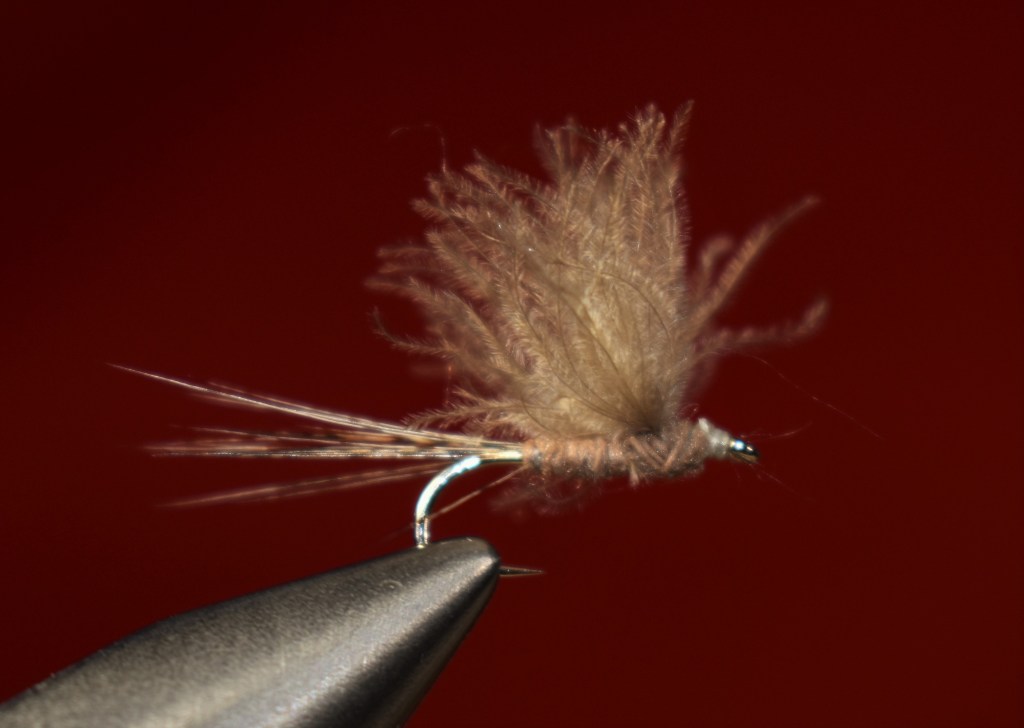
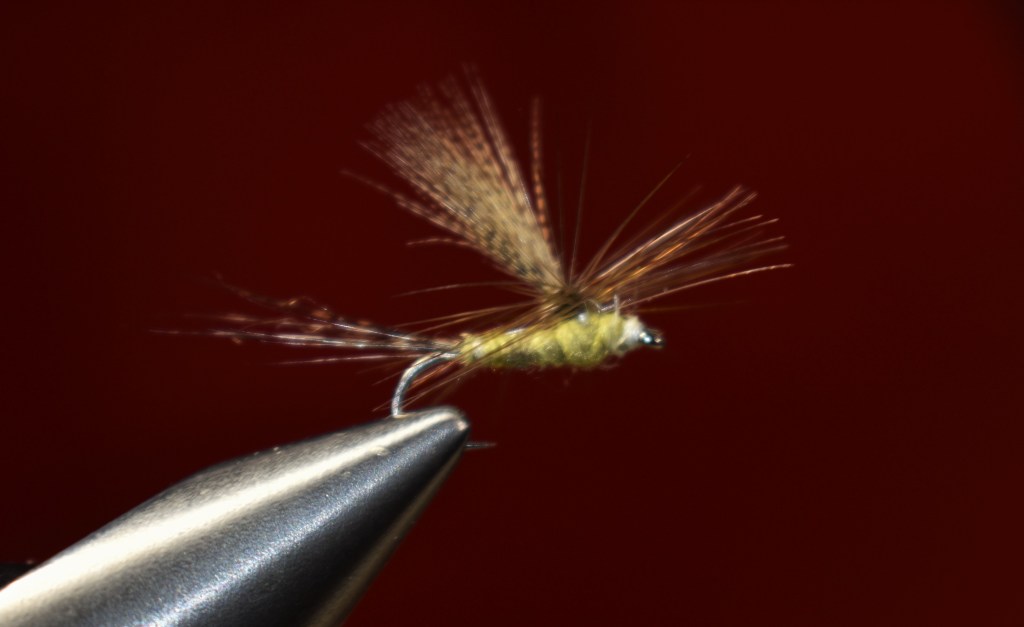
The Dun Dun: Conceived as a Translucence Series all purpose early season mayfly…
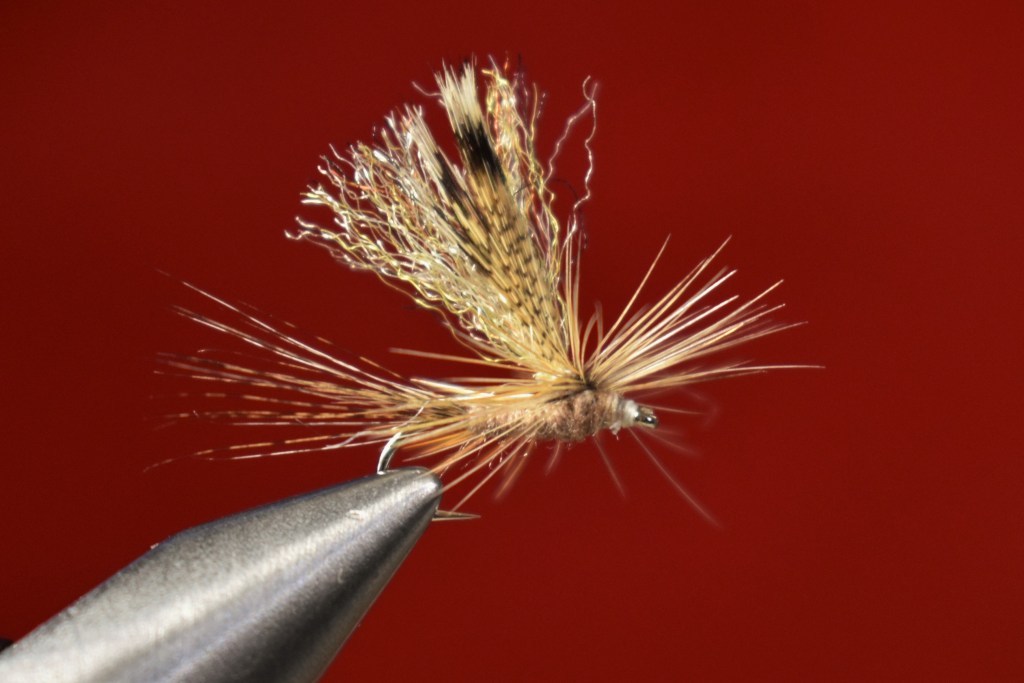
A prospectingalternative 100-Year Dun with Trigger Point Fibers added to the wing for visibility, lively and translucent with that same earthy dun colored silk and barred rusty dun hackle.
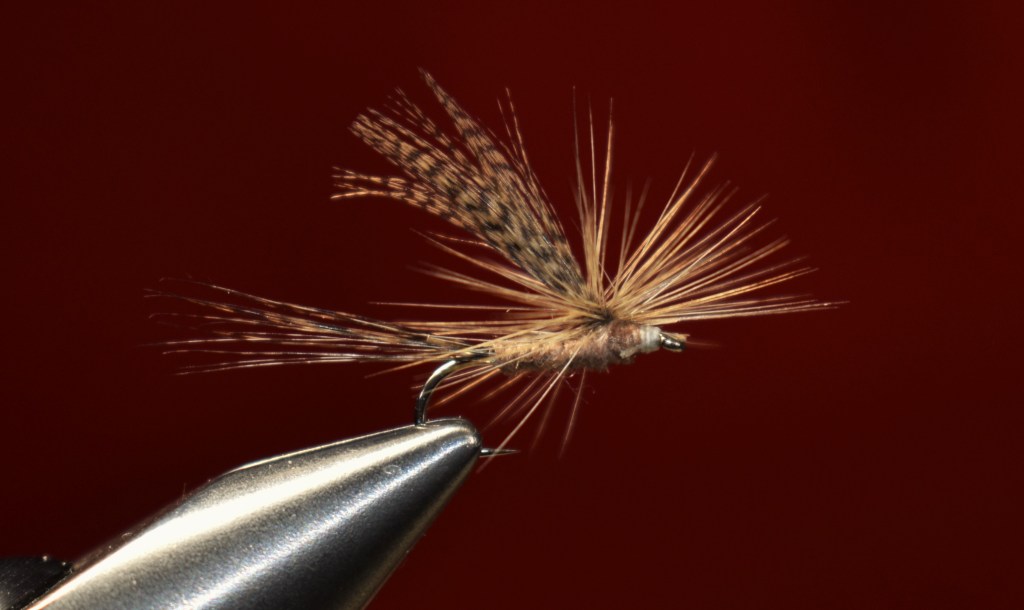
The Fox Squirrel, my own buggy Catskill Style dun has found time on my tippet in the opening hours of this new season. The fly offers a more traditional answer to the looks enough like a mayfly and its alive puzzle. My thought is that, since the trout aren’t tuned into specific hatches yet, a buggy tannish, grayish mayfly sized bug like the Fox Squirrel might just elicit a rise should I be lucky enough to put it over a neutral trout that’s enjoying the warming water and at least some stirrings to his metabolism. Fellow Guild member and Esopus Creek sage Ed Ostapczuk turned me on to the Dorato Hare’s Ear, a long lived Catskill pattern conceived along these lines, and even buggier when you take the time to blend your hare’s mask properly. The Dorato is one of his favorite flies.
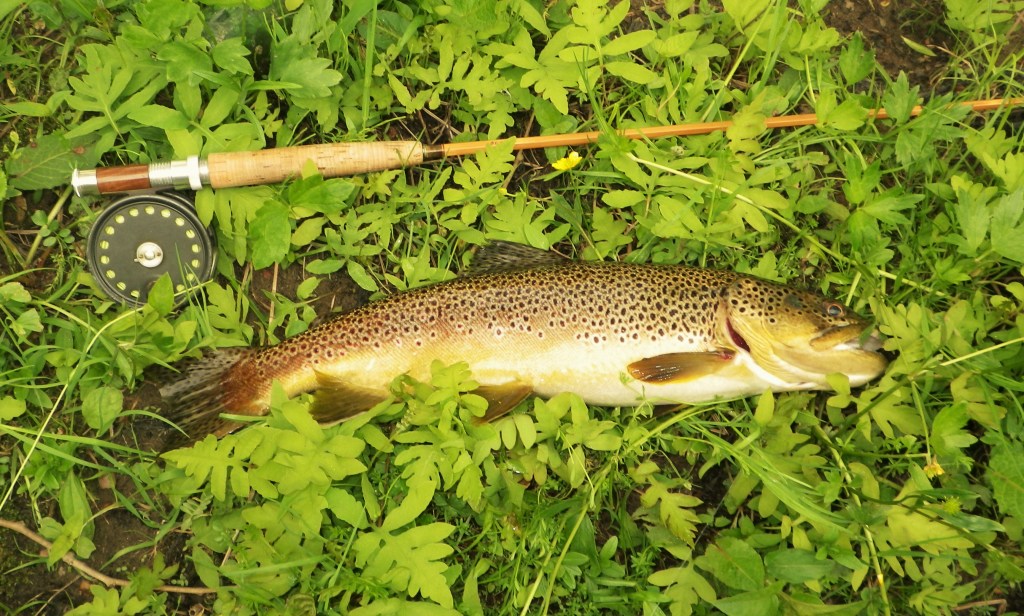
It is a long standing tradition among fly fishers that buggy flies look like something to eat to a trout. My memory of the Cumberland Valley days brings a smile when I think about fun with buggy dries. My friend Jerry Armstrong was one of the leaders of Falling Spring Trout Unlimited, and I can recall his laughter when he told me about some of his fishing in the nearby mountains. He cajoled me into tying some big size 10 deer hair ants and then we took a drive to one of his favorite mountain creeks. “The more trout you catch on it, the better it gets”, he assured me, and after releasing my first brownie I could see how frizzy the ant had become with folded hair cut by the fish’s teeth. “Keep fishing it he cackled”, and I did as I was told. After two or three trout had mauled it, hairs stuck up everywhere, and any resemblance to an ant had vanished. All that was required was to cast this hairball to a likely lie and wait for a brown to blast it! We both caught a load of brownies that afternoon, none with subtle takes, as our laughter echoed off the neighboring ridges.
Springtime and fishing bring joy. The fishing can be spectacular, but it doesn’t have to be to be enjoyed.
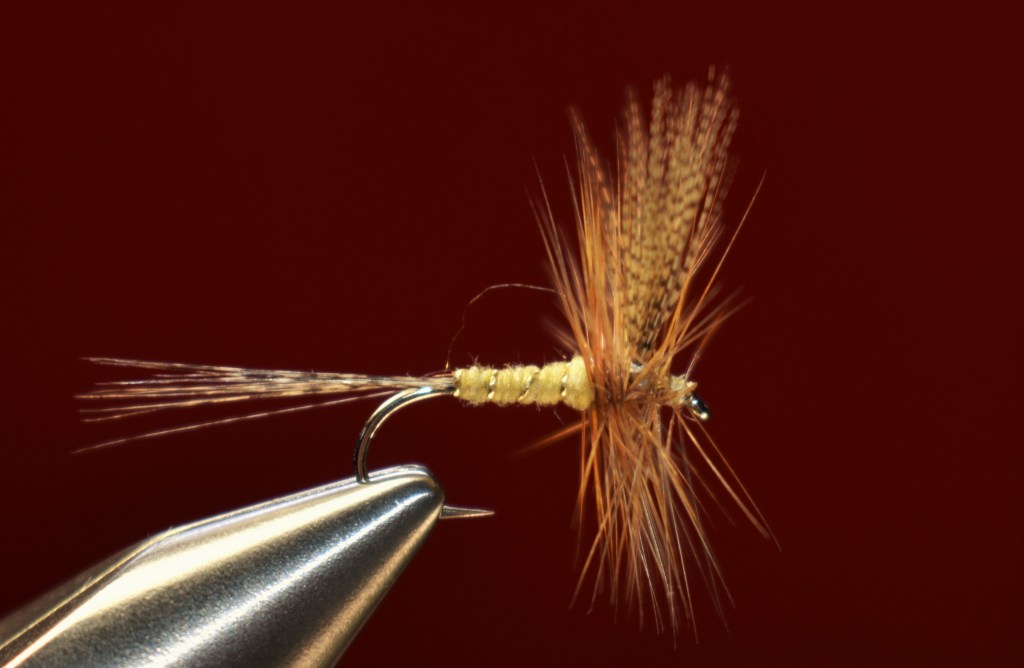
A silk dubbed translucencedun for the sooty yellow colored early Quill Gordon mayflies encountered on the Beaverkill: the Crystal finish DarrelMartin dry fly hook helps the natural cant of the wingswithout the built up rear of the thorax acting as anchor.The dun colored silk body of this translucence dun is a good general match for early season mayflies like the Quill Gordon and Hendrickson; hatches that I hope are not far off!
Twenty degrees this morning, though the bright sunshine has returned to restart the warming cycle with a new week of spring weather in the offing. Now I will begin to search in earnest for the first hatches of the season. Despite the warmth of March I have seen only the little stoneflies, tempting to the trout in warmer climes, though ignored here once again. Olives should be on the water, though the bright skies which lead to warming rivers are not conducive to heavy emergences of these faithful little flies.
I am hopeful that the rivers’ flirtation with fifty degree temperatures has awakened the stream life, that those several warm days in March urged the nymphs forward in their last push to maturity. Early hatches are a rare blessing in the Catskills, one not seen by this angler in a decade. I can picture the cloud cover increasing on a warm afternoon, and a stirring of life in the quiet water. Tiny wings upon the surface, just a few, sporadic but there, and the first soft dimple appears. There, along the bank that was long in the glare of sunshine, but now lies in shadow! Was that trout there all along?
Fingers tremble knotting a wisp of silk and CDC to the thin tippet; shoulders tighten with anticipation, and eyes scan for the proper casting station. The lobbing stroke of winter and weighted flies is abandoned now, and the wrist action is crisp and short. The tight loop unrolls smoothly and the leader kicks, its energy expended just above the surface, and floats down in soft curves. Dimple, pause and tighten…feel the essence of life in the cane, the electric charge to the spirit brings pure emotion.
Daylight, and it is snowing in Crooked Eddy. April First is the final traditional Opening Day of the New York trout fishing season, and Opening Day for Major League Baseball. Last evening I noted that our forecast had improved somewhat, though the high winds were still expected. It seemed that a window had opened that might allow me a couple of hours of fishing this afternoon. River flow was favorable, and the high temperature was supposed to reach forty degrees. April Fool!
As of 5:45 this morning that flow has risen 141% and is still climbing, steeply. The rain seems to have continued through the night, and it appears I will have to forego the pure joy of fly casting in snow laden twenty-five mile per hour winds in the name of tradition. The Red Gods do love to tease fly fishermen.
I have had many experiences to reinforce that belief. Hundreds of times I have stalked rising trout, slowly and carefully, armed with the perfect imitation, all in ghostly calm conditions. Reaching the ideal casting station I have lofted my backcast, only to have a terrific gust come up out of nowhere to blow my forward cast thirty feet off target and slap it down on the water. That scenario has replayed so often I could swear those ruddy beings have it on a tape loop.
Perhaps Nature simply decides that we brothers of the angle must pay our dues in deference to the marvelous gifts she offers for our enjoyment. How many perfect afternoons have we spent, enthralled by the magic of trout and fly? Some of the most fulfilling often involve very little catching; the fishing itself being quite sublime. I am certain I am not the only angler who has spent hours in a trance, bewitched by the vagaries of current, and a fine wild trout’s uncanny abilities to select the exact lie where achieving a drag-free float is virtually impossible. We cannot tear ourselves away!
Consider that Opening Day is simply the first installment of our annual dues. It is only right that we suffer a little. The cold, the wet, the biting wind that suddenly wraps our fly lines about our shoulders and inserts our fly onto the tops of our hats: all little tests to determine our worthiness for the season before us.
The poetry of tradition, I guess that may be the best way to view New York’s final Opening Day of trout season. It seems clear that we have earned the trifecta: snow, wind and high water. March was indeed promising, and though I tried my best to remain skeptical, a few afternoons sitting on my porch with a Cold Snap and the grill working it’s magic managed to win me over to the idea of an actual early spring in the Catskills. My Opening Day legacy will remain in tact.
The expectations for the first week of April have cooled considerably for those of us who have watched the forecasts, and the promise of rising trout seems further away. I will still find a way to enjoy my time. Conditions should be good for a solo float down the ever rising West Branch. Cannonsville is spilling.
I repaired a cut in the fly line on my drift boat rig yesterday, my venerable Thomas & Thomas LPS five weight stands ready now. I nearly lost that fine old rod last season when a boisterous current pulled me beneath a low hanging tree. I glanced in time to realize that the tip was higher than the lowest branches, but the oars demanded both of my hands; there was nothing I could do. Thankfully the tip snapped back from its sudden altercation with the tree branch, none the worse for wear. That rod landed a number of outsize brown trout after surviving that hazard.
To a number of younger fly fishers, that is the kind of thing they shrug off, figuring that they will be better off when the rod company’s warranty replaces their broken older model with a brand new shiny model of the day. Perhaps it is the bailiwick of the older angler to build a relationship with our tackle, to view it as something more than a disposable tool. That T&T is not cherished vintage bamboo, it is graphite, a rod too many would view as outdated, a twenty year old relic from before the current fast, faster and fastest action trend. It is an old friend.
It was the first full day of my inaugural Delaware river float trip with guide Pat Schuler when I found that the reel seat of my brand new Orvis 5 weight was sliding around on the rod butt, a victim of improperly cured epoxy. Pat suggested I look in his tackle room and pick out one of the rods there for the day’s fishing. There were several fine rods there, but the blue Thomas & Thomas tube caught my eye. I had always coveted the marque, sadly out of my price range, so I took the opportunity to fish one; a nine foot five weight three piece LPS. I didn’t put that rod down for the balance of the trip. At home I contacted the company to express my admiration and was pleased to find that they offered a writer’s program that enabled me to purchase that same model rod for a price I could manage. That LPS has been my drift boat rod of choice ever since.
Fishing from a boat is a different style of fly fishing, one that challenges the typical wading angler. Casting to rising trout involves long downstream casts, often accompanied by a lot of line mending. Delaware River wild trout demand perfect presentations, and fishing on that wide river usually means you are going to have to make those presentations in the wind. I found the LPS had the perfect balance of power and finesse to handle those new challenges; it suited me, and it still does.
Those trips with Patrick were the highlights of my fishing season for a long run of years. We made some great memories, and I acquired a confidence in that long blue rod, and a great respect for the man who showed me so much of the glory of the Delaware.
The sporting tradition is like that. We develop a relationship with not only the fine companions with whom we share woods and waters, but with the implements through which we pursue our sport. I still treasure the big, heavy, bull barreled .22 caliber target rifle my Dad taught me to shoot with. At ten years old it seemed as big as I was, but that old gun could shoot. My late father had owned that rifle since he was a teenager, and I took it along on my last squirrel hunt, sitting in the woods that October afternoon remembering our times together. Snugging the heavy stock into my shoulder I could feel his hand there, steadying my aim.
Talismans: they are artifacts that hold some of the magic of our greatest life experiences and allow us to relive the energy of those moments. As we journey through life, some of us build a store of talismans. We keep them close to our hearts to keep the people, the places and the moments they represent close.
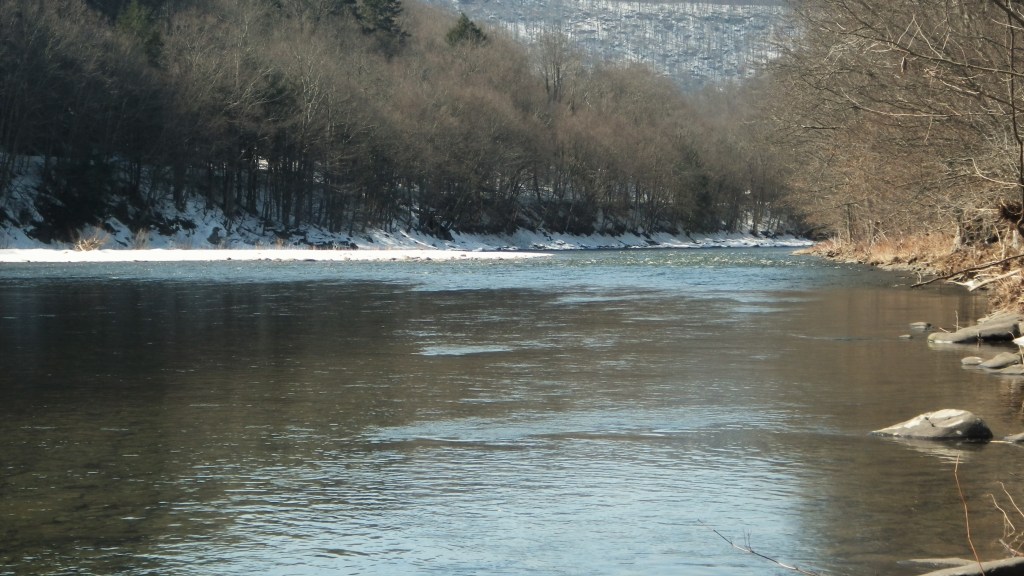
I can nearly taste the sweetness of springtime in the air. The warmest days of the young season have come and gone this week, and river temperatures have flirted with that magic number. The open waters are still far too high to wade, and I can’t get the boat in the river just yet for an early scouting mission; and so, I wait.
There is finally some hope for normalcy, as a great weight has been lifted with the first prick of a needle. Still more than a month to go before reaching that plateau of safety, but my spirits are higher than I can remember. Life seems to have possibilities again!
It is harder to fight the urge to get out there, to participate in all the rest of the angling lifestyle that has been suspended for more than a year. There is a sale I had hoped to attend this weekend, and I nearly made the trip, before judgement overcame exuberance. This is a critical time, and keeping apart is at once more vital and more difficult than ever, for the urge to join is so fresh and strong.
The spring weather seems determined to continue, though perhaps poetically, New York’s last Opening Day expects a high in the thirties with snow showers. More rain is coming tomorrow, so there may not be a wadable river anyway. I was going to go out for this last one, take a bamboo rod and see if I couldn’t find a rising trout; take my last chance to participate in the tradition. I figured I could find a quiet spot on the Beaverkill, perhaps even that one riser to cast to, but the classic river has spent several days flowing more than 3,000 cfs this week.
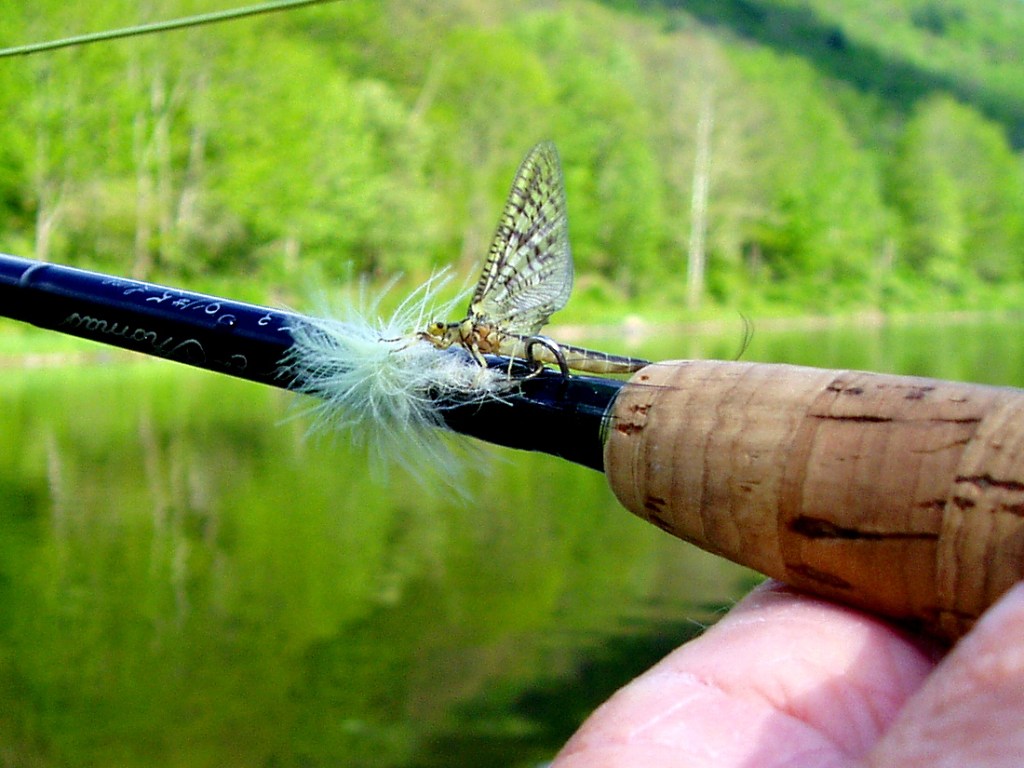
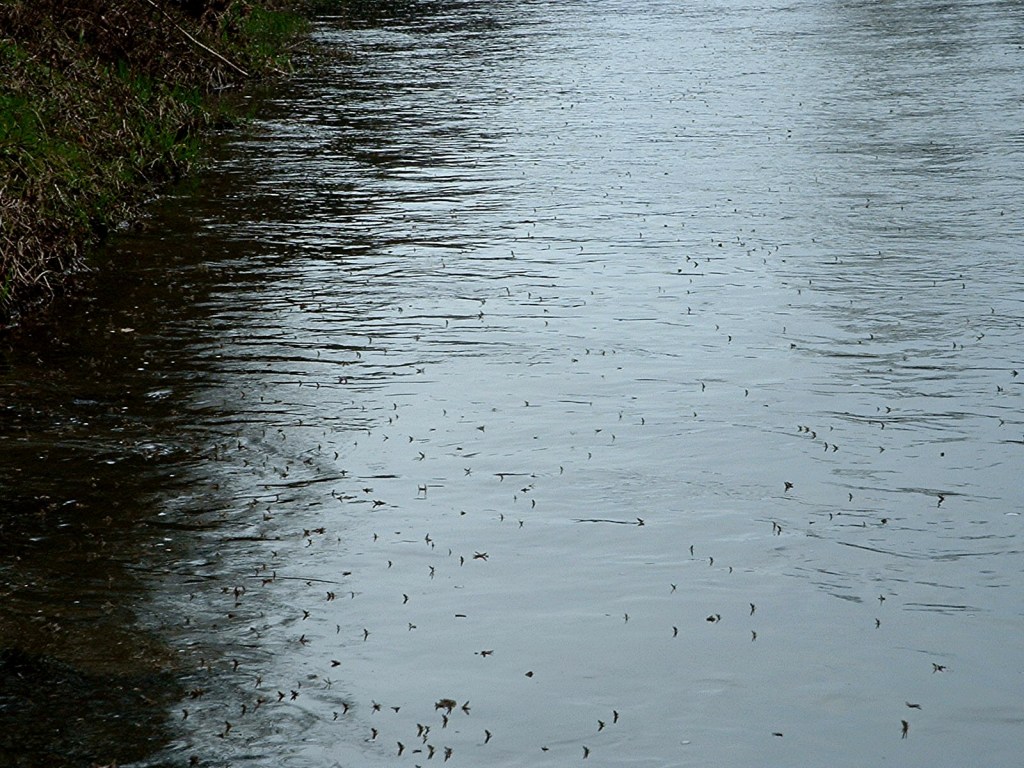
Hendricksons as we wish them to be: prolific!
Waiting, literally quivering with anticipation, for such a simple thing: a little ring upon the surface of the river! I keep hoping that these signs, the ones so easy to read, tell the truth: this will be an early spring, with the waiting measured in days rather than weeks. Though in the back of my mind reason works to trump my senses.
Part of the lure and lore of fly fishing is the thought process, the acquisition and sharing of knowledge, and each angler’s own development of theories as to the timing of hatches, and the reasons trout take a particular fly. As to hatches, I have always embraced the logic in the degree days theory, that each species of aquatic insect requires a certain number of days at a certain minimum temperature to mature. It seems reasonable, and the truth I have witnessed on the rivers supports the concept. In actual fact I believe that Nature’s math is more complex, that the truth lies in some complex formula of calories, water chemistry, genetics and ambient sunlight; though the result is that sustained periods of colder than normal weather and water result in seasonally later hatches of our friend Ephemerella subvaria and brethren. It has been a long, cold winter. Might a day or two of 50 degree water in March be too little, too late to bring last spring’s nymphs to early maturity? I will worry about that until I actually see those slate gray wings upon the surface and the rush of anticipation explodes in my breast!
How soon might they float the currents of that Catskill landmark, that classic river of rivers?
Oh how I long to sit and converse with angling friends new and old, to sip a wee dram and share our theories and experiences. We could talk for hours on fly patterns alone! Admiring a fine old cane rod, sharing our individual choices for just the right reel to snug into its seat, laughing at the foibles that have claimed as many great trout as our nets – these are the moments of friendship, we brothers of the angle enjoy nearly as much as time on the water itself.
Is one long dead maker’s rod truly superior to the fine, polished one made a month ago? The discussions are endless, for there is never a definitive answer. The cachet of ancient, historic, groundbreaking craft meets the science of improved precision, modern adhesives and computer refined tapers. Each path allows he who wields the result to touch the magic, that is certain. Those long among the brotherhood cherish our tackle.
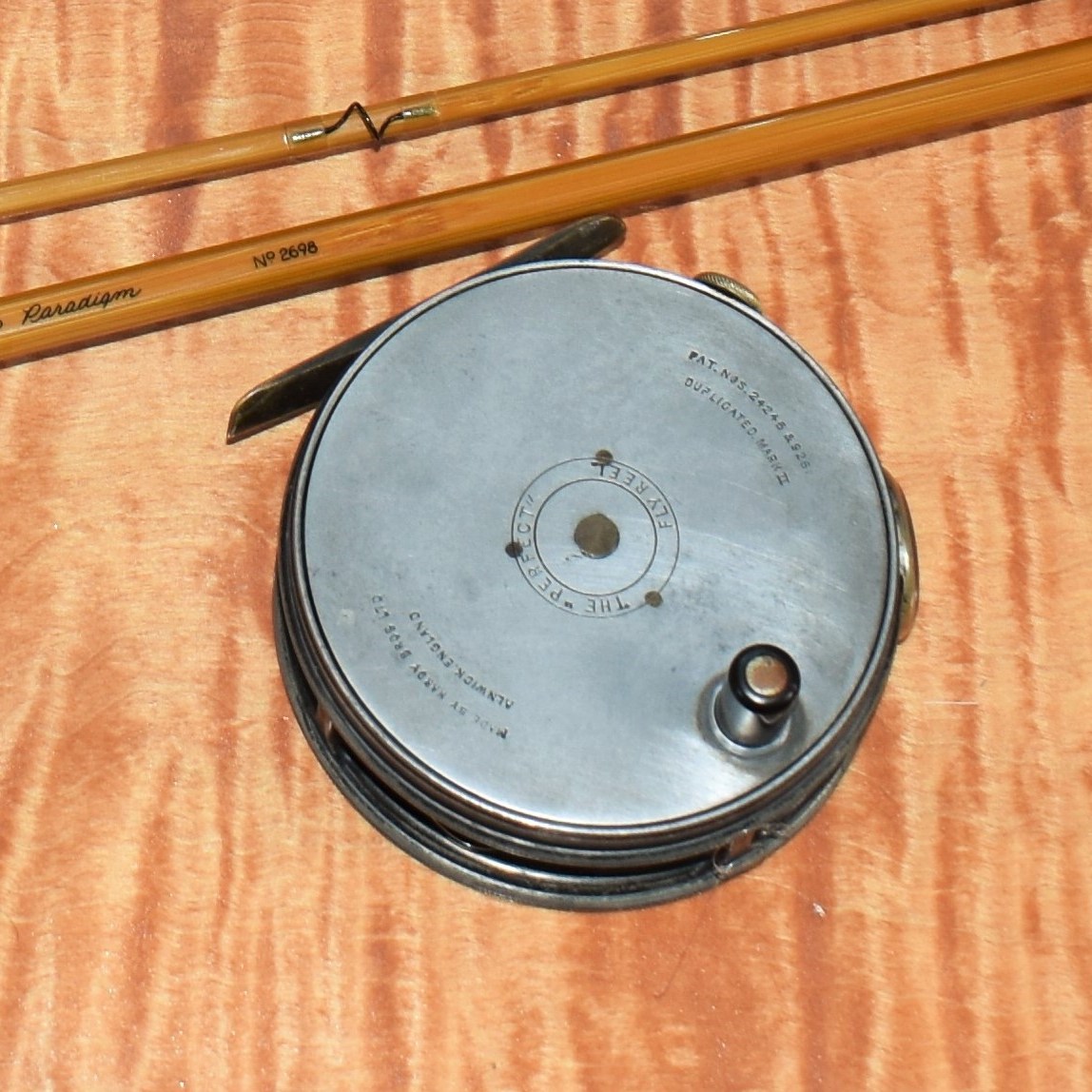
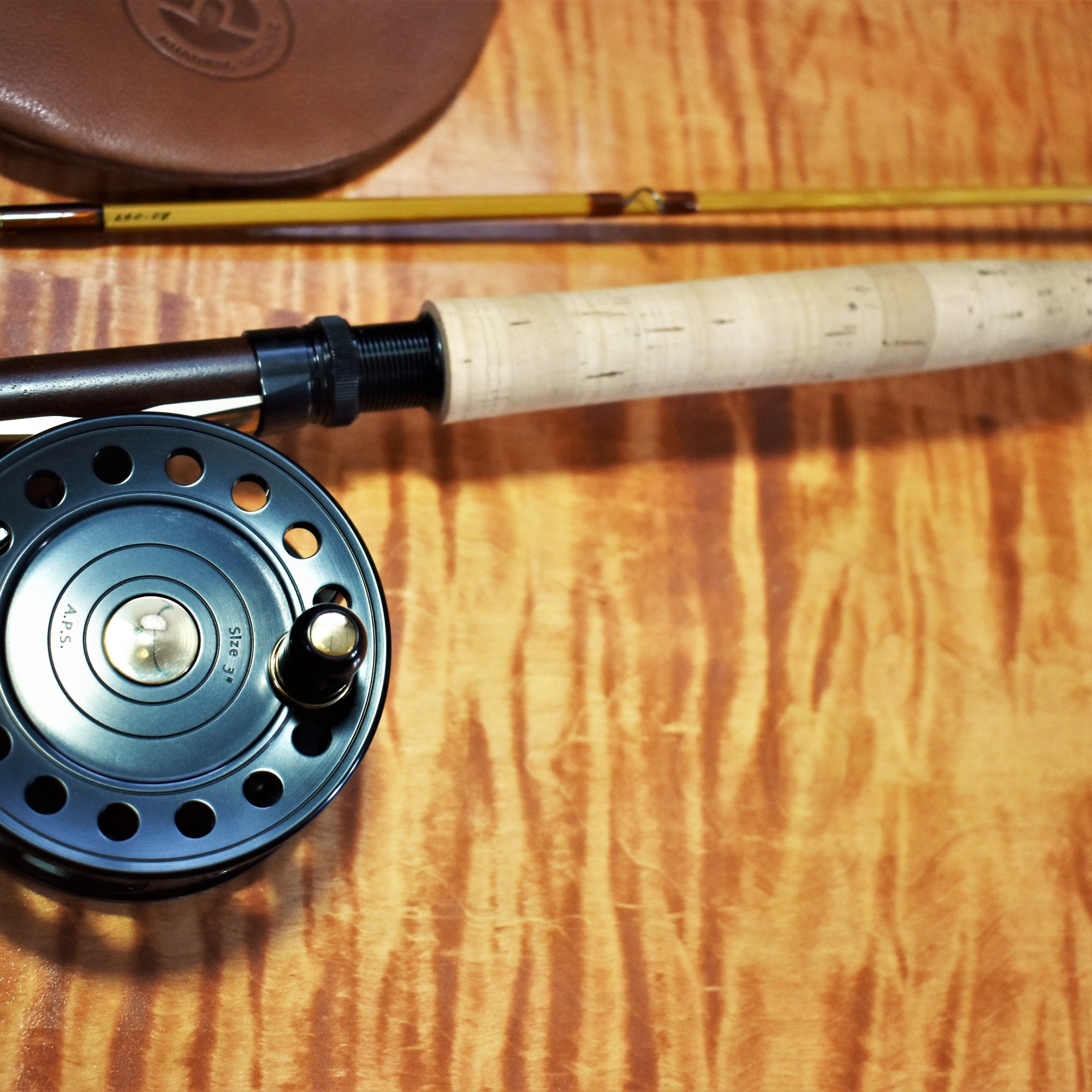
I love the soft patina of time and reverent use on my handmade Hardy from 1929, yet I thrill too at the brilliant design, computer controlled machining and careful hand assembly of my new Trutta Perfetta from deep in the Ukraine. Both let me touch the magic. Old and new: new flies designed with inspiration taken from the old ones, ancient braided silk lines and new plastic ones computer designed to mimic their performance. There is much we could talk about after a year away from friendly gatherings.
Waiting… pondering the riddles that Nature slowly reveals, thinking of friends and times shared on bright water. Rods are polished, reels oiled, and once in awhile the urge drives us outside to the lawn with a favorite rod: let’s see how it feels with this new longer tapered line.
Early spring or simply a prolonged flirtation? If sunlight brings an early greening to the river banks, will she also bring an early hatch and a rise of trout? I can’t wait to see!
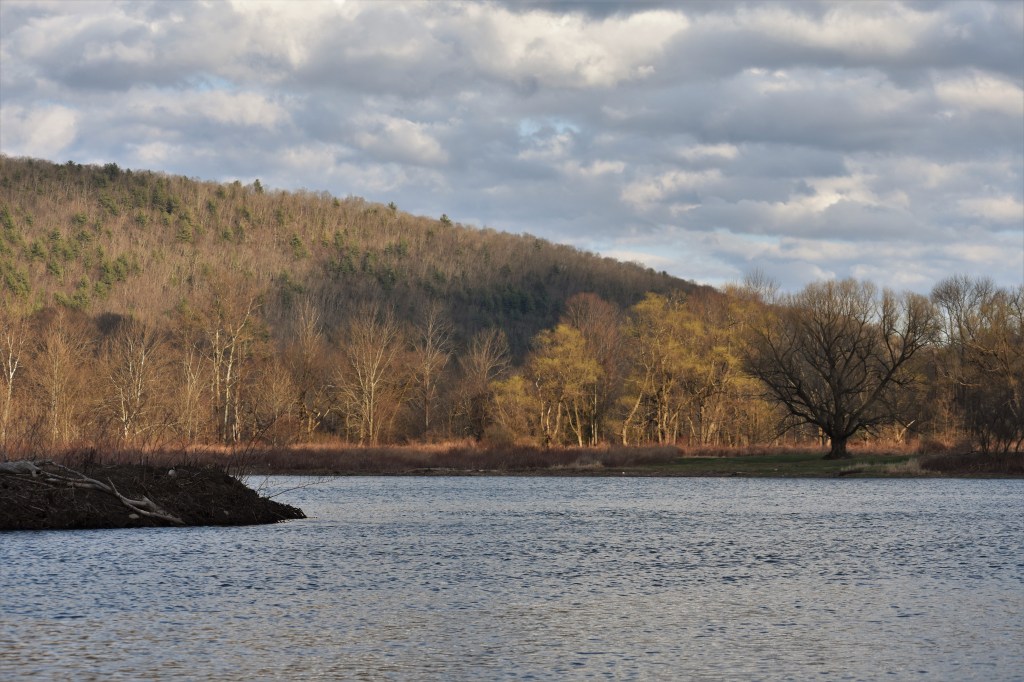
Afternoon and nearing the end of an early April float on the West Branch Delaware.
There is one week remaining in March, and the weather seems content to proceed in a springtime vein. I am anxious for that first sight of a good trout rising, making preparations so that everything is ready to allow for finding that wonderful fish as soon as possible. Rivers are rising on this rainy morning, and there is a good chance that additional showers through the rest of the week will have most of them higher than ideal for wade fishing come opening day. As if keeping an ancient Catskill promise, the forecast for the first of April is one of the coldest days in an otherwise favorable ten day outlook.
I followed through with my plan to get the drift boat ready for action yesterday, choosing to relax and forego a third straight day of searching for trout not yet ready to play my game. I dismantled my “garage” and put that to rest for the fishing season, hooked the trailer up and tested the lights, replacing a bad running light, and giving the tires a visual check. I even finished cutting my bamboo rod holder and put the first two coats of spar varnish on that and my anchor box. I haven’t carried cane in the boat the past two seasons, not wanting to risk damage to a cherished rod. The rod holder will cushion the bamboo blank and keep the tip down out of the way, so my old 9 foot Granger can get some time on the river.
Dennis Menscer wrapped a new guide and gave that old rod a varnish dip for me, something I had planned to do myself back in 2015. That project was derailed by my adventures with death and health care late that March, and I just never got back to it. Thanks to Dennis, that 9050 is ready to go as my boat rod. He also cut and gave me a nice section from a flamed culm of bamboo which I split, sanded and varnished to make the rod holder and a tool holder for my fly tying desk.
Rainy days are great for fly tying and other fishing chores. I tied some dark olives and Quill Gordons this morning and tossed them in a pill bottle with yesterdays Palmered Ravenstones, giving me a fresh dozen early season dries to try to tease up that first riser.
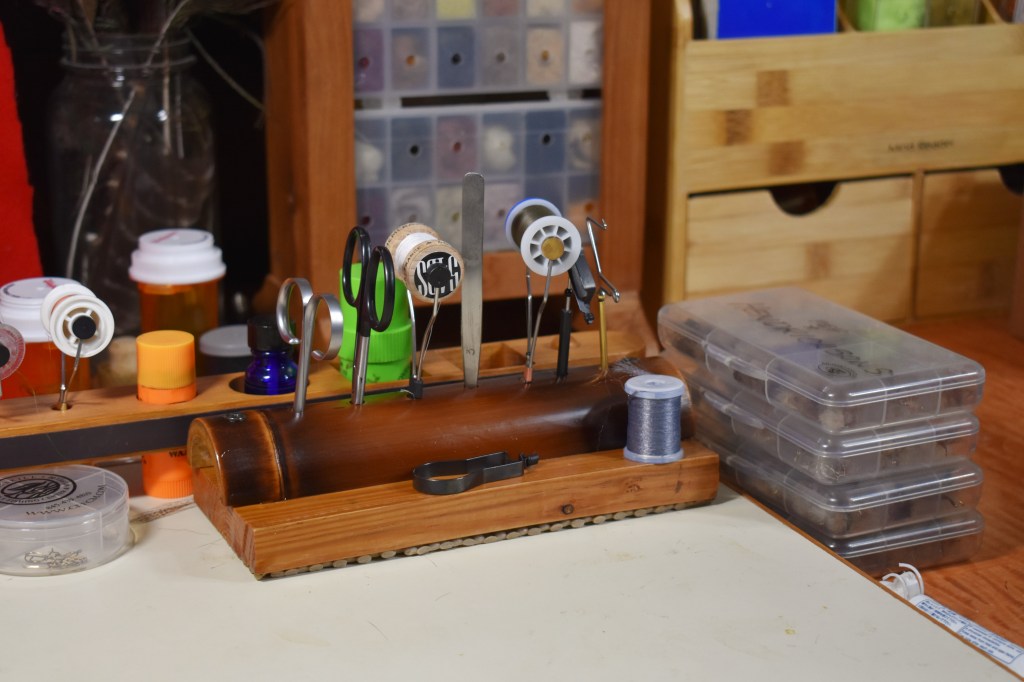
My bamboo tool holder adds a bit more organization to the bench, keeping the most used items handy, and not sliding around on my desktop. I made it small enough to stay out of the way, unlike the old commercial caddies that store my too many other tools.
I guess the boat bag may get my attention next. This time of year I want an insulated Thermoball jacket, a rain jacket, fleece gloves, spare ballcap and a wool watch cap in there at a minimum. Later in the season, once I hope we are all safe enough that my friends can join me, I’ll include a second spare rain jacket in case the visitor forgets his own, and maybe a fleece vest. The early floats will all be solo floats as they were last year. You simply cannot social distance in a drift boat, and I have never believed that 6-footstandard was sufficient anyway.
I have to take a look at the boat box flies I tied last spring, just to refresh my memory as to what I put in there. I know it started with various patterns and sizes of olives, Blue Quills, Gordons and Hendricksons, but I could have added and subtracted some patterns as the spring progressed. I have been mainly a spring float tripper, using the boat when the rivers were too high for the wade fishing I prefer. Our rivers have a funny way of dropping all at once and staying low, and I do not enjoy jockeying all over the river trying to keep it floating while avoiding interfering with too many other boats and waders.
My rods and reels are all in good shape and ready to go. The boat will get the aforementioned Granger and my Thomas & Thomas LPS. That 9′ five weight has been my primary drift boat rod for twenty years. It has a lot of flex, feel and touch for great fly presentations, along with enough power to handle the winds out in open water, and the extra distance fishing from the boat requires. I’ll change to fresh leaders when I chose the rod to start fishing, or simply rebuild the business end according to the flies and conditions.
By this point there really aren’t too many chores remaining. It has been a long winter and, fishing through most of the year I tend to keep my gear in shape. The last item won’t be tended to until I’m ready to drive to the ramp: filling the lanyard box. I’ve worn one of those simple lanyards ever since the first time I dropped my boat in the river. The clips hold the essentials you need throughout the day: nippers, tippet, fly floatant and a tiny plastic fly box with two or three each of the patterns I most expect to be fishing. Some days I never have to open another fly box.
Boat flies tend to be a little different for me than wading flies. CDC dominates many of my hatch matching boxes, but I don’t fish them as often from the drift boat. A float day generally involves long downstream casts, and stripping a CDC dry back thirty or forty feet cast after cast tends to saturate them. The CDC duns I do tie for the boat are winged heavier than my normal flies, because sometimes the best trout simply insist upon that movement. Most of my boat flies are hackled patterns, with parachutes and my posters dominating. The higher casting position and long distances can make flies more difficult to see in some light conditions, thus these patterns have high visibility wings of Antron or Trigger Point Fibers. Those wings don’t soak up water when stripped in for another cast either.
I can still hear the raindrops on my metal roof, filling the groundwater, refreshing the springs and bringing life to the rivers. Amen.
Still some time to wait until spring begins to blossom…
I have enjoyed the past two days of warm afternoon sunshine and walks along the rivers. I have even had a tease or two from a rising trout. There were four of them on Sunday, all but one too far from me to even consider a cast. Different fish in different places: one timers. The last was certainly a little fellow, in the same foot deep water I was walking through: blip…hello…I am wishing for spring as much as you are!
Our forecast looking ahead seems to be saying spring, in that fitful way we so often see here in the Catskills. Rain is coming, and with it the rivers will rise and wading will fade from being the preferred method of navigation. Seeing the writing on the wall I expect to uncover my drift boat today, to mount the oars and check her over, test the tires and trailer lights, simply get everything ready to go. I have seen several boats on the river already, some obviously guides with clients. I cannot imagine what brings them out so soon, unless it is the same desperation for spring that I am feeling; a guided float trip is an expensive proposition, at least for a working man.
Perhaps this afternoon I’ll take one more dose of that sunshine, even if I know the trout aren’t ready yet. There’s always a chance that one of those eager beavers will rise in casting range, and more than a single time. There’s a chance I might just have a little black stonefly dry on my tippet at that moment, and place a cast just upstream from his expression of premature exuberance.
Translucence Catskill Series: Atherton No. 3 silk blend, Legartun Fine oval gold tinsel, wood duck flank and Collins Dun Creetied with white Ephemera silk on a size 12 Daiichi 1182 hook.
A commenter raised some questions yesterday about silk dubbing and blending it for natural colors, so I decided to do a short post on those topics. The only current manufacturer I am aware of for pure silk dubbing is the Kreinik Company of Parkersburg, West Virginia. Their main product line is related to sewing and crafts, but various items are useful for fly tying. http://www.kreinik.com
You may order dubbing from their website but they don’t sell directly, they transfer your order to a dealer (a craft and sewing shop typically), not all of whom stock the dubbing. I suggest e-mailing Kreinik to ask for a stocking dealer as close to you as possible. Creative fly tyer and author Harrison Steeves uses their metallic braids and ribbons in many of his unique and effective terrestrial fly patterns.
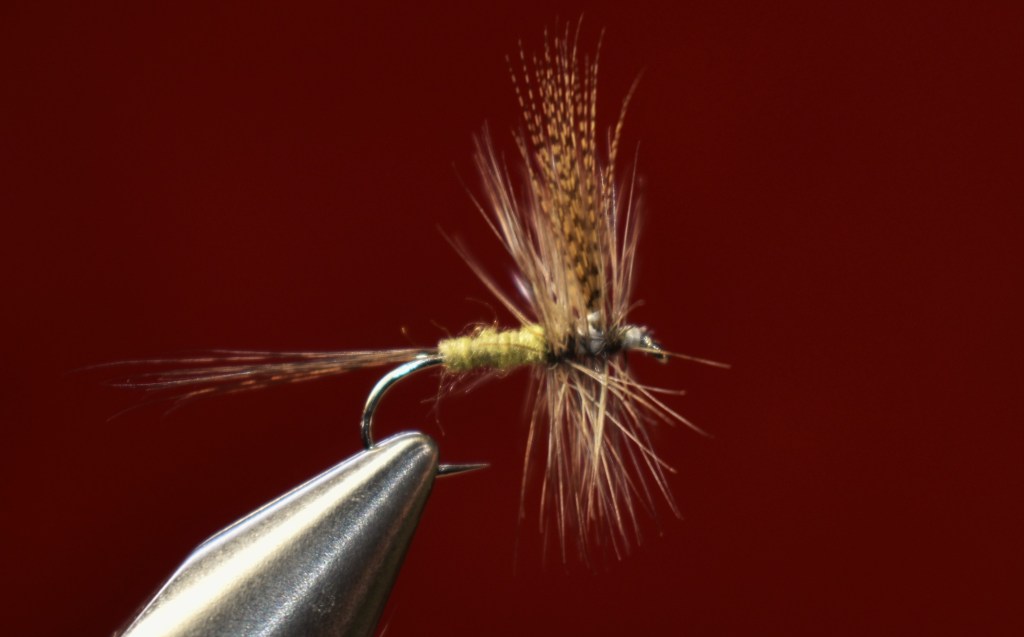
Translucence Catskill Series: My Quill Gordonuses a blend of yellow and dark dun silk dubbing, Coq-de-Leon tailing, wood duck flank and Collins dark Barred Dun hackle, tied with white silk on a Daiichi 1182 hook.
I blend dubbing materials using a small electric coffee bean grinder. Blending may also be done by hand, simply by mixing materials with your fingers. I prepare silk dubbing for blending the same way I prepare Antron dubbing for blending; by pulling some of the material out from a clump in my hand in very thin veils of material. Using my larger all purpose tying scissors, I make cuts across the veil approximately one quarter inch apart, letting the short, fine fibers drop into the hopper of my blender. When I have the amounts I want for the colors I am blending, I will spin it briefly with the blender; just a touch on the switch to spin it for a second and then shut off. I take the blend out and check the color, adding more of whatever color or colors I want to get the mottled shade I want, then spinning it briefly again.
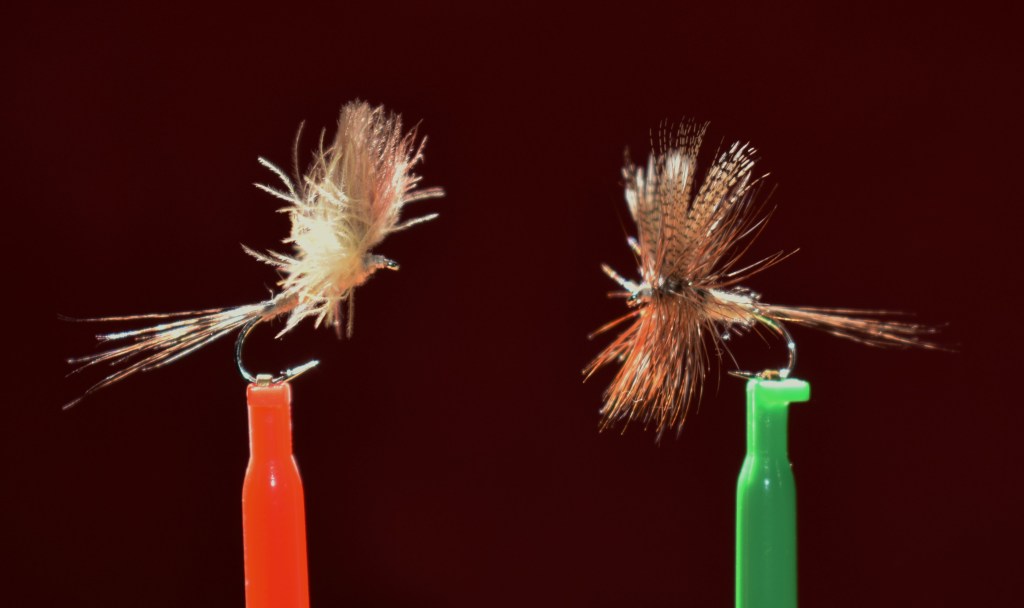
Translucence March Browns CDC and Catskill Style catching the morning sunlight.
To get the most out of this type of experimentation, catch a few mayflies during the various hatches on your home waters and blend to match their coloration. Keep notes too, and a small, labeled sample of your proven dubbing blends to use for a color template when its time to make a new batch. My basic blend notes indicate my name for the blend (the hatch I am matching) and the ingredients and proportions, for instance: Hendrickson Blend – 2 parts light reddish tan fox fur, 1 part tan Antron, 1/2 part fox gray underfur.






 Bright Waters Catskill