Charade

The sun glares through my elevated window, and amid shards of clouds there is blue sky visible. It looks too inviting, the warmth of that glorious light, and I nearly run out to the river, breathless for the chance to cast a line and find a trout. I stop myself short of that headlong rush, as I know it is all a charade.

The wind blows the tiny, icy snowflakes nearly horizontal as I embark upon my morning river walk. Ah yes, the light is warm, but the moving air is well below freezing! Just a walk today, no rod, no reel.

The East Branch has cleared, its flow still strong enough to repel the icy hands of winter. I’ve pulled the collar of my old down vest up tight around my throat to keep that wind away from my arthritic neck. That vest’s age is apparent with one look, it’s tag revealing the fill as goose down. When I was younger down vest or down jacket meant goose down, but no more. Today every company with some nylon and a zipper advertises down jackets, but you don’t want to read their tags. It is a different time. Nothing means what it says these days, except the old things, the things we keep.

Perhaps that is why I have such an affinity for old fishing tackle. One can read all manner of claims for synthetic this, and computer machined that, but I know that an old cane dry fly rod is just that; a wand intended and skillfully made to cast a dry fly gently and accurately to a rising trout. A handmade Hardy reel is a piece of craftsmanship that a proper English gentleman made carefully with hand tools, adjusting the fit of spool to frame precisely. That reel will wind smoothly as fast as the angler’s hand can turn it, and sing beautifully when the shoe is on the other foot, the trout streaking away, away from the bend of the rod.
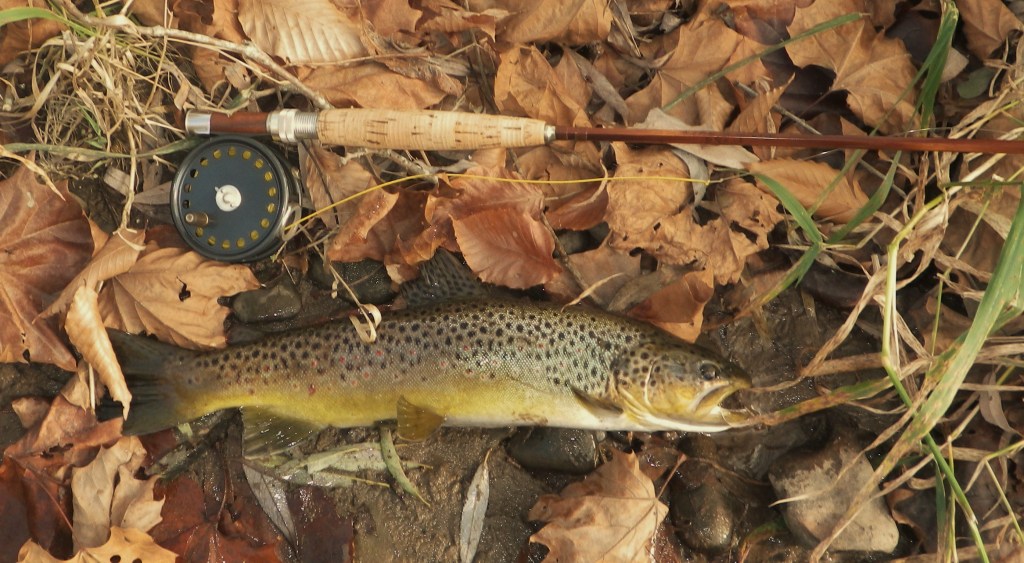
A new rod from 1967 and a handmade Hardy from the 1950’s

How many of you recall the days when people routinely spoke the truth, when you got what you paid for as a matter of course, expected it, and weren’t disappointed.

I guess that may have something to do with why I prefer to fish older tackle. I get what I expect, though the price may be dear, but there is much more to it than that. I like to wonder during the quiet moments, just where my rod and reel have been before. Might they have laid on this same river bank decades ago, while another angler gazed at the placid surface with hope for a rise?

I confess to a fondness for times past, times we didn’t have terms like combat fishing, for there was no need to describe such behavior. One could enjoy solitude, and if others were encountered, they were lady and gentleman anglers, quietly enjoying the beauty of bright water and wild trout, with a pleasant greeting if one passed their way. No one crowded into an occupied pool, content to move on or sit quietly on the bank until the angler they encountered there fished through.

In some way the vintage rods and reels I fish are time machines, for when I am alone on bright water they can transport me to a quieter and gentler time. Would that their magic could affect us all alike, and foster kindness and blissful enjoyment on each river for everyone, each day.

Almost Fishing

I had my waders and boots on, and enough insulation underneath to stay reasonably comfortable. Two pairs of wool socks should be sufficient to keep my toes from solidifying, or at least I hoped so, but I didn’t get to find out.

When the river came into view at close range I was dismayed to find it still muddied from the holiday storm runoff. Flood waters have receded, at least on the West Branch, and with the flow approaching 700 cfs I expected it to be clear. Disappointed, I drove down to the access anyway. I figured I’d take the walk down and give it a shot in any case, get the benefit of the exercise from the foot travel, if only to confirm the cold, muddy water I knew I’d find. Arriving to find a pair of cars parked in the snowy lot took that chance away as well. I wanted to get on the river pretty badly, but not enough to risk a face to face encounter on the trail; not during the heavy surge of Covid infections our sparsely populated little county is experiencing.

Sure enough, when driving back to town I saw two guys in the river, standing just where I had planned to fish. Well, I was almost fishing…

Sub-freezing weather returns tonight, and another winter storm is supposed to be heading here for year’s end, so any chance to wet a line will have to wait for 2021. Lets all hope it is a much safer and more friendly year. I did get some frigid sunshine yesterday morning, enough to get me out for my river walk and some of that fresh winter air. Best to be thankful for the small gifts we receive.

My motivation for fly tying sort of comes and goes. One hundred eighty-three and one half dozen flies I have tied this year have me more than ready for next season, and likely the season after that. I could begin sorting through fly boxes, but there’s an awful lot of winter ahead. I might need that little task one day to stave off the shack nasties, cabin fever, or whatever you might call that madness that creeps into the brain too far removed from mayflies and rising trout.

I do have a couple of books on order, though it might be weeks before I see them. Postal service has become chuck-and-chance-it. There is Schwiebert! I finally acquired his two volume opus “Trout” last spring. I’ve read a little, but saved most of it for winter, as this is my reading season. How I would love to have the chance to walk along the stream with him once again! I am thankful that I can, in some way at least, through his words and my sparks of memory!

The late, great Ernest Schwiebert casts a line on Big Spring

I have fished all over the world thanks to Ernie’s remarkable writing! Trout in Chile and Argentina and throughout the American West have risen to our flies, and the great salmon of Norway have stripped our reels bare as they muscled their way back to the seas! Best of all I can return at a moment’s notice to any of these beats, the finest fly fishing in all the world lies at my fingertips, right there on the shelf. Yes, I think I’ll go there now…

Flies for Christmas

The East Branch Special

During my fly shop years I had a little tradition of going out for my Christmas fish. That generally wasn’t on Christmas Day, as we would travel back to Southern Maryland in those days to spend the holiday with family, but sometime during the week before. Some years I managed to catch a nice commemorative Falling Spring rainbow, and some years I simply enjoyed my time on the stream. I would love to continue the tradition in retirement, but this past week’s ice and today’s flood waters preempted any such notion.

The Beaverkill and East Branch reached flood stage, while the West Branch stayed shy of that mark, thanks to the remainder of last week’s twenty inch snowfall meeting up with last night’s fifty degree temperatures and a lot of rain. I am thankful that this event wasn’t a lot worse. Enough of the snow melted slowly during the week and, at least here, soaked in to replenish the precious groundwater and the mountain springs that feed the rivers of my heart.

I spent Christmas Day relaxing this year, listening to the music of the season, even napping a bit, and tying a few trout flies for 2021.

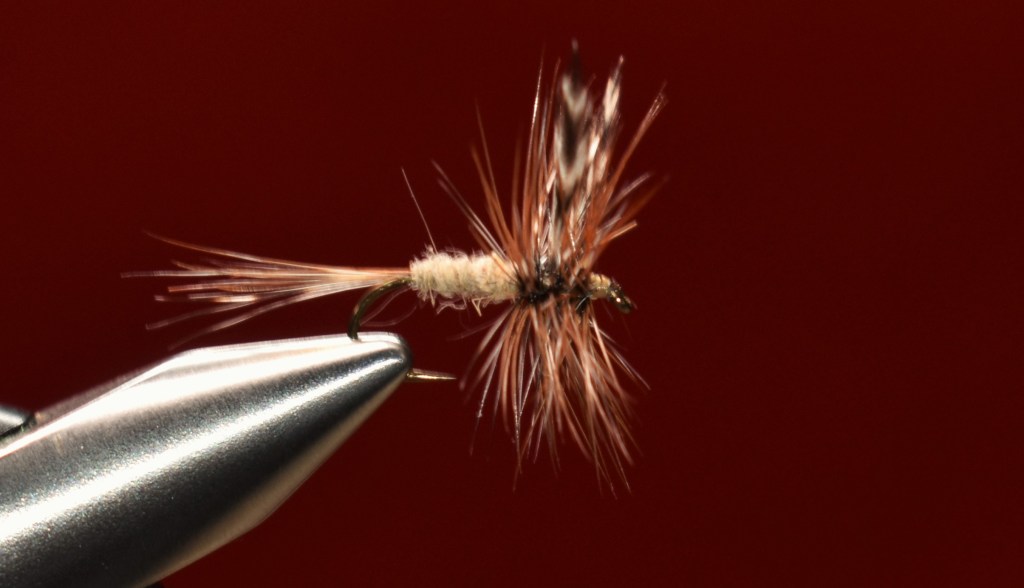
I ran across a pattern last winter called the East Branch Special. It’s combination of a classic buff colored fox fur body with the grizzly hackle tip wings and mixed brown and grizzly hackle of the venerable Adams reminded me of the March Brown mayfly, and I figured it was more than worth a try. Local patterns that endure are invented by local anglers, the guys that know their rivers well, and this one originated with a gentleman named Art Patterson, brother-in-law of Al Carpenter, Sr., founder and proprietor of Al’s Wild Trout of Shinhopple, New York. I used to visit Al’s shop when I fished the East Branch, and I’m surprised I didn’t come across the fly there twenty years ago. I would have liked to know the story behind it. I tied a few East Branch Specials last winter and made sure to include them in my vest come May.

I was fishing one bright afternoon and noticed a few big mayflies among the sulfurs that had been drifting downstream for a while. When I reached into my fly box for a March Brown dry fly, there were those East Branch Specials smiling at me, and just waiting to be knotted to my tippet. There were a couple of heavy bulging riseforms that had appeared in the area I was fishing, in between the steady risers I was catching on sulfurs. That fish had showed no interest in sulfurs, so I offered him the Special. Boy that big old brown looked at that fly one time and just busted it. He came for the fly so violently that I jumped a little, setting the hook a touch too late. The fish went down and my rod bowed heavily, then popped back up like a spring. Gone!

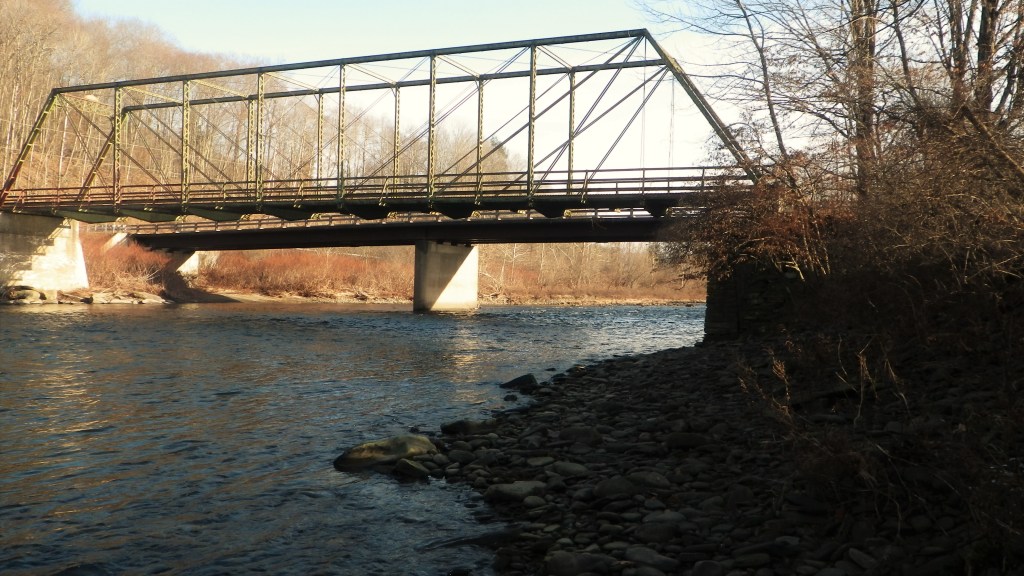
Since it was Christmas, I decided to give myself a little present this afternoon: half a dozen East Branch Specials. Like I said, you have to respect a local pattern. I wish I could simply stop into Al’s Wild Trout and ask about the story behind the fly, but Al has been fishing around the bend now for a lot of years. The shop closed after his passing, though the building overlooking the pool at Shinhopple bridge still watches over the river. I expect Al’s spirit watches over it too.

Merry Christmas

River Walks

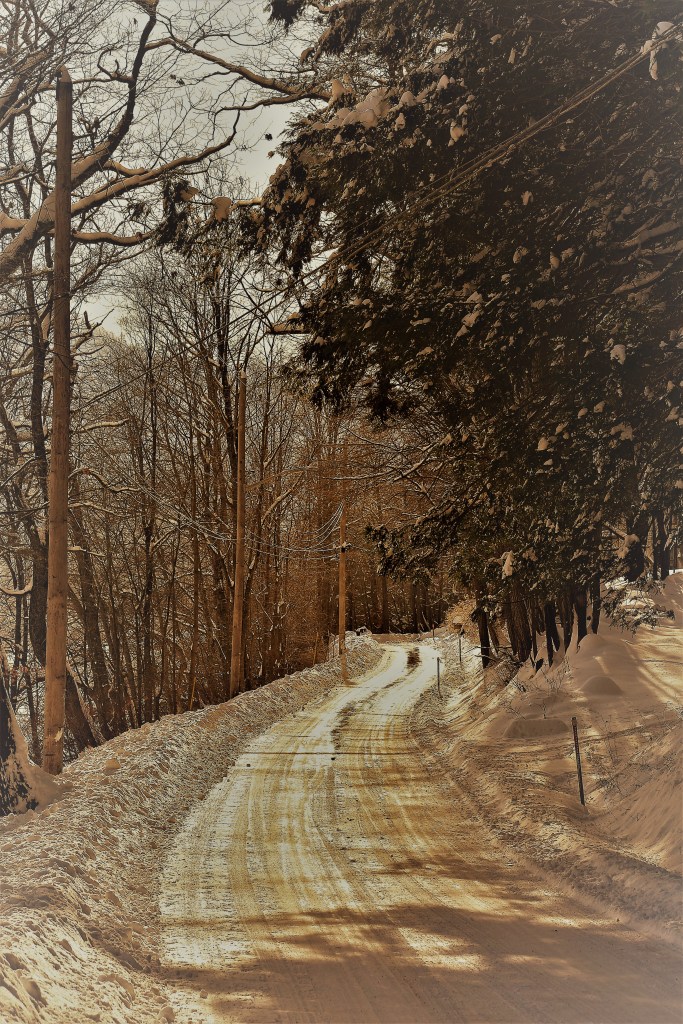
Riverwalk: A bit of exercise, a taste of mountain air, and the sight of bright water help pull me through the long months of winter. There are days I walk down the road in sunshine, and walk back in a squall!

Sunshine this morning, sunshine and honest melting! My river walk, bright on both fronts, brightened my mood and made me think of fishing.

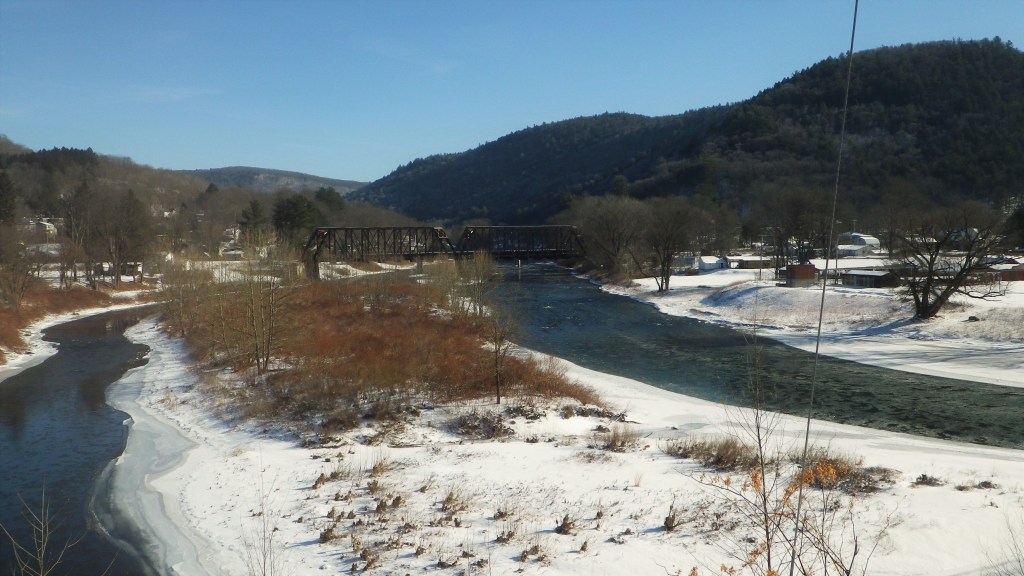
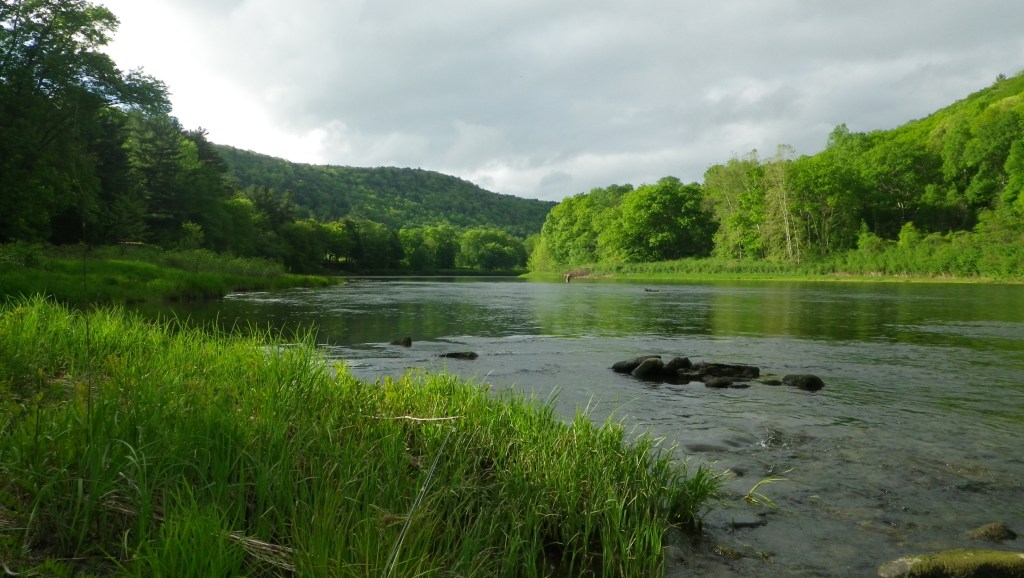
The river speaks again after a few days of silence, the ceaseless flow finding new paths through ice and snow. It was too silent on my last visit, it’s voice stilled beneath the ice so nothing moved. I welcome the music as the current trickles over the brown stones, onward to the Delaware!

December 19th, and the voice of Crooked Eddy is silenced, with skim ice coating the spare little channels…

The local wildlife seems to enjoy the road as much as I. In daylight the tracks of the man overwrite the tracks of the deer; until dusk, when the tracks of the deer overwrite the tracks of the man. I am amazed to see their paths heading up and down the near vertical walls of snow that still define the steep river banks. Point Mountain meets the East Branch Delaware abruptly here.

Yes, once again I ponder thoughts of fishing, though I know there is still a lot of waiting to be done. The melting begins slowly with the sunlight on the slopes, but Christmas Eve could approach fifty degrees with rain, and that could turn this morning’s bright, clear low flow to a brown torrent, pushing the ice where it will. These are the events that change rivers, carving new pools from gravelly flats, while filling in familiar pools angled in the past. A man can never completely know a river.

I took a float trip once with a guide on Ohio’s Grand River. We searched the spring flow for steelhead and found plenty: truly wonderful fishing! While enjoying a hot lunch grilled right there in the drift boat we talked about the river and her fish. My guide advised that he always floated her solo the first time or two each spring. He needed time to explore all over again, to take stock of the drastic changes winter’s ice pack had wrought, that he might know where the steelhead would hold when anglers joined him come April’s thaw.

I hear the snowmelt running on the roof as I write, and the sound makes me think of spring despite myself. Gail was an autumn storm, a powerful one to be sure, but just an early first volley of winter, not the last.

A Bright & Beautiful Autumn Morning

A Sunlit Morning

At first glance this seems a perfect morning to test my theory of sunshine inspiring trout activity in cold water. The sunshine is beautiful as it glimmers o’er the landscape, but the water is hard. My porch thermometer reads a balmy one degree on this gorgeous morning. I wanted a fresh photo of the East Branch post Gail, but I have no way to keep my SLR warm enough to function without the lens fogging. Trust me when I tell you there is a lot more ice in the river this morning than in this photo from early 2020.

I took my river walk yesterday afternoon, when the sun broke through and lit the east bank, it’s light already diffused, past it’s apogee west of Point Mountain. The river revealed a mosaic of windblown snow piles, ice jams, and pockets of open water, one flowing upstream, the others ever southward to the Delaware. Some pockets had fast currents derived from the constrictions of the ice, water fleeing wherever it could escape; as all that reach of river below Crooked Eddy is calm water at the lower flows we have now. I hope the resident trout are hunkered down in the deepest parts of the Eddy, safe from the invading ice.

Winter Storm Gail put a definite halt on my fishing, and it remains to be seen when conditions might beckon me back to the river. I’ve done a bit of reading, recently securing another little volume from the late Dana Lamb. Tales of fishing and gunning from the Golden Age always light my imagination, and Lamb wrote beautifully and sweetly of all the moods a life outdoors displays.

I have busied myself with browsing tackle lists, tinkering with my reels, all in a half hearted attempt to chose how to outfit the new pent. I am thinking a four weight Triangle Taper might be the perfect line, but the depth of the snow keeps me from spooling one up and casting. Back in the day Lee Wulff’s TT lines were marked with two line weights: 3/4, 4/5, etcetera. The lower number gave the weight class of the line with the AFTMA standard 30 feet in the air, the higher the weight class when the entire 40-foot head was aerialized and cast. I liked that system, it was informative and straight forward. Today the company uses the single WF4F classification for its lines with a 36-foot head, and whether 30 feet or 36 feet of line matches the AFTMA standard I cannot be sure. Sometimes progress steps backwards to my thinking. Line selection can truly be accomplished by casting alone.

Deciding on which reel to use is more of a conundrum with the choice of fly line in the guessing stage. I have one old classic that seems a perfect mate, but you can’t simply go out and buy an extra spool for a reel that ceased production fifty years ago. If I go that way there is no way to have a three weight line without a reel swap, and I don’t relish carrying a spare on the river. That old school TT line would be just right: a three and a four in one.

I have a lovely little three inch Galvan with an extra spool, the traditional style reel they no longer make. It has the smoothest drag I have ever encountered, perfection when the largest trout eat the tiniest flies on the most invisible tippet. The Galvans are tactically the most ideal reels for fishing trophy size trout on the lightest tackle, but I miss the click, the sweet music one of my old Hardys makes when leviathan heads for the sea! Such are the dilemmas I ponder when ice and snow holds me at bay. Foolishness!

Actually I’m just marking time, for I’m not ready to resign myself to winter and months of indoor fly tying. I still need to be out there fishing and bird hunting! The promised La Nina winter wasn’t supposed to render the mountains inaccessible, nor ice the rivers in December. It wasn’t supposed to do that at all!

Spring is four months away, and it seems like forever when I consider that span. The outdoors has always been my sanctuary, and I feel the need of it more than ever this year.

Photo courtesy Chuck Coronato.

Life at 20-20

I awakened to a 20 degree morning with 20 inches of fresh fallen snow. I can’t seriously fault the weather sites that forecast an unusually warm La Nina winter as it is still officially autumn. This is the most snow I have seen in this, my third winter in Hancock, and I rather not see any more storms like this one. Believe it or not, we dodged a bullet here. Portions of the Binghamton area, fifty miles to our west, logged forty inches.

All of this is good news for the reservoirs, but bad news for those of us who expect to spend most of our time outdoors this time of year. Late season grouse hunting has been pretty much obliterated by this storm, as the mountains are too treacherous for hunting alone with ice and heavy snowpack. Fishing is, well, lets just say that the low odds of success will be downgraded to miniscule for a while. Heavy snow clogs access areas and parking, and such places are not high priorities for plowing. If it indeed warms up significantly, rapidly melting snow will chill and muddy the rivers. The area will be very lovely, particularly when the sun appears and makes the entire landscape sparkle!

Home for the Holidays

It seems clear it is time to get serious about my off season fly tying. My fly boxes can always benefit from sorting and reconfiguring. Its helps a lot when you can find the new patterns you want to test on the river when you find yourself in the middle of a difficult hatch. To be honest, there are flies I have designed to solve particular problems that have never had a chance to be tested, since I couldn’t find them in the heat of the moment.

There is some material on the way for the soft hackles I have been fishing lately. The package is a day late already, and this storm isn’t going to improve my chances of tying more of those flies real soon. Then again, I have plenty of them to not go fishing for a week!

Lying In The Sweetgrass

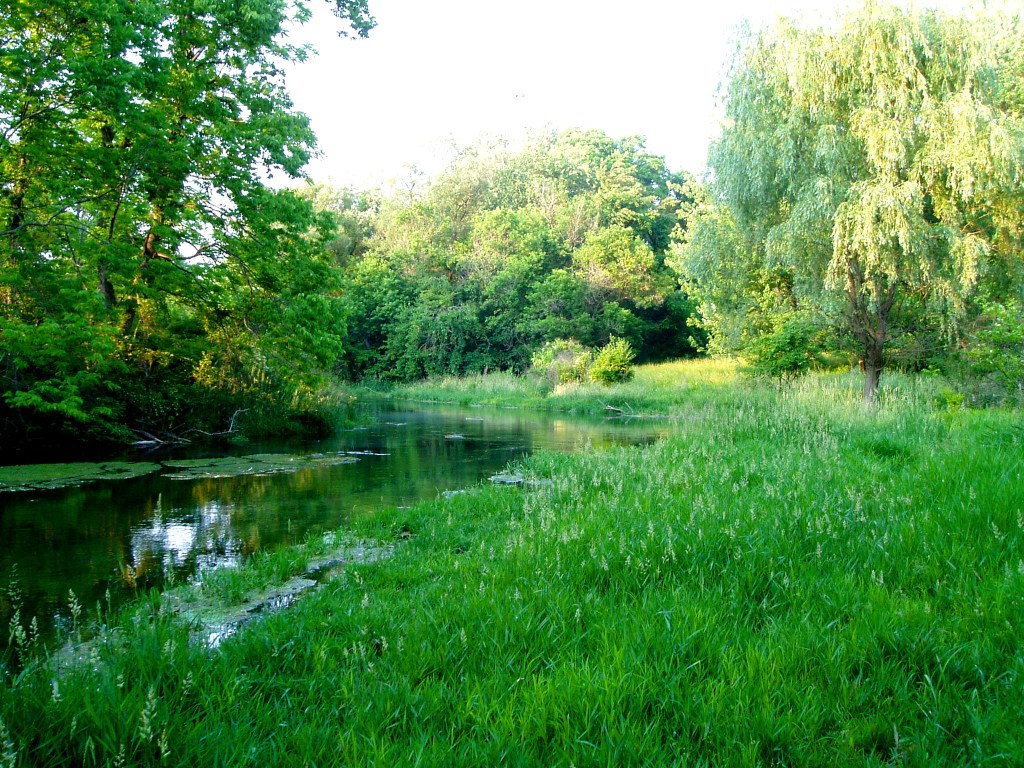
A grassy meadow along the hallowed LeTort

My winter fishing is about to take a terrible turn. Highs well below freezing already reign, and now ten to twenty inches of snow are expected tonight. I must retreat, retreat into the dream world of memory and anticipation…

If I close my eyes I can feel the sun upon my chest, lying here in the sweet grass of the river bank, the only sounds the gentle music of birdsong and the river. My vest is laid out on the grass and my rod, propped against it, waits for the sound of rising trout: five strips of bamboo united to form a perfect pentagon. It is early afternoon and the sun feels wonderful as I doze in and out of consciousness.

A splash nearby nudges me awake, and I stretch before rising into a sitting position. There are sulfurs riding the soft current near the bank, just a few right now, but they bring another splash from a small trout eager to feed. I ease over to the edge and let my legs dangle in the water as I pull my vest over my shoulders. Within a few minutes there is a bulging rise fifty feet out.

Rising, I take the fly from the hook keeper, pull leader and line from the reel and out through the tip as I begin a short, careful stalk. Once I am in position I wait for another bulge in the flat water. It isn’t long in coming.

My false casts are few, off to the side and well downstream of my target, then the gentle turnover of my wrist sends the fly out to alight with a whisper… six inches of drift, a foot… and then the bulge takes it softly from the surface. The sun glints golden on the arc of varnished cane as I pull the rod up and back, the trout boils in a shower of spray, then turns and brings the click of the reel to a screaming crescendo!

I have lived that moment over and over, never once the same. The beauty, the poetry of the dry fly, makes my very spirit smile. Ah summer, the glory of a Catskill summer!

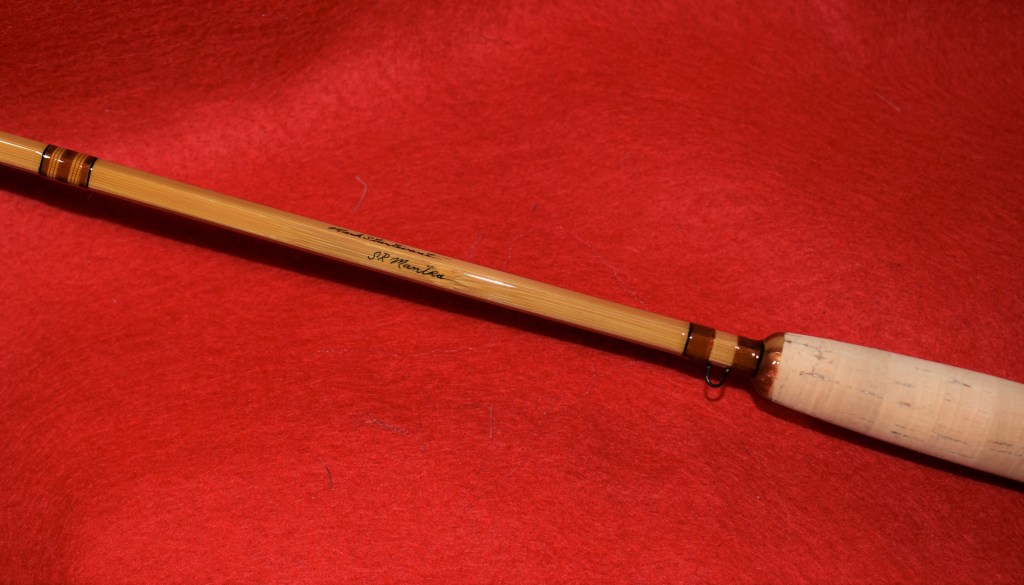
My Sweetgrass Pent waits for summer by my side. Eight feet for a four weight line, this sublime rod was designed and crafted for me by Jerry Kustich and Glenn Brackett of Sweetgrass Rods, masters of the craft.

The Pent waits there in the rod rack, for summer is only a dream right now. Autumn departs with a savage blow, leaving winter to offer respite.

I met Jerry Kustich several years ago at the Backwater Angler shop on Maryland’s Gunpowder Falls. I had just reviewed his latest book when Theaux, the shop owner, invited me to a bamboo day with Jerry taking center stage. I enjoyed our talk, and casting a number of the fine Sweetgrass Rods Jerry arrayed in the shop that day. Kustich had retired from full time rod making in Montana and moved, settling in northern Maryland, while still traveling to shops and angling shows as an ambassador for Sweetgrass. Catching up this summer, I was pleased to find he was still designing and building rods in concert with Glenn Brackett in Montana.

What began as a casual correspondence resulted in the beautiful Sweetgrass Mantra rod pictured above. Jerry has cultivated his interest in five strip bamboo fly rods for many years, producing prototypes that became the first ever Winston Pent. When the Booboys resigned from Winston, his interest continued as he and Glenn founded Sweetgrass Rods. From talking a few times over the ensuing years, Jerry knew I shared his interest in pentagonal rods, and designed and built the eight foot four weight to suit my desires, my ultimate summer dry fly rod for the Catskills. Glenn wrapped and finished the ferruled blank at the Sweetgrass shop in Montana, sending it on it’s second cross country trip to Hancock a week ago.

There is something different about a pent that can be hard to define: some describe it as a crispness, or a subtle touch of extra power compared to a traditional hexagonal rod. A well made pent isn’t stiff, the action is smooth, and tends to be more accurate, at least in my hand. Casting the rod before it’s trip west this summer, I learned that this Sweetgrass design is perfect for the pinpoint casts, whether close in or at distance, that my summer fishing demands. For tiny tricos and those exasperating size 28 flying ants, the rod allows me to drop down to a number three line for even greater delicacy!

Lovely finish and details are a trademark of the Sweetgrass shop: I love the burnt orange silks and bamboo winding check! The color reminds me of summer sunsets and autumn forests along the river.

Hopefully this blizzard will pass and there will be some winter sunshine and warmer days ahead. When the cabin fever gets to me I’ll take the rod from it’s tube, try a reel or two for balance, taking my time to find the perfect match of reel and line. A few casts on a calm, bright winter afternoon will help me close my eyes and dream again.

A summer afternoon on the Delaware

Unexpected Glow

There is an unexpected glow in the corner of my window this morning, as the sun has come forth! The forecast wasn’t exciting, clouds for the duration, but I am beginning to reconsider!

There is snow on the way this week, with one local forecast calling for better than seven inches on Wednesday, with midweek highs in the twenties. That makes this morning’s unexpected sunshine even more welcome; and it has me thinking hard about rigging up a certain bamboo fly rod. River temperatures actually rose overnight, so I cannot help but feel the pull of bright water.

I wonder if it will remain until lunchtime, that specter of warmth and possibilities, for even as I write this another bank of heavy gray clouds has obscured much of it’s light. Perhaps this is only a flirtation.

I tend to be a bit preoccupied with sunshine for winter fishing. That attitude grew out of many winters experience on the Cumberland valley spring creeks. Operating a fly shop left me mornings and evenings to fish, at least for the warmer portions of the year, but winter brought darkness before closing time. I stalked the Falling Spring most mornings during the winter, expecting some activity as the water rarely got below fifty degrees. I learned over time that temperature wasn’t enough, sunshine was vital for finding active trout on an early winter morning. I realized that sunlight started oxygen production by the aquatic plants that remained through the winter and jump started the food chain.

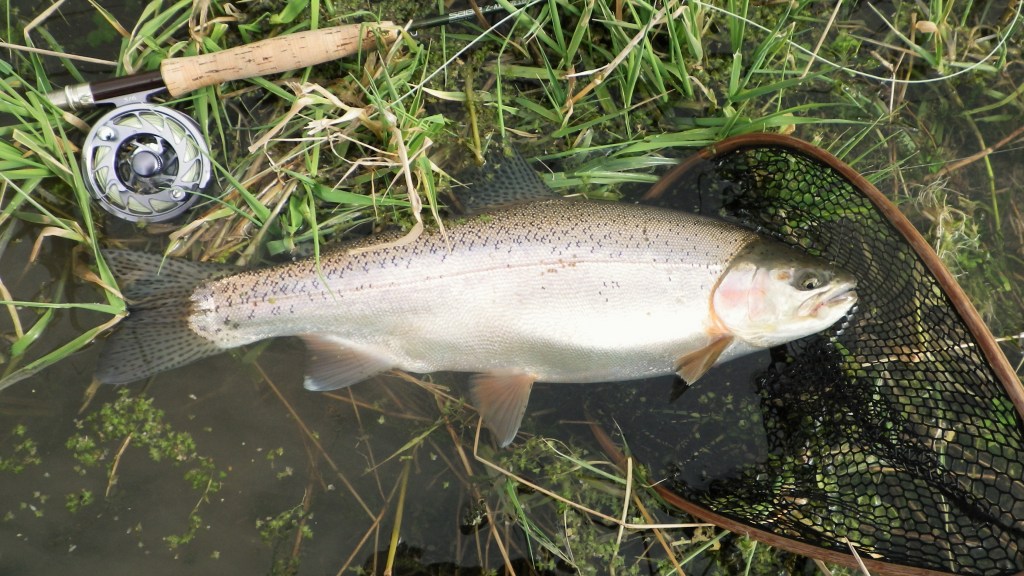
One frosty January morning brought this into very clear focus. I had received a new demo rod, one of the very first Orvis Tridents, an eight and a half foot four weight, and I was anxious to try it out despite the twenty degree temperatures at dawn. When the sun hit the water there was vapor rising from the stream, adding an air of mystery. I tested that rod with my largest Falling Spring rainbow, a gorgeous, iridescent fish weighing five pounds! That trout was out feeding at eight o’clock on one of the coldest mornings we had that winter, because the food was active.

On my Catskill Rivers, my need for sunshine seems to be more about the mood and comfort of the fisherman, though I do take note of any areas with late season aquatic vegetation. It will take time to learn whether the same phenomena occurs here in our much colder rivers. Weed growth has been on the increase in the West Branch the past couple of seasons. If enough of it survives through the winter months, then sunlight will allow photosynthesis and oxygenation. Nymphs living in those isolated weed beds should respond with some increase in activity. The question is: will the trout take notice?

A heavy winter limestone rainbow from a Cumberland valley spring creek.

I certainly don’t go forth expecting a lot of activity when our rivers flow in the mid-thirties. I am there mostly to enjoy the time on the water, to add pages to the book of my life as an angler. If we are open to it, each day on a river will teach us something. I try to keep my mind open to possibilities. If we operate based solely on our past experience we limit the opportunities to learn something new.

Science tells us that a cold blooded fish doesn’t have to feed very often when the water it inhabits is closer to freezing than to its normal activity range, but it does feed a bit every so often. There is always some luck in fishing. Science has also shown that fish in artificially cold water, like big dam tailwaters, can acclimate to the cold water regime and remain active in a wider range of water temperatures. Knowing that helps me concentrate on every cast on a frigid Catskill river.

Maybe that little pool I have fished a dozen times without a strike has only one trout hanging out in the winter, a big old boy that keeps the smaller fish away. If I keep fishing that pool regardless, there is a chance I might be swinging a streamer down along the bottom on the one or two days a month that that brown goes hunting, thanks to a couple of degrees rise in the river temperature on a cold but sunny day!

Sustenance for the Spirit

December: somber tones graced by sunlight.

Glorious sunshine, and pleasant air temperatures called me to the river at last. I had retreated for too long, waiting for La Nina’s promise, waiting as the season’s first snow chilled the landscape bringing naught but thoughts of winter.

The sun spends too little time on the water this time of year, retreating behind the ridges far too early in the day, with good pools deprived of that promising combination of the warmest air temperatures and direct radiation. Nevertheless, good water is good water, and I cast a long line and fished slowly, thoroughly; hope at the end of my line.

The fly swung deep, dancing above the boulders, not bouncing between them like the dead drifters’ wares, ever searching for an active trout.

I learned long ago the importance of movement within a trout fly. Static patterns offer a visual clue with their shape, but a fly that quivers with life sends a deeper message. This one I have toyed with a while, finding the right combination of materials and techniques to bring attraction with subtlety and essence of life. The fly has been nudged and bumped in cold water but not taken, so I tinkered some more, needing only to encounter that active trout. Half past Noon, the river in the thirties and already in shadow; cast and mend, cast and mend.

The take came with a jolt, and my line hand tugged back instinctively, the rod coming back into its lovely bend: the active trout has been found! Rod tip bucking, I played him in the current, relishing each surge, surprised by his vigor in the cold. Close at hand I could see his white mouth working, down there on the shaded river bottom as he tried to shake the fly, but the pull of the rod brought him closer, and finally to the net.

The warmth of elation wrapped round me, all that for such a simple act; the same joy felt as a child with that first secret tug at the other end of a line! Winter hasn’t got me yet.

Missing A Friend

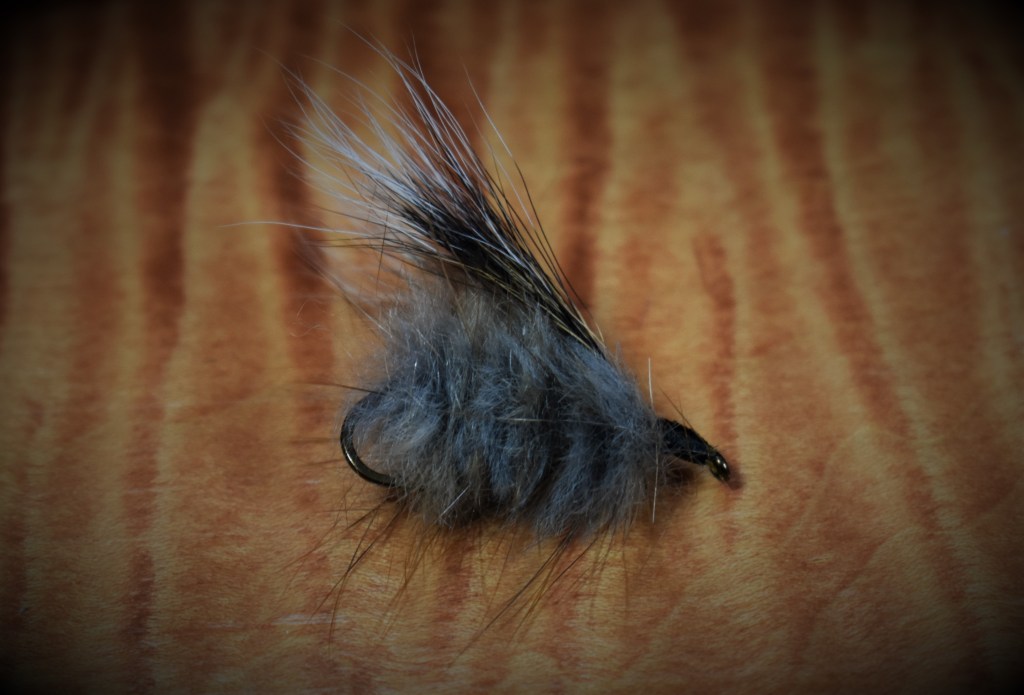
I was searching for some obscure fly tying material the other day, I don’t recall now what it was, when I came across a small plastic box containing a single fly. The memories flooded back: a bright May afternoon in my fly shop twenty-five years ago, sitting back and enjoying one of many conversations with Ed Shenk. I had been reading his lovely book Fly Rod Trouting a few days earlier, and was curious about the Fledermouse streamer therein.

Ed was an innovative fly tier, and among his contributions was the trimmed fur chenille technique pioneered in his cressbug and minnow, two patterns in his famous series of “chewy flies”. Memory tells me it was the Fledermouse, a Western pattern that he tied with this dubbing loop technique, that began the experimentation that resulted in those iconic chewies. Happy to indulge my curiosity, Ed took his place at my vise and tied me a sample of the Fledermouse, the fly I kept in that box for twenty-five years.

Fledermouse: tied by Ed Shenk May 10, 1995 at Falling Spring Outfitters, Scotland, Pennsylvania

I have enthusiastically used Ed’s dubbing loop technique since he first taught it to me a few years before that day in the shop. It has added a dimension to my tying that leads to more lifelike and durable flies, all of which light the road back to the excitement of my formative days fishing the Cumberland Valley spring creeks, and learning from the Master.

Chance favored me again recently, when I received a message from a friend advising me that one of Ed’s classic Hardy reels was available. I acted immediately, and was able to secure this keepsake, a vintage Featherweight.

In Fly Rod Trouting, Ed tells the tale of Old George, the mammoth LeTort brown trout he hunted and battled over three seasons. The story of one encounter tells us he was using a Hardy Featherweight reel, and the photo of the Master and Old George indeed shows a small Hardy attached to his five foot fiberglass rod on that victorious day in 1964. When I received the reel, both pawls were flipped into play, doubling the tension of the “check”. Uncommon, but suitable I would say when hunting an 8 1/2 pound brown. Is the reel I bought the same reel that captured Old George? I will never know for certain, but the possibility will heighten my senses each time I fish it on the rivers of my heart!

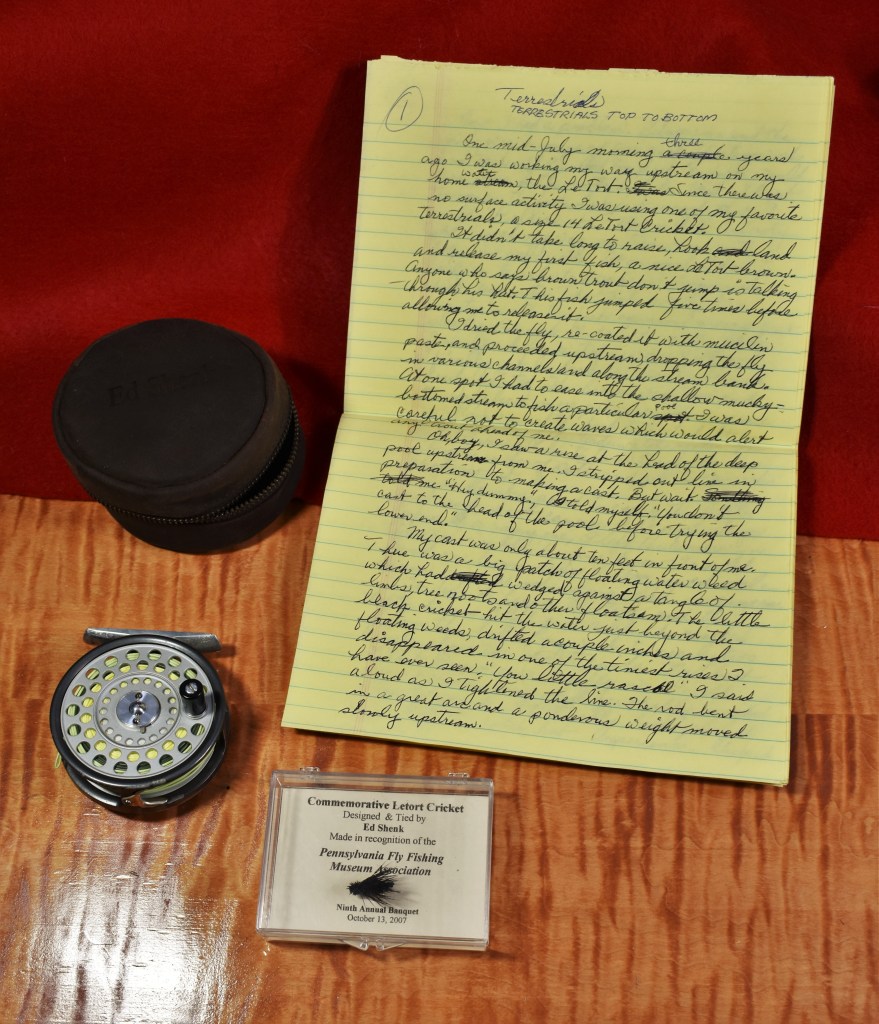
On another search through my assorted papers and periodicals, I recovered Ed’s handwritten manuscript for an article I was honored to have typed for him, back in those halcyon fly shop days. If I recall, the article was published in American Angler sometime thereafter. To illustrate the effectiveness of terrestrial dry flies, the piece begins with the story of another LeTort leviathan, a trout near nine pounds captured on one of his trademark diminutive fly rods, and a size 14 LeTort Cricket. Reading his words brings a flood of emotions.

Instantly I am back on the hallowed LeTort, stalking the wariest brown trout I have ever encountered in her grassy meadows. In the early years, I would drive to Carlisle in darkness, and walk the stream at first light. At the time there was a huge midstream logjam in the lower part of the Barnyard Meadow that gradually accumulated floating masses of weeds around it’s edges, until it reached nearly from bank to bank. I cast my LeTort Cricket over top of one of those weed mats, and watched it drift slowly to the upstream edge, and start to circle in the eddy, then disappear. The fight was thrilling, as I somehow kept the big trout away from all of those logs, netting my first larger LeTort brown, an eighteen inch beauty!

Keepsakes: The late Ed Shenk’s Hardy Featherweight, his handwritten manuscript for “Terrestrials From Top to Bottom”, and one of the commemorative LeTort Cricket’s he tied for the 2007 Pennsylvania Fly Fishing Museum Banquet. Ed passed away in April of this year after a lifetime of writing, tying, teaching and enriching the lives of fly fishermen everywhere. Rest in peace Master of the LeTort.

I was working on an article for the Catskill Fly Tyer’s Guild, musing over fly fishermen and their passions for tackle and tradition when I thought of the Fledermouse, just recently recovered in a box of tying materials and small mementoes. While we are oft entranced by collectible vintage rods and reels, or the rarest of angling books in limited printings, sometimes the smallest things can trigger the most powerful memories; things like that single fly.