Blog Feed

Rainy Hours Come Morning

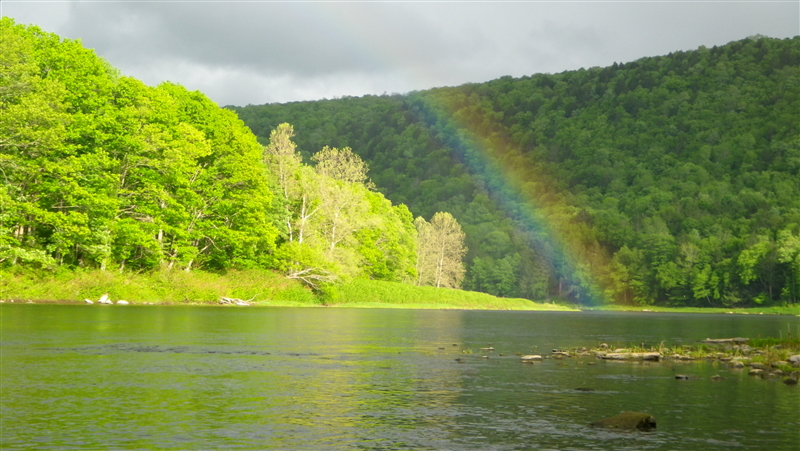
Rainbow Bridge

I love to hear the morning rain, particularly in summer whether during it’s earliest days or now as it plays out it’s annual run, for it is the sound of life for our rivers. The last few hours of the 32nd Catskill Gathering are ticking down, as the rod makers will assemble for their last goodbyes. We enjoyed a lovely weekend, so I doubt these raindrops will dampen any spirits after the beautiful days we spent there amid the grounds of the Catskill Fly Fishing Center. Water is of the essence of our bond, and we all know how vital summer rains are.

I think on some of the most poignant memories which I will keep from this year’s Gathering…

John, Tom Mason and I watched and listened as Tom Smithwick told the Gathering of that miraculous fly rod that has been named The Friendship Rod. He told us as the first work done toward a nice eight-foot four weight bamboo fly rod would be revisited over a couple of decades. Each time Tom’s growing knowledge and intuitive magic with tapers developed, and the rod developed with him. He has seen the wide reception of his labors of love. Some have already made their own rods following the Smithwick taper, and nearly thirty have added to their names to the list John has kept in the Catskill Rodmakers’ Workshop at CFFCM. The four of us and our bond of friendship is spreading!

Cane rodmakers are of course a diverse and inventive group, and some have experimented with Tom’s wonderful taper in new directions. I cast two hollowbuilt versions yesterday, one from Muncy Wheby from North Carolina and another from Frank Payne from Rochester, New York. Both were faster due to the hollowing, and quite different from one another, and very fine rods. I still hold the original Smithwick rod as the penultimate, though I would be proud to own and fish either of Muncy’s or Frank’s innovations.

John Shaner told us of two hallowed Catskill rivers, the Beaver Kill and the Willowemoc, and how they helped mold what has become to be known as Catskill rodmaking. He blended his memories of heralded anglers of the past and the Catskill rods close to his heart. John has lived and fished rivers around the country, but his deep fondness for these Catskills shows through!

I could not help but smile, inside and out, as celebrated rodmaker Per Brandin shared his thoughts and memories of special rods and their makers who inspired his life’s work at the bench. When he spoke of how he had fished a few of Everett Garrison’s original rods, he told us that he had never cast a Garrison design which felt like the originals, as something of the man was in them! I had to stifle a cheer at that statement and the depth of feeling he conveyed, my thought’s bubbling up “yes, the magic, the magic that’s in them!”

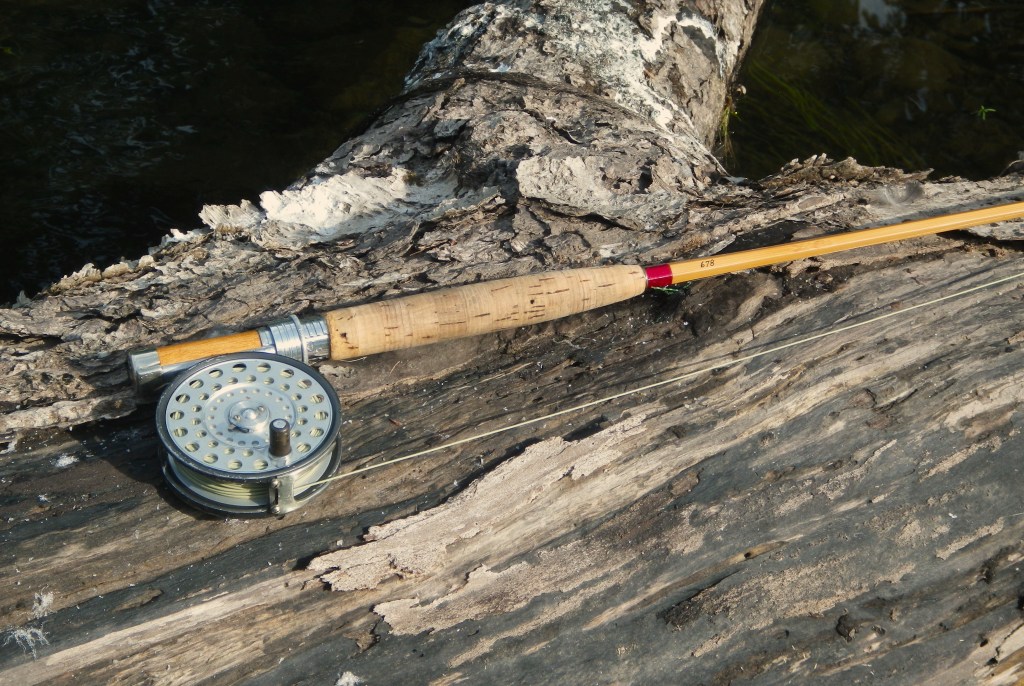
The rain has nearly ceased, and morning advances. Yes, indeed that magic can be felt in something of my friends Tom Smithwick and John Apgar in my Friendship Rod, and I cherish the magic I feel in the miraculous rods that Dennis Menscer has made for me right here in these Catskills.

When I fish one of my Dream Catcher fly rods crafted by my friend Wyatt Dietrich, I feel the bright smile in his face and the spark in his eyes as we talked about bamboo rods many years ago in Chambersburg! The magic is in the air and rock and soil and these waters, and deeply in the hands and smiles of those who toiled at their benches to craft the keys, the magic wands which connect us to the magic in bright waters!

The beginning…

River Moods

Stockport PM

The clouds gathered as I walked down river, and I felt one of those special days was at hand. I had tied one of the morning’s flies, a dark winged olive poster, sure that the hatch would be early. Alas, a river’s moods do not follow those of the anglers who frequent it’s environs!

Despite the dark clouds, fewer rises were in my future than during Tuesday’s bright sunshine. Thankfully, the Red Gods offered some gusty winds to pass the waiting I still felt would be rewarded.

I had lingered for several hours, sitting on a downed tree when it blew hard, or standing in the current during the calm periods, even swinging a soft hackle down through a few riffles that experience swears may hold surprises, all with nothing to report.

Come mid-afternoon, a solitary rise began here and there, some with significant authority behind them, though casting to any within reach proved fruitless. Eventually, my solitude surrendered to a couple of fellow wanderers, the kind that proved happy to nudge into my little reach of water, no matter were I casting actively or resting it. Sadly, this is the norm in these days, even on as large a river as the Delaware with just three people in sight.

Six boats in the frame: May on the Delaware River. Blissfully, September has fewer, at least during the week.

There was one rise that, while very occasional, seemed to be in about the same place. One of the interlopers had set up just downstream but proved as oblivious as he was to my presence. With another cozying from above, and the lower paying no attention, I finally waded out to take a shot at the only repetitive riser available.

It was a poke, you might say, and though expecting rain I had carried my old Paradigm graphite, it’s four weight line was blowing quite a lot in the gusts. Trusting patience, there were little opportunities between the gusts, so I used them judiciously, placing my Halo Isonychia above the hidden rock the current betrayed then playing out slack to follow it down.

The fish didn’t make a production to take it as it had whatever the river had been offering, but my strike was on instinct rather than a showy visual clue. It used the current immediately, had me thinking about the tippet and smiling to myself that he hadn’t been eating a size twenty or something like that.

It didn’t take long for me to conclude he was a rainbow, for he fought and pulled like he was a bull with a turbocharger. Delaware River rainbows are simply amazing! It seems that they get a great deal of exercise, roaming the entire river system to find suitable temperatures through the extremes of our seasons. The Mainstem, the East and West Branches, the Beaver Kill and the Willowemoc are proven a part of their vacation route, and all of that travelling produces a lot of hard muscle tissue. These fish are unmistakable on the line, as they simply will not quit!

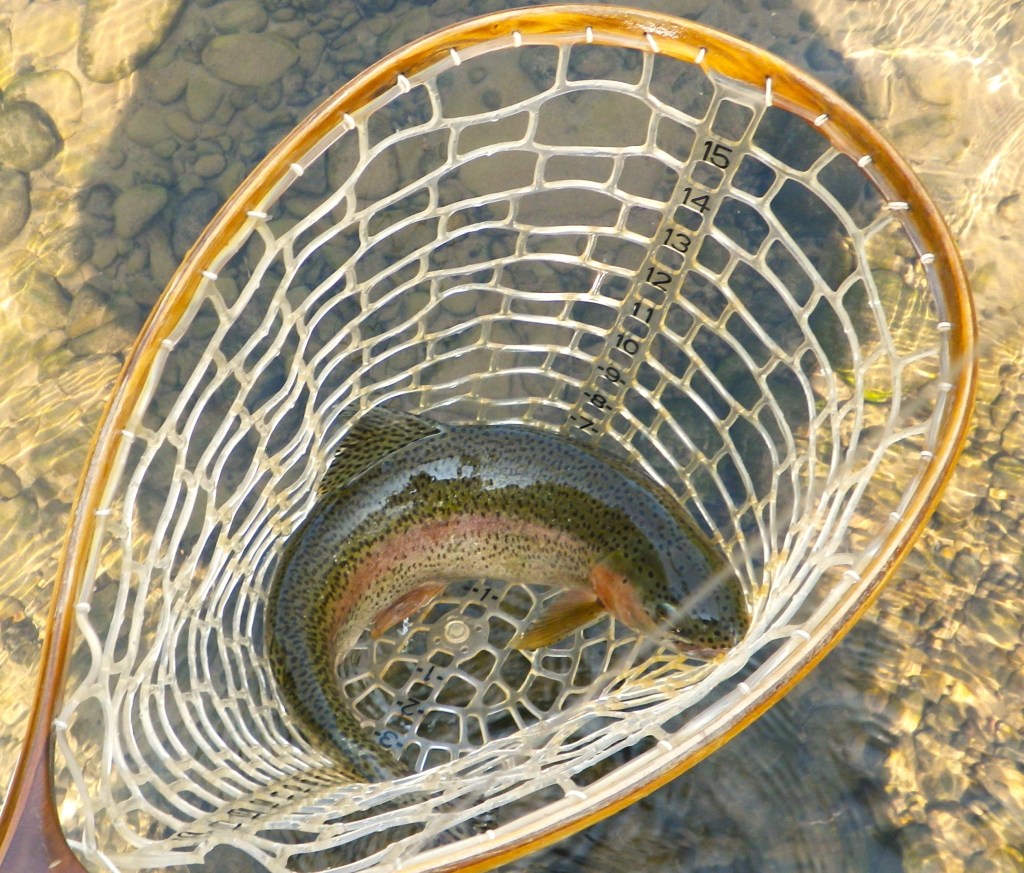
Finally, sweeping him into the net, there was a sixteen-inch trout with a wider profile than the slim torpedoes we used to see here and vibrant colors. No fish that size should be able to pull that long for that hard, but that is what they do as a matter of course.

I was hoping for another, lurking way out there on that rock and it’s bubble trail, but interloper number two was easing out just to my right, eyeing a cast right where I had caught that fish. I had seen him casting earlier, and understood he couldn’t make the cast, so I said nothing, simply continued placing my Halo out there and feeding it line to cover the bubble trail a bit further down current. He winced and wandered down to bother interloper number one and cozied up too close to him, making short casts to nothing I could see, despite his proximity. I hope they enjoyed each other.

The moods of rivers have mystified anglers for literally centuries, there having been evidence that the Chinese tied feathers on a hook and fished their flies with bamboo rods well before the English from whom our traditions have come, four thousand years ago if I recall properly.

Anglers: we routinely puzzle at the conditions Nature offers, justify our lack of fishing activity as dictated by them, and wish for something different no matter we get: sun when it’s wet, rain if it’s dry; winds if it’s too calm and calm amid a zephyr of breeze. I was pleased enough with the day, despite the images of grandeur I held when it began, happy to get a good pull from my one rambunctious trout and a smile!

September Afternoons

I have cleaned the ferrules on the Maxwell Leonard, checked the line and leader on my 3-1/2 inch Trutta Perfetta reel, and just tied half a dozen flies: twenty olives and the bright olive/Hebe facsimiles foremost. I will spend this afternoon along the Delaware!

It is rare for me to angle the big river in spring, the season of frequent rains and spilling reservoirs, for in that season it is a boaters’ river. Come September though, with lower flows and cooler weather I can feel it’s call each season. Late summer, with it’s introduction to autumn in these Catskills, is the perfect time.

There are blue skies this morning, and I was counting on the earlier forecast for cloud cover, but if some flies show themselves the trout will take notice. They say the winds will be gentle, even calm, and that portends to a pleasant afternoon.

The holiday has passed, and I expect the miles along the Upper Delaware will be quiet. A few local anglers will likely show. I expect their thinking is much as mine: enjoy their time to wander the Mainstem without the frenetic pace of springtime, perhaps have the thrill of a good river rainbow light up the drag in your reel.

Since I have some time on my hands, perhaps I will tie a few flying ants. Since that sun intends to shine after all, and the winds remain calm, a flight could find their way along those same miles I chose to wander. If they do, I will hope they aren’t the teeny-tinies I last encountered on a late summer Catskill river. Tying on a fly smaller than size twenty seems to tax my capabilities these days.

Size 24: tied and fished in September 2022

Two Weeks & Two Days

A lone drift boat seems to lead the evening mist downstream.

Two weeks and two days: these are the last days in the parade of summer 2026. The Equinox comes at 8:05 PM on the 22nd of the month and autumn takes charge of our angling fates. We have been fortunate weather wise during my years of retirement here, the dry fly season hanging in to perhaps the last week of October. That of course does not promise strong hatches and plenty of rising trout through those several weeks of October. I count the end as the last day when I find a substantial wild trout to entice to my dry fly, whether hooked and landed or simply cast to and wished for.

Water temperature generally tells me that pinnacle of fishing has passed. Come October, the rivers cool through the sixties, then the fifties, and some years on into the forties. Once fifty-five degree water remains only in memory, there are few chances to see a significant trout urged to feed on the surface. Likely, there is nothing much to make them.

Depending upon water levels and temperatures through September, the larger fish I seek will begin to move closer to their spawning areas. I will not follow, for it is not right nor proper nor sporting to harry them whence they seek to sustain their kind.

October can bring a wave of Indian Summer weather, temperatures flirting with the upper sixties and seventies, but it is likely that the fish I hunt have gone to their task to ensure next season’s fry. Then I begin carrying an over-under shotgun rather than my bamboo fly rod, though I can be enticed to riverside come afternoon.

In kinder years, I have seen gentler days later in October, even found post spawn trout back in their feeding lies, but that is a rare gift.

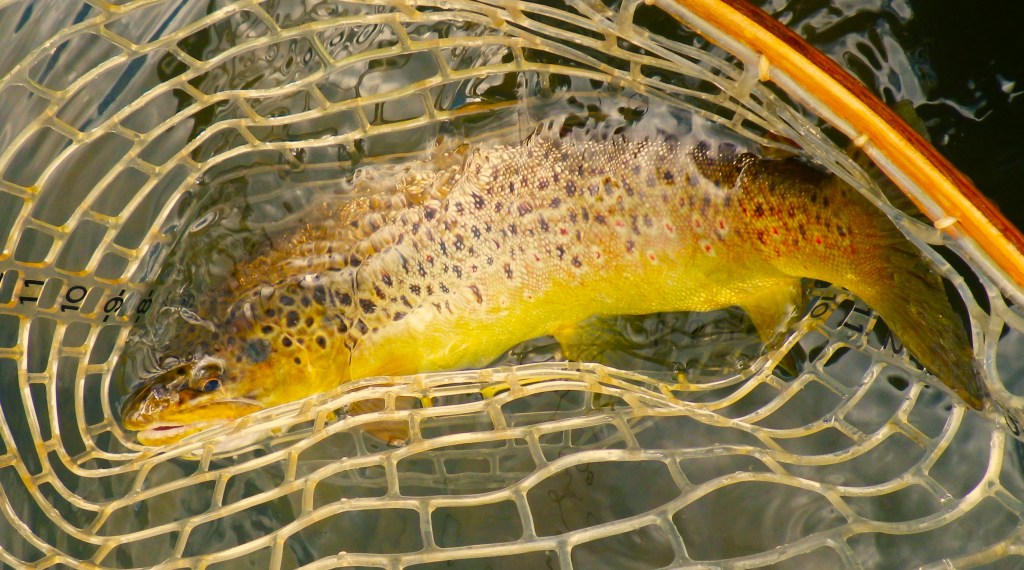
A beautiful big post spawn brown found rising gently in a quiet shaded lie. An olive 100-Year Dun encouraged her to dance with me to share a last kiss of the season!
October 26th, 2022

This year, September has begun with the rivers in good condition. We had enough rain through the summer so that flows and temperatures are more favorable for this long farewell to summer fishing. The relief is palpable after the past couple of years, when heat and long droughts proved life quite taxing for all of the river creatures, including the two-footed, booted variety.

I am hoping that September’s early signs point to good fishing as summer eases it’s way toward autumn.

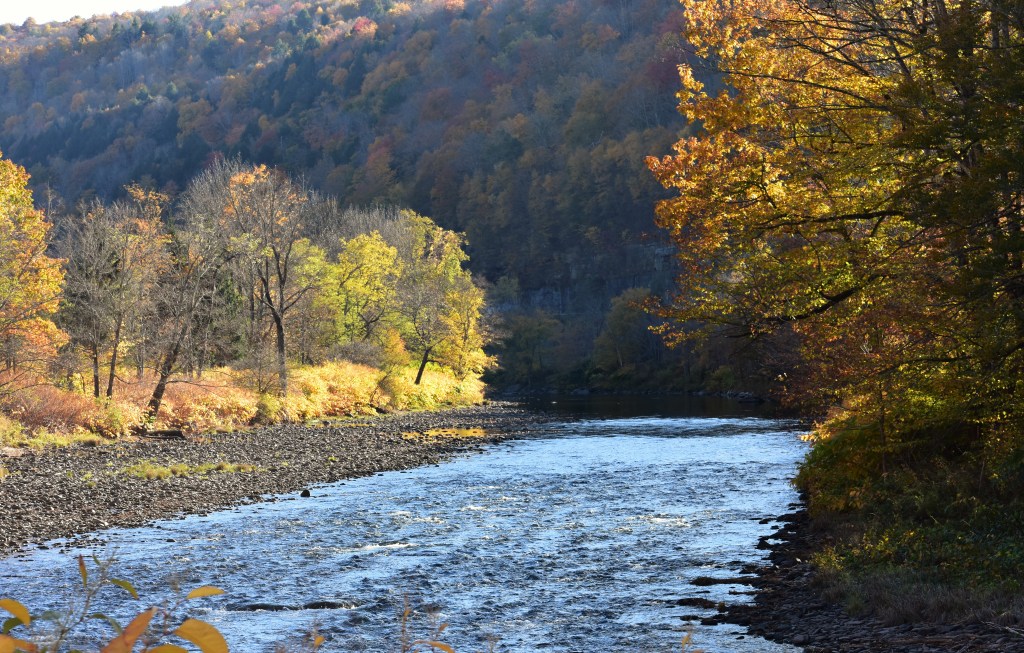
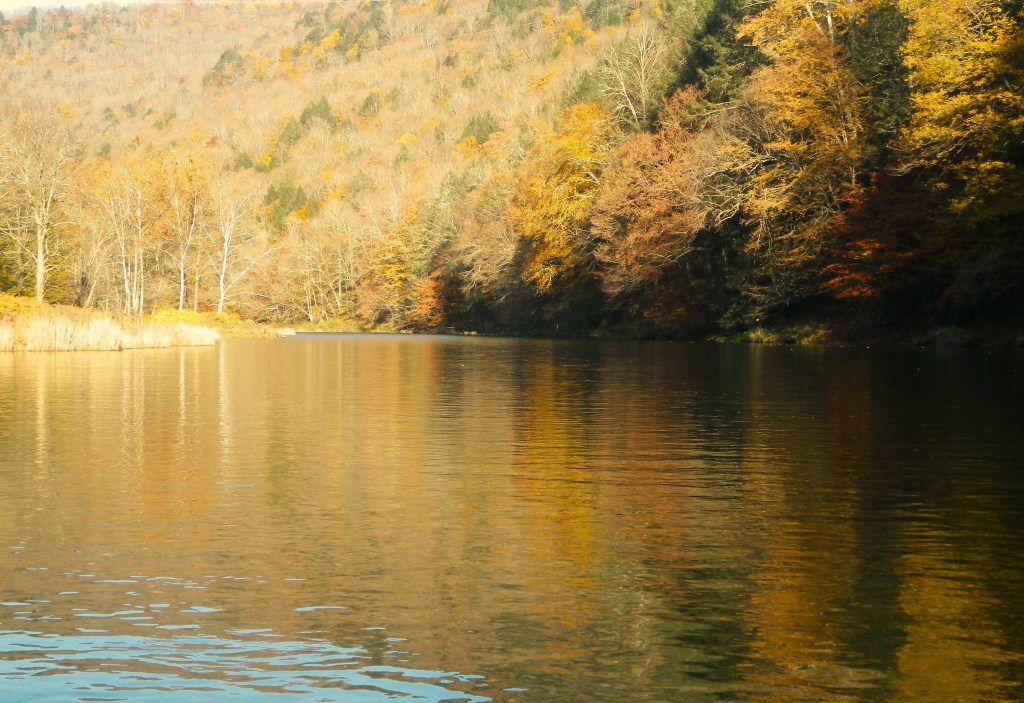
The soft mirror of the Beaver Kill in autumn.

Digging Through The Past

My Pre-fire H.L. Leonard Model 66 and a Quill Gordon tied for that spring morning’s fishing.

When you are passionate as something like Catskill fly fishing, it is easy to be deeply interested, even obsessed, with the history: the tales behind the people, the flies, rods, reels and the legends they wrought. I hatched that interest more than thirty years ago and have only swum deeper in those bright waters after retiring and moving here, the “cradle of American fly fishing”.

I have found often that there is a great deal of information available about these artifacts, and yet there are even more questions and mysteries.

If you develop an interest in classic fly-fishing tackle, the stories behind and within the great Catskill rodmakers are at the top of the list. The Catskill region lies at the heart of the craft in America, yet there are many questions. The epicenter of this world began about an hour’s drive southeast of the Catskill Rodmakers Workshop in Livingston Manor, New York, the site of the 32nd Catskill Rodmakers Gathering next weekend. Hiram Leonard, who had established himself worldwide as one of the finest rodmakers alive, agreed to move his rod shop from Maine to the small town of Central Valley, NY in 1881, at the request of William Mills & Son, his partners and principal retailers of his hand made bamboo fly rods. Leonard assembled a group of exceptional craftsmen to expand his production, and their names would rise beside his own as the architects of American fly rods: Edwards, Thomas, Payne and Hawes among others. As the concept and practice of fishing the dry fly spread through the Catskills, these men revolutionized rod making and design.

Leonard’s shop has been called the fountainhead of Catskill rodmaking, and the description is more than apt. They became the most famous name in bamboo flyrods, sustained their legacy for more than a century after the move to Central Valley, and yet there has never been a complete history, a book chronicling the best of them all. Surviving records lie in private hands, for most along with the equipment and inventory perished in a terrible fire in 1964 which destroyed the factory. Mills rebuilt the factory, and the company continued for twenty years, though after several changes in ownership the assets of the H.L. Leonard Rod Company were seized and auctioned by the government. Remaining rods, records and equipment were scattered to the four winds.

Thousands of wonderful bamboo fly rods remain, privately owned, cherished and fished saved for a few exhibited in museums. The majority have no markings save a stamped company name on their reel seats, and perhaps a small, ephemeral paper tag attached to their rod bags. Mysteries begin immediately at a Leonard rod’s appearance: what model, what year, which line? Such questions jump to the minds of lovers of their smoothness, power and simple beauty on the stream. Answering is not an exact science.

H. L. Leonard’s Model 66: Pre-fire, Post-fire and 66 ACM.

Beginning more than fifty years ago, after William Mills & Son rebuilt the Leonard factory, rodmaker Ted Simroe was put in charge of the company and began inking each rod with a serial number. That simple act was profound, as it establishes for the most part whether a Leonard rod in hand was made before the great fire or after it. Some post-fire rods may were made and sold without the serial numbers, but there no seems to be any clarity with regard to their numbers.

Once the numbering was begun by Ted Simroe, it appears the practice continued, though the numbering itself was changed after his tenure. Information indicates that Tom Maxwell who assumed the mantle of control after Ted’s departure, started over using low numbers for several hundred rods at least, then changed in 1980 by numbering the rods with the first two digits indicating the year followed by the rod’s order of manufacture, thus “8015” would be the fifteenth rod made in Maxwell’s final year of 1980. The changes confuse rod owners and would be Leonard fishers.

Many of the answers come from private enthusiasts, leading further questions as to the origins of any information. As human beings all, enthusiasts face the same fate: memory and time can alter recollections, recalled facts can be changed or simply forgotten.

I have found that internet searches return too little that can be fully trusted. Electronic records yield sales listings from private dealers, sometimes based upon previous rod owners’ recollections or often guesses offered by their descendants. These can only be trusted as the dealer’s best honest opinion and information. Searches today tend to include AI filtered and compiled information, and that automated “filtering” seems to tender authenticity in the absence of any confirmed facts.

It would be wonderful to sit down and record a few long conversations with the people who made these remarkable rods, but it seems sadly that most of those opportunities have passed.

I missed my best chance at learning about the Leonard Rod Company and their marvelous fly rods during my first summer here in the Catskills. While I worked to ready my little house for moving our family here, a diverse group of anglers, rodmakers, collectors, dealers and enthusiasts met at the Catskill Fly Fishing Center & Museum to hold a Leonard Gathering. Unfortunately, though a long-time museum member, I never learned about that event until several years later.

Perhaps I did not miss my chance, as the best way to learn about the Leonard fly rods is to cast and fish them, particularly in these Catskill rivers, and fishing is something I do my best more than a hundred days each year!

The quest continues, as it seems no one will pen the definitive book about the H.L. Leonard Rod Company. If, when the end of my time upon these rivers comes, perhaps I will retain the strength and drive to consider tackling that project myself. It would be tough though to replace my rod and dry fly with a pen.

Spring, low water and a Simroe era Leonard 66

Watching Gages

Watching river gages has become a staple of my daily routine. Even when things go bad, like the photo above, I watch then whether it is a fishing day or not. I live from river to river, gage to gage, for I am a fly angler.

The rain finished up yesterday and the sun came out to dry the grass enough so I could mow it. After a porch sit and a cold beer, I walked down around the corner to take a look at the Big East as it turned against the slope of Point Mountain. Big and brown, just as I expected.

It’s Friday, my last fishing day of this first week of September. The rains have been beneficial, and we are still sitting in a band of blessed Catskill Summer weather as I begin counting the days until autumn steps in. Unfortunately, I only enjoyed one fishing day out of this week, so I am watching those river gages with the 66 ACM leaning against the armoire expecting to find some action today.

Taking my first look this morning, I found that some more rain fell while I was sleeping, so all of those gages that were dropping when I turned out the lights are rising again. Areas that were dropping and clearing when I went to bed are once more questionable. My day now comes down to some more patience and then the boot test. That involves gearing up, driving to the reach of river I hope to fish, and wading into the flow and see if I can see my boots when I am at least knee deep in the flow.

My H.L. Leonard 66 ACM fly rod, the rod that isn’t supposed to exist, but does – Possessor of great power and mojo!

The bottom line of course, is that I really need more than just one fishing day this week, so I am going to go out there and hope the water I find is clear enough to let a big old trout see a big old dry fly. I’m going to pack along a stick that has a big dose of mojo, do whatever I can to hedge my bets.

An angler realizes that rainfall, winds, clouds, sun, fog and all of the events of Nature make fishing interesting. No, not interesting; they make it magic! Day after day and season after season of perfect conditions would be horribly boring.

That conjures up a tale from one of the late Charles Fox’s classic books. An angler has passed on, and he is led to a beautiful sparkling stream bubbling around a bend through a lush, green meadow, and he is told that this if for him. A trout rises, and he casts his dry fly and catches a beautiful 15-inch trout. He releases it, sees another rise in the same place, and catches an exact copy, if not the same trout. After he repeats that identical sequence of events a few times, he walks upstream around that bend and is confronted with the same identical scene where he began, sees the rise, and catches that same 15-inch trout. After a couple of hours, he realizes that, while he thought that he was in Heaven, he’s been really condemned to the other place.

Simple things can be wonderful out there on the river. I often stop and appreciate the utter beauty of the character of the light along the water and the landscape. The views are startling, and often bring to mind similar scenes and moments, but it is never exactly the same as another. Each moment is unique, precious, and I savor every one!

Looks like the river’s flow has stabilized after that second rise. That gives me hope that that surprise overnight rain wasn’t too hard and didn’t muddy things up. The boots will find out…

Misty Mountain Hop

September First on the Delaware – The Misty Mountain Hop
(With apologies to those British blokes)

With rain pretty well promised, the cloud cover seemed a very solid bet. That kind of cloud cover ensures the water temperatures will stay considerably lower, and that had me gather my Paradigm and it’s Perfect and take a ride down onto the Delaware.

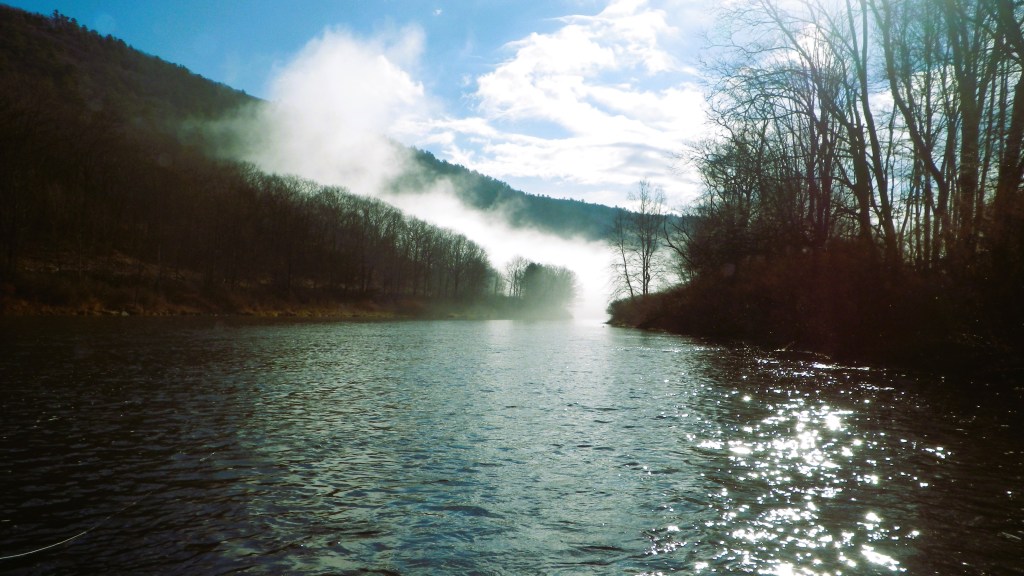
I was surprised when I saw the river, or didn’t see it to be accurate. I have never seen fog that thick and so widespread on the big river. Indeed, the coldest upper reaches of our tailwater rivers look like that many days out of our season, early and late typically, with the mixture of warmer air and forty-something waters. Finding the mighty Delaware in that condition was downright eerie.

There wasn’t a soul out there, just a lone truck with boat trailer parked out along the road, and I felt somewhat like the first man stepping onto a rogue planet. With the mist hugging the surface, the river was bathed in a moving, silvery sheen which vanished my dry fly as soon as it landed.

If there were any flies out there, or any rises, I wasn’t going to see them, though I did occasionally hear the sounds of trout activity. Wading out, with an unshakable feeling of trepidation, I was eventually able to pick up a quick white spurt here and there in the riffly water, but fishing a dry fly was hopeless. There was no evidence of any hatch, not even a measurable drift of insects of any kind, and I could not see my fly once it laid down upon that vaporous silver sheen I knew to be the surface of the water.

Considering the flies arrayed in my fly box, hoping something that I might be able to track along a drift, I saw a pair of larger Partridge & Pheasant Tails and I smiled to myself.

Casting this simple, traditional soft-hackled fly, I let the current take control to let it swing down, just settled into that sheen. Working the same water where my dry flies were ineffective and invisible, this old tactic soon had the bamboo coming alive in my hand. It is impressive just how hard a foot-long wild Delaware River rainbow will fight you. You don’t let them wiggle for a moment and then pull them in. Until you finally get them in close and see them, you will swear you have a strong fish measuring in the teens.

I did catch a trout on a dry fly though. I was walking out and saw a rise nearby, but even in close range I could not see my fly on that magical surface. I was sure the Halo Isonychia was the answer, but I found that it’s wonderfully visible Trigger Point wing blended perfectly with that alchemy of fog and diffused light which had replaced the flowing surface of the river. The little bow I finally bludgeoned with multiple casts fought hard too, though he was hooked on a short line and perhaps just short of ten inches long.

A very quiet afternoon of fishing? Seemingly so, though there is a unique sense of solitude alone on a big river where you couldn’t see another angler more than a cast away from you anyway. Besides the eerie surroundings, there was some additional excitement.

Leading the fly line innocently down the current where I had witnessed one of those tiny spurts of foamy water, something hit it hard enough to stop and tighten that slack line like a shark. The rod arched fully and for a moment whatever was down there just held it’s position and vibrated with energy! Thus ensued the toughest battle I have fought for a number of seasons.

This fish insisted he was going to stay within the bubble line where he hit the fly, and he offered no quarter. When I tried to force him out of his comfort zone, I feared for the life of my rod tip! The standoff couldn’t last, and the fish made the decision to orchestrate the preceding’s via the click check of the vintage Perfect. Run hard, half turn and then dig, dig, dig against the pull of the rod, over and over again. With a lot of time and effort, I eventually led him to the bank, and he shot back out and into his bubble line to the tortured screams of the Hardy. We continued as if we had just begun.

Twice we worked to the bank, and each time he raced away again so we started over. I had almost decided that I had foul hooked him, but on that third trip I could see the fly clearly nestled in his mouth.

A fourth trip to the bank was honestly the first sign that this trout was tired. I got him right to the edge and met him with the net when he turned to run back to the river. I took the hook out of his mouth and I swear he just glared at me, twenty inches of mean green, crimson and silver. As soon as I dipped the net into a foot of water after I checked his length, he shot out of it, right back to his riffle!

Adaptive Plans

September on the Delaware

I would be choosing my tackle for the day, with a ride to the river just minutes away, but prudence has stayed my plans. An angler must be adaptive, and this morning’s threat of severe storms has me adapting mine. Most of the risk is centered on the morning hours, so a few thoughts may be laid down, and a few flies may be tied while Nature plays out her intentions for these Catskills.

That authoritative swelled butt beneath my arm, the Casting Man cap, clearly I’m fishing a T&T Paradigm!

Should storms decide to favor our rivers with gentle rain rather than downpours, some afternoon fishing could still be in the cards. I’m thinking this could be the day to carry a T&T Paradigm, the perfect rod for a quiet contemplative visit to the river. Followers of the marque know the Paradigm fly rods, both bamboo and graphite, were conceived to be the finest dry fly rods imaginable. They reward a smooth, deft casting stroke with perfection!

A day like this leads me to tie on an isonychia dry fly and stalk some of my favorite haunts along the Upper Delaware. Should the storms pass by, the cool, cloudy afternoon will keep the water temperatures favorable below Hancock, and the cold water flow from the West Branch still retained good clarity when I visited yesterday. It is the kind of day I have found the big, claret duns appearing over the years, and the memories tease my interest.

A cool, cloudy Delaware River day…
(Photo courtesy the incomparable Capt. Patrick Schuler)

I have already gathered several iso dries, and tied some others, so I have just to place them in the evolving seasonal fly boxes in my summer vest. The Paradigm will be ready with a wipe of the ferrules, and a Perfect with a number five line is as close as the armoire behind me!

Eight o’clock, and a gentle hint of rain is falling. Clouds obscure the peaks of the mountains at all sides. The Red Gods’ intentions remain unclear, but it is time to allow the day develop.

Years Along The River

The West Branch of the Delaware amid the height of the season!

The weather forecast tried it’s best to discourage my plans for fishing this morning. I had mostly decided to take care of an errand, yet I tossed an old pair of waders and my boots in the Jeep as a just in case afterthought.

After a long talk, trading stories with my friend Ben at West Branch Angler, the rain so certain earlier hadn’t appeared after all, so I decided to drive down the river and see if I could find a quiet spot. Wading in, familiar waters welcomed me. By the time I had knotted a fresh tippet and a dry fly, the first few rises appeared.

Age and familiarity change our approach to most things in life, and so it goes with fishing. Seeing nothing apparent floating out there in front of me, I assumed whatever the trout were daintily sipping were small, terribly small. The experience of thirty odd years on this river told me that, but age led me to knot a size 16 Cross Special to that fresh tippet.

There was a time I happily carried several miniscule specks of thread, feathers and fur intended to match those nearly invisible olives, but today’s eyes no longer see them so clearly as they once did. The Cross brought no response from those sippers, even though I had seen one similar sized pale mayfly flying past. Familiarity had me expecting that result, so I produced a size 20 olive, knowing beforehand it was still much larger than the sippers were drawn to. Experience made that result clear as well.

An Adams poster, a size larger, but buggier and indistinct, tried to convince me while I tried to convince those trout. At some point, I stooped low to the surface to satisfy my expectations had been met. Indeed, a miniscule set of wings answered any remaining question: a dark olive, size 24 perhaps, or 26, and far too small for me to carry them in my vest anymore. I simply cannot see them clearly enough to tie them on.

So, I continued happily casting something I could tie on and see to those sipping trout, while they continually sipped “nothing” and ignored my flies. I spent the hour and a half the stalled rain allotted me, standing all alone in that wide reach of river, casting well and fully assured that any chance of catching a trout was as minute as the midget mayflies they were actually eating.

As the first trace of rain began the flies and sippers ceased seemingly in unison. I thought, as I turned to wade back to the bank, and marveled at just how many hundreds of days I had stood in that river; and in every vision in memory there was one thing which was always the same, just as it was today. I was smiling…

On The Cusp of September

Mike Saylor ponders the “right fly” to bring life to the surface of the Lordville riffle (September 2020)

Yes, September is waiting.

The final weeks of summer lie ahead, and an angler’s hopes look toward cooling rivers and an increase in mayfly activity. I always search for the big claret hued fellows which have been scarce these past seasons, the isonychia. The old timers may speak of the White Gloved Howdy, and the Pennsylvania boys will be asking of their Slate Drakes, but they are most welcome when any dry fly angler finds them regardless the name they’re called.

Isonychia are typically a sporadic hatch, they come in small flotillas during afternoons when they come. While the September brood brings 12 or even 14 size specimens, not the big number tens of spring, they are a robust mayfly that catches the interest of opportunistic trout. The Delaware River rainbows seem to have a particular fondness for them, and I have brought some wide shouldered, high-flying bows from the big river’s faster stretches with some of my favorite dun imitations.

The attraction of one of these iso duns dancing atop the surface has salvaged any number of quiet, hatchless afternoons during Delaware summer wanderings. I’ve taken many fine brown trout on these flies too of course, but isonychia seem to have a magic to pull a big rainbow to the top out of seemingly lifeless water.

In more than thirty years on Catskill rivers, I have seen just one heavy, sustained hatch of these flies, and it was epic! That has been so many years ago that I no longer hope to encounter it’s likeness, but dreams are still for the dreaming.

I’ve been watching rainfall and water temperatures along the Mainstem, hoping to draw me to those long, wandering afternoons with one of my best distance rods and a box of those claret beauties. Rains can bring cool, clear heightened flows from the East Branch and mix with the seasonal muddied flow from the West Branch, keeping the Delaware dry fly friendly. Those are the conditions I desire.

The Red Gods don’t cooperate thus every season, but I long for the rarer seasons when they do. A lower, clear, cold and wadable Delaware is a wonderful September gift!

My Maxwell Leonard 50 DF-6: fueling dreams of September isonychia on Delaware afternoons!