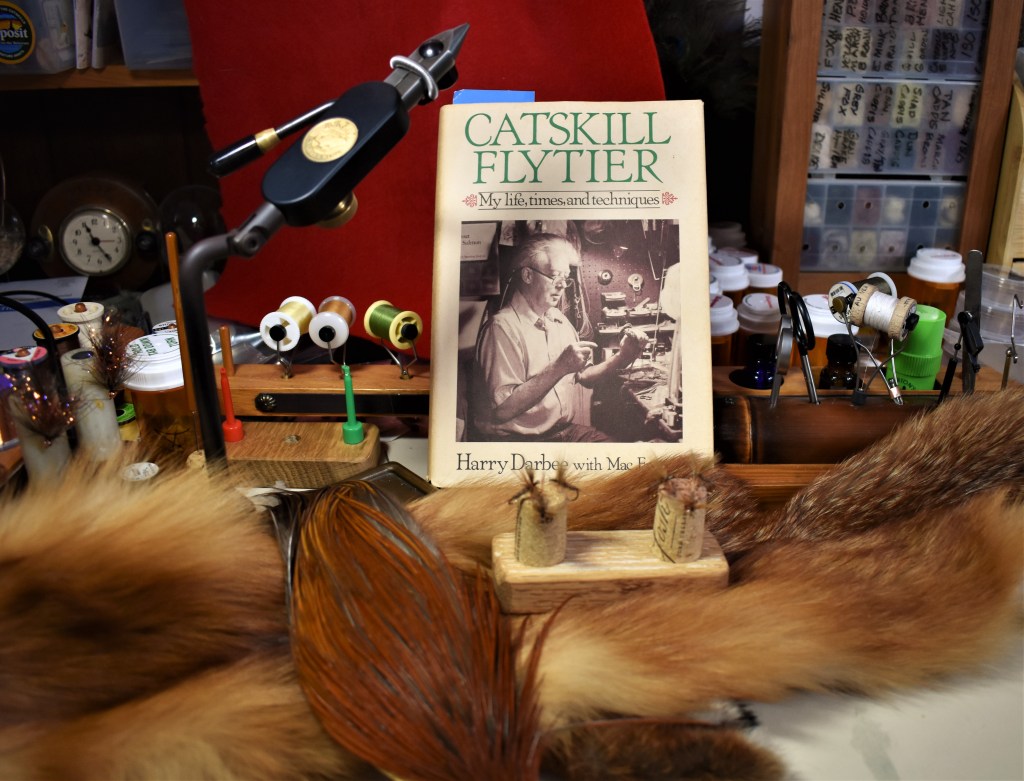
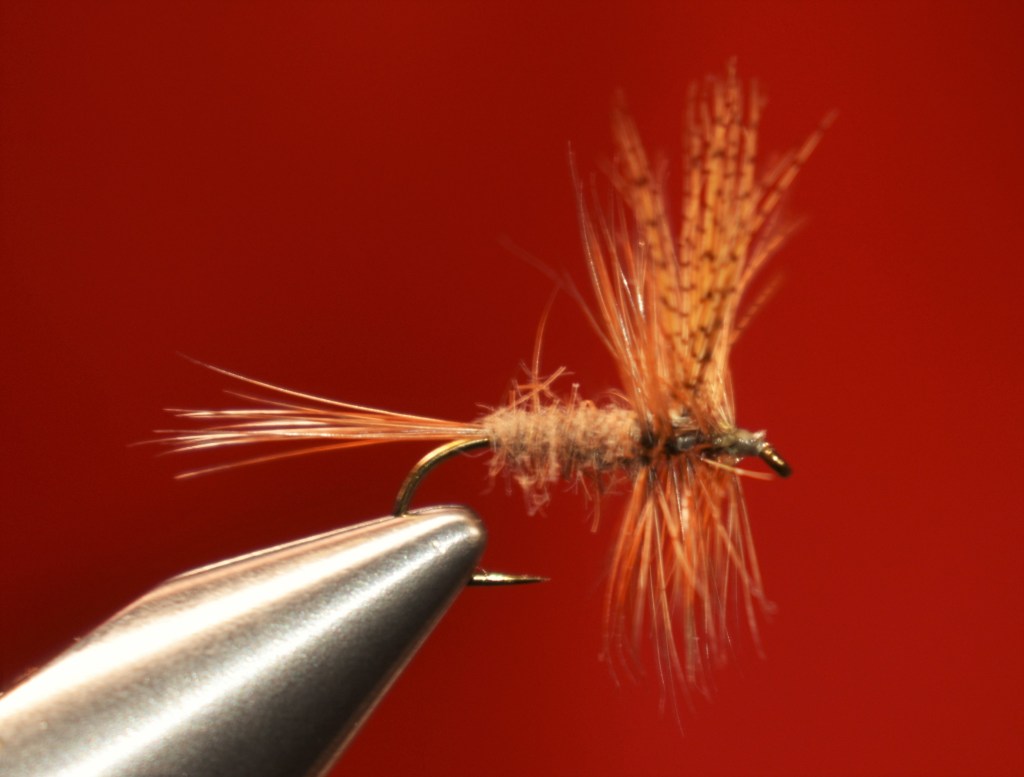
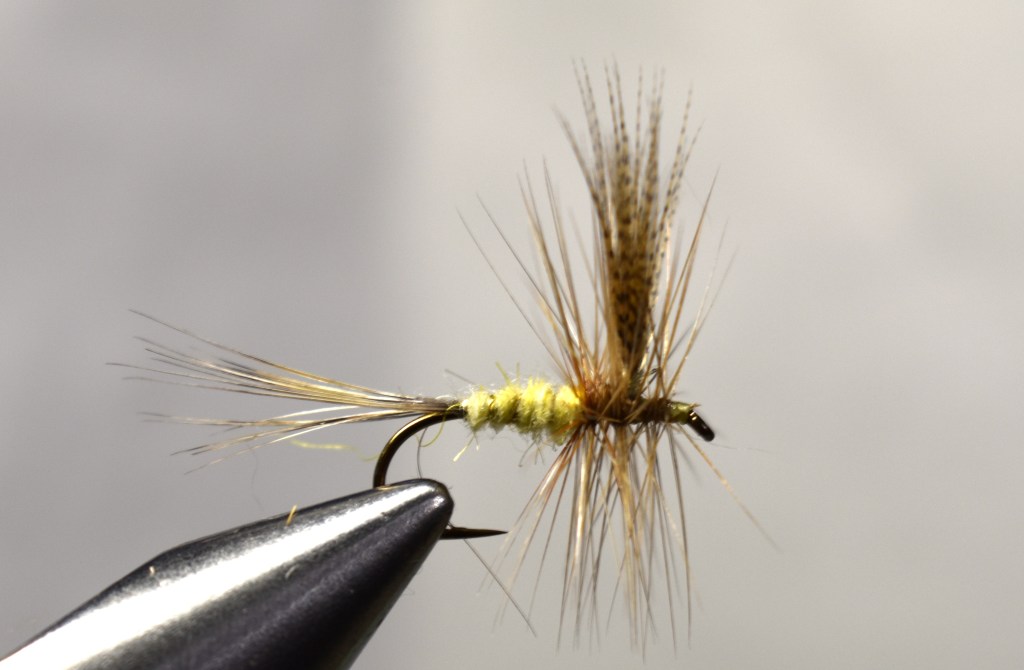
Among last winter’s historical wanderings was a re-read of Harry Darbee’s “Catskill Flytier” which led me to blending some of the darker fur on my Red Fox pelt to tie Harry’s version of the Dark Hendrickson.
As I adjust to the end of my dry fly season and my daily love affair with the Catskill rivers, I have yet to wipe the dust off my fly tying vise and give serious thought to the next long stage of angling, though that time is nearing. There have been a few passing thoughts bouncing around in my head, though they have clearly fallen short of inspiration. Fly tying, and more specifically pattern design, require inspiration; that moment when thoughts and ideas suddenly crystallize, and a new design is born!
Mood can be very important, and it can be difficult to find just the right frame of mind to take out the fly boxes that accompanied me during the past season and sort through their contents. That is certainly one of the best ways to begin, for certain flies are tied to memories, memories that drive inspiration.
My angling library is varied, though many of the volumes that merit annual revisiting lie in the realm of older classics. I pour through the thoughts and revelations of Gordon and Hewitt, Shenk, Marinaro and LaFontaine, for there are always fresh clues that kindle new thoughts. Though I read a bit throughout the year, winter reading is a concept that finds itself at home in a Catskill winter.
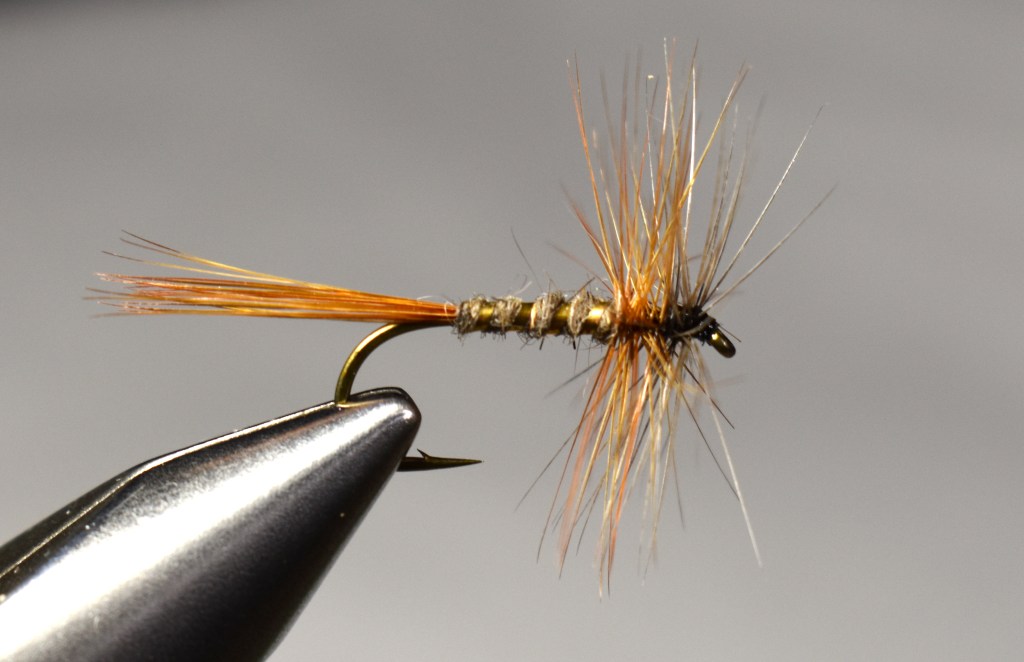
Darbee’s Dark HendricksonHewitt’s Beaverkill Red FoxJohn Atherton’s Atherton No. 3
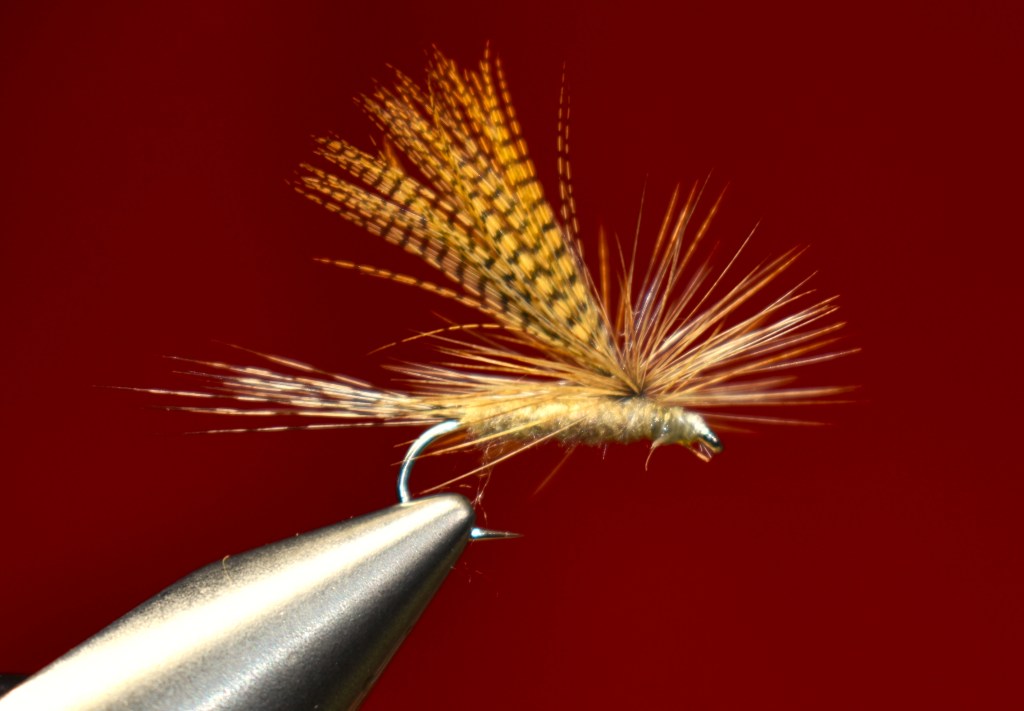
Inspiration for the designs I call the Translucence Series came simply, as often the best ideas do. I was fishing my old, reliable silk dubbed sulfur dun one bright summer day and, as I paused to fluff the CDC wing, I noted the glowing translucence of the blended yellow silk body. That moment evolved into a system of blended silk dubbed flies tied on Daiichi Crystal Finish hooks with pure white tying silk, and the results of those experiments have caused the bag of my landing net to sag deeply. Reserved for difficult trout on generally bright days, these patterns have solved problems I have often encountered.
A Translucence 100-Year Dun Hendrickson
I have a few goals this winter, expanding the Translucence Series among them. I need a new terrestrial, something special to turn to on the toughest summer days, and that one will take some thought, as well as a thorough consultation with my Cumberland Valley history. In truth, there are a few one-off patterns nestled in my fly boxes that might fill that need, for they were tried quite briefly. Those deserve a significant trial on the water, as does any sound design. For now though, I am still working up to beginning that beneficial task of sorting.
One of the benefits of winter reading comes when the tales of other anglers from the past ignite my own memories. There are thoughts that occur only on the water, often in a moment of consternation during a duel with one particular trout: the character of the light upon the water, the subtle impression of a crippled fly as it drifts into and out of my sight, a closer glimpse of some subtle clue that suddenly becomes a telling riseform!
Winter has just begun, and there is ample time before us to delve into the quiet, indoor world of the angling art.
Sitting on the mountainside half an hour before sunrise I can hear the music of the brook below. It’s tone seems even more crystalline than usual in the frozen air, and it brings a smile to my face in the darkness. Many months will pass before I return to watching bright water while listening to it.
As I sat, I thought about the winter before us, saying a little prayer that it is milder than the last two, and wetter, with a penchant for lighter snowfalls and rainfall perfect for recharging the aquifers that feed the mountain springs and filling reservoirs. In short, I asked for a floodless year, a year with ideal flows for wading trout rivers great and small.
It would seem only fair that spring arrives early and with those ideal flows, for the later months of the season remain in question. New York City revised their schedule for repairs to the Delaware Aqueduct, cancelling this past season’s planned drawdown and planning it for 2023. They still have not provided the public with a clear description of just how this will affect our Catskill rivers, and angler’s fear this could turn out to be the summer of our discontent.
Much will depend of course on Nature’s plans for the season. Though we cannot tell how much stored water will be surplus from NYC’s rather vague official press statements, certainly an excessively wet season will mean higher discharges for longer durations. Our best bet for a long and enjoyable dry fly season would seem to require a normal water year, whatever that is. With blissful long weeks of summer trout stalking in jeopardy, a particularly sweet, perfect spring season would be coveted desperately.
Spring
Though I walked the mountain this morning with snow crunching beneath my boots, it was a glorious day that warmed gently. Back home in midafternoon, I decided to take my first river walk of the season to enjoy the best of the fifty-three degree sunshine, though the chill returned as I reached the shadows of Point Mountain. Tomorrow is Thanksgiving, and we are promised another gorgeous day, with a bit of rainfall overnight and Friday. The rain is right on schedule to refresh the rivers, and Sunday offers more. Maybe my little prayer did some good!
Barely mid-November, and snow lies on the slopes of the Catskills. Days ago, seventy degrees and sunny, and now the majority of the days this week will huddle in the thirties; ah, changes! There is no plan for fishing right now. Perhaps a little warming trend will pass through come December, before the ice grips the rivers and makes the change complete.
I tented the drift boat just in time, feeling certain that the region’s first forecast snowfall would come to pass. That has become an annual ritual of surrender. I have tied no flies for the past ten days, there being no urge to wet them. Well, that’s not wholly correct. The urge remains, though the time has come when judgement of the conditions and the inevitability of season’s end conquers all.
I have an old friend who long ago moved to Florida, planning to fish year-round. The Saltwater game is exciting when in play, but my dabbling found it to be very much a feast or famine affair. In all the wild and endless arena of the ocean, it can be rare to find the fish you seek in the fishing location you choose. In trout rivers, there is some comfort in knowing they are there. The hunt remains electric, for the experienced angler knows his quarry is always close. The game requires adapting to the moods of the fish, the temperature, clarity and flow of the river, for we know there will be trout just a cast away. That makes it very much a mental game, until winter.
We know they are there! A perfect blend of flow and cover harbors trout, but assessing their mood leads to targeting their position.
I miss the urgency of that mental game in winter, though it continues without rod nor reel nor bright water at hand. Thoughts turn back to specific moments, those where the correct decisions were made, and those where they were not. Pondering the merits of the choices not made, assessing the flies offered, casting positions, time of day; all of this keeps the mind connected through the months of ice and snow.
Tiny wings, but few appear upright… Blue Quills, olives cripples? What about that current? Should I cast from this angle? Across? Perhaps a sharper angle from further upstream…
One of the joys I find in reading classic works from angling history involves recognizing and comparing the mental processes. More than a century ago, Theodore Gordon was considering the words of Englishmen like Halford and assessing their approaches to the same problems, as I might assess Gordon’s approach to a situation encountered last week, last season, or a decade ago. We have much more in the way of science today, yet the same puzzles are revealed on the water, challenges to be met by a solitary angler with his tackle and his wits. Observation of the moment still means more than all of the data collected!
The odyssey of our warm November is departing on the tails of the tropical storm they called Nicole. The rain is welcome, though it seems there will be less of it than once surmised. Days ago, the call was for two to three inches, down to an inch and a half yesterday and now halved again. Frosty mornings have returned, though we may see sixty degrees yet today; and once more tomorrow to start the weekend. Fair warning though, for there are snow showers in Wednesday’s forecast; and yes, the angling season has finally come to it’s conclusion.
I wandered the rivers last week, enjoying the seventy-degree weather and sunshine, knowing there would not be a third last hurrah, and now it is time to bid the magic times a fond and grateful goodbye and accept that winter is coming. It is time to store my tackle and organize my tying desk, for there are days to spend with Hewitt and Gill and Connett, hours to retreat once more into the soft glow of the Golden Age, and wait…
The dry fly season of 2022: April 15th through November 7th – may it rest now fondly in memory! I credited even that last day to the ledger, for there was a single splashy refusal to a cricket tossed out on a whim amidst the gale, and thus an opportunity. Nearly seven months of magic this year, and that after the sizeable flood that all but erased it’s beginning and the drought that devastated our beautiful Catskill summer. It was a season that proved difficult in various ways, for those natural events are not kind to the insects that provide the spark for the magic we seek. The rewards were fewer and farther between, but Nature revealed her largesse in other ways!
The rain comes hard on my metal roof just now, giving me hope for something more than the diluted forecast has offered. I know the trout will fare better with good flows as we enter the long, cold halls of winter. Here’s to more rain, less ice, and a few brief but functional warming trends to relieve the monotony of the off season!
As the rain fell in earnest, the last soft rings vanished with the parade of miniature wings that preceded them. Imagine, a touch of dry fly fishing in November!
The opportunity was brief, and perhaps as preordained, I had left the one fly box containing the sub sized olives in the car. There were my trusty autumn twenties and twenty-twos handy right there in my vest, but they proved as useless as an anvil for tempting those sipping rainbows. Still, it was a wholly unexpected chance to play the game once more.
Brilliant sunshine and otherworldly temperatures have prevailed since then, laughing in the face of a typical November in the Catskills. Yesterday I had to succumb to the lure, standing in the middle of the mighty Delaware in my shirtsleeves. Just your typical November day…
Another like it is on tap today, the sun already blinding me through the curtain covering the window above my tying desk, and though I know I shan’t find any of those tiny olives nor soft dimples in the film, I cannot resist.
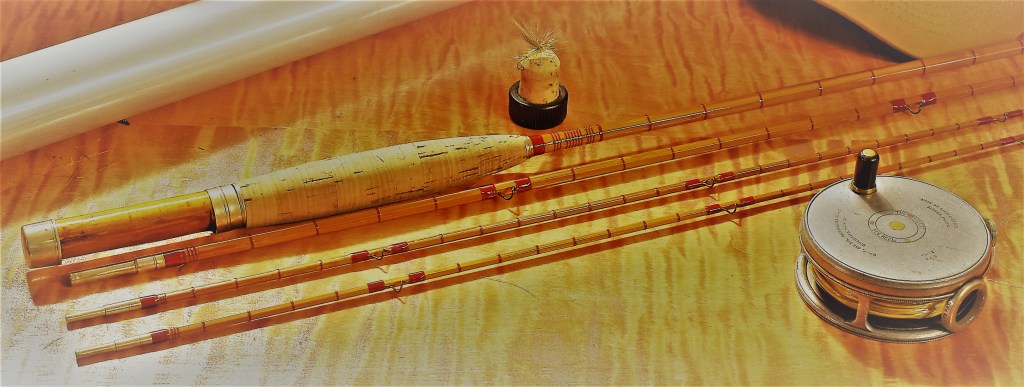
I carried the dry fly rod yesterday, my Dennis Menscer Hollowbuilt, strung up for one last chance to loft the dry fly over bright water. I ended up disgracing that sword, swinging weighted soft hackled things beneath the ripples where the run deepened, for such a weapon is destined for grander things. I simply had to enjoy the pleasure of casting in the sunshine under those brilliant skies!
Hope tells me there ought to be some remnant band of mayflies, some rouge group still clinging to the stones and ready to hatch now as Nature has raised the water temperatures once more, though my mind tells me otherwise. The winter rod would be the better foil, for it has proved its capabilities when called to deliver tiny dry flies to take advantage of miracles.
The frost is heavy this morning as I awake and make my way down the stairs. So many mornings I have felt the anticipation for the days’ fishing, but now that feeling is quelled. This week, November comes calling, and I will park the drift boat and prepare it for winter.
I will sort through the myriad items that have acquired temporary homes on my fly tying desk and store most of them away, including all of those Gordons and Hendricksons hastily removed from my primary fly boxes back in June. These flies will be returned to those primary boxes, the Wheatley’s that will not find their homes in my vest pockets until April. Along the way, I will make notes as to the patterns that will be tied during winter, when that irresistible urge strikes me to touch something of spring.
The mature wild brown trout of the Catskills are either spawning or recovering at this time of year, and it is now that I table my desires to be on the rivers daily and leave them to their rest. Depending upon the particular character of the onset of winter, I may welcome a handful of days to return to walk the riverbanks and swing some description of a soft hackled fly through the glides and runs ones they have regained their strength. Winter shall decide my fate.
The field will call to me this month, more so once the fever of my fishing passion has diminished a bit. It is hard just now, in this season of withdrawal. Yesterday afternoon was gently warm and glorious, yet I stayed inside to fight the terrible urge to take up my rod and reel and walk the rivers. It is easier if I sit quietly and ponder the morning frost. The morning sun has climbed the mountains to the southwest and lights the curtain here in my window. From it’s appearance, it could be summer, for it still holds that warmth and color, not the cold, austere light of winter.
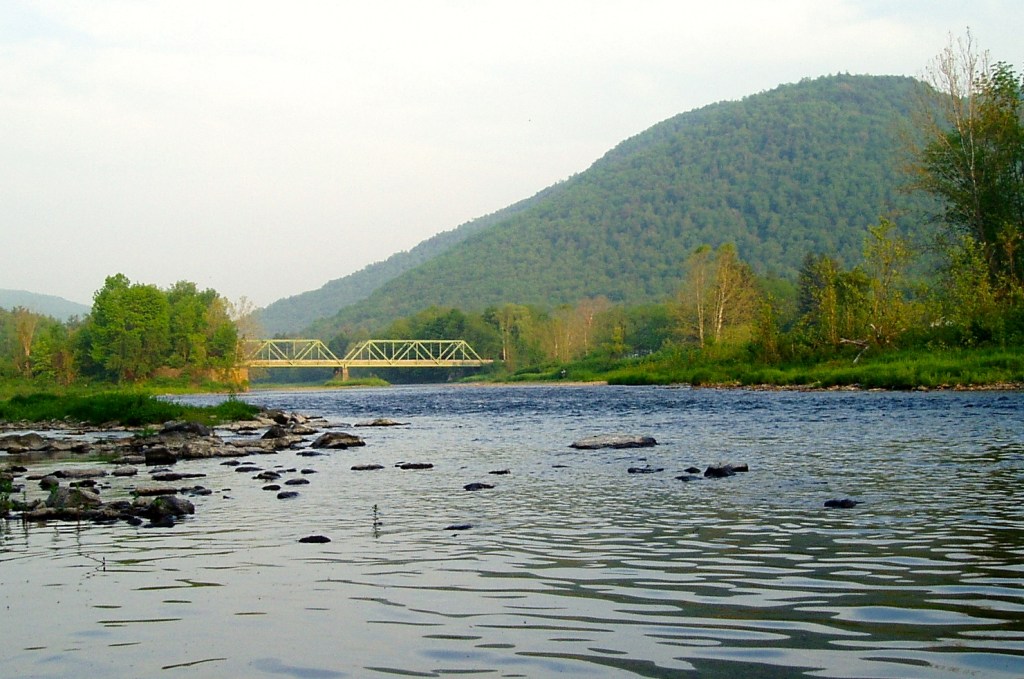
The storied Beaver Killreaches it’s terminus as it flows into East Branch, New York where the bolstered East Branch Delaware plummets through the chutes once known as the Jaws of Death.
Looking forward, November’s first week looks to include a parade of afternoons in the sixties, and that will make my transition ever more difficult. Fine weather is meant for fishing after all!
I always encounter someone who speaks of trout rising in November, yet I demure, I maintain my withdrawal. Surface food is beyond scarce at this season, and I leave the recovering trout to it. Invariably I shall not harry them as they forage for nymphs upon the bottom. They have provided a long and beautiful season for the fly fisher, and richly deserve the chance to prepare for winter unscathed.
I have collected a few books during the season, older volumes to join the list of my winter reading. I am not there just yet, for the good weather deserves to be enjoyed afield. There will no doubt be many long runs of icy, frigid days when a short walk about town will be my only respite.
A bright winter morning along the Delaware.
Thoughts of better days shall be recalled to sustain me as winter marches slowly on. Many cold mornings will be spent tying dry flies, their fate being such that they shall not see bright water for months. Each must wait to entice a trout, as must I!
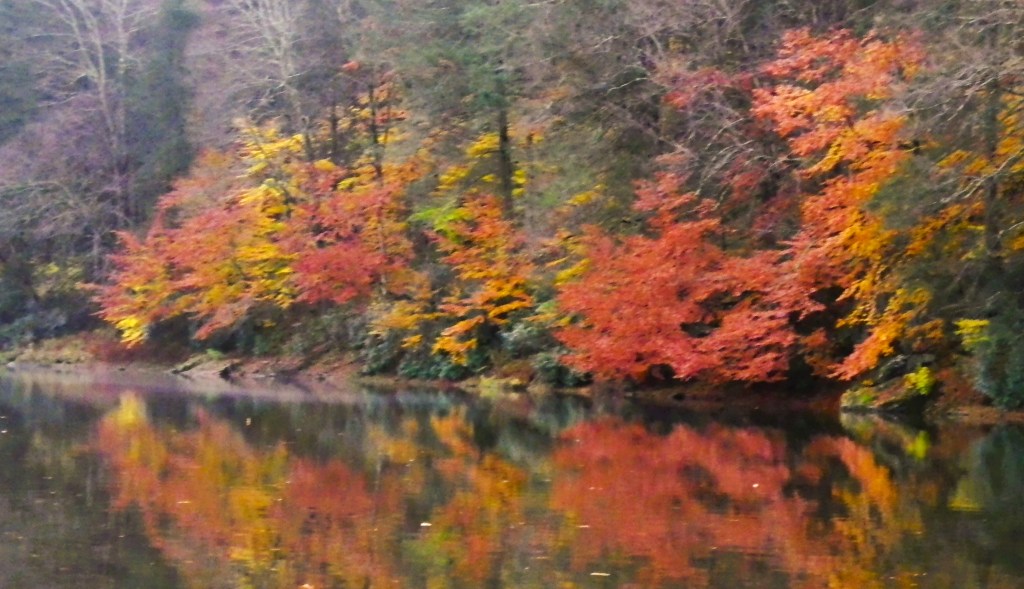
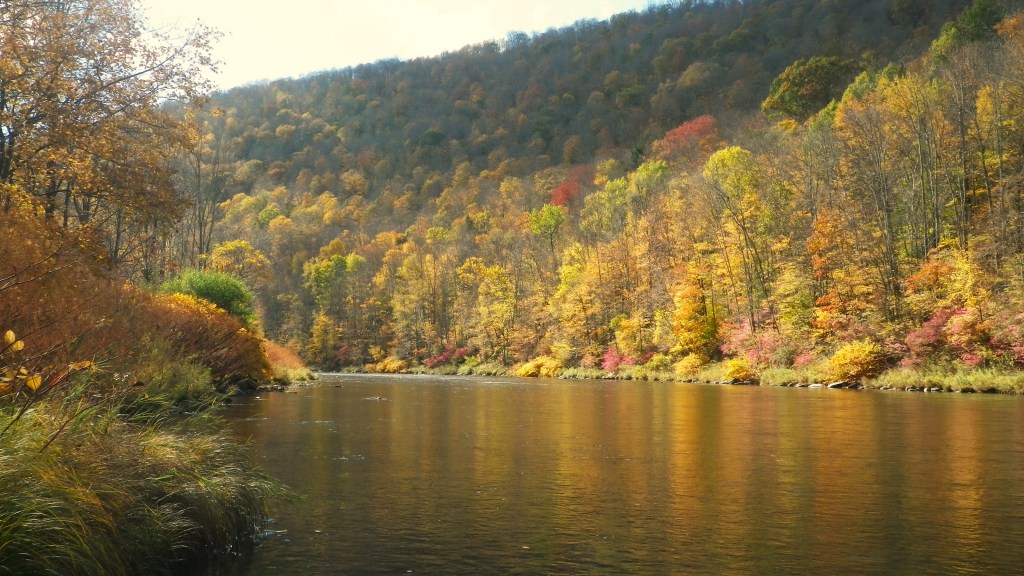
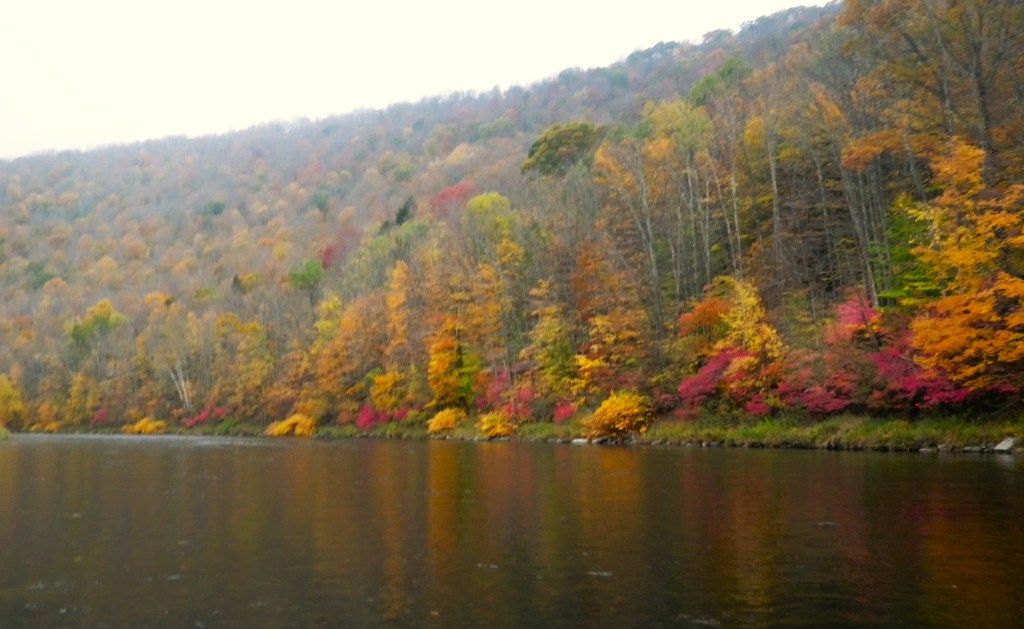
A last glimpse of color as October swiftly draws to a close.
With no expectations, I headed out late this morning for another warm but misty encounter with the rivers of my heart. I am convinced that the season has exhausted it’s complement of mayflies, but I carry the Thomas & Thomas bamboo, the Hendrickson dry fly rod that accompanies me to greet the season each spring. If nothing else, the day was intended as a farewell tour of some particular haunts, a ride to visit various pools on various rivers, hoping against hope to find the ring of the rise. It is time to pay homage to those reaches of water where I find sweet solitude.
Our unusual weather pattern persists, with 62 degrees at dawn and a high of 64. Our river temperatures have been rising steadily for several days, and now mimic the perfection we hope for each spring. Our flows are low, typical for October, as the rain showers have been brief, enough to keep the day damp, with mist wraiths hanging atop the mountains, but doing nothing to increase the current.
The first stop proved my forgone conclusion: no flies and thus no rises, and it was with that resolve that I walked down to the second pool. No rod accompanied me, for I expected nothing, but my mood would change once my gaze studied the current. Retrieving my tackle, I waded in and knotted a tiny olive dun, assuming there were a few about to elicit the soft rise I had seen. I saw little on the water, but a ring here and then there told me there had to be something. The rises seemed to be singles, confirming there was no significant number of flies, so I continued on to position myself for the one good rise that drew me there for my farewell.
This pool has been the first visited in springtime, quite often surrendering some early evidence that the hatches were in que. When I spied one small mayfly flying past, I snipped my dun and replaced it with an emergent pattern one size larger. The smooth, effortless reach of the classic Hendrickson offered that fly to the next single riser in time to attract his interest, and I turned his bonus mayfly into a sting! That 16-inch trout bucked at the resistance of the cane and I enjoyed each moment until I twisted the fly from his jaw. No others would rise thereafter, whatever feeble hatch of flies having ended as quickly as it appeared. I changed the fly and probed the old favorite places anyway, building up to my bow of thanks and farewell until April returns.
I visited a handful of pools along several miles of river, visiting all but one which had it’s own crowd of hopeful anglers by Noon. No flies were encountered, no rises seen despite my wishful intentions. With a shower wetting me as I ducked into the car, I said my last goodbyes and drove on.
I found myself alone on my last reach of river for the day, the somber tones of autumn welcoming me to a mist laden pool. I stood for a while and watched, but there was nothing showing on the quiet surface save drifting leaves. I began with a twenty olive, and though there was no rise to cast to, a retrieve of my cast hooked one playful little brown. Come back to see me in a few years I thought, as I gently removed the hook.
I changed the little dun for a terrestrial, and then for an October Caddis, thinking I might attract one old fellow not yet drawn to the spawning gravel. My efforts proved fruitless.
There are times made for certain flies. A few days ago I had tied two 100-Year Duns to match an 18 Blue-winged olive, and I decided I would end my farewell tour with one of those patterns. An olive is a fly that should be around on such a day even if it isn’t. They are often the first and last mayflies of the season, and this season seemed wholly finished in my mind. I relaxed and waded slowly downstream, casting to lies remembered from dozens of years on this water.
From a distance, I had seen a pair of splashes along one stretch of bank, a good fish chasing minnows was my thought. an hour must have passed by the time I drew within casting range of that area, and I studied each raindrop that fell, dimpling the surface. When the ring appeared, there was no doubt that a good fish had found some morsel worth the effort. I lofted the line once more, lengthened it and let it unroll softly out there until the fly alighted. The answering wide, soft ring beside that shallow bank was magic!
Sometimes when we believe the end has come, we find something we did not expect, something like a deep throbbing bow in a lithe shaft of classic cane. I relished the gift, cherished each turn of the reel handle, each rasping note that escaped the old Hardy as that brownie resisted what was seemingly preordained. Less than a week until Halloween, the hatches finished for the year, and yet that trout and that little fly met in time and space as I said my farewell to another Catskill dry fly season.
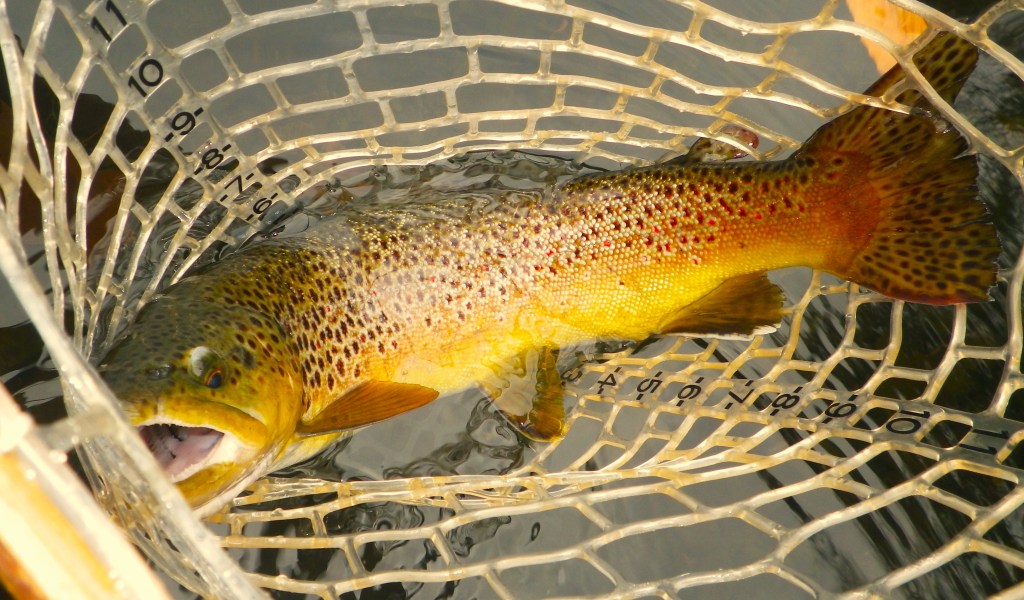
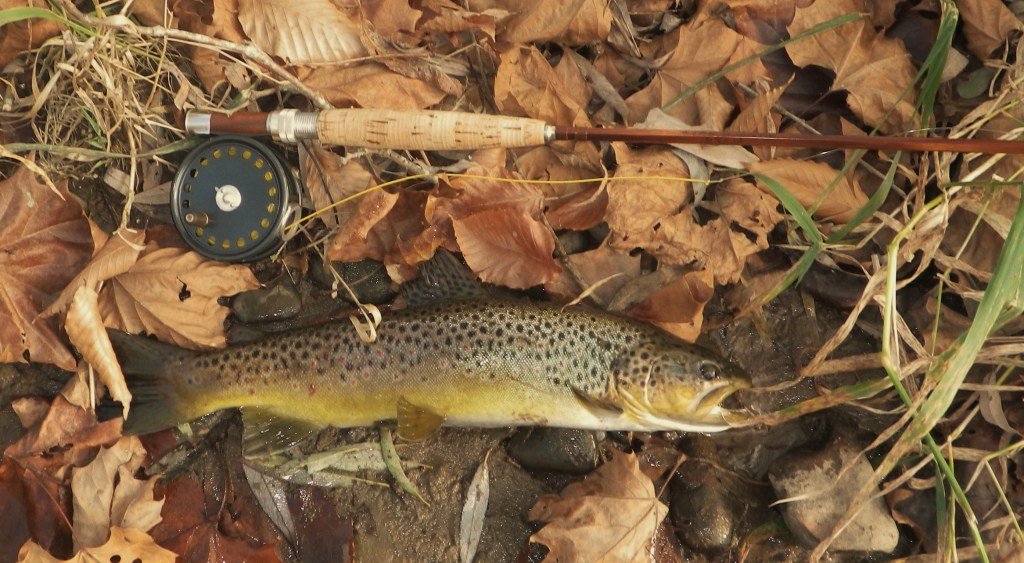
The butternut golden belly glows in the soft, diffused lightof a misty October afternoon. The brown measured twenty-two inches, and I thanked her for her beauty and vitality. Already she has spawned somewhere in the riffles and returned to her home pool to gather strength for winter.
It is morning once again in Crooked Eddy, and a misty 62 degrees. The weather is playing a game of turnabout here in the Catskills more than a month into autumn. River temperatures have been rising fairly steadily, despite the lack of sunshine. Low flows and warm air have brought them from last week’s forties up into the fifties.
Cloudy, rainy days and warming water, fishing must have new life! Well, that seems to be the tease anyway. I went searching yesterday for an olive hatch on a perfect olive afternoon. I checked several pools that are usually worth fishing at this time of year, finding the barest handful of tiny mayflies on one of them for a brief span of time. One good fish was taking, selecting as they do the perfect spot to foil presentation of a dry fly.
He was moving up and downstream several feet within the fan of current coming off an obstruction, presumably a rock. The game presented not only required achieving a drag-free float within the confines of that current fan but determining just where in that realm he would be at that moment. Leave it to our Catskill trout to make things interesting.
I approached this hydraulic dilemma from an upstream angle, moving during the course of our engagement to make that angle ever sharper. I did get some drifts that looked quite good, though I failed miserably at predicting his random relocations. Eventually whatever morsels he was sampling disappeared (I had only seen two or three flies on the surface throughout) and he stopped feeding, never to rise again.
The fact of the matter is, the dry fly season technically continued for that one more day I ache for at this season, though I could have saved the effort of carrying my net. Despite seemingly perfect conditions, I believe that the autumn’s allotment of olive nymphs may simply have hatched by this fourth week of October, leaving the trout not already involved in procreation with nothing more to rise to.
Being a die hard, and totally unwilling to accept the impending onset of winter, I will slip into waders and rain jacket again today, joint my impregnated Thomas & Thomas Hendrickson, and seek to be humbled again.
It is Friday October 21st and 28 degrees in Crooked Eddy. Rivers have felt the chill of advancing autumn – my bones bear witness! I have enjoyed a last late glimpse of the magic of the dry fly, and watched it pass into memory.
Yesterday I stood shivering as the winds blew whitecaps upriver, my wet hands icy from handling the line and fly. No rises greeted my gaze during the calm spells, and truly I did not expect them. My thermometer told the tale, the gin clear current registering forty-four degrees at half past noon. Now there is a brief warming trend knocking at our door, teasing me with empty promises.
Though my soul wants to believe a day of warmer breezes and sunshine might cause the magic to stir, to return for one last golden moment, my heart tells me the season has passed. Yet I am still called to the rivers…
I begin and end each season in the same manner, walking riverbanks and searching for the dream, and there are always strings of days that I do not find it. River temperatures in the forties seem to be the constants during these searching walks. In spring, that run of days eventually ends with the first rise of the season. In autumn though, the end always comes with acceptance that winter shall rule the rivers for nearly half the year.
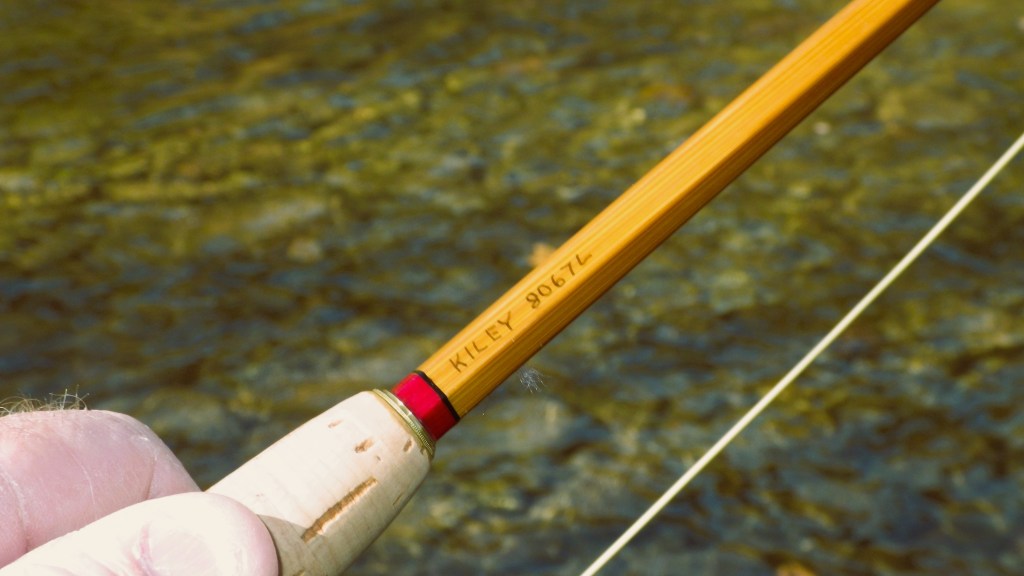
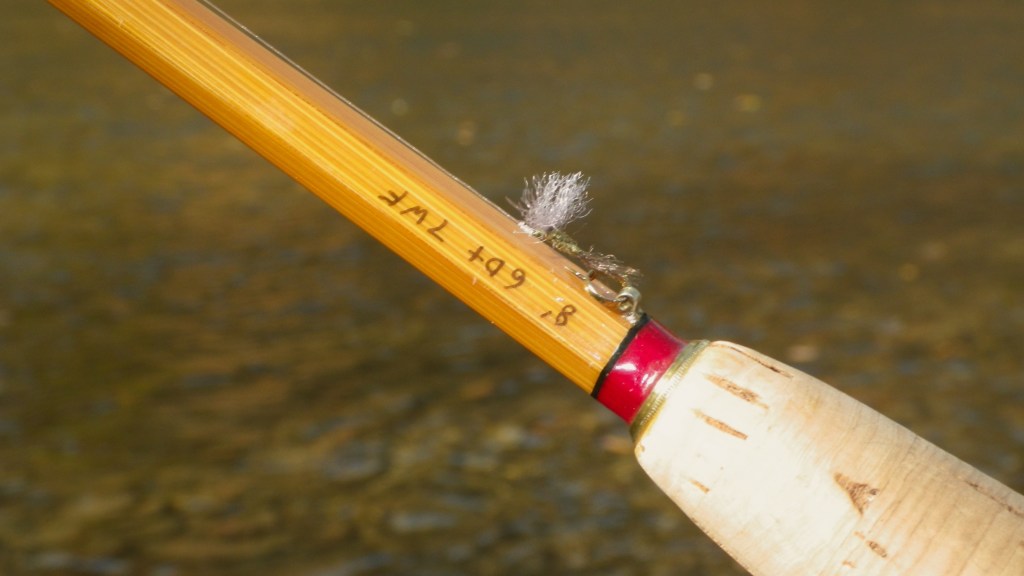
Fighting the elements yesterday morning I cast through the wind thanks to a seven weight line that brought forth the power of my Kiley bamboo, driving the streamer out to swing through the fallen leaves. Yet sitting on the bank to let the sun warm me just a little, I knotted a size 20 olive with hope in my heart. Blind hope.
The presence of the heavy rod, my off-season rod, speaks to acceptance of season’s end, yet the tiny dry fly was knotted with hope in my heart. The seven weight Kiley will present that bit of nothing beautifully and delicately, even on low water, so though it represents a concession in spirit, it still allows that glimmer of hope within.
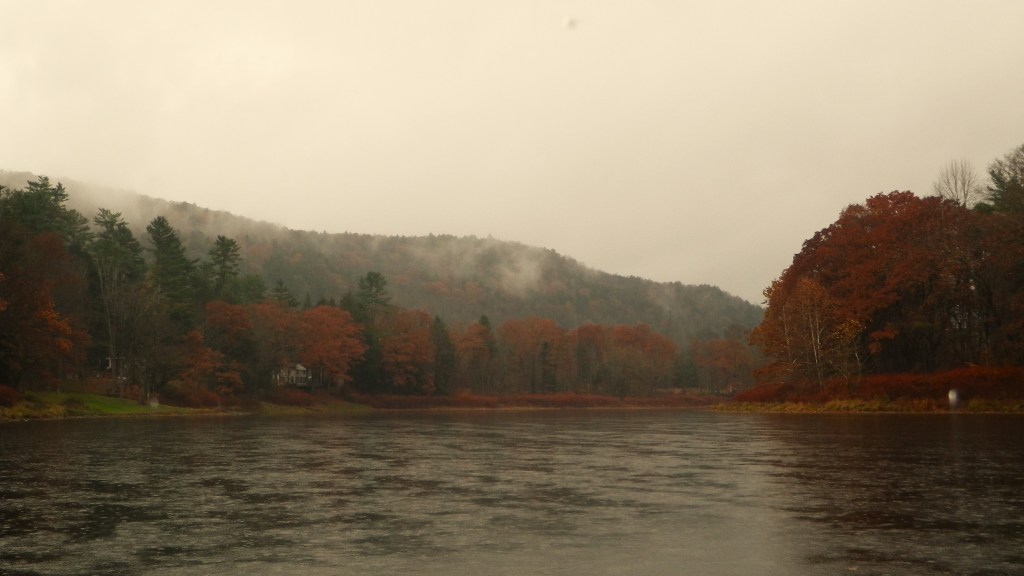
Though it is afternoon, the mist pervades everything…
Though it is past Noon as I enter the river, the cold grasps at my legs immediately. There is a pervasive mist in the air from mountaintop to river, even down into that watery realm it seems. I am prepared for the afterlife, that second season some call it, with a big Isonychia soft hackle knotted to a substantial tippet. The river temperature is 47 degrees, and there will be no sun to warm it.
I move into the flow and cast the weighted fly across, mending a short loop so that it swings gently down over the cobbled channel. Step, retrieve, cast and swing: this is what must pass for fishing at this season. I continued my rhythm for an hour, but nothing bumps the fly. My gaze wanders, this off-season style of fishing depending upon feel rather than sight, and I see something that I do not expect.
Studying the flat surface, I find a procession of tiny wings and my heart jumps. There is reason indeed for the soft rises my eyes revealed along the glides, cold be damned!
The ubiquitous Orvis Battenkill eight-foot 4 3/8-ounce bamboo fly rod might be the most versatile piece of gear there is. The old war horse lays heavy streamers and wets out there with repetitive ease, though with a six weight line it will present a tiny dry fly quite perfectly, making it the perfect foil when the Red Gods offer unexpected gifts!
I rebuilt my leader as I stalked down and across the wide expanse of the river, smiling as those little rings amid the glide repeated themselves. The magic lives!
The flow was the equalizer on this day, leaving me long casts crossing complex currents even from my closest approach. Ah those bedeviling currents! I have battled them before, learned a few things as far as solving their puzzle of presentation. Every day, every flow is different in a living river, and those treacherous currents are constantly shifting, curling and finding new ways to trap a leader and skate a fly away from success.
The trout were moving, and despite the substantial number of flies upon the surface they refused to feed steadily. I invested the time, changed position a step at a time. I solved one riddle and the old rod bowed deep and throbbed with life!
I danced the edge, working the fish to the limits of the tiny hook. He had the advantage in the deep, fast water. I had worked into a casting position carefully, leaving no easy exit back to shallower environs. I would have to control and land him there or not at all. Invigorated by the cold, oxygenated water, he nearly leapt out of the net when I finally swept him from the river, my little dry fly lodged perfectly in the corner of his mouth!
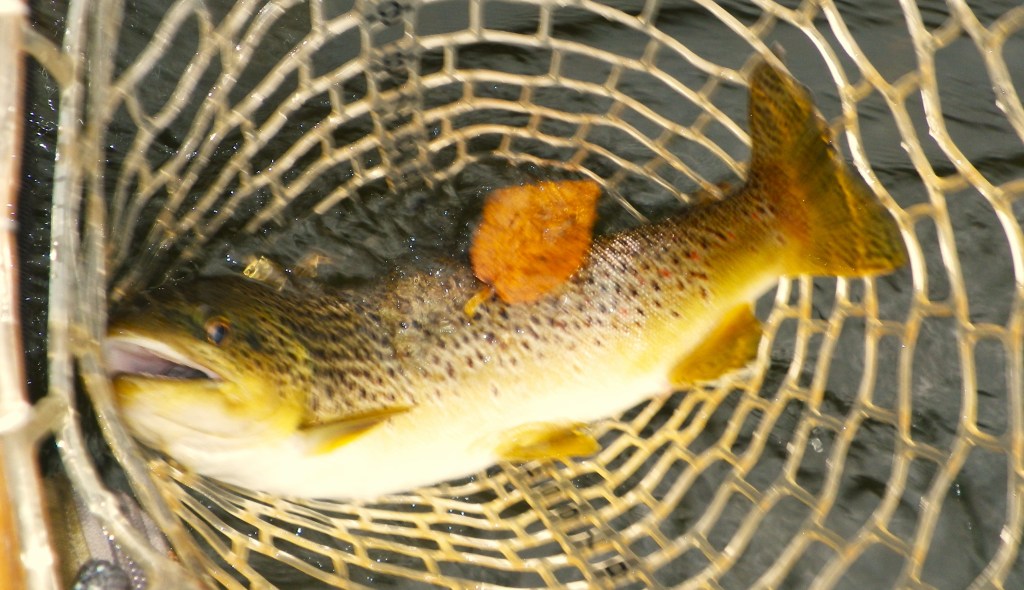
A 21″ Catskill brown poses in the net before his return to the cold, deep flow of the river and it’s buffet of tiny mayflies!
As the afternoon deepened, the game continued. Each substantial change in position required wading back to shallow water, moving down, and then easing back over the treacherous portion of the riverbed to work another riser. The tiny olives marched in a wide phalanx down the current of the glides, yet the feeding remained spare: take one, perhaps two and then demure, each trout ghosting from the mist then vanishing again.
At last, I found myself in perfect position when another rose briefly, first to a mayfly awash, and then to my dainty fraud! The fight mirrored my earlier escapade, the resiliency of the old rod cushioning that little hook as I worked the trout around line cutting boulders. In the net, he was a twin to that first wonderfully energetic brownie!
The activity disappeared in the mist from whence it came, and I found the warmth of the car most welcome after convincing my tired, cold bones to work out of those mesmerizing currents.
In the morning I tentatively checked the porch thermometer, pleased that the expected freeze had not occurred. Thirty-four degrees doesn’t spell fishing, but the pull of the river was too strong given the gifts of the previous afternoon.
Bright sunshine greeted me at river’s edge, though the clouds gathered quickly as I scanned the surface for some evidence that my good fortune might be repeated. Each day at this season might be the last. There was no heavy leader today, no swinging. I simply waited and watched, easing gently into and downstream with the flow.
Eventually I witnessed a telltale ripple in the glides, enough to confirm life, and death for the mayfly’s part and began my stalk. As the sun became more hidden in the darkening sky, the wind rose just enough to thwart my best casts from yesterday’s proven position. A final play put the line too hard on the water, and the rises ceased. There were fewer flies this day, and the clouds did nothing to improve their numbers. Occasionally I would spot a single rise and work into a position to cast, only to find that rise would not be repeated.
Over the course of an hour, I managed to put the fly over one or two of those single rises without result. A larger mayfly drifted past, it’s light body and wings bringing to mind the September peach fly, and I turned to my vest pocket. A sixteen sulfur 100-Year Dun caught my eye and I reached for it instantly, replacing the twenty olive the wind rippled surface refused to let me see. When a good rise showed amid the water tumbling over a boulder, I cast that fly repeatedly, willing it to succeed where the little olive had failed.
The trout took greedily, my rod bucking instantly with his wild energy, and the vintage CFO began to sing. My first glimpse of my foe confirmed this was a good fish, but his heart belied his size. Some trout simply refuse to give up. I was powerless to control him in the deeper flow, surrendering my position and carefully working my way into shallower water. Still, he refused to come anywhere near me.
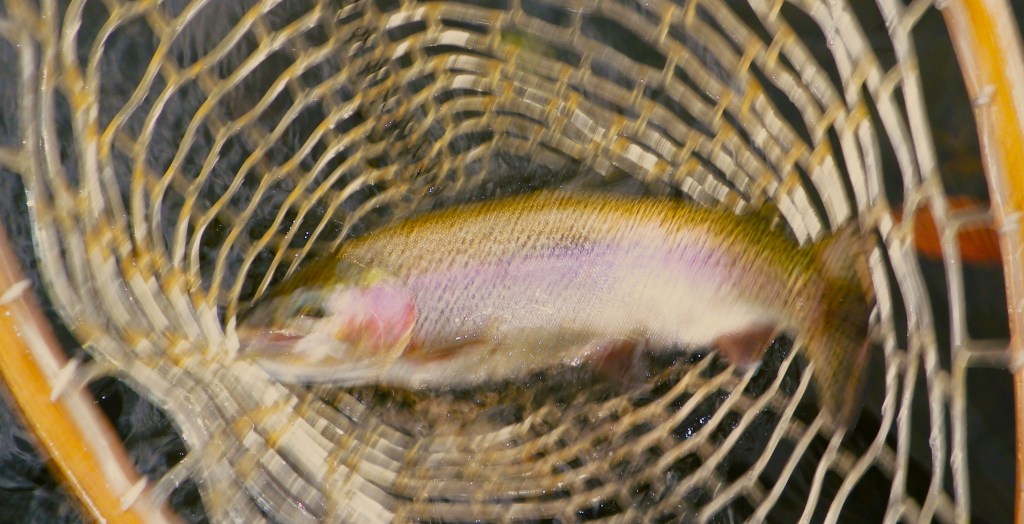
I understood when I finally made my first pass with the net: a heavy Delaware rainbow. When he was bested at last, I slipped the canted wing fly from the side of his jaw and thanked him. A fine example, pushing nineteen inches as he wriggled in the mesh, I tried to snap a quick photo before release. Looking at the result this morning, I wondered if it was the cold that made my hands shake so badly, or something else. Perhaps sharing his will and wildness through that arch of vintage cane affected me more than usual.
My shaking must have been the cold…
There were no more rises after I released that beautiful bow, so I took a break from the cold the river had steeped into my bones. I checked another pool and then another, but the activity for the day appeared to have concluded. I did find a couple of friends lurking at that last pool, looking rather than casting as I arrived. The sun shone through the clouds and warmed me as we stood there and talked.
In turn, each of these anglers spotted a rise and excused themselves to slip into the chilly current, while I headed home envisioning the hot coffee waiting there.
Our first frost arrived this morning; thirty-one degrees at daybreak here in Crooked Eddy. Shall these two afternoons mark the end of my dry fly season I will remain thankful for Nature’s gifts, for they were golden!