Blog Feed

Summer’s Finale

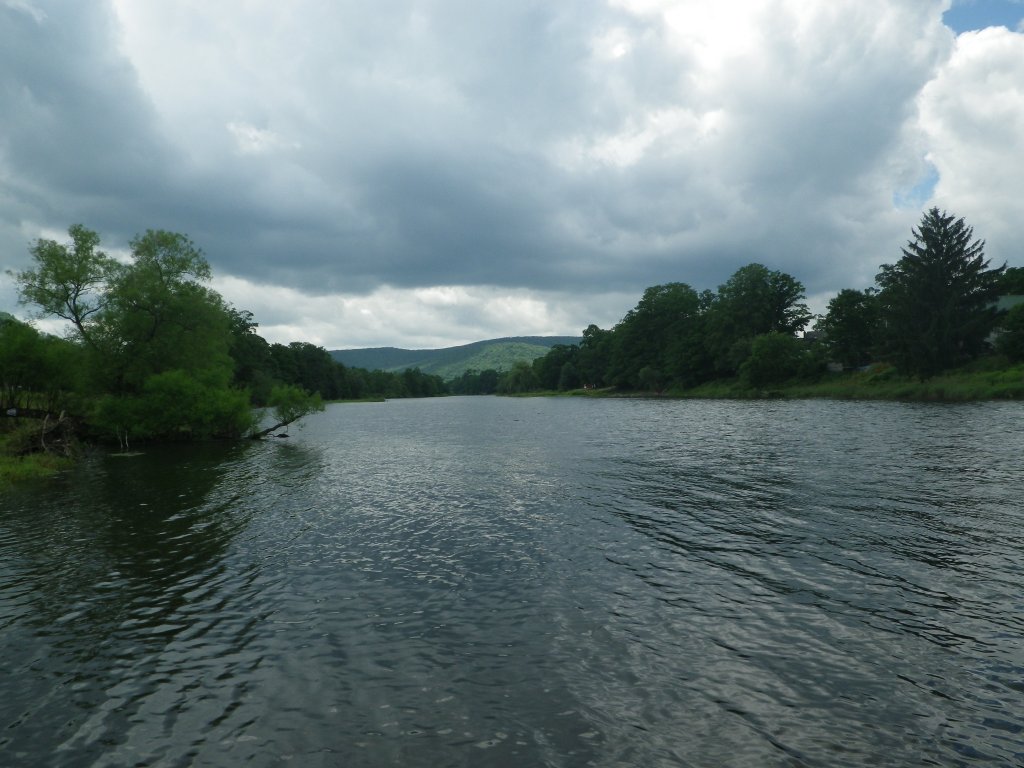
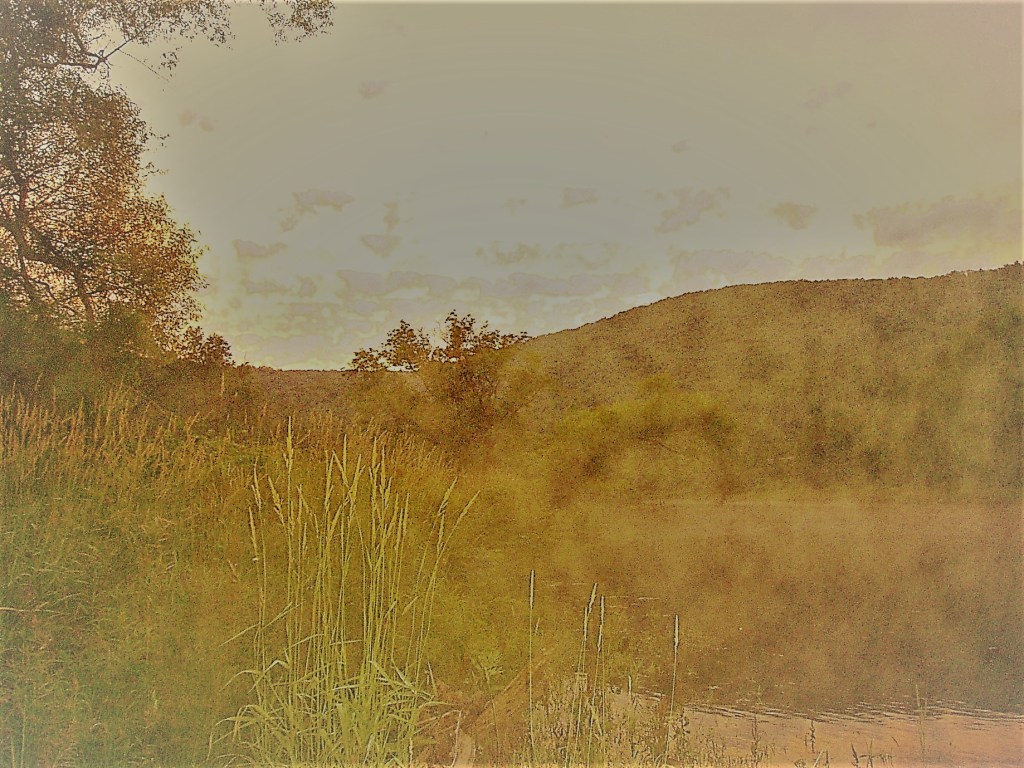
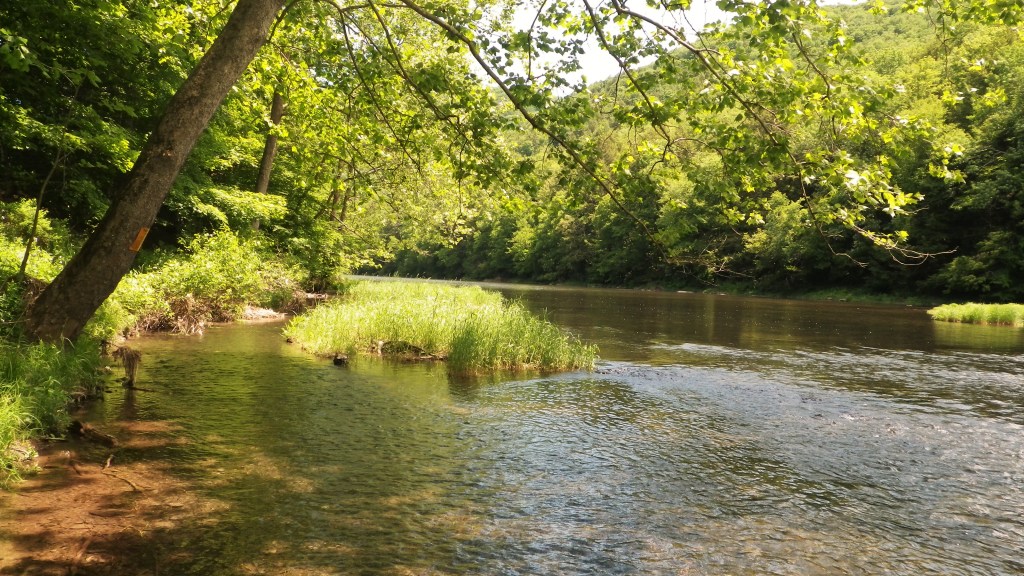
Summer’s glow on a beautiful Catskill morning.

Walking along the river yesterday afternoon a few of those early falling leaves got to me once again. Though it seems hard to believe, here we are amid the last two weeks of summer. My favorite season has felt much shorter this year, thanks to Mother Nature’s breaking things up with a healthy dose of roller coaster weather. The entire year has followed that pattern: an array of disarray.

Sixty degree sunshine in March, eighty and low water in April, and let’s not forget Memorial Day weekend with it’s daily highs of forty-eight very damp degrees as the lady’s coaster climbed and fell. Should we have expected anything different for summer? Between those gorgeous stretches of sunny days in the seventies, cool nights perfect for a good, sound sleep, it has been a stormy season.

I remark as an observer, not a complainer, for the changes have forged my best season of fishing thus far in my short retirement. During the early years I travelled to visit and fish the Catskills, I generally assumed the wide variations in weather and conditions had a lot to do with my luck. Over time, as my trips increased in both length and frequency I began to realize just how different each and every season can be. After three years living here I expect a wide array of new experiences each season, adopting an attitude to simply sit back and enjoy Nature’s full tableau of experiences.

The passing hurricane system gave us enough rain to shut down my fishing for a week, though the western Catskills fared much better than the eastern side of the region. I spent a couple of hours here and there late last week and early this week, but yesterday I finally headed out for a day of fishing. There were warnings in the forecast again, so I expected to fish until the storm clouds gathered and Nature invited me to leave.

Rivers and the life within them change after each run of hazardous weather. High water finds trout relocating somewhat, and the insects are at the mercy of the stronger currents, so the fishing can change markedly, bringing a new challenge. I fished carefully and diligently from mid morning into early afternoon without moving a trout, until I noted a couple of light colored mayflies riding the surface. There were reports of orange Cahills being sighted, so I had tied a handful that morning. I knotted one to my tippet as I observed the first rise.

The consistent hatch and feeding I hoped for did not appear though I managed to cast the fly quickly over one of the sporadic rises and take a foot long brownie. I waited and cast to another that betrayed his presence once or twice, but there simply weren’t enough insects to get them excited. Walking along the river’s edge I had my moment with those leaves and, noting the time, decided to fish one more reach that has been kind to me this summer. Wading into range I spotted a dimple along the bank, and let my impatience lead to a tactical error.

The rise was below me, and there was a productive stretch between us, so I made a few presentations as I moved gently into position. I was thinking that trout would stay right where he was, that he had found a lie to his liking with some tidbits in the drift, and I made one cast too many as I closed in on that lie. My fly reached the end of it’s drift twenty feet above the observed rise and slowly began to swing away from the bank. I was about to draw it back toward me when a bulge appeared just behind the fly: my trout had closed the distance. In the shade at distance, I took the bulge for a take and reacted, touching nothing, and letting that trout reconsider his immediate need for a snack. Such is fishing.

I decided it was time to visit another piece of water entirely and, after several vain attempts to get that warned away trout to sample my fly, I retired from the place, lamenting my missed opportunity, believing it might well be my only one for the day.

Another angler arrived at my destination at the same time as I did, so I gave him time to walk down to the river and choose his spot. Once he was settled I decided my game plan and walked the bank upstream, figuring on fishing two lies fairly quickly. The dark clouds had begun to gather, though any actual storm threat seemed an hour or more away.

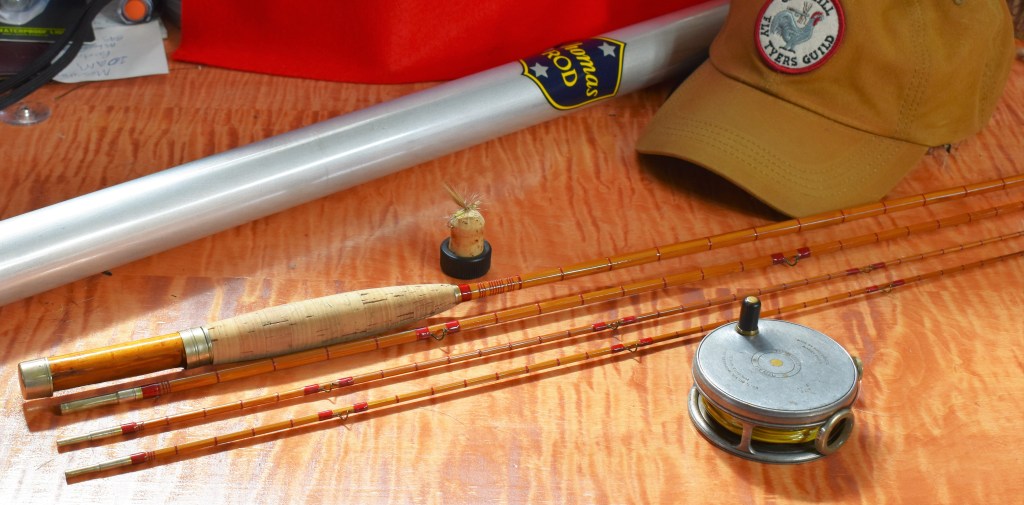
It took some time to make an approach, as I fully appreciate the necessity of stealth. Hunting trout is indeed hunting. Just as in stalking any game animal, if they sense you coming they will be on guard at the very least, and gone if you do anything dubious to alert them. I reached a casting position after fifteen minutes and readied my tackle. My impregnated Thomas & Thomas Hendrickson had the duty today in anticipation of getting caught in an afternoon downpour. I was thinking about that first cast when a tiny dimpling rise showed tight to the bank, right on cue.

There are moments when it seems you will never catch a break, much less a trophy trout; and then, once in a while, there are those when everything aligns like magic. One cast, one take, and the battle is joined.

The veteran CFO opened with it’s characteristic purr before I stripped line to catch up with that big brownie racing from the bank. When he got to deeper water he found the pull more direct, so he headed back where he came from, the reel sounding off enough that the angler downstream looked up from his fishing to see what was happening. We fenced, that trout and I, with the orchestra of that old English made spring and pawl punctuating each gain and loss. There were several more looks from down river, and then when there was no immediate landing, a question: “is it a nice one”? “Yes”, I answered, and my chance companion replied “great”. A brief conversation, for I was otherwise engaged.

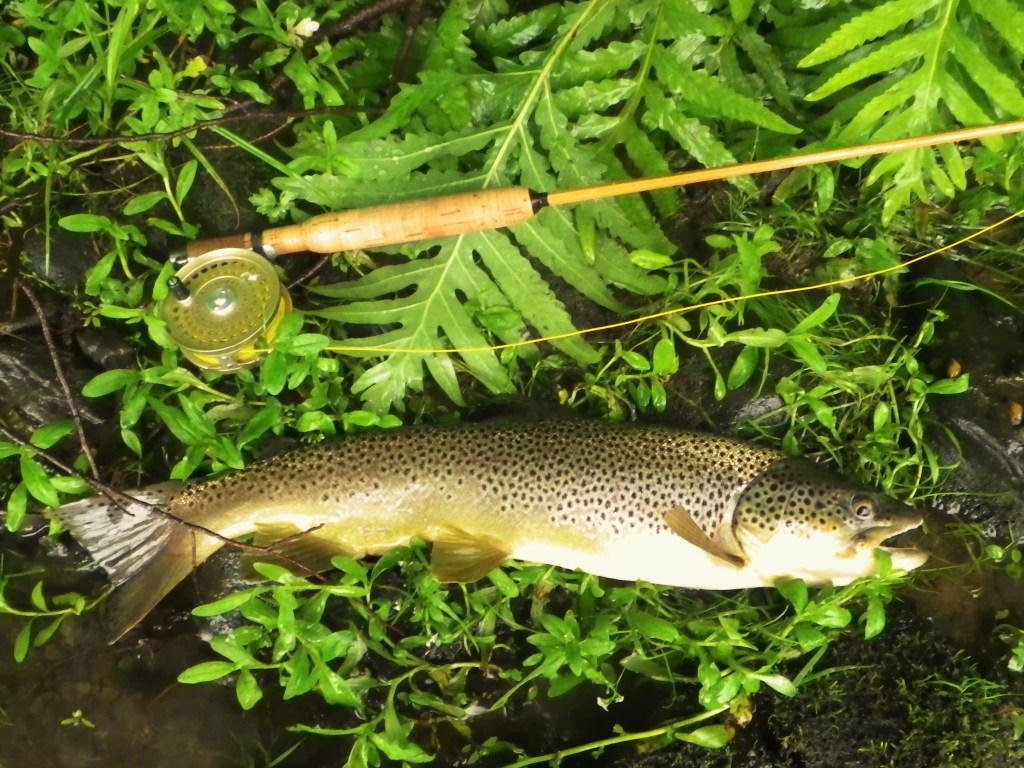
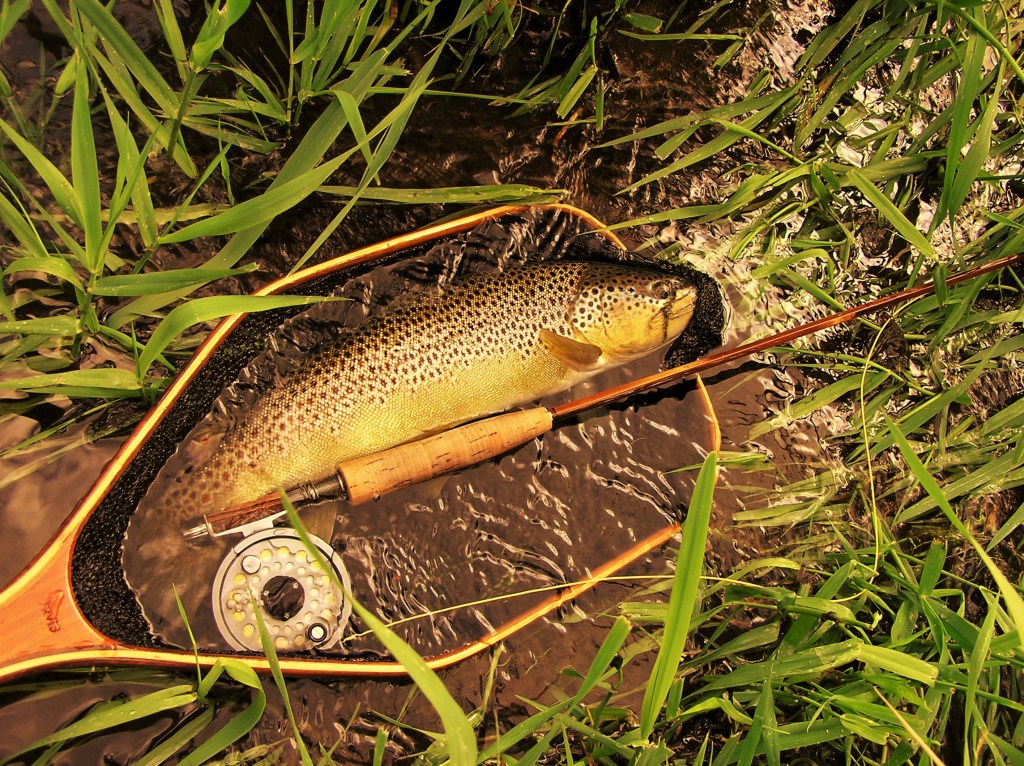
At last I led the old boy into the net and scooped him triumphantly with a surprised expression from that nice young man below. He was not aware that this thick flanked twenty-one inch brown was a milestone fish for me. I made a few more casts, working my way to the second spot, then reeled up and walked slowly to the bank.

I stopped and talked with that young fellow a moment, letting him know what fly that trout had accepted when he asked. He was working over a sipping trout and finding them adept at ignoring his flies. He thought they were eating olives, and I mentioned that the few in evidence were very, very small, adding that a simple fly in a size 24 or 26 might be the right choice. He had “18 and 20”, he told me, and he was too far out in the flat water for me to offer him a fly. He said he did have a flying ant, and I remarked that they had been around in summer and that one might do the trick. I hope he solved the puzzle and enjoyed the pull of a nice trout too.
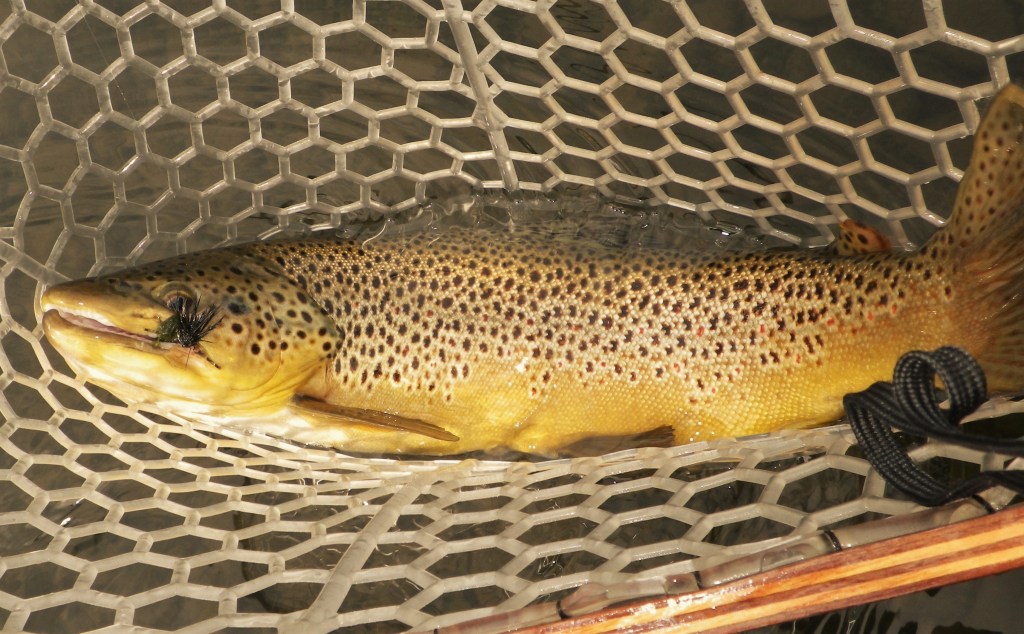
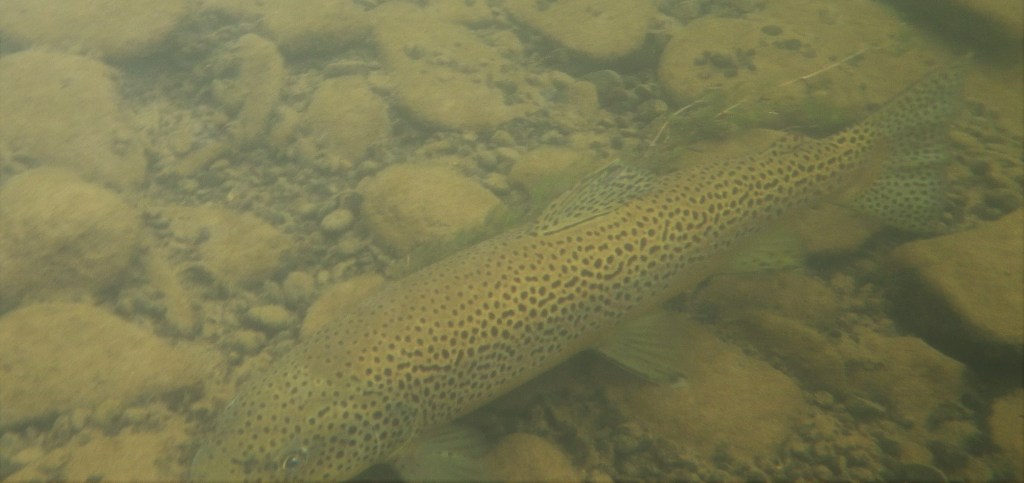
A fine, heavy late August brownie willing to accept my offering.

The Battenkill Lives!

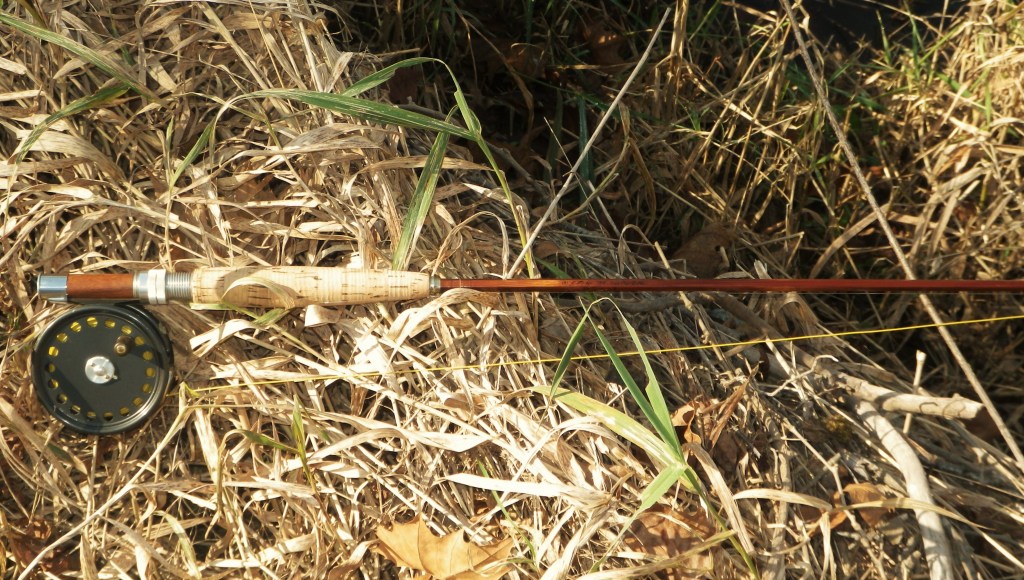
My vintage Orvis Battenkill lies river side in the November sunshine. A jolting SNAP! filled the air as I tried to sting a big Neversink brown that obliterated my hopper on my last outing with the rod. Broken rods are a tragedy, particularly when they cost one a trophy fish. Luckily a broken bamboo rod can be repaired!

Talking with my friend Dennis Menscer at the West Branch Festival yesterday, he mentioned that he had finished the repair on my Orvis Battenkill fly rod. Anxious for a return bout with a certain brown trout, I sent him a quick text early this morning to inquire as to a good time to retrieve it, and so it goes that I ended up sitting in the master rod maker’s West Branch shop this afternoon. I ended up flanked by Dennis and Jed Dempsey, and that’s a lot of Catskill bamboo rod making talent to share a room with.

Telling me my tube was behind me against the wall, Dennis told me I had better check it out to make sure it’s right. I told him I didn’t need to because I knew it was right. He insisted, and when I slid the repaired tip out of the bag I understood why: a shiny new male ferrule gleamed in the shop’s light. He wasn’t satisfied with the fit and condition of the original ferrule, so he expertly crafted a new one in order to make a better repair. The Battenkill is ready to stand up to that Neversink soaker and any trout that swims in a Catskill river!

The talk settled into the goings on at the weekend festival, a first for host John Shaner at his Laurel Bank Farm in nearby Stilesville, New York. Jed and Dennis had stopped in again today, saying the light rain held down the crowd, but we all agreed yesterday’s gorgeous weather and a well organized event brought out a very good crowd. All in all the first festival was a success.

I checked out a pair of George Halstead rods Dennis is preparing for restoration. The three of us smiled knowingly at the amount of history right there in my hands. Many fly fishers are fortunate that Dennis has both the expertise and the interest in restoring these Catskill classics for his customers, even during the midst of a very busy rod making season.

I mentioned the new 8’6″ four weight rod Dennis had designed, and asked that he let me know when it was ready for casting. He promptly reached onto the bench by the front window and picked up the two long, lithe sections of beautifully flamed bamboo, telling me it was varnished and I was more than welcome to take it outside on this misty afternoon. No one ever has to ask me twice if I want to cast a new bamboo rod, especially a D. W. Menscer rod!

“Did you hollow the butt?”, I asked. “Hollowed in the butt and the tips’, he replied, handing me the assembled prototype while he reached into a cabinet for an LRH sporting a four weight line. The rod felt very light and quite delicate, flexing progressively deep into the butt. I couldn’t wait to see what she would do!

Lined up in the yard the rod felt extremely smooth, delicate but sure, turning over a loop beautifully with no effort. A very gentle wrist stroke sent fifty feet of line out perfectly and dropped the tip of the leader right on the spot I aimed for. There is no need to power this girl for distance, the rod builds power smoothly throughout it’s length, laying the “fly” down softly regardless of the range. Dennis designed the taper for a customer bound for Idaho’s legendary Silver Creek, and though I have never fished that big western spring creek, I could picture the work this rod would do on similar water that I have angled, the Railroad Ranch of the Henry’s Fork. The longer length and smoothness this rod exhibits will be perfect for flat water fishing on the Delaware system, making it easy to reach trout from long distance and still make a perfect presentation.

Rod making is alive and well in the Catskills, with a very bright spot right here in Hancock, New York!

Rainy Day Wonderment

What will the rain clouds bring to the Catskills? Too soon to know.

It has been raining all day, a gentle rain, not the heavy downpours I feared; a quiet contemplative rain. The rivers in the Delaware system have just begun to rise, none of them sharply, so I do my best to remain guardedly optimistic. With more than fourteen inches of rainfall in July and August, the Catskills are fairly saturated. Would that we could send our excess to the other coast, where a drink is sorely needed.

For now it appears as if the heavy rains have circumnavigated our western end of the Catskills, though I noted a sharp rise in the Neversink over on the eastern side. It may be that the remains of Hurricane Ida have passed more easterly than the television maps foretold. Tonight will tell the tale, as Hancock remains under a flash flood watch until eleven tomorrow morning.

It has been a fly tying day, and my production soared beyond my typical output. Three dozen dries are sitting in the drying racks and tucked into plastic cups, everything from the size 24 midges my friend Dennis mentioned he’d like to have to my 100-Year Duns crafted to imitate the September Isonychia. I saw one the other day, doubling my sightings of that mayfly for the season. I have taken a few trout on them, but I certainly haven’t encountered any kind of hatch. Another local resident told me they were all over his exterior walls several evenings ago, though on a reach of river still far too warm for trout fishing.

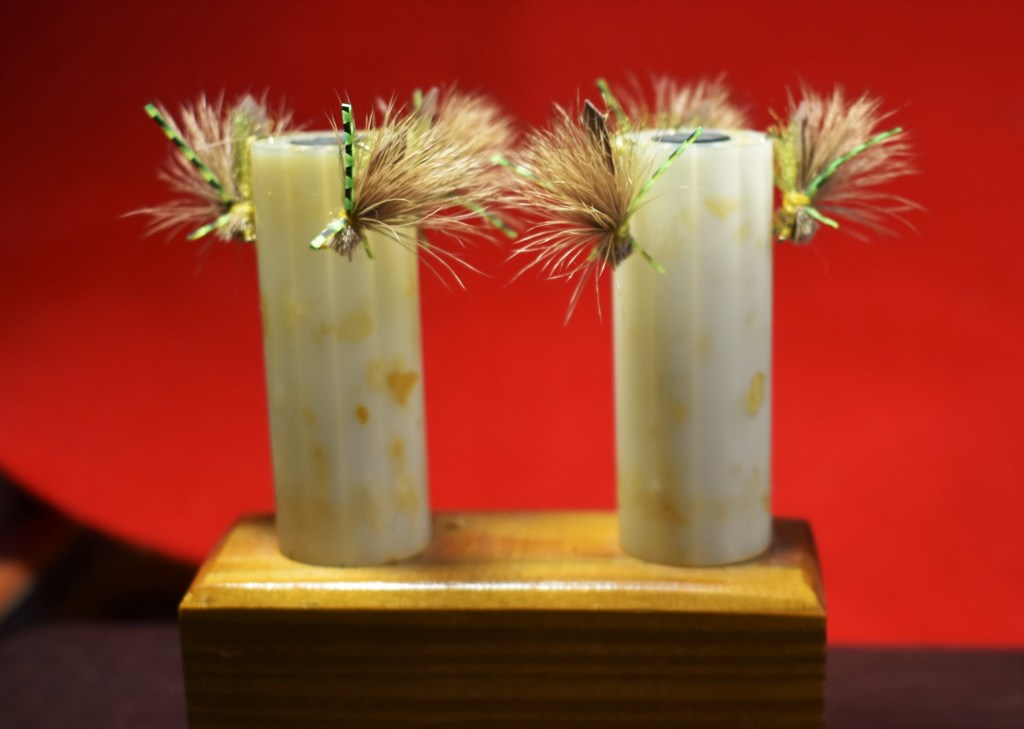
The first version of my 100-year Iso, with a biot body. Today’s featured my Halo style of body with a mixture of hackle: barred dun and cream. I haven’t decided if I like the mixed colors. Although the Isonychia duns have creamy back legs and dark front ones, I have never tied a fly that way, a fly like the old White Gloved Howdy. The technique is much better when applied to a conventionally hackled fly than the canted parachute hackle of the 100-Year Dun if your aim is to imitate the legs of the insect.

I have yet to offer a 100-Year Iso to a Catskill trout, as this is the second consecutive season in which I have failed to encounter the hatch. In truth, the Halo Isonychia has been so effective for me, it is my go to fly during the typical timeframe for Isonychia mayflies, whether I see any or not. The fly has produced fish for me in both of these hatchless seasons.

This handsome fellow was all over my Halo Isonychia, fished in fast water in early morning. Evening flies can be good patterns to try on morning’s after, even of you don’t see any naturals. Trout can respond to flies of the season any time of day if they are in the right mood and state of activity.

I don’t plan to tie a box full of the new duns, there are plenty of Halos already in my vest, but I’ll welcome the opportunity to drift one over any trout I see rising to Isonychias. I have some special memories of those big claret mayflies.

Brightest among those past days is one Mike Saylor and I spent on a difficult reach of water. It was the last day of our trip, and we had encountered tough conditions and very few rising trout during our previous days and nights on the water. That last morning brought heavy skies and hundreds of Isonychia mayflies drifting on the surface throughout the day. The trout were the typically difficult wild Catskill browns so they demanded our best. We landed twenty-one brown trout between fifteen and twenty inches long, and had any number of others jump, cartwheel, thrash and throw the hook. There is a picture in the corner of my desk with me holding a big, wide bodied fish that I really worked hard for, the last fish of the trip.

Another spring I floated with Ben Rinker and had a heart stopping Iso encounter. It was early in the float, just below The Jaws, and I was casting a big Iso Comparadun to likely looking cover as we drifted. We were talking casually and I mentioned to Ben that I was surprised that some of his smallmouth weren’t coming up from all of the wood I was hitting with that big dry fly. I no more than got those words out of my mouth when the head of a huge rainbow rose out of a tangle of branches and gulped my fly. Of course I overreacted due to my lack of attention and missed the hookup!

I hope we have a nice September hatch. I am looking forward to some beautiful late summer and early autumn days along the Mainstem, fighting hard running Delaware rainbows with an Isonychia in their jaws!

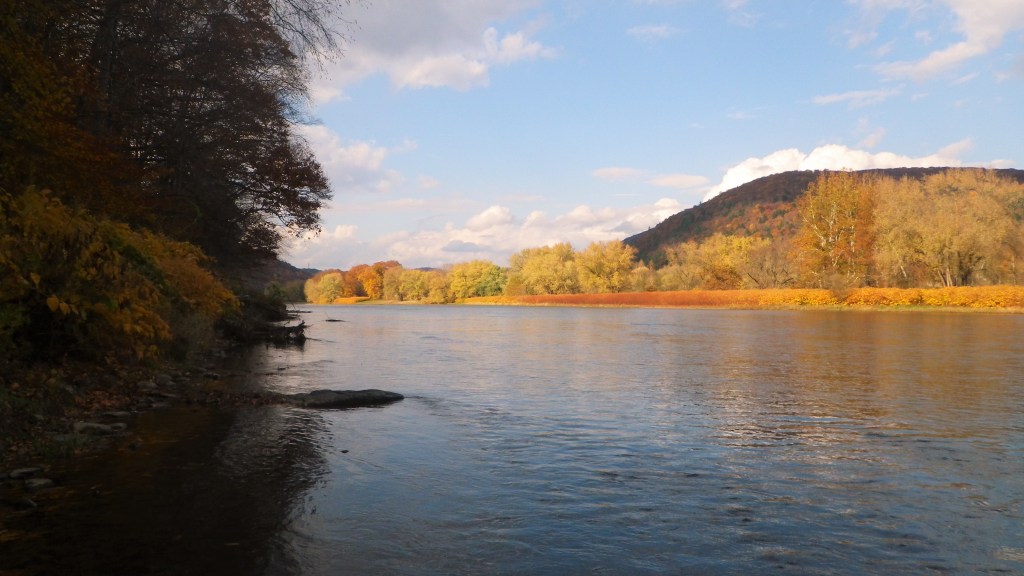
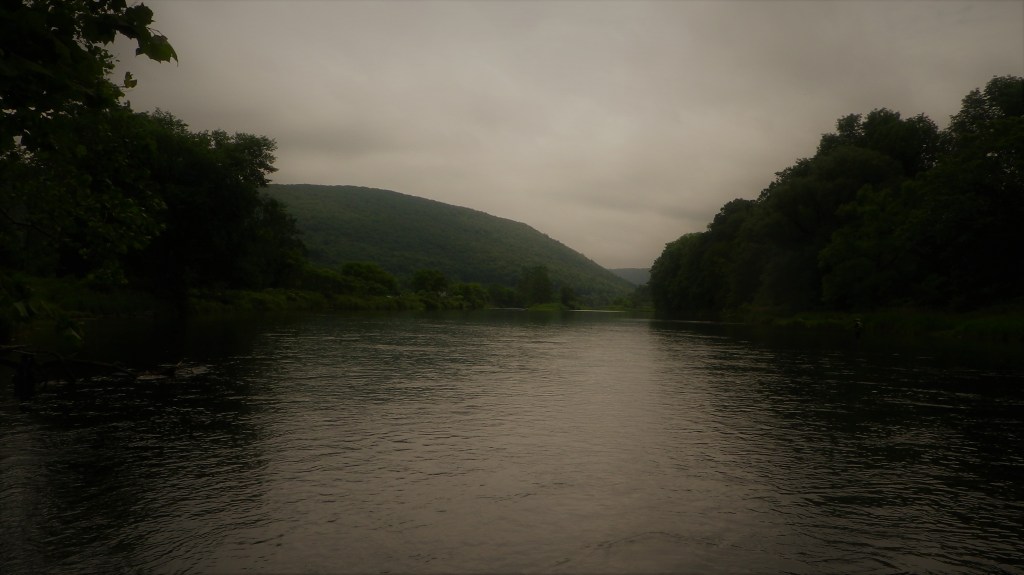
Autumn color lines the majestic Delaware River

Full Circle

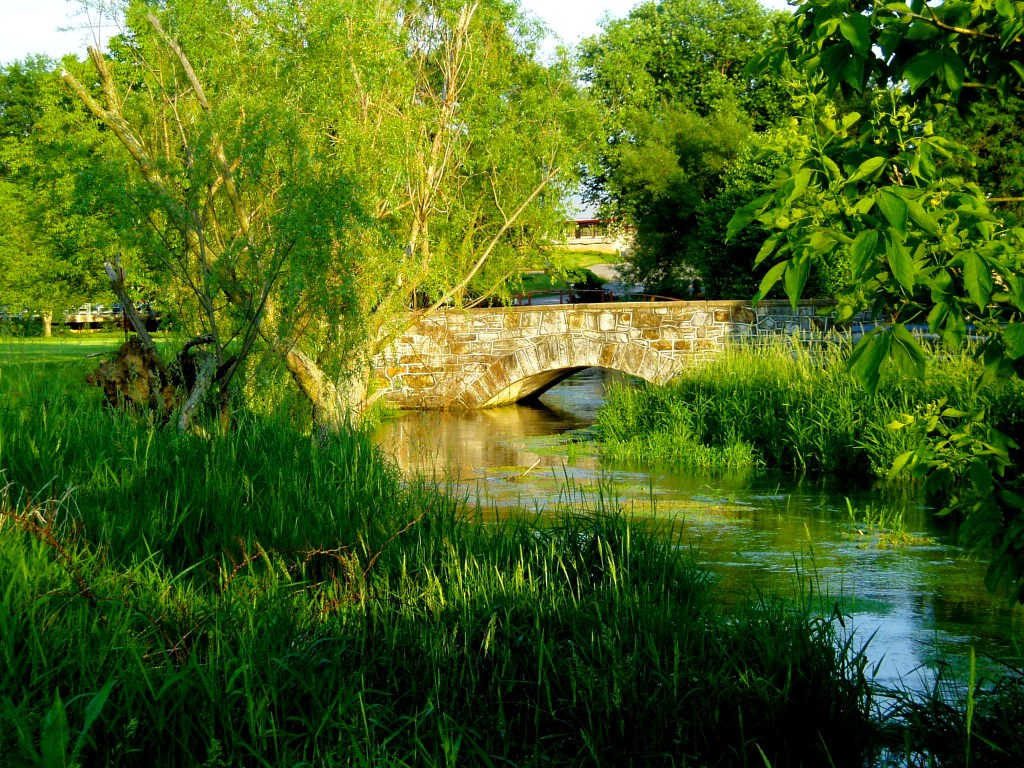
Late afternoon sunlight illuminates the last stone arch bridge over Falling Spring Branch in a photo I shot sixteen years ago. I hope the lovely little bridge is still standing. I caught some big trout beneath it!

I had no local friends, no contacts when I moved to Chambersburg, Pennsylvania and opened Falling Spring Outfitters, my little fly shop in the neighboring village of Scotland. I remember Bill Ferris as one of the first to stop by and offer the warm hand of friendship. Bill was the outdoor writer for the Shippensburg News Chronicle at the time, and he helped spread the word that the area had a fly shop once again.

When I began writing a weekly Outdoors column for Chambersburg’s Public Opinion newspaper, Bill was full of encouragement, and sponsored me for membership in the Pennsylvania Outdoor Writers Association, a membership I have maintained for twenty-six years.

Some twenty-four years ago, Bill stopped at the fly shop with a big smile and a bubbling enthusiasm: “there’s something I want to show you”, he grinned. Bill had bought something he had wanted for a long time, a beautiful Sweet Water bamboo flyrod made by Pennsylvania rod maker George Maurer. We hustled outside, rigged up a reel and line, and Bill put the treasured rod in my hand. I fished graphite rods in those days, my lone bamboo being my late grandfather’s old H-I nine footer. The Sweet Water was inked “Queen of the Waters”, an eight foot flamed beauty for a four weight line, a perfect foil for our beloved Cumberland Valley spring creeks.

I cast Bill’s new rod there on the lawn and marveled at the smoothness with which it formed a tight loop and whisked it to the target. I pulled more line from the reel, and the rod easily cast it. I continued lengthening the line with the same result: wow! The cane masterpiece didn’t feel stiff or powerful like the graphite rods I used, just smooth and… willing. From that moment forward I coveted a George Maurer Sweet Water fly rod.

The years rolled on and I met Wyatt Dietrich, a young Chambersburg angler who was making some beautiful bamboo rods. As I got to know Wyatt, and cast and eventually owned one of his Dream Catcher fly rods, I learned that he was taught bamboo rod making by none other than George Maurer. No wonder I liked Dream Catcher rods so much! George had the touch and was known for passing it on.

Twenty years further down the road I reach for bamboo first when it is time to go fishing. I have several Dream Catchers, and an affinity for older cane as well. As a working man, I found a touchstone with the rods made by the Goodwin Granger Company of Denver, Colorado. A few weeks ago, another Cumberland Valley friend contacted me. Tom Smithwick is a talented rod maker, and a man with a great store of knowledge regarding bamboo and all aspects of the craft. Tom was trying to help Bill Ferris determine the value of a Granger rod he had, and knew of my interest.

We messaged back and forth about the rod, and I was sad to learn that Bill was selling his tackle. Time is catching all of us and had not been kind to our old friend. While going over the details of the Granger, I asked Tom to tell Bill that, should he ever sell The Queen, I would be interested. Always active with the Catskill Fly Fishing Center and Museum, Tom arrived at Summerfest with both of Bill’s rods in tow. The Granger DeLuxe was beautiful, one of the highest grade models, and unfished, but the other tube Tom carried held my attention. I slid the Sweet Water from it’s tube and bag and my thoughts ran back a quarter century to that first bright morning on the lawn.

It was clear that Bill had fished the rod frequently, and fished it hard, as intended by it’s maker. A little care by expert hands was in order that it might be fished for another quarter century. I was pleased to be able to acquire Bill’s rod, and I hope that Bill finds some comfort in knowing that it will be cherished and fished by a friend now that he has chosen to pass it on.

I took the rod to another friend, master rod maker Dennis Menscer here in Hancock. Dennis works magic in his rod shop beside the West Branch every day. When I returned to the shop, the Queen of the Waters looked like new!

Yesterday I took a chance with dodging the various thunderstorms the forecasters foretold to introduce the Queen to the rivers of my heart. Obviously the grand dame holds some sway with the forces of Nature for the day turned warm and sunny by mid afternoon, with no more than a couple of two minute showers to suggest the ominous weather foretold.

I fished a favorite reach thoroughly but the trout proved uncooperative. I failed to move a single fish. I walked further, fished some faster water where an occasional Cahill was rising from the froth, managing only to prick a little brown trout that grabbed for the fly when it twitched at my pickup. Wading back upstream I spotted movement along the bank, and stalked and fished a couple of spots. Nothing. I waded back and walked out noting the time seemed right to visit a different pool.

It had been some time since I fished that reach at higher flows. Many of the lies were unreachable, so I quickly passed them by. I finally found a place to cross by hiking up my vest and wading carefully, putting myself in position to fish the last couple of hides. The Queen worked as she always has, willingly rolling out as much line as I needed with little effort. Finally, approaching the last lie, I spotted a dainty little ring beneath low branches. Raindrops from one of those two minute showers? I think not.

The cast was long and smooth, the fly alighting as gently as one of those raindrops, way back in there beneath the branches. Perfect. The drift seemed endless, caught in a moment between time, between the much younger man grinning there on the lawn as he appreciated the grace of his friend’s new rod, and the crouching older angler intently stalking a special wild trout. The take was clear, the big nose of the brown flipping a dollop of water as he plucked the offering from the surface, followed by the wide smooth arch of flamed bamboo as the great fish rushed for deeper water and freedom.

Sweet Water: I always found that to be a perfect name for a rod company that created wonderful trout rods. The Queen, that brown and I, we danced there amid the sweet waters, with the late summer sun blazing through like bright lances between the passing banks of clouds. Captured at last, the trout was thick and heavily muscled, five pounds at least, and as bright and golden as that sunlight in the waning hours of August. My salute to an old friend, and a salute to a rod maker who passed long before his time. All hail the Queen of the Waters!

Southcentral Pennsylvania’s Big Spring in high summer. Bill Ferris has been the champion of these bright waters, founding and leading the Big Spring Watershed Association, and working tirelessly to eliminate the pollution from an ill conceived State run trout hatchery. Thanks to Bill. and others who worked with him, wild trout once again spawn and grow in these waters.

Temptation

The magic of bamboo enthralls me, old or new, there is life in these sticks!

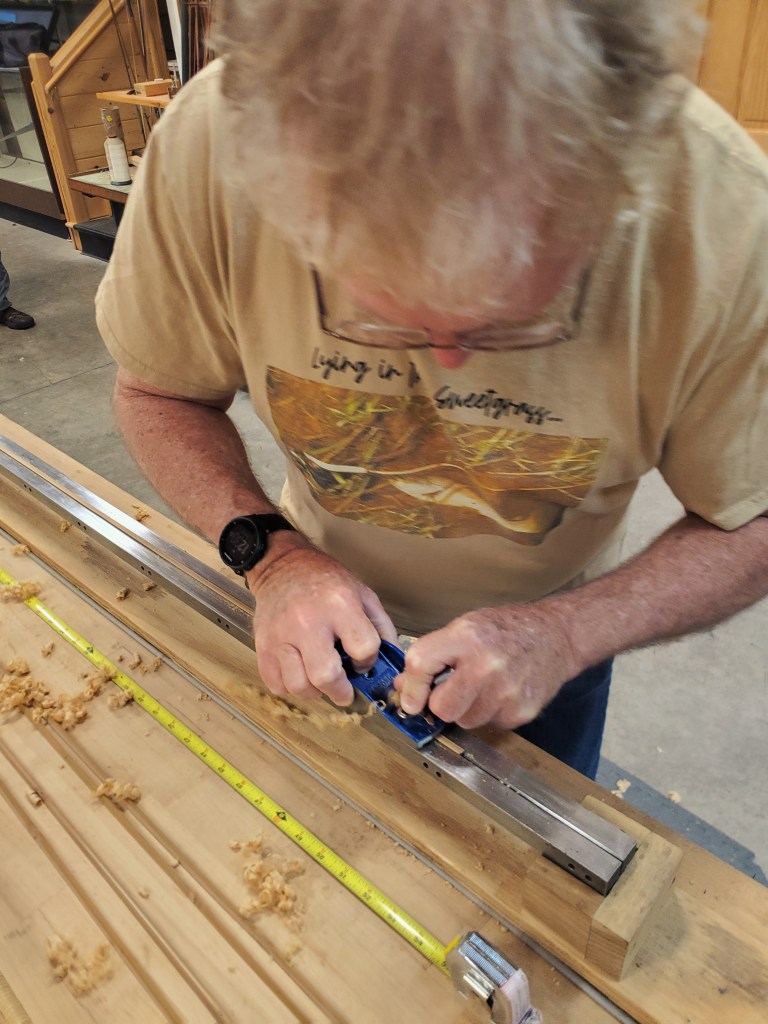
My friend JA, meticulous craftsman and artist that he is, called me the other evening with an interesting offer. He would be planing the strips for the butt of the new fly rod he is building at the Catskill Rod Maker’s Class on Sunday and thought I might enjoy stopping by and planing a bit myself. Devious character that guy, for he knows full well that I couldn’t resist that!

JA knows I would love to be right there in the class beside him, building my very own bamboo fly rod, but for the fear that my forty year old arthritis would prevent me from completing the work. The class is interesting and well run, taught for several years by David VanBurgel and wife Kathy Scott, who journey from the wilds of Maine each summer to help initiates bring out the life in a few select stalks of grass. Planned and executed over the course of five days, the pace is intense, and I fear that two or more days of planing bamboo strips would set my neck and shoulders on fire, easily as much as the experience of making my own rod sets my thoughts aflame. Still the temptation is there; now even more tangible as I have enjoyed the chance to chase the curl.

The thin curl of bamboo rises from the plane as I work my way down the length of the strip. JA swore I could not mess up his rod, as this was the rough planing, not the fine, final planing that removes those last critical thousandths of an inch that create the designed taper, a Garrison 209 in this case. (Photo courtesy JA)

The environs are inspiring in and of themselves, as the class convenes in the bamboo rod shop at the Catskill Fly Fishing Center and Museum, using, and surrounded by exhibits of the tools and machines of some of history’s most revered rod makers. JA will bind the strips after gluing on the late Everett Garrison’s hand made binder. There is plenty of inspiration in the room. In a display cabinet along the wall rests an actual Garrison 209 fly rod, made by the hands of the master himself!

Garrison rods are collector’s dreams, as the stately engineer was the man behind the book rod makers call “the bible”. Garrison befriended a young man taken with the magic of the bamboo flyrod and it’s makings, one Hoagy Carmichael. They discussed collaborating on a book to preserve “Garry’s” methods and insights. Sadly Everett Garrison passed during the project’s infancy, and Carmichael had to soldier on. He sought and received help from other rod makers so he could understand Garrison’s notes and taper designs, the late Dave Brandt even volunteered to do the illustrations and technical drawings. The book has since guided thousands into the alchemy of bamboo fly rods.

I own and fish a copy of Garrison’s Model 206, a two piece seven and one half foot rod that casts a three or four weight line smoothly and with remarkable accuracy. Pennsylvania rod maker Jim Downes made that rod, and I enjoy fishing it each summer when low, clear flows demand a lighter touch. I have seen actual Garrison 206 rods for sale a couple of times, at asking prices of $11,000.00! The master was not a volume rod maker, and historians debate totals in the vicinity of two or three hundred fly rods that Garrison made during his lifetime.

I introduced my Jim Downes Garrison 206 to the West Branch Delaware on a stormy morning in late June 2015. The river was high and rising, and I was drenched by the downpours. The only hint of rising trout were minor disturbances that hugged the bank, and the fly had to all but touch the overhanging vegetation to elicit a take. I quickly learned to admire the rod’s remarkable accuracy, when this twenty inch wild brown intercepted my isonychia emerger within an inch of the river bank!

So thanks to JA, I can honestly say that I helped plane a strip for his “Garrison” rod. Yes, the fever to try building my own burns a bit brighter this morning, but I take comfort in the fact that there are more skilled hands like his to do that for me!

Chasing the curl! (JA Photo)

Changes

Autumn Along The Delaware

I was walking along a familiar path the other day, headed back from a quiet morning’s fishing, when a light breeze showered me with yellow leaves. Funny how something as simple as little dried, yellow leaves falling upon your shoulders can bring forth a burst of sweet melancholy for the change of seasons.

I have fished more than ninety days since my season began in March, from those first murmurings of springtime, the memories flash through five months of wandering the rivers of my heart. It is still high summer, but August is waning, and those last few precious weeks of the season are not far off. You cannot deny the message of the falling leaves.

Once again I marvel at how different each season can be. The weather, the hatches or the lack of them, and the flies that find favor with the trout. As a fly tier I strive to show them something different, something fresh each season, for our shy wild trout become acquainted with a lot of flies through the season. Nature always brings surprises, so my fly designing that begins in winter is a year long activity.

This season began by teasing, flirting with springtime quite early. The rivers buzzed with stoneflies and midges, the sun bright and warm, but no trout rose to the occasion. After my longest, coldest winter in the Catskills it was both agony and ecstasy to walk the rivers once again, to feel the warmth of the sun on my shoulders, and witness the stirrings of life amid the flowing currents.

All of these thoughts ran through my head as I walked that leaf strewn path on a bright summer morn.

A heavy West Branch brown and Dream Catcher fly rod rest amid the flooded grass of an island that no longer divides the great river. Hurricane Ivan brought change to that reach of river in the blink of an eye, washing away the islands that provided foraging grounds for the trout and filling in the deep rocky sanctuary water nearby with gravel. There are shallow flats there today.

This has been a hot summer, though we have been blessed with a tremendous amount of rainfall. Too much at once it seemed back in July, when the storms came day after sultry day, but the rivers have benefitted. Full reservoirs have resulted in better cold water releases across the region, improving conditions downstream as the chilled flows reach the wide vistas of the Delaware. I have hunted many foggy mornings, for the trout have been out hunting too.

September lies on the doorstep, and I wonder how the fishing will change as summer flees and autumn begins. Will the late summer hatches be light as those of the preceding months have been, or will we find flotillas of isonychia and hebes drawing the trout to the surface. Might cold water and hot breezes find me searching for hopper explosions along the Delaware? I have often thought of the possibilities given just the perfect set of circumstances… I have the fly!

Before I know it more signs of change will haunt me. In a wink it will be October, and the lure of grouse in these mountains will draw me from the rivers. I look forward to bright mornings with JA as we search the covers to see how this year’s crop of birds will challenge us; then long afternoons upon the rivers, casting dry flies with amber cane. October is bittersweet.

The most beautiful month of the year, it brings the last of the best weather, but with it comes the end of the dry fly season. That is a heavy toll for this angler, for the dry fly is the light in my soul, the doorway to bright water.

Time remains to savor the glow of a Catskill summer, to cast tiny flies with light rods, to feel the first chill on those special mornings; but time is fleeting.

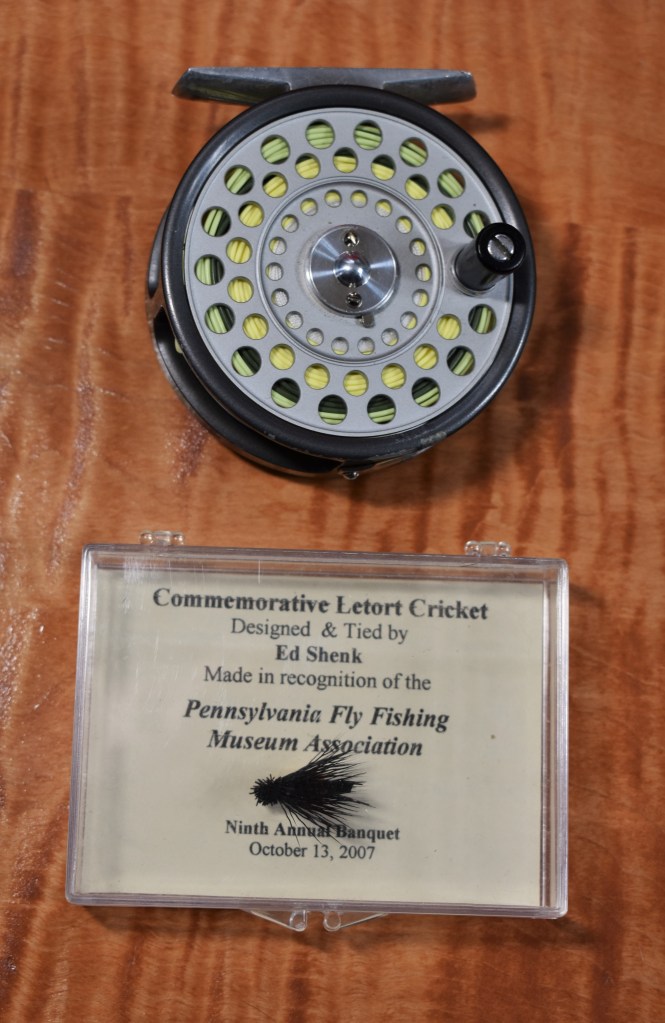
I look forward to a celebration. As the last weeks of summer linger the Shenk Tribute Rod will arrive in the hands of its maker, and pass unto mine. His Hardy will be fit to the hand crafted seat of 800 year old maple and my departed mentor will walk with me along the rivers of my heart. I had no fitting way to honor you when news came of your passing my friend, but the time is nearly come.

The blank of the Shenk Tribute Rod, in strings; July 2021. Seven feet, designed to carry a four weight line, this special taper designed by rod maker Tom Whittle blends the magic of Everett Garrison and Vince Marinaro with Tom’s own. Tom was a founder of the Pennsylvania Fly Fishing Museum and co-author of the definitive book on the late Vincent Marinaro and his rod making. Tom’s Stony Creek Rods were born to provide remarkable performance in a series of diminutive bamboo rods.

The Master’s Featherweight: Ed loved short, light rods and the smaller reels that accompanied them, and he took some truly formidable trout on his chosen tackle.

Life on a river is constant change. Each drop of water that flows has a journey, and each drop is new as it swirls about my legs before passing on. Fresh currents linger only long enough to float a fly for a single cast. Honor the water and make that cast with care and appreciation for the gift of bright water, and of trout.

Tested…

Freshly tied hoppers await a visit to the Neversink

So my friend Matt has been feverishly working through his vacation, passing the high, muddy water Henri brought us writing and editing his fingers to the bone. Publishing a high end online magazine like Hallowed Waters Journal requires a great deal of effort, and hey, the guy is committed. He was working when I tied a fresh batch of my hoppers yesterday morning, and still working when I arrived at the legendary Neversink River to give them a float.

It was already stifling hot when I geared up, stringing my old Orvis Battenkill rod and lengthening its leader for the midday summertime fishing. I figured the six weight line would make easy work of casting hoppers if the wind, hopefully, came up. The river had just receded from the hurricane system’s rainfall, and was benefitting from an increased cold water release from it’s full reservoir, and I had high hopes for the afternoon.

I wanted to fish an old favorite reach of river while Matt was finishing up his magazine work, so I hiked up river and slipped into the sparkling cold flow. The Neversink with it’s dark bottom always conveys an air of mystery to me, for no matter how clear it’s water, you cannot see what’s going on down there in the deeper, fish holding lies.

I had adjusted to the rhythm of the Battenkill’s casting and sent the hopper up and across, probing each lane in the current. My cast’s worked their way in from mid-river, searching all the deeper holding water in the run, until they finally danced along the seam beside the undercut bank. I was systematically fishing my way up the run forty feet at a time this way, and was nearing the top when a terrific splash engulfed my hopper, one of those aerial bombardment explosions we have all seen in the Western hopper video’s. I reacted right on time, raised the rod to set the hook, when a sickening brittle snap signaled disaster.

I stood there stunned, watching the rod’s tip section drifting downstream amid swirls of loose fly line. After what seemed to be a very long moment, I glanced at the end of the line to see it swimming along against the current. My embattled brain struggled with the thought: fish has the fly. I grabbed for the loose fly line and started a mad little hand over hand retrieve, but by the time I had pulled tight to the fly the fish was gone. The bamboo had snapped before the rod even arched, so I had never been able to set the hook.

At this point I recovered enough of my senses to chase the drifting and sinking rod tip down the river until I could retrieve it, not knowing whether the fly was still attached. I got the broken tip, snapped clean near the ferrule, and my hopper, but my concentration was shattered. Just how big was that trout? I will never know.

Shaking a bit, I hiked back to the car and traded the shattered bamboo for my graphite backup rod, wiping the water from the shards of my Battenkill as I contemplated another visit to my friend and neighbor, master rodmaker Dennis Menscer.

Back at the run, I worked the entire reach of water with the hopper and a cricket pattern, hoping that big brown was still hungry. He hadn’t actually been hooked, right? If he had I may have hand landed him. I did that once before in a similar situation. My fractured logic may have been sound, but I found no takers for my fly, neither leviathan, nor any of his siblings.

While I was re-fishing the scene of the disaster, my phone started vibrating with text alerts, as Matt was finally ready to fish. It was a comical exchange if you weren’t the guy who just lost a monster trout and broke a rod in the process. We did eventually meet up at another access area, sweltering in the heat, as we decided where to fish next. We explored a couple of places Matt has fished over the years, the first one leaving my friend as the guy who missed a grab and lost a good fish, At least his tackle was still whole.

The last pool looked inviting, as there was a tree lined bank that filtered the incessant sun. I made a long walk down and around to get in position to work my way up the pool. I fished the shaded water as carefully as my still rattled consciousness would allow, but there was no sign of a trout. I had worked my way to the top of the pool, where the quick little riffle that fed it took on the characteristics of a run for perhaps fifty feet before the bottom dropped away into the equally brief gut of the pool. I was standing right on the edge of a forty-five degree sloped river bottom that slid quickly into deep, dark nothingness, when I saw one good rise across the pool, where a point in the rive bank formed a slack water seam.

I tried the Light Cahill Parachute I had tied on when the evening’s only mayfly had flown past me further down the pool. There was no response. I clipped the fly and replaced it with a small Grizzly Beetle, just as Matt started down the riffle from the opposite side of the flow. I made four or five casts with the Grizz, each drifting along that seam, flirting with the slack water hide. On my next cast the fly vanished in a little pluck at the surface and I had my trout.

The brownie fought doggedly in the deep, cold water between us, finally surrendering to the pressure of the three weight rod and accepting his place in the net. He was a nice trout, sixteen, perhaps seventeen inches of wild Neversink brown, and a fitting way to end the day.

We talked back and forth as we removed waders and packed up rods and reels, making plans to fish again on Friday. By then I may know if the Orvis can be saved. Water damage seems unlikely in an impregnated rod, but Dennis will do his detective work to determine of there are any visible faults in the cane that would hinder repair of the rod. If the bamboo is sound, the rod will be a little shorter than the eight foot length to which it was made. Perhaps I will take it back to the Neversink in search of a rematch. One day.

My now wounded Battenkill reflects the autumn sunlight on an early outing, November 2020.

A Fine Soft Afternoon

JA lands a fine brownie with his eight foot four weight, his second adventure in rod making. With an engineer’s mind and an artist’s touch, the man has turned out a pair of remarkable bamboo fly rods! I find it hard to resist making an attempt at building my own cane myself, though my arthritis reminds me of my own limitations each and every day. Alas I must save myself for casting the fine work of others!

The forecast had me dressed a bit light, immediately evidenced by the large black cloud encircling the river valley. There would be no sun this day. I snugged the hood of my SST tight to my cap and neck and waded in. Damp, heavily fogged in, and eventually quite chilled to the bone, I whiled away several hours doing what I love: hunting trout.

My expected companion had demurred, waiting instead for the Fedex truck to furnish relief from leaky waders. Mine thankfully were water tight, but no reasonable amount of insulation can really turn away a day long chill. As the hours lengthened, I felt the penance in my bones.

I had spent a good amount of time working to the only feeding trout I encountered. Staring at the surface, seeing nothing save leaf matter and bubbles of foam, it was clear there was something away over there where he sporadically sipped. I went through all the “flies of the season” so to speak, various sizes and patterns of each, and moved him once. Passing interest, but no sale.

My drifts looked perfect; long quartering downstream casts with a reach and a kick laid the fly tight to the bank over and over again, but I expected some discreet foul play on the part of a rogue current. I am certain you know the type, insidious little threads of flow that appear smooth at casting distance, and yet… When he graciously sipped an unidentified insect two inches from my fly I became convinced; pattern wasn’t going to change the outcome.

A sudden downpour interrupted the game, the warm rain quickly dispelling the fog. There were a few brief moments when the rain ceased, a twinkling before the fog returned to shroud my vision, when I could see that offending current. Big trout have a wonderful way of finding them, those special little places where no fly tied to a leader will drift quite like an unbridled mayfly. I nodded in approval and turned to take my leave.

Moving improved the blood flow in my icy legs enough that I decided to make one more pass through some of the water I had angled upon my arrival. The 6X tippet was discarded, and my leader rebuilt for a dry fly of substance. If anything the fog seemed thicker after that brief warm downpour, as I eased cautiously upstream.

Part of the unalterable law of fishing states that one cast can make the day, and so it goes. The cane flexes, the line unrolls and the fly alights, drifting in and out of vision as the mist curls between us. A wink, the slightest little momentary spot of brightness out there in the gloom, and it is done. The rod strains, the reel’s shrill notes break the stillness of a day in shadow, and a long bronze prize comes hesitantly to the net. Twenty-one and a bit my measurement tells me, and this fellow marks a milestone for me, so he is a little extra special.

Fishing…or not?

Fishable or not, that is the question. Seems my vision isn’t clear in that respect this morning.

I slept soundly enough, retiring under the threat of immense thunderstorms and a region wide flash flood watch last night, but it was a restless morning that found me on my feet just after four. With fresh Starbuck’s brewed and offered as a balm to my still waking consciousness, I fired up the laptop and made my usual morning stop at USGS. The river gages in the Catskills are my friends, for the rivers are indeed my life blood. What I found left me quizzical, and unrequited.

The Upper Delaware River system gages showed the beginning of a rise, but they were stuck in time, one still showing yesterday’s date and a time close to midnight. This is not the first time I have witnessed this failure to update, for the vital data to be truly “real time”. I was not wakened by pounding rain or thunder overnight, but the pair of fans running on high can mask a lot. I am left in limbo.

The forecast when I retired last night threatened between two and five inches of rain from impending storms, as the system moved through New York’s Southern tier and across the Catskills. Two inches would blow out the fishing on any rivers in it’s path, and five, well five would be catastrophic! I guess this awakening dilemma is par for the course after yesterday’s misadventures.

My reunion with my old friend was hampered by everything from New York State electronic failures to a recalcitrant otter that enjoyed disrupting our fishing, and now the USGS seems to be conspiring to prevent our planning a better day. The life of an angler requires a sense of humor; at times a very full and active sense of humor.

I am still stewing over my final act of last evening, when I nearly saved the day in the final moment. I found a smattering of flies on the water, at least four different sizes and species, though all very few in number. This has been fairly typical for most of the season, something I attribute to both Delaware reservoirs being dropped to very low release flows as the teeth of last winter set in. Ice, low flows, and daily highs in the teens and twenties do not bode well for the health of aquatic insects.

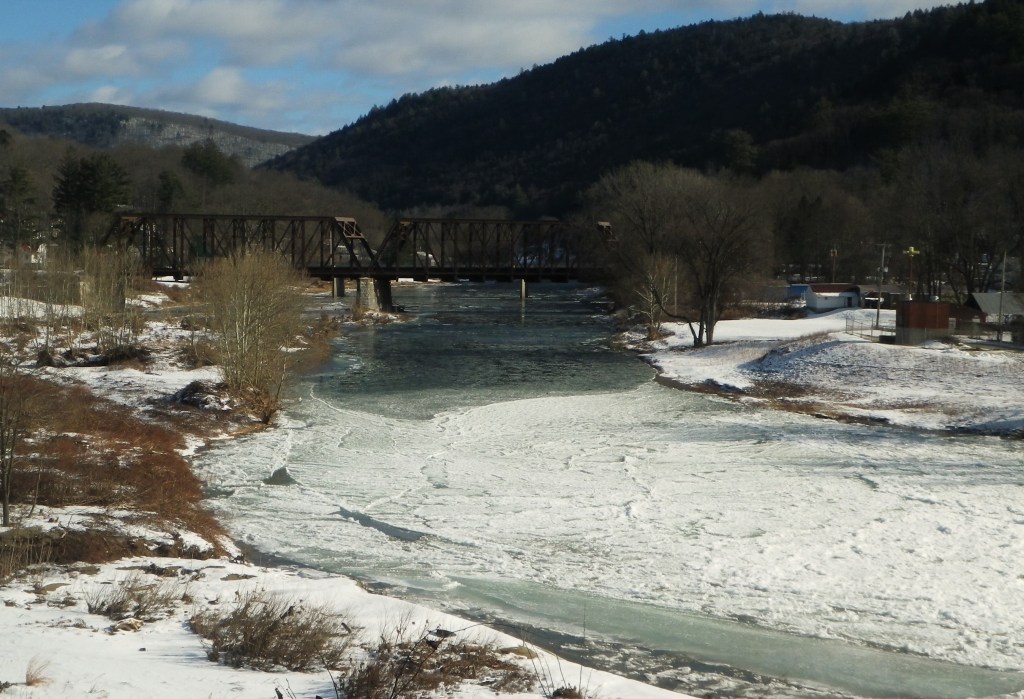
The East Branch Delaware halted entering Crooked Eddy, January 24th, 2021.

The trout had taken to cruising about and gently picking off a bug here and one there. Cast to one that happened to show in range, and he was no longer where the rings painted that little target on the glassy surface. I have played that game for the past four months, though my batting average hasn’t improved. I took to hunting as my time drew short last evening, finding one sipping way back beneath a low slung tree.

I eased a step or two this way, and one step closer before tossing a quarter sidearm backcast and squeezing the grip of my forty-four year old Thomas & Thomas Hendrickson, sending my fly half way back under the canopy. No cigar. He obviously wasn’t feeling aggressive enough to come for it. I made another calculated step or two and repeated the cast, this time sending enough line to put the fly down half a foot from the bank; and waited.

It can seem like an eternity when you are waiting for a dry fly to glide slowly along a critical path in moving water. The tension builds as it gradually approaches the mark, slowing with each inch of travel as the water eddies slightly due to the undulations of topography. That tension is delicious, but it can also be devious.

The trout took with significant energy, not the gentle sips he had shown me when he betrayed his presence, and the rod arched heavily as I reacted to the splash. He shot downstream under the tree and parallel to the bank with an impressive burst of speed and power, a sunken tree in his sights, and I swung the throbbing arc of cane downstream and away, planning to draw him off course just enough to turn him short of disaster. Then that additional tension jumped up and bit me. That fish was running so fast and so strong that I squeezed the disappearing fly line just a bit too tightly and the tippet knot succumbed. The brown got my fly and four feet of tippet, and I got the rest of my leader. I doubt he was much happier with the exchange than I was.

Such is fishing. If it wasn’t for that electric excitement that can bring out our little human failings it would not be nearly so much fun. To another day my finny friend; and a stronger knot!

Rainy Day Meanderings

Summertime…but the skies are dark and foreboding.

I was tying flies early this morning, trying to get my “work” in before it’s time to head to the river. I talked to my old friend Matt Supinski yesterday. He is taking his summer holiday away from the wilds of Michigan and we made plans to fish a bit this week. I wanted to tie a few of the patterns that have been productive recently to throw his way. I generally put together a pill bottle of dries for my friends when they visit, and I have known Matt for a long time.

We both have a long history in Pennsylvania’s Cumberland Valley, chasing difficult trout on those bright little spring creeks during the good old days. We’re both passionate about wild trout to the point of obsession, and that commonality of purpose has made it easy for us to get along over more than twenty-five years. I have enjoyed the hospitality of his Gray Drake Lodge, and we have fished a bit here in the Catskills.

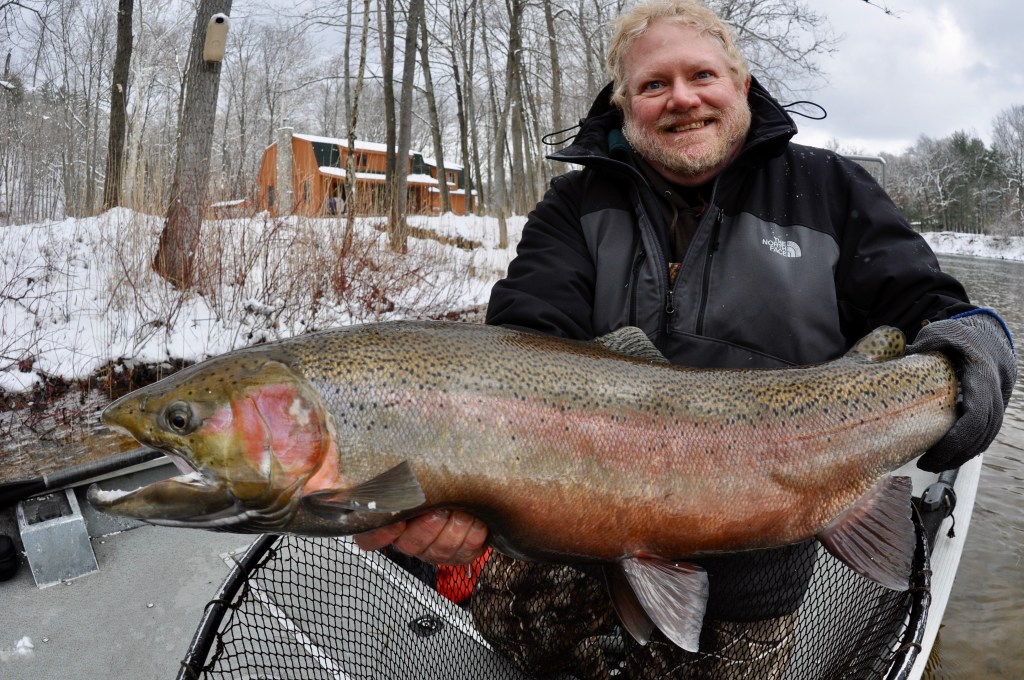
Gratuitous monster fish photo offered for historical reference: my steelhead of a lifetime, a twenty-one pound wild double red band Michigan buck taken fishing with Matt on a particularly frigid morning; 12 February 2012. (Photo courtesy Matt Supinski)

Matt has been keeping busy as usual, channeling his creative energies into the publication of his wonderful online magazine, Hallowed Waters Journal. He and his lovely wife Laurie have worked tirelessly to produce an exceptional publication for fly anglers, and the most recent expansion of this venture is the Hallowed Waters Podcast. Matt tipped me to the second episode recently, as his guest was another old Central Pennsylvania stream prowler; former Catskill fly shop owner and guide Paul Weamer. Paul has authored a number of successful books during the past decade or so, and now lives, writes and guides in Montana. I first heard of Paul from the late Charlie Meck, a fine gentleman angler and one of our most prolific fly fishing authors, and talked with him during his years running Border Waters Outfitters when I visited Hancock, New York.

Hallowed Waters logo courtesy Matt Supinski.

The subject of the podcast was near and dear to all of our hearts, dry fly fishing for trout. There’s some great information here for fly anglers, the kind of stuff anglers like Paul, Matt and myself have spent decades learning on the water. Here’s the link. I recommend that you check it out. https://anchor.fm/hallowedwaters

A rainy summer morning like this one just screams blue winged olives, and I am hoping to pick the right reach of river to find one of those nice, long midday hatches. A day like this is welcome after one of the hottest weeks of the summer.

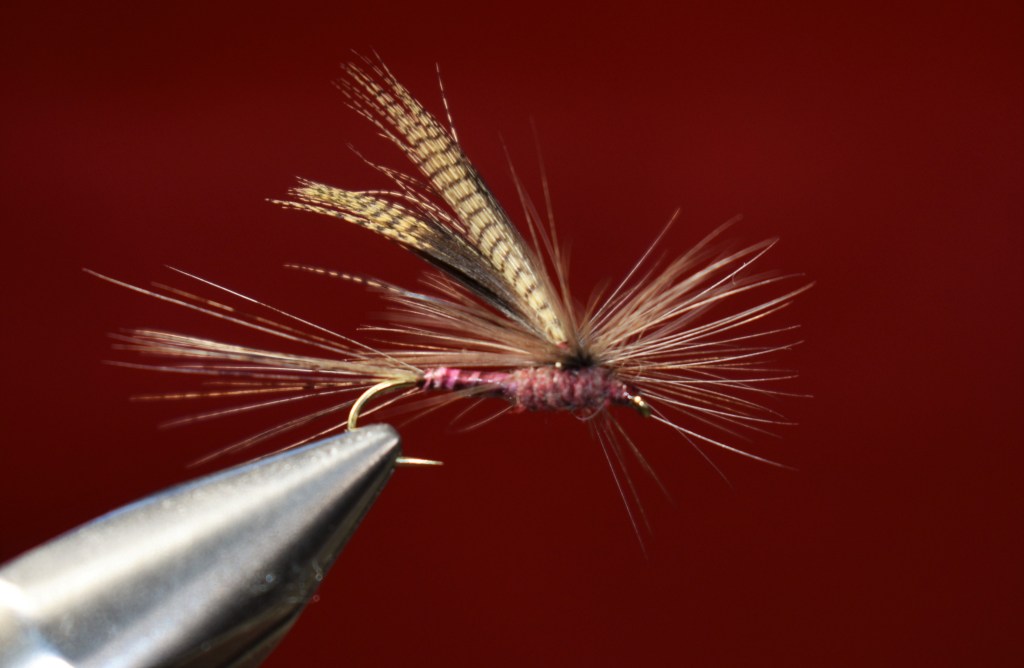
I think I have a half dozen or so olive emergers left in my fingers, at least once I brew that second cup of coffee. It’s not that I don’t have boxes of them, but I have always found a little luck in flies tied the morning of a fishing trip. For me that’s just one of the little bits of magic I find in this game!

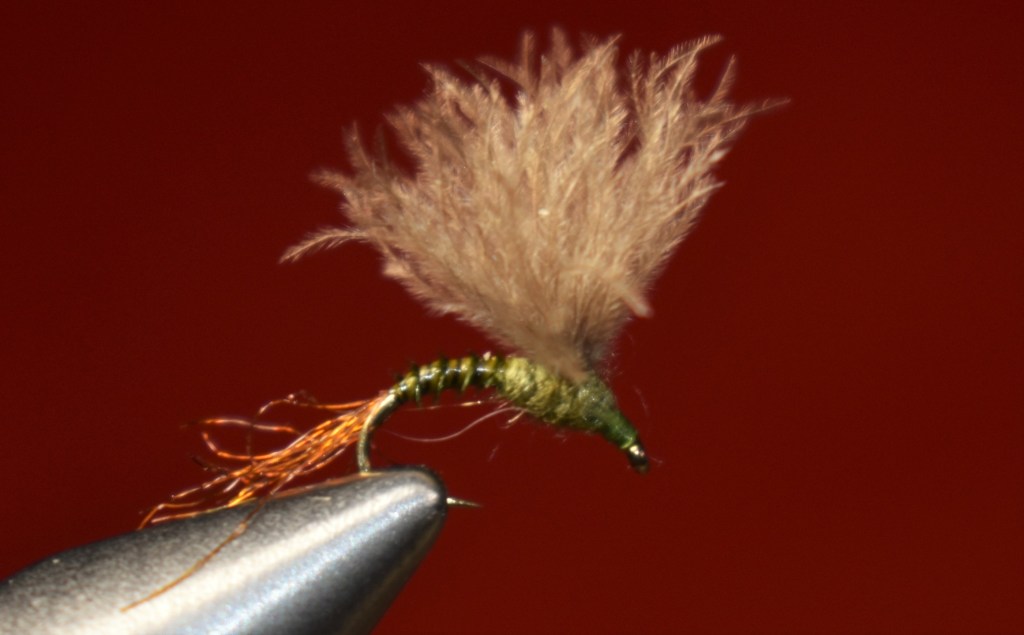
My BWO Crippled Emerger: This morning’s fly for today’s wild trout?