Threads & Feathers

Woodstock March Brown Transitional Dun

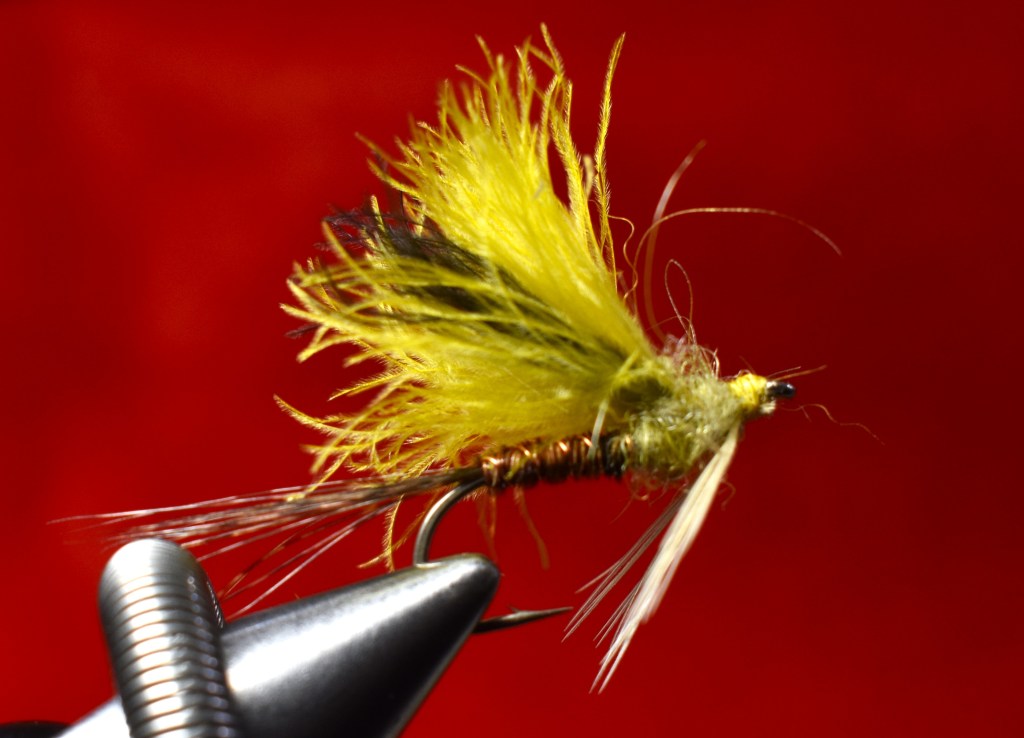
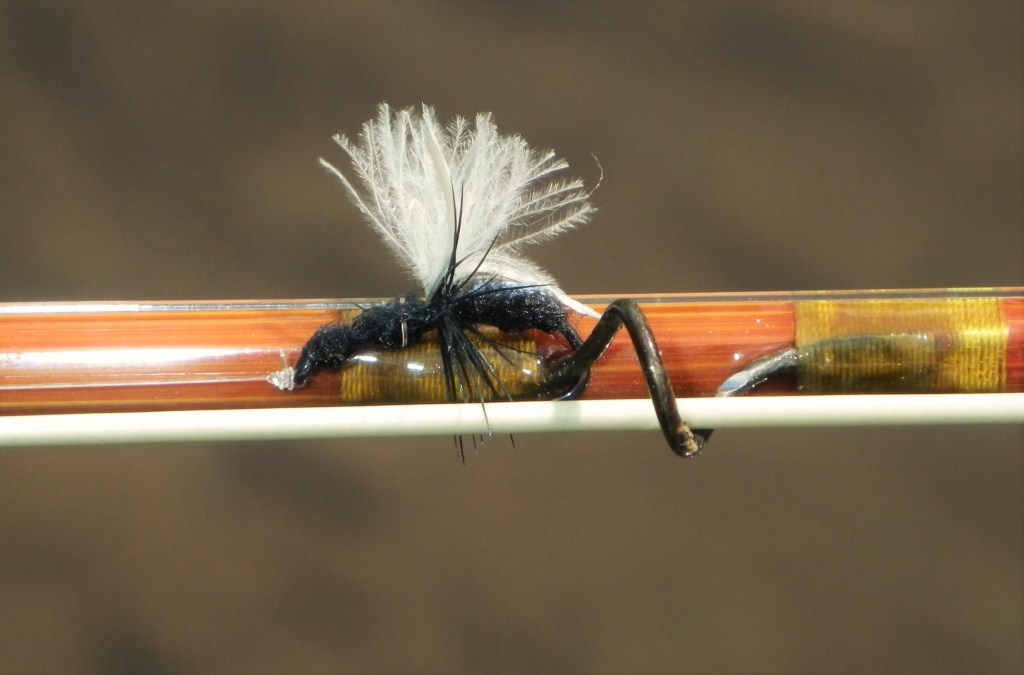
One of the few fishable hatches I encountered during the 2025 season was the unique bright yellow March Brown mayflies that I had first witnessed six years ago. Those unnaturally bright hued flies could be best described as safety yellow and, since it was the fiftieth anniversary of Woodstock just down the road in Bethel, NY, I took to calling it the Woodstock March Brown.

Since some of those psychedelic mayflies survived last year’s devastating drought and frigid, low flow winter, I have some hope that they might appear again when May rolls around. That hope made them a candidate for imitation, and it was only a matter of time before my new transitional dun design caught up with these Hendrix inspired bugs.

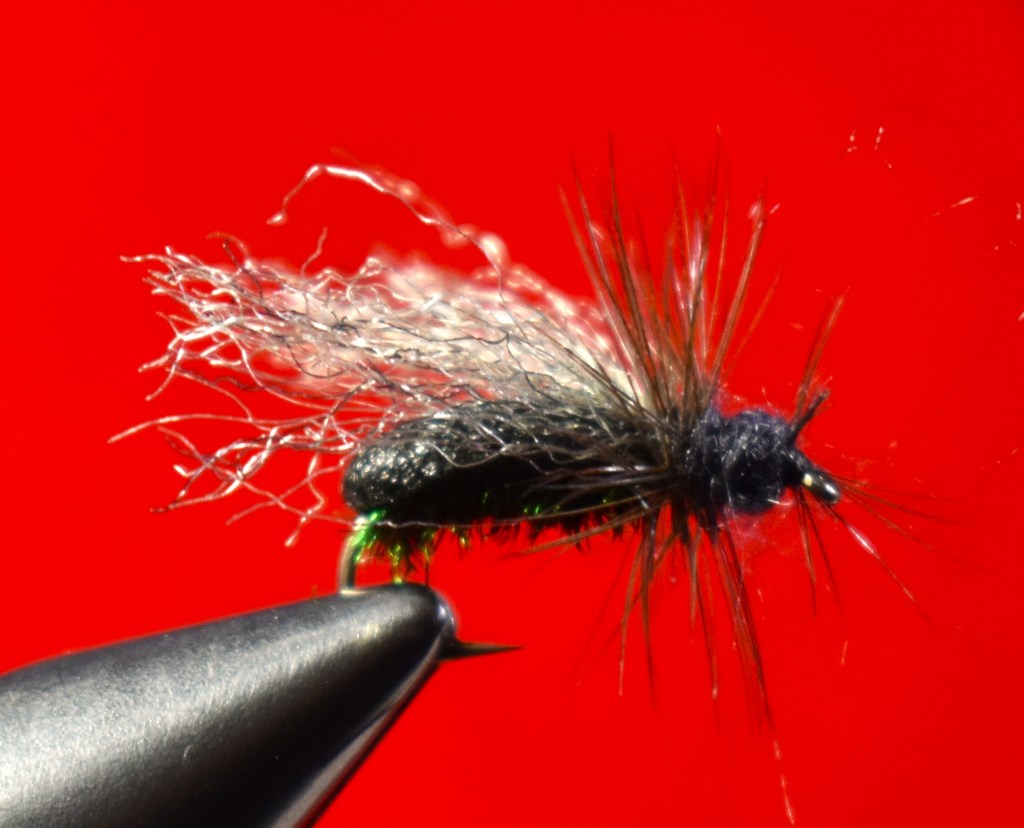
Though the pale, dirty yellow, faded wing critters that seem to have replaced our traditional big, beautiful caramel colored Catskill March Browns are also smaller than those formerly abundant flies, the Woodstocks must be eating better, as they remain a hearty size 10! I set to work yesterday crafting a trio of the new patterns.

The smaller, pale yellow variation of the American March Brown mayfly common over the past decade. They are no larger than a size 12 and sometimes a 14.

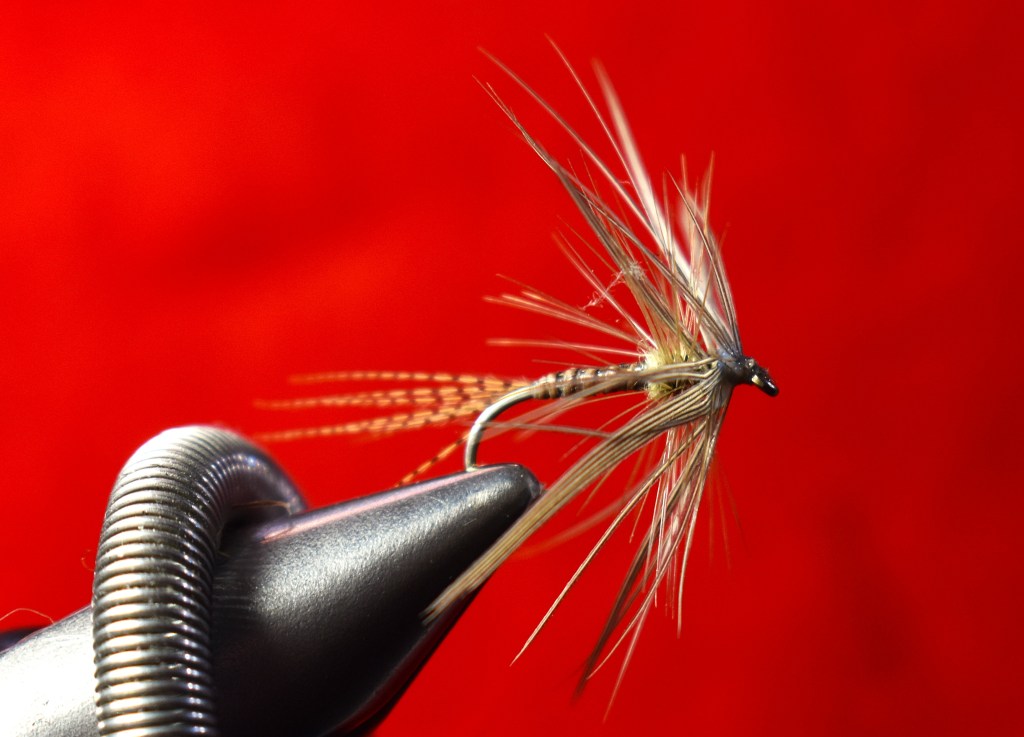
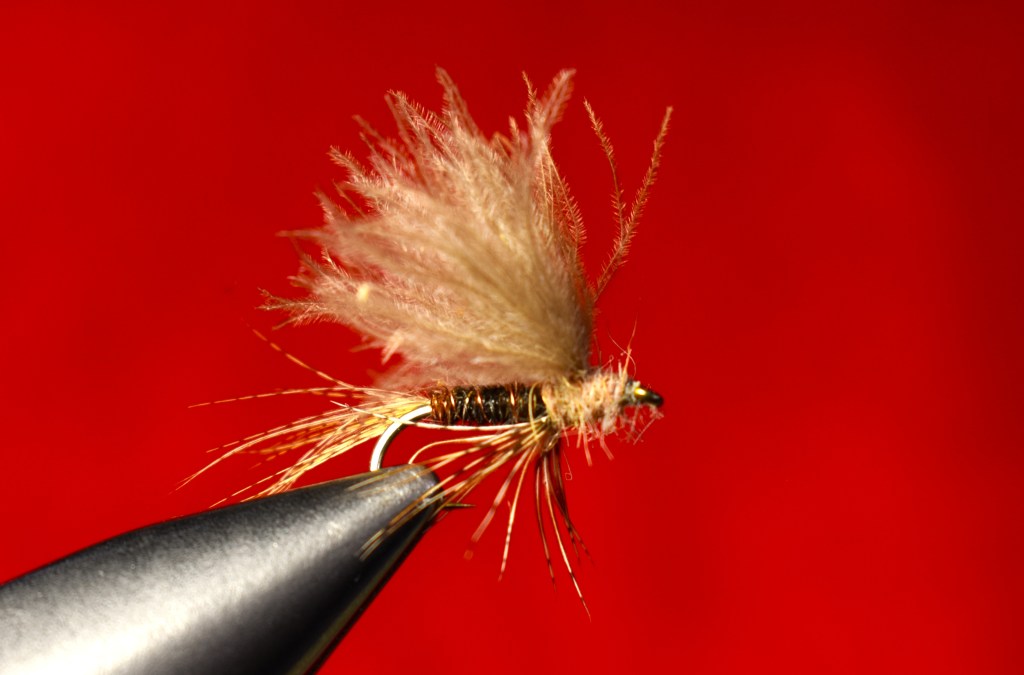
Wood duck flank tails and the wrapped pheasant tail abdomen are common to this new series of transitional duns. I chose fine gold wire for the rib, brilliant yellow silk dubbing for the thorax and a CDC puff wing with dark brown between fore and aft brighter yellow feathers. Legs are added with a few fibers of brown back feathers from a Hungarian Partridge.

I have used multiple colors of CDC for decades to mimic heavily mottled wings for mayflies like the March Browns and Green Drakes, finding it very effective. I will be anxious to try this one if the Woodstock bugs grace us with an appearance in 2026 as the brilliant psychedelic yellow color has proven to be a trigger.

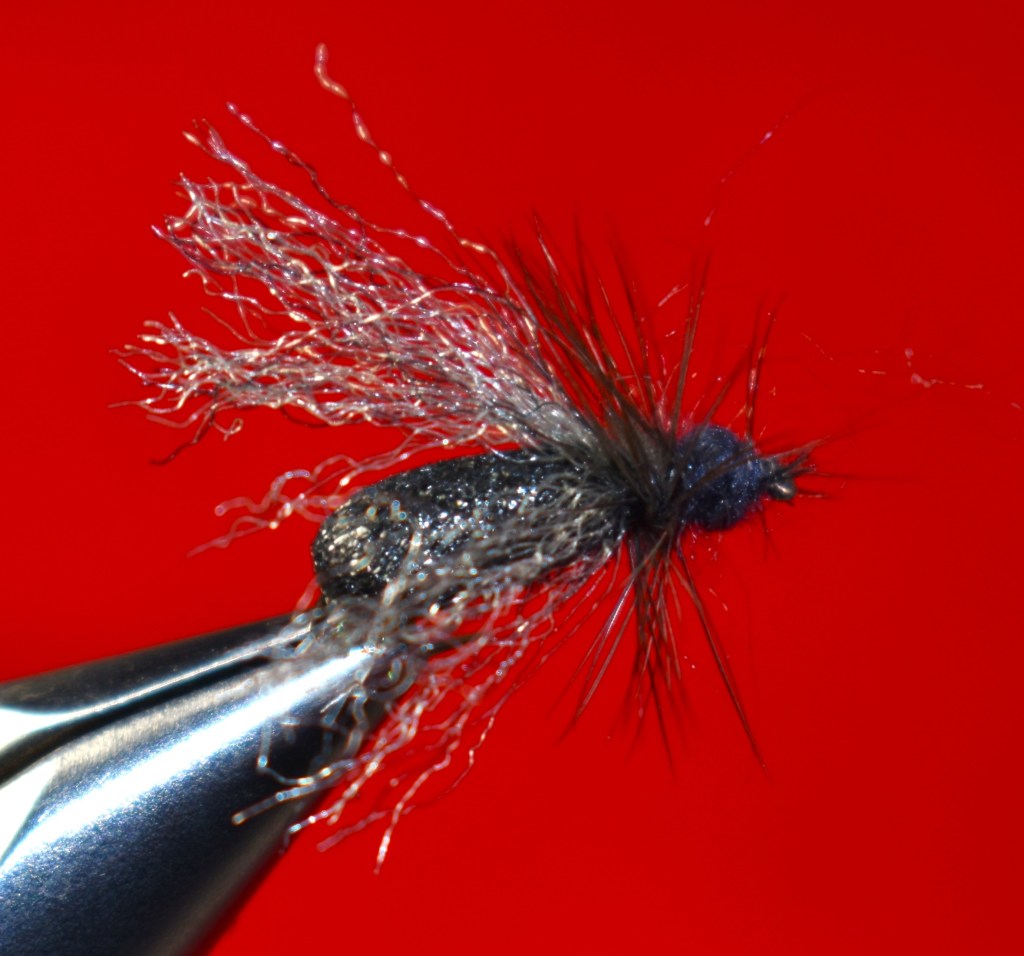
My original Woodstock March Brown Comparadun
(Photo courtesy Matthew Supinski)

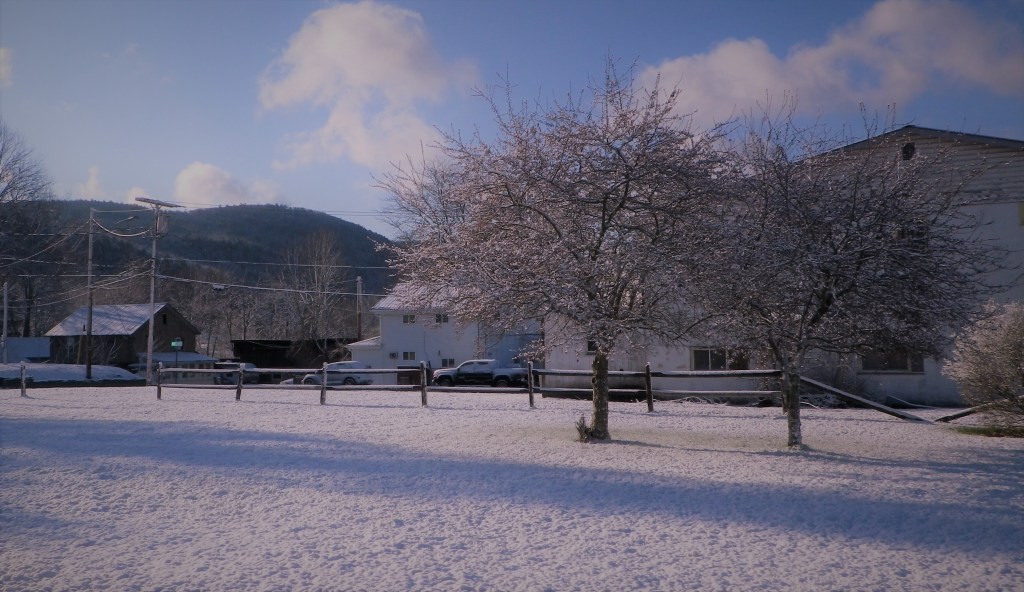
We saw a bit of additional snow on Saturday night, perhaps two inches here in the Eddy, with hope the higher elevations received more. Last week’s predicted inch was three inches deep here, while friends on one of the mountains sheltering the West Branch reported seven inches. Later this week we are being teased with the promise of a couple of days in the forties, so there is hope for some high altitude melting and some sorely needed water in the rivers.

A warmup would be most welcome, as this is already shaping up to be a very cold winter, here in mid-December. Reservoir releases are fairly low, Pepacton at 74.6 cfs and Cannonsville at 149 though the latter was in the 300 cfs range a few days ago. All our rivers have ice along their edges and bank to bank through their slower reaches. Most gaging stations are iced, though Lordville on the mainstem is clear and reading a very low 753 cfs and a water temperature of 31.6 degrees Fahrenheit. A good bump in flows would be beneficial. Dare we hope for sunshine?

Zero

Early December, and the temperatures are flirting with zero! A degree or two above or below the mark, depending upon just where you are in the region, lows like this usually have a lot to do with elevation. We are not too high here at Crooked Eddy, just a few comfortable feet above river level, and I have one degree below zero right now, some five minutes after sunrise.

I took my first river walk of the season yesterday afternoon, finding the East Branch Delaware iced bank to bank at the eddy, though flowing beneath the railroad bridge and down past Fireman’s Park. I just checked the brand new USGS Hancock Gage (installed this summer) and water temperature was flatlined at the freezing mark. Flows are low again on all our rivers, something we anglers very much need to change.

If our hatches are going to get the chance to recover, we need a little warmup and some significant rain, soon!

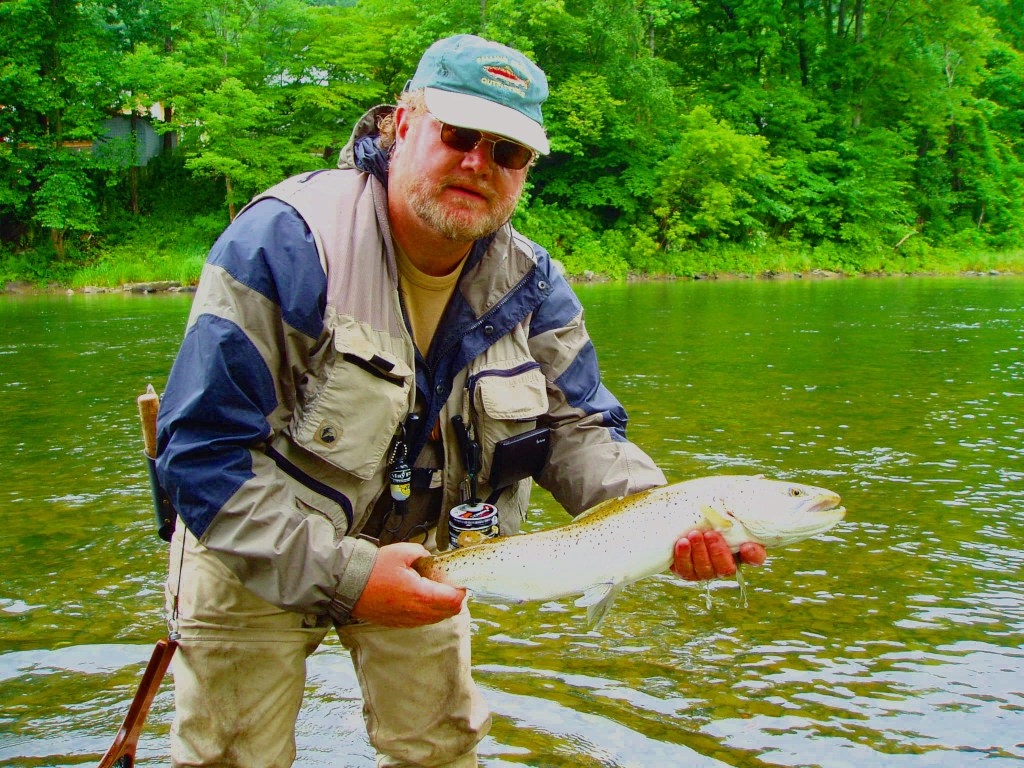
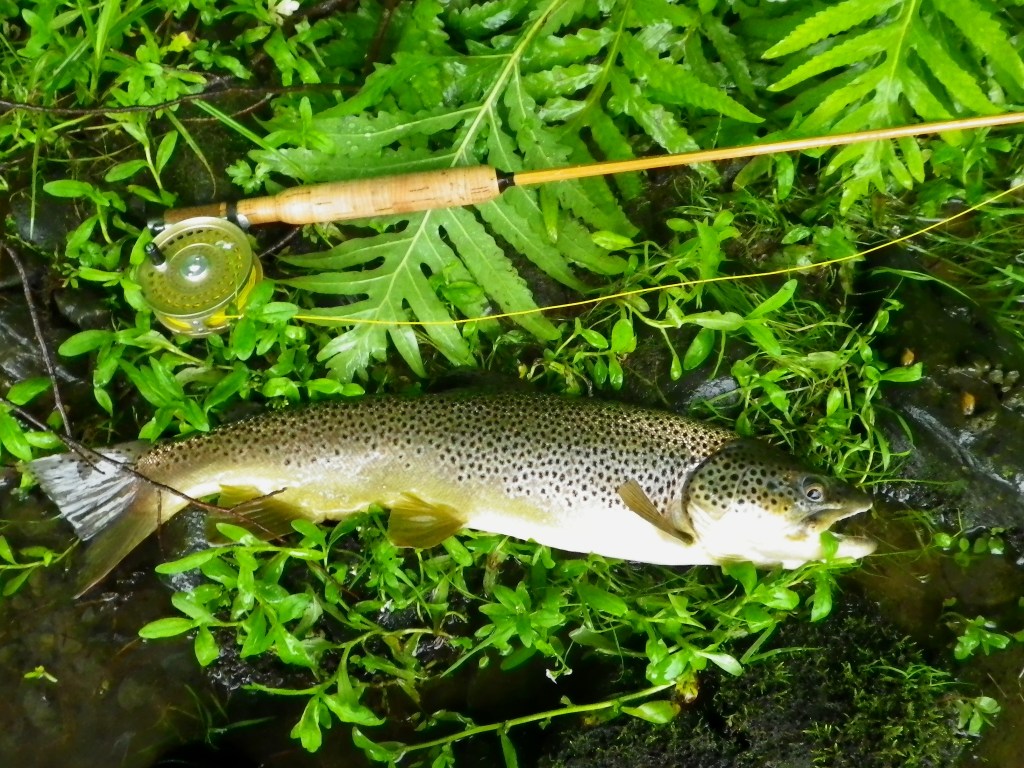
Another good day for daydreaming: a broad-shouldered brownie, a DreamCatcher bamboo rod, and a warm, fuzzy feeling…

I look at that photo, and I think about the inevitable changes in rivers. The trout is lying on river grass with current flowing through it, and that’s because I took that shot on one of three large grass islands that used to create some interesting fishing up at Stilesville on the West Branch Delaware. The lower island was just opposite the small DEC access area there, while the upper island lay opposite Laurel Bank Farm. We are talking something more than 21 years ago, in June.

Rains had muddied most of the Catskill rivers overnight, and the upper West Branch remained clear and perfectly wadable. There were a few caddisflies about, Psilotreta, the Dark Blue Sedge, and I had the pattern. I stalked an early morning sipping rise along the edge of one of the channels between those grass islands and took that twenty-inch brown on my slate gray X-Caddis. That would be the last time I fished those productive grass islands.

That September, while I was up north again and fishing several rivers, a fellow named Hurricane Ivan came calling on the last day of my trip. When he passed through Deposit, New York, he took those three big, beautiful grass islands with him. He did offer something in return, filling the deep, bouldery wild trout habitat that stretched from mid-river to the westerly bank with pea gravel, making featureless shallows where once giants dwelt.

Mother Nature seemed geared toward violent changes in those years, with three one-hundred-year floods and a five- hundred-year flood coming in the course of two years. Now the changes are subtler. Warmer, drier summers and colder low flow winters are not doing our Catskill rivers any favors, so I hope the tide turns. We have some truly wonderful fly fishing up here, not the shabby put and take mess that so many of our Eastern states offer, but highly challenging fishing for real trophy sized wild trout. The best of dry fly fishing continues here on the waters where it began in America. I for one, would like our next generation, and the generation after that one to be able to say that too!

Memories

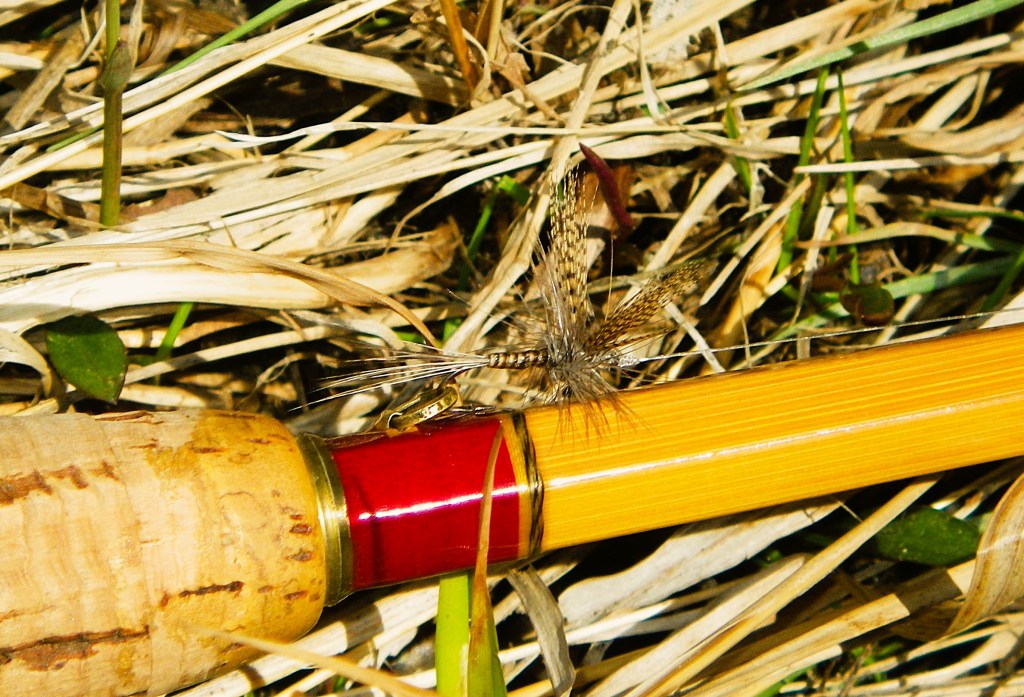
A Drake, caught with his shuck still attached

It has been one of those days in May, long hours spent sitting on river banks, feeling the sun bake the ache from my neck as I scan the water. The big Drakes have not appeared, and it is well into the afternoon.

Shadows have gathered tight to the far bank already, though it will be more than an hour before the sun drops behind the western ridgeline. Still, there are no flies. This is Nature’s way, and years of experience has proven it so. A day may seem perfect, ideal for a good hatch and rise of trout, yet something in the air says, no. Dozens of similar days have passed with joy, casting to wary risers at distance, placing the big duns on the current softly and watching them drift into those sweet bulges in the surface. What ingredient is missing? What special electricity makes life erupt one day, yet it’s twin fall silent?

Walking down river, I pick a familiar dimple in the grass and sit quietly until the sun passes over that ridge. Another hour passes there without any sign of life, and I rise to begin the long, slow walk back. All along the way I stop and gaze hard at the surface, dissecting each nuance in the current for some telltale variation which I do not see.

At last, I find myself seated below the little riffle and, amid my quiet reverie, I notice the shadows gathered there where the trees bundle close to the water, as evening comes wandering down the river valley.

Rising from the bank for the last time, I take a few steps upstream along the river’s edge, stopping to stare hard at the fan of current near the far bank. There is more light there, where the trees do not shade the water. There! It is so subtle I am not really sure I have seen it, a small, gentle ring. A wink, then nothing. I see nothing drifting on the surface, yet soon I see that tiny ring once more.

I have to hold the spinner pattern up to poke the tippet’s end through the eye, there where the light in the sky still glimmers to the south. With the knot fixed, I begin to stalk upstream, searching for the right angle to make my offering. One place will provide back cast clearance beneath the trees and allow my forward cast to shoot fully across the river. I find it as the shadows deepen.

Clouds have gathered, but there is still enough illumination to catch the sparkle of those wide spent wings as the fly settles at the top of the fan. A size 12 spinner offers some advantages. Memory does not recall how many casts were made, though the result of my last one lives forever!

That tiny, gentle ring replaces the silvery glint of evening light on those wings, and there is a brief pause before the shaft of split bamboo becomes a straining arch against the boil of water just across the river. My old Hardy ratchets loudly in the evening calm as the day becomes one of those bright memories, filled with magic!

Not A Film Maker

Quill Body 100-Year Drake

Just as an update for those interested in fly tying. I made a few tying videos about 5 years ago that were included in certain blog posts. I am no film maker, and don’t own a video camera per se. These were intended to show just how I tie some of the original patterns that I have written about here over the years. These were shot on my 35mm Nikon SLR, so there is no zoom, music or special effects, just an intro to the fly and then a closeup so you can see the tying.

After all of these years, I decided to go ahead and publish them on YouTube. They can be found by searching “Mark Sturtevant fly tying” should any new readers wish to see them. When checking these out, I found there are several guys on YT with the same name, but none appear to be fly tyers so it shouldn’t be too confusing.

I do not expect to set up a special YouTube channel, and I won’t be asking anyone to subscribe. Non-commercial all the way.

Frigid Thoughts

It is but the fifth of December, early in the Catskills’ natural onslaught of winter, and it is two degrees here in Crooked Eddy. It was just last week that I wandered the river as the temperature flirted with sixty degrees. Oh, what have we done to reap Nature’s disdain?

Perhaps today I will reorganize my tackle room, vacuum the dust from the heat registers and make room for the small bamboo bookcase said to be arriving next week. My angling library has grown, and though I make periodic donations to the Hancock library, I have been woefully short on shelf space for several years.

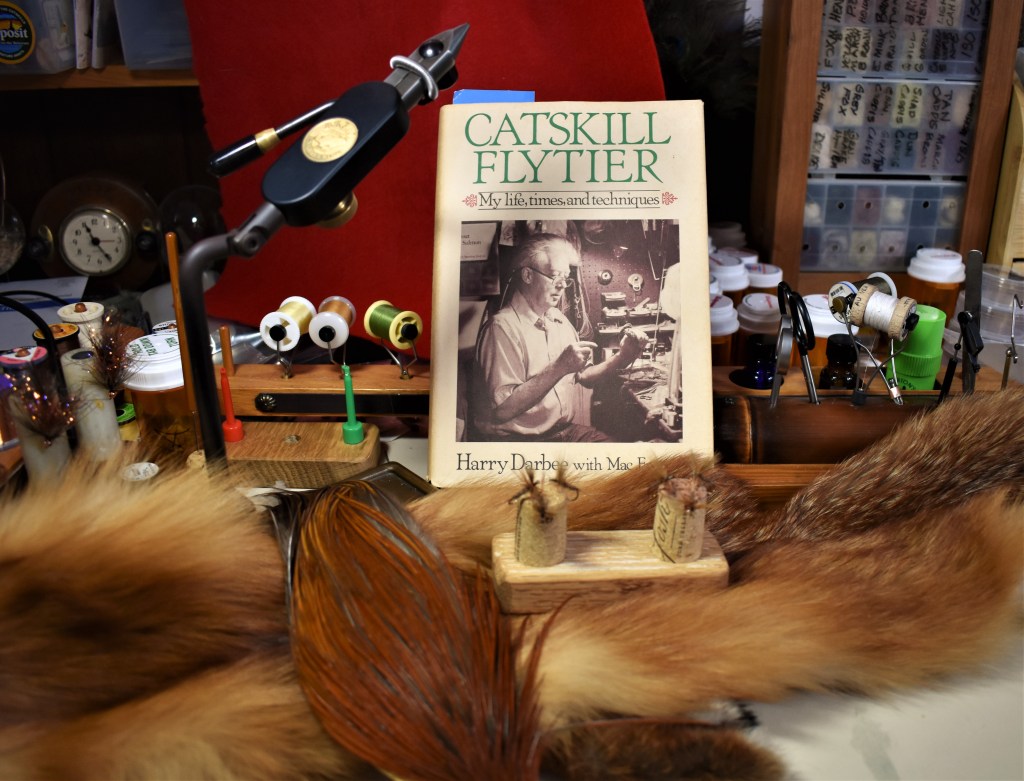
It is not new books that stack my shelves. No, my tastes run to tales of the Golden Age, stories of and by those who made much of the history of these Catskill Mountains, and these volumes deserve a place of reverence.

Ah, such tales of furs and feathers,,, and the shy trout we seek to beguile...

Such frigid cold makes this a good day to ponder, blend a bit of fur and wind the silk to fashion a new pattern, stimulate the hope that the early spring warmth of the New Year will see mayflies struggling in the film as the new sun warms their wing muscles. Hope is paramount when the morning flirts with zero!

I truly hope that Nature will work her magic, and our mayflies will once again appear in plenty on the rivers of my heart. I would miss the challenges of designing new imitations nearly as much as I would stalking a fine trout subtly rising to a drifting dun!

Winter Unmasked

The first winter snowstorm has come to the Catskill Mountains and, in it’s passing, it has taken my hope for further angling during this last month of the year.

My season of fly tying and reading has begun, and there are the enameled quill bodies for three Hendricksons hanging here on my drying rack. Ah those Hendricksons! I tie them each year, and likely during each month of winter, though if those stored in myriad fly and storage boxes should be counted, they likely outnumber all the days I shall be allotted to spend upon bright waters.

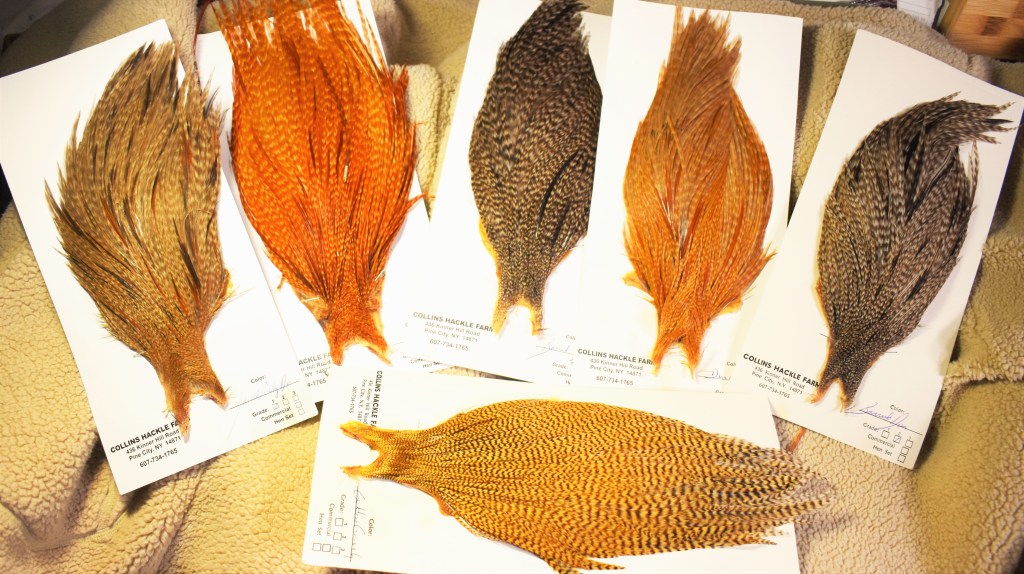
These three will receive their wood duck wing, a thorax of my A.I. Hendrickson dubbing blend, and a barred rusty dun hackle from one of Charlie Collins beautiful roosters. Before that though, three more quill bodies will join them in waiting, half a dozen being such a perfect number!

I’ve been blending dubbing lately, my traditional as well as A.I. Hendrickson supplies having been depleted during a season when the tying of those favored flies was far more therapeutic than practical.

When it comes to dry flies, I have last year’s entire store of Gordon Quills and Blue Quills, as well as most of the olives still safe and unruffled in their boxes, for I encountered no hatches of these early season stalwarts whatsoever. Nature may truly perform the miraculous, and I begin the passage of these long months of winter hoping for nothing less.

Might winter grant some brief reprieve along the way, a day or two of unseasonable warmth and sunshine when the spirit soars and stiff legs find their way to the snowy banks of the river? We shall see…

December Dreamin’

So here we are in December already, month number two of the Catskill Winter of 2025. The first snowstorm of the season is stalking us from the west, and I am here dreaming of fishing…

The little streamer fly pictured above is an old pattern of mine, one I have not tied for a good many seasons. Chances are I still have an old one or two, stashed somewhere in one of a hundred fly boxes, where it would take longer for me to find them than it did to tie a few new ones. I don’t fish streamers much anymore, the dry fly having fully captured my heart and mind, except as an unusual respite from winter.

JA was talking about a new pattern he had devised, one a West Point cadet had used last month to catch a bunch of hungry rainbows. I laughed when he told me of that young man’s banner day, repeating the truth here in the Delaware system that “rainbows don’t hit streamers”. He told me he thought his fly would be a fine choice for my winter swinging, though he has conveniently forgotten to send me a photo or a recipe for it’s construction. Pondering the chances that the weather will cooperate any time this month got me daydreaming about the old Pearl & Squirrel.

The last stone arch bridge on Falling Spring Branch, pictured late on a summer afternoon decades ago, when the lovely spring creek was queen of my angling days!

Ah, the Falling Spring and her bridges! None of them were large, and that last stone arch was smallest of all! The size of the cover does not command the size of the trout though.

I had crafted that simple little streamer for her shallow waters and the dace minnows who swam there. A tuft of grizzly marabou, braided pearlescent Poly Flash for the body, crowned with a long wing of gray squirrel tail and bearded with a touch of red marabou, the fly was simple and effective. It was vital that the squirrel tail came from my own hunting! For that imbued the flies with a certain mystical power. The spring creek trout respected that power, and they attacked my little dace minnow when swum nearby.

It was an evening long ago when I was abroad on the stream hoping for some sign of the sulfur hatch that once enthralled all who angled the limestone country. After ’94 the flies were scarce, and none appeared that evening, so I had cut back my tippet and knotted a size 10 Pearl & Squirrel for my last moments on the stream. Near the edge of dusk, I cast my fly across the inlet to the arch and let it swing downstream into darkness… twitch… twitch… twitch…

The short rod shuddered, the water thrashed wildly in the bole of the channel, and I found myself engaged in a vicious fight! Whatever leviathan had engulfed my Pearl & Squirrel didn’t wish to give it back, nor did he wish to come out from under that arch! Nearly the entire exchange evolved amid those close quarters. A few times he would streak downstream and I would check him, knowing that all manner of rocks, logs and roots waited there to grant him freedom. Thrice I turned him just abreast of the outlet, where he boiled and thrashed again beneath the darkness of the bridge.

I know that the magic of my patient .22 harvest of that gray squirrel granted me victory that evening, leading the great trout upstream into the open stream channel at dusk, and into my net. The brown was nearly two feet long, wide flanked and heavy, and my hand trembled as I twisted the small fly free of his jaw.

If I close my eyes, I can still feel the rush of that moment, feel my hands shaking in the cold spring water and the chill of evening.

Solitude Is A Winter River

Nature winked at our Catskill Mountains just yesterday. With a pair of winter storms working their frigid ways across the country, our temperature soared to fifty-eight degrees for the afternoon despite mostly dark and dampish conditions. I knew it was coming, and how could I fail to have faith in such a forecast? There was no question that I would wander a favorite reach of river to celebrate this day.

It was fishing, but then again it wasn’t. Not that excited “I’m going to catch some” kind of fishing, not that springtime sort of energy, but still; fishing.

I truly had no expectations of catching a trout, not even one of seeing a trout to be honest, but I was going to take this single day and get something beneficial out of it nevertheless.

Today will be twenty degrees colder than yesterday, and the thirties look to be the norm for a long run of days. If nothing else, that fueled my desire to spend my time along bright water.

The other side of winter

My soul sought another moment of solitude, my legs one more walk against currents, and my spirit the spark of another chance to dabble in the game which enthralls the angler. I found all of that, and more.

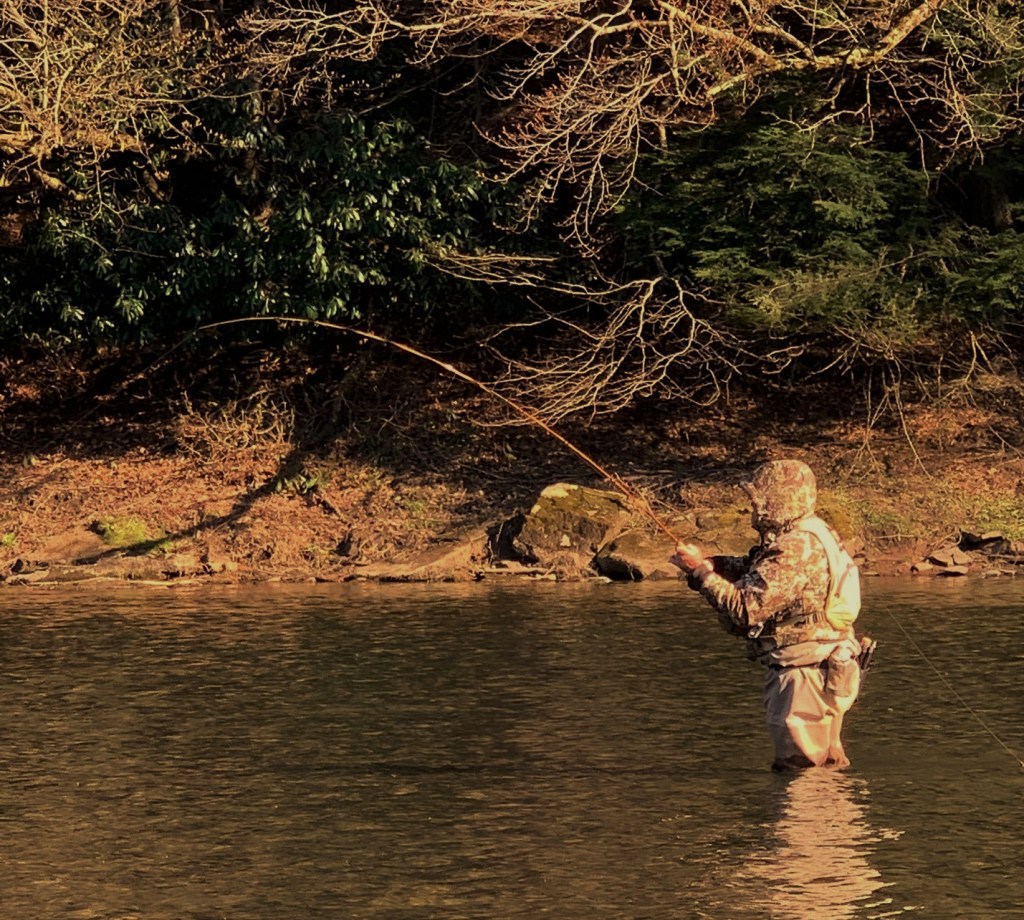
The Kiley bamboo cast smoothly and far with little effort, as I followed each cast down and across the clear gray mirror of the river. Flows are better now, still low, but improved over the last weeks of the dry fly season. The rain received had come on the edge of the warmer air and the river gages showed rising temperatures through the night. Though my flies touched nothing save the jutting river rocks, there were sporadic signs of life.

I saw two or three rises clearly during the afternoon, strong rises, though singular and far beyond casting range. There were a few glimpses of nervous water as well, and I drifted a soft hackled fly through those areas a time or two. Whatever attracted those signs of life, my flies failed to imitate, but I still felt that little charge for a couple of casts.

I appreciated the reprieve from winter, even though just a handful of fishless hours, they were spent where I wanted doing what I needed.

Checking Conclusions

I do quite a lot of reading this time of year and, though I have a deep affection for titles from the Golden Age of American fly fishing, I do very selectively peruse a few newer works. Some, like Jerry Kustich’s new book discussed in my last post, are written by authors whose writing I know and enjoy. One category I generally do not bother with though are new books about fly tying. I have tended to design my own trout flies for the past three decades, building my knowledge of materials and experience on the water to shape my own creations. Yes, once in a while I will investigate a fly tying book for entertainment value, but many of the “great discoveries” touted by the marketing machine have no interest for me. Man does continue to reinvent the wheel.

This summer, two gentlemen from England were kind enough to give a special online presentation to members of our Catskill Fly Tyers Guild, informing of their rather exhaustive work involving high-definition video and still cameras, primarily on the English chalk streams. Peter Hayes and Don Stazicker impressed with their commitment to their cause, showcasing the great deal of work they put into their 2025 release entitled “The Flies Trout Prefer”. I was interested enough that I bought the book, which has languished here in my hideaway ottoman for the past few months. I started in on it this week, and I admit it is holding my interest.

Their basic premise involves the trout stream insects we describe as emergers or cripples, that is the flies that fail to reach the fully hatched stage and fly off the water, maintaining that such are the insects the trout most often eat. Their assertion is certainly not new, as thousands of us who undertake our fishing as observant anglers speak this same truth. The depth of their investigation and the quality of their photographic evidence impresses, though. I have not progressed to the portion of the book where they present their ideas for fly tying to imitate the imperfect insects they champion, I might agree or disagree with their approach when I see it, but they are very likely to maintain my interest to the end of the book.

I have spent a great deal of my thirty-five years of fly tying and design focused upon capturing an image of life in my trout flies. Those qualities include movement, color, shape, size, silhouette, the effects of light reflection and a fly’s attitude when cast and drifted upon the water. A great deal of my best dry fly patterns sit in the film, with their bodies, legs and wings penetrating the water, in recognition of the trout’s observed preference for flies that are more vulnerable, as Messrs. Hayes and Stazicker describe. I welcome the factual reinforcement of my long-held beliefs, as I expect will many anglers.

A good deal of years ago, I gave a presentation at the luncheon of the Fly Fisher’s Club of Harrisburg, offering my conclusions that our trout were learning from the huge increase in fishing pressure and getting harder to catch. Fisheries scientists at that time would have called that rubbish, though they now admit that trout not only exhibit avoidance behavior and increased selectivity as a result of angling pressure, but that they pass these traits on genetically. My conclusion all those years ago, was that our best chance of keeping up with the development of our quarry was the advancement of fly tying, as well as our individual skills of presentation.

I never stop experimenting, for I know that, as the trout’s familiarity with even the best designed and tied fly patterns grows, the effectiveness of those patterns will inevitably lessen. That fact is a part of the essence of the challenge and the magic of this game!

Old rods, new flies!

Do not mistake this post to be a denouncement of classic flies, for it is not. I am not the first to note that classic patterns are often “new” to many of the trout that swim in our favorite fishing waters. Many of today’s new crop of fly fishers pay little attention to classic trout flies. They want the newest, brightest, craziest concoctions they can find at their local fly shop. Fish whatever you wish, but if you want to learn and grow as an angler, observe!

A Smile for Kustich’s “Bamboo Days”

I first met Jerry Kustich in December 2014 after learning of his move to Maryland. My enjoyment of his writing brought us together.

I had just reviewed his 2013 book “Around The Next Bend” when I stopped into Theaux Legardeur’s Backwater Angler fly shop on a visit to the stream that had been my first love as a trout river, Maryland’s Big Gunpowder Falls. I noticed copies of the book displayed conspicuously on a table in the shop, flanked by copies of two previous volumes that I had not had an opportunity to read. Casually opening one of them, I was surprised to see the author’s signature on the title page and asked Theaux how he had managed that. He told me of Jerry’s eastern move and invited me to an upcoming bamboo day, where Jerry would be visiting with a load of Sweetgrass bamboo rods in tow. I kept that appointment and enjoyed the chance to meet and interview Jerry about his partnership with Glenn Brackett and the founding of Sweetgrass Rods. Casting a number of those rods that afternoon made me want to have a Sweetgrass of my own.

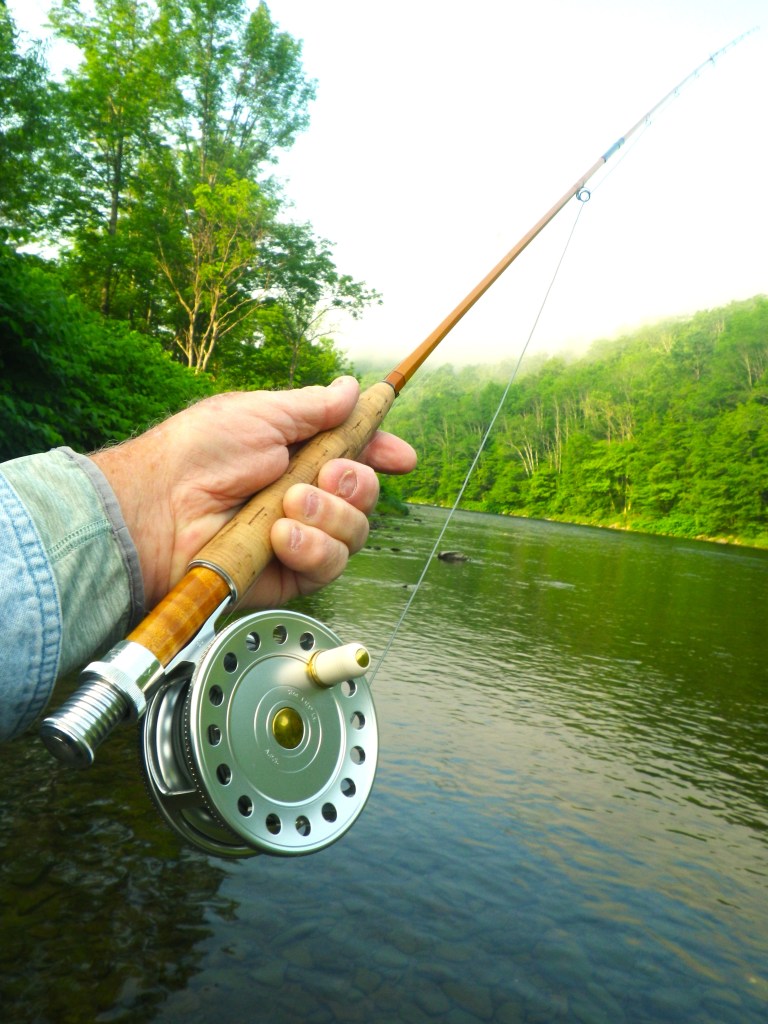
We have kept in touch over the years, meeting up at the Catskill Rodmakers Gathering three years ago, and touching base via emails as we did during the Covid lockdown in the summer of 2020. The 8′ four weight Sweetgrass Pent I carry most often during my summer fishing was the result of those Covid conversations, after Jerry agreed to design a special pentagonal rod taper to fit the demands of my summer fishing style.

I was pleased to learn of his writing a fourth and, he says, final book last month, and started in the morning after his package arrived. “Bamboo Days – Memories of an Old Rod Builder” (West River Media, ISBN 978-0-9996155-4-6) is pure Jerry Kustich, brimming with tales both happy and sad from a man who has led a remarkable life. From decades in Idaho and Montana, to pleasant later days on that same Gunpowder Falls and the headwaters of the Chesapeake Bay, Jerry has found serenity on rivers, most often with a bamboo fly rod in hand. He shares those feelings and revelations through the stories here. Always deeply touched by the outdoors, and the beauty, mystery and magic of fly fishing, Kustich continues to be a voice for conservation and environmental stewardship.

Like many of us whose souls are tied to bright waters, Jerry has lived to see both troubled times for those special waters and rebirth. He remarks on the latter stages of life, when memories sometimes flow stronger than the rivers that spawned them. Kustich feels the life energy in a shaft of split bamboo as he does in the rivers and the people who make life special, and he shares that with his readers; a beautiful gift!

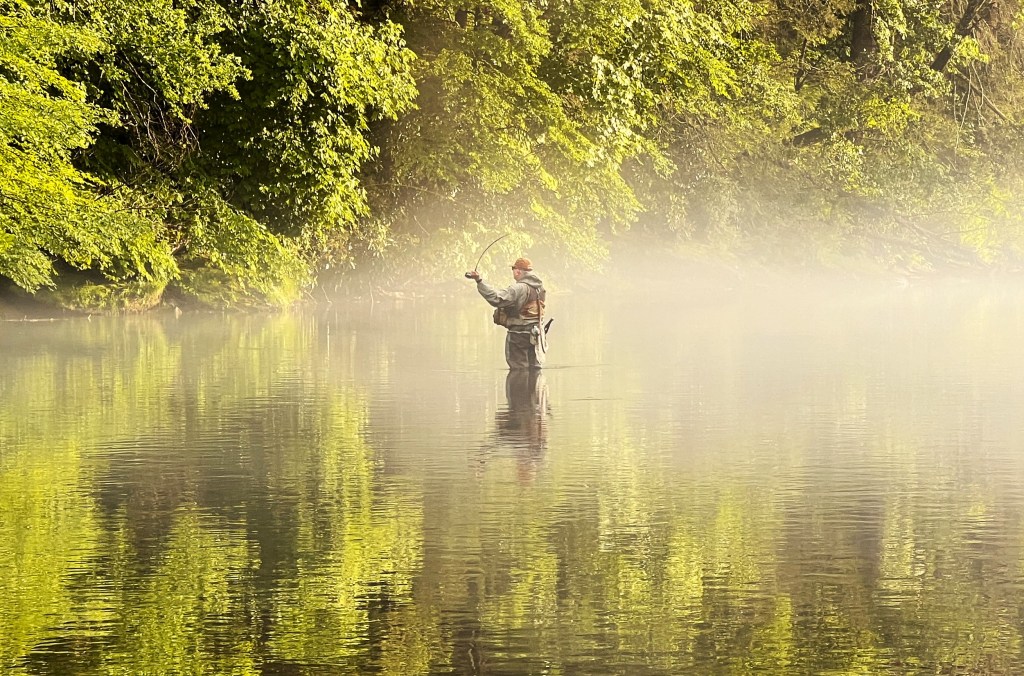
A trophy brown runs hard against the arc of the beautiful Sweetgrass Pent Jerry designed for me in 2020