A Late Taste of Indian Summer

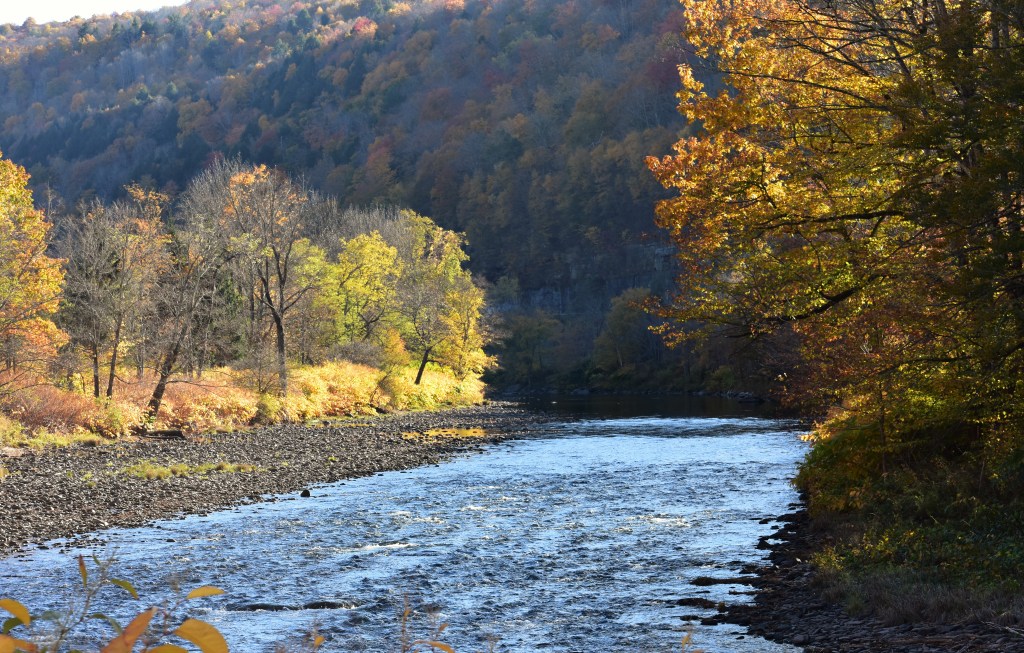
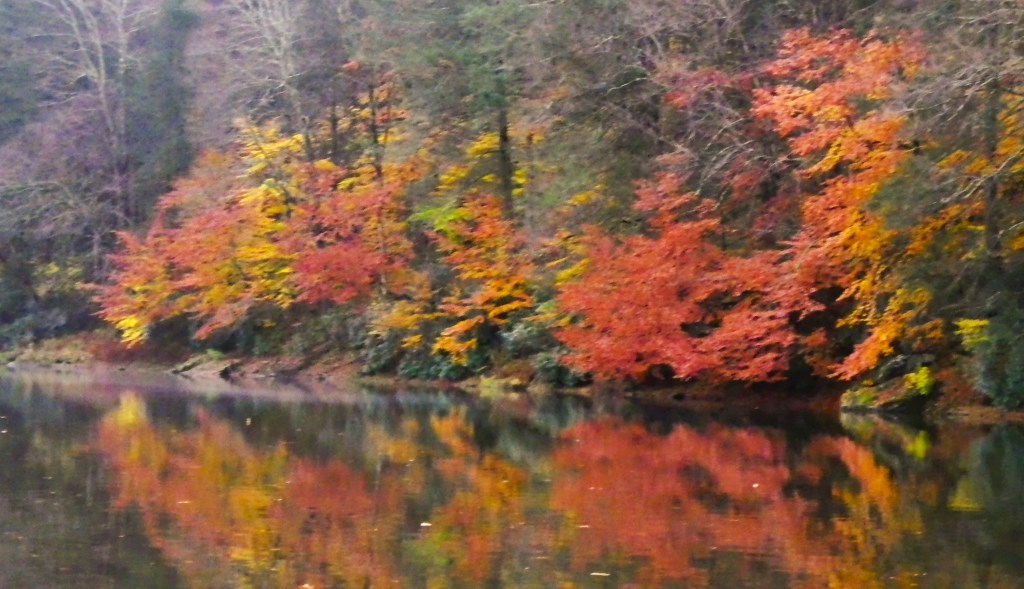
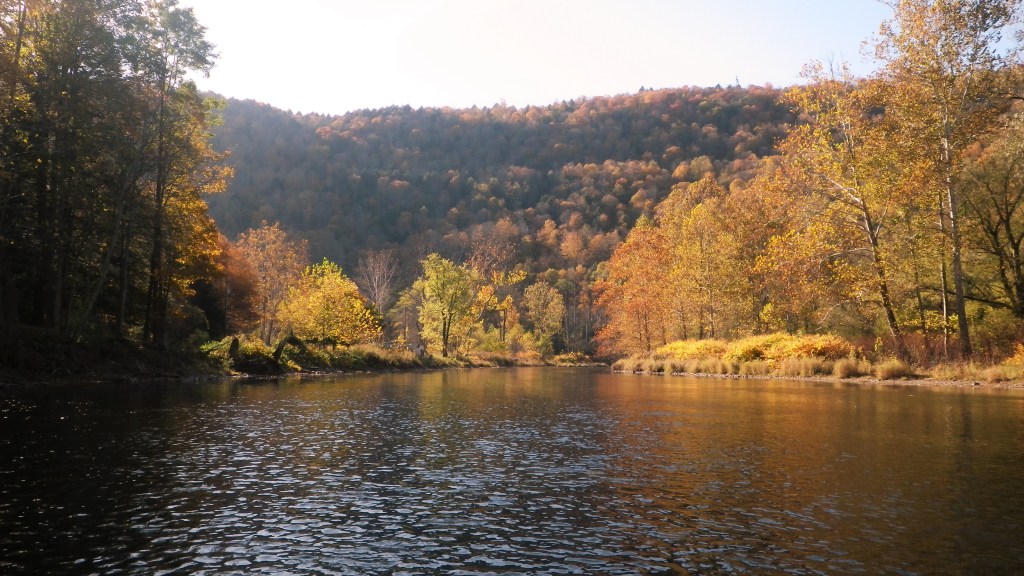
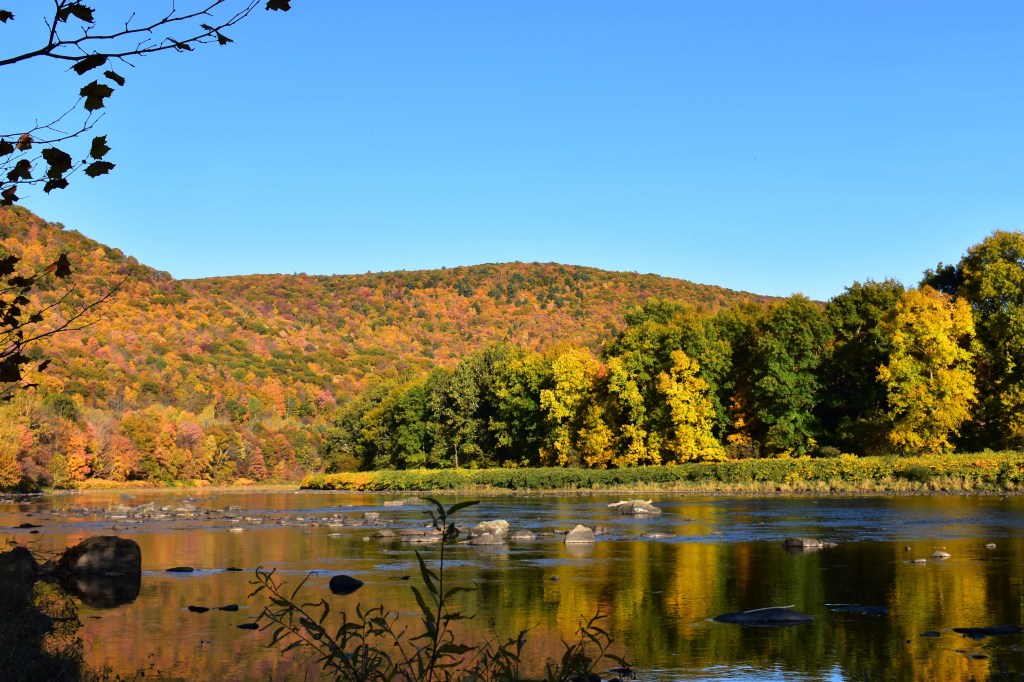
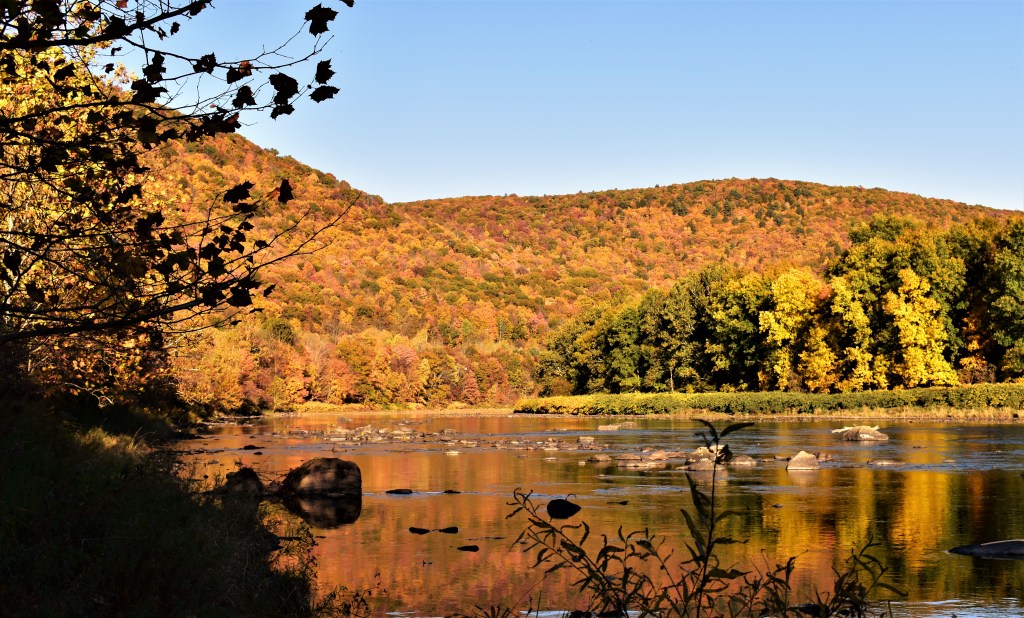
Seventy-one degrees yesterday, as I turned the car north along NY Route 8; a last taste of Catskill Summer? We were headed to Earleville, NY and it’s historic Opera House to see our friend Nate Gross and his band release their new album of rockin’ blues “Ride With The Devil”. The sunshine lit up the remaining colors on the mountainsides and got me to thinking of the hidden promise of the next few days.

The forecasters tell us the temperatures will climb through mid-week before dropping more than twenty degrees on Thursday, wiping away the last euphoria of summer in one swift stroke. The angler in me retains just a bit of hope that this last burst of seventy-degree sunshine might convince a few mayflies to take wing, and those trout not yet occupied with spawning to rise to Nature’s last banquet of the season.

I walked the river on Wednesday afternoon, feeling the chill of the water penetrate every layer I had donned despite the sunshine. When the sun topped the ridgeline and allowed the shade to take rapid possession of the pool I shivered. I did at least see a rise, though nothing sustained, nothing in range of a cast. In my heart, I had already surrendered to the inevitability of winter.

The high release levels on the Delaware tailwaters have finally begun to decline, though not by enough to warm the waters downstream. Trout remain unlikely to rise with water temperatures in the forties and very small hatches of flies. Our freestone streams should be spared the intrusion of anglers now. It is spawning time, and they remain pitifully low. My hope now is that we will have plentiful rains before we have freezing temperatures, for anchor ice takes no prisoners.

The long-term discussion speaks of a La Nina winter, wetter than normal for the Northeastern states. I hope this comes to pass, and though shoveling snow is not high on my activity list, I hope our mountains enter spring with a good snowpack.
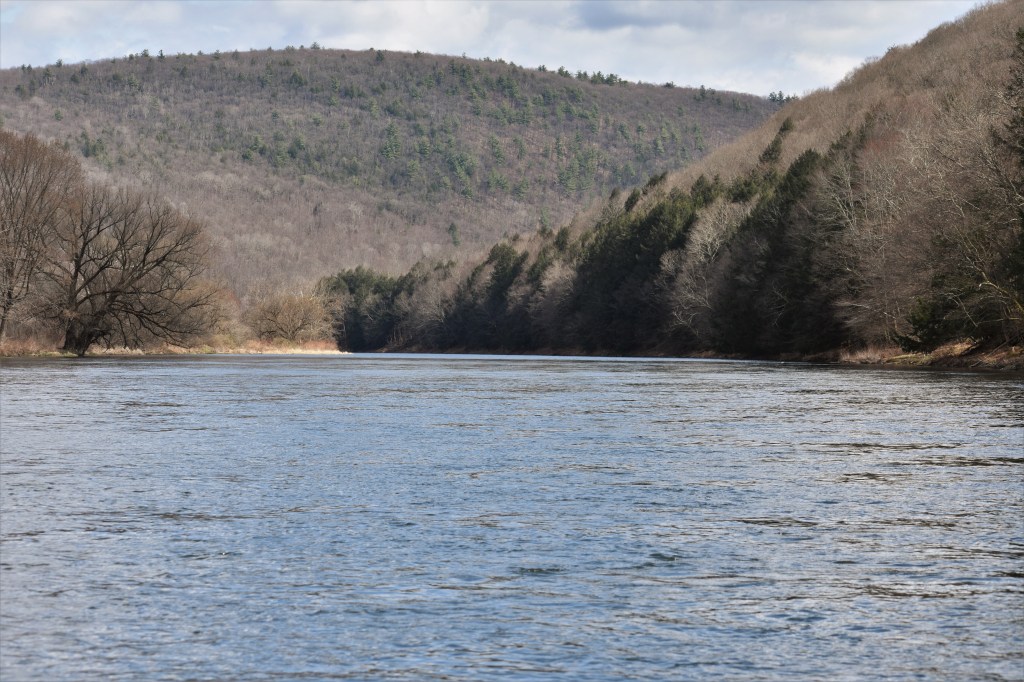
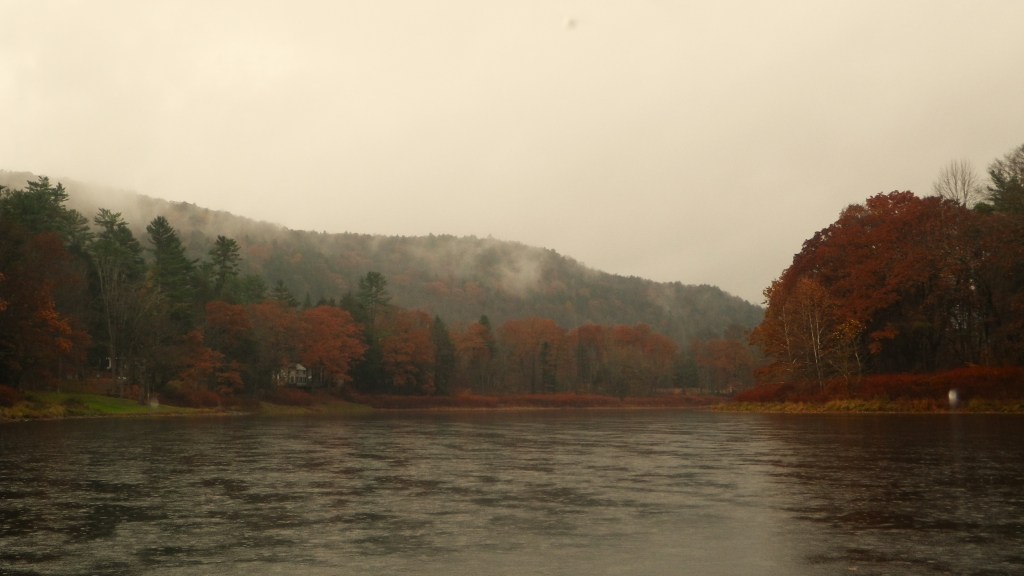
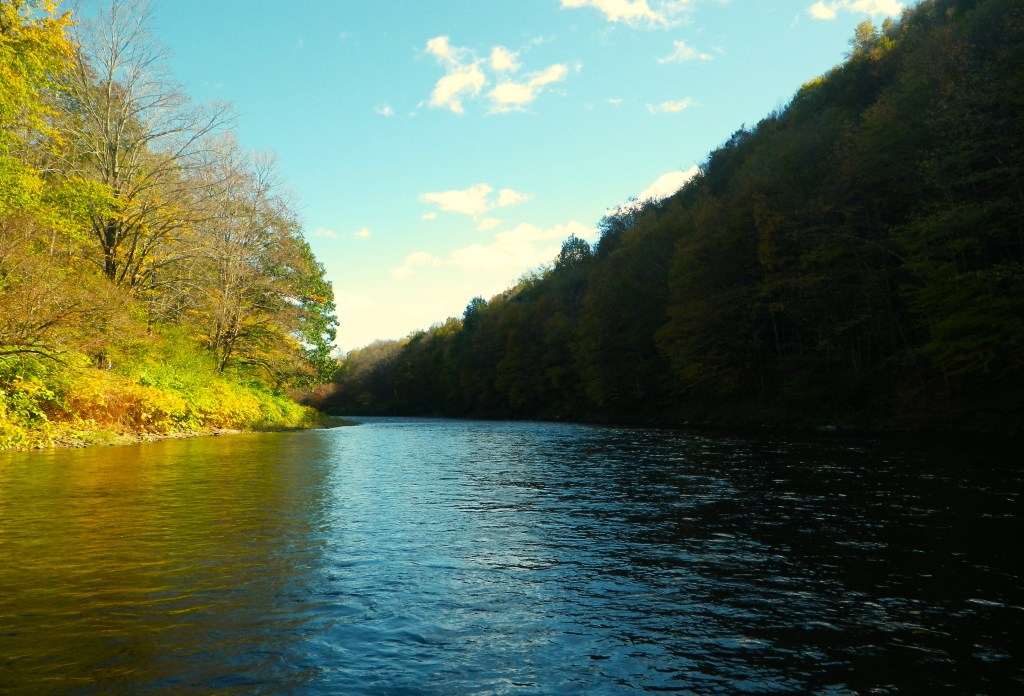
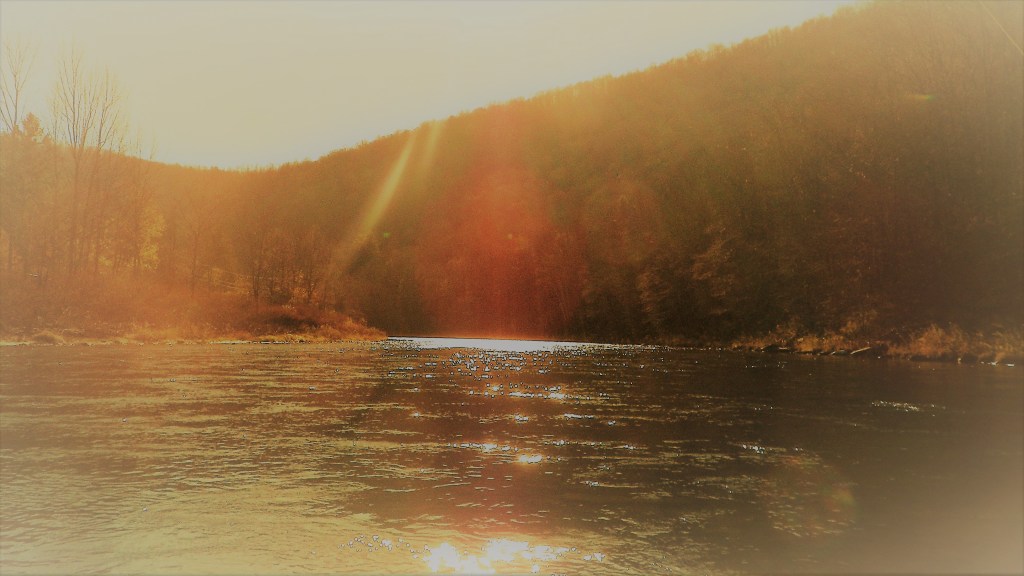
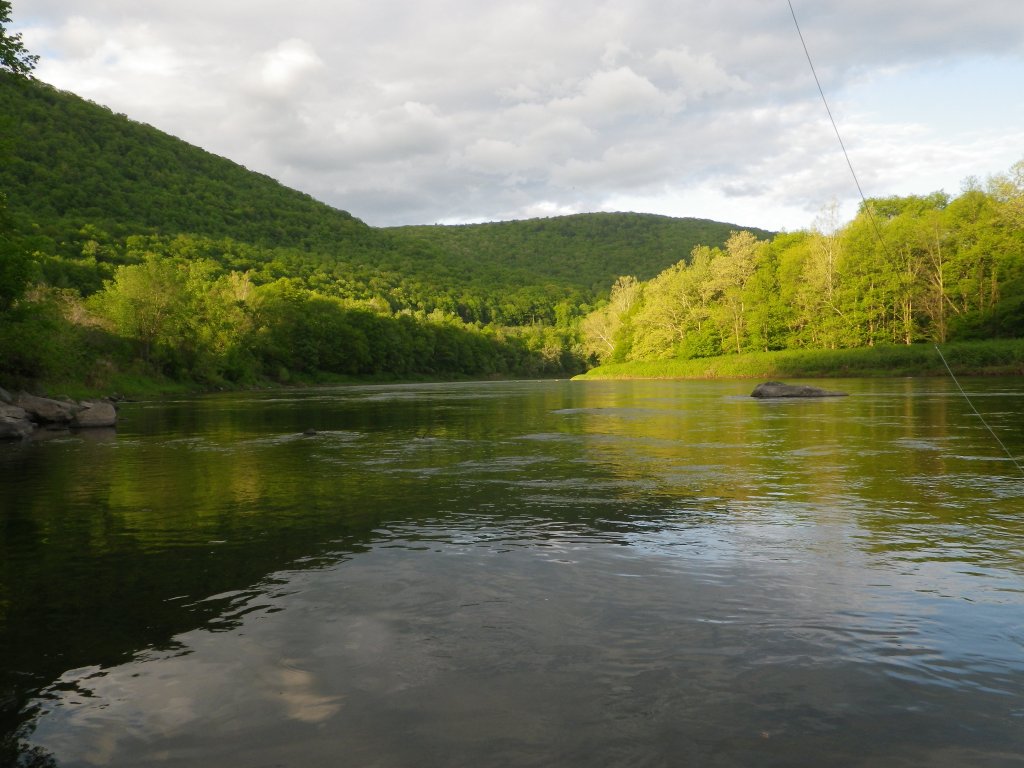
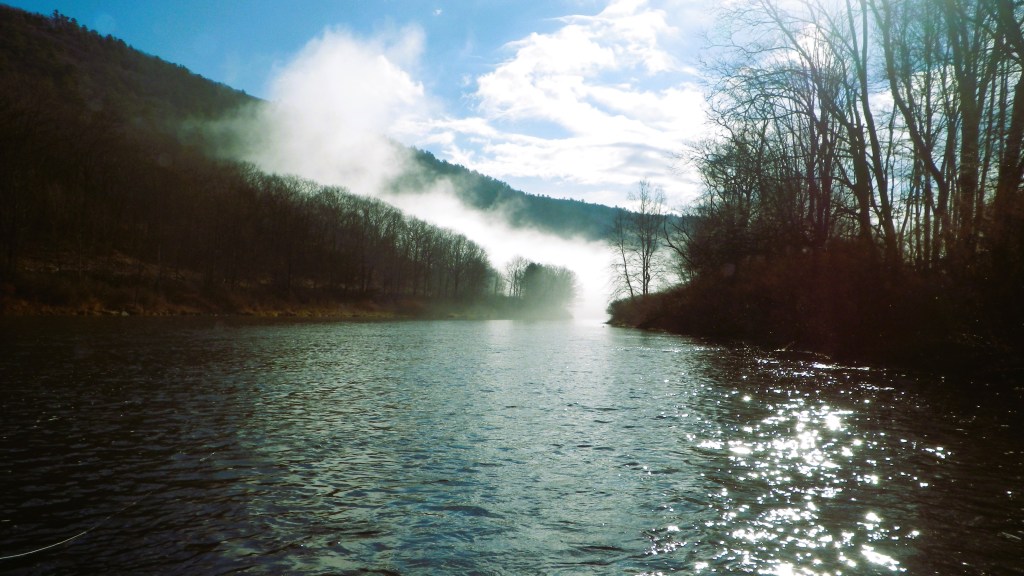
The West Branch Delaware from the rower’s seat, early April.

I know full well it may be six months before I tighten into a soft riseform and feel that magnificent throb of life in a full arc of split bamboo. I am thankful that my ears will have the music of Nate’s guitar to replace the special tones of a vintage Hardy reel and a large, wild Catskill trout streaking for the horizon. Nate’s blues will help me find my way to springtime. http://www.musicbynategross.com
Fly Tying Season

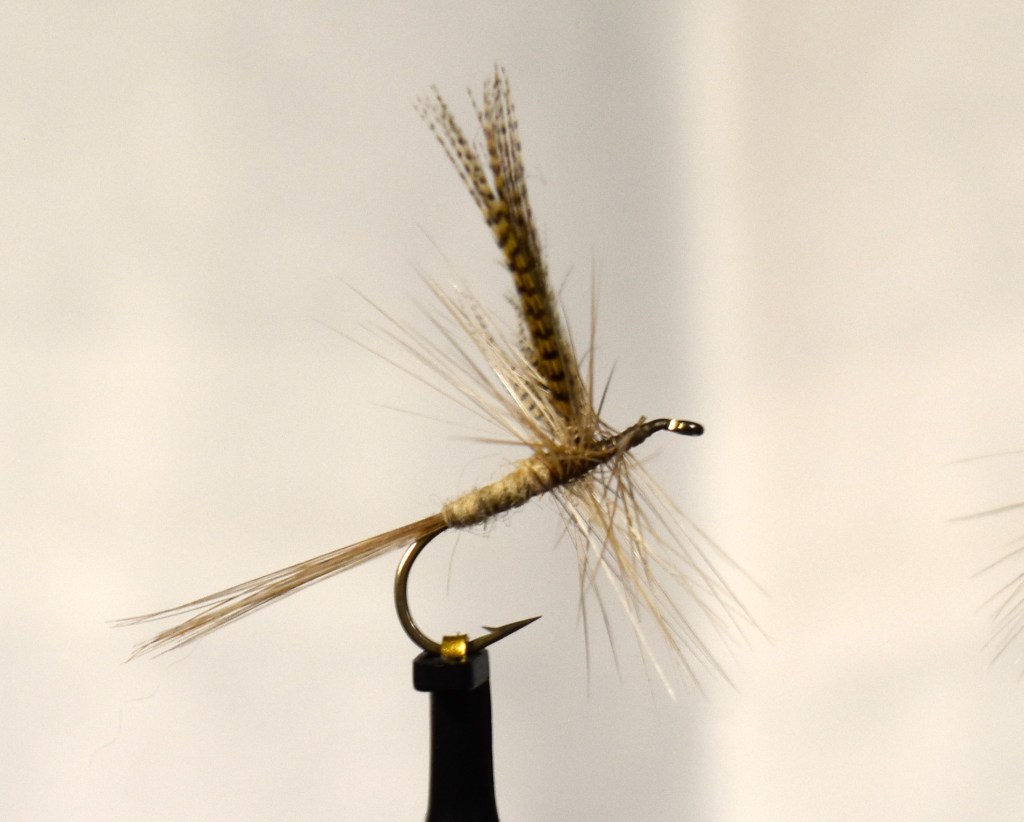
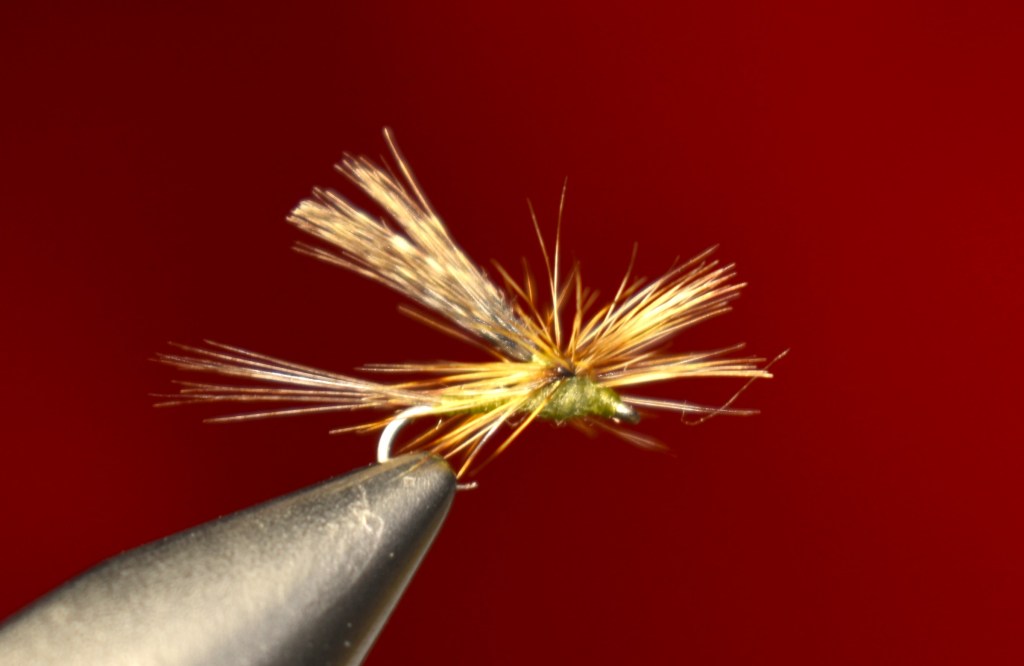
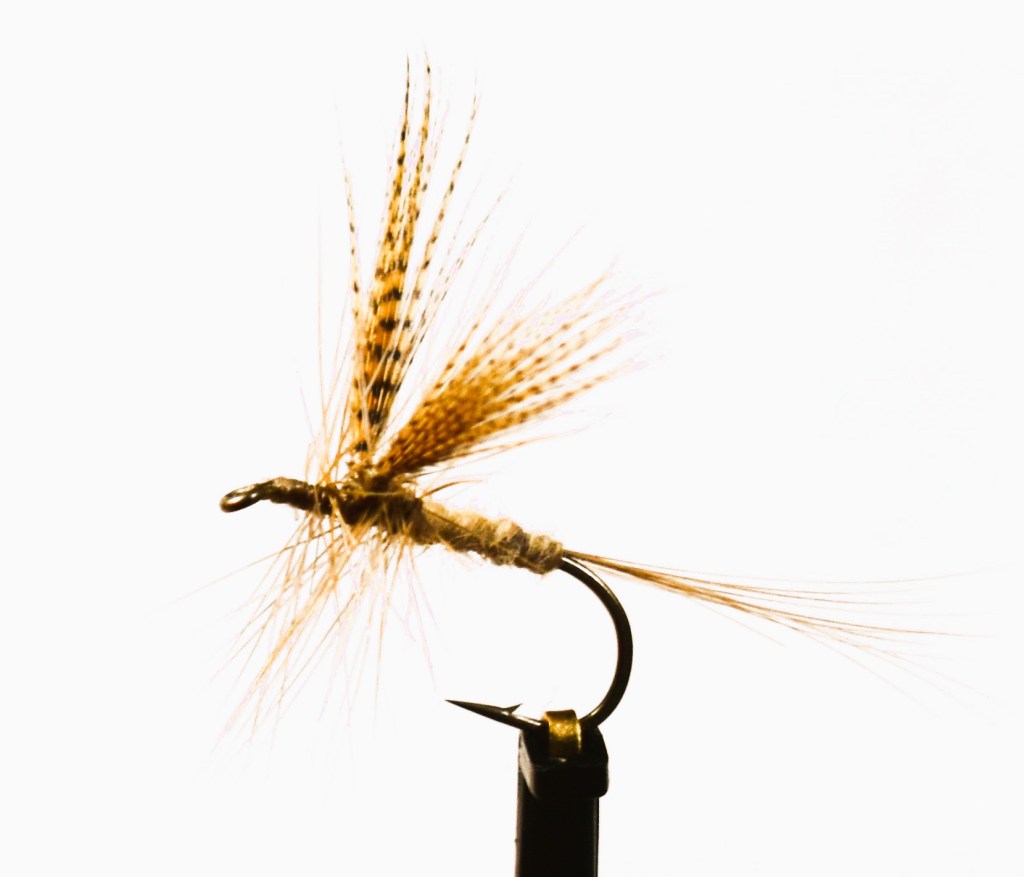
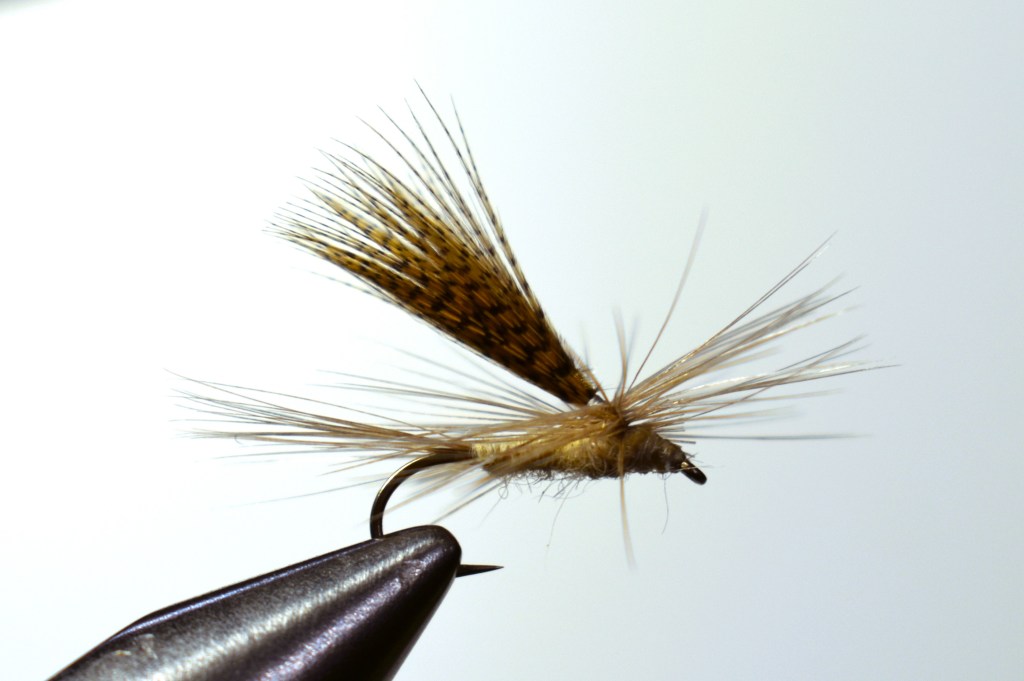
The Cross Special tied as a 100-Year Dun.

It seems as though Saturday’s Fly Tyer’s Roundtable has served as an inauguration of our winter fly tying season, as the weather remains unfriendly for fishing the dry flies we Catskill fly tyers love to tie.

I looked up from tying a 100-Year Dun to see the face and camera of Mr. Richard Lodge who has graced us with a wonderful new book about the life of Rueben R. Cross, one of the most heralded Catskill fly tyers, and the man many praise as the father of the Catskill School. I was pleased to meet this author, shake his hand and tell him face to face how much I enjoyed his book. If you are a fly tyer, or wish to be, this is one you should read! “The Rise of the Neversinker, Fly Tier Rube Cross” is published by Plaidswede Publishing in Concord, New Hampshire and is available from the author via his website https://crossingtherubicon.net

Our brief meeting got me thinking about Cross once more, so I read the book again today. That got me to open the packet of dubbing I had blended last winter for Rueb’s signature fly, the Cross Special. Looking through the box that houses my dun hackle capes, I latched onto the perfect Charlie Collins gray toned medium dun and tied a few of those Specials in both traditional Catskill and my own 100-Year Dun styles. If I am fortunate to find a few more of the cream-colored mayflies that have danced upon the river these past two weeks, I shall be ready!

The Catskill style Cross Special is lean and spare per the originator’s method.

A little rain did grace the Catskills on Sunday and overnight, though not nearly enough without being followed by some steady reinforcements. I’ll waste no time in getting out to prospect tomorrow, cane rod in hand.

Wednesday’s forecast still calls for snow showers, making me think I should be out in the mountains in search of a grouse or two. Snow on the mountain is somehow better than snow on the river, and those forested slopes are a better place to welcome the first real sign of winter if it comes.

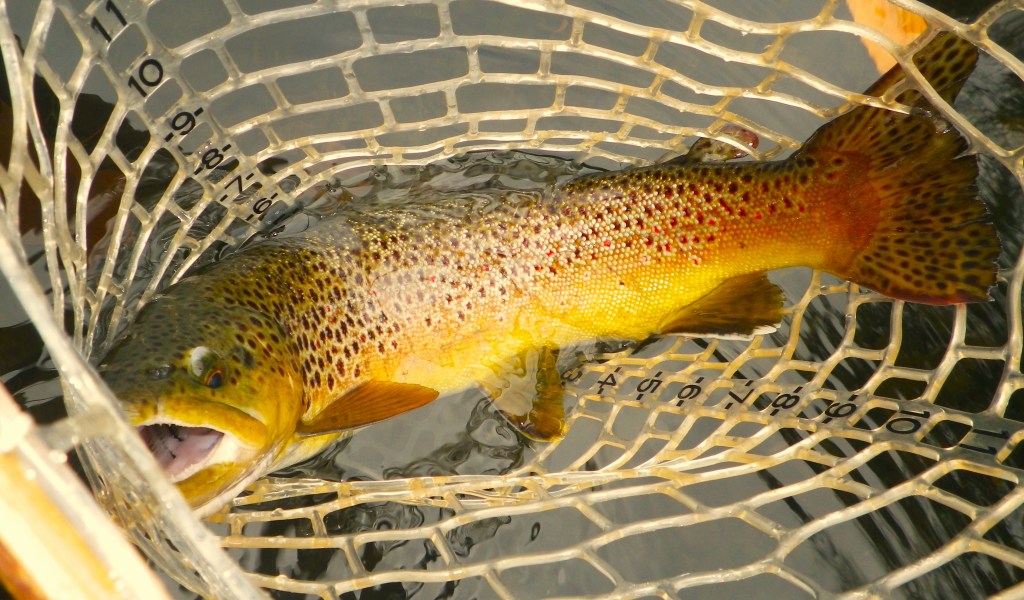
The last sizeable fellow to agree to taste my creamy fox furred 100-Year Dun. I hope to see him again next spring!

Raindrops

Mid-October and it is forty degrees here in Crooked Eddy. The sun was warm yesterday as we gathered in the Wulff Gallery for our autumn Fly Tyer’s Roundtable. Heading out after the festivities, I noted a very unexpected 74 degrees on my vehicle thermometer.

I am thankful to hear gentle raindrops on the roof above my tying bench this morning, even more so when I looked at the forecast promising a full inch or more of that delicious rain through tonight.

At this season, friends know they can find me along the lower reaches of the Beaver Kill, though that has not been possible yet this autumn. The river is bare, idling through dry, sun dappled rocks and gravel in a base flow condition. We all hope to get every drop of that forecast inch throughout the Catskills!

Has the season truly changed? Snow showers await per Wednesday morning’s forecast, welcomed by a high of forty-five!

I still search for the magic of the dry fly at this season, though more often than not my search will be in vain. Well, you can catch fish by nymphing, say others, for they do not understand this is not about simply catching fish. For me, the full glory of that magic comes with a lovely bamboo rod in my hand, the whirring click of a classic reel after a soft dimple envelopes the bits of feathers and fur I send drifting softly down current!

Winter offers plenty of time to wander bright waters during some break in the monotony of ice and snow, time to swing a fly deep and slow when the stream gages show a slight rise in temperature. Is it not true the Catskills may offer only a handful of days like that? Quite true, but whatever few such moments are offered are enough.

Momentary Lapse In Judgement

Wild trout are fascinating creatures. They are the source of our passion, rivals for our best in imitation, approach, casting and all the skills of angling, yet like us, they have their impulsive moments. There are days when I thank them for that.

Yesterday dispensed with the calm autumn beauty and bountiful sunshine featured recently and performed far more seasonably. That is to say, the wind buffeted me, turned the water into froth just downstream, and combined with the cold water to give me one of those permanent chills I have not felt since spring. Even when the water I was trying to fish sat relatively serene before me, wind through the mountains played it’s tricks just a long cast downstream. There it found a path between ridges and forest and drove the water across the breadth of the river, circling back upstream at the far shore. I mentioned to a passing drift boat that it looked like the tide was coming in.

I had not spotted any flies between the hundreds of bright leaves drifting downstream, and the chance for a rise grew ever less likely as the chill penetrated my core. All at once I saw a splash just beyond casting range, right in the wash of that incoming tide of windblown current. I concentrated upon the drift of the current and finally saw a pair of wings. The first grew into half a dozen, and I took my little Cahill from the frame of my stripping guide and pulled a length of fly line through the guides, stripping more onto the surface, just in case.

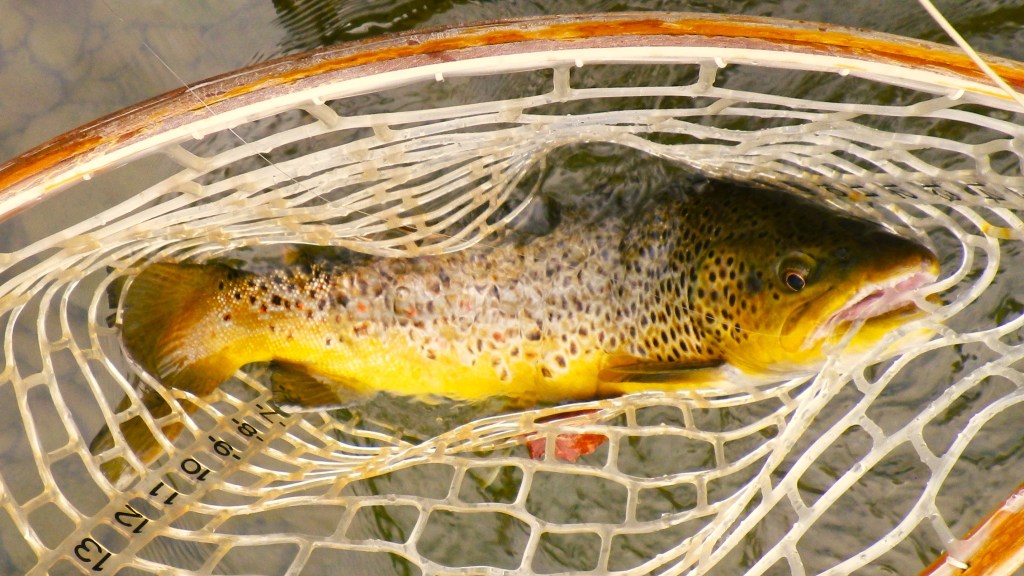
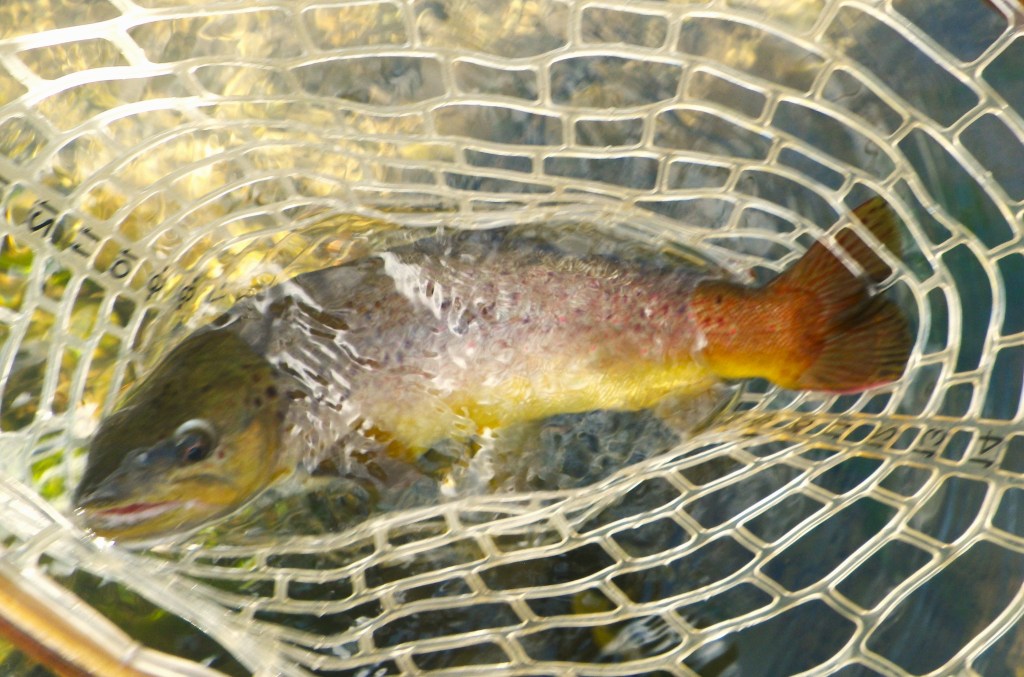
There was one smart rise in casting range, and my cast came automatically. Splash, pause, lift and hold on! I was fast to a very energetic brown trout, swirling and darting maniacally in his efforts to escape. He brought a smile to my face and laughter into my throat.

This wasn’t one of your sometimes suicidal 9-inch NYS issue stocked trout, this was a wild brownie some seventeen inches long. He was skinny for his length, and perhaps that is clue to why he alone suddenly tried to go on an impromptu feeding spree with just the barest trace of mayflies on the water. Whatever his reasons, I thank him for his service and the laughter he induced.

The wind did calm down later, the vacant river became crowded, and I walked slowly out trying to warm myself with the exertion. A few small olives brought an occasional rise here and there about the wide expanse of the pool, and there seemed to be a fisher parked on each of them. I can report that these trout failed to demonstrate the exuberance of my friend from earlier in the afternoon. They were doing a fine job of ignoring everyone’s flies!

Musings, Mullings and Thinking Ahead

Taking the day today, so I am not on the river, though my heart and mind is always there. I was just outside though, casting my DreamCatcher AK-47 model, spurred by thoughts of it’s namesake.

Years ago, when I first met Wyatt Dietrich along the Falling Spring to cast a few of his beautiful bamboo fly rods, he brought along one unfinished model. Guides were taped on, as Wyatt was still working out their optimum spacing, and the blank had just a base coat of varnish. He told me this was a new taper, a 7′-10″ two-piece rod for a five or six fly line, and he had a plan for this first one.

Upon completion, he followed through with that plan, shipping the rod to one Mr. A.K. Best in Colorado as a gift. He asked only that Best fish the rod and let the maker know what he thought of it. I had met A.K. Best, for he was a famous tyer of trout flies, at the first Fly Tyers Symposium. I had taken a class with Archie and found him as fine a fellow as he was a fly tyer. I told Wyatt I thought he would be favorably impressed with the rod, and he was.

This all came to mind as I was thinking about A.K. Best and his famous fishing buddy, writer John Gierach, who sadly passed away last week. If an angler did not know of Archie Best from his own books, he certainly got to know him well through Gierach’s work. I was saddened when I read the news about John’s passing, for I like many thousands of fly fishers have enjoyed his fishing tales over the past thirty years.

My own simple, private showing of loss and respect came early Sunday morning, when I sat down in the quiet of predawn and read through his classic “Fishing Bamboo” one more time.

I believe I will fish that A.K. 47 rod tomorrow, hoping to find a good trout on the fin, and I wanted to feel the bend of it with a Wulff Bamboo Special fly line. It was a perfect match. A simple ritual to send my condolences? Yes, on an angler’s wind.

I did spend some time here at my tying bench this afternoon, though not a single fly was produced. Initially I had to pluck a new supply of Wood duck flank feathers, filling the small plastic bag that nestles in my travel kit. Our Fly Tyers Guild Roundtable is coming up on Saturday, and I have to be sure I have the hooks and materials along for the patterns I decide to tie.

I picked up three packages of big-eyed dry fly hooks too, a place I have taken refuge while battling difficulties with my depth perception on the rivers this season. A size 20 olive dun spends a lot of time tied to my tippet during these last weeks of the dry fly season, and I had used up a number of those hooks putting in a store of patterns.

It seems we will have some wind tomorrow, enough to add some additional tricks to fishing such small dry flies, and to push the cool wind through lighter clothing. The first chills of the autumn season are felt more intensely after a long summer.

I have been spending considerable time considering rod tapers, flaming the culm versus oven tempering the strips, and various ideas for my winter rod project. I may have solved the taper question by looking to one of my friend Tom Whittle’s designs, published in the wonderful book “Split and Glued by Vincent C. Marinaro” that he and Bill Harms authored some years ago. Tom made my Shenk Tribute Rod back in 2021 and his taper designs are great performers.

Well, the afternoon has slipped away, and evening is upon us. I am still not used to these 6:30 sunsets, shadows on the river at two o’clock and all these signs of the deepening year…

Autumnal

It looks as if the warm, pleasant autumn afternoons enjoyed this week are passing, and next week will be seasonable, with daily highs from the fifties to about sixty degrees. Even as the sun kissed the water yesterday, it was clear that the few mayflies that had carried the gift of the dry fly were waning. Though the afternoon was gorgeous, I found no feeding trout.

It is early to be mourning another season’s passing, for I am used to fishing dry late into October. Nature never allows us to get too comfortable in predicting her patterns. Last year my late holiday spent hunting big fish was quiet, and this year seems it could be much the same.

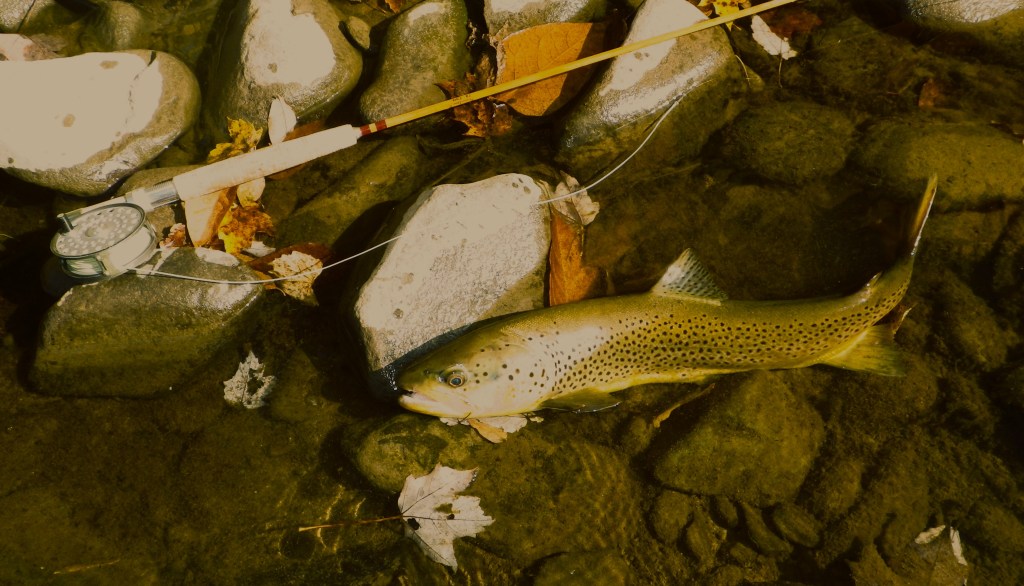
A late October gift.

There is little rain coming with that colder weather, and thus no hope for the sustenance so desperately craved by our freestone rivers and streams. The big tailwaters still flow cold with elevated releases from New York City’s dams, but their stated drawdown target has been reached, exceeded in most cases. Those flows could disappear tomorrow.

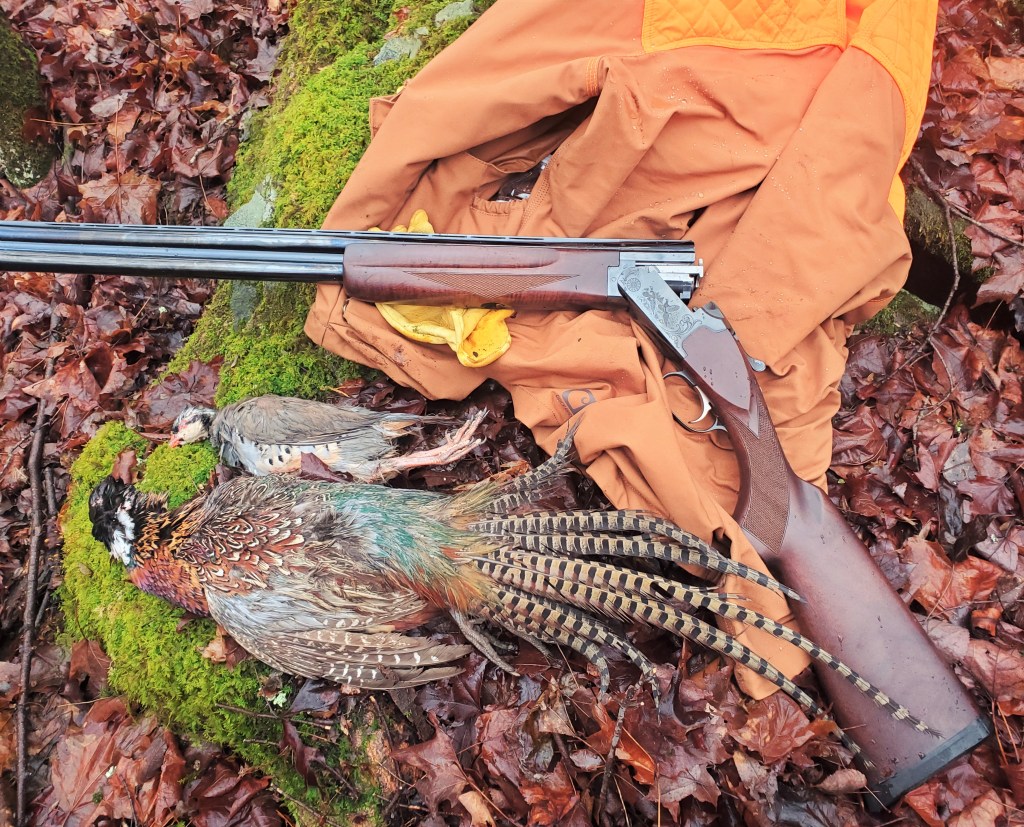
I hunted along the river all but one day this week, allowing time for the ruffed grouse opener afield. This drought year left little for me to find. A single flush was heard, though unseen through thick cover and distance, and I found the thornapples barren of their autumn fruit. All of Nature in these Catskills could use two days of gentle, soaking rain!

I cling to the joy encountered on September’s last day, the thrill of tangling with that broad shouldered brownie who dared sample my little Cahill. I may have to hold that moment in my heart now, until April.

September Passing

There was no question where I was headed as I closed out September. I had found a good fish after all, and decided it was about time to go catch him.

Of course, trout, mayflies and Mother Nature don’t simply line up to bring these things about on our command. I have not been finding multitudes of either, feeling blessed to encounter a riser or two to engage for a few hours of one golden September afternoon. I had found this fish because I had been in the right place at the right time, the result of a somewhat systematic elimination of water and finned candidates.

When a river’s pickings are slim, it’s trout will take advantage of the best moments. The angler’s task is to determine when and where these moments might occur. If we are lucky, we get it right once in a while. If we are observant and persistent, we build experience and let that better our odds.

According to my recent observations, the most likely opportunities for a trout to get a snack have come in the form of a few brief flurries of cream-colored mayflies during the length of the afternoons. The timing and the intensity have varied, and there has not been enough of this activity to call it a hatch by any means, but a good surface feeding brown trout has to make do with what he has. This same immutable law applies equally to the angler.

I found this fish enjoying a very brief snack period, one of those that tantalizes the angler and then vanishes as quickly as it appears. I planned my return accordingly.

My little assortment of flies includes my 100-Year Duns and CDC duns and cripples, and they range in size from a standard 16 through 12. There are A.I. Light Cahills, Translucence Light Cahills, and those tied with my standard blend of red fox fur with a touch of Antron. After all, when your fishing comes down to hunting one good trout, it pays to be prepared to show them subtleties of imitation.

The little flurries of mayflies I was counting on have included two or three different sizes, and assumably species, of flies, so I felt somewhat confident that I could offer my quarry an appropriate morsel should he deign to appear again.

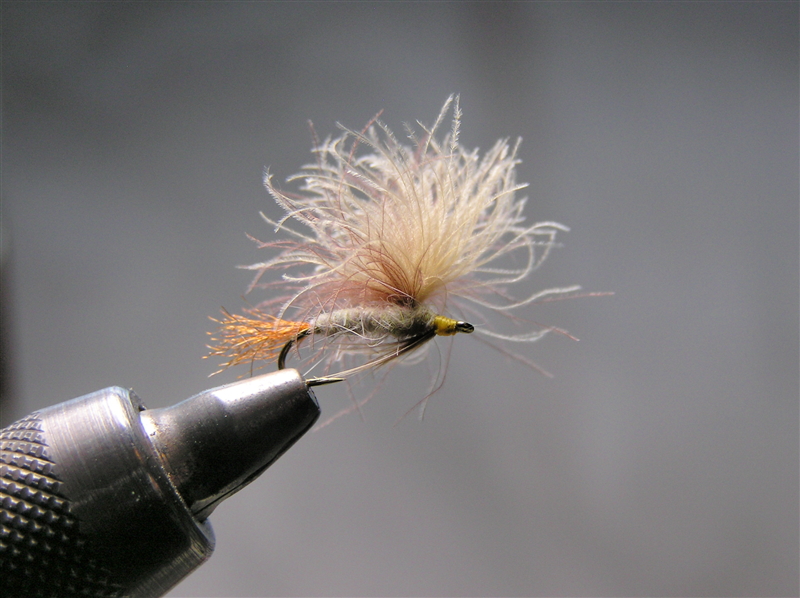
Light Cahill CDC Emerger

My wait was tempered by a rise upriver from my target’s table, and I went to work on him immediately. Sliding around another of those devilish little creases in the current, he finally came when his position and my guessed at drift line intertwined; and he refused me! This too looked to be a very respectable fish, and I tried valiantly to bring him up to a different fly until Nature’s little snack period ended rather abruptly.

I am not sure how long I waited for another to begin, for I was alone on the river and most happy with the warmth of the afternoon.

Eventually, I spotted the first soldier in a second flurry of Cahills. I’ll call them that, since that is what I call the dry flies I tie to match them, though I imply no actual knowledge of their species. I mean, since DNA testing entered the arena of aquatic insect classification, it seems nearly useless to even try to identify the bug on the water, and of course there are thousands of unidentified minor species and subspecies that will never be written about in a fly-fishing text. My trout seemed to recognize the bug well enough, and I fell hopelessly into the game as soon as he began to rise.

He was moving a bit, though generally holding a lie in the confident way that lets us know this is his pool. I had offered one of the long shank sixteens, tied with my Catskill Light Cahill blend, and continued with that pattern. The game offered seeming to be more a matter of getting his timing and the vagaries of his position in line with my repeated presentations. I didn’t need to change the fly.

The electricity made its way through leader line and fly rod straight away! This boy was big and mad and liked the music of the Hardy’s chorus as much as it did! We danced in a deep and rocky and unfamiliar reach of water, so I had to keep the line high whenever he pulled toward the bottom, applying side pressure only when he was in sight and obviously clear of obstructions. I relished every moment of that fight until he was mine!

It had been a long month, and I enjoyed the moment profusely. My vanquished foe didn’t like being lined up on the measuring centerline of the net to get his full length accurately, so I logged him at twenty-two inches plus.

The pounding in my heart finally subsided, and I stood there for a time, taking in the beauty and the solitude, fully appreciating how captivating these Catskill rivers can be. Then I started hunting for another rise…

Wishing Autumn Well

Autumn Duel (Photo courtesy John Apgar)

I am plotting a grand finale to the dry fly season, warm, bright afternoons with occasional showers interspersed with the blessings of the forests. For this is the season of plenty!

October, the word springs from my lips with the ebullience of youth, memories of wonderful days afield with my father, and later years crouching intent upon the flickering movement of a whitetail picking his way silently through a carpet of dry leaves. These days, the greatest store of memories are found along the rivers of my heart.

A recent one was captured by a friend, an old Hardy spinning away the raindrops clustered upon it’s rim, my classic Leonard rod arched with strain as a great brown that had thrice bested me rushed for freedom. Ah, the chances and changes autumn brings!

I feel the urgency of the season most upon the rivers, though the morning chill on forested ridges brings forth the same emotions: catch it before it’s gone!

A tiny wink of light a hundred yards off along the riverbank draws me there. Low water demands the stealthiest approach imaginable, and those yards seem like miles as anticipation builds. At last, I am within range, though the short wand in my hand seems woefully insufficient. The cast, the drift, and yes, the take follows! That little rod bends double as the old Hardy protests vehemently… off to the races!

In the shallows the game ends, and the tired fish is shepherded into the chilled, October current.

The urgency within builds each day, yes, yes… catch it before it is gone!

Revisited

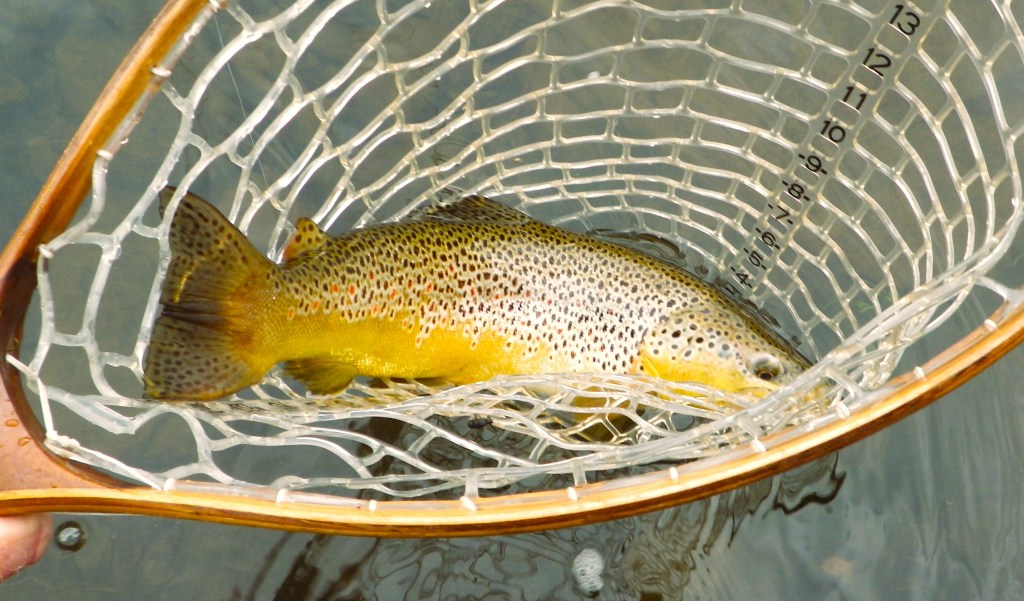
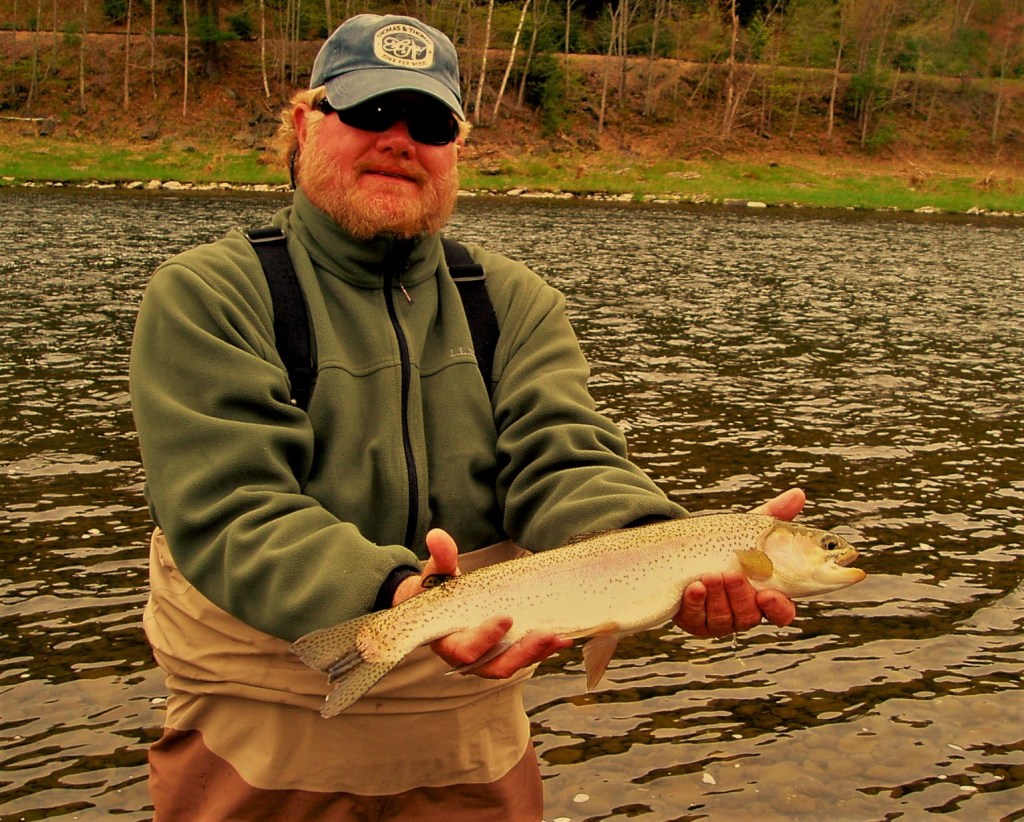
My Perfect trout, caught, measured, thanked for the challenge and released.

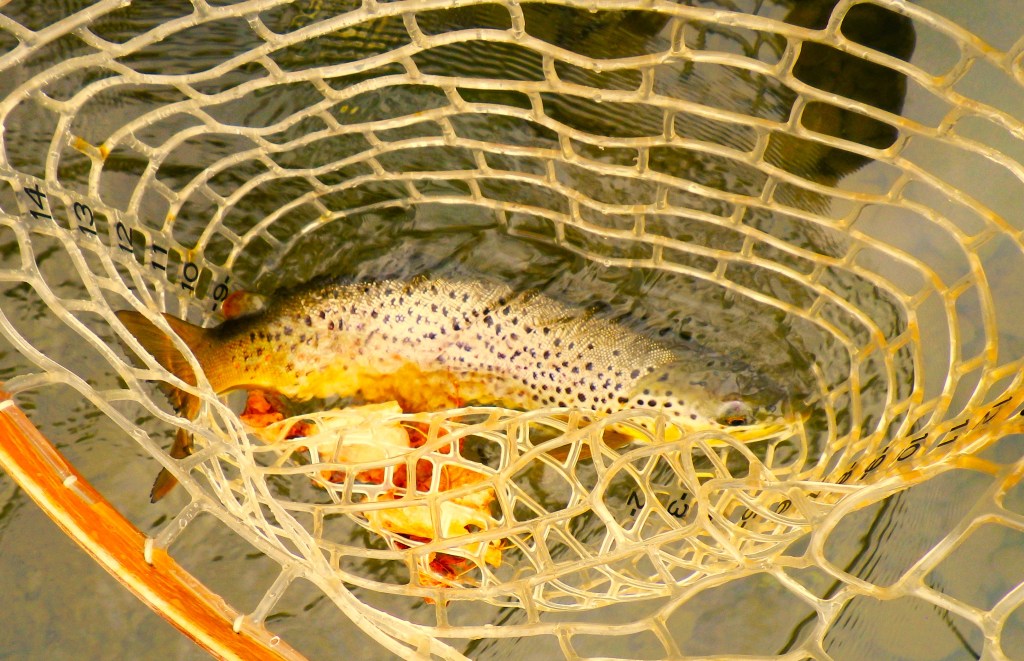
My perfect trout is not a rainbow after all, and he isn’t as big as I thought he might be, given his choice of feeding lies. I went back for a visit this afternoon and, well, solved the puzzle. There is no question this nice wild brownie proved a worthy adversary.

I wasn’t seeing any rises upon my arrival, so I began the slow walk downriver to see what I might find. That trout remained supremely confident, for I’ll be damned if he didn’t begin to rise as I approached.

I had stayed with my usual 5X fluorocarbon tippet during our previous encounters but try as I might I could not get a perfect float through that wrinkly maze of currents and upwellings this fish called home. I had considered going down to 6X but, believing he was probably an outsized rainbow, I didn’t want to risk it. Our Delaware River rainbows have broken plenty of 5X tippets over the years with their long, fast runs topped off with aerial acrobatics.

This afternoon I knotted a long 6X tippet to my leader followed by an olive T.P. Dun in size 20. The drift certainly looked better, but it seemed that my friend wasn’t eating olives. Some rises were gentle splashes, and a couple of others were soft. I considered the season and changed my fly to a size 20 winged black ant.

My second drift resulted in a brief shiver at the surface and loss of sight of my tiny ant, so I eased the rod tip up and I had him at last. He thought he was a rainbow I guess, clearing the water half a dozen times as we danced. When I got him close, there was no question that he was a brown.

A seventeen-inch wild brown trout is a nice fish anywhere. In some places, I have heard anglers talking about big fish that measured a few inches shy of that mark. I have no complaints that this hard-won game didn’t result in a twenty-inch or better trout to note in my log. I earned the chance to put a nice arch in my fly rod and take the snapshot at the top of this page.

During my early years chasing difficult trout, there were a number of times my hard-earned trophies turned out to be trout less than a foot long. I let out a laugh when I landed every one of them, for they demanded my best and gave me theirs. I cannot ask more of any fish that swims.

A Trout For Autumn

A fond bronze memory from last September.

I seem to have found the perfect fish! I love fly fishing for wild trout for the challenge and the beauty of the experience, and challenges have been the hallmark for this season. What could be better, given that rising trout have been terribly hard to come by, than a rising uncatchable trout, one to revisit again and again?

I stalked slowly into the wide flow of the river and began to work my way downstream. My eyes scanned the surface for signs of life: an insect, a rise, even a subsurface flash. Working down, I came to that same funny little crease in the current of the pool, the place where I had earned two refusals from a trout I believe is a worthy specimen. I watched for a while, seeing nothing. I took a step to continue my search and there he was.

Of course I don’t know this is the same trout, but I certainly believe it!

Working a small, patterned area from the flat above that damned squiggle in the flow, Mr. Bow had my rapt attention. Indeed, I feel I know him by now, he whose silver gill plate flashes at me when he takes a mayfly with enticing vigor. His routine was much the same as last week, sliding toward that wrinkle for one morsel and away for the next, never quite holding a taking position and thus building the level of difficulty, as if such a confounding ribbon of current needed the help!

There weren’t many flies available, one or two now and then, tiny fellows I took for blue-winged olives. A size 20 silk bodied T.P. Dun does great service for me this time of year, and the first cast with a freshly tied model should have been my only service of the game. The drift looked good, though obviously to me alone, and I paused as he slid up and intercepted it before raising my rod in victory.

Well, no, said Mr. Bow, there’s something squirrely about the drift of that fly!

I of course tried another cast, followed by several more, all to no avail. I tried every antic I can muster with a fly rod to impart just a bit more slack to defeat that current. He failed to surface again after that refusal, at least until something more was added to the menu.

I knotted a size 18 version of the fly with a sparse trailing shuck and, with the perseverance of numerous casts, enticed him to take a swipe at that for refusal number two. Oh, I neglected to mention the wind.

Now I felt that this fish and his inability to consider rising anywhere but close to that band of wrinkled current presented challenge enough, but the Red Gods decided to up the ante. Wind gusts materialized from nowhere and plagued me for the rest of the afternoon. The only time they seemed to calm for the first hour or so coincided with my wading back to shallow water to warm up a bit. The river gage recorded forty-nine degrees for the water temperature during our little war of wits.

No, not my adversary, but one of my largest Delaware River rainbows. This is how I have come to envision the uncaught fellow.

Eventually I forced myself to remain in the frigid water, thus firing a few casts during the calmer moments of the afternoon. The fish was unimpressed.

As had been the case last week, there was a brief and sudden appearance of a few pale mayflies, and I countered with a size 16 XL Light Cahill 100-Year Dun. He came for it once, leaving me to celebrate a third refusal, and putting me in mind of the late, great Vincent C. Marinaro’s duet with his trout without a mouth on the hallowed waters of the Letort.

Once the Cahills vanished as quickly as they had appeared, it became clear the game had ended for the day. My perfect trout had tired of it and left me alone with my thoughts. I left too, grudgingly, and ran the heat in the car all the way home.