Channeling Ernie

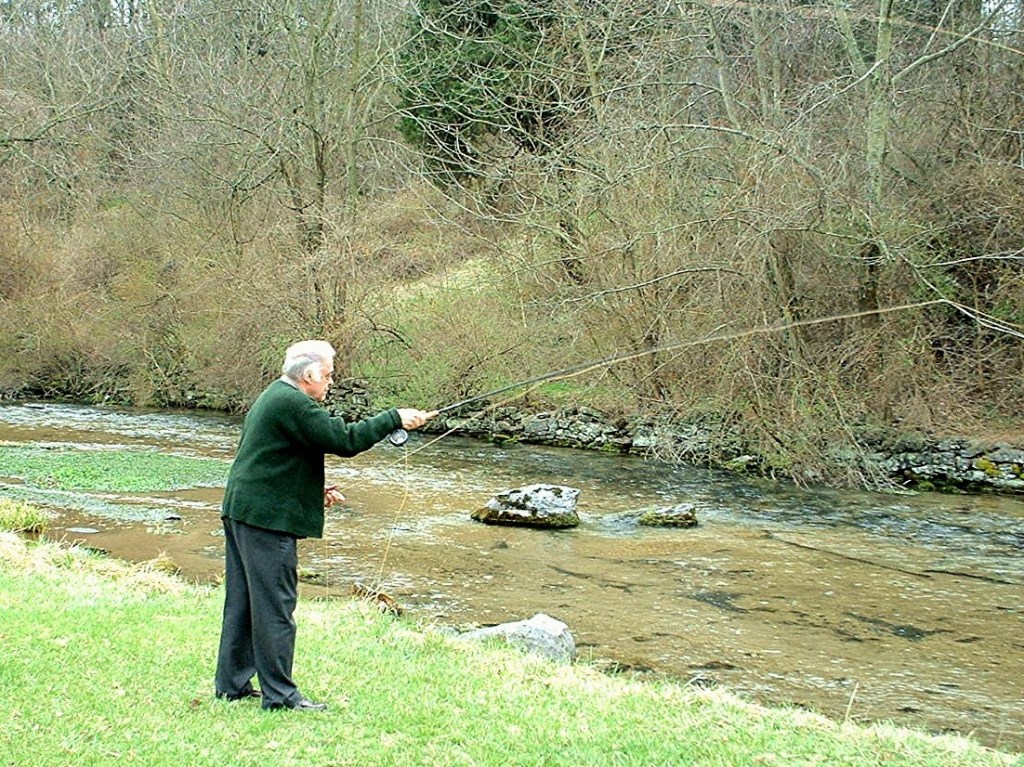
Ernest Schwiebert casting on Big Spring, Newville, Pennsylvania, April 5, 2003

I’ve been lost in his words once more…

Just yesterday the mail arrived with a book to add to my angling library: “The Complete Schwiebert” a 1990 compilation edited by John Merwin. I ripped away the packaging with gusto and settled in immediately!

A legendary angler, scholar, world traveler and captivating writer, Dr. Ernest G. Schwiebert, Jr. passed on just over nineteen years ago, on December 10, 2005. All who dream of tying and casting a fly owe Ernie a great debt, for he more than any other transcribed the essence of the magic we encounter on bright water.

From boyhood spent on rivers and streams in Michigan, he developed the inquiring mind and thoughtful intelligence that would lead him to a wholly remarkable life, a life he was thankfully inspired to share with his brothers of the angle.

I met him three times, the first in the infancy of my own angling journey. Then I found myself so awed that our conversation was brief and respectful. I failed to find the words to engage him in lengthy conversation, though his kind, gentlemanly manner offered the opportunity.

Our second meeting came at an angling book show in Carlisle, Pennsylvania where I was introduced by my mentor, the great fly tyer and angler Ed Shenk. The two were well acquainted from years earlier, seasons spent upon the nearby Letort. This time I managed a bit of small talk, offering praise for his books and questions regarding his current impressions of the fair limestone springs that had so fervently captured my heart.

Our third meeting was truly special. I had sat enthralled with his presentation at the annual banquet of the Fly Fishers Club of Harrisburg the night before and was surprised and delighted when he arrived at a gathering held streamside by the Big Spring Watershed Association the following afternoon. The group had finally convinced the Pennsylvania Department of Environmental Protection of the pollution from the Fish and Boat Commission’s ill-conceived hatchery that had been strangling this legendary limestoner for decades. Schwiebert, ever the conservationist, retained a deep affection for the Cumberland Valley spring creeks, and was interested to see what was being done to protect and restore these legendary waters.

We walked along the stream and talked, one on one for a couple of hours, he borrowing a rod to make a few symbolic casts at one point. We spoke of the troubles of Big Spring and the need to shutter the State’s hatchery, as well as the first positive signs of recovery. He mentioned some successes with restoration efforts on the historic Broadhead’s Creek. As the first President of the Henryville Flyfishers, he had a long history with that hallowed ribbon of trout water.

In his 1998 book chronicling that history, Schwiebert made a valid case for the Broadhead’s place as a focal point for the beginnings of fly fishing in America. It was clear from his conversation that he remained haunted by that lovely stream, and he urged me to fish it when I divulged the deep interest in our angling history which had drawn me to the Cumberland Valley.

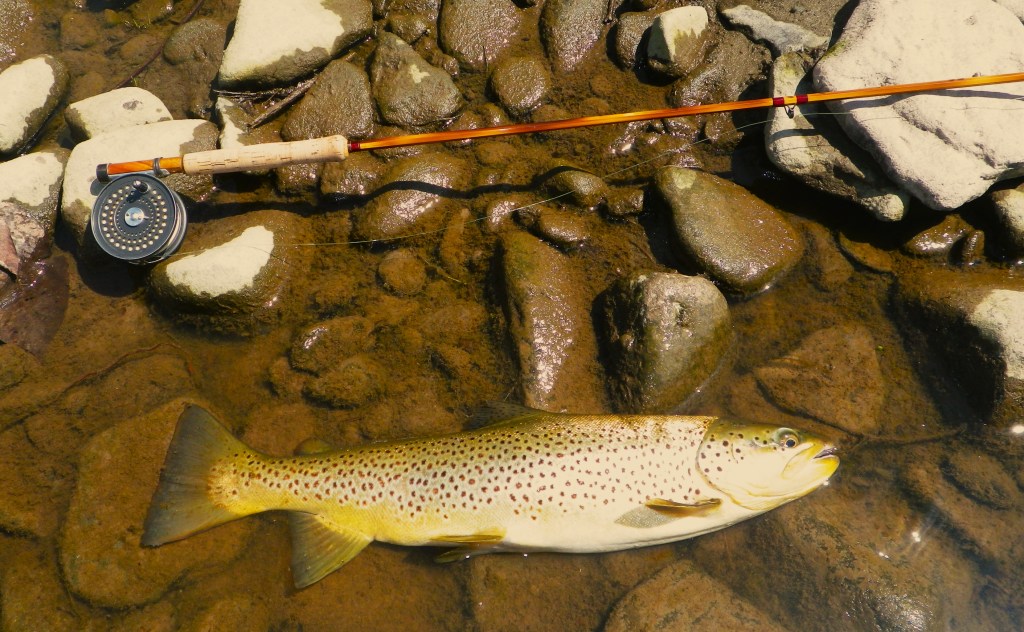
The Big Spring restoration worked for a time with Nature’s grace. A decade after my walk with Ernie, my slender bamboo rod brought ten pounds of wild rainbow to hand!

I didn’t manage to find my way to Broadhead’s Creek during those next two years, and my heart sank to read of Schwiebert’s passing late in 2005. I still have not made the journey.

When this New Year 2025 draws nigh to it’s close, the twentieth anniversary of his death will stand before us. Time seems to pass in brilliant flashes. Perhaps this year I will make my way to Ernie’s Broadhead’s at last; to cast a fly and offer thanks for all of the beauty he shared with us!
Patterns In the Current

One of the nice things about winter fly tying involves the memories that drift back into consciousness as I craft each pattern.

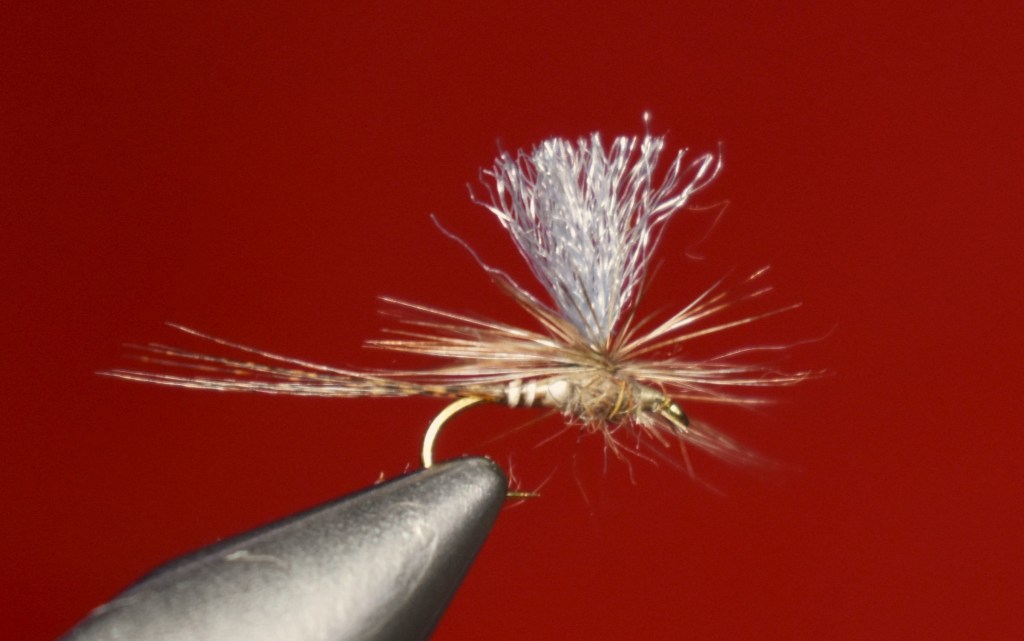
I’ve been tying spring patterns for one of my best friends, hoping to urge him to make room on his globetrotting calendar for a drive to these Catskills when the fishing is at its best for a change. Winding the goose biot body of a small Blue Quill Parachute this morning, I found myself along a sparkling little side channel of the West Branch…

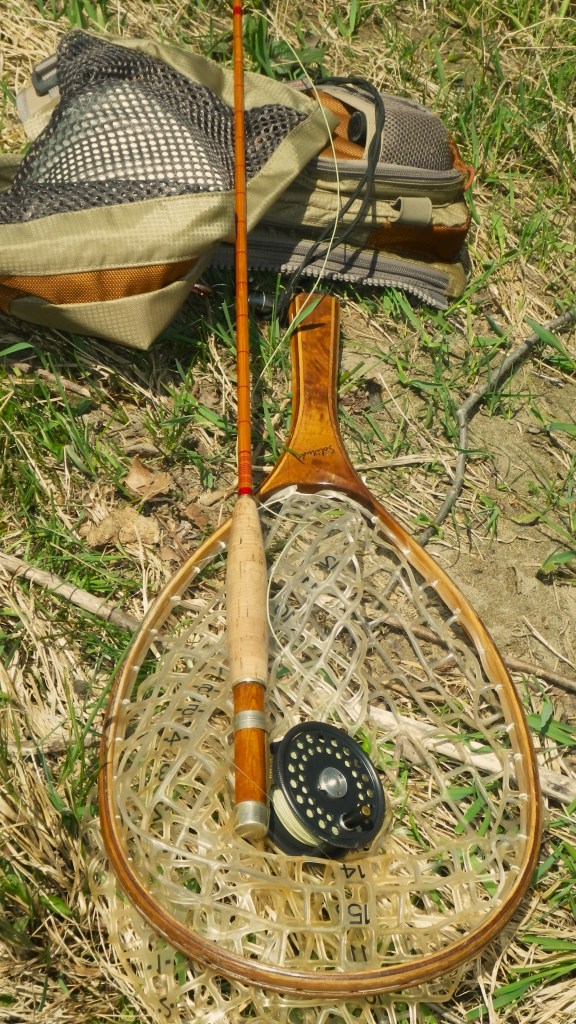
It was April, and I was carrying a rod my friend Wyatt Dietrich had made for me a few years prior. The rod was a three-piece bamboo made to the specifications of his mentor, the late George Maurer; a taper George called the Trout Bum. I had fished the rod in a few different places, but I had never carried it on one of those special days.

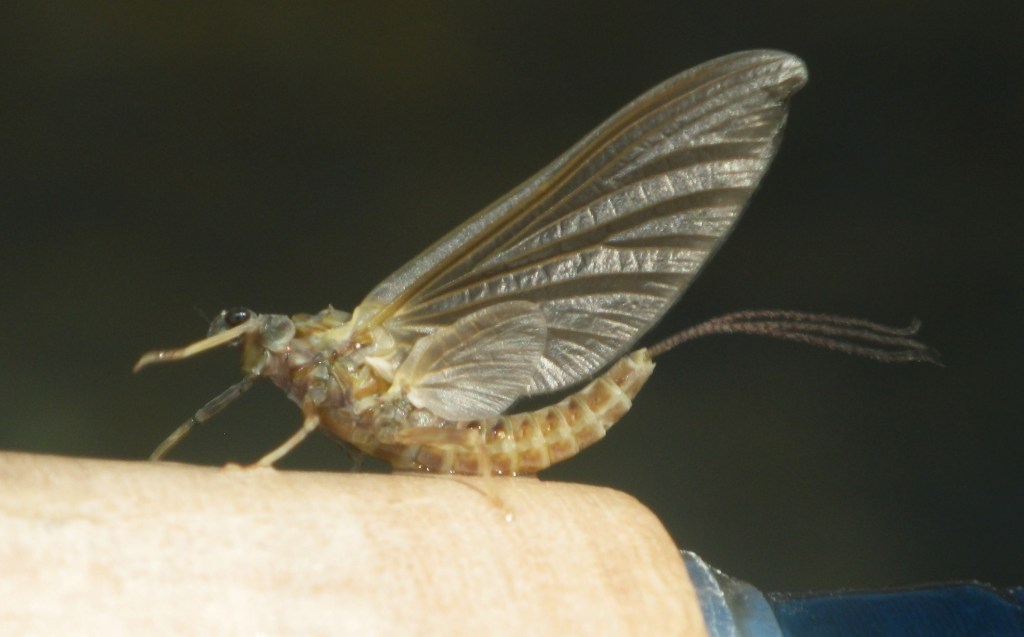
The river was high, high enough in fact that wading that back channel made a hell of a lot more sense than trying to wade the main river. I was working my way upstream, noting some little Blue Quills bobbing on the surface, and had knotted one of those biot bodied parachutes to my leader. There would be a rise here and there, but no sign of a trout actually feeding regularly, until I worked my way well upstream. There I found a chunk of tree branch lying along the bank, shrouded by an overhanging bush. Right under that old fly catcher, there was a very nice fish working hard to reduce the population of those quills.

Within a few casts, I had the feel of the Trout Bum and began placing my flies in the bubbly little line of current that carried it beneath the bush. Of course, that current wasn’t clean, as the branch deflected some of the flow out and away from the bank and made it tough to manage a drag-free float. The trout was sort of sliding around in a small area, picking out certain mayflies, passing up most of them, and my fly.

I studied the currents closely, finally finding the right spot to land my fly. The more casts I made, the more comfortable I became with the rod. I cut down my leader a little and replaced the 5X tippet with 6X, thinking that was the only way I was going to get enough gentle slack to master Nature’s little percolator with the water flowing three different directions. That did the trick.

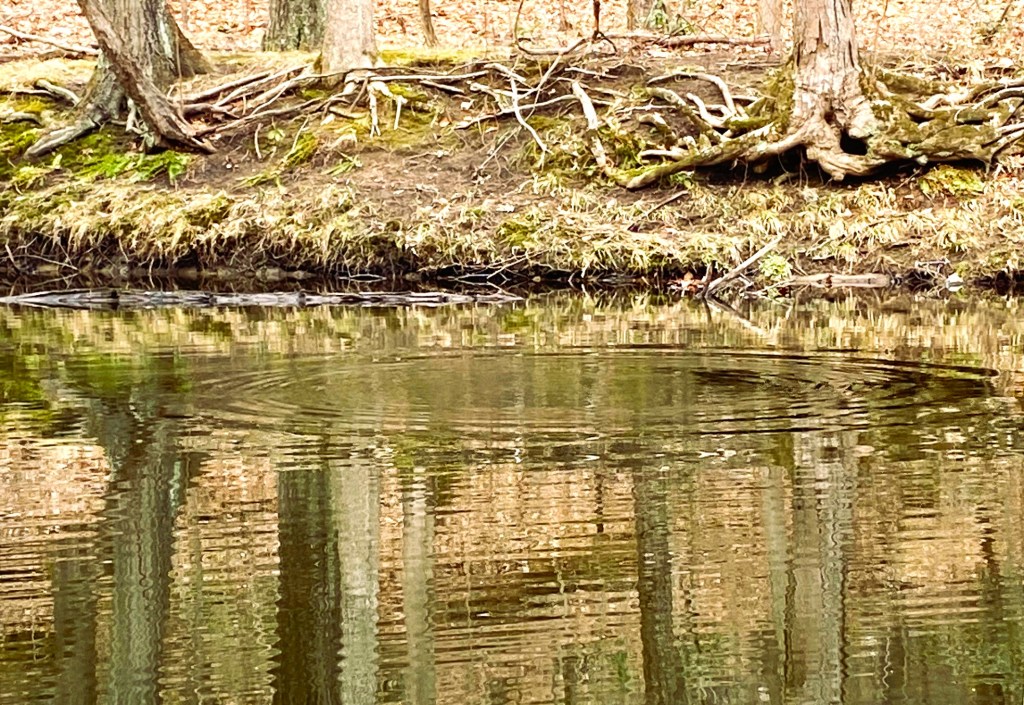
My fly bobbed and dodged just like the naturals were doing, and the trout came up and sucked it in, leaving one of those subtle little rings that anglers often mistake for the rises of little fish.

That old boy shot out of there and into the main current, spinning the reel and making the rod buck like I was beating a rug with it! I was near the whitewater in the head of the channel, and the flow was strong all the way down. For a moment I had a flashback to another bruiser I had hooked there many seasons earlier. He never stopped. Luckily, this fellow did!

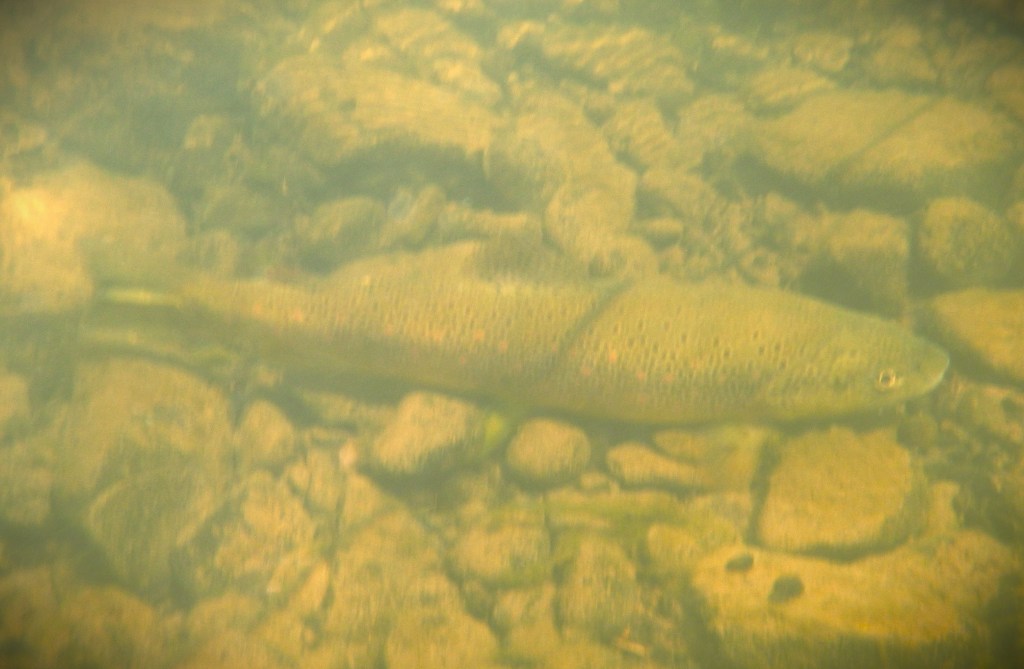
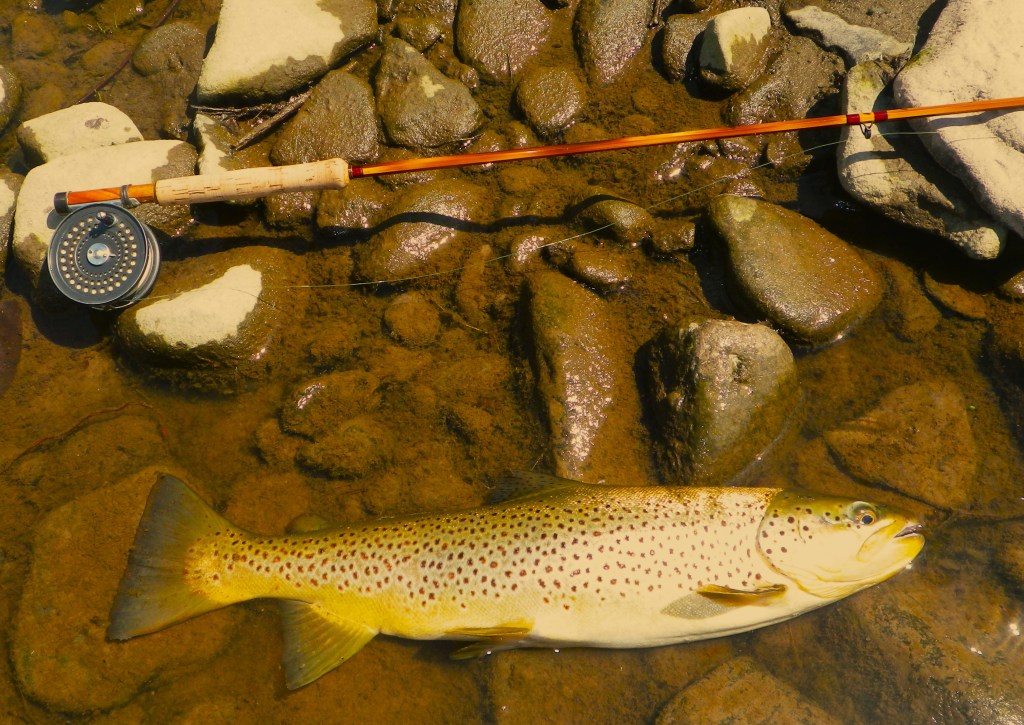
The fight was long, active and tense. I couldn’t help but think about that flimsy 6X tippet every time he turned his flank against the current and the rod bowed deeper and deeper. When he came to the net at last, I took special care not to touch that tippet with the rim. It’s not very hard for a five-pound brown to break that stuff.

One Hundred Days

It is the twenty-eighth of December and lingering near the freezing mark here in Crooked Eddy. There is warmer air on the way, and rain that will melt the snow from the mountains and valleys alike. I can hear the first of that rainfall on the roof above my head even now.

This has been the way of things this winter, freeze and thaw, then freeze again, though the moisture has eased the drought of 2024 considerably. We hope it continues.

One hundred days is not a sprint, not a dash to the bounty of springtime we who angle these Catskill rivers so eagerly await, but more of a beginning to that part of the long off-season when the goal seems nearly touchable. I have been blessed to have six full seasons upon these rivers of my heart after twenty-five years of road trips, and that experience makes it indelibly clear my chosen timetable is no guarantee. Nature does not offer guarantees when it comes to the timing of her seasons.

These next one hundred days are about hope. They form a pathway to bliss, to challenge and hopefully triumph when at last the first new life begins to flutter upon the surface of bright water. Last season has entered the realm of memory, and next season lies out ahead, nearly in reach, though still beyond the range of my casts.

Very soon now I will begin splitting the bamboo that I hope to carry upon bright water come springtime. If the Red Gods choose to grant me passage, this will be my first rod, shaped with my own hands and imbued with something of my own spirit. Learning the craft in a tactile sense will be the first great challenge of my new season.

Snowfall

Christmas Eve, pre-dawn, and snow is falling here at Crooked Eddy. More reasonable winter temperatures reign once more, and we are glad for the change.

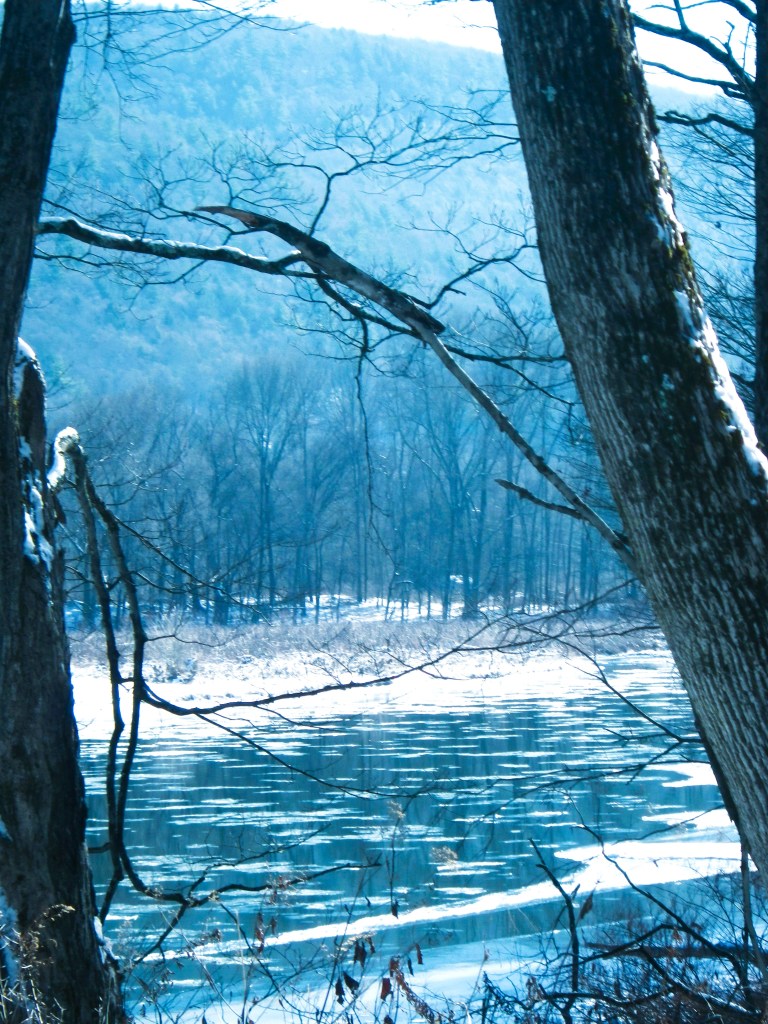
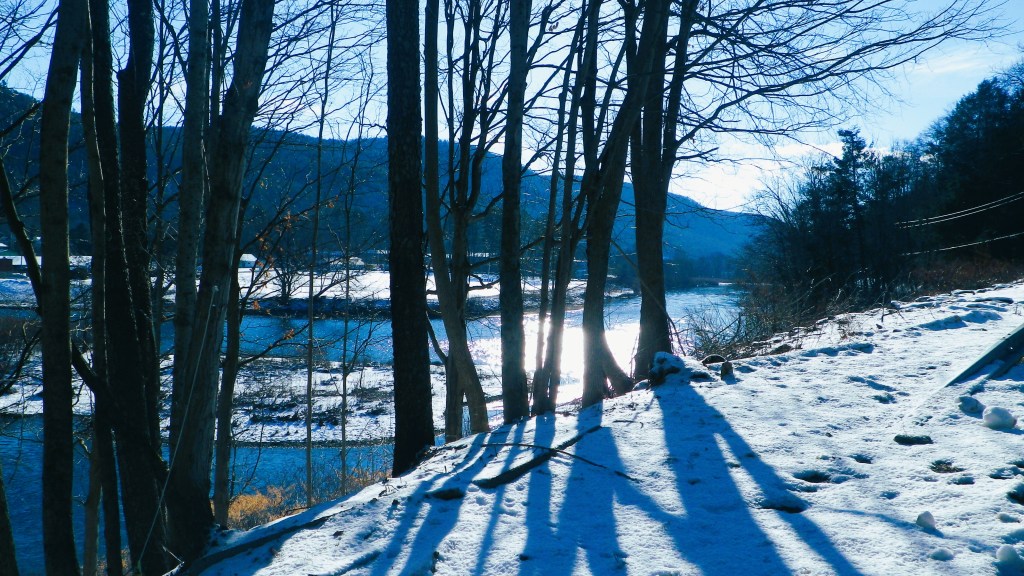
I managed a riverwalk yesterday, pleased when the sun warmed the morning’s subzero air to a balmy nine above! It still amazes me just how much that sun can accomplish on a still morning, even on the most frigid day of the year. I unzipped my down jacket and walked with the sun in my face! True the riffles entering Crooked Eddy were stilled by ice and snow, though further down river a current emerged along the easterly bank, carrying miniature ice floes toward the Mainstem.

I found myself tying flies during the afternoon, smiling in the knowledge that the days are already getting longer.

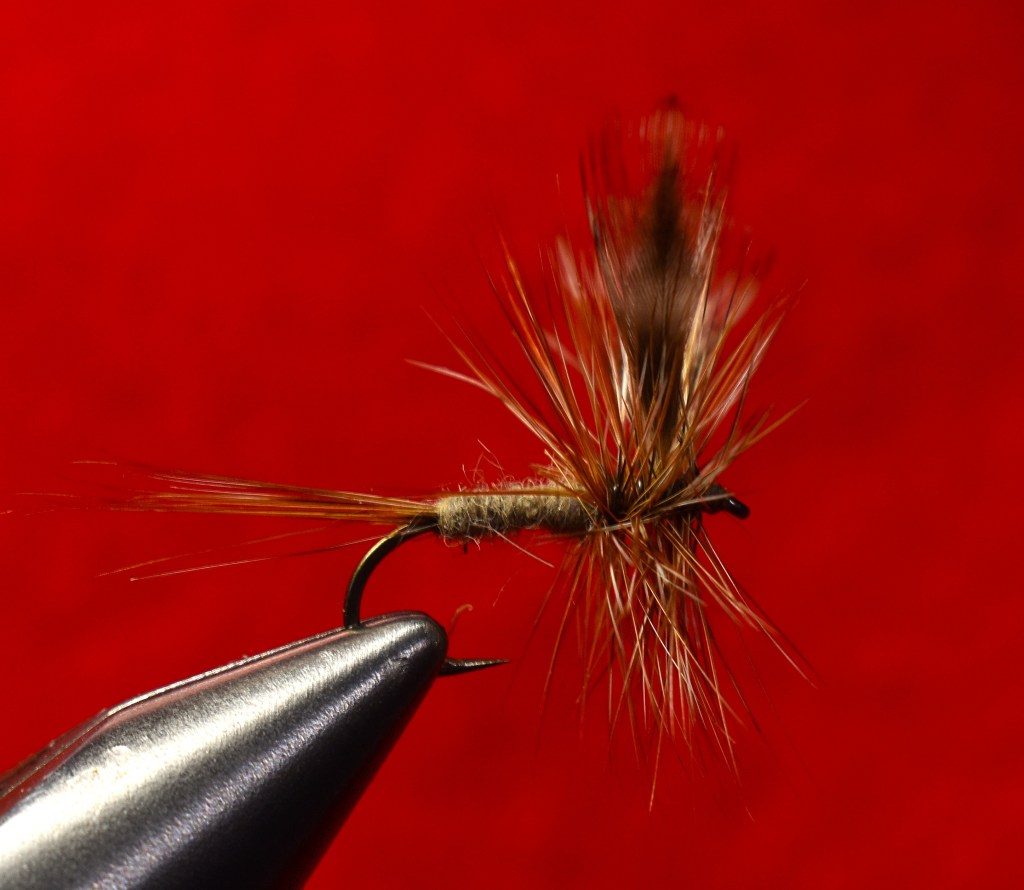
My A.I. Hendrickson: close imitation & bugginess are admirable qualities in a trout fly!

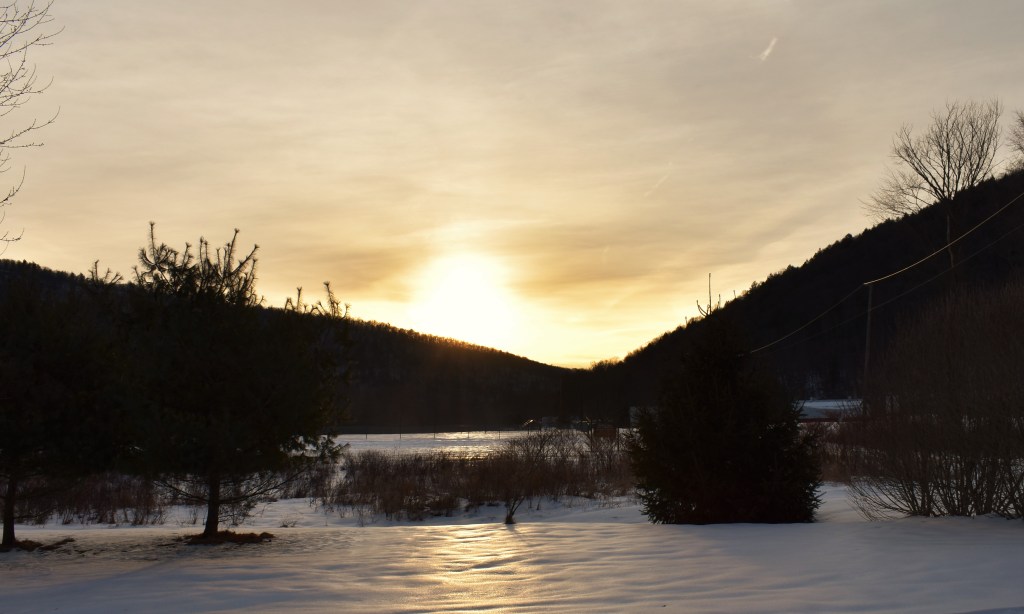
Winter is the penance we pay for the glory of the dry fly season. It has it’s own stark beauty of course, particularly here in these Catskill Mountains. I love the morning light as it twinkles in the eastern sky, tinging the snow with gold and amber: another day has come, one day closer to spring.

Winter days help us appreciate the angling life even more. Is there nothing so desperate as that last hour clinging to the warmth of a sunlit October afternoon, hoping and searching for the season’s last rise?

Feeling It

It is Monday, the twenty-third of December, and it is five below zero here in Crooked Eddy. Indeed, we have passed the solstice into the realm of official winter now, though there could be no doubt of that in these environs.

It is cold once again in our little house, and even wearing sweats and my heaviest down vest I feel the chill in my bones as I write. They say this extreme won’t last long, that tomorrow’s low will settle in close to twenty degrees (above). Twenty degrees still seems awfully cold; belying the twenty-five-degree swing those numbers foretell.

One of my best friends sent me a completely cool little heater for Christmas, and I am glad it arrived early. I huddled right in front of it with my first mug of coffee this morning!

There are mostly sad tidings as Christmas approaches. My dear aunt passed away on Saturday morning. She was the last of her generation in my family, and I am now the eldest of the clan. Carole lived a good and full life, taking the turns on her terms, and I wish her Godspeed on her journey to that next life. A friend has also been hospitalized, and another whom I respected just laid to rest. Seems year’s end’s entire theme is of finality.

The challenge each winter is to turn the mind to the light and promise of spring. A more difficult process in an atmosphere of loss. I have taken small steps, re-blending my Translucence dubbings for the Isonychia and Hendricksons, tying a few flies. I shall work toward a little more of the same for now.

The last cast… (Courtesy John Apgar)

An Adams for Ed

If you have spent any time fishing Catskill rivers, I have no doubt you are familiar with the name of Ed Van Put. A man of many talents and accomplishments, Ed was responsible for soliciting, negotiating and acquiring record mileage in the form of Public Fishing Rights along the rivers and streams of the Catskills. If he had accomplished nothing else, trout fishers would owe him a great debt and eternal thanks for that alone.

I am sad to say that Ed will be absent from the wide bends of his beloved Delaware River this coming season, for he passed quietly away on Saturday at his home in Livingston Manor, New York. Our hearts go out to his lovely wife Judy, his iconic mother Agnes, and all of his family and friends.

Ed was a founding member of the Catskill Fly Tyers Guild, a fly tyer and an angler of legendary proportions. He remained active in the Guild, having given a presentation on the Beaverkill at our October Roundtable, drawing on the knowledge previously shared in his fine book on the river.

I was fortunate to meet Ed and talk briefly with him a few times over the past six years, finding him to be the epitome of the gentleman angler. Despite his wealth of knowledge, he was quiet and respectful of people, not one to force his ideas on anyone. Van Put had the reputation of being a classic presentationist on the water, freely admitting that he caught most of his trout on his favorite dry fly, the Adams. Tomorrow night the Guild will say goodbye to our friend by tying the Adams in his honor.

Though our meetings were brief, I feel I know something of Ed Van Put through his books. I have his “Trout Fishing in the Catskills” as well as “The Beaverkill”, both incredibly well researched and written accounts of not simply the historic fishing in this region, but the people who lived that history. I have no doubt that his appreciation for people and his love of the natural resources of the Catskills and their rivers played a large part in his success acquiring public access to those rivers.

Many knew of Ed Van Put’s storied accomplishments as an angler. Thinking of his legend on the Delaware I am drawn to one of my favorite authors, Nick Lyons. In “The Emperor’s New Fly” (Fishing Stories, Skyhorse 2014) he writes of an evening fishing that great river with Van Put, Len Wright and their friend Mike. Those latter three went fishless that night, even when the river boiled with rises at dusk, though Nick writes of Van Put constantly taking fish, and caring for his companions… “The circles-rhythmic and gentle- continued to spread in the flat water where the current widened. Ed was at my left shoulder now, willing to forego these fine last moments of the day so he could advise me. A saint.”

Winter’s Progress

I need my calendars. Each winter I design my calendar for the new year and place my order, previously filled almost instantly a short walk away. It seems the drug store photo shop has changed their ideas, now requiring me to wait weeks for the calendars to be printed elsewhere and shipped here. I do not consider that progress.

I was thinking now, with Christmas Eve a week away that I am nearing the point of a countdown to spring. I had to borrow a mid-year calendar from Cathy to check my dates and, sure enough, Day 100 arrives on December 28th.

There lies a milestone. I put some stock into that 100-day threshold, a certainty arrives with it that winter shall have an end, and spring a new beginning. That calendar will of course show spring arriving in March as always, but the true angler’s spring arrives with the beginning of the dry fly season.

I mark that traditionally on the first Monday of the second week in April. That will not be the first day I will knot a Quill Gordon to my tippet and search for the season’s first rise, though it will mark the first day I honestly expect to see one.

Indeed, there is life down there! A lovely March riseform on a small New Jersey stream. (Photo courtesy Chuck Coronato)

The turn of the weather will dictate my ramblings astream, most likely with that first warming trend in March. Yes, the winds will blow, and the warmth will be weak and short-lived, but by the time my count has reached thirty days I will take any opportunity to assail the river, even a false one.

That first note of green on the riverbank…

I have a store of fresh memories to guide me through the false signs along the road to spring. First there will come that hint of green on brown riverbanks, then the warmth of the afternoon sun will penetrate the insulated shirts and jackets and truly reach the stiff muscles in my neck and shoulders. Finally, the early stoneflies will fill the air at seemingly opportune moments, and I will stare for hours across the surface trying to convince myself and the trout that there will be a rise!

Dry fly season comes variably each year, so I always cling to the hope that one of these false signs will suddenly blossom into tiny gray wings drifting upon the surface and a spreading ring reflecting the sunlight.

Spring treasure!

Remembering Autumn

Autumn fishing was something new when I embarked upon retirement, not in general, but here in these Catskill Mountains. Yes, I had come during my travelling years, more around Labor Day, that season the masses have been trained to think of as autumn, but sportsmen know as late summer. Just once I ventured North in October to celebrate the inauguration of my friend Ed Shenk into the Fly Fishing Hall of Fame. I fished of course, wandering the West Branch and casting tiny Hebes on the Delaware, but the fishing I found did not showcase the wonder of springtime. Without other causes during the following years, I failed to return.

That first retired autumn I really did not fish much at all. It had been an unusually wet year in the Catskills, literally drowning most of my summer fishing, and conditions failed to improve from there on. I wandered the mountains west, north and east of our new homestead in Hancock and searched for grouse covers and eventually whitetail deer. There were those days when I made game, but the grouse which flushed tended to do so wildly and far out of range. Some of the covers I found nearly required swimming to explore with so much rainfall in the mountains. My deer hunting proved similarly productive. I savored each moment.

I was flushed with new wonder during my first full year here, and late summer provided a rest from the fine fishing I pursued from April through August. This was a dry year, and by September even the tailwaters were thin everywhere, and downright warm in some reaches. I fished less and waited for October.

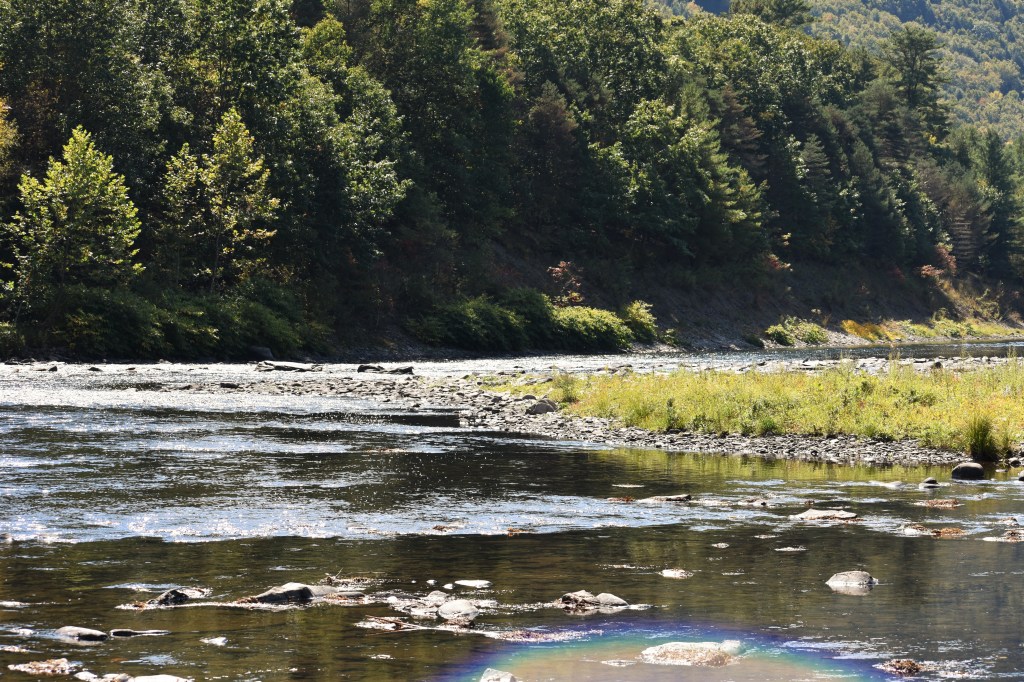
September low water.

When October’s rains came, and the weather cooled, the rivers welcomed the wading angler with open arms. There were breezy, sunlit afternoons along the Beaver Kill, delicately casting a dry ant pattern from a respectable distance while big brown trout sipped along shaded banks. Many of those afternoons followed a morning walk with the shotgun where, true to form the trout brought to hand far outnumbered the birds flushed. At last, I saw just how much marvelous fishing I had missed during the two decades I stayed away after Labor Day.

Learning continues upon bright water, and time in these mountains impresses with the variety of Nature’s moods. There have been years when that storied fishing proved as elusive as those brown mottled birds, and others when I bowed my head in thanks for the bounty laid before me.

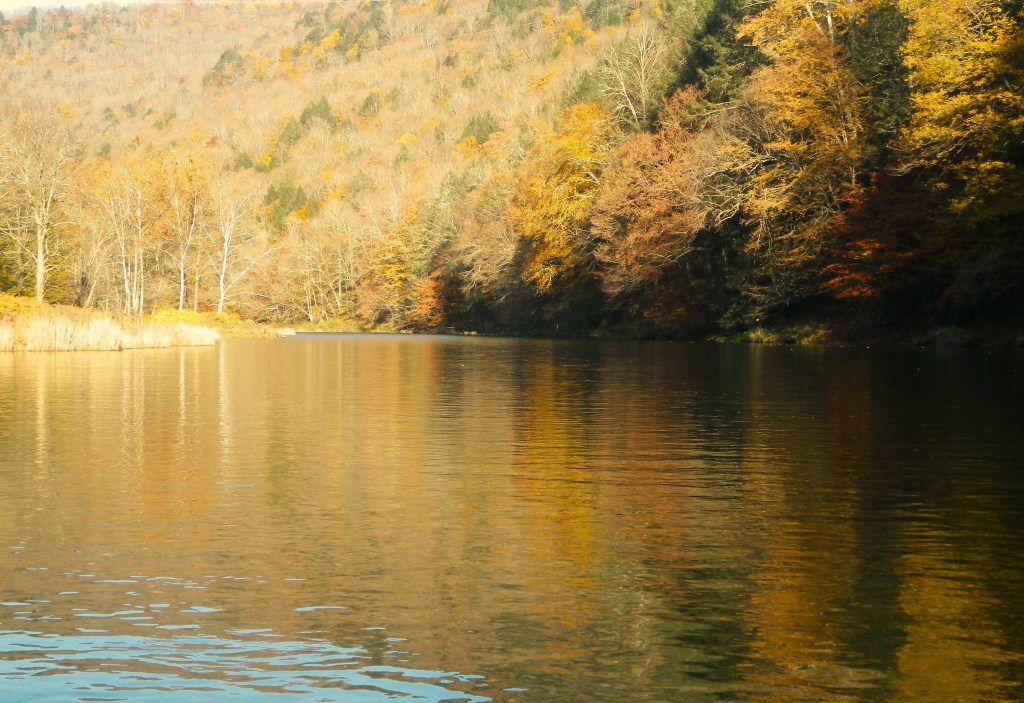
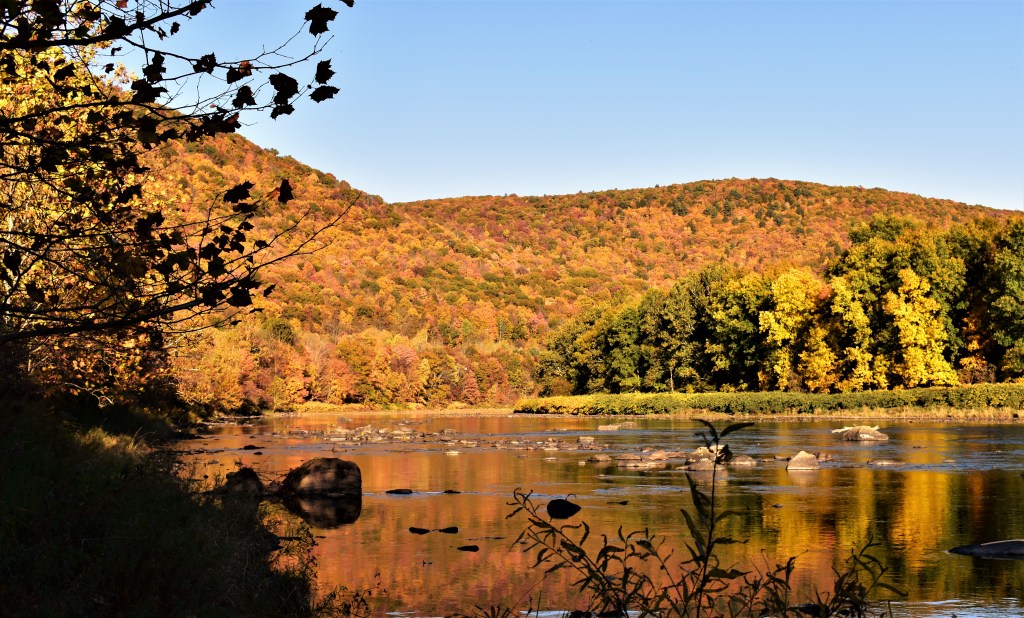
Autumn has become synonymous with the Beaver Kill, though she hasn’t smiled upon me each and every season. Each passing day of the year weaves the threads of Nature that determines the personality of autumn’s glow. The Catskills are always beautiful; that seems the sole constant in this mosaic of light and air, earth and water.

The seasons of an angler are always changing. We revel in the special times between the droughts and the floods, the extremes that reach farther into the future than we know. Whatever comes, I remain grateful for each step I take along both rivers and ridgelines.

Low Water No More

The East Branch trickles into Crooked Eddy on November 18, 2024: 186 CFS

Well, the rain has come and melted the snows! The East Branch Delaware today is a muddy torrent, flowing more than 8,000 CFS at Fishs Eddy after a peak of 21,500 CFS just after midnight. The Catskill region’s drought is not over despite this thundering mass of water, and though I would have liked to see the high-country snows last and melt gradually into the groundwater, it is good to see flowing water where for so long now there were bare stones.

If winter is kind to us, there will be more snow, and thus still hope for it to linger and replenish the springs and brooklets from which these Catskill rivers issue.

It is cold today, with a blustery wind to make sure that chill penetrates. I am heavily attired even here at my tying bench, and so comfortable enough to let winter blow on through. I keep watch on the calendar as we near the middle of this second month of the angler’s winter, and dream of April and those first hesitant rises to fluttering mayflies.

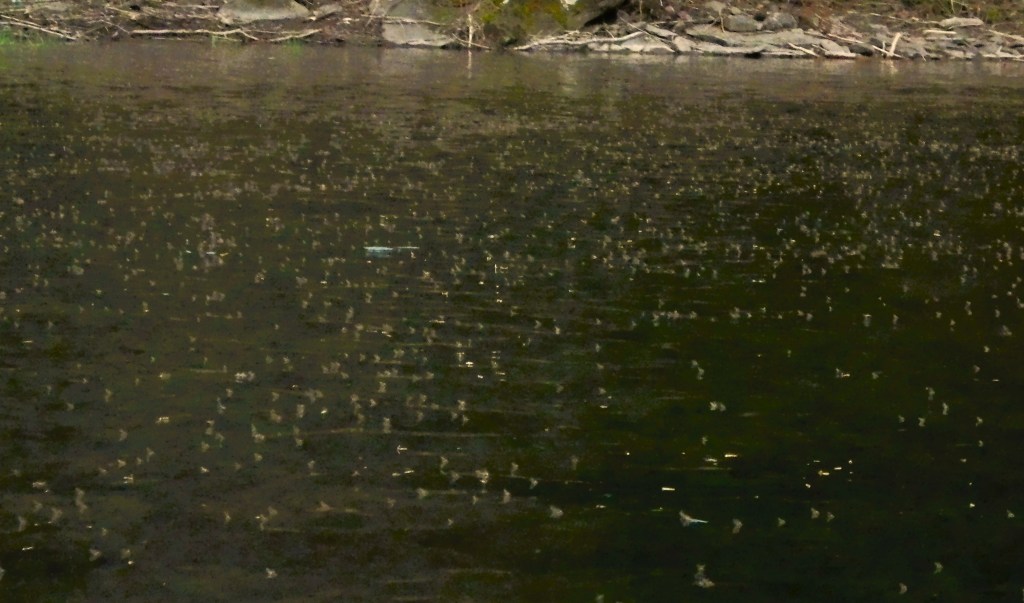
Hendricksons under dark April skies…

I can see them now, just near three o’clock as the first singles bob down in the high spring flow. I ease a step closer to that far bank and the line of drift where the parade of flies meets the depth and cover the larger trout prefer. There! I am sure that swirl was something more than the current curling round a rock. Ten minutes seems like an hour as the anticipation builds.

At long last a trout’s nose breaks the surface and a pair of gray wings vanishes. My line is in the air!

A pause, then the lift and the music of the reel takes me away! He’s strong, energized by the same forces of spring that burn within me, and we dance round and round that circle of bright water until the game is won or lost…

Here at the bench the seasonal clutter surrounds me. It is time to pack away the hunting gear, little used this deer season. The upland jacket can stay on the hook for now, as I do hope to visit the grouse woods. That perhaps is the gift of Nature’s premature snow removal, improving conditions enough to get me out there.