Another gorgeous May day, though the winds were epic yesterday! At one point there were so many seed pods and assorted tree litter blown onto the surface the downstream view resembled a field as much as it did a river. In between those catastrophic blows, lay periods of calm when, if you could spot them amongst all of that floating vegetation, were a few soft riseforms. It was a tumultuous though beautiful afternoon to stray along bright water.
I had a good laugh to complement the passion and solitude of the scene. Yes, that first rise, a soft little sip alongside a brushy hide, while straining to follow my fly amid the seed pod flotilla I managed a take! My hookset had him vaulting from the water and my mirth overcame me. Still hooked after the launch, I pulled him close, all five inches of him! Well, perhaps only four and a half, but I’ll call him five.
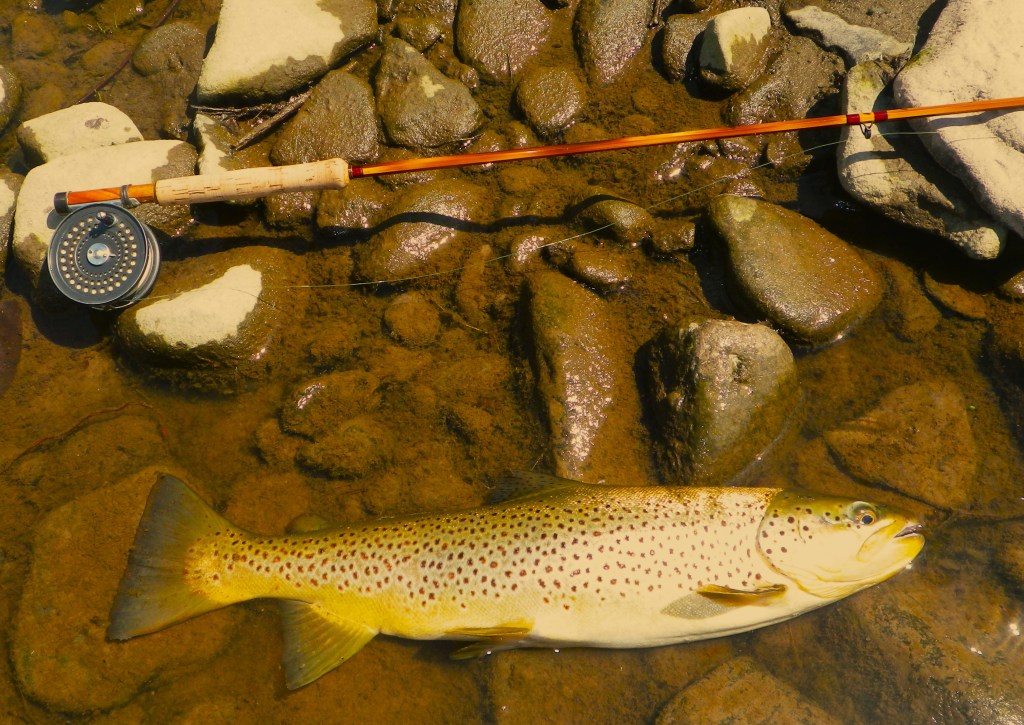
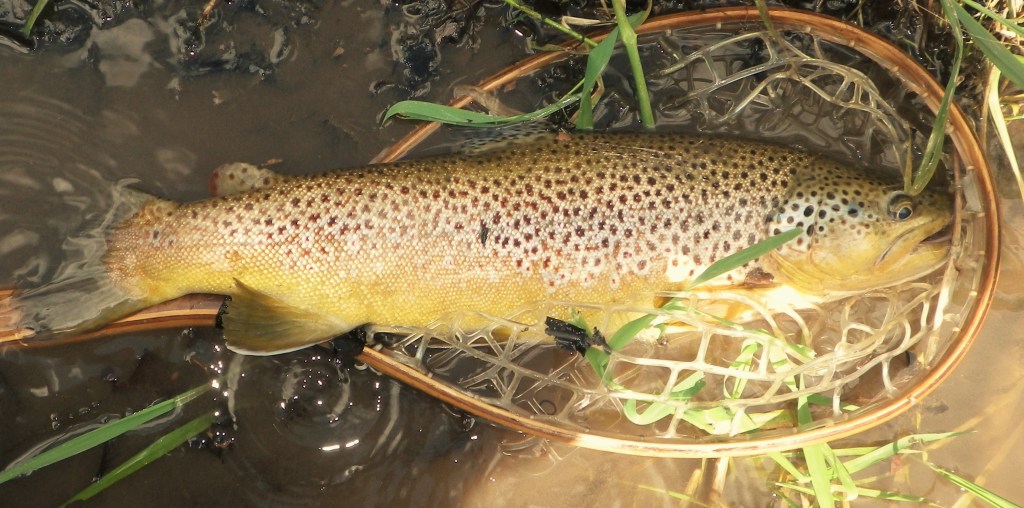
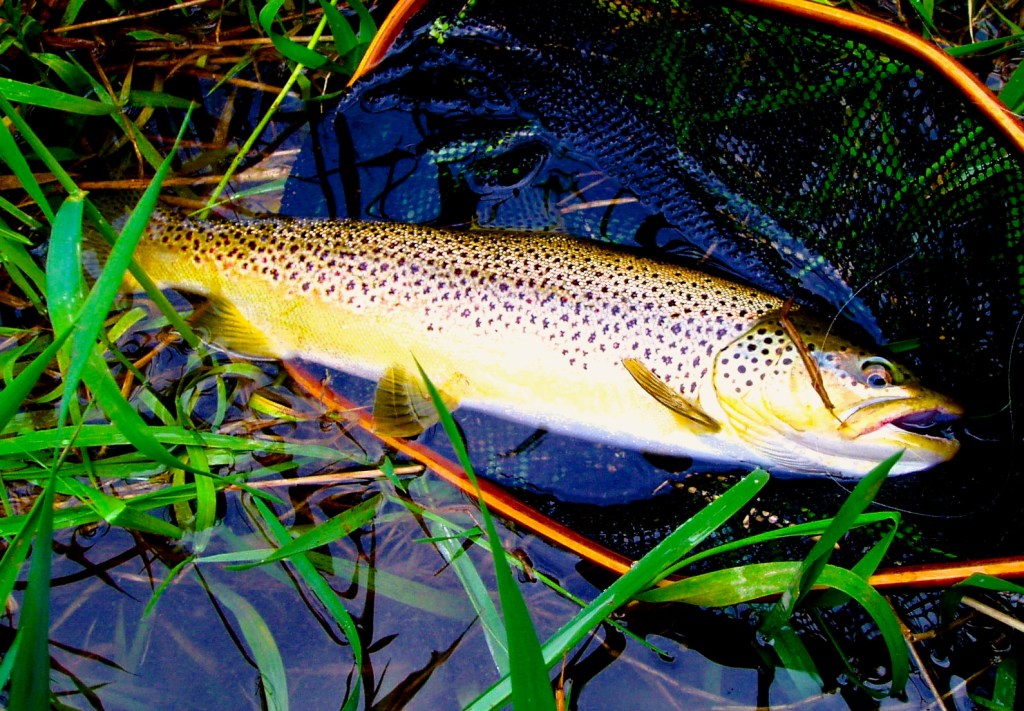
After a long blow I spied another little something and tossed my 100-Year Dun out there. Lost the fly in the vegetation for a split second and tightened out of reflex into a good pull. Wild and leaping, flashing in the sun, I could have sworn I had a rainbow. He put up quite a show, a silvery sided brown trout a bit more than sixteen inches, masquerading as a bow.
The flies were sparse, or at least the ones I could pick out of the blizzard hatch of seed pods were. Late, the pool showed little, but I heard a splash or two upstream and found a couple taking duns sporadically in the top of the little run. No takers though, at least not until the main event.
Every once in awhile you find one of those guys, the big trout with a hair trigger, lying in shallow fast water and sucking down a snack. I cast, saw the funny little disturbance by the submerged rock and raised the rod. That big boy took off like a bullet, nearly pulling the loosely held rod grip right out of my hand. It’s all reflex then, no time for thinking: the clutch! Tighten that grip to save the rod and…snap! I’ve still got the rod but no big, burly trout to admire, and he’s gotten away with my fly!
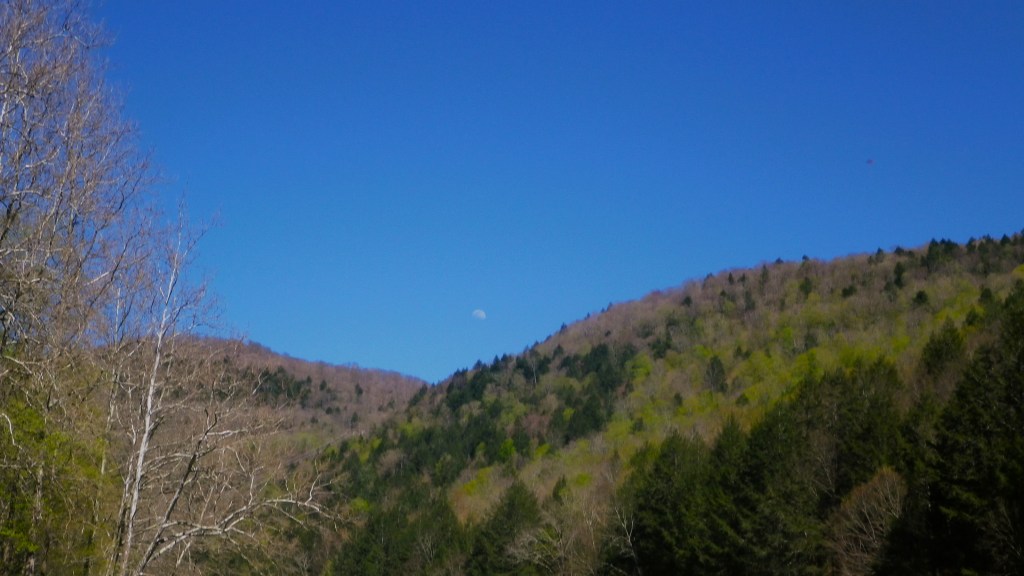
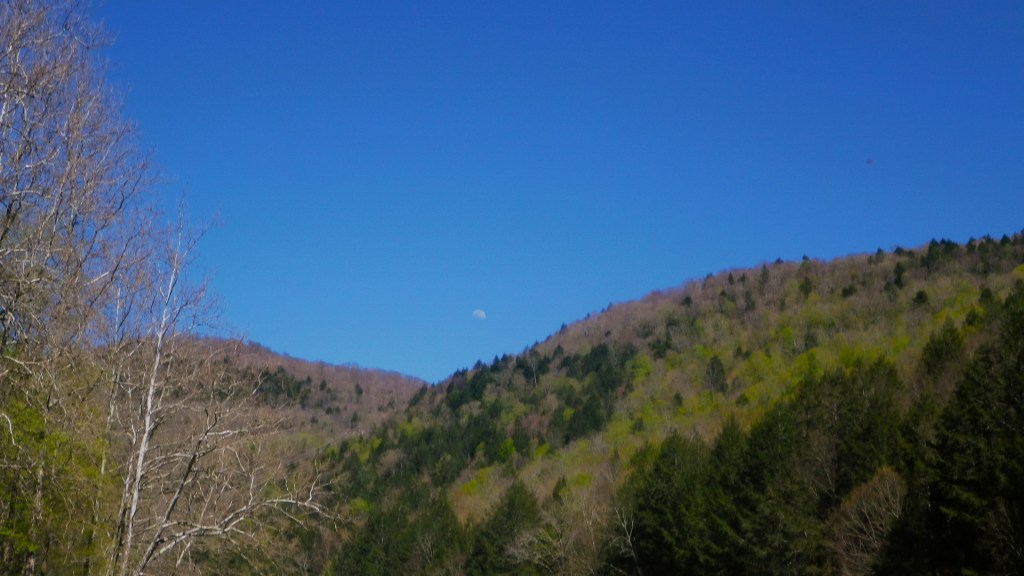
Lightning from a cobalt blue sky? Yes, when the magic of bright water and the spirits found in vintage fly tackle are stirred in the same pot!
It is raining now in Crooked Eddy, the downpour gaining strength as I write. Perhaps the thunderstorms predicted for this May morning have spun from that same brew.
I was on my feet early yesterday, shaved and showered and off to the doctor for my regular checkup. Still old, still breathing, and thank God still fishing. Since it was a gloriously bright morning, I decided to wander over to the Beaver Kill early. I was thinking caddis once again, having tied another half-dozen to add to the box. I found the river ultimately quiet, even it’s heavy runs looked more the gentle glide. I didn’t see a bug. I did walk several hundred yards of riffled water, sure I would find some little enclave of active insects and the vision of a riser, but it was not to be.
I wandered a bit, settling on another river and readying the Leonard and my Hardy St. George for the hoped-for goal of a rising trout or two. There is something I like about fishing tackle with a history, even though I am not privy to the details. My Leonard is a Model 66H, pre-fire to those interested, a rod that dates from the same span of the fifties as I. The St. George is a decade older; the stern hand of experience to keep the youngsters settled down when the games afoot.
I found a very small number of the little shad caddis though it took a while for any corresponding sign of life from the underside of the film. Wild trout are not showy in low water under bright skies. The little trout will make a quick pop and take a caddisfly that is dancing right above his living room, but the older, wiser gentlemen and ladies of the pool remain subdued. Patience, as always, became the order of the day.
The lady saves the day…
I was hoping for some sort of a hatch, spinner fall, anything to change the game as I wiled away the long hours of midday. I had gambled that a few straggling mayflies might appear and give me one chance, and thus that magical repetitive nature of lightning came into play.
My prayers were answered then by the Lady herself, and I found something far more interesting than the once or twice risers scattered about the pool. One very good fish cruising his sanctuary, a lair apart where the mystical currents helped him detect any fraud, established himself in my consciousness and I set about the game in earnest.
My foe was the epitome of the selective trout, and with live and spent caddis and a few small mayflies thrown in, he chose carefully. The challenge with a cruiser is doubled, no, perhaps I should say the challenge is squared in the mathematical sense. He sips an unseen morsel, and the angler casts. When he sips again, he is invariably in a different location, and the cast must be adjusted for new tricks of the currents, always with the knowledge that he likely moved as soon as he took that last insect, and he might have come closer. Line him, even most gently with a bit of leader, and he is gone forever!
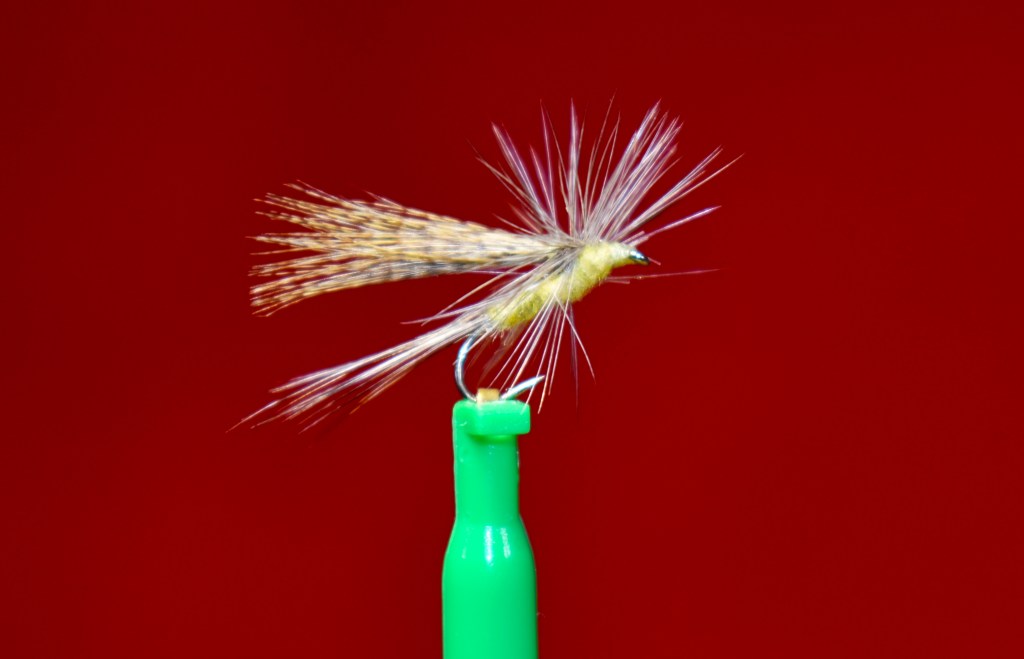
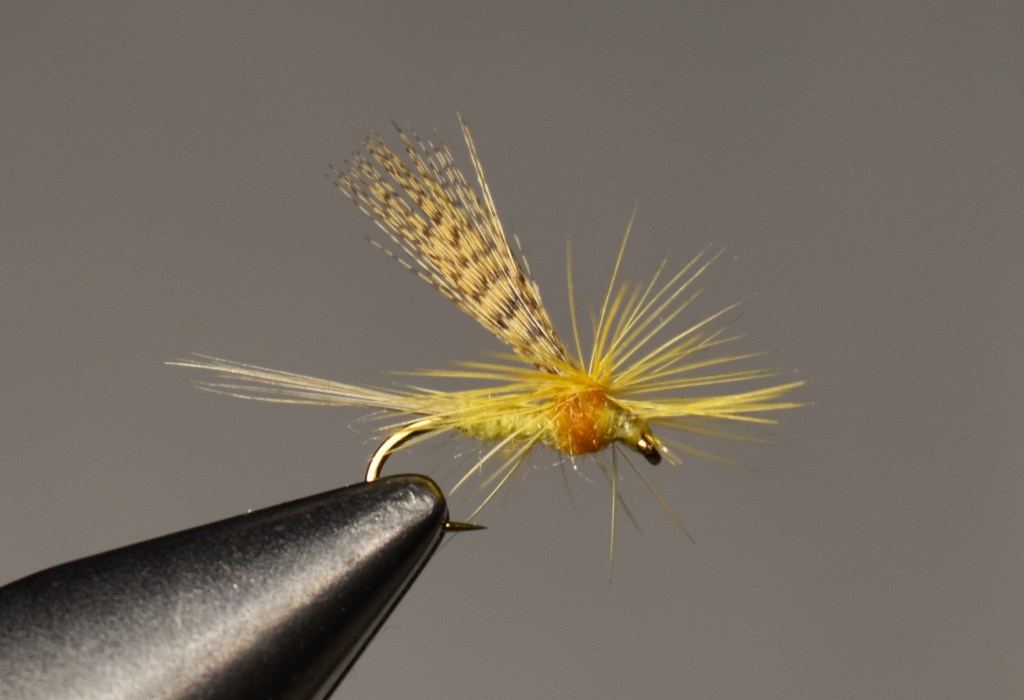
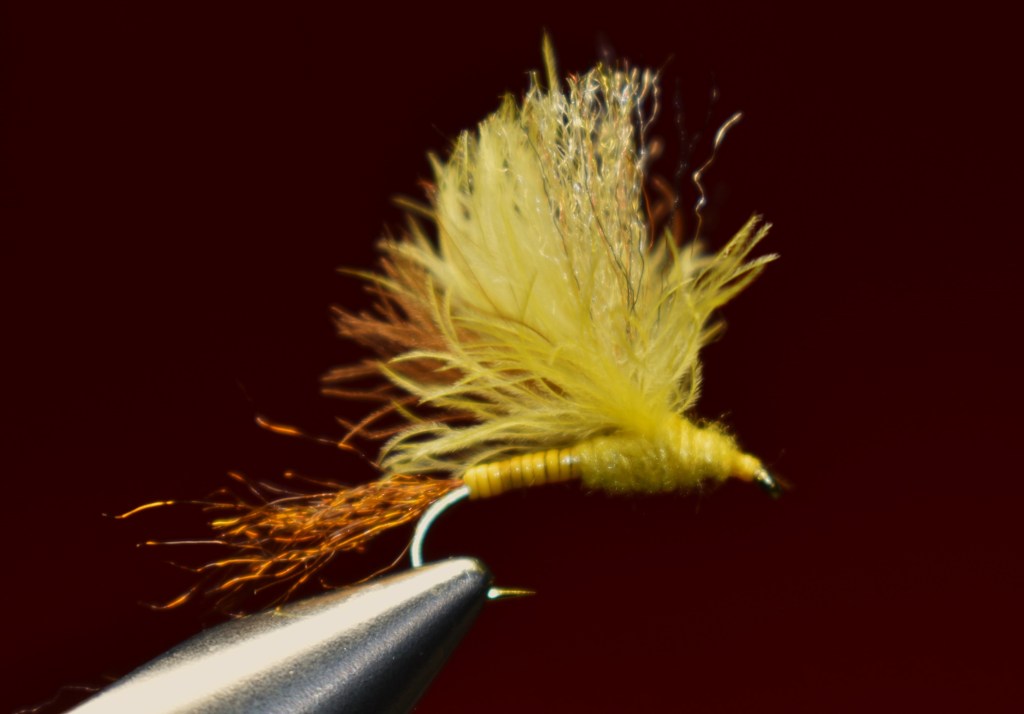
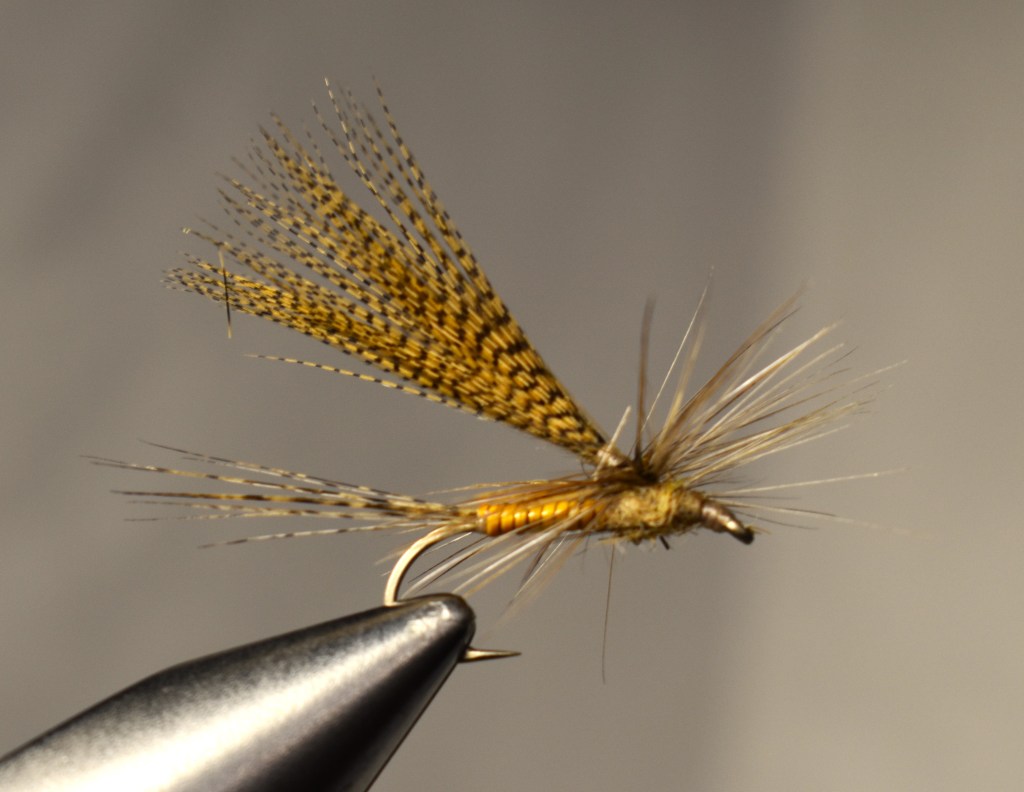
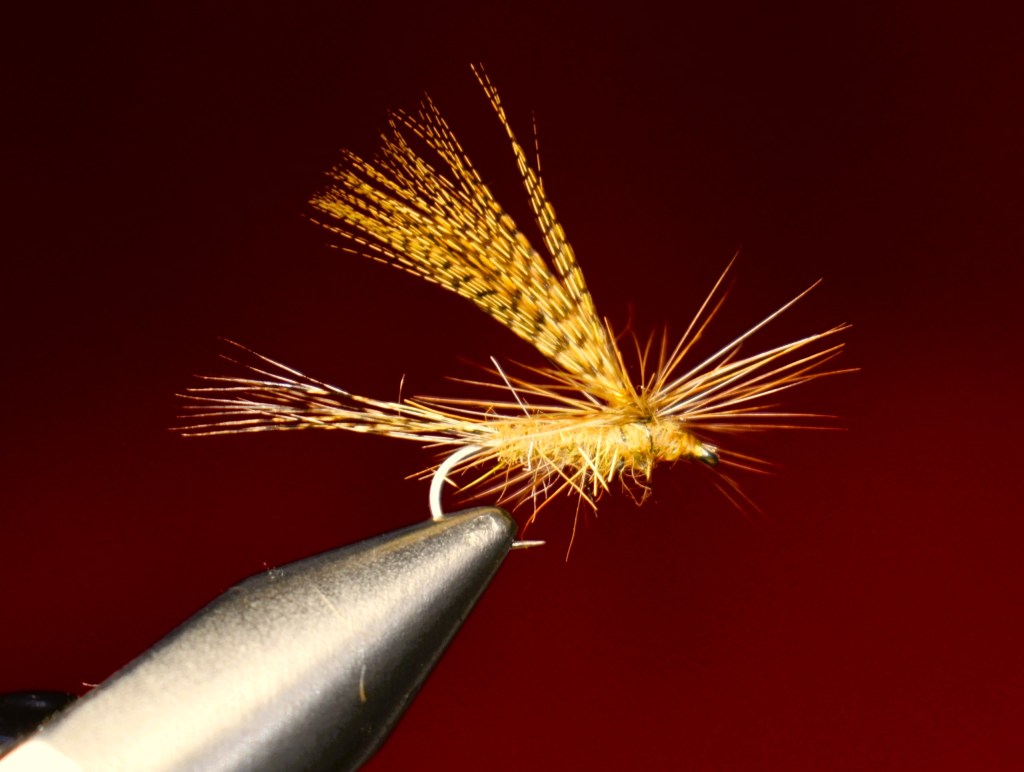
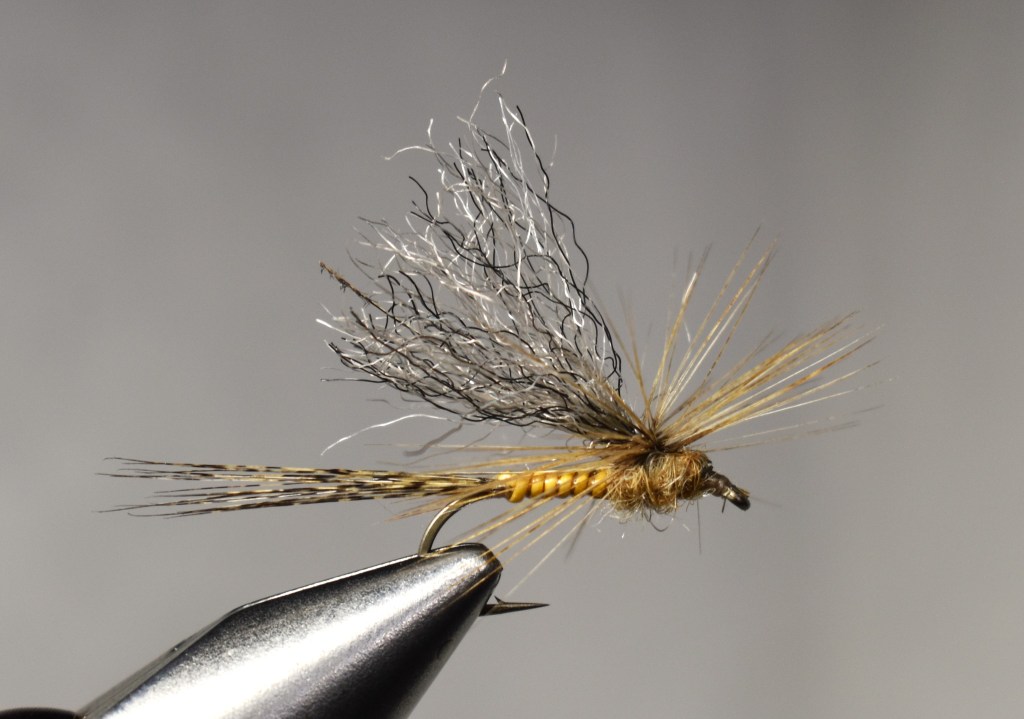
So, this is the game we played. Once I saw enough of the somber-toned Lady H mayflies, my choice of fly was set, and I knotted a fresh 5X tippet and size 16 100-Year Dun.
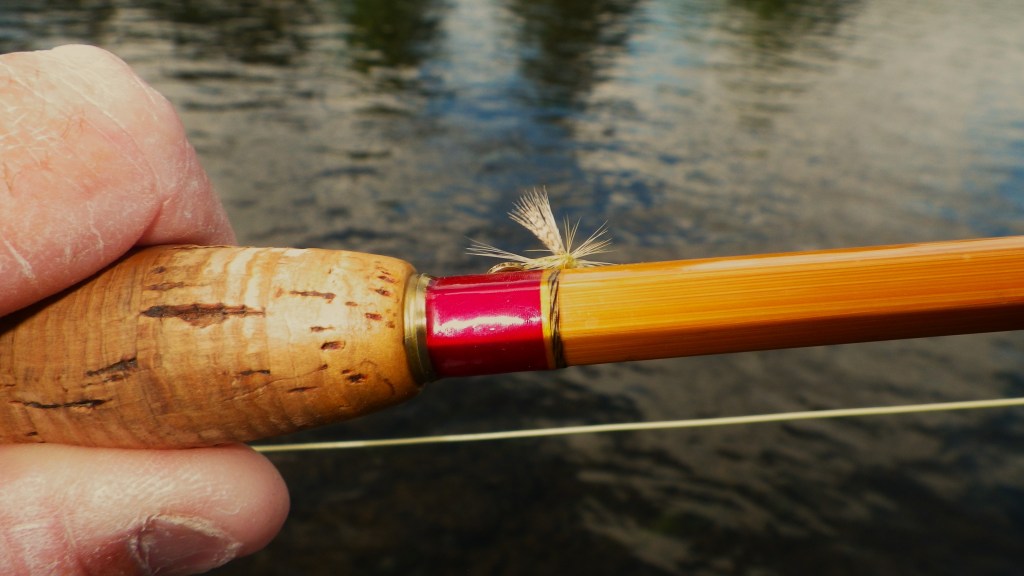
We had played the game for an hour or thereabouts, the trout casually filling his belly, and I seemingly casting delicately with the old Leonard to somewhere he wasn’t. The tension increases with each cast, each fruitless drift, for the risk of ruination mounts. My thanks to the smoothness of that classic old rod, for it allowed me to put nothing but fly and leader near him as softly as air, so the game could continue.
Patience, and the grace of the Lady, finally turned the game in my favor. Though the hatch wasn’t heavy, there was that little pulse of flies Nature often provides; enough duns to quicken the pace of the feeding fish and cause him to choose a preferred spot to take best advantage. Moving still, but restricted now to a much narrower lane, my cast places my Lady before him once, twice, and a third time…
The lightning struck me as I raised that ancient fly rod and felt the power of my foe, stripping line as fast as possible while he compounded his error by coming out and away from the cover that would have defeated me. Turning, he darted away and coaxed a lovely tune from that long silent 1940’s Hardy.
Wading deep, surrounded by boulders, and tied to a bolt of lightning by a spiderweb, those sensations are the reasons we become anglers for life! I rejoiced with each musical run, turned each rush for cover, and thought I had him once. As I raised the net, he used my own momentum to launch himself back out of the bag and start away anew! He bored hard for the snag that would smash my leader and win his freedom, and I brought every bit of power that rod possessed into one menacing arch. He boiled inches short of freedom and turned.
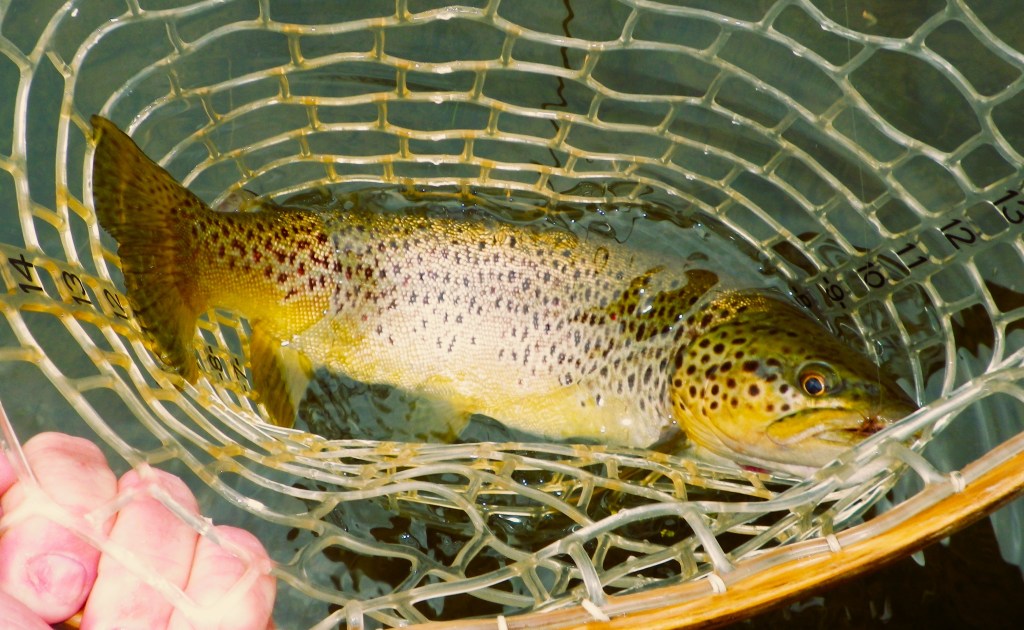
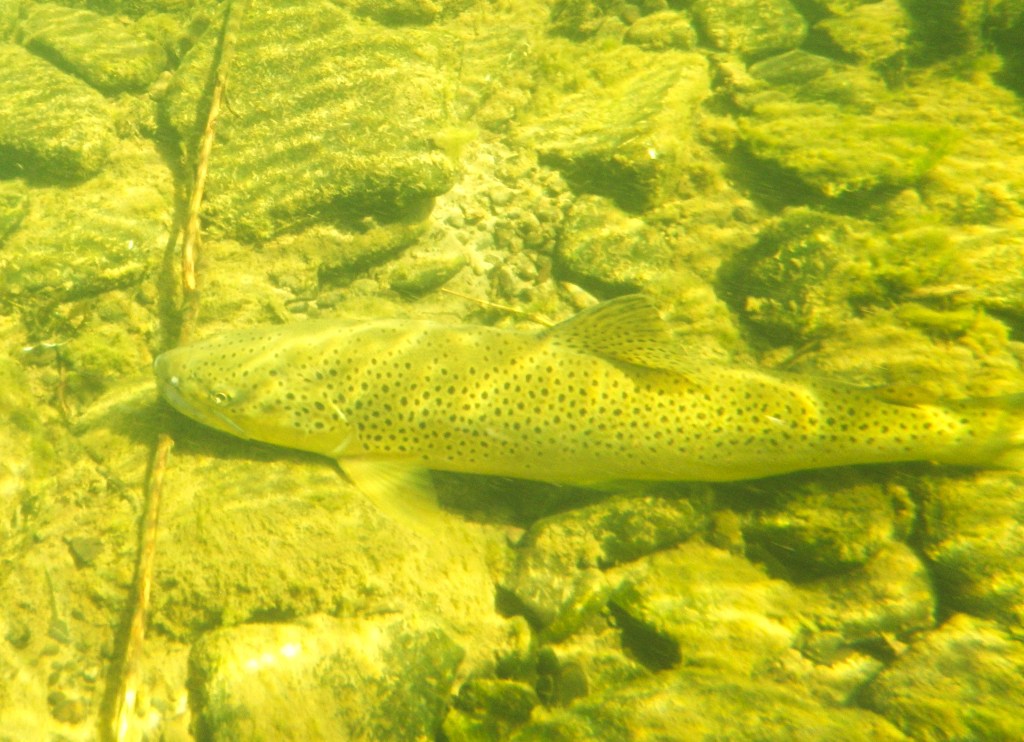
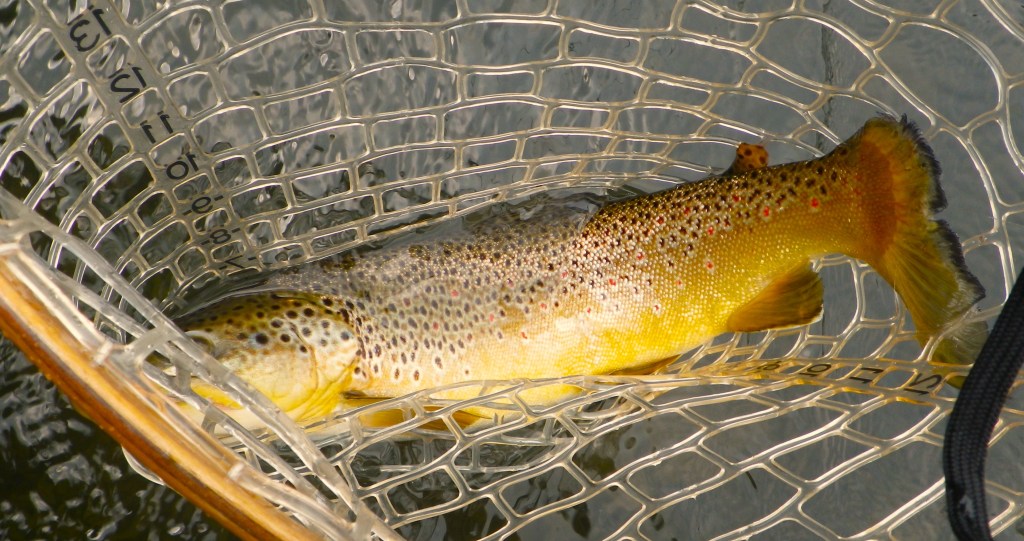
When I drew him close that second time, I made sure he was ready, and netted him securely. The bag sagged with his weight, keeping his flank in the water as I twisted the little fly free. Twenty-five inches lined up along the measuring scale of the net, heavy bodied and gloriously colored, I estimated him to weigh in the six-pound range. I thought of the camera, but the fight had been hard, and low flows in wide pools don’t have the highest oxygen levels even when the water is perfectly cold. I turned him back instead, and he set himself behind a rock there at my feet.
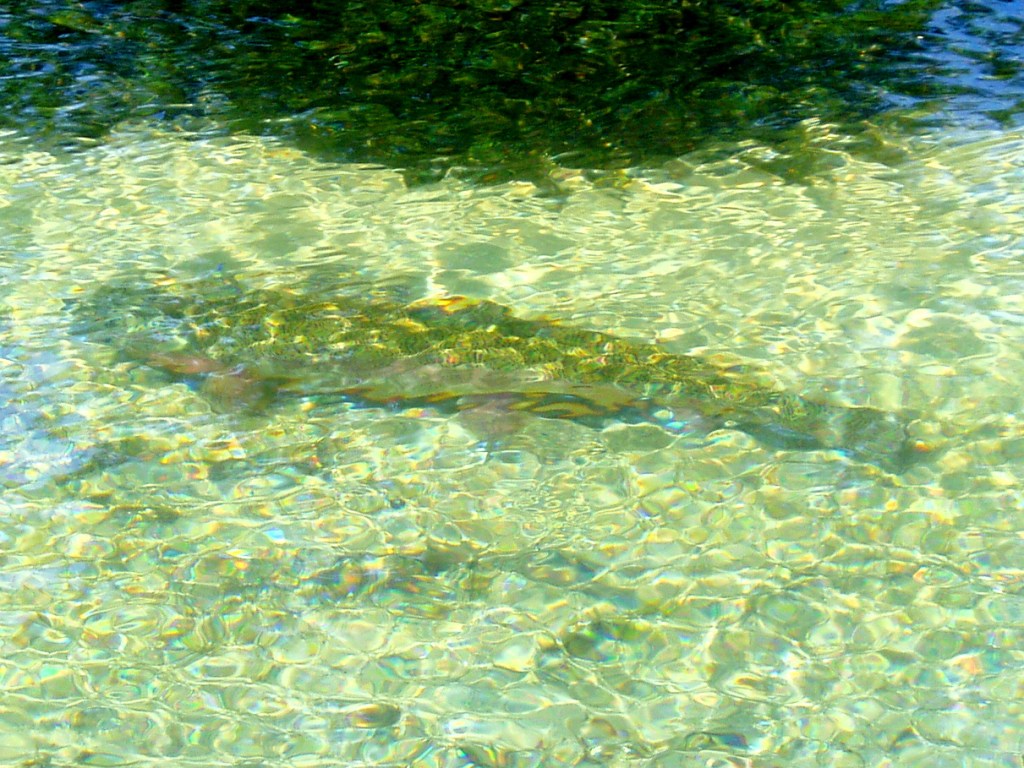
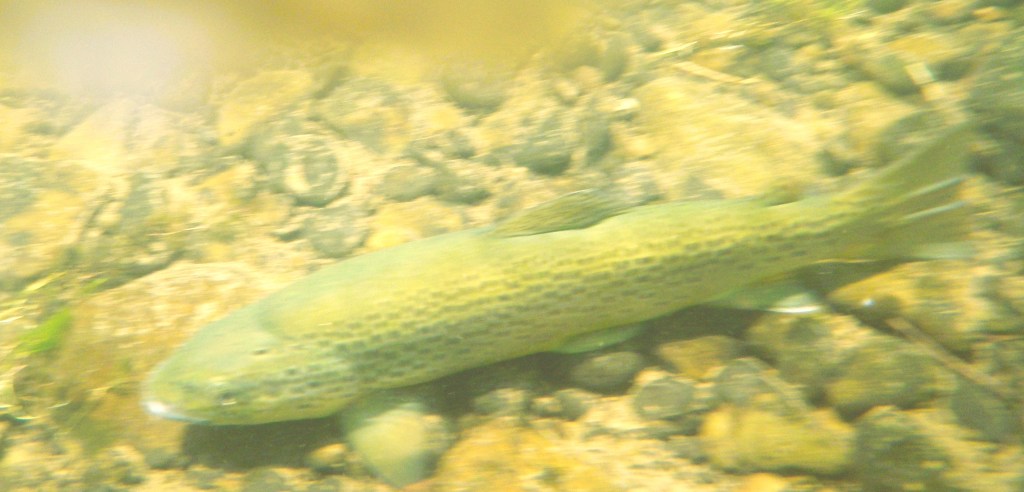
Watching my steps, I backed away in that hip deep water and took out my camera. Submerging it, I chanced my guessed alignment would capture him as he finned slowly there, recovering. I can’t see anything through the little viewfinder when the camera is under water, so I changed my alignment and took a second shot.
After watching him for a few moments, I touched him lightly with my staff, smiling as he darted off toward his sanctuary. I thought then about doing the same.
Patience’s reward: “Old Leonard” might just be a good nickname for this 25″ wild Catskill brownie. It was my old Leonard bamboo fly rod that brought him to hand after all.
It seems the wonder and the magic of the Hendricksons has passed for another year. They visited very little with me. Yes, there may be encounters, brief appearances on the Upper West Branch, but the true glory of it all is done.
In an odd spring such as this one, I am often left wondering what became of them. Certainly, they did not issue from the waters I called home, not in the staggering numbers sweet memory cherishes. I suspect the overall mild nature of winter coupled with the warmth of March chided them from their sleep to trickle off during the high water, leaving only a remnant guard to greet faithful wading anglers such as I. I pray only that they found success in seeding their next generation.
My thanks for the dreams you gave me during a long winter of waiting, and though I longed for your company unrequited, I will look again to April…
And so on to May, and the flies whose colors mimic the emerging vegetation: the bright green of the Shadfly, the varied yellows of the sulfur clan and the pale ghosts we still call March Browns!
It is raining now in Crooked Eddy, on a cold May morning in these Catskill Mountains. The rivers will be grateful for the rain, both freestone and tailwater alike. New York City you see has begun their game anew, hording water until the first of June until they can flush it down the Delaware en masse if they choose to finally make their aqueduct repairs this season. If not, well, they’re only fish and fishermen.
Tailwater flows have been dropped suddenly to summer low flows, so our difficult trout will become more difficult, scurrying from the assault of anglers the prime days of May inevitably bring. There are those who shall insist upon boating the scant depths of these rivers, adding to the fray, shouting “walk and wade trips, no way!” He who finds an unmolested trout first may catch it, while he who wanders second, or one hundredth, shall not. Pray for rain I say!
Last evening I settled in and enjoyed a wee dram in homage to the new season. It has begun with challenges galore, though the first entry in the log was a serious contender. Wild trout more than two feet long are not to be taken lightly! Today I will see to the fly boxes once more: Shadflies, sulfurs, March Browns and the big bright olives. There is always one Hendrickson box that remains in my vest far beyond it’s expiration date. Call it sentimentality or homage, the manifestation of my annual reluctance to accept the passing of a friend.
Ah, the tricks those Red Gods love to play upon helpless anglers! I received a call from my friend Dennis Menscer yesterday to ask if I was going fishing. Of course, I was. He then asked me if I would mind taking a buddy along. He did not feel up to going fishing himself, and as usual he has a lot of work in the rod shop.
I was happy to meet Kevin, feeling confident that a friend of my friend was a good angler and a good guy. Kevin was on the last day of a visit from his home in Massachusetts, and as the day evolved, we found we had other people and other rivers in common.
Before I drove over to meet him, I had tied half a dozen of the dry flies that had brought results the previous day. I had already tied several to add to my boxes while editing my column for the Catskill Fly Tyers Guild Gazette. I was hoping to meet the same hatch I fished on Wednesday and wanted Kevin to enjoy his last afternoon of fishing in the Catskills. I did mention that the winds where we were headed were forecast to be out of the North/Northwest and 10 to 15 mph, adding that the reach of water ran East/West. Sometimes forecast is a dirty word.
Kevin and I got along very well, talking as we walked along the riverbank. Conditions looked reasonable upon our arrival, and we took a few moments to cast each other’s fly rods and continue our conversation while we awaited the hatch. I carried a vintage Thomas & Thomas Paradigm, and Kevin a Dennis Menscer rod I was not familiar with. We shared our praises for both of these fine bamboo rods, and Kevin mentioned he “knew those guys” at T&T, as the company is more or less in his backyard.
It wasn’t too long after our casting session that the winds began to build, and things got out of hand very quickly. At one point, we were sitting on the bank talking for half an hour or more, while those winds continuously blew big rolling whitecaps upstream. It looked quite impressive on that normally quiet pool, at least if you are surf fishing.
I learned that Kevin is the guy that Dennis designed his eight-foot two weight rod for. I have mentioned that rod before and how the fellow who ordered the first one fished schoolie stripers with it, and yes, Kevin confirmed the rod is still going strong.
The wind did calm somewhat later on in the afternoon. There were some mayflies coming off then, but the trout decided they had better things to do than hunt the mayflies on the surface intermixed with all of the seed pods, leaf litter, etcetera that the wind showered the river with. We both gave it a try, casting to a one-time rise here and there, even though it was clearly not a fishing day. I even hung in there a little later after Kevin waved and headed back to Massachusetts.
I have attempted to fly fish in winds in excess of fifty mph more than once. I can recall a spring day chasing steelhead on Elk Creek near Erie, Pennsylvania where one gust pushed me backwards right to the brink of falling backwards into a deep, fast, bouldery steelhead run. Hey, we’ve only got so many days.
If you notice a guy standing in or along a Catskill river, laughing at windblown whitecaps rolling up stream, that just might be me. Wave before you use the sense God gave you and head back to your car.
One week into the usual unpredictable season of Catskill hatches and I have been working on getting my instincts back into shape. I wrote early yesterday about my plan for the first truly warm morning. I realized that, with the stormy forecast and the heavy overcast at daybreak, my plan wasn’t going to happen. I tied a few flies and put them in a new caddis box; and then the sun broke through.
I figured it was just another tease as I made breakfast, but that sunshine hung around and I got myself into gear. Maybe I could make something of the morning after all.
It was ten o’clock when I stepped into the river in my shirtsleeves, already seventy degrees, and yes, there were a few caddis flitting about. Oh yes, there was also a splashy little rise out there near mid-river. I love it when a plan comes together.
With nervous energy hampering my efforts, it took me a few moments to knot the size 18 CDX to the 5X tippet. Every time I missed the hook eye with the breeze vibrating the end of that tippet, I expected the flies to vanish and that rise to cease. That is after all the kind of thing that happens out here on the rivers.
Once I was ready, and waded into a casting position, that trout made another splashy little rise to a caddisfly, so I offered him mine, a pattern I kept very confidential for more than fifteen years, the one I call simply CDX.
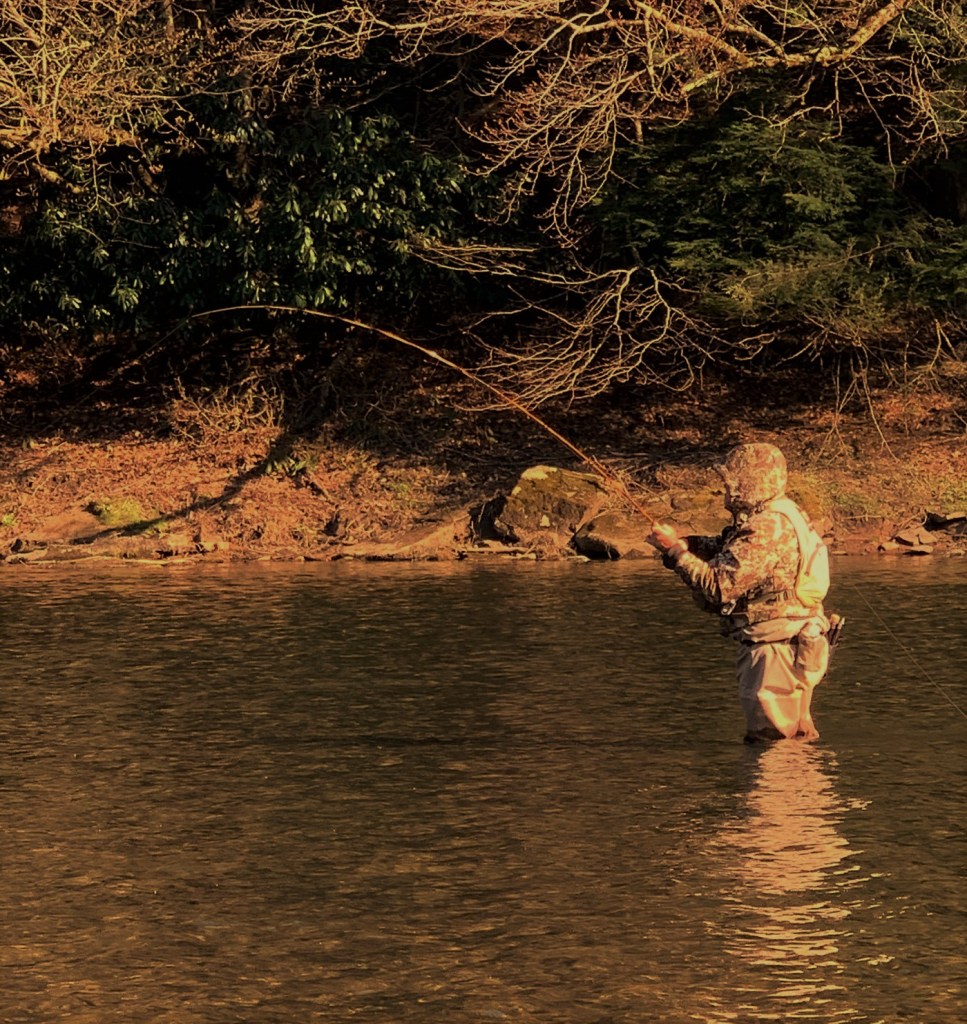
Little splashy rises tell a lot of anglers they are watching a small trout, sometimes they don’t even cast to them. I consider everything that’s involved, and I felt pretty confident that I was casting to a quality trout. My confidence was rewarded with a solid take and a hard run. The lithe arch of the honey toned bamboo was quite beautiful in the morning sunshine as the little Adams reel sang it’s salutation to the day.
A nineteen-inch wild brown trout puts a great perspective on an angler’s day, there is simply no denying that. There is the simple electric pleasure of fighting that fish and sharing his energy, made more poignant by the anxiety of fumbling with a vibrating tippet and a tiny hook eye while expecting the magic of the moment to vanish before your eyes.
My day was made, my instincts concerning that first warm spring morning were proven correct, and I had managed to arrive just in the nick of time. I could have happily walked out and found myself an extra cup of coffee, but then I saw a soft rise across the river.
Ah, the wonder of the soft, subtle little rise! Such moments make the spine tingle and the hairs stand up on the back of your neck if you’ve been doing this for awhile, though the initiates often think small fish that aren’t worth the trouble of working into position to explore the possibilities.
I was working into said position, carefully navigating deep, fast water while the Red Gods awakened and quickened the winds. There was another soft rise, but this time the tip of a nose was betrayed, and the electricity just made me stop and shiver!
I tried a cast or two and the wind blew harder, so I worked my feet slowly upstream until I could see a shallower patch of even stones on the bottom. I settled my boots into that spot and made sure they had good traction on the bottom. That little adjustment got me about two yards closer and gave me enough of an angle that would let me put a touch more power into my cast to overcome the crosswind.
The cane flexes smoothly, the loop unrolls, and the fly alights on that narrow band of slow, smooth water across the rush of current, and drifts…
A soft ring marks the spot where the fly was drifting, half a breath is inhaled and that quick, controlled lift connects. You feel that surge, and you know this fish is special. The trout fires away from the bank and his power joins the power of the current, and then it is all about line control and getting him on the reel. The concerto begins as the soprano notes of the click pawl drag rises above the thundering orchestra of the rushing river!
I managed each run just well enough. When I had some semblance of control, I began the careful trip back to the shallow side of the river. Control is, well, a relative word I guess, when you are connected to more than two feet of wild energy by a 5X tippet and a lithe, tapering shaft of grass bucking wildly in a menacing arch. Finally, the deed was done, the net dipped and I lifted his weight from the water, twisted the little hook free from his hard lip.
I dipped the net there in the shallows and worked his bulk into alignment with the graduations along the centerline of the net bag, reading twenty-five inches before I slipped him back to the cold crystalline world he came from.
My thoughts returned to last April, just more than a year ago, when I stood in these shallow margins of the river and snapped a quick photo of another leviathan. Friends?
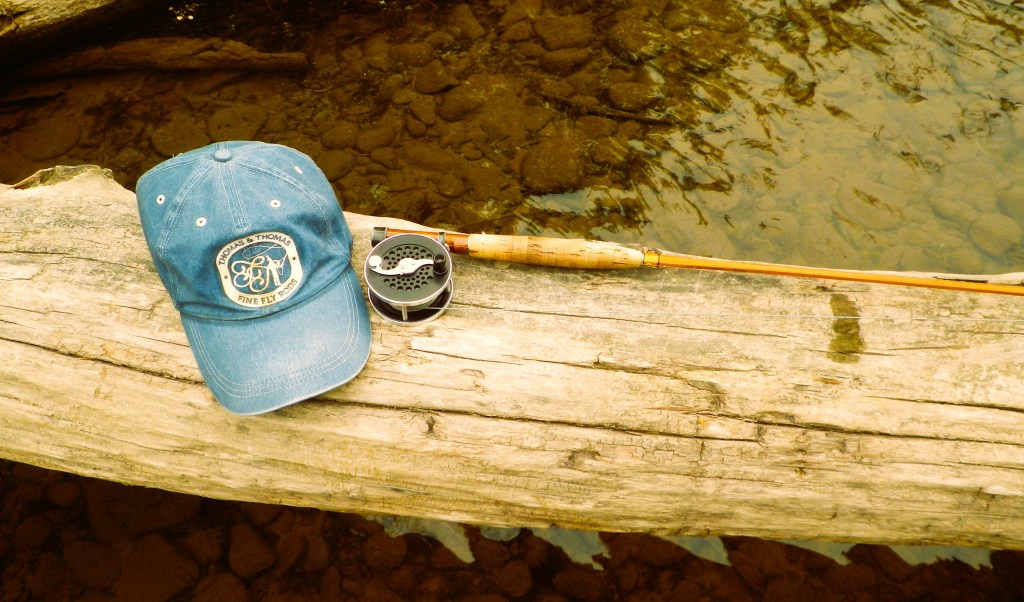
Tools of the angler’s trade: my faithful Thomas & Thomas Hendrickson. Rainy days and impregnated bamboo rods are a perfect combination!
This first weekend allowed for a little recovery from five days of fishing to begin my dry fly season and, now that it has passed, it’s time to get back to work.
Yes, I love retirement! For six to seven months each year my weekday job is fishing bright waters. As I get older, I feel the rigors of the job in my bones most days, but I’ll get back in shape before too long.
My tools are ready in the corner, that lovely old, impregnated Thomas & Thomas Hendrickson is always up to the challenge. Funny that some anglers don’t like impregnated bamboo. They complain they feel heavy to them and similar grumbles. Yes, some Orvis rods feel a little heavier and have a slower action, and my 8 1/2-foot Wright & McGill Water Seal needs a line weight heavier than my 8642 Goodwin Granger, but they are quite pleasant and capable fly rods. The T&T’s are really special though!
In their vintage catalogs, the company described this finish as a light impregnation, and that suits both in color and demeanor. My Hendrickson weighs just 3-3/8th ounces, quite the lithe eight-footer, taking a five weight line. I like the freedom from worry when fishing on a rainy day, for there is no concern about some unknown scratch in the varnish allowing moisture to seep into the cane. Back there in the seventies, Thomas & Thomas offered a choice of finish on all of their rod models, either their faultless varnishing or this light impregnation.
My vest is still fully loaded with Hendricksons, though there are signs that the hatch may be waning already in some quarters. Such has been reported on the Beaver Kill. I’ll be sure to have a well-stocked caddis box along too, but I still wait for a truly heavy and memorable hatch of my favorite mayfly.
The warm spell ignited yesterday demands I take the light rain jacket, for some portion of this coming week is fated to bring showers and even thunderstorms. Funny how quickly we have gone from chilled-to-the-bone cold to muggy.
I’d love a sunny morning to stimulate some spinners or a nice caddis hatch, but it isn’t looking like that kind of day.
Well, it’s half past six, time to get everything together, make a good breakfast to last me through a long day on the river, and concentrate on the job ahead. Here’s to a job hopefully well done!
The angler’s spring, finally commenced and at least partially intact, and I have found myself rushing about trying to make up for what was lost to ridiculously high water and a very late turn of cold, cold weather. It is nearly May and I do have a week’s fishing under my belt, though it hasn’t been enough to wipe away the rust from my skills.
The week began well enough, drifting down the river and noting how wintry the mountains looked, barer than expected more than a month ago when the warm sunshine had me duped to expect that marvelous gift, the early spring. It was hard to shake the feeling that I had missed out on a full, glorious week since I had. I was convinced that no self-respecting trout was going to surface feed in high water flowing much closer to forty degrees than fifty, a position borne of too many cold, windswept, early days upon lifeless rivers. Mother Nature never pays any attention to an angler’s experience, and perhaps that is the only mantra we should retain and recite.
I didn’t encounter a heavy hatch, but there was enough of one to produce some pleasant fishing and some quality, hard fighting trout. I went wading the next day and found that the lower, warmer freestone water quizzically revealed fewer bugs and barely any rises, though I did manage a pair of healthy fish. I took that as a good sign and kept my boots on the ground for the duration, though I couldn’t shake the thought that those trout were actually just the consolation prize.
There had been another opportunity, one that frustrated me for I had failed in something as simple as tying a tippet knot and controlling my admittedly rusty reflexes. I had tied that fresh tippet to my carefully inspected leader in the comfort of my angler’s den and held every confidence when I made that long cast to the very edge of victory. The rise was heavy, one of those whitewater explosions we all dream about, and I struck to feel just a millisecond of that wondrous surge before the line came free. That trout kept both my fly and four feet of tippet.
The rest of the week simply continued to impress me with just how much my timing, condition and attention to detail had suffered during six full months of winter. I found some hatching flies and all that, caught a few average sized wild brown trout, but as soon as I found myself squaring off with the truly difficult trout that I love, I found myself woefully lacking in the nuances of the art. I am not shortchanging those smaller fish. A wild trout taken fairly on a dry fly is one of the great gifts an angler receives from the rivers that define him, but I do feel the effects of age and rust have gotten the better of me this week, and I don’t like it.
Angling teaches humility, and we all get a lesson from time to time. I know that I should have fought off the mental malaise that the longer reach of winter inflicted upon me, should have gotten out more and exercised away more of the stiffness and pain of the sedentary season. I let the winter into my head and allowed it to rob me of my focus.
Friday afternoon I worked through my difficulties, I thought. After subjecting myself to enhanced frustration for the best part of the hatch, I got hold of myself and relaxed. My casting distances increased markedly with the old smooth grace I expected, and I was gifted another opportunity, in fact a handful of them.
The wind subsided and a group of impressive riseforms appeared down river. I stalked them patiently and carefully and my casts fell accurately. These fish were taking the odd drifting dun in flat water, but they showed no interest in mine. Each allowed a single drift before they demurred.
As I stalked the last in the group, I had perfect concentration and clear focus on the task before me, and I executed the cast perfectly. The drift seemed to cover a quarter mile rather than a few feet, but I was calm, intent. That fish took my fly perfectly, and after taking half a breath I raised the rod, sharply though controlled, felt the spark of his energy and watched the tippet-less leader come sailing back to me through the sunlit air.
Let me meditate on that and what should have been…
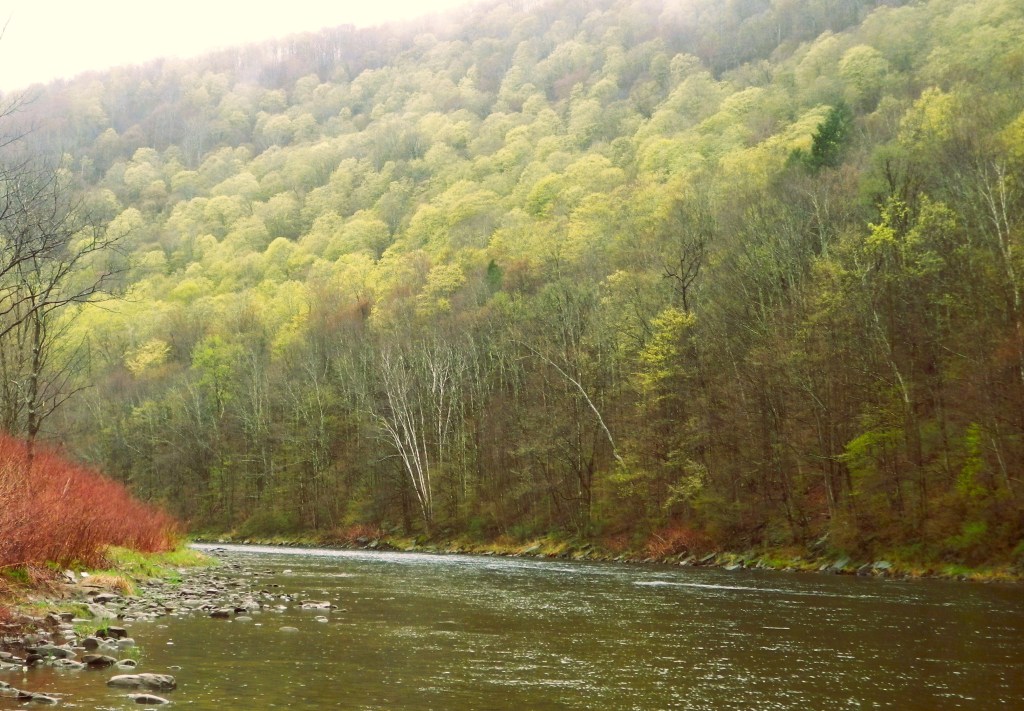
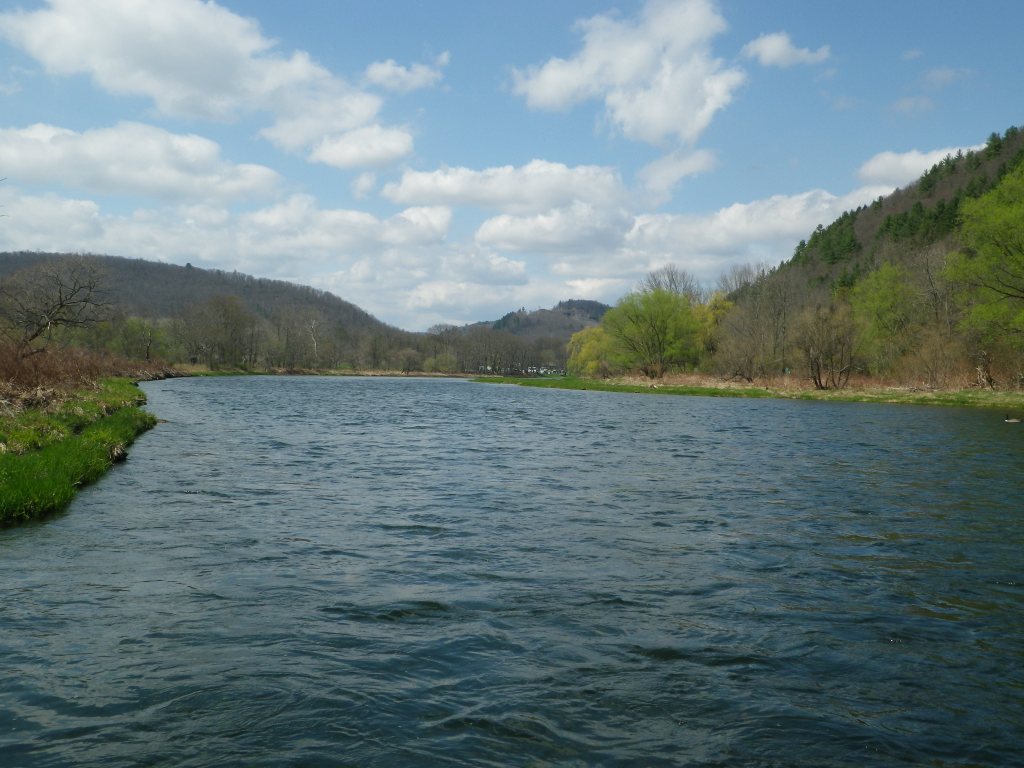
Ah, at last a chance to remember what spring actually feels like. Wading in shirtsleeves, enjoying the sparkle of clear, moving water under the sun, and watching mayflies depart the river, winging skyward!
It was a welcome old feeling, sitting there on the riverbank, baking in the sunshine, and there were Hendricksons about with all the promise that entails to a dry fly angler with time on his hands, full fly boxes and a favorite rod. I am home at last!
How the angler’s mind wanders… will the trout rise under such bright skies? Of course they will, but why aren’t they rising now? There are enough bugs to bring an eager fish or two to the surface. Oh, how we seek to capture perfection when it lies within our grasp!
In truth the trout chose not to rise, but it was early, and I waited patiently. Heard a car door shut behind me. The idyl vanished for a moment, until I saw a figure upstream on the bank, keeping his distance, seeking his own water and leaving me to mine just as it should be. He waits for a while, still early for the hatch after all, then runs out of patience and I hear the car door again.
I waited. Twice I rose and waded out into the caress of the current. The wind drove me back, howling suddenly, swirling, the Red Gods reminding me they were in attendance. The second time I rose as more flies appeared, stood my ground in mid river and searched every well-known lie of this place. I noticed two odd little blips in the current, nothing certain, but enough to draw me further from repose on the sundrenched riverbank. Yes, yes, no mistaking that, an exuberant rise; a trout as happy to be a trout as I was ecstatically an angler!
He was well, tight to the bank, there where the current rushes and bulges and the steep, rocky terrain rebuffs the wind and makes it’s own eddies in the air. I waded hip deep, taking my time, uncoiling line from the Hardy, holding onto the fly as the current took the line downstream, released it and started to cast. Puffs of wind delight in blowing the fly away from the bank as the leader seeks to lay it nearly touching the gravel. Another foot of line, and patience, until the gusts subside.
He had risen enthusiastically four or five times, when my sleek winged 100-Year Dun touched down so perfectly, bounced two, three times with the current, and then it was his fly. He ran immediately, the rod heavily bowed and the Hardy coming to full chorus, sharing that magical energy he derived from cold, clear water and abundant oxygen!
I fought him at first from my hip deep stance in the force of the current, but he refused to let me bring him near, running again and again as the Hardy soloed over the swell of Nature’s orchestra. I started toward the shallower edge and my sunlit bank, reeling a few yards of line and then surrendering it once more. In the quieter flow we played the final dance. He was heavy, and wild and strong as I twisted the fly from it’s hold and sent him back with gratitude.
I was full of the magic then, drying the fly, fluffing it’s hackles, eyes searching eagerly for the next foe. There were plenty of flies on the water now, but no rises, no more valiant warriors to sample the bounty. There are times when Nature bestows a single gift, and ours is simply to bow our heads in thanks.
I waded out, took a last, reverent look and traveled to another haunt. I found a line of soldiers knee deep in a usually forgotten run, all watching, unrequited.
Hendricksons danced upon the surface, but the trout demurred, less than eager to run the gauntlet of man. I walked upriver, pausing and studying the runs and boils, until one splash of white water brought a smile to my face. The picket line below retreated to land, found reinforcements, and departed for other missions while I hunted those white splashes amid the tumbling rush of water.
The Red Gods weren’t inclined to allow another moment of triumph, raising the winds again and swirling them between the ridges of the mountains. Those splashes demanded all the reach I could muster, giving the Red winds time to toy with aerialized line, leader and fly. I cast and cast despite the blow, and three times my dragging fly detonated a whitewater explosion as the Red Gods howled with laughter.
I was alone on the river now, and in the solitude, I hunted the last scattered rises. I waded carefully, deeper into the quickness and power of the flow. Shorten the casting distance and even the odds.
Between gusts I fired a cast to my target, kicked the rod tip back and dropped it with the fly close to the surface, and managed a suitable drift. He came to it with a splash and exploded into the air as the rod arched, and then it was all white water and the screaming of the reel above the roar of the wind.
The runs and leaps continued as I backed slowly toward shallow water, Mr. Delaware rainbow was not giving any quarter.
I brought him at last to the net, buried the mesh in the writhing current as I pulled the fly from it’s hold. Swim free aerialist! My thanks for your energy and your spirit!
I had heard some testimony over the weekend, people I trusted had fished to hatching Hendricksons on the West Branch last week, despite the cold wind and water. Though I resigned myself to making the first solo float of the season to start the week, the heavy frost and Crooked Eddy’s twenty-six-degree air temperature did not fill me with hope.
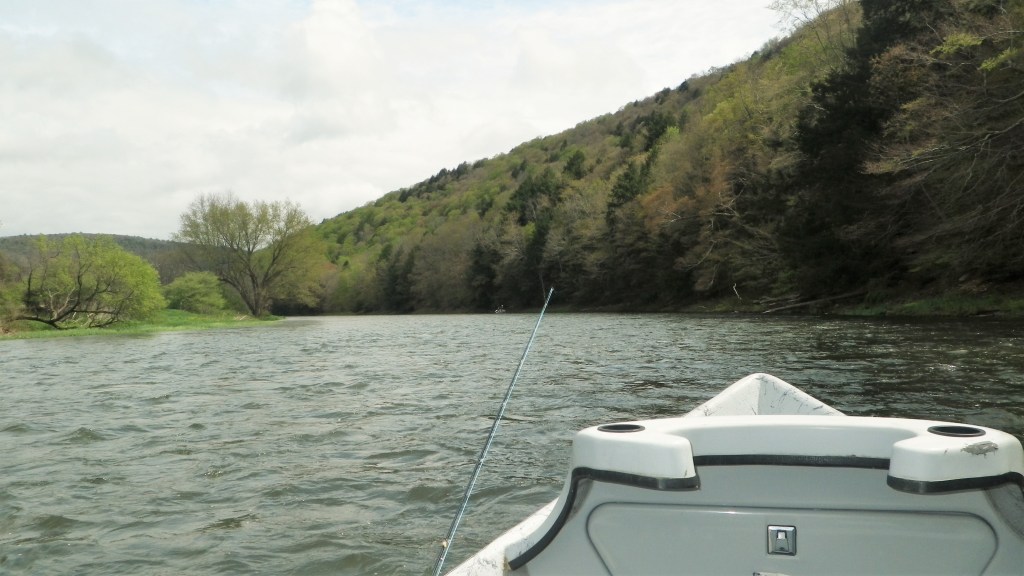
I put in a bit later than normal, due to the morning chill, and was surprised to find tiny olives on the water as I began my drift just past eleven. I passed two rising fish during my first mile and a half, the sneaky kind that don’t betray their presence until the boat is next to them, leaving no time to set up and anchor. Those olives would persist more or less throughout the day.
The sun was bright and worked it’s magic on the frost, though I kept my insulated jacket on until mid-afternoon. Here and there I passed another rise, none with sufficient advance warning to set up and fish. What the day failed to offer in fishing, it made up for with the beauty of cobalt blue skies and that sunshine.
There are a couple of places where I expect to find some Hendricksons when I float this river in April, though I tend to find a bevy of drift boats in those same environs. With the downstream winds picking up, some of those areas were too exposed, making it impossible to see any mayflies that might be on the water. I stopped and waited dutifully at each, finding signs of neither mayflies nor old Salmo trutta. I came upon my last, best place with nary a boat in sight. I could scarcely believe it.
I anchored up at the tail of the riffle and waited, tying one of my size 16 CDC emergers to the 5X tippet. I had tied a handful of these, as well as some CDC sparkle duns with my A.I. Hendrickson dubbing blend, figuring the scraggly body would help the CDC wing mimic a live and struggling dun fighting to emerge amid the cold water and wind. The little fly would prove to be a very good choice!
I had spotted a fish that rose a couple of times tight to the bank, and I eased the anchor off the bottom to let the Hyde slide down current into casting range. When settled into position, I noticed the first larger duns beginning to mix with those ubiquitous olives in the drift lane. The A.I. Emerger looked alive to that brownie, and he bored out into the windblown current as I gave him the steel.
I had forgotten just how hard it can be to coax a good trout to the net from a drift boat, particularly one anchored in strong current. Playing and netting from the boat is ideally a two-man affair. I got him in there eventually, a heavy bodied eighteen incher, my first trout of 2024.
I had to slide down current once more when I spied a couple of suspicious swirls just out of casting range. With a little patience, they evolved into two distinct riseforms. Both of these fish were moving, not far, just sliding around a bankside pocket with a little wooden cover among the rocks. I fluffed the emerger’s wing and started working to the outside fish. It took a few casts to synch my presentation with his movement, before he sucked my floundering fly into his mouth.
Trout number two was even more determined to avoid getting into my boat, though my old Thomas & Thomas won out in the end. At nineteen inches, he would be the best of the day. I stayed put after boating this one, as another had risen not far below that sunken limb.
The emerger had lost some CDC fibers, but I fluffed it up enough to try for number three. The Red Gods seemed to have decided I was having too much fun, so they cranked the wind another notch, adding some gusts timed with some of my back casts. Accuracy and presentation suffer under such conditions, but I kept after that last riser until he too made war to avoid the net. He lost that fight just like his brethren, and I hefted aboard another solid brownie of about the same size.
The hatch wasn’t heavy, and it didn’t last as those epic West Branch Hendrickson emergences that haunt my memory did. The next few miles failed to show me any feeders, until I rolled into my traditional last stop. A solid trout rose hard to take a straggling dun, and then the Red Gods put the fans on high. I waited until things calmed down briefly, spotted a sip and offered the Century Dun I had tied on while the wind blew. The fish took the fly quietly, then headed for deeper water in a rush. I netted him a bit easier due to the slower, shallower water I had anchored in. All of these browns looked to be within about an inch of one another, a lovely quartet of hard fighting wild trout to finally get me on the board in 2024!
My tying kit is ready for tomorrow’s Fly Tyer’s Rendezvous, and the boat net and dry bag are packed into the car for the week ahead. The weather doesn’t look very springlike but, if the wind doesn’t get too far out of hand, I am finally going to do some floating next week. There have been reports of “great fishing” though looking at the water temperatures, winds and rainfall doesn’t quite seem to jibe with that line. Advertising. Hey, it’s always great to go fishing, right?
The third week of April comes to an end, and I have spent zero hours on rivers for it’s duration. Looking ahead at the forecast, a winter coat seems in order for next week’s angling, but I have freshened the leader on my number one boat rod and reel in anticipation anyway.
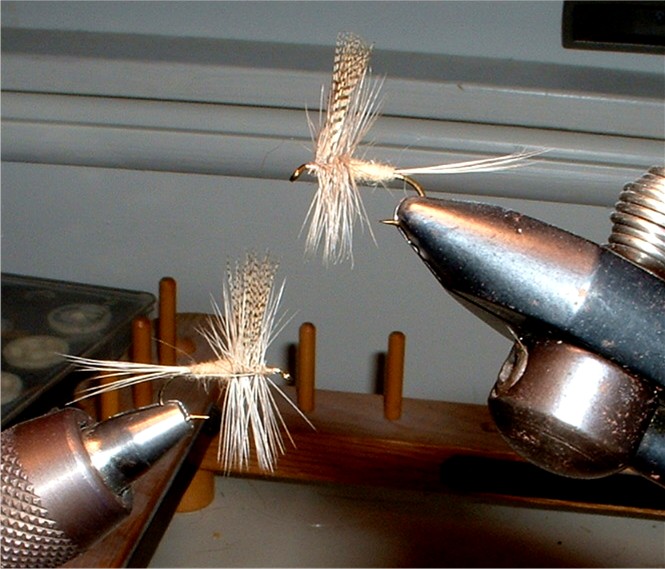
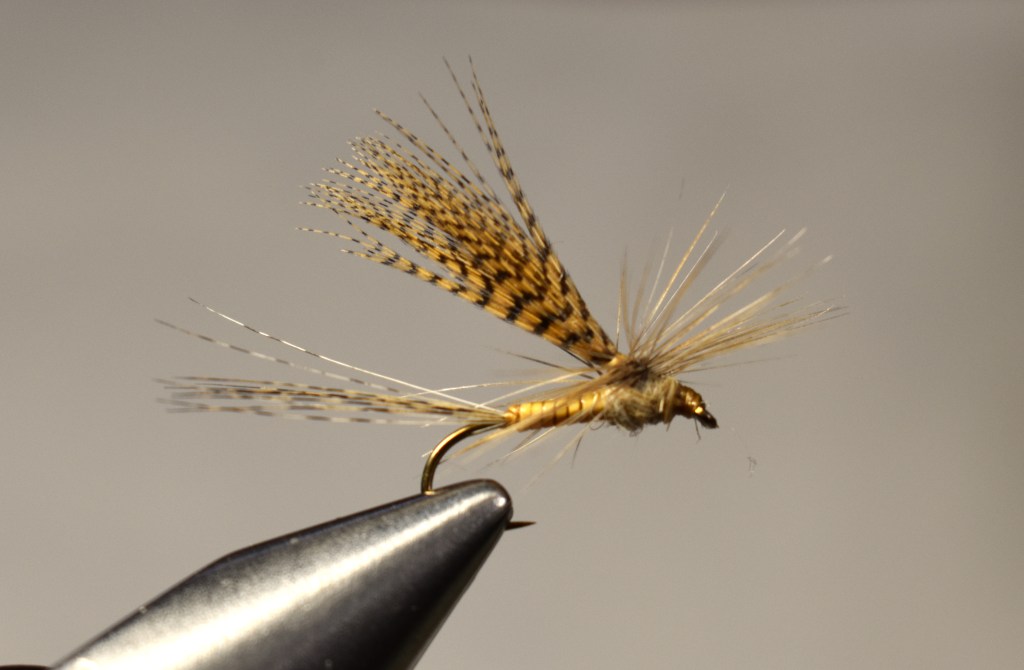
I tied a few boat flies the other day, some with heavier CDC wings and some of the Trigger Point wing variety I call Century Duns. Both of these styles are more suitable for the long, downstream casting ritual common to float fishing. The tying gave me something positive to occupy my mind for a couple of hours. Keeping my sanity is kind of tough when winters hang on into the weeks we consider to be part of spring.
Traditionally, Hendricksons starting to hatch during the third week of April is what I consider a normal spring. There really isn’t any normal here in the Catskills, but it’s good to have some sort of benchmark for talking’s sake. Second week early, third week normal and fourth week late – those are the guides I use to judge the timing of the best mayfly hatch of the season, which is the real arrival of spring to a dedicated angler.
Of course those reports I mentioned have included the H-word, but I won’t believe it until I see them, along with a number of healthy rings in the surface telling me the trout are really feeding on them. To be fair, some of those reports casually mentioned that the Hendricksons and Blue Quills they were advertising were seen down river on the Mainstem. They usually start first on the lower reaches of the big river, but there is a lot of flow out there, and it hasn’t cracked that magic 50-degree water temperature for a week, so I wonder.
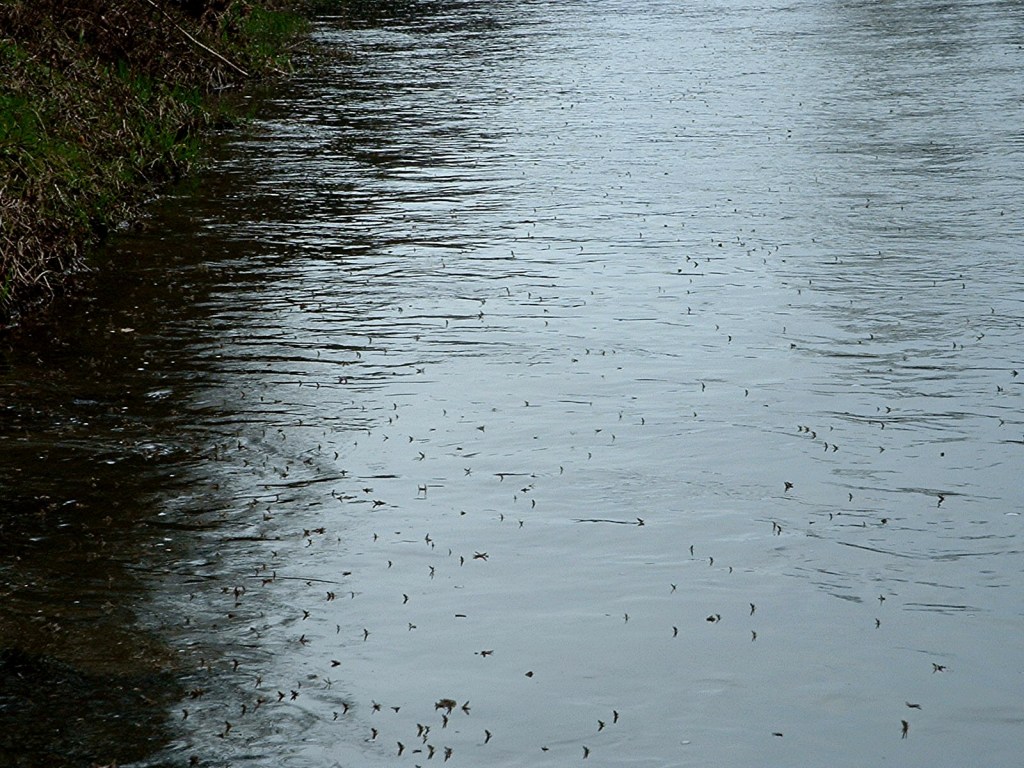
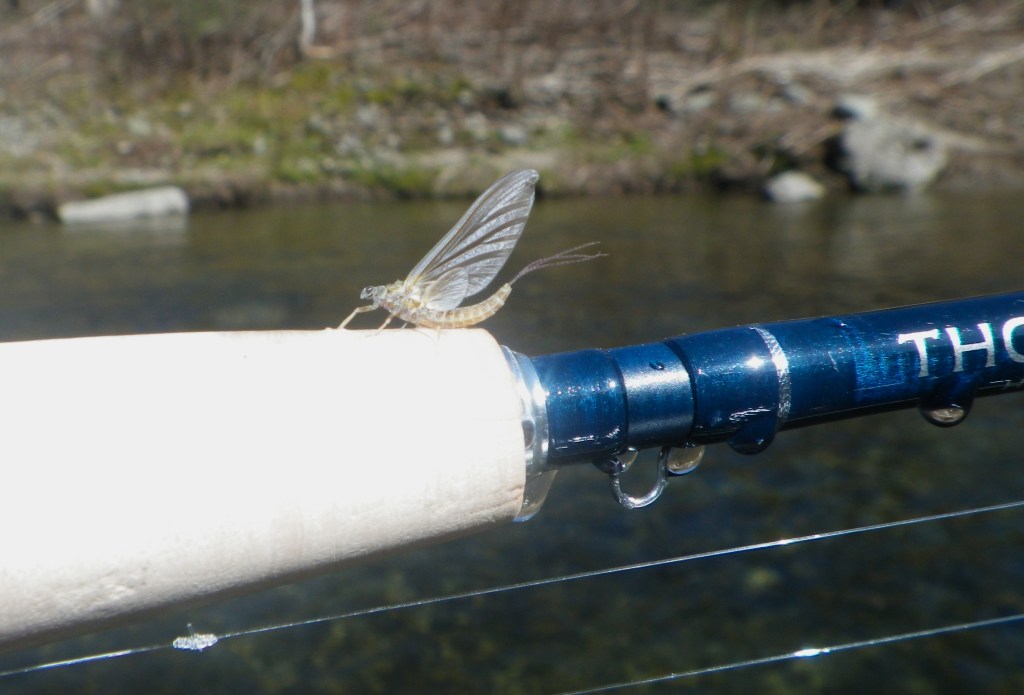
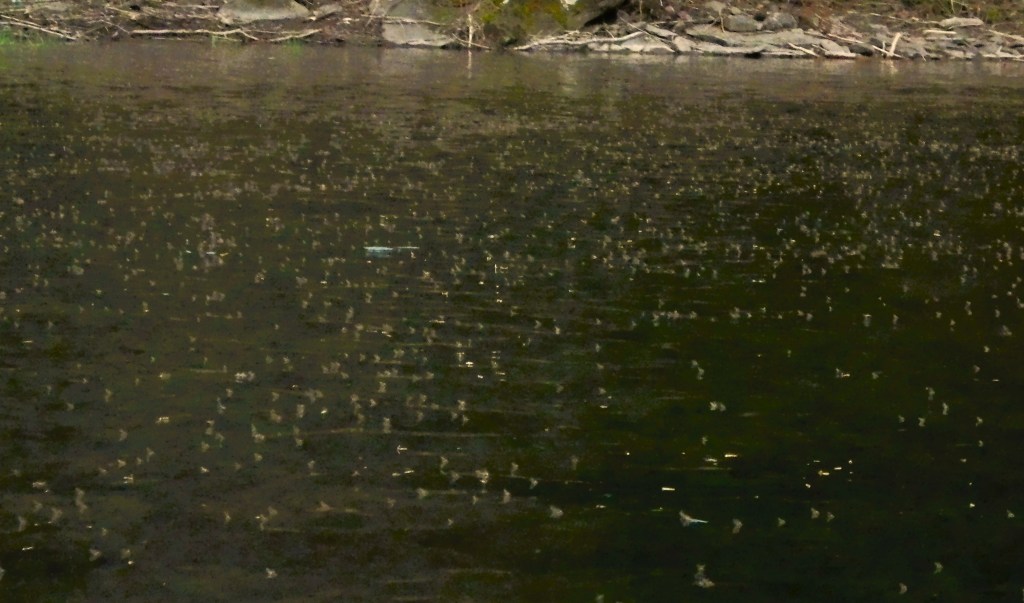
This is what a nice Hendrickson hatch looks like. You cannot help but notice there are a lot more than a handful of bugs on the water. See any rises? NO, you don’t, cause the cold front shut down the couple of trout that had been rising before I took this photo.
I will be looking for a scene like this one, hopefully including rises, when I drift down the river next week. I wish I could say that I had a lot of confidence in finding a nice hatch, but that water is still cold, and cold water doesn’t flow through my version of Valhalla. The deal is, I could find a few flies here and there, and a good brownie or two sipping in some little out of the way pocket along a random stretch of riverbank, and I am very cool with that. Kind of thing that can make your day!



 Bright Waters Catskill