Winter Winds

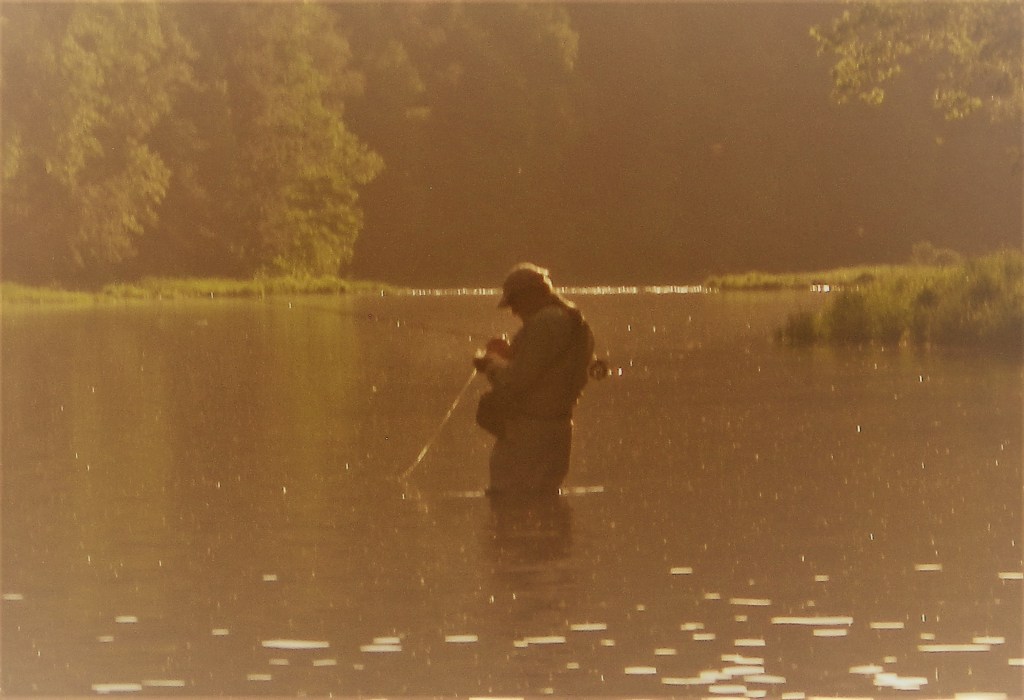
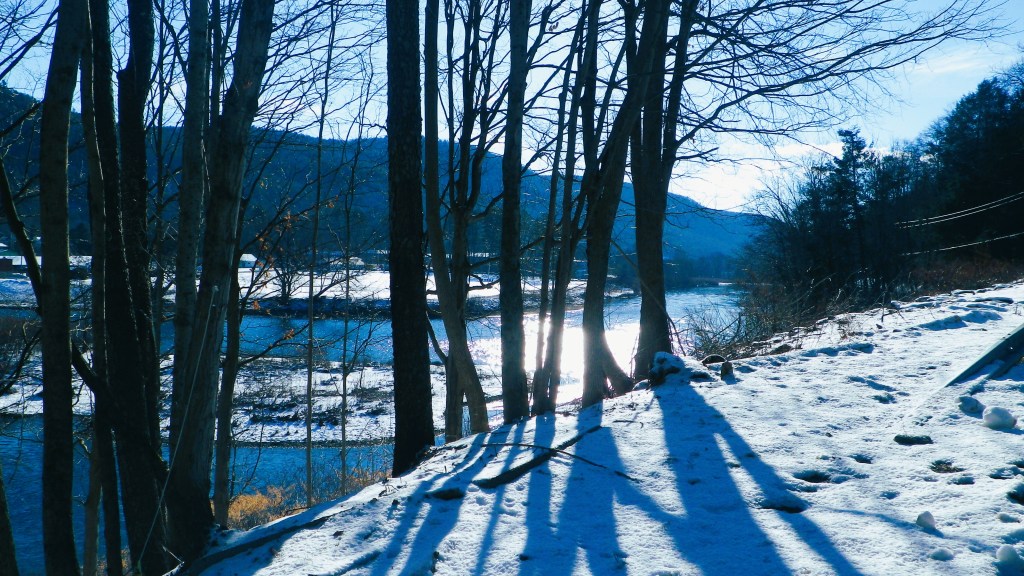
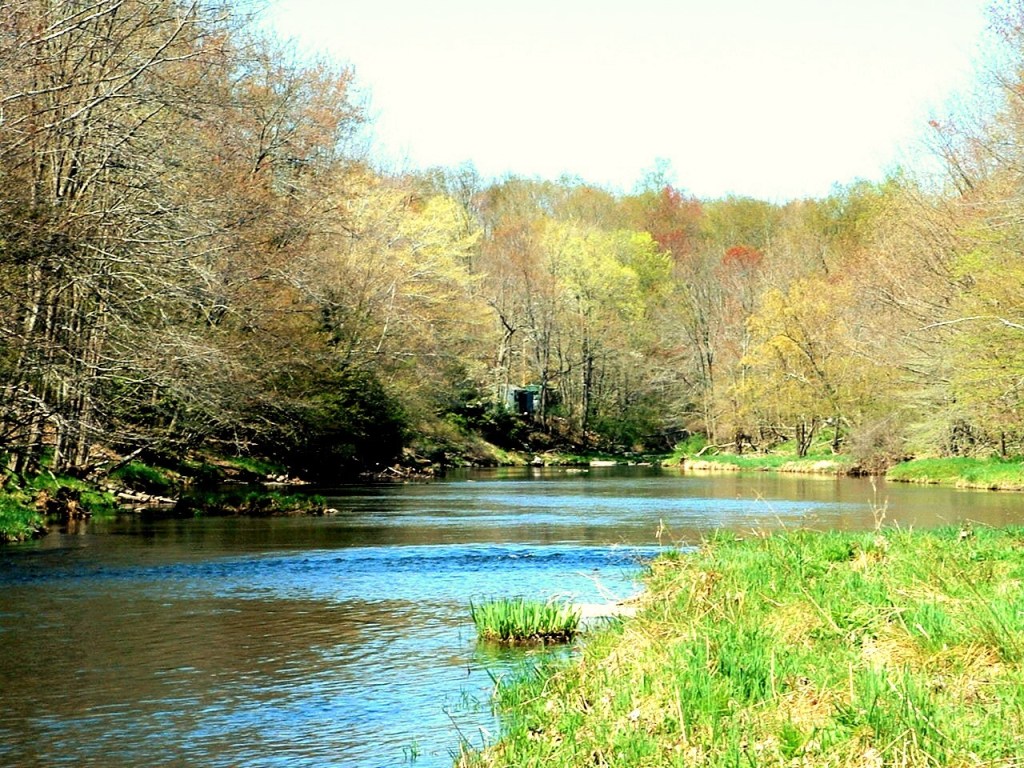
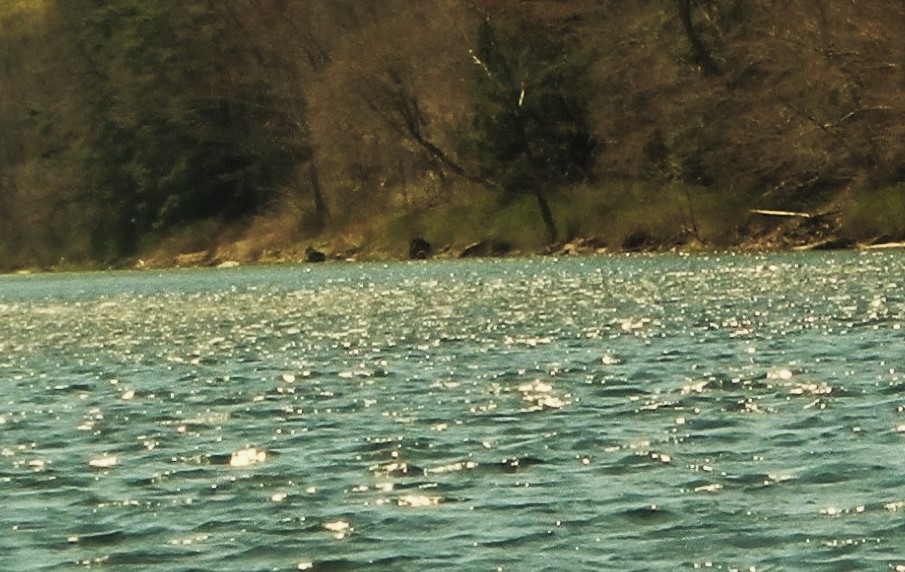
It seems that winter’s winds must find the Catskills to their liking, for they always stay behind to welcome spring. Many times I have sat the riverbank or waited waist deep in the river as those visiting winds blew whitecaps upstream.

I do believe that the Red Gods are behind it. They cultivate those howling wintry winds, teasing them to linger past their season for the benefit of their devilment!

One spring day I dropped the boat into the West Branch, smiling at the forecast for light and variable winds and a warm overcast. I was set to begin counting the Hendricksons with such perfect conditions. Ah, best laid plans…

The Red Gods had other ideas, courting one of those leftover February winds from their hiding place and unleashing it upon me as I anchored along the one bank to reveal a handful of rising trout. Back casts do not fare too well when necessity directs them into the teeth of a steady 20 mph blow.

Wading doesn’t fare such better during such hijinks. Countless days I have endured where the only trout to show occupied some difficult back-eddied lie along the windward bank.

There are times though when blind perseverance has defeated such evil magic. I can recall a wild, windswept day on the Beaver Kill when a rise of trout seemed hopeless. To add to my frustration, a pair of fishermen decided that despite miles of open water they simply had to wade in right on top of me. The interlopers paid their penance that day, for their casting proved to be as lacking as their courtesy. One good fish took a Hendrickson fifty feet out and my Menscer hollowbuilt fired my fly through the gusts, taking the lone trout that pool surrendered, a beautiful twenty-inch brown!

It is funny how many fine tales I have read of wondrous spring hatches bringing great fishing under the worst conditions. I have huddled against winds, hooded and hunkered to keep the sleet from biting my cheeks, and shivered in countless chilling spring rains, and on none of those days can I recall so much as a threat of fishing.
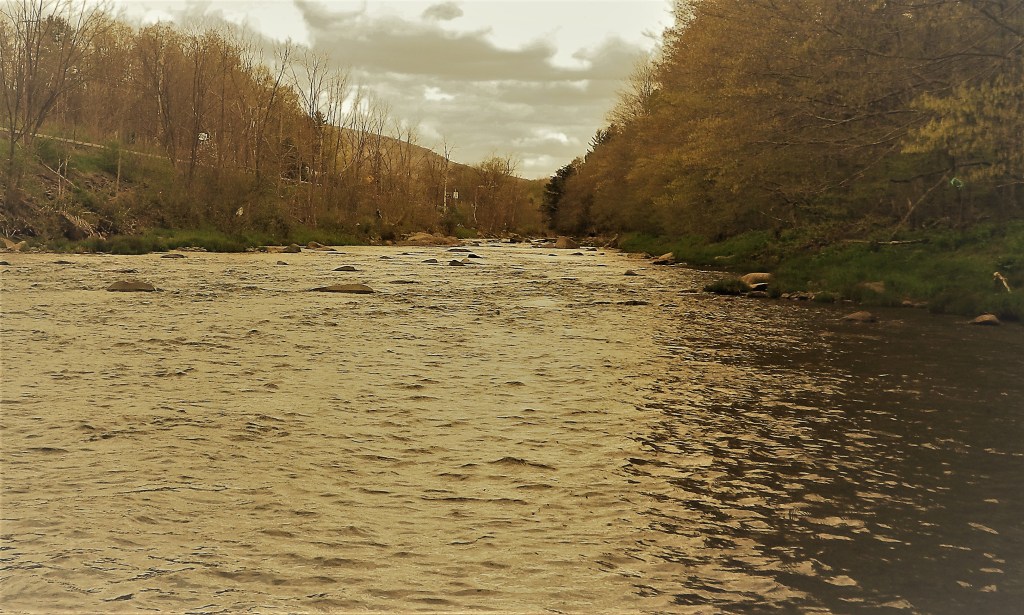
And so, the winds rattle my little house and bring fond memories of suffering the wrath of the Red Gods. Of course, as winter continues to defy the calendar, I’d welcome some time on the river to enjoy that sweet torture. These last two weeks of March seem endless…
Sprung?

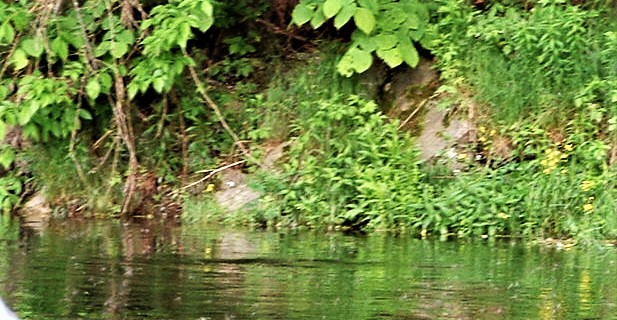
It is the first day of spring 2024 and it is twenty-six degrees here in Crooked Eddy. The grass bears evidence of a few flurries, and the Weather Channel is all a-bubble about snow and wind and rain; all of the anti-fly-fishing things Mother Nature is poised to bring forth. Leave it to the lady and her Red Gods to punish us for daring to covet the thought of an early spring. Wasn’t it just Saturday that I watched a Quill Gordon rising from the river in the sunshine?

I tied half a dozen QG wets yesterday, all save one of them using my Atherton Inspired dubbing blend, a sinful activity borne of desperation and remorse! Indeed, this is the most difficult stretch of the long wait between seasons, teased for months by milder temperatures and warmer waters, I can see that first rise to my dry fly before me. It is not to be.

Winter will have her due.

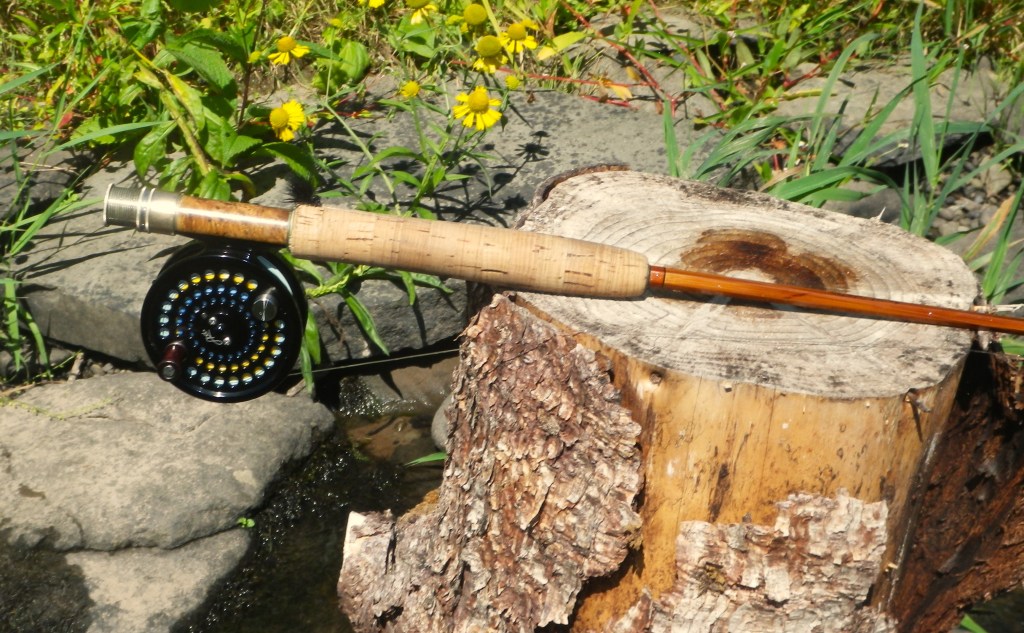
And so, I will continue with preparations. There is a new number three fly line to be spooled on a classic Hardy Featherweight, and there is no rule that dictates I cannot tie the terrestrials and the tiny duns of summer. I will make the appointment for my boat trailer’s inspection, uncover it and make it ready for fishing, for the reservoirs continue to spill. With more rain on the way, the season may begin with a solo float. Heavy precipitation will bring a return to unfishable conditions for the wading angler, and the projections seem to favor that result.

I left my name for the Angler’s Reunion Dinner, March’s last event and a grand Rockland House feast welcoming April, and before that night baseball will return with games that count. Life will continue to move slowly as winter grudgingly leaves us, though angler’s hearts will beat faster each day.

Harbingers

To be official, spring arrives on Tuesday, though the week just completed was far more springlike than the one here begun. We had two absolutely gorgeous days midweek, 67 degrees, bountiful sunshine, the kind of days to perfectly usher in the evening porch sitting season. Yes, I took advantage of them. The first day of spring conversely will bring a return to the thirties, with snow showers on Wednesday morning.

I slipped out of the Fly Tyers Guild meeting just after Noon yesterday. Having tied a few Quill Gordons, I wanted to spend my afternoon wading bright water and casting them, I hoped by some miracle to a rising trout.

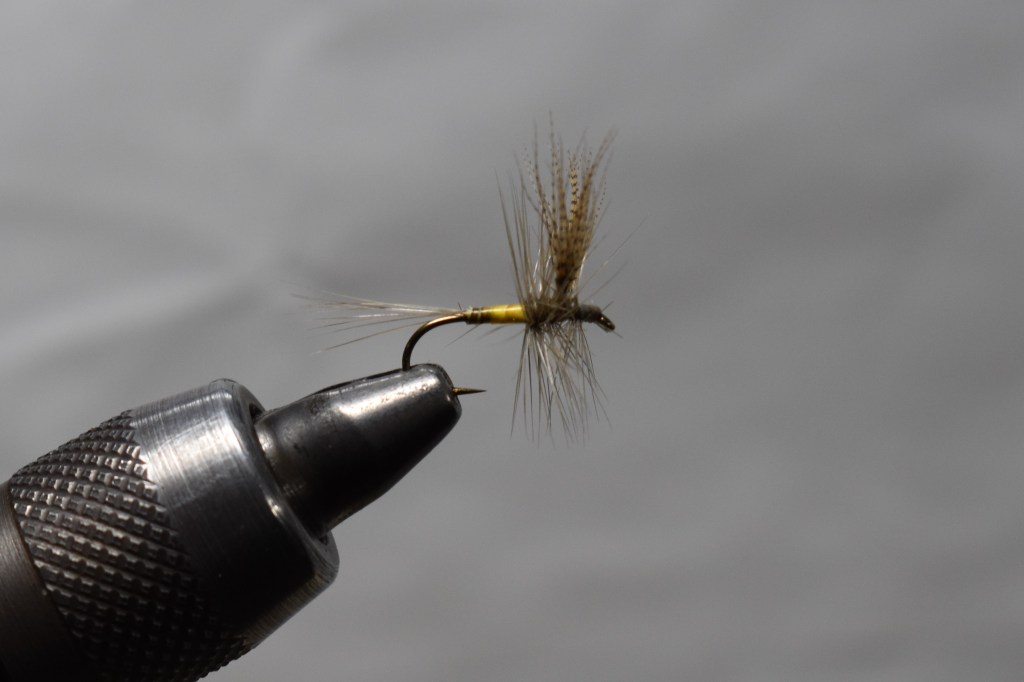
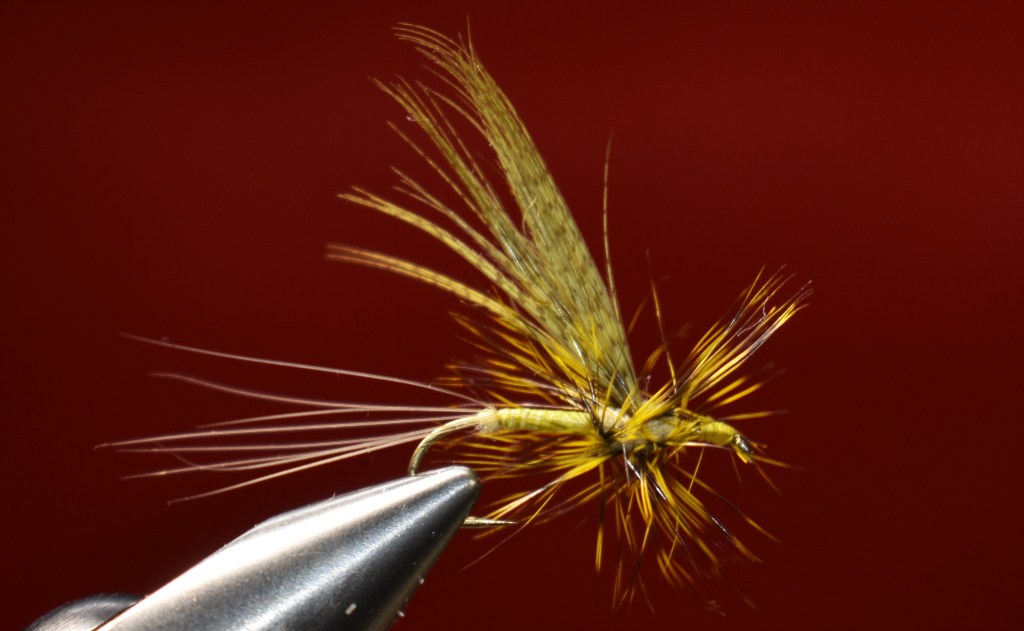
The Dyed Wild Quill Gordon 100-Year Dun has been a go to pattern whenever I encounter that “first hatch” of spring.

While I knew that the ten-day forecast wasn’t promising, the talk at the meeting was centered on another two full weeks of cold weather, another perfect example of the Red Gods setting up anglers for a fall. I figured this was my last chance to spend a few quality hours on a sunlit river.

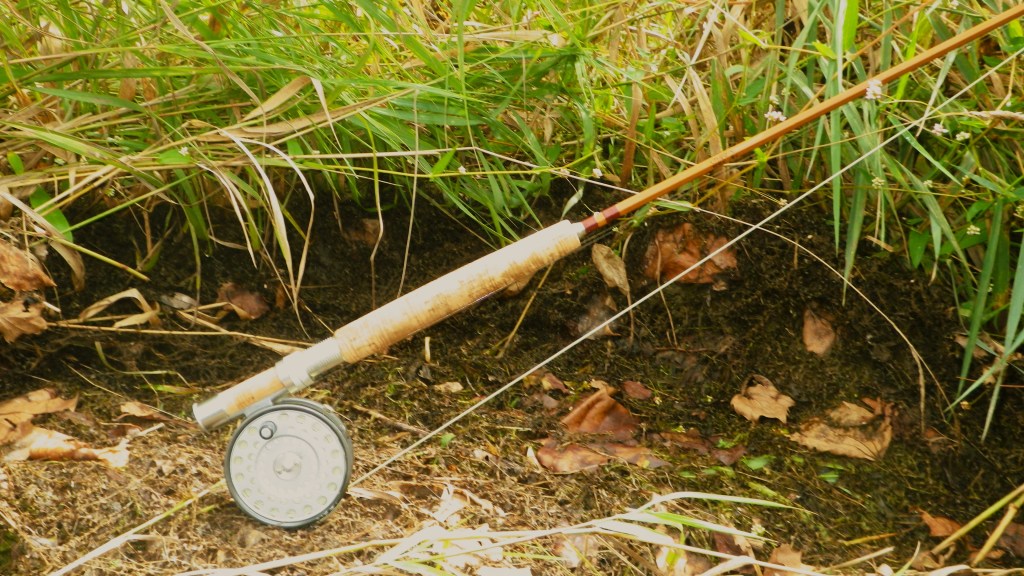
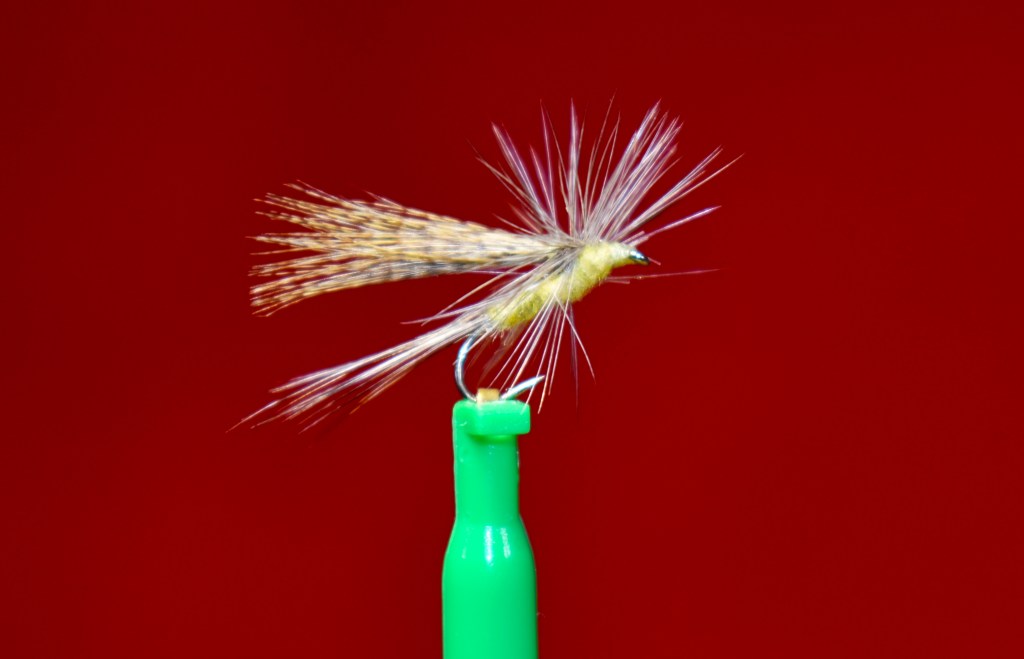
I took a Galvan reel with a fine tapered seven weight line along to match with my Kiley, it’s leader already set up at home with four feet of fresh tippet. With the number seven line, that rod is well equipped to toss one of the smaller streamers I like to swing under winter conditions, but it does a remarkable job with the dry fly I was hoping to use. The river looked so inviting in the afternoon glow that I knotted one of the Fox Squirrels, also tied during the meeting, and sat down on the riverbank to watch.

I hadn’t even matted the brown grass down beneath my seat when I saw a hard rise three-quarters of the way across the river, smiled to myself, and rose to make my way out into the flow.

Now I would like to tell you that rise was repeated, ideally just after I had waded into comfortable casting range and pulled a dozen feet of line from the reel. I really, very earnestly wished to be able to tell you that. The Red Gods though are not ready to allow the joy of a perfect cast and perfect take to a drifting dry fly. That one rise would be the only one I would see.

The river was at last at a good flow, clear and marked here and there for a couple of hours by an occasional mayfly or early stonefly drifting on the surface. I had checked the water temperature during my retreat on the bank, reading 48 degrees and whetting my appetite for success. I surmised that the mayflies that showed just often enough to keep me interested were Quill Gordons. One did fly past nearby, well lit by the sunlight and betraying that yellowish coloration to it’s abdomen, and I took that as confirmation and tied on the Dyed Wild 100-Year Dun I had tied during the morning.

I did do some casting of course. I peppered the entire area where that rise had shown, as well as all of the water around the various early season lies experience highlighted. My shoulder has that telltale twinge this morning, evidence that I worked the water, shook off the old lethargy of a winter indoors.

I seemed to get my wading legs back much quicker than I have in some years, so something of value was accomplished; my comfort with wading no less than the boost to my spirit that any taste of spring on bright water offers.

It is looking bleak over the next ten days, wind, rain cold – a little of everything I don’t need any more of. I know that weather patterns can change easily in these mountains, that warmer winds can find their way north again as they have all through this winter. It is time to get down to work.

My vest needs to be dusted off and readied for the season, the drift boat uncovered, cleaned up, checked out and it’s trailer inspected. Any significant rainfall is going to keep those reservoirs full and spilling, and March has been a wet month so far.

My calendar says there are 22 days left for waiting and preparing for another dry fly season, the real fly fishing that I live for. I still believe there is a chance that things may start to happen earlier than my traditional second week in April, and I’ll be prepared for that. The season can last anywhere from six to seven months, and I don’t want to miss a day of it!

Small Waters

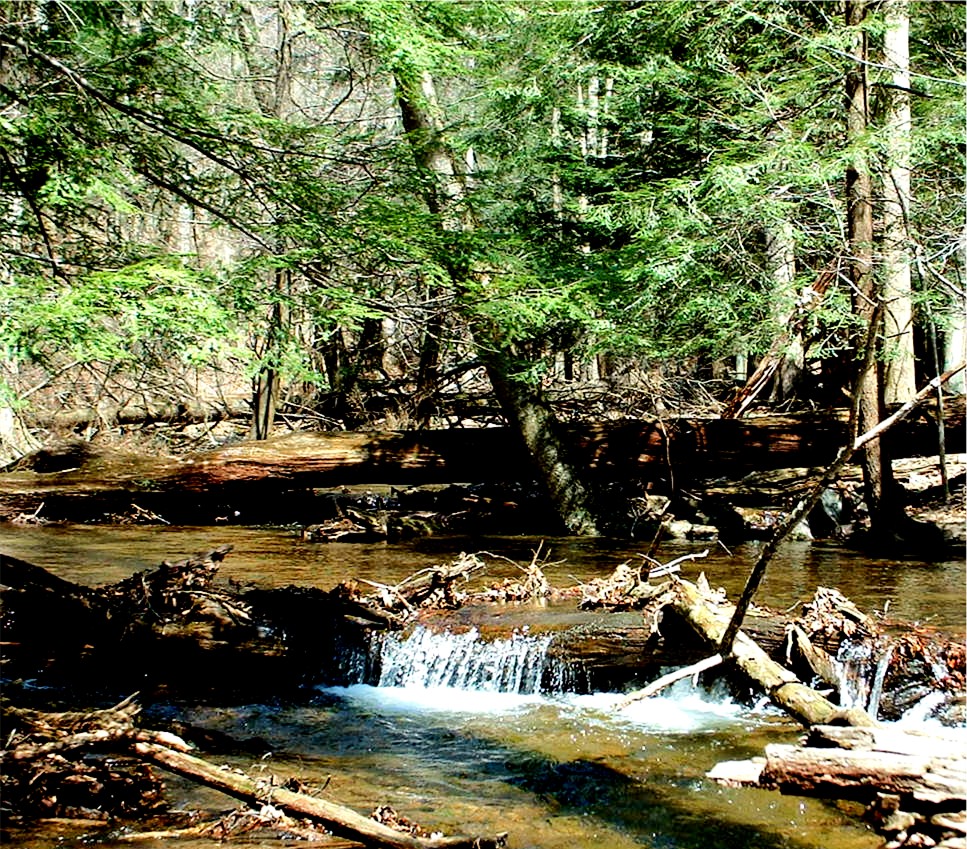
Broad Run above Chambersburg: sparkling, intimate waters ideally suited to a cane rod of six feet or less and the wild Brook Trout that called it home.

Such a beautiful day yesterday, a winter’s day in accordance with the calendar, belied by the bright sunshine and sixty-seven-degree temperatures here in the Catskill Mountains. Spring lies just five days hence, though a return to colder weather is expected. Yesterday and today though; paradise!

With all of our rivers still writhing with the high runoff from Saturday’s rains, I could not resist the call of small waters. Driving east toward Livingston Manor, I turned off old Route 17 and travelled away from the village. There were others abroad with similar ideas, and I drove on beyond the wider waters of the Willowemoc to DeBruce where legend says celebrated angler George M. L. LaBranche cast the first dry fly in America.

I found a quiet reach, small water, where the stones were visible even in the deeper runs, and set up my little Orvis Madison bamboo. For a change I spooled the suggested number six line, for I expected to be casting short in such environs, and yes, despite all reason I succumbed to the warmth of the mountain air and the glory of the sunlight and knotted a dry fly to my shortened leader.

My Catskill Adams danced merrily upon the bright water, though it found no trout to greet it.

I was once a fisher of small waters. The spring creeks of the Cumberland Valley are intimate environs to be sure, and I visited many others during my twenty-five years there. As hatches dwindled and I spent more of my precious angling days here in the Catskills, the region’s historic and larger trout rivers captured my heart.

A good friend mentioned as we spoke last weekend that he was surprised that I did not explore the myriad small streams of my new home. In reply, I said that I was set in my ways perhaps.

I have a friend on the east side of the Catskills that spends a majority of his angling time on high country brooks, and from reading through his field notes, he finds wild trout on most occasions despite the season.

I must admit that I have been seduced by the cunning and the stealth required to hunt the trophy sized browns and rainbows of the wide Delaware, the Beaver Kill and Neversink, where I easily settle into the simple joy of casting a long line with a favorite cane rod.

I didn’t fare too badly in yesterday’s tighter quarters, hanging that dry fly on a bush behind me just once. Those skills, the tight precision of aiming both back and forward casts, have laid dormant for many years.

Central Pennsylvania’s Spring Creek in Winter (Photo courtesy Andrew Boryan)

There may be similar opportunities ahead, for more rain is expected just about the time the Beaver Kill reaches a wadable flow. I still have a bit of exploring outside the expanse of the Catskills lingering in my mind, and I have twenty-five days until it’s time to walk the Delaware or the Beaver Kill with a Quill Gordon and a smile.

The allure of small waters always includes sweet solitude. There are times when that is worth more than the thrill of trout measured in pounds.

Nearly Spring

The wind’s thrashing of my little house awakened me continually throughout the night, and I arose to see the snow blowing like specters in the darkness. It is the eleventh of March, a week and a day until the spring equinox arrives, and it is 29 degrees in Crooked Eddy.

The reservoirs of the Delaware system are spilling, and our rivers remain in spate, some with flows still rising this morning. The Beaver Kill has receded markedly from it’s crest at 6,100 cubic feet per second, down to a gentle flow of some 2,530 cfs, just five times the ideal wading level! Once this storm blows through, three quite pleasant sunny days are to follow, before another half an inch of rain falls on our Catskills to presage the weekend. Though the warm sunshine will be most welcome, there is no chance that I’ll be fishing my home waters this week.

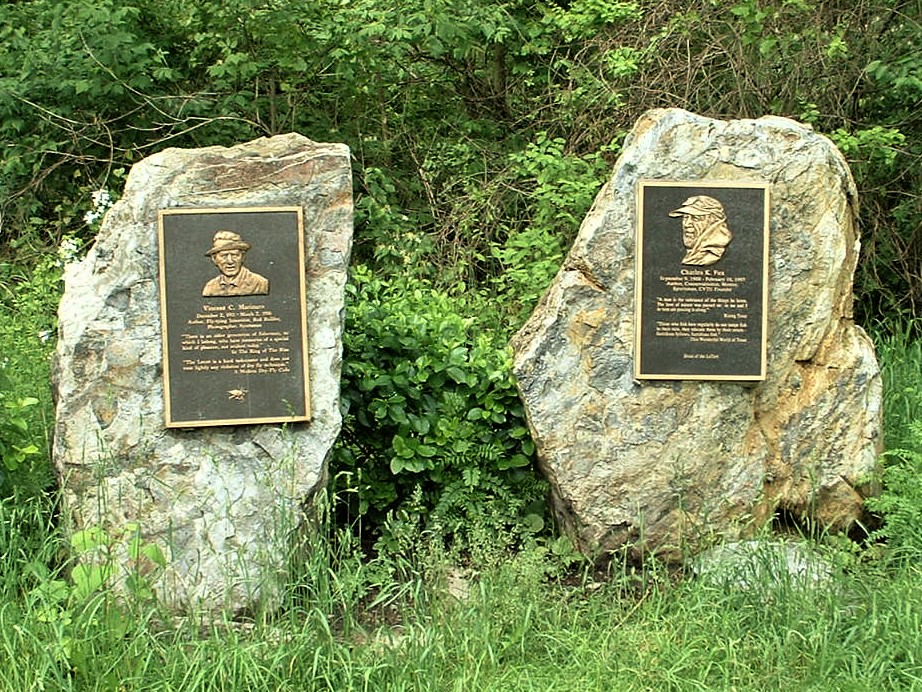
The monuments behind the pavilion in “Marinaro’s Meadow” on Letort Spring Run

I awakened once dreaming about my roots, somewhere in the middle of a conversation with the late, great Ed Shenk. The words vanished upon full consciousness, as dreams are wont to do, but the image of my old friend remained in memory as I rolled over and stretched the sleep from my bones.

I would be fishing there most likely, gliding along some trail through the water meadows with thoughts of big brown trout in my head. Spring often came early there in the Cumberland Valley.

I wrote the other day of the last truly early angler’s spring, when mayflies began popping this month more than a decade ago. We had a run of seventy-degree days in Chambersburg that March, and I took a fateful walk along Falling Spring after my travel plans had fallen into the trap of auto repair. I brought twenty-five inches of wild brown trout to hand that morning, my largest from the silken little spring creek I called home for twenty years. I keep the small black Shenk Sculpin that delivered that beast as a talisman of my good fortune.

The fishing in the Valley had declined by then, and that trout was a surprise to say the least, seen finning there beside his twin upon a glance as I was striding by. An early spring can astonish you with a quick flash of magic like that!

Another early season with some March magic: brown grass, bare trees and brown trout. The photo of yours truly with this 23 inch long old warrior was taken by an uninvited tagalong fisherman who read my newspaper column and wished to see how it was done firsthand. It seems I showed him.

Thinking of those days while our river temperatures rose had me more than planning to get out and begin my search a month early. Ah, but weather does what she wishes of course, and the contemplation of waiting continues…
I’ve spent far too much time housebound, fighting with colds and bronchitis and feeling depleted of all energy. I need that sunshine badly, and I may just head out this week to do some exploring, though I don’t expect to find the clear flowing streams I’m dreaming of.

My friend Mike Saylor called on Saturday to cajole me into a quest for steelhead, but that lack of energy caused me to decline his offer. I hope the weather and the fish reward his gesture and he has a great trip. Many seasons have passed since I fished for that tug, and the flash of chrome.

I did dust off my vise and tie a dozen dry flies to accompany a little regional exploration that has been dancing through my mind. Catskill Adams’s, my 100-Year version of the Quack, and some little black stoneflies with mojo dubbing courtesy of Raven the Cat; just a few that could tempt a small stream, early season trout should I find one of those mythical clear running creeks after all.

I’ll most likely carry my camera rather than a rod and reel, though the little Orvis and my waders will be stored right there in the car should some unexpected glint of magic catch my eye.

Photo, and fly rod, courtesy Tom Whittle

Promise, Snatched Away

Crooked Eddy – April 8th, 2022

I was leaning heavily towards the prospect of an honest to goodness early spring, but it looks like I may have to choke on that sentiment. NYC seems convinced that we are in for a rush of high water, for they ramped up the releases from the nearly full Delaware River reservoirs yesterday to make a little room for the inch and a half of rain expected today and tonight.

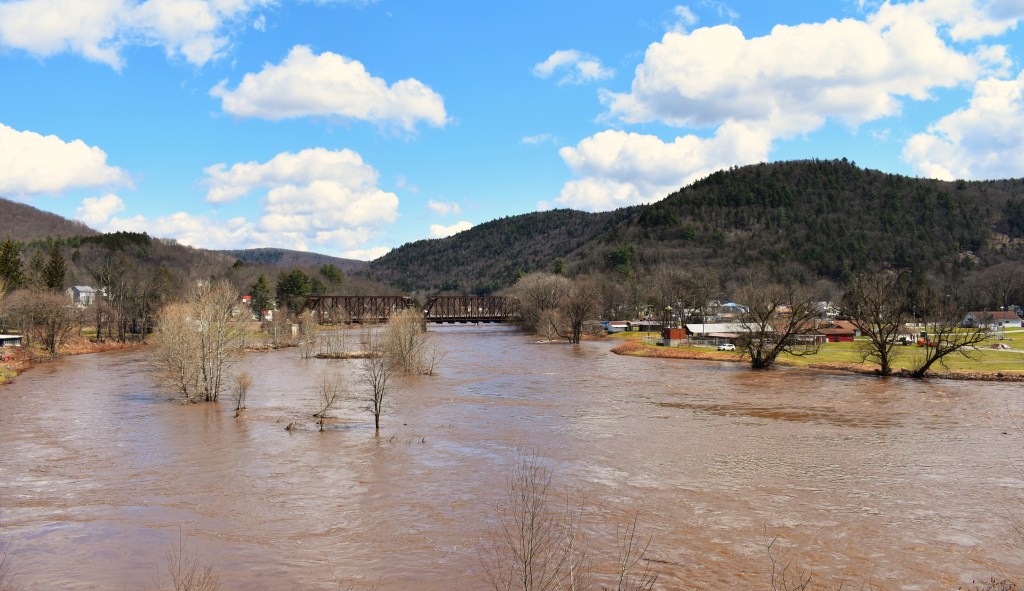
I took a riverwalk yesterday afternoon to enjoy the sunshine, and noted that the East Branch was still high and off color from our last rainfall event. A fresh inch or more shouldn’t give us a scene like 2022 above, but it isn’t going to do anglers any favors either.

Just when the rivers have been responding to our warmer air temperatures, some flirting with the mid-forties, the outlook has changed. Spilling reservoirs will significantly affect already high flows and snatch away the chance of the rare early dry fly fishing that was beginning to appear possible.

My friend Chuck Coronato snapped this photo at the beginning of last week while fishing an emergence of early black stoneflies. He was a little south of the Catskills, but close enough to get my heart racing at the prospect of one of those very rare early spring seasons!

My mind has been working over the possibilities ever since Chuck’s message arrived. He found rising trout and took a lovely wild brown on a dry fly, and I wanted to get right out there and do the same thing! I checked the temperature of a few reaches of Catskill waters, saw them closing in on the mid-forties, and really started to believe.

In thirty years of Catskill angling, I can remember only one season when fishing began this early. It was more than a decade ago, and the same weather patterns that kicked things off in March in Central Pennsylvania took hold of the Catskills. Hendricksons hatched a month early on Penns Creek, and several weeks early here. Anglers were grinning then, but there was a price to be paid for the early start.

I was working of course, and I couldn’t run up here at the drop of a hat. When I did drive up to enjoy the early deliverance from winter, I found the hatches thin and spotty. They would linger for twice their typical duration, weeks instead of days in some cases, and that pattern continued throughout the season, at least when I came up to fish. Mayflies would trickle off for short periods, often so few of them that the trout failed to take notice.

I loved the thought of an early spring this past week, but I cannot honestly say I am willing to pay that same price. Perhaps I will try some smaller waters once this big rainstorm subsides. I have grown accustomed to waiting until the major Catskill rivers were ready to shine, but it seems as it the milder weather will continue between some smaller goodbye kisses from winter. I’ve got a seven-and-a-half foot bamboo rod that’s just right for prospecting some upland streams, and a little history I am anxious to chase.

Early Season Flies

There is nothing quite like the Hendrickson hatch here in the Catskills! My A.I. Hendrickson 100-Year Dun has become a favorite and is well represented in my boxes.

Ah, here we are nearly on the doorstep of spring! The calendar says we are a week and a half away, while my angler’s instinct expects dry fly fishing within a month.

We wrapped up our second winter of Thursday night Zoom gatherings of the Catskill Fly Tyers Guild last evening and are looking forward to a live meeting at the Museum’s Wulff Gallery next Saturday. In person, we will be trading patterns for early season flies, though those of us fortunate enough to be enjoying retirement are likely finished with those. If you are not, and are within a reasonable drive, consider joining the Guild and attending the meeting. I am sure you will make some friends and pick up some new ideas to fill out your early season fly boxes.

Here in the Catskills, some of the first insect activity we find are the little black stoneflies. These are typically a size 18 with a longer wing. I don’t generally find trout taking them on the surface, though with this winter’s mild weather and warmer water temperatures it could be worthwhile to carry a few with you.

The mayflies are the bugs that get the better trout interested and, depending upon your choice of river, the first hatches will usually be Quill Gordons and Blue Quills. Theodore Gordon’s signature fly is still a productive trout pattern, and I complement my own selection of patterns with biot bodied and dubbed dries, both those bound to the Catskill tradition and several parachute and CDC winged, low floating duns.

My Blue Quill selections follow a similar progression, from hackled Poster dries through 100-Year Duns and CDC’s. In some seasons, Blue-winged olives are mixed in, and can be difficult to spot when there are also Blue Quills on the water. If your quills are refused or ignored and your drifts are good, consider tying an 18 olive to your tippet.

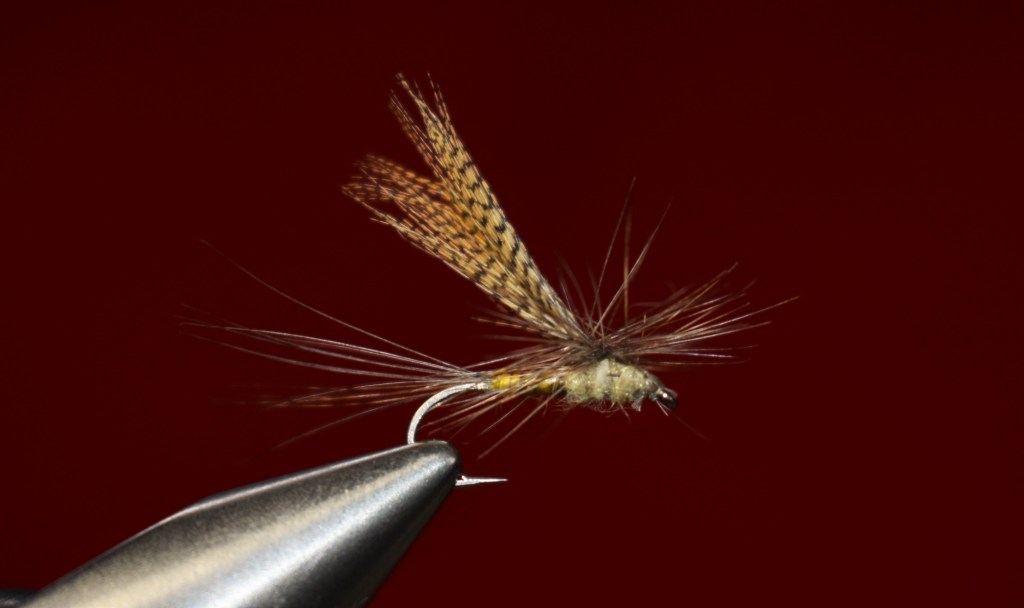
A Translucence 100-Year BWO

Once the Hendrickson’s begin to hatch in earnest, you will find the trout keyed in upon them in various stages. I carry far too many patterns thanks to my need to experiment, but angler’s should have hackled duns, low-floating CDC or parachute duns, a reliable emerger or cripple and a Rusty Spinner as a minimum selection. Tie a few of each in a smaller size as well!

Our most abundant Hendrickson species seems to be the tan bodied mayfly that inspired Roy Steenrod’s legendary Hendrickson dry fly, typically seen in a size 14. Tie at least a couple of your favorite styles in sizes 12 and 16 just to be prepared. Nature writes her own playbook!

Red Quills are generally smaller, copied by a size 16. I don’t see as many of these as the larger tan duns, the females in accordance with conventional wisdom, but do not get caught without them.

I see two additional variations that I expect are related subspecies, though not as reliably as the tan size 14 flies we call Ephemerella subvaria. One of these, which I find on the water at the same time as the larger flies is a cocoa brown size 16. The other hatches after the main event subsides, another size 16 colored a dirty golden yellow that I refer to as the Lady H.

The flies discussed above get me through the early portion of the dry fly season, taking us into May when caddis hatches and March Browns loom on the angler’s horizon.

You will want some of those Rusty Spinners in April and early May of course, sizes 12 to 18, and last year I was surprised with a brief appearance of flying ants during a hot second week of April. A tiny plastic hook box is still tucked into my vest with a handful of size 18 winged black ants, just in case.

Marching Toward Spring

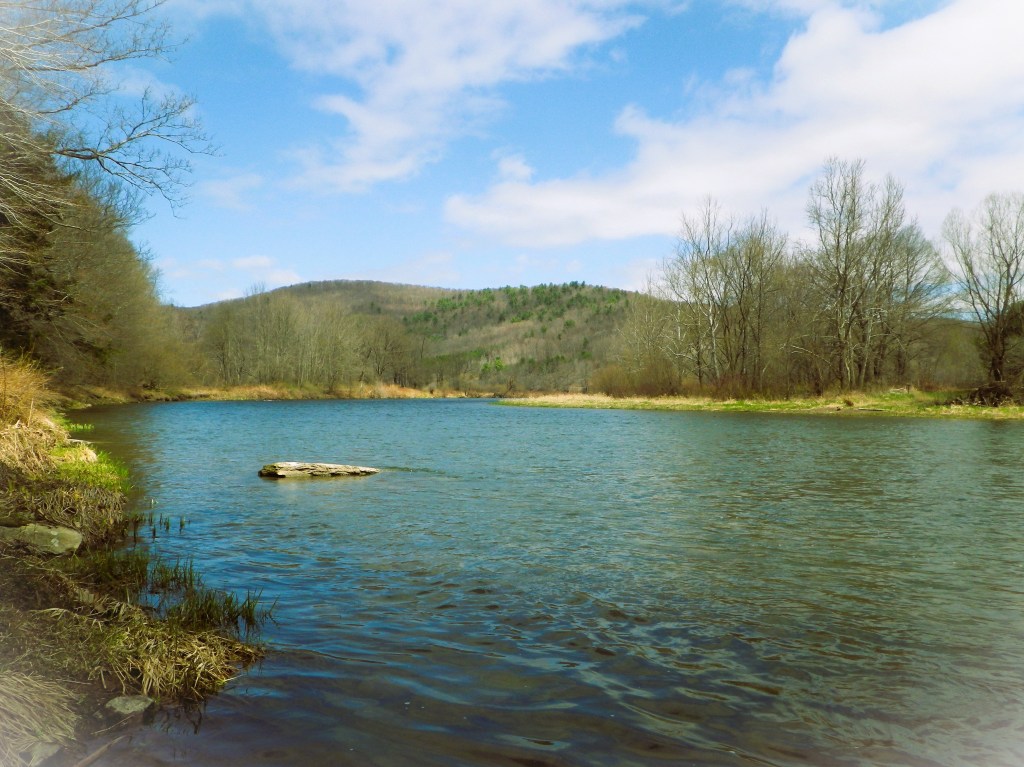
Springtime awakens on the Neversink

The rain falls gently this morning as March continues it’s lamb role, uncharacteristically on it’s winter end. Milder temperatures continue, though the rains will raise the rivers once more, keeping this fidgety angler under roof. Should the day have dawned with sunlight rather than clouds, I would be out there right now.

I had a message from a friend this morning, and his words caught me envying his more southern exposure. He wrote that he had begun his dry fly season yesterday, finding early stoneflies and rising trout in a quiet wild trout stream hidden between clusters of civilization where one might least expect to find one. His photos remind me of Maryland’s Big Gunpowder Falls, the stream that brought my wild trout passion into focus.

I count thirty-four days until I may truly hope for my own dry fly commencement. The Wheatleys have been coaxed from storage that I might check the contents of each compartment, readying them for their place in my front vest pockets a month from now. Should this warm trend actually evolve into an early spring, I will be found searching the rivers before that month has passed.

I too witnessed early stones and a handful of soft rises last week. I was quite simply unprepared, for I have not seen a rising trout earlier than the last week of March these past five Catskill seasons. That exception was a loner, and a good deal of time passed before I found another ring upon the surface. Though it may seem foolish to carry dry flies and suitable tackle on a rare fishable day in February, I have already taken steps to meet the impossible.

Small waters are more conducive to such early opportunities, the larger rivers demanding stouter tackle and sinking leaders to swing a winter fly deep and slow. In my Falling Spring years, I carried the same seven-foot One Ounce Orvis rod in winter that I carried throughout spring and summer. A quick clip of the Shenk Sculpin and a tippet change had me ready to knot a little stonefly or midge pupa to drift in the film whenever a rise appeared. Today my winter rod is often eight or more feet of bamboo, my reel spooled with an intermediate line and a sinking leader. A spool change is required to command a dry fly, and that entails wading gently to the riverbank, restringing the rod, adjusting the tippet, all before even selecting a fly. In short, precious moments that those miraculous winter risers fail to provide.

I miss those winter days on Gunpowder Falls and Falling Spring. I have bargained the possibility of year-round dry fly fishing for the glory of the season’s full complement of hatches and large, difficult wild trout. It has been a good deal, one I do not regret, though my mind still wanders amid the long wait for spring.

Dreaming of Drakes

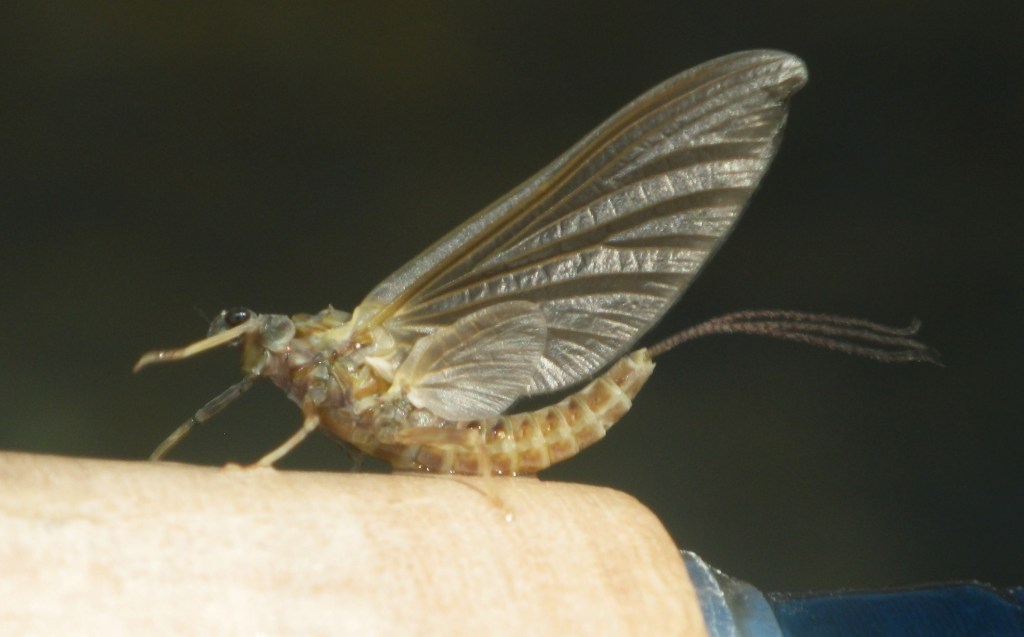
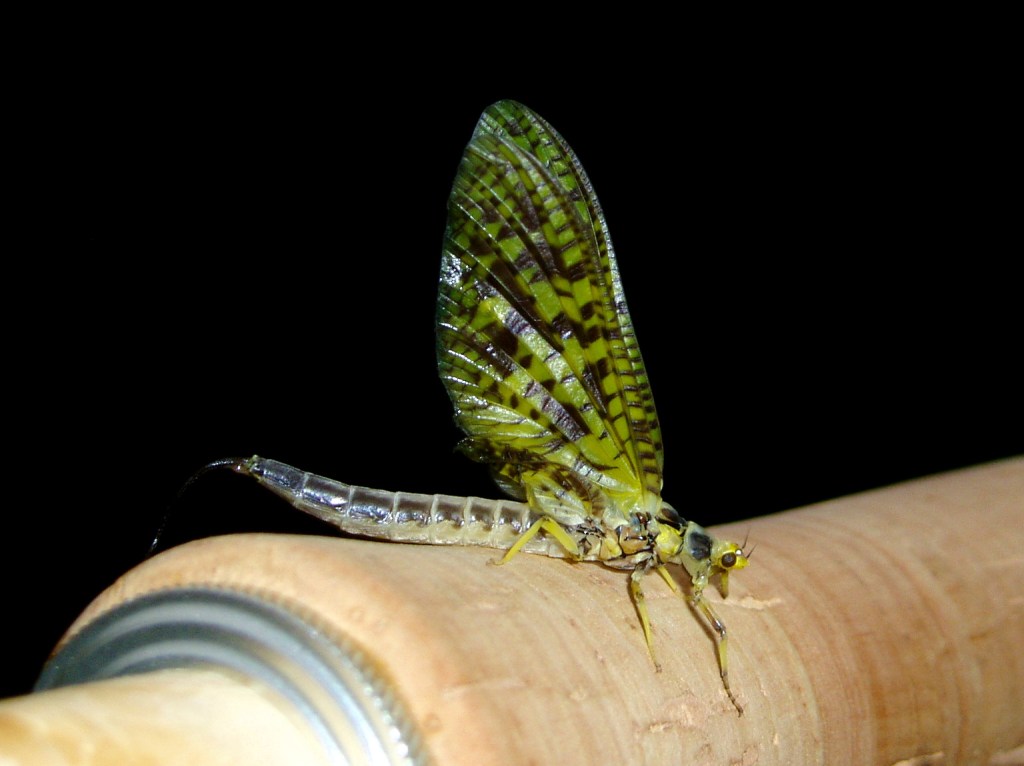
A freshly emerged Eastern Green Drake reclines on the grip of an old favorite Winston fly rod.

More than twenty years have passed since my first experience with the Green Drake hatch here in the Catskill Mountains. Mike Saylor and I had made the trip up to stay and fish with Pat Schuler at his beautiful lodge in Starlight, Pennsylvania, and we arrived early on a soft, fog shrouded spring morning. In talking with Pat, he mentioned that “fishing had been pretty good” and asked if we wanted to take a half day float trip. We were scheduled to float the next day but jumped at the chance for an extra afternoon and evening with the best guide on the Delaware River.

I had fished the Drakes on Penns Creek a decade earlier, witnessing the spectacle of the hugely crowded stream and the huge mayflies hatching while listening to the boils of rising trout in the darkness. There was some more productive fishing early in the mornings, stalking the odd trout taking leftover flies from the previous night, but the great hatch was a pitch-black affair on the big limestoner; in short, a guessing game.

A wet and bedraggled 100-Year Drake, recently removed from the maw of a trophy Catskill brown trout. Notice the absence of darkness?

After fishing through morning and early afternoon on the Beaver Kill, Mike and I met Pat at four o’clock that afternoon. I guess we had floated half a mile when the first epic burst of white water catapulted skyward – a good Catskill brownie had taken a Green Drake!

We landed ten fish apiece that afternoon and evening, the smaller ones measuring better than eighteen inches. Most of those trout weren’t small ones. The inset photo at the top of my blog page shows my best of that day, a brown measured at twenty-three inches. Mike’s best was twenty-one. These big trout were all taken on the big dry flies, Green Drake Comparaduns and Brown Drake Comparaduns that Pat provided. It was an epic beginning to a truly epic trip.

The Catskill Drake fishing wasn’t the guessing game under full darkness I had witnessed at Penns Creek. Here the flies hatched sporadically throughout the afternoon, and the rises were anything but subtle. My angling life was changed forever that day.

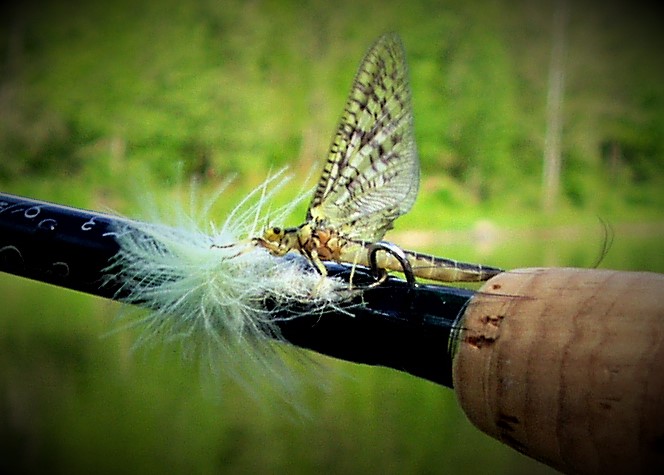
The real deal, astride my rod, ponders the well chewed, impressionistic CDC comparadun that often proved to be as attractive to the trout as he was.

Throughout some fifteen seasons beyond that day, I devoted myself to the Cult of the Green Drake. I designed new fly patterns, modified them, tested them, and reaped the rewards whenever the Red Gods allowed me the grace of finding the right pool to meet the hatch. The CDC flies were mainstays early on, though it seemed as if more innovation was needed. There were years when the hatch was sparse, and the trout reluctant to take the duns reliably. They chased the nymphs swimming toward the surface, making deep boils when they captured them inches below the film. I remember one emerger I designed that solved a number of those days, but there was always a drive to find the perfect dun, the fly that would take the uncatchable fish that ignored all my best flies.

An early 100-Year Dun with a biot body, dyed mallard flank wing and hackled in the late Vincent Marinaro’s thorax style.

The canted single wing derived from studying Theodore Gordon’s flies showed immediate promise, hackled in the thorax style it proved somewhat difficult to tie, and I continued to refine it, finally settling upon a canted parachute style that sat on the surface provocatively. The 100-Year Drake proved itself over and over again, taking big reticent browns who refused my other duns.

Twenty years have passed in a blur, and the amazing hatches I once witnessed are now a memory. The decline occurred in fits and starts, but seems all too real these days. Yet I am still captivated by the magic of the Green Drake and what has been. New patterns evolve, part of my quest to make the most of scarce and dwindling opportunities. I hope the decline in these great mayflies is cyclical, that their numbers will rebound, and the hatch return to prominence.

One form of the Cripple that subdued my largest Catskill brown on the dry fly.

Last season, the hatch I encountered was no more than a trickle, a tease compared to the wonderful fishing of two decades ago. A handful of trout were attracted to the sparse appearances of Drakes as darkness gathered, and all duns were ignored. Very low, clear water coupled with the tiny number of flies that hatched made the fishing nearly impossible. My most recent variety of a CDC Cripple was the only fly able to bring a trout to hand.

As I wander the dreamscape of the past twenty years in memory, I crave the opportunity to continue my quest, though I must accept that there may be no more of the great flies in my future. One cannot imitate that which no longer exists.

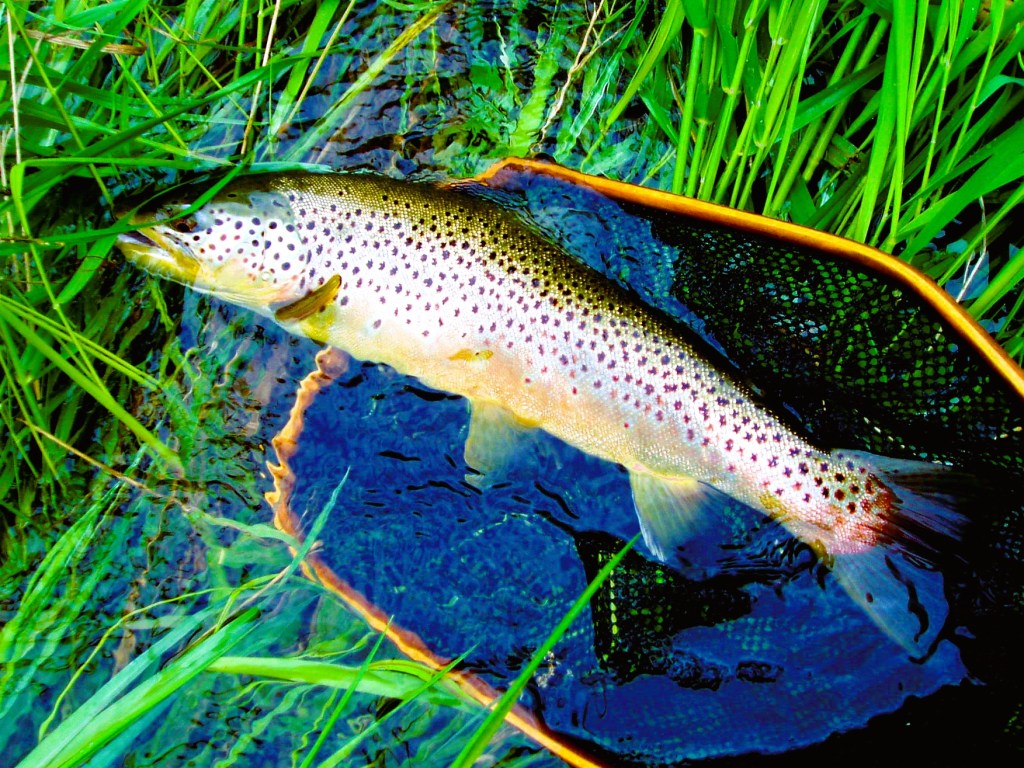
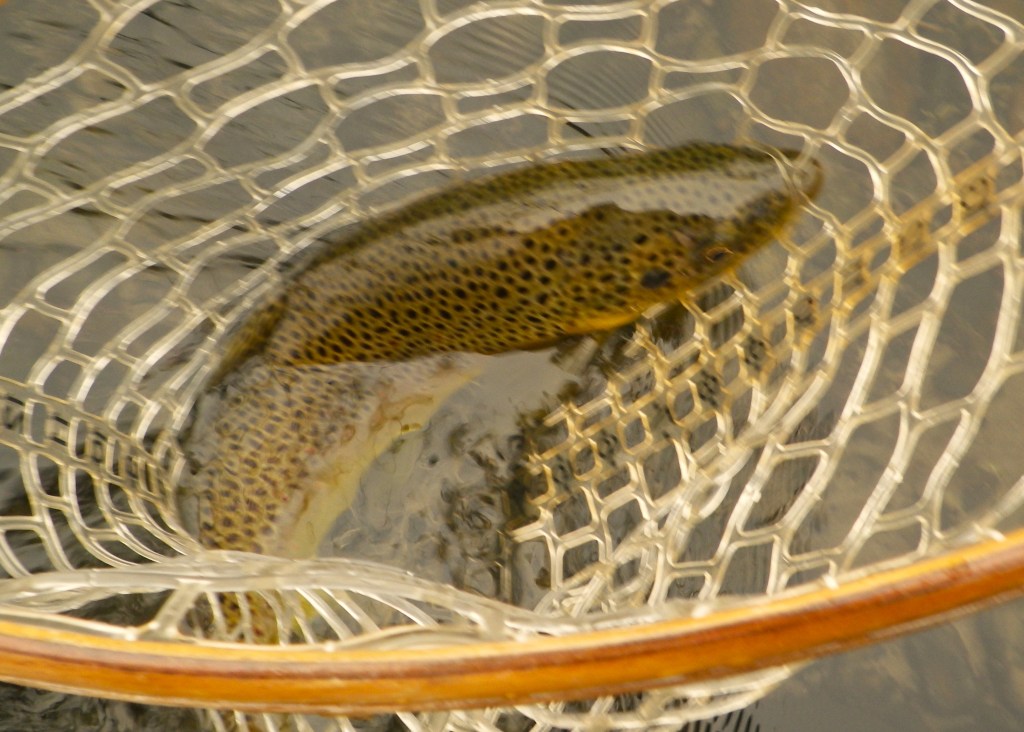
A twenty-six inch trophy brown which was entranced with my Crippled Emerger. I pray that my “best” shall not be my last. May the Cult of the Green Drake continue.

Wait A Moment

Warm and sunny, warm and sunny, snow and wind! Don’t like our Catskill weather? Well, you know what to do…
Unsteadied February is almost behind us, and thirty-nine days remain until dry fly nirvana will flirt with my emotions. This final week has shown us a little bit of everything. It seems fitting that February’s farewell should be icy and blustery, for the balance of the week has been quite fair. Two days of fishing, a little warm rain to replenish the rivers, and now the big freeze; but it looks like sixty degrees for Sunday!

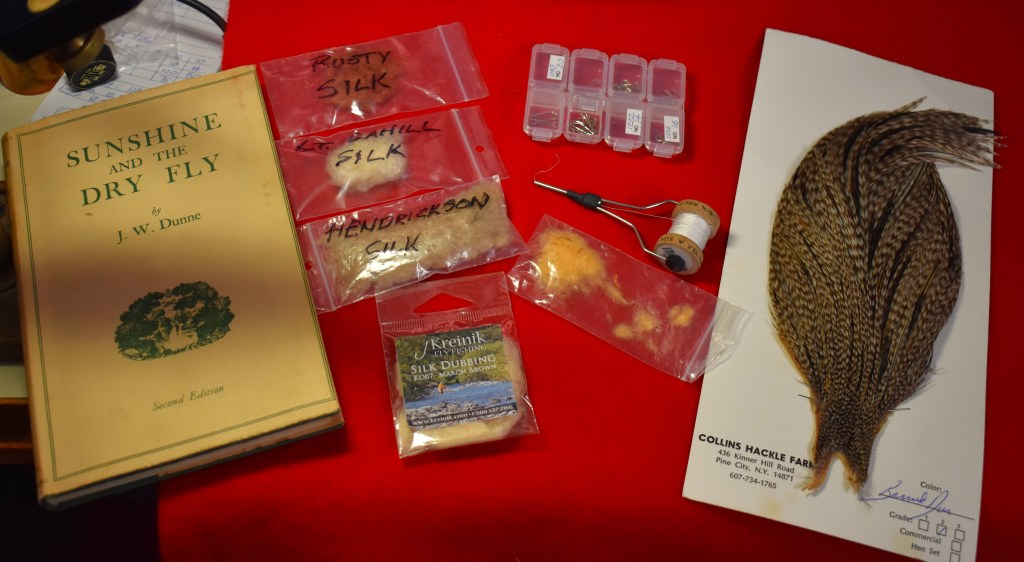
The fixings for Translucence dry flies, and a nod to a like-minded angler from a century ago!

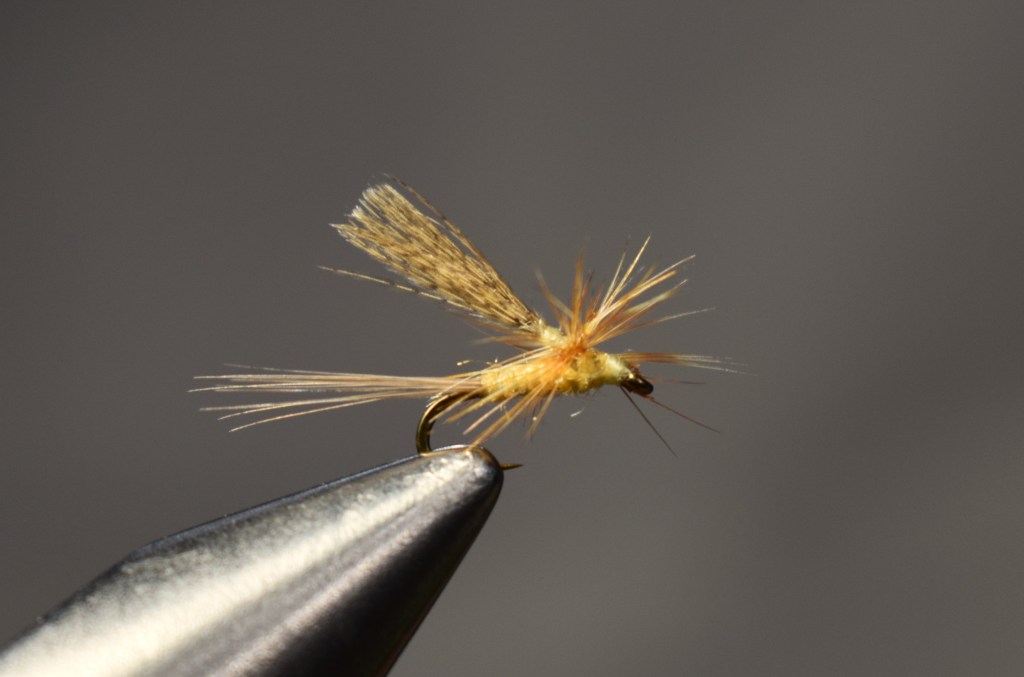
I tied a few of my Translucence Series flies last Saturday at Flyfest, and found a few interested guests curious about the silk dubbed creations. As with most of my dry flies, color is important, and the path to hatch matching color is blending.

I was pleased when I discovered that the Kreinik Company was still manufacturing their pure silk dubbing that I carried in my fly shop so many years ago. It takes a bit of patience to acquire (you order from their website but must wait a couple of weeks for one of their dealers to fill your order), but the wait is worth it. Silk dubs so perfectly, as it is finer than the various synthetics, and it has that lovely glow in the water. the color selection available will cover a good deal of the major hatches, particularly when you blend them together to mimic Nature’s impressionistic hues. When you truly need a different color, stranded silk can be separated and cut into short strands, then blended with the dubbing to produce the desired tones. The orangish yellow characteristic of the sulfur mayflies comes to mind.

I tie the tiny Classic Sulfurs with my blend of the yellow and pale yellow silk dubbing for the abdomen, and that same blend combined with orange stranded silk for the thorax. Our difficult trout stand on their tails to take them!

I have used the same technique for blending fine materials which I used for Antron dubbing thirty years ago. Pull out some of the silk dubbing and separate it into thin veils of material, then take a sharp pair of scissors and cut across the veil at intervals of about one quarter of an inch. You can blend using your fingers, pulling wisps of material apart and recombining them over and over until their colors are thoroughly mixed. The basic electric coffee bean grinder is much faster and better if you blend dubbing on a regular basis, and they are still inexpensive.

The clear plastic top of my coffee grinder is the “hopper” where the furs, silks or synthetics are inserted prior to a few short spins with the machine to yield perfectly blended dubbing.

If you embark on the path of blending your own hatch matching dubbing, I strongly suggest that you keep notes of the relative amounts of the ingredients used in each blend. That makes it much easier to make a new batch when you need it.

Hopefully, we don’t have too many frigid, windy days remaining before fair weather brings the beginnings of spring fishing, so take advantage of this time to tie the flies you need for the new season.

Ah, the joy of presenting the right fly at the right moment!