Porch sitting, Reconnoitering and Pondering Life

Forty-four degrees worth of brilliant afternoon sunshine and, despite the chill of the westerly wind gusts, I could not resist!

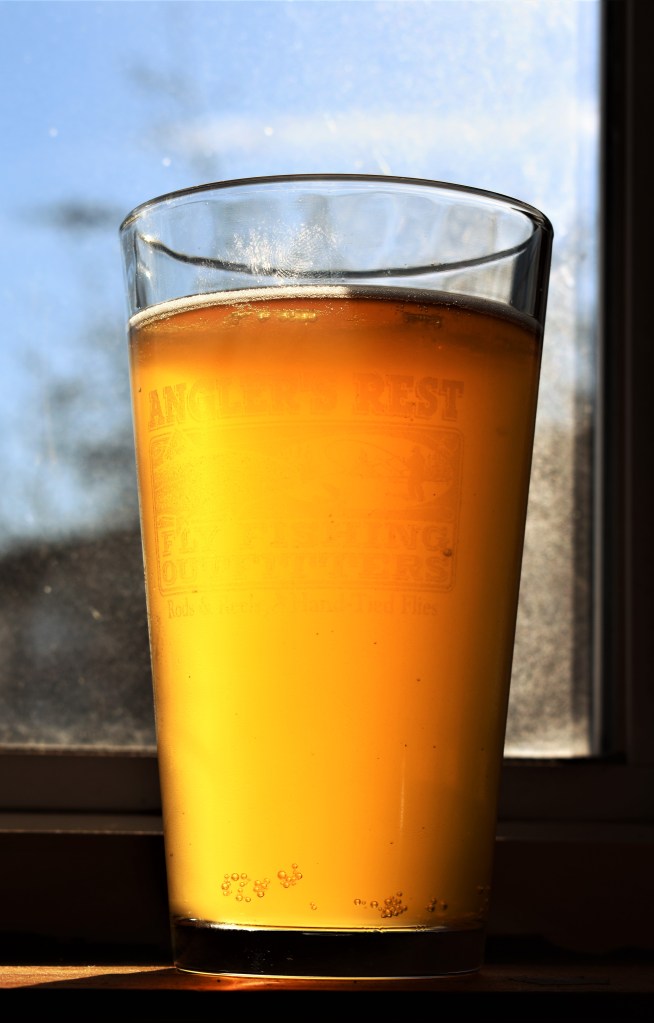
Though it is not the deep heat of a summer’s eve, baking the aches and pains of a long day on the river from my neck and shoulders, this unexpected glow of sunlight felt remarkable. Luckily, my shrunken larder boasted a remaining can of Hidden Springs’ Breakfast Juice, that this impromptu porch sit might follow my Catskill tradition.

The Catskills are in the path of the worst winter storm of the season. We could see a foot of snow fall on Sunday. It was with some surprise that I walked outside to feel real warmth in the sun, for that porch thermometer read barely one degree yesterday after sunrise. Just last week I had wandered along the West Branch, swinging a fly toward hope for the warmer and wetter winter that would be the best gift Nature might offer to our historic trout rivers. The forecasts say, all anglers’ prayers to the Red Gods shall remain unanswered.

Winter, as usual; with no new hope for the seventy-three days ahead.

The snowpack will be beneficial to the rivers, most beneficial if it endures in the highlands, seeping gradually into the aquifers which feed the spring seeps there, the birthplaces of these rivers. This storm may bring twice the snowfall we have seen thus far. We cannot stop it, thus it is best that we hope the aftermath brings temperatures just above freezing to preserve it’s benefits to bright waters.

I ponder the truth of the season, surrendering to the simple fact that we are barely past mid-winter. I have tied flies for spring and for summer, and I have fondled and polished a few cherished bamboo rods. My winter reading progresses, cherishing the classics, and debuting a few new titles, those penned after the 1940’s.

Memories of March on the Beaver Kill…

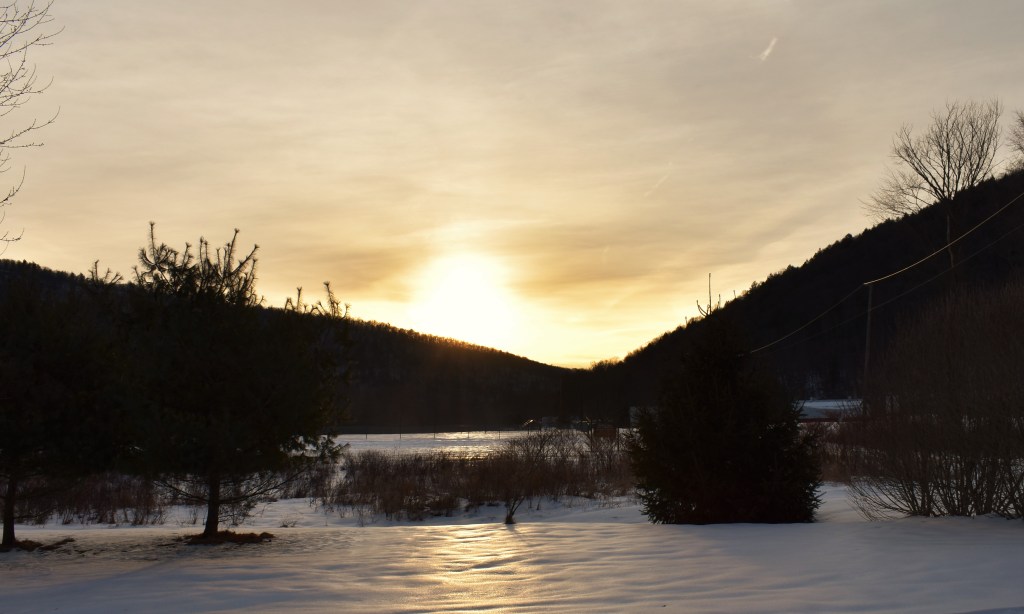
The sun has slipped below the peak of Point Mountain and the temperature is dropping. Memories of warmer days lingered for a moment, but the full knowledge of winter returns. Cold winds are coming, with temperatures which readily defeat the thin walls and old furnace here at Angler’s Rest. My brief fantasy of springtime has retreated with the setting sun.

Oh, how I wish there was a winter classic angling show here in the Catskills! Some event to look forward to during the arduous length of winter, a celebration of classic tackle and books and all the history that winds along the rivers of these mountains. Sadly, though we boast growing ranks of fly fishers, few even know of, much less appreciate these things. Multitudes blindly follow the mantra of catch more fish, without ever knowing why, nor what it is all about.

And so, unto evening I tread…

Neversink

Thinking Of Summertime

A turn in my winter reading has me thinking about summer today… Nineteen ninety-four and I am sitting in my Cumberland Valley fly shop talking flies and fishing with Ed Koch and Harrison Steeves. We are all feeling good about their new book “Terrestrials”, a wonderful collaboration between one of the Letort Regulars and one of the new innovators on the fly-tying scene.

Those were truly the good old days, when terrestrial season offered our paramount dry fly fishing along the Falling Spring Branch. Sadly, Ed is no longer with us, and I closed my shop more than two decades ago. I understand that Harry is still going, and I hope he still gets to wet a line in his favorite streams.

Thinking about those days of course has me thinking about tying terrestrial patterns, even with the cold wind blowing across the snowfields here in the Catskills on a fifteen-degree afternoon.

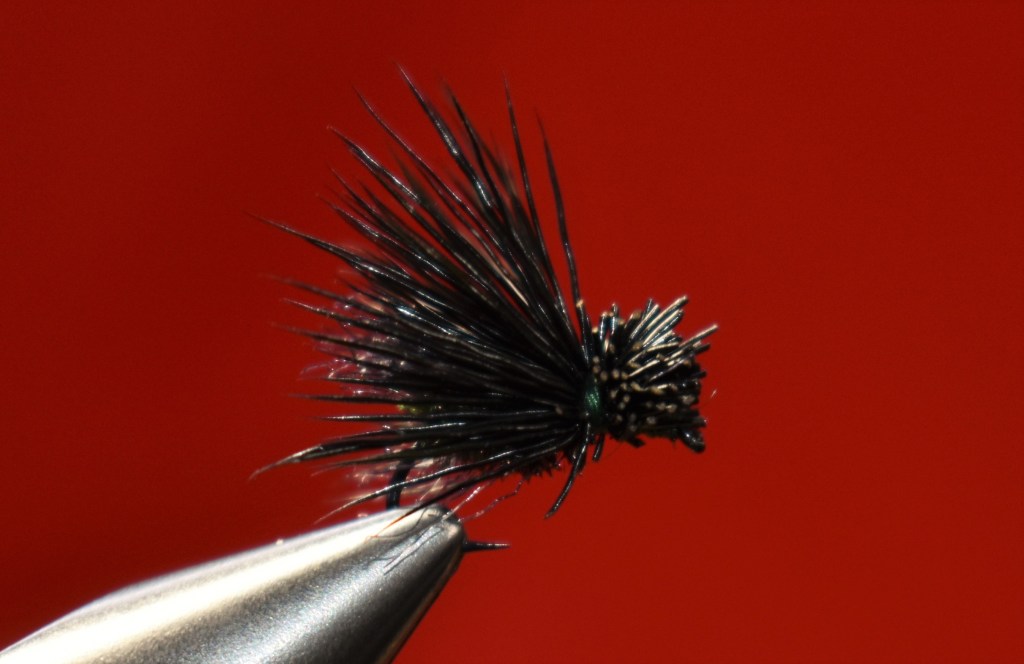
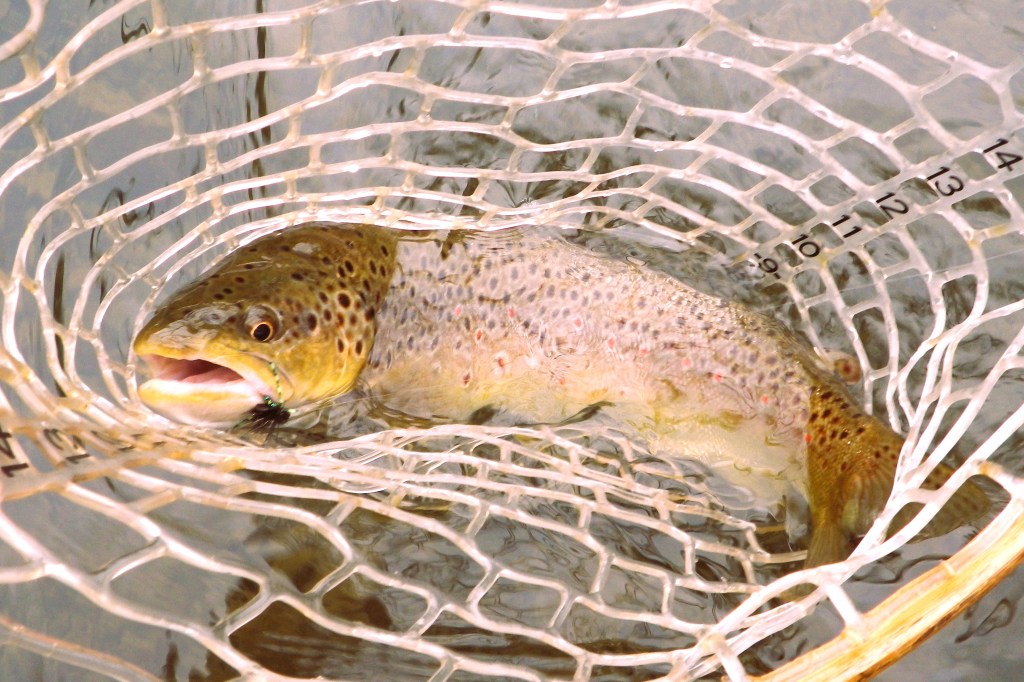
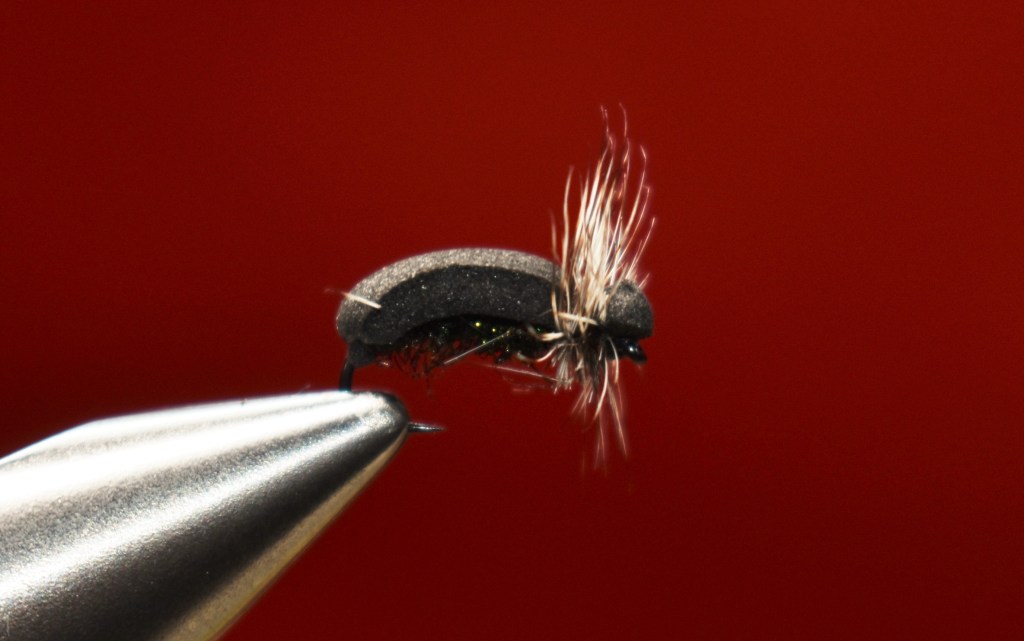
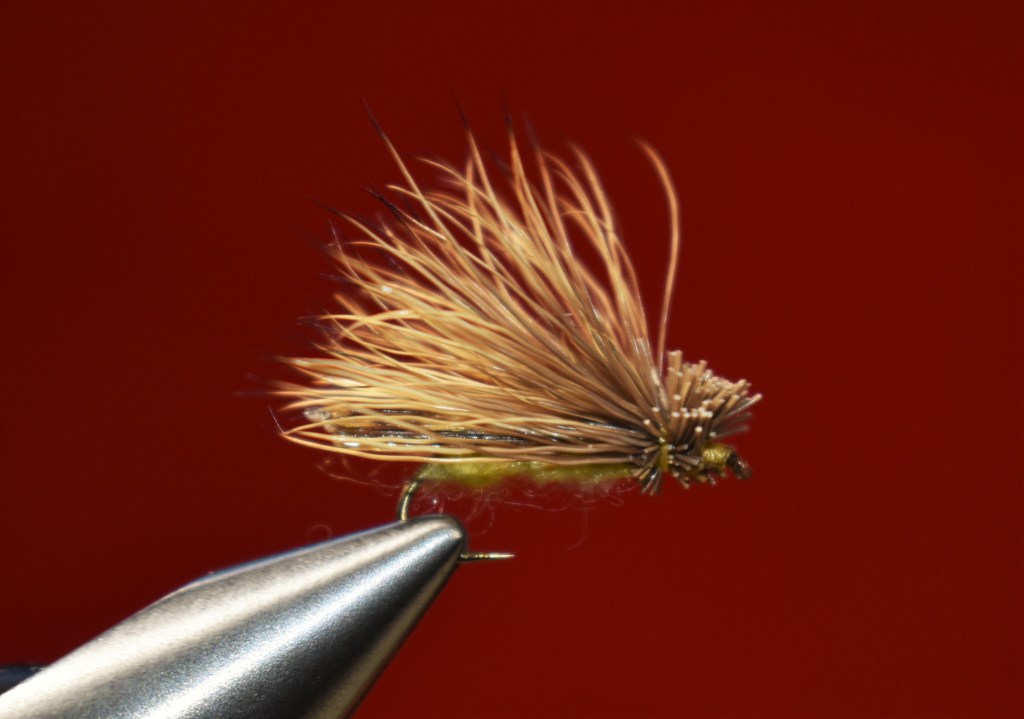
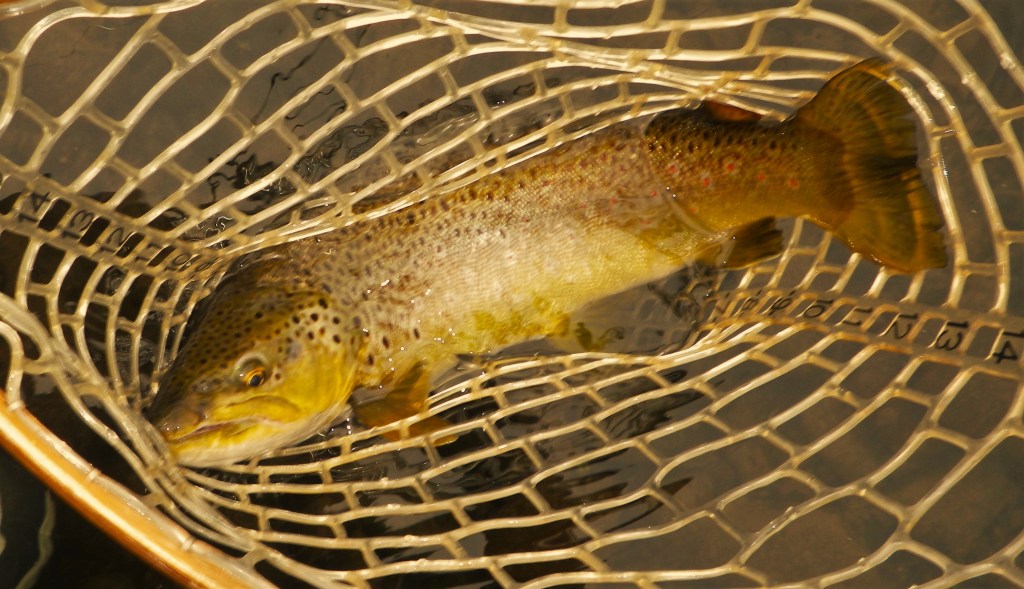
There are bodies and underwings sitting here with glue setting, waiting to be finished into an adult version of my Woodland Hopper, a fly that cannot be expected to have it’s first trial upon bright water until August. The little “baby” version of this fly has enjoyed a couple of seasons of use now and accounted for some terrific browns! Reading Ed and Harry’s reminiscences got me to thinking about the Baby Woodland fly and spurred me to sit down and tie these adults.

There is a lot in that book to digest, and it inspires thought about terrestrial flies and fishing just as it did thirty-two summers ago, when the authors sat down with me to tell tales and share smiles.

I would love to be able to sit down with those fine gentleman once more, to laugh about my experiences as a transplanted limestone spring terrestrial fisherman who haunts the big trout waters of the Catskills. Angling is timeless, and the great store of written works that define our history allow us all to look back and savor the same inspiration which motivated and charmed our fellow fly fishers, whether decades or centuries ago.

Snowflakes at Eighty Days

Drifting softly, they fall to cover the grass just revealed. Flurrying snowflakes driven on the Northwest winds, as the gales which crash across our Great Lakes come to earth in sight of the wide Delaware!

We have come to mid-winter in these Catskill Mountains and lie upon the edge of another deathly chill. The warmest day in ten might just kiss freezing. Not a pleasant thought, as I ponder this moment some eighty days away from the hoped-for dawn of a new dry fly season.

Though we have seen snow for well more than a month, Catskill precipitation still lags with respect to historic norms. Missing the warm rains promised these past two weeks has avoided the rapid melting and floodwaters, seeming at least to let the snow upon the high ridges do some good as it seeps underground, but we are forced to open our hearts and arms to more snowfalls should our rivers find the reserves we need for spring. Praying for snow is a hard thing to ask of a village bound angler.

Perhaps I should be systematic, pawing through the fly boxes now and replenishing the most-used flies as winter meanders across the calendar, but it is more likely I spend the day squeezing the cork of a favorite old rod or tying a few patterns my fancies drift to by chance. In that rod I can feel the quickening of life and the excitement of a long run, it’s bamboo shaft bucking and dancing in the sun. Those new patterns harken to moments from the past, and trout not quite tempted by the best that I could offer.

In time, fishing becomes less about planning and rigid preparation, and more about the impressions of rivers gurgling through the canyons of the mind. It should be so, that the years leave us captivated by the magic hours life has allotted us upon bright water.

Summer on the Neversink
(Photo courtesy Matthew Supinski)

We are fortunate here, as the Catskills offer a dry fly season that is longer than winter. The cost for such grace varies with the intensity of the hatches, the snows, the droughts and the floods. Those special days and hours could not be more precious than to an angler cognizant of his own mortality.

Bright rivers wind down through the years, and on to the sea, turning back upon themselves to prolong the journey. Each turn is precious: a turn from sunlight into shade, a turn of thread upon the feathered hook, the turn of the handle of a fine old reel in answer to a chorus of flight.

Ticking Hours

My Dazed Dace… waiting…

The window is, well, perhaps ajar, though not clearly open. Still, I know what is coming, and that it will last far longer than I wish it would. Weeks would not surprise me.

I have the rod in it’s ready case, the line has been cleaned and I have remade the leader. The flies are tucked into a single box in the pouch on my waders, the heavy ones which help turn the penetrating power of the cold. That pouch has the spool of 2X tippet, though that is not all. It is also the hope chest, for it holds spools of 4X and 5X for the little cup of dries which also reside there. Layers of insulation are laid out, though one fingerless glove simply refuses to turn up.

After nine, and the morning sun has failed to penetrate the cloud cover. Soon, I hope, for every moment that it radiates upon the West Branch fuels my spirit. Ah, a complete pair of old faithful wool glove liners has been found, the basic, military surplus answer to the fingerless glove issue!

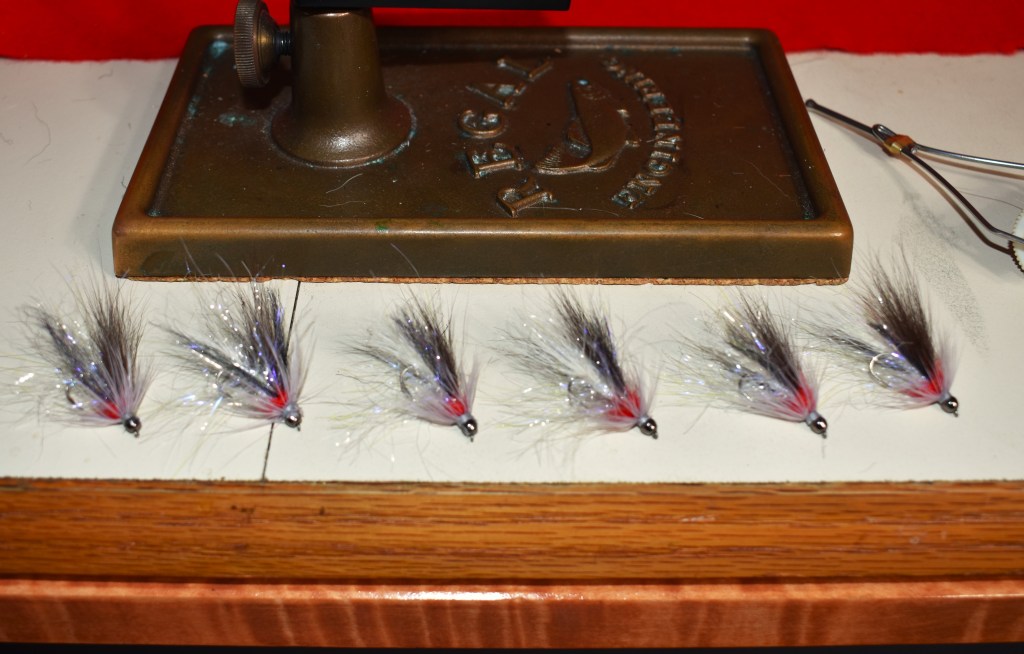
The river is just above freezing as I write, and it’s flow is quite low. There is always hope though, faith in the fact that something that isn’t supposed to happen could. Logical thought tells me that any trout that felt the stirrings of hunger felt them days ago when that temperature kissed thirty-eight degrees for a couple of hours before dark. Hope tells me that there could be one who didn’t find and catch a meal to last until the next warm spell, one who just might open his mouth should my Dazed Dace flutter right past his neb…

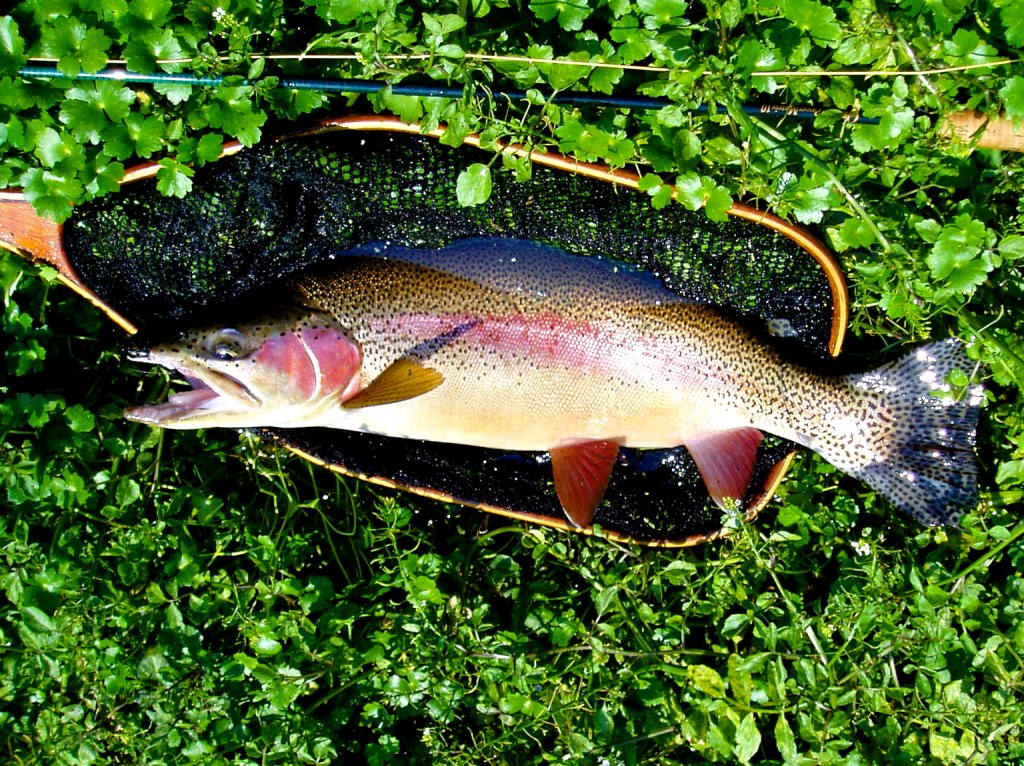
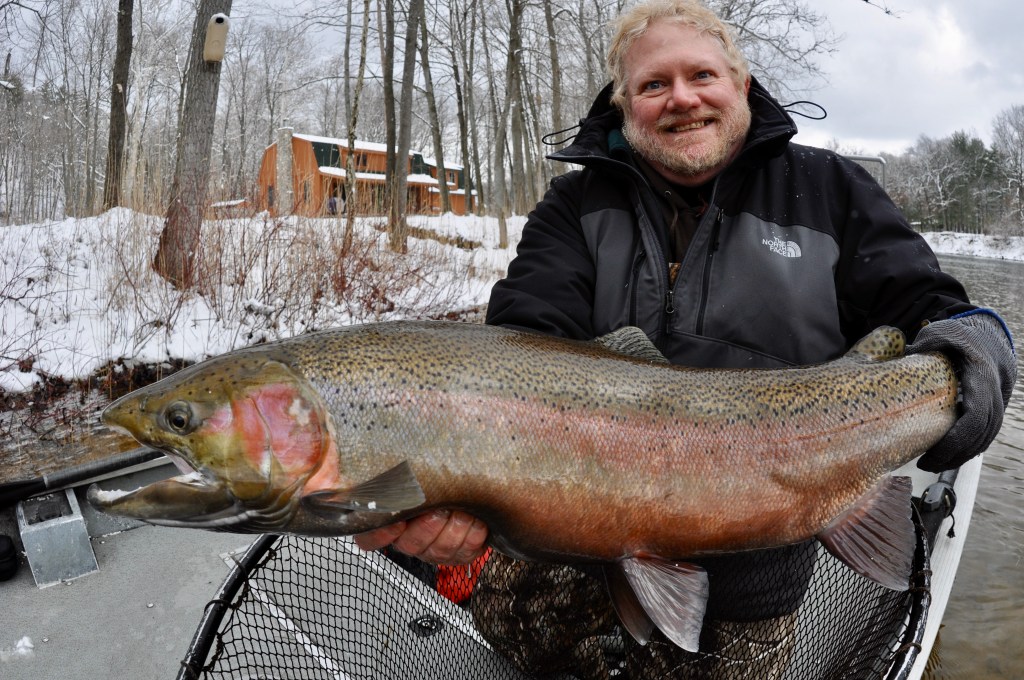
My best ever wild Michigan steelhead, Twenty-one pounds, February 2012. The air temperature that morningwas zero degrees, and the water remained at 32 F degrees throughout the day. Yes, things that should not happen do…
(Photo courtesy Matthew Supinski)

Nine thirty-five, and there’s that sunshine…

Reverie

Photo courtesy Michael Saylor

Though not daily, I still check the river gages during winter’s reign, noting water temperatures when the ice fails to overrule. During a little thaw as the one flirting with us these past few days, I give those numbers greater scrutiny before looking ahead in the weather forecast for some glimmer of hope.

It’s a tossup again today, for the tailwaters’ release rates remain low, and it seems that our trout require a certain amount of current as well as warming water to move into those discrete areas where I tend to swing a fly. Hope isn’t high, for rain will melt the snow faster, and that will bring water temperatures down as it brings the flows up.

I am drawn back to warmer times, lovely bright days with mayflies on the wing…

Photo courtesy Andy Boryan

Once I whiled away innumerable hours sitting upon riverbanks, stretching my shoulders in the beaming glory of the sunshine. That was a more relaxed form of trout hunting, waiting and watching, rising and stalking only when clear evidence of a good trout was offered. The time of the Drakes was perfect for the ploy.

The trophy brown trout I coveted were rarely shy when a small fleet of drakes sailed the surface currents. I might pass an hour or two sitting and watching, but eventually a few flies would be spotted in one of the favored lines of drift. The game required at least one of those great flies to drift close enough to a trout’s lie, whence it would be greeted by a great geyser of spray. To my feet gently, I would begin the slow, tedious stalk into casting position. Once achieved, I would ready line and fly, and wait once more.

If I succeeded in checking my excitement, the cast would be long and smooth, the big dun alighting delicately some two feet upstream of the suspected lie. During the drift I could count my heartbeats…

Nature’s key to the game…

In my mind I can still see those paired great eruptions: the first at the take, the second to the heavy arch of the rod. Nothing so delighted me as a day with the Drakes!

Summer days produced a different world of wonder. I would hunt the mists early each day, and long into the afternoons. Stalking lies, flickers of movement in the surface as well as the rings of a rare and cherished rise, my mind working to plan each hoped for encounter. Those May/June geysers are rare in summer, though a sizeable late dun or terrestrial might be taken with such abandon. It is likely though that even a large fly be taken with the softest, faintest whisper of a rise!

So many moments amid so many years, celebrations of a season still some eighty-five days ahead…

The rods stand all in their racks like soldiers on guard. At intervals, one steps forward to stand inspection: a squeeze of the cork, perhaps a bit of polish should water spots be found on the six facets of varnished bamboo. Flies issue from the vise in little squadrons, created as thoughts and ideas drift through my waking hours.

I can hear rain on the roof now. Morning will require a new examination of river gages and forecasts, betting against winter’s odds for a few hours along bright water.

A Sundrenched Interlude

The sun illuminates Crooked Eddy: January 8, 2026

Sometimes a day brings a little surprise, even in January! I stepped out of the shower to brilliant sunshine streaming through the bedroom window, despite a forecast promising nothing but more cloudy weather. I dressed for the outdoors and set about a riverwalk, eager to take advantage of the moment before it slipped away.

I enjoyed the walk, despite the ice still clinging to the gravel road along the river, stopping to take a few photos and marveling at a flock of more than fifty Canada Geese spread out along a run of open water. My old bones need the exercise, and my soul a bit of deliverance, so any break from the recurrent ice and snow is more than welcome.

Going back out to retrieve a delivery a moment ago, I
found not only that the sun still glided high, but had warmed the microhabitat of my little porch to a balmy 59 degrees! I stopped to ponder just how perfect that is for the cheer of a cold beverage and a porch sit! My little Angler’s Rest’s western exposure collects the direct rays of the afternoon sun, usually warming that small, covered porch eight to ten degrees higher than the ambient air temperature.

Winter sun on the Delaware

Ahh, I simply had to step away to enjoy those fifteen minutes in the warmth of that amplified sunshine. The ale which accompanied me was a favorite known as “Breakfast Juice”, brewed by the fine people at Hidden Springs Brewhouse in Norwich, New York. They describe this as “an American style wheat ale brewed with blood orange puree” and I find it most satisfying whether enjoyed in summer, winter, or any other season. My interlude was brief, for the sun was just above the top of the tree line along the summit of Point Mountain when I sat down, and over the top within fifteen minutes. Still, such moments are something special to enjoy on a January day.

Point Mountain with mist rising as an April snowfall greets spring sunlight

If you find yourself a snow and icebound angler, desperate for deliverance, raise an ale to celebrate any moment of sunshine and hope you encounter!

Tying History: The Soft Hackled Dry Fly

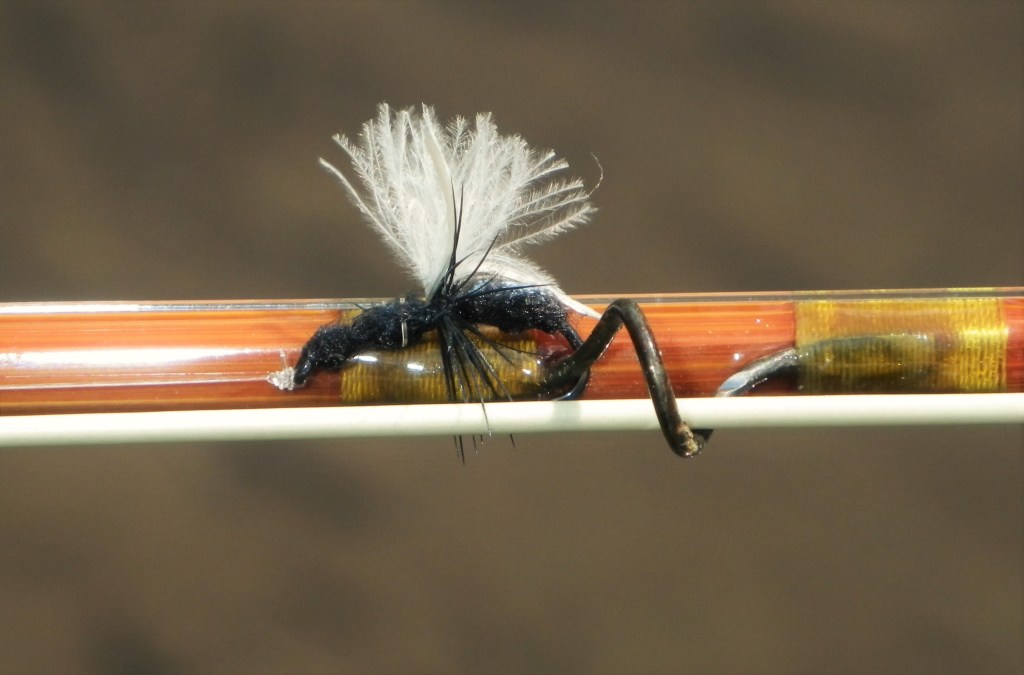
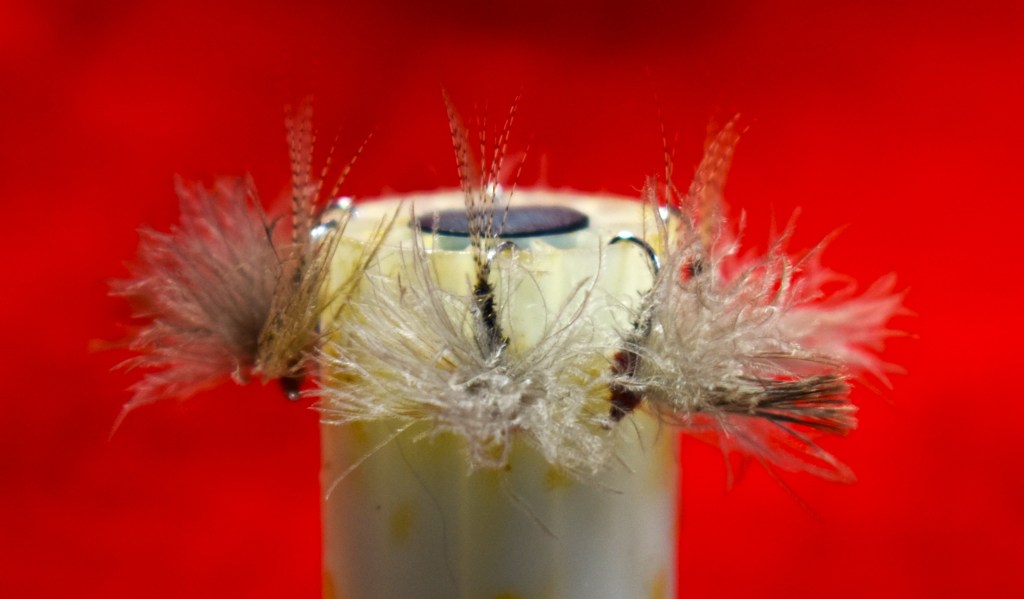
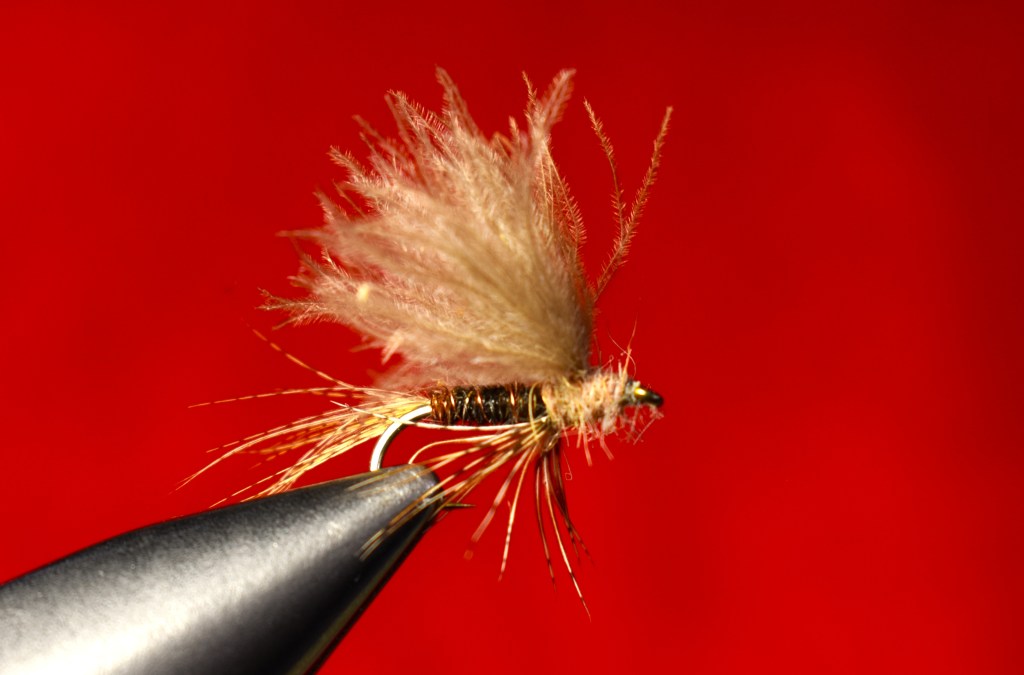
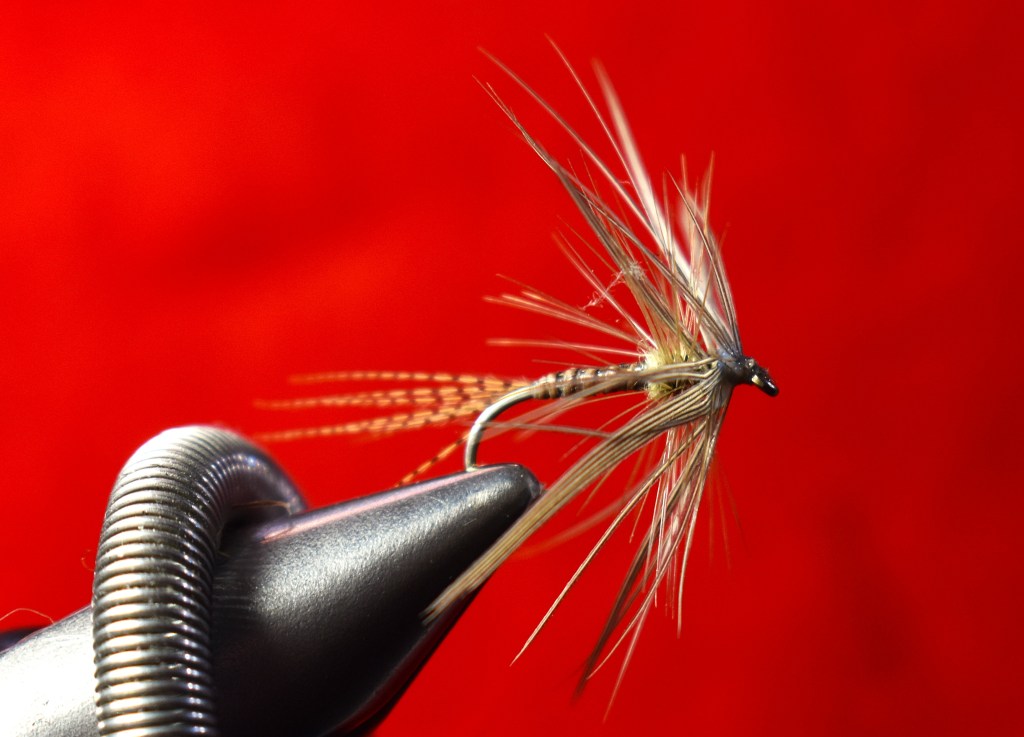
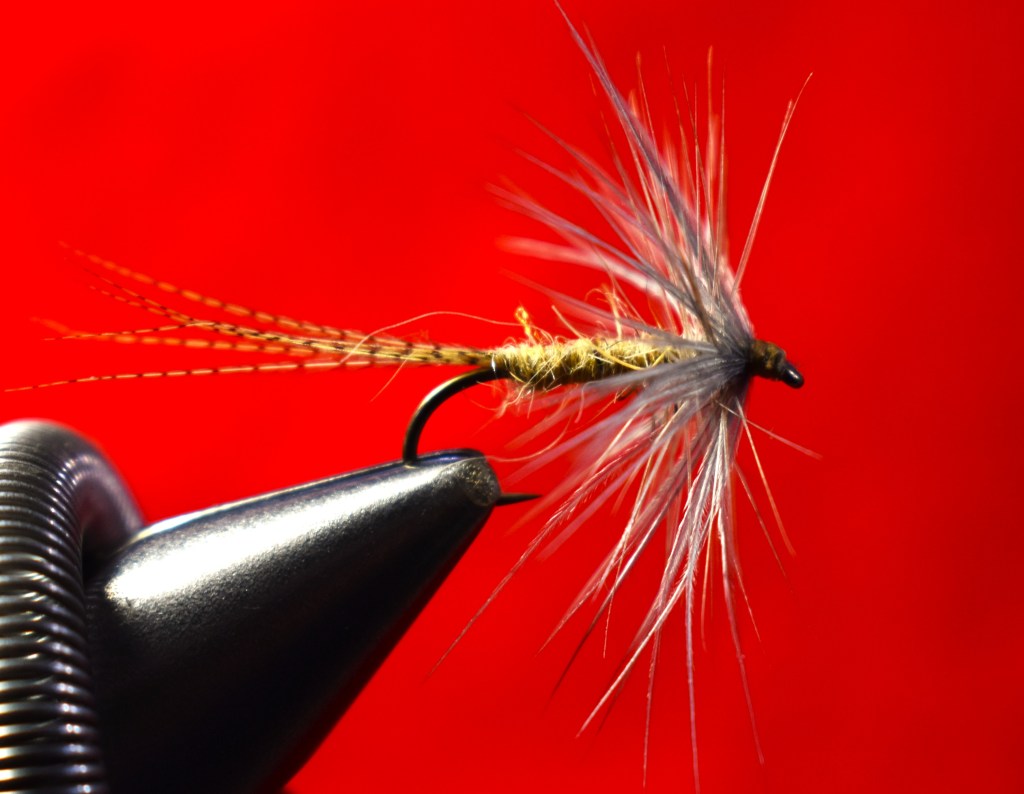
I stepped away from the classic dry fly the other day by tying a few hatch-matching soft hackles. Versatile flies to say the least, I most often fish these in the surface film to imitate drowned duns or spinners. In “Pheasant Tail Simplicity”, the recent collaboration between Yvon Chouinard, Craig Mathews and Mauro Mazzo, I noted the Pheasant Tail Dry Fly the authors presented with interest. Tied in a style that dated to the mid-1800’s according to the trio, a few turns of cock’s hackle behind a few turns of Hungarian Partridge, the fly recalled some of my own thinking, using wrapped CDC behind wrapped partridge for my “Drowned Hendrickson” pattern more than two decades ago.

In corresponding with Fellow Catskill Fly Tyers Guild Member Lou Duncan of late, he mentioned his fondness for and success in fishing various styles of soft hackles. Lou feels that movement in the fly itself is especially important to successful imitation, a belief that remains one of my own guiding principles in fly design. He shared an excellent article with me: “The Soft Hackled Dry Fly – The Phantom Among Us” from the Winter 2024 issue of “The American Fly Fisher”. Ably penned, and brilliantly researched by Stephen E. Wright.

Among Mr. Wright’s many discoveries related to the bi-hackled, dry behind wet tying style he dubs SHDF, perhaps the most surprising is the inclusion of 17 such patterns of fly in Frederick Halford’s 100 Best Dry Flies published in his “Dry Fly Entomology” in 1897. This gives so-called dry fly purists nothing short of holy guidance to tie and use this functional tying style in our dry fly fishing!

Reading the author’s bio and considering the familiarity of his photo, led me to believe he may well have been the gentleman I met at West Branch Angler a number of years ago. I recall a pleasant conversation or two in the Lodge, and at riverside, one of us going the other coming I believe, though I cannot recall the angler’s name. That has long been one of my little quirks of memory I am afraid, forgetting names though remembering most other details of a conversation. In any case, my compliments to Mr. Stephen Wright for a wonderful and valuable article!

It is good to know that I am on sound historical footing with both patterns, tied with my Atherton Inspired Hendrickson dubbing blend and reddish Beaver Kill Hendrickson blend to enhance their image of life.

The thought behind the Drowned Hendrickson all those years ago was to perfect the image of a dying Hendrickson dun awash in the film. Sparse winds of natural dun CDC added movement and clusters of air bubbles to simulate the mayflies crumpled wings while the sparse Hungarian Partridge hackle imitated the legs, with both materials moving gently in the currents.

The more recent Soft Hackled Spinner followed the same design theory as the Drowned Hendrickson.

A Sense of Place and Time

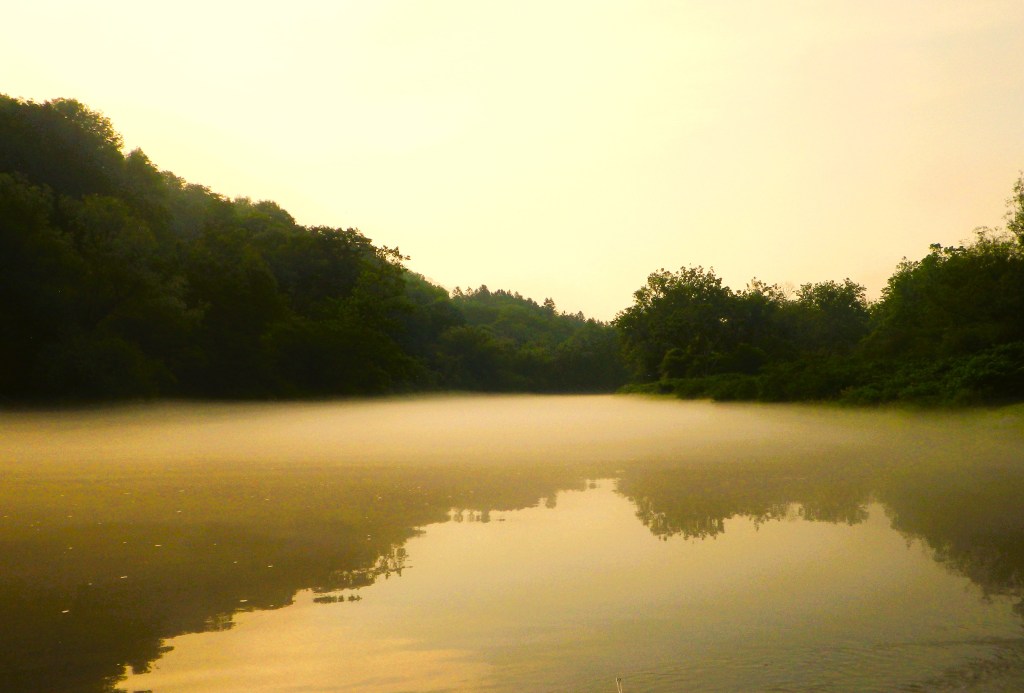
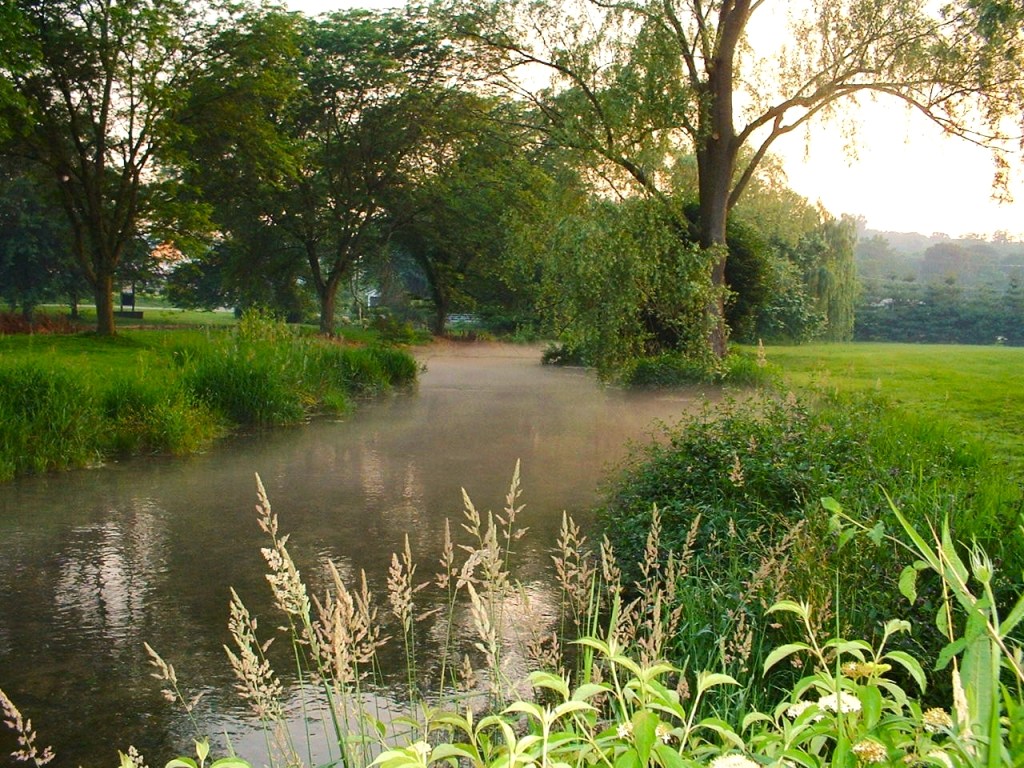
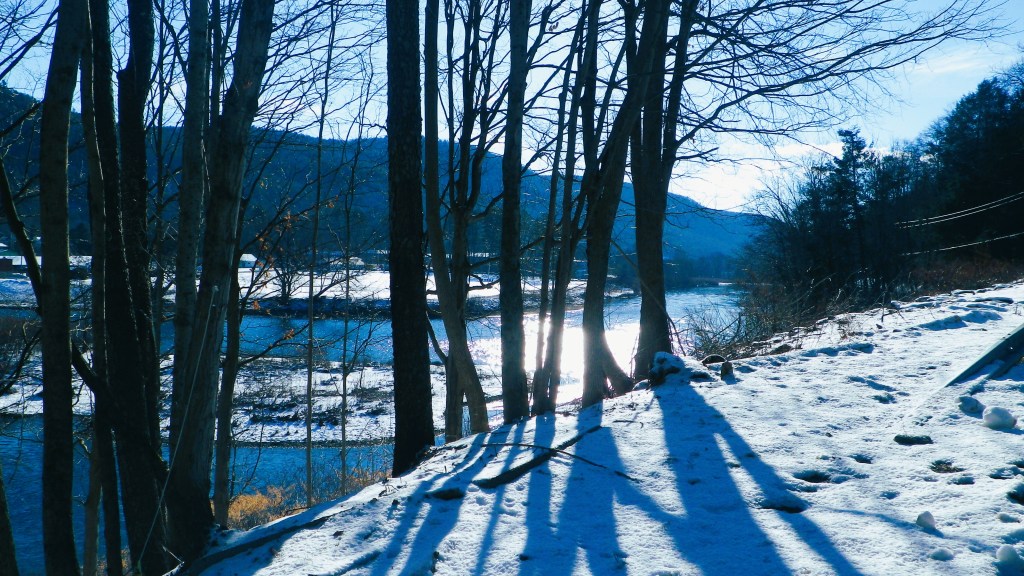
The early morning sunlight casts distinct shadows along land and riverscapes. Showcased by the extreme brilliance of winter sunlight upon snow, these stark pictures of the angler’s world inspire hope and trigger memory.

I recall those first moments when the thoughts of trout I could not catch inspired me: my first walk through Trego’s Meadow on the hallowed Letort, that first trip along the Falling Spring Branch, creeping low and slow while watching the bright flashes of her wild rainbows flee before me! These places were different from the waters I had fished in those early days as a bon-fide fly fisher, magical, impossibly difficult, the paths walked by the saints and giants of the sport.

Evening lights kisses the sky along the Falling Spring Branch

The legends of the Catskills called to me, even as I began to study those limestone streams, and here I found a new kind of difficulty. The rivers were wide and expansive, one moment lifeless, and the next alive with thousands of insects in the air above their currents. Those first hours upon the Beaver Kill, the most famous trout river in America, were impressive as well as mystifying. I found the answer on my last day of my inaugural trip, at least an answer to that moment on that particular run, and felt charged with discovery.

Hendrickson’s Pool, decades ago, amid the first blush of Spring

I would live near, fish and study Pennsylvania’s limestone springs for twenty-six years, learning solutions to many of their mysteries, yet still discovering new challenges each season. My visits to these Catskill Mountains were occasional at first, my list of rivers growing over time as my days here expanded. Three decades have passed in a whirlwind, yet there are impressions of all of these bright waters which remain etched into my soul.

There are common threads between these two regions which shaped my journey as an angler, for both are historical monuments in the history of fly fishing, particularly dry fly fishing, here in America. I have angled here throughout a modern resurgence and expansion of fly fishing. The young would say that there have been great advancements in knowledge, tackle and techniques during this age, though those of us with a greater store of years on the water know these to be the revelations of younger, inexperienced eyes, new pilgrims rediscovering the same truths.

Technology will not dispel the magic and the mysteries of trout and fly, though it convinces many that the answer to Nature’s puzzles as they confront them lie in some gadget in the palm of their hand. Those answers are there to discover, but they are as fleeting as the myriad questions which blossom in a day astream.

May it always be so!

Bright Hendricksons & Sleek Gordon Quills

And so, a new year begins as the old one departs. There is bright sunshine this morning to belie the air temperatures in the teens. Wind driven air strafes the Catskills, such that a walker determined to enjoy it’s freshness must brave single digit wind chill. I can hear that wind howling past the window above my fly-tying bench.

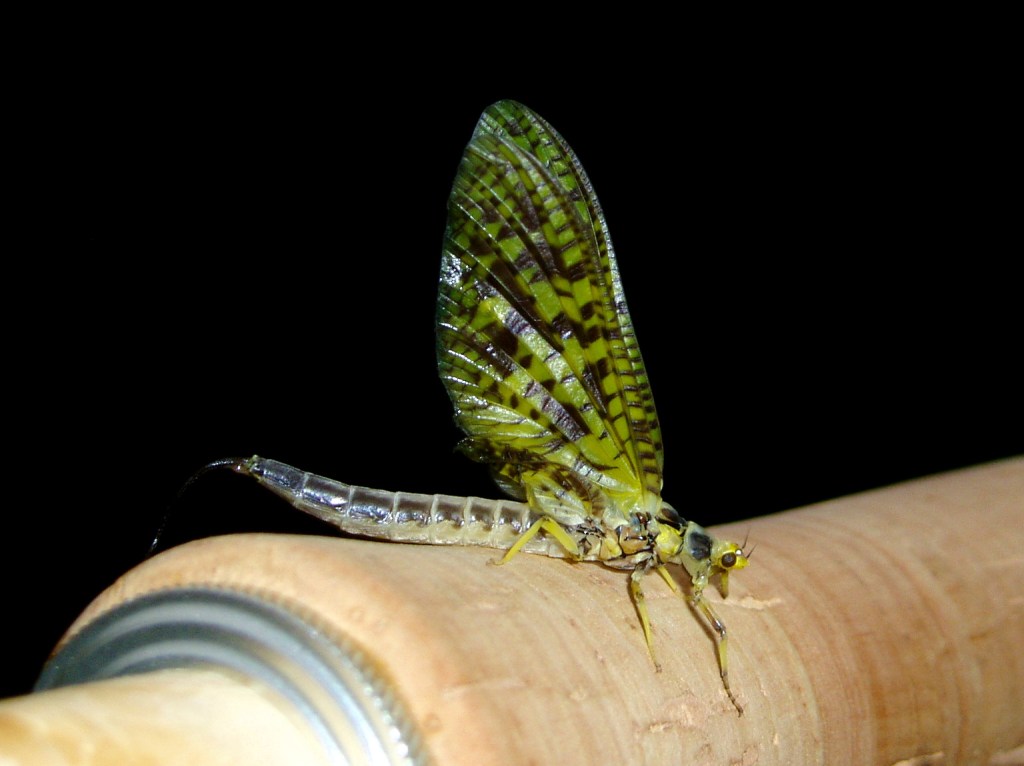
My inspiration this day was tied to the hoped for early spring hatches, Epeorus and Ephemerella, the Quill Gordons and Hendricksons. I wound soft hen hackles around the dubbed thoraxes bunched just behind the eyes of heavy wet fly hooks, flies to probe the riffles on those cold, windy days of searching to find the forerunners of the hatch.

Blasphemy you say, for a brother of the dry fly, but not if they are fished in the film! There it is hoped the motion of those soft, sparse hackles might tempt a trout still too aware of winter’s lethargy to sample a bit of life riding high on the surface.

I have friends who chose soft hackles and spiders first and foremost, and I always mean to give these flies their chance. They do find their way to my cast, though not nearly as often as their history might deserve. The dry fly is a stern master, particularly in a season where hatches are terribly sparse, thus I think once more of expanding my repertoire and easing my self-discipline. Should I find myself giving as many hours to sitting and waiting as last season forced upon me, these flies deserve a few casts to ease the mental anguish of my endless waiting!

These months are the bowels of winter. January and February rarely bring respite in these mountains. I have enjoyed it once in seven seasons, two or three days when a wisp of warmer southerly air teamed with distant rays of sunlight to urge river temperatures to flirt with spring levels! I chose the perfect hour of the perfect day and brought leviathan to hand. I still wonder if such a February afternoon will be a once in a lifetime Catskill experience.

I ponder the making of a few more flies, whether to complete the first dozen of the New Year on the first day, or wait for another burst of inspiration. Perhaps I will decide, after lunch…

The Selectivity of Trout

Why that one?

Indeed, that is the single question that taunts fly fishers and fly tyers. Many have theorized for answers for at least the past couple of centuries, and many believe we have found those answers. The catch is, and always will be that none of us know!

I wish I had had a steady platform to take that photo, for it’s sharpness of focus and minute detail suffers from the motion of the drift boat in the current. Those little grayish blurs are tiny olive mayflies you see, perhaps size 20 or 22. There is just enough clarity to tell that some are sitting tall with their wings upright, while others are in various postures, some struggling to remain afloat, others possibly crippled by incomplete emergence. There is no way to tell though, which one sparked the soft, dimpling rise of a large wild brown trout there in the margins of the West Branch Delaware.

Hendricksons during a fine hatch!

The second shot is older, and the camera of lesser quality, but I was wading and thus standing steadily along the riverbank. The Hendricksons are considerably larger mayflies too, a size 14, thus it is easier to see that most are floating with their wings upright, but a few are partially submerged and or struggling. These flies are drifting right along the bank. Out further, where the currents are stronger, faster and more variable, there were considerably more flies struggling with their emergence and drift.

The fairly conventional wisdom of selectivity as to which specimens the trout choose to take is based upon logical thinking: the flies that are encumbered or incompletely emerged are more likely to be taken for the trout sense that they cannot escape. I have touched on the recent book of two English chalk stream anglers, Peter Hayes and Don Stazicker who have performed a great deal of work with high speed photography and videography to prove that theory. As much as their body of work supports that conventional belief, even they cannot know what motivates the trout, and that is right at the heart of the magic we seek to immerse ourselves in when we wade into bright water with a fly rod in hand!

Consider the scene of that second photo above, taken on a darker, damp afternoon on the West Branch Delaware. The density of the flies on the water is obvious, and that density continued up and downstream and fully across the river as far as I could see. Thousands of mayflies, whether physically encumbered or not were staying on the surface for long, long drifts of fifty feet or more. No trout rose to meet them. Would not logical thinking demand that such abundance coupled with atmospheric conditions keeping flies drifting upon the surface, produce widespread feeding?

The subsurface fishers were not catching any trout on this afternoon either, and there were plenty of anglers plying various methods. Have you ever spent a day on the West Branch Delaware during the Hendrickson hatch? Solitude is not part of the occasion I assure you. The trout were simply not feeding. Puzzles like this remain, and I for one am very happy that they do, for challenge is the very essence of the game!

Too much emphasis is placed upon the idea of catching every trout in the brook. When was the last time you viewed an advertisement for any fly or tackle item that failed to promise you would “catch more fish”? I fear that mentality causes thousands who try fly fishing to abandon it without ever appreciating the challenge and the magic of bright water.

When I owned and operated a fly shop years ago, I often had a number of opening day trout fishers stop in looking for bait and spinning lures. Among them there were several who loved to brag about catching their limit of trout as quickly as possible and going home early. The saddest thing to me was to hear them teach their kids that this was the goal of trout fishing. I see fly fishers that seem to think the same way these days, and it saddens me.

If you are a newcomer to fly fishing, I hope whoever starts you along the path instructs you in the value of patience and observation and teaches you to appreciate the magic and wonder that is the essence of any activity in Nature. If you happen to walk the opposite bank, and have rushed along every river you have visited and spent a fortune on each new tackle item which claimed to be the answer, I hope that you stop and consider that fishing is not a competition, it is a meditation.