High Ho Variant

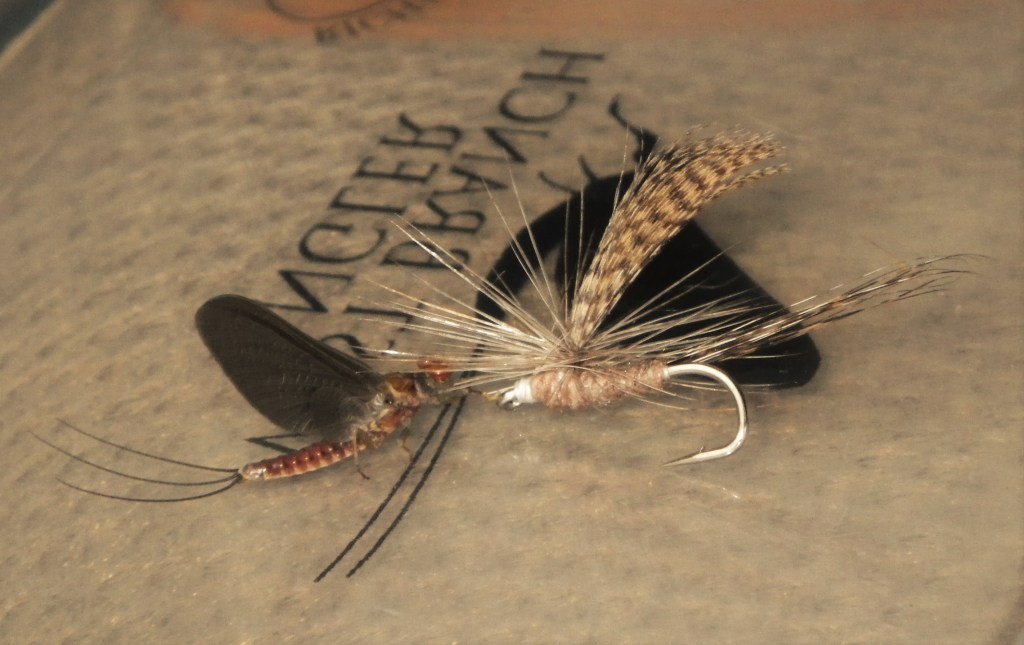
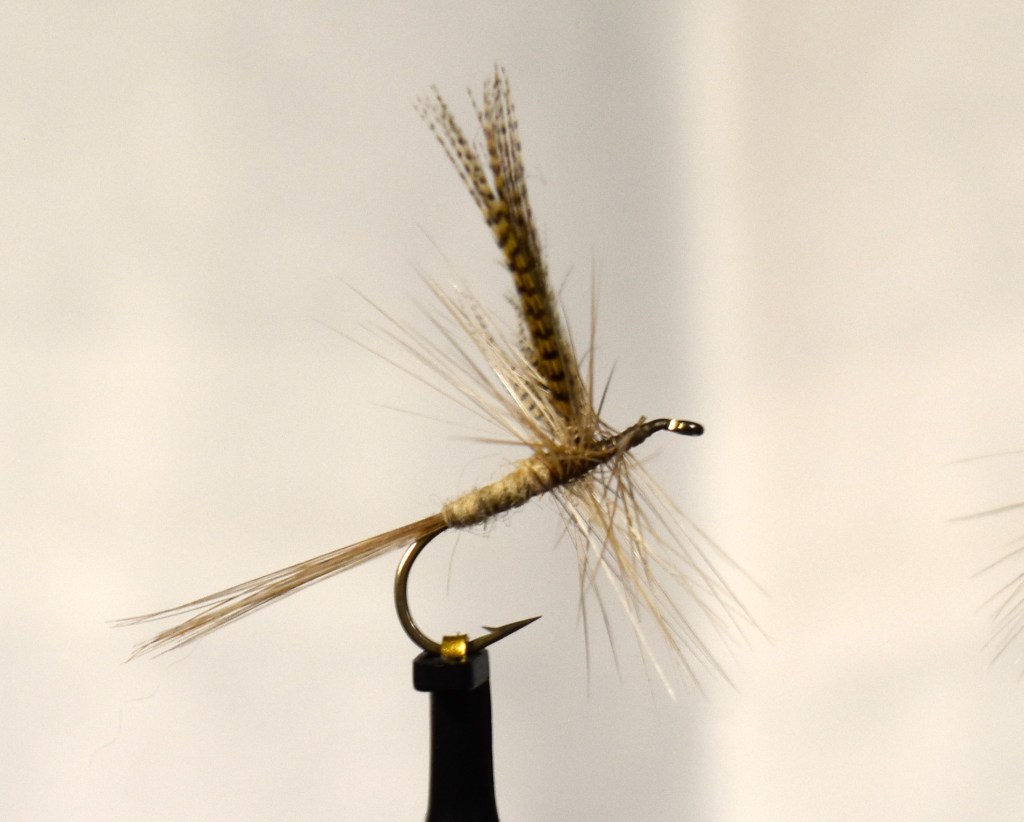
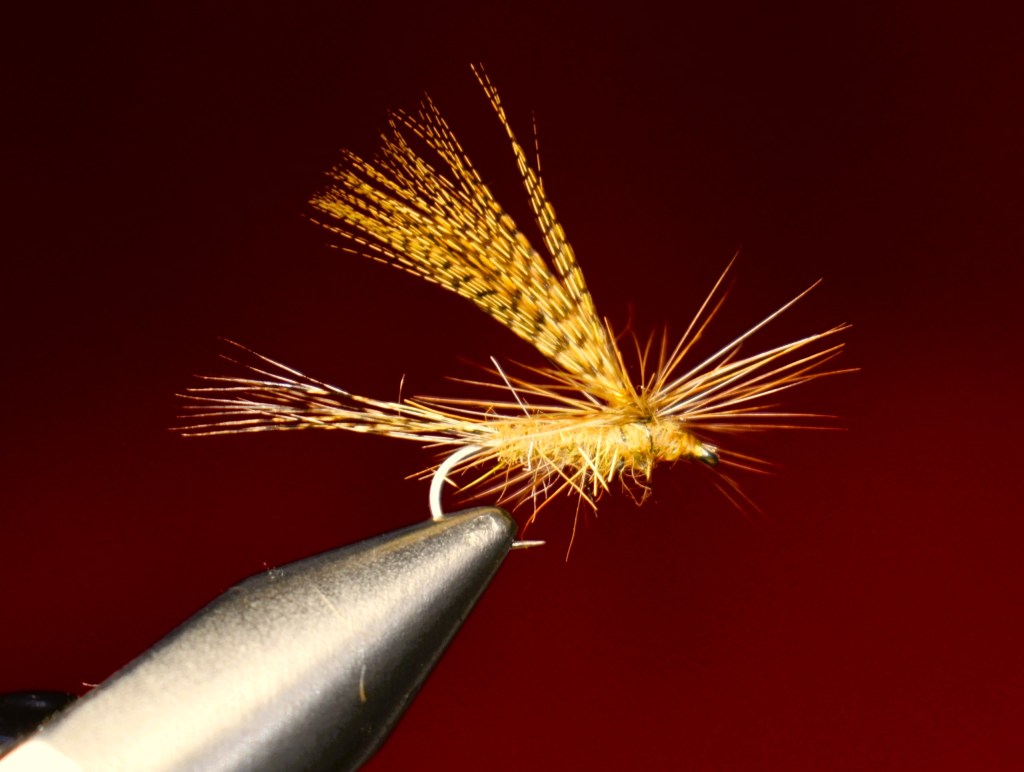
Prized Possession: A Catskill classic Dun Variant, tied by Mary Dette Clark (while I watched!)

It seems I have had variants on my mind of late. They have ghosted through much of my recent reading including Art Flick’s biography, and the stories of Gene Connett, Dana Lamb and others. In fact, I was moved to tie a quarter dozen quill bodied Hendrickson Variants just this morning.

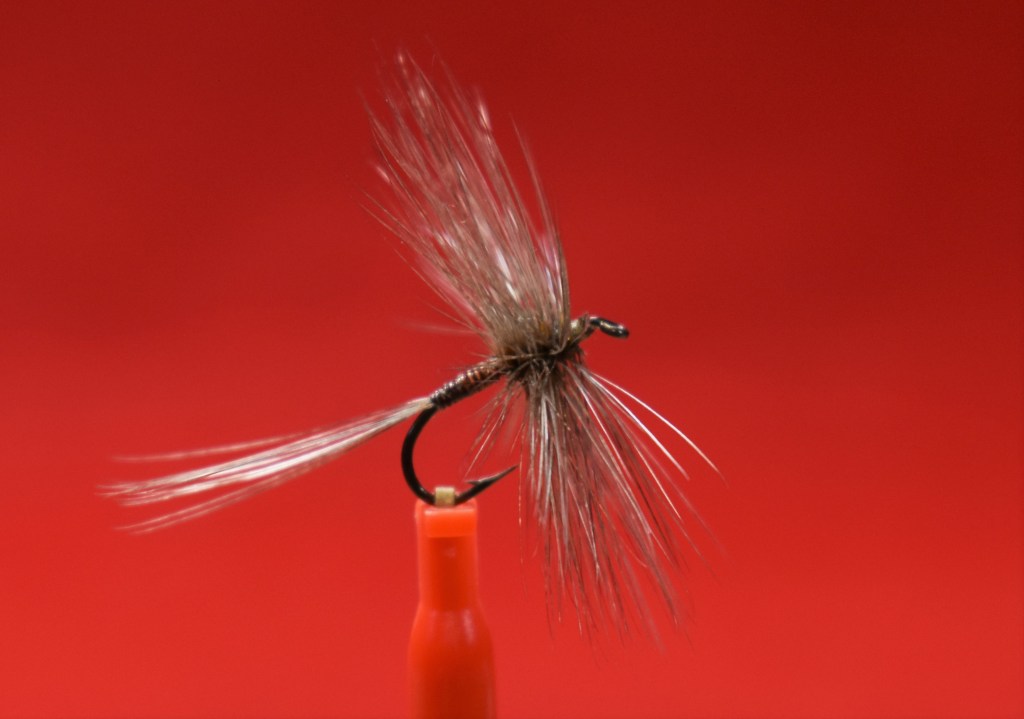
I remember these beautiful big dry flies drawing my interest very early in my fly-tying career. When I first visited the Catskills more than three decades ago, I came armed with Mr. Flick’s favorite fly, the Gray Fox Variant. His Dun Variant was another pattern that was stored in one of my big compartment fly boxes, one that had seen some use back home in Pennsylvania, where the Isonychia mayflies Flick designed these big dries to imitate were found on waters such as the Little Juniata River.

I confess that my fascination with these flies waned over the years, enthralled as I was with my own patterns and experimentation. I have stashed a few variants in my big fly boxes in recent years once more, and my plan is to give them some time on the water.

One the recurring themes with classic fly patterns is that their reputations as trout catchers have been earned through decades of seasons and thousands of anglers. A majority among the new guard seems drawn to the latest conglomeration of materials, foam, synthetic flash, bug eyes and rubber legs that gets featured in magazines and videoed on YouTube. As a result, our heavily pressured wild trout do not have the familiarity with the classics that their ancestors did. That lack of familiarity often results in a lack of the avoidance behavior frequently observed on our popular rivers.

I would guess that there are a lot of brown trout out there that have never had a variant dry fly floated over them, and that makes me think I should have them on my tippet rather than sitting in a fly box!
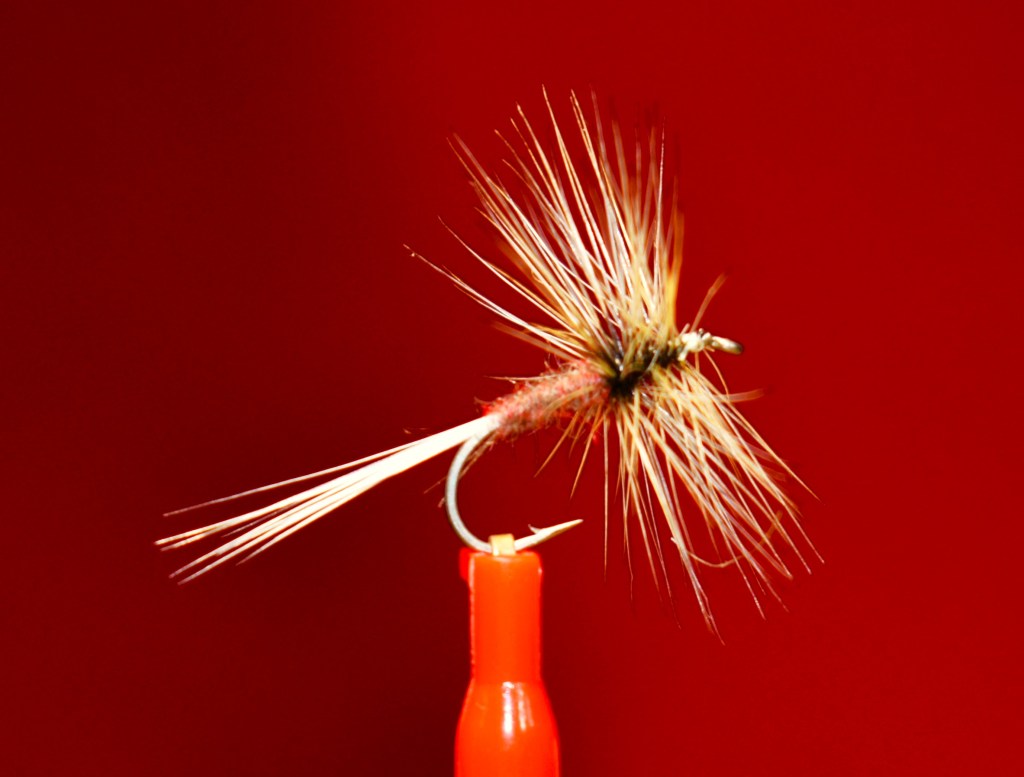
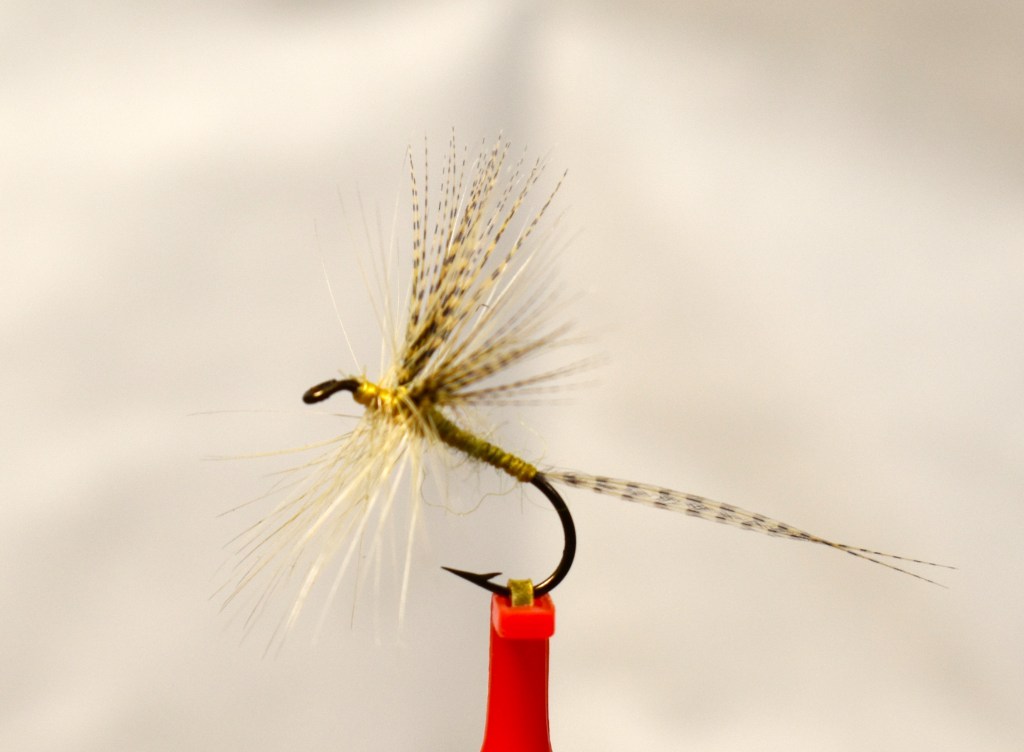
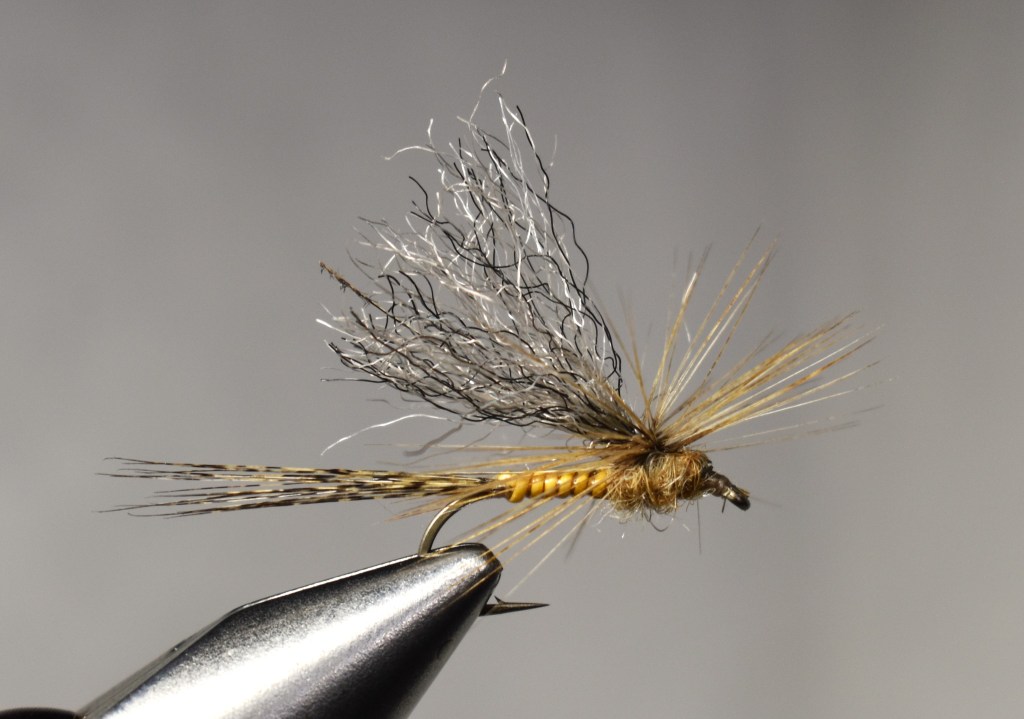
The Dette shop still ties and sells the Conover, a scaled down variant style dry fly originated in the 1930’s. This example is my own tie, and I have taken trout on it on the Delaware.

Art Flick considered his Gray Fox Variant to be a good imitation for the Green Drake, as well as pale Potamanthus mayflies, but it was his favorite pattern to fish regardless of the presence of these two giant mayflies. If you think about it, there do tend to be a few big bugs around through a long stretch of the trout season and, while a Gray Fox Variant may not be the best hatch matcher’s choice when trout are rising to sulfurs, these big flies might just be golden when cast and twitched around cover when there is no hatch going on. How many times have you seen or heard a terrific splash on one of those dead days?

I plan to fluff up the hackles on some of my stored variants and make sure they are handy once those long, sunny days of spring and summer roll around.

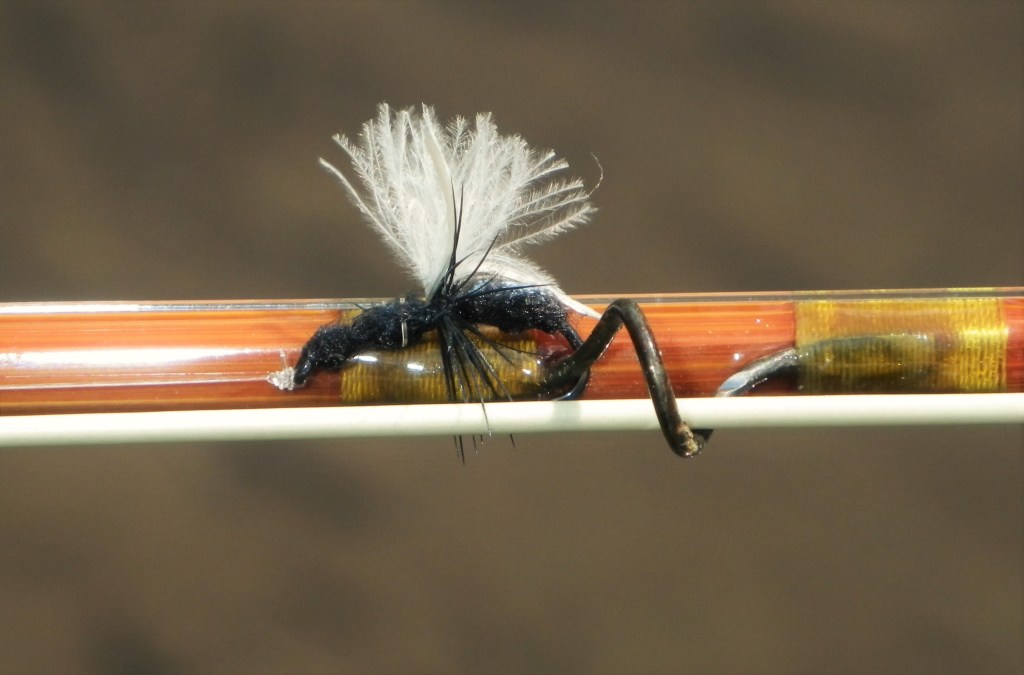
Come to think of it, there is one Art Flick variant that I have been fishing regularly. The Flick Blue Winged Olive is really a scaled down variant tie. I have had some great success in recent summers fishing the sparse little pale olives I find on summer mornings. I tie a thin thread body on size 20 and 22 dry fly hooks with a long, sparse hackle fiber tail and an oversized rusty dun hackle. I have taken some big browns on these and found them surprisingly visible even on long casts across flat, featureless pools.
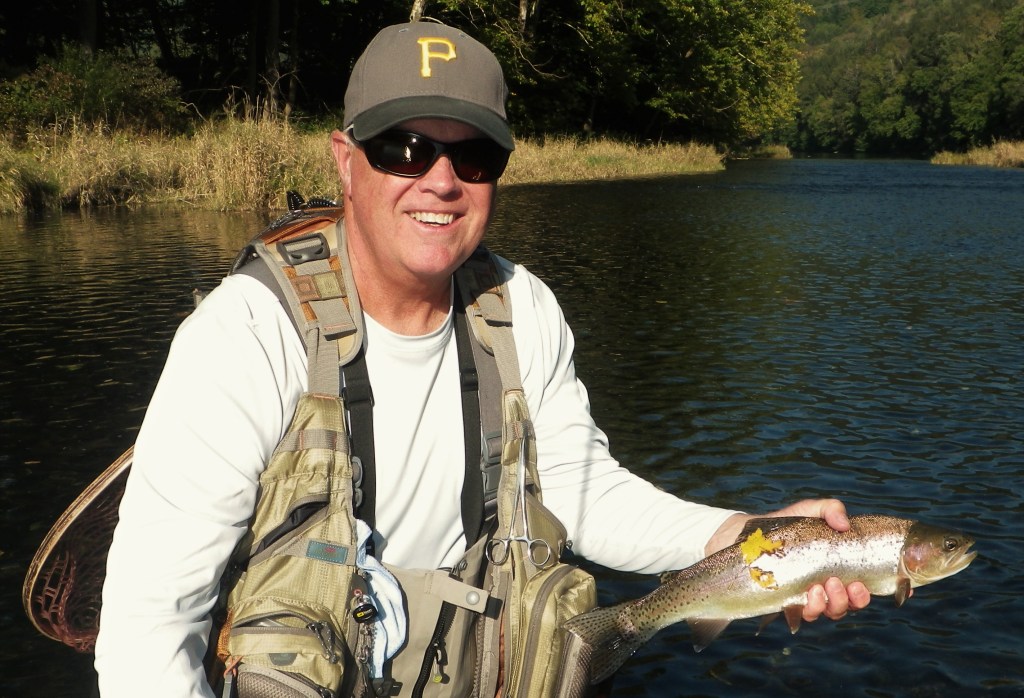
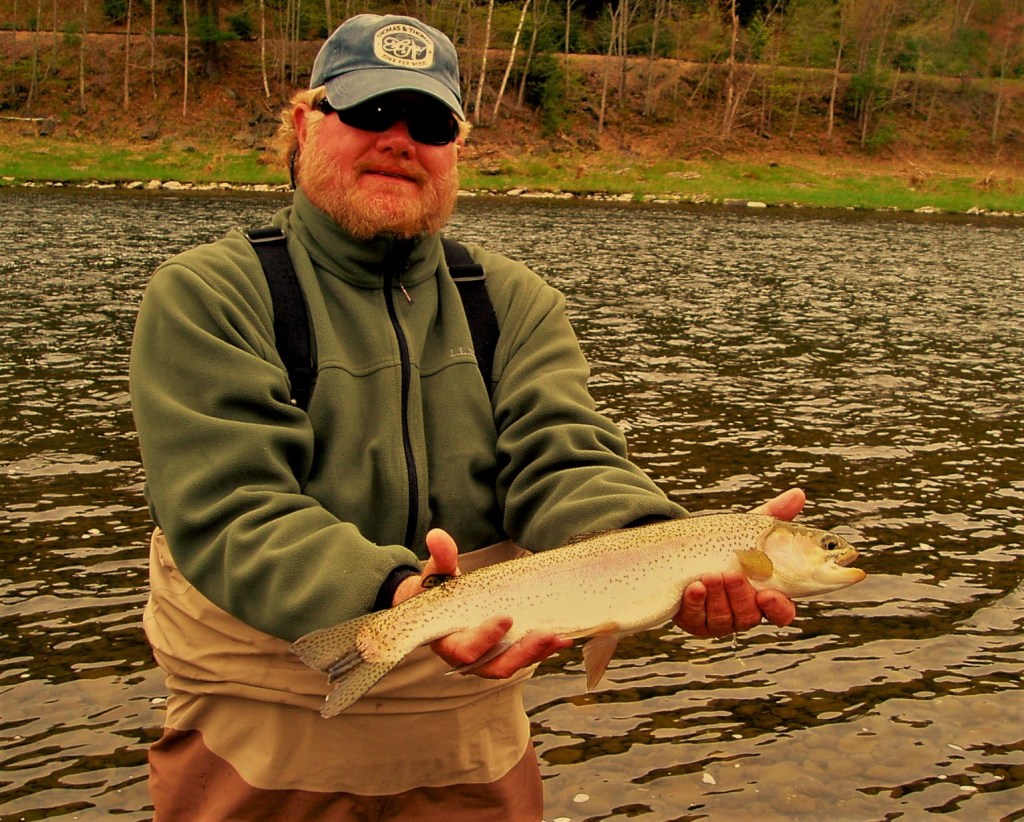
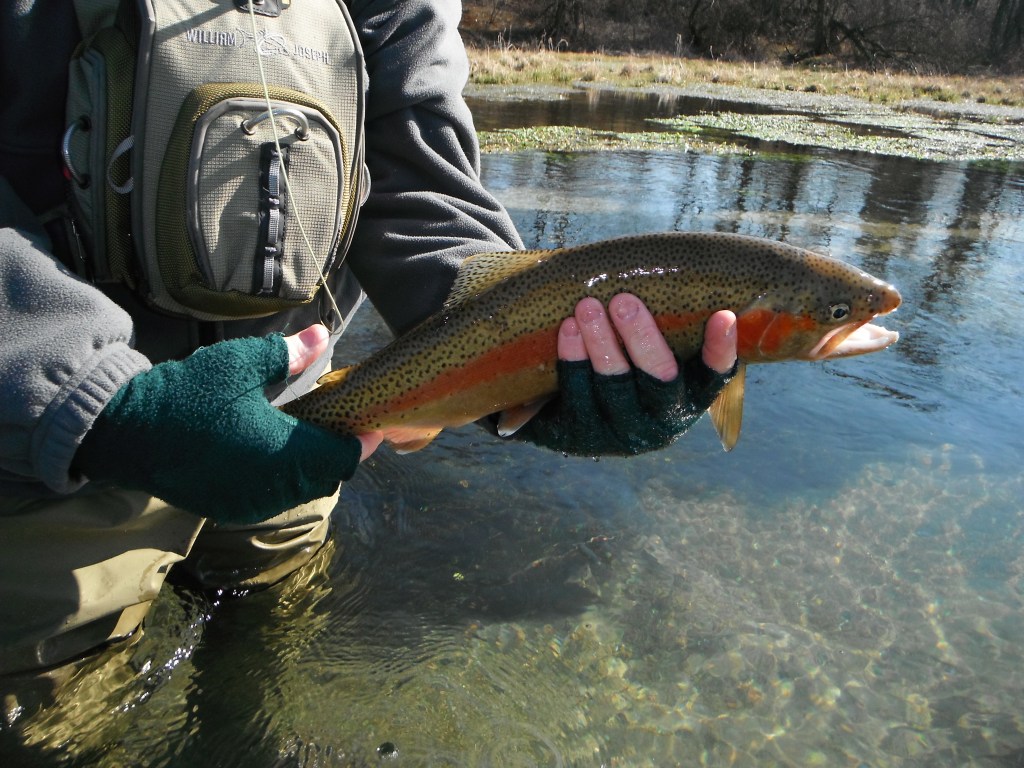
Mike Saylor with a fine Delaware rainbow taken on one of my size 22 pale Flick BWO Variants after refusing several more “sophisticated” patterns.

Besides enjoying great writing, reading old, classic angling books can give you some fresh ideas and expand your knowledge of the wonderful pursuit of dry fly fishing.

A Simple Fly

Last night I shared a special dry fly with my friends of the Catskill Fly Tyers Guild, a simple little dry fly I call the CDX. Sharing a favorite fly pattern isn’t generally a big deal, though in a way, this one was, for time has proven it to be one of the best designs I have ever created.

This fly came about some fifteen years ago, and I had kept it a secret, known only to three of my best and most trusted friends. I had liked Craig Matthews well known X Caddis for some time. It is a simple and effective dry fly that sits low on the surface. I used to tie mine with a thinner trailing shuck than the original, something I did most of the time when I used a shuck on any dry fly. I figured that, if the X-Caddis was a good fly, then maybe I could make a caddis pattern that was even better.

Readers here know that I have used CDC feathers throughout my thirty some years as a fly tyer. I didn’t start because it became popular. I started using it the first time I laid eyes on these wispy little feathers because their appearance screamed movement. Real insects move, and our heavily pressured wild trout have learned that lesson well. I set out to design a versatile caddis fly that moved in the currents and moved in the wind.

I wanted to take advantage of the materials used to make my caddis look alive, and I began with the X-Caddis’ trailing shuck. A trailing shuck is great for an emerging insect, but I didn’t want my new caddis to be limited to hatch conditions. I also think that a lot of tyers use far too much material when they add a trailing shuck to a fly. I wanted movement and the sparkle of light reflections, so I used a very small number of Antron yarn fibers and teased them with a pull across my scissors blade. That frays and crinkles the fibers of the yarn giving me a wild and very sparse “bubble tail” – movement, air bubbles and sparkle equal life!

I have a group of dubbing blends that I have prepared over the years to match the caddisflies I have encountered. My general formula calls for a rough fur with short spiky guard hairs, and squirrel is my favorite. I add a small amount of compatibly colored Antron dubbing and then some of the yarn itself, cut very short, say 1/16th of an inch long. I choose and blend various colors to match the insect, ending up with a rough, spiky, sparkly body. These blends were perfect for the new CDX.

Paramount in getting the movement I was after were the wings, and there is no better choice than CDC oiler puffs. If I can get those in a little larger size for caddis in sizes sixteen and up, I am a very happy fly tyer. The puffs have a curvature along their length, and tying in a pair of them side by side with the tips curving away from one another makes an ideal moving caddis wing.
I finished my prototype with a couple of turns of barred dry fly hackle. CDC will get wetted eventually during fishing, and a touch of hackle for a collar provides some floatation as well as a light pattern for the insect’s legs. Once tied, I set out to find out if my new design fished as good as I planned.

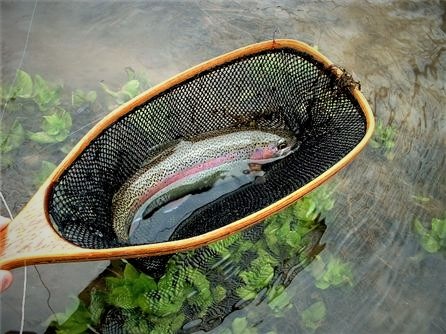
My best dry fly trout, a wild Big Spring rainbow that exceeded ten pounds. My little CDX had caught a lot of trout and many in excess of twenty inches when I ran into this fish on the first day of summer 2013. He rose and sucked in my size 18 tan CDX like he was waiting for it!

I learned that I had something special when I tied a Shadfly CDX to my tippet here in the Catskills. It did not matter whether the trout were taking hatching flies, egg laying flies, or spent caddis, they eagerly accepted the CDX. Many big Catskill browns have fallen for this simple fly, trout that ignored or refused other usually effective caddis patterns.

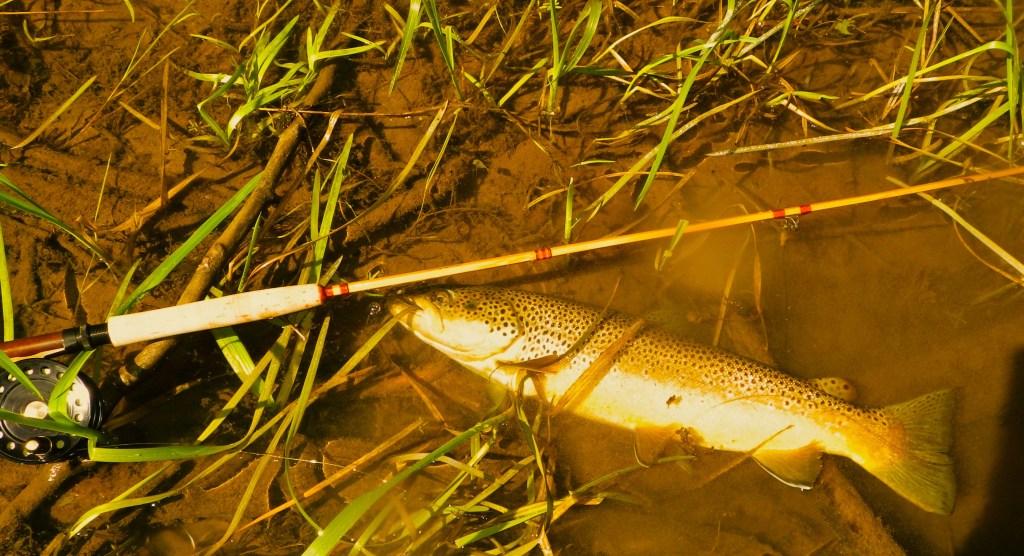
On the first day of summer 2013, I was fishing limestone home waters on Big Spring south of Newville, Pennsylvania. I carried my seven-and-a-half-foot DreamCatcher bamboo rod with a size 18 tan CDX when I saw the rainbow pictured above lying in a deep pocket of crystal-clear water. The trout wasn’t rising, though there were a few small tan caddis flying around. This fish rose and sucked in my CDX on the second cast igniting the fight of my angling life!

It is rare today for me to fish any other caddis pattern during the season. I choose an appropriate CDX to match the flies I observe or the species that is active at that time of year, and I fish it with unfailing confidence. So that is why the fly has been a well-guarded secret for so many years.

You can fish the CDX in flats, riffles or runs, no matter what the caddisflies are doing. If there is a trout out there who is willing to rise to a caddisfly, he’s going to eat a well-presented CDX. I do tie a few of mine with a little extra hackle, three or four turns instead of only two, reserving these for the heaviest water.
During more than three decades of fishing Pennsylvania limestone spring creeks and beautiful Catskill freestoners and tailwaters, I have too often witnessed wild trout taking selectivity to it’s outer limits, taking only the natural caddis or mayflies that moved within their window. Movement within the fly and an optical simulation of movement and thus life are our best weapons when we engage these super-select spotted warriors!

Ninety Days

That title was once a very common utterance. In my youth, thousands of products from household gadgets to automobiles were hawked with a “ninety-day guarantee”, and those that didn’t sell so fast might be offered on time: “ninety-days same as cash”. The point is that, back then, ninety-days was considered a substantial amount of time.

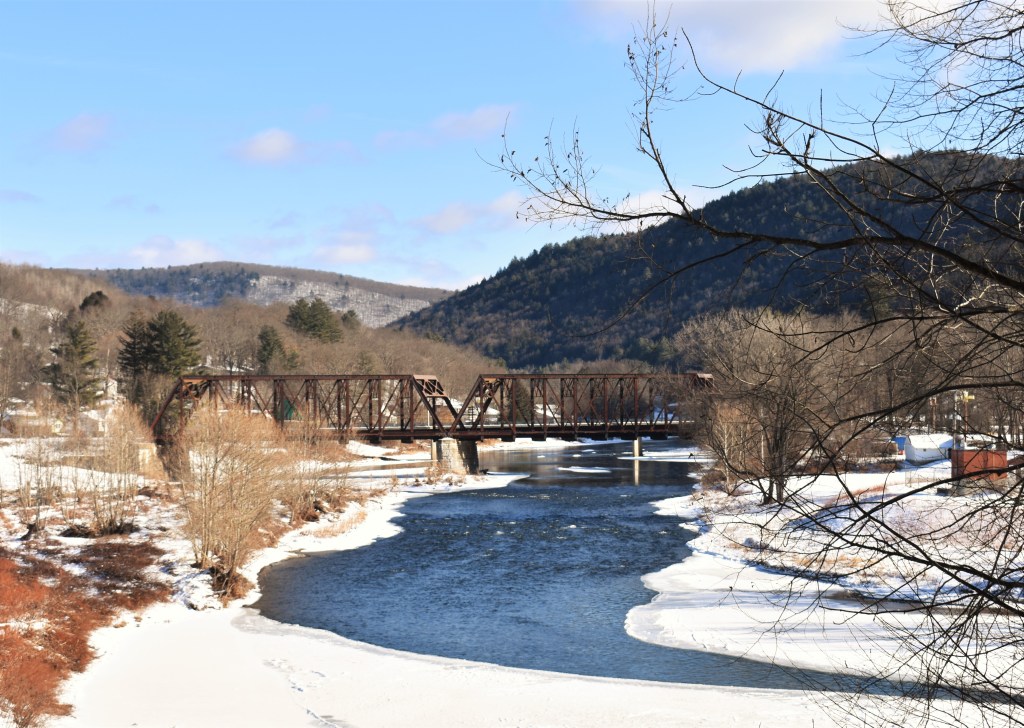
These days, I guess that period represents the last significant milepost along the long journey through winter; spring may not be imminent, but it isn’t a lifetime away either.

The snow is falling heavily here in Crooked Eddy, and I am hoping that it continues. No, I don’t wish to be buried in it, but the alternative is said to be a couple of inches of rain on top of the snow fallen during the passage of these two winter storms. I don’t care to see my rivers battered with flood waters. There are trout eggs down in that gravel, and millions of immature insects, two classes of life that I would like to find more of when spring does beckon me back to the water’s edge.

Just over the mountain here, three beautifully flamed pieces of bamboo are being perfectly crafted into next summer’s magic, and that is the thought I like to keep foremost in my mind! I need to get out the fly boxes that house the tiny pale olives, sulfurs and terrestrials that are essential to that magic, to take stock of which patterns I need to tie, and perhaps put my mind to designing a new one.

Icons from my heritage…

Ah summer! You lie out there at the limits of my vision!

It is easy to sit and dream of balmy days upon bright water. My memories are full of sunlight and it’s sparkle on the gentle riffles, images of a secret wink of light beyond the edge of shade, my grip tightened on the cork. Though I feel blessed to wander rivers any day of the year, summer is my favorite season!

As I gazed at the warm brown cane I was taken there, crouching along the edge of a flat and mesmerized by an intermittent ripple in the current fifty feet away. A flick of my wrist and the thin gray line unrolls, my little fly settles gently and nearly vanishes in the drift. Time stops, until that ripple becomes a ring, and that warm brown cane turns to lightning in my hand!

That Seasonal Look

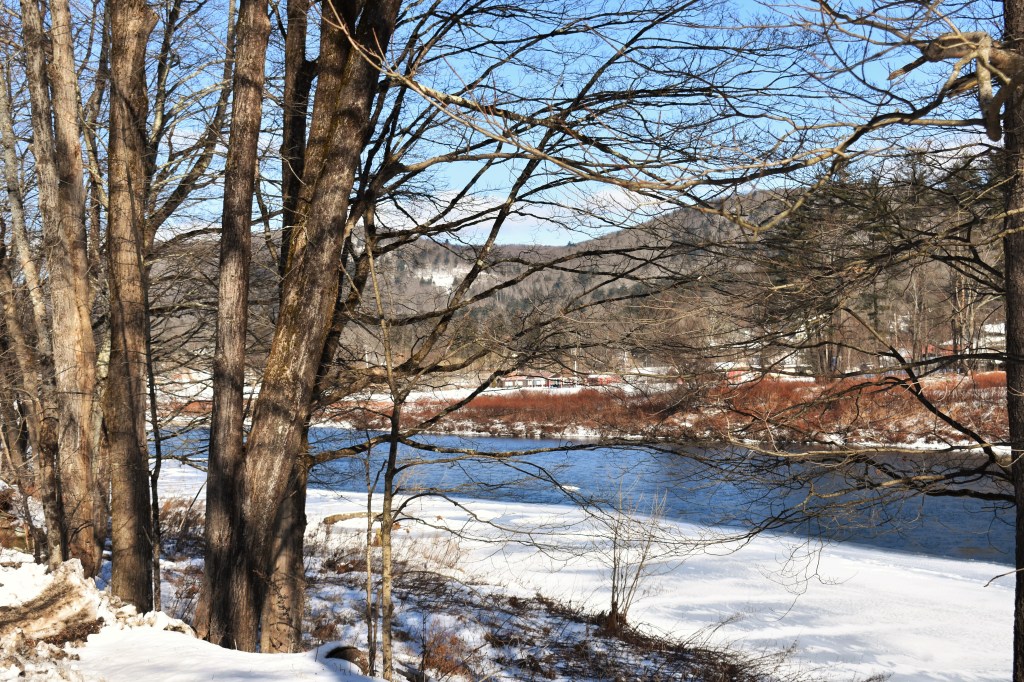
It finally looks like winter this morning, more than two months into the great void. So far, this much talked about first winter storm has not hit Crooked Eddy too hard. It is still snowing though.

The Weather Channel was all abuzz about double digit snowfall in New York and Pennsylvania, but we have nothing like that here. I was missing the snow as Christmas came and went, but I don’t need a foot of it to bring a smile.

The specter that is still hovering involves storm number two, expected to bring more snow to begin the week and then rain and warmer temperatures midweek. Catskill anglers, and all who love these rivers would heartily prefer a flood-free season.

I would like to see a couple of little warming trends each month now until spring. Ideally, that would give me a day or two during each of winter’s remaining months to get out and wander along a riverbank, with a little hope that something spotted might intercept the swing of my fly. Time to keep working with the movement flies I have designed, and perhaps even devise another.
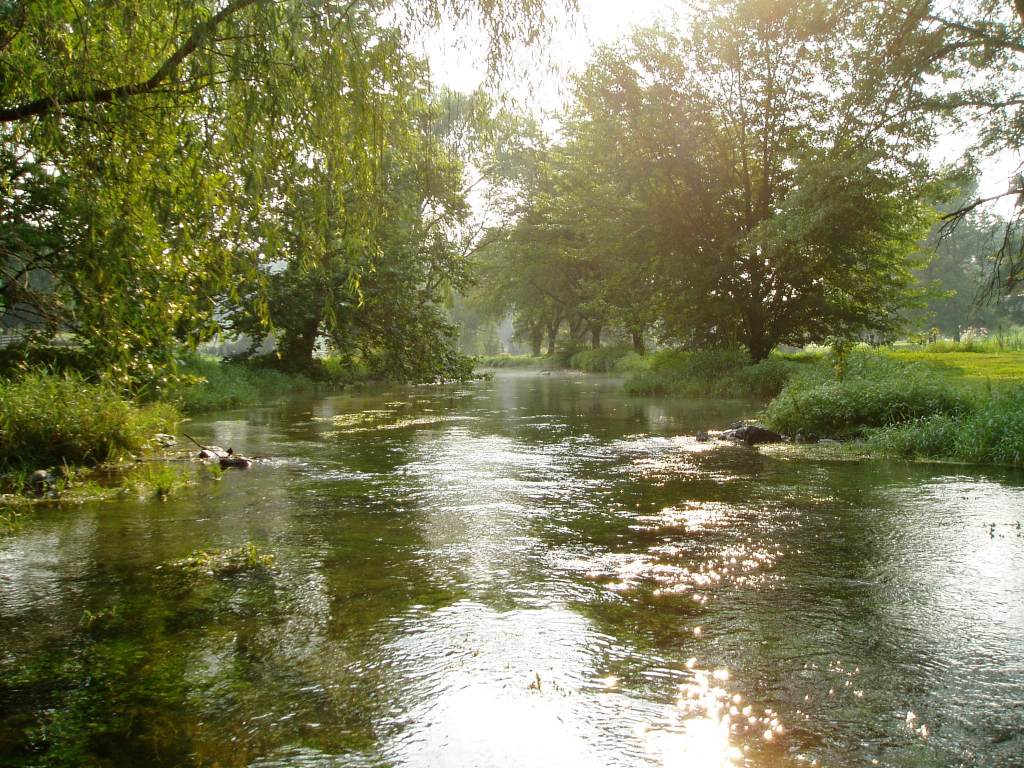
Right now, I am in the midst of the annual lull in my fly tying. I finished out the year 2023 with a few ideas, and now I am taking it easy for a while and enjoying my winter reading.

I missed the first winter fly tying session at the Museum yesterday, and I hear that quite a few of our Guild tyers showed up, despite the snowstorm bearing down upon us. I really didn’t feel up to it and didn’t want to spend the afternoon coughing at my fellow fly tyers. I’m on my doctor’s third suggestion to beat this bronchitis, and I really hope it works before the next little gathering in two weeks.

The books are keeping me connected to bright waters for now, although most of the best ones are older volumes which speak of days long gone. I do tend to smile at the fact that our Catskill rivers have continued, something not expected in many of the angling writings penned after WWII. Despite our environmental progress, there are still great challenges ahead, lest the current generation be the last to experience the wonder of wild trout rising to a mayfly hatch.

Secret Waters

For my morning reading today, I savored an old classic penned by the late Eugene V. Connett. The little book entitled “Magic Hours” held a pair of tales, the titled story and one called “Secret Waters”. He told of a Long Island meadow stream, spring fed, and briskly cold in August, and the wonderful wild brook trout he caught there.

Small streams fed by limestone springs have a magical allure, and I wandered along many of them during the years I lived in Southcentral Pennsylvania. There was always that hope of discovering something special!

Sadly, I never found a real pot-of-gold at the end of any of those limestone rainbows. Man’s talent for polluting, bulldozing, and generally destroying such treasures is no secret, and yet I strive to retain just a bit of hope in my heart.

Ah limestone: Bright gravel and watercress and the brilliant red and greens of a wild Big Spring rainbow trout!

There is another classic old volume on my bookshelf that tells of a forgotten region of limestone fed streams, and that leads me toward dreaming once more. The area is still farm country, and I cannot help but wonder if a few of those forgotten waters still run clear and cold, the homes of precious forgotten strains of wild trout. If man has not seen fit to bring the ruination he so often has, perhaps a tour with a light cane rod and a stream thermometer could reveal at least a hint of the magic revealed in the words of a gentle, long departed angler scribe.

Chambersburg Pennsylvania’s Falling Spring in winter brings memories of olives on the snow and rise rings on the glides.

Oh how I would love to find a secret gem, where an old man might cast a dry fly in January, February and March! Too much to ask in these times I am certain. Secret waters are a myth in these days of rabid information… or are they?

One Hundred Ten Dozen… and one

A sparse Cross Special in the Catskill Style

I tallied up my fly-tying log this morning to see exactly what I accomplished this past year. The total, as titled above, came out somewhat below my average retirement production. Perhaps I’m getting old.

It is true that I did log one hundred thirteen days on the water in 2023, though since it is my custom to tie a few flies in the mornings before heading out to the river, that cannot be used as an excuse. One hundred ten dozen is a significant number of flies in any case, particularly for one who no longer ties commercially.

Experimentation and a bit of inventiveness is certainly a factor, as is my interest in the history of trout flies, both leading to the production of a good quantity of patterns. Of course, something on the order of 98 percent of the flies born in my vise are dry flies, for that is squarely where my passions lie.

My friend Tom Mason’s exquisite Davidson Special is one of the classic Catskill patterns I plan to tie this winter.

As far as my winter goals, the Davidson Special is certainly a priority. Mahlon Davidson’s classic, dubbed with fox dyed with willow bark, strikes me as an excellent imitation for the Green Drake. It’s delicacy should be a primary trigger for the most heavily pressured trout of the season. I hope I find enough of those cherished flies upon the water this spring to fish the pattern with confidence!

I have already prepared the various dubbing blends and tied samples for the expansion of my A.I. series, flies inspired by the late John Atherton, so that winter project has been slated as complete. The Translucence Series may receive some adjustment in shade, just to see if I can improve upon their initial effectiveness.

There is another idea lurking in my thoughts, a cross between a 100-Year Dun and a twenty-some year-old pattern I called the CDC Outrigger Dun. Perhaps I should play with that a bit since it has come to mind…

It seems I have whiled away another winter’s morning, savoring the last volume of my cherished Dana Lamb library, beginning a pair of Gordon Quills, and putting down these thoughts. Only ninety-seven more to go…

Snow

…though Point Mountain’s eastern flank brings a smile…

Welcome to a New Year! January is teasing with the barest dusting of snow at daybreak, just a trace upon the grass, though Point Mountain’s eastern flank brings a smile to the boy still deep inside me.

In truth, there was a glimpse of white up high when I drove over to the rod shop on Saturday, but our village remains in somber grays and muted greens. I miss the snow! December has passed and still the dreary landscape greets my eyes each day. That inner boy is calling, recalling days when schools were closed and sledding made spirits bright!

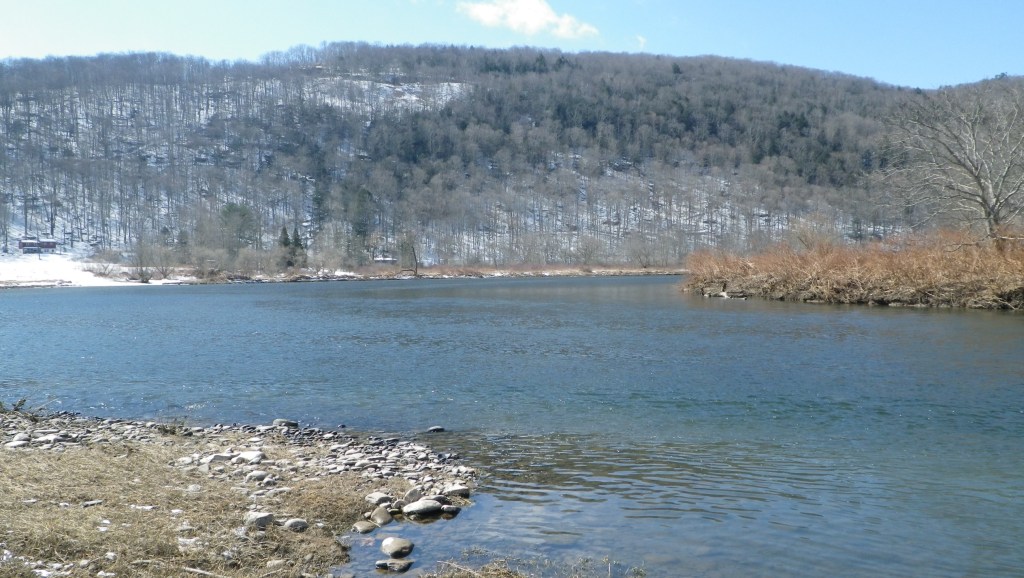
Mountain snowfall brings more than smiles at their glistening beauty, for they supply the groundwater that charges the springs which feed the rills that become the brooks that nurse the trout waters from which old anglers such as I draw life itself!

Bright Water: The springs source the brooks which intertwine to become rivers.

The late autumn and winter rains have oft been gentle, and thus good for the rivers, but there is no substitute for the slow drip of a mountain snowpack tight to the bosom of Mother Earth.

I long to walk along the genesis of bright waters, to watch the ice dripping close to the earth, just as I long to wade these rivers of my heart and cast a fly. If it must be winter, then let it be.

Three

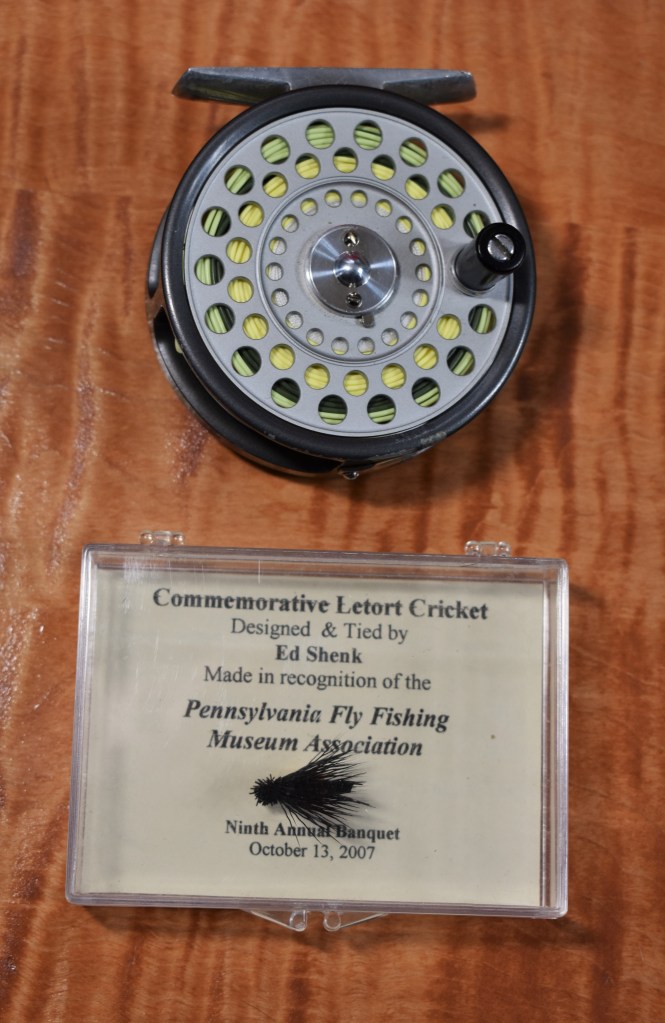
An early memory from one of my first trips fishing my Dennis Menscer 8-foot hollowbuilt bamboo rod. It was a precious morning spinnerfall on the Delaware and I was glad I had chosen the classic CFO IV reel to accompany my new rod. It’s palming rim was instrumental in landing two big browns and a tiger trout, all better than twenty inches long!

I made a visit to my friend Dennis Menscer’s rod shop yesterday, the result of a surprise phone call after breakfast. Though I have been feeling less than energetic, Dennis’ call perked me right up. He was calling to ask if I wished to stop by and pick out the finished blank for my long awaited eight-foot three weight Menscer fly rod!

Now why a three weight bamboo rod you might wonder, and why an eight-footer unsuited for the little Catskill mountain brooks. In truth, I have been thinking about and searching for such a rod for the past four years. During that time, I have cast every rod I could get my hands on, with but one convincing me that it had the attributes I was looking for. Of course, with luck being what it is, that rod was one of a kind and it wasn’t for sale.

In 2019, Dennis had designed and made an eight-foot rod for a two weight line and brought it along to the Catskill Cane Revival in Roscoe. I was enamored of that rod and it’s crisp and effortless casting, though I felt that a two might be too light to regularly handle the outsize trout I stalk each summer. It did not take long for me to start needling my friend about designing a similar wand for a number three line.

A summertime four weight and one of the lil’ brownies I subdued at it’s christening.

Indeed, a four weight will be clasped in my left hand on many a summer’s day, but there are those periods when river flows are scant, and more delicacy becomes warranted. I have made no secret of the fact that I think an eight-foot rod is the perfect foil for stalking the amazing wild trout of these Catskill rivers, thus that need for utmost delicacy meets the utility of the eight-footer and the desire for the power still required to fish fine and far off. A number three fly line, particularly one with a long, gradual taper delivers that ephemeral combination.

Last year, Dennis responded to my constant worrying by telling me that he was designing such a rod. I missed getting my hands on the prototype, as he had a standing order for the first finished rod, but I did get a chance to cast it before it was packed into it’s tube and shipping container. Amazing, I told him, consider my order placed! There is something about a Dennis Menscer rod, a magic born of decades along these Catskill rivers coupled with the deep knowledge gained from countless restorations of vintage rods created by past Catskill masters.

Since that day, I have been hoping that the rod might be finished in time for summer 2024, and now I know that it will be. There is a special little Hardy St. George Junior reel, already spooled with a touch of backing and a new vintage Orvis Spring Creek DT3F fly line patiently waiting in my armoire. That long discontinued line boasts a fifteen-foot taper and my favorite dun gray coloration. It is stealth personified.

A summer sunset.

Day 99, and rather than thinking of spring, I’ve passed right through and harbor dreams of summer!

One Hundred Days

And so I have come once more to that old milestone, not yet mid-winter, but with two months of it behind I stand with a real hope for spring in sight. That count of days gives me hope in itself, for as each of those one hundred days is passed, the goal moves closer to realization.

Our Catskill rivers are high, and their waters warmer than they might be, for ours has been a wet and mild December. the Catskill watersheds welcomed an average rainfall more than twice the historical average for the month. Reservoirs draining to the Delaware River are either spilling or have spilled their excess within the last few days. There has been no measurable snowfall here in Crooked Eddy.

The angler’s inquiring mind wonders what this will mean for the coming fishing season, and as always we are left to either theorize or simply guess. Should these next hundred days continue the wet, mild pattern of weather, the fly hatches could begin early. If however the next three months bring diving temperatures and heavy snows, spring fishing would likely be late. The one constant in these annual considerations remain: we must wait and see!

Quill bodied Hendricksons awaiting spring.

In battling the bronchitis that crept into my days after Thanksgiving, I have failed to take advantage of the warmer days of December. My hunting ceased after the opening day of deer season, and I have not prospected any of our warmer than usual winter rivers. On a second round of medicine, I hope to be able to remedy that situation in the new year.

I would like very much to see the sun again, watch it twinkling upon bright water as I cast a long, slow line down and across the flow. A fifty degree day (we just had a rainy one) with clear, sunny skies might help to lessen my cough, and I am certain that a walk along the river could not fail to do me some good. The rain is still falling on the metal roof above my head though, with a chance of snow lurking in the forecast.

January, or no?

One hundred days from now I will walk along the river bank and greet a new dry fly season, with hope if not fulfillment. I shall search the currents for new signs of life. Whether on that first day, or further on, the season will unfold, and I will see that first pair of gray wings dance upon a riffle, behold that first soft bulge in the current and feel the quickening of my heart as I take the fly from the hook keeper and pull that first measure of line from my reel.

Each season is different, and that seems perhaps the best reason to see as many of them as we can!

Enchantment

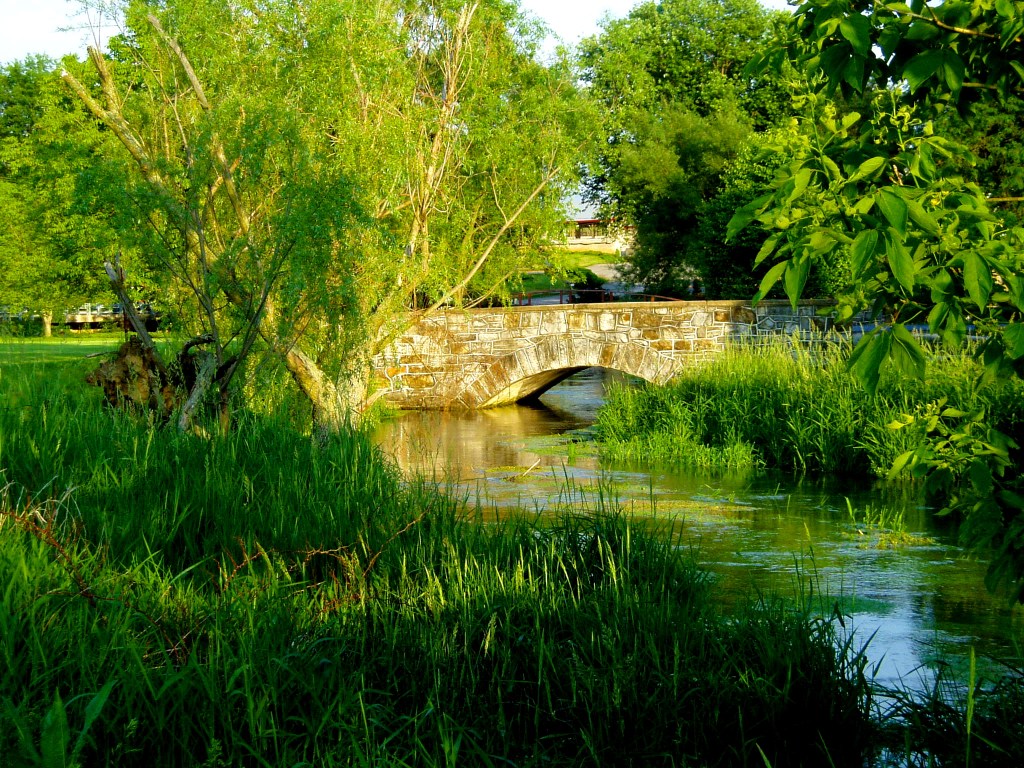
It wasn’t far from this lovely old limestone bridge that I first angled Chambersburg, Pennsylvania’s Falling Spring Branch – or tried to.

The date is buried in time, somewhere more than three decades ago. It was later in the spring as I do recall, and the meadow grasses were closer to calf high as opposed to towering above my head as they would in high summer. I had been called there by an article in a fly-fishing periodical, one simply dedicated to Difficult Trout.

I stooped low as I neared the stream, its sparklingly clear water rushing gently over bright gravel, but it was to no avail. I had just enough of a glimpse for the image to register in my mind; half a dozen trout were finning below a low branch. Before I could think or move they were gone, vanished as if they never had been!

Over several visits, I learned to watch the stream well ahead of my own progress, to crouch and observe before ever thinking of a cast. When fortune smiled, my careful study would reveal a shudder in a patch of watercress, or a subtle movement where the overhanging grass brushed the water’s surface. It was then that I began to catch the brilliantly colored wild rainbows and browns of Falling Spring.

A love affair would blossom, until at last I moved to Chambersburg and opened the fly shop I named to honor her: Falling Spring Outfitters. Those were heady days, highlighted by fishing at each day’s beginning and end, as well as the excitement of taking the risk to live life attuned to my own angling imagination.

My favorite evenings were those in May and June, when the soft orange and yellow sulfurs would draw the limestone trout to the surface. Stalking the water meadows after sunset with a short, light rod and a dainty dry fly, the brevity of the rise and the impending darkness raised the anticipation and excitement to new heights. At times I fished alone, though there were glad evenings when a number of us would gather hopefully, where the tiny stream riffled behind Bill White’s house. We would sit and talk, anglers all, and every once in a while, one of the group would rise and make a few casts when a soft ring twinkled in the twilight.

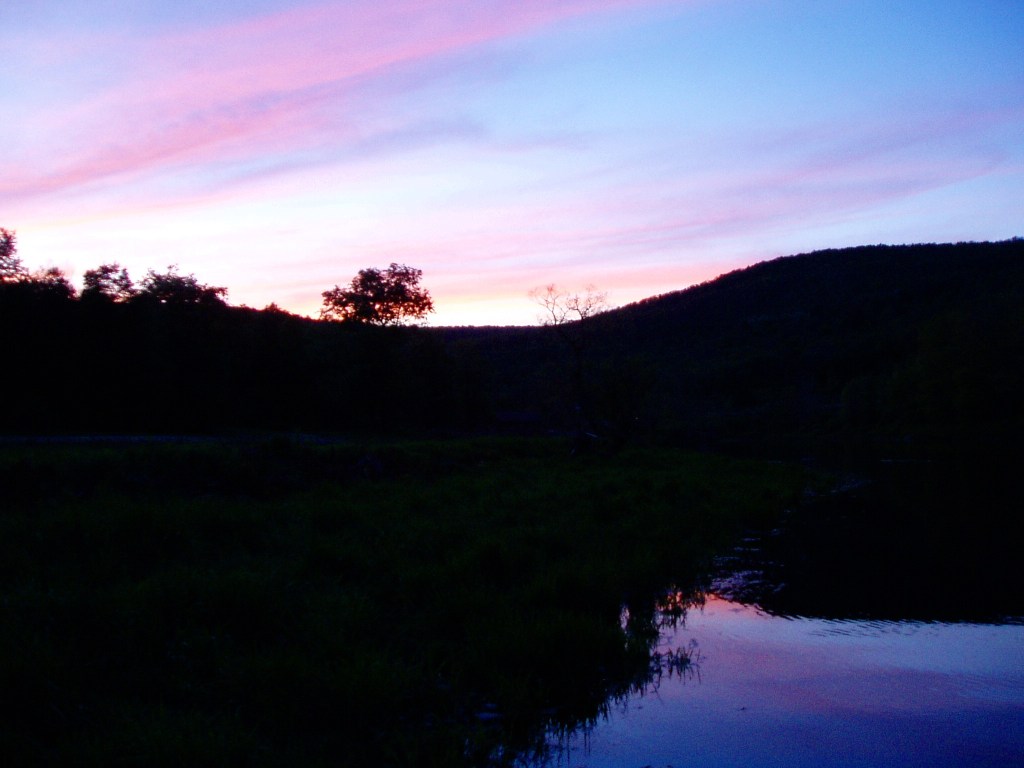
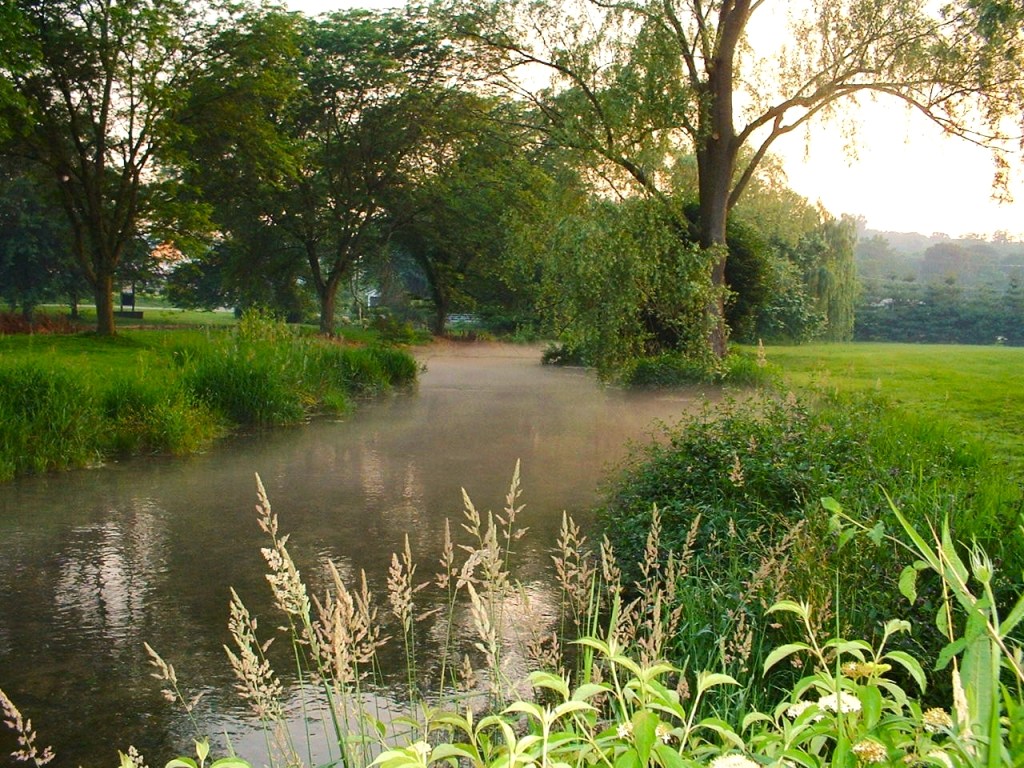
Evening mist at sunset on the little meadow above Frey’s Dairy, where the late summer sulfurs drew me often into August.

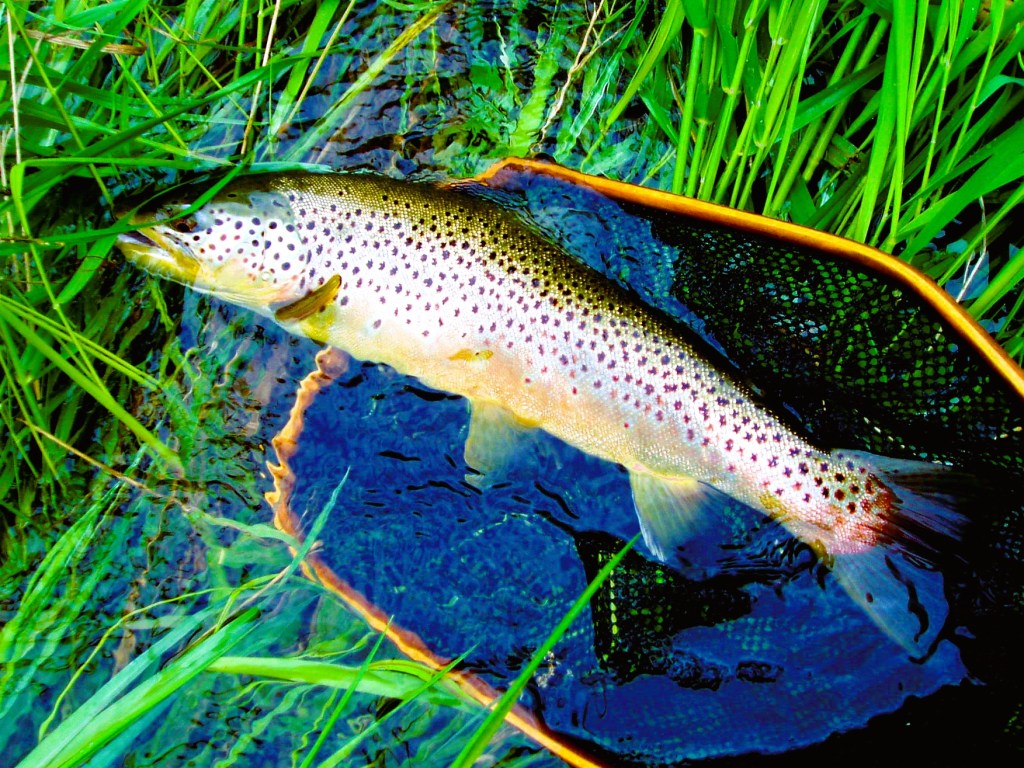
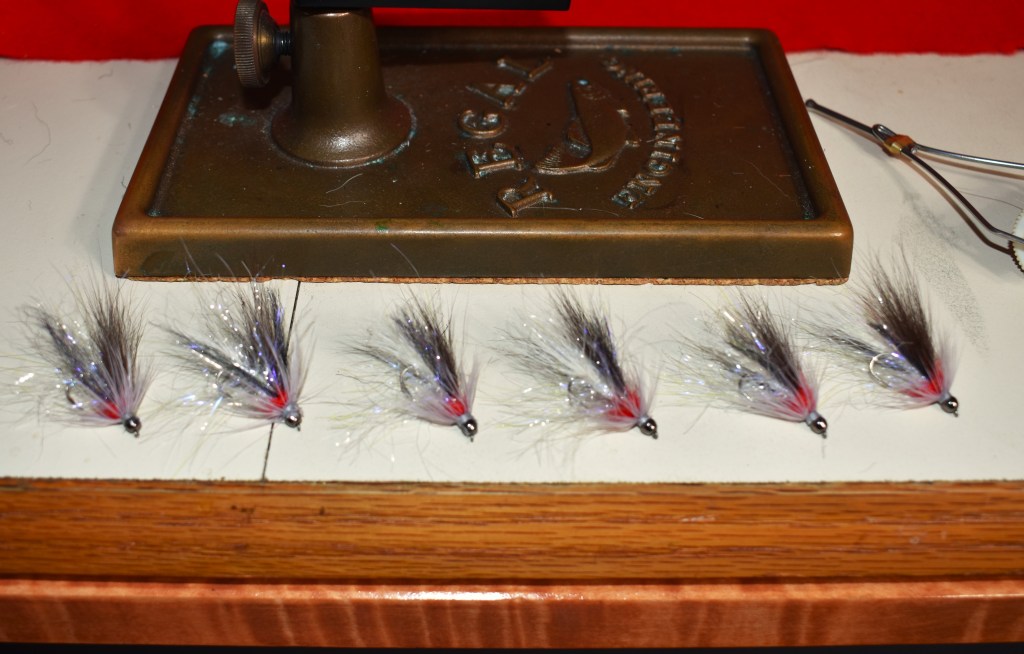
There are countless memories from those years in the Cumberland Valley including both triumphs and failures with the dry fly, as I worked to solve the mysteries of weed driven currents with a tippet that could hold a trophy brown. There was a huge brownie beneath the stone arch bridge one late summer evening long ago. I tied a tiny streamer then, the Pearl and Squirrel, which tempted him with both its lively sparseness and pearlescent flash. I won that close quarters battle, finally netting a trout well over twenty inches long!

I think back to tricos on summer mornings, visits with Ed Shenk and Ed Koch in the shop, and all the hundreds of dozens of flies I tied there. I remember one warm spring day, when March felt more like May, when my unplanned walk along the stream brought me face to face with a pair of trout I scarcely believed. Fishing had declined by then, and such trophies were no longer seen, much less cast to and caught.

I aimed my back cast through the tree branches behind me, and sent a small Shenk Sculpin to the far bank, then let it swing out into the current where those leviathans lurked. The brown trout I battled finally to my netless hands was 25 inches long, my largest from those bright waters. I can still remember the little CFO screaming as that fish ducked under a log and ran full speed away downstream! To land him was unexpected to say the least, though clearly meant to be.