A Solitary Pursuit

Little J Morning

Social distancing: isn’t it just typical for someone to come up with a cutesy buzzword for something as basic as keeping to one’s self. Under threat of disease and even death, the simple, time honored act of keeping to one’s self has become a thing.

Angling has always been a solitary pursuit. Many of us enjoy gathering after fishing, sharing tales and a meal or libation, but the fishing itself is best accomplished in a solitary state. A man alone on a river can best commune with nature, his thoughts, and the power that guides him.

Let us hope that moments alone on favorite rivers shall help us weather the challenge of this swarming virus that we may gather again in health and celebration of the lovely wild trout and the bright waters which unite us.

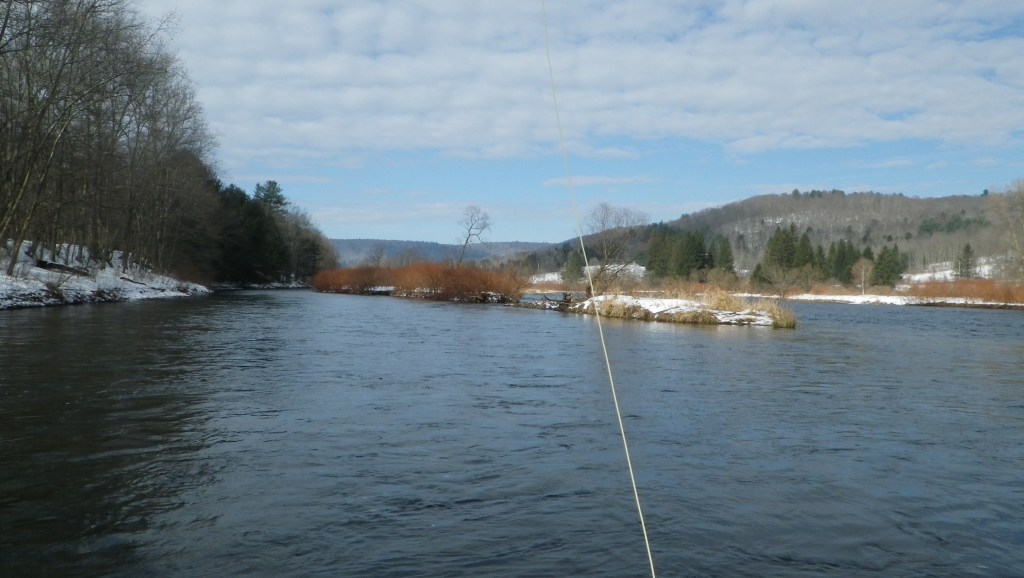
It is the final day of winter and spring awaits. I have not quite decided which Catskill river I will walk today, but I will walk one of them. There is sunshine now and birds are singing outside the window above my fly tying desk. If the sun remains through afternoon the water should warm into the forties, and the early black stoneflies might just come out to play.

We are still two weeks from the opening of New York’s trout season, but the border waters of the West Branch and the great Delaware allow fishing all year, and there are No Kill reaches on the Beaverkill and Willowemoc open for fishing. The wonderland of the Catskills still provides choices even in winter, though winter is a long season of want for the dry fly fisher.

Perhaps today that long sleep will be broken.

My last dry fly day was a bright, breezy day in mid-October, after the rains early in the month had revived the freestones. I had found some fine fishing with ant imitations when the sun shone and autumn breezes swirled and shook the trees!

The river was still very low and clear, but cool and comfortable for both trout and angler after summer’s drought. I carried the flamed bamboo my friend Dennis Menscer had recently crafted: seven and one-half feet of perfection wrapped in his trademark burgundy silks! My classic Hardy LRH, held tightly by Dennis’ hand made nickel silver cap and ring, was spooled with a somber toned four weight line and a long, fine leader and tippet.

I stalked a favorite run, working down to a glassy little pool, intent upon finding a tiny surface ring in the shallows along the bank, masked by shadow and a touch of dappled sunlight. There! The lithe rod formed a tight but gentle loop and sent the fly to alight with a whisper, and the trout sipped my fraud like any other wind blown natural.

The cane, arched into a deep bow, and the staccato music of the reel left no doubt that this was no ordinary fish. He abandoned the shallows for the deeper current of the run and ran downstream in a rush. I checked him finally and reeled when he turned, maintaining pressure, though ever conscious of the limited capabilities of the fine 6X tippet.

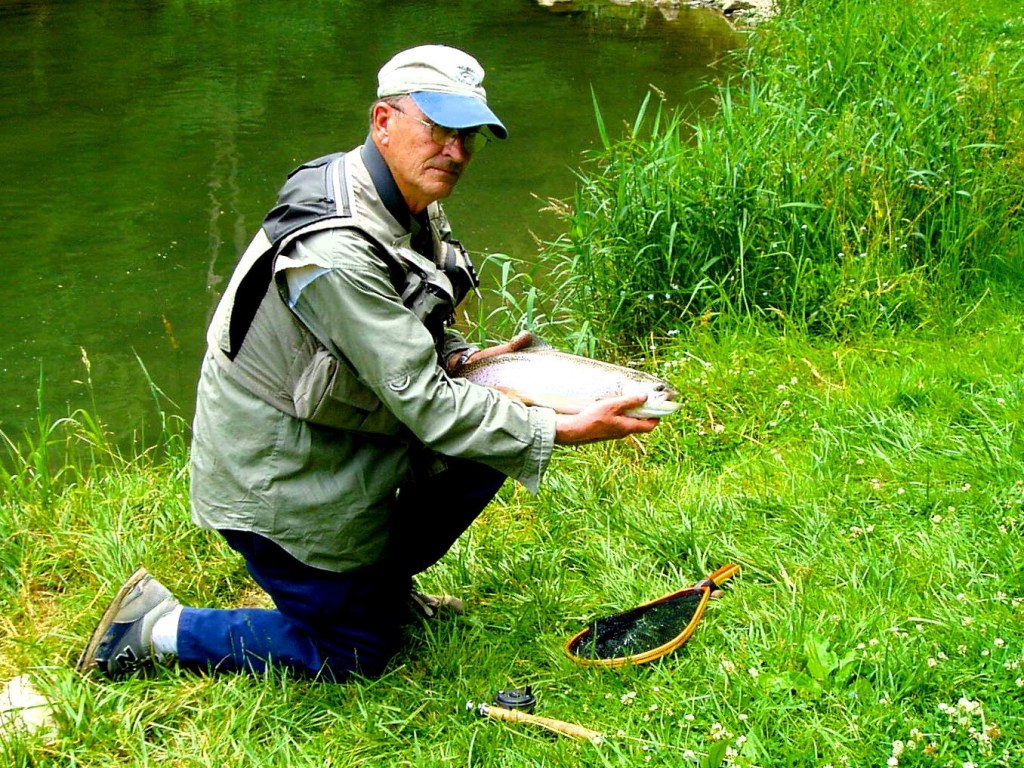
After a few more runs in the current, the great trout tired, and the supple cane brought him to net; twenty inches of bronze and gold! Dennis’ masterpiece had been suitably christened.

More than five months have passed, and I have tied hundreds of dry flies remembering that day, and dreamed of my next opportunity to see a subtle ring on the surface, and my fly disappear!
Chores to be done

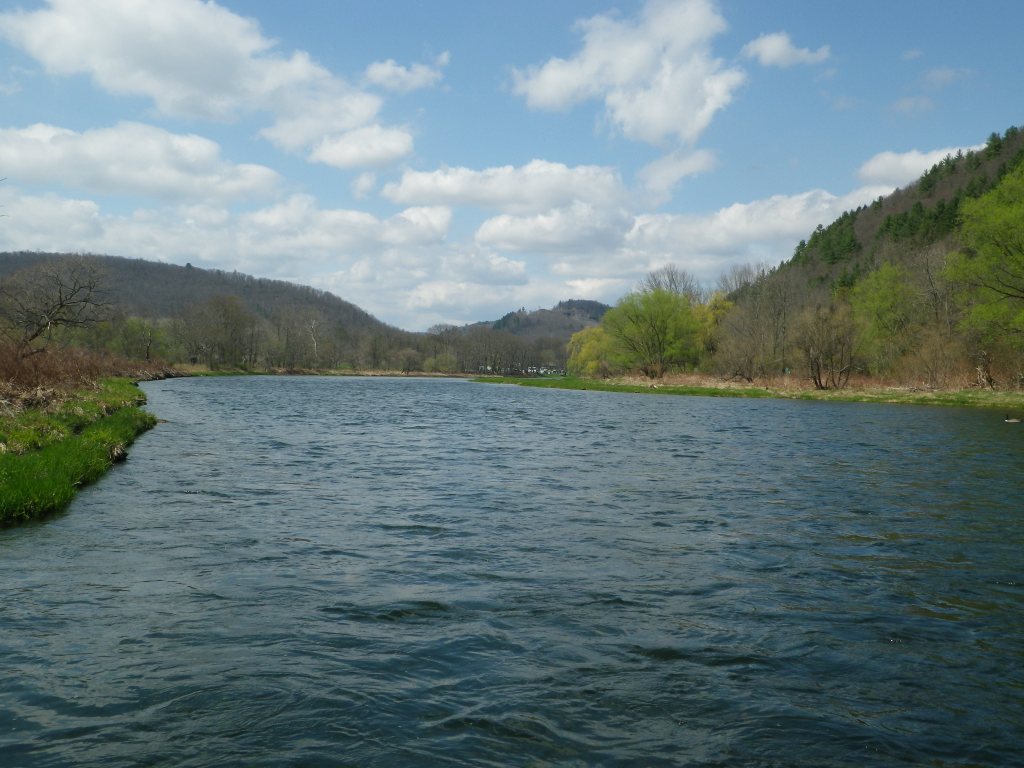
According to my calendar, Spring will arrive in four days, so there are some chores to be done to get ready for the season. Other than stocking the new boat box with freshly tied flies, I have spent the winter tying and tossing the results into storage boxes. The time has come to get out the thin plastic boxes I carry in my vest, sort through the patterns in them, and refill the compartments with the usual characters. Being an experimenter, I will have to find room in say the Hendrickson box for some of last year’s experiments, then put this year’s into the box I reserve for new patterns.

I should sort through all of the early season boxes, early stoneflies, Gordon Quills, Blue Quills, Hendricksons, olives and black and Shad Fly caddis. Those will keep me fishing for the first month. The tag sticker has to be put on the trailer tag and the boat checked out, cleaned up a bit and readied for the river. It’s hard to say whether we will have high water or not. The monthly rainfall has been up one month and down the next this winter, and we are still in the deficit column. I suspect the folks in NYC believe we will get a lot of rain at some point, as they seem to be keeping the reservoirs down about ten percent.

The forecast for the first day of Spring is for a high of 53 degrees with half an inch of precipitation in the form of both rain and snow showers. Snow wouldn’t surprise me at all, as I can recall a number of late April mornings when I awoke to find frost and my waders and boots frozen solid hanging on the porch of my cabin at West Branch Angler.

The river temperatures seem to be topping out in the low forties now, though I have not checked them this morning after a night below freezing. There’s no telling when they’ll get to that magic fifty degree mark, or if they will stay there once the milestone is reached.

I want to try out a couple of different reels and fly lines on a couple of my bamboo rods, just to see if they like the classic tapered 406 fly line better than the lines I have fished on them previously. I find bamboo to be more sensitive to fly line composition and tapers. Good rods are versatile, and will generally cast several different lines in a couple of weights satisfactorily, but finding just the right line and taper can make them really sing!

I have debated all winter whether to replace the aluminum bars on my West Branch wading boots. After five seasons the edges are worn and they don’t bite as crisply into the algae covered rocks. The West has a lot more slippery algae, silt and vegetation on the bottom and the rocks are more angular, making wading more difficult than the rounded cobble of the Beaverkill or the East Branch, so I like the grip those new, sharp edged bars will give me. Time to stop procrastinating.

Lastly I need to try and find myself a comfortable wrist band, something in neoprene perhaps that will support my wrist and help me fend off the inflammation and pain of my carpal tunnel. That malady is going to make me have to force myself to become even more patient with rising trout. When I get charged up working a good fish I tend to put a lot of casts over it; too many I think. The method works, but it puts a great deal of wear and tear on that infirmed wrist and hand. I think more patience, and a more relaxed approach will catch me just as many fish and save me a lot of pain and some down time.

Of course another winter storm system could blow through any day and turn the calendar back a couple of weeks. I have seen plenty of Catskill seasons when the “April” hatches didn’t start until May. Lets hope this isn’t one of those years.

Remembering Charlie Meck

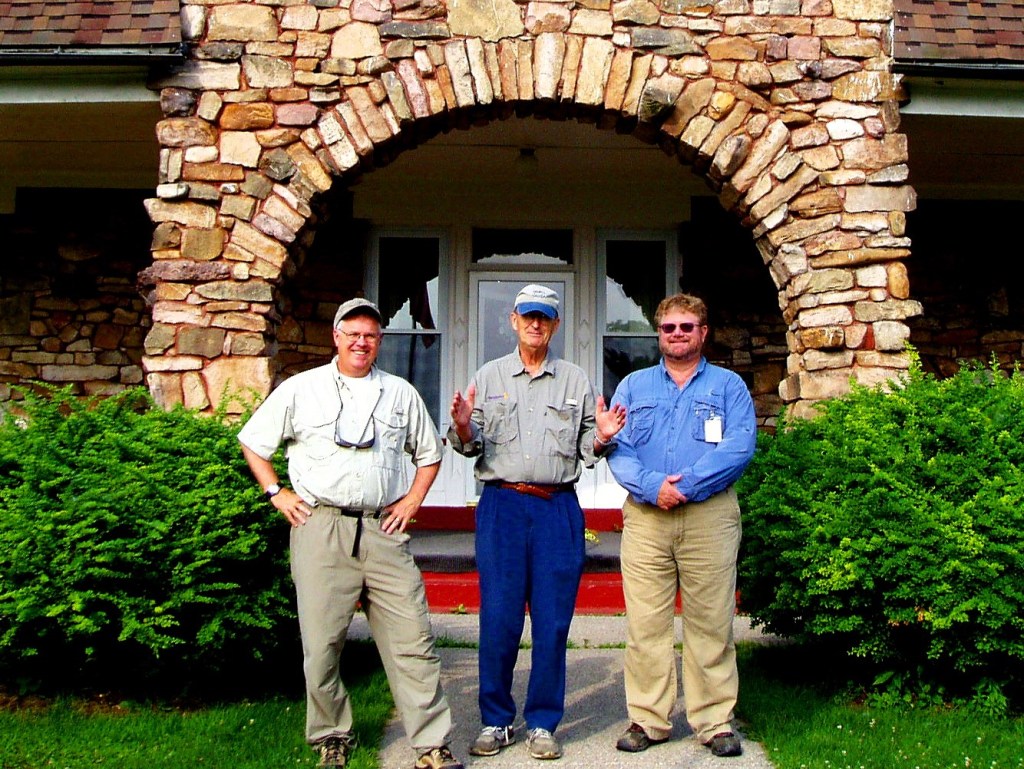
Mike, Charlie and I at Spruce Creek Rod & Gun Club

I spotted a post on the Classic Flyrod Forum the other day wondering who might fish The Patriot dry fly. I logged in to read through the various replies and added my own remembrance of a friend who introduced that red, white and blue attractor to the rank and file of fly fishers, the late Charlie Meck.

I met Charlie originally through his books. I can recall one particular early spring when I was fighting through the lingering effects of cabin fever, desperate for some dry fly fishing. I had been reading through “Pennsylvania Trout Streams and their Hatches” and came across the story of Clark Creek north of Harrisburg and the Great Olive Speckled Dun, Siphloplecton basale.

I tied some Catskill style dry flies to match the color of the size 12 mayfly Charlie described, and headed to Clark Creek on a Monday morning. I had the stream virtually to myself and, come afternoon, the hatch appeared and trout began to rise. I caught quite a few browns and rainbows that day, thoroughly lifting the veil of winter from my spirit. I owed Charlie Meck a debt of gratitude.

During my fly shop years, Charlie would stop in whenever his writings and travels brought him to Chambersburg. We became friends and Charlie even got me on television. He was working on his limestone stream book and was to be interviewed by the Harrisburg ABC affiliate. He set it up down along the Falling Spring and had me on camera fishing and talking about the stream as an addition to his interview. It was a lot of fun and great to watch myself on the news.

I talked with Charlie about the current state of the stream for the book, and Mike Saylor and I suggested he take a look at Beaver Creek down near Mike’s home in Hagerstown, Maryland. Beaver Creek was once a well known limestoner, written about by Charlie Fox, Joe Brooks and Lefty Kreh. Mike was a leader of the Beaver Creek Watershed Association that had been working successfully to restore the stream.

Charlie accompanied us to Beaver Creek for a little fishing trip and a tour, and Mike updated him on the restoration work and the players that cooperated to make it happen. Charlie recounted the stream’s recovery in “Fishing Limestone Streams” (The Lyons Press, 2005).

That summer he insisted we join him on some of the legendary private water on Pennsylvania’s Spruce Creek. The stream is known as the water of Presidents and angling sages, and Charlie hosted us at the hallowed Spruce Creek Rod & Gun Club. We had two great days of fishing for some trophy sized trout. I had the biggest laugh of the weekend when a mammoth rainbow I hooked screamed off downstream and pulled the braided loop connector right off the end of my fly line, keeping my entire leader and fly! Mike and Charlie had some fun razzing me that evening over dinner.

A highlight of the evening was sitting with Charlie as he tied some flies for the next day’s fishing, entertaining us in his quiet way with stories of his fishing travels. The same quiet, gentlemanly personality has always characterized his writing.

The Patriot

Reading that forum post on the Patriot brought back a lot of nice memories. I wanted to add my thoughts in tribute to my friend, and clarify the question raised as to the origins of the Patriot. The pattern and idea was indeed Charlie’s own, spawned by a scientific article he once read about the rainbow trout’s attraction to the color blue. He experimented with materials as most fly tyers do, finally settling on the Smolt Blue Krystal Flash that adorns the published pattern. It is a fish catcher!

I sat down this morning and tied half a dozen size 14 Patriots I will fish this spring in homage to a fine gentleman angler whose company I enjoyed. I’ll put a few in my boat box so I have some handy when I’m floating, and the rest in one of my dry fly boxes that never leave my vest.

It was a sad day when I learned of Charlie’s passing, one that began with a strange occurrence. I was sorting through various fishing memorabilia that morning and came across Charlie’s business card. I wondered how he was doing. A couple of hours later I got a call from Mike Saylor telling me that Charlie had died the day before. I am convinced that my finding that card that morning was his quiet way of saying goodbye.

Charlie Meck with a Spruce Creek Rainbow taken on a Patriot

Awakenings

Honest warmth… and wind; but still delicious! The second week of March began with a 64 degree day on Sunday and an amazing 71 degrees of sunshine yesterday afternoon. My morning was trashed by a wasted errand, but I headed out to the Beaverkill around lunchtime. Yes the wind was bad, but I simply couldn’t not go out on the warmest day of the year.

In truth the wind was strong enough and constant enough that it prevented the full pleasure all that sunshine could provide. Out on the river it picked up the cold from the water and redistributed it to the wayward fisherman. But oh the sight of the river!

I stepped out to witness flies in the air, hundreds and hundreds of flies buzzing in the air, rising from the surface and glistening in the sunshine! They were midges, at least for the most part, though there looked to be a tiny mayfly too, now and then. I started scanning for the first rise immediately.

I found none, and reasoned that it was still early, and the sun needed more time to warm the water. I tied on a little bead head soft hackle and started to cast and swing it through the best holding water. Patience was thin, so it wasn’t too long until I cut that fly off and rebuilt the business end of my leader to make a change.

I had received a copy of Mike Valla’s new book last weekend at Flyfest, “The Classic Streamer Fly Box”. I started reading as soon as I got home and during the next few days picked a couple of patterns to tie. Sometimes even a dedicated dry fly fisherman has to face the facts of high cold water in the tail of winter. One of those was a classic Rube Cross bucktail called “Beaverkill”, so I am sure you can understand the necessity of fishing it.

I swung and twitched the bucktail through that lovely stretch of holding water, lengthening the line a bit with each cast. At more than 700 cfs the run was fast, but crystal clear, so I hoped that the shallow swimming fly might just awaken a brown trout still too cold to rise all the way to the surface for midges. On one swing over a pocket of boulders I twitched the fly gently and paused, and felt a single hard pull with a wiggle, my first actual strike of the winter!

I would love to be writing about the battle joined and the giddiness experienced as I brought a fine brownie to the net, but that will have to remain a dream. The hook didn’t catch hold.

I don’t know why this winter has been devoid of trout. It has been mild enough overall to provide little windows of warmer days, and I have fished diligently through the warmest parts of those days to no avail. Yesterday was the first time I found any sort of insect activity, so I have to believe it was some sort of awakening. The weather is supposed to stay mainly in the fifties this week until cooling down for the weekend, and there is rain coming. With warmer air about the rainfall will hopefully warm the rivers somewhat, easing us slowly into the cycle of spring. Barring another onslaught of winter storms, we just might see that early spring the groundhog promised back in February.

As much as I long for dry fly fishing, I don’t want to see Hendricksons on April Fools Day. A spring like that just messes up the hatches for the entire season. We had one of those a decade ago, with grannoms and Hendricksons hatching in March down in Central Pennsylvania. I remember fishing here in early April and never seeing a concentrated hatch all year, the bugs trickling off over a month or more instead of hatching heavily for a week. Some midge activity, and some of the early stoneflies, both bringing a handful of trout to the surface on the warmer days would be the perfect gift. Mid April has always been the perfect time for mayflies to herald an early spring in my estimation. I’d just like a taste over the course of the next month!

Early Black Stonefly

The Longest Wait

MORNING

I walked out on the porch to get the mail yesterday and felt the sun beaming over Point Mountain. The thermometer read 61 when I looked at it, though experience has revealed that the direct afternoon sun often helps it along by as much as 5 degrees. I couldn’t help but to sit there for a moment and thumb through my mail. God but it felt like spring!

We’re a week into March now, just twenty days from the opening day of baseball with a bit more until the Opening Day of New York trout season. The weather has been warming somewhat, but it still drops below freezing at regular intervals; there’s even snow in today’s forecast. Now comes the longest, most difficult wait of the entire winter.

Mother Nature loves to tease us, one moment tossing her hair and winking over her shoulder, allowing the deep glow of an afternoon sun to warm our desires, the next smirking and vanishing behind a curtain of ice and rain.

Passing the days becomes more difficult the closer I come to an honest day of dry fly fishing.

As of yesterday I have tied 696 flies in the first weeks of this new year. I have blended dubbing, fiddled with tackle, polished rods, read quite a group of angling books, talked fishing with whomever would listen and walked along the rivers searching for a rise that did not come. The Mother teases now every few days, and my lust and torment grows.

I often dream to recapture moments in time. When I writhe in the wretched throes of anticipation as winter slowly wanes, there are splendid moments of springtimes past I long to return to.

There was a day on the West Branch years ago, a breathtaking day when the Hendricksons came by the millions. There were too many flies on the water, so my catch was meager. I was not alone in that fate, as there were dozens of anglers strewn across a couple of miles of river who shared my lack of success, each bearing the same tired, wistful look upon their face.

By five o’clock most of them had walked past me and climbed the trail toward their cars, yet I still wandered the river banks, enjoying a touch of solitude. Along the edges of the river I saw the movement of a few struggling mayflies. I stooped and plucked one from the surface, a size sixteen, brick red bodied Hendrickson. The flies of the blizzard hatch had been consistent, with the tannish bodies in a full size 14 I was used to seeing on the Catskill Rivers, but these ruddy late comers were smaller, and few in number. Males perhaps, or one of the lesser subspecies I had read about. I found an imitation and tied it on, walking the shallow edge along the bank with new purpose.

On the walking trail side of the river, there in the shallow, flat water that had been waded through all afternoon by an army of fishermen, I saw a bulge in the surface and a tiny dimple appear. I pulled line from my reel, checked my backcast for clearance, and delivered the fly gently above the last remnant of the rippled surface.

When the bulge appeared beneath my fly I tensed, setting the hook hard quickly when it vanished into the dimpling rise. The still surface erupted and a tremendous brown trout vaulted out of the water, shaking his head and snapping my tippet before falling back with a terrible splash. In a moment it was as if nothing had happened, the trout, and all evidence of his lurking in the shallow flat was gone. I stood there awhile, mouth agape: that trout was easily 6 or 7 pounds!

Another day on the West Branch, years thence, and I had fared better fishing a heavy Hendrickson hatch. I stayed when most of my brethren departed, hoping as always for that late, sparse little emergence of the red bugs. I waded down toward the tail of one of the large, deep pools, enjoying the early spring evening as I searched. The sun angled lower and bathed the far bank with that antique yellowish glow, and I was mesmerized by the beauty of the scene when I saw the first soft ring.

I tried to wade across, but the channel dug by the run of the current pulled me up short. It was well past six and the rises were the soft, telltale rings of trout sipping spinners. I freshened my tippet and knotted a size fourteen rusty spinner securely, then tried the closest riser with a cast. The fish was out there, sipping in that shady realm between my usual maximum casting range and the distance I needed to reach with a perfect presentation. A few of my casts alighted in line with his feeding station, though not nearly enough of them.

Eventually I resorted to a tippet change, going down to 6X, despite knowing in my heart it was not the answer to the riddle. Of course the trout finally selected my fly from the hundreds available, but it took me an extra microsecond to believe it, squinting to follow that little fly awash in the glare of the setting sun more than 80 feet away. That time was my undoing, for I hurried once convinced and set the hook too hard, knowing I was late. I pricked the brown, he boiled enough to display his significant size, and then he was gone.

There were several more sipping happily away as the last glow of that gorgeous sun slipped behind the mountain, each just a bit further over there than I could reach consistently. It remains a delicious, though bittersweet memory, fishing there until the shadows deepened and the rise subsided. Each spring, as I wade the pools of the West Branch, I remember that evening, and I long to return. Many times the river’s flow is higher, and there is no chance to repeat the past and hope for a more satisfying result. In some years though, conditions appear similar, and I haunt that reach looking for my past. I haven’t found it, at least not tangibly; I only linger there in memory.

Fishing Cane

I had an impromptu “discussion” with a fellow at the Troutskellar a couple of years ago about fly rods. Some might find this guy’s downright belligerent attitude excusable since he was working as a factory representative for one of the prominent plastic flyrod companies, but I didn’t.

I don’t recall how things got started, but very soon he got pushy, telling me I absolutely had to have the newest (and stiffest) $900 stick of graphite his employer was advertising ad nauseum as revolutionizing fly fishing as we know it. I calmly explained that “technology” wasn’t a substitute for casting ability regardless what his latest ad copy proclaimed and that, from my experience in the industry, ever stiffer fly rods typically made bad casters worse. I went on to say that the 80 odd year old bamboo rod I was fishing on that trip would do everything I needed it to do on the water, and was a heck of a lot more pleasurable to fish throughout the day.

The truth hurts I guess, for my words got this fellow all bombastic and blubbering about line speed and guide friction and shooting capability under low gravity conditions in a vacuum or some such nonsense. I turned him off and turned away at that point, acknowledging there was no hope for him, another soldier in the army of combat fishermen.

My statement about stiff rods made that guy come unglued I believe because he recognized it as the truth.

When I owned a small fly shop, I worked with a lot of fly casters on a regular basis. My shop wasn’t located in an urban center with loads of disposable income, so my customers put some real thought into buying a fly rod. They tended to be skeptical of advertising claims per se, and wanted some personal feedback. I carried a lot of slower action flyrods, even though the new top of the line rods my manufacturer was pushing in their advertising were stiff, fast action rods. Whenever I worked with a newcomer, or anybody who complained about dissatisfaction with their casting, I invariably took one of the traditional action fly rods when we walked outside to the casting lawn.

If you spend enough time in this sport you learn a couple of universal truths: fly rods are supposed to bend, and the more easily and uniformly they bend the more feedback they give the caster, leading to better casts; and, long distance casting is generally not the holy grail of catching more and larger trout.

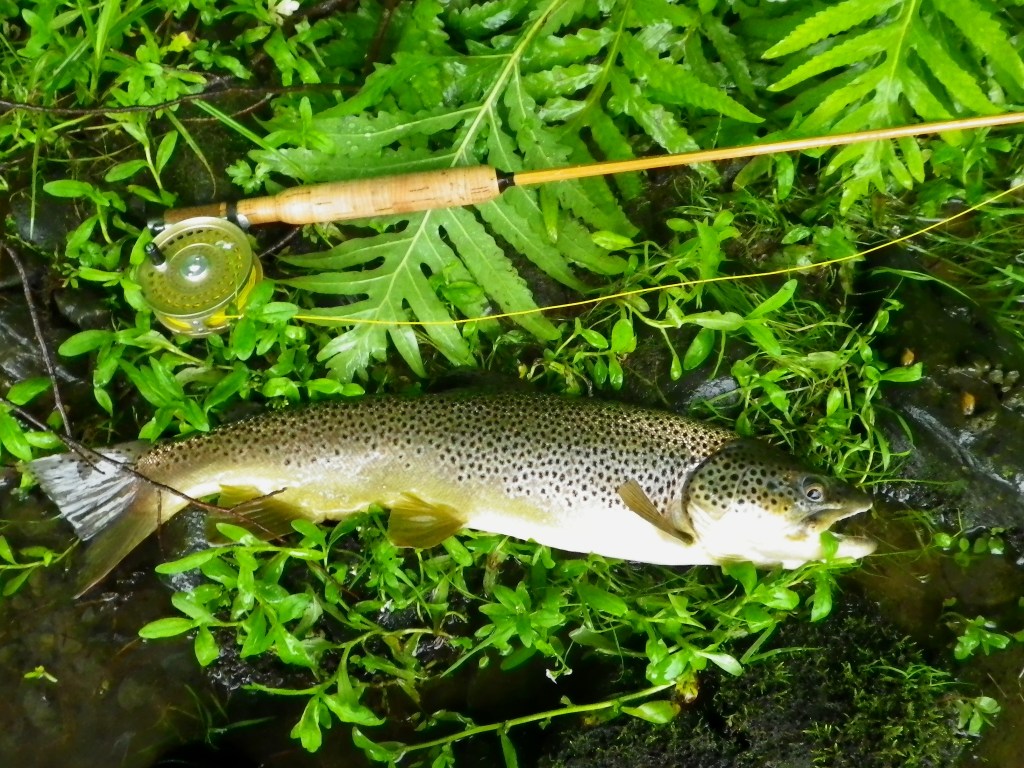
The rod in the picture at the beginning of this post is Mr. Jim Downes’ beautifully crafted rendition of a classic Everett Garrison 206 taper, a very, very full working 7 1/2′ 4 weight, photographed with its first better than 20 inch trout. I was talking to Jim at the PA Fly Fishing Museum Heritage Days event a few years ago when I spied that blonde rod in his rack. It stood out between all of the more darkly flamed rods Jim is known for. I cast the rod out of curiosity, and I simply had to have it.

The Garrison felt very soft at first, but as I adjusted a little I felt the perfectly smooth way it loaded, and the hidden power it held. The photo was taken on a stormy morning on the West Branch when the river, already high for wading, rose by a good 250 cfs during my hour and a half of fishing. The trout were tight to the bank that July morning, and they weren’t interested in rising in the fast current for less than a mouthful. The Garrison let me consistently place my size 10 isonychia cripple within an inch of the vegetation on the river bank; the only place the trout would take it.

That Garrison designed full working action proved to be extremely accurate, even when casting large dry flies some would call too big for a four weight rod in blustery conditions. I have used that rod frequently fishing a long, light line in the summer, as it allows wonderfully controlled, gentle presentations on calm water. It does that because its power doesn’t come from stiffness and high line speed, it comes from superior design and craftsmanship by rod makers who understood fly fishing.

There truly is a sensuality about fishing bamboo. Each rod has a personality and an ability to communicate with the caster if only he learns to feel what the rod tells him. Bamboo rods bend, not in that fraction of an inch microsecond only in the very tip way that carbon does, but smoothly and progressively, with touch and power and control. I think that bamboo simply gives our brains a better stimulus, and a little longer to feel that power so that we can apply just the right touch instinctively to make the line and fly do what we want them to do.

Certainly bamboo rods are beautiful, the warm tones of gently flamed cane highlighted by the translucent colors of natural silk windings and the mystery of figured wood. There is a wealth of history and tradition in the craft of rod making to enhance the enjoyment of fishing.

I get tremendous enjoyment out of fishing rods made by artisans I know. It always brings a smile when I think of those friends each time a trout takes the fly and the art of their genius rises into a throbbing, glowing arc transmitting the wild energy of a Catskill trout to my quivering hands.

I also have a special feeling about vintage rods, for I love to fish tackle that is older than I am. I know a little of their histories, who made them and where, but nothing of the rivers they have seen and of those who wielded them. Thinking about that past builds an extra touch of wonder into the experience.

Bamboo can speak to you. All you have to do is listen…

The Ides of March

Spring Comes To The Neversink

“I’m looking for the April thunderstorms that wash away the drab dull colors of the wintertime; I’m looking for the spring to break wide open; to hear the phoebe and the robin and the meadowlark; to see and smell the violets and the blossoms on the apple trees; to watch the swallows sweeping low across the satin surface of the stream; to wait for ripples of the rising trout, as evening falls and nymphs emerge and all the world is sweet with scent and song and gentle colors” Dana S. Lamb, “The Ides of March”, Woodsmoke And Water Cress 1965

It is a lovely march morning in the Catskills, the sun tinging the southeastern horizon with orange, the landscape bright with a fresh dusting of snow. My thermometer reads fifteen degrees, but my spirits feel warmer than that. The calendar tells me that spring will arrive in just eighteen days…

Yesterday was the occasion of the Dennis Skarka Flyfest, as members of the Catskill Fly Tyers Guild gathered in the Catskill Flyfishing Center’s Wulff Gallery to shake off the effects of winter and greet the coming season with open arms. Thanks to the Guild’s Catskill Kids On The Fly program, I enjoyed the opportunity to add two new fly tyers to the thirty or so veterans gathered in the hall.

I used to teach fly tying regularly during my fly shop days, but it has been a long time since I had the chance to help a youngster learn to tie their very first fly. I look forward to our March meeting at the gallery, and a chance to witness some more new smiles as bright young eyes see the magic of a hackle spring up into a sparkling little fan of fibers as they wind it around a hook for the very first time.

Often we mark time during the winter, tying flies, polishing rods and oiling reels as we dream about sunshine reflected in a subtle bulge in the surface of the pool and that miraculous ring that wasn’t there just a moment ago, but now it is time to get serious about the new fishing season. Now the mystery becomes palpable. No matter what the long range forecasts say, every angler knows that spring can happen at any moment. A turn in the wind currents a thousand miles away can send warmer air our way, dispelling the clouds and waking all the creatures of the stream that so delight us.

The time for tying flies on dreams and whimsy has come to an end. It is time to check all those early season boxes to be certain that all the needed patterns are in good supply. The vest must be sorted through, old leaders discarded and fresh ones laid in, and the drift boat will need to be uncovered, tires checked and compartments cleaned. Everything must be absolutely ready to go, for we dare not miss a moment of it.

OLYMPUS DIGITAL CAMERA

Looking Back

Hendrickson’s Pool on the Beaverkill

It was May of 1993, and life was a bit of a whirlwind. The economic downturn of the previous year threw a wrench in my career and I had found a part-time gig working at the local Orvis shop. I enjoyed fly fishing for trout so completely that I discovered how much fun it was to work at the shop and talk fishing to the customers, and I resolved to open my own shop. I set a meeting with the Orvis Company in Manchester, Vermont and headed north from central Maryland. Along the way, I finally had an opportunity to visit the Catskills and fish the hallowed waters of the Beaverkill.

I had read a great deal about the Beaverkill and the magic of the Catskill rivers. Stories from the Golden Age of fly fishing had captivated me, and I had longed to wade the limpid, cobblestoned pools where a legion of great angling writers had become inspired, bewildered and seduced. I was positively giddy when I got my first glimpses of the rivers from the drive along the Quickway!

The Hendrickson hatch had concluded when I arrived in Roscoe, and my first steps into the lovely river introduced me to the Shad Fly caddis. They were everywhere, flying around in the bushes and over the water by the millions, but there were no trout eating them. The main hatch had come off of course and the egg laying wasn’t happening just yet, so the flies simply weren’t on the water where the Beaverkill trout could get at them. The sight was impressive though!

I recall making the rounds in Roscoe: the Dette fly shop, the Beaverkill Angler, Hendrickson’s Pool, Horse Brook Run, Ferdun’s and Barnharts. I stalked the wide, glassy length of Barnhart’s Pool and witnessed a powerful rise along a shady bank. I approached as stealthily as I could despite the nervous anticipation, and made my pitch. When my little dry fly was taken, all those nerves exploded in far too quick a hookset. I only pricked leviathan, the water exploded in a tremendous boil and then he was gone. So close to Valhalla!

My senses were full those first two days, overpowered by the brilliant sunshine, the beauty of the Catskills and the mystery and history that surrounded me. I just needed to connect with the beautiful trout that had drawn me to Mecca.

Some clouds gathered that second afternoon, and Mary Dette kindly pointed me to a nearby reach of the Willowemoc where I found my rising trout. There were 6 or 7 of them, feeding steadily, and ignoring my flies. I bent down to scan the surface over and over, but saw nothing. Finally I remembered my little telescoping insect net and retrieved it, sifting the current for an answer to the puzzle. Sticks, pieces of leaf matter, seeds, bubbles…bubbles? I dissected one clump of bubbles and then another, finding blobs of olive green, brown and blue gray: half emerged, drowned blue winged olives! My early CDC mayfly ties, hidden away in a small fly box, proved to be a perfectly blobish match and I caught those trout!

I still hadn’t found any fishing to those millions of Shad Fly caddis, so I kept exploring new reaches of the river. At Horton I finally found a few of them hatching in the Acid Factory Run. I tried my own elk hair caddis, and the flies I had purchased at Dette’s, but I only managed a couple of strikes in the churning white water of the run. The hatch ended and I had one small trout to show for my efforts.

Encouraged by the late morning hatch, I spent some time on the porch of the old Victorian bed and breakfast the next morning and tied myself a couple of flies. Gary LaFontaine had showed me how to tie his Emergent Sparkle Pupa a couple of years before, so I used my travel kit to blend a bit of fur and Antron yarn to copy the mixture of caramel tan and apple green I saw in those caddisflies. The two size 16 flies looked rough and shimmery, just as Gary instructed, so I placed them in my fly box and headed back to the Acid Factory Run.

It was Saturday morning, and I found a line of a dozen anglers already standing in the Run and extending well downstream. There was no one in the head of the run just below the mouth of Horton Brook, perhaps due to the bounding whitecaps where the riffle became a run. I waded in and tied one of my emergents to my tippet, and waited.

The hatch began around ten o’clock, just as it had on Friday, and the trout soon began to slash at the flies as they launched themselves from the frothy surface. I ended up wishing I had allowed myself more time to tie a few more flies.

The Emergent Sparkle Pupa in my customized caramel apple color fooled a lot of trout that morning, while a dozen anglers cast and cast, shook their heads and changed flies to no avail. Several waded out of the river and walked up to ask me what I was using while I landed a dozen brows and one very nice 14″ wild brook trout. I told them what fly was working, I showed them too between casts, but all I could do was apologize for having only those two flies.

I needed that second fly as it turned out, for at least twice as many trout as I landed had slashed at my little emergent then came off in mid air, or shaken the hook as they tumbled back into the foamy chute. I fished that first fly until nothing remained of its stubby deer hair wing but three fibers of sodden hair, then exchanged it by necessity for the second one. I became a disciple of LaFontaine’s Emergent Sparkle Pupa that morning.

I fell completely in love with the Beaverkill during that handful of lovely days in May. She had smiled upon me, teased me with her beauty and the mystery of her ways, kissed me shyly and stolen my heart.

Glimpses of Spring

Another little warm spell has graced the Catskills, though now the downtrend back to highs below freezing begins. Fifty degree sunshine brought a lot of anglers to the West Branch on Sunday. Despite the snow in the parking area it looked a bit like spring.

The sun on my back felt good as I swung my feathered enticements through the tail of the Gamelands Riffle, but there was no response. Unlike last winter, when I would catch a fish just often enough to keep myself going back each time the weather mellowed, this one has proved to be a time for exercise and reflection.

With Monday’s forecast improving to 55 and sunny, I set out again hoping some of the shallower water might just betray a little activity. Tired of the long spey rod, I carried my 8-foot Kiley bamboo, and rigged a dry fly leader. The day became more than was promised, all but kissing 60 degrees, and I tramped both the West Branch and the Mainstem. I saw one stonefly in the air over Junction Pool.

Winter remains, though my spirit appreciates the little breaks when sunshine and a light breeze over the river whispers promises of spring. Until that sunshine is more frequent there is reading and tying, and waiting.

Saturday is sure to provide a diversion, as fly tiers gather in Livingston Manor for the Dennis Skarka Flyfest. I look forward to the gathering and the chance to share ideas with fellow Guild members and, hopefully, to inspire a few youngsters to wrap a hook with fur and feathers to fuel their own anticipation for spring.

My own efforts to share the craft in this forum are continuing, and I have a third fly tying video to share. Slowly I am learning a few of the tools of the digital medium. Since the Halo Isonychia matches one of the most enduring hatches of our late spring and summer, it is only fitting to offer an imitation of the spinner.

Mark’s Halo Isonychia

Halo Isonychia

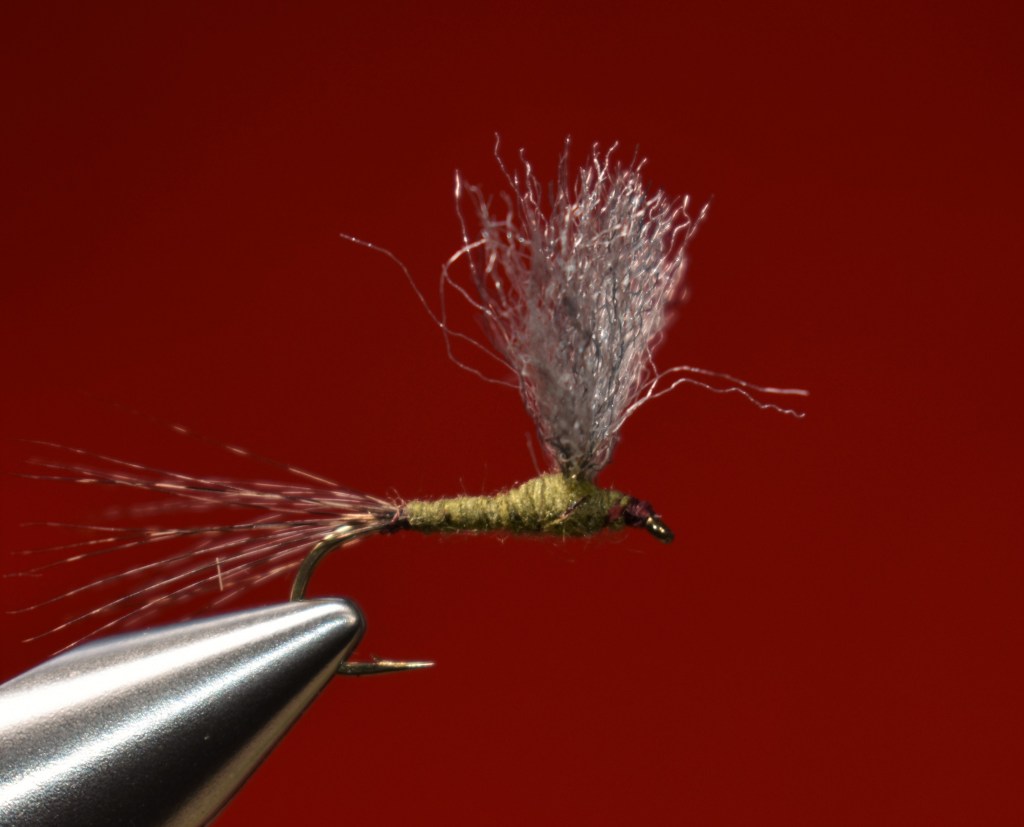
Last summer while working with the Kreinik silk dubbing, I came up with a new pattern idea for the isonychia mayflies which are favored by our Delaware River trout. There are two species that are common on the rivers: a size 10 mayfly that begins hatching in early June in a normal year (whatever that is) and continues into mid-July; and a size 12 fly hatching in September. Between them, isonychia are around long enough that Delaware trout respond to them throughout the summer.

Iso’s tend toward an olive body color immediately after hatching, then begin to darken to the claret or maroon color more commonly associated with the bug. I decided to tie a comparadun using the olive brown silk dubbing applied lightly over wine colored 6/0 Unithread. The translucency of the silk is wonderful and, as the fly gets wetter, the claret color of the tying thread bleeds thru until most of the olive disappears leaving a translucent sheen or halo effect.

I decided to use Enrico Puglisi’s Trigger Point fibers in dark dun for the wing. This produces a very natural veined effect in the wing, great shine for visibility on the water, and terrific durability. The fly proved itself immediately on a solo float on the Delaware last summer, bringing some nice rainbows to the top with no iso hatch in progress.

My explorations into the solo fly tying video thus continue. Still a few things to work out, but the lighting is improved. I hope you like the pattern.