Discovery in High Water

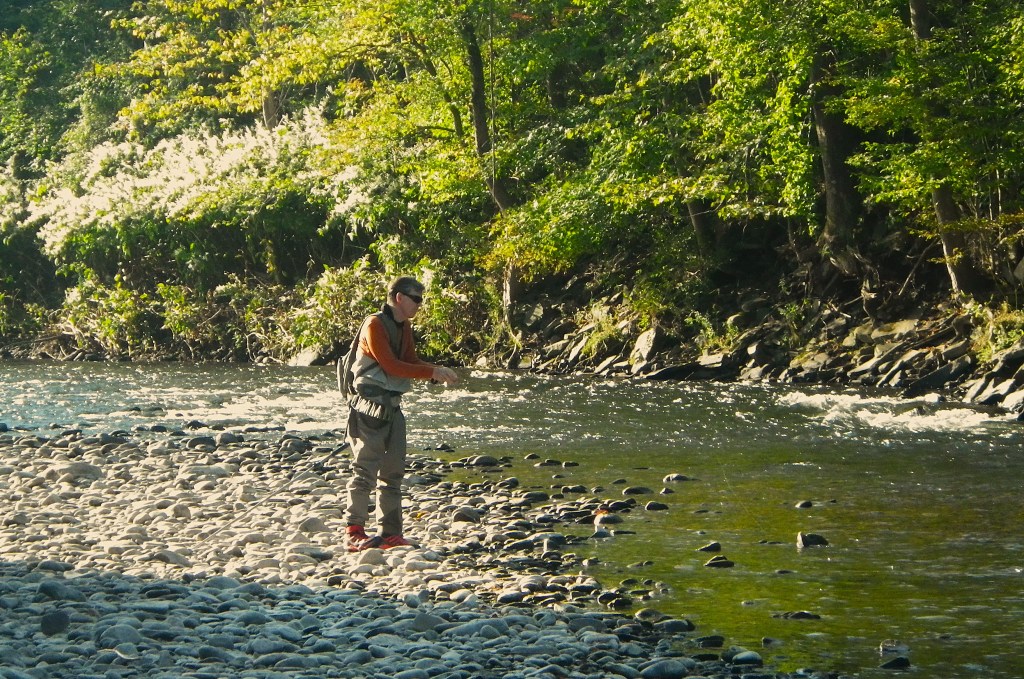
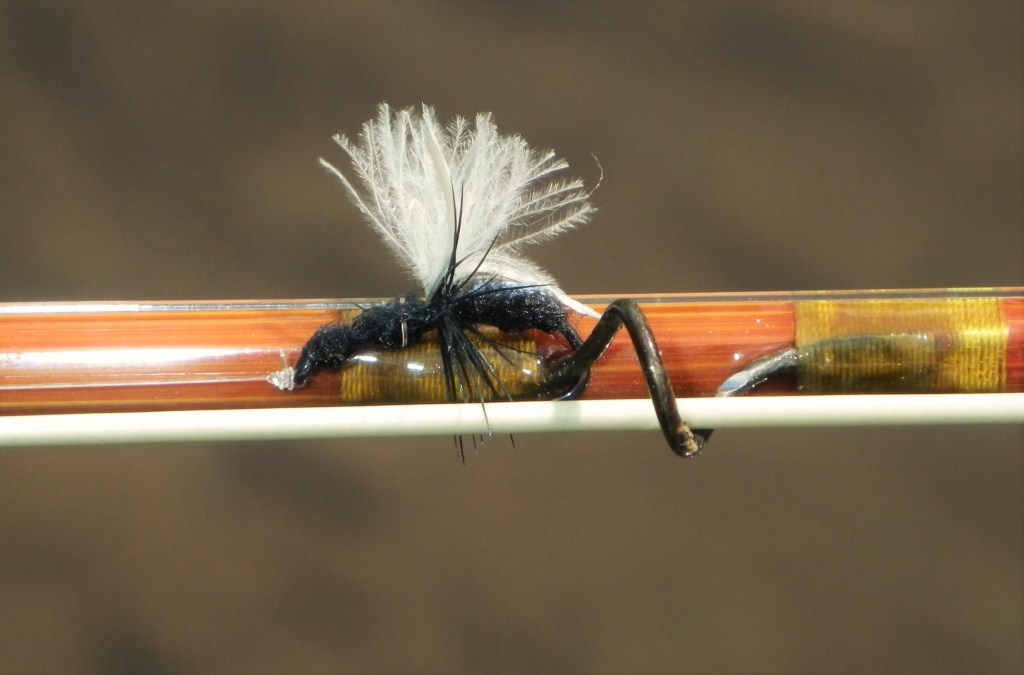
May along the Beaver Kill
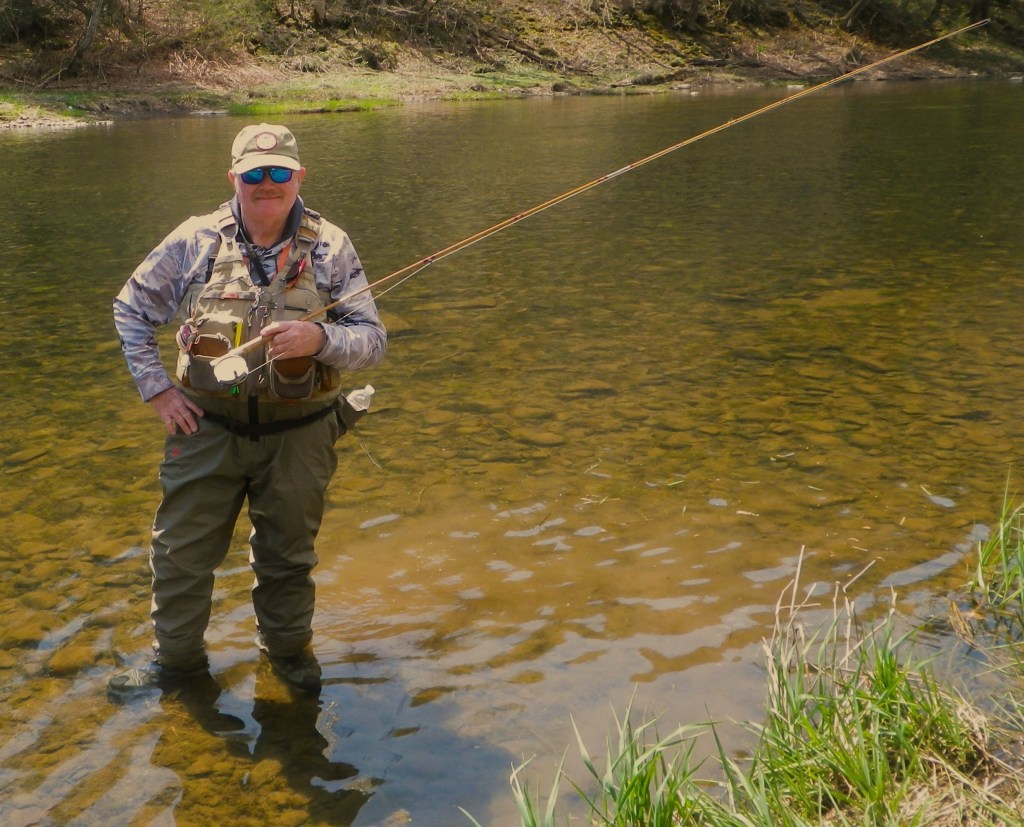
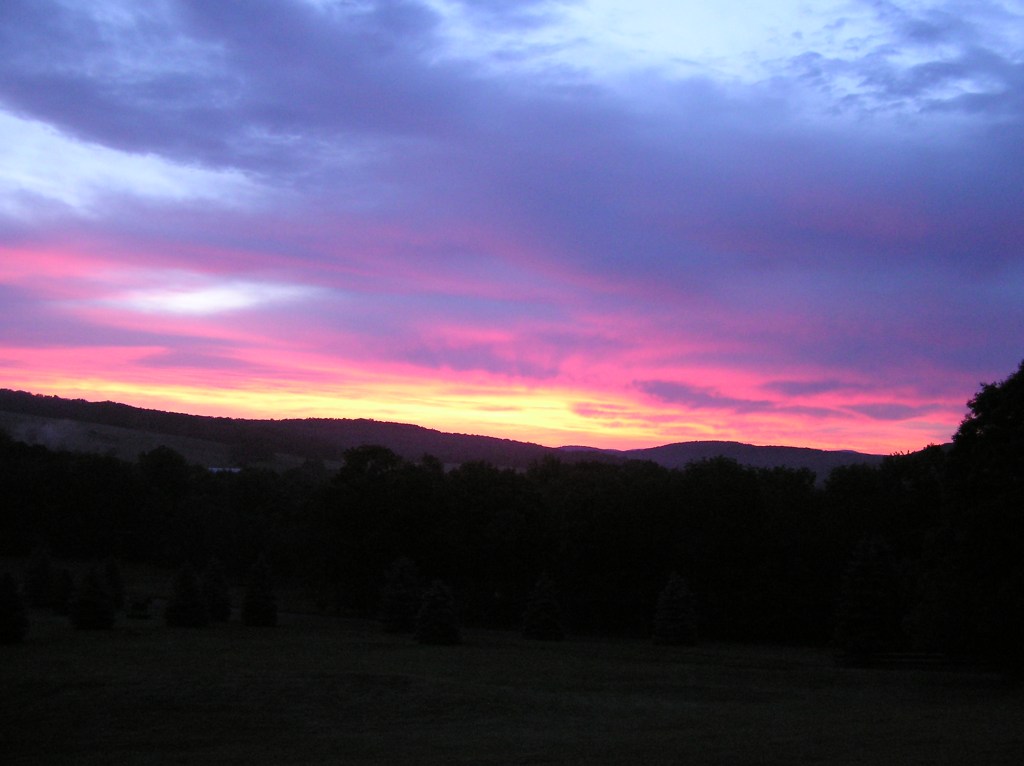
(Photo courtesy Chuck Coronato)

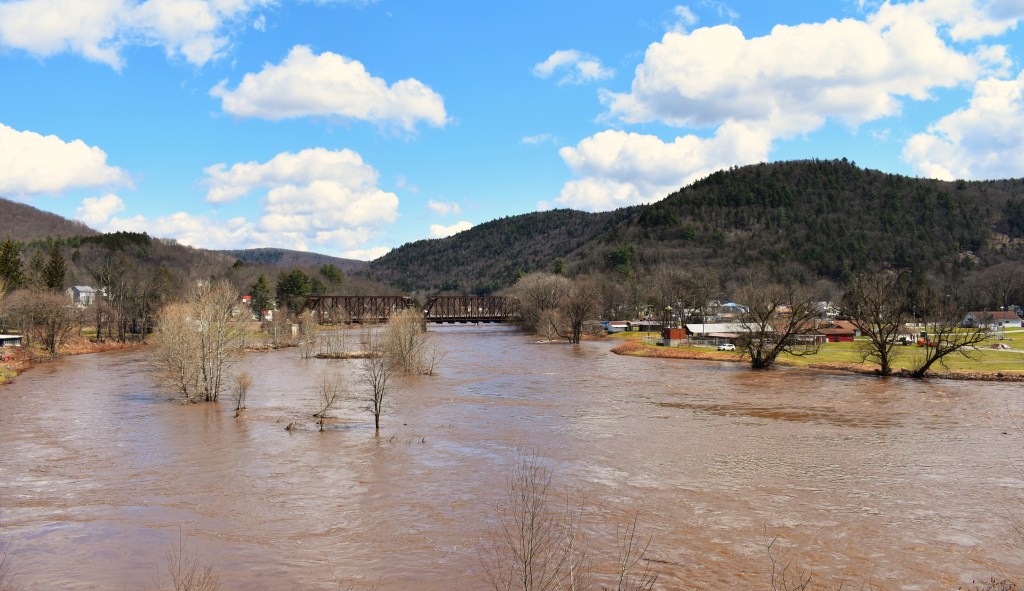
At last, the great river has returned to a glimpse of wadabilty! There are still many runs and glides beyond reach of fly casters, but the flows are slowly receding after two weeks. Each cloud in the sky wrought new anguish this past week, but the rain that fell was light, retarding the recession of high flows somewhat, but thankfully failing to drive them back toward flood stage.

I ventured out, committed to visiting some favorite haunts. These are reaches I visit early in the season, searching for good hatches and a handful of quality rising trout. For this season of 2025, I have found these beloved runs and glides barren, their mayflies and their trout casualties of the drought of 2024-25 and a long, ice laden winter. Could the belated arrival of the high flows of spring freshen these bright waters and renew my hope?
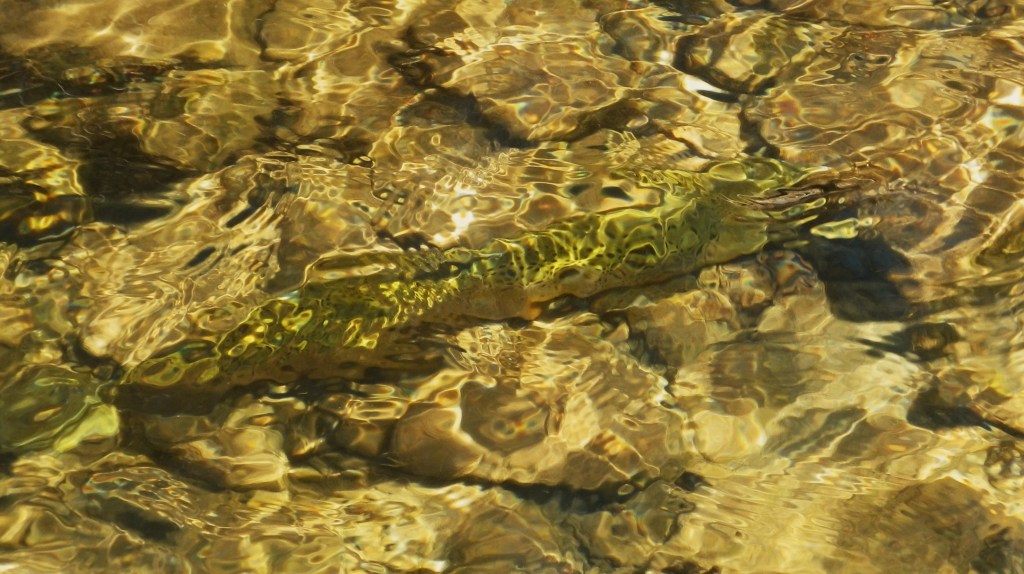
Does he still lie beneath?

My first destination revealed no secrets as I sat along the riverbank after a passing thundershower. Still no signs of life in the drift, no rises and seemingly no hope. Travelling once more, I greeted my next destination with an upstream walk, finding a grassy place on the bank to wait.

The timing of this visit led me to hope for March Browns, and it was easy to let the depth of my longing cause me to see one of the big mayflies bobbing along in every leaf or bubble drifting a hundred feet away. The sight of splashing white water along a far bank led me upriver, only to have my vision dissolve into fast current amid a jumble of rocks.

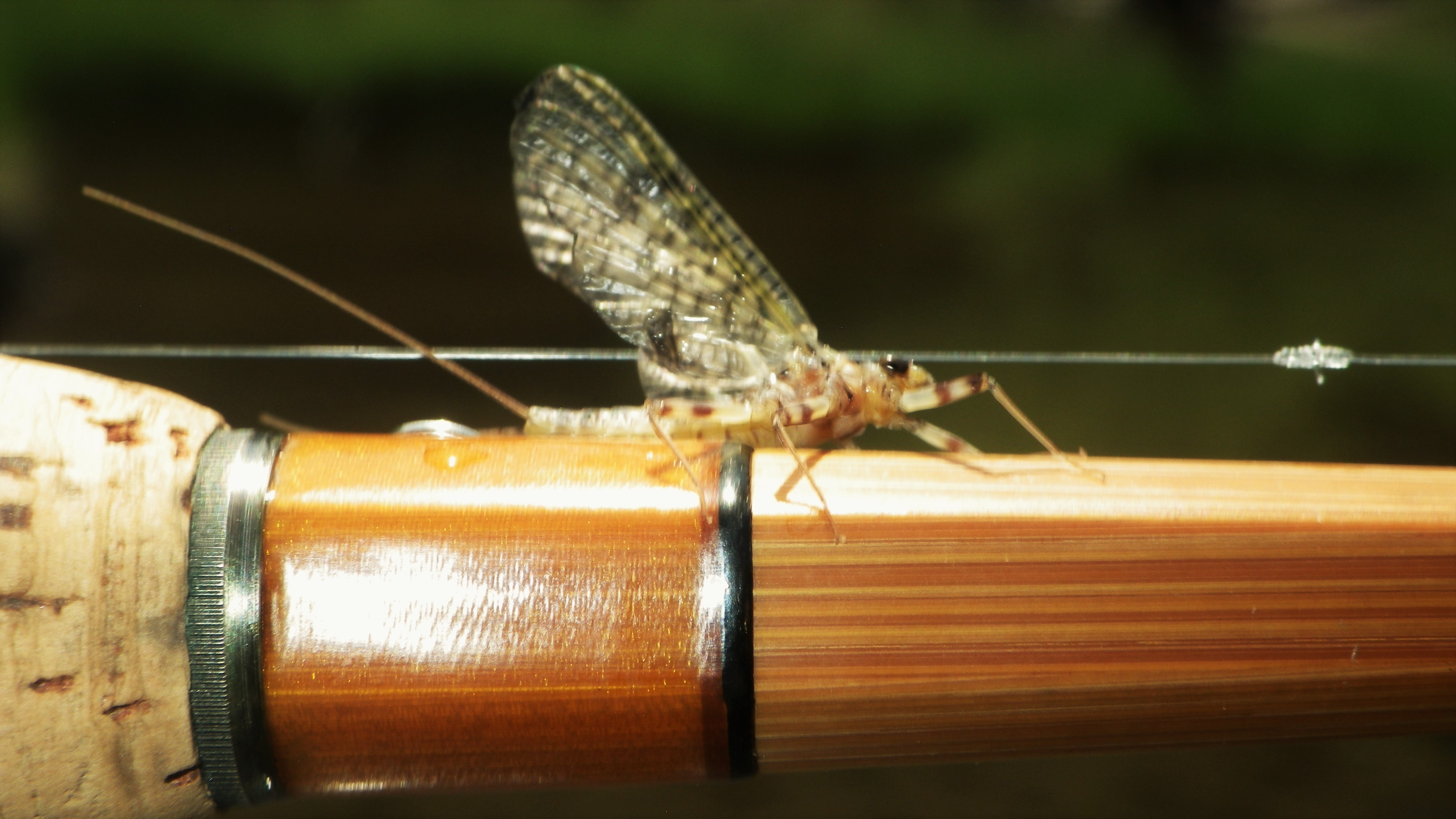
At last, I witnessed an image of hope. I waded down, trying the heavy flow about my legs to determine if an approach might succeed, for the second rise, and a rise it was, was preceded by a live mayfly lifting from the rapid surface into the growing midday light!

For perhaps half an hour I saw them in ones and twos, hopping on the surface and taking wing, and every once in a while a trout would decide the treat was worth the effort to rise in that deep, fast flow. The nearest one was a long pitch away, but the rush of the current allowed no closer an approach. At last, I eased up on the nervous power the anticipation fueled in me, and the line unrolled as it shot far across the river. He came for it, and despite all the slack line I had piled onto the faster water in front of me, I managed to bring it taught at the right moment.

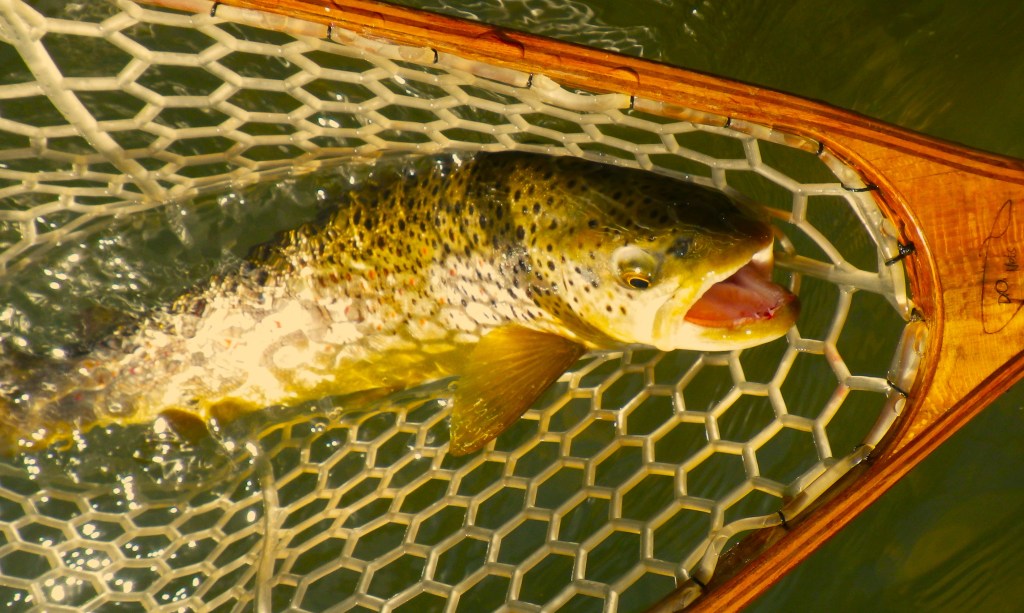
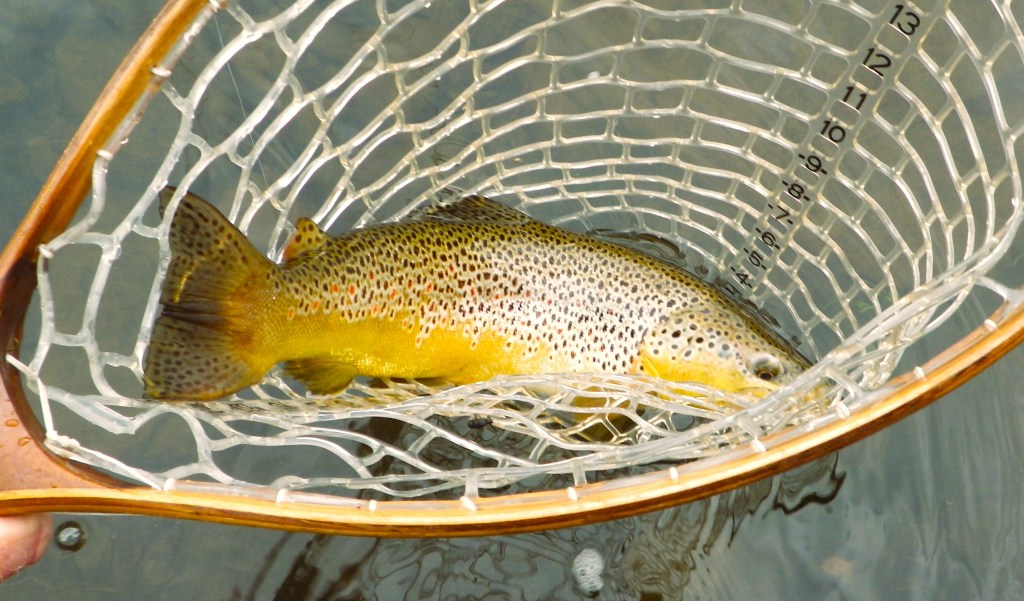
The fish was strong in that tumult of swirling water and I dared to believe. He rocketed out of the water and answered my prayer; a brown trout, fine and wild and up to the fight I would give him! He refused to leave that maelstrom, but I coaxed him closer a little at a time. Then suddenly he darted away and was in the air again!

I countered every move, thrilled to every run, though in the end it was not to be. Drawing him at last close for netting, the fickle hook released him. The sense of loss, though poignant, was quickly replaced by intense gladness that such a trout was there, once more hunting this reach of river so devastated by the drought.

Nature renews. The hatch was brief, and in truth there were very few of those big, bright mayflies on the water, but they were there, the building blocks for tomorrow!
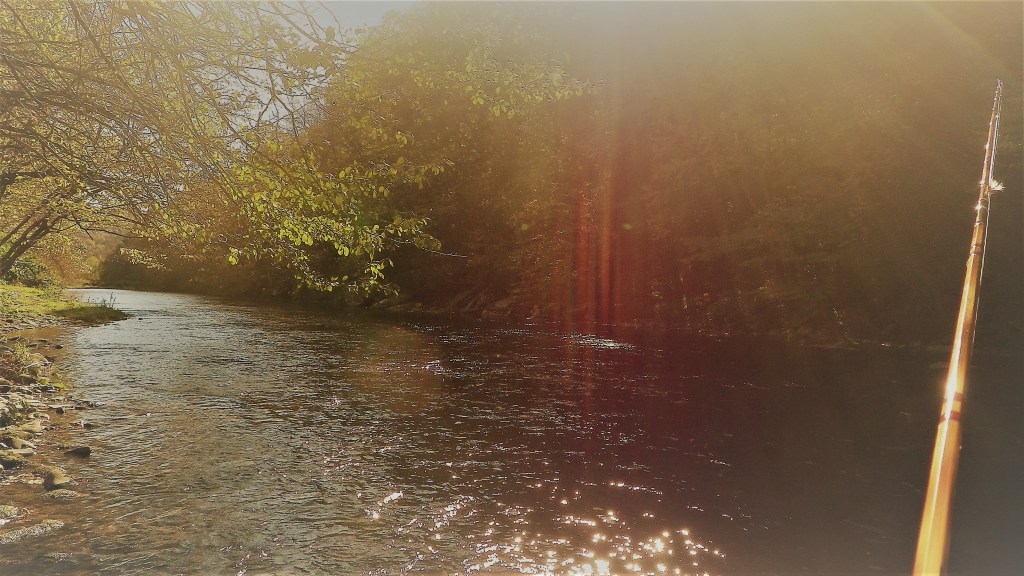
The Pigpen Pool

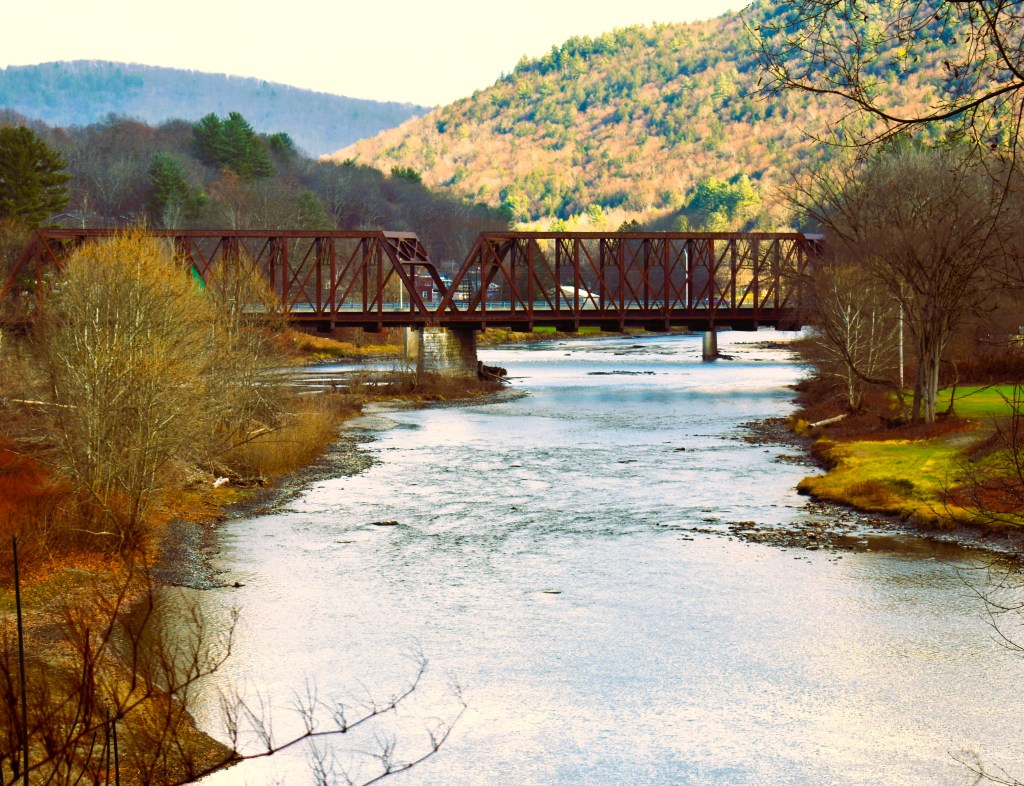
Dana Lamb’s Pigpen Pool, Beaver Kill River, in autumn.

Given I had wandered the Willowemoc yesterday until the number of anglers exceeded my tolerance, I went on to sample another reach of small water. Though there are gorgeous, historic miles of the Beaver Kill above Roscoe’s Junction Pool, very little of that water allows public access and fishing. The “little river” has long been the domain of private angling clubs, and though the enjoyment of these shrines is restricted, it is their stewardship that has preserved the beauty and purity Nature has wrought there.

I read a great deal from those who angled there amid the Golden Age, icons like Sparse Grey Hackle, Gene Connett, Arnold Gingrich, and my favorite, Dana Storrs Lamb.

It was four years ago when I noted the fine print on a Catskill region recreational map denoting the location of Lamb’s “Pigpen Pool”, and though it was autumn and not the perfect time to visit the place, I was quite simply drawn there. Indeed, the Pigpen Pool was located along one of those rare reaches open for public fishing. I found it still just as beautiful as Dana had described it all those decades before my birth.

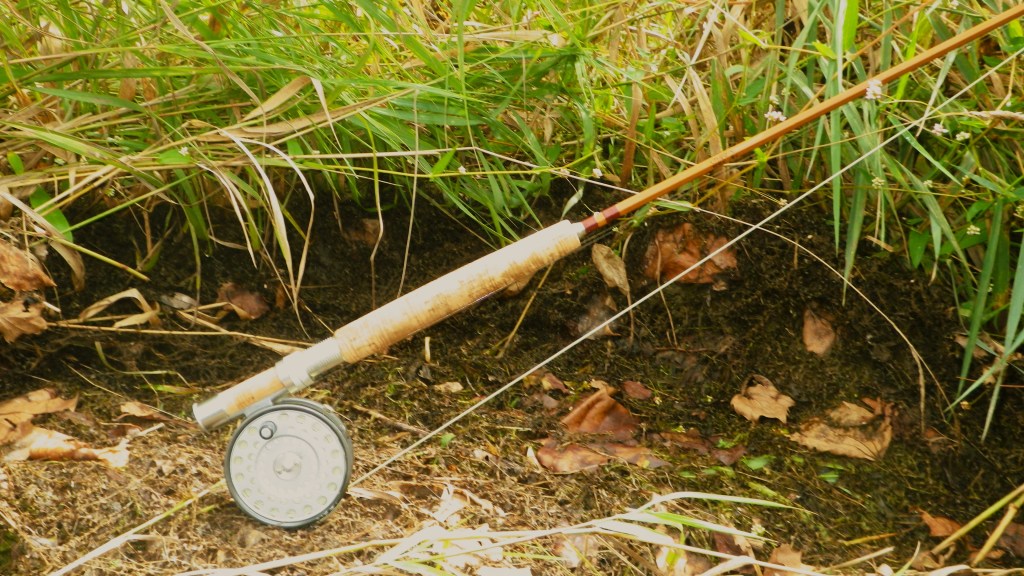
And so, in my desperation to find the solitude of fishing, I returned. There was no one about the place on this rainy afternoon, and I was excited when I saw a few mayflies winging above the bouncing currents. It looked every bit the fast run on this spring visit, very unlike the pools I fish on the lower river. I made a few casts of course, the old 7-1/2-foot Orvis bamboo being well suited to the environs, though I felt certain that the volume and velocity of the current would not entertain a trout to rise. Simply seeing those few mayflies in the air, standing amid that rush of bright water and hearing nothing above it’s passing save a hint of birdsong, caused me to feel the magic of the place.

Thank you once more, Mr. Lamb.

Roaring Rivers Abound

Not this bad thankfully, but fishing remains out of the question.

All of our rivers and streams are roaring down through their valleys still, and the coming week advertises more rainfall. By midweek, I am hopeful I can sneak off to a small mountain stream with a special 6-foot bamboo rod and a single box of dry flies, but there are no guarantees. The ten-day forecast predicts nearly an inch more rain for Hancock for Tuesday through Saturday. Our total for the past week, Saturday through Saturday came to 5.49 inches of rain. Some parts of the Catskills received more. This was the kind of event necessary to replenish the springs and aquifers so degraded by the drought of 2024-25, and we all hope that Nature accomplished that goal. The Delaware system reservoirs, still unfilled a week ago, are spilling tremendous amounts of water over their dams today.

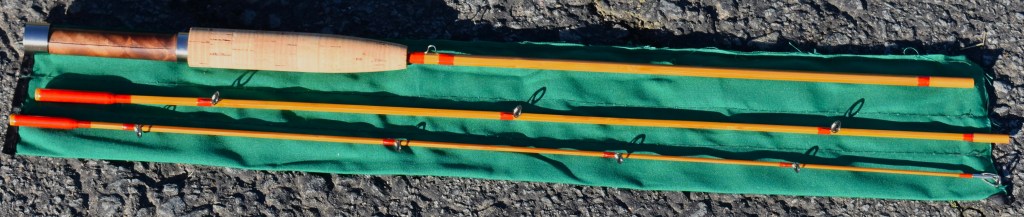
The 6-foot, 3 piece bamboo rod my friend Tom Smithwick presented to me last summer is lithe and quick with a four-weight line! I am thinking the legendary Art Flick’s West Kill might be a fitting place to give the rod it’s head! Every inch a Smithwick rod, the diminutive dimensions belie it’s casting power.

I will do my best to take advantage of this forced time away from fishing. My own rod making project will give me a place to concentrate my energies. The butt and mid-section of my three-piece Lo o bamboo rod have been glued-up and are curing. Final planing of the two rod tips lies before me.

My glued rod sections, hung to cure in the legendary Everett Garrison’s drying cabinet.

With more than forty hours invested, I am very satisfied with my rod crafting attempt thus far. The glued sections looked very good, with nice tight glue lines, and they proved to be very straight when examined after binding. Planing the rod tips down to dimensions as miniscule as 0.035″ is intimidating. Handling must be flawless, as also the planing and final scraping to get the finished dimensions accurate to one thousandth of an inch tolerance. The winter project has grown to perhaps more than half a year!

If I succeed, there will be a great deal of work ahead. Filing and sanding the excess epoxy from the rod sections, fitting and cementing ferrules, and then mounting the handle and reel seat. Wrapping rod guides decades ago proved challenging to me, and the traditional silk thread to be used for bamboo is more difficult to work with. I hope to complete the rod this summer, and to be able to attend the Catskill Rodmakers Gathering in September with my own handmade bamboo fly rod in hand.

The Oars Are Getting Old…

Every time I feel the pinch of not fishing in prime time I recall this scene from last November. Nature chooses to give us extra rainfall right now, so we should just bow our heads and say thank you!

May begins her second week and we are forced to look into her third for some hope of a return to fishing. I watched the television weather man in Binghamton this morning talk of another one or two inches, perhaps more, for tonight and Friday. Nature isn’t finished compensating for last year’s deficit.

Most of the Catskill reservoirs are spilling, the others are teetering on the brink, and our rivers are all generally too high to fish. Need to wade? Try your bathtub. This is necessary, no perhaps not all at once in cherished May, but very, very necessary. After last year’s horrific decision by NYC to execute a drawdown in the middle of a drought so bad it ignored the effects of a hurricane system, it was going to take something truly significant to rectify the problem and relieve the drought. Our freestones were in dire need as well, for the snowpack wasn’t nearly heavy enough to recharge everything. For now, the Red Gods get a big, big win and anglers are left to mow our lawns and grumble. I think I’ll tie a fly.

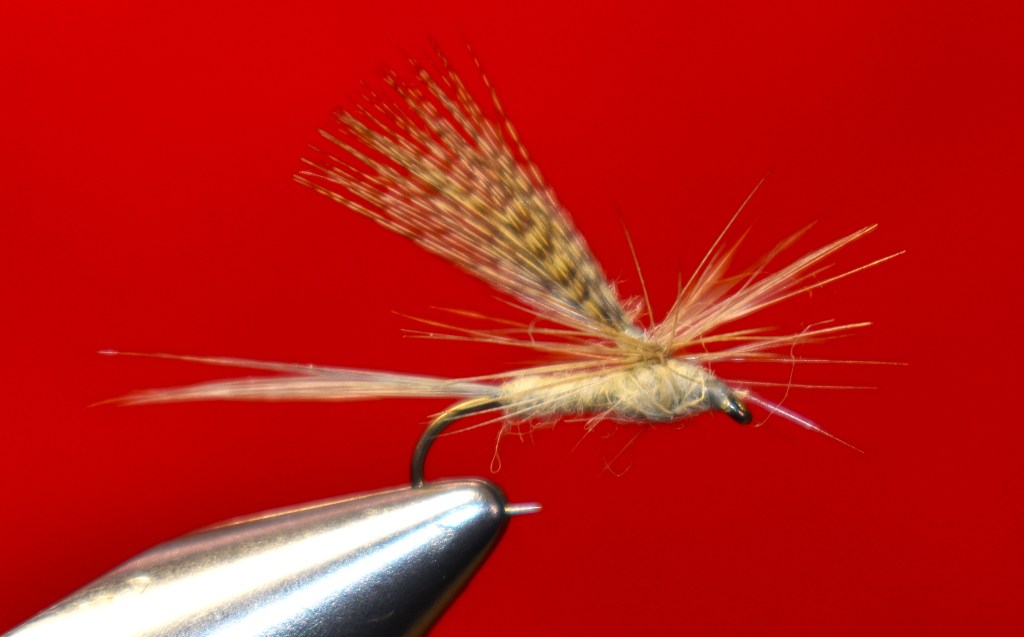
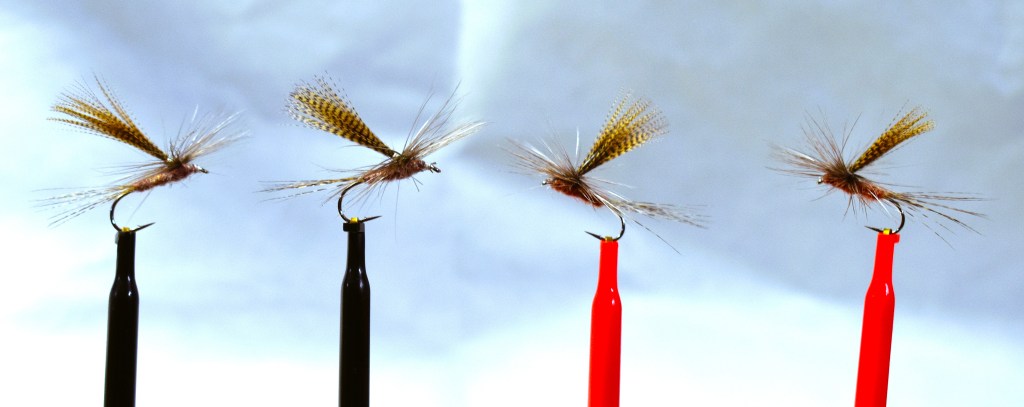
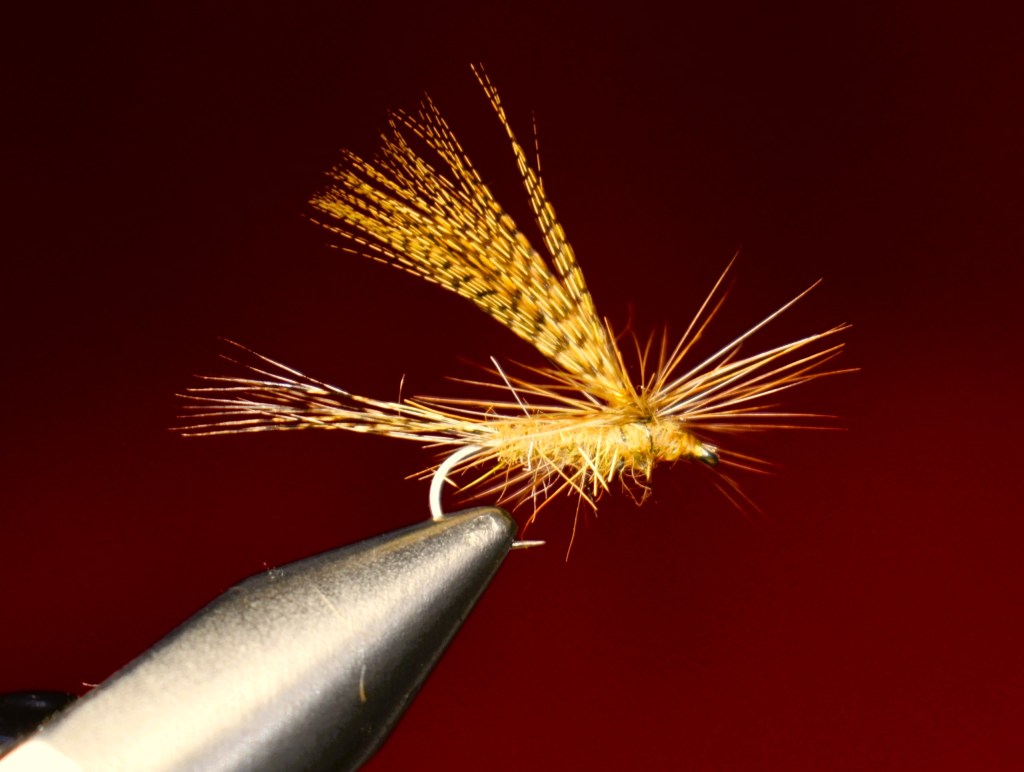
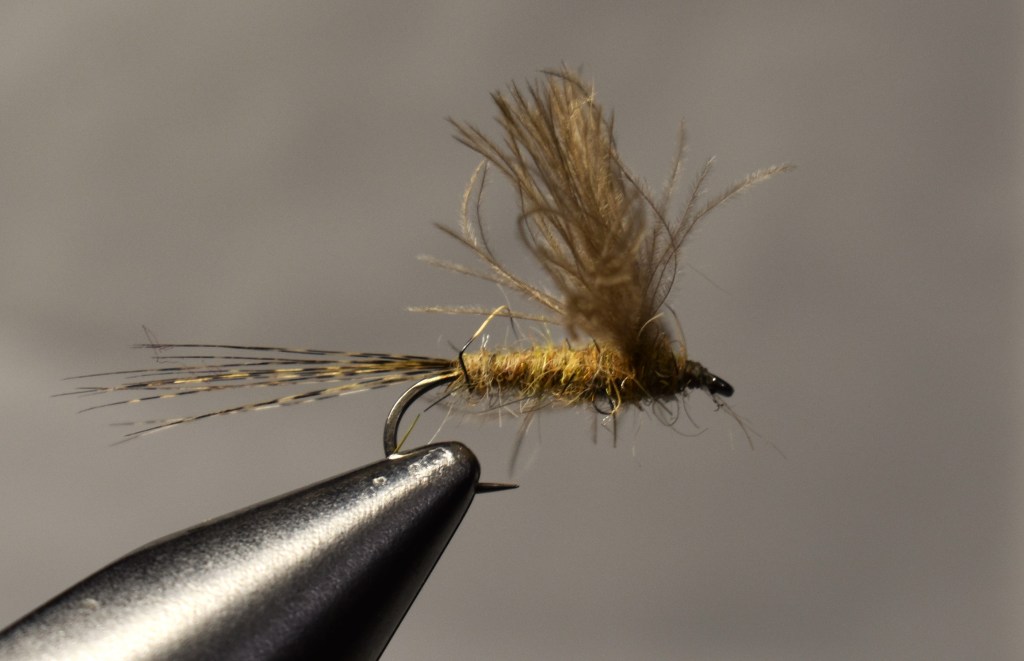
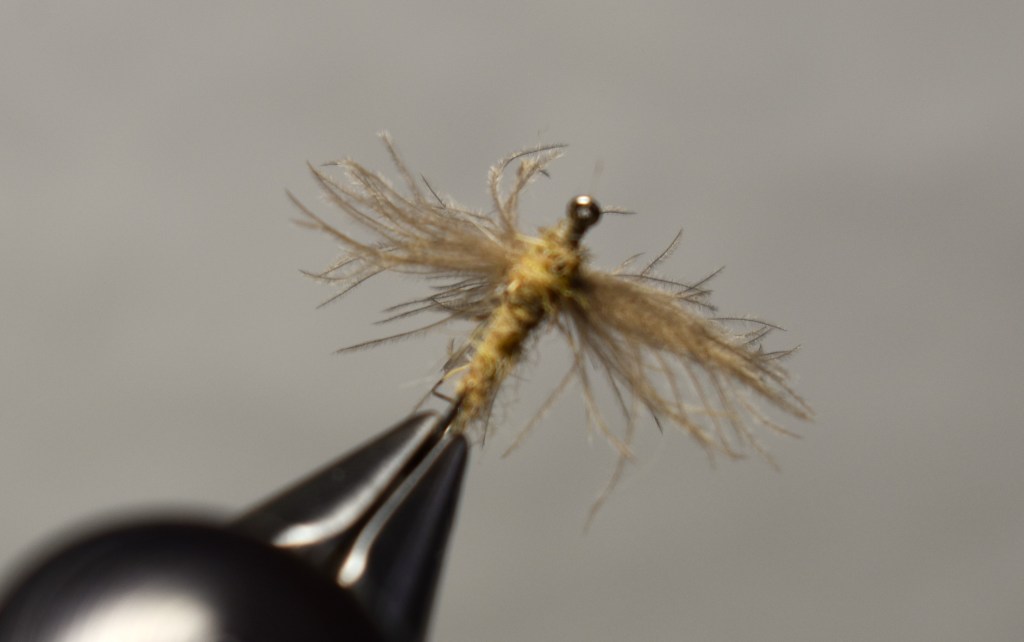
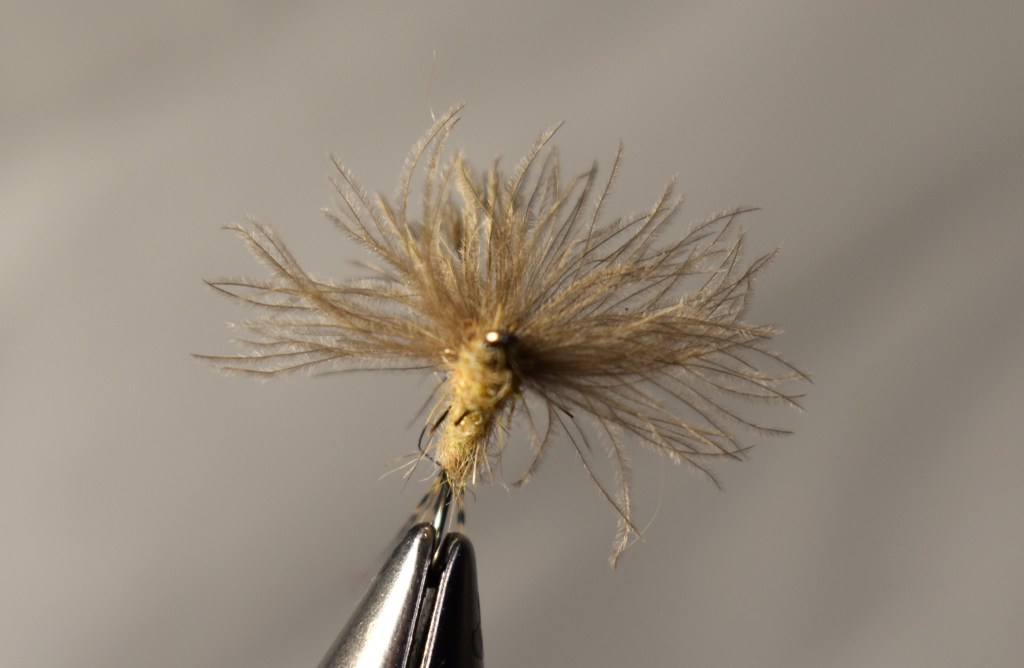
My 100-Year Dun variation of the classic Cross Special

I have been putting by a few March Browns for my boat box, tying some early terrestrials, and I am scheduled to be the Guest Fly Tyer at the Catskill Fly Fishing Center and Museum on Saturday afternoon. Keeping in practice.

For the moment, I am happy that the freezing overnight temperatures are a memory instead of reality. Today seems like a good day to wash out the drift boat now that my hose bib has been safely enabled. Crazy weather makes me smile. I remember my first spring as a full-time resident here: 2-1/2 inches of snow on one day, Hendricksons on the next. That was the intro. There have been many examples during these six and counting seasons. Launching my boat for a float on a 34-degree morning in May stands as a monument. Fishing was great! Crazy…

This ain’t what Catskill rivers are supposed to look like in April! It looks nothing like that now.

Prepare the Oars!

A calm, sunny day drifting the Delawares

Meaningful rainfall has returned to the Catskills at last! Wading anglers are not smiling today, with rivers high and muddied by runoff, but the needs of the rivers and the aquifers which feed them must outweigh the needs of the fishermen for a time. As I wrote those words, I heard rain trickling from my roof, the beginnings of today’s contribution to the as yet unfilled Delaware reservoirs.

I messaged my best friend to prepare, to free some time for a couple of days of floating. I expect, I told him, that the reservoir dams will begin to spill just about the time these tailwater rivers clear to welcome fishermen once more. The rise and drop of our rivers has been dramatic, a sharp spike on the USGS graphs, from the variable rainfall amounts our region received over the weekend. Hancock recorded just less than three inches through yesterday, and the word is the eastern Catskills received a heavier dose. Every drop of it was sorely needed!

Generally, we are embarking upon a run of typical early April weather for the second week of May. The mountains have grown brighter each day with new greenery. Spillage over the dams will mean a longer time of sustained flows, flows often limiting wade fishing to a little or none proposition.

There is work to be done now, those oars must be readied, the boat cleaned out, and the boat bags checked for the proper mix of flies, clothing and gear to cover all the varying possibilities of an unsettled spring day on the river. My beloved cane rods will be in waiting, as the long graphites more suited to the rigors of drift boat fishing are checked and readied. They have seen little use these past few seasons, and their reels will need their lines cleaned and new leaders affixed.

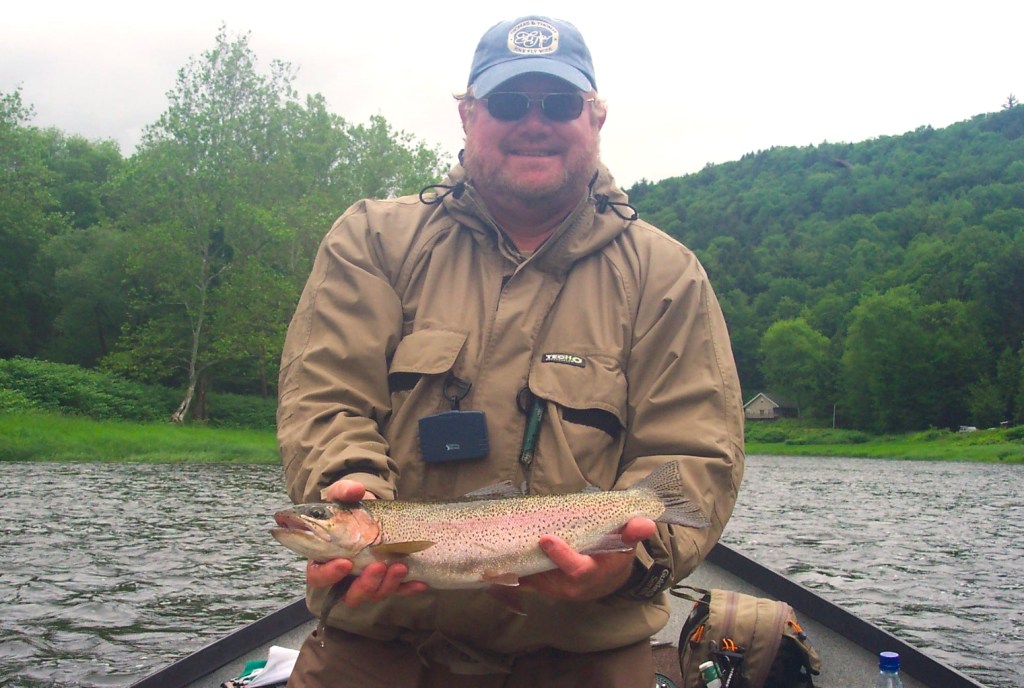
A rainy day Delaware River prize from a float with Pat Schuler nigh on twenty years ago

Waiting On the Rain

Once more we look to the skies for the sustenance of our passion: bright water and wild trout.

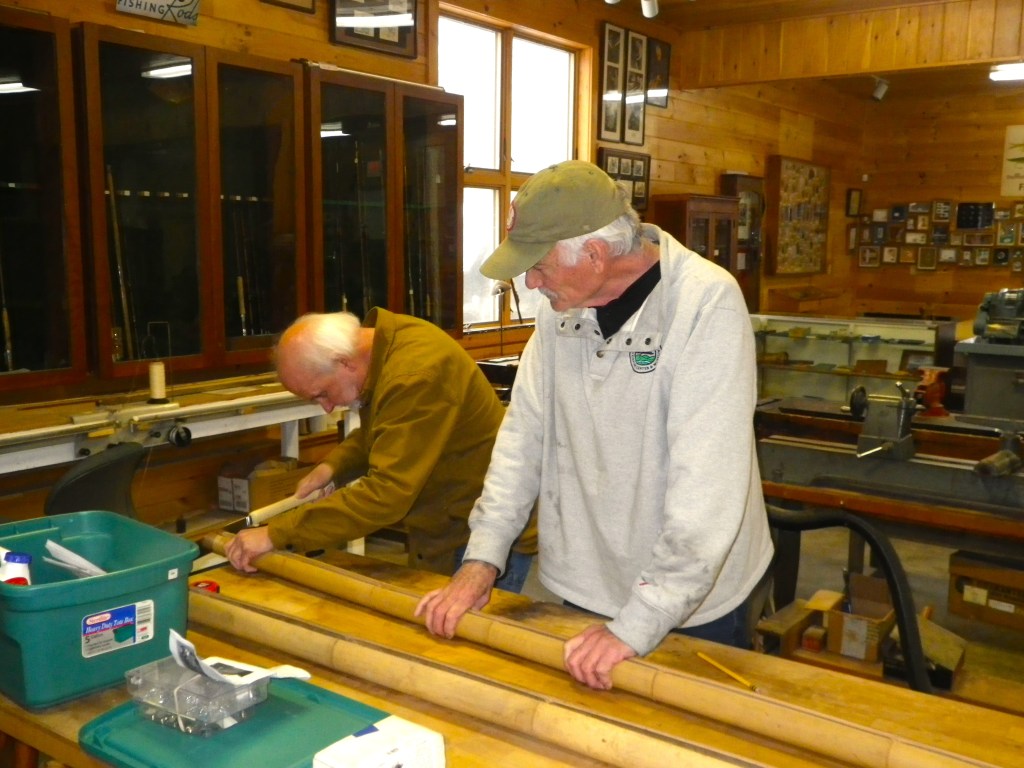
“The Cat” and I were working in the Catskill Rodmakers Workshop yesterday afternoon, each planing strips of bamboo… the endless task! Three days of rain were expected for the extended weekend and, as has been the norm during this past year, little had fallen, though the skies began to look the part. We both figured it would be a perfect day to rough plane a few more strips, bringing each of us closer to the self-made split bamboo fly rods we seek. It was quiet in the shop, just the whisper of planes skimming scant thousandths of an inch of bamboo from the strips with each pass. Methodical in it’s simplicity, two strokes and turn, the mind settles into the repetition.

A couple visiting the Museum talked with Dave for a while. He patiently walked them around the rod shop, showing the vintage rods displayed and explaining the methods and processes required to produce these magic sticks. They asked about the time required to build our rods, and we both admitted we had not logged the hours spent so far. Dave estimated perhaps 80 hours would be required, and I agreed.

Dave Catizone is a treasure. He was involved with the idea of a museum for the history and growth of American fly fishing here in the Catskills from its’ infancy. He is wise and humble, gifted with a wealth of knowledge of this game and its history. He shows great deference for the storied personalities who formed the region’s community of anglers from the Golden Age forward. These giants of angling were his friends and mentors and it is clear how committed he has been to honoring their accomplishments.

I looked back at my notes this morning, estimating the hours worked each day here since January. My best idea? I have spent some 40 hours to reach the doorstep of the final phase of hand planing the strips for my rod. That last step can be expected to require two sessions, or eight to ten hours. Beyond lies glueing and binding the three rod sections, sanding away the dried epoxy glue and the enamel, then initial finishing and mounting: ferrules, grip and reel seat. Perhaps I am close to the half-way point, if I am lucky.

There was a gentle shower, then perhaps ten minutes of steady rainfall while we worked. In less than half an hour the sun was coming out. Looking at the river gages this morning, it appeared that the Beaver Kill received enough to raise it’s flow gently. No way the inch that was promised was received, though we shall have to let today play out to see what falls. Yes, yes, the Beaver Kill still has a good flow, but I look to the Delaware tailwaters, whose reservoirs have still not filled, with praying hands.

Release flows were very low throughout the winter and remain so. New York City wants them full before they give the rivers the water they deserve, and I worry about the early onset of hot summertime weather before this new month is out. Don’t mind me. When bright water means everything to you, it is easy to be uneasy about the future of the angling passion. Rain is the solution.

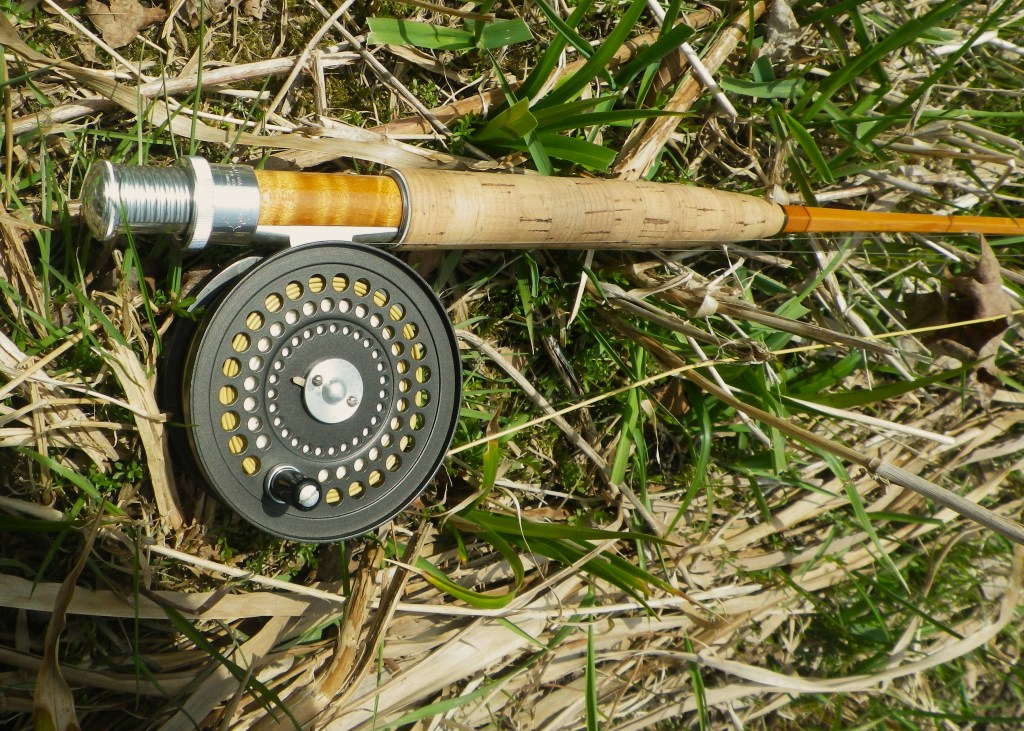
My windows are open this morning and I listen to the birdsong. It is fifty-seven degrees here, and the hint of a shower flirts with Crooked Eddy. I have spooled a new fly line onto the vintage Screwback CFO IV which best accompanies my five weight Leonard, a very modern line which perfectly compliments the classic Catskill rod! I wonder, what will tomorrow bring?

A Beautiful Day

JA studying his fly box

We got to go fishing the other day; just me and my best friend JA on bright water under clear blue skies with just a hint of breeze. Several years ago we envisioned this as a very regular occurrence, but then life has a way of getting in the way of idyllic plans. Over those intervening years, we have stolen a day, or maybe half of one, when we could.

Spring has been reluctant this season, so to get a truly perfect weather day, one with some actual hope of a hatch or two took a little serendipity. There were some caddis on the water when we arrived in late morning, but no fish were taking them. The river levels were near perfect thanks to Nature’s sorely needed gift of rainfall, and the currents were clear enough to let us enjoy ourselves while allowing the trout to keep a few of their secrets.

JA decided to prospect the riffle down into the run, while I sidled downstream into the head of the pool. We both fished a little, making a few casts with our favorite caddis imitations despite a lack of rises. We both figured that there were enough flies on the water for a trout or two to be out there looking, and if we drifted our caddis over just the right rock…

As early afternoon arrived, I saw the first Hendricksons begin to drift by. It wasn’t long before I saw a soft rise, covered it, and had a good trout take my fly. As I was playing him, I heard a couple more rises behind me, so after netting that fish I waved to JA to come on down. Within five minutes there was another rise and a second nice brownie took my 100-Year Dun. More rises behind me. I waved some more and JA started down. He hooked a nice brown between us, but it jumped and threw the hook. Then things went quiet. We talked a bit, waited and watched, and finally he decided to work his way back up into the run. That was the best decision of the day!

I would find only a recalcitrant sipper or two for the duration of the hatch. They kept me busy trying to get a cast into the perfect spot, but I had no further success. I had looked upriver once during my time in purgatory, and seen JA’s handmade bamboo rod high in the air and bucking with life. I smiled and went back to my own business. That was the first bamboo fly rod JA had made about five years ago and it was beautifully done. I believe he is working on rods six and seven now, and one of those is a surprise gift for me. He has also spent a lot of time over this past winter teaching me how to make one myself and fulfill a special dream. I suspect that gives you an idea of what kind of man my friend is.

My friend, landing a big one on rod number two.

Not too long before the hatch petered out, they have been short and sparse this year, I heard a call from JA and looked to see him carrying his net to the bank. I could see his smile from a hundred yards away.

When I joined him he was still smiling, telling me about the half dozen good browns he had taken on one of his little caddis emergers, including the twenty-one incher I saw him carrying to the bank. He wanted a picture of that one, the fish that jetted away instantly and started emptying his reel.

As we talked beside the road before heading home, he handed me a fly box full of those special caddis. He still ties flies for a few, select fly shops including one in downtown Roscoe. He ties more than thirty dozen of that particular fly for that shop each season, as it’s their best-selling caddis pattern. There’s a reason for that.

I’ll be looking for some more good fish taking caddis this week. They hang around for a while much better than the mayflies, and I will give JA’s emerger plenty of time on the end of my leader!

To Go A-Fishing

Glenmorangie Sunrise

There’s an old 1940’s St. George waiting on the ottoman, it’s line freshly polished and a brand-new leader and tippet attached, snugged into the sheepskin liner of it’s leather case. The ferrules on the five weight Leonard were cleaned just the other day, and it waits too right beside that ottoman. I can feel the old magic now, that tingle at the first blush of morning on the spring skyline; I’m going fishing!

A best friend will join me, and he’ll bring polished cane and dry flies just as I do. We know what it is we seek, to touch that magic of the past and pull it with us into our own futures.

The rivers are freshened with a long spring rain. Hope says they have cleared just enough, and the mayflies that have proven more than ephemeral for these past two weeks will make full appearance and greet the season with their own ritual of life and renewal.

Mr. Brown will consent to join us too, for he’s as hungry for those flies as we are for his company!

We are both old men, but this morning we feel as giddy as boys, comparing flies tied just yesterday, vaunting their merits as the be all and end all patterns no trout may resist. Aye, we go a-fishing!

The Sweet Gift of Rainfall

Pleased to say that the riverscape has changed. At last, a forecast weather system actually released it’s promised rainfall over the Catskills yesterday! Roscoe received two and a half inches of that precious gift, and here in Hancock very nearly two inches fell. The rivers are rushing brown torrents, though their flows are already receding as far down the watershed as Lordville, NY on the Delaware. Now the dry fly anglers hold our collective breath and hope that the refreshed rivers may still produce the spring mayfly hatches that we dream about.

Various members of the Catskill Fly Tyers Guild and our little band of fledgling bamboo rod makers enjoyed the rain from the comfort of the Catskill Fly Fishing Center and Museum’s Wulff Gallery. We had a nice turnout for our first live meeting during the morning and lunch hours, with a few new members joining the old guard. Catskill dry flies were tied, and many squirreled away to be boxed up and presented to the Museum for a raffle prize. I wistfully tossed half a dozen freshly tied Hendricksons into the fray as a leap of faith that we will still see our season’s best hatch once the rivers return to wadable flows.

Post meeting, I joined Dave Catizone, John Apgar, Gary Moleon, Joe Ceballos, and CFFCM’s new Director of Operations Laura Colangelo for a continuation of our quests to build our own split bamboo fly rods. Between minging with groups of Museum visitors and explaining our efforts, we enjoyed quieter moments orchestrated by the unique sounds of multiple hand planes sliding over strips of bamboo nestled in steel planing forms. I managed to complete the final stage of roughing five of the six strips required for one of my rod tips. The next work day should allow me to get the seven remaining strips roughed before resetting the planing form for the final tip dimensions.

The Catskill Legend we call “The Cat” files nodes on the bamboo culm he is crafting into a Payne replica rod as John mentors.

New York City will not update their rainfall data on their Catskill reservoir page until sometime Monday, but that update may finally show the Delaware River reservoirs at full capacity for the first time this year. The four had reached an average level of 93.875% before this rain event, with April rainfall down an inch from the historical mark. If normal rainfall returns to our region, we can look forward to better river conditions on all our freestone and tailwater treasures!

The early insect hatches have left dry fly anglers in a quandary, with sparse showings of expected flies in many corners and absences in others. Whether this situation reflects the damage of the 2024 drought and a very difficult winter remains to be revealed, but good river flows will certainly improve our outlook.

I spent Thursday on the river with my buddy Mike, visiting from Maryland. It was the last day of a three-day trip for Mike and the conditions had tested us. Perhaps that’s why he lingered at his car that last morning, urging me to go ahead and walk ahead to the river while he puttered with his tackle. I made the long walk and found the chosen reach lower than I can ever recall, the riverbed displayed in stark relief. I decided to scratch my early morning itch with several casts to prospect visible lies.

While the shallower rocks failed to reveal any lurking trout, I did see one soft rise in the deepest thread of the run. I worked more line through the guides of my vintage Leonard and let my little CDX caddis bob down the bubble line, drawing a repeat of that soft rise. The golden bamboo arched heavily as I raised the rod, and the CFO began to sing the praises of dry flies in spring!

The fish was substantial and used his size and strength to keep to the deepest portion of the drought shrunken run. The pressure of the bamboo finally led him closer, and he darted and dashed through the shallower water until I finally brought him to the net, twenty inches of dark flanked bronze perfection!

Mike finally ambled onto the scene as I released the brownie, and shared in my expectations for the day. We enjoyed the company, and though a few mayflies did find their way to the surface that afternoon, the trout in the slow, shallow pool refused to come to the surface. Under these most challenging conditions, the trout feed on the active emergers beneath the surface, taking them just before they reach daylight. Past experience has proven that our best efforts at tying lively flies fall far short of mimicking the strident movements of the naturals. Without the camouflage of current, the trout have a high-definition show of insect life to attract them, a test no drifting fly will pass.

In truth, wild trout’s survival instincts are heightened under challenging conditions, and that is all part of Nature’s plan. Anglers may marvel at it while we fail to overcome the abilities of our quarry, smile and wait until conditions change.

Instant Summer, With No Corn on the Cob

A cool morning, though it is heading for eighty degrees! Rivers remain low and continue dropping, and the hatches, such as they are, aren’t even making sense. My front porch will probably hit 90 this evening, though the Summer Ale isn’t even in the stores yet. There’s no corn on the cob, no steaks or burgers for the grill waiting in the freezer, oh, and no fishing.

I guess that last part isn’t quite accurate, it just seems that way. I have seen a few quick, spotty appearances of Red Quills, and there were shad caddis on the Delaware yesterday afternoon. No sign of a Quill Gordon, or a Blue Quill or a traditional Hendrickson. I have not seen a mayfly on the Beaver Kill, and wonder about the effects of that terrible sustained drought followed by two months of ice cover. Oh yea, on a positive note, the wind is blowing, hard.

Where are you?

Maybe my ramblings require explanation. In any kind of a normal, or even abnormal year, the Quill Gordons are the first mayflies to appear. The smaller Blue Quills show next, giving the trout an option of a juicy size 14 or a diminutive but plentiful size 18 when they are both on the water. This may occur any time between the second week of April and the last week, depending upon Mother nature’s calendar for the year. Once we get to that last week of April the Hendrickson’s begin and as that hatch progresses over it’s first week we see some Red Quills. The Hendrickson hatch usually takes us through the first couple of weeks of May. As they are waning, the Shadflies or Apple caddis begin to appear. Hatch timing always presents some sort of quandary, but the progression stays the same once they start. Not this year.

Even the fly shops, whose business it is to exclaim how great the fishing is, have been reporting “a few Quill Gordons and Hendricksons just starting”. The fishermen you talk to though haven’t seen many of them; and what are the Shadflies doing here two or more weeks early?

What are the effects of a harsh winter coming on the heels of last years extended drought? My friend Peer stands on the bed of the Beaver Kill in September fishing the trickle flowing into the puddle formerly known as Ferdon’s Eddy.

Perhaps I should be carrying a fly box containing one pattern of every fly I own, as it seems there is no way to know what might show up today. One each should be plenty regardless, as there won’t be many of them anyway. I’m going to stop bellyaching now, let a hot shower take some of the pain out of my bones before I dig out my summer fishing clothes. Now, where did I put those ant patterns?