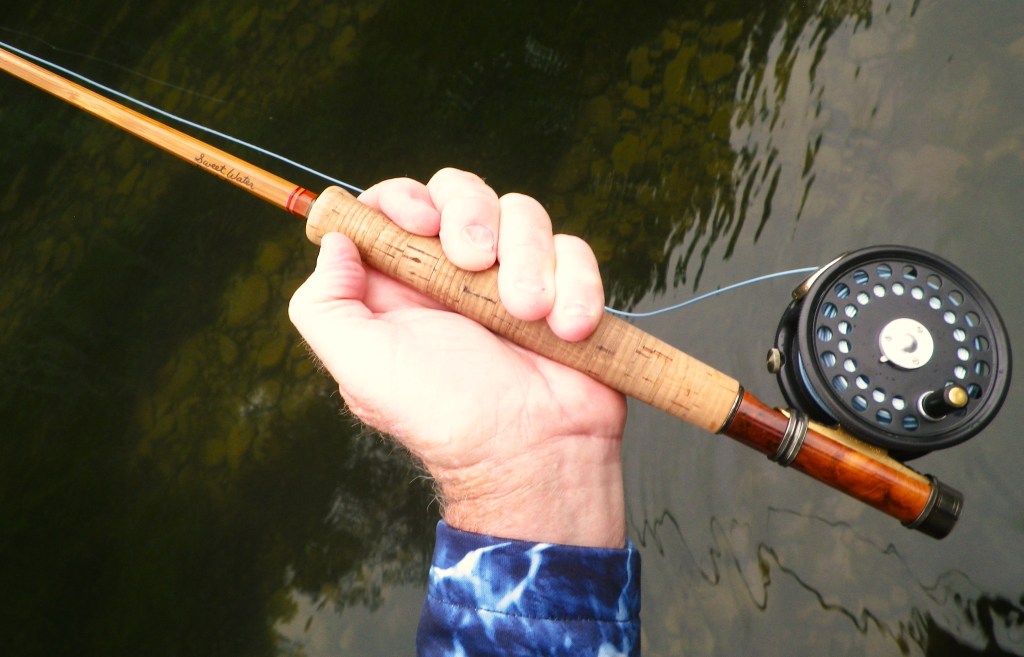
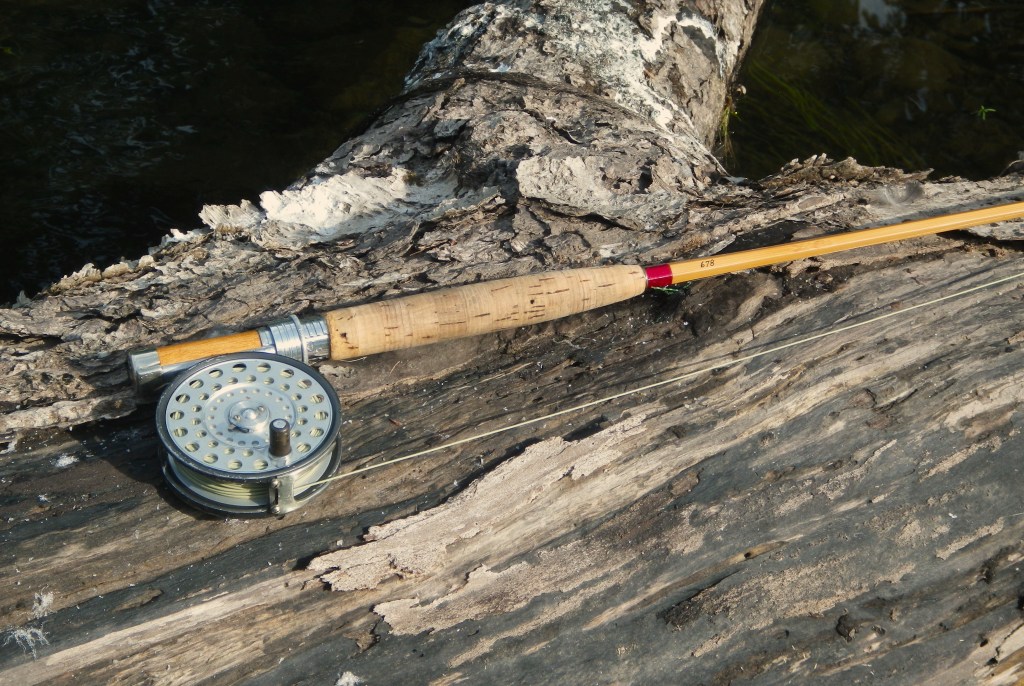
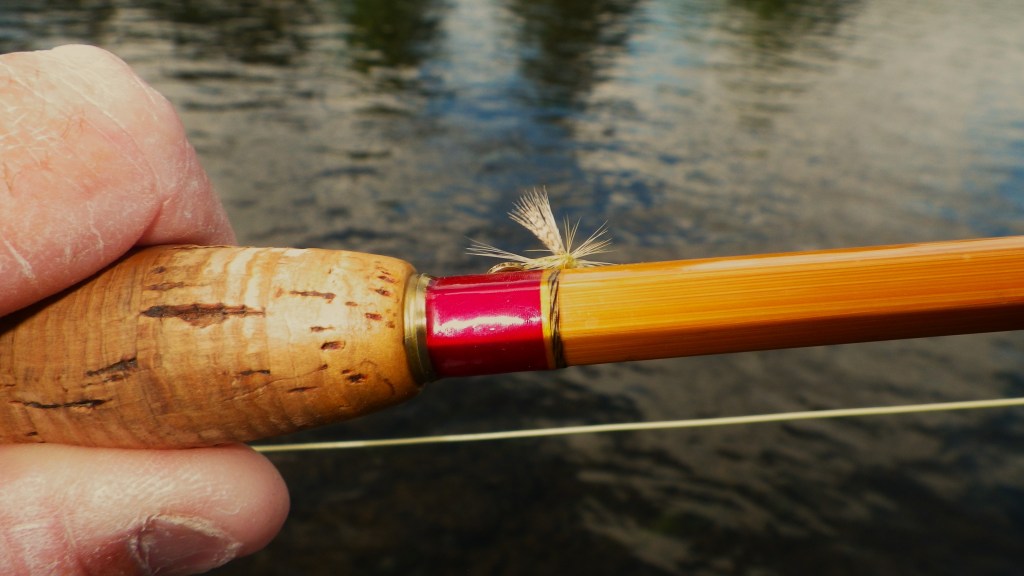
The rod is called Trout Bum, and it has some history to it. Sweet Water rods were the creation of George Maurer, a Pennsylvania rodmaker who left this earth far too soon. He left a significant legacy though, for not only did he create many interesting rod tapers for his beautiful bamboo fly rods, he shared his genius by teaching others seeking to follow the craft of split bamboo. One of those seekers was an old friend of mine, a young man from Chambersburg, Pennsylvania by the name of Wyatt Dietrich. Wyatt made several hundred fine bamboo flyrods over some fifteen years, including honoring George’s legacy by making a memory series of some Sweet Water models in cooperation with the Maurer family. My Trout Bum is one of these memory rods, made in a classic three-piece configuration.
You may have heard of a guy from Colorado who was supposed to receive George’s first Trout Bum model. We lost John Gierach early too, just last October. His story “Lost Rod” speaks to the fate of Maurer’s gift, which had to be given twice after some culprit stole the original, leading to our writer friend receiving an empty shipping tube.
Mine was a 3-piece because I had planned to travel to Colorado and fish some of it’s Front Range waters, a plan derailed by a little unplanned visit to a heart surgeon. It’s a terrific rod, and thinking about that rod and it’s unique circumstances had me take it out, clean it’s ferrules and take it fishing late in June.
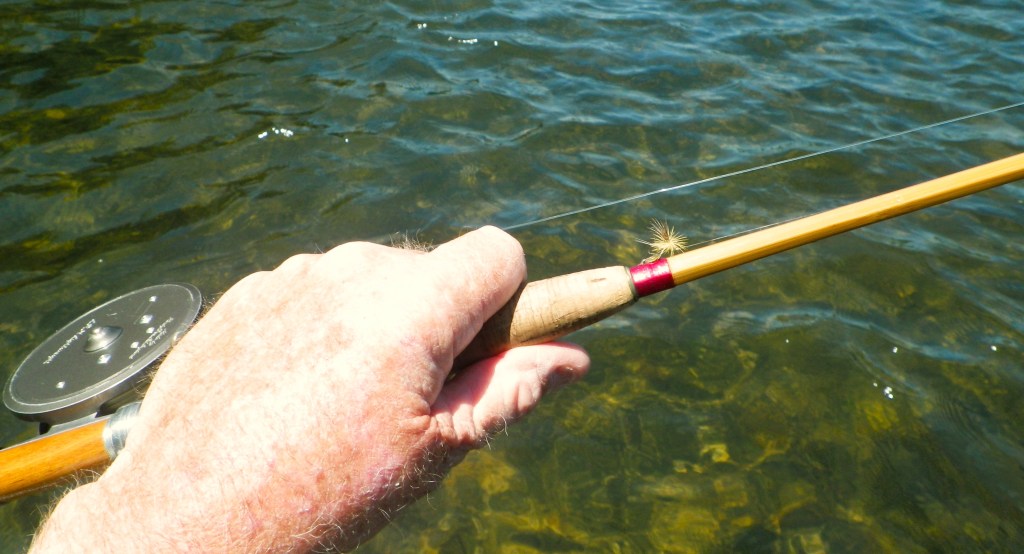
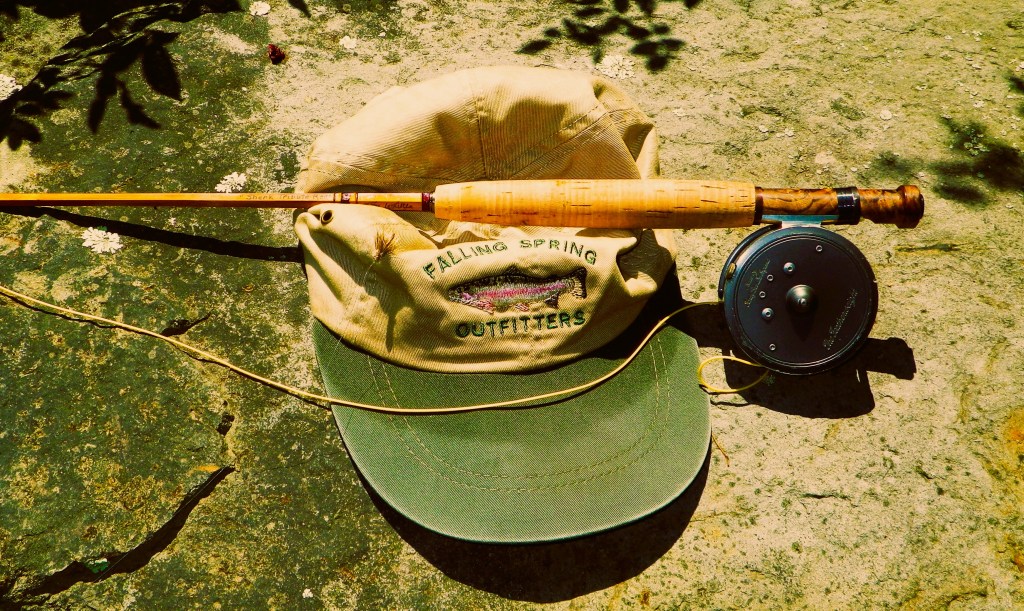
I mounted one of my favorite 3″ St. George reels which complemented the eight-footer nicely in balance and appearance. The line is what I think of as a five-and-a-half Cortland, a half a line size heavy five weight that matches perfectly with the Bum. Wyatt suggested this model was happy with either a number 5 or 6 fly line, depending upon caster’s preference, and this midsize Cortland was perfect!
I think that George Maurer’s original idea when he created the taper was to make a versatile trout rod that could fish most any kind of water, and he scored a direct hit. The Trout Bum has a great feel and boasts a smooth kind of power that easily reaches any distance you might require on larger rivers, and yet still will send a small dry fly somewhere close and tight and demanding with great delicacy. Can’t ask much more from a great fly rod than that.
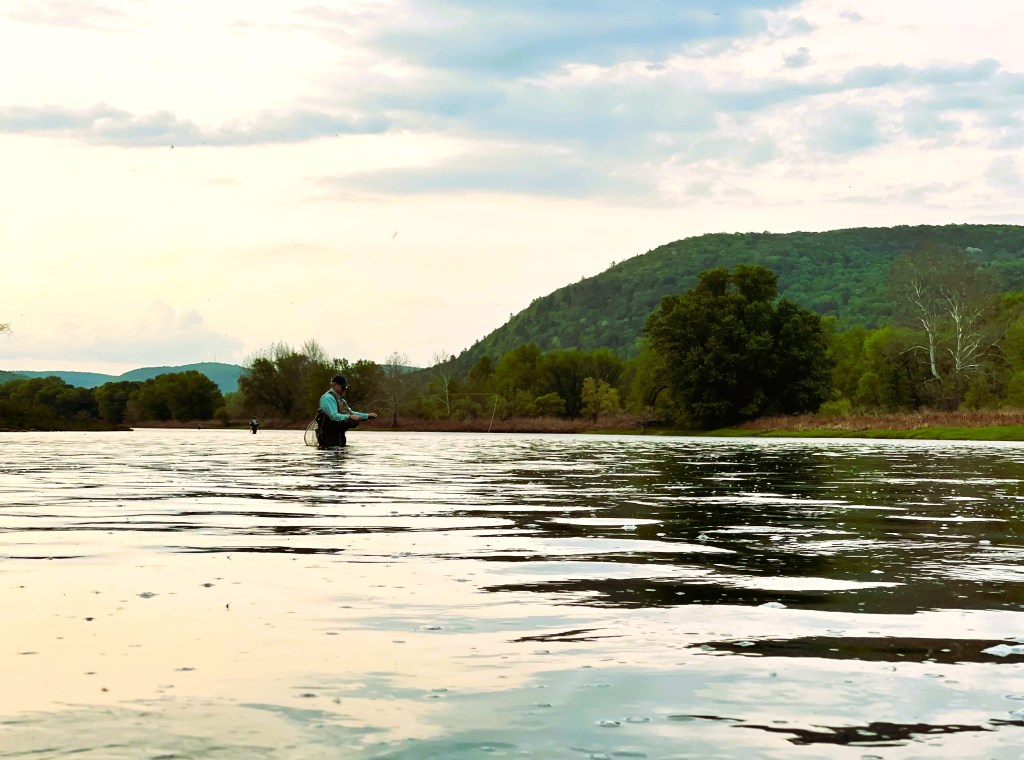
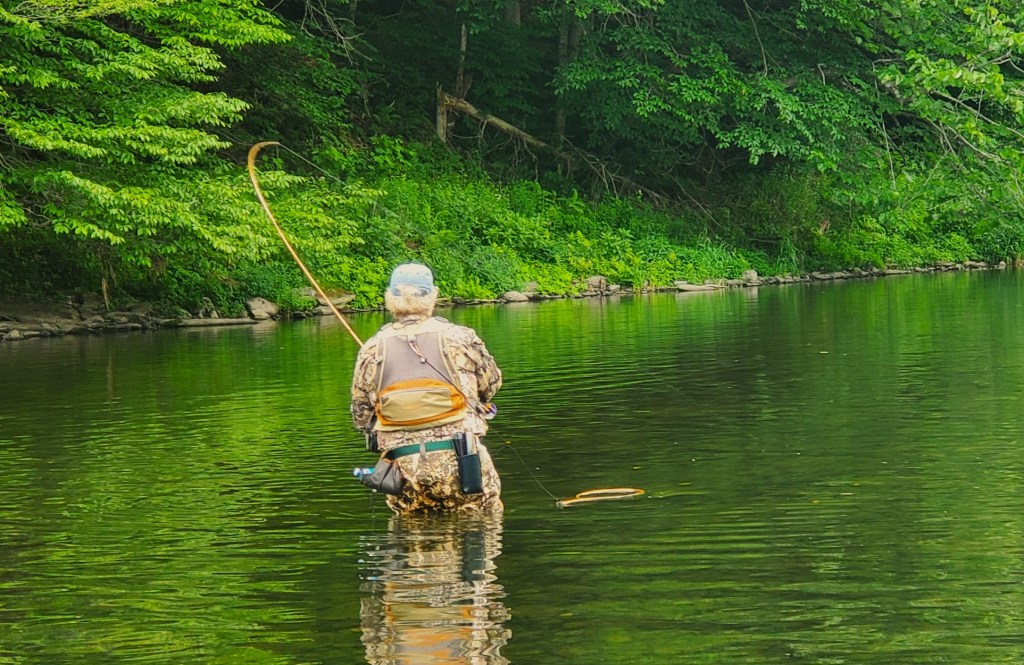
My Trout Bum is perfect for any water you’d like, from intimate, tangled runs to the wide Delaware! (Photo courtesy Andy Boryan)
The Trout Bum accompanied me on my first days of this Catskill summer, my favorite time of year, and it delivered a lot of smiles and remembrances, as well as a couple of big, powerful wild brown trout I hunted up in low, technical bright water. That kind of fly fishing requires what amounts to perfect casting: deadly accuracy, delicate presentation and the kind of control of line, leader and tippet that allows long, drag-free floats. My old friend’s Sweet Water delivered just what was needed!
I hope you are enjoying life out there Wyatt, and taking time to cast some of the many great rods you made over all those years. Remember there’s a friend here in the Catskills, and some great fishing…
There are a few constants when it comes to a particularly tough season, first that there are some high points that are absolutely spectacular, and second, that we have to keep on paying our dues for those high points.
In my mind, I think about the fact that Mother Nature rather severely disrupted the lives of the trout, to say nothing of the lives of the insects and baitfish and, of course, the anglers. Well, there is high water most years some say, and that is true, but for 2025 she brought down two very sustained events during the prime of the season, the time when the majority of our mayflies are either hatching or preparing to hatch, and all of the other baby organisms in their food chain are swimming out to investigate their new world. That flushed a lot of food away, and a lot of next year’s food too if you think about it. That means our trout have to find as much protein as they can during the summer.
I figure that our trout are going to have to move a lot, to work harder to get their shares of a diminished food base, to consider new options. My thoughts jump back to the snake I watched get devoured in one hell of a rise recently. I have already seen how that adjustment has affected my own fishing, changing patterns learned through decades of days on the water.
There’s another factor to consider too: dropping rivers. After all that rain in May and June, we seem to have returned to another drought cycle. Little of the rains predicted during these past few weeks has fallen. Lord, might you send us a three-day bundle of cooler air and gentle rain?
It was hot again yesterday, and the early morning hours and lack of sleep had caught up with me, so I did my best to sleep in. That didn’t work out so well, but I did at least try to rest a little, catch up on a blacked out ballgame, and save my fishing for a couple of hours in the afternoon.
It was another dues paying day. One decent trout insulted me by eating something a few minutes after I had thoroughly fished his location. It was a sizeable rise, and I changed the fly and worked that stretch over again, then once more with a third pattern. No rise, no movement, no nothing. Perhaps he was simply passing through and found a quick roadside stop for a sandwich. I’ll never know, but I have caught a lot of trout over the years in just that kind of situation. Once a hunter has betrayed his presence, there is a good chance that I will take him.
I kind of think he jumped right back in the car and chewed on that sandwich slowly after he hit the road again, looking for the next stop to catch his eye.
I took a moment myself, standing there alone and winding my line and leader onto my reel after clipping off my fly. I looked down river and couldn’t help but marvel at just how beautiful the scene before me was…
I felt pretty good for a guy who has been awakening at four in the morning. I do my best to ignore the aches and pains, though there are more of them this year. I allowed myself the full two mugs of coffee. The damp air and cold water should wake an angler up too, but somehow I just wasn’t at my best.
My casting was right there, accurate at distance with good presentations, my Sweetgrass pent laying the fly out there in the fog on it’s first day of use since 2024. Summer is in full swing so I figured it was about time to get one of my main summer fly rods out on the water. Last summer, I found a pretty good nick in the tip section, some sort of hook dig I guess. I had fished it on through the summer, then sent it on a long distance trip to Butte, Montana, where Glenn Brackett made me a brand new tip. This day would be the shakedown cruise, and the rod cast like it had never left my hand.
I was working along, and the fly settled perfectly on an edge, drifted maybe a foot, and then was plucked from the surface very, very gently. Somewhere during the few seconds required for that sequence, my mind wandered elsewhere. I stared at the water where the fly had been for an extra second and when I raised the rod there was nothing there.
Missing a fish on a summer morning is never a good thing. Summer is when I expect to be at my peak, having shaken off the long winter both physically and mentally. Perhaps those recurring four AM wakeups is taking a toll on my concentration.
A trouty smirk: Ha! Missed me old man!
After berating myself, I continued fishing, certain that I had awakened my concentration. An hour may have passed, more or less, and I saw a little sip, placed the fly perfectly, and tried to rip that fish out of the river! No hookup, and no fly this time. I overreacted so badly that I didn’t even feel any resistance, though I still managed to break the fly off.
Trashing two opportunities is simply disastrous, for this isn’t the kind of fishing which lets you make up for those mistakes. Our hatches have been generally light this season, and at this early point of summer, I have passed more days without seeing any mayflies than I have witnessed even a ghost of a hatch. That realization shook out the rest of the cobwebs in my head, and I vowed to fish at my best level for the rest of the trip.
I backed off a bit, taking advantage of the Sweetgrass rod’s ability to present the fly from a distance. Jerry Kustich had designed this taper for me during the Covid summer of 2020, based upon email conversations about what I wanted in an ideal summer four weight. I asked for 5-strip construction, something Jerry started experimenting with back before the Booboys left Winston. A good pent has a little something, a crisp feel, and the rods I have fished are accurate. My Sweetgrass has proven to be everything I hoped for when we began our discussions.
Working from greater distance makes you pay better attention to your casting, the timing and finesse required to make a perfect presentation. That helped me to get locked in and stay that way.
I made one of those long pitches to a bank where I had been teased a time or two, most recently by watching a little snake vanish in one Hell of a boil! The take came, I paused half a breath, and then I set the hook solidly with complete control. That new rod tip arched heavily as the trout bore down into cover!
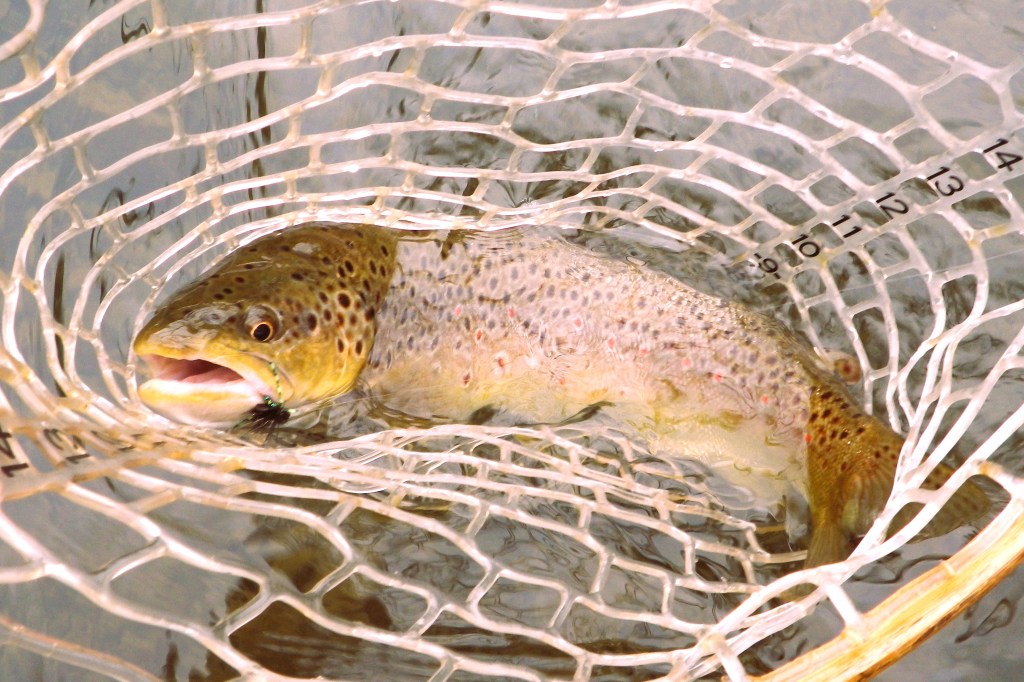
I gave that fish everything my tackle could dish out, and I turned his head just enough to lead him out toward relatively open water. He put the test to the drag of my VR reel, and it sang proudly again and again. Every time I started to bring that fish close and reached for my net, he was off again. Finally though, the good mojo of that Sweetgrass pent urged all twenty-five inches of that brown trout into the net.
Sunday July 6th, 5:35 PM and the official porch sitting temperature here in Crooked Eddy sits at 100 degrees Fahrenheit: a pleasant summer evening here in the Catskills. I am not sitting on my porch, though I am sitting here in front of the fan thinking about fishing. The fan is on high, so tying flies is impractical to say the least. One cannot tie a dry fly when the feathers and the dubbing keep blowing away across the room.
I tied the balance of this weekend’s two dozen dry flies this morning, with the air at a comfortable 60 degrees. They have been packed in the single fly box which is occupying my small chest pack, ready for the morning. Warm days and low water is upon us, New York City having decided to drop the releases from the Delaware system reservoirs despite the fact that they are nearly full (98.5% of capacity). Trout don’t count much in their world, and trout fishermen count even less.
I put the five weight Leonard back in the rod rack and drew my four weight Sweetgrass from the tube which harbored it since last September. Dennis Menscer’s three weight is on standby as the week progresses. I checked the line and leader on the Trutta Perfetta reel my Sweetgrass is comfortable with and rebuilt the business end of the leader. Good to go with the sunrise.
There’s no ballgame tonight, and no chance I would try any evening fishing in this heat, so I am here musing about long summer days. A lot of guys seem to want to fish the evening rise to exclusion, but the fact is the rivers are at their warmest point at that time of the day. Yes, even after sunset. I hope they carry a stream thermometer and use it. Earlier in the spring was the time for evening fishing, and even then I find myself spending my days on the water rather than my nights. I spent both out there when I was younger and dumber, but now I like to see what I’m doing, as well as the glorious places I get to do it.
There’s that four weight Sweetgrasswith perfect pressure on a hard running trout that I thought I was about to net! (Photo courtesy John Apgar)
It looks like this week will be all eighty and better degree days, though the early mornings will feature the more friendly sixties. I guess I won’t be getting too much sleep again, but I’ll be driving to the river with the windows open!
One of countless gorgeous July evenings from my history with the West Branch Delaware
For many years, back before the Flexible Flow Management Plan altered Cannonsville’s cold water releases, the Fourth of July marked my final Catskill trip of the season. Those were the days of pulsing, and other questionable management practices, when late summer trips might mean fishing a warming river one day and a frigid one too high to wade the next. Early July seemed to be the last more or less stable period on the West Branch Delaware, and it was prime time for the ubiquitous sulfur hatches on the upper river. Those trips on and around the Fourth became known as the Summer Jam, and hold many fond memories.
Once the FFMP became effective, I ventured north throughout the summer, finding great, challenging dry fly fishing through July and August. There are memories there too, but the days of the Summer Jam remain special.
I rolled over yesterday morning, badly needing some rest after a week of four AM mornings and chasing trout before the sun burned away the early morning fog. It was the Fourth of July, and my thoughts ran back to seasons past once my morning coffee took effect. I decided to relax for a few hours and visit my old haunts along the West Branch.
I didn’t know if I would find a place to fish on a crowded holiday weekend, a fear that was reinforced when I pulled in early and had to wait for a parking spot. Plenty of anglers, armadas of kayaks and questionable watercraft on the river, yes, a holiday weekend to be sure. When I walked over to the river though, I didn’t see anyone fishing, and my smile brightened. I rigged my Leonard and knotted a little trailing shuck sulfur to the 6X tippet and waded in.
A young man had also entered the water and decided to shadow me as I crossed to search an old favorite reach of riverbank. He seemed not to know what he was supposed to do with that new fly rod with the bobber on the leader and, though he shadowed me all the way across the river, he quickly wandered back to midstream. I expected more fishermen to crowd in upon my little 60-yard stretch of water and was surprised when no one did.
Another old West Branch acquaintance joined me as I waited for more than an hour for some sign of a sulfur hatch though, a strong, gusty downstream wind. It had been calm and pleasant in Hancock, but something about Deposit seems to generate some serious summer winds. I figured the worst of those gusts were hitting 25 miles per hour, but I waited, hoping for some bugs and an occasional calmer spell to try to match mine with Mother Nature’s.
Eventually, a handful of sulfurs began to show, mostly the little guys matched with a size 20. I felt pretty good about my little shucked fly, tied on a 2XS size 18 hook, but when I finally spied a rise here and there, the trout showed no interest whatsoever. Now these weren’t feeding fish, just the kind that make one or two casual rises during a twenty-minute stare down, so that fly stayed knotted and I continued to play the patience game.
The Leonard, the LRH Lightweight and a 100-Year Dun
My patience was rewarded when a good fish began to rise downstream. It didn’t take more than ten steps to position myself to make the right cast in that wind, and I went to work on him between the strongest gusts. The drifts looked good, very good as a matter of fact, but he never gave me a look. Tying on small dry flies in high winds isn’t something I enjoy, particularly in the heat of the moment. My vision isn’t what it once was, and trying to slide the end of a wind-vibrated tippet through that tiny hook eye has become frustrating. Luckily, the Red Gods smiled upon me, perhaps granting special dispensation in deference to my calm demeanor and patience. Size 20 100-Year Dun ready to go!
My fish seemed to have gone quiet though. He failed to rise to the new fly despite repeating those lovely drifts. After several casts, I saw a heavy rise downstream, at the bottom of the small pocket of sunshine he had been rising in. I pulled a little more line from the LRH Lightweight and made a perfect pitch. One drift with that 100-Year Dun was magic!
We hooked up and there was the immediate sense of weight and power. The old Hardy wailed its music as he streaked back into the shade where the snags live, and I used the full arch of the bamboo and the pull of the wind-driven current to urge him back into the light. He ran down then, taking most of my fly line. With 6X tippet and that little dry fly hook, it was clear this wasn’t going to be easy.
Big trout often don’t like the vibrations going down the line when we reel them in. After a couple of turns followed by downstream runs, I stripped the line smoothly when I got him headed my way. That tactic got a lot of line back, and every time he stopped to shake his head, I reeled some slack back onto the Hardy. We played this game two or three times, and I realized that the wind-driven ripples on this normally quiet pool were oxygenating the water and giving him his second wind, maybe even his third.
You can do everything right playing a big trout on light tackle and still lose the game. Sometimes it comes down to exactly where that little fly hook digs in. If it doesn’t have a good bite, it pops out at the moment of truth. If it was down inside the mouth, the trout’s teeth will abrade the fragile tippet and break it. This time though, I found that tiny Sprite hook tucked tightly into the outside of his mouth, right where you want it to be.
Fourth of July, and an unmolested little reach of riverbank with a lot of memories despite a very crowded river. A fine vintage rod and reel that performed better in the wind and in handling the fish than all of the overhyped modern stuff does, and yea, my best fly. Nice new memory: a two-and-a-half-hour Summer Jam!
When the hatch finished and I waded back to the crowded parking lot, one of three guys parked next to me stopped eating his sandwich to say “that was a really nice fish you landed” with a smile. I told him thanks, that yes it was a good brown, twenty-one inches, and a hard fighter…really hard.
At last, we have enjoyed a few days of Catskill Summer! Cool, misty mornings, with some days steamy and hot while others flirt with that blissful realm of warmth and light. I caught up on some needed rest this holiday morning, as age seems to be catching up with me!
I love my morning hunts in summertime; they are all about my favorite way to fish at our loveliest time of year. The trout still come slowly this season. How could they not after two terrific onslaughts of fishing pressure and high water.
I wade slowly, keeping my presence unknown to the quarry as best I can. Perhaps non-threatening is a better word, for I do not believe even the stealthiest wader may pass without the trout’s awareness. Watch sometime as you simply stand in a quiet pool and cast. Body movements send gentle waves out, even when we may think only our arm is moving!
Wading? Not without your motion preceding you!
I stalked along looking for some clue to the sound of a subtle rise I had heard from a distance. I know that hunter may have moved many yards, either upstream or down, while this hunter made a careful approach. Listen, watch, and fish the cover selectively.
Motion caught my eye, it was not a neb that reflected the filtered sunlight though. A little water snake swam along the edge of the riverbank. I watched him for perhaps twenty feet, then a terrific, foamy bomb exploded in his path. Breakfast for hunter number two! I offered my fly anyway, a choice of two as a matter of fact, though they brought no interest. I feel confident his appetite was satisfied. Damn that snake!
Half a mile later I searched for hunter number three, chasing another sound. No serpents here I am thankful. Is hunter number three still haunting this edge? The vintage Leonard lays the Baby tight to the edge, working down in sections defined by the available lanes of drag-free drift. Plop!
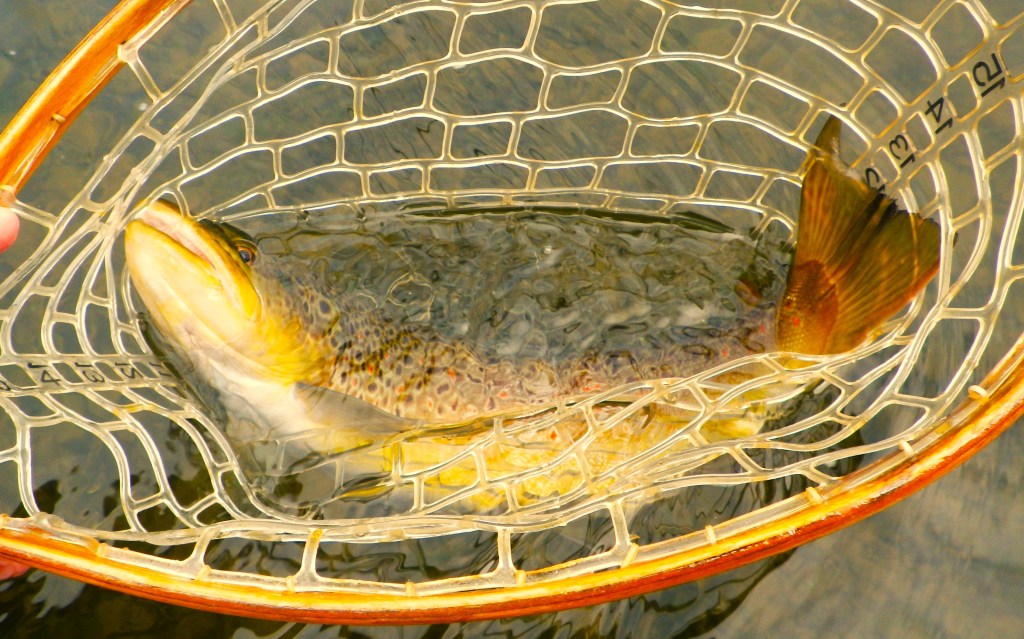
His boil reminds me of the snake-eater, and then the LRH’s scream breaks the stillness of the morning! My rod and reel are fifty-five years old, and still young compared to hunter one who wields them. Tackle and angler outlast him, bringing him eventually to the shallows and the waiting mesh. Beautiful!
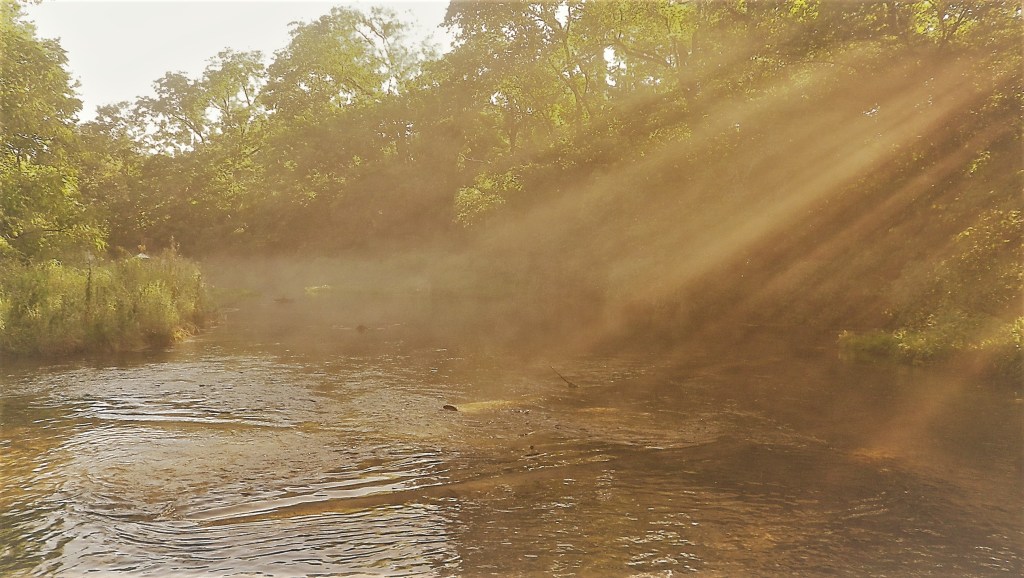
I keep stalking as the sun warms the last of the mist. It swirls away to join the bright air and vanishes on the way. Morning has passed on.
On some mornings, hunter one meets another. Battles ensue; some won, some lost. Some hunters are known by their movements, even a subtle rise at times, but refuse to play the game. The Red Gods decide the rules.
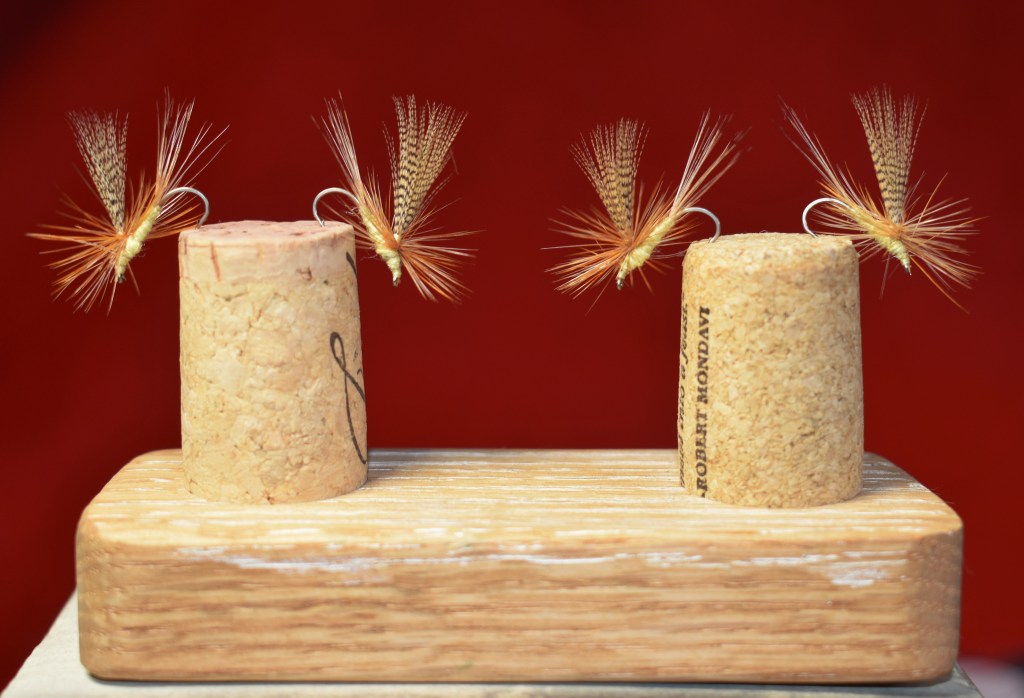
Five AM on a Sunday and sulfurs are taking shape here at my bench. There are more to come, some biot cripples and then there will be some olives in the crippled, dead and dying modes. Hard to figure that, with so few mayflies this season, our wild trout would ignore the sparse numbers of drifting duns on a heavily chilled and misty afternoon and sip here and there for some drowned, crippled or otherwise mangled mayflies. Such are the wages of fishing pressure and evolution. The better we become as predators, the better they become as prey!
Summer is still new at this point, somewhat uncomfortable I suspect with it’s new role as bringer of warmth and plenty. We have already endured a short, serious heat wave, and on my last fishing day my hands were so cold I found myself unable to tie on a new tippet. Perhaps the weather will come around once the land and rivers get used to the idea. The glory of a Catskill Summer is something special: golden sun dappled days in the seventies caressed by gentle breezes.
I have begun to find a few hunters on the prowl. Battles have been won and battles have been lost of late, but it is good to take up a fine bamboo rod and stalk the rivers after so many missed days. The breadth of summer lies in wait. Pray that it will be as lovely as memory and as bright and fresh as this sunlit morning!
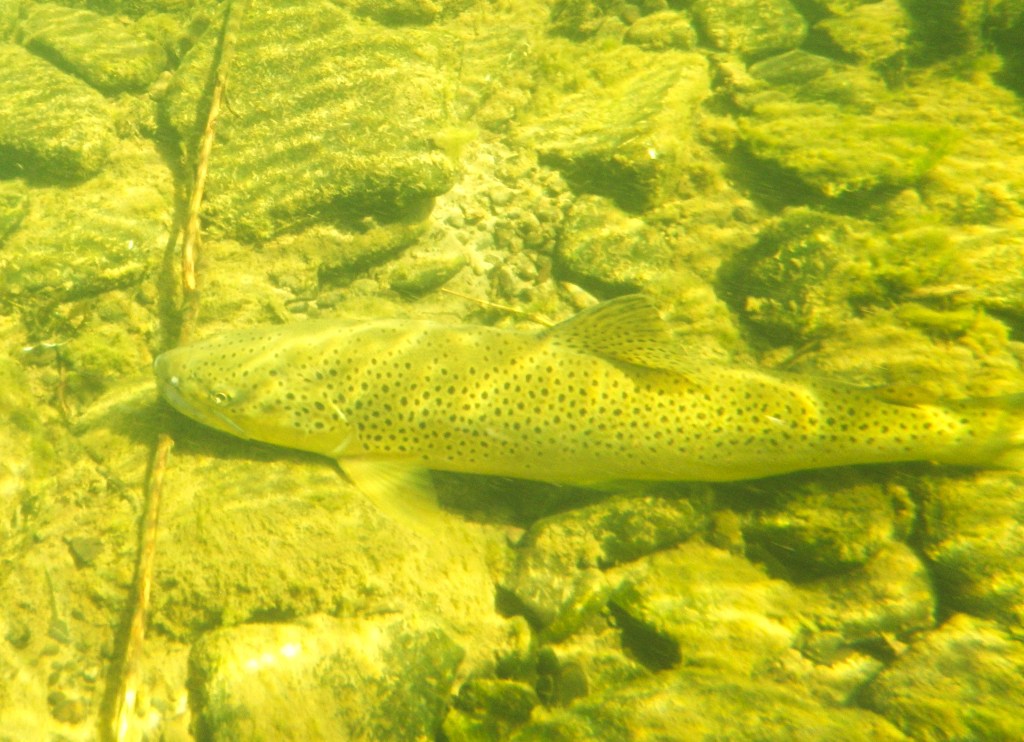
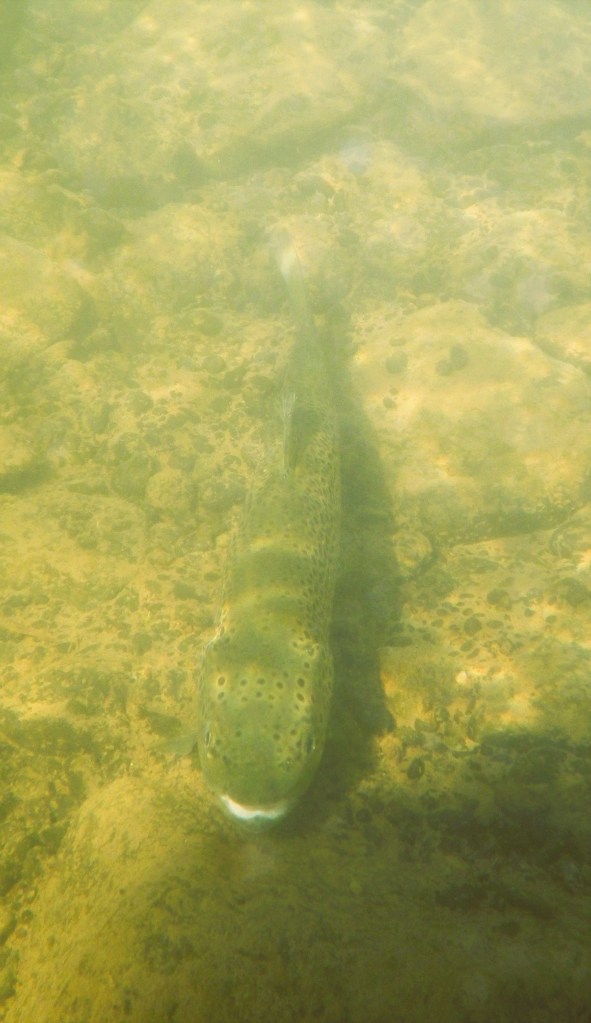
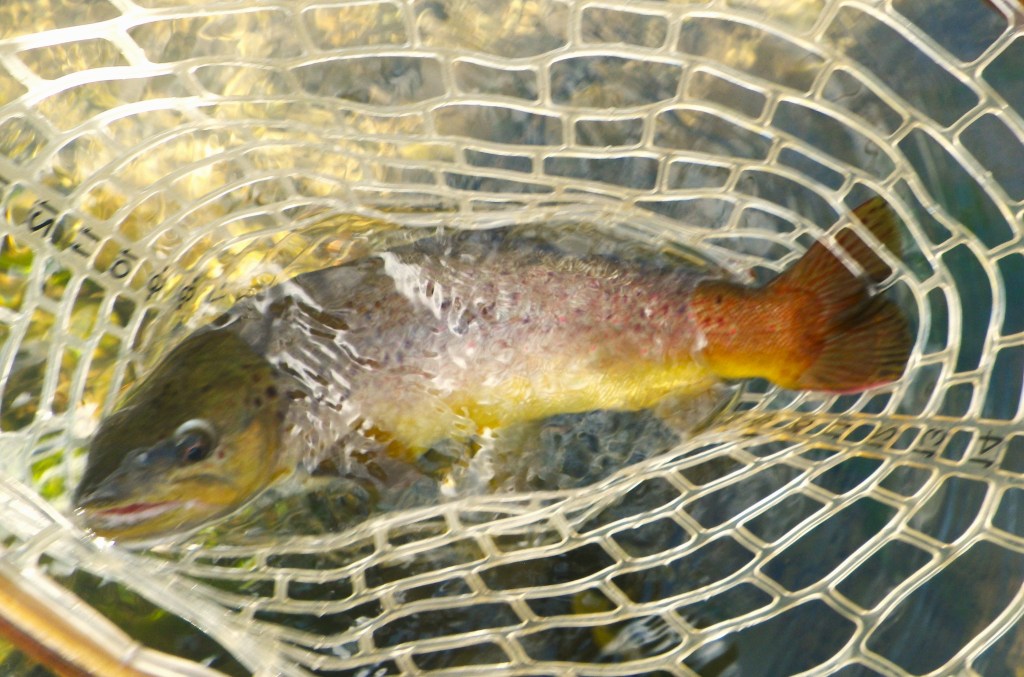
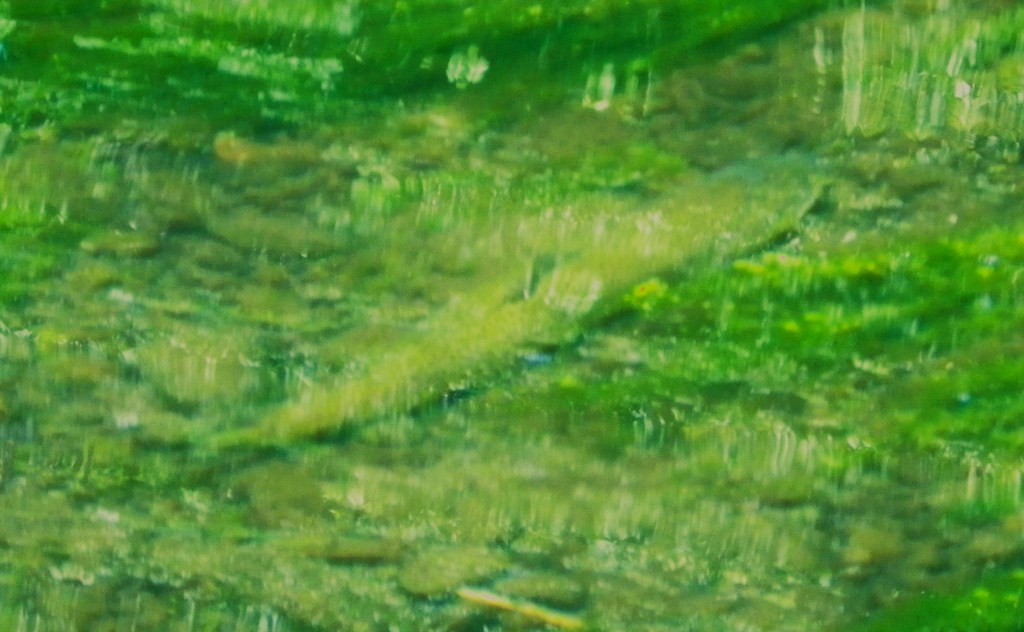
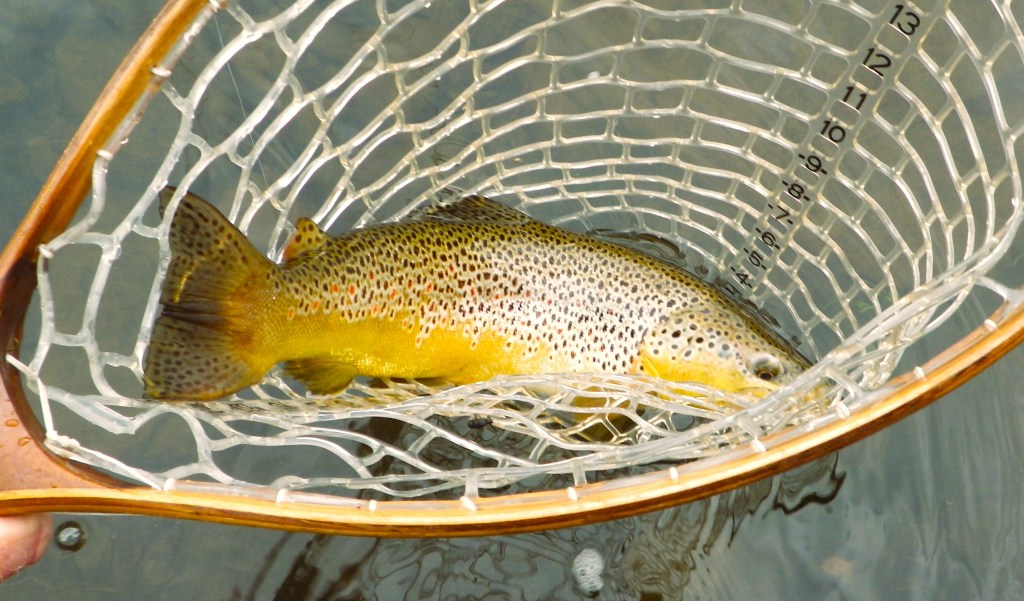
Two feet of wild, Catskill brown trout rests, hidden by dappled light and vegetation, after battling bambooduring a successful summer hunt.
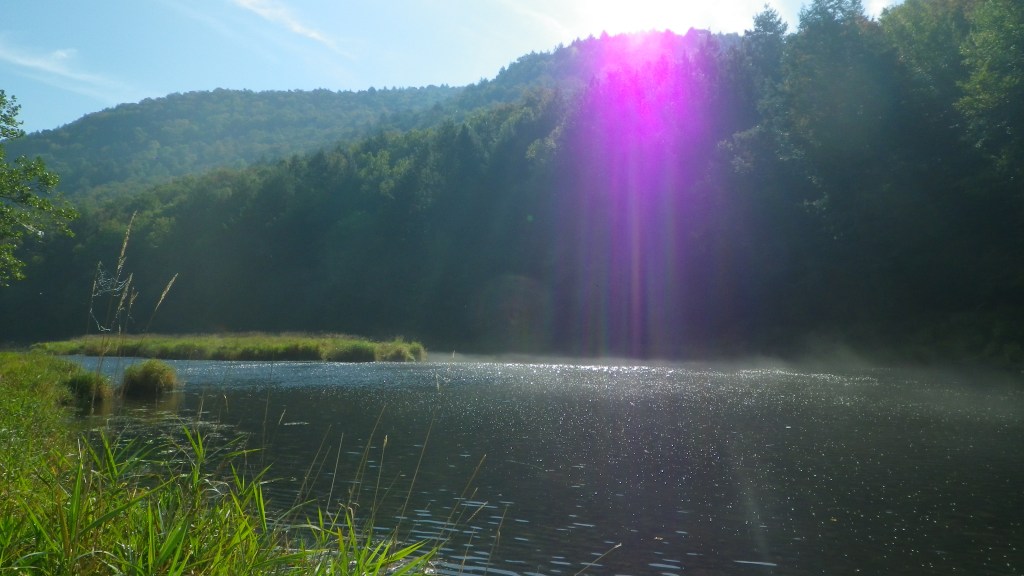
Here on a steamy early morning, thwarted by high water, it is easy to slip into memory of Catskill Summers past…
Summertime brings new challenges, the game is different now, for the changes in conditions can be subtle yet alter the habits of the trout. Storms and runoff are the big chips in this game, but something as gentle as a slight change in humidity, or a nighttime low a few degrees cooler than the past week’s norm can trip the switch and put a trophy brown on the hunt. I learn more each season.
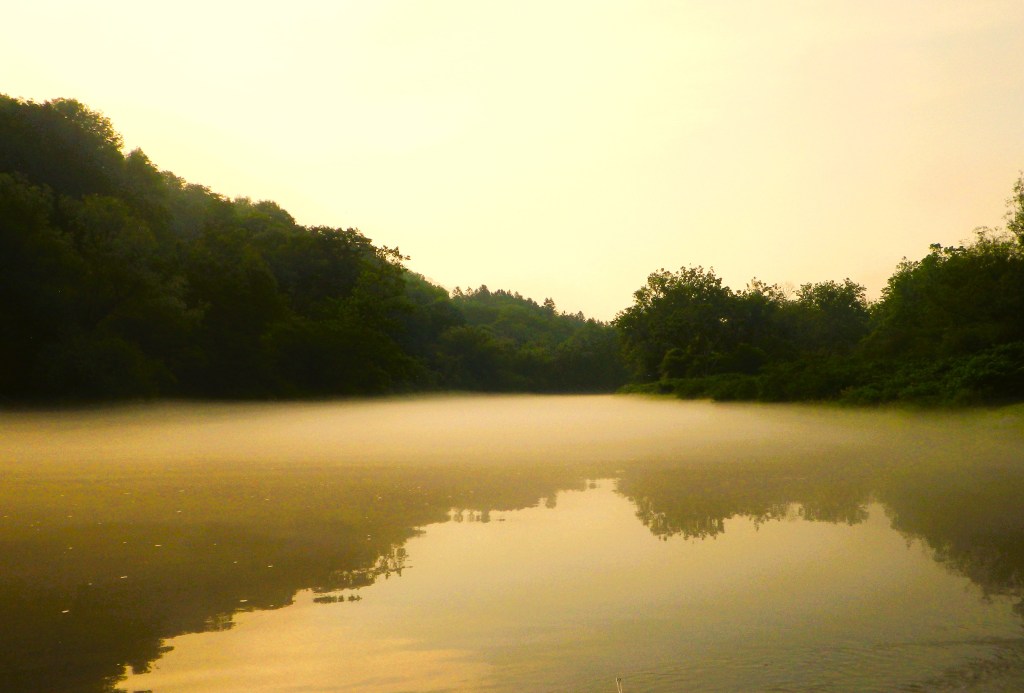
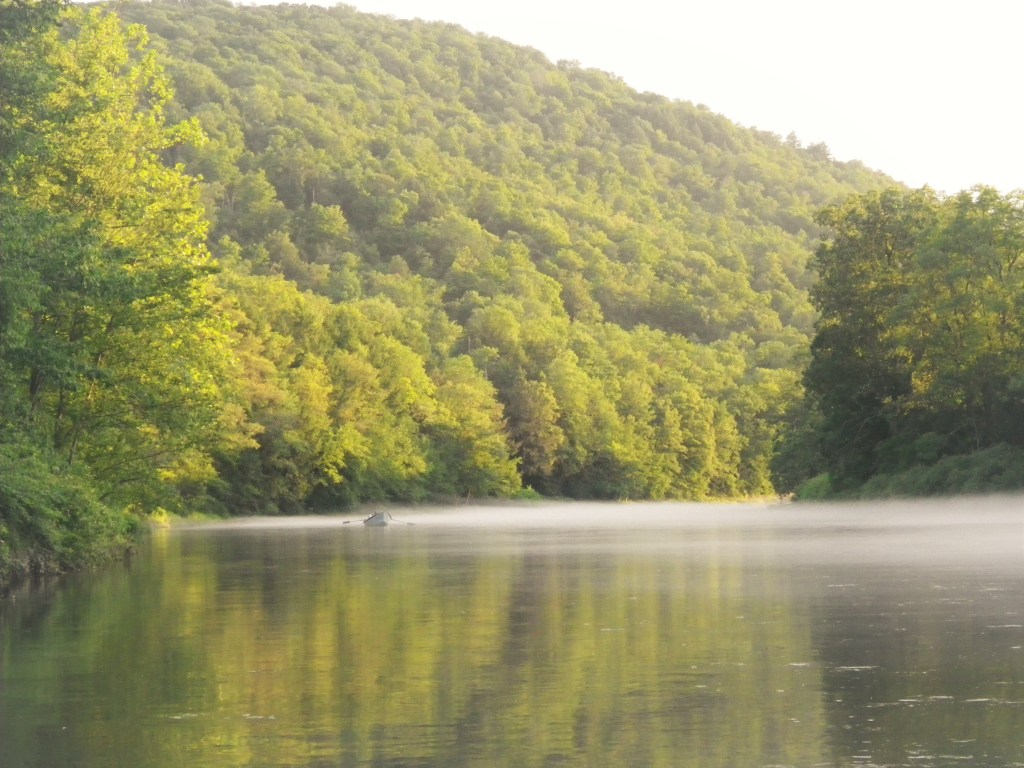
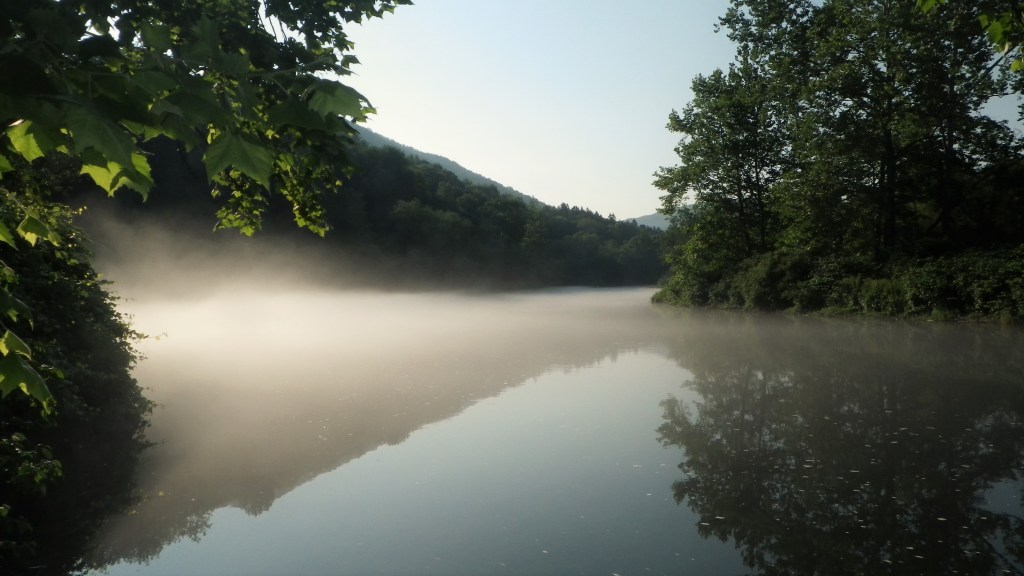
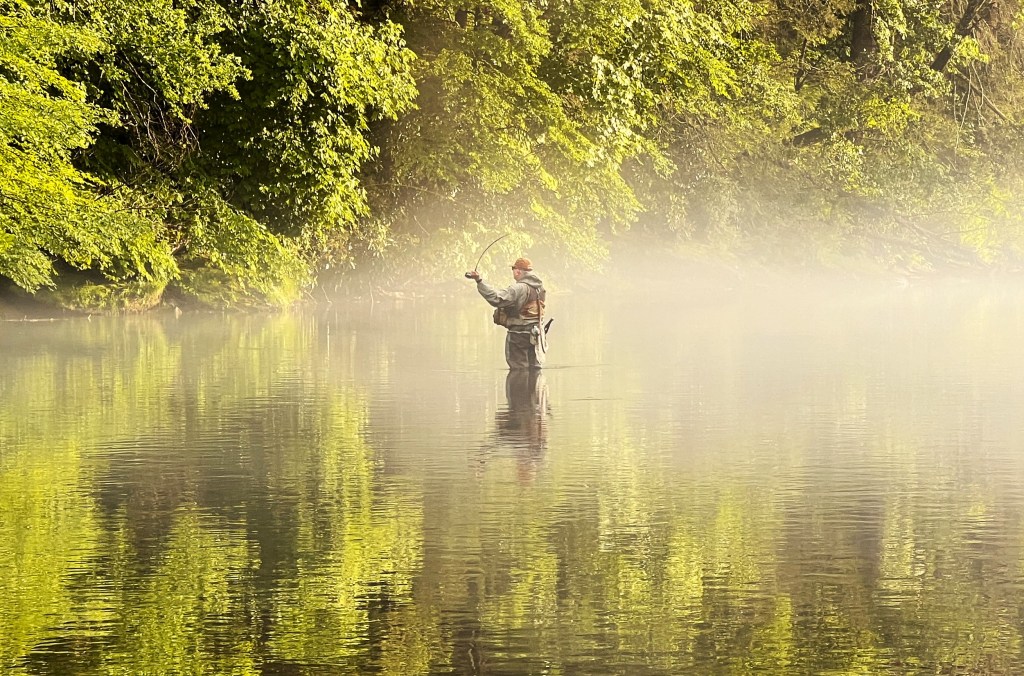
A cool, misty morning and a quiet pool.
Summer is almost always a stalker’s game. The regular hatches are finished with the passing of spring. Oh yes, there can be flies in certain areas at certain times, but they are more capricious than those of spring. Are there a few spinners at dawn? Perhaps, or a ten-minute drift of tiny olives. Spotting a roamer sipping such dainties begins the approach, tense and urgent, as I know it may not last long enough for me to slip within casting range.
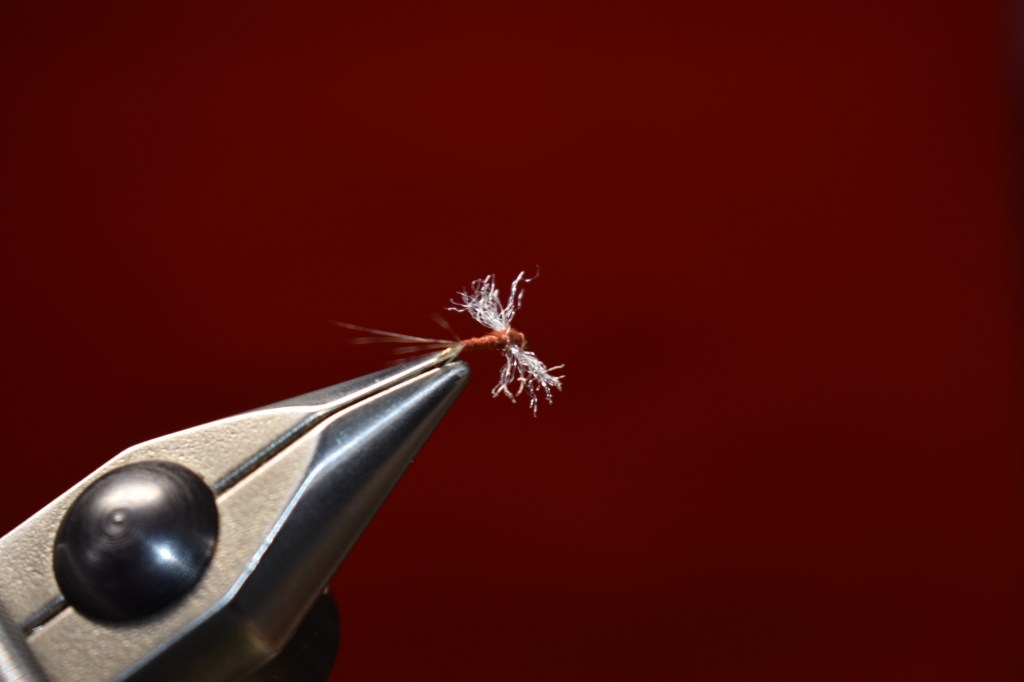
A size 20 Rusty Spinner can tempt an early morning cruiser in excess of twenty inches,if you have the patience and control!
Morning cruisers are a test: one rise, one cast, and that cast must be immediate and perfect. Trying to guess the direction of an unseen cruiser and offer a second chance tends to bring disaster, and spooking one may spook others as yet unknown that lurk nearby.
Low light and fog ads another kind of intensity. Stand and listen, you may hear that solid plop, quickly stifled by the thickness of the damp air. Where? How far? Wishing I was there right now; listening…
Wading without a trace, pulling my hat brim down to shade my eyes as they search for the nexus of that sound. It always amazes me how subtle the evidence of even a huge old brown’s rise can be, how quickly it can vanish!
At last, my Catskill Summer has arrived, though it comes in the garb of springtime. Storms and high water continue to keep this dry fly angler at bay. This season it seems has kept me waiting for the fishing that most stimulates my soul, the careful stalking of the best of our wild trout with the dry fly!
Thunder drove me to consciousness yesterday, as we were assailed with severe weather warnings from early pre-dawn hours. The west side of the Catskills proved most vulnerable this time, with flows on the recently gentled West Branch Delaware rushing to a peak of some 6,550 cfs! Though the flows have dropped considerably this morning, Cannonsville Reservoir is spilling again this morning.
I hear that people were fishing the Beaver Kill and Willowemoc late yesterday, the worst of the storms failing to wreak commensurate havoc upon the heart of the Catskills. Alas, we now must face a heat wave that will drive water temperatures up!
Seven years ago, I “celebrated” my new retirement and finding a small home in these Catskills in similar manner; by not going fishing. It was a high-water year, and continued to be throughout the summer, keeping me away from the rivers of my heart. This year looks to be an anniversary in effect.
None of us know how much time we have here, and as the years pass, I feel that more acutely. Precious hours lost upon bright water are lost forever.
I wait and hope, like all who feel the call of the rivers.
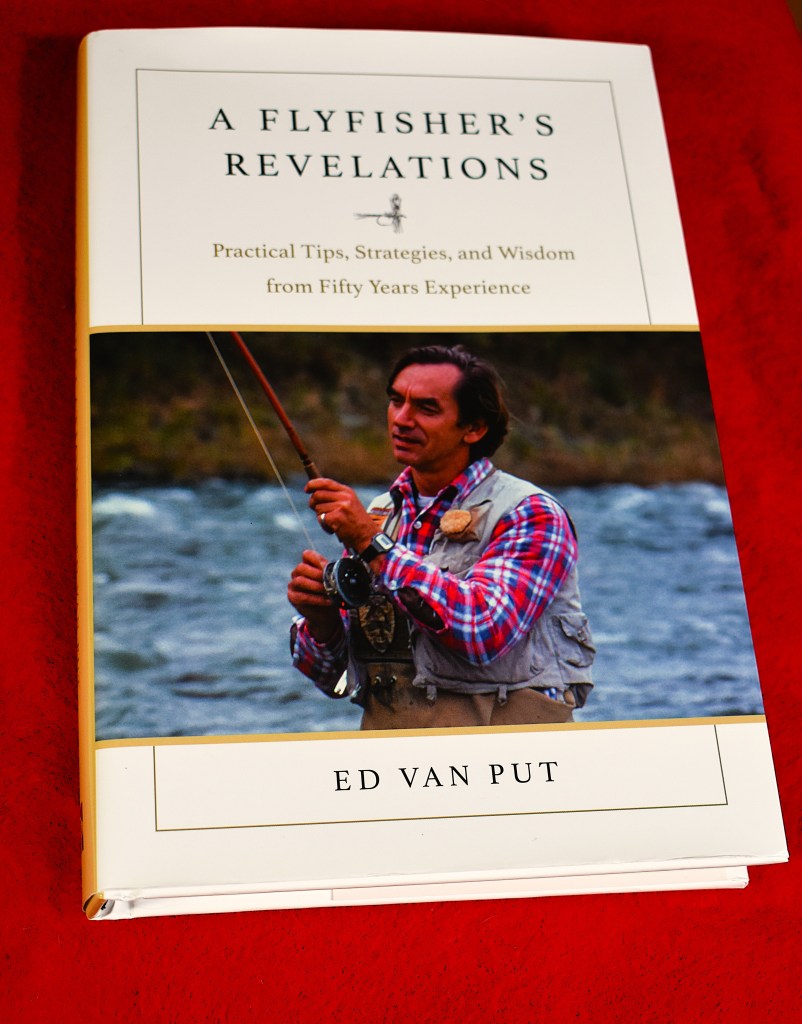
The name Ed Van Put is truly legendary in these Catskills and along the Delaware River. An angler of these rivers for sixty years, our region was saddened by his passing in December. As fellow members of the Catskill Fly Tyers Guild expressed our condolences and support for his wife Judy, she told us that he had reached a final goal, one that was most important to him, before his death. Thanks to Ed’s perseverance and the work and support of his family and friends, he has shared that goal with all of us.
“A Flyfisher’s Revelations” (ISBN: 9781510783331) will be released by Skyhorse Publishing on July 8th. Copies are available in Ed’s hometown of Livingston Manor, New York at the Catskill Fly Fishing Center and Museum.
As an author, Ed Van Put has contributed greatly to the history of our region. His previous works: The Beaverkill, Trout Fishing In The Catskills and The Remarkable Life of James Beecher represented a monumental amount of research driven by Ed’s love for the Catskills and their people. Revelations is the product of his love of trout fishing and his decades of time spent along Catskill rivers both as a remarkably effective angler and as a fisheries professional.
This is the book that many Ed Van Put fans asked for, an opportunity for him to share the knowledge acquired in his decades of work for New York State’s Department of Environmental Conservation as well as his fifty years spent studying and chasing the magic of trout and fly. Ed kept journals of his fishing, detailing the locations and conditions of all of his fishing days, and recording the flies used and the number, species and origins of the trout taken.
Part of the Van Put legend comes from the fact that he caught remarkable numbers of trout using a very small selection of flies. He was known as the champion of the Adams dry fly, catching seventy percent of the trout taken on a dry fly on that favorite pattern. To begin this book, Ed examined thirty years of his journals in detail to answer his own questions as to what made him so successful in catching trout, taking time to consider these memories and reevaluate the conclusions that shaped his angling techniques.
A Fly Fisher’s Revelations is a lovely read, full of the honesty, honor and humility of a true gentleman angler. Van Put appreciated the beauty and mystery of Nature and never tired of the magic of his immersion in the beauty of a Catskill trout stream. There are lessons to be learned here for each and every angler. They are offered gently, with the kindness and grace of a gentleman. There is no sales pitch, no insistence that this master’s way is the only way to catch a trout. Revelations is more like a quiet, friendly talk with a mentor, one willing to share his passion without any overbearing airs.




 Bright Waters Catskill