Spoon fed salvation

Waiting In The Tail of The Riff

My fishing is coming back, slowly. The Red Gods are offering this angler salvation a spoonful at a time. Ah yes the caprices of Mother Nature!

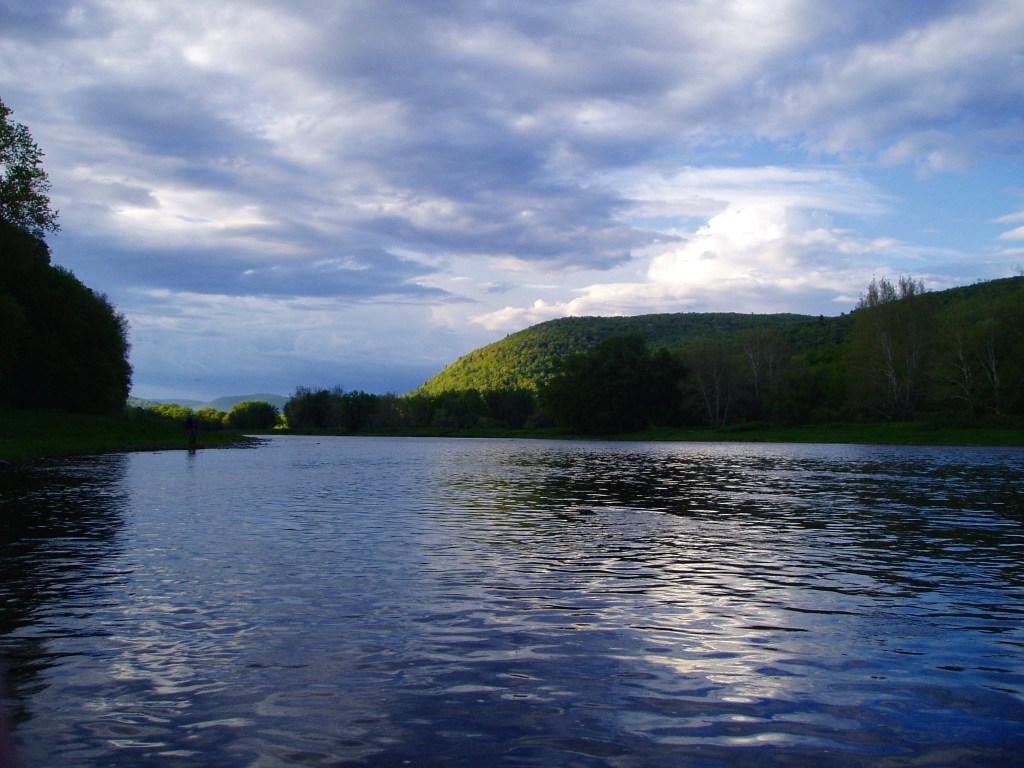
I chanced a somewhat more favorable wind forecast on Wednesday and dropped the boat in the Delaware for a solo float. They are all solo floats this year, thanks to the need to avoid human contact. I tend toward being a loner on the river anyway, but it would be nice to share the day with a good friend.

That wind was supposed to be in the 5 to 10 mph range, but it did get up a bit stronger in the afternoon. Floating the Big D means rowing, so I expected to get a workout pulling through the big eddies. The extra breeze just upgraded my cardio.

I had hoped of course for a lot of insect activity, and rising fish. The sunny morning was gradually overtaken by clouds, just as forecast, but the activity never happened. The Delaware has a reputation of being moody, but it can really impress you when it smiles.

By early afternoon I was anchored in the tail of a riff just upstream of a famous pool, watching and waiting. There were a few caddis popping around on the surface, and eventually a few more of them brought a couple of those little spurt rises that said “rainbow”. I removed the X Caddis from the hook keeper on my rod and started casting to the familiar moving targets that are Delaware River rainbows. We found each other, that bow and I, and started to dance; he flying a couple of feet out of the river he calls home two or three times between drag pulling runs, while I countered with rod pressure and reeling. A nice bow, 16 or 17 inches, and a great way to start the day.

The caddis activity waned quickly, and, after another wait I lifted the anchor and moved on, rowing all the way through Lake Lenore against the breeze. Payment to the Red Gods for services rendered. There would be a lot of payment for that bow, and the foot long brown who bent my rod hours later while waiting in another riff.

I was tired by the time I caught sight of the Buckingham landing, better than two hours earlier than planned. I anchored and watched a lot of riffles, but there wasn’t anything else happening to put a bend in my rod, unless you count that chub. Lets not even talk about that.

Cell service is almost non-existent downriver, but I stopped along the shoreline in Buckingham pool and turned the phone on hopefully: one bar. I tried to text Cathy, but it came back with “message could not be sent”. Hooray for little black boxes. I slipped a little further down the bank where the hillside wasn’t looming over the top of me and tried again – message sent! Glad I avoided sitting there in the boat for a couple of hours.

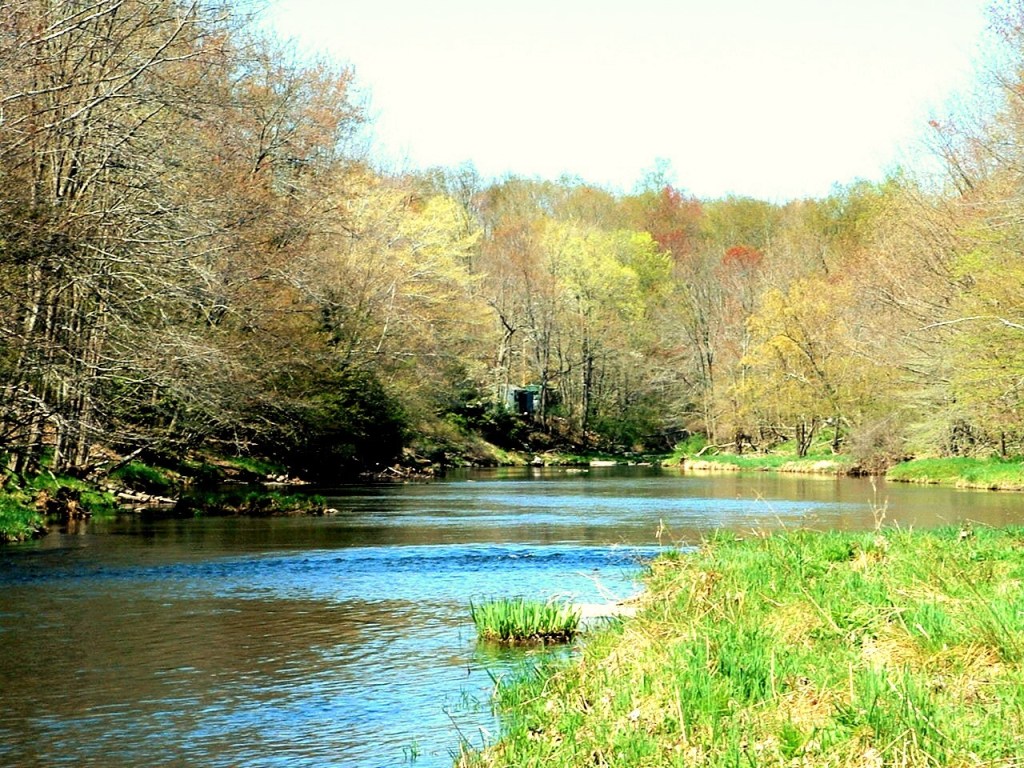
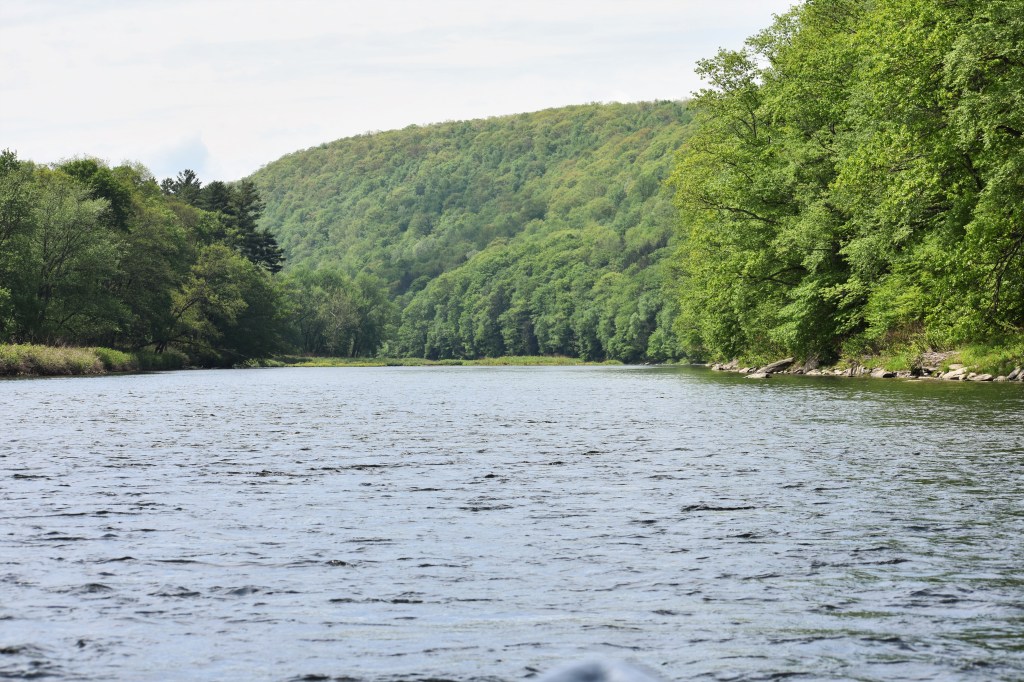
Delaware River, Buckingham, Pennsylvania

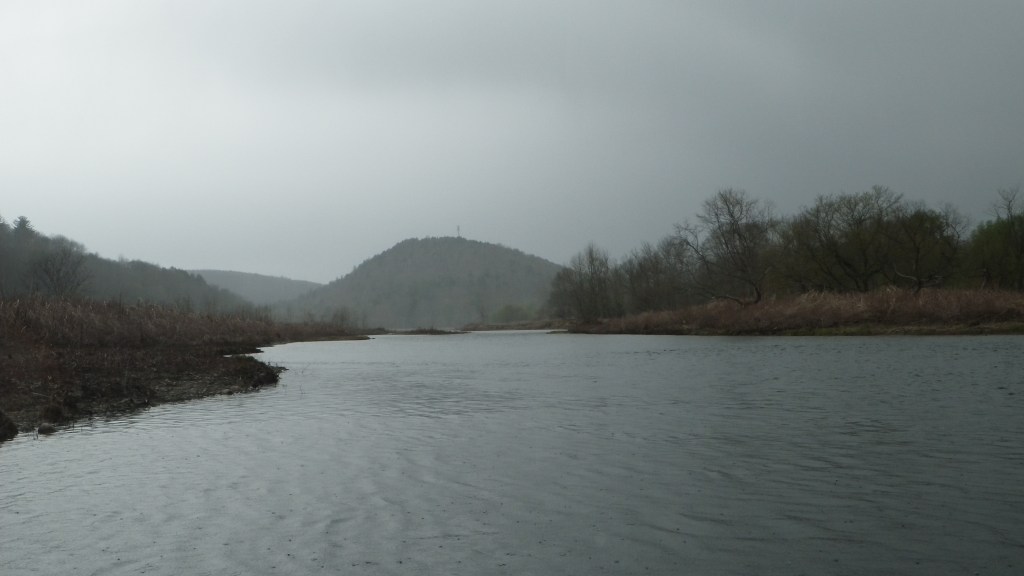
My arms, back and shoulders thought it would be a great idea to go wade fishing the next day. I agreed. I headed out midday, bound for one of my favorite quiet stretches of water, another one of those places that had been bugless of late. It was one of those misty afternoons, a dozen degrees cooler than the previous couple of days, the kind fly fishers recognize as a good bug day. Hmm, well I guess I’ll see about that.

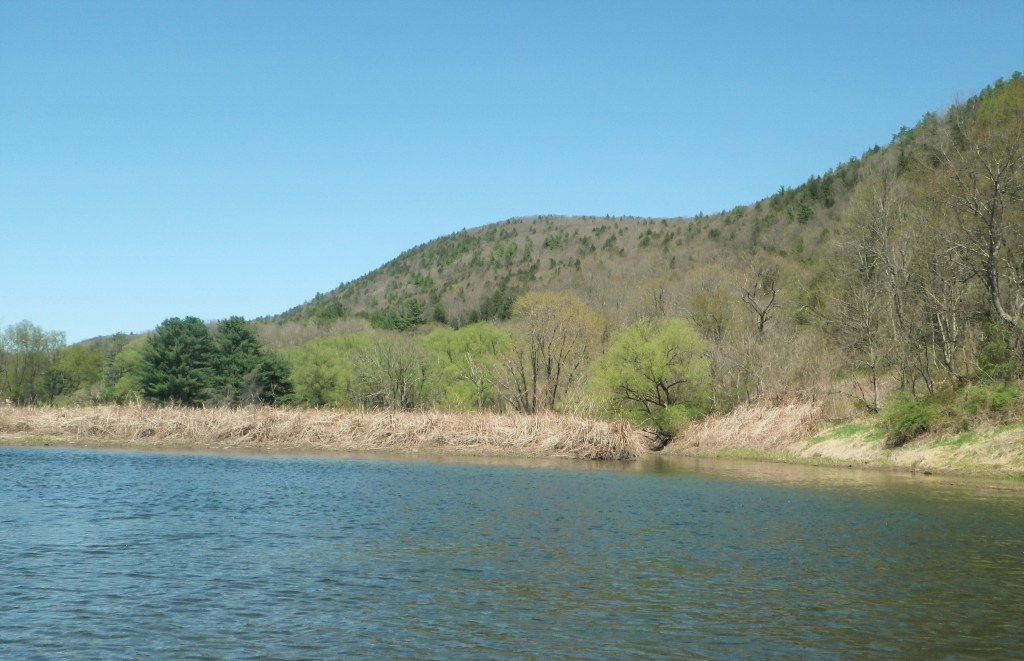
I made a long walk leisurely, stopping to watch each reach of river, seeing nothing moving but water itself. I settled in where I had had great fishing this time last year and waited for an hour.

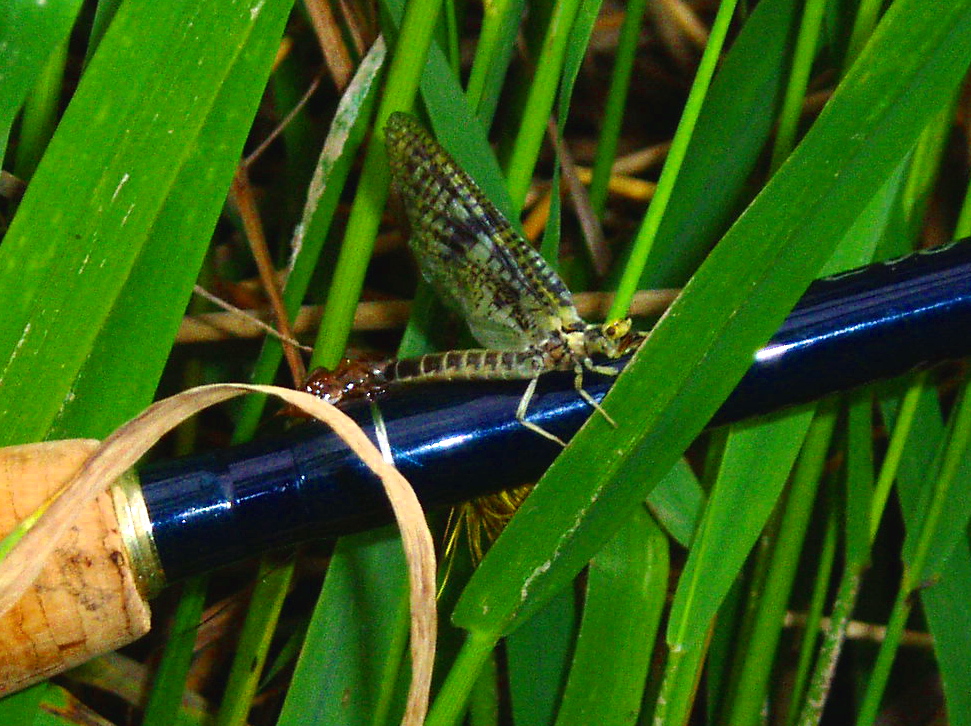
The obligatory handful of caddis were the first things to show, and then, was that a mayfly? A slow, bulging rise put me on alert. I had wanted to fish bamboo, but the rain led me to select the Thomas & Thomas Paradigm. If I had to fish graphite, it was going to be with feel; as close to cane as possible. I moved into position to work to that rise and waited for another.

The trout rose, I lifted the line softly and the Paradigm painted the fly on the water sixty feet out. He rose to intercept my fly, took it, and the tension of a long stretch of slow fishing let me pull my hair trigger a half second too soon, and the fly right out of his mouth.

It took a while before I started to see a big mayfly or two drifting down: big, yellow, March Browns or Gray Foxes. To Hell with the DNA scientists, I thought, and tied on an East Branch Special I thought might pass for either. I’d found the pattern on the Sparse Gray Matter forum, credited to Art Patterson, brother in law of the late Al Carpenter, Sr., the long time owner and proprietor of Al’s Wild Trout in Shinhopple, and tied a few this winter.

The target had showed me that one big, slow bulge that got me into stealth mode, but his subsequent rises varied to more subtle sips. Still, he hadn’t risen until the big mayflies showed, so I was going to offer him a big mayfly. Seventy odd foot reach casts flowed out of the old Paradigm one after the other, as I prospected for the old boy between bursts of wind and flying mist, the gift of Mother Nature’s immaculate sense of timing.

I was nearly ready to change the fly, to offer a low floater, when he liked the drift enough to come up and eat that hackled dun. I paused half a breath, then tightened, and the rod arched as he porpoised right there in his lie. Before even starting to move, he was simply gone, the 5X tippet broken cleanly. I pulled the remaining tippet through my fingers to check for abrasions, finding none, then tugged gently below the leader knot and it broke again. Bad tippet, just my luck, or was I still paying dues for yesterday’s tail dancing rainbow?

I cut the leader back and retied it with four feet of 4X tippet, one size heavier; a little extra insurance for the larger dry flies.

The March Browns were as sporadic as their reputation, half a dozen coming over the course of 15 minutes time, then nothing for half an hour. A trout would rise once, 150 feet away, then no more. There was one near a submerged rock that ate something every once in a while, but he showed no interest in my flies.

There are times I feel certain that the “one time rises” in this area are really cruisers. A trout or two with enough appetite to cruise the flats and target the emerging nymphs of big sporadic mayflies, taking them as the reach the surface, or perhaps an inch beneath. Fishing to cruisers is a sport for the lucky in any case. But hey, that guy is still up near that rock…

Movement here is stealth mode only or the game is up. Impatience has no place in this water. I was finally back in the right position to play another round with the rock trout, still eating something every once in awhile. I decided that the light March Brown version of the 100-Year Dun was the ticket, as it sat on the water just like those stately fellows who drifted by much less often than I wanted. Mr. Rock Trout agreed.

Finally I got to hear the ratchetting music of the Hardy and feel the limber Paradigm throb and buck with a fine brownie. He came grudgingly to my net, a solid twenty inches (oh I’m gonna pay for this!). There had been a foot long brown earlier chasing down a big March Brown comparadun as it pulled under when I began to strip it back from a downstream cast; my version of a luck fish. Another two fish day, and I am thankful for it. They are not coming easily this season.

I did miss another riser before the river quieted completely and I began my walk out. One of those sampling kind of takes at the end of a downstream drift where drag just starts to flirt with the fly. They want it because it moved a little, but somehow they don’t, and indecision seems to let them kiss it gently on the surface, waiting for an expectant angler to pull it away just as I did.

Over anxious nerves, bad tippet, a little luck and the right fly at the right place a couple of times this day. Sounds like fishing doesn’t it?
Turning The Corner

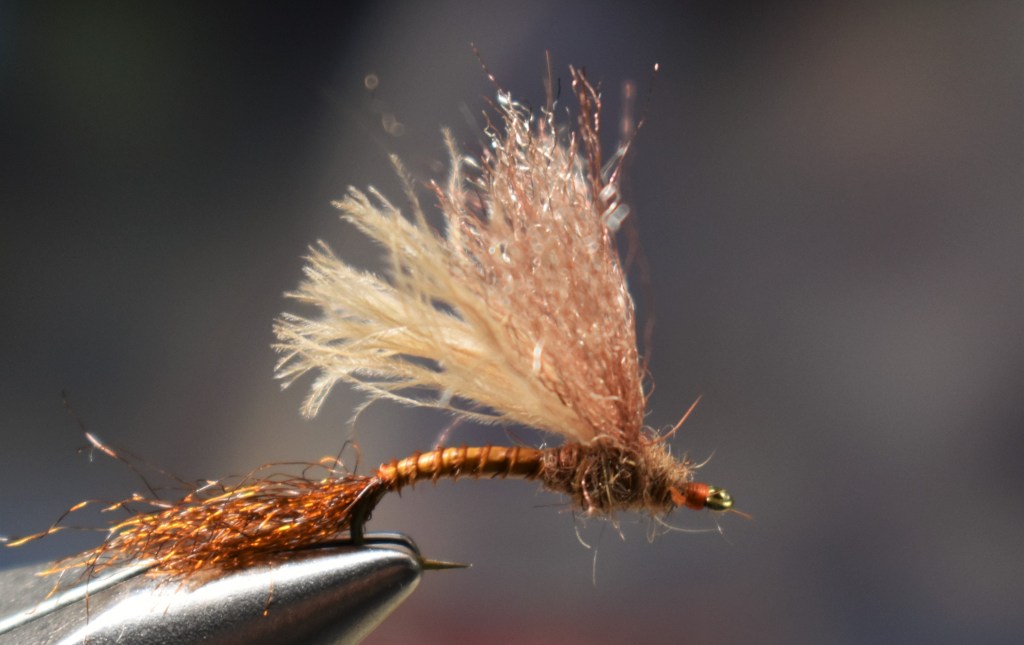
March Brown Emerger 2020

If you fish, you will have a run of “bad luck” though, if the truth be told, there is nothing truly bad about spending time on a trout river. I had a rather long week, one in which it seemed that wherever I wandered, I found no hatching flies and no rising trout. That is “bad luck” to a dry fly man, for we wait less than patiently for May, once the final hatches of October have brought our season to a close. May is expected to be the perfect month, so when one strings together a number of fishless days, those oh so precious May days, it can be perceived as the end of the world.

My salvation was of course a fly; not a completely new fly, but an improvement on an old standby. I had a report from a reliable source that good numbers of March Browns were on the water Monday afternoon on the Delaware. Fly shops you see had been reporting them on “all rivers” during that past week, in the optimistic way that fly shops do: some guy sees a big bug of some sort fluttering out there by itself and voila! The March Browns are hatching!

I have been broadening my use of Enrico Puglisi’s Trigger Point Fibers during the past couple of years, and I have found some merit in combining them with CDC on some of my favorite patterns. For years I have sandwiched light and dark colors of CDC feathers to replicate the darkly veined and blotched wings of some of our largest spring mayflies. Since the Trigger Point fibers incorporate both light and dark fibers in their color mixes, it was a natural thought progression to take advantage of that while reducing the bushiness of some of my multi-layer CDC wings. Hence, the improved version of my March Brown Emerger.

I had no foot access to the portion of the river where the heavier concentration of mayflies was showing, so I got as close as I could hoping for the typical upstream progression of many of our hatches. The problem with public river access is that it is, well, public. I waded out into a productive riffle with three trout rising irregularly as they picked off a sparse emergence of March Browns. I heard the small army of kayakers before I saw them. They piled into the river hollering as the young are wont to do, and my pent up frustration from a week of bugless fishing caused me to rush things, trying to catch all three trout before the inevitable advance of the plastic fleet.

I missed one of those fish twice as I kept taking my eye off my fly to look at the progress of the boaters bearing down upon me. On the third try he rolled up and, I thought, ate the fly solidly, and was off in a spirited run downstream into my backing. He wasn’t coming back up so I followed. When I reached him, I was dismayed to find my big fly in his side. He had rolled on it, refused it, and I had foul hooked him.

I removed the hook as gently as I could, and the indignant brown wasted no time in streaking back to deeper water. I started walking back to my original casting position rather dejectedly, and then the fleet was upon me.

I guess they tried to avoid disturbing me by going behind, but plastic kayaks don’t float on wet rocks. It is truly amazing just how much noise half a dozen people can make bouncing plastic hulls off of rock after rock, all the while splashing and stumbling. They tried, but just didn’t know any better, spoiling their own fun and mine by their good natured effort.

It took a couple of hours before another trout rose within 100 feet of that location. I scanned the water up and down river, and there was nothing encouraging. Every once in awhile a March Brown would pop up and bob along unmolested, and here and there a caddis would dance past.

Eventually one of those original fish began to sip or pop at, I thought, one of the caddisflies. Not feeding, just taking a bug now and then, every five to ten minutes. The fish was moving as Delaware trout like to do, so I couldn’t seem to put a cast over him, either that or he simply didn’t like any of the 4 or 5 patterns I offered. I was thinking about heading home for an early meal and had decided to dig out one more caddis pattern to try, when I heard the thunk of a solid rise close at hand. Looking up, I saw a couple of March Browns were hatching again, so I tied on the improved emerger.

It took five minutes for the thunker to rise again so I could spot him; a good fish. Two casts was enough, as that heavy thunk intercepted my fly and the game was on. You’ve gotta love a solid Delaware River trout in fast water. They come to play and they give it their all. Nineteen inches in the net, a beautifully colored brownie with deep bronze flanks peppered with black and red spots. Monkey, kindly remove yourself from my back!

There were no others, at least not until I started wading upstream and spotted a splash halfway back toward the landing. I waded out and gave him a try, but the sparse flurry of bugs has dissipated and he wasn’t coming up again. Time to grill the sausage and cook the pasta until evening.

I drove to several places after dinner. The crowds at some of them were ridiculous. I miss the old days when fly fishers would drive by an access that already had its complement of two cars. Now you see a dozen, sometimes two crammed in end to end, and all these guys playing line up in the river.

On my last try I found a pool that was empty and pulled off to the side of the road. I knew the river had hit 68 degrees on that hot, still afternoon, but I knew that the deeper half of this particular pool had been in shade for the past couple of hours and was well oxygenated. Still, there wasn’t much activity until nearly dark.

The first riser turned out to be a very well energized 9″ stockie, a NYS issue regulation brown trout, released quickly and none the worse for wear. It had to get a little darker before a couple of better rises began to appear. I tied on a size 16 Grannom X Caddis and took a very nicely colored eighteen inch brown who was even more energized than the little guy. The action passed quickly, as there simply weren’t a lot of bugs on the water. One more good rise, one quick cast and one heavy but brief hookup. That fish literally ripped himself right off the hook! A good one, though I’ll never know how good.

I tied some more March Brown Emergers this morning. Right now I am debating whether I should chance floating the big river with a 5 to 10 mph SSE wind.

A Peaceful Evening

Thoughts on a season just begun


Sixty-four years completed, and a season just begun. The calendar hints that this should be the peak, the great finale to spring, but in this strange Catskill spring it is only the beginning.

I have enjoyed some fishing, yes, some satisfaction and a little heartbreak, just the things that make angling a passion; but I have missed so much more. The company of friends adds much to the life of an angler, and all my fishing has been solitary by necessity this year.

I miss the visits with my friend Dennis, and the joy of sharing his knowledge and enthusiasm for the history of fly fishing, the bamboo rod, and the legacy of the Catskills. By now there should have been at least a couple of those afternoons in his rod shop, the ones where talking a bit lasts half the day, filled with intense interest, stories and laughter. We managed one breakfast last winter before the world turned upside down. It was just enough to make me miss our visits even more.

My best friend Mike finally retired as the curtain fell upon 2019. I looked forward to his visits, more frequent, and freed from the stress of schedules and responsibilities. I saw us fishing together because the fishing was good and the hatches full, rather then because the days suited our vacation schedules or work commitments. I am missing long days on the water, jawing at one another, catching trout, and sipping late beers on the porch when the day is through and the tackle put away. We should be sitting at the bench each morning and talking about the new fly just fashioned that’s sure to make that day a success!

John and I have renewed a friendship forged decades ago in conversations in my fly shop, and evenings along the gentle Falling Spring. I hoped we would have floated the river a time or two by now and met along a reach of water to share an early hatch and laugh at the crazy weather. I am anxious to cast the new bamboo rod he built, one he just got to fish a bit himself. I watched him planning strips and gluing them into a blank last September, and I am certain the result is beautiful.

I have been after my friend Andy to join me for some fishing in the Catskills for several years now. This was the year he was sure to set aside some time. As a young doctor he has been caught in the thick of the madness, burdened not only by trying to help the sick, but to keep himself and his young family safe. My heart and my hope goes out to him! May we somehow yet string up our Granger rods along the wide Delaware.

There are those I have met only through correspondence, whose words led me to speak of fishing, of showing them my rivers, once the madness is behind us. It will soon be summer and we seem to be teetering upon the brink of another disaster, rather than sighing with relief at the passing of the threat.

I contemplate the questions of the season before me, and I hope that we will find peace and safety. I look toward the day I can reunite with my friends, and walk the banks of some favorite reach of bright water, when I may once again live the full measure of my angling life.

Memorial Day

What A Difference A Week Makes

What a difference indeed. A week ago the mountainsides were brown, save the evergreens, and a few days of actual warmth and sunshine have transformed the Catskills. I love that “new leaf green” we get only in the first full blush of springtime, at times nearly chartreuse in the sunshine!

It simply doesn’t seem like it can be Memorial Day Weekend. There have been far too few days that looked or felt like spring. It was gorgeous all week and, even now the sun is trying to burn through the cloud cover as I sit here and listen to the morning rain on the metal roof, but Memorial Day? No that is still far off. It must be!

Memorial Day is the peak of the season, the hatches having all built to a crescendo, and then…the Drakes! I admit it, I am a card carrying member of The Cult of The Green Drake; but this year I am at a loss.

Caught! Not fully emerged…

Last season Memorial day came and went, and there were no Drakes. Memory flashed to 2018’s sustained high water and the fear that the hatch might be lost for the season. I was mired in the work of entering retirement and finding a home here in the Catskills, and I never had the chance to come and try to find the hatch in 2018. The fear rose again in my throat in 2019 but for naught, as the hatch did come, a good one, though weeks late. What might transpire this year?

The Green Drake is an unusual mayfly, in that it takes two years to complete its growth from egg to emerging dun. The timing of hatches seems to be governed by the degree day theory, that it takes a certain number of days at a certain minimum water temperature for a mayfly nymph to progress through its various instars to reach maturity and hatch into a mayfly dun. If this theory is correct then, the conditions during the past two years will set the timing for this season’s hatch. What might the puzzle of these past two unsettled years reveal?

My expectation is that the Drakes will arrive late. Witness that the crescendo is not yet upon us. We seem to be mired in the May lull between the Hendricksons and the March Browns, without the caddisflies to rescue those addicted to the dry fly. It is indeed a very strange spring.

I first fished Hendricksons on the 19th of April, the day after a 2 1/2 inch snowfall, with the river high and warming barely to the mid-forties. In my experience, that amounts to “an early spring”; a normal spring bringing the hatch during the fourth week of April. But then the rivers stayed in the forties for 5 weeks. The shad fly caddis typically overlap the Hendricksons a bit, yet I have seen only token representatives of the species. Are we early or late? I wish I knew.

My vest carries more than its normal load for the season. There are still Hendricksons and a few quills, black caddis, March Browns, spinners and shad flies, various sulfurs and a Gray Fox or two, always olives, and yes, even drakes. I still feel unprepared, like I am missing something. Ah yes, that other caddis box, the ones with Grannoms and some other obscure caddis I encounter once in a while. I must find another pocket for that box!

A day to relax, to avoid the crowded rivers and tie a few flies, adjust those fly boxes and fill a transition box to stay ready for whatever oddities Mother Nature may send bobbing down the current. It is a fine thing to have such a day indeed.

Defeated by the wind

The Wide Delaware

I was really looking forward to the chance to float the upper Mainstem yesterday, so I pushed aside my initial concerns when the wind forecast was 10 to 15 mph from the E/SE. I reasoned that, with the river flowing predominantly north-south along my chosen course, the winds would be mainly crosswinds and manageable. The weather forecasting in our region has shown itself to be remarkably accurate, particularly when compared to that in Southcentral Pennsylvania which was absolutely the worst.

I was hoping for the calm morning to continue as I tied a handful of flies for the trip until, just before leaving I looked up to.see the treetops waving in my yard. Still committed, I dropped the boat in on the lower East Branch and set off downriver. The gusts came straight upstream into my face, and I was confounded that I had to row to make headway downstream. A wiser man would have acted upon his first thought right there, spun the boat around, and allowed that wind to help row back upstream. Me, I really wanted to go fishing.

As I pushed on out of the last pool on the East Branch and into the riffles, that thought came again, stronger this time, as I still had to row in the faster water to make downstream progress. When I got to the top of Junction Pool, I could see a wall of whitecapped waves about one third of the way down the pool, The wind wasn’t just gusting then, it was blowing full on straight up the river at something more than 25 mph. I rowed as hard as I could downstream and the boat kept backing upstream.

I must have spent an hour there, trying again when the wind slacked a bit, only to have it hit me in the face again and blow me back upstream. Four attempts, four failures. Finally I relented and started the arduous trip back upriver into the East Branch.

I rowed where I could make a little headway, and I got out and pulled the boat upstream through the two long sections of riffles. At last I reached the tail of the pool and took a short break before pulling the anchor and rowing hard up the west bank where some upstream boulders directed the main flow of the current out toward midriver. When I reached the boulder field I had to row across to the east bank against the main current, then turn and follow the bank back to the landing.

To say I was exhausted would be a gross understatement. I had passed exhaustion half way back up that mile of river, stumbling in the riffles as I towed the boat upstream. I had put out around 9:45 that morning, and I climbed out of the boat, beached at the same landing around a quarter till two.

Mother Nature smacked me in the mouth this day, but the good news is I didn’t have any chest pains or any other signs from my heart. Retirement and living in the Catskills to enjoy my outdoor lifestyle seems to be agreeing with me; but I guarantee you I will treat any sort of southerly wind forecast with a lot more trepidation in the future.

Today the drift boat is staying in the driveway. The wind forecast is S/SE at 5 to 10 mph, but it is going to be warm and sunny. I know that the sun warms up the air and makes wind in these mountains, and it was close to freezing in Hancock this morning, headed for the mid seventies. Besides, this old body needs a day off after yesterday’s trial.

I plan to take a walk along some smaller water, a favorite bamboo rod in my hand, and see if I can find a few forgotten mayflies and some willing trout.

The Dreaded May Lull

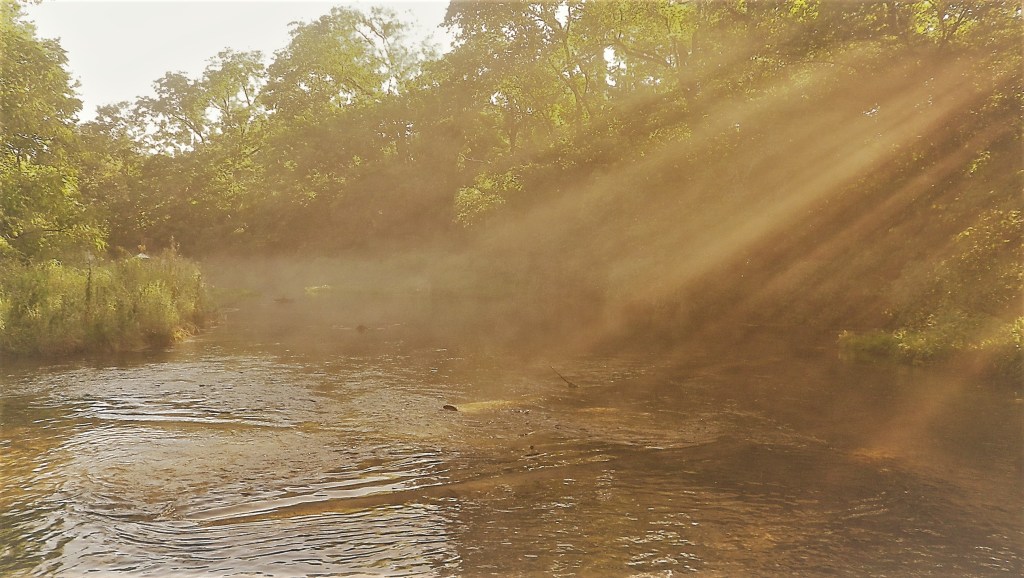
The Last Day with bugs, and rain, and wind…
and now… Spring! Sunshine and barren water

It seems that, now that spring has finally arrived, we have been dumped into the throes of the notorious May lull. The lull is that fateful period between the hatches: beautiful days with nothing happening.

In a good year the Shad caddis hatch comes off between the Hendricksons and the March Browns and makes for some very interesting fishing. It seems that this isn’t going to be one of those years. I have seen the caddis, fully half a dozen per day, so there is no mystery why there are no trout rising.

The other day I fished three different rivers and saw one trout rise, one time. Today I walked better than four miles, up and down a favorite reach of water, with nary a dimple in the surface. I took a look at another popular river and found it exceedingly popular, but most of the anglers I saw were standing around and staring, not actually fishing. Such is the fate of the dedicated dry fly man!

Tomorrow I plan to drop the boat into the mainstem Delaware for the first time this season, and I hope to find some of those missing caddisflies. I would be marvelous to finish the day with a fall of Hendrickson spinners, something I have not encountered. I fear that several hard frosts and snow showers took their toll upon them. I pray I am wrong, as I would like to see a better hatch next spring should Mother Nature favor us with better conditions.

For the moment all I can do is to give thanks that my prayers for sunshine have been answered. The lull will end, it always does, and there will be flies and rises to bring smiles to all our faces. It is simply a matter of when and where. I cast my vote for tomorrow on the Delaware.

Return of the Woodstock March Brown?

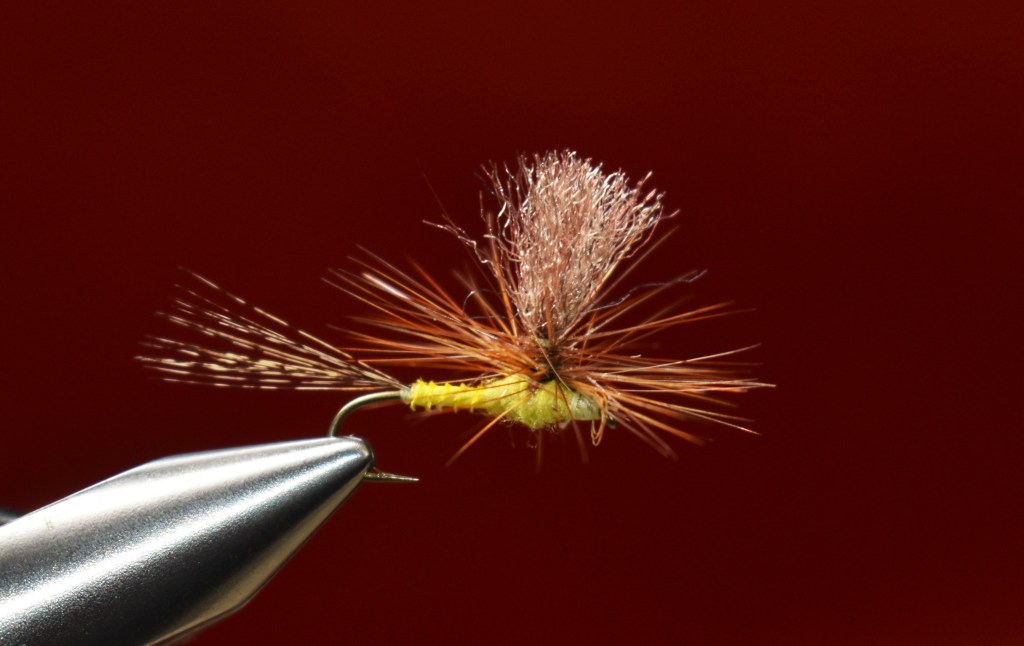
The Woodstock March “Brown” Parachute

Garish looking fly isn’t it? Probably the last thing I would ever tie to present to a wild brown trout, except…

I was hosting my best friend Mike Saylor last spring and we fished to a nice emergence of March Brown mayflies. Yes, we fished to them while the trout rose and sucked them down, but we got ourselves blanked. For twenty years of fishing in the Catskills, every March Brown I ever plucked off the surface, and every one that ever landed on my person had a nice, warm caramel brown colored abdomen and thorax with heavily blotched wings with a tan cast. Then the entomologists started confusing the bugs with their damned DNA testing.

The bug scientists renamed them a couple of times, then they started telling us we were all wrong, that there was no Gray Fox mayfly, that that pale dirty yellow mayfly was just a March Brown. This obviously confused the insects more than the experienced fly fishermen. We all know we need a completely different fly to match the Gary Fox hatch, but the poor bugs started showing up with the blotched, but paler March Brown wings and pale tannish yellow bodies.

So now we tie two March Browns: the traditional caramel colored fly and the tannish yellow version. Of course we still tie the Gray Fox too because it is a different looking mayfly regardless of the ento-boys and their DNA. Last season. I think the mayflies decided to throw them for a loop, sort of like insect revenge for all the confusion the scientists had caused them.

While we were getting blanked that day on the river, neither Mike nor I had the opportunity to get our hands on a bug. It was only after the hatch had petered out and the rises ceased that MIke was able to pick one up while wading out of the water. “Look at this” he said, “I got one”. He had a very strange expression on his face as he reached out and handed me a brilliant, psychedelic, safety yellow mayfly.

The bug was a size 10, had the required two banded tails and the characteristic wings with the dark blotching, but oh that color! I gave it the name as a joke since last summer was the 50th Anniversary of the Woodstock festival, held right here on the southern edge of the Catskills. I fully expected we would not see them in future seasons. I wasn’t so sure about the remainder of last season though.

At home, I dug out these bright yellow turkey biots and some dubbing that I had never used, and couldn’t recall why I ever bought. Perhaps I ordered them sight unseen trying to get biots for sulfurs. I tied a couple of the monstrosities pictured above, as well as a couple versions with a deer hair comparadun wing. I remember that I was laughing as I tied them.

A couple of days later I ventured back to that spot and encountered the March Brown hatch, and again the trout ignored the caramel and tannish yellow flies. I swallowed hard and tied on the garish yellow parachute and pitched it to the closest riser. I felt better when that “thing” floated over him and was ignored too, but I kept casting it a few more times.

I was shocked when that brown tipped up and sucked that garish yellow catastrophe in like it was his favorite entre. I raised the rod into a tight arc, the reel sputtered then screamed as he took of downstream, and suddenly I was into a serious fight with a big fish! When I got him tuckered out and slid him into shallow water a few minutes later, I slipped my net under 21 broad shouldered inches of gorgeous wild brown trout; no tie dye, no headband of flowers, no joint hanging out of his mouth, just that damned yellow fly stuck in his jaw.

If I was more comfortable believing that fish was a fluke then the 20″ brownie that smashed that parachute a few minutes later just shattered that comfort level. He wasn’t the last nice trout to eat one of those crazy flies last season either. They produced for the duration of the hatch.

The other day I stopped at that river and saw one or two big mayflies riding the surface. No fish were rising, and none did while I was there, but before I left I saw a big bug drift past, upside down on top of his crumpled wings, displaying a brilliant yellow abdomen with brown segmentation. Yes, I have tied a few new versions. You have to have a couple CDC duns and 100-Year Duns with brown ribbing right?

I have a couple of tie dye Jimi Hendrix tee shirts in a trunk upstairs, and the weather has finally started to warm up…

Spring Is Where (and When) You Find It

A More Stable Spring On The Neversink

Its Friday morning, May 15th, and it hasn’t snowed yet this week. The rivers can seem barren one minute and crowded the next. Northeast fly fishers seem to have no problems violating travel restrictions and the good common sense to stay separated, as I see license plates from all over the northeast just like I do every year.

I floated the West Branch yesterday, surprised at the lack of traffic on the upper river miles. There was only one other boat, and it stayed behind me, as I drifted down in search of bugs and rising trout. It wasn’t long before I attributed the solitude to the lack of insect activity and the glory of a southerly breeze.

Floating quickly became rowing with that south wind. The river’s flow was half what it was on my last trip, and the southerly breeze was sufficient to keep the boat sitting and spinning rather than drifting gently down the stream. I had hoped for caddis with the sunshine and the abundance of gentle riffles in that reach of river and I saw them, at least half a dozen of them.

I was sure that I would find some activity in the big Hale Eddy riffle when I dropped the anchor about a hundred yards below the chute. It was a gorgeous day, but it was proving to be bugless.

After a wait and a drop down to anchor in the bottom third of the riff, I found it hard to believe I wasn’t seeing more than the occasional single caddis fly. After more than a month of the fishing season passing with little change in water temperature it shouldn’t come as a surprise that the hatches are sluggish.

I was down in the Camp Riffle at West Branch Angler when I stopped for lunch. The ham sandwich was welcome, though I wished I had brought along a big Yeti full of coffee. The sunshine was resplendent as I sat there eating, and I was enjoying it, though I had been counting on the predicted afternoon cloud cover to combine with the warmth to produce better hatching and rising trout.

I was nearly through WBA’s miles of river when I finally saw a little sip ahead on the bank, and far enough ahead that I was able to act fast and anchor in time to make a cast. I started making short, easy casts, reaching upstream to let the fly drift in the slower current between the bank and a submerged rock. The trout kept sipping, right between the tip of that rock and the river bank. Then things got strange.

My cast had drifted by him when my fly simply disappeared without any rise ring at all. I pulled up and I was tight, there was plenty of weight there, and it started moving. I felt big head shakes and then he decided to make a trip to Hancock. One of those slow steady pulls that I couldn’t stop. I tightened the drag down three times. He kept going, line, backing, all of it. I pulled the anchor one handed and followed. When I got the backing and my line back I tried side pressure and we replayed that whole scenario again, including the single handed anchor pull and follow.

When I saw the fish at last, it wasn’t the 30 inch old leviathan I expected, it was perhaps a 20″ brown trout wrapped in the leader. The 5X tippet gave up before I could pull him in range of the net and unwrap him, so I hope he freed himself after the break. I still don’t know how he got wrapped up like that.

I fished quickly through a couple of spots, then anchored up in a wide pool to look for rises. It was prime time, and a few varied mayflies were showing on the surface in three sizes. I assumed they were Blue Quills, Invaria sulfurs and Hendricksons, since that is what I have been seeing recently, and before long trout began rising and yes, right on cue the wind began blowing harder and steadier.

I cast downstream to the first trout that showed in range and caught him, a feisty foot long brown trout, but the fish I was seeing were taking a bug or two and then not showing again. I kept looking for that nice, steady feeder down river, the fish I could set up on and work carefully, but he wasn’t out there. The activity was brief, maybe fifteen minutes of here and there rises, and then things slowed down and I moved along, still rowing.

The breeze remained much steadier, so I had to keep rowing to make progress downstream except in the riffles, and by four o’clock my arms, neck and shoulders were taking a beating. I always used to say that retirement and youth should be a package deal, and days like this one make it easy to see the wisdom in that. I’m not saying that I would trade the opportunity to be here, to be out on my favorite Catskill rivers day after day, but I would gladly give away my arthritis.

It was about this time that my unexpected solitude came to an abrupt end. Now instead of having to row straight down river, I had to zig zag back and forth across the river to pass behind waders and avoid other drift boats. They were everywhere!

The circus came to a finale when I took the left route around an island to avoid a boat and four waders in the right channel. When I got to the tight spot at the other end of the island, I was blocked in by no less than three anchored boats and half a dozen waders within casting range of the first boat. I did about all I could do; I dropped anchor.

I didn’t want to disrupt all of those guys, but I was tired and sore and I didn’t want to sit there on top of them either. I figured a little patience and courtesy was the best choice. The Red Gods agreed I guess, because a trout began to rise straight below me.

He ignored my little caddis, so I tied on a Hendrickson and tried again. The 16″ brownie took it greedily and put up a spirited fight until I managed to get him within reach of my long handled boat net. As I unhooked him, I saw the boat that had been anchored in the pinch point pull anchor and head downstream, while the waders moved back to the river bank behind them. A nice trout and a clear path: a simple reward for doing the right thing!

I rowed down through the rest of the gauntlet, zig zagging to pass behind more waders and boats, eager to get close to the landing and call for Cathy to bring the trailer. In one unexpected spot I came upon a small pod of trout rising steadily. It was so unexpected I had nearly passed them on the wrong side of the channel when they showed. I dropped the anchor, leaving myself with a longer cast across a windy chute to three trout feeding happily in a little belt of slow water, not a high success situation.

One would occasionally stray toward my side of that belt, and with a moment of calm I put my Hendrickson right into his lane. He wasn’t the small fish I expected, and gave me the best battle of the day. Time after time he made long runs and fought furiously every time I regained that line and got him near the boat. When I finally got him into that net, I was surprised at his size. I’d give him 18 inches, no more, but he was heavy bodied, shoulders you know; a very worthwhile adversary.

Of course this strange day had to have one more little twist. I was anchored one last time, just before I would turn the corner into the last big wide open flat I had to row across to get to the landing. I had seen one rise against the bank, but it wasn’t repeated after I stopped. I stretched my aching muscles and dug out my cell phone, making the call home to ask Cathy to come and pick me up.

After the call, I pulled anchor and started around that little corner into the big, windy flat. On my right, there were rings everywhere in a little strip of water that was more protected from the wind. I laughed at the pain in my biceps as I rowed right past them. Little fish I told myself, little rings and too many of them too close together. But you never know…

Moments

Moments outdoors capture our memories

The most reticent spring in recent memory continues, and as often happens, our lives outdoors are defined in moments.

After a couple of days of hard, cold, snowy weather, Sunday morning’s sunrise offered a glimpse of beauty which belied the frost and the winds, already building. The day seemed lost from the fisherman’s perspective, but sometimes there is a moment waiting to be enjoyed.

I had no plan to venture out, figuring I would busy myself with a continuation of Saturday’s fly tying. By mid afternoon I noticed that my flag wasn’t waving perpendicular to it’s pole anymore and I stepped out on the porch for a breath of fresh air. The sun felt comfortable, and the lessened breeze didn’t have the bite expected for a day in the fifties. My thoughts ran immediately to mayfly spinners.

After a pair of nights below freezing, I feared that many of the Hendrickson imagos had failed to survive, but I couldn’t resist that 64 degree sunshine and the freshened air. I dipped a short bowl of soup from the still simmering crockpot, then changed into my fishing clothes and waders.

I walked along the Delaware, pleased that the breeze was soft, with only an occasional gust. Looking down I saw a dark winged mayfly sitting on the surface and plucked it with my fingertips: a Hendrickson, tan with a yellowish olive cast and those dark wings, in the range of a size 14. When I stopped to rig up, I knotted a sparkle dun to my tippet, and settled into a watching mode.

A few duns drifted by sporadically, though if there had been a significant hatch it had passed before my coming, so the first splash took me by surprise. The fish had been somewhere above me and, looking downstream, I hadn’t seen it. The next one though was closer, and right in front of me, so I raised the old Granger Special and made a short cast in his direction.

Delaware rainbows seem to have an urgency about them, a restlessness that keeps them on the move. I was sure that fly was well past the spot where I had seen the rise, and was raising the rod to pick it up when the trout exploded on the fly. He was a wild Delaware bow, thick through the shoulders and gleaming silver, as he cavorted about in front of me. He put a good bend in that 9′ bamboo rod and finally came grudgingly to my net.

A sixteen inch Delaware rainbow is the typical “nice” fish of his breed. They grow larger, but they are not so long lived that one encounters many extreme specimens. There was one long ago, on a quiet June morning down river that came to my swinging Leadwing Coachman. He had nearly ripped the rod from my hand with unexpected ferocity, and vaulted high out of the water flinging white spray everywhere. Long, thick, dark and red sided he was a trout to be measured in pounds rather than inches.

Alas, after a breathtaking run he vaulted high again and snapped the 4X tippet in midair! Back in the day I used to float the rivers with legendary guide Pat Schuler each spring, and I used to joke with him that all I needed was a 25 inch rainbow. He would always tell me they simply didn’t grow that big, guiding me to many between 20 and 22 inches. I guess that restlessness simply wears them out before too many years have passed; though that morning wet fly bow would have easily passed that mark!

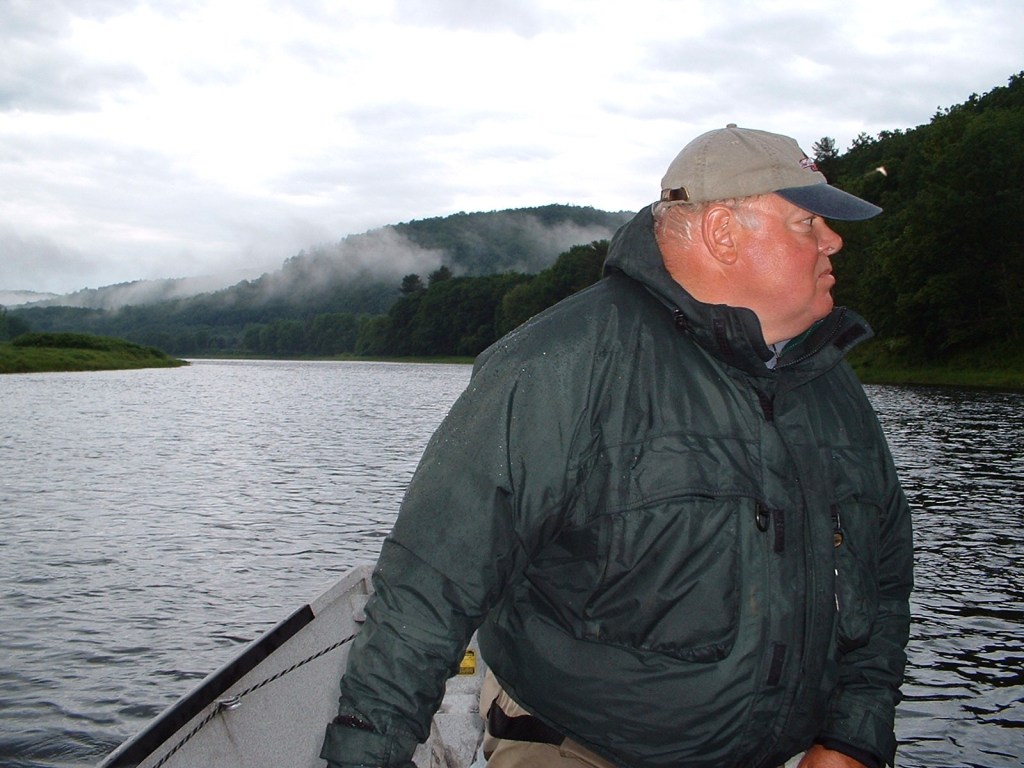
Patrick Schuler tirelessly scanning the Delaware for a rise

The Hendrickson duns petered out after a while so I tied on a small caddis fly. It seemed that each time I looked upstream, the occasional splash would come from below, then above whenever I turned to watch above. Before long though I got a bead on one of those roving risers and put the caddisfly in line for an interception.

That second bow was nearly a twin to the first, and it was good once again to feel his life force throbbing through that arch of cane, split and glued nearly seven decades ago.

The hoped for spinners never showed, the wind rising again as the sun dipped behind the ridge in Pennsylvania. I thanked the river for sharing its energy with me, for a moment plucked from this contrary season, another moment to be kept close.

Thomas & Thomas Generations of Classic Fly Rods

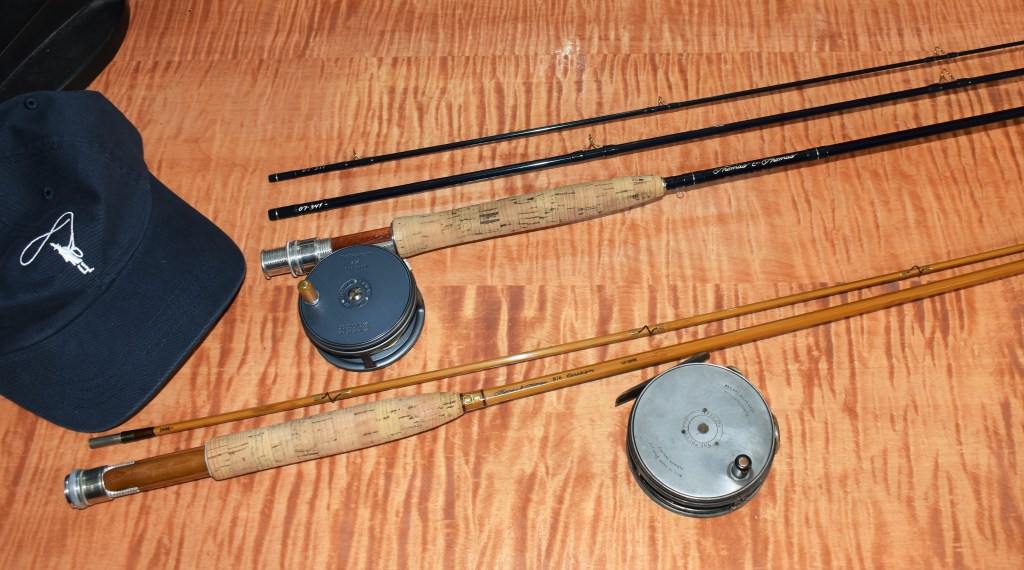
The Paradigm in graphite Circa 2000, and split bamboo Circa 1972

The Thomas & Thomas company celebrated their 50th anniversary in 2019, celebrating five decades of producing classic fly rods for discriminating anglers. I have been a fan for many years.

From their beginnings as two professors in College Park, Maryland, Thomas Dorsey and the late Thomas Maxwell demonstrated an uncanny talent for crafting bamboo rods with exquisite actions, capable of presenting a dry fly to the most particular trout. As graphite began to catch some wind as the new magic material in fly rods, T&T developed rods crafted with the synthetic materials with the same commitment to perfection, while steadfastly maintaining their leadership in bamboo.

My first Thomas & Thomas fly rod was the 9′ four weight Paradigm pictured at the top of the photo. I bought it with an eye toward fishing the challenging crystal clear waters of Massachusetts’ Deerfield River, finding the Paradigm ideally suited to the small flies and long casts required on that hazardously difficult to wade tailwater. The Deerfield had been my grandfather’s river, and I felt the connection there each time I laid eyes upon it. Sadly the flow regime changed drastically after I acquired my rod, making it nearly impossible to plan a trip with any certainty of finding wadable flows. I have not fished the Deerfield since.

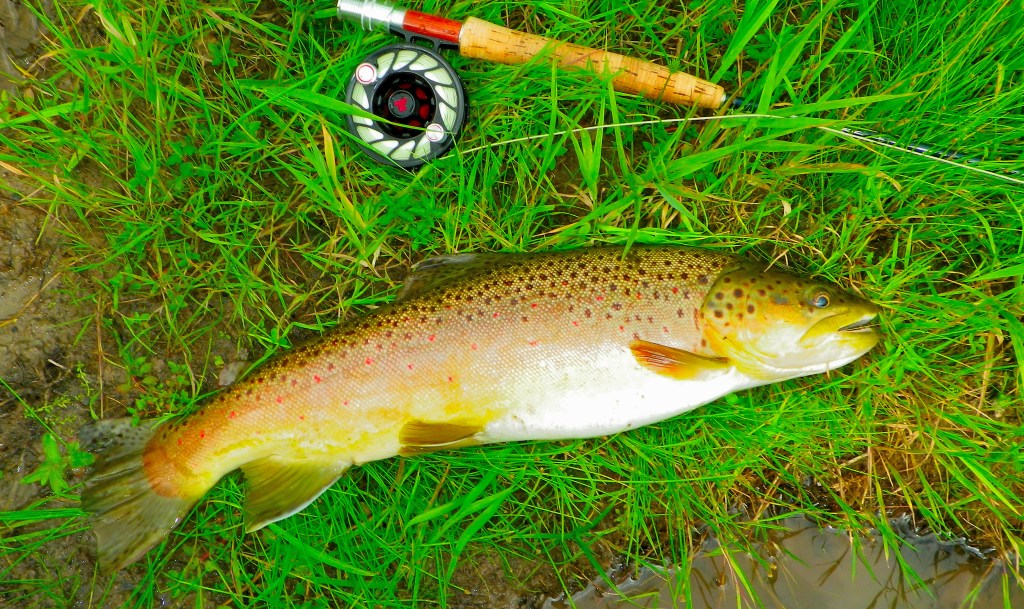
The Paradigm has performed for me many times on our Catskill rivers, and saw considerable action last summer when my carpal tunnel reared its ugly head again. The light weight of the graphite rod and its smooth, classic action was gentle on my wrist and my presentation, and the fine old rod accounted for many trophies including a gorgeous, heavy bodied brown in excess of 24 inches.

My Classic T&T Paradigm with the summer’s best brownie!

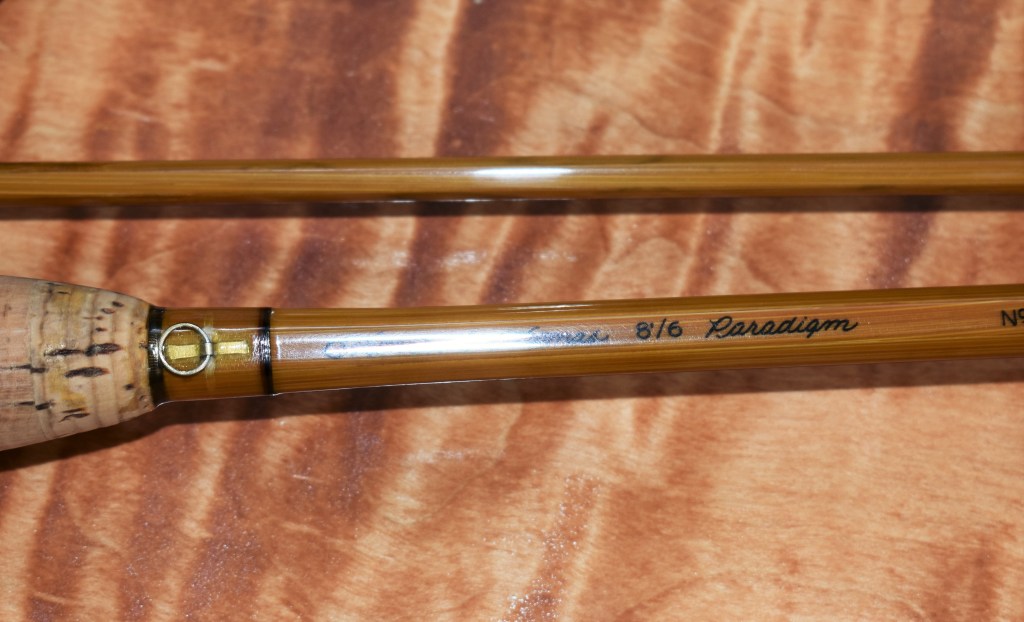
The older gentleman pictured was the fulfilment of decades of dreaming. This beautiful early 1970’s vintage 8′ 2/2 Paradigm was made for a DT6 line which it paints on the water with my fly of choice. We opened my Catskill season together a few years ago with a pair of wild, recalcitrant 20 inch Beaverkill River brown trout I coaxed to the surface with a classic Hendrickson dry fly, the only trout to rise for me that day. The Hardy Perfect sang as sweetly as she did in 1929 when she was a newborn!

If you have the chance to see Tin Boat Productions’ wonderful film “Chasing The Taper” you will appreciate the influence the two Toms have had on bamboo rod making. Of the 6 master rodmakers profiled, some of the best in the world, half can trace their roots to Thomas & Thomas. Mark Aroner began his career as a rodmaker and apprentice under the guidance of Maxwell and Dorsey. The venerable Bob Taylor spent five years in Massachusetts with T&T after the closing of the H.L. Leonard Rod Company, before starting his own R.D. Taylor Rod Company. Virginia maker Rick Robbins warmly related the tale of his 25 year friendship with Tom Maxwell, who mentored him in roadmaking.

The signature swelled butt and the beautiful script of Tom Maxwell adorn my vintage Paradigm

Several years ago my friend Wyatt Dietrich offered me the opportunity to fish a special early Thomas & Thomas rod with a Chambersburg history. The 6 1/2′ rod for a 5 weight line was inscribed with the name of a lady fly fisher, and the date of ’72. We guessed the angler may have been a Cumberland Valley resident but the mystery was never solved.

I fished the rod on the perfect water, Western Maryland’s Big Hunting Creek, finding it ideally suited to this small, steep mountain stream. A tight budget forced me to decline Wyatt’s kind offer to purchase the rod, and I have ever regretted missing the chance to own it!

We both wondered as to the location the rod was made. We knew that the two Toms had started in College Park in 1969, then moved their rod making to Chambersburg, Pennsylvania the following year. They crafted their lovely bamboo rods there until buying out rodmaker Sewell Dunton’s Massachusetts factory and moving north in 1973. We talked to all of the native Chambersburg anglers and people from the Pennsylvania Fly Fishing Museum, following every lead with no results.

Finally, I corresponded with Thomas Dorsey. Tom related that he had rented a house on a creek somewhere north of town, and that was where they located their rod shop for those three years. Sadly the only record of an address remaining was a long defunct rural route number. I often wondered if those early Thomas & Thomas rods were made somewhere along the Conococheague Creek, within walking distance of the Chambersburg home I occupied for 23 years. It seems that location will remain a mystery.

I will always wonder about the origin of my own classic Paradigm. The company no longer has all of the oldest records, but they answered my inquiry by telling me that my rod is believed to date from the early 1970’s, so it very well may have been crafted in Chambersburg. My curiosity remains.

Each time I take the rod from its tube and affix the reel I think of the legacy of Thomas & Thomas, and I am thankful to be able to so thoroughly enjoy the fruits of their passion for fly fishing perfection!