
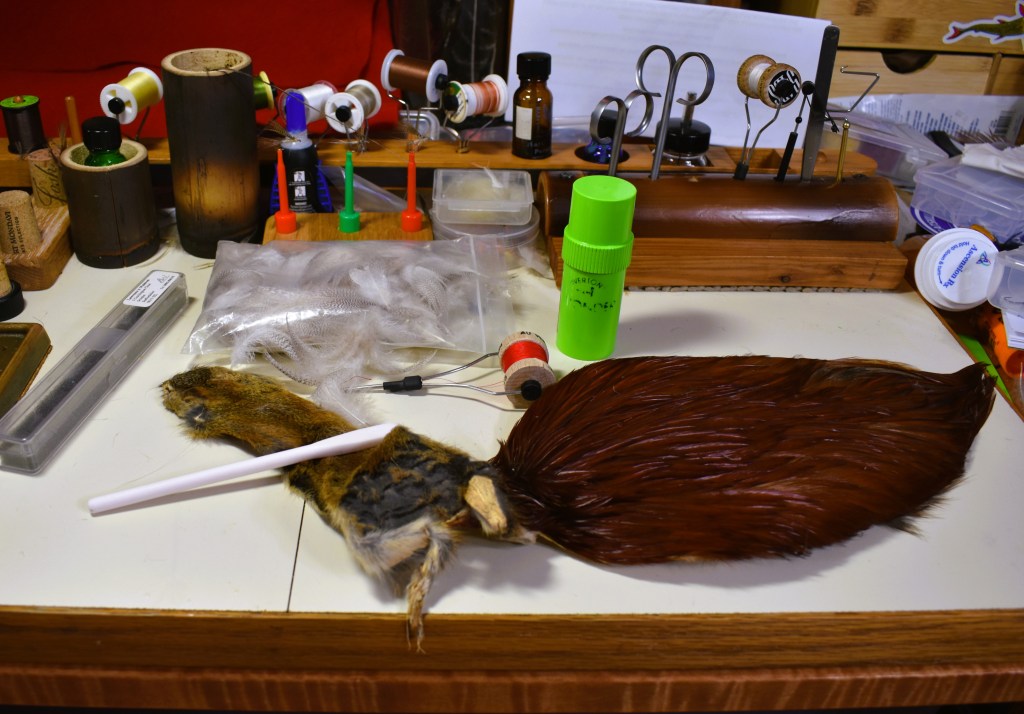
As the Catskill Fly Tyers Guild worked their magic in salute to Rueben Cross’ Catskill legacy through tying his signature fly the Cross Special, talk eventually got around to continuing our search through history for next week’s pattern. John suggested one of the more interesting and obscure dry flies, the Bradley Special.
Though I instantly recognized the name, it took a bit of searching through my library, to find some details in the late Eric Leiser’s wonderful book “The Dettes-A Catskill Legend”. The pattern is found in the notes and samples from the Dette fly shop, one of the custom patterns they tied to order for one William Bradley. The design seems to have originated with Bradley and angler William Chandler. It seems Mr. Bradley tried the patience of the Dettes with requests for many variations he liked for changing water conditions and times of the season, but the standard pattern is the fly that John had discussed with our group last night.
Of course, I grabbed a Red Squirrel skin and my Rhode Island Red cape and tied a pair. The Dette notes called for the fur from the back of the Red Squirrel spun between two strands of red silk which can be made easily with a dubbing loop and spinner. The result is quite full in the body, though it can be thinned out with care, clipping individual guard hairs and inserting them sparingly in the loop. An alternative, proffered by Tom Mason is a touch dubbing method, which produces a lovely sparse body and reveals plenty of red silk.
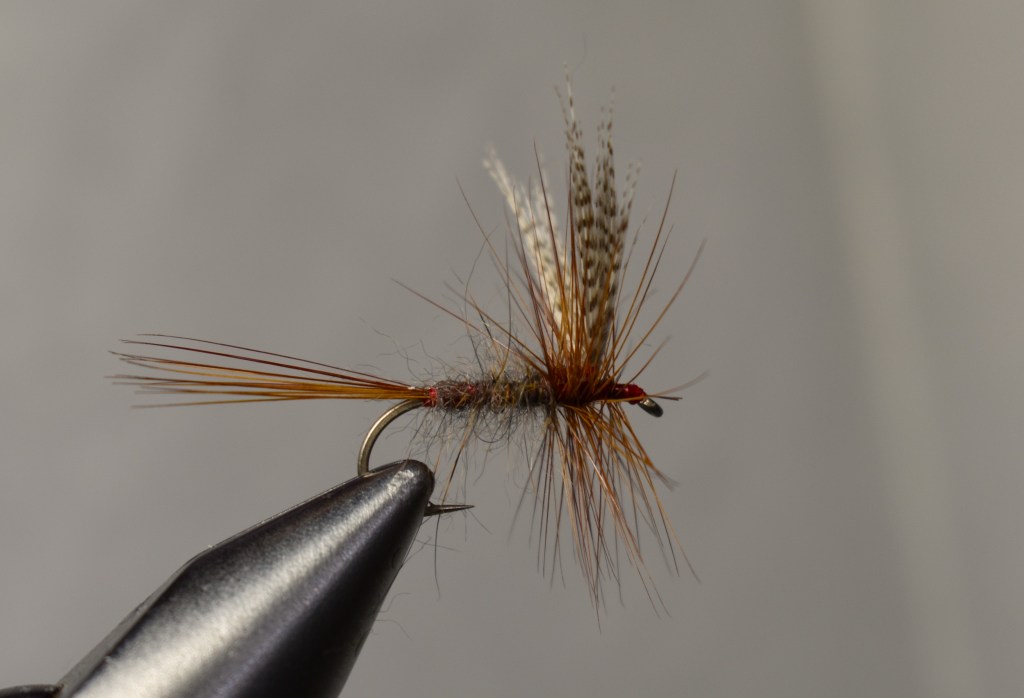
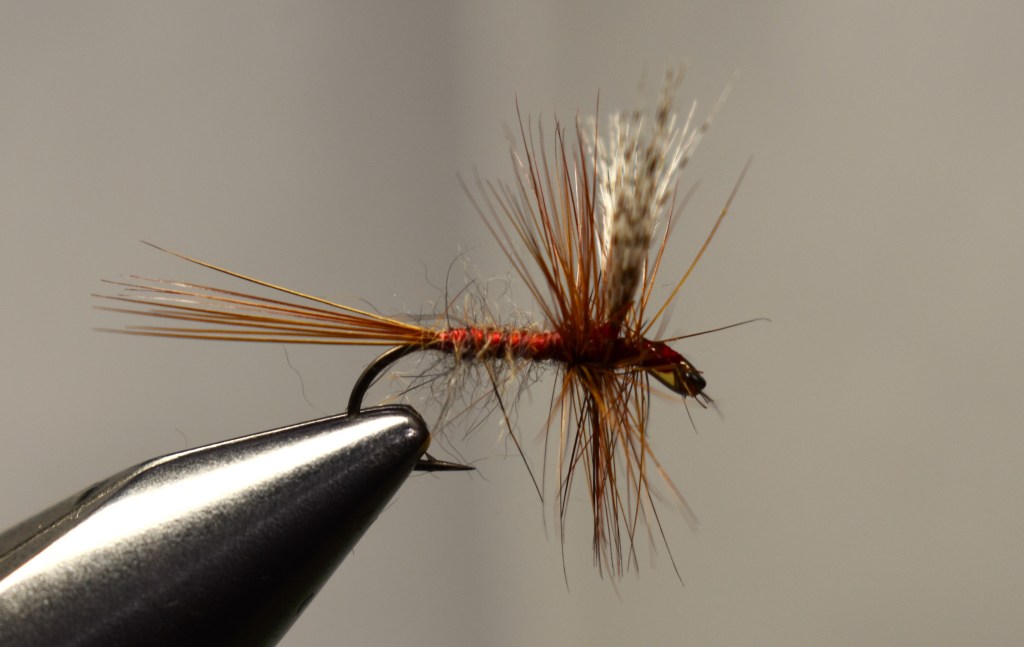
This recent concentration on older Catskill patterns, flies which have not retained their original popularity, piqued my interest and had me reading about and tying another old original that very much suits my style. Theodore Gordon had his name associated with another fly besides his venerable Quill Gordon. The fly he originally called the Golden Brown Spinner became popularly known as The Gordon, building a reputation among both trout and Atlantic salmon fishermen.
Mike Valla’s wonderful “The Founding Flies”, published a decade ago, includes a photo of Theodore Gordon’s tie. His Golden Brown Spinner reveals the canted single wing of wood duck flank that inspired my 100-Year Dun dry flies, prompting me to tie a few in that style this morning.
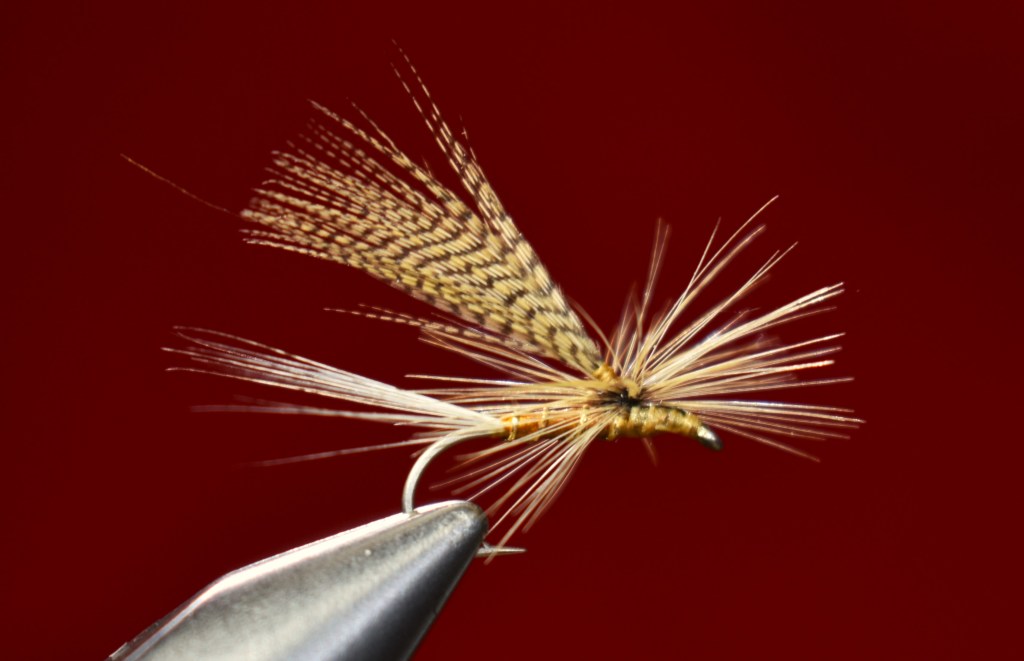
I take a little historical tour of flies each winter as I work my way through five or six months without the bliss of casting the dry fly on my Catskill rivers. Last year, I studied two flies from the eastern slopes of the Catskills. Ray Smith was a well known angler and guide on the Esopus Creek, and a prolific fly tyer. His Red Fox became his signature pattern.
Edward Ringwood Hewitt remains a legendary figure in fly fishing as an angler, author, fly designer and inventor, as well as for his remarkable achievements in stream habitat improvements and management. The Beaver Kill Red Fox was one of Hewitt’s secret flies that gained a strong reputation on the Beaver Kill after a lost fly was given to Harry Darbee for a sample. Harry and Walt Dette “tied them by the gross” for eager Beaver Kill anglers.
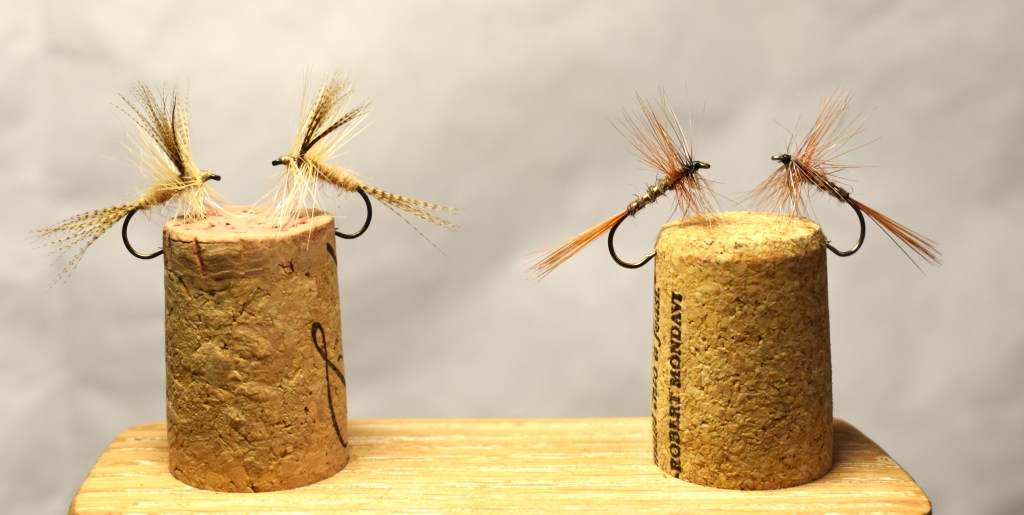
I enjoy studying the history of this magical region I am fortunate to call home, and I enjoy tying the flies that helped create that magic for countless anglers. One advantage worth having in fishing our popular trout rivers is the ability to offer the fish something unique, a fly they have not seen day after day. Tying a few old classics in a couple of different sizes will give you that something different!
 Bright Waters Catskill
Mark , good morning. I’m heading to my bench as soon as I finish clearing the snow. I’m going to type up some BRF thanks to your inspiration!
LikeLike
Historically it was fished in spring a lot, though I think it could be a good fly when Isonychia are about.
LikeLike