
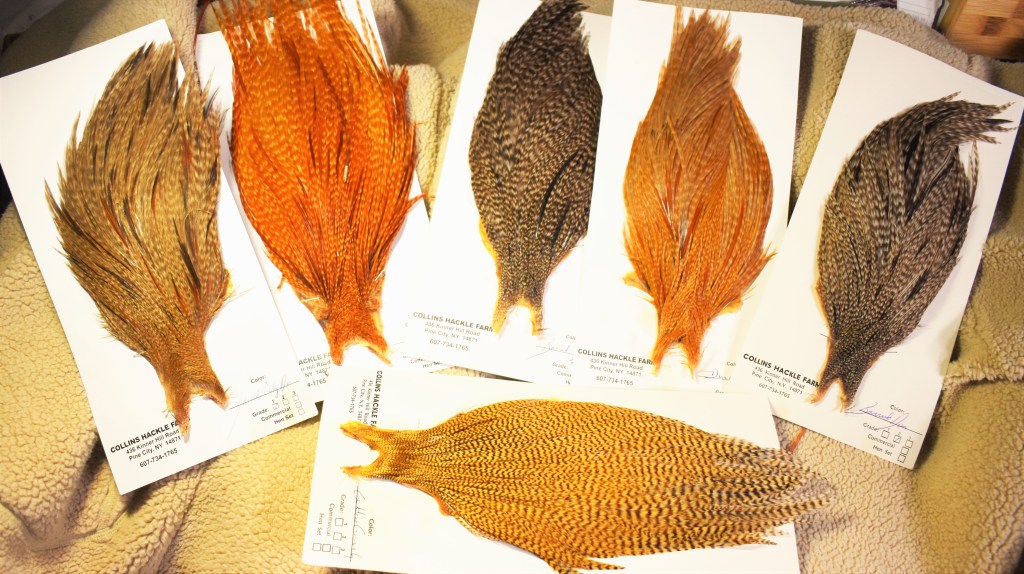
I missed last week’s Zoom gathering of the Catskill Fly Tyers Guild, not by intent certainly, but as a result of battling the end of a nasty head cold and the onslaught of the bronchitis that used to plague me during my working years. To avoid another misstep due to weariness, I have been playing with some hackles and dubbing this morning, preparing for tomorrow eveningof .
Though our tying sessions are intended to be casual, our President likes to have some attention brought to a classic Catskill fly to begin these meetings and looks to someone to volunteer to pick a fly and demonstrate it. This opening interlude does help to keep our group aware of our mission and appreciation of the history of Catskill fly tying, and it does help make members aware of some of the lesser known patterns. I am a fan of this week’s fly myself, none other than the late John Atherton’s No. 4 dry fly.
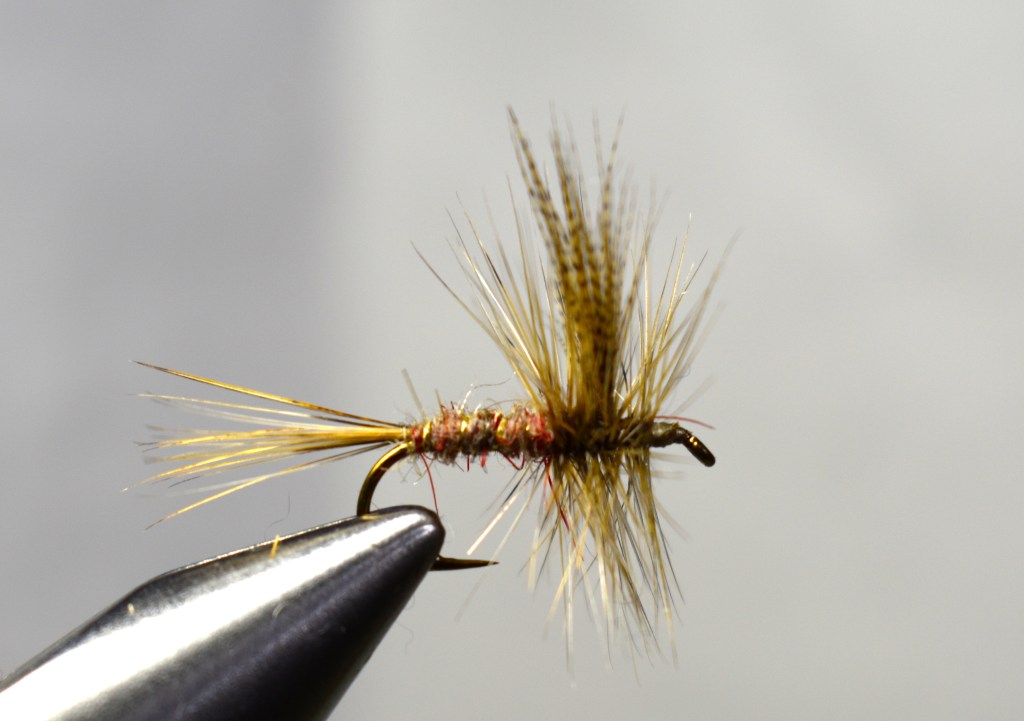
Some may think of the No. 4 as the artist/angler’s Hendrickson, for his blend of natural and dyed red seal fur, muskrat and hare’s ear was mixed to produce a “grayed, mixed pink” coloration. In truth, he intended it to be fished when a variety of pinkish, reddish hued flies were on the water, including some of the spinners. My initial blend from a winter or two ago proved to be darker than I believe Atherton intended, so this morning’s first task was to lighten it up a bit. I have a piece of beaver pelt dyed pink, so I cut a little in various shades, adding that and a bit more silvery gray muskrat underfur. It looks better to me now, more like the color his words conveyed, so I will see how the trout like it.
Jack Atheron’s ideas of color in nature fit with my own concepts, borne of decades of observation. Natural things are not cast in plain solid colors, there are mixed shades of blended and primary colors and iridescence mingled in Nature’s hues. I unknowingly agreed with Atherton’s impressionistic theories of fly color long before I secured a copy of his only angling book; “The Fly and the Fish”. Becoming well acquainted with his ideas in recent years, I now count him as an influence in my own tying and fly design.
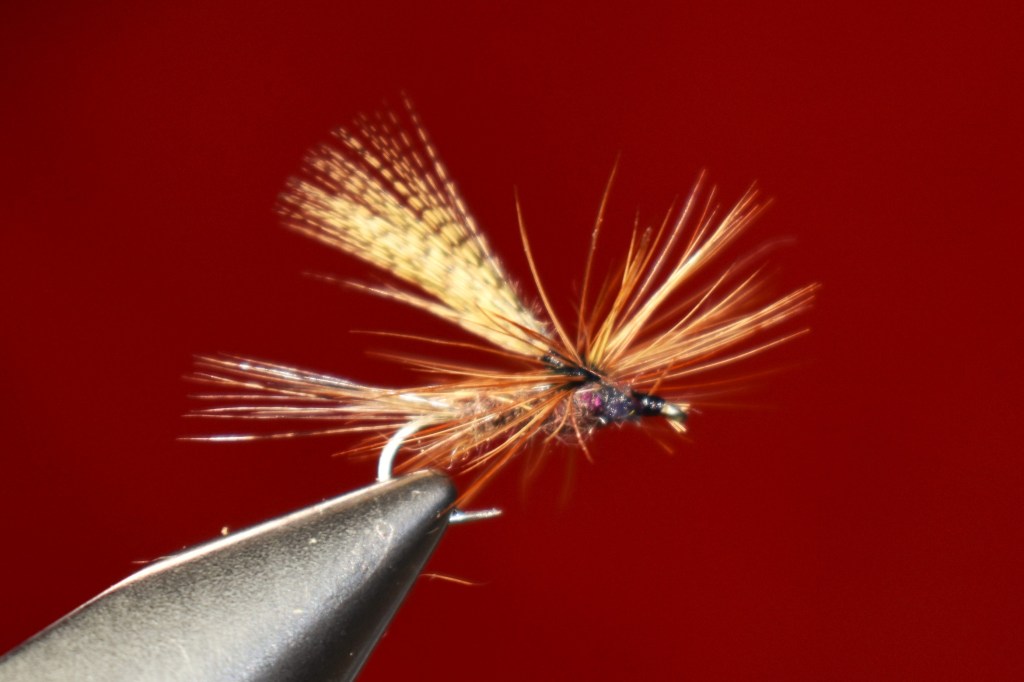
I tied an initial pair of Number Fours in my 100-Year Dun style during my preparation for tomorrow evening’s meeting. I experimented with a mix of Cree and barred medium dun hackles on the first fly, then turned back to Atherton’s recipe, using Cree and medium dun for the second. This style of tie is less suited to the use of two individual hackles than a Catskill fly, so I expect that my final version will be tied with a beautifully barred Dun Cree Collins cape. I will see how I like that choice when I tie some during the Zoom meeting.
I began re-reading “The Fly and the Fish” yesterday, eager to refresh my memory. I’m about halfway through, just coming to the patterns and his discussions concerning their creation and use. Winter is my reading season after all.
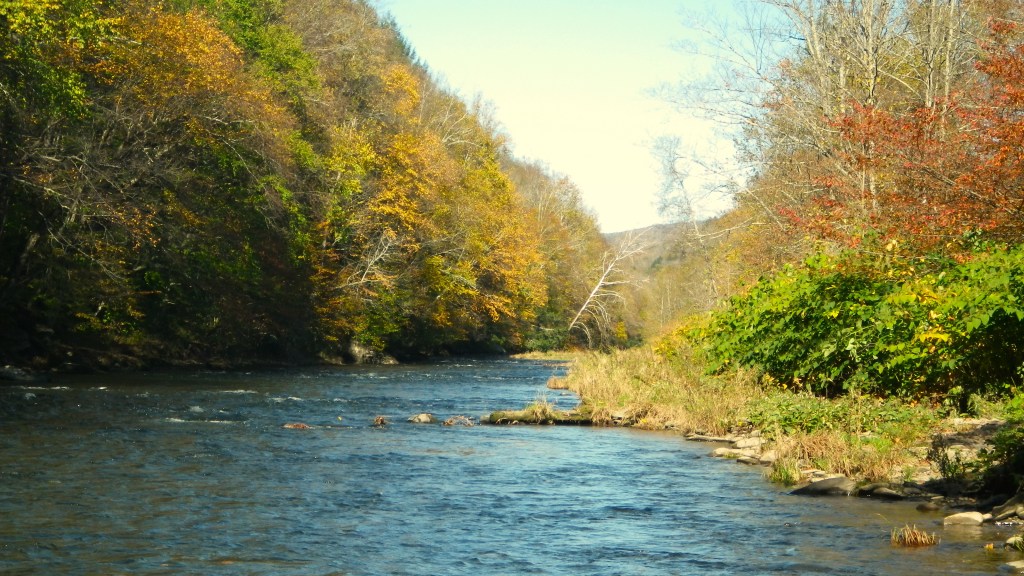
 Bright Waters Catskill
Good morning Mark, just wanted to send my wishes for a full recovery from your cold. Keep tying and writing! Mike Canonico
LikeLike