

It seemed a workable task when the idea was first floated a year ago at the 30th Catskill Rodmakers Gathering: build a rod with this new Lo o bamboo.
I had just enjoyed my new friend Peer’s presentation on the properties and merits of this new material he has studied, and championed, and JA, my best friend in these Catskills, had mentioned some winter projects under his accepted role as steward of the Catskill Fly Fishing Center and Museum’s Catskill Rodmakers Workshop. The ability to build with the Lo o without the endless working with nodes, the weak spot within a culm of bamboo, seemed to mitigate the challenges of age, arthritis and carpal tunnel syndrome… ah the magic of late summer in the Catskills!
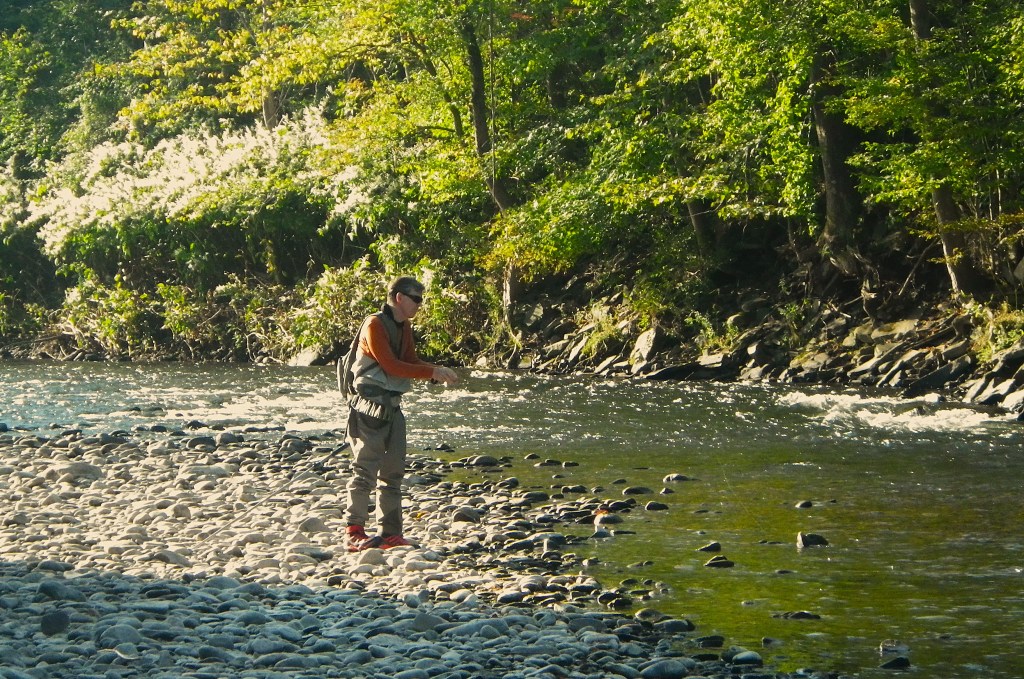
The internodes of Lo o were a gift from Dr. Doering-Arges, whose company I enjoyed fishing our drought ravaged Catskill rivers during his stay in Roscoe last September. JA and I had talked, and it was agreed that he would shepherd me through the processes of splitting, beveling, planing, glueing, binding, heat treating, sanding, ferruling and assembling my first hand-made bamboo fly rod. It all seemed quite perfect in the cool morning light of September.
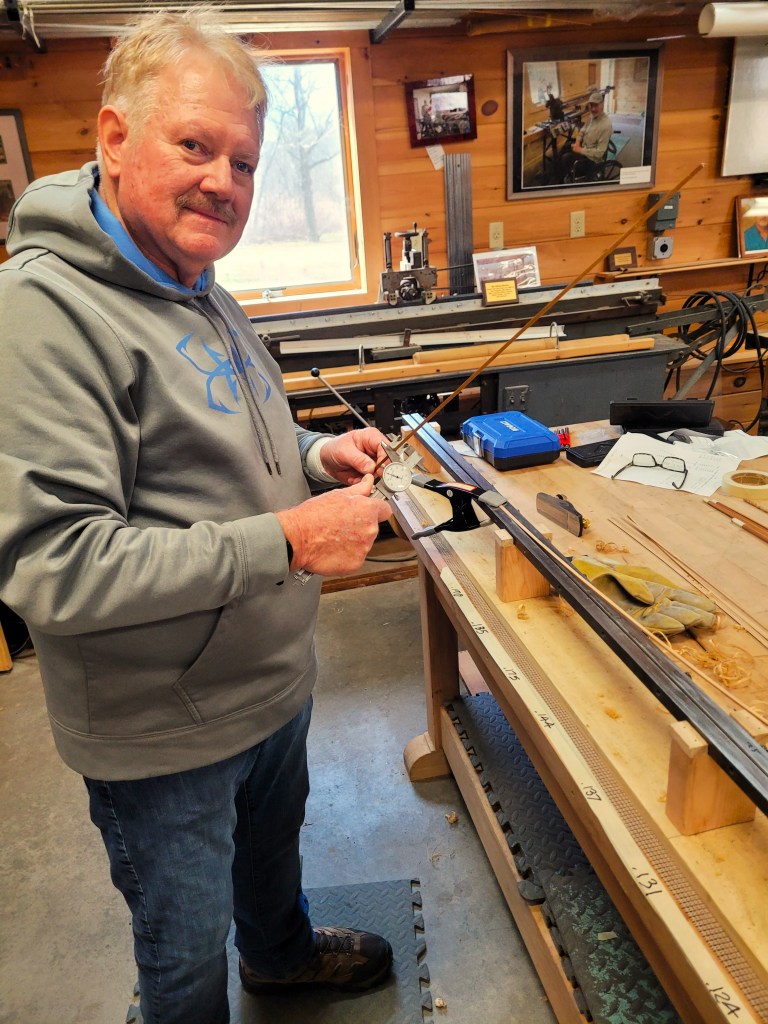
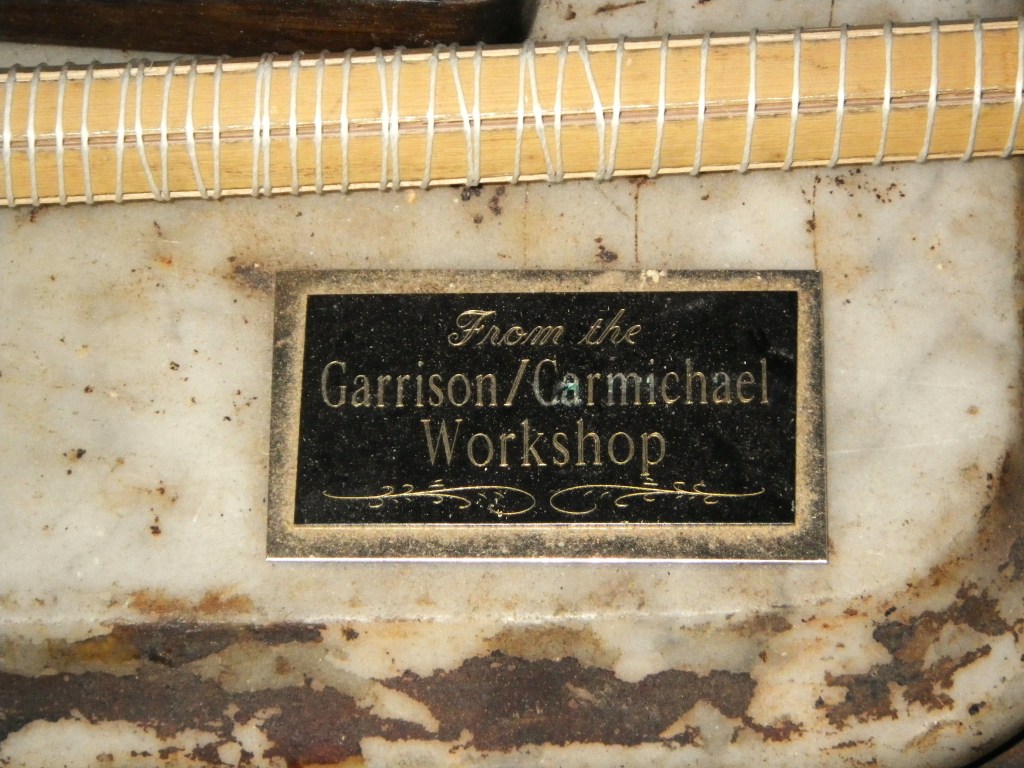
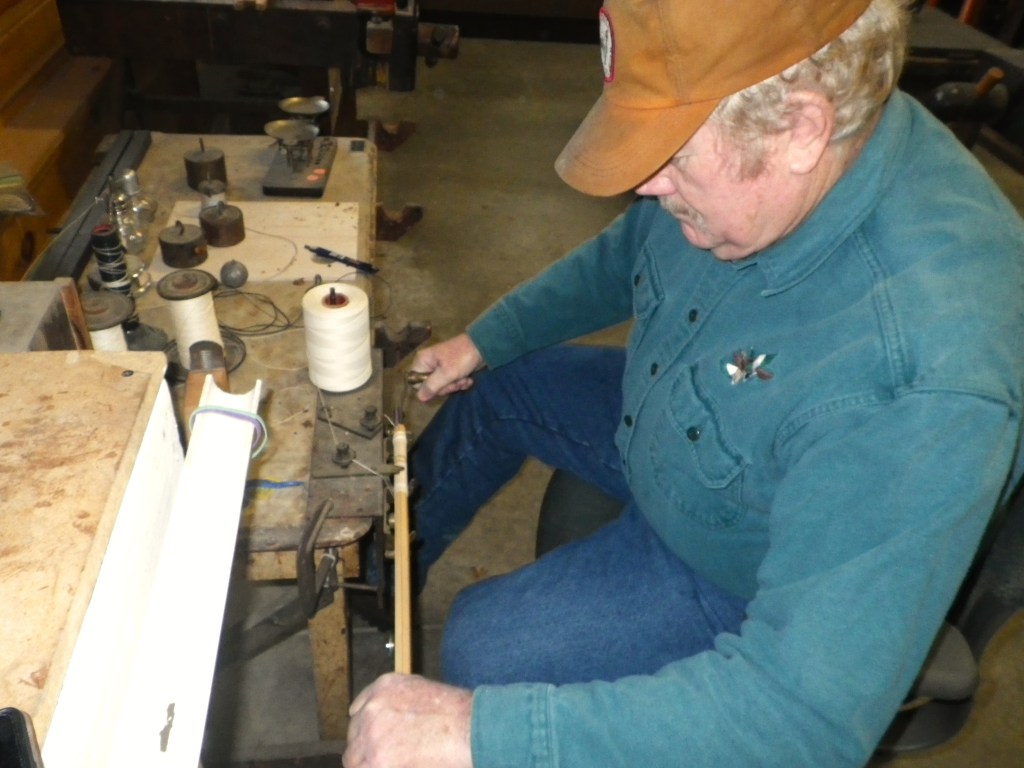
Mother Nature had her way with our simple plans for working through a few winter weekends and producing my first bamboo rod in time for spring fishing. Snow and ice-covered roads made travel difficult, even as winter grudgingly transitioned into spring. Planing strips of bamboo from one-quarter inch triangles down to dimensions between 0.190″ and 0.035″ let me discover new pain centers in my aging hands and joints, and of course, a variety of trials and foibles reared their heads throughout the project. JA remained positive and encouraging throughout. My favorite classic fly reel is Hardy’s St. George, my friend and stalwart teacher should hereafter be known as St. John.
Begun on a snowy fourth of January, my rod lay complete save final hardening of the varnish on the twenty-eighth of August. I counted only the actual working shop time, not the travel back and forth, amassing some eighty hours of work over those eight months. On Friday, August 29th, I carried the rod, and half a dozen fly reels out into my yard at Crooked Eddy to realize what I, and the help and kindness of several good friends, had wrought.
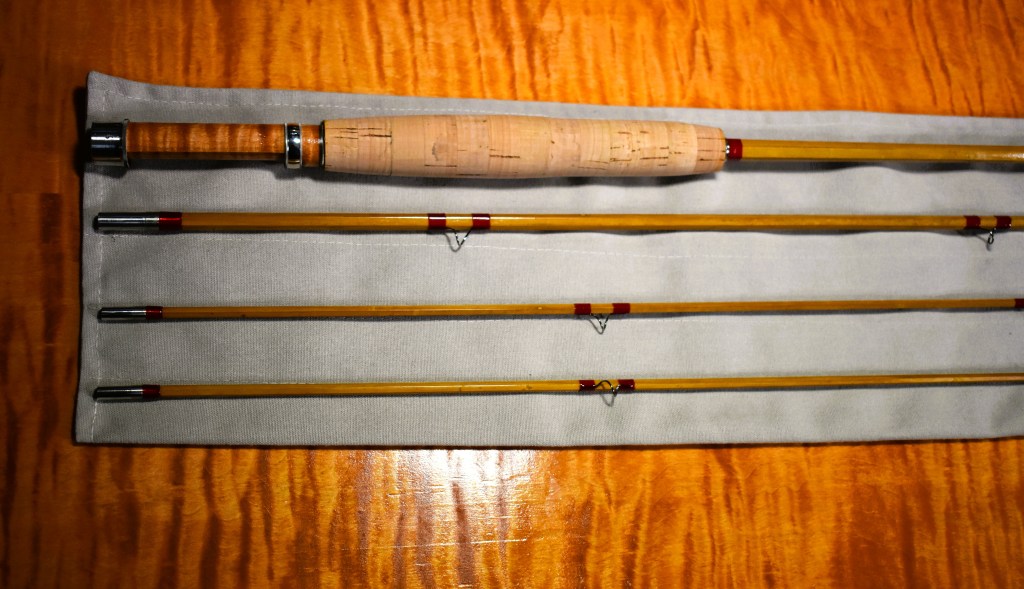
I test cast my rod with double tapered lines made by 406 Fly Lines in Montana, a number four and a five. It liked them both. Two Wulff Bamboo Special fly lines came next, again a four and a five, then an Airflo Tactical Taper 5. The rod handled them all with a smooth, crisp action. The feel of these four familiar lines led me to the last trial, a Scientific Anglers Frequency Boost WF4F, a line made one-half size heavy, thus a four and a half weight line. While all the lines felt good, the half size line felt the best, and yesterday I visited the Dette fly shop and purchased another familiar line, a Cortland Finesse Trout II, a four-and-a-half weight forward with a longer 10-foot front taper that presents dry flies beautifully. That line has been spooled on a special St. George from Colorado’s South Creek Limited, and tomorrow the Angler’s Rest Special will meet bright water upon the rivers of my heart for the first time.
So many long-time friends have guided me as I considered and executed this project. Rodmakers Tom Smithwick and Tom Whittle, my Pennsylvania Two Toms, taught me to understand rod tapers and materials. The taper chosen was Tom Whittle’s 7’9″ three-piece five-weight, a crisp, powerful rod. Discussions with Peer and the Two Toms helped me to conceive how the new bamboo would modify the casting feel of the original taper. This new knowledge was broadened by an ambitious project undertaken by members of IBRA, the Italian Bamboo Rodmakers Association, to quantify the properties of traditional Tonkin cane (Arundinaria amabilis) and Lo o (Bambusa procera). Patient instruction and encouragement from John Apgar and Master Catskill Rodmaker Dennis Menscer lead me through the months of work, pain, setbacks and little triumphs.
Thanks and appreciation are due to the Catskill Fly Fishing Center & Museum for welcoming our group of winter rod crafters and allowing us to work surrounded by Catskill history. Should you consider taking this journey, sign up for a class with John at the Museum’s Catskill Rodmakers Workshop, and take a walk through history as we have!
With all that I learned, I believed that my rod would be crisp yet progressive in action and suited to either 4 or 5 lines, and that is exactly what I have. The time has come to fish, to cast a line on bright water and search for a fine wild trout to complete the circle…
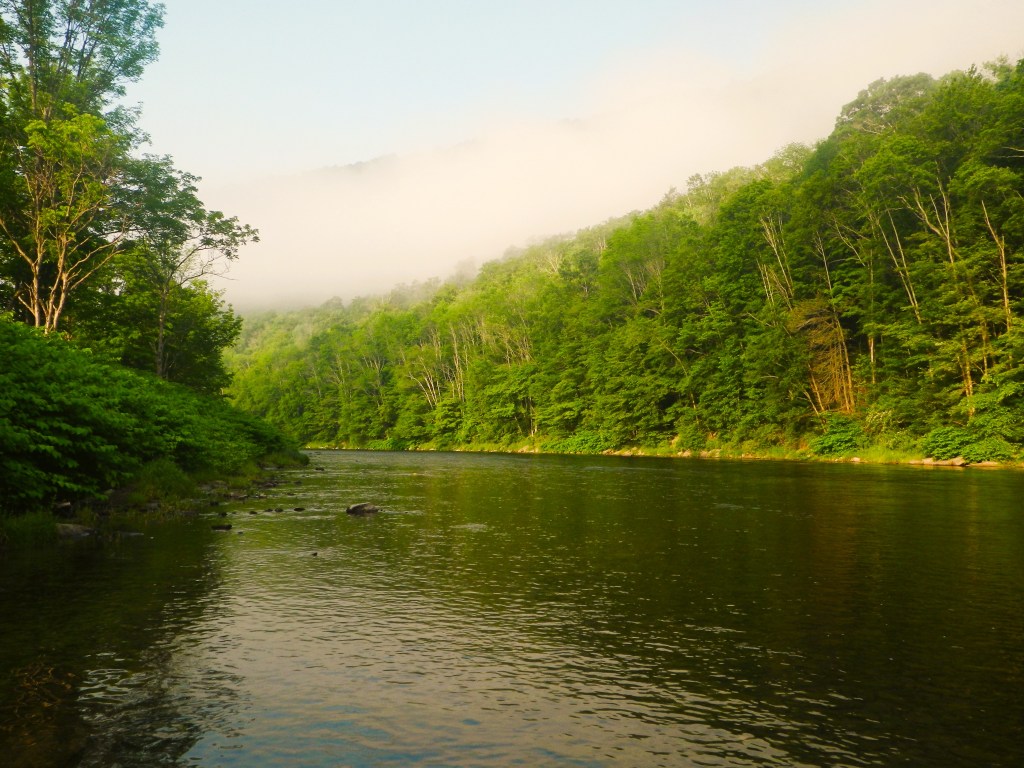
 Bright Waters Catskill
Well done! Beautiful work on a lovely rod. I hope to follow in your footsteps to take the class and build my own in a few years.
LikeLike