
Summer has arrived! As a bonus, we should have some very badly needed rainfall tomorrow, and a week or more of what I think as Catskill Summer weather. Now yesterday that rain prediction stood at 1.34 inches, but this morning it has dwindled significantly, before arriving, to half an inch. Looks like the pattern which plagued us in the past few years: rain systems passing right on by our Catskill Mountains without even leaving a calling card.
I was thinking about the late, great fly tyer of legend Reuben Cross and his signature dry the Cross Special. His written recipe called for pale marten fur, but that is rather hard to come by. Cross was a woodsman, hunter and fur trapper as many Catskill natives, so he found his materials the natural way. I looked briefly on the web just now and found whole skins on Ebay: all very dark fur with some white on their bellies. You can buy one for something around $67, though I think they were coming from Germany, so shipping and duties could be a real large expense. Cross like the other great fly tyers who formed the Catskill School, were pragmatic, and varied their materials as needed to be able to tie the flies they made their livings from.
When I wanted to tie some Cross Specials a few seasons back, I used some of the white belly fur from a red fox skin, just clipping a little of that fur on the edges where it has the slightest creamy white coloration, and a trace of paler gray. The trout like them, and they look nice to me too. I do appreciate that Nature has her hues, and insects, animals or the other things in Nature are mixes of colors and shades of color. That’s why I mixed the whitest white fox fur and a little of the creamy white fox fur and a touch of the pale gray to prepare my dubbing for a white fly.
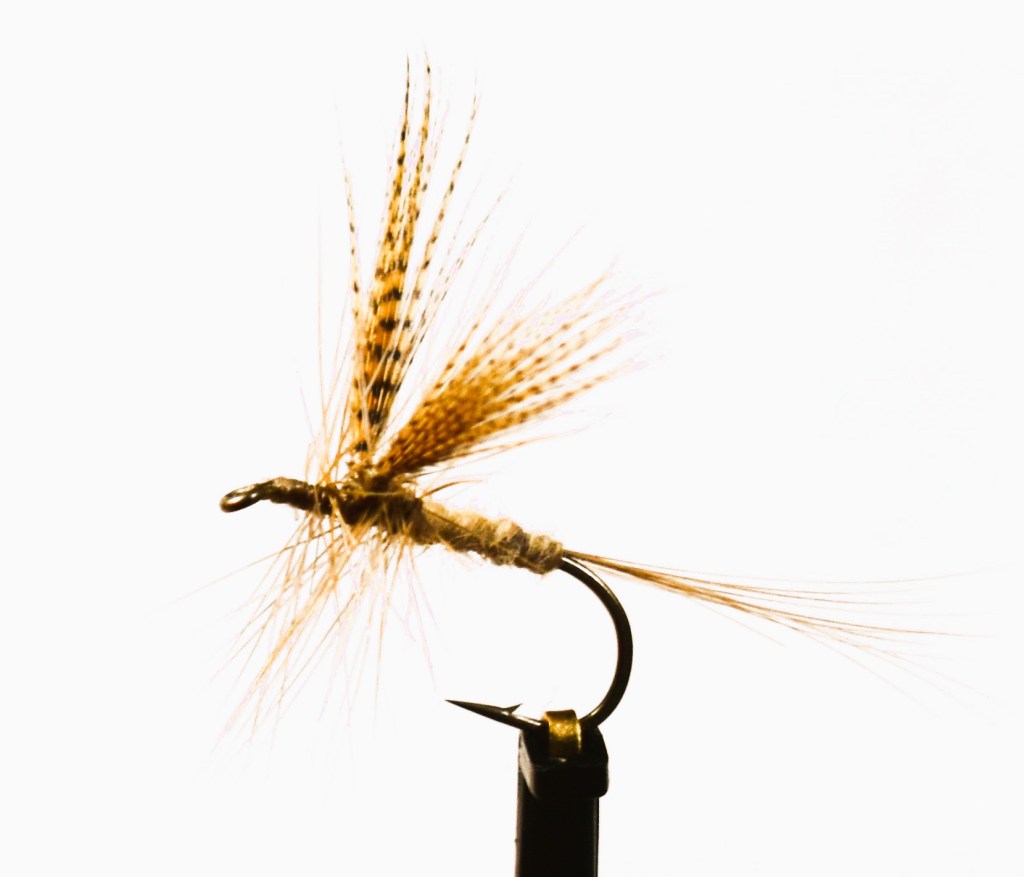
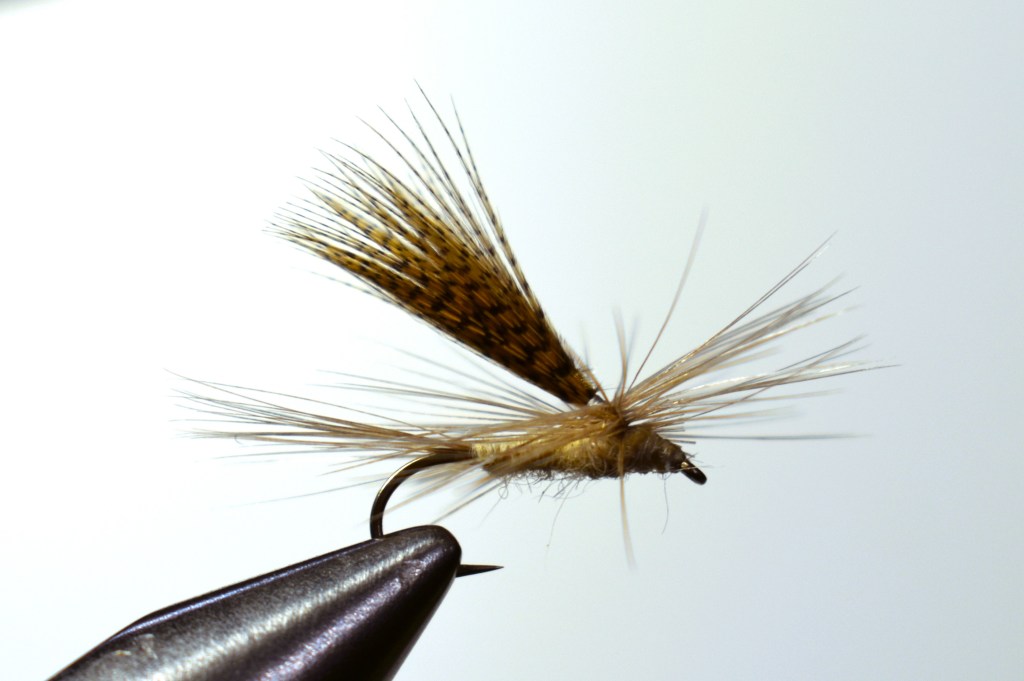
We gathered for our June meeting of the Catskill Fly Tyers Guild yesterday and the Cross Special came up. My friend Gary tied one and presented to me, so I offered him one of my CDX caddis. Gary had worked out his body color independently and came up a mostly white shade just as I did. I doubt he got ahold of any pale marten fur either. In the depth of my memory, I seem to recall that marten turn white in winter with snow, which is white. The photos in Cross’s book are black and white as it was published in the thirties, so the fly body appears to be white.
Fly tyers can be funny about color. Some declare fly color doesn’t matter, though I expect most of them carry a number of different ones when they are fishing. Others will go to the ends of the earth to procure every odd material some fly pattern is called for by legend, insisting to match the exact shade. I looked for the box with Gary’s tie to compare colors, but it seems I picked up someone else’s box when I packed up my travel kit yesterday. Three of us sitting nearby had the same boxes. Mine had Gary’s fly and eleven flies I tied during the meeting. Detective work has already begun. In any case, now I will be forced to tie myself some more size 20 CDX Tan Caddis to have them to fish them this week.
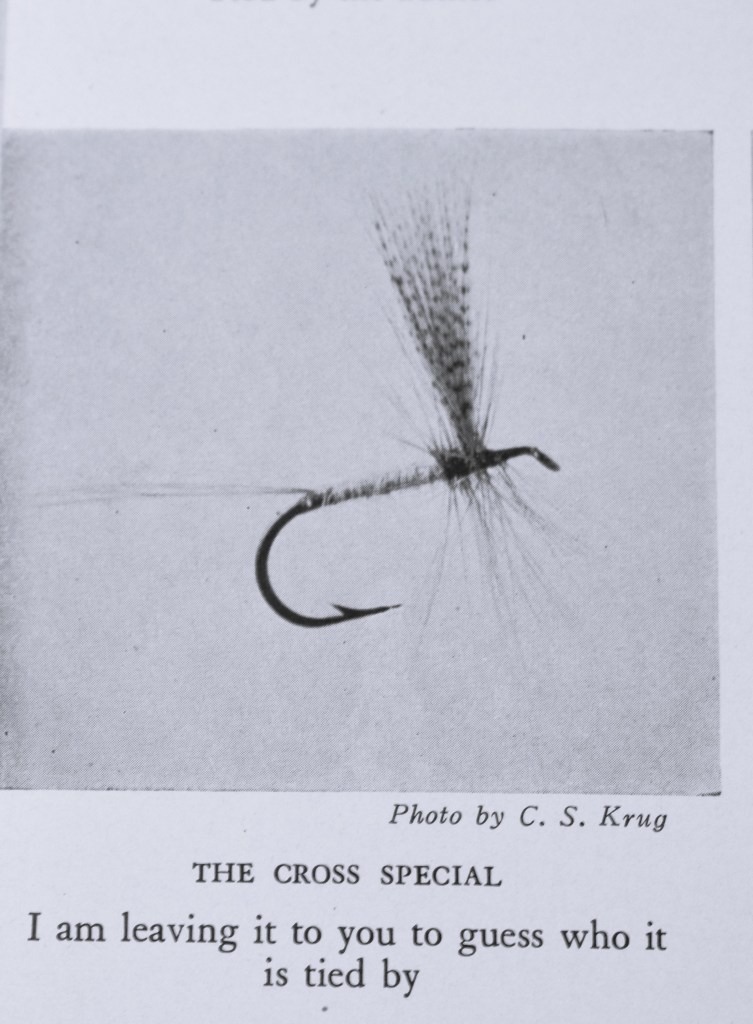
I had some good luck with my 100-Year Dun Cross Specials a couple of seasons ago. By September arrives, most of the populace say to themselves that “fall is here”. Catskill anglers know that the sun is hot, the rivers are warm and low, and the beginning of September is the toughest time of the summer.
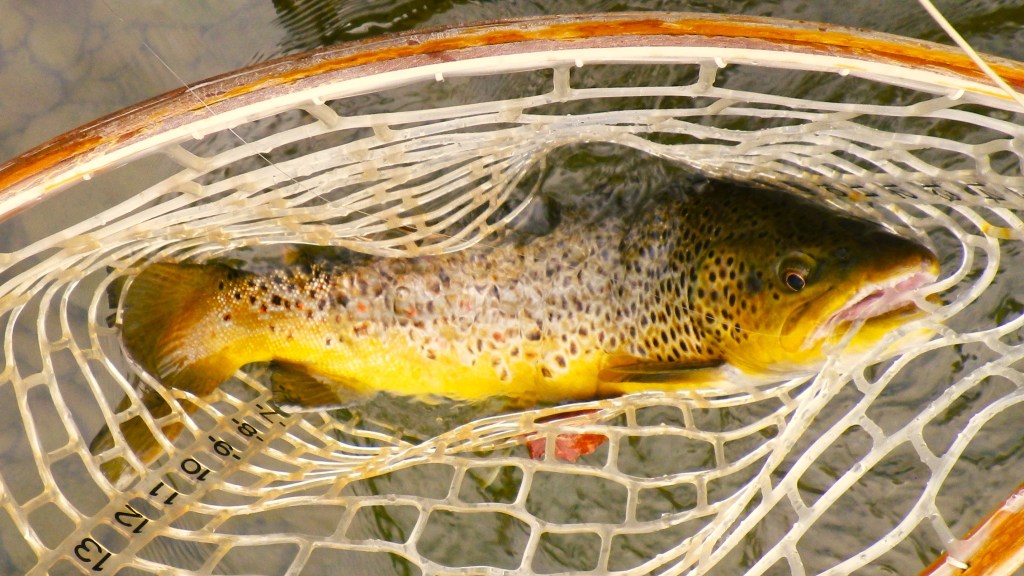
There was a pleasant exception to that rule in 2024. The water wardens in New York City decided it was a smart decision to try to repair the decades badly leaking Delaware Aqueduct that year, in the middle of a serious drought. Come September, they began to dump the water out of Pepacton Reservoir in high volume. The Big East, the river downstream from the mouth of the Beaver Kill is far too warm for trout in September until significant rains and cooler weather arrive later in the month, but not that September. Good trout were rising and the Cross Specials were working!
I think that summer was a blast from the past, for Pepacton was constructed years before Cannonsville on the West Branch Delaware, and the Delaware River system received the first share of cold water from the East Branch. There were no guides, lodges, hundreds of visiting anglers or any of the business of trout fishing back then. Most trout fishermen didn’t think about the East or West Branches of the Delaware as trout fisheries back then, because they weren’t. Locals like Harry Darbee worked tirelessly to stop the Quickway (Route 17) and the city’s reservoirs, trying to preserve the natural waters of the Catskills. Though they weren’t able to win that fight, they understood that the effect of all that cold water throughout the East Branch and down into the Mainstem was going to be. The locals quietly had some great fishing back in those early years.
I admit I enjoyed the great fishing that September and into October in 2024, but we paid for it when the Delaware reservoirs did not refill during the dry following winter. Very cold weather and extremely low flows in the rivers cause anchor ice which devastates insect populations and trout fry. The price for those few weeks of good late season fishing was very high.
The last I saw published about the Aqueduct Project indicated that their restarting the work would not happen until 2027 at the earliest. I hope the city folks learned not what to do during a drought cycle. But then again, they weren’t smart enough to get it right the first time.