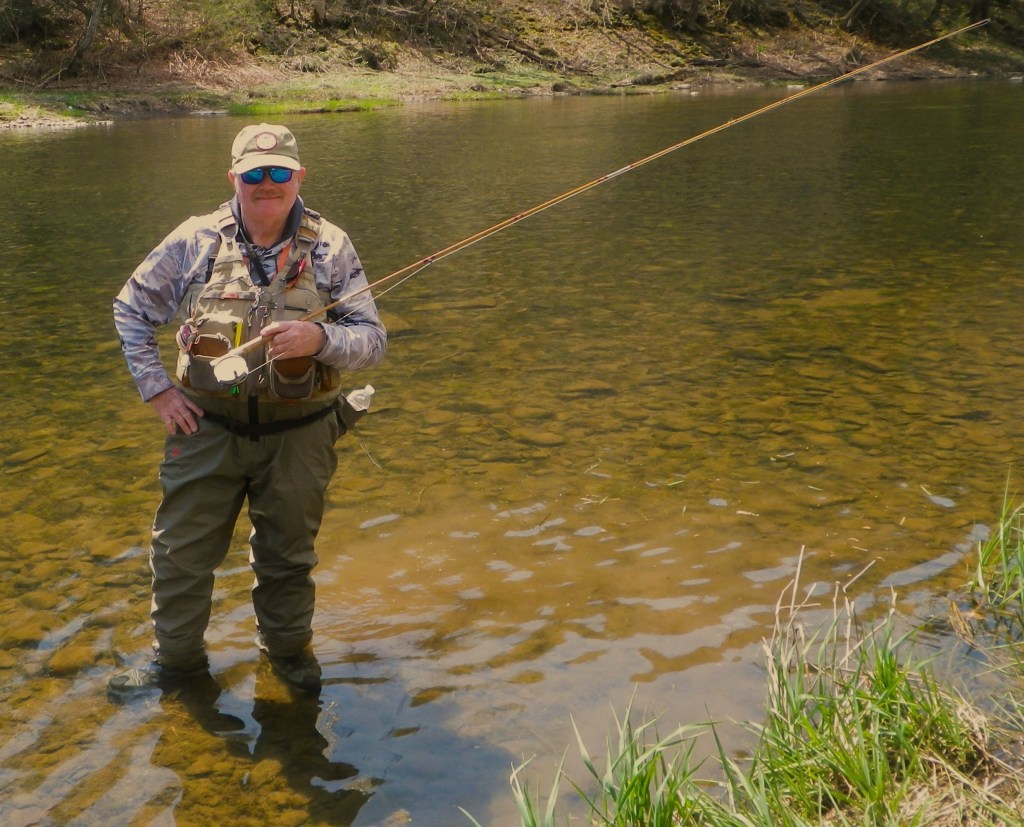

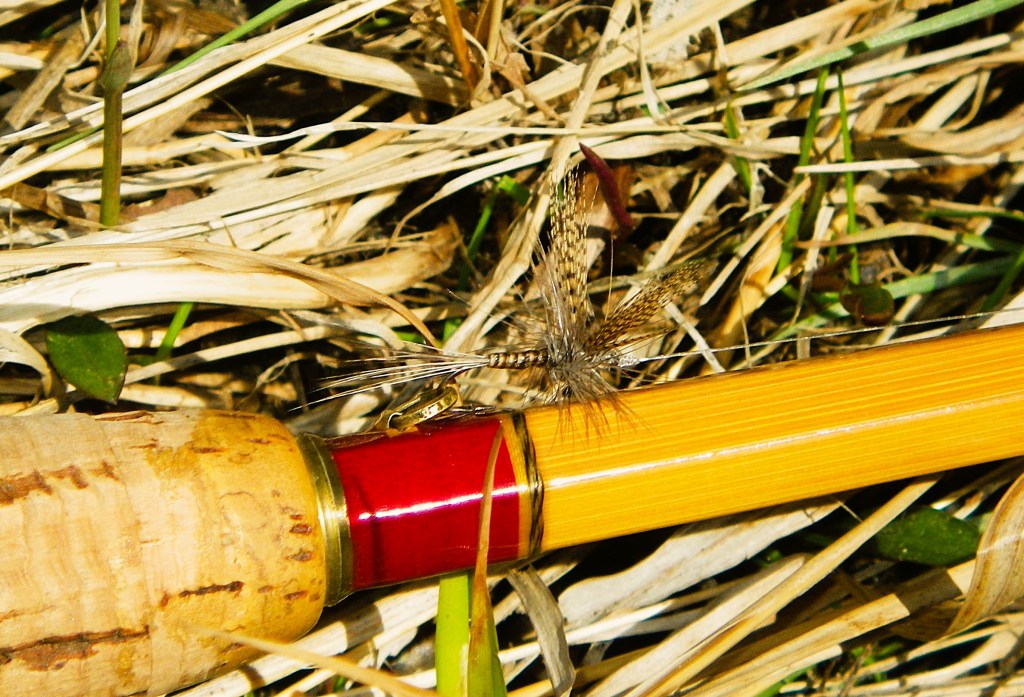
When you are passionate as something like Catskill fly fishing, it is easy to be deeply interested, even obsessed, with the history: the tales behind the people, the flies, rods, reels and the legends they wrought. I hatched that interest more than thirty years ago and have only swum deeper in those bright waters after retiring and moving here, the “cradle of American fly fishing”.
I have found often that there is a great deal of information available about these artifacts, and yet there are even more questions and mysteries.
If you develop an interest in classic fly-fishing tackle, the stories behind and within the great Catskill rodmakers are at the top of the list. The Catskill region lies at the heart of the craft in America, yet there are many questions. The epicenter of this world began about an hour’s drive southeast of the Catskill Rodmakers Workshop in Livingston Manor, New York, the site of the 32nd Catskill Rodmakers Gathering next weekend. Hiram Leonard, who had established himself worldwide as one of the finest rodmakers alive, agreed to move his rod shop from Maine to the small town of Central Valley, NY in 1881, at the request of William Mills & Son, his partners and principal retailers of his hand made bamboo fly rods. Leonard assembled a group of exceptional craftsmen to expand his production, and their names would rise beside his own as the architects of American fly rods: Edwards, Thomas, Payne and Hawes among others. As the concept and practice of fishing the dry fly spread through the Catskills, these men revolutionized rod making and design.
Leonard’s shop has been called the fountainhead of Catskill rodmaking, and the description is more than apt. They became the most famous name in bamboo flyrods, sustained their legacy for more than a century after the move to Central Valley, and yet there has never been a complete history, a book chronicling the best of them all. Surviving records lie in private hands, for most along with the equipment and inventory perished in a terrible fire in 1964 which destroyed the factory. Mills rebuilt the factory, and the company continued for twenty years, though after several changes in ownership the assets of the H.L. Leonard Rod Company were seized and auctioned by the government. Remaining rods, records and equipment were scattered to the four winds.
Thousands of wonderful bamboo fly rods remain, privately owned, cherished and fished saved for a few exhibited in museums. The majority have no markings save a stamped company name on their reel seats, and perhaps a small, ephemeral paper tag attached to their rod bags. Mysteries begin immediately at a Leonard rod’s appearance: what model, what year, which line? Such questions jump to the minds of lovers of their smoothness, power and simple beauty on the stream. Answering is not an exact science.
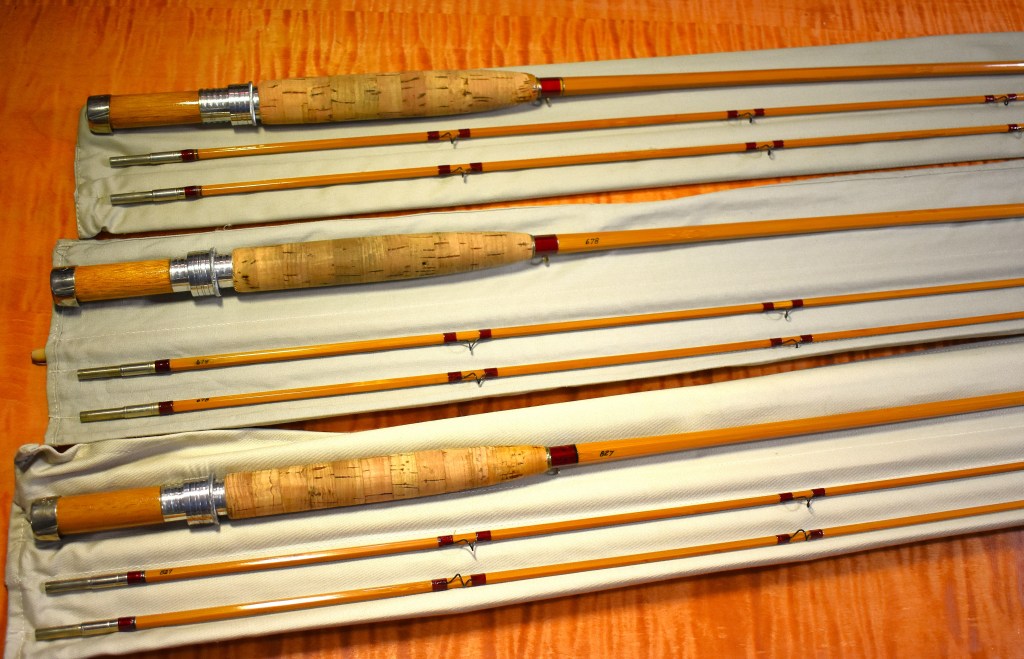
Beginning more than fifty years ago, after William Mills & Son rebuilt the Leonard factory, rodmaker Ted Simroe was put in charge of the company and began inking each rod with a serial number. That simple act was profound, as it establishes for the most part whether a Leonard rod in hand was made before the great fire or after it. Some post-fire rods may were made and sold without the serial numbers, but there no seems to be any clarity with regard to their numbers.
Once the numbering was begun by Ted Simroe, it appears the practice continued, though the numbering itself was changed after his tenure. Information indicates that Tom Maxwell who assumed the mantle of control after Ted’s departure, started over using low numbers for several hundred rods at least, then changed in 1980 by numbering the rods with the first two digits indicating the year followed by the rod’s order of manufacture, thus “8015” would be the fifteenth rod made in Maxwell’s final year of 1980. The changes confuse rod owners and would be Leonard fishers.
Many of the answers come from private enthusiasts, leading further questions as to the origins of any information. As human beings all, enthusiasts face the same fate: memory and time can alter recollections, recalled facts can be changed or simply forgotten.
I have found that internet searches return too little that can be fully trusted. Electronic records yield sales listings from private dealers, sometimes based upon previous rod owners’ recollections or often guesses offered by their descendants. These can only be trusted as the dealer’s best honest opinion and information. Searches today tend to include AI filtered and compiled information, and that automated “filtering” seems to tender authenticity in the absence of any confirmed facts.
It would be wonderful to sit down and record a few long conversations with the people who made these remarkable rods, but it seems sadly that most of those opportunities have passed.
I missed my best chance at learning about the Leonard Rod Company and their marvelous fly rods during my first summer here in the Catskills. While I worked to ready my little house for moving our family here, a diverse group of anglers, rodmakers, collectors, dealers and enthusiasts met at the Catskill Fly Fishing Center & Museum to hold a Leonard Gathering. Unfortunately, though a long-time museum member, I never learned about that event until several years later.
Perhaps I did not miss my chance, as the best way to learn about the Leonard fly rods is to cast and fish them, particularly in these Catskill rivers, and fishing is something I do my best more than a hundred days each year!
The quest continues, as it seems no one will pen the definitive book about the H.L. Leonard Rod Company. If, when the end of my time upon these rivers comes, perhaps I will retain the strength and drive to consider tackling that project myself. It would be tough though to replace my rod and dry fly with a pen.