Dry Again

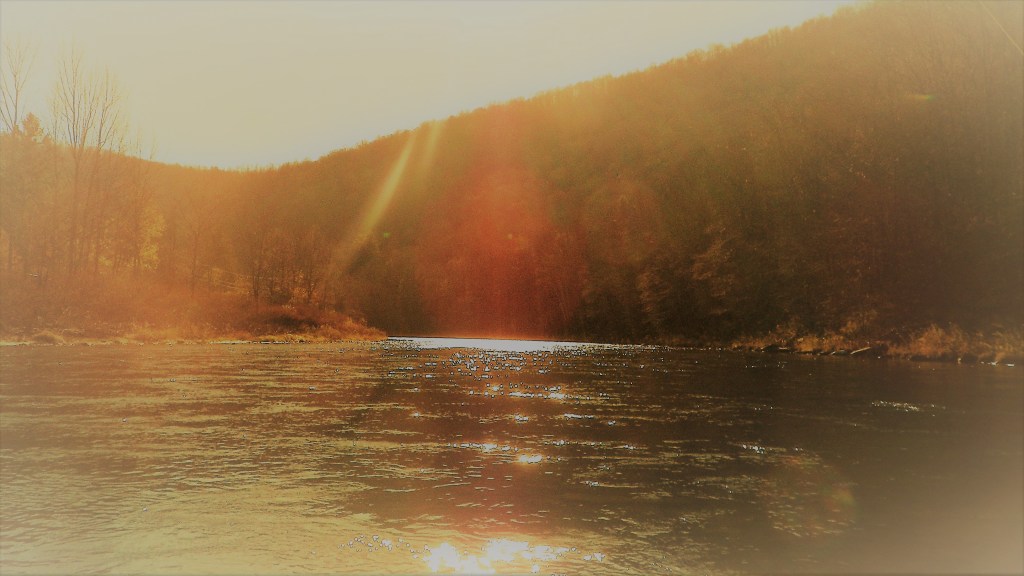
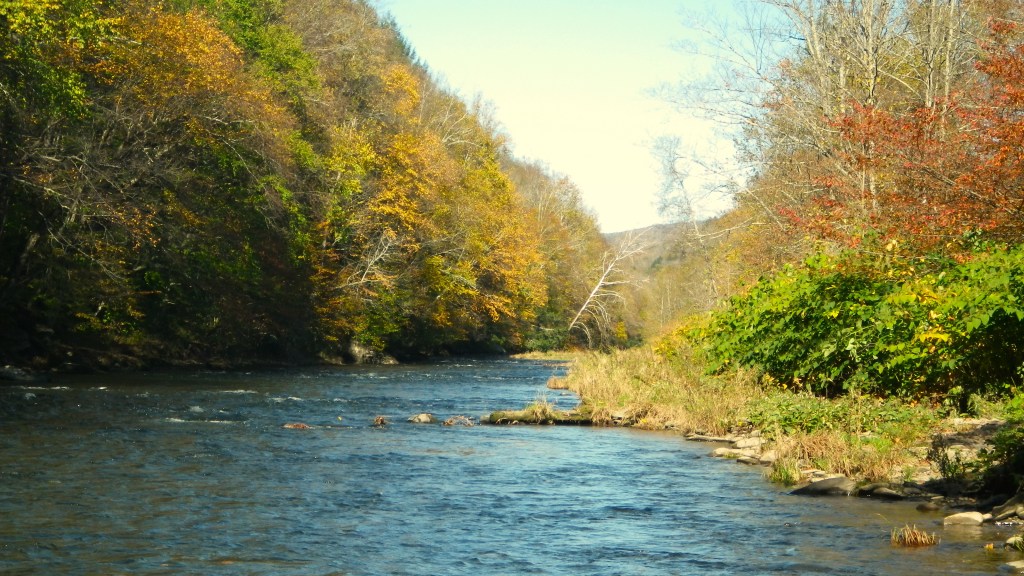
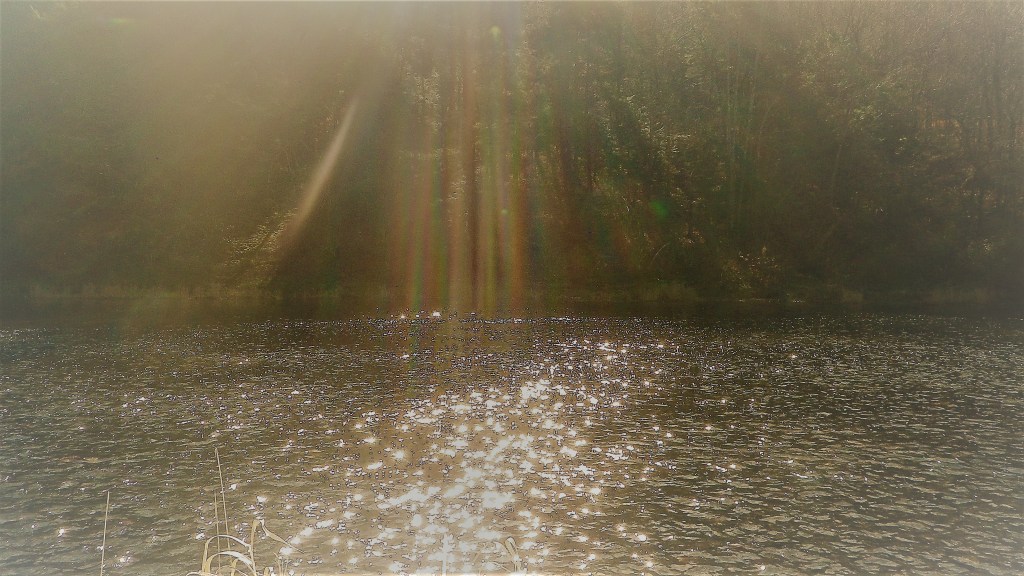
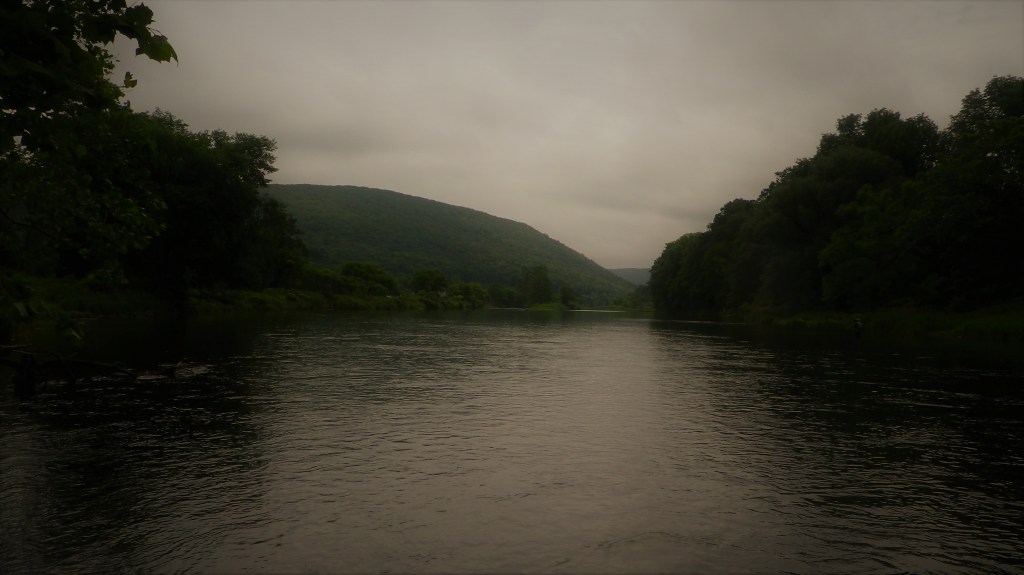
The East Branch Delaware trickles toward Crooked Eddy on November 18th, 2024

Last week’s rain was a blessing, though the relief it provided was short lived. Driving through Chenango County yesterday, an area that received more rain than Hancock’s environs, the landscape looked dry. We expected more autumn color there than we have begun to enjoy here at home and were surprised when we didn’t find it. We did find great music, food and great craft beer at Hidden Springs Brewhouse on a very beautiful early autumn day. This morning, the reality of another Catskill drought has taken center stage.

I am here writing down my thoughts just after sunrise, with foggy skies and a touch of chill in the air. Summer is wholly behind us, though this morning reminds of many spent through August and September. Yes, of course I am thinking of fishing…

October sidles in on Wednesday, and there are thoughts of tracking grouse through these Catskill forests. It looks to be a cool day, flanked by more summerlike temperatures, a welcome to one of the sportsman’s favorite months. How many times have I dreamed of an entire year of Mays and Octobers!

Even though I am far more than well-stocked for any form of trout fishing, I tied more than two dozen dry flies yesterday morning. The Catskill Fly Tyers Guild was contacted several weeks ago by a group hosting the fly fishing equivalent of the Army/Navy Game, the Army/Navy Fly Fishing Championship. The commandants of the two military academies hand select their best fly fishers among their cadres of exceptional cadets to compete on the water it seems, and the organizers look to equip each competitor with a box of hand tied flies. I tied two-dozen, 8 each of three of my own patterns. I like to think those flies will help make a memory for those fine young men committed to serving America.

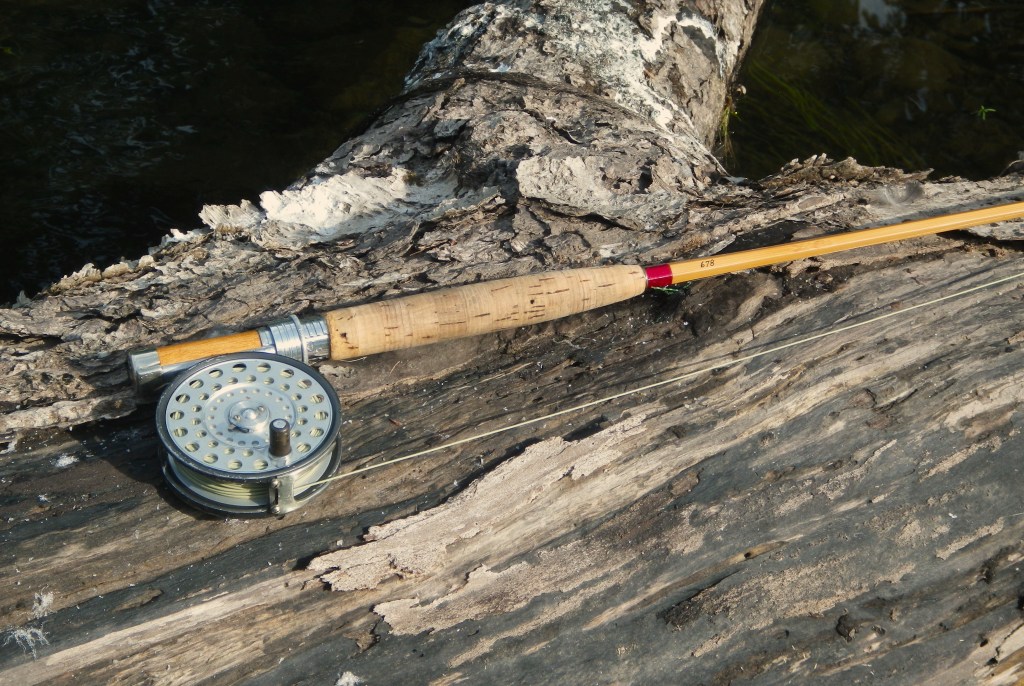
My vise is idle this morning, as I will soon set about the daily task of selecting the bamboo rod to accompany me today. Perhaps a fly line will require cleaning, or a leader may need a new tippet – the preparation is a major part of the ritual. With a look at once more dwindling river flows, a light touch will be welcomed, and my Menscer 3 weight is calling to me from the rod rack…

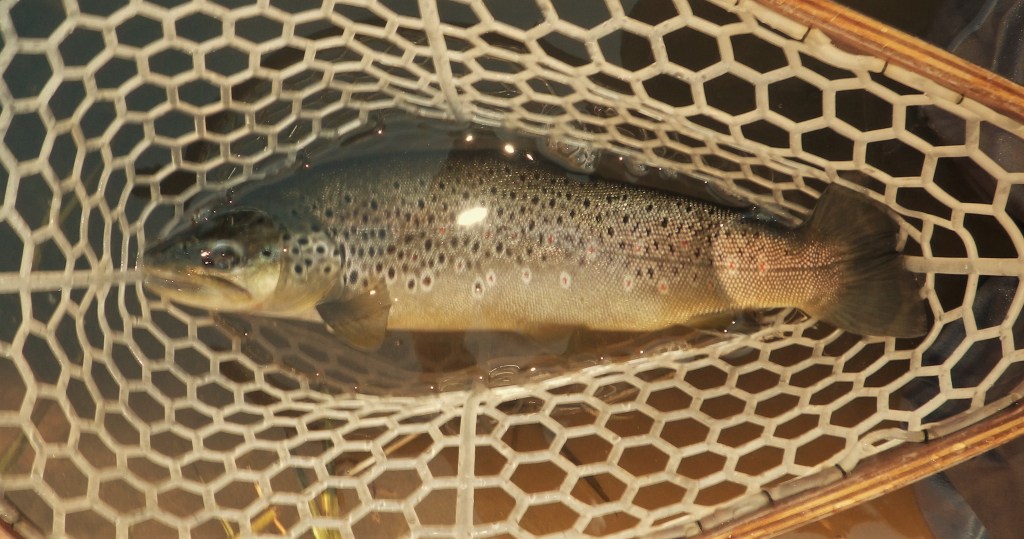
That rod battled a two-foot wild brown trout to hand just over a month ago, and I hear it’s eager whispers from the rack behind me. Finding another trout like that in skinny water with the autumn spawning season approaching would be a tall order. Favorite pools have appeared rather barren, and I avoid the river’s riffles as September wanes. Our trout have no chance to ascend spawning tributaries that are nearly dry, so Nature’s call must bring them to mid-river riffles, where anglers must leave them alone.

I watched a recent YouTube video while eating breakfast the other day, with some thoughtless guy catching tiny rainbows in skinny water on the Beaver Kill and whooping it up rattling on about the “nice trout”. He thought himself to be quite the fisherman. It looked to be summer, and in or very close to a protected reach that is closed to angling from July to September. I hope some DEC officer sees that clip and comes knocking on that guy’s door.

Extended droughts are survival time for our trout. We must put their welfare above our own joy for fishing. It is simple really: stay out of the riffles, pay attention to the river bottom where you do wade, and don’t fish for any trout you see crowded together in one location. Trout crowd near spring seeps when they are stressed, not to provide a fishing bonanza for some thoughtless plunderer.

Three years ago, I took my last dry fly trout of the season on a beautiful afternoon in late October. That hen fish rose daintily to a perfectly presented size 18 olive in a glassy pool. When I removed the fly I noted her worn and healed tail, clearly advertising her post-spawn condition. She was in fine shape, strong and gorgeously colored. It was another dry autumn, and she had clearly spawned in a mid-river riffle. Droughts seem to come more often this decade, and I felt that valiant fish was a sign of the times: adapt, survive and flourish!

Thank you doubly, dear lady!
October 26, 2022

Back To The River

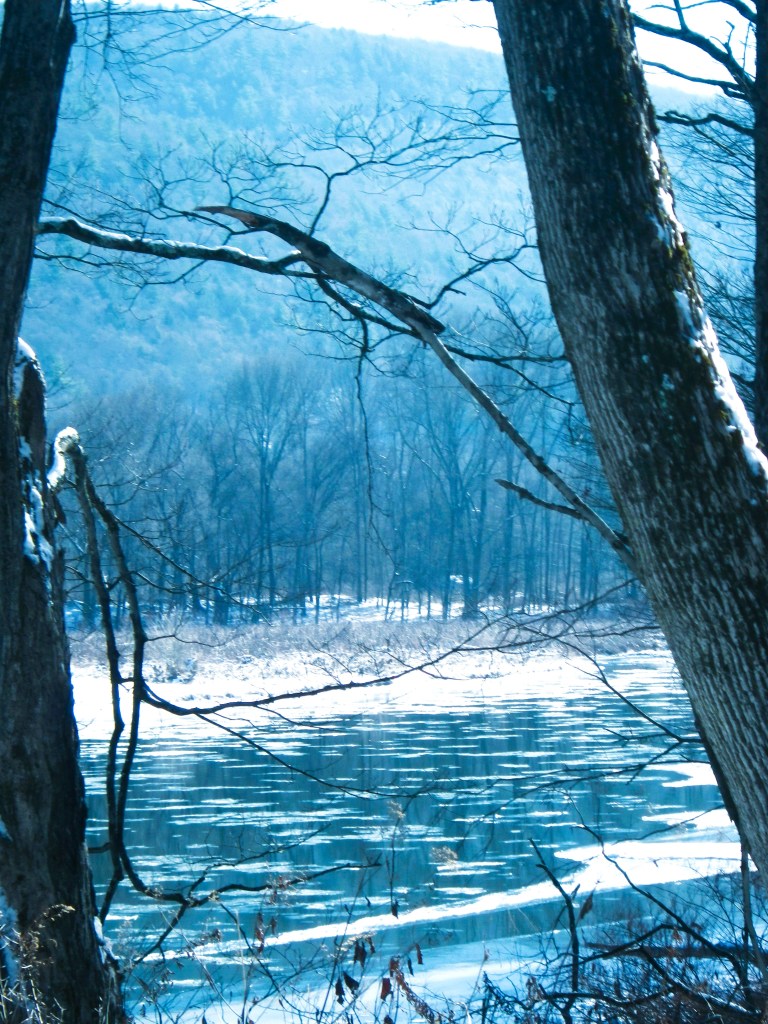
Nature has finally offered a small gift under cover of a pleasantly rainy day. Are our rivers out of trouble? Sadly no, but at least the trout can take a breath for the time being. Color has begun to gather along the rivers and the Quickway, and at last, I shall return to the river.

My week began with doctors, chores and writing, and most anything besides fishing, the balance of it spent praying for rain that did not come, crying for the state of the rivers, and finally thanking Mother Nature for that small gift I spoke of. Today I will carry an old Leonard and a box of dry flies to see what she has wrought.

Thus begins the last race of the dry fly season, the race that might end at any moment. Early autumn is quite beautiful in these Catskill Mountains, but it bows to winter at the slightest provocation.

I still have hope for a grand finale, and a wet and wholly replenishing winter; that the mayflies absent this season may reappear for the next, and the hungry, worried trout find abundance and grace.

I tied a few flies this morning, not that I needed any, but more to pass the morning hours in my own way, to keep my own traditions. The summer vest remains well stocked with most anything I might find upon bright water at this time. The sun can be expected come afternoon, but the day seems perfect for a flannel shirt.

The old Hardy wears a freshly cleaned double taper, it’s leader bearing a good tippet, and needs only to be carried to the car. It is a comfortable fit for the old Leonard, both of them more than half a century old, but fit and ready for the rush of a well-hooked brown!

Legacy of The Friendship Rod

My ‘Friendship Rod’ catches the glow of morning light on it’s first day on bright water

I made a few very good friends decades ago in my little Cumberland Valley, Pennsylvania fly shop, and two of them have become intertwined in the legacy of a very special bamboo fly rod.

Meeting Tom Smithwick came as a result of a guide trip, hosting an angler who fished one of Tom’s quadrate bamboo fly rods during our day on Falling Spring Branch. Tom would eventually find his way into my shop himself, leaving an amazing one-piece bamboo rod behind. Years later, Tom moved to nearby Shippensburg, PA when he retired, and I got to spend some time with him and cast many of the rods he made over a number of years. I got in the habit of calling Tom The Taper Wizard, being highly impressed with the casting qualities of the rods he made.

John Apgar visited Scotland, Pennsylvania while working on some hi-tech hardware for the military. When he was told about the new fly shop in the village, he made it a point to stop in. The natural comradery between anglers and fly tyers took hold, and we became fast friends, fishing together during the evenings as often as we could. When John’s job location changed, we lost touch, but rekindled our friendship when I retired and moved to the Catskills. We both had developed an interest in split bamboo flyrods to the point that I was fishing bamboo most of the time and John had signed up for the class at the Catskill Fly Fishing Center to learn how to make his own.

When John told me he was looking for a taper for an eight-foot four weight rod to build during his second CFFCM class, I thought of Tom. We messaged and talked about it, and Tom sent John a taper he had designed using convex tapering techniques. I had the chance to cast John’s second rod during a fishing apart session on the Beaver Kill during the Covid lockdown. My impression was quite distinct.

We had finished our fishing and traded rods for a bit of casting. I idly pulled some line off the reel and made a cast, finding the rod to be extremely smooth and sweet tempered. Per my habit, I continued pulling some more line out and extending my casts, with the width of my smile increasing steadily. The rod didn’t feel powerful, but it just kept rolling out smooth beautiful tight loops of fly line further and further out into the river. Eventually I looked down at the reel spool and, seeing just three turns of fly line remaining on the arbor, assumed that John had a cutoff fly line on the fairly small reel. When I asked him about it, he told me it was a full-length line. That’s when I realized this smooth four weight was casting some ninety feet of fly line and leader, with basically no effort. Taper Wizard indeed!

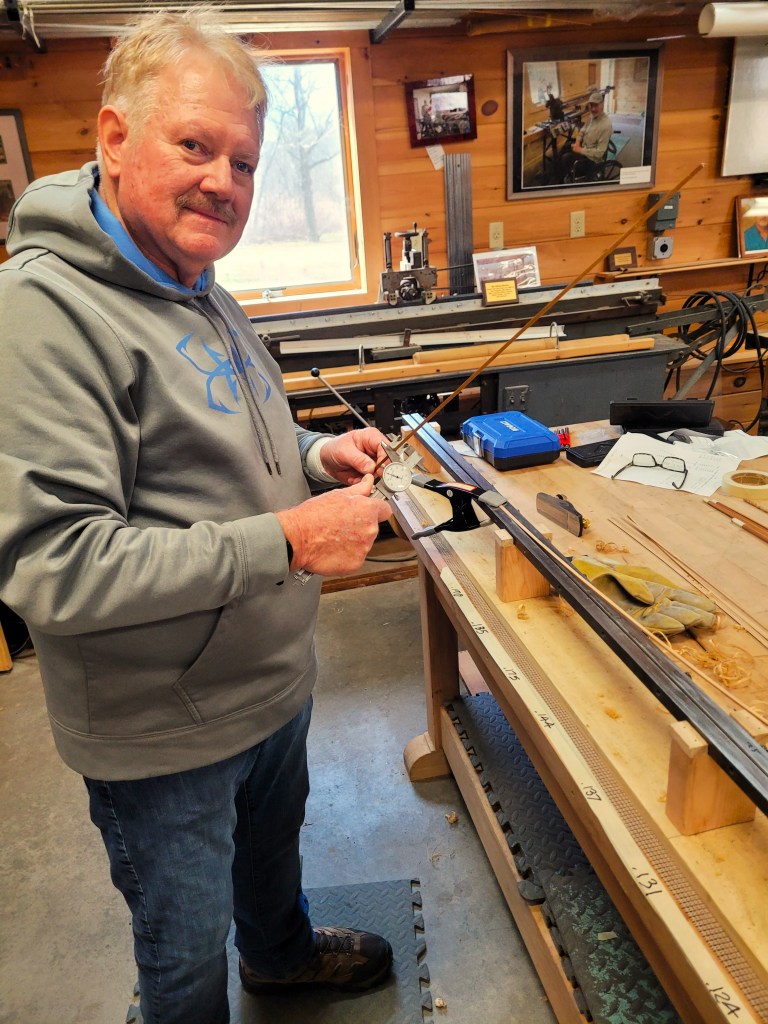
During the next few years, John attended two more classes and made two more bamboo fly rods. After the last class, Mike Canazon, his instructor and steward of the Catskill Rodmakers Workshop at CFFCM, was impressed enough to ask John if he would be willing to serve as an assistant instructor during the following season. When Mike tragically passed away in late 2023, he left his recommendation with the Museum Board that John be named his successor.

After Mike’s passing, his best friend and a friend of ours, Tom Mason gave John some of Mike’s rod making tools and a few culms of his select bamboo. John decided to use one of those culms to make two more of the Smithwick taper eight-foot four weight fly rods, one for Tom Mason, and one for me. Mason was touched and thought this special rod should be called The Friendship Rod. John agreed and numbered the rods TSS-001, TSS-002 and TSS-003 to reflect Tom Smithwick’s taper design.

Tom Mason did not get as far as making a complete cast with his Friendship Rod, pronouncing it “perfect” on his initial back cast. My rod was finished and presented to me at the 31st Catskill Rodmakers Gathering, where the four of us spent some time talking about this amazing taper and John’s beautiful execution in making the three rods. Tom Smithwick was very pleased with the name and the way this rod taper had intertwined among our small group of friends. It was fitting that the rods brought all four of us together at the Gathering, as Tom Smithwick has been a part of these events since the beginning, one of only two men with that long association.

Seeing as the Gathering was our occasion for coming together, our Friendship Rods were offered to other friends, rodmakers and Catskill Fly Tyers Guild members to cast. The taper immediately began to build a group of serious fans, and anglers began to ask about making a rod with the Wizard’s miraculous taper. John’s list of expected serial numbers now runs to TSS-014, the numbers to be finalized only upon completion of each rod by it’s maker.

The Legacy of The Friendship Rod begins: John Apgar, the maker and yours truly, the writer (standing left to right), Tom Mason and Tom Smithwick (seated left to right).
Photographed by Matt Benham at the 31st Catskill Rodmakers Gathering

The hallmarks of character shared by these two men, Tom Smithwick and John Apgar include both an abundance of kindness and a giving nature, and outstanding creativity. The lines cast by the Friendship Rods seem poised to continue to intertwine Smithwick’s special bamboo alchemy through the lives of many more anglers and lovers of the split bamboo fly rod!

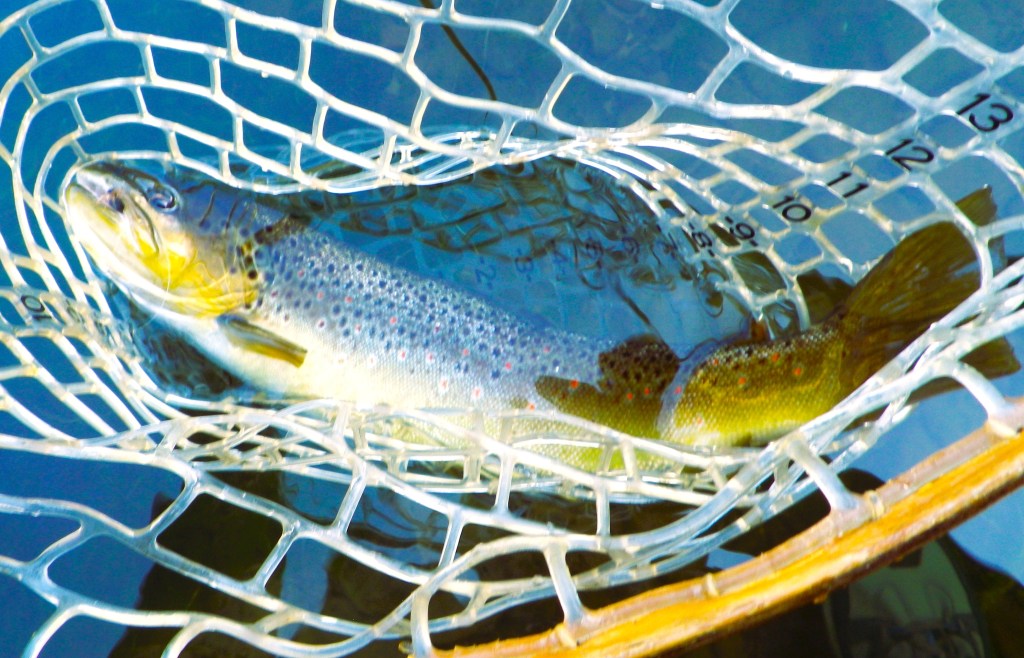
A dark, wild twenty-inch Catskill brown trout – the first fish taken on the author’s Friendship Rod. The magic continues…

Craft Beer and Porch Sitting: Catskill Traditions New & Old

A ‘Cold Snap’ ale basks in winter’s afternoon light

In his lovely work on the history of America’s most famous trout river, The Beaverkill, Ed Van Put documented various non-fishing recreational activities popular during the growth of the region’s tourism reputation. Porch sitting was one of those enjoyed by visitors to the fresh air, bright waters and mountains of New York’s Catskills.

When I founded Anglers Rest here in 2018, the first order of business was the reconstruction of the front porch. I labored alone, in a summer far too wet for fishing, and have since regularly enjoyed that historic activity. An ice cold craft beer typically accompanies me.

During the past decade or so, the Catskills have become a craft beer destination! The Roscoe Beer Company was the first microbrewery of my association, inaugurating a serious movement. Catskill Brewery in Livingston Manor followed in 2014 and now has a new neighbor there in the name of Upward Brewing Company. There are many more across the region today, including Hidden Springs Brewhouse, one of my favorites near Chenango Lake in Norwich, NY. These fine establishments add a shine to my evening porch sitting, already flavored by the sunlight, fresh air and view of eagles circling Point Mountain.

I find that kicking back and enjoying the late afternoon sunshine to be the perfect relaxation to reflect upon the day’s angling. Such moments are most poignant now as these last precious days of summer carry hints of autumn on the breeze!

I stole three hours of fishing from other responsibilities yesterday, as the seasons’ first cascade of yellow leaves wafted down to kiss the river. It made for a lovely time there, but did little for fishing success, as every other cast hooked a leaf when I picked up my spent line for another cast.

Alas, the seasons’ turning comes with the realization that Catskill autumns are as brief as they are beautiful. I have not known the dry fly season to survive October! Autumn arrives just two days hence, and I am not ready to surrender my fishing days. The new rods, the Friendship Rod and my Anglers Rest Special compete for my attentions against the whiles of the classics, each wishing for one more day upon these bright waters.
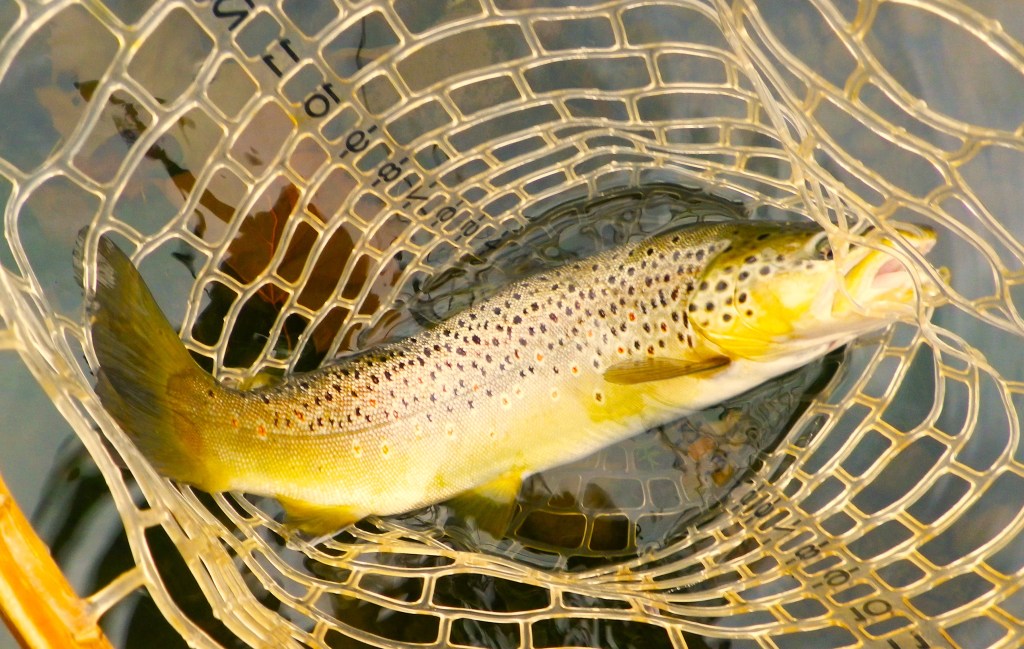
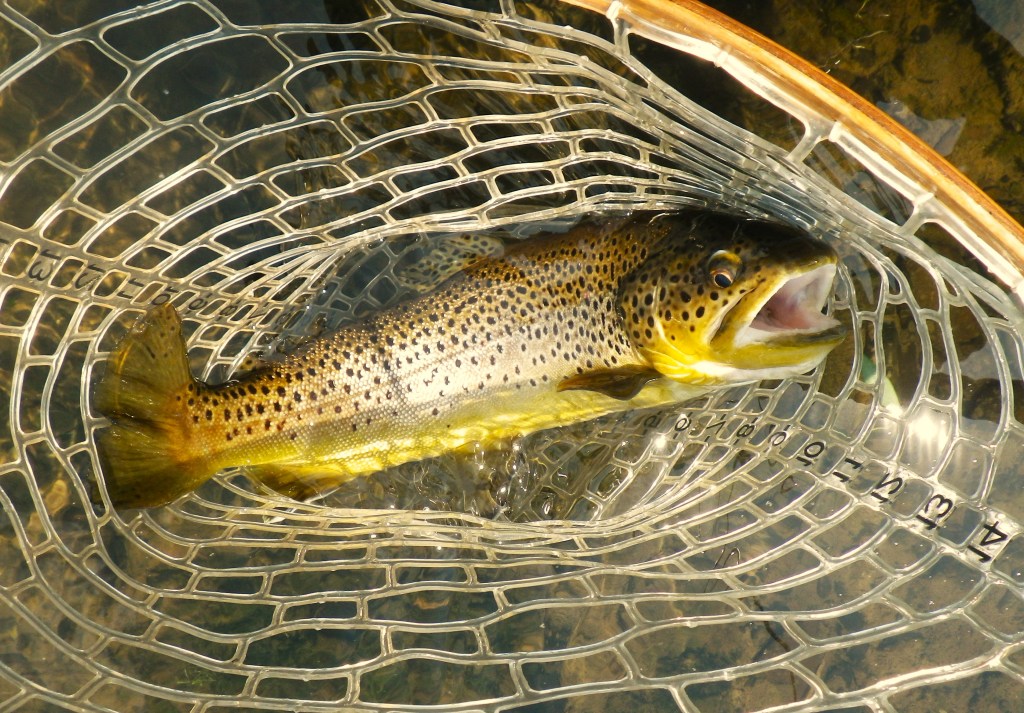
The glorious colors of a big post-spawn female Catskill brown trout. My last dry fly trout of 2022. she sipped a size 18 olive 100-Year Dun.

Summer’s Last Days

September slips past me, and at last summer comes to it’s inevitable end. The days are shorter now, the morning chill lasts on into early afternoon, and the rivers keep no secrets beneath the thinning curtain of their depleted flows. A rise is an event on days like these.

Season’s end perennially comes too quickly, and autumn, sweet autumn, is brief in these Catskill Mountains.

I struggle to keep thoughts of winter from intruding, from taking my thoughts away from the simple beauty of these last weeks of the dry fly season.

I drove along the Beaver Kill Saturday morning, my somber visage reflecting my deep concern for the health of the great river. Flows have dropped even lower than last summers’ base flow conditions, and I fear for the onset of winter without Nature fully bolstering our meager rainfall throughout the last kiss of autumn. The torrents of May gave hope for the replenishment of the highland’s springs that give birth to all rivers, but September tells the tale… false hope!

My routine beckons: check the river gages, choose a battle plan and select my tackle for the day. Drive the melancholy thoughts from my head and look to savor the last hours of Catskill Summer!

Turning

The Beaver Kill, on a dry late September afternoon

It seems another very dry September has settled upon the Catskill Mountains. The ten-day forecast shows not a drop of rainfall in the offing, and rivers are already shriveled.

The weather has been beautiful, save for the drought, with pleasant sun-filled afternoons and chilly nights. These are perfect days for fishing.

I spent a little time with friends last evening, wading in the shadows of evening in search of a good rise of trout. My friends had enjoyed good action the night before, and we anticipated a similar outing, but the Red Gods kept the mayflies’ numbers sparse as to awaken a rise just here and there. The company was pleasant, the scenery sublime on a clear West Branch evening; as we anglers often say, the fishing was lovely, it was only the catching that was somewhat lacking.

Summer on the West

It has been a number of years since I faithfully haunted these rivers at sunset. With the luxury of retirement, I fish in daylight, enjoying all the beauty and wonder of the Catskills – mountains, rivers and sky! In my traveling days I would often fish through each day unto night. Well, at least during my younger traveling days.

Summer evenings are beautiful, though a wealth of my recollections of bygone days reveals many when it was the catching that paled amidst the vast wonder of the outdoor experience.

My first hatch, and the first to capture my heart was the sulfur hatch. These small yellow and orange mayflies were the premier hatch on the Pennsylvania limestone springs, and they entranced us most often at twilight. As the skies neared full darkness, the hatch reached it’s peak and fishing became a frenzy. Time is short, and the time is now!

Those nights are the province of memory now, for my twilight fishing is rare in my later years. I feel that same excitement in daylight now, stalking a soft, barely noticeable dimple in the shade…

Rodmakers Gather as Summer Wanes

An offering for the judgement of my teachers…

The 31st Catskill Rodmakers Gathering convened on September fifth at the Catskill Fly Fishing Center & Museum with enthusiasm high! As always, there were a variety of rods to cast and admire, tapers and techniques to discuss, and old friendships to renew.

This was just my second Gathering, having attended in 2022 as an aficionado, then peeking in last year to enjoy Dr. Peer Doering-Arges’ presentation on Lo o bamboo. This year I qualified, having completed my first hand-made split bamboo fly rod just a week earlier. I enjoyed the chance to have several of my mentors cast my rod and offer their impressions.

My long time Pennsylvania friends and influences, the guys I have referred to as the two Toms, Tom Smithwick and Tom Whittle, both bestowed their approval upon inspection and casting. I met both of these gentlemen in the early 1990’s at Falling Spring Outfitters, my small fly shop in Pennsylvania’s iconic Cumberland Valley. Each has influenced and supported my immersion in the world of split bamboo. My rod was made to a taper designed by Tom Whittle, and he was interested to experience the result of combining his design with the new Vietnamese Lo o bamboo, which has different physical characteristics than the time-honored Tonkin cane.

My dear friend John Apgar, the Steward of the Catskill Rodmakers Workshop as chosen heir to the legacy of the late Mike Canazon, was my primary guide and instructor during the eight months I worked on my rod. Our friendship traces back to Falling Spring Outfitters as well, and this was his first chance to see the finished rod and give it a cast. He offered full approval as I spoke of the magic of that first trout taken on a rod born in my own hands.

We were treated to a number of presentations, both historic and practical. Virginia classic tackle dealer Paul Kearney of Thornton River Fly Tackle gave a thought-provoking talk centered upon the year 1915, making a substantial case for the events of that year marking the birth of the modern fly rod. Angler’s tastes were changing, and rodmakers such as H. L. Leonard and F.E. Thomas were responding with shorter, lighter and faster cane fly rods to meet their demands. The fever for the dry fly was spreading!

Legendary rodmaker and author Hoagy Carmichael delighted us with reminiscences of his time with Everett Garrison, and spoke about his experiences with several of the other masters of the craft. Mr. Carmichael remains one of the most knowledgeable collectors of classic tackle, and displayed an array of gems including a pair of $10,000.00 Garrison rods!

Several of us enjoyed good fun by participating in the casting contest sponsored by the Bellinger Company. I borrowed a unique vintage Leonard Model 66ACM eight-footer and took my shot as the winds blew. I set no records for distance, but chided the scorer that there should be extra points awarded for consistency, as my four scored efforts landed side by side within inches of 66 feet. He told me he had never seen that before, but I replied that I am a fishing caster, a discipline where consistency counts more than maximum reach!

The Catskills seem caught in a cycle of cold nights, and warm dry days, looking and feeling like both summer and autumn. A little rain teased us during the Gathering weekend but worked no magic for our trickling rivers. The magic in the air was all provided by comradery and a deep interest and passion for the craft of split bamboo rod making. Can’t wait until next year!

A Tom Maxwell Leonard 50 DF

On To the Delaware

I seem always to be drawn back to the Delaware River come September. This year the water temperatures are cool with the weather moderating over the last half of August, and the flows low enough for very comfortable wading, yet sufficient to allow the trout to enjoy the great rivers’ variety of habitats.

After an easy, extended morning of tying flies, sneaking that fourteenth belated coat of Tru-Oil onto my second rod tip and catching up on some errands, I headed out early on a beautiful afternoon.

I found the Big D quiet with two anglers alone barely in sight downriver. I was looking forward to the afternoon, with that “winds, light and variable” forecast urging me on to wade out and take a closer look at a few bright specks drifting on the surface. Ah, baited! Those specks were not insects it seems, and no sooner did I arrive within reach of mid-river than the wind rose. It blew more than hard enough, and straight upstream, bringing a laugh. Indeed, the Red Gods got me again!

September on the Delaware brings out the big guns: my 8’6″ Tim Zietak Pent carries a lot of line to reach out for distant risers!

I waded in after a short recon of the rise-less and windswept river, with other realms in mind. A bend or two in the big river’s course can make all the difference when it comes to fishability. On the Delaware’s mainstem, a bend or two takes up a few miles, so wading is not the best way to find a quiet reach.

I noted just two cars when I donned my vest for the second time, meeting one of those fishermen on my walk in. “Shift change” I remarked as we passed and paused to talk. He was young, perhaps college age, and had been hard at it since morning he said. His efforts had been rewarded by a pair of rainbows, “on trico’s, this morning”, and I expressed surprise that he found enough of the tiny little spinners to bring a trout to the surface. He said the wind was still early and, though there weren’t many trikes, he found a couple of fish working once the spinners came down. I wished him well on his intended stop at the West Branch, and continued toward the river.

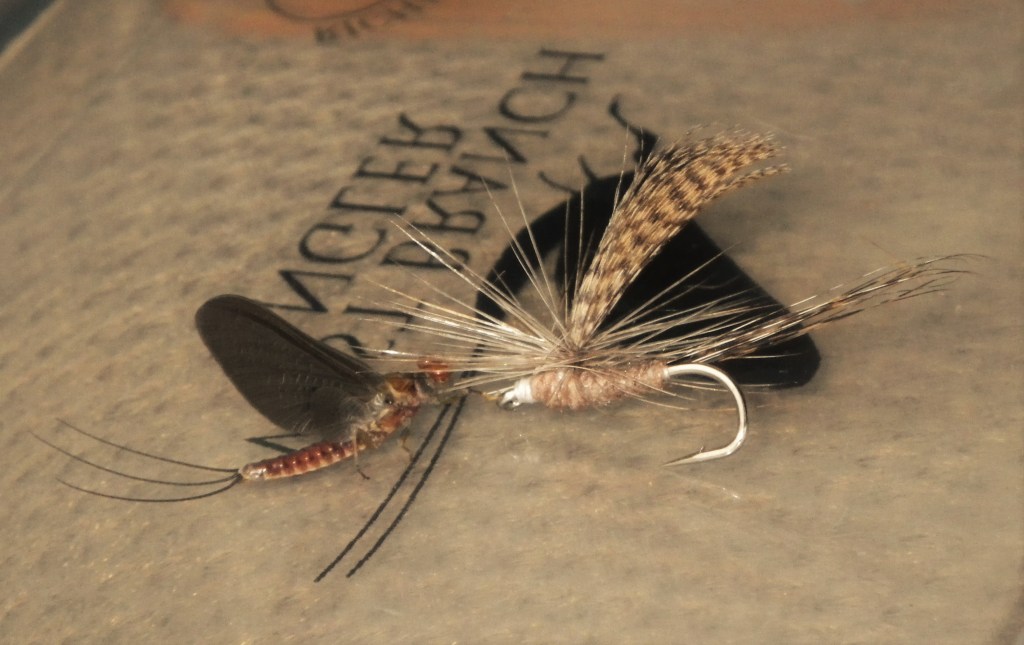
I plucked Mondays afternoon’s Translucence Isonychia from my fly patch and knotted it to four feet of fresh tippet, figuring that there just might be one or two around during the afternoon, and smiling at the memory of the Delaware rainbows’ fondness for them.

I took a good long walk along the riverbank, stopping along the way to search the surface for signs of life. The first one I saw was a rise too close as I waded in to very shallow water. I offered a few casts half-heartedly, expecting my entry had sent him on his way.

Killing time there, I watched for something to draw my fire. Downstream, in a little flat area between two threads of bouncier current, I finally spotted a single little white wink, the call sign of the Delaware bow.

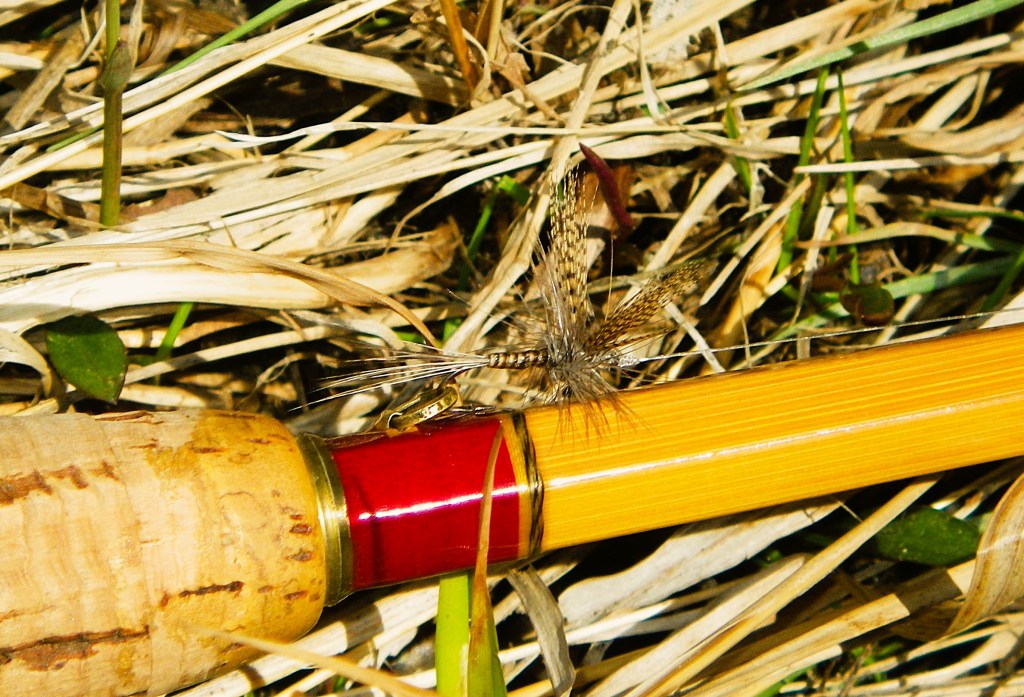
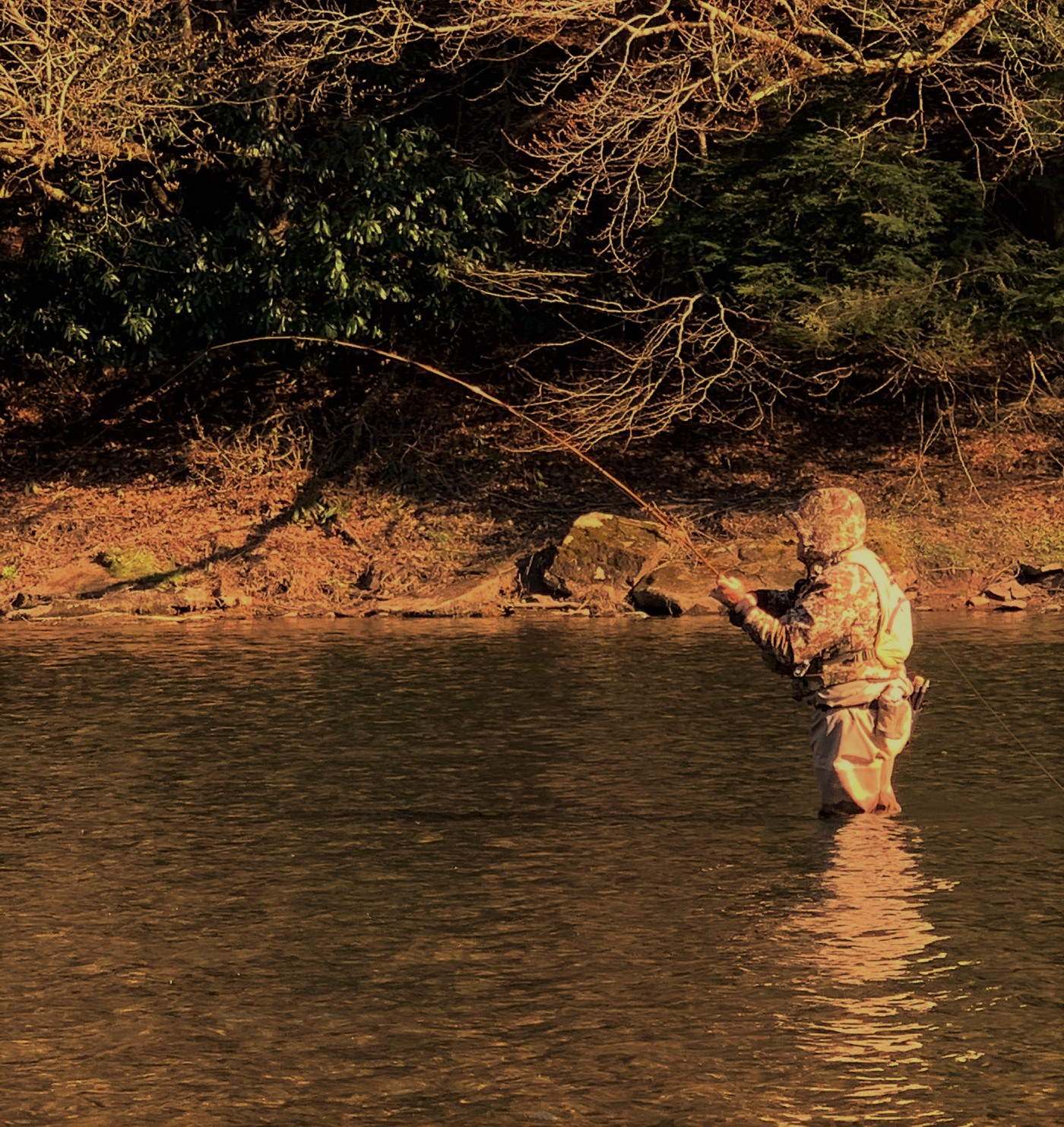
I took care in my approach with a target in sight, working out enough to clear the shoreline trees and bushes with a long back cast. Leaving myself a long, down and across stream shot, I pulled out line and let the big pent go to work. The canted wood duck wing of the 100-Year Dun was visible in the sunlight, and I mended and followed it down with the rod tip each time. I had a pretty good spot on the rise that had drawn me down there, but rainbows like to move around in this river, so I worked the area with successive drifts, working further with each pass. I didn’t get that little white wink, but the fly simply vanished in the middle of a perfect float, and the long shaft of flamed bamboo bowed heavily as I raised the rod to strike.

I had chosen a different line for the pent this time, one of my Airflo Tacticals mounted on a classic 1946 Hardy St. George. It proved to be the perfect choice. This was clearly a big rainbow, and he charged about wringing bright music out of that old English reel. Run after run after run, there was no quit in him.

When I released him, I planned to hold him into the current a bit after such a long hard fight, but he shot away like he was ready for more!

Closing The Circle

The Angler’s Rest Special bathed in morning light begins its first day upon bright water

It was Labor Day, and I do tend not to fish on Holidays and weekends, but after eight months of crafting a bamboo fly rod I could not wait to take it where it was meant to be. I enjoyed my solitude for most of the day, celebrating the craft I now have so much more personal an appreciation for.

The rod casts beautifully near and far, smoothly turning over fifteen feet of leader and my choice of dry fly. Indeed, combining a strong fast taper design with the milder properties of the Lo o bamboo has given me the ideal I imagined!

It was a gorgeous day, one to wade as slowly and cautiously as possible, as the river flows continue to drop. For several hours, there was little sign of activity, though I delighted in the casting, searching for a hidden ghost. Come afternoon though, I found early signs of trout stirring.

There seemed to be several, as their activity moved from simply finning near the surface to actually rising periodically. They seemed to cruise in one protected area. From distance, I could not make out what they might be taking, and there seemed nothing on the surface in mid-river. I had tied a pair of my Translucence Isonychia 100-Year Duns on Sunday afternoon, and I selected one to give these cruising trout a try.

Translucence Iso: The original silk blend was a darker claret shade, though I have since lightened it with hints of gray and tan

The cruisers frustrated me, showing no interest in the dun, and I deduced they must be after something just beneath. There was no sign of an emergence, though I spotted a very few duns at a distance which may have been the Isonychia I expected.

One trout finally took a station along the riverbank, and one cast was enough to take him! He fought the powerful arch of the bamboo with diligence and vigor, but the cane wins such battles. The first trout brought to hand with my Angler’s Rest Special posed reluctantly before release.

It was a moment to reflect on those long winter afternoons, planing the cane from quarter inch sawn and beveled strips to tapered rod sections measured in thousandths of an inch. I am supremely happy that I had the chance to make this rod, and that all the hours of effort have resulted in such pure joy!

Eight Months, Six Strips… A Catskill Odyssey

It seemed a workable task when the idea was first floated a year ago at the 30th Catskill Rodmakers Gathering: build a rod with this new Lo o bamboo.

I had just enjoyed my new friend Peer’s presentation on the properties and merits of this new material he has studied, and championed, and JA, my best friend in these Catskills, had mentioned some winter projects under his accepted role as steward of the Catskill Fly Fishing Center and Museum’s Catskill Rodmakers Workshop. The ability to build with the Lo o without the endless working with nodes, the weak spot within a culm of bamboo, seemed to mitigate the challenges of age, arthritis and carpal tunnel syndrome… ah the magic of late summer in the Catskills!

Dr. Peer Doering-Arges of Berlin, Germany casts his 7-foot Lo o bamboo rod into the skinny run feeding Ferdon’s Eddy

The internodes of Lo o were a gift from Dr. Doering-Arges, whose company I enjoyed fishing our drought ravaged Catskill rivers during his stay in Roscoe last September. JA and I had talked, and it was agreed that he would shepherd me through the processes of splitting, beveling, planing, glueing, binding, heat treating, sanding, ferruling and assembling my first hand-made bamboo fly rod. It all seemed quite perfect in the cool morning light of September.

Mother Nature had her way with our simple plans for working through a few winter weekends and producing my first bamboo rod in time for spring fishing. Snow and ice-covered roads made travel difficult, even as winter grudgingly transitioned into spring. Planing strips of bamboo from one-quarter inch triangles down to dimensions between 0.190″ and 0.035″ let me discover new pain centers in my aging hands and joints, and of course, a variety of trials and foibles reared their heads throughout the project. JA remained positive and encouraging throughout. My favorite classic fly reel is Hardy’s St. George, my friend and stalwart teacher should hereafter be known as St. John.

Begun on a snowy fourth of January, my rod lay complete save final hardening of the varnish on the twenty-eighth of August. I counted only the actual working shop time, not the travel back and forth, amassing some eighty hours of work over those eight months. On Friday, August 29th, I carried the rod, and half a dozen fly reels out into my yard at Crooked Eddy to realize what I, and the help and kindness of several good friends, had wrought.

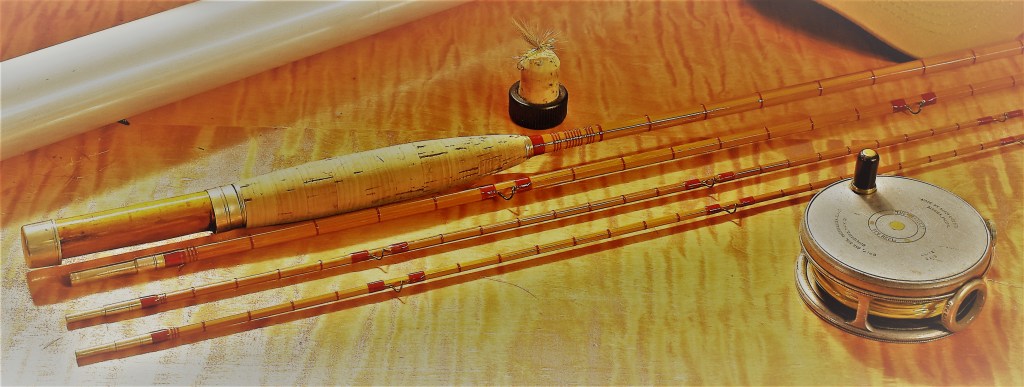
The Angler’s Rest Special: 7’9″ of blood, sweat, tears and Lo o bamboo.

I test cast my rod with double tapered lines made by 406 Fly Lines in Montana, a number four and a five. It liked them both. Two Wulff Bamboo Special fly lines came next, again a four and a five, then an Airflo Tactical Taper 5. The rod handled them all with a smooth, crisp action. The feel of these four familiar lines led me to the last trial, a Scientific Anglers Frequency Boost WF4F, a line made one-half size heavy, thus a four and a half weight line. While all the lines felt good, the half size line felt the best, and yesterday I visited the Dette fly shop and purchased another familiar line, a Cortland Finesse Trout II, a four-and-a-half weight forward with a longer 10-foot front taper that presents dry flies beautifully. That line has been spooled on a special St. George from Colorado’s South Creek Limited, and tomorrow the Angler’s Rest Special will meet bright water upon the rivers of my heart for the first time.

So many long-time friends have guided me as I considered and executed this project. Rodmakers Tom Smithwick and Tom Whittle, my Pennsylvania Two Toms, taught me to understand rod tapers and materials. The taper chosen was Tom Whittle’s 7’9″ three-piece five-weight, a crisp, powerful rod. Discussions with Peer and the Two Toms helped me to conceive how the new bamboo would modify the casting feel of the original taper. This new knowledge was broadened by an ambitious project undertaken by members of IBRA, the Italian Bamboo Rodmakers Association, to quantify the properties of traditional Tonkin cane (Arundinaria amabilis) and Lo o (Bambusa procera). Patient instruction and encouragement from John Apgar and Master Catskill Rodmaker Dennis Menscer lead me through the months of work, pain, setbacks and little triumphs.

Thanks and appreciation are due to the Catskill Fly Fishing Center & Museum for welcoming our group of winter rod crafters and allowing us to work surrounded by Catskill history. Should you consider taking this journey, sign up for a class with John at the Museum’s Catskill Rodmakers Workshop, and take a walk through history as we have!

With all that I learned, I believed that my rod would be crisp yet progressive in action and suited to either 4 or 5 lines, and that is exactly what I have. The time has come to fish, to cast a line on bright water and search for a fine wild trout to complete the circle…