Talking Bamboo

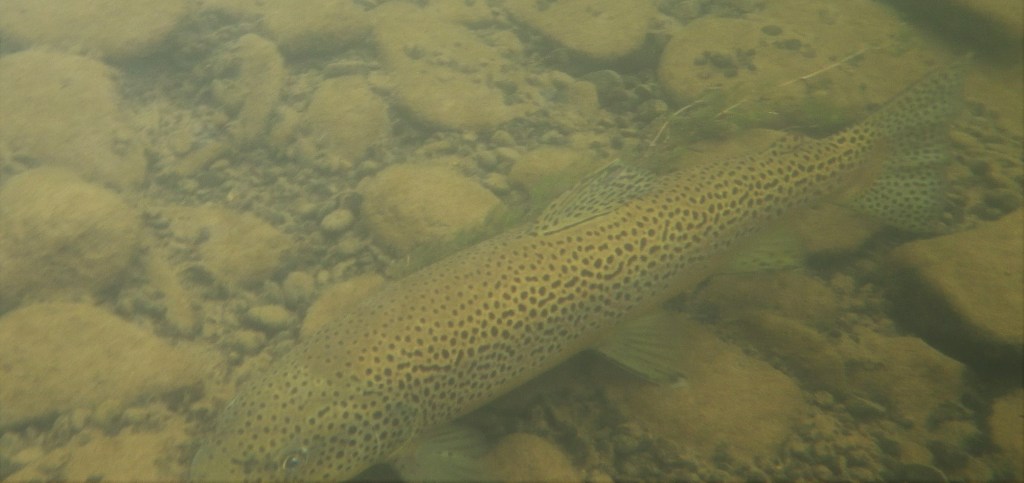
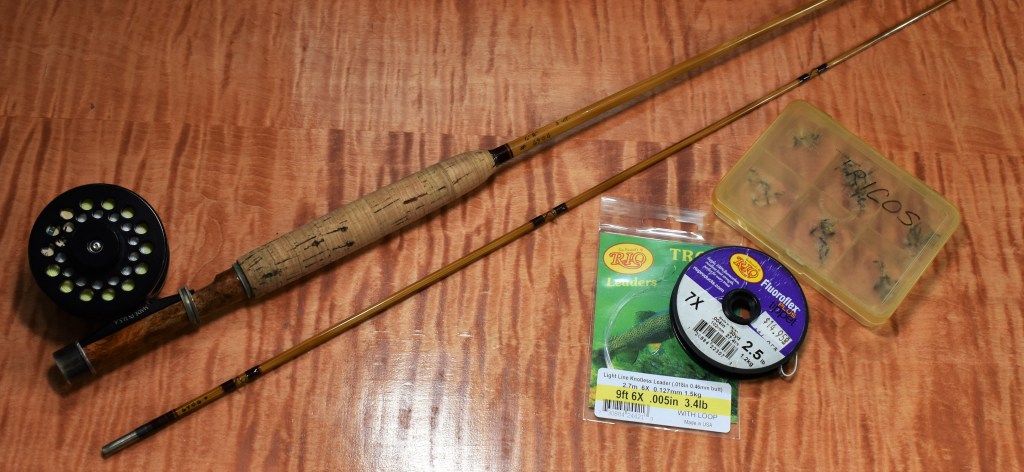
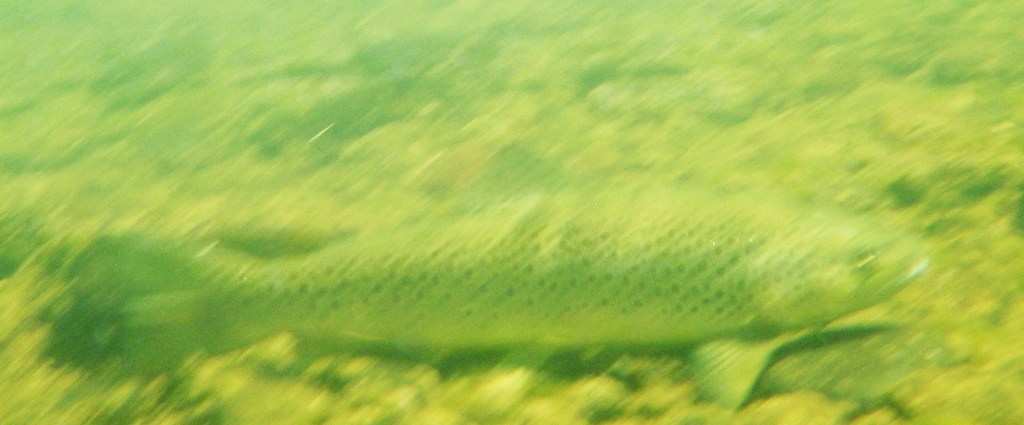
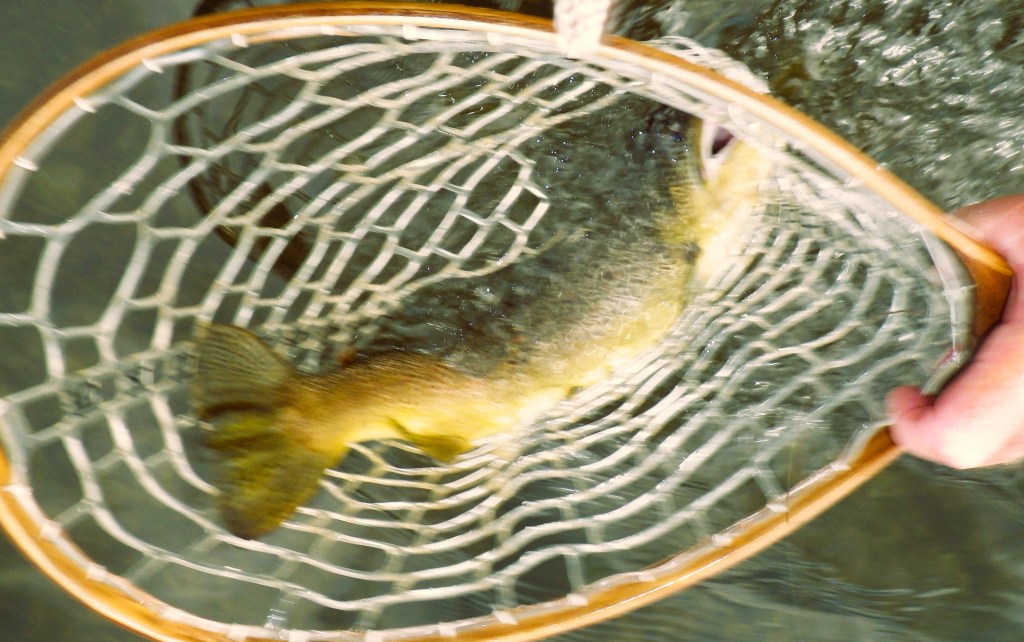
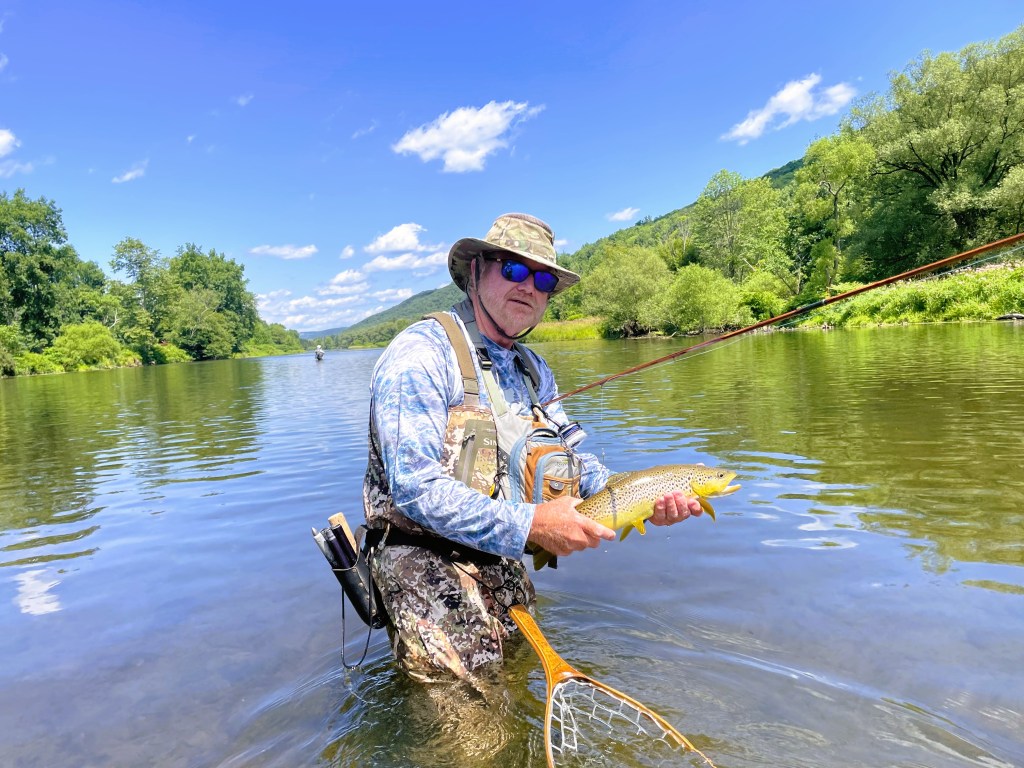
My eight-foot Dennis Menscer Hollowbuilt five weight bamboo rod has been a favorite since I first laid my hands upon it. This is the rod that does it all for me on our Catskill rivers! This Mainstem surprise Tiger Trout is not a fan of the rod’s fish catching abilities!

I enjoyed a couple of hours of talking bamboo this morning, gathered in Dennis Menscer’s rod shop with my friend Henry and his buddy Dave. Our common interest in bamboo fly rods was the initial catalyst for our friendship when Henry and I chanced to meet a decade or more ago at West Branch Angler. It was good to get my friends together at last!

Dennis has been hard at work on a growing list of rod orders, a list that grew again this morning thanks to Dave. We enjoyed the late morning sunshine beside the West Branch as the three of us cast Dennis’ eight foot and eight and a half foot hollowbuilt trout rods. I could see the lights go on in both of these guys eyes as they sampled the master rod maker’s craft.

Dave finally decided on an eight and a half foot five weight and discussed his preferences for the ideal rod grip with Dennis before writing down his particulars on the order sheet. I know he is going to love that rod when he first takes it out of the tube, inhaling the sweet aroma of varnish and poplin. His first cast to a rising trout will be a moment he remembers fondly for a long time. I know from personal experience.

I clearly recall a warm spring evening there on the West Branch when the rod seemed to deliver my Quill Bodied Spinner to a dimpling rise near twilight, without any conscious effort on my part. The brown that gently sipped that dry fly measured twenty inches long after he tested the flex of my new hollowbuilt wand!

My most recent Menscer rod is the 7’6″ four weight he makes to a classic Payne taper. This rod was also christened by taking a big Catskill brown trout, with a twenty incher during early autumn on the Beaver Kill.

I always enjoy my visits to Dennis’ rod shop and some of the long talks we have had about bamboo rods and their histories. Besides making some of the finest bamboo fly rods you can fish, Dennis does a lot of remarkable restoration work on classic rods from Paynes to Leonards to Thomases and Kosmic’s, he has an incredible knowledge of rods and the historic rod makers that have become legends.

Fishing bamboo enriches our angling experiences and discussing rod techniques and tapers both past and present draws us further into the mystique of the craft. Breathe the varnish and feel the cast!

Another Bite of The Apple

A Green Drake Dun in all its glory.

Of course, the long awaited taste of the excitement of the Drakes led me to return. Who would not hope for another bite of the apple.

I still mourn the loss of the grand abundance of two decades ago, though I welcome whatever return to that unique feeling I am given. Our rivers have been ravaged by numerous floods, ever intensifying traffic, and the whims of the water hoarders, so it is something of a victory to witness Nature’s small attempts at renewal.

Everything about the fishing changed on my second evening. There were no Coffin Flies to sweeten the mix, early, late or otherwise. Indeed, there was little in the way of early fishing throughout the beauty of the early evening hours. That is not to say that there was not a player or two.

During those golden hours, I witnessed the occasional dimple, typically hard to interpret. The rises were exceedingly sporadic, generally of the softer variety, and to no visible insect. I scanned the surface for spinners, tiny emergers or hanging nymphs, finding that at least whatever drift line I was standing in appeared devoid of anything. It was classic, that moment we have all lived over and over on trout rivers.

The angler’s reactions typically find their base in logic and experience or pure chance and whimsy. Often it seems that one path is as ineffective as the other. My tendencies are to take the high road, offering imitations of the various flies of the season. In June, that can be a long term avocation.

Observation finally bore fruit, and I saw a small yellowish blur of motion escape a rushed dimple. Applying the logic and experience – it is sulfur season, and many of the flies of the season have been smaller than normal, led me to knot a sparsely tied, size 20 CDC sulfur dun and offer it to an otherwise totally reluctant companion of two evenings running. No, I cannot swear it was the same trout both Sunday and Monday, but his location and behavior certainly suggested that. He dimpled away sporadically both evenings, never seeming to change his attitude, not even when the big mayflies made their appearances; and he simply ignored everything I offered.

That tiny little sulfur unmasked the gentleman for what he was, obviously one of the noted small fly connoisseurs that have become somewhat common on these rivers. He took it gently on my second drift and then lost all semblance of his haughtily maintained decorum. He leaped, ran and cavorted maniacally all over the shallow flat, vexing my identification with an unusual mixture of light and dark coloration. It can be hard to form an accurate picture in the mind of a blur.

Reduced at last to a momentary rest in my net, he was revealed as one of the more unique brown trout of my memory, silvery and heavily spotted from his gill plate to just past his pectorals, and dark and miraculously colored from that point astern. Vibrant, unique and a respectable eighteen inches long, he was appreciated for his ability to elude me for two days as well as for his vigor and aerial display.

As said, that was my main entertainment for the early evening. What Drakes came did not appear until the fabled last half hour of daylight. I cannot count the times that last half hour has provided the only fishing for the day over more than three decades of angling. The flies were not numerous, but there were enough of them emerging to finally bring the other lurkers in the pool on the feed. I set about fishing them as efficiently as my excitement and sense of the rapidly ticking clock would allow.

After trying a couple of different patterns, I knotted a 100-Year Drake to my 5X tippet, having gone down earlier in deference to the skittish behavior of the trout and ever lower and clearer water. The first taker in the gloom fought enviably, as I showed him no mercy in light of the lighter tippet. Netted, measured and released, he was an inch longer than my multicolored leaper and noticeably heavier through his body. Catching my breath, I checked the tippet for abrasions and defects, then began searching for my next opponent.

There was one good fish moving, taking two or three Drakes in rapid succession, each in a different location. My casts never seemed to catch up with him. The sporadic nature of the hatch caused a lull while I searched for another trout on station. The one I finally found was nearly even with me, and I knew my drift would be shorter without the advantage of a sharp downstream angle for my cast.

I made half a dozen pitches, checking the rod low to throw as much slack as possible into the leader, before my Drake vanished in a white flare followed by a quick explosion as the hook sunk home. He ran immediately, the rod arching and throbbing, then turned back as if remembering the advantage of cover. A bit of artful rod manipulation kept my fragile tippet from the rocks, until he was off again on another sustained run. If a tactic doesn’t work the first time, try it again was clearly his game, though he was using precious energy running back and forth; advantage angler. Thrashing in the net, I measured him at an easy twenty-one inches!

It was dark now, with moments remaining in my magic half hour. One terrific boil ninety feet away caught my attention despite the gloom, and I knew there wasn’t time for an approach. Curbing my enthusiasm’s tendencies to push the rod too hard, I concentrated on the timing that allowed the twenty-year-old Paradigm to do what so many modern rods cannot. The big Drake alighted gently out there, barely visible at that distance, but the boil was more than big enough to see even in the dark. A long, wide flanked silver gleam erupted several feet into the air, and it was finished. I was left standing there in the darkened river, laughing.

Nine o’clock, and the boils here and there throughout the pool quickly diminished. Stillness reigned. With but a final, faint glow in the sky, the magic time passed into memory.

Yes Virginia, There Is A Green Drake

Sometimes, when I am really reaching to touch the magic, I make sure to tie a few specific flies for the day ahead. Yesterday morning, as I contemplated a hoped-for last chance for any Green Drake activity, I tied a pair of Coffin Flies in the style of my 100-Year Dun. Did I mention I really needed to touch the magic?

I have long been a card-carrying member of the Cult of the Green Drake. Membership requires devotion, hours and days of waiting along riverbanks, hoping to see those first big, lumbering mayflies lifting from the surface. The Cult also requires the acceptance of certain facts: that there will not be a good hatch every year; that if the hatch comes it may not bring trout to the surface until darkness envelopes the river; and that the trout that do feed upon the Drake may spend their energy chasing only the nymphs struggling to the surface, never touching a dun.

I was inducted long ago on the hallowed Beaver Kill, mesmerized forever as the Coffin Flies danced above the riffle. As they neared the water’s surface, they touched their white abdomens to the river, depositing the precious cargo that would seed the next generation, two years hence. The trout became frenzied as such big meals literally danced on their rooftop, slashing and leaping for the huge flies. My induction ceremony was completed when a nineteen-inch brown trout slashed my hesitatingly tied Dette Coffin Fly and rocketed into the evening sky!

Our meetings have been limited over the past few years, as I have not found the hatch in fishable numbers, and this year appeared to be the worst yet. I had seen only a few duns, and not a single one had been taken by a trout in my presence. A respected friend had told me he had stopped even carrying Green Drake imitations a decade ago, further cementing my belief that this once great tradition of fly fishing was dying out.

Many times, I have sat in the grass of the riverbank and plucked the lusciously huge black and green duns from the margins of the river, this one still wriggling to free himself from his nymphal shuck!

Our Catskill rivers were once home to a magnificent wealth of large mayflies, and the Green Drake was the king! I recall one night many years ago when I was chasing the hatch on the Beaver Kill. The pool I had selected became overly crowded with anglers, and very few flies appeared. I waited, finally deciding too late that the hatch would not materialize that night on that reach of water. I walked briskly to my truck and drove to another pool on another river as daylight dwindled. When I arrived at the small, round pool I sought, the site was staggering: the surface was covered with Coffin Flies and Brown Drake spinners, with trout rising everywhere!

One cautious step into the pool put down every trout within casting range, and as each step increased the magical safety zone around me, I bowed my head in the dying light, stopped casting, and silently watched the spectacle. As darkness fell and the sounds of the feeding trout quieted, I met another starstruck angler in the parking area. John Randolph was Editor Emeritus of Fly Fisherman magazine, a man who had fished all over the world and written marvelously of rivers I will never see, and as he described his evening his excitement and sense of awe was palpable. Those were the days of plenty, of high magic upon clear, quiet pools, and I fear I shall not see their like again!

Last evening, I suited up and headed to the river, my pair of 100-Year Coffin Flies tucked into a special compartment of my Wheatley fly box. Two anglers were just beginning their walk when I assembled my old Thomas & Thomas Paradigm. They took a path downstream, so I turned up and eased along the edge of a great empty expanse of quiet water. Perhaps seventy yards upriver, my eyes caught movement at my feet: one wriggling Coffin Fly, preceded by two fully spent companions drifted down in inches of water.

I spotted a single soft rise and began the slow, gentle stalk into casting range, knotting one of my precious magic flies to four feet of 4X fluorocarbon. It took several minutes to reach a casting position without sending notice of my presence to that trout, occasionally sipping out there. Just a few Coffin Flies were visible, even with the full glow of the sun on the trout’s lie, but every few minutes another soft rise would appear.

I had made several casts, the long line unrolling well above the water, then checked that the leader would fall in sinuous waves of slack. When the delivery was perfect, the rise met my fly and I raised my rod to an explosion! The great trout darted up current and away, bent upon reaching some hidden snag, but as he turned toward my pressure, victory instantly became defeat. The retrieved fly was perfect, its hook sharp and unbent, but its hold had betrayed me in my moment of perfection. As I dried the hackles, I could not help but feel the doubt borne of this most difficult spring.

After I had settled back to my vigil, another soft rise finally welcomed me back to the game. I checked that hook point again, to be doubly sure, and sent a long loop of fly line and leader into the glimmering, sunlit path of the drift. The rise came gently, and once more my old rod raised into a straining arc which touched off an explosion. He gave me everything he had, and I gasped a bit to myself when I got the first full profile view of him: God that’s a big fish!

A wild Catskill brown trout measuring two feet or more is a very special gift. When such a fish comes to hand with a special dry fly in its jaw, the moment remains in memory forever.

I caught a few more lovely trout that evening, but had five very big, hard charging bullies part company with my fly during our dance. Never was a hook blunted or bent open, each seemingly perfect upon inspection after retrieval of my suddenly, achingly limp fly line. Nature’s and the Cult’s membership dues I expect, though I had some wonderful streaking runs and a wildly throbbing rod to remember when darkness finally brought the interlude to a close.

At one point the beauty and wildness of the scene was accented by a chorus of howls from coyotes away on the mountainside, sending a chill down my spine from the inside to meet the chill of cold water penetrating from my outside.

The Nighttime Is The Right Time

Well, George Thorogood had a great hit under that title anyway: moanin’ the blues my brother! As far as fishing, I am wondering if I should change my habits. During my travelling years, I fished late every night, stalking the darkness in search of great trout and great moments. Retired and living the dream at last now, I tend to be a daytime fisherman.

Part of that is practical. I awake before dawn each morning and get started with my day, catching up on the baseball scores, tying flies, cleaning fly lines and ferrules, and generally getting ready for my fishing day. Depending upon conditions and destination, I am usually out by late morning to start my fishing. By five o’clock I am tired, as being at the end of a twelve-hour day is reason enough to hang up my waders and relax.

The other part of my daytime fishing regimen is the fact that I have spent many dark hours upon rivers, and for too many of them to count I was standing around and waiting for the big event. Yes, those classic evenings do happen, flies appearing, closely followed by the soft rings of rising trout as the direct rays of the sun leave the water, but a lot of those long nights on the river have resulted in a fifteen-minute flurry of activity just at dark. When it is dark enough that you can’t really see what you are doing, there is finally something to do.

Since we were blessed with some badly needed rainfall, followed by a cooler, cloudy day, I decided to spend an evening on the Upper Delaware on Thursday. I checked river gages upstream after three o’clock and decided the water temperature should be pretty good down as far as Stockport. The first thing I did when I got there around four was to wade in and dunk my thermometer. When I pulled it up and read sixty degrees, I figured it was going to be a great evening.

Indeed, standing around in a river as beautiful and impressive as the Delaware has the makings of a fine evening on its own, but my focus was to find some flies on the water, followed by those lovely soft rings in the surface. I did find some flies in the four hours I prowled up and down the river: one Green Drake and two Psilotreta caddisflies. Other than the occasional shad jumping, the surface remained unbroken. It was after eight and I asked myself whether I wanted to stand there another hour: the answer was no. Might I have missed an epic fifteen minutes, half of which can be spent trying to change the fly? That’s always possible, but after thirty years on these rivers I have my doubts.

Anglers have been talking about the lack of hatching insects. A couple mentioned a magazine article about some new corn seed with built in pesticide that, once washed into our rivers, never dissipates. I firmly believe that two straight winters of extreme, prolonged cold with ultra low river flows have been more than hard on the Delaware system. It could be both, and other factors we are not yet aware of. Nature is amazingly resilient, and I hope that, whatever the cause for this apparent downturn in insect life, she works her magic and fixes the problem. As anglers, we need to be vigilant, and do our best to give her a helping hand.

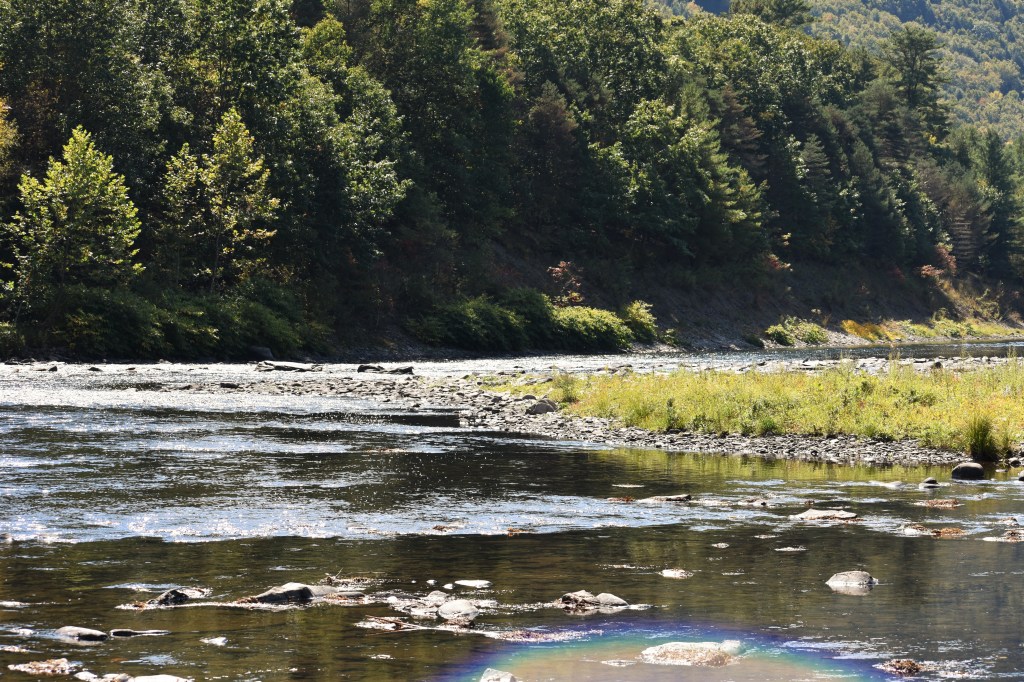
Rainbow Bridge – Delaware River

I may try to re-adjust my schedule and spend a few more nights on the river, just to prove to myself that I am not missing all of the usual daytime action because the trout and insects have decided to work the late shift. If I could only sleep until ten each morning, that would work out wonderfully, but that will remain an unfulfilled wish. I’m getting a little old for eighteen-hour days.

Deja Vu

Through the fog of memory – I have been here before…

Welcome June, the next rung in the ladder of the season lies before us. It should be utter madness, with drakes green and brown, sulfurs, isonychia, cornutas… but it isn’t. Looking more like the doldrums, I have begun to approach this spring fishing like it is summer.

The first step was a positive one. Catching a popular pool unmolested the other day, I slipped into the quiet water and started my search. Stalking, watching, intent upon subtle clues along the recesses of the calm surface. There, a movement, subtle and constrained, though clearly a sign of life.

I stalked that sign, moving slowly and carefully, taking advantage of the breeze whenever it ruffled the water. Sure enough, there was a little dimple in that hidden lie. Other than the omnipresent couple of bouncing caddisflies, the river betrayed no insect activity. Consistent with my revamped thinking, I knotted a small beetle rather than a juicy March Brown.

The cane rod delivered it gently once I waited for a moment between gusts of wind. One cast, two, and then my fly met that dimple. He fought me with vigor, darting and stripping line from the Bougle`, the reel’s protests shrill and exciting there in that moment of solitude. The beauty of the river, the sheltering forest, the trout and I captured the moment.

He was a fine specimen that brownie, thick flanked and belligerent when his quiet brunch was interrupted, still vigorous and golden as he thrashed in the clear meshes of the net. The forceps proved handy to grasp the small fly before returning him to the quiet of the pool. A blessed gift! Summer conditions, summer tactics, yes… I felt quite smug when I had stalked the next little obscure disturbance, and perhaps that was my mistake.

There was another dimple you see, but I failed to convert my subterfuge to arching cane and the shrill music of the Hardy click and pawl. He was no more inclined to sample this summer fare than the next one, and so my theory collapsed.

Here and there for the next hour or so, and on another reach of water the next day, and another the day after that there was nothing but the occasional cruiser. Wiggling bug syndrome is my name for the phenomena, when the general paucity of insects causes idle trout to suddenly rise hard just once, never to come again in that location. WBS has been the character of the rivers I haunt during recent weeks.

There is hope for refreshment this week, rumors of tailwater releases, even good, honest rainfall, but will it change the character of the hatches? We are fortunate that Memorial Day’s interlude of hot weather has been brief, and yes, cooler water can bring about an increase in mayfly activity. Still, this season seems all too familiar.

The early hatches were wonderful in 2021, with each successive species of mayfly becoming increasingly sparse and fleeting. By summer, it was rare to see more than a museum sample of the typical drift. I looked back to winter, and the low flows during its coldest duration. Sadly, that scenario was repeated: low flows, and the weather even colder for longer durations.

Nature is resilient, though the magic of her rebirthing powers takes time. She works on her own clock, not ours, and aging dry fly fishers can only mourn the loss of another season of those precious moments. The grand hatches of April, May and June, those that simply astound us, are indeed magical moments in a fly fisher’s life, and they become more rare as man’s manipulations bring damage and disarray to Nature’s miraculous canvas.

Forgive us our trespasses Mother, and shine your light upon our beautiful rivers that we may witness your grandeur!

Memorial Day

Catching my breath a bit this weekend. It doesn’t seem like it can possibly be Memorial Day already. Before this new season has even gotten properly underway, here we are at the peak.

There are a great many places I would like to be fishing today, though low flows and hot weather will impact most of them and keep me away. I feel for my brother the trout, for there will be masses of anglers too focused upon their wants and needs that will flog those waters despite the warm conditions. Our forecasts have been filled with stormy days and nights of late, yet little in the way of rain has fallen to recharge the rivers.

There are a few Translucense flies on my list to tie this morning, a couple of smaller March Browns I hope may find a chance to tempt a good trout come afternoon. I finally captured a hatching dun last week, snatched him from the air that I might confirm his size and color in this season of sparse emergences. Difficult fishing has at least given me the opportunities to pit my Translucense Series experiments against the wariest of our wild brown trout, and the results have been promising.

I am still waiting for that active day, the good steady hatch of flies with numbers of feeding fish, the kind of day at the heart of the fly fisher’s lust for springtime. There are usually any number of those days between mid-April and the end of May, for this indeed is our prime dry fly season. Nature has something else in store for me this year. The game will be determining just what it is!

Wednesday holds the only expectations for rainfall this week, and that hope is pinned to the whims of thunderstorms, just as it has been of late. Of course, there is still the question of the tailwaters and the City’s Aqueduct Project. Rumors seem to be the only information available. I talked with a friend who listened to the Zoom presentation the Catskill Fly Fishing Center and Museum sponsored earlier in the year. He said that City officials offered no details regarding their planned drawdown of the reservoir system. Something will happen, but exactly what and when they deem superfluous public information. If they need to drawdown their reservoirs, an extra hundred cfs or two of release flow per dam would do our rivers a world of good right now, in the traditional peak of the recreational fishing season.

I’ve been fishing more days and hours than usual these past few weeks and finding less action. The rest this holiday weekend has provided has been welcome. The Catskill Legends Dinner was a welcome respite, and I enjoyed saying hello to a few friends as we congratulated the honorees, Mike Canazon and John Hoeko. I had the chance to read the new book just released by another Catskill Legend: Ed Ostapczuk. His “Wanderings of A Mountain Fly Fisher” (Epigraph Books, Rhinebeck, New York) is warm and personal, and his tales will charm you! Ed’s passion for wild trout and Catskill waters touches all of us who angle for trout. I understand you can find it on Amazon and other outlets.

Perhaps a bit of breakfast and then time to get to those flies…

A Four-Inch Trout and Other Impressions

Morning on the river…

Ah the pitfalls of the frantic search for truth; or at least rising trout…

I passed a milestone this week, had it all planned: alone at my sanctuary, the river quite cool with enough cloud cover to bring on a variety of hatches, my favorite rod with an olde English reel and perfectly tied flies to cover all of the possibilities. As on so many days this spring, plans found a way of going awry.

The solitude did my soul some good, though it would have been a grand gesture had Mother Nature provided a bit of her more palpable magic. She saw fit however to limit her offerings rather severely in light of the occasion. Very few flies were about, just a couple of little caddisfles now and then, sparse pickings insufficient to interest the trout, at least the adult denizens of the area.

Reading riseforms can tell you a lot, and the few I witnessed told me that the young of the year were about. I proved it to myself with a few tentative casts, as well as my catch of the day: a beautifully formed and colored four-inch brown trout. In truth there was another brief display. Walking slowly amid the low water reaches of the river I spotted a quick slurp, audibly the work of a substantial trout. The occurrence was so brief, and my attempts to make good of it so hampered by the gusting wind that it is hard to categorize. There may have been a pair of fish, moving, and if I was pressed to pin down their targets, I would suggest a few stray March Brown nymphs.

The water was cooler than seasonally appropriate, and I had seen perhaps half a dozen duns at distance during the course of the afternoon, none of which had been eaten. The events had all the earmarks of a rapid-fire search and destroy mission on behalf of the advance guard of the Salmo Trutta brigade, and by the time the gusts calmed enough for me to make a cast, it was over, and not to be repeated.

My fishing luck seems to be in a down cycle this spring, perhaps Nature’s inevitable kharma after so magnificent a season in 2021. The day before this celebratory odyssey I had fished long and hard, managing to bring one of this season’s rare large brownies to hand on a Translucense Series spinner. A bit of fishing transpired with that afternoon spinner fall – who says they don’t happen on windy days?

During that sequence, my fly sunk and was apparently taken below, there being no motion in the shallow water to indicate the take until I noticed my tippet wasn’t following my leader downstream. I tightened, felt the heavy pull of a substantial trout, and got my fly back almost instantly. The next dimple to draw my attention sucked down my imitation in a classic sipping rise, with the same result. Two large trout that should have been taken and gently released, with neither of them having to expend the energy for a fight. Such is fishing.

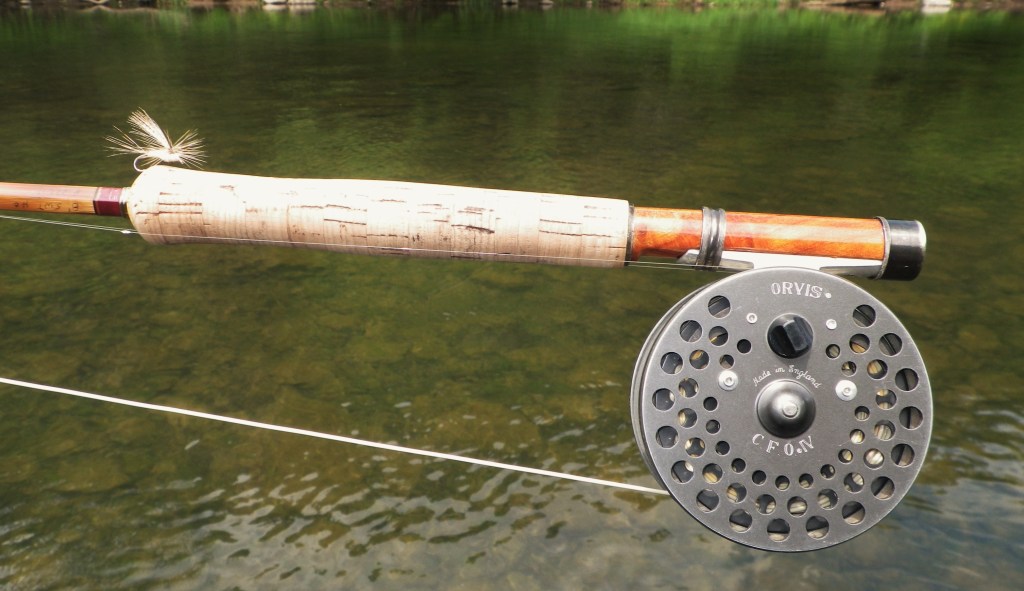
The classic Wheatley fly box seems appropriate company for my five weight Paradigm adorned with a vintage Hardy Perfect that has been around as long as I have, and doubtlessly fishing longer.

A good friend has cancelled his plans for a visit due to the lack of mayflies and rising trout and a truly unfriendly weather forecast for this Memorial Day weekend. Another has had his doctor extend an already prolonged hands-off-the fly-rod period due to injury. A blessing perhaps in that the fishing they will be missing has been anything but remarkable. Too bad though, as the general lack of insects and rising trout create opportunities for memorable long bankside discussions as to why we aren’t catching trout. A third has decided that he will arrive next week for his typical four-day stand, despite my lackluster reports. I notice that hot weather will be returning to greet him, not the best indicator for enhanced trout activity.

Though our weather has had only one brief hot spell, and otherwise been rather pleasant if you don’t mind the wind, water conditions have reminded me more than once of summer. Perhaps it is time to ignore the calendar and shift my tactics to summer fishing. I believe I will spend some time here at the vise and see what I can come up with…

Friends On the Water

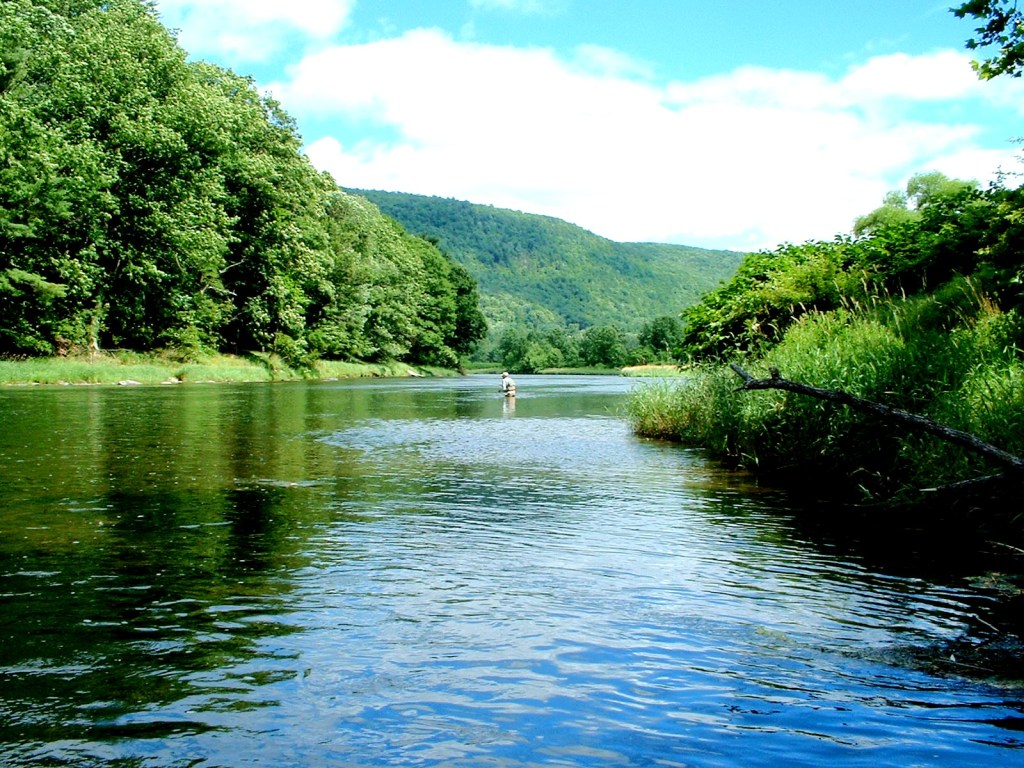
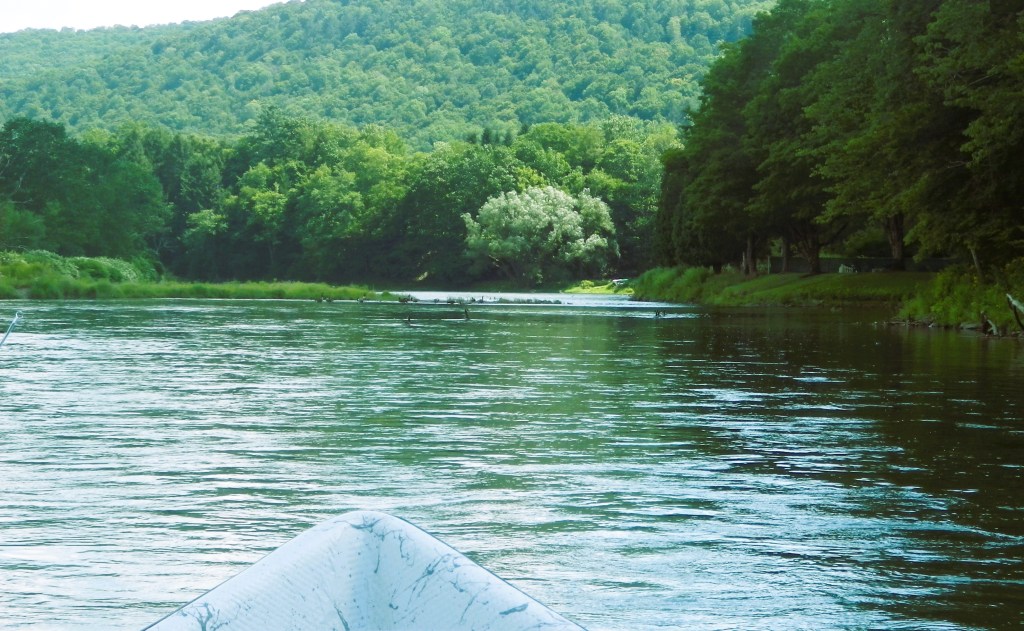
A surprise May afternoon on the West Branch showcases the natural beauty of the Catskills.

It was a busy week for we have come to the heart of May in the Catskills. This is the time of year I expect to spend time with visiting friends, drawn by our mutual expectations for the prime dry fly fishing of the season. My own fishing has been more urgent of late. With our long-awaited spring season coming so much later than anticipated, there is a sense of trying to catch up on opportunities missed, despite the inevitable understanding that hatches missed cannot be recaptured for another year.

Memory has a strong controlling interest during such times, for the urgency can increase the importance of favorite haunts in our plans and decisions. Even residing here in the mecca of my dreams, I find too little time for both exploration and satisfying the natural wish to return to the scenes of my fondest memories. My own search for solitude compounds this dilemma at times, for I have never been one comfortable fishing among crowds.

I learned recently that my friend Henry made a move that brought him much closer to the Catskills. Living within day trip striking distance of these rivers means we will have more opportunities to fish together throughout the season. I met Henry by chance, sometime around a decade ago. Both travelers hanging our waders at West Branch Angler’s Lodge, we struck up a conversation that turned into a lasting friendship. He has a gregarious personality and makes friends easily, welcoming the comradeship of fishing. Our approaches differ markedly.

While I have studied insects and currents, water temperatures and flow regimes, Henry seems to take things as they come. He pretends to be uncertain as to the names of the flies in his boxes, though he rarely makes the wrong choice in his selection. Calling me “the Professor”, his casual demeanor belies an accomplished angler, a fine fly caster with a knack for taking trout and a passion for the rivers. A New York City boy, he told me how his father brought him to the Catskills in his youth. The region and its rivers earned a permanent place in his heart.

We fished together a few weeks ago, a quiet day as it turned out, spending most of it sitting on a riverbank and talking of the fishing we had hoped to be doing. It was a good day, one we both enjoyed to the fullest, whether trout or insects played their roles or not.

I heard from Henry again a week ago. Feeling the pull of the season, he messaged me about coming down for a couple of days. I warned of the storms on our doorstep and suggested a meeting later in the week would offer better fishing. After a rainy night and morning, we agreed to try the West Branch with blue-winged olives in mind. It was barely 56 degrees when I left the house to pick him up and make the short drive to the river, expecting a damp, chilly afternoon.

Upon reaching the river, it wasn’t long before I shed my rain jacket as the sun burned through the cloud cover and brought its welcome glow to the riverscape. We waited a while and talked as we searched for evidence of a rise, which wasn’t too long in coming.

It didn’t take long for the sun to burn through the cloud cover and light the riverscape while we talked. Here we discuss our chances, right before the trout showed us their ways.

Noting the smaller than normal shad flies flitting here and there over the water, I tied a size 20 imitation to my tippet, handing Henry the same fly with the admonishment not to look at it but simply to fish it. That fly design is more than a decade old, yet Henry is one of four anglers that have ever seen it. A few things we keep close to our vests!

About that time a couple of risers invited us to wade in gently and do a little fishing. We separated, dividing the pair of trout and plied our trade. A third riser started up while I was working on my first, and then my attention was grabbed by the fine brownie that grabbed my tiny fly! He fought with splendid strength and vigor, using the current of the run to full advantage, and I was happy to bring him finally to net. Henry’s trout had not responded, nor risen again, thanks perhaps to the drift boat that was kind enough to pass right over the lies of his fish and that third one that had continued to rise throughout my battle with number one. The continuing lack of courtesy of so many of the overabundant guides on the river sadly continues to impress.

I called Henry down in the hope that fish number three, the most consistent of those we had spotted, might resume feeding after recovering from being bumped on the head by the boat’s keel. He did not, though another eventually decided it was safe to enjoy a caddisfly snack. Henry fed him my little size 20 secret deftly and enjoyed a spirited battle until the tiny hook pulled free close to the net.

In the meantime, trout number five took a quick dash for a skipping caddis, allowing me to get back to fishing as opposed to watching. This one also found my little dry to his liking. Bigger and heavier, an equally gorgeously colored brown of nineteen inches, he fought with a will and purpose to be admired. A bit more sunshine, and several more boats passing too close, brought an end to the sparse activity before long. Henry wandered a bit further down the run and fished to a couple of one-time risers, but neither of us would feel our rods arching again.

We waited and talked, scanning down river into the great pool receiving the run that had brought us good fortune, nearly taking the long walk down. It seemed that each time I decided to head there, another boat would row through the pool and put down what I thought might have been a sipping rise two hundred yards away.

As Henry continued easing downstream after those one-timers, I turned back up and stopped surprised to see a sipping rise quite close to my bank. He was in shallow, moving water, in a slot between small piles of rocks, and was happily and steadily sipping away. I accepted his challenge.

I worked close, my anticipation heightening as he stuck his nose out once or twice, confirming his size. He fed eagerly, whether gently sipping or popping that big head right out of the water. Reading riseforms is a time-honored art we use to help unravel the puzzle that leads us to the manna of the right fly. The tiny rings of gentle sips in shallow water speak to tiny duns or spinners, and it was a spinner I offered after a number of casts with the size twenty caddis of the day.

I worked close that I might cast delicately with the six-weight line, such that only my long leader would land near the trout. Neither caddis or spinner drew interest, though I was hampered by a poor angle of light and terrible glare. No matter the fly I chose, I could not see it in the drift, and guessing is doom when it comes to striking in such a scenario.

As usual, I studied the drift at the bottom of that little slot. There were tiny caddis now and then, a handful of Lady H mayflies both living and dead, and an occasional Hendrickson sized rusty spinner. I offered them all, as well as an olive T.P. Dun tied that morning just for the expected rainy day. I couldn’t clearly track any of them, so if any were taken I didn’t see it. I did lift a number of times when the amount of leader drifted back to me suggested that his sipping rise just might have enveloped my fly, never touching that trout, nor spooking him out of his shallow bankside haven.

Eventually I risked backing further out into the river to present my fly from the side. The light angle was much improved, and I could see my fly on most casts, though the results remained the same. I worked that old boy for an hour at least, until he finally seemed satisfied with his afternoon meal and simply ceased rising. If he moved back out into the more comfortable depth of the run, he did so gently and undetected, confident I suppose that he had successfully avoided another pesky angler intent upon leaving him with an unrequited appetite and bruised dignity.

I saluted his mastery of his domain with a tip of my cap and turned back to the run to check upon Henry’s progress.

We both cast for another hour or so in hopes of enticing one of the scattered one-timers, knowing in our hearts that the best part of our fishing was done for the day. At dinner that evening, Henry asked what I had in mind for the morrow. I replied simply that I would be awake at my usual five AM, get up and check the rivers, the winds and weather, and take my best guess at where we might find some unencumbered fishing. One dance with the boats was enough for the week.

The wide waters of May hold promise, but no guarantees. Their beauty and solitude just might be enough.

On Friday Henry joined me at a quiet little pool where we waded in to await the news, which quickly arrived in the form of rising trout. Just a hint of caddis were to be seen, and indeed the fish ignored our copies. We were hoping for March Browns, and Henry was the first to try one of the big mayflies despite evidence of a hatch. I was hip deep when I heard his reel and turned to see him battling a heavy fish. I teased him after watching a bit, for his foe seemed rooted to the same spot on the bottom. “It’s a big fish”, he grunted, then “it’s a brookie” when he first had a glimpse of dark greenish color. His prize turned out to be a huge chub, bigger than the one that had fooled me there a few days earlier. We shared a laugh at our mutual deception.

It would be a day of mixed bag fishing to say the least. I stalked and battled a beautiful twenty-inch brown to the net, then landed surprise as the next two fish to reach my hand were smallmouth bass, while Henry redeemed himself with a fine brownie!

Henry had the best fun of the afternoon, when a powerhouse ate his March Brown Comparadun. I turned as I heard his exclamation, and the rattle of his Hardy St. George, watched the line streaking downstream and away until the great silver arch of a trout rose high into the air. I saw him follow as the reel continued its screams of protest. I silently cheered him on as I saw the end of his line so far away, nearing the boulder field on the far side of the river. I knew his favorite St. George Jr. stored little in the way of backing behind his four-weight fly line, all of which must surely have been extended as that trout failed to surrender.

Henry played that trout to a finish, just as I thought he would. Knowing his tackle, he used every inch of that line perfectly, and landed one terrific wild Delaware rainbow. To my question from a hundred yards upriver, he replied “eighteen inches” though I was convinced that bow looked even bigger in the air. A wonderful fish, and a wonderful memory between two friends. “I think that must be the angriest trout I ever hooked” said Henry as we waded toward the foot path in the afterglow of his battle. The excitement in his voice was still palpable.

May days for March Browns

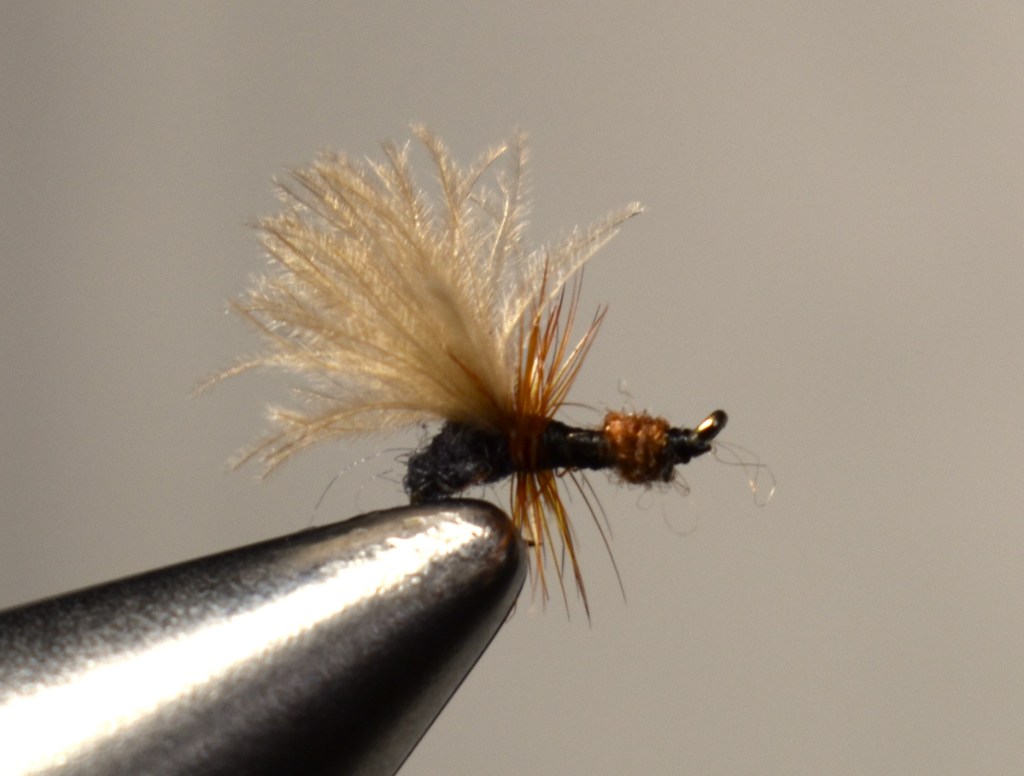
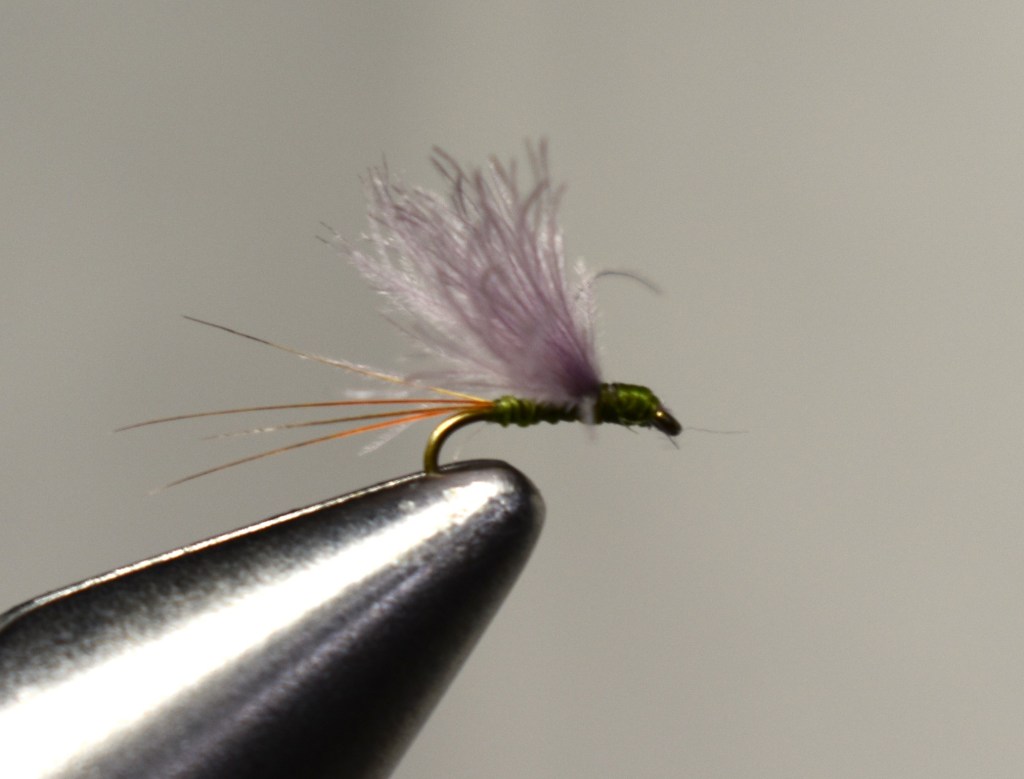
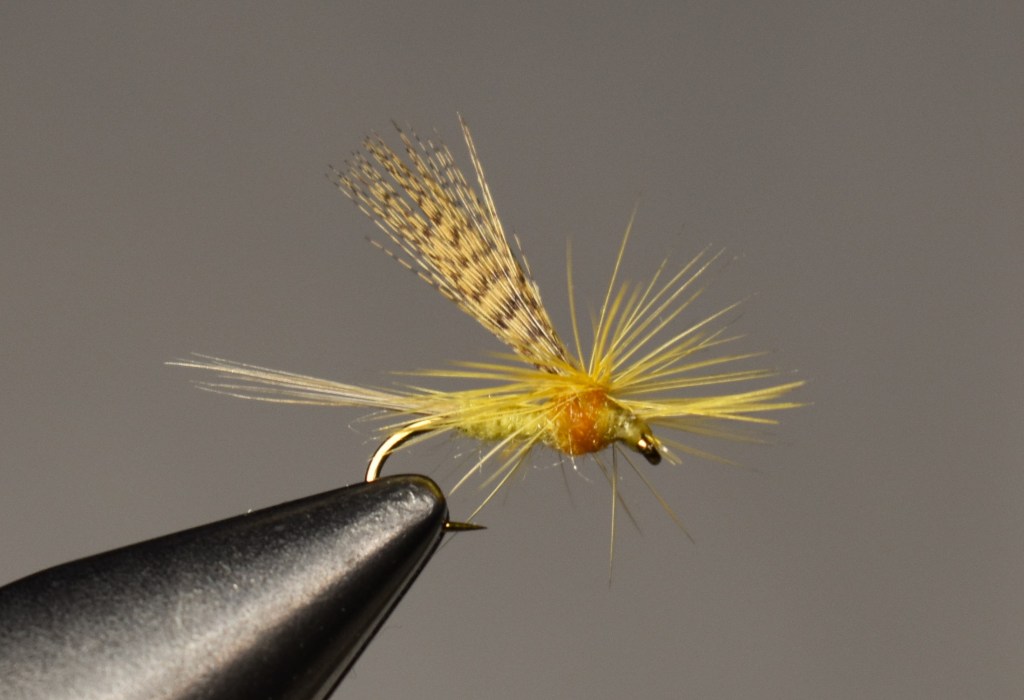
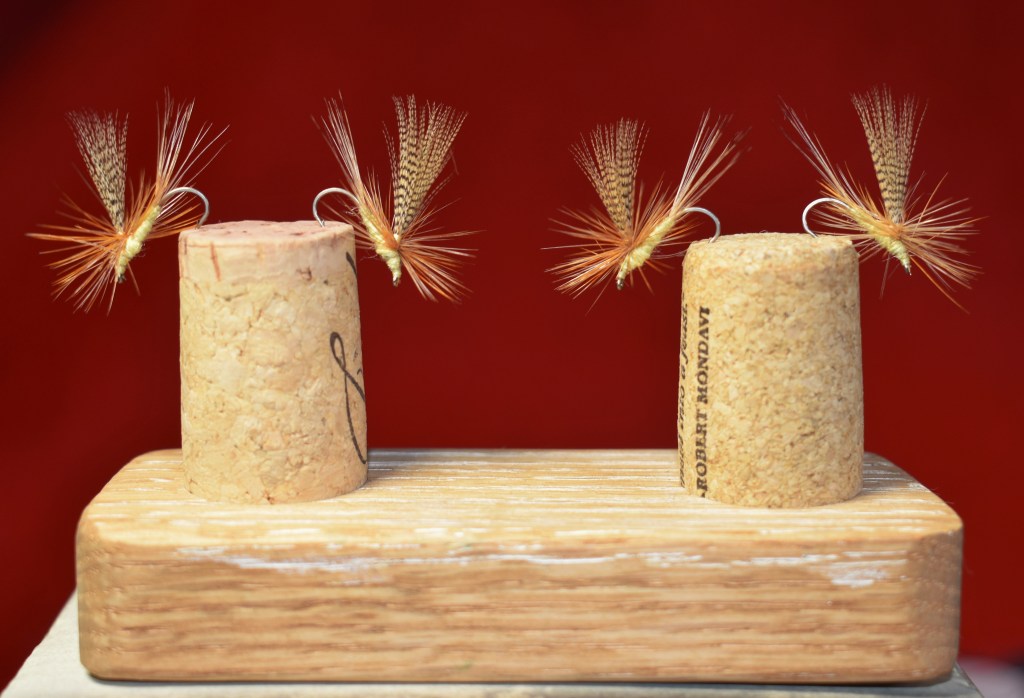
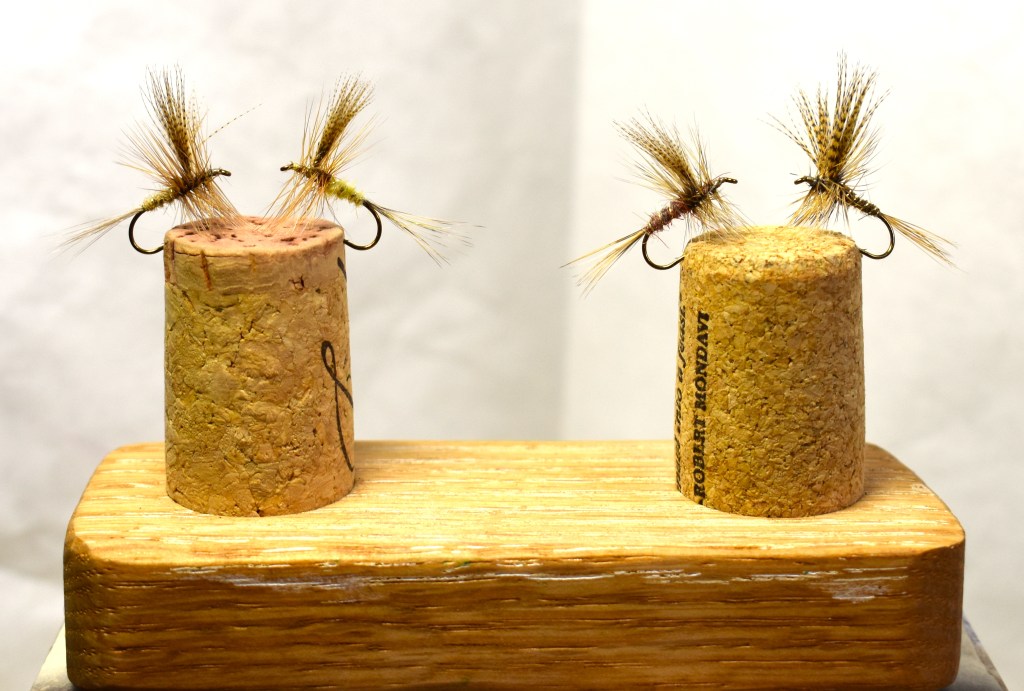
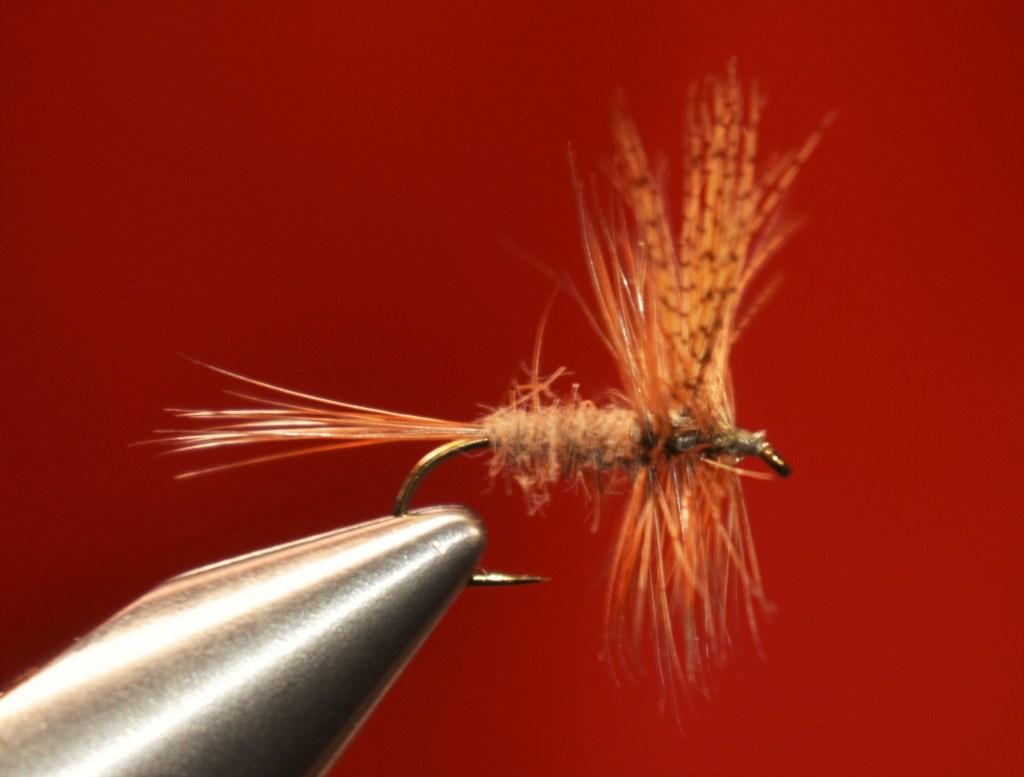
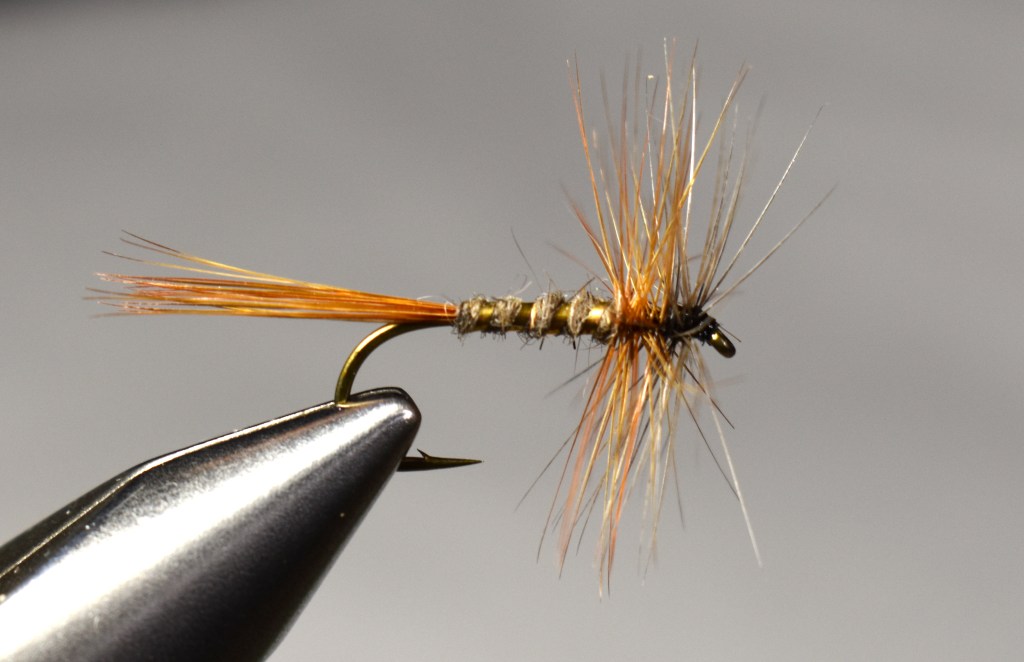
The fixings for my Translucense Series March Browns: Kreinik pure silk dubbing and primrose Ephemera silk. Both color variations are tied with a fully colored Cree hackle and a heavily barred woodduck flank feather.

Despite best laid plans, I found little fishing during the peak of the Hendrickson hatch. Sky high flows and cold water seemed to keep the trout from rising when the flies made an appearance. When conditions changed, they changed rapidly, and I enjoyed some interesting and very technical fishing as my favorite hatch waned. There are a lot of new patterns in my fly boxes that didn’t get a chance to tempt a trout, but my Translucense Series 100-Year Dun did get a few casts when I encountered a good fish cruising and very gingerly sampling the bugs in the film.

I have a special blend of silk dubbing to match Ephemera subvaria, and this was the one day I found them on the water with any trout rising. The fly was fished to that cruising brownie after he ignored a few standby patterns. He accepted it gently and confidently on that bright afternoon and enjoyed the opportunity to spin my little 3″ St. George reel and put a substantial bend in my T&T Hendrickson. He beat the coveted twenty-inch mark by a nose!

After a bit of rainfall with dinner this evening, I sat down at the vise to tie two variations of the Translucense 100-Year Dun for the impending March Brown hatch. My idea was to modify the scheme to incorporate the bleed-through principle to produce the desired tan and yellow color phases. As pictured above, I tied these flies with 6/0 Ephemera silk in primrose, as opposed to the pure white silk normally used for the Translucense Series. I am anxious to find an opportunity to test them on the water.

These special duns will be reserved for the most difficult trout, those that fail to respond to my Dyed Wild and fur dubbed flies. Last season’s turkey biot CDC emergers showed well on the Catskill rivers, and will be well represented in my boxes again this season.

This heavily muscled 22-inch wild brown took everything my tackle could give to keep him out of a fallen tree he rose beside! He gently inhaled the March Brown Emerger pictured above.

I carry both yellow and brown/tan color phases of my primary patterns for the March Brown hatch as I have observed a wide variation in the natural’s coloration during three decades fishing Catskill rivers. I also carry specific patterns for the Gray Fox, a distinctly different mayfly the scientists now insist is just a yellow bodied March Brown. Sorry gentlemen, a DNA kit just won’t fit in my vest!

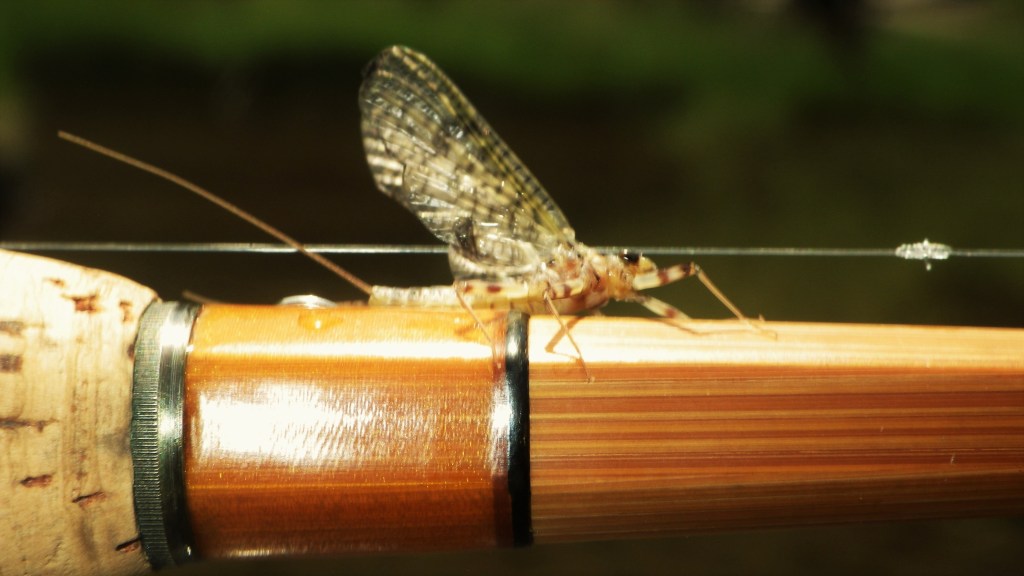
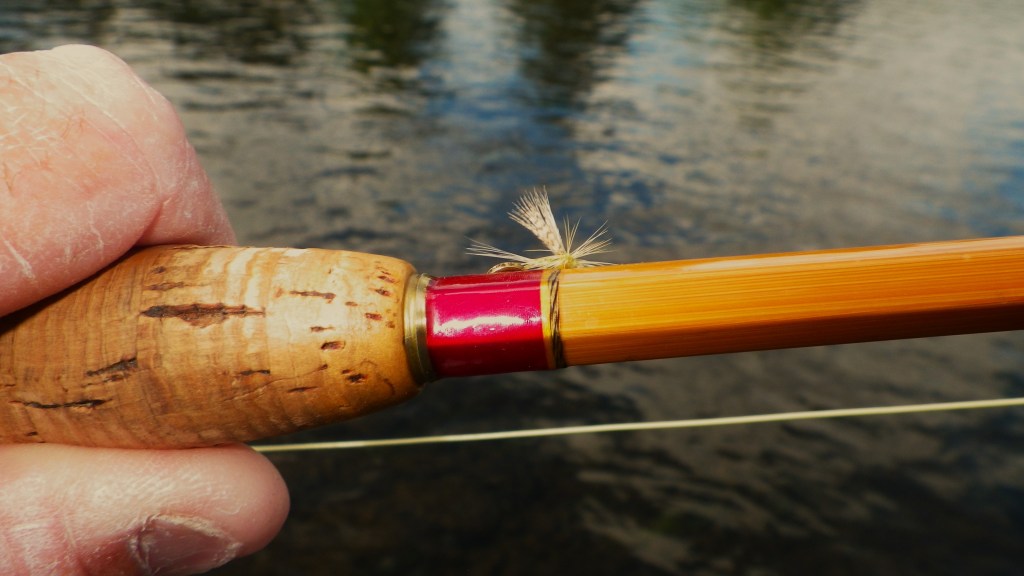
A yellow phase March Brown dun rides the swelled butt of my Thomas & Thomas. For twenty years, every dun I captured was a deep, caramel brown tone on its underside, but I see mainly yellow bellies now!

I plan to begin my search for hatching March Browns this week, as soon as the dangerous weather that is headed east gets away from these mountains. I would love to see one of the rare, epic emergences in 2022. The March Brown’s hatch intensity seems to vary more than any other. Some years we see hardly any of them, while others will be more productive. They are big flies, seemingly hard to miss, but they are also sporadic, daytime emergers.

If there are some around, the trout will find them, even if we anglers have a hard time doing so. I hope we get some much-needed rainfall from this weather system. It has been a long time since I floated the Delaware with good numbers of March Browns hatching. Mother Nature can kindly forget about the “large hail and even tornados” noted in our local forecast and use her miraculous energies to transform that mayhem into twenty-four hours of gentle, soaking rainfall!

Technicalities

Our wild brown trout don’t get big by being careless. Their existence and the myriad changes within the microcosm of their bright water environment are the essence of technical fishing, my first love.

Yesterday brought some clouds to the Catskill rivers, after four days of brilliant sunlight and truly azure skies. It was a breathtaking week, Nature reminding us of her grandeur amid a very reluctant spring. As anglers, we enjoy the warmth of the sunshine and appreciate its sparkling reveal of the clear rivers and sheltering mountainsides in that brief chartreuse first blush of spring. We know that those high skies can make our fishing even tougher, but there are days when it is quite worth the tradeoff.

Rather than enjoying the spring bonanza of heavy mayfly hatches with fine trout nearly jumping over one another to feed upon them, the long awaited first week of beautiful spring weather brought us straight into an arena prime for technical dry fly fishing, my favorite kind. The hatches of Hendricksons and Blue Quills were waning, and the Shad caddis made only a peripheral appearance, so the quality, difficult trout I seek were very selective in their feeding, exactly what I have come to expect under bright skies in low, clear water.

I walked the riverbanks under cloudy skies yesterday, with an upstream breeze that would add another challenge to my fishing. The wind would calm periodically, and the sun appear, though each freshening of that breeze seemed to be accompanied by a new passing cloud bank. I surveyed the changes winter’s flood had wrought on the river as I waited for, I hoped, some sort of hatch.

After a while, a few tiny Shadfly caddis were seen drifting along, and eventually they attracted the interest of a trout. I negotiated the “new” river to reach a good casting position and affixed a typical size 18 version of my favorite caddis pattern. I sought to fish the rise from distance, but that upstream wind had other ideas. I wrestled with it for a while in stubborn determination, and of course my presentations suffered. It seemed that, if I tried waiting on the wind to subside, it just kept blowing.

I finally accepted the challenge of making a closer approach on an untested stretch of river bottom. I had noticed that my fly looked somewhat larger than the naturals my trout sucked down every once in a while, and went to my fly box for one of the size 20 dries I had made sure to store within. It was just days more than a year ago when I encountered hundreds of tiny size 20 shadflies on a frosty West Branch while floating the river. I hadn’t brought my twenties that day, luckily making due by performing surgery on a couple of sparser eighteens. Lessons learned. Shad caddis are always size 18, unless they aren’t.

With my new position and dry fly, I renewed my patience with regards to that wind, and was rewarded for my efforts. Just as the wind laid momentarily, I gave the Paradigm a smooth, gentle stroke to unroll line and leader, dropping the tiny fly in the ideal line of drift with soft coils of tippet. Glup, said the trout and then the vintage Perfect was spinning with his rapid departure!

He fought like a champion, that brownie! The old Hardy is as old as I am, and time has turned its action quite silky, its music still sublime when it plays the tune of a hard running fish. The amber arc of the bamboo absorbed the head shakes and changes of direction, until I was finally able to lead him to the net. He was gorgeously colored and wide flanked from gill plate to the wrist of his tail, no doubt having weathered the long winter better than I.

I worked two others through the course of the afternoon. The second was even more sporadic in his feeding than the first, and he resisted the caddis as well as a couple versions of the Lady H mayflies that appeared in the drift for short intervals as the day advanced. I saw nothing else on the water, save a couple of expired duns, but that recalcitrant trout even refused to have a look at my impromptu corpse, its CDC wing twisted over to one side of the hook to mimic the dead naturals.

Six straight days of river cleanup, lawn work and long afternoons of fishing had taken their toll. I realized how much late in the afternoon, when that third riser appeared. I cast my fly automatically and stared it down current right into his mouth, pausing a bit too long to watch it. You do have to tighten up on them old man. Duh! Well, I could have been two for three. Technical dry fly fishing reminds me a bit of baseball, for I walked out all smiles after batting .300!

Glup!