Blog Feed

Watching and Waiting

Nearly there…

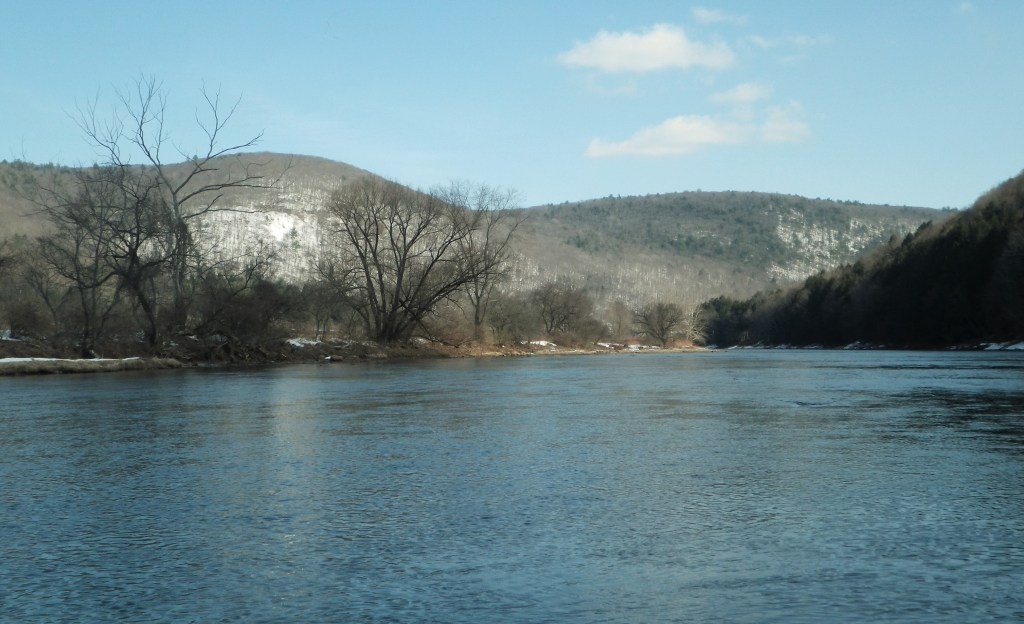
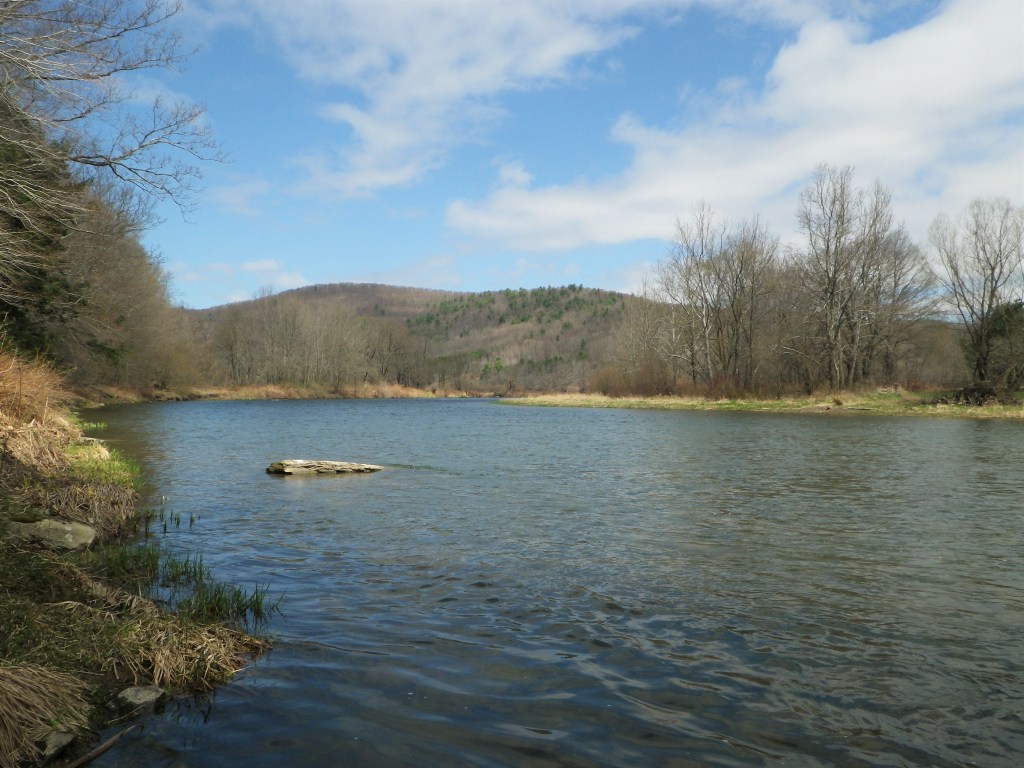
I can nearly taste the sweetness of springtime in the air. The warmest days of the young season have come and gone this week, and river temperatures have flirted with that magic number. The open waters are still far too high to wade, and I can’t get the boat in the river just yet for an early scouting mission; and so, I wait.

There is finally some hope for normalcy, as a great weight has been lifted with the first prick of a needle. Still more than a month to go before reaching that plateau of safety, but my spirits are higher than I can remember. Life seems to have possibilities again!

It is harder to fight the urge to get out there, to participate in all the rest of the angling lifestyle that has been suspended for more than a year. There is a sale I had hoped to attend this weekend, and I nearly made the trip, before judgement overcame exuberance. This is a critical time, and keeping apart is at once more vital and more difficult than ever, for the urge to join is so fresh and strong.

The spring weather seems determined to continue, though perhaps poetically, New York’s last Opening Day expects a high in the thirties with snow showers. More rain is coming tomorrow, so there may not be a wadable river anyway. I was going to go out for this last one, take a bamboo rod and see if I couldn’t find a rising trout; take my last chance to participate in the tradition. I figured I could find a quiet spot on the Beaverkill, perhaps even that one riser to cast to, but the classic river has spent several days flowing more than 3,000 cfs this week.
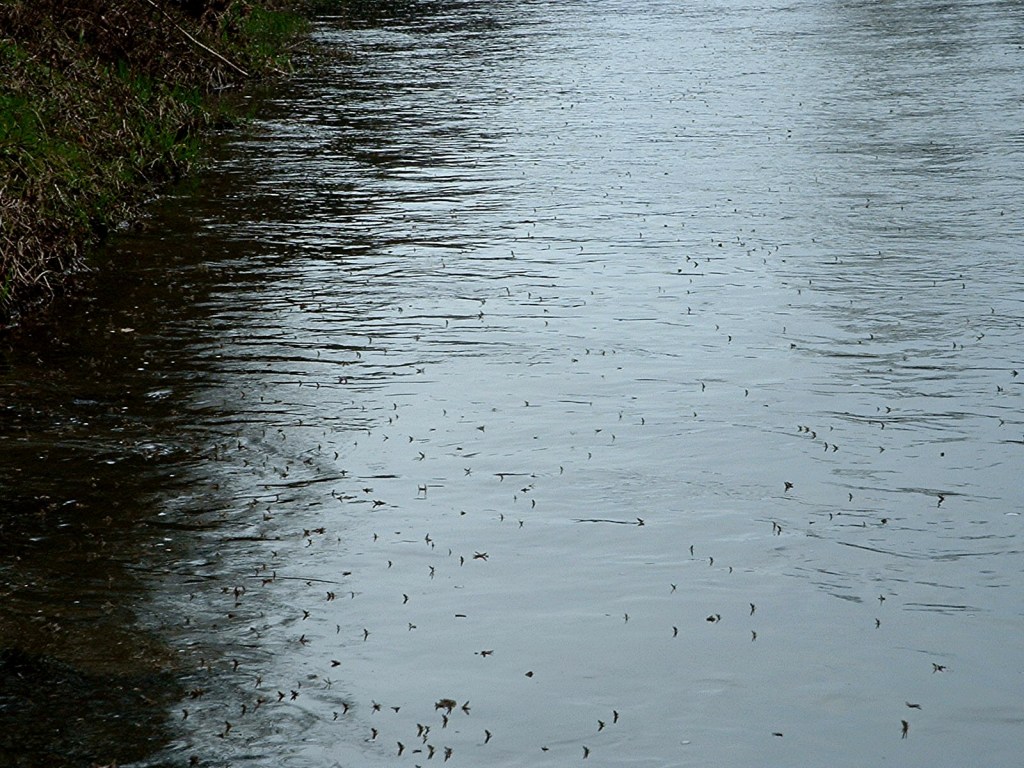
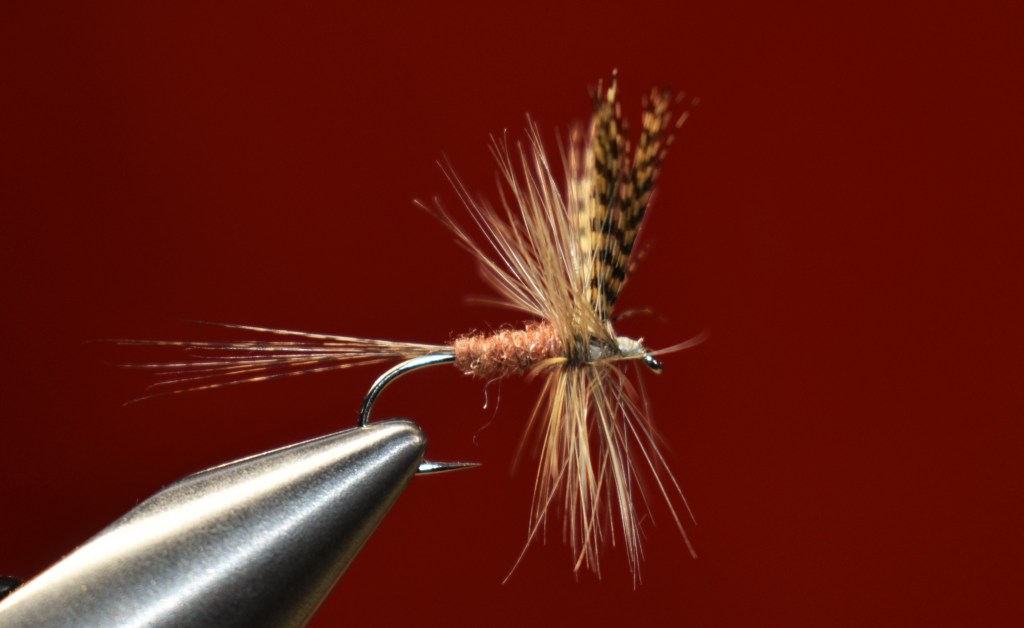
Hendricksons as we wish them to be: prolific!

Waiting, literally quivering with anticipation, for such a simple thing: a little ring upon the surface of the river! I keep hoping that these signs, the ones so easy to read, tell the truth: this will be an early spring, with the waiting measured in days rather than weeks. Though in the back of my mind reason works to trump my senses.

Part of the lure and lore of fly fishing is the thought process, the acquisition and sharing of knowledge, and each angler’s own development of theories as to the timing of hatches, and the reasons trout take a particular fly. As to hatches, I have always embraced the logic in the degree days theory, that each species of aquatic insect requires a certain number of days at a certain minimum temperature to mature. It seems reasonable, and the truth I have witnessed on the rivers supports the concept. In actual fact I believe that Nature’s math is more complex, that the truth lies in some complex formula of calories, water chemistry, genetics and ambient sunlight; though the result is that sustained periods of colder than normal weather and water result in seasonally later hatches of our friend Ephemerella subvaria and brethren. It has been a long, cold winter. Might a day or two of 50 degree water in March be too little, too late to bring last spring’s nymphs to early maturity? I will worry about that until I actually see those slate gray wings upon the surface and the rush of anticipation explodes in my breast!
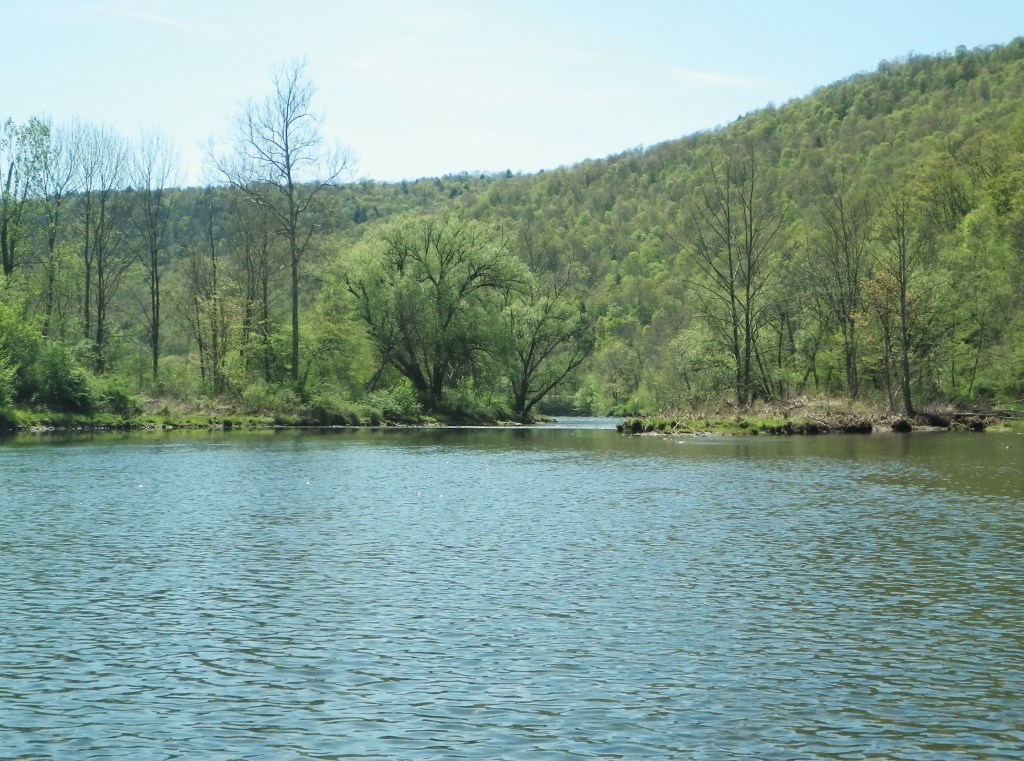
How soon might they float the currents of that Catskill landmark, that classic river of rivers?

Oh how I long to sit and converse with angling friends new and old, to sip a wee dram and share our theories and experiences. We could talk for hours on fly patterns alone! Admiring a fine old cane rod, sharing our individual choices for just the right reel to snug into its seat, laughing at the foibles that have claimed as many great trout as our nets – these are the moments of friendship, we brothers of the angle enjoy nearly as much as time on the water itself.

Is one long dead maker’s rod truly superior to the fine, polished one made a month ago? The discussions are endless, for there is never a definitive answer. The cachet of ancient, historic, groundbreaking craft meets the science of improved precision, modern adhesives and computer refined tapers. Each path allows he who wields the result to touch the magic, that is certain. Those long among the brotherhood cherish our tackle.

I love the soft patina of time and reverent use on my handmade Hardy from 1929, yet I thrill too at the brilliant design, computer controlled machining and careful hand assembly of my new Trutta Perfetta from deep in the Ukraine. Both let me touch the magic. Old and new: new flies designed with inspiration taken from the old ones, ancient braided silk lines and new plastic ones computer designed to mimic their performance. There is much we could talk about after a year away from friendly gatherings.
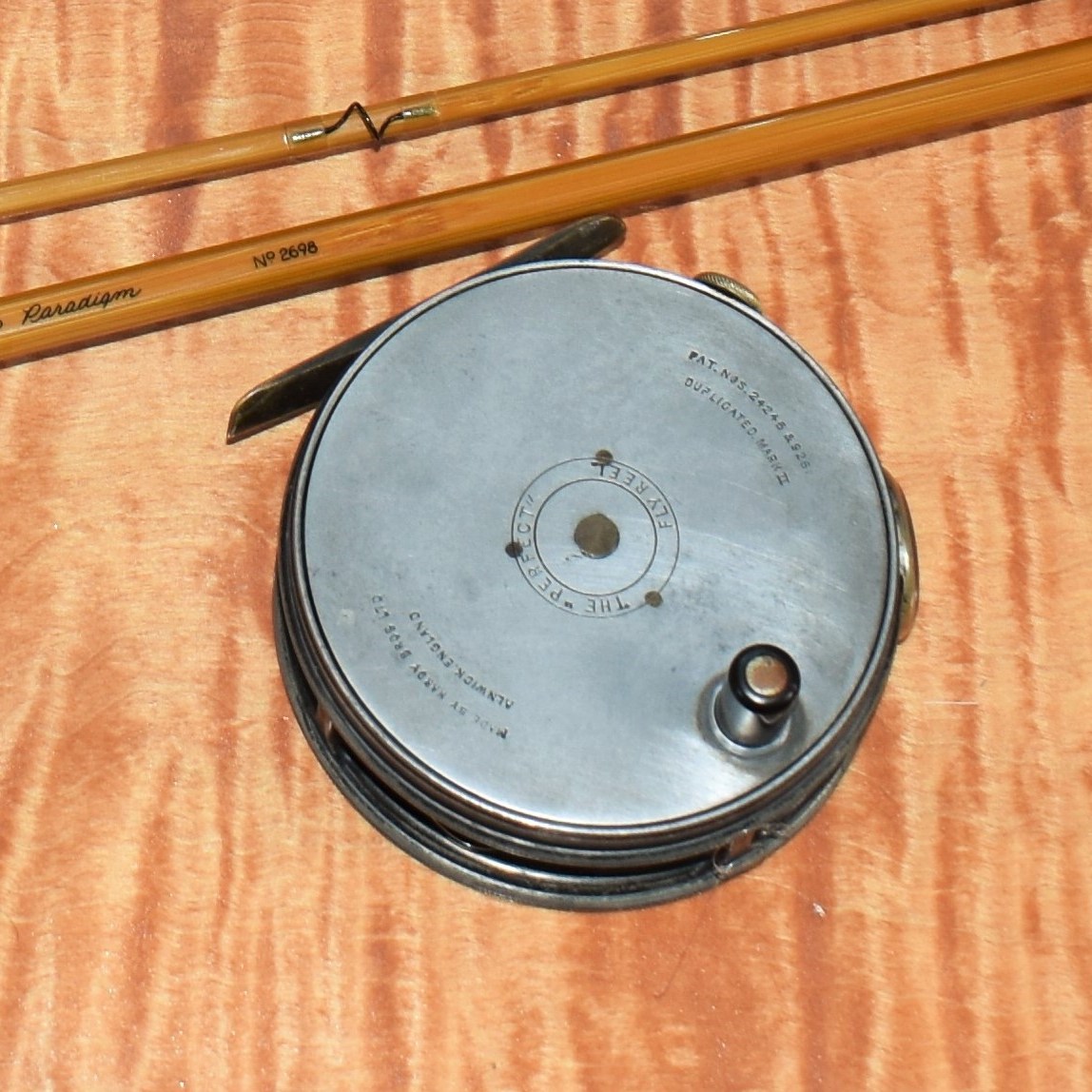
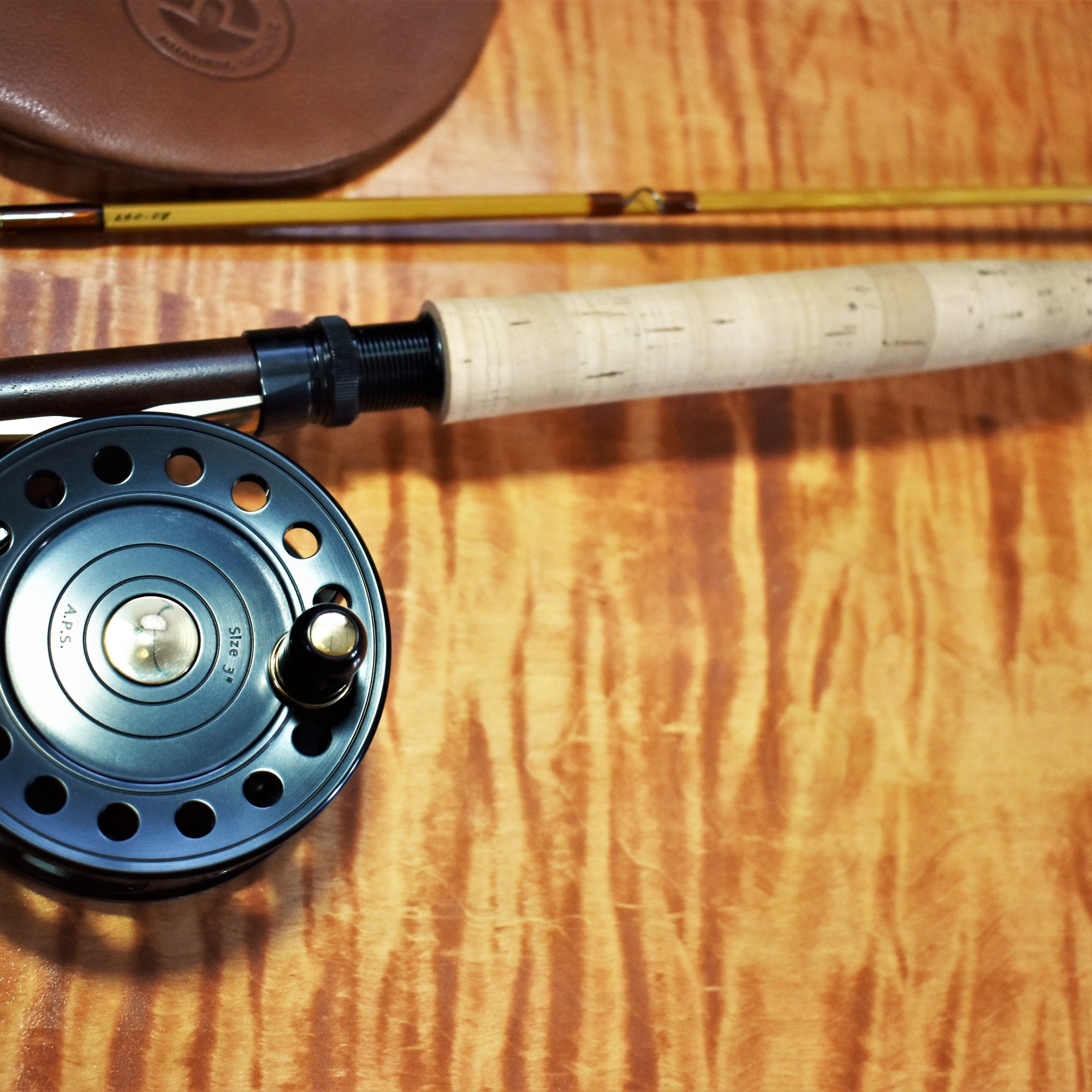
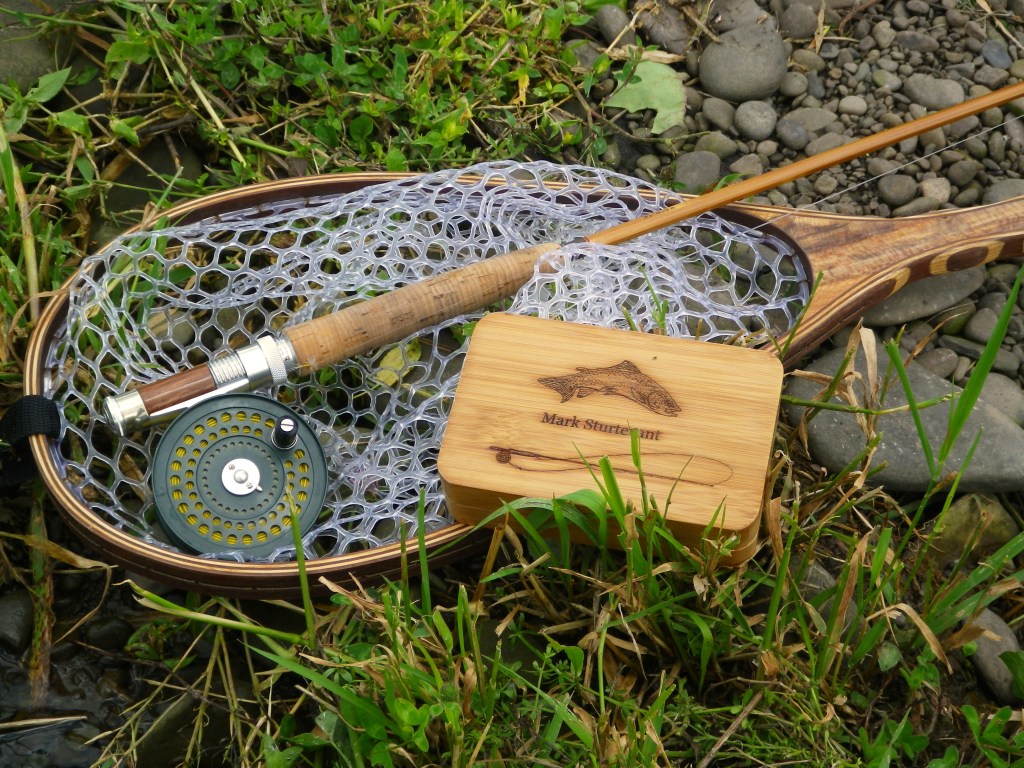
Waiting… pondering the riddles that Nature slowly reveals, thinking of friends and times shared on bright water. Rods are polished, reels oiled, and once in awhile the urge drives us outside to the lawn with a favorite rod: let’s see how it feels with this new longer tapered line.

Early spring or simply a prolonged flirtation? If sunlight brings an early greening to the river banks, will she also bring an early hatch and a rise of trout? I can’t wait to see!
Rainy Day Springtime Preparation

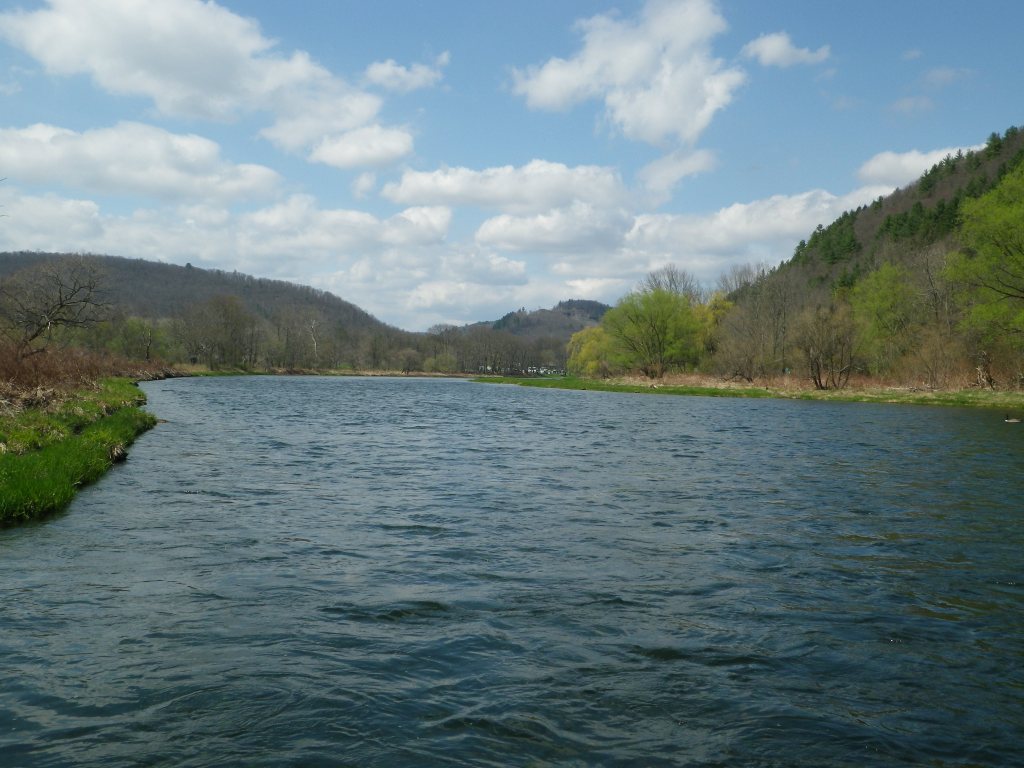
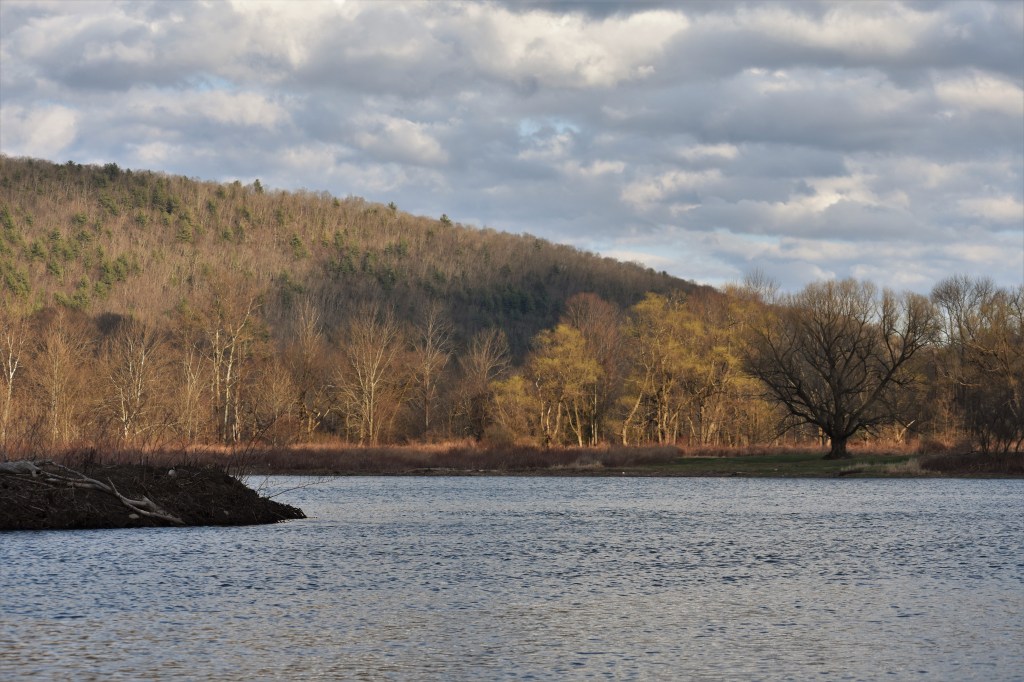
Afternoon and nearing the end of an early April float on the West Branch Delaware.

There is one week remaining in March, and the weather seems content to proceed in a springtime vein. I am anxious for that first sight of a good trout rising, making preparations so that everything is ready to allow for finding that wonderful fish as soon as possible. Rivers are rising on this rainy morning, and there is a good chance that additional showers through the rest of the week will have most of them higher than ideal for wade fishing come opening day. As if keeping an ancient Catskill promise, the forecast for the first of April is one of the coldest days in an otherwise favorable ten day outlook.

I followed through with my plan to get the drift boat ready for action yesterday, choosing to relax and forego a third straight day of searching for trout not yet ready to play my game. I dismantled my “garage” and put that to rest for the fishing season, hooked the trailer up and tested the lights, replacing a bad running light, and giving the tires a visual check. I even finished cutting my bamboo rod holder and put the first two coats of spar varnish on that and my anchor box. I haven’t carried cane in the boat the past two seasons, not wanting to risk damage to a cherished rod. The rod holder will cushion the bamboo blank and keep the tip down out of the way, so my old 9 foot Granger can get some time on the river.

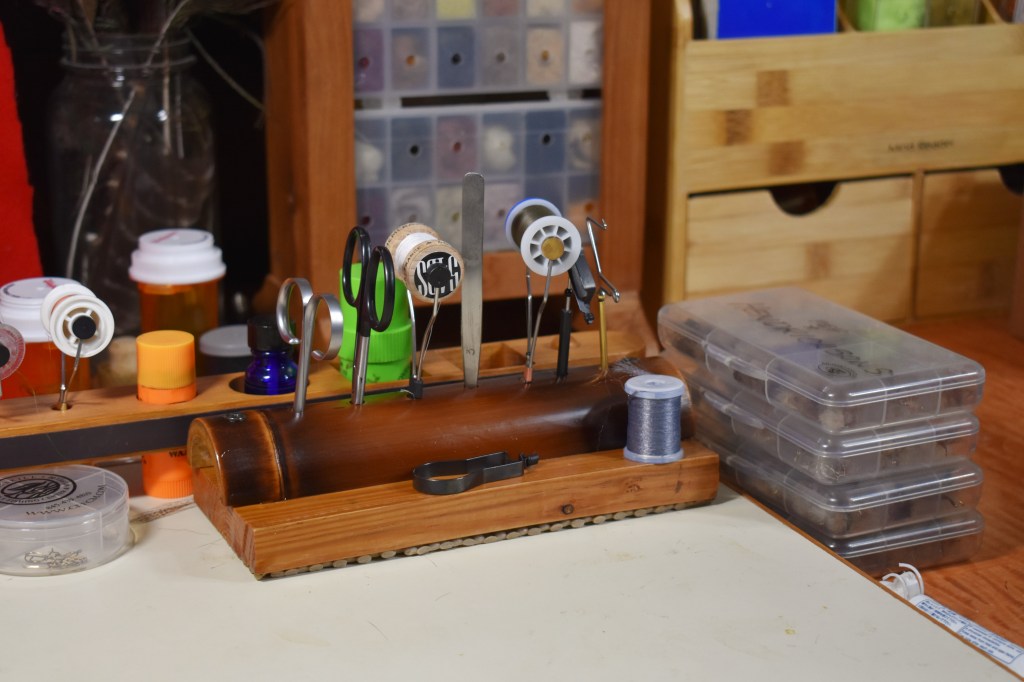
Dennis Menscer wrapped a new guide and gave that old rod a varnish dip for me, something I had planned to do myself back in 2015. That project was derailed by my adventures with death and health care late that March, and I just never got back to it. Thanks to Dennis, that 9050 is ready to go as my boat rod. He also cut and gave me a nice section from a flamed culm of bamboo which I split, sanded and varnished to make the rod holder and a tool holder for my fly tying desk.

Rainy days are great for fly tying and other fishing chores. I tied some dark olives and Quill Gordons this morning and tossed them in a pill bottle with yesterdays Palmered Ravenstones, giving me a fresh dozen early season dries to try to tease up that first riser.

My bamboo tool holder adds a bit more organization to the bench, keeping the most used items handy, and not sliding around on my desktop. I made it small enough to stay out of the way, unlike the old commercial caddies that store my too many other tools.

I guess the boat bag may get my attention next. This time of year I want an insulated Thermoball jacket, a rain jacket, fleece gloves, spare ballcap and a wool watch cap in there at a minimum. Later in the season, once I hope we are all safe enough that my friends can join me, I’ll include a second spare rain jacket in case the visitor forgets his own, and maybe a fleece vest. The early floats will all be solo floats as they were last year. You simply cannot social distance in a drift boat, and I have never believed that 6-foot standard was sufficient anyway.

I have to take a look at the boat box flies I tied last spring, just to refresh my memory as to what I put in there. I know it started with various patterns and sizes of olives, Blue Quills, Gordons and Hendricksons, but I could have added and subtracted some patterns as the spring progressed. I have been mainly a spring float tripper, using the boat when the rivers were too high for the wade fishing I prefer. Our rivers have a funny way of dropping all at once and staying low, and I do not enjoy jockeying all over the river trying to keep it floating while avoiding interfering with too many other boats and waders.

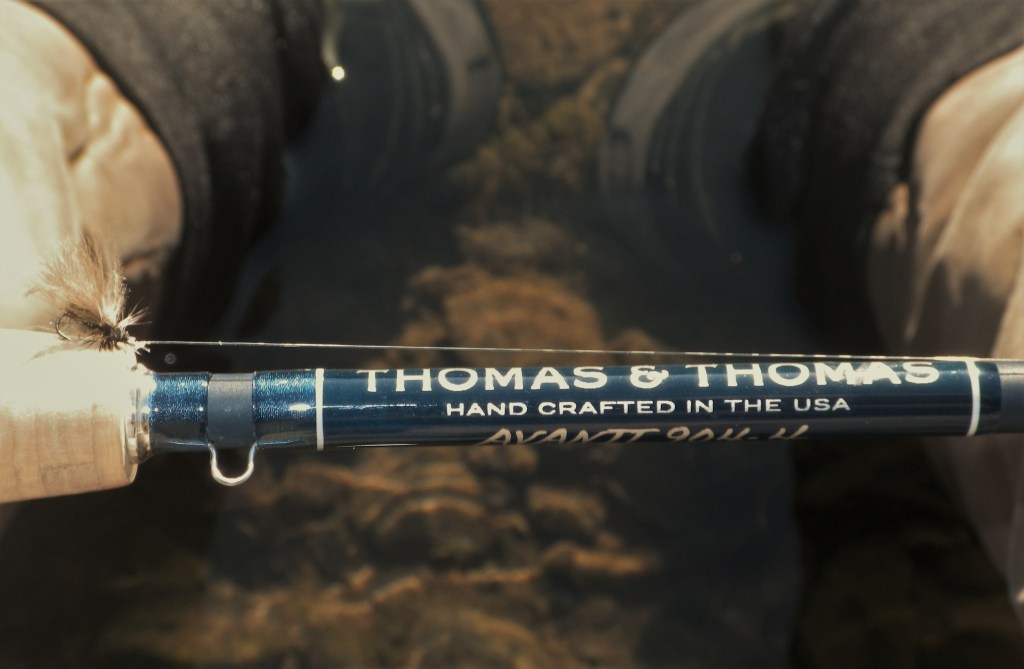
My rods and reels are all in good shape and ready to go. The boat will get the aforementioned Granger and my Thomas & Thomas LPS. That 9′ five weight has been my primary drift boat rod for twenty years. It has a lot of flex, feel and touch for great fly presentations, along with enough power to handle the winds out in open water, and the extra distance fishing from the boat requires. I’ll change to fresh leaders when I chose the rod to start fishing, or simply rebuild the business end according to the flies and conditions.

By this point there really aren’t too many chores remaining. It has been a long winter and, fishing through most of the year I tend to keep my gear in shape. The last item won’t be tended to until I’m ready to drive to the ramp: filling the lanyard box. I’ve worn one of those simple lanyards ever since the first time I dropped my boat in the river. The clips hold the essentials you need throughout the day: nippers, tippet, fly floatant and a tiny plastic fly box with two or three each of the patterns I most expect to be fishing. Some days I never have to open another fly box.

Boat flies tend to be a little different for me than wading flies. CDC dominates many of my hatch matching boxes, but I don’t fish them as often from the drift boat. A float day generally involves long downstream casts, and stripping a CDC dry back thirty or forty feet cast after cast tends to saturate them. The CDC duns I do tie for the boat are winged heavier than my normal flies, because sometimes the best trout simply insist upon that movement. Most of my boat flies are hackled patterns, with parachutes and my posters dominating. The higher casting position and long distances can make flies more difficult to see in some light conditions, thus these patterns have high visibility wings of Antron or Trigger Point Fibers. Those wings don’t soak up water when stripped in for another cast either.

I can still hear the raindrops on my metal roof, filling the groundwater, refreshing the springs and bringing life to the rivers. Amen.

Sunlight and Wandering

Still some time to wait until spring begins to blossom…

I have enjoyed the past two days of warm afternoon sunshine and walks along the rivers. I have even had a tease or two from a rising trout. There were four of them on Sunday, all but one too far from me to even consider a cast. Different fish in different places: one timers. The last was certainly a little fellow, in the same foot deep water I was walking through: blip…hello…I am wishing for spring as much as you are!

Our forecast looking ahead seems to be saying spring, in that fitful way we so often see here in the Catskills. Rain is coming, and with it the rivers will rise and wading will fade from being the preferred method of navigation. Seeing the writing on the wall I expect to uncover my drift boat today, to mount the oars and check her over, test the tires and trailer lights, simply get everything ready to go. I have seen several boats on the river already, some obviously guides with clients. I cannot imagine what brings them out so soon, unless it is the same desperation for spring that I am feeling; a guided float trip is an expensive proposition, at least for a working man.

Perhaps this afternoon I’ll take one more dose of that sunshine, even if I know the trout aren’t ready yet. There’s always a chance that one of those eager beavers will rise in casting range, and more than a single time. There’s a chance I might just have a little black stonefly dry on my tippet at that moment, and place a cast just upstream from his expression of premature exuberance.

Ravenstone

Notes on blending…

Translucence Catskill Series: Atherton No. 3 silk blend, Legartun Fine oval gold tinsel, wood duck flank and Collins Dun Cree tied with white Ephemera silk on a size 12 Daiichi 1182 hook.

A commenter raised some questions yesterday about silk dubbing and blending it for natural colors, so I decided to do a short post on those topics. The only current manufacturer I am aware of for pure silk dubbing is the Kreinik Company of Parkersburg, West Virginia. Their main product line is related to sewing and crafts, but various items are useful for fly tying. http://www.kreinik.com

You may order dubbing from their website but they don’t sell directly, they transfer your order to a dealer (a craft and sewing shop typically), not all of whom stock the dubbing. I suggest e-mailing Kreinik to ask for a stocking dealer as close to you as possible. Creative fly tyer and author Harrison Steeves uses their metallic braids and ribbons in many of his unique and effective terrestrial fly patterns.

Translucence Catskill Series: My Quill Gordon uses a blend of yellow and dark dun silk dubbing, Coq-de-Leon tailing, wood duck flank and Collins dark Barred Dun hackle, tied with white silk on a Daiichi 1182 hook.

I blend dubbing materials using a small electric coffee bean grinder. Blending may also be done by hand, simply by mixing materials with your fingers. I prepare silk dubbing for blending the same way I prepare Antron dubbing for blending; by pulling some of the material out from a clump in my hand in very thin veils of material. Using my larger all purpose tying scissors, I make cuts across the veil approximately one quarter inch apart, letting the short, fine fibers drop into the hopper of my blender. When I have the amounts I want for the colors I am blending, I will spin it briefly with the blender; just a touch on the switch to spin it for a second and then shut off. I take the blend out and check the color, adding more of whatever color or colors I want to get the mottled shade I want, then spinning it briefly again.

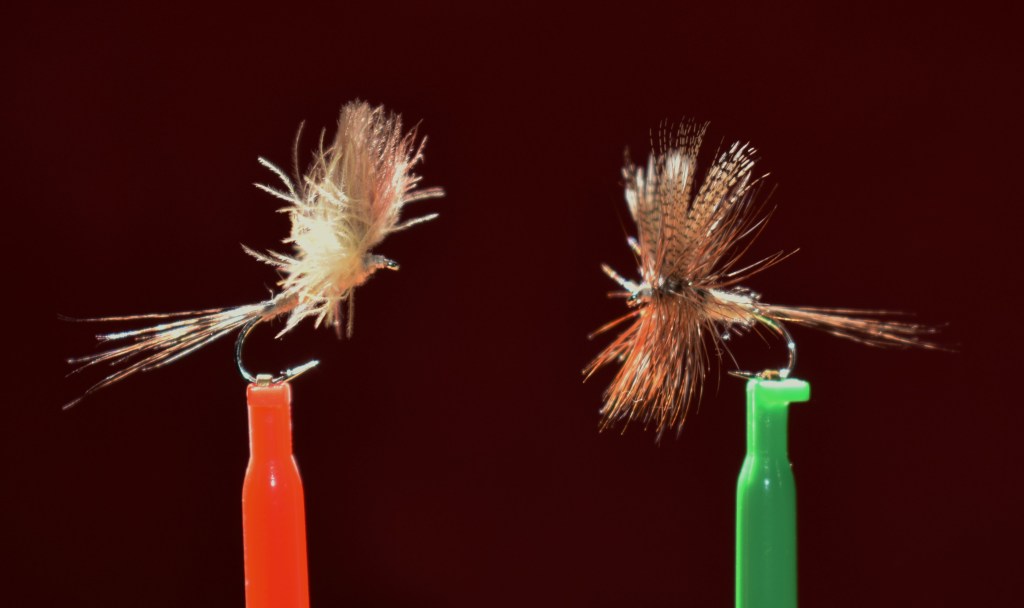
Translucence March Browns CDC and Catskill Style catching the morning sunlight.

To get the most out of this type of experimentation, catch a few mayflies during the various hatches on your home waters and blend to match their coloration. Keep notes too, and a small, labeled sample of your proven dubbing blends to use for a color template when its time to make a new batch. My basic blend notes indicate my name for the blend (the hatch I am matching) and the ingredients and proportions, for instance: Hendrickson Blend – 2 parts light reddish tan fox fur, 1 part tan Antron, 1/2 part fox gray underfur.

A Catskill Classic Translucence Dun

A rainy day yesterday, though a little box arrived from Dette Flies with enough inspiration to blend a bit more silk dubbing and tie a few flies. The results of my cutting and blending combine cream, brown, and cinnamon silk with a few inches of “Brick” colored Dazl Aire, frayed and blended to create a silk translucence series version of my reddish Beaverkill Hendrickson.

The package contained my white Ephemera silk, a better choice than even the finest polyester tying thread over the Crystal finish Daiichi 1182 dry fly hook. I wrote a few days past of Robert Smith’s treatise on Mr. Dunne’s white painted hooks; the reflective Crystal finish hook with pure white tying silk is my modern answer to honor Dunne’s concept. The fly is tied in the Catskill style on an 1182 in size 12. The tailing is speckled grizzly Coq-de-Leon, the hackle Charlie Collins beautiful Barred Rusty Dun. I can’t wait to get it wet and see the glow of spring sunshine through it’s silken body!

I plan to tie a few more Catskill Style dries to add to my Translucence Series: my Atherton No. 3’s, March Browns and Quill Gordons. The experiments will continue with CDC duns in each of those once my supply of hooks arrives. I can already tell I’m going to have to devote a separate fly box to the new entries in the Translucence Series, just to make it easy to give them a sincere trial on the rivers. I labelled one box for new dries today, adding various early spring patterns from my storage box, and it is already full. The Translucence patterns may well end up in a larger box than the thin Wheatley compartment boxes I have taken to carrying in my vest.

I love Charlie Collins’ gorgeous barred rooster capes, as I have for the past thirty years! Barred Rusty Dun and a dark Barred Ginger are my latest acquisitions: favorites for Catskill dries, whether classic or parachutes.

The success I have enjoyed over the past two seasons tying extensively with silk dubbing has made it worth the effort to expand the trial. The white silk and Crystal finish hooks should maximize the translucence of these dubbed fly bodies, particularly on the bright days many anglers view as a curse. I have had some of my greatest fly fishing under the kind of gorgeous clear, sunny blue skies that other fly fishers shun, days that have made me throw my gaze to the heavens and give thanks for the beauty and grace that was granted.

I have confidence when fishing clear water under bright skies, and that certainly helps. The fact that I have stressed natural coloring, translucency and movement within my flies for decades is, I believe, the major factor. There is no doubt that trout get a better look at our imitations under these conditions, especially in the slow currents of pools. Marinaro showed us the inspection rise decades ago. Trout aren’t afraid to take a closer look! Though quite clear, the waters of his Letort provided more challenging vision to the trout, due to the varying microcurrents from the stream’s wavering beds of water weeds. A slow, deep Catskill pool over a clean rock and gravel river bed with high sun must seem like HDTV in comparison.

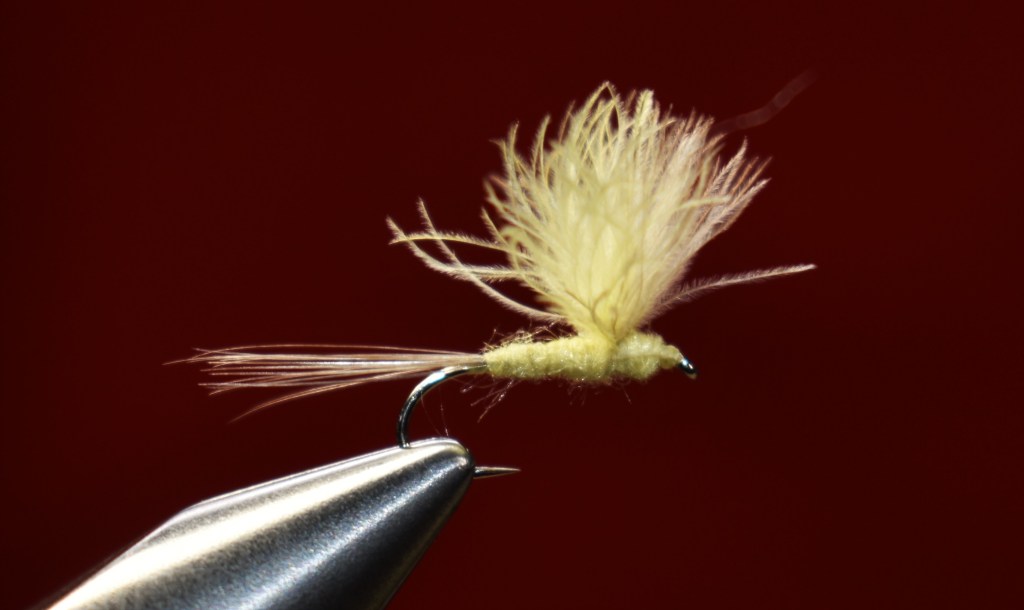
The basic sulfur comparadun, enhanced with a Crystal finish hook, natural barred hackles for the tails, a two color blend of pure silk dubbing and natural dun and dyed pale yellow CDC for it’s wing: natural coloring, translucence and movement! A very simple fly…

Contemplating Spring

We don’t often see the first full blush of vegetation until May. Will this season be different?

It seems like the bulk of winter is finally behind us, though certainly March has proven it is not to be trusted. Last weeks run of warmer days and sunshine welcomed me back to the rivers, though the trout didn’t show up for the party. This week has been more like the March we know, some cold, some wind (truly a lot of wind) even a little snow, and not nearly so much warmth and sunshine. If the forecast can be trusted, always a big if with weather being as volatile as it is, we are headed for a warmer, sunny weekend with spring weather continuing through next week. Could it be?

I am trying to temper my enthusiasm, for I still have the little video I shot on May 9th last year: the one with the snow squall! Rivers began to warm early last year, and then stayed down in the lower forties for a very long time. Even when the calendar said that flies were mature, and they began to hatch, it was tough to find many trout energetic enough to rise. I would love to find some rings beneath the buzzing wings of little black stoneflies next week, but wanting something and getting it are two different things.

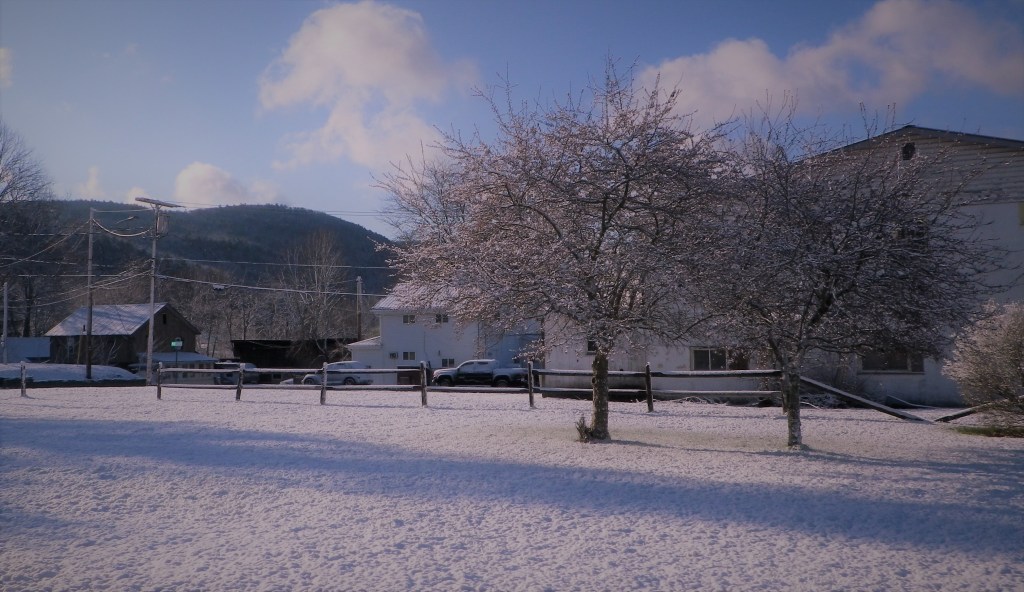
Mid-April 2020, and new snow on the budding crabapple trees: it was truly a reluctant spring.

I am trying to recall the last truly early spring in the Catskills. My older records are stored away, and memory has many pictures of rivers and trout and mayflies, but the chronology has faded a bit. It must have been 2010 or 2011, a wild year when there were many seventy degree days in March in Pennsylvania, and Hendricksons hatching on Penns Creek late in that usually wintry month. I fished the hatch here in the Catskills in the second week of April. Though we were happy with the early start, all the spring hatches dragged out across the calendar, coming in trickles rather than heavy emergences, and lasting much longer than normal. That wasn’t a good turn of events for the travelling angler who banked upon hitting those heavy hatches, though I wonder if I’d like such a season better as a resident, fishing daily.

I plan to proceed with caution. Starting today I’ll be taking my fly vest from the hook it has occupied, sorting through the pockets, removing the collected odds and ends and scraps, and loading a fresh store of leaders and tippets. I’ll take my spring fly boxes from storage and make room for the new patterns I have tied, then load the vest with the early stoneflies and olives, as well as those retched things that sink. I live for the day that those flies can be relegated to a tackle bag, where they typically stay until the last rising trout of my season has come and gone.

There will be a few reels to examine, and I’ll make sure that their lines have been cleaned with fresh leaders affixed. The little chest pack worn in summer and fall will take it’s pace on the hook the vest abandoned. I will take a couple of favorite rods out and cast them, making a final decision as to which lines I’ll fish to start the season.

Winter things will slowly be put away during these next few weeks, though I’ll leave one pair of boots and a single snow shovel by the stoop, just in case. One down jacket on the coat tree should suffice, as I hope my light Thermoball will take care of the cooler spells ahead. There are books to finish, and paperwork.

I’ll have to make a decision about the drift boat. I’d rather not uncover it only to find another snowstorm around the corner, but I’ll need to check it’s trailer’s tires, lights and riggings and take it for inspection. With oars mounted and gear checked she’ll be ready for a solo float, whenever the river beckons.

One winter project has been completed. After much correspondence and the study of tapers and makers I have finally commissioned the making of the Ed Shenk Tribute Rod. I was swayed by Tom Whittle’s work in combining the grace of Everett Garrison’s classic tapers with the performance driven concepts of Vince Marinaro’s convex taper designs. I met Tom decades ago, and coveted his rods when he began his journey in bamboo. I will always consider Tom a Cumberland Valley rodmaker, though life took him to Maine and back to South Central Pennsylvania after his beginnings there. It feels right to have my concept brought to fruition by another who is passionate about the legends of the limestone country.

Early on we shared an appreciation for fly fishing history, and the limestone region and her legendary anglers’ place in it. Tom did something about it on a grand scale, founding and heading the Pennsylvania Fly Fishing Museum Association. His work in the study and preservation of Pennsylvania’s angling history led Tom and fellow rodmaker Bill Harms to author their wonderful 2007 book on Marinaro’s legend and rod making “Split & Glued By Vincent C. Marinaro” immortalizing the influences and techniques of one of the Cumberland Valley’s most influential fly fishing authors.

As his inscription in my copy of Split & Glued reminds me, I sold Tom his first graphite fly rod, an Orvis he says he still owns. Perhaps later this summer our association will come full circle as I affix the special Hardy Featherweight to the ancient maple seat of the Stony Creek Rods Shenk Tribute. I hope Tom can accompany me on the river that day. It would be truly spiritual if we waded side by side as we tempted fine Catskill browns to the surface with our favorite terrestrials!

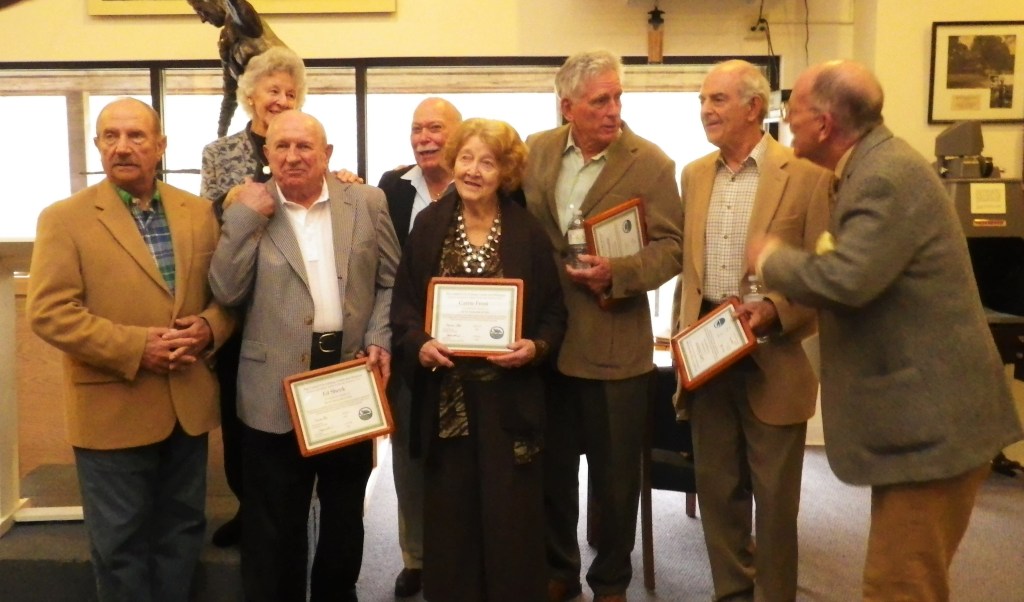
Ed Shenk (second from left) with fellow Fly Fishing Hall of Famers at his induction in October 2012.

Taper Madness

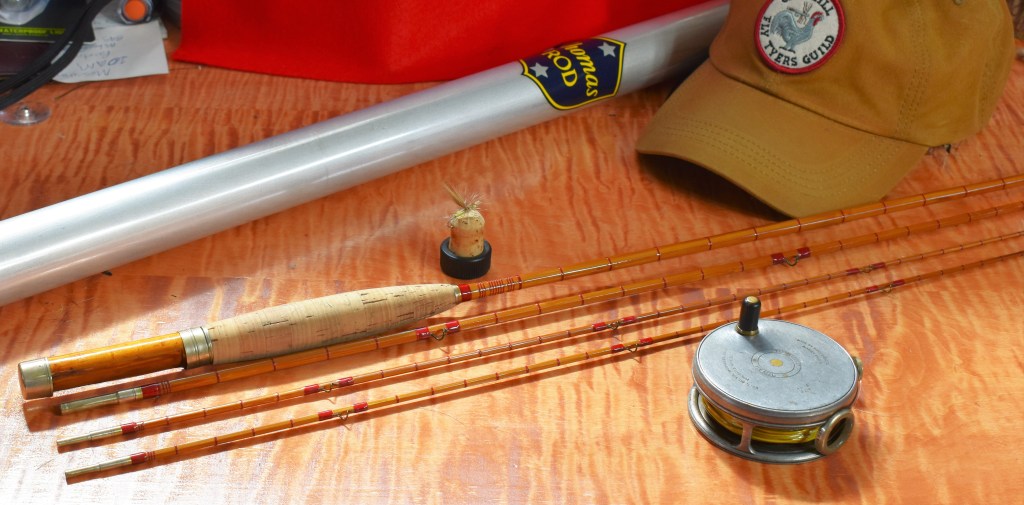
My Thomas Dirigo, circa 1918, has a great taper. It casts an amazing line with a modern DT5F fly line, though it was designed for the silk fly lines that ruled in it’s day. The taper is the heart, the execution the art!

My favorite film of the past several years has been Chasing The Taper, and that describes the activity that has been occupying my time in recent weeks.

I decided I would like to find a special seven foot four weight rod to fish with the late Ed Shenk’s classic Hardy Featherweight fly reel. I decided on the seven foot length as an homage to The Master, my late friend and mentor, with a nod to the practical challenges of the Catskill rivers dear to my heart. Ed was the master and chief proponent of the short fly rod, often preferring rods between five and six feet long. He did build and fish some seven footers, though if he was here to see me put his reel into the seat of a lovely seven foot bamboo rod I would expect him to tell me it “isn’t a bad rod for one that’s a foot too long”.

Ed got me interested in shorter rods thirty years ago, so much so that I built a 6 1/2 foot three weight for our first day of fishing on the Letort; my first and only self-made graphite rod. I accumulated a number of shorties over the years, and fished them regularly in the Cumberland Valley. Fishing the larger Catskill rivers, particularly in the fine and far off style I choose to practice, rather demands a longer rod for versatility and ease of presentation. A seven foot four weight has been a favored rod of mine for many years, and a special taper, a rod that makes it easy to fish at distance, would honor Ed’s short rod tradition and allow me to fish in my own style on my new home waters.

Rods of this nomenclature are designed and made as small stream rods, and most excel at making casts of ten to thirty-five feet in tight quarters. They are a great pleasure to fish, lovely and intimate in appearance when well executed in split bamboo. Many such rods will reach comfortably to forty-five feet, but run out of gas beyond that range. Thus my search for a unique and capable taper has consumed a good deal of my attention.

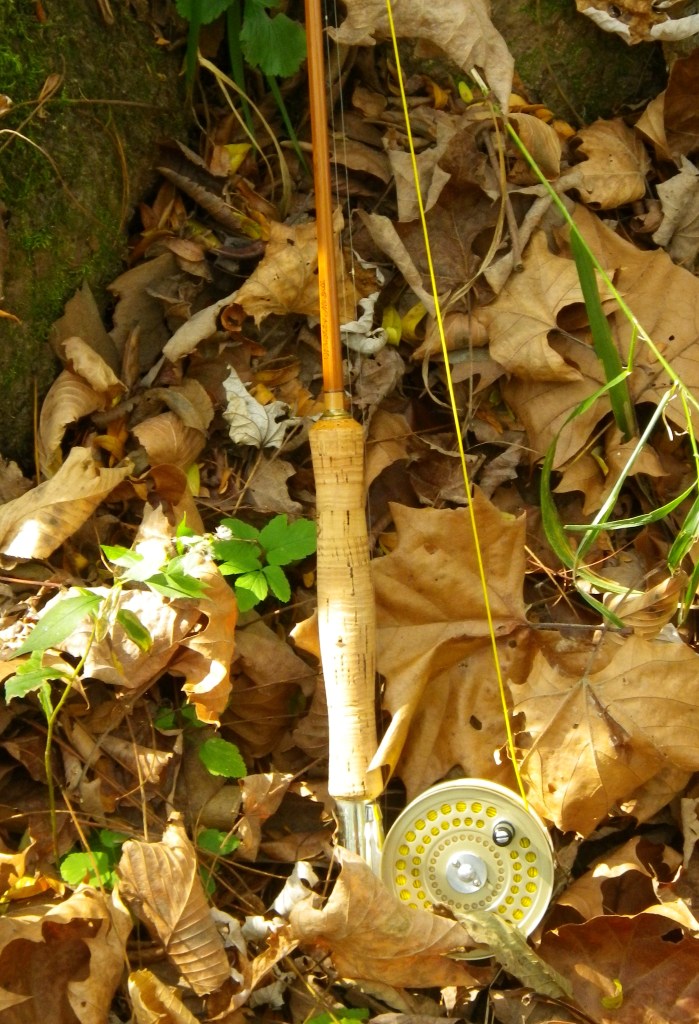
A seven foot four weight Granger 7030 reclines on an autumn afternoon along Spring Creek.

I have worried a few of my rod making friends, chiefly Tom Smithwick, who has been kind enough to continue my education in rod tapers. I know of no man more qualified. With the threat of Coronavirus still preventing me from travel and general human contact, I am unable to cast a variety of rods, the one sure way to find my sword to Valhalla. To make the best of this situation, I am working hard to learn to be able to look at the graph of a fly rod taper and equate that to what I feel in my hand when I cast such a rod.

The best way to do that would be to have the rods and graphs side by side, but that is a luxury I do not have. I have cast quite a number of bamboo fly rods in my lifetime, though some of those encounters were brief and long ago. My best efforts have been aimed squarely at a couple of the rods I own and fish frequently: my Jim Downes Garrison 206, my Guba/Zietak Payne 102H, and my venerable Thomas Dirigo. I have studied these tapers with an eye toward seeing the flex of each rod as I have cast it, and I hope that I have made some progress, begun to learn how to interpret those rod tapers from paper. I have a couple of strong possibilities, and I am hopeful that the Shenk Tribute Rod project will find its way to fruition.

I can picture the day if I sit back and close my eyes: it is hot, but a gentle breeze keeps me comfortable as I stalk across the eddy at a snail’s pace. Stealth is necessary, for pushing waves toward the bank with the occasional dimple ends the game. Ten minutes, fifteen, and I reach a casting position fifty feet out. My eyes scan the lie, and then the current between, watching closely each bit of detritus the surface carries. Seeing an odd little wiggle in the path of a leaf fragment a foot out from the lie I slowly shift position: three steps upstream, one step in, enough I hope that the slack in my leader will counteract that tricky little current. I pull another twenty-five feet of line from the reel and make a cast fifteen feet downstream of the lie, get the feel of the rod, see how the tippet falls with the angle of the breeze. I’m ready.

Stripping another five feet of line I raise the little rod, false cast once, and deliver. The line and leader turn over softly, low to the water, and the fly blips gently two feet upstream from the lie and begins it’s drift. As it crosses into a shadow there is a brief murmur on the surface and I strip to tighten and raise the rod in one motion… and then it is the boil, the song of the Master’s Hardy and that lithe wand of cane bent terribly. Salute my friend!

Proving Patterns

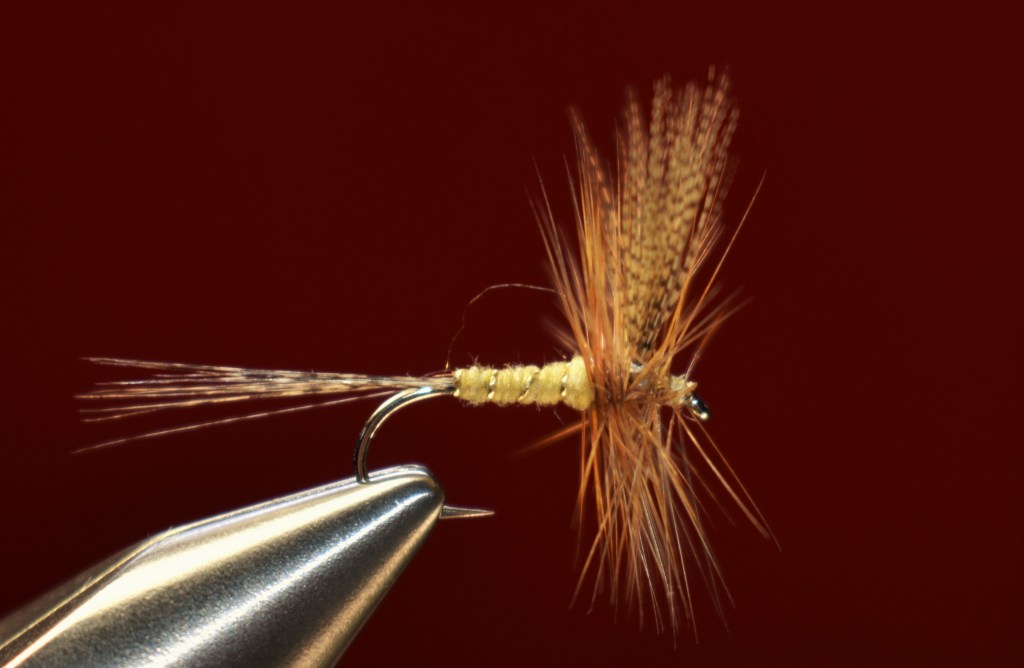
This morning’s trial: blending three colors of silk dubbing to produce a good match for the Hendrickson mayfly that I hope will be hatching a month from now. I have full confidence in the CDC comparadun style of tie, and the silk body tied on a special hook will enhance translucency. I know this fly will catch trout, but will it work when other patterns don’t? Answering that question lies at the root of my experimentation in fly design. Proving patterns can take time.

I love to experiment with flies! I am never satisfied, for neither are some of the trout I encounter. I have dozens of patterns that have been proven effective, and there are certain ones that I have come to rely upon for the most difficult, selective fish. As long as I chance to encounter a rising trout that refuses everything I offer, I will continue to seek the answer to nature’s riddle.

Honestly, proving a new pattern can take several seasons. Certainly new flies will be fished, and more often than not they will catch trout. In that scenario, what I have is another capable fly, but the questions that drive me have not been answered. Is this fly better than the others? Will this pattern take the trout that refuses those others. To prove a pattern, or a design, means those questions must be answered, and that means that I have to encounter the right situation: the trout that keeps eating an insect that I can identify, yet refuses to eat the existing patterns I tie to match that hatch.

During the past two seasons I have paid particular attention to improving the translucency of my dry flies, anything but a new idea. This morning I visited the blog of an English angler and author, Robert Smith. A friend had shared one of Rob Smith’s articles with me a couple of months ago, and Mr. Smith later graciously joined one of our Catskill Fly Tyers Guild Zoom meetings. His blog, The Sliding Stream (www.theslidingstream.net), offered an interesting article on a British angling classic: J.W. Dunne’s “Sunshine and the Dry Fly”. Smith discussed Dunne’s efforts to maximize translucency more than a century ago. His article inspired me to tie a few flies in furtherance of an idea I have kicked around for quite a while.

Dunne came to the conclusion that translucency could be improved by painting his hook shanks white and tying his fly bodies with special, very delicate silks. Daiichi makes a dry fly hook in a “Crystal” finish, a mirrorlike silver, and I have had some of them for years. I have used them sparingly, and thought idly about tying dubbed silk bodies on them, but I hadn’t done it until this morning.

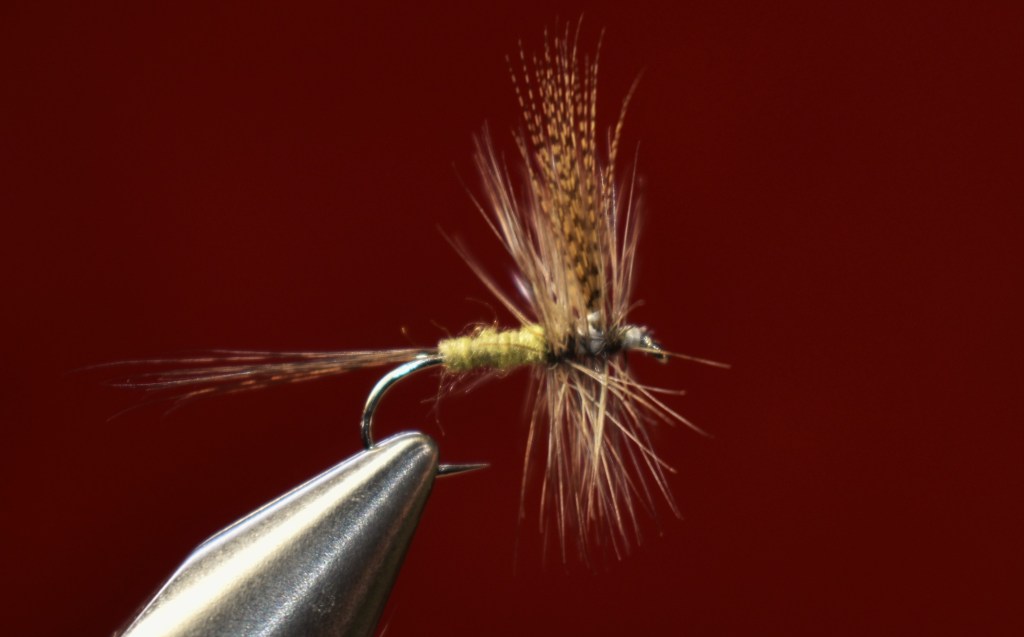
To take best advantage of these materials and Mr. Dunne’s premise, there is one missing ingredient: I would like to have some very fine white silk tying thread. I used dun colored 14/0 thread for the Hendrickson, and pale yellow 12/0 for the Yellow Dun Sulfur below. The next step will be to try some of the white 14/0 I use for tricos, assuming I can’t find some silk.

The Yellow Dun CDC wing combined with a trailing shuck and a blended silk body was my most productive fly during the spring of 2020. Sometimes the trout prefer hackle fiber tails rather than the bright Antron shuck, so this version is tied with barred rusty dun tails and the special Daiichi hook.

As Rob Smith noted in his piece, sunlight is necessary for the magic to happen, something that can be rare in the British Isles I understand. We are pretty lucky in that regard here in the Catskills, and I believe that the silk dubbing improves translucency even when daylight is more subdued. Assuming you don’t use too much wax and pressure in the application, the dubbing has a loft that wrapped tying silk doesn’t. The fibers will trap air bubbles and those bubbles will reflect the available light. Time will tell.

I hope I will get the chance to prove the new Hendrickson variation during this season’s hatch. The Hendricksons bring out as many anglers as trout, so there are usually opportunities to fish to plenty of heavily pressured and ultra selective wild trout. Having a better, more natural looking fly, ought to make the difference for some of those brownies!

Three Days of Salvation

At last a real break from the monotony of winter!

The sun is blinding me once again, bearing down through my little window and glaring on my fingers as I write. I welcome that sunshine heartily, though I’d love to have a little curtain to shade my eyes. Yes, another day of sunshine and warm weather: salvation from the ceaseless grip of winter!

I have spent the past three days on the rivers, and my spirit has been lifted by the experience. Indeed I carried a rod and reel, and plied the waters with sunken soft hackles, what passes for fishing during the off season. It isn’t fly fishing to me, not in the honest meaning of the term that is, though it is as close as I can get right now. Fly fishing necessitates the use of the dry fly, is predicated upon there being rising trout, and should best be practiced with a lithe split bamboo fly rod.

Not that I mean to insult anyone who thinks that fishing with nymphs and streamers and what not is the be all and end all of sport. To each his own; though I see too many who have a bad day if they are not catching some predetermined number of trout on their chosen gear. I count every day I am blessed to spend along trout rivers as a good day, and I hate to see others missing out on those good feelings.

There was a time when I was more of an all around fly angler I guess, at least when dictated by circumstances. I was always happy to cut off a weighted whatever and rebuild my leader for fishing a dry fly with the slightest provocation. I fished streamers quite a bit down in the limestone country, for I fished all through the year, and likewise nymphs, or more likely shrimp and cressbugs, would spend a lot of time at the end of my line. I studied those primary trout foods, thought about them and imitated them, often fishing new patterns to prove their effectiveness; but I lived for May and the sulfur hatch!

If I had wanted to go out this week and pound the bottom of the rivers I probably would have taken a few trout. I simply don’t care to practice that kind of hard core nymph fishing anymore. I was a student of Joe Humphreys and I know what it takes to get the job done. Effective nymph fishing means carrying a box full of split shot and constantly changing the weight on your leader to be certain your fly is bouncing along naturally, right along the bottom. It means turning over rocks and checking to see what nymphs are there, which ones are most abundant, and then matching them closely with an artificial fly. Serious concentration is required every second you have a fly in the water too. I mean, if you’re going to do it, you might as well do it right.

I enjoy fly casting, the way it becomes an art to place your fly in a terribly difficult lie, gently and naturally, and get it to drift right down to Mr. Trout like the mayflies he’s been sipping. There’s a poetry in that, a beauty and delicacy that I have always appreciated. I started out self taught, and got some excellent help along the way from some of the best in the business, but achieving that art requires a whole lot of practice and determination. You have to go out and welcome the challenges you encounter, to keep trying to make the casts you cannot, until one day you find that you can make them.

I am glad that I embraced that early on. I put down some great fish, and I put a fortune in dry flies in every kind of bush and vine and tree that grows along trout streams. I used to break snagged flies off from my casting position, never wading over and scaring the fish if there was still a chance to catch it. That meant re-building the leader and tying on a new fly every time, before I got to try that cast again, but I was OK with that. Fly fishing teaches you patience. There were many times I went through that little ritual two or three times for one trout, and I didn’t always get him, not by any means. Those things still happen once in awhile, as I continue to challenge myself on the river. I wouldn’t have it any other way.

How many things have been sold to fishermen to “make it easy to catch trout”? Man I’d love to have a penny for each of them! The best of it isn’t easy. It’s not supposed to be easy. Fly fishing is supposed to be fulfilling, contemplative, pleasurable; it’s supposed to rescue us from all of the crap that life throws at us, and it can and will if we let it. Challenge yourself, immerse yourself in the experience and learn, grow and smile. Laugh at your foibles, its good for you, and its always a good day!

First Day

The First Day of the 2021 Fishing Season

I felt the excitement as I pulled the old waders over my feet; I was finally going to walk a river bank again, test the warming water with a fly. Nearly three months have passed since I felt that excitement, the same feeling I get every time I go fishing. Certainly that feeling is part of why I go, even now, when I really don’t expect to catch a trout; there is always the possibility.

The sun had quickly warmed the air, though the wind rose before I could put my jacket on and reminded me it was early March. I had prepared for the weather, and as soon as I got that old Windwall over my shoulders I felt pretty comfy. I pulled the wader suspenders up, pulled a sun gaiter over my head and re-adjusted my shades; then I reached for the rod case. I had planned to fish bamboo, wanting to begin the season properly, but the wind forecast for fifteen miles per hour caused me to consider the open water of my destination and choose the Thomas & Thomas graphite instead. I have spent too many days on parts of the Delaware River system where the wind laughed at the forecast and blew just as hard as it pleased, and yes, it is March. It turned out to be a better day, with far more periods of extended calm and sunshine than winds.

My hike helped me feel the past three months indoors. It wasn’t that long, about six tenths of a mile, but between sloshing through melting snow and clambering up and down questionable river banks it gave me the exercise I craved. The river is low, a good part of the reason that Tuesday’s sunshine resulted in a nine degree jump in water temperature, so I waded in slowly, drawing upon memory to try to decipher the places an awakening trout might seek to hunt if he was so inclined.

Winter sunshine competes with the snow to create spring warmth in the calmer moments, accented by the bite of the wind blowing across the frozen landscape. I am very thankful for this early glimpse of spring!

I knotted a Hen & Hare’s Ear to my leader and started to cast and swing the fly, across and downstream, through the deeper water bathed in sunlight. The water shallowed as I worked down the pool, and I changed to a smaller fly, though one still tied with the hidden life concept the H&E began last autumn.

The Grouse & Squirrel: another tie with the hidden life idea I have experimented with. The Prizm thorax, loop dubbed with moving fibers and flashes from behind the screening, moving soft hackle fibers.

I offered this fly on the swing too, the slow yet ceaseless current drawing it through all of the water I hoped might conceal a hungry brown. Once it paused, with a welcome rubbery feel that was gone as soon as it began. Bringing the fly to hand I found the familiar green glob on the hook bend: not a trout after all.

I was standing for a time, looking across the river for some evidence of life when a stonefly passed in the air. Looking harder I eventually spied a couple, appearing as little puffballs out there on the glittering surface, and stared after them; wanting so badly to see a dimple where one of those little stones had fluttered, though I knew it was not to be.

Once I had seen the stoneflies I changed again, hoping that a small unweighted soft hackle might raise something from the uneven rocky bottom in the tail of the pool: look at me, I’m a helpless little insect quivering here, I cannot fly! This ruse failed utterly as well, for in truth there did not seem to be a trout out there, not one awakened by the rapid rise in water temperature. Too soon.

I sat down on a log and let the warmth soak in a bit. I struggled with the wader pocket to free the little fly box hidden there, the wish box, the one secreted away, hiding it’s stash of tiny dry flies, midges, olives and stones. The black CDC stonefly looked proper there, it’s hook point pricked lightly into the cork as I passed the warmest moments of the afternoon. Wishful thinking, though more than that: a thank you to the day, a simple salute to the spring that awaits!

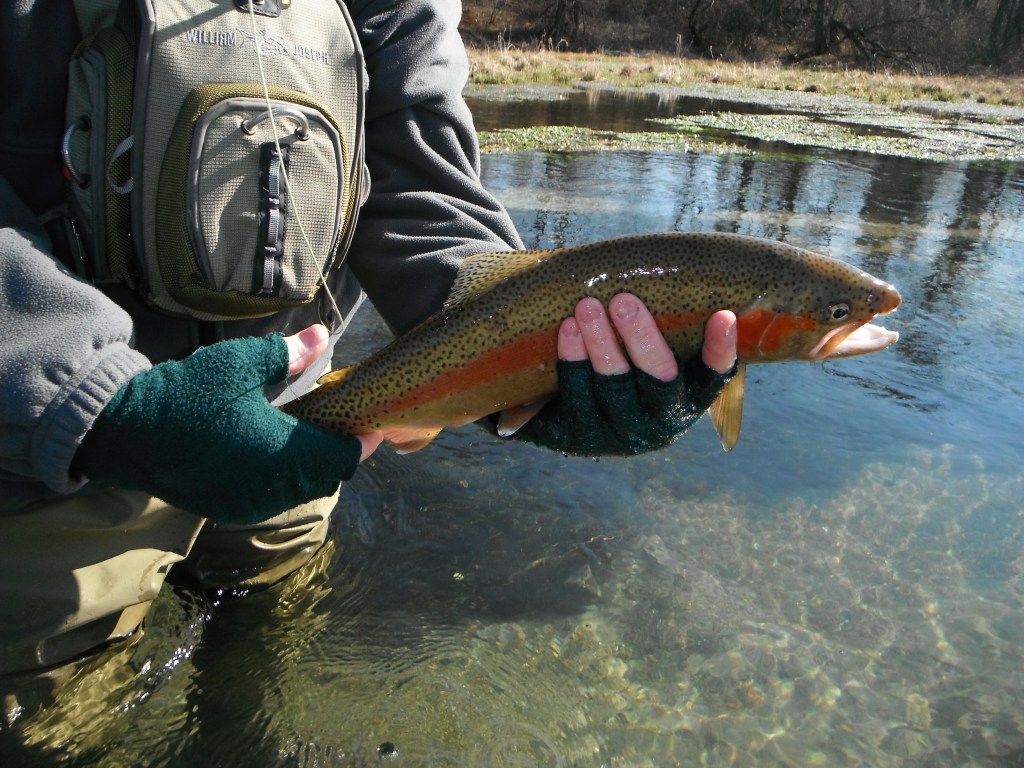
My thoughts wandered back in time, back to warm March afternoons on Big Spring. The stones were a real beginning there, and they would bring the wild rainbows to the surface, intrigued by their fluttering, and tempted to release their caution and divulge their hides down there along the weed beds. The little feeding frenzies were generally brief, though at times intense! As soon as I saw the first ones, little puffballs fluttering on the water, I would hastily rework my leader and tie on one of my CDC stones: time to hunt!

A red banded Big Spring winter rainbow from nearly a decade ago! Photo courtesy Andrew Boryan.

My first Catskill winter I saw a number of those same little black stoneflies on the West Branch Delaware, on sunny, calm afternoons in March. They drifted along the surface, wings buzzing furiously and begging a trout to rise for a snack. Just as I had back on Big Spring I hurried to rig a dry fly, but there was no rise forthcoming. Here it seems they are far more of a tease for the angler than the trout.

Yet I still find myself thinking back, and tying on a dry fly; just in case. I remember those brief flurries of rises on the gin clear currents of the limestoners; and the rewards they sometimes offered when an angler’s expediency and presentation became in a moment entwined.