The forecast was straight forward enough: half an inch of rain overnight with showers and thunderstorms possible in the morning and highly likely throughout the afternoon. It wasn’t looking like a fishing day, but satisfying the rivers’ need for that precious rainfall was worth losing a day’s fishing. My final decision was made when I realized I was wide awake and turned to pick up my watch: 2:42 AM.
I did my best to get back to sleep and succeeded, resigning myself to a fishless day given my conviction that early morning provided my best shot at tangling with an early hunter. I was up for a few minutes when I checked the kitchen clock to find it was still only 5:30. There was no sign of any of the phantom half an inch of sorely needed rain. The Weather Channel showed moving systems of severe storms, though they seemed to divide on their video map and turn either north or south of these Catskills. Maryland got tornados, Hancock stayed dry. Better all of that energy the meteorologists were talking about had sent us our rain and reduced the power of the system to the south. No one needs tornados. They swore we were going to get todays storms though! Six thirty-three PM and blue skies to the east with a few clouds to the west.
Of course, they are telling me it will be raining in the morning, with thunderstorms possible in the afternoon. If I fish the early shift, I’ll be home by afternoon. Yes, that does make for a long day après fishing, but I can always tie another couple of dozen flies for my summer larder.
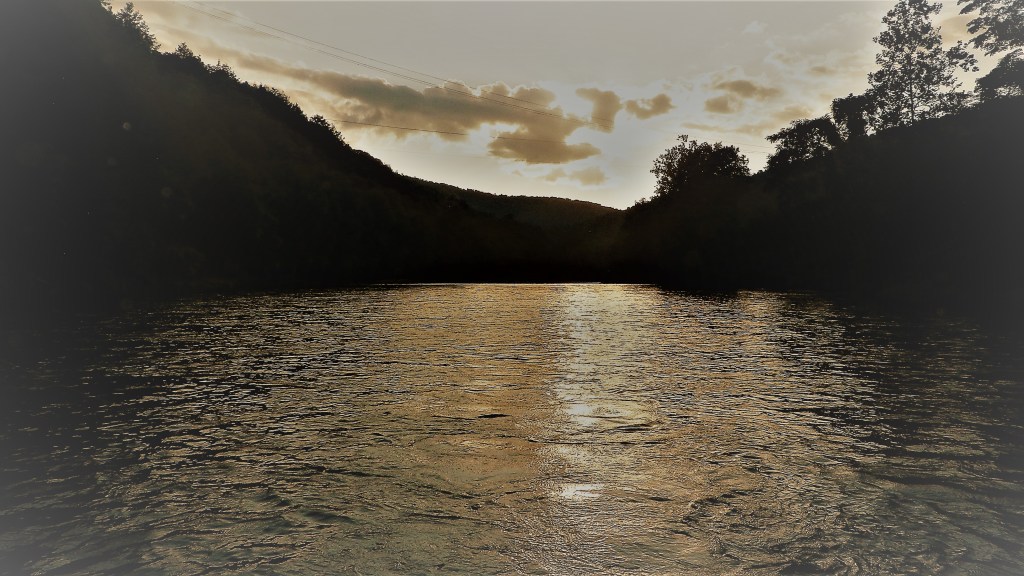
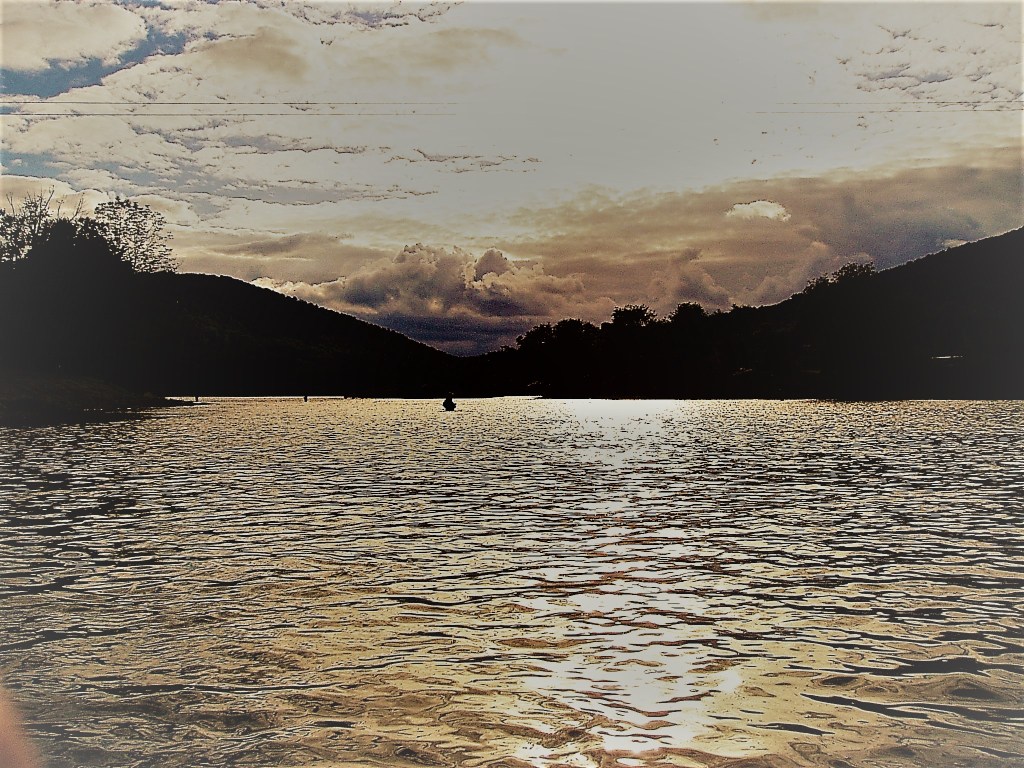
Sunsets on the river are beautiful, but the truth is the water temperature is very close to the highest recorded for that day. Some trout may feed on late duns or spinners, but please don’t fishour wild trout in those rivers that exceed 67 degrees during the day!
I’ll get my impregnated T&T Hendrickson ready tonight, set the reel out beside the two dozen flies I tied today. Can’t say that I will set an alarm just yet. I usually wake up around five, and I can get ready and out the door in a short time when I put my mind to it.
Versatility, come rain or shine.
I always feel cheated when a bad weather forecast convinces me to change my plans for fishing and find out too late it was scientific fantasy. Tomorrow is Friday after all, the last fishing day of the week for sane, resident anglers here in the Catskills. We old guys do enjoy a little solitude you know. I simply can’t miss out on two days in a row. They fooled me once, but I won’t let them do it twice!
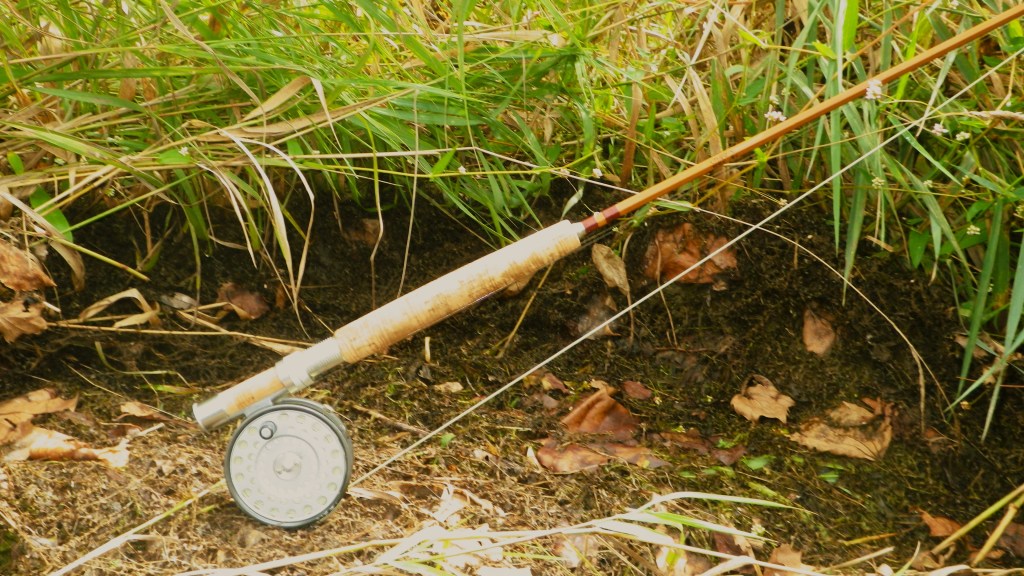
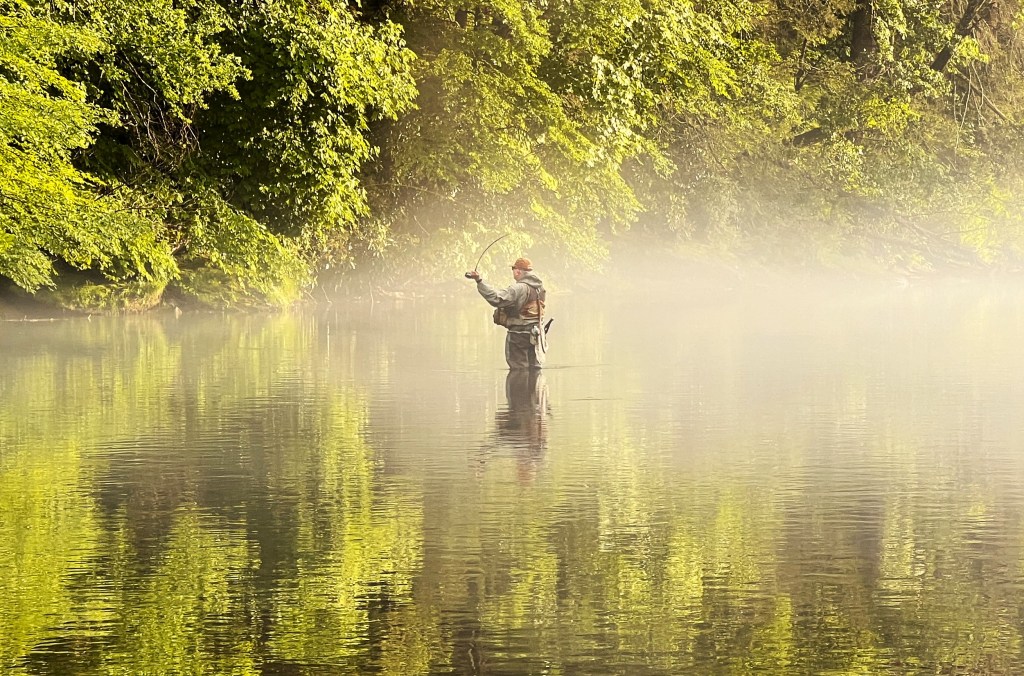
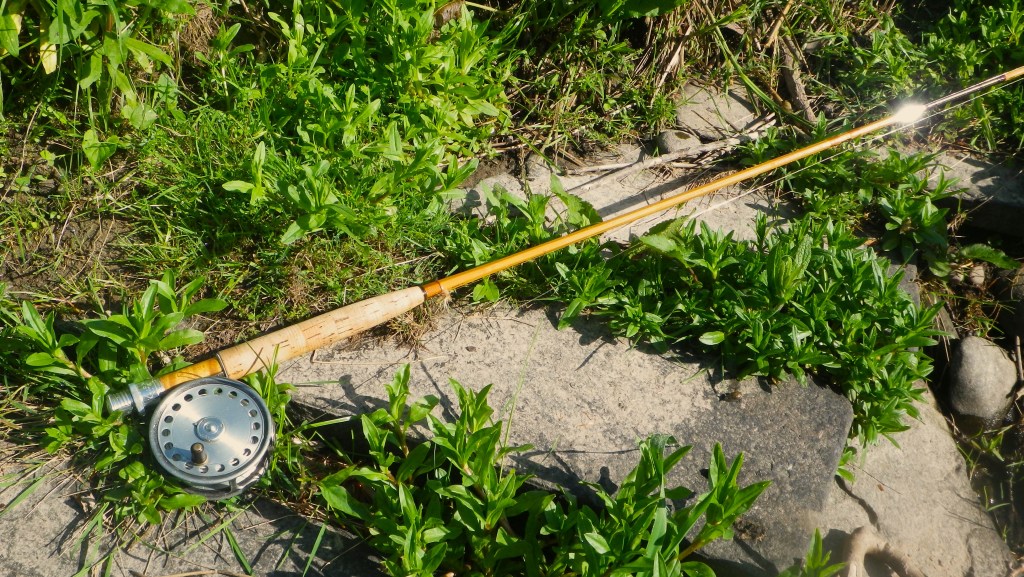
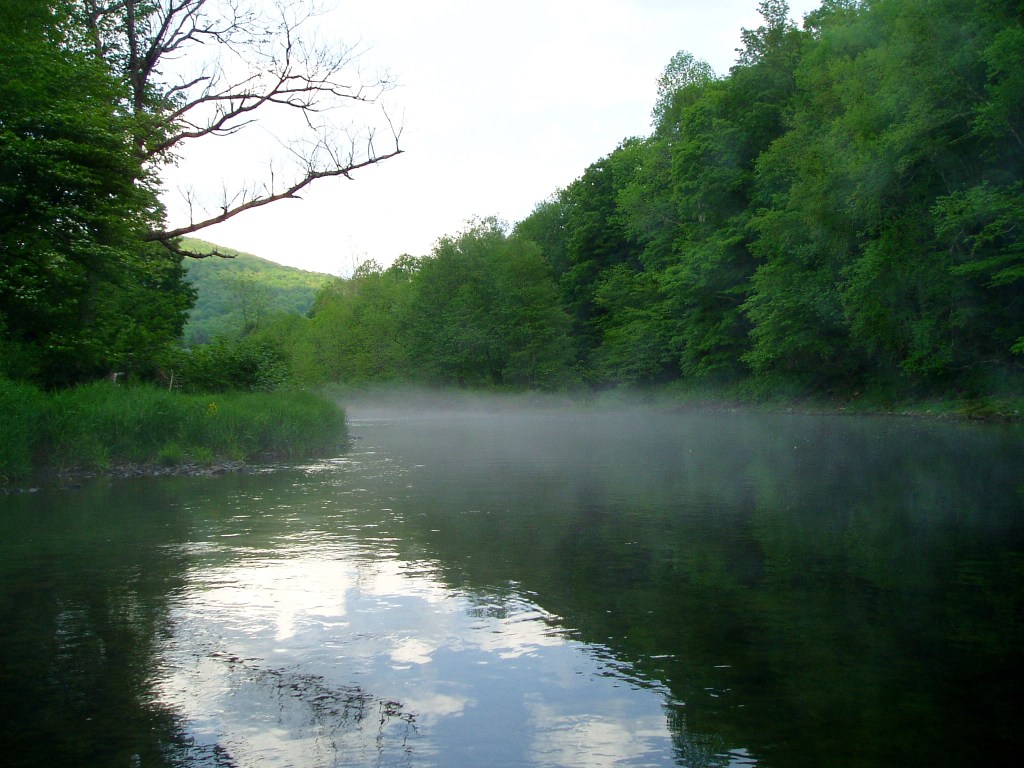
I went hunting this morning, not too long past dawn, and slipped into the river to vanish in the mist. I kept things simple: a 7-1/2-foot Orvis bamboo rod and a classic Hardy LRH. Thunderstorms were predicted and I like the impervious nature of an impregnated cane rod when bad weather is afoot.
I was hoping my early morning stalking would turn up a hunting brownie, change my luck for the better. Sometimes I guess its all in the numbers.
When I was a youngster, God how long ago that was, my favorite number was twenty-five. In one glorious week to begin my spring dry fly season, I landed two exceptional wild brown trout whose measurements aligned with that old favorite number. This morning, I did it again.
I was working a favorite summer morning location when the water exploded upstream and out of range for the little rod I had chosen. That booming attack made me think I needed to clip the size 10 spinner from my tippet and replace it with, well, a meal. Experience said it was too early for terrestrials, they’re never on them this early in June, but I knew the trout that made that explosion was hunting for breakfast.
When I had chosen the right fly and checked my knots two or three times, I began casting. It had been a few minutes since leviathan had awakened us both, so I spread my casts out, knowing from long experience that many of these big hunters are on the move. They will hang in an area to suit their own mood and urgency to feed, but they are often not holding to a particular lie.
The cast I placed out away from the cover in the primary line of drift was the right one. He took with a subtle gulp, I hit him, and that little Orvis rod began bucking while the Hardy screamed! There is a special magic when you are alone on a river with that music in your ears and the cry of battle in your heart.
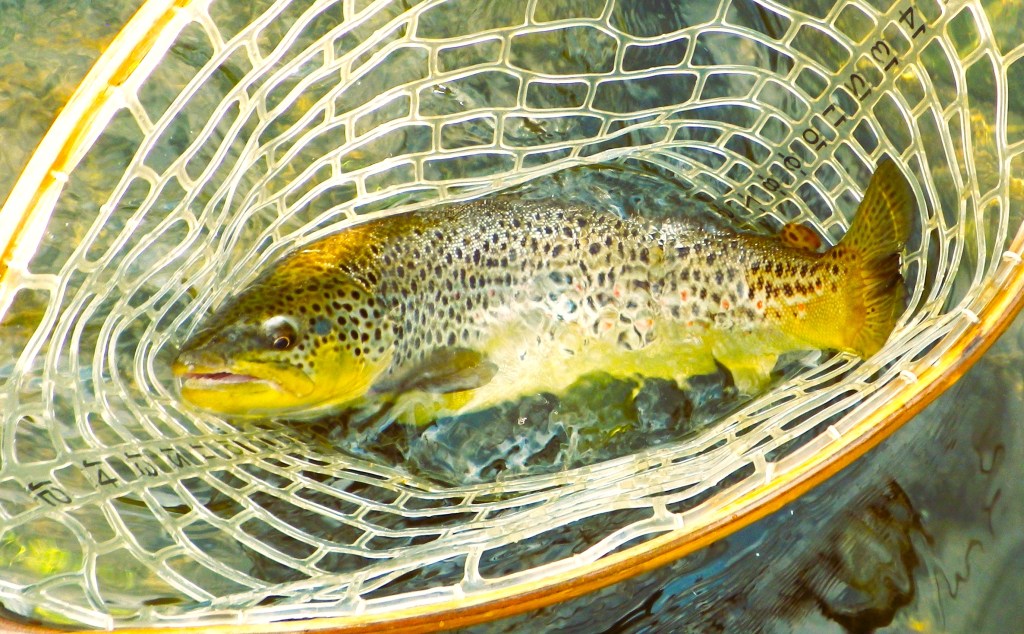
It took some time to get that fish to come near the net, and I wasn’t able to get him in it until about the fifth try. My heart was pumping as fast as the old boy’s gill covers when I twisted that fly free and rolled him into alignment with the measuring line. Twenty-five inches and a smidge, got to be something about that number.
I recognized that trout. I caught him last summer, hoping that the missing mandible wouldn’t handicap him too much. He must have been hooked by one of those sportsmen who fish saltwater size streamers on 8 weight rods and suffered that disfigurement. He had grown nearly an inch since last year, put on some more weight too, and I am pleased that he is still strong and proud.
I fished my way through the rest of the morning with intent, surgically exploring each nuance of current and each piece of cover. I found success again a couple of hours later.
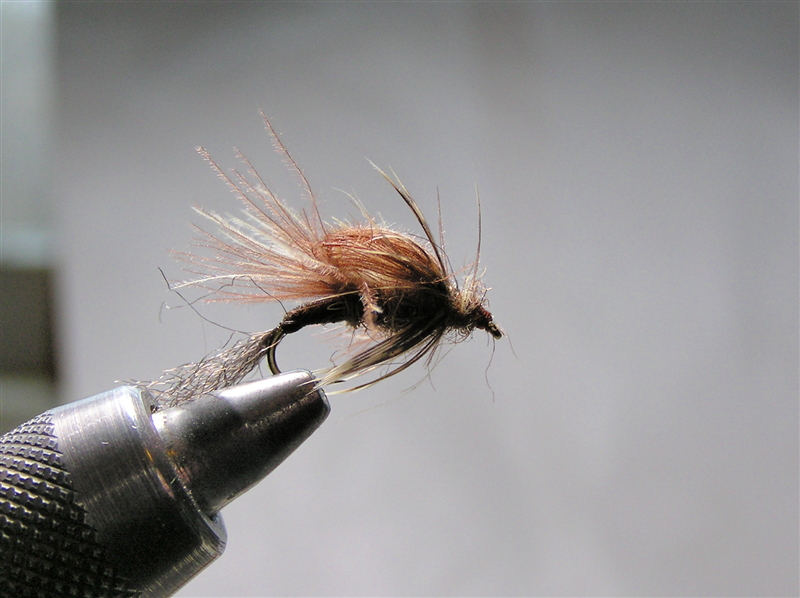
My next foe came from behind a boulder in fast water, enticed by the movement of my CDC winged March Brown emerger. He reacted to my hookset with violent staccato head shakes as he bulled his way downstream and away, the reel protesting each run.
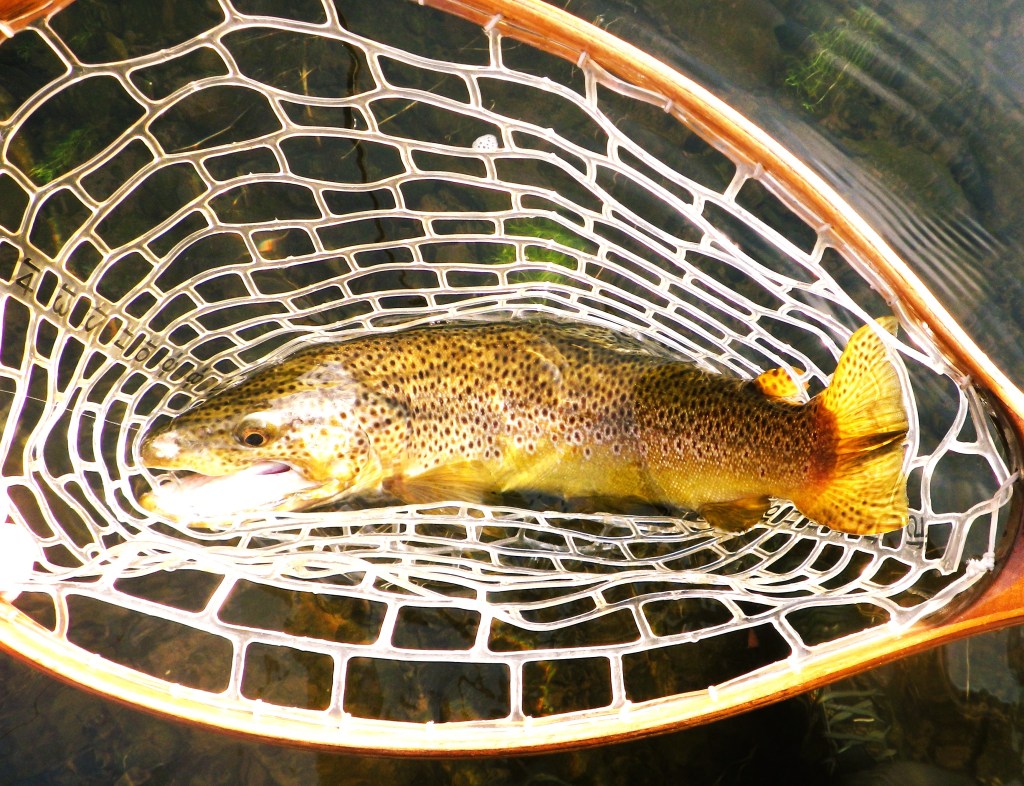
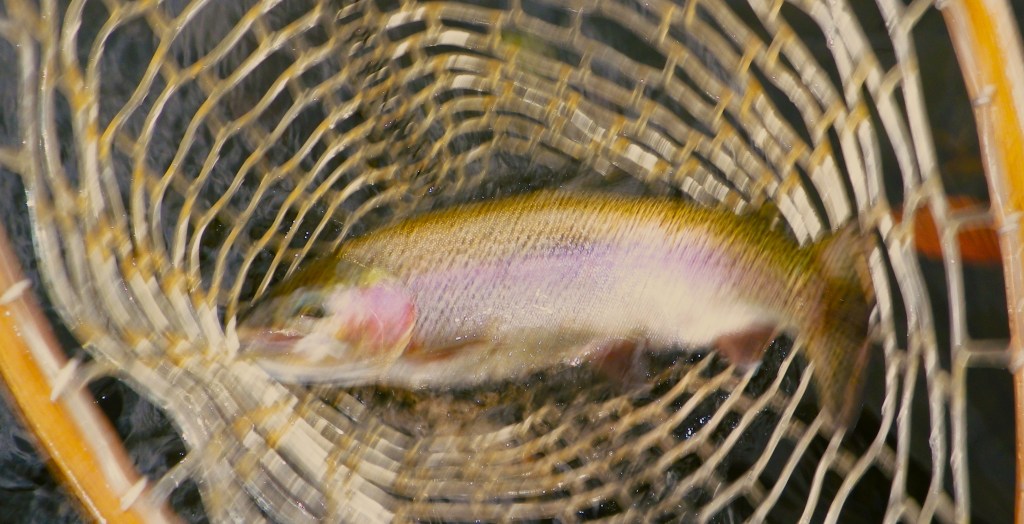
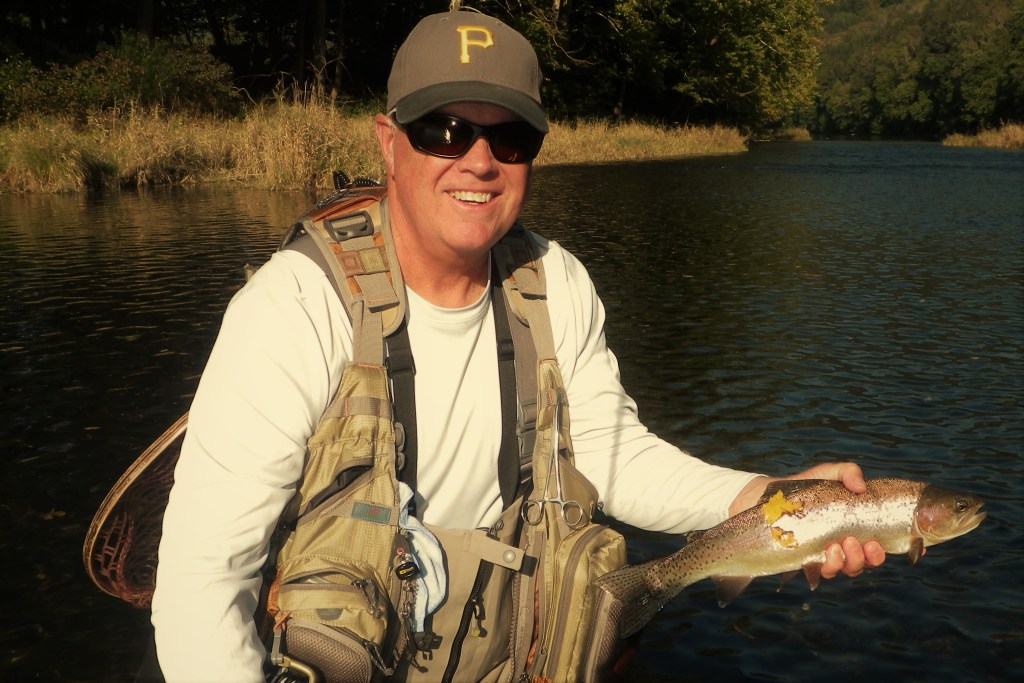
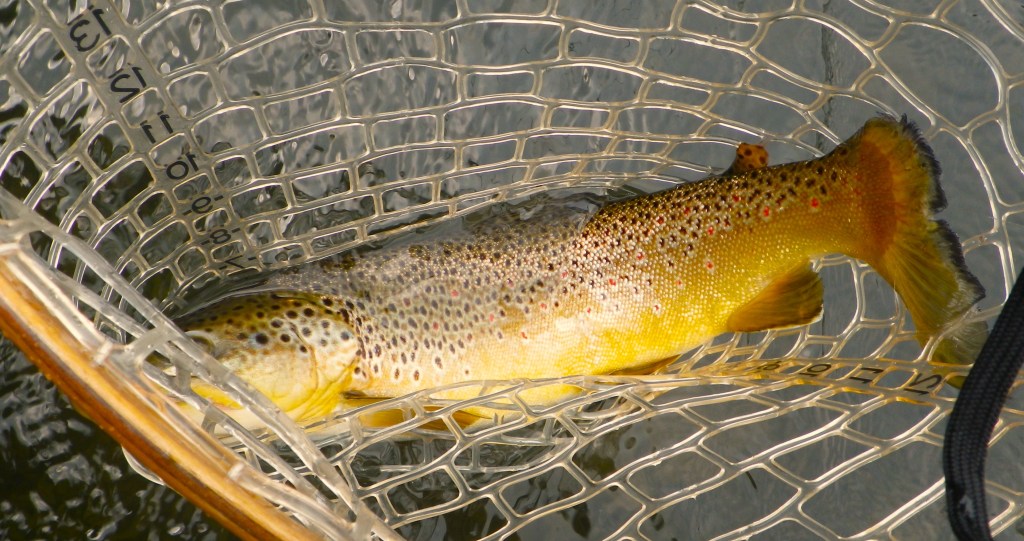
Eventually I worked him toward the shallows near shore and led him thrashing into the net. The morning sun was strong and lit him up beautifully as I snapped a quick photo in the meshes.
Brownie number two was a dark spotted bulldog measuring twenty-two inches.
It has been nearly a month since I last brought a twenty-inch trout to hand, a month spanning the prime spring season. I logged many days and hours astream during that month, finding meek hatches and little surface activity. Taking two in excess of that mark on one beautiful Catskill morning was truly a gift from the gods of summer!
I awakened early as customary during dry fly season and decided to get ready and head to the river. With an eye toward current flows and the weather forecast, I figured this could be my last chance to fish our most historically heralded river until autumn cools it’s water once again. Checking the water temperature at Cooks Falls just now I found it pushing 68 degrees, too warm for trout fishing, so it seems I guessed right this morning.
The Beaver Kill hasn’t the cold dam releases of her related Delaware River tributaries, and we are thankful for that, though it would be nice to have fishing there throughout the summer. America’s first trout river should run wild and dam-free forever!
I was on the river by 6:15, taking advantage of the cool morning air and the cloud cover that would let me fish on into the afternoon. I knotted a sizeable rusty spinner to the tippet and worked some line out with the Leonard 50DF. Spying a nearby rise in the run, I drifted the fly through a few times. A trout rose to it, appeared to take it, but wasn’t home when I raised the cane to say hello. A short while later another quick rise drew my attention and my casts, one of which was rewarded with the wild runs of a big Delaware rainbow. A fitting trout to christen my new, old Leonard, the bow measured eighteen inches, a trout right in the top of the wild ride category. The wild rainbows of the Delaware River face months of warm water, thousands of anglers, and long migrations to summer over in suitable temperatures, and they are not long lived. A big brown trout has to stretch the tape to twenty inches to earn that moniker, but a foot and a half of bow deserves it as well. It is the 15″ to 18″ rainbows that will spool you if they have the notion.
I prospected a hundred yards or more of fast water, scanning the dark bottom areas for fish holding pockets, but none of the many I cast to provided a rise. Walking out, I talked with another angler who had arrived a few minutes earlier. Ron is a retired dairy farmer from upstate New York, and finally has time to enjoy his fishing. During our conversation, I mentioned the Catskill Fly Tyers Guild, and Ron asked me if I knew Tom Mason. He occupied the campsite right next to Tom and Martha during previous seasons. I told him that Tom was a friend and I had in fact seen him and Martha just yesterday at the Celebration of Life in honor of Mike Canazon. Fly fishing never ceases to remind us what a small world we live in.
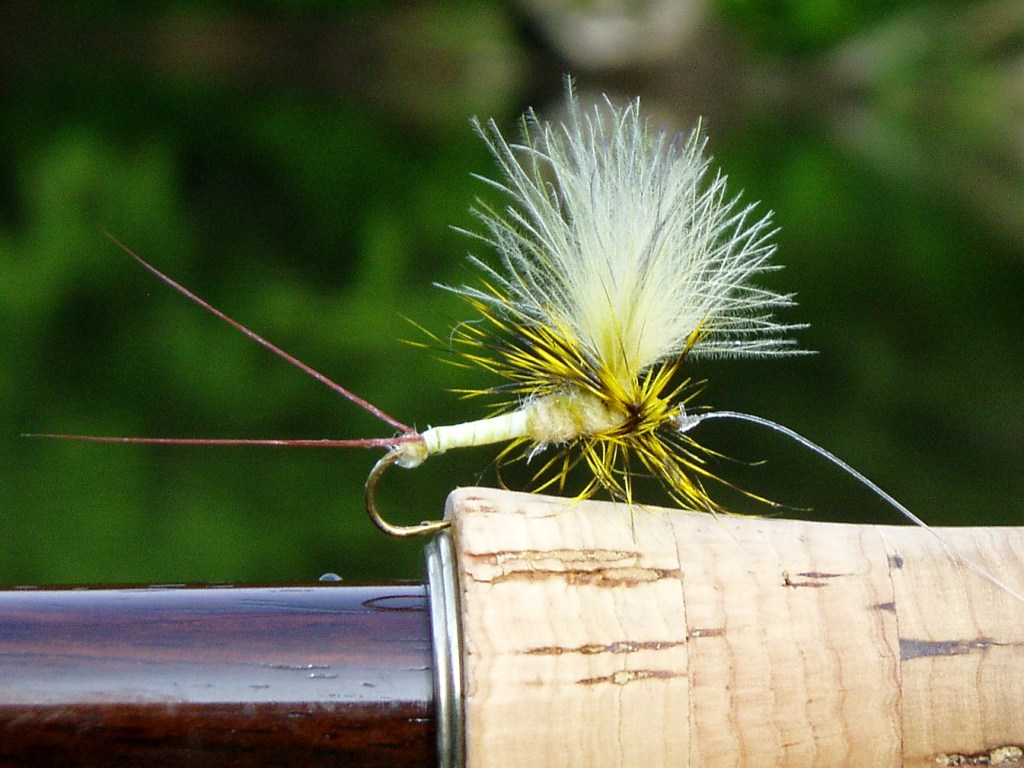
On the way to what would be a crowded Mountain Pool, I stopped at another pool when I spied a lone angler. I walked down to the river sans rod and reel and found my friend Chuck Coronato and his wife. We talked for a good while as Chuck fished. Finding a small March Brown dun floating nearby, Chuck figured it was time to change his fly, and I suggested a 100-Year Dun. He produced one from his fly box and knotted it fast, then offered me his latest bamboo acquisition, a sweet eight-foot Heddon.
Well, a trout rose just then, I cast to him once or twice, and he ate that 100-Year Dun and dove for the bottom of the fast run. The stout fifteen-inch brownie put up a good scrap, and Chuck graciously netted him for me. After some more talk and fishing, I finally headed out toward my goal of Mountain Pool. I guess June 3rd is some sort of new national holiday, for I think I found every fly fisherman in the country crammed into each parking lot along the next few miles of the Beaver Kill. I backtracked and found Chuck taking down his rod with thoughts of finding a nice luncheon. While I was counting fishermen upriver, Chuck tied into a nice bow that showed him his backing twice! Wishing each other well, I headed into the pool while the crowd grew around me.
The sun had made an appearance, and as the late morning warmed past Noon there were fewer flies dancing on the water. I managed another pair of trout, foot-long brownies, between stalking a couple of rises that I guessed might be signs of bigger fish. As the sunshine strengthened, they quickly ceased their surface activity, and I decided to give them a wave and withdraw.
A pleasant day, a nice, unexpected visit with a friend, and a few good fish to make it interesting; just fishing!
After the hard rain on Monday, the light shown through the storm clouds as we cast in the glow of the mist. (Photo courtesy of Michael Saylor)
As fully expected, my friend’s visit brought stormy skies and wet fishing, muddied rivers and, sadly, produced very few trout. Oh, we spent some lovely hours on the Catskill rivers, misty rain drenched days when every mayfly in the drainage could have been expected to hatch. They didn’t. Though cooler and wetter than the past two weeks, these three days offered no more insect activity than the hot, bright, low water conditions that preceded them.
Hatches have always varied from year to year, but I cannot convince myself that there has not been a significant decline in all species dear to the angler’s heart. A handful of Green Drakes sputtered off over the period, and I know it was not simply the slow beginning of the hatch, for my grille was plastered with Coffin Flies Monday night as they tried their fate at reproduction on a wet roadway rather than their natal waters close by.
We talked of the hatches we had seen twenty years ago, with plenty of duns emerging during the afternoons to bring leviathan and his brethren to the surface. A wet, cool, misty day like yesterday would have produced a heavy hatch back then; today only a few ghosts of what had been, with a handful of trout cruising, still chasing the odd rising nymph.
It is not only the Green Drakes we missed, witnessing but token appearances of March Browns and sulfurs. Still. I try to convince myself this is another of Nature’s cycles, and not the finality of an environment too long neglected and abused.
We took what was best about this span of days, two old friends sharing the water, joking about the lack of fishing opportunities, and each other’s foibles. We thought of others we have known, friends not present, for they fish now somewhere off around the bend. Time stalks each of us, and we know not when the showdown will transpire. May there be many more seasons, visits like these, and may at least a few of them mirror the best of long ago.
The Catskill rivers really need some rain. There won’t be the great fishing we all associate with Bug Week unless we get some, for NYC simply isn’t going to give us any water. I’ve been really worried about this, and I finally had to take action. I mean there are dozens of drift boats out there sitting upon dry gravel, filled with wide-eyed staring fishermen. Mikey is coming up for a visit!
The forecasts changed as soon as he picked an arrival date: three days fishing in the Catskills, three days of thunderstorms.
Now Mike and I go way back, thirty years, and he has always had this magic power to bring bad weather to any planned fishing trip. I recall one season many years ago. I had arrived early to get in as much fishing as possible before Mike sidled into New York and brough the flood. I had started taking a two-week vacation, generally centered around the last week of May and the first week of June each year, and I guess I was about three days into the first week. I was on the river and catching brownies on Green Drakes when Mike showed up. The black clouds followed within the hour and the wrath of the Red Gods descended on the Delaware River system. That storm blew out all of the rivers for three or four days!
“Hello Mark, it’s Mike. I’m thinking I might go up to Hancock tomorrow to see if there is a good Hendrickson hatch yet,,,“
I cannot count the early springs when I sat at home checking the fishing reports and watching river gages and weather forecasts before launching my first trip to intercept the Hendrickson hatch. All it took was for Mike to announce that he “might be able to get away for the weekend” for the rain and the deep freeze to come whistling out of the north. The man has a strange mystical power, and you simply have to respect it!
I am hoping that my plan will work out this time, and we will get enough rain to give our rivers the big drink they desperately need. I know, it’s a risky plan, but I am hoping that the rivers will clear after he slips back to Maryland and give us at least a few days when the water is high enough and cold enough to keep the backs of the mayflies wet.
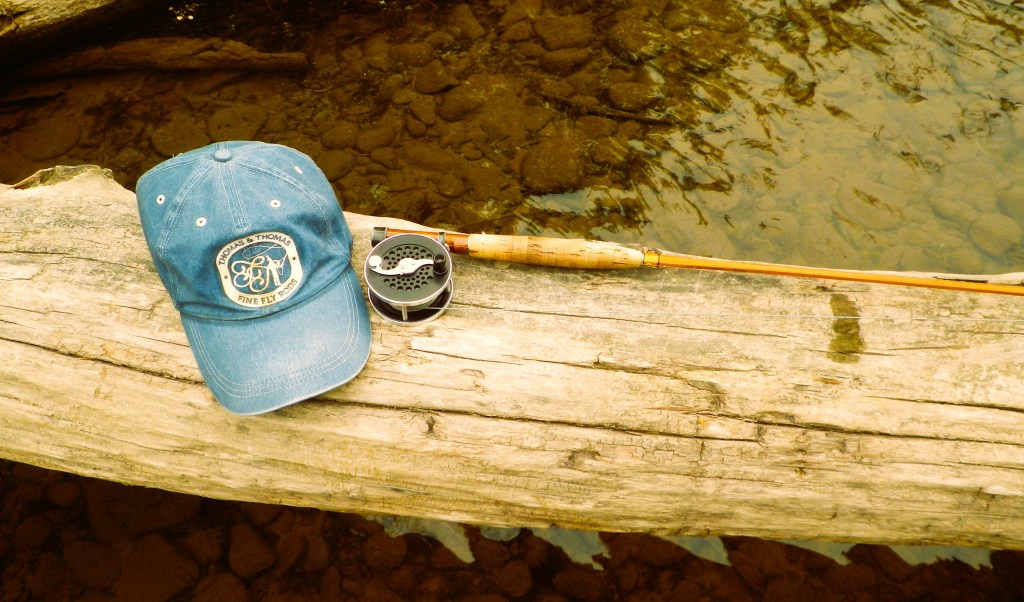
I am going out fishing this morning with an old friend. Actually, I never met Tom Maxwell, though I am intimately familiar with his work. My Thomas & Thomas bamboo fly rods are favorites which see a lot of time on my Catskill rivers each season.
A Thomas & Thomas Hendrickson made in 1977, the year after the late Tom Maxwell sold his interest in the company to co-founder Thomas Dorsey and set out for new adventures.
A couple of years after his departure from the company he helped found, Maxwell was hired to lead the rod making operations at the storied H. L. Leonard Rod Company. Many anglers will tell you a tale about some memorable moments astream with their Leonard rod, particularly the iconic 50DF model. Many fans and collectors of the marque hold special praise for the rods made late in the company’s history, the rods of the Maxwell Era. It is said that the most beautiful rods in their storied history bear the hand of Thomas Maxwell. That notation in a classic tackle dealer’s listing commands a premium, for the prices asked and gladly paid for Maxwell Leonards are among the highest for the fly rods which bear old Hiram Leonard’s name.
Twenty-five inches of wild Catskill brown trouttakenthis May on a Leonard rod of 1950’s vintage.
I was interested in a Leonard 50DF, and I had perused various listings of rods offered by dealers of my acquaintance. I had no designs on a Maxwell, for there was no question they were out of my price range. Once in a very long while though, even I can get lucky. I visited the website of South Creek, Ltd. as I had purchased a lovely seven-foot Granger from proprietor and rodmaker Michael Clark several years ago. There among his listings was a nearly new Leonard 50DF-6 made in 1980, the fabled Maxwell era, inked in his hand. I won’t divulge the price, but I will say I was astonished at how very affordable this rod was, even for an old, retired working man like me. A milestone was approaching, and I took the availability of this coveted rod as a sign. Arrangements were quickly made for the rod to travel from Colorado to the Catskills.
I have cast the 50 with several lines, both five and six weights, and it is amazing, much faster in action than my fifties vintage Model 66. I doubt the rod was ever fished, lawn cast, but likely never taken to the water. It is for all intents and purposes a brand new forty-four-year-old fly rod. Today it shall become a much-appreciated used bamboo rod.
We entered the river just after six o’clock, parting the morning mist. I chose the early morning shift as the afternoons had proved difficult to say the least. It seems a bit early for the kind of morning activity I hoped for. It has felt like summer this past week, but it is still spring, despite the low water and hot sunshine.
I knotted a rusty spinner to my tippet and set about prospecting the tailing currents of a gentle riffle. I had not made a lot of casts when a rise met my spinner and the Leonard came up deftly. The trout leaped when his breakfast bit back, then set about testing the arch of this fine shaft of split cane. Yes, I had visions of christening this special rod with a twenty-inch brown, but that gloriously dark colored foot long fellow was well received on this day.
The big fish proved they were not yet interested in an early breakfast. Perhaps when summer does arrive their patterns will change. Our rivers need rain, and there are promises in that regard for next week. Whether they are fulfilled lies in other hands than mine.
Tom’s Leonard performed beautifully, and now that I’ve had it on the water, I will continue my search for the perfect line. Every bamboo rod has one.
It is the prime of May and our rivers seem to be haunted by the doldrums. Next week is Bug Week, so perhaps the bugs are simply biding their time until the celebration. The weather is hot, and the rivers are low, so it’s not surprising that fishing days haven’t been interrupted by too many epic battles.
The fly shops have been doing the “it’s best in the evenings” chant for a while now, though I have talked to several anglers that advised the sundown fishing has still been slow. It is the Catskills, so one can be sure that there are trout rising somewhere, though that doesn’t guarantee they will be taking our flies.
It is six AM here at Crooked Eddy, and I am feeling a bit reflective. Another milestone approaches and, though I have not found that perfect time and place for angling nirvana for the past couple of weeks, I rejoice at the opportunity to keep looking for it!
I am nine years down the road from the events that might have ended my life before I really got to taste the best of it and have spent six of those years truly enjoying the flavor of it all. I spend my days wading bright water, thinking about bright water, and angling for some of the most beautiful wild trout in the world. Yes, fishing has been a little slow, but man there’s still nothing I’d rather be doing!
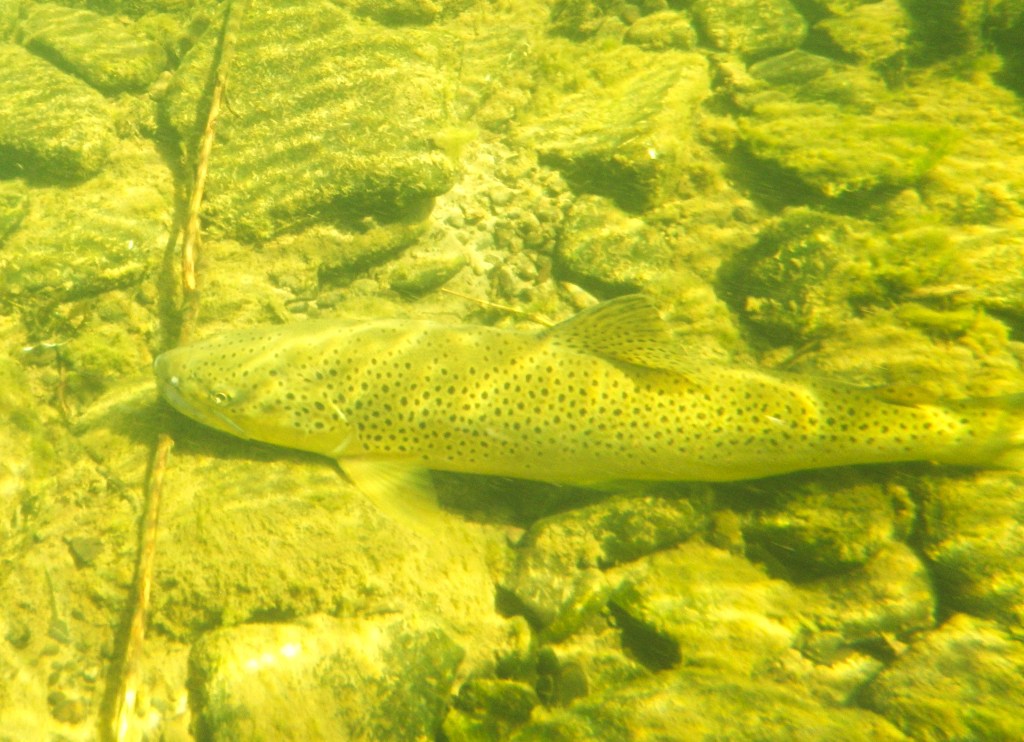
I have spent the past couple of days wading a low, clear pool while good trout cruised all around busting the occasional something. I believe they have been hunting down March Brown nymphs as they hang just under the surface, taking them hard when they find one. I have seen flashes of movement a few times, when one of those fish darted a couple of feet to nail his emerging dinner.
I have seen this behavior before, particularly when the water gets very low and the bugs are sparse and sporadic. I encountered this a decade or so ago and came up with a fly to deal with the uncatchable trout. I had some success with it, so yesterday I was well stocked and ready for them. The brownies that fell for my imitation all those years ago must have passed on the information to their offspring, as none of yesterday’s cruisers took a second look at my fly. It’s a great imitation, but it ain’t alive!
That is indeed the crux of the magical pursuit of wild trout with the fly: trout eat living insects, insects that swim and wiggle, and struggle. These characteristics are never more evident than during bright sunny days in low, clear, slow-moving water. The trout themselves, particularly the larger, wiser members of the tribe, are at their wariest, but they seem comfortable in their instincts and abilities. They can hunt the food Nature offers at the moment while minimizing the danger, and they get better at it every generation.
My focus as a fly tyer has always been a quest to enhance the image of life presented by my flies. I design as much movement as I can get into patterns for the most difficult situation, but the trout still manage to come away unscathed at times. Honestly, if it weren’t for times like these, I wouldn’t have the same passion for fly fishing.
There is some rain in today’s forecast, though not enough to change river conditions. There is supposed to be more of it next week. I will have to wait and see if we get enough of it to improve the flows and invigorate the fishing. While writing this, I had a thought of how to improve the movement of that hanging emerger, so I am going to take another shot at tying a fly that will break the code of the cruisers. I can’t change the weather; all I can do is work the problem.
It is a state of mind as much as an actual place, a reach of bright water where fantasy dwells with silence and the soft murmur of sun warmed air and trickling water.
Memory lives there, decades of it, though it lives in the present in the ultimate challenges I face there. Flies were born there, theories formed, revised and proven. It is everything that is angling to one who lives for angling itself.
Challenges in imitation abound…
It is a place for sitting in the warm sunshine, contemplating the likelihood of the hatch long anticipated and the run of years that has brought me to bright water for sustenance of the soul. There are echoes there, voices laughing, the symphony of an old Hardy singing in high notes of leviathan unleashed! Images of things that may never be again…
I walk there with a favorite old rod in hand, this one passed on from a friend in the Cumberland Valley. He fished it hard for a good span of years, and now as his time on the water has passed, I carry it on these Catskill rivers to make my own memories. Bamboo has a soul, something of the maker who crafted it from the culm, something of the anglers who have wielded it remain.
I marvel at the magic in this place. How many times have I entered here to find the water quiet, waded in, and had trout begin rising in greeting? That happens not on other reaches of bright water. This young season the greetings have been brief, a cast, a drift, and they recede. The magic remains, but so does the incredible challenge.
The first trout rising upon arrival, and my first two-foot Catskill brownie…magic!
No season has truly begun until I wade these waters, assess the changes wrought by winter’s ice and snowmelt’s floods. Last year I found a fine bed of new shallow gravel in a place I used to wade the high flows, before a few spring floods deepened it well beyond wading. Nature giveth and she taketh away. Her gift may be quite perfect one day hence.
If I have my way, I will trust my ashes to the sparkling currents of sanctuary, return something of my essence to the river that schooled me, delighted me, delivered me. The ashes of some fine shaft of cane shall join me there. Take what you need with you.
A good result from an impromptu downpour. The rain became heavy after the fish had taken my fly, came hard throughout the battle, and slacked up just as I reached to remove the fly! (Photo courtesy John Apgar)
Rainy day fly fishing is much vaunted in our literature, but I feel there are limits. Yes, damp cloudy days can bring sustained hatches of blue winged olives and other mayflies, but I have found trout reluctant to rise whenever the surface is significantly agitated, whether by rain or wind. I have always assumed that these conditions hamper the trout’s vision and their ability to discern the insects they seek from the floating chaff.
I can count endless days on the water when accelerated downpours have shut down rather heavy feeding sessions. The bugs remain, but the rises cease, at least until the rain slacks up considerably. Stormy days are largely the worst as the winds often charge in anew whenever the rain lessens. Nature being whom she is though, I have witnessed sudden eruptions of rises as a thunderstorm bared down upon me. The reaction is always to look over one’s shoulder at the threatening weather and cast furiously. Don’t fall for it… get off the water! Distant lightning can kill you.
Brooding, but without any heavier rainfall, are the kinds of rainy days I have found good fishing.
I put in my time on a fine-looking, brooding sort of day last week, but I wasn’t rewarded with a significant hatch. I didn’t get wet, though the chill of the water got through more than on a sunny day.
The best thing about rainy days is the freshening they can impart to our rivers. I have enjoyed improved fishing on many occasions after a good rain has raised the flow during low water conditions. I’d love to see that happen this time, for there are a number of pools that could use a boost. I might even put on the old raingear and head out this afternoon. The Hendrickson is waiting…
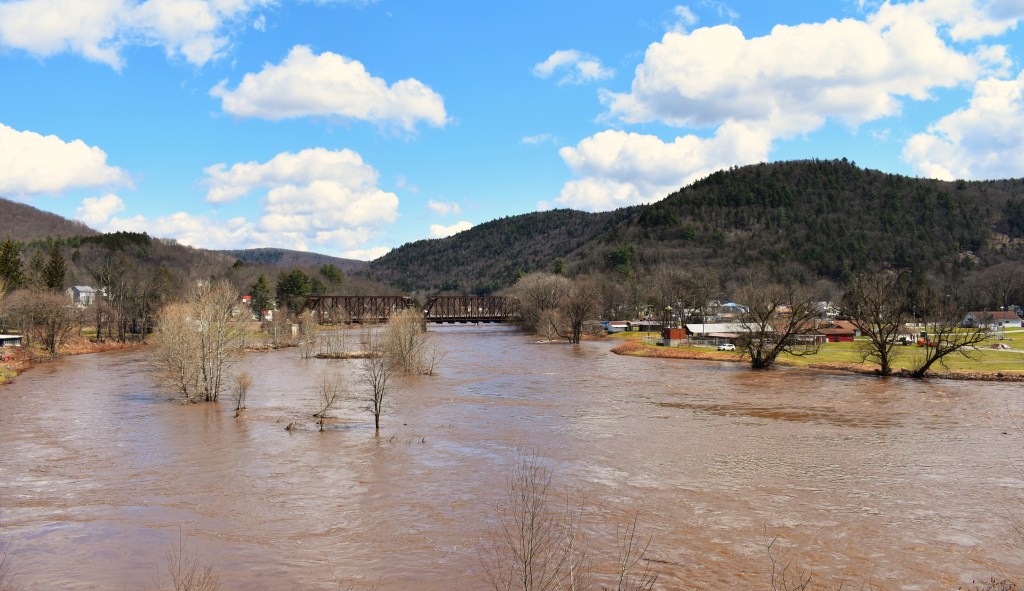
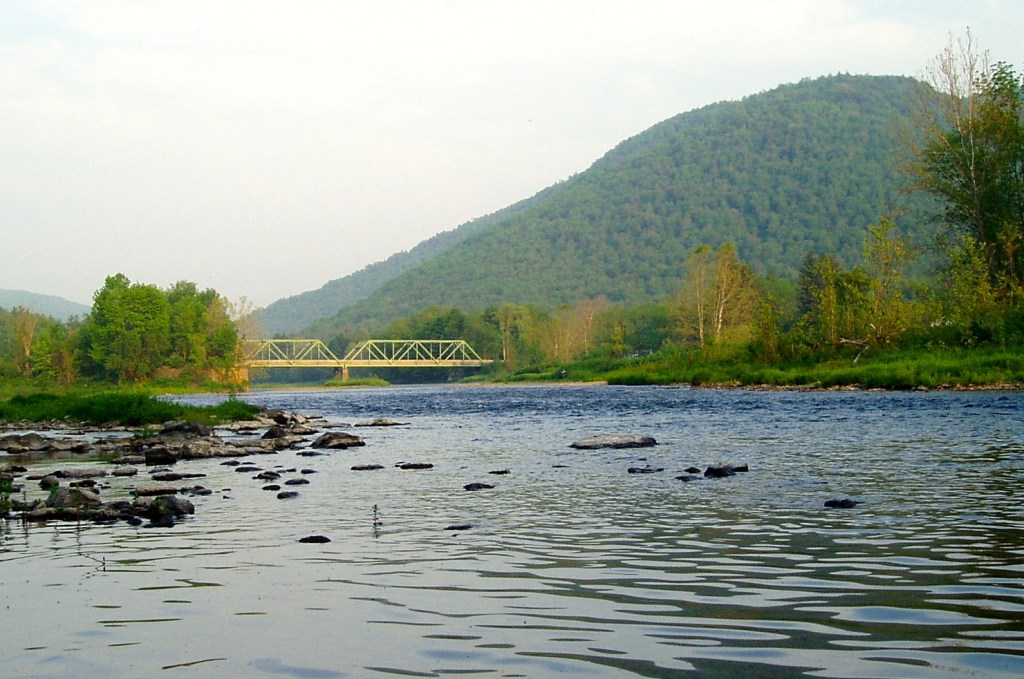
The Beaver Kill joins the East Branch Delaware: No doubt where the main run of the current is here, but are you noticing the secondary currents easing along o’er the rocky flat in the foreground?
I had one of those tough days late last week, the kind where the opportunities you hoped for just refused to materialize. The trout were spread out and there were very few flies on the water even as prime time rolled around, so I wasn’t doing much fishing as I was fruitlessly waiting. I found myself with a brief and difficult window, eventually.
The water I was trying to fish was low as were most of our rivers, and that restricted my movement significantly. Wandering around in low water just alerts all of those trout you don’t see rising, with the result that they don’t rise when the day’s sparse allotment of mayflies finally gets going.
I waded very slowly and set myself up to be able to reach a long line of drift where the main current carries most of the stuff on the surface, bubbles, miscellaneous vegetative matter and bugs over some of the best bottom habitat in the area. That is usually the right plan under tough conditions like these, but it wasn’t on that day.
There is a secondary current that spreads down along the near bank of that pool. It is very subtle, unnoticeable in low flows, unless there happen to be flies on the water. As I was standing stone still and carefully watching the prime lies across the river, I heard a little plop or two that sounded like it could have been behind me. Thinking a fish might have risen quietly well downstream, I didn’t trust the directionality of my ears, and kept concentrating on that main line of drift. There was simply nothing doing out there.
Eventually, a few mayflies started to show, and I truly expected my patience to pay off. It didn’t, but I did hear another plop or two and turned around to watch that secondary current. Sure enough, there were a few flies coming down through the back door hallway, and a trout was taking advantage of them.
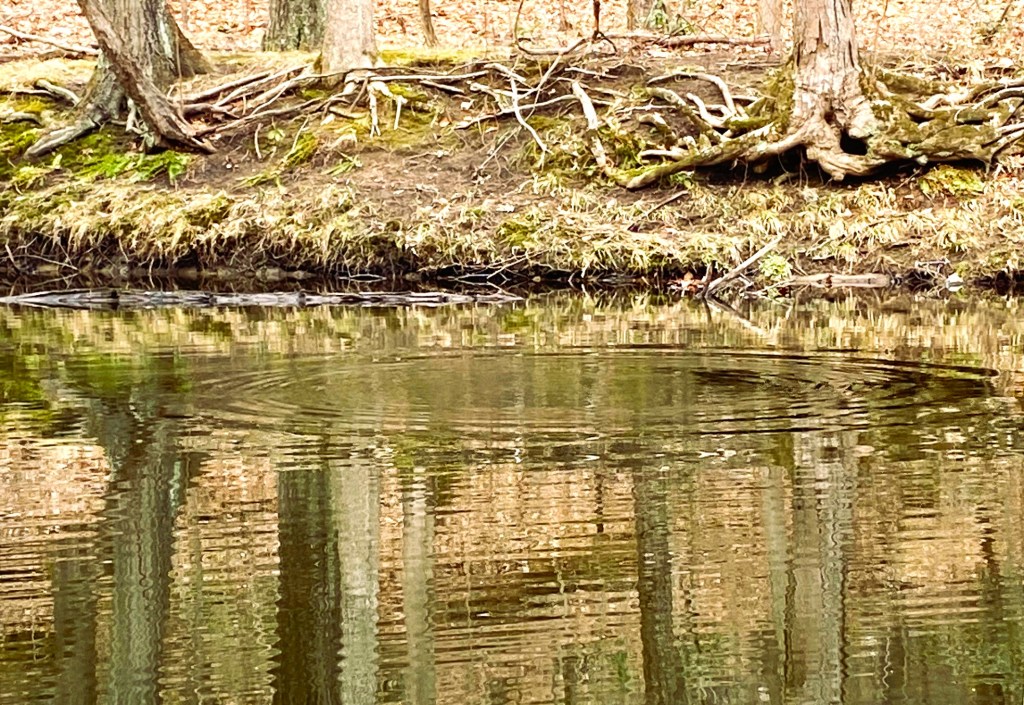
Wide rings spread from a soft rise in a secondary current. (Photo courtesy Chuck Coronato)
As the number of flies increased, I found four or five trout spread out over an area some thirty feet wide and one hundred feet long, all of them fairly close to the shallow bank. They were not holding position, but each trout was cruising around a small area. Once they got going though, I was pretty well trapped. These were good fish, I know because I encountered this same situation a few seasons ago in this area, during another early spring low water scenario. There was no way these fish were going to allow me to move into a favorable casting position to fish them, leaving me with trying to take advantage of what would be the afternoon’s only opportunity via long casts nearly straight downstream.
It was a flat light kind of day, so I was looking straight into widespread glare as I tried to watch my fly, casting and mending to feed it to one of these moving targets. When I can’t see my fly at the take, I tend to get antsy sometimes, and this was one of those times. On a downstream presentation like this, you have to wait a little longer before you raise your rod to strike a taking fish. I know that very well, but losing sight of my fly and that antsy feeling undoes things.
I was a bit too early when I thought the nearest fish took my fly, and I pulled it right out of his mouth. Of course, that raised my frustration level and made me do the same thing again. Self-defeating prophecy – same result for number three, though he actually started to pull, hard, before he opened his mouth and let go of my fly. I don’t believe he was even hooked. I think he clamped down on the fly and then decided to let go when it pulled back. That is all the time Nature allowed, for the flies stopped coming within moments. That is definitely fishing.
I have found feeding fish in secondary current situations before, though it usually happens in areas where the trout are rarely disturbed and not on our hard fished Catskill rivers. I recognized the possibility before anything happened, but I remained intent upon the more likely water near the other side of the river. The result was really just the luck of the draw; it wasn’t going to be my day.
If I had it to do over again, I would have moved into a position earlier, setting up for the rare chance of the action happening on the thread of that secondary current. If it hadn’t, and that was really the most likely outcome, I would have been easily able to move into position to work the main run without spooking trout beginning to feed in that wider, deeper section of water. Might have turned out to be my day after all.





 Bright Waters Catskill